Thursday, December 25, 2025
Home Blog Page 4950

How Iranian newspapers cover nuclear talks in New York

Iranian newspapers and nuclear talks

With the countdown for the finale of nuclear talks between Iran and P5+1 on, over the past few days Iranian newspapers opted for a measured tone in covering the parley half a world away.

The addition of President Hassan Rouhani, who appreciates the coherent strategies of the Supreme Leader of the Islamic Revolution, to the Iranian team in New York may lend special weight to the NYC chapter of the nuclear saga. It may also prompt those who put partisan interests ahead of national interests and global peace and security to take the risk of making a “hard decision”.

The crises brewing in the Middle East have probably left no place for the option of war on President Obama’s Oval Office desk. At a time when negotiations seem to be the only way forward, no more time should be wasted; after all, there are more urgent issues the world has to contend with.

The Americans and their European and regional allies should know that playing the IS card is not compatible with diplomatic standards. The truth of the matter is that even a weakened form of this pathogenic agent, read IS, cannot be used in the vaccination of the West. Westerners need to shed their illusions that such an approach could serve their interests.

Without any bias that could slam the door shut on an independent assessment of Iranian media, Iran Front Page would like to note that with the exception of a few dailies that expressed dismay over comments by Foreign Minister Zarif that “We’ll trust Obama if he makes a promise,” others kept their feelings under wraps.

No doubt, the Iranian people are waiting to see what President Obama’s promise is and how reliable it will be.

Iranian newspapers, both principlist and reformist, which represent the Iranians in what they openly say and in what appears between the lines on their pages, leave no doubt that Iranian independence and dignity are not negotiable. If you doubt the statement you just went through, turn it into a question and put it to President Rouhani, Foreign Minister Zarif and other members of the Iranian negotiating team.

They will definitely repeat what you just read. Even if their microphones remained accidentally open, they would not turn their back on their closest friends and allies. Certainly, no ally is more powerful than a nation with a stellar cultural and civilizational background.

The priority of Iranians of different ethnic backgrounds, including Kurds, Baluchis, Azeris, Turkmen and Fars, is to enrich culture and science. Enrichment of uranium has been an upshot of such a policy which is bound to carry on.

Coincidentally, right at a time when major powers were haggling with Iran over the extent of its uranium enrichment, the Supreme Leader of the Islamic Revolution released the macro-policies of the establishment in the field of science and technology. Nothing can put more emphasis on the fact that Iranian research and scientific endeavors cannot be shut down.

Ettela’at, which first appeared on newsstands almost 80 years ago, put the following on its front page: The ultimate goal is to become the scientific hub of the world. It also said under the policy guidelines of the Supreme Leader, Islamic values and ethics should prevail in the higher education system of the Islamic Republic.

In conclusion, it should be noted that Iran, which has been home to Ferdowsi, [a prominent epic poet] will not surrender in the face of bullies; and Iran, which has been called home by Sa’di and Hafiz, [two world-famous poets] won’t develop nuclear weapons. After all, Iran is the land of love and compassion.
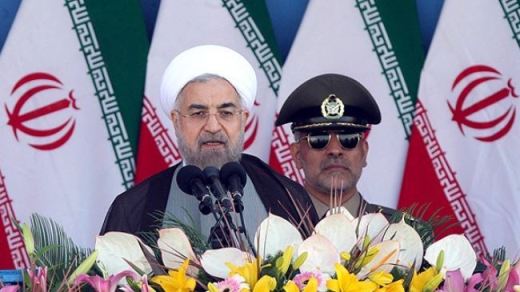
Iran supporting ME nations in anti-terror fight: Rouhani

Rouhani-Speech
Rouhani-Speech

President Hassan Rouhani has reaffirmed Iran’s support for “oppressed” nations in the region, saying the Iranian armed forces will help crisis-hit states in their fight against terror.

Addressing a large military parade held to mark the start of Sacred Defense Week on Monday, Rouhani described Iran as the “anchor of stability” in the strategic Middle East region and said Iran will stand by the “oppressed” nations anywhere.

“Regional nations will stand up to terrorism and the Iranian government and armed forces will also assist them in this battle,” President Rouhani stated.

The Iranian chief executive also hailed the resistance of regional nations in the face of enemies and said violence-stricken Middle Eastern states will ultimately overcome terrorist groups and foil plots hatched by hegemonic powers.

Rouhani hailed the sacrifices made by Iranian people and soldiers during the 1980-1988 Iraqi-imposed war, saying enemies failed to bring the nation to its knees despite providing all-out support to Saddam’s Iraq during the eight-year war it imposed on Iran in the ’80s.

In recent years, hegemonic powers have waged a new economic war against the Iranian nation by imposing sanctions on the Islamic Republic over its civilian nuclear program, the Iranian president added.

Rouhani reaffirmed the country’s determination to pursue its right to use nuclear technology for peaceful purposes, saying the “peace-loving” nation of Iran has never sought to develop weapons of mass destruction.

The Sacred Defense Week commemorates the bravery of the Iranian soldiers who fought in the Iraqi-imposed war and defended their country against enemy aggression.

Russia sees ‘progress’ in Iran nuclear talks

Raussian-official
Raussian-official

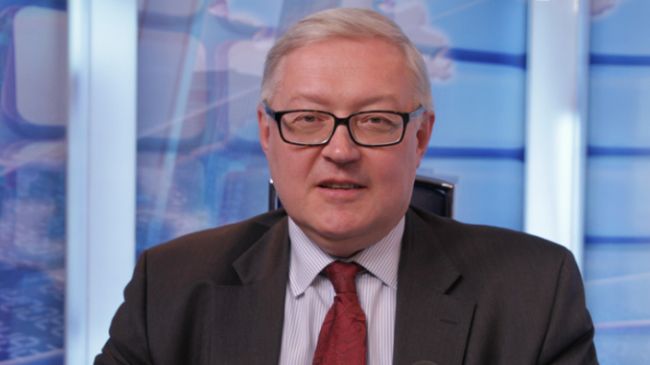
“We note some progress, including on issues that have been the most difficult all the time,” Russian Deputy Foreign Minister Sergei Ryabkov told the ITAR-TASS news agency on Monday.

Iran and the six countries – Russia, China, the United States, Britain, France and Germany – resumed negotiations on the Iranian nuclear energy program in New York on Friday to reach a final agreement aimed at resolving the standoff over Tehran’s civilian nuclear work.

Ryabkov, who is representing his country in the talks, said that “the Russian delegation has put forward additional ideas” in the ongoing nuclear negotiations in New York.

“We are in intensive contacts with other delegations at the level of political directors as well as at the expert level,” the Russian diplomat said.

“There are no grounds for concern. But we must keep working in this mode with concentration,” he added.

Earlier on Saturday, senior Iranian nuclear negotiator Seyyed Abbas Araqchi said “a very good atmosphere prevails” in the ongoing nuclear talks between Tehran and the P5+1 group.

Araqchi said that differences on some issues exist but the two sides have expressed determination to continue the negotiations.

Last November, Iran and the six world powers signed an interim deal in Geneva, which took effect on January 20 and expired six months later.

In July, Iran and the six countries agreed to extend negotiations until November 24 this year after they failed to reach common ground on a number of key issues.


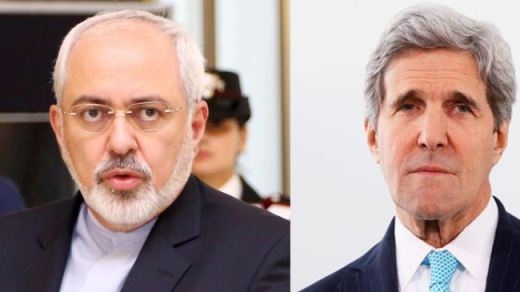
Iran, US FMs discuss key issues in New York

Zarif-Kerry
Zarif-Kerry

The issue of the Islamic Republic’s nuclear energy program was one of the main pivots of the discussion between Zarif and his American counterpart.

The meeting between the two senior officials, which was held at a hotel on Sunday, came on the third day of the latest round of negotiations between Iran and the P5+1 group.

“They [Zarif and Kerry] discussed both the progress that has been made and the work that still needs to be done,” a senior State Department official said after the meeting.

Kerry “noted that this week is an opportunity to make additional progress and stressed that it is our intention to do so,” he added.

The latest round of nuclear talks between Iran and the six countries – Russia, China, the United States, Britain, France and Germany — started at the UN headquarters in New York on Friday morning.

The Iranian delegation is headed by Zarif and the EU foreign policy chief, Catherine Ashton, leads the other party.

The two sides signed a historic interim deal in Geneva, Switzerland, last November. The agreement came into force on January 20 and expired six months later. In July, they agreed to extend the negotiations until November 24.

According to a US official, Zarif and Kerry also discussed the threat posed by the ISIL Takfiri group.

The State Department official further noted that the two high-ranking diplomats “agreed to meet further as needed while in New York.”

The Takfiri terrorists currently control parts of Syria and Iraq. They have threatened all communities, including Shias, Sunnis, Kurds, Christians, Izadi Kurds and others, as they continue their atrocities in Iraq.

The Western powers and their regional allies — especially Qatar, Saudi Arabia and Turkey — are reportedly supporting the militants operating inside Syria and Iraq.

The terrorist group has links with Saudi intelligence and is believed to be indirectly supported by the Israeli regime.


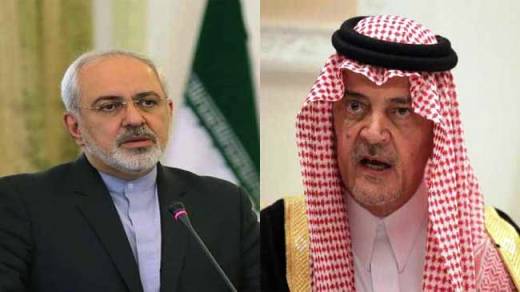
Iran’s Zarif, Saud al-Faisal hold talks in New York

Zarif-Faisal
Zarif-Faisal

The top Iranian diplomat made the comments following a Sunday meeting with Saudi Arabia’s Foreign Minister Prince Saud al-Faisal on the sidelines of the 69th session of the UN General Assembly in New York.

Zarif described his talks with Faisal as a “new page” in bilateral Tehran-Riyadh relations, expressing hope that the meeting would have a positive impact on efforts to restore peace to the region and the world, and protect the interests of all Muslim nations.

The Saudi foreign minister also said Iran and Saudi Arabia are two influential countries in the region, stressing that Tehran-Riyadh cooperation could help bolster peace and security in the region and the entire world.

Faisal also pointed to the sensitive situation in the Middle East and said mistakes of the past must be avoided, so that it would be possible to successfully end the crises plaguing the region.

Iranian President Hassan Rouhani has repeatedly underlined Tehran’s determination to improve ties with neighboring Muslim countries, including Saudi Arabia, saying cooperation between Iran and Saudi Arabia will be vital for regional security.

Iran and Saudi Arabia are divided on a number of regional issues such as the situation in Syria and Bahrain.


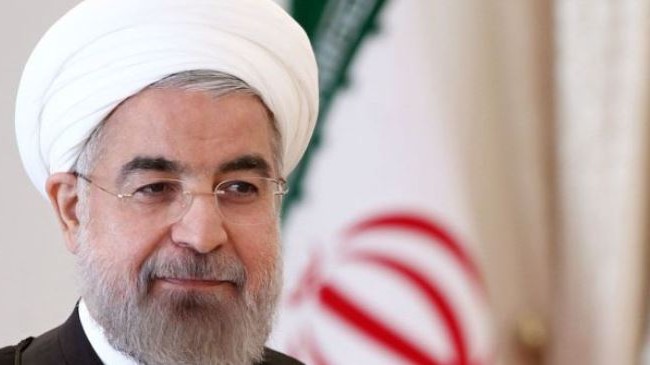
Iran president set to leave for NYC to attend UN meeting

Iran-Hassan-Rouhani
Iran-Hassan-Rouhani

President Rouhani will leave Tehran on Monday to attend the UN annual event, where he is scheduled to deliver a speech on September 25.

On Sunday, the Iranian president held talks with Leader of the Islamic Revolution Ayatollah Seyyed Ali Khamenei and the Leader wished President Rouhani success during his trip.

Moreover, the Iranian president is expected to hold talks with world leaders on the sidelines of the General Assembly meeting.

Iran has ruled out the possibility of a meeting with US President Barack Obama on the sidelines of the UN meeting.

On Wednesday, the Iranian administration’s spokesman, Mohammad-Baqer Nobakht, said President Rouhani has no plan to meet with Obama.

The 69th annual session of the General Assembly opened in New York on September 16 and will end on October 1.

The UN event comes as Iran and the five permanent members of the UN General Assembly – Russia, China, France, Britain and the US – plus Germany are holding a new round of negotiations on Tehran’s nuclear energy program.

On Wednesday, Iran’s Foreign Minister Mohammad Javad Zarif attended a working lunch session with EU foreign policy chief, Catherine Ashton, in New York to review the latest developments concerning the talks aimed at reaching a final accord on Tehran’s civilian nuclear work by the November 24 deadline.

Zarif leads the Iranian delegation and Ashton represents the P5+1 states in the ongoing nuclear negotiations.

In July, Iran and the P5+1 agreed to extend the negotiations until November 24 this year after they failed to reach common ground on a number of key issues.


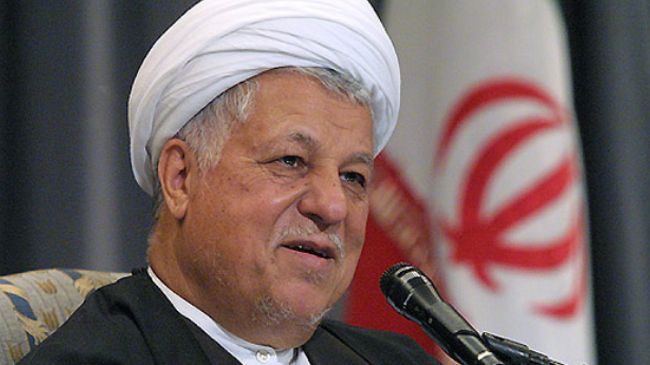
Israel doomed to historic failure: Rafsanjani

Israel doomed to historic failure

Ayatollah Akbar Hashemi Rafsanjani made the remarks in a meeting with Palestinian Ambassador to Tehran Salah Zawawi on Sunday.

“Historic oppression by the Zionists has forced the Palestinian resistance [movement] and people to think about strengthening [their] defensive capabilities and deterrent weapons and there is currently no safe place [for the Israeli regime] in the occupied territories,” Rafsanjani added.

He noted that the global powers’ support of the Israeli regime’s crimes in the Gaza Strip is a “stain of shame” in the record of Western governments, particularly the United States.

“The self-proclaimed advocates of human rights regard crimes against defenseless people, particularly the innocent women and children in Gaza, as a kind of defense against an armed-to-the-teeth army,” Rafsanjani said.

Zawawi, for his part, appreciated Iran’s strategic policies towards the issue of Palestine and said the Palestinians take pride in their convergence with the Islamic Republic.

Israel started pounding the Gaza Strip in early July. Almost 2,140 Palestinians, mostly civilians, including women, children and elderly people, were killed in the Israeli onslaught. Around 11,000 others were injured.

Tel Aviv says 72 Israelis were killed in the conflict, but the Palestinian resistance movement, Hamas, says the number is much higher.


A look at Iranian newspaper front pages on Sept. 21

Iranian Newspapers headlines
Iranian Newspapers Headlines

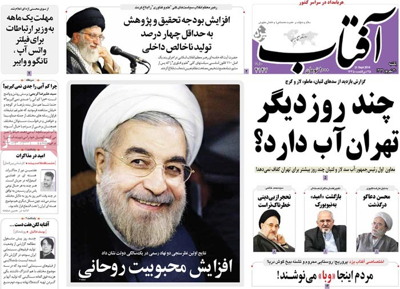
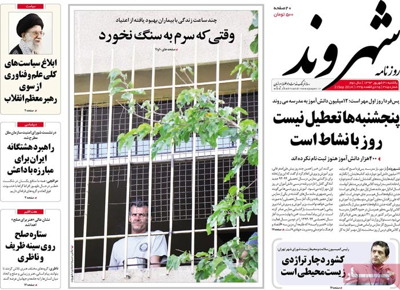
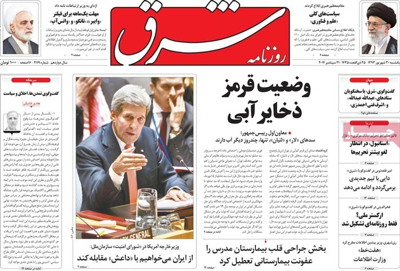
Two big stories dominated the front pages of Iranian dailies on September 21. A raft of instructions by the Supreme Leader, released in the form of general policies in the domain of science, research and technology, was what made headlines and shaped editorials on Sunday. Another major story revolved around shrinking water reserves in the capital Tehran. According to newspapers, a water crisis can be in the offing.

Afkar: “Iran has helped the Iraqi government to prevent Baghdad, Erbil and Amerli from falling to ISIL,” Deputy Foreign Minister Seyyed Abbas Araghchi told the United Nations Security Council on Sept. 19. He also voiced Iran’s readiness to offer assistance to Iraq and any other country threatened by ISIL terrorists.


Afkar Newspaper-09-21


Aftab-e Yazd: “The budget allocated to research should rise to at least four percent of GDP,” the Supreme Leader has instructed officials.


Aftabe yazd Newspaper-09-21


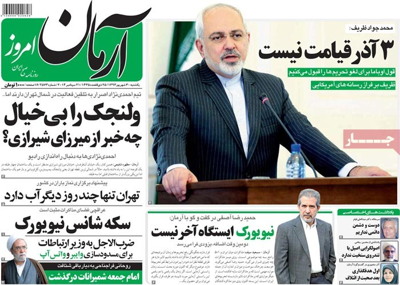
Arman-e Emrooz quoted former Foreign Ministry Spokesman Hamidreza Asefi as saying, “New York won’t be the last stop [for nuclear talks between Iran and P5+1].” In an interview with the daily, Asefi said he is of the opinion that both sides can settle some of their differences through dialog, but a comprehensive deal in New York is utterly inconceivable.

Arman-e Emrooz: Witha water crisis looming and Tehran’s main sources of water likely to last only for a few days, officials have appealed for nationwide prayers for rain.


Arman Newspaper-09-21


Asrar quoted Foreign Minister Mohammad Javad Zarif as saying, “We won’t bow to impositions.”

Asrar: “The number of hardliners in the 10th parliament will go down,”predicted Mostafa Kavakebian, a former reformist MP.


Asrar Newspaper-09-21


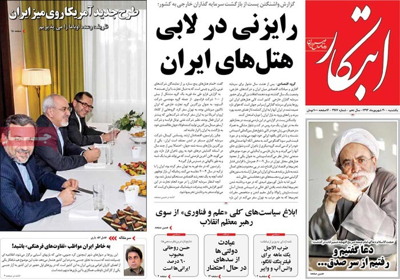
Ebtekar: “Obama’s new plan on the negotiating table,” is the headline of a report about the new initiative put forth by America to hammer out a solution to Iran’s nuclear dossier. The daily mainly dissects an analysis of the plan by The New York Times posted on September 19 under the title of “US hopes face-saving plan offers a path to a nuclear pact with Iran”. The plan says Iran should take away many of the pipes that connect its nuclear centrifuges and won’t have to reduce their number to 5,000 over the next 20 years as it was previously called for by America. The new initiative could pave the way for the two sides to meet halfway.

Ebtekar: “President Rouhani is popular with 60 percent of the Iranians,” is a report which refers to the results of two opinion polls, indicating that the president’s approval rating has reached a one-year high. Among other things, easing political tensions, steering the nuclear talks, holding a phone conversation with US president Barack Obama, offering free food packages to the public, taking numerous measures on the health front, and above all, fostering an atmosphere of hope and liveliness in society have been his impressive accomplishments since he took office in 2013.

Ebtekar:Judiciary Spokesman Gholamhossein Mohseni Ejei in a letter to the minister of communications and information technology has given him one month to block some mobile applications mainly used for messaging and calling, including Tango, WhatsApp, and Viber.


Ebtekar Newspaper-09-21


Etemad: “A haul of 6000-year-old antiques was seized in the north of Tehran.”


Etemad newspaper-09-21


Ettela’at: “Iran has not enriched uranium above 5 percent,” reported the International Atomic Energy Agency (IAEA).


Etelaat Newspaper-09-21


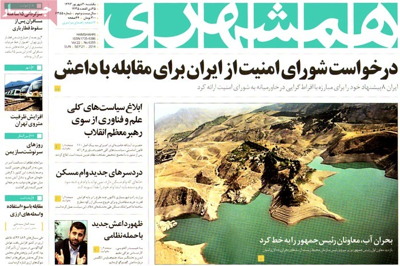
Hamshahri: “The Security Council has called on Iran to help with the fight against ISIL.”

Hamshahri: “Eighty-eight cars are added to Tehran’s subway system, raising its daily transport capacity by 300,000 people.”


Hamshahri Newspaper-09-21


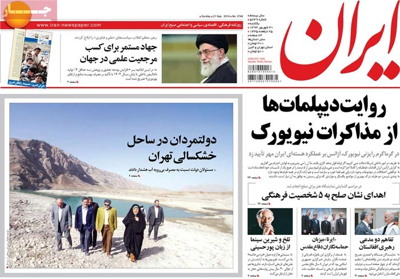
Iran: “Five awarded a medal of peace” is the headline that the daily put on its front page about the opening ceremony of the 2nd festival of “Art for Peace”. An Iranian vocalist, a calligrapher, a manager of a cultural center, an official with the Ministry of Culture and Islamic Guidance and the Iranian foreign minister were the recipients of the award.


Iran Newspaper-09-21


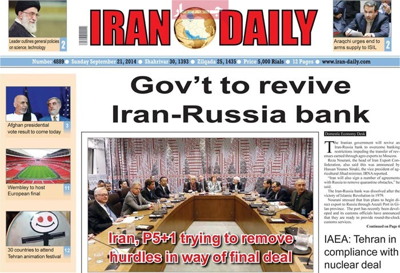
Iran Daily: “Gov’t to revive Iran-Russia bank.”


Iran daily Newspaper-09-21


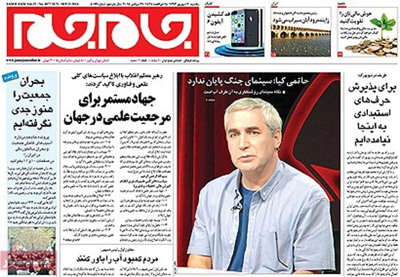
Jamejam: “The population crisis has yet to be taken seriously.”


JameJAM Newspaper-09-21


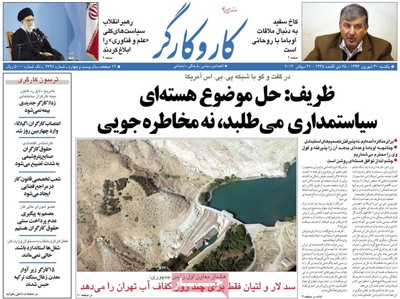
Kar va Kargar: “To work out a solution to Iran’s nuclear dossier, political tact is necessary not adventurism,” said Foreign Minister Mohammad Javad Zarif in an interview with America’s PBS [Public Broadcasting Service].


karo karegar Newspaper-09-21


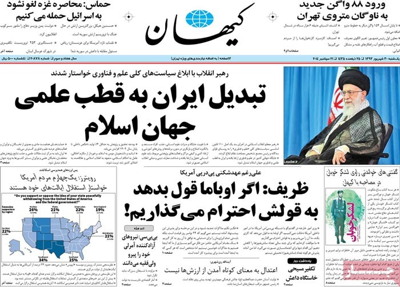
Kayhan: Iran should turn into a hub to register scientific articles and receive research papers from foreign elite and innovators, particularly from around the world of Islam, part of the Supreme Leader’s scientific and technological policy guidelines read.


Kayhan newspaper-09-21


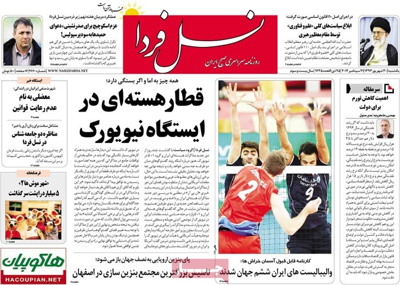
Nasl-e Farda: “The country’s largest gasoline-producing facility is to open in Isfahan,” said the deputy oil minister. Following the production of catalysts in Iran, the countdown is on to having the plant operational, he added.


Nasle farda Newspaper-09-21


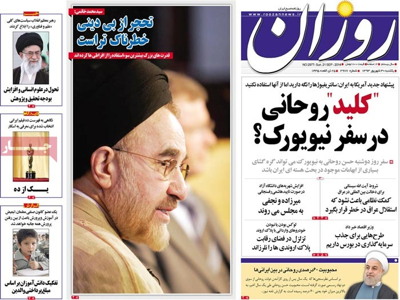
Roozan quoted former President Mohammad Khatami as saying, “Dogmatism is more dangerous than secularism. Major powers have always taken advantage of extremists.”


Rouzan Newspaper-09-21


Shahrvand: “The country is grappling with an environmental crisis,” said the chairman of the Healthcare and Environment Commission of Tehran’s City Council.


shahrvand Newspaper-09-21


Sharq: “Infection prompts the closure of a coronary surgical ward at a Tehran hospital.”


Shargh Newspaper-09-21


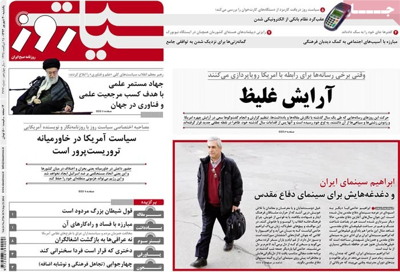
Siasat-e Rooz: Theeditorial of the daily states that US pledges cannot be trusted.


Sisate ruz Newspaper-09-21


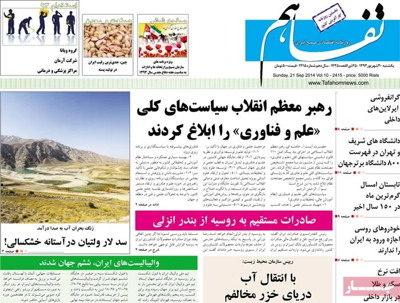
Tafahom: In keeping with Article 110 of the Constitution [which defines the leader’s duties and powers], Supreme Leader Ayatollah Ali Khamenei has outlined the science and technology macro-policies after consultation with the State Expediency Council. The policies communicated to the heads of the three branches of the government and the chairman of the Expediency Council come in six chapters and 32 points.

Tafahom: August of 2014 has shattered records for the hottest August since recording of global temperatures began in 1880.

Tafahom: “The water crisis sounds the death knell for dams of Latyan and Lar” is the news story that reports the comments of First Vice-President Eshaq Jahangiri. He warned that if the problem persists, authorities will have to turn off the tap on excessive water consumers and temporarily stop water supplies to some districts of the capital. He added water reserves behind the two dams are only sufficient for a few days.


Tafahom Newspaper-09-21


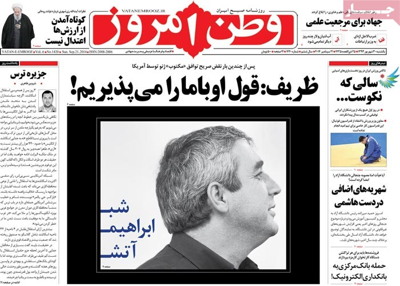
Vatan-e Emrooz: “Moderation does not amount to compromising principles,” said Mohammad Reyshahri, a politician close to President Rouhani.


Vatane emruz Newspaper-09-21


An invitation to a serious life

Farzaneh Sharafbafi
Farzaneh Sharafbafi

There are reports here and there about the shining presence of Iranian scientists in international circles and the success they have pulled off in science and research, but when it comes to air transportation few people know that the first woman who got a Ph.D. in aerospace is the very person whose invention in college years made her Iran’s top student of mechanical engineering.

Today she is the director of Training and Human Resources Development at the Iranian Civil Aviation Organization, head of Iran Air Aviation Training Center, deputy managing director of Iran Air, and a legal expert who arbitrates disputes among airlines. She is also a professor at Amir Kabir University of Technology and Shahid Sattari University of Aeronautical Engineering.

Zan-e Rooz (Today’s Woman) weekly, a publication of Kayhan Institute which is run by Hossein Shariatmadari, featured an interview in its 2431st issue with Farzaneh Sharafbafi about the path she has taken and her goals. What comes below is an excerpt of the interview:

How come you developed an interest in this field?

Basically, a child’s character forms at an early age, between 10 and 12, when s/he faces questions about their future job. When I was a child I would repair home appliances on the fritz. My family provided me with the opportunity to learn through trial and error. I could fix all devices […] and I was very much interested in technical issues. That I could repair the vacuum cleaner prompted my parents to call me “The Engineer” at home. I started with simple things.

My dad was a physics professor at Sharif University and this helped me see many lab tests objectively. I had some inventions like airbag shoes under which I had placed a pair of spring to help the wearer jump higher […]

I was always an active student in school and took extracurricular courses. When I was admitted to university, I wanted to change the world. […] As a young girl, I used to buy tools I needed for my studies instead of what other girls would purchase. I used to sit up to study and at times I would stop reading only after hearing the call for morning prayers. […] I was admitted to Sharif University to study shipbuilding.

Right then mechanical engineering had two subdivisions: aerospace and shipbuilding. The latter was not all that popular among women because its job prospects were dim.

I consulted with a university professor telling him I wanted to study fluid mechanics. He let me know that women were allowed to take up aerospace. That was what I did. […] At first it was hard for others to accept me as an aerospace student and my admission dropped a bombshell at the university. I was ahead of my classmates because I’d tried many things before. […]

What was the focus of your undergraduate thesis?

I chose a scientific topic and went so far as building a plane wing. It turned out to be a good one. […] I built the parts needed for the plane wing all by myself; I tried to learn machining because I wanted to build it all by myself. It was not easy to make a part. Thanks to my thesis, I finished first in mechanical engineering in Iran. […] It all happened when I was pregnant with my first child.

Wasn’t it difficult for you to continue as an expecting mom?

When PCs made their debut in Iran, I had to buy a computer to keep pace with the world’s latest technologies. We weren’t well-off. Instead of buying the items I needed for the coming baby, I bought a PC. It was when I was hired by Iran Air. […] There we were trying to make something to cushion the blow of landing when the plane touched down.

We found a plane, disassembled its wheels and collected the needed items from different places. […] Humans can develop a better sense of appreciation through touching something than just talking about it. I wanted to go ahead and build the item. We did it but we worked our fingers to the bone, so to speak. […]

My first kid was 40 days old when I started my master’s program. Later I became a Ph.D. student in Sharif University. I never skipped class. I attended my first class two days after I gave birth to my second kid. That day when I arrived late, the professor asked where I had been. “I just gave birth to a kid,” I answered. They couldn’t believe their eyes. Normally a woman stays home ten days after delivery. But it was not the case with me.

What did you work on for your Ph.D. thesis?

I studied aircraft structures for MS. I pursued my studies in fracture mechanicsat the PhD level. It deals with a part when it breaks as a result of aging. I picked that since I was working at Iran Air and I could see firsthand that the planes were aging. I wanted to solve this problem.

I wondered if I could find the cause of such breakage and prove it mathematically. It took me about three and a half years to complete it. […]

As for the air industry, I’m seeking to find self-healing parts for planes, something which can repair itself in case of malfunctioning. This may sound hard to believe, but it could be done if we think outside the box. We can copy the models God has placed in nature, for instance, human skin which has a self-healing ability. I floated the idea in a conference. I’m still following that. […]

When I proved the math equation, I was told that I couldn’t release it in Iran and I had to have an essay released through the Institute for Scientific Information (ISI) before getting my Ph.D. I was also told I had to find a foreign professor to register the equation under his/her name. Earlier I had sent an essay to England where a gentleman released it in his own name! I didn’t want to repeat that experience.

I had bad feelings because nobody supported me and I was about to miss a deadline to complete my Ph.D. program. I couldn’t register the work under another person’s name either. Finally I found a place in England which accepted to assess the essay for £600. My husband paid for it and my essay was accepted.

I was asked to go there and personally prove the case. It was a tough situation. I had no visa and it wasn’t an easy job to get to England in a few days. Furthermore, the conference was to be held in Southampton, which was quite a distance from London. At last, I secured my visa after going through many hardships and my husband and I went there. […]

When I arrived at the conference hall having the Islamic covering on, all participants surprisingly asked me, “Have you come from Iran?” and I said yes. They didn’t expect to see me there. An Israeli man who was a full professor was in the front row. He would ask anyone presenting their article two very difficult questions.

I solved the math problem to the best of my knowledge and ended my speech on time. It earned me an almost one-minute standing ovation. When I was asked what my final words were, I turned to the Israeli man and told him that I was ready to answer his questions, if any. “No need for that since everything was perfect,” he said. I felt a sense of pride for the honor I had earned for my homeland.

Do you write poems too?

Yes. I have two books to be printed: a book of poetry and a novel. When I wanted to tell my children bedtime stories, I would go for adventure stories and at the same time try to convey ethical points to them. The story book I’ve written is full of ethical points and morals. I’ve taken them from folkloric stories to provide children with instructive tales. […]


Iran committed to rationalism in nuclear talks, won’t bow to ballyhoo

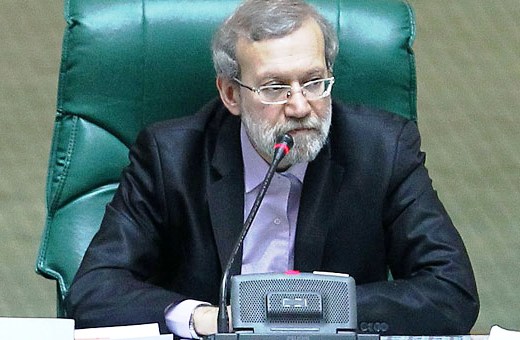
Ali Larijani-Iran Majlis speaker

Ali Larijani, the Speaker of the Islamic Consultative Assembly said on Sunday that Tehran acts rationally in nuclear talks with P5+1 and is not interested in American political charm offensive which is nothing but a waste of time.

According to Islamic Republic News Agency (IRNA), the top MP, who was speaking at an open session of parliament, said the Americans are mistaken if they think they can resort to ballyhoo to restrict Iran’s nuclear activity.

He went on to say international law, rather than a bring-it-on mentality, should be at the center of talks. “In the run-up to the talks the Americans made some ill-thought-out comments to create deviation in the negotiations. […] Later at the negotiating table when they failed to impose their will and learned about Iran’s positive role in regional security – a realization which was somewhat reflected in the comments of their secretary of state at the UN Security Council – they started to resort to illogical Dos and Don’ts and issue threats.”

[…]