Wednesday, December 24, 2025
Home Blog Page 493

North Korean missiles show improved accuracy in Russian attacks on Ukraine: Reuters

Russia Ukraine War

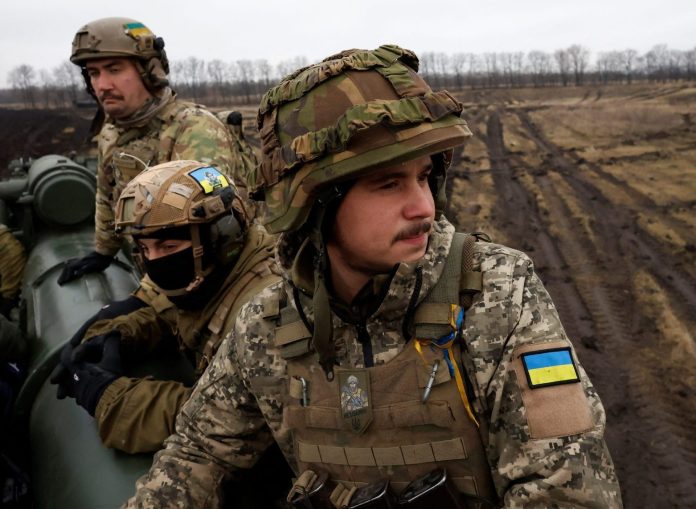
Analysts believe North Korea is using the battlefield as a testing ground for its missile technology, enhancing its weapons for future use.

North Korea has supplied Russia with artillery ammunition, ballistic missiles, and soldiers since the start of the full-scale invasion. Military cooperation deepened after Russian President Vladimir Putin signed a mutual defense pact with North Korean leader Kim Jong Un in June.

A military source told Reuters that more than 20 North Korean ballistic missiles fired at Ukraine have displayed improved accuracy in recent weeks, with their deviation from the intended target reduced to 50-100 meters.

A Ukrainian official familiar with North Korean missile strikes also allegedly confirmed the information, according to Reuters.

Reports indicate that North Korea has provided Russia with over 5 million artillery shells and at least 100 short-range ballistic missiles, including KN-23/24 types.

Pyongyang has significantly advanced its missile programs in recent years, developing short- and medium-range systems that allegedly can carry nuclear warheads.

Elsewhere, North Korean troops who had been deployed to Russia’s Kursk Oblast since last fall to support Moscow’s war effort have reportedly withdrawn from frontline positions.

Yonhap news agency, citing South Korean intelligence, reported on Feb. 4 that North Korean soldiers had not been engaged in combat since mid-January.

Ukraine’s military intelligence chief, Kyrylo Budanov, denied reports that North Korean soldiers have not been seen on the front line for weeks.

Ukraine’s forces have been operating in Kursk Oblast since launching a cross-border incursion in August 2024, seizing approximately 1,300 square kilometers (500 square miles) of Russian territory.

Ukraine regaining nuclear weapons ‘not going to happen’: US

Russia Ukraine War

“The chance of them getting their nuclear weapons back is somewhere between slim and none,” Kellogg said in an interview with Fox News.

“Let’s be honest about it, we both know that’s not going to happen.”

His remarks follow Ukrainian President Volodymyr Zelensky’s recent comments suggesting that if Ukraine’s NATO accession remains blocked, the U.S. should provide an alternative security guarantee, including nuclear weapons.

“The president said we’re a government of common sense,” Kellogg continued.

“When someone suggests that, consider the outcome or potential — use your common sense.”

Zelensky acknowledged that gaining NATO membership could take “years or decades” and raised concerns about how Ukraine would defend itself in the meantime.

Ukraine formally applied to join NATO at the onset of Russia’s full-scale invasion in 2022 but has yet to receive an invitation, with countries such as the U.S., Germany, Hungary, and Slovakia resisting its entry.

As Trump pushes for negotiations to end the war , Russia has made a complete ban on Ukraine’s NATO accession one of its core demands.

Ukraine relinquished its Soviet-era nuclear arsenal under the 1994 Budapest Memorandum, joining the Treaty on the Non-Proliferation of Nuclear Weapons (NPT) in exchange for security assurances from the U.S., U.K., and Russia.

Moscow later violated the agreement by occupying Crimea and parts of eastern Ukraine in 2014 and launching a full-scale invasion in 2022.

While the war has renewed discussions on whether Ukraine should rebuild its nuclear deterrent, Kyiv maintains that NATO membership remains its best security guarantee and has no plans to develop nuclear weapons.

Kellogg will attend the Munich Security Conference from Feb. 14 to 16, where he will meet with world leaders to discuss Russia’s war in Ukraine and assess positions on negotiations.

“As you develop the plans to end this carnage, you have to make sure that you’ve got the feel of everybody in play,” Kellogg stated, adding, “Once we get to have these face-to-face discussions, then you can really kind of work … on concessions.”

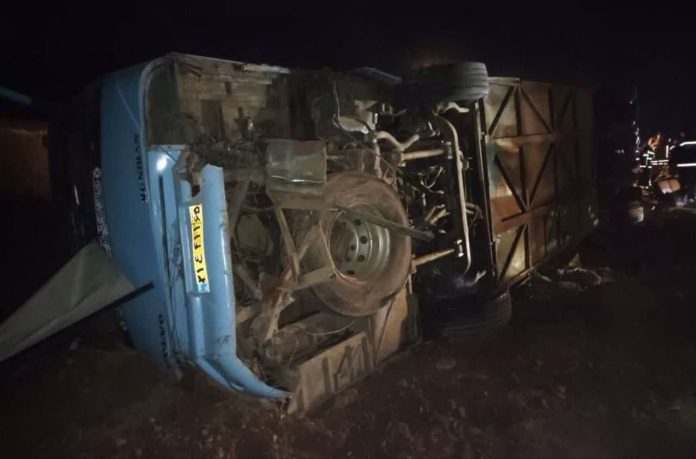
6 students killed, 27 injured in bus accident in southeastern Iran

Expressing her deep condolences in a statement, the Minister of Roads and Urban Development, Farzaneh Sadegh, mourned the loss of the students and extended sympathies to their families.

The minister has ordered a thorough investigation into the accident to determine its causes.

The director general of roads and urban development of Kerman province, and the director general of road transportation and freight of the province, visited the accident site and the hospital to investigate the causes of the incident.

The bus accident occurred while the students were returning from a school trip.

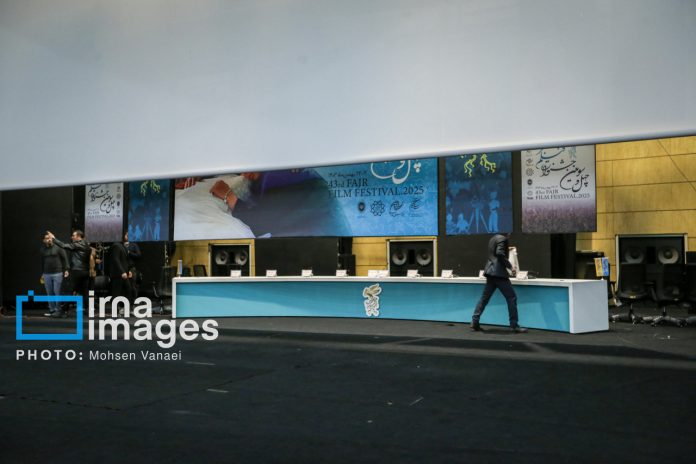
43rd Fajr Film Festival: Day 7 highlights

This year’s festival features 33 films competing in the prestigious Simorgh Award section, with an additional four films vying for honors in the animation category. Notably, 13 of the competing films are debut works, showcasing emerging talent in Iranian cinema.

More in pictures…

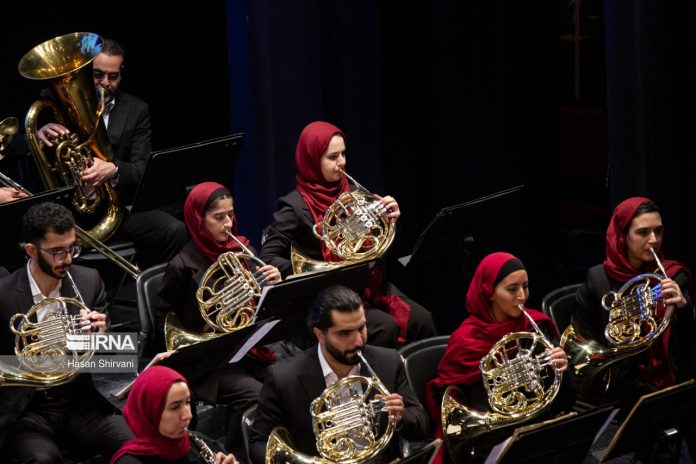
40th Fajr Music Festival to be continue with competitive spirit

The festival, taking place from February 12-18, aims to introduce and honor the best works of Iranian musicians, elevate the art of music, enhance the auditory taste and culture of its audience, and protect the national identity based on Iranian and religious teachings.

Mahdavi said this year’s event includes both competitive (Barbad Award) and non-competitive sections, focusing on national unity.

The competitive section covers categories such as vocal and instrumental albums (traditional, regional, classical, fusion, children and youth, orchestral, and film music), research (music books, theses, and dissertations), live performance awards (Western classical and Iranian classical music), composition (focused on national unity), music and lyrics, singles, and film scores.

A total of 226 entries were received, including 33 audio albums, 14 music books, 10 theses, 39 compositions, 10 music and lyrics, 39 music and media works, 42 singles, and 2 film scores.

The Barbad Award, a prestigious trophy named after the renowned Sasanian-era musician, will be presented to the winners.

Originally introduced in 1977, the award has a rich history, although it was discontinued after the Islamic Revolution and later reintroduced in 2016.

Iran warns US about repercussions of oil-related bans

Baqaei said the US government’s move to sanction a group of legal and natural persons accused of involvement in the sale of Iranian crude oil is completely unjustified and contrary to international norms and standards.

The spokesperson for the Ministry of Foreign Affairs emphasized that the new US administration’s decision to exert pressure on the Iranian people by obstructing Iran’s legal trade with its economic partners is an illegitimate, unlawful and violative act.

He reminded the US government of the international responsibility over the matter.

Baqei added that the Islamic Republic of Iran holds the United States responsible for the consequences and repercussions of such unilateral and bullying actions.

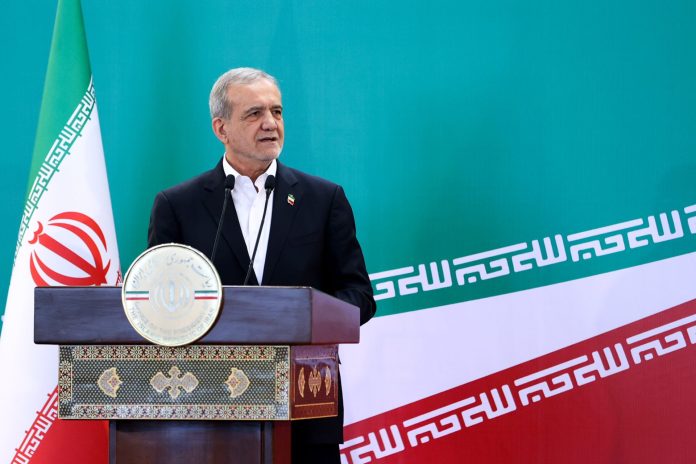
President Pezeshkian stresses Iran not pursuing nukes, war

“We are not pursuing nuclear weapons. Our dear Leader of the Islamic Revolution [Ayatollah Seyyed Ali Khamenei] has issued fatwa against it,” he told foreign ambassadors and envoys in Tehran on Thursday.

“Even those who think they can push this country toward nuclear weapons cannot do so because the doctrine of the Islamic Republic of Iran does not, under any circumstances, accept the mass killing of innocent people,” Pezeshkian added.

Iran’s nuclear doctrine is based on Ayatollah Khamenei’s fatwa categorically banning the production, possession and stockpiling of nuclear weapons and other weapons of mass destruction.

Pezeshkian said verifying the peaceful nature of Iran’s nuclear program is not difficult.

“Whenever inspectors (from the International Atomic Energy Agency) have wanted, they have come and inspected. They can come and inspect a hundred more times. When we have no such intention, they should not keep saying every day that Iran is pursuing nuclear weapons.”

Such baseless claims against Iran, Pezeshkian stated, come from the occupying regime of Israel, an entity that “has violated the sovereignty of all nations in the region—yet human rights advocates claim it is merely defending itself.”

“Who displaced the people of Gaza from their homes and turned them into refugees? A displaced person has to to defend themselves. Any free human being, when deprived of their rights, will inevitably stand up. The world will only see peace when those who claim to uphold human rights respect them regardless of ethnicity, race, or religion.”

Addressing the ambassadors of Islamic countries, Pezeshkian stressed that “Iran seeks sincere relations for the mutual exchange of experiences.”

In 2015, Iran proved the peaceful nature of its nuclear program to the world by signing the Joint Comprehensive Plan of Action (JCPOA) with six world powers.

However, Washington’s unilateral withdrawal in 2018 and its subsequent re-imposition of sanctions against Tehran left the future of the deal in limbo.

In 2019, Iran started to roll back the limits it had accepted under the JCPOA after the other parties failed to live up to their commitments.

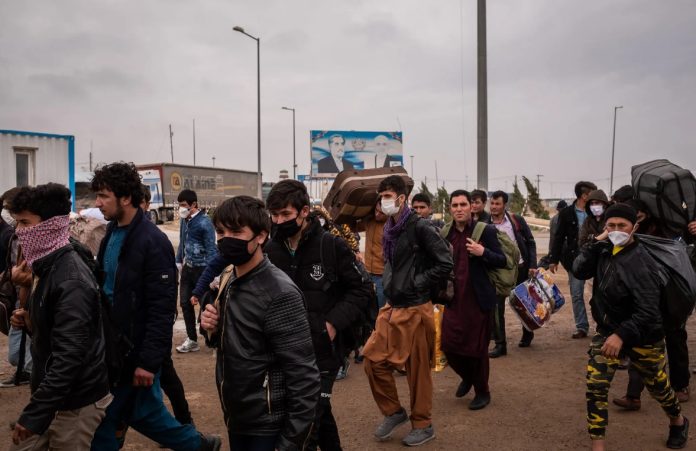
Iran Interior min.: Unauthorized foreign nationals have taken many job opportunities, expulsion is inevitable

Afghanistan refugees in Iran

Addressing the status of foreign nationals in the country, Momeni noted that unauthorized immigrants have been repatriated following an agreement with the International Organization for Migration.

However, he acknowledged that some of those expelled attempt to re-enter the country.

To address this challenge, the government has prioritized three key measures: reinforcing physical and electronic border security, enforcing stricter immigration laws, and imposing tougher labor regulations to minimize the re-entry of deported individuals, he added.

He emphasized that in addition to repatriating unauthorized foreign nationals, strict actions will be taken against employers who hire them.

The government aims to ensure that labor opportunities remain available for Iranian citizens by strictly regulating employment policies.

Momeni reiterated Iran’s historical and cultural ties with neighboring countries but stressed that due to the country’s current circumstances, the expulsion of unauthorized foreign nationals is unavoidable.

Momeni affirmed that identifying and deporting these individuals remains a top priority.

Unofficial sources say 10 million Afghan refugees are in Iran.

Israel’s West Bank aggression displaces 26k from Jenin and Tulkarm camps

Farha Abu al-Haija, a member of the Popular Committee in Jenin Camp, said 17,000 people have been forcibly expelled from the Jenin camp, home to over 24,000 registered Palestinian refugees.

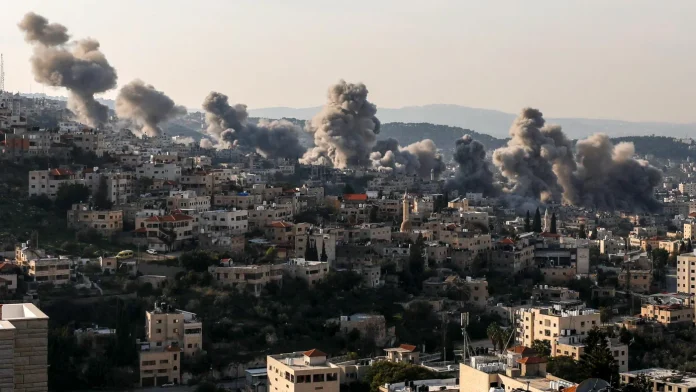
For the past two weeks, the Israeli army has besieged, invaded and bombed the camp and its surroundings.

The UN agency for Palestinian refugees, Unrwa, has announced that large parts of the camp have been completely levelled in a series of detonations, estimating that at least 100 houses have been destroyed or heavily damaged.

On Sunday, Israeli forces simultaneously blew up nearly 20 buildings on the eastern side of the camp after rigging them with explosives, the Palestinian state news agency reported.

Israeli forces have prevented movement inside and residents have been forced to flee under shelling and explosions.

Abu al-Haija stated the Israeli army has also expelled families living in the vicinity of the camp, where they also blew up a building composed of 20 flats, leaving 200 residents homeless.

The Palestinian health ministry added Israeli forces have killed at least 70 people in the West Bank since the start of the year.

Abu al-Haija told Middle East Eye that displaced residents have fled the violence to different places in Jenin and its countryside, which have also been affected by the military campaign.

Palestinian families are now hosting up to 20 displaced people in their homes amid a lack of basic amenities such as electricity and water.

“Both the displaced families and the families who are receiving them are financially strapped. Prior to the Israeli military campaign, the camp was besieged by the Palestinian security services for 48 days. People have been without work for three months and have been unable to secure their basic daily needs, including food,” Abu al-Haija said.

Weeks before the Israeli operation, the Palestinian Authority launched a large-scale security campaign in Jenin that involved besieging the city, shooting at unarmed civilians and clashing with local fighters.

Abu al-Haija, who also works with an organisation that provides psychological support to women and children, added that due to the Israeli siege, no one knows the full extent of what is happening inside the camp or the damage being caused.

Jenin’s residents, who have endured repeated military raids for the past two years, say the violence and intensity of the current assault exceeded even the notorious invasion of the camp during the Second Intifada in 2002.

“The families in Jenin are in shock by the magnitude of the raid. It is similar to what happened in Gaza, only this time it’s an area of ​​just one square kilometre,” Abu al-Haija continued.

In parallel with its military operation in Jenin, the Israeli army is also conducting an incursion in the Tulkarm refugee camp, which has so far displaced at least 9,000 Palestinians from their homes.

Displaced residents have sought shelter in halls, clubs and centres in the city of Tulkarm, or in the homes of their relatives.

Suhail Salman, an activist and political figure in Tulkarm, said the Israeli army has been deliberately targeting the fabric of daily life in the camps by destroying civilian infrastructure, residential buildings, cutting off basic services like water and electricity.

Salman emphasised that this tactic aims to attack the right of return for Palestinian refugees, a central issue that has long been a barrier in negotiations between Israel and Palestine.

“The evidence for this is that the genocide in Gaza, the assault on the camps in the West Bank and the attack on Unrwa are all happening simultaneously with the goal of evacuating the camps and creating an uninhabitable environment for the population by halting any development of life within them,” Salman told MEE.

Two Israeli laws went into effect last week that ban Unrwa’s operations in Israel and in “areas under Israeli sovereignty,” as well as prohibiting any contact with the agency. This move has been supported by former US President Donald Trump.

The UN agency, which has been operating without US funding for almost a year, provides aid, health and education services to millions in the Palestinian territories, as well as the millions of Palestinians living in refugee camps in the neighbouring countries of Syria, Lebanon and Jordan.

“The spearhead of this attack on Unrwa is the Americans, and we heard Trump’s latest statements about the displacement of the people of Gaza to Egypt and the people of the West Bank to Jordan. So the process of displacement is ongoing,” Salman added.

Salman believes that the destruction, bombing and sabotage campaign in the West Bank is designed to force camp residents to leave.

The activist stressed the need for Palestinians to put their internal affairs in order and agree on a political programme that would counter Israel’s plans.

“When the Israeli army blew up 20 buildings in the Jenin camp, it was filmed and broadcast on satellite channels. This is a blatant challenge to the whole world and the human rights system,” he said, adding, “It is clear that the world is reformulating itself so that Israel has the upper hand in the region.”

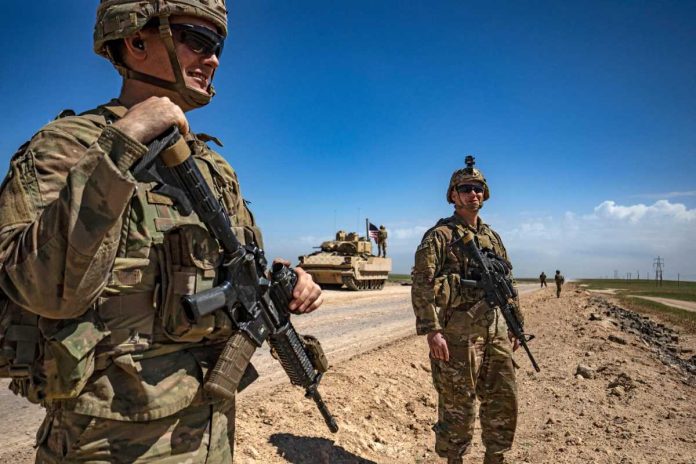
Kurdish militias: Not yet notified of US plan for Syria withdrawal

US Forces in Syria

SDF spokesman Farhad Shami made the comments hours after US media reported on the plan. The armed group – a key ally of the US-led coalition fighting ISIL (ISIS) in the region – controls a large swath of northeast Syria, accounting for about one-third of Syria’s territory.

“Of course, ISIS and other malicious forces are waiting for the opportunity of the US withdrawal to reactivate and reach the state of 2014,” Shami said.

Hours earlier, NBC News reported, citing two unnamed Pentagon sources, that the administration of US President Donald Trump is drawing up plans to withdraw US troops from Syria in either 30, 60 or 90 days.

Trump was directly asked about the prospect of withdrawing troops last week, saying his administration would “make a determination on that”.

“Syria is its own mess. They got enough messes over there. They don’t need us involved in every one,” he added.

Trump, who continually vows an “America First” foreign policy predicated on ending US military engagement abroad, initially pushed for withdrawing US troops from Syria during his first term from 2017 to 2021.

He abandoned the plan amid pushback from within his own administration, with officials warning of a backslide in the anti-ISIL fight and the implications of abandoning Kurdish allies in the region.

But speculation over the future of US troops in Syria again grew following the toppling of Syrian President Bashar al-Assad in December by a rebel coalition spearheaded by the Hayat Tahrir al-Sham (HTS) rebel group. HTS leader Ahmed al-Sharaa has since become the interim leader of Syria.

In the wake of al-Assad’s ousting, former US President Joe Biden’s administration remained adamant that US forces would remain in Syria to prevent a resurgence of ISIL, which controlled large portions of Syria before its territorial defeat in 2019.

In December, the Pentagon said about 2,000 US military personnel remain in Syria. The number is a significant increase from the roughly 900 troops Washington had said were there in recent years. The US first deployed troops to Syria in 2014.

For its part, the Trump administration has publicly vowed to continue to target ISIL fighters across the region. Analysts have also warned that a blanket freeze on foreign aid has cut some administrative and security funding to Kurdish fighters overseeing ISIL prison camps in Syria, further risking instability.