Wednesday, December 24, 2025
Home Blog Page 492

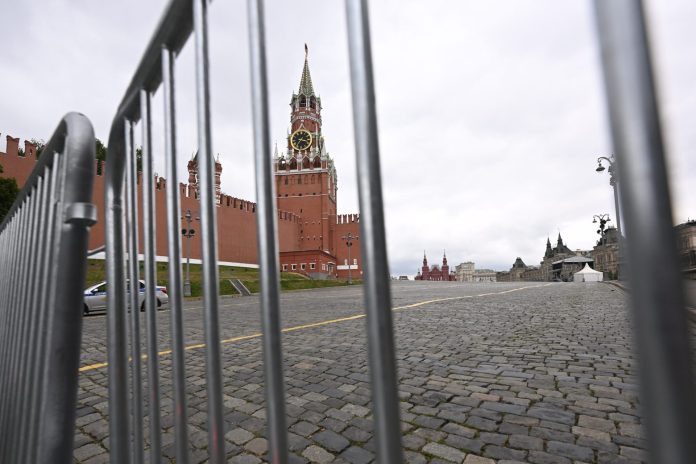
US says ready to ‘double down’ on Russia sanctions

Kremlin

Trump has vowed to negotiate a resolution to the conflict and has reportedly given Kellogg 100 days to hammer out such a settlement. Last month, he warned of new sanctions if Moscow refused an unspecified settlement, but emphasized that he is “not looking to hurt Russia.”

In an interview with the New York Post, Kellogg said the current sanctions against Russia are “only about a three” on a scale of one to 10 in terms of how painful the economic pressure can be.

“You could really increase the sanctions — especially the latest sanctions,” he stated in an apparent referral to the EU’s 15th package of sanctions that target Russian oil production and exports.

Kellogg has blasted former US President Joe Biden’s strategy of promising to provide Ukraine aid for “as long as it takes, as much as it takes,” claiming that is not a strategy, but “a bumper sticker.”

“The pressure just can’t be military. You have to put economic pressure, you have to put diplomatic pressure” on Russia, he told the newspaper, adding that “If there’s anyone who understands leverage, it’s President Trump.”

Trump’s team has been working hard to end the conflict, the envoy stated, adding that in the end both Kiev and Moscow will have to give up something in order to halt the “industrial-size” killing.

Kellogg also refuted a recent Bloomberg report claiming he would present a peace plan at next week’s Munich Security Conference.

Trump has repeatedly stated that he is ready to speak with Russia’s President Vladimir Putin as soon as possible to negotiate an end to the Ukraine conflict. The Kremlin previously said it was waiting for clear signals from the White House.

Putin, however, has stated that any negotiations under the current conditions would be legally “illegitimate” due to Volodymyr Zelensky’s 2022 decree prohibiting talks with Russia.

Ukraine’s Foreign Minister Andrey Sybiha told reporters this week that the country’s officials hope to have several meetings with Kellogg and US Secretary of State Marco Rubio at the Munich conference.

Zelensky claimed on Thursday that Trump still has no official plan for how to stop the conflict, adding “Our teams will be working together because there can’t be a separate plan, created without us.”

He has urged Trump to adhere to the principle of “peace through strength” by preserving US military assistance to Kiev and increasing pressure on Russia, forcing Moscow to meet Ukrainian demands during potential peace negotiations.

Russia has insisted that hostilities will only end if Ukraine commits to permanent neutrality, demilitarization and denazification, while also recognizing the territorial “realities on the ground.” Moscow has stated that it remains open to negotiations but insists that any agreement must include “reliable, legally binding agreements eliminating the root causes of the conflict.”
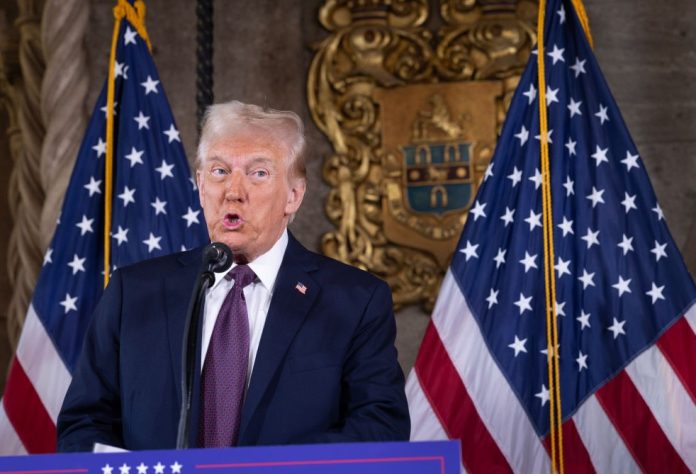
“No rush to do anything” in Gaza: Trump

Donald Trump

“Where basically the United States would view it as a real estate transaction, where we’ll be an investor in that part of the world. And no rush to do anything,” Trump said.

“We wouldn’t need anybody there. It would be supplied and given to us by Israel. They’ll watch it, in terms of security. We’re not talking about boots on the ground or anything, but I think we’ll — the fact that we’re there, that we have an investment there, I think would go a long way to creating peace.”

The president had stated the US “will take over” Gaza in a news conference earlier this week, prompting swift condemnation for one of the most stunning recent foreign policy suggestions by a sitting US president.

The White House press secretary announced Wednesday that Trump was advocating for a “temporary” resettlement of Palestinians, a view that, on its surface, appeared at odds with the plan Trump revealed a day earlier to “resettle people permanently” in a different area. He has suggested redeveloping the coastal enclave into a “Middle Eastern Riviera.”

The president noted in his comments Friday that the idea has been “very well-received,” but didn’t offer specifics. His suggestion has been roundly criticized by leaders in the Middle East and Europe.

Trump stated that he just wanted “to see stability” in Gaza and that it would “lead to great stability in the area for very little money, very little price.”

“We wouldn’t need soldiers at all, that would be taken care of by others,” he added.

Iran condemns Washington’s sanctions on ICC, says US shielding Israeli crimes

Esmael baghaei

In a statement on Saturday via X, Baqaei said Washington is routinely using sanctions and coercion to serve its global interests.

He described the latest US move—announced on Friday—as a dangerous escalation of its policy of illegal punitive measures, now extending to international institutions like the ICC, which are dedicated to upholding justice and international law.

The sanctions came in response to the ICC’s decision in November to issue arrest warrants for Israeli Prime Minister Benjamin Netanyahu and former Minister for Military Affairs Yoav Gallant over war crimes and crimes against humanity in Gaza.

The enclave has been subjected to over 15 months of intense Israeli military aggression, resulting in more than 47,500 Palestinian deaths, the majority being women and children.

Baqaei stressed that these sanctions were deliberately designed to obstruct the ICC’s investigation into Israel’s war crimes and ongoing atrocities against Palestinians.

“Punishing the ICC for probing Israel’s brutal crimes is yet another example of US complicity with an occupying apartheid regime,” he asserted.

Iran unveils new nuclear achievements in Isfahan, more underway in Yazd

Mohammad Eslami

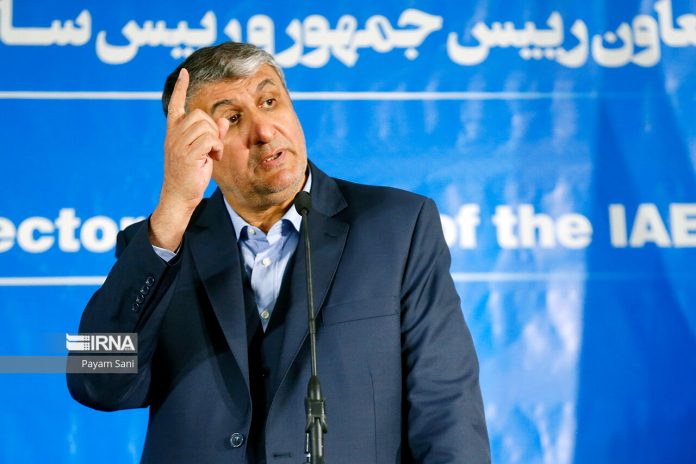
Mohammad Eslami unveiled four key nuclear achievements in Isfahan, including advancements in radiopharmaceutical technology, fuel storage casks (CASK), and the production of Iridium Hexafluoride (IR46).

The latter is a significant breakthrough, with applications in brachytherapy, low-dose medical radiography, and industrial radiography, particularly in the oil and gas sector.

In Isfahan, the Shahid Raisi Nuclear Site (UCF) also saw the commissioning of a comprehensive technical safety testing facility, a semi-industrial sintering furnace for fuel pellets, and a resistance welding (RW) device.

The facilities are expected to enhance Iran’s nuclear infrastructure and fuel production capabilities.

Iran now joins a select group of nations capable of producing IR46, opening opportunities for international exports amid harsh Western sanctions.

On Saturday, Eslami will is going to the Saghand region in Yazd to oversee the launch of radioactive material extraction and processing operations at the Shahid Soleimani Mining and Industrial Complex. The project focuses on exploiting radioactive elements and their associated resources.

Israel torturing Palestinian workers to death: Report

Wehbe Badarneh, the legal advisor to the Arab Workers Union, told news outlet Arab48 that they had submitted an inquiry to Israeli security and military centres regarding the whereabout of 46 Palestinian workers from Gaza following their disappearance on 8 October 2023.

The Israel Prison Service gave the Palestinian union a vague response confirming the deaths of 34 workers who died inside detention centres under “mysterious circumstances or from heart attacks”.

Badarneh explained that until 7 October 2023, 18,000 Palestinians from Gaza were in Israel with work permits.

However, after the attack, the Israeli authorities withdrew work authorisations for Palestinians from the occupied West Bank and Gaza.

Badarneh said that while it was easier for those coming from the West Bank to go back, the situation was much more difficult for workers from the besieged enclave.

“A state of chaos prevailed in the border area between Israel and Gaza, called the ‘Gaza Envelope’, and there was confusion there and no one knew who the workers were and who the infiltrators were after the walls were breached and collapsed,” Badarneh told Arab48.

“Because of this chaos, the Gaza workers were scattered, some of them feared returning to Gaza, some of them found refuge in the West Bank, and some of them were detained, arrested and brutally and horribly abused at the military checkpoints in retaliation for the events that took place in the Gaza Envelope.”

According to Badarneh, hundreds of workers from Gaza were transferred to Israeli-run prisons, including the infamous Sde Teiman and Ofer detention centres, which have been exposed for the conditions and abuses Palestinians abducted from Gaza experienced.

At first, the Arab Workers Union received numerous complaints and requests from Palestinians who had lost contact with their loved ones, Badarneh continued.

“When the number of these complaints reached hundreds, we saw that the issue was serious and that it was no longer about some individuals,” he added.

The union contacted several Israeli authorities and services, but its requests for information were met with indifference and contempt. However, that did not stop the group from persevering in its efforts.

“We did not leave a single door untouched,” Badarneh said, adding, “Yes, we went to the Supreme Court, and as a result, the Israeli newspaper Haaretz published a report on the subject.”

The journalist who worked on the report was later told by a spokesperson for the Israeli military that the bodies of some workers who were killed at the checkpoints were transferred to Gaza for burial via the Erez checkpoint.

Some of the Gaza workers who took refuge in the West Bank and were hosted in a Palestinian military college in Jericho gave some information about those who had been abducted.

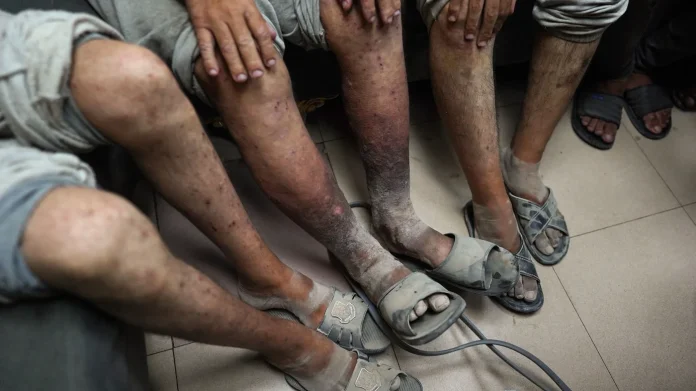
According to their testimonies as well as videotapes that were circulating at the time, detained Palestinian workers were subjet to brutal beatings, stripping and various methods of torture.

As a result, the union came to the conclusion that the Palestinian workers had been tortured to death in Israeli detention.

Subsequently, it submitted a report to trade unions in Europe, where members suggested joining complaints filed against Israel at the International Court of Justice (ICJ).

“Workers from Gaza were also summoned to Geneva to testify before the International Labour Organisation, despite all the difficulties and restrictions,” Badarneh added, in reference to the obstacles to free movement imposed by Israel.

A number of previous investigations and reports, including testimonies gathered by Middle East Eye, appear to corroborate Badarneh’s statement.

“We were tortured, no one had mercy on us. They took our money and clothes, they left us naked for three days while they tortured us. We were hungry, they kicked and punched us, stepped on our heads, until now I am in pain,” one worker told MEE in November 2023.

That same month, Euro-Med Human Rights Monitor revealed that thousands of labourers from Gaza were subject to “horrific forms of torture” by Israeli forces during their four-week captivity.

“The testimonies state that the workers suffered from unprecedented levels of abuse, including being left without food and water for several days, being tortured, electrocuted and burned, as well as being sexually harassed and purposefully humiliated by urinating on their bodies,” Euro-Med reported.

The organisation added that many Palestinian workers were also abused by their employers, who refused to pay salaries, spit on them and subjected them to humiliation and insults.

Elon Musk warns US to lose next war ‘very badly’

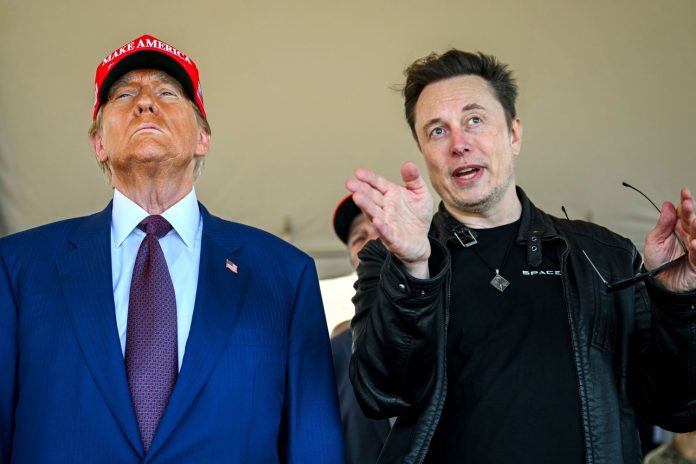
Musk has been appointed as a “special government employee” to lead the Department of Government Efficiency (DOGE) under US President Donald Trump, and is now among his key advisers.

“American weapons programs need to be completely redone. The current strategy is to build a small number of weapons at a high price to fight yesterday’s war. Unless there are immediate and dramatic changes made, America will lose the next war very badly,” Musk wrote on X.

The billionaire has long been a vocal critic of inefficiencies within the US defense sector, arguing that excessive bureaucracy and outdated military strategies undermine national security.

Musk’s DOGE department has actively worked to streamline federal operations, including those related to defense. General Atomics Aeronautical Systems, the maker of the Predator drone, has urged DOGE to reform the Pentagon’s contracting system, calling the current process too slow and bureaucratic to counter threats from nations such as China and Iran.

L3Harris Technologies, a major defense contractor, has provided DOGE with recommendations to improve the defense acquisition system. These include eliminating duplicative Cost Accounting Standard requirements and establishing a central contracting arm within the Office of the Secretary of Defense to manage joint procurement programs.

DOGE has already canceled approximately $420 million in government contracts within its first 80 hours of operations, taking initial steps toward an ambitious goal of reducing federal spending by $2 trillion.

Musk’s critique also extended to specific defense programs. He has been particularly damning of the F-35 fighter jet program, labeling it a “sh*t design” and advocating for a shift toward unmanned systems, which he believes are more effective and economical in modern combat.

Speaking at the United States Military Academy in West Point, New York in February, Musk emphasized the transformative impact of drones and artificial intelligence (AI) on warfare, citing the Ukraine conflict as a prime example.

“The current war in Ukraine is very much a drone war already,” Musk noted, adding, “If there’s a major power war, it’s very much going to be a drone war.”

He called for increased investment in drone production and a significant acceleration in manufacturing, warning against the pitfalls of preparing for past conflicts instead of future ones.

“Countries pretty much are geared up to fight the last war, not the next war,” Musk cautioned.

British MPs slam ‘barbaric’ Netanyahu call for Palestinian state in Saudi Arabia

Benjamin Netanyahu

Riyadh has insisted over the past year that a clear pathway towards Palestinian statehood is a precondition for it establishing official ties with Israel, an idea that Netanyahu threw scorn on in an interview with Israel’s Channel 14 on Thursday.

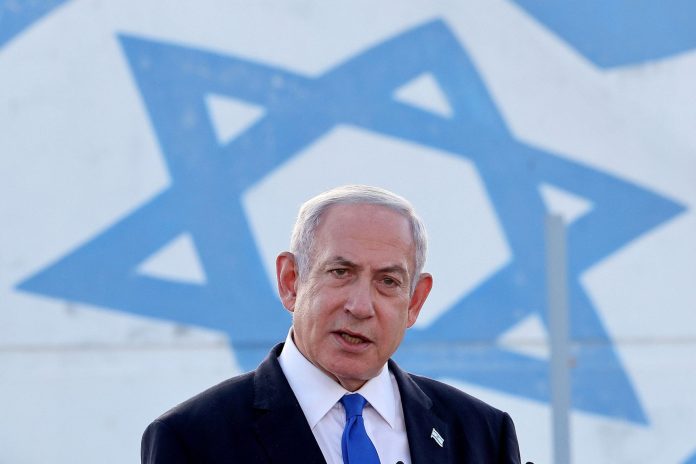
“The Saudis can create a Palestinian state in Saudi Arabia; they have a lot of land over there,” Netanyahu said, dismissing the kingdom’s insistence on the establishment of a Palestinian state .

In comments made to Middle East Eye, Labour MP Afzal Khan, vice-chair of the UK’s All-Party Parliamentary Group on British Muslims, labelled Netanyahu’s proposals “barbaric”.

“Palestinians do not need more displacement. They need a free homeland,” he stated, adding, “Netanyahu’s barbaric proposals would be the forced removal of a population and a plan to ethnically cleanse Gaza.”

Labour is currently in power, and Khan announced the government “has expressed its unequivocal disapproval of any plans to displace Palestinians. We stand firm against such flagrant abuses of international law”.

He urged Netanyahu to “engage with Saudi Arabia’s proposed plans to ensure Palestinians can return to an independent Palestinian state and allow for a secure Israel”.

Another Labour MP, Kim Johnson, told MEE that Netanyahu’s comments were “absurd and insulting”.

“The future of Palestine must be determined by the Palestinian people, not dictated by external powers,” she added, urging the government to immediately recognise a Palestinian state.

“The foreign secretary must object to Netanyahu’s proposal in the very strongest terms.”

Britain’s foreign office declined to comment on Netanyahu’s remarks, but pointed MEE to Prime Minister Keir Starmer’s statement on Wednesday that Palestinians “must be allowed to rebuild, and we should be with them in that on the way to a two-state solution”.

Independent MP Adnan Hussain also attacked Netanyahu’s comments.

“I don’t think the words of a war criminal with arrest warrants out in his name should be given too much credibility or importance,” he told MEE.

“His dreams of the mass displacement of the Palestinian people are his admittance to wanting to carry out further egregious war crimes,” he continued, adding, “Britain should play its part in recognising and upholding the rights and principles clearly outlined under international law.”

This latest development comes as Saudi Arabia and Israel seem to be moving further away than ever from normalising relations – over a year after US officials claimed an agreement was close.

Chris Doyle, chair of the Council for Arab-British Understanding, told MEE that the Israeli prime minister appeared to be “pushing back against the Saudis to make a point”.

“He’s trying to demonstrate as a negotiating stance that he’s not desperate to do a deal with Saudi Arabia,” Doyle said, adding, “But he does want a deal. He wants an historic agreement that will divorce Saudi Arabia from the Palestinian cause.”

Netanyahu made the remarks while on an official state visit to the US, just days after President Donald Trump announced his plan on Tuesday for the expulsion of Palestinians from Gaza to make the enclave the “Riviera of the Mediterranean”, with the US taking over the territory.

Trump claimed that Saudi Arabia was not insisting on a Palestinian state as a condition for normalisation, prompting the Saudi foreign ministry to issue a statement at 4am insisting that the kingdom’s stance on Palestinian statehood was “firm and unwavering”.

Doyle said Riyadh realises “they cannot afford to abandon the Palestinians right now, domestically if for no other reason. The anger would be extreme.”

Andreas Krieg, an associate professor at the Defence Studies Department of King’s College London, agreed.

“I don’t think the Saudis view normalisation as realistic with the current government in Israel in place,” he told MEE.

“This was a political comment made by Netanyahu to appease his base, who are concerned that Netanyahu has to make concessions to the Palestinians to get normalisation with Saudi Arabia,” he added.

“Like with Trump, these are political, populist narratives that could be subject to change if Israel was serious about engaging Saudi Arabia.”

Krieg noted that Netanyahu’s remarks were “completely out of sync with the policies of probably 193 UN member states outside the US and Israel”, all of whom agree that Palestinians have a “right to self-determination within the historic boundaries of Palestine”.

Severe cold wave, heavy snowfall lead to widespread school, office closures in Iran

The Meteorological Organization warned a day earlier of a significant drop in temperatures by up to 15 degrees Celsius, expected to last until Tuesday.

With the arrival of a new cold spell, several provinces have already closed schools, and more closures are anticipated.

Officials report that 19 provinces are bracing for freezing temperatures, with snowfall in some areas reaching up to 100 centimeters.

The Governor of Tehran, Mohammad Sadegh Motamednia, announced that all educational institutions, public and private offices, and banks in Tehran will also be closed on Saturday.

Ali Ahmadnia, the head of the Government Information Center, confirmed that all stock exchanges will remain closed on Saturday. The closures aim to manage energy consumption and ensure public safety during the harsh weather conditions.

Authorities emphasize the necessity of managing energy consumption, particularly gas and electricity.

Trump says he expects to meet Zelensky next week and will “probably” talk with Putin

“I will probably be meeting with President Zelensky next week, and I will probably be talking to President Putin. I’d like to see that war end,” Trump told reporters from the White House.

When asked if the meeting would take place in Washington, DC, Trump replied, “could be Washington well, I’m not going there,” meaning Kyiv.

Trump also referred to discussions he wants to have about the financial and military support the US provides Ukraine, in the ongoing conflict with Russia.

“One of the things we’re looking at with President Zelensky is having the security of their assets,” he said.

“We’re also asking President Zelensky for the security of putting all this money up,” Trump added.

Zelensky will lead Ukraine’s delegation at the Munich Security Conference next week, which Vice President JD Vance and special envoy for Ukraine and Russia, Keith Kellogg, are also scheduled to attend, but not President Trump.

Last week, Trump told reporters that Russia “should want to make a deal” with Ukraine and claimed he would meet with Putin “immediately”.

Since his inauguration last month, Trump’s administration has been sending signals regarding potential peace negotiations between Ukraine and Russia. However, no details have been forthcoming to date. Commenting on the prospect of such dialogue, officials in Moscow have expressed cautious optimism.

Trump reiterated his long-standing point that the conflict would never have started had he been in office in February 2022.

The US president also said that he would like to discuss the “security” of Ukraine’s rare-earth deposits with Zelensky. On Monday, he similarly stated that “we are looking to do a deal with Ukraine where they are going to secure what we are giving to them with the rare earths and other things.”

Trump once again accused NATO’s European member states of expending far fewer resources than the US on supporting Ukraine, promising to “equalize” the situation.

Commenting on Trump’s latest remarks in a post on X, formerly Twitter, late on Friday, Zelensky wrote: “The coming weeks may be very intensive in diplomacy, and we will do what’s needed to make this time effective and productive.”

“Right now Ukrainian and American teams are working out the details. A solid, lasting peace shall become closer,” he predicted.

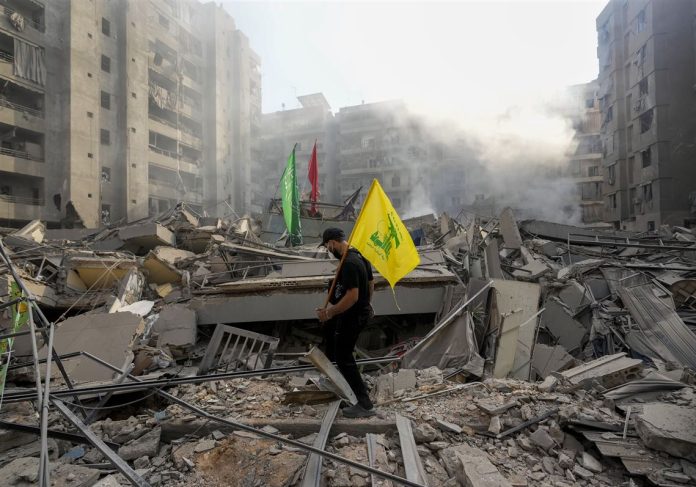
Hezbollah should be omitted from Lebanon government: US

Lebanon War

Washington’s Deputy Middle East Envoy Morgan Ortagus said on Friday after meeting Lebanon’s President Joseph Aoun that she was “not afraid” of the armed group “because they’ve been defeated militarily”. However, she stated that the US has made its continued role in the government a “red line”.

Hezbollah is believed to have been weakened by Israel’s recent war on Lebanon, but maintains a significant political role.

“We have set clear red lines … that [Hezbollah] won’t be able to terrorise the Lebanese people, and that includes by being a part of the government,” Ortagus told reporters.

Ortagus is the first senior US official to visit Lebanon since US President Donald Trump took office and since Aoun was elected president.

Her visit comes amid a stalled cabinet formation process in Lebanon, where government posts are apportioned on sectarian lines. Hezbollah’s ally, the Amal Movement, has insisted on approving all Shia Muslim ministers, keeping the process in deadlock.

Ortagus had been widely expected to deliver a tough message to Lebanese officials about Hezbollah.

Lebanese accounts on X shared photos and videos of a demonstration near Rafik Hariri International Airport in Beirut, held in protest against Ortagus’ statements.

The ceasefire brokered by the United States and France to end the fighting in late November set a deadline of 60 days for Israel to withdraw from south Lebanon, and for Hezbollah to pull out its fighters and arms and for Lebanese troops to deploy to the area.

However, Israeli soldiers have remained in south Lebanon to conduct demolishing operations in border villages and the withdrawal deadline has now been extended to February 18.

Ortagus referred to the new withdrawal date on Friday but did not explicitly say the Israeli army would withdraw from Lebanese territory.

“February 18 will be the date for redeployment, when the [Israeli] troops will finish their redeployment, and of course, the [Lebanese] troops will come in behind them, so we are very committed to that firm date,” she noted.