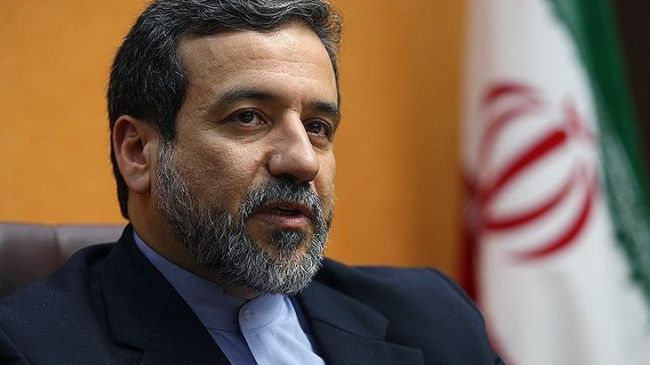
“All nuclear capabilities of Iran will be preserved and no facility will be shut down or even suspended and no device or equipment will be dismantled,” Abbas Araqchi, who is also Iran’s deputy foreign minister for legal and international affairs, said on Saturday.
“We will not retreat one iota from the country’s nuclear rights, but we are fully ready for transparency and confidence-building,” he said, adding that Iran will push ahead with “industrial-scale enrichment” of uranium to meet the country’s civilian needs.
Araqchi also repeated Iran’s call for the removal of all sanctions against the country, saying: “All sanctions should be lifted and the Islamic Republic of Iran will not accept even a single instance of sanctions to remain in place under a [final] comprehensive nuclear deal.”
The Iranian official’s remarks came in response to repeated demands from the West that Iran shut down the Fordow nuclear facility in central Iran.
Meanwhile, US Undersecretary of State Wendy Sherman said on Thursday that the P5+1 group, which is negotiating with Iran over Tehran’s nuclear program, has offered the country ideas that are “equitable, enforceable and consistent” with Tehran’s desire for a civilian nuclear program, claiming that Iran would be responsible for any failure to reach a permanent accord over its nuclear work.
Iran and the P5+1 group of countries – Russia, China, France, Britain, the US and Germany – are in talks to work out a final deal aimed at ending the longstanding dispute over the Islamic Republic’s nuclear energy program as a November 24 deadline approaches.
Sources close to the Iranian negotiating team say the main stumbling block in the way of resolving the Western disputes over Iran’s nuclear energy program remains to be the removal of all the sanctions imposed on Iran and not the number of centrifuges or the level of enrichment.
Tehran wants the sanctions entirely lifted while the US, under pressure from the pro-Israeli lobby, insists that at least the UN-imposed sanctions against Iran should remain in place.
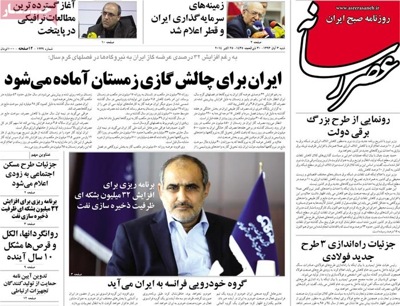
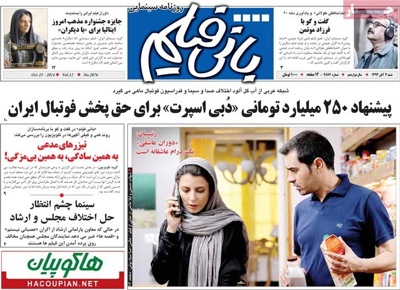
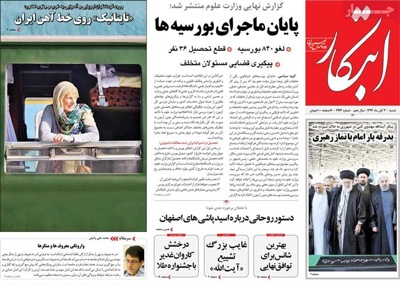
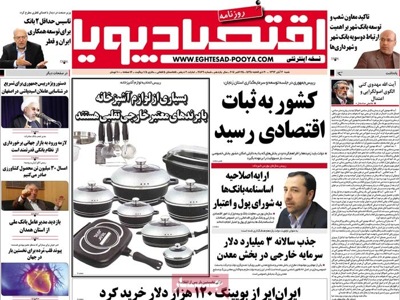
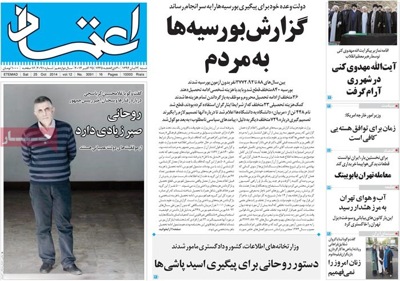
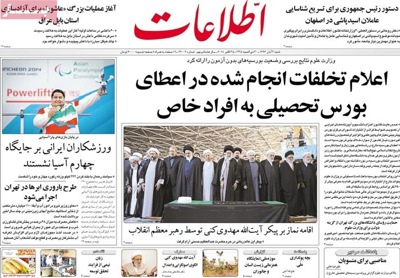
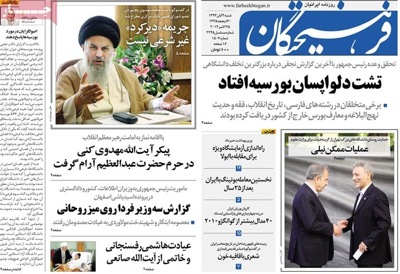
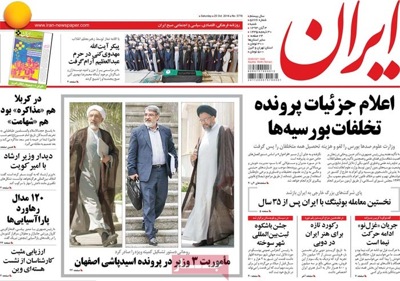
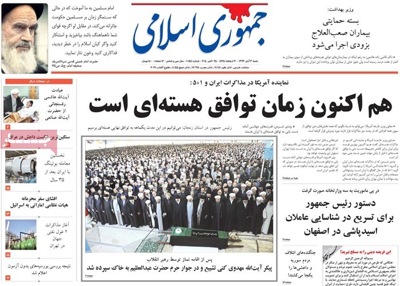
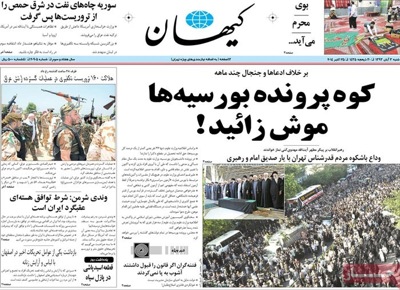
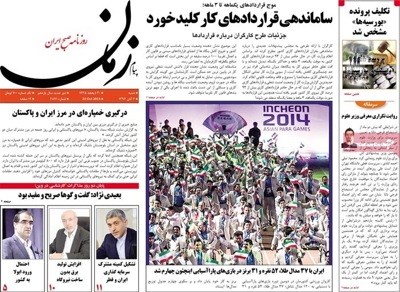
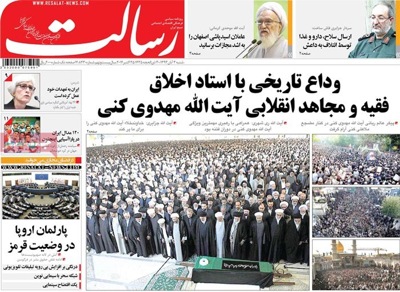
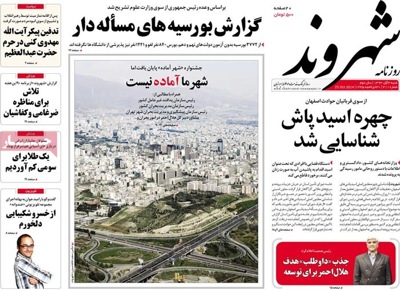
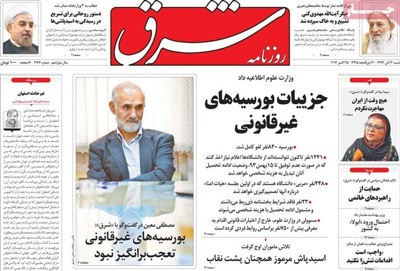
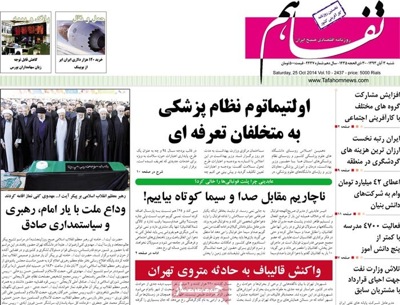
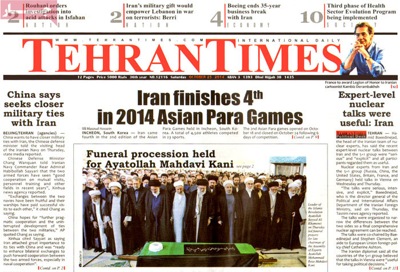
News about the funeral procession of Ayatollah Mohammad Reza Mahdavi Kani, who passed away in Tehran on Tuesday October 21 after he went into a coma on June 4 due to a major heart attack, appeared on the front pages of most Iranian dailies on Saturday. Ayatollah Mahdavi Kani, who presided over the Assembly of Experts, was laid to rest in the Shah Abdol Azim Shrine in Rey, a town on the southern edge of the capital. The stellar performance of Iranian athletes in the Asian Para Games who finished fourth in the overall standings was also among the top stories of the day. Another story which drew a lot of attention was a final report released by the government about the controversial scholarships granted by the previous government to individuals who did not meet the required standards.
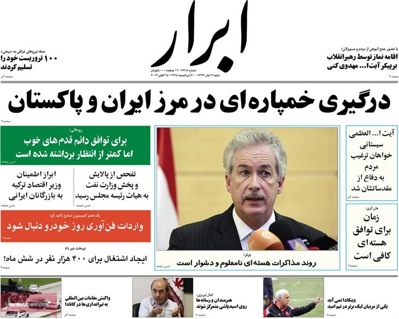
Abrar: “Mortar fire is exchanged along the border of Iran and Pakistan.”
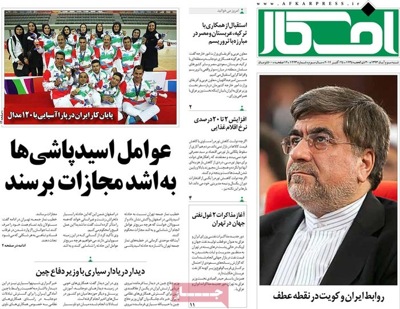
Afkar: “We welcome any mutual cooperation with regional countries, including Turkey, Saudi Arabia, Egypt and other Muslim nations to effectively combat terrorism and extremism,” said Deputy Foreign Minister Hossein Amir-Abdollahian.
Afkar: “Iran’s Navy Commander Rear Admiral Habibollah Sayyari and Chinese Defense Minister Chang Wanquan hold talks in Beijing.”
Arman-e Emrooz: “As few as 54 people owe almost $2 billion in overdue debts to Bank Melli Iran,” Managing Director of the bank Abdolnasser Hemmati said.
Arman-e Emrooz: “Elimination of political parties, and [concepts such as] thinking is impossible,” said President Rouhani.
Arman-e Emrooz: “Rakhshan Bani-Etemad, a renowned Iranian female director, appeared on the red carpet at Abu Dhabi Film Festival.”
Asia: “German journalist of Iranian descent Golineh Atai was awarded Hanns- Joachim Friedrichs-Preis, a prestigious journalism award in Germany.
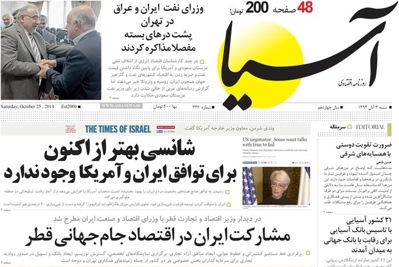
Asia: “Iran’s cooperation in Qatar World Cup 2022. Based on negotiations between Iran’s ministers of trade and economy with their Qatari counterpart, Iranian firms and contractors in different fields will be welcome to help implement some projects in Qatar.”
Asr-e Rasaneh: “A team of French automotive experts is to arrive in Iran,” Managing Director of Iran Khodro Industrial Group Hashem Yekke Zare said.
Asr-e Rasaneh: “Plans are being devised to raise the country’s oil storage capacity by 32 million barrels.”
Bani Film: “Dubai Sport, a UAE-based TV station, has offered over $80 million to get the rights to broadcast Iranian [Premier League] football matches.”
Ebtekar: “European tourists arrive in western and southern Iran.”
Ebtekar: “Mohammad-Taghi Mesbah-Yazdi, a member of the Assembly of Experts, was conspicuous by his absence in the funeral procession of the late Mohammad Reza Mahdavi Kani.”
Eghtesad-e Pooya: “Iran’s mining sector has its sights on attracting foreign investment to the tune of $3 billion each year.”
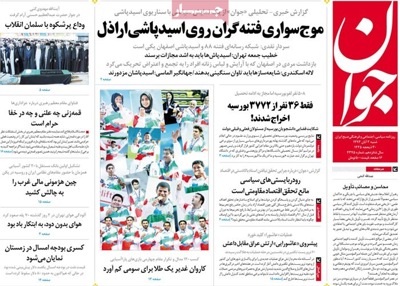
Etemad: “A final report has been released on investigations into whether or not those granted scholarships during the second term of Ahmadinejad met the required standards. Based on the report, as many as 3,772 individuals were given scholarships without passing the required examination; the scholarships of 840 university students have been rescinded and they will have to pay their tuition fees if they are willing to carry on their education; another 36 have been banned from education and will have to pay back all the fees spent on their education, grants of 23 who used the benefits dedicated to the families of those who lost limbs or lives to the war were cut off. A list of instructors – 448 in total – has been sent to their universities for a final decision in their case. A final decision in the case of 729 students has been put on hold due to its potential political ramifications.”
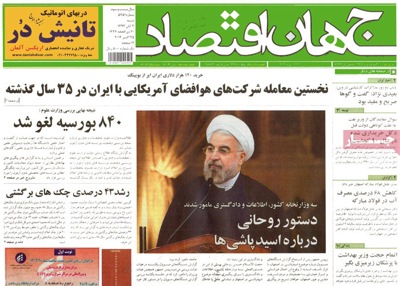
Etemad: “Tehran in business with Boeing; for the first time [since the Islamic revolution]; Iran has bought plane spare parts from Boeing.”
Etemad: “Rouhani has a great deal of patience; some are outraged by the accomplishments of the government,” former Tehran Mayor Gholamhossein Karbaschi said.
Etemad: “Tehran weather has reached an alarming stage; particles coming from desert-like sprawling expanses of land encircling the capital coupled with diesel fumes have darkened Tehran’s skies.”
Ettela’at: “Iran finished fourth in the 2014 Asian Para Games in Incheon, South Korea.”
Ettela’at: “A cloud-seeding initiative will be implemented in Tehran.”
Ettela’at: “President Rouhani has urged the speedy identification [and arrest] of those behind recent acid attacks in Isfahan.”
Farhikhtegan: “Former President Mohammad Khatami and Chairman of the Expediency Council Ayatollah Akbar Hashemi Rafsanjani have paid bedside visits to Ayatollah Yousef Sannei, a former prosecutor general who is hospitalized in Tehran.”
Iran: “Visiting Minister of Culture and Islamic Guidance Ali Jannati has met with the Emir of Kuwait.”
Iran: “Iranian athletes bagged 120 medals in the Asian Para Games in Incheon.”
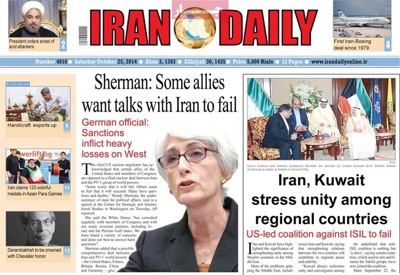
Iran Daily: “German official: Sanctions inflict heavy losses on West.”
Jahan-e Eghtesad: “The number of checks bounced has seen a 43-percent rise.”
Javan: “Tatbir [Striking oneself with a machete which causes blood to flow as a practice in remembrance of Imam Hossein] either performed in public or privately is forbidden,” read a religious edict issued by the Supreme Leader ahead of the mourning ceremonies in Muharram.
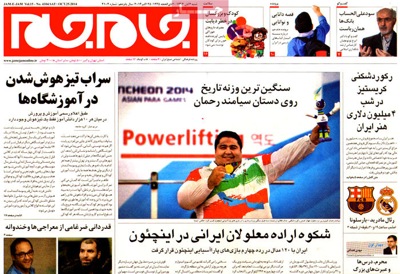
Jamejam: “Iranian artworks fetch almost $4 million at the Christie’s 2014 Dubai Auction.”
Jomhouri Islami: “An aid package to help those suffering from refractory diseases will be implemented soon; although co-payment by patients in state-run hospitals is about seven percent, many patients still cannot afford it,” said the health minister.
Jomhouri Islami: “IS has suffered its heaviest defeat in Iraq.”
Kayhan: “A cross-dresser who was trying to incite violence in rallies against recent acid attacks in Isfahan has been arrested.”
Payam-e Zaman: “Ebola can possibly find its way to the country; an equipped laboratory has been set up to contain the likely outbreak of the disease,” said the health minister.
Resalat: “A historic farewell to Ayatollah Mohammad Reza Mahdavi Kani, a revolutionary figure.”
Shahrvand: “Iranian athletes fell short of one gold medal to secure third berth in the Asian Para Games.”
Shahrvand: “In securing development, recruiting new volunteers is the objective of Iran’s Red Crescent Society,” said the head of the society.
Sharq has quoted Mohammad-Taghi Mesbah-Yazdi, a member of the Assembly of Experts, as telling those who seek to prevent vice, “It’s imperative to avoid acts that stoke tensions.”
Sharq: “In a chat with the daily, those active on the political front threw their weight behind strategies devised by former President Mohammad Khatami.”
Tafahom: “Iran tops the list of regional nations with lowest tourism costs.”
Tehran Times: “China says seeks closer military ties with Iran.”
In a Saturday message to Saudi Arabia’s King Abdullah bin Abdul-Aziz, Chairman of Iran’s Expediency Council Ayatollah Akbar Hashemi Rafsanjani said that a repeal of the verdict will “disappoint” those seeking to sow discord among Muslim sects and will further strengthen Shia-Sunni bonds.
“It is expected that at this juncture [in the Middle East region], where seditions are targeting the very essence of the Islamic Ummah, the reversal of the death sentence would result in the settlement of challenges in the Muslim world”, the message said.
On October 15, Nimr was sentenced to death at the Specialized Criminal Court in the Saudi capital, Riyadh. In reaction to the sentence, people took to streets in the city of Qatif in Eastern Province to condemn the move. There have also been demonstrations in other countries.
The senior Saudi Shia cleric, who was attacked and arrested in July 2012, is accused of delivering anti-regime speeches and defending political prisoners.
On Friday, a senior Iranian cleric warned Saudi Arabia against executing the death sentence.
“We warn Saudi Arabia… that this government will pay a heavy price for a [possible] execution of a Shia cleric,” Ayatollah Mohammad Ali Movahhedi Kermani told worshippers at the weekly Friday prayers in Tehran.
Human rights activists say the sentence issued for Sheikh Nimr was politically motivated.
Amnesty International has denounced the verdict, calling it “appalling”.
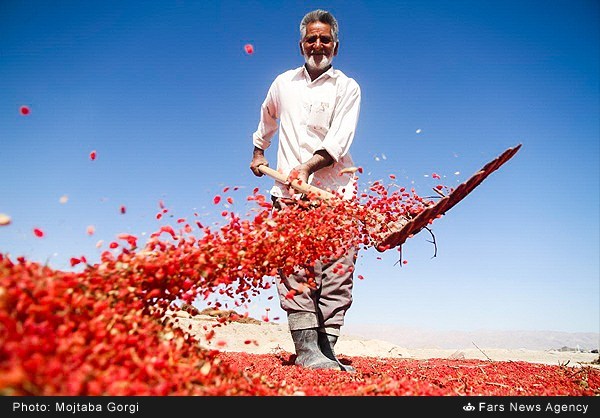
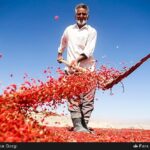
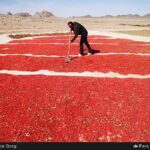
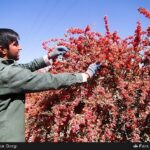
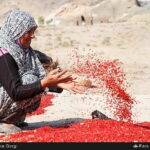
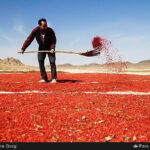
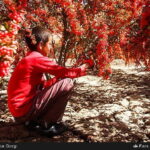
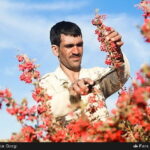
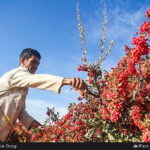
It is harvest season in Iran where pickers are all out in the open to pick berberis. Pickers find it somewhat difficult to collect berberis thanks to their thorny shrubs, but it is a labor of love for many.
Berberis vulgaris are the evergreen shrubs found throughout the temperate and subtropical regions of the world. Iran is the title holder when it comes to berberis cultivation. It accounts for almost 95 percent of the berberis produced around the world.
The berberis, which has dark red to violet foliage, is edible and rich in vitamin C. The dried fruit of the plant which is called Zereshk in Persian is widely used in cooking, giving a tart flavor to food. It is also used for medicinal purposes.
The following are beautiful images Fars News Agency placed on its website on October 22 on the harvest of berberis in a town in South Khorasan province:
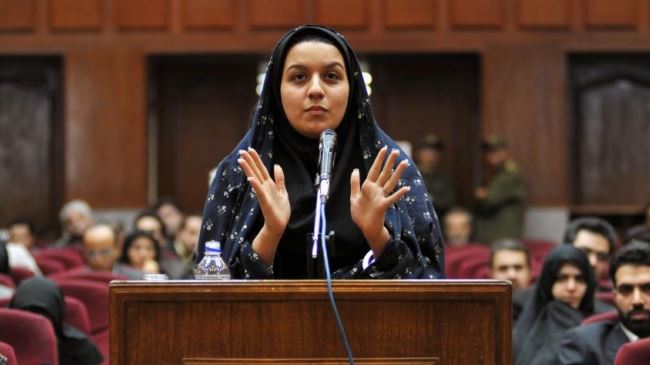
Iranian woman Reyhaneh Jabbari has been executed inside a prison near the capital Tehran after she was convicted of murdering a man in a criminal case seven years ago.
Reyhaneh was hanged in the early hours of Saturday after being found guilty of killing Morteza Abdolali Sarbandi in July 2007.
The 26-year-old woman has confessed to the murder claiming that she had stabbed the man to death to defend herself against attempted rape, but her claims were rejected based on further investigations and crime scene evidence.
Jabbari’s execution was halted earlier this month in order to give her lawyer more time to convince the victim’s family to pardon her.
Under Islamic law, a convicted murderer is put to death if the victim’s family demands execution.
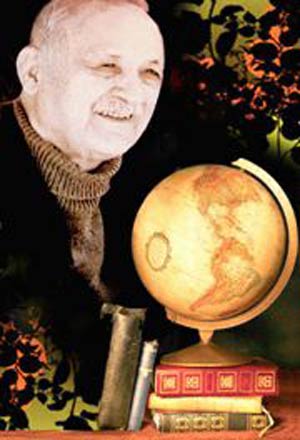
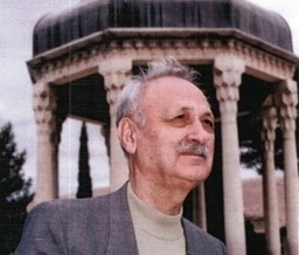
Abdolhossein Zarrinkoob, a prominent Iranian historian and author was born on March 19, 1923 in Borujerd, western Iran. Before being admitted to Tehran University in 1945 to study Persian Literature, he taught at schools of his hometown. Ten years after admission into the capital’s flagship university, he received a Ph.D. under the supervision of Badiozzaman Forouzanfar. In 1956, he began to teach Islamic History, History of Religion, and History of Sufism courses at Tehran University.
He also taught arts courses in Tehran before moving abroad where he held faculty positions, among other places, at prestigious universities such as Oxford, Sorbonne, Princeton, and University of California. He penned several books on literature as well as on Persian and Islamic history and translated several others. Abdolhossein Zarrinkoob passed away on September 15, 1999 in Tehran at the age of 78. To mark the anniversary of his demise, Etella’at newspaper published an article this unforgettable literary figure had penned. The following is the translation of the article in its entirety:
Almost 200 years ago during the Age of Enlightenment in Europe, prominent French author and philosopher Montesquieu used an extremely sarcastic language, which was a fixture of his Persian Letters, to prompt Parisians, astonished by the strange stories involving Rica and Usbek, to curiously ask each other “How can one be an Iranian?”
When the nonchalant Parisians put down the book, their curiosity which was likely to have been a product of their imagination, slipped away too. The thousand-plus unanswered questions Montesquieu had in mind about the chaotic times he lived in seemed to push that question into the sideline. I came across the same question during a French literature course in school; I have since thought about an answer again and again.
How can one be an Iranian? No doubt, ethnicity and race are not the determining factor in being an Iranian. Since the reign of Achaemenians, many different ethnic groups including Persians, Scythians, Turanians, Greeks, Arabs and Tartars have mixed in this land and the idea of having a pure Iranian race now sounds childish. Still the generations that have emerged as a result of their intermixing have all lived in Iran and for Iran. And even if they had pure blood circulating in their bodies, they could not have been any more Iranian.
Although language plays an undeniable role in the evolution of Iranian character, assumptions that residents of this land are Iranian simply because of a language which is free of borrowed words would be nothing but a dream. The fact that some Iranians frown on the use of foreign words may stem from their patriotic zeal, but their insistence [on declaring Farsi off-limits to foreign words] is bound to limit our linguistic maneuverability and deprive our culture of what it has achieved over the centuries.
The fact of the matter is that the pinnacle of our Islamic culture which came before the Mongol invasions and conquests was mostly Iranian. One cannot simply build on the fact that a language has been influenced by a foreign language to suggest that itis far from being a source of pride.
Throughout this period, Iranian culture has been a jewel in the crown of Islamic culture. And the presence of some Koranic words in Farsi is proof that Iranian culture has had spiritual influence in the world of Islam. It could have been impossible for Iranian culture to sweep the entire world of Islam from the Ottoman Empire all the way to the Indian Subcontinent and not borrow a number of Arabic words that have been used in the holy Koran.
Can you think of one language which has been as exposed as Persian to foreign words and has maintained its purity? In everything which is described as Iranian heritage and Iranian culture, there are traces of other ethnicities, but this has not compromised the integrity of the Iranian heritage.
Iran’s role in the world civilization
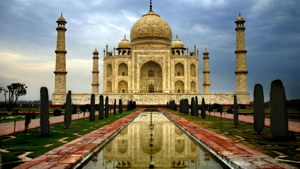
Taj Mahal
The world civilization owes Iran a debt of gratitude big enough to immunize it against any doubt about the integrity of Iranian culture, both before and after Islam. Humanity is indebted to Iranian culture when it comes to literature, arts, morality and religion.
In literature it is not just fable that owes Iran a debt of gratitude. Goethe, André Gide and almost all prominent writers of other genres such as Romanticism and Parnassism have learned a thing or two from Iranian poetry, drama, and storytelling.
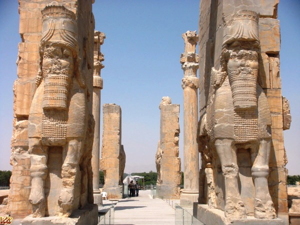
As far as music is concerned, Iran left an indirect impact on European music through Arabic music. In architecture, the Iranian role in bringing together the dreams of the east and west was conspicuous even before the emergence of Islam. Researchers believe that in the absence of Iranian architecture, the Byzantine architecture would not have made so much progress. (1) During the Islamic period, Taj Mahal, this marble mausoleum, which symbolizes the peak of artistic talent, was partly built by architects who had received training in Iran.
The religion and ethical standards Iran has introduced to the world are of great importance too. In a world where ethical ideals of Assur and Babylon had promoted savagery, the constant struggle between good and evil in which human tendency toward the former would be viewed as contribution to building a virtuous world amounted to an ethical revolution for the entire humanity.
Centuries before the emergence of Christianity, Mithraism turned fraternity among humans into the cornerstone of the bond among its followers. The idea of integrating major faiths, which seemed elusive even as recently as during the monarchy of Nader Shah and Akbar Shah, was very close to materialization under [Prophet] Mani.
In promoting Islam, Iranians strove as much as other Muslims did. Nowhere did Islamic mysticism manifest itself more concretely than in the works of Attar, Mowlana and Hafiz. The investment Iranians made in the global culture market was big enough to create unprecedented credit for Iran in spiritual transactions on the international stage. It is true that Iran owes the world a lot for helping it build a magnificent heritage; what Iran has offered the world in return is so significant that its absence will definitely interfere with the way the world handles things.
From dream to reality
No doubt, just like a civil society, no member of the international community can play in the real world the role of an imaginary castaway like Robinson Crusoe and serve as a jack of all trades and view itself as totally independent of others. In a world where all nations are linked through a visible or invisible chain, Iranians cannot limit themselves to their past and keep dreaming of reviving the Achaemenian and Sassanid dynasties.
In the past, Iranian culture has borrowed positive elements from other cultures and has in return lent them valuable things. This tradeoff which manifests Iranian flexibility and zeal has lent its culture an air of integration, linking it with eastern and western cultures.
But Iranian culture has a noble human element that symbolizes its spirit. It is thanks to this human element that Iranian culture finds its way into other cultures, and even soothes the aggressor and helps blend it in itself. This human element has been so delicately built into each and every Iranian custom that identifying and separating it is now difficult.
Iranians are Iranian without having to be a supermarket of jealously and deception like Usbek in Montesquieu’s Persian Letters; without being as abased and foxy as James Morier’s Hajji Baba and without being infatuated with the West in every aspect of life like the protagonist of Jafar Khan has returned from Abroad. In the absence of literature, natural delicacy, flexibility and intellectual tolerance and without their historic quest for justice, Iranians won’t be Iranian.
It is true that the level of Iranian politeness and delicacy might at times verge on flattery which is typical of slaves. But morphologically speaking, the shamelessness and promiscuity that have come to our land along with infatuation with the West can be a legacy of the snatch-and-run attitude of the cavemen. Tolerance might be at odds with the totalitarianism which is in practice in many modern societies. In the past the same practice helped create a vast empire for Cyrus and failure to uphold the same principle played a role in the defeat the empire suffered at the hands of Alexander.
Justice and tolerance
Justice and tolerance were just like two wings that helped Iranian culture fly to the pinnacle of humanity in the past. As Herodotus has put it Deioces, the founder of Iranian monarchy, came to power just because he upheld justice which also played a role in ideology. Ahura Mazda was a judge and an advocate of justice and his resurrection day was meant to uphold justice.
In Iranian mythology, Zahhak and Afrasiab, who symbolized injustice and deviation from the path of Ahura Mazda, are said to be Aneran – which means non-Iranian. Because of the injustice they did to fellow humans, they are not viewed as Iranians by those who have created those myths. Justice and tolerance which Zahhak and Afrasiab have disregarded are the principal components of Iranian culture.
The first Iranian empire which was founded by Cyrus had a constitution which enshrined tolerance and respect for the viewpoints of others. I have described it again and again as Cyrus-style tolerance. Thanks to the same tolerance, the Greeks were given a chance to make their presence felt in the Achaemenian land. As a famous Greek Philosophy historian (2) says what had been banned by Athenian narrow-mindedness came into existence in Ionia, part of Achaemenian territory where the earliest Greek philosophy books were written. One should credit the proverbial Iranian tolerance and respect for the viewpoints of others for that.
Thanks to inevitable incidents, this spirit of justice and tolerance did not materialize, but it remained a pillar of Iranian culture in the post-Islamic era. That Shiites supported the administration of justice as a pillar of faith caused a rift between them and Sunnis. Besides, books on literature, morality and politics praised justice as the loftiest of causes.
As for tolerance, the impact was so huge that mystic figures described the differences among religions as a war of words and Hafiz said the war involving 72 nations was only an excuse. The conflict erupted because they failed to identify the true path and thus opted for myth. Centuries before Sartre and Russell, our mystic figures objected to war. In a world where Christians formed an alliance with Mongols to kill Muslims, Sa’di said, “All humans are members of one frame.”
Abdolhossein Zarrinkoob
If Iranians have had an opportunity to offer something to the rest of the world, it has come at a time when justice and tolerance have prevailed in their society. For instance, at a time when Medieval Tartar justice was in place and these two elements were absent from Iranian society, colorful flatteries which were designed to deceive the fool came in the form of qasidas by Farrokhi, Anvari and Zahir. Mystic concepts which fill Iranian poetry with lofty humanitarian concepts came from scientific forums and Khanqahs [places for spiritual retreat and character reformation of Sufis] which provided shelter to justice and tolerance when they were in trouble.
It is true that at some stages in history like during the reign of Anushirawan, supporters of Mazdak, [who was a Zoroastrian prophet] were mistreated. Those things happened when justice and tolerance were somewhat forgotten. But radical approaches were not in line with the spirit of Iranians, and scholars of the past never willingly approved of such stupid measures and injustice. These rash measures pale in comparison with the relatively sustainable moderation of Iranians.
Those who are familiar with different aspects of human nature in dramatic situations definitely know that the most moderate of individuals go through critical moments too. Sudden excitements of a moderate soul do not take away his/her justness, similarly fleeting episodes of immoderation in the long history of an ethnic group are no proof that it does not believe in the principles of justice and tolerance.
Iranian culture has a language whose integration of a number of non-Persian words with Dari lends it dynamism and makes it unforgettable. It is true that this language is not pure. Does the fact that individuals such as Abu Moslem, Shah Abbas and Nader Shah were partly Arab and Tartar make us doubt their being Iranian identity?
The language Hafiz, Sa’di, Khayyam and Mowlana employed was the true language of Iranian culture. Inclusion of a number of non-Iranian words in this language will do nothing to diminish our interest in it. It is said that when British Orientalist Edward Browne came across a scientist who could speak Farsi, he’d set aside any other language. “We need to speak in Farsi, because when you speak that language you feel your language is more humanistic in nature.” Don’t the Iranians who speak in foreign languages with their children or those who write in English in workshops and hospitals feel ashamed when they hear this quote from Edward Browne?
A closer look at Iran’s past
When I think about Iran’s past, I take pride in the fact that the Iranians have not killed fellow humans or destroyed the world in the name of religion or freedom; in the fact that they have not massacred the residents of territories they have captured; in the fact that they have not enslaved their enemies; in the fact that they have offered shelter to the Greeks and have accommodated Armenians; and in the fact that they have freed Jews and their prophets from captivity in Babylon.
I also take pride in the fact that they have not launched Crusades and have not held Inquisition hearings; in the fact that they have had nothing similar to Saint-Barthélemy and have not used guillotine to behead their opponents; in the fact that they do not view gladiator fights or bloody games involving angry bulls as entertainment; in the fact that they have not uprooted native Americans and have not pushed Boers to the edge of extermination; in the fact that they have not developed torture machines to frighten their opponents; and in the fact that if there were some horrible punishments in practice during the reign of certain Sassanid kings, they have always looked at them as evil phenomena. The fact that unlike other old nations Iranians have not exhibited moral defects gives me a sense of calm and pride.
How can one not be Iranian?
If the question of Montesquieu and curious Parisians is once again posed to me – How can one be an Iranian? – I have a clear-cut answer; one which comes in the form of a question itself: How can one not be an Iranian? I believe the new generation and the ones that follow to see the continuity of Iranian culture and history can proudly produce the same answer. To do that they need to hold on to this moral and human element that already exists in Iranian culture. Besides, at a time when lofty human goals are tumbling, we need to make as much effort as possible to keep hopes alive that Iranians in the future will remain as impeccable as those who have lived in the past.
However, if the day comes when the intervention of modern-day figures limits the dynamism of our language and deals it a blow, when our delicate literature gives way to violence and compassion-free, shameless behavior, when our quest for justice is replaced with revengeful savagery, when Cyrus-style tolerance is replaced with censorship of ideas, when our love of good is supplanted with selfishness, when the curiosity of Parisians is coupled with discontent and indignation and the same question – Iranian? How can one be an Iranian? – is bitterly asked, I hope that the tone of those who ask this question is full of praise for those who love Iran.
(1). Talbot Rice, “Persia and Byzantium” in “Legacy of Persia” 85.
(2). Zeller, “Outlines of the History of Greek Philosophy” 1955/23.
President of UNESCO’s General Conference Hao Ping visited Kashan historical sites on Friday.
Hao Ping, who is in Iran to attend a ceremony to commemorate registration of the Burnt City in the UNESCO’s World Heritage List, accompanied by Iran’s Ambassador to UNESCO Ahmad Jalali and Deputy Head of Cultural Heritage, Handicrafts and Tourism Organization Mohammad Hassan Talebian visited historical sites in this town.
On the sidelines of the visit, Jalali said that the main aim of Hao Ping trip to Iran is to get acquainted with Iran’s activities in the fields of protecting cultural heritage and development of education.
President of UNESCO’s General Conference told IRNA that Iran has played an important role to build the world civilization.
Hao Ping added that Iran has been able to protect its historical sites very well.
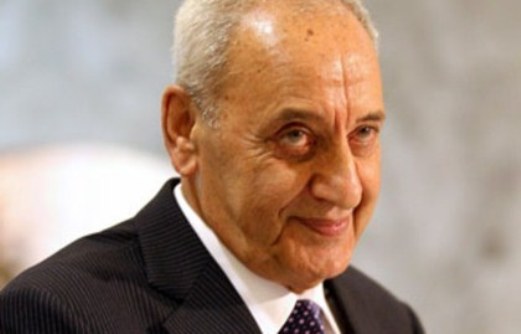
Lebanon’s Parliament Speaker Nabih Berri referred to calls for rejecting Iran’s aid to the Lebanese army as irrational.
“Only a madman would refuse the donation in time of need,” Berri said in a televised interview aired Thursday, the Daily Star newspaper reported.
On September 30, Secretary of Iran’s Supreme National Security Council (SNSC) Ali Shamkhani said in Beirut that Tehran would provide military equipment to the Lebanese army for the fight against terror.
On Thursday, Iran’s Foreign Ministry Spokeswoman Marzieh Afkham reiterated Tehran’s readiness to provide Lebanon with military assistance in its fight against Takfiri terrorism.
The Iranian official said the Lebanese army was in the frontline of the battle against terrorism.
Afkham also pointed to the failure of certain parties in fulfilling pledges of support for the Lebanese military.
She said Tehran awaits Lebanon’s response over the proposed arms transfer.
Lebanon has been rocked by the spillover of the conflict in Syria, where the Takfiri terrorists belonging to the so-called Islamic State in Iraq and the Levant (ISIL) are operating.
Iran is planning to produce 5,000 megawatts of electricity in the next five years using renewable energy sources, an Iranian official says.
“The Renewable Energy Organization [of Iran] has comprehensive plans underway with respect to utilization of clean methods of energy supply,” said the organization’s managing director, Yusef Armodeli, in a Friday interview.
“Iran has put the objective of producing 5,000 MW [of clean energy] from renewable sources in the next five years on its agenda,” he added.
At present, the country produces 10,000 MW of electricity from hydropower plants, Armodeli added.
He underlined the Iranian administration’s resolve to support the development of renewable energies and noted that the incentives provided by the government have attracted investors to the sector.
“The majority of [investment] requests are related to wind and solar power plants. This indicates that there are resources and demand for investment. Moreover, the industrial infrastructure for production [of energy] exists in the country,” Armodeli pointed out.
Due to its geographical and geological position, Iran enjoys enormous potential for production of different sorts of renewable energies, including geothermal, solar and wind power.
The country seeks to gradually shift its energy consumption toward renewable resources in a bid to derive the remarkable economic benefits of the sector and tackle its growing environmental issues.
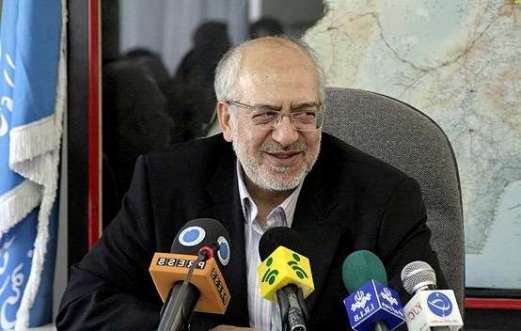
Minister of Industry, Mines and Trade Mohammad Reza Nematzadeh in a meeting with visiting Qatari Minister of Economy and Commerce Sheikh Ahmad bin Jassim bin Mohammad al-Thani said Iran gives priority to its neighbors.
“Through unity and further sincerity we can halt extremist movements in the region and take steps towards consolidation of brotherly ties between the two countries.”
Pointing to the long-standing bilateral historical, cultural, political and economic relations, Nematzadeh said capacities of the two countries in different fields are abundant and efforts should be made to expand the fields.
He said despite pressures of the sanctions on Iran, fortunately all economic sectors are active and busy, adding that at least two banks should be established in both countries for the start of cooperation as it is essential for joint investment.
Meanwhile, the Qatari minister said in light of the support for the governments and removal of bottlenecks and activating of the private sector the two countries can place hope in the improvement of bilateral trade relations.
In another development, Minister of Economic Affairs and Finance Ali Tayyebnia in a meeting with his Qatari counterpart stressed an increase in the level of economic relations and announced the will of the both sides for the formation of joint investment committee.
Tayyebnia said fortunately Iran-Qatar ties have always been satisfactory but the volume of bilateral economic and trade relations is still far from acceptable.
Also speaking at the session, Sheikh Ahmad bin Jassim bin Mohammad al-Thani expressed willingness to take advantage of the opportunity to promote the level of trade and economic relations between the two countries.
He pointed to the construction of Al Ruwais Port in Qatar and said by the end of the current year grounds will be prepared for an increase in trade and commercial transactions between the two countries.