Friday, May 8, 2026
Home Blog Page 492

Tension erupts between US, Israel over Washington’s direct talks with Hamas: Report

Hamas

Ron Dermer, Netanyahu’s closest confidant, voiced strong objections in a call with US hostage envoy Adam Boehler on Tuesday, Axios reported, citing sources familiar with the matter.

In early February, Israeli officials advised Trump aides against direct engagement with Hamas, especially without preconditions, but Israel later learned the US was proceeding anyway, the news website added.

Trump defended the talks Thursday, saying they benefit Israel by focusing on its hostages. Trump’s Middle East envoy Steve Witkoff, set to visit the region next week, called American hostage Edan Alexander’s release a “top priority”.

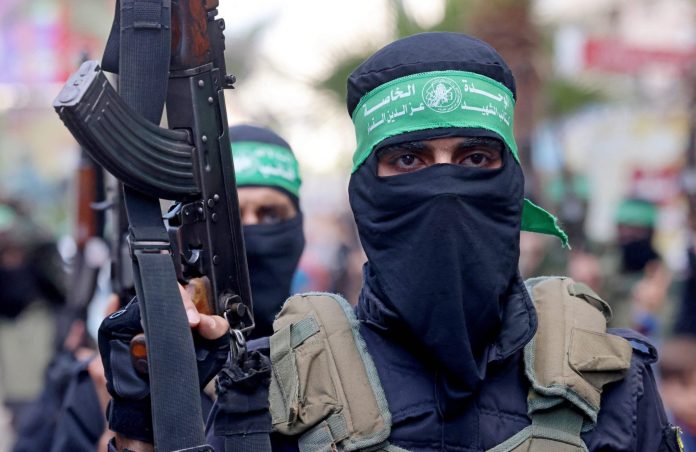
Washington is engaging in direct talks with Hamas as negotiations on a ceasefire accord between the Palestinian armed group and Israel are hanging by a thread.

“These are ongoing talks and discussions, I’m not going to detail them here, there are American lives at stake,” White House press secretary Karoline Leavitt said on Wednesday, confirming a report by Axios media outlet that talks between the two sides were taking place.

“Look, dialogue and talking to people around the world to do what’s in the best interest of the American people is something that the president has proven is what he believes is [a] good faith, effort to do what’s right for the American people,” Leavitt added.

Adam Boehler, Trump’s nominee to be special envoy for hostage affairs, participated in the direct talks with Hamas.

A Hamas official cited by the AFP news agency confirmed the negotiations over Israeli-US captives held in Gaza.

The US had previously publicly refused direct contact with the Palestinian group since banning them as a “terrorist” organisation in 1997.

Israel announced it had been consulted by the US on the direct talks.

Israeli officials say about 24 living captives – including Edan Alexander, an American citizen – as well as the bodies of at least 35 others are believed to still be held in Gaza.

Confirmation of the talks comes days after the first phase of the Israel-Hamas ceasefire expired, with Israel pushing for an extension while Hamas insists on progressing to the second phase of the deal agreed in January.

The first phase saw Hamas release 33 hostages in exchange for Israel releasing more than 2,000 Palestinian prisoners and detainees.

Israel has said the proposal to extend the first phase of the truce was drafted by the US envoy for the Middle East, Steve Witkoff.

The new plan would require Hamas to release half its remaining captives in exchange for a ceasefire extension and a promise to negotiate a lasting truce. Israel made no mention of releasing more Palestinian prisoners – a key component of the first phase.

After the first phase expired, Israel on Sunday suspended humanitarian aid deliveries, including fuel, aid and medicine, into Gaza, as the government aims to put pressure on Hamas to accept the new terms – a move that the Palestinian group slammed as a violation of the original deal.

France, the United Kingdom and Germany on Wednesday warned Israel against using aid as a “political tool”, calling on it to ensure the “unhindered” delivery of humanitarian supplies to the war-ravaged Palestinian enclave.

“We call on the government of Israel to abide by its international obligations to ensure full, rapid, safe and unhindered provision of humanitarian assistance to the population in Gaza,” the countries announced in a joint statement.

“A halt on goods and supplies entering Gaza such as that announced by the government of Israel would risk violating international humanitarian law,” they noted, adding, “Humanitarian aid should never be contingent on a ceasefire or used as a political tool.”

The three European nations described the humanitarian situation in Gaza as “catastrophic”.
Iran’s UN mission denies Trump’s claim over sending letter to Ayatollah Khamenei

Trump

“We have not received such a letter yet,” the mission said on Friday.

In an interview with Fox Business’ Maria Bartiromo on Friday, the US president claimed that he has sent a letter to Ayatollah Khamenei and proposed to negotiate with Iran on a deal on the country’s nuclear program.

“I said I hope you’re going to negotiate, because it’s going to be a lot better for Iran,” he claimed, before threatening Tehran with military action.

“I think they want to get that letter. The other alternative is we have to do something, because you can’t let another nuclear weapon,” he said despite Tehran’s repeated stance that it does not seek to develop nukes.

In February, Ayatollah Khamenei said experience has shown that negotiations with the US have no effect on solving Iran’s problems.

“Some people pretend that if we sit at the negotiating table, some problem will be solved, but the fact that we must understand correctly is that negotiating with the US has no effect on solving the country’s problems,” the Leader emphasized.

Later in February, Iran’s President Masoud Pezeshkian reiterated Tehran’s openness to negotiations, but emphasized that the Islamic Republic will not give in to the pressure of bullying powers and won’t engage in any negotiations under duress.

Iran denies Macron’s claim of Ukraine war involvement

Russia Ukraine War

On Wednesday, Macron said Russia had used Iranian equipment in its war against Ukraine.

“Russia has already turned the Ukrainian conflict into a global conflict. It has mobilised on our continent North Korean soldiers,(and) Iranian equipment, while helping these countries to arm themselves further,” Macron said in an address to his nation.

Tehran has repeatedly denied sending any weapons to Russia for use in the Ukraine war.

“The Islamic Republic of Iran has no interference in the Ukrainian conflict and insists on its principled position of opposing war and the necessity of ending the conflict through dialogue,” foreign ministry spokesman Esmaeil Baqaei stated.

Baqaei called Macron’s remarks “baseless and false”, and a sign of France’s “lack of seriousness in restoring peace and stability in Europe and the world.”

Iran summons UK ambassador over anti-Tehran positions

Iranian Foreign Ministry

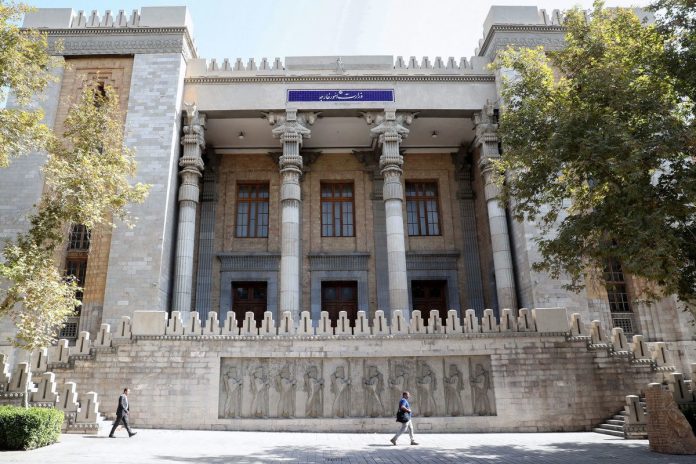
In a statement released on Friday, the ministry said the British envoy was summoned to protest against senior British officials’ “baseless claims” about Iran and their accusations that Tehran “seeks to interfere in Britain’s internal affairs.”

At the meeting, Alireza Yousefi, assistant foreign minister and the ministry’s director general for Western Europe, stressed that the British officials’ “biased positions and baseless claims” against Iran were “in contradiction with the international law principles and regulations as well as the diplomatic norms,” and would increase the Iranian people’s distrust of Britain’s policies towards their country and the West Asia region.

He called on the British government to reconsider and revise its “unconstructive” approaches towards the Iranian nation.

The British ambassador said he would convey Iran’s protest to his government.

Britain announced on Tuesday that it would require the Iranian state to register everything it does to exert political influence in the UK, subjecting Tehran to an elevated tier of scrutiny in light of what it said was increasingly aggressive activity.

On Thursday, Iranian Foreign Ministry spokesman Esmaeil Baghaei rejected the accusations “absurd.”

“It is absurd to blame Iran for something you excel in and master: illegal interference in other nations’ internal affairs!” he wrote in a post on his X account.

Addressing parliament on Wednesday, UK security minister Dan Jarvis announced that he would put Iran’s state, its security services and the Islamic Revolution Guards Corps into the enhanced tier of an upcoming registration scheme designed to protect against covert foreign influence.

IAEA chief: Sanctions not working against Iran’s nuclear program

Rafael Grossi

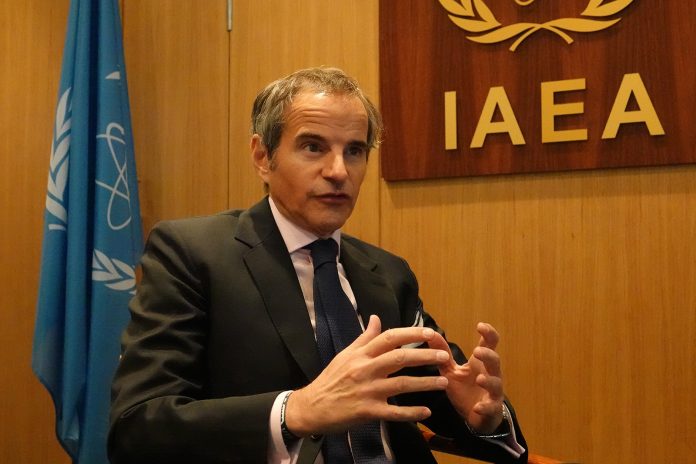
“Sanctions aren’t working,” Grossi told Bloomberg in an interview published on Friday.

“Quite obviously, the country has learned to circumvent them. The program has grown enormously, especially since 2018.”

Last month, the Islamic Republic’s nuclear chief, Mohammad Eslami, likewise dismissed the efficacy of the illegal and unilateral bans.

The head of the Atomic Energy Organization of Iran (AEOI) reiterated that the country’s enemies were not capable of preventing it from achieving its goals by imposing sanctions and exerting economic pressure on the country or assassinating its scientists, referring to the Israeli regime’s targeted killing of at least seven Iranian nuclear scientists over the past decades.

“In order to achieve our goals, we don’t care about the enemies’ sanctions and pressure,” Eslami said, adding “We will continue the path that we have drawn for ourselves to reach our goals.”

Despite external pressures, Iran continues to advance its nuclear capabilities for civilian applications, including medicine and agriculture, he noted, repeating Iranian officials’ invariable assertion that the country’s nuclear program is solely geared towards civilian purposes.

The IAEA’s Board of Governors, though, has ratified several resolutions amid pressure by the US and its European allies, accusing the Islamic Republic of deviating from the program or withholding sufficient cooperation with the nuclear body.

This is while the resolutions and the accusations underlying it run counter to the standing status of the country and the body’s cooperation, which has even increased in frequency and quality over the past years.

Tehran has, meanwhile, been urging the IAEA to remain committed to its professional standards and avoid politicization of its decision-making processes.

Trump planning major NATO policy shift: NBC

NATO

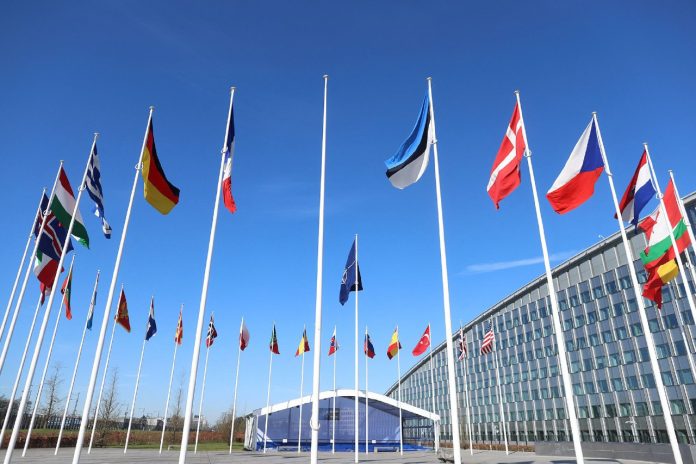
Trump has discussed with aides the possibility of calibrating America’s NATO engagement in a way that favors members of the alliance that spend a set percentage of their gross domestic product on defense, the officials said.

As part of the potential policy shift, the U.S. might not defend a fellow NATO member that is attacked if the country doesn’t meet the defense spending threshold, the officials said. If Trump does make that change, it would mark a significant shift from a core tenet of the alliance known as Article 5, which says that an attack on any NATO country is an attack on all of them.

The president is similarly considering a policy change in which the U.S. may choose to prioritize military exercises with NATO members that are spending the set percentage of their GDPs on defense, the officials added. His administration has already signaled to America’s European allies that the U.S. could reduce its military presence in Europe, and one option now under consideration is to reposition some U.S. troops in the region so they are focused in or around NATO countries that have scaled their defense spending to meet the specific percentage of their GDPs, the officials stated.

Asked about Trump considering making these changes to how the U.S. engages with NATO, a National Security Council official said in a written statement, “President Trump is committed to NATO and Article V.”

Sen. Chris Coons, of Delaware, the top Democrat on the Senate Appropriations Subcommittee for Defense and a senior senator on the Foreign Relations panel, said Trump’s nominee to be U.S. ambassador to NATO, Matthew Whitaker, “gave very reassuring answers” on the administration’s commitment to NATO and Article 5.

Trump has repeatedly criticized NATO countries for not meeting the current NATO member goal of spending 2% of their GDP on defense. He has argued that the disparity is unfair and puts an added burden on the U.S.

NATO countries agreed more than a decade ago to set the spending goal for each of them at 2% of GDP. But Trump has pushed to increase that percentage. Most recently he said NATO members should spend 5% of their GDP on defense, though the U.S. does not currently do that.

“NATO has to pay more,” Trump said in January after taking office, adding, “It’s ridiculous because it affects them a lot more. We have an ocean in between.”

According to NATO’s most recent statistics, last year 23 NATO members’ defense spending exceeded 2% of their GDP. Five of those nations — Estonia, Greece, Latvia, Poland and the U.S. — spent more than 3% on defense. Poland had the highest percentage, dedicating 4.12% of its GDP to defense.

The potential shift in how the U.S. participates in NATO comes as Trump is pushing European allies to do more to aid Ukraine in its war with Russia and to play a major role in maintaining peace in the country if a deal to end the war is reached.

“I was contacted by several European ambassadors concerned about rumors that Trump might make some negative announcement about NATO,” Coons told NBC News in an interview on Wednesday.

Trump didn’t announce anything at his joint address to Congress on Tuesday night, but Coons stated, “If you’re not given pause by everything about President Trump’s statements and actions on foreign policy, you’re not paying attention.”

Trump threatened to withdraw the U.S. from NATO during his first term and has questioned the merits of Article 5 for the U.S. The article was designed to protect European nations from the Soviet Union during the Cold War. It has been triggered just once, after the 9/11 attacks on the U.S.

Ukraine has sought NATO membership, but the Trump administration has said that would not be part of any negotiated peace deal.

Iran’s Kiani becomes world’s best taolu athlete in 2024

Kiani was nominated by the International Wushu Federation (IWUF) as a candidate for the best female taolu athlete of the year. Following a review of the nominees’ information by the IWUF Athletes’ Committee, she was included in the final list for online public voting.
After a month-long voting process, the Iranian wushu athlete emerged as the world’s top taolu athlete of 2024.

Kiani holds the distinction of being the first Iranian female taolu practitioner to win a world medal (silver) in the adult category.

She also gained prominence as the most successful and celebrated athlete at the Sixth World Youth Championships in Bulgaria in 2016, where she secured two gold medals and one silver.

US wants to sideline EU: Politico

The administration in Washington has recently launched negotiations with Russia to broker peace in the Ukraine conflict and has excluded the EU from the process, which has elicited condemnation from Brussels. Trump has also halted American military aid to Ukraine, leaving the bloc jostling for funds to support Kiev.

Washington’s anti-EU push “is triggering a crisis in Brussels institutions. The EU as a bloc is scrambling to prove its relevance,” Politico wrote.

The Ukraine conflict has exposed differences among EU members in defense priorities, economic interests, and diplomatic approaches. While countries such as Poland and the Baltic states have advocated for stronger military backing of Kiev, others, particularly Hungary and Slovakia, have pushed back, calling for a negotiated settlement with Russia. The financial burden of military aid and energy security concerns have also fueled tensions. Right-wing movements in several EU nations have questioned the bloc’s commitment to Kiev.

“Trump will sideline the EU and play divide-and-rule with national leaders,” the publication wrote.

While European Commission President Ursula von der Leyen met with US Vice President J.D. Vance in Munich last month, neither she nor European Council President Antonio Costa has had a face-to-face meeting with Trump, it noted.

The European Council, the body made up of the heads of state or government of all EU member states, “is being agonizingly exposed as too divided and insufficiently nimble to respond to the scale of the storm that Trump is whipping up over Ukraine,” Politico added.

With Washington halting over $1 billion in arms shipments, Kiev faces potential shortages of ammunition and equipment. The EU is exploring alternatives to continue backing Ukraine militarily, despite the peace process initiated by the US and Russia. Von der Leyen on Tuesday unveiled a €800 billion plan aimed at bolstering the EU’s defense.

In recent weeks, Trump has also targeted the bloc’s trade practices, describing them as “an atrocity” and announcing plans to impose a 25% tariff on EU goods. He also claimed that the bloc was “formed to screw the United States.”

Iranian Parliament commissoin rejects IAEA chief claims, calls for technical conduct

The commission deemed Grossi’s concerns about the increase in uranium reserves enriched to 60% in Iran as unwarranted, emphasizing that according to Article 4 of the NPT, all member countries have an inviolable right to research, develop, produce, and utilize nuclear industry.

The statement pointed to Grossi’s remarks about Iran not implementing the Additional Protocol of the NPT, clarifying that the implementation of the Additional Protocol has been voluntary for the Iranian nation, not obligatory. The implementation of the Additional Protocol under the Iran nuclear deal, JCPOA, was also conditional upon the lifting of sanctions by Western countries; therefore, the Director General of the IAEA should compel the totalitarian countries of the world to fulfill their commitments under the JCPOA.

The National Security and Foreign Policy Commission also asserted that the source of Grossi’s claims regarding Iran’s nuclear activities at undeclared sites is the Zionist regime, adding all of Iran’s nuclear activities are under the supervision of the agency and are entirely peaceful.

Additionally, the statement addressed Grossi’s concerns regarding outstanding issues related to Iran’s nuclear program, noting that Mr. Amano (the former Director General of the agency) explicitly stated in a report that the agency’s questions regarding these outstanding issues have been fully resolved and that there are no further questions.

In the commission’s statement regarding Grossi’s concern over Iran’s refusal to accept four IAEA inspectors, it was clarified that according to the agency’s statutes, the inspected country has the right to refuse the acceptance of certain inspectors.

Iran’s foreign trade reaches $117bn despite sanctions

According to Foroud Asgari, Deputy Minister of Economy and Head of Iran Customs, the period also saw a 26% increase in foreign goods transit through the country.

Asgari stated that the country’s foreign transit in the first 11 months (March 2023-February 2024) rose by 26% compared to the same period last year, reaching 20.3 million tons.

During this period, Iran’s non-oil foreign trade volume totaled 176.1 million tons, a 9.2% increase from last year. Out of this, $53.4 billion accounted for non-oil exports and $63.6 billion for imports, reflecting a 19% and 5.6% rise, respectively.

The deputy minister highlighted that 58.5 million tons of petrochemical products worth $23.5 billion were exported, showing a 29% increase in weight and a 31.3% increase in value.

The major non-oil export items included natural gas ($6.6 billion), liquefied propane ($3.3 billion), and methanol ($2.1 billion).

China, Iraq, the UAE, Turkey, Afghanistan, Pakistan, and India were the top export destinations, comprising 83% of the total non-oil export value.

On the import side, the primary items were raw gold, animal feed corn, and smart phones. The UAE, China, Turkey, Germany, India, Russia, and Hong Kong were the major import partners, with the UAE leading at $19.1 billion.