Tuesday, December 30, 2025
Home Blog Page 4884

A look at Iranian newspaper front pages on Dec. 22

Iranian Newspapers Headlines

News about the passing of veteran actor Morteza Ahmadi appeared on the front pages of a small number of newspapers that appeared on newsstands on Monday. (In light of the fact that Sunday and Tuesday are public holidays in Iran, most dailies decided to skip Monday too.) Also in the headlines was a decision by the Central Bank to increase the amount of interest banks pay customers on 6- and 9-month accounts. And reformist dailies covered the comments of Imam Khomeini’s grandson on the fight against large-scale corruption.


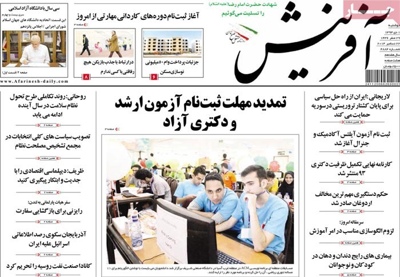
Afarinesh: “Tehran supports a diplomatic solution to bloodshed by terrorists in Syria,” said the Iranian parliament speaker [on a visit to Syria].


Afarinesh newspaper 12 - 22


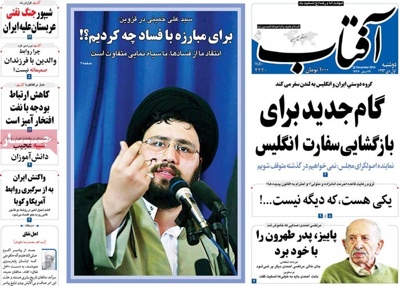
Aftab-e Yazd: Saudi Arabia is beating the drum of an oil war against Iran.


Aftabe yazd newspaper 12 - 22


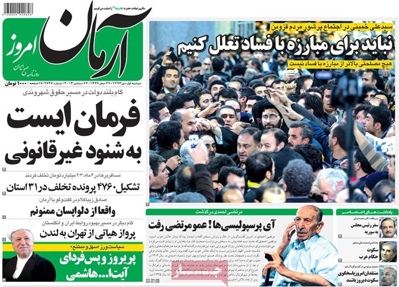
Arman-e Emrooz: The government has taken a giant step toward upholding civic rights by ordering a halt to illegal eavesdropping.

Arman-e Emrooz: Another step toward improvement of ties between Iran and Britain; an Iranian parliamentary delegation [Iran-Britain Friendship Group] has flown to London.

Arman-e Emrooz: “There should be no hesitation in the fight against corruption,” said Seyyed Ali Khomeini, the grandson of the founding father of the Islamic Republic, in a speech in Qazvin.


Armane emruz newspaper 12 - 22


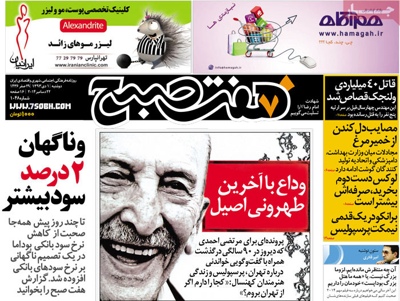
Haft-e Sobh: Up until a few days ago a drop in interest rates was on every economic official’s lips; suddenly the Central Bank of Iran has voted for a 2 percent hike in interest rates.


Hafte sobh newspaper 12 - 22


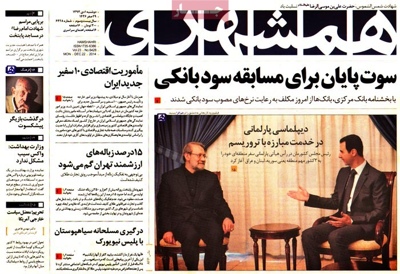
Hamshahri: Ten new ambassadors and consul generals are being sent abroad on mostly economic missions.


Hamshahri newspaper 12 - 22


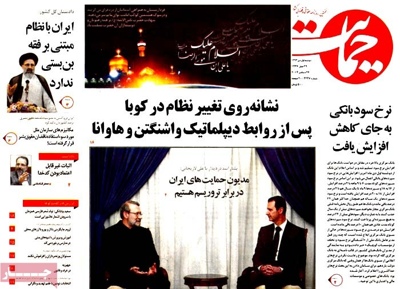
Hemayat: “Syria owes a debt of gratitude to Iran for the support Tehran has lent Damascus in the fight against terrorists,” President Assad told Iran’s top MP.


Hemayat newspaper 12 - 22


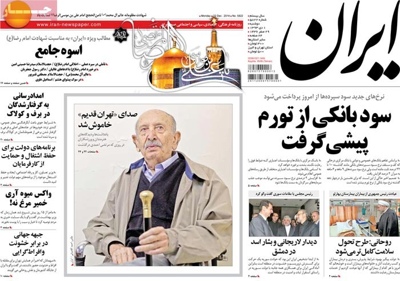
Iran: Visiting Iranian Parliament Speaker Ali Larijani has met with the Syrian president in Damascus.

Iran: President Rouhani has vowed his government will press ahead with the Healthcare Transformation Plan next year.


Iran newspaper 12 - 22'


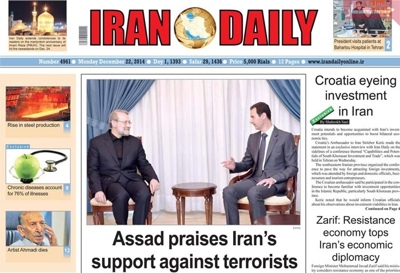
Iran Daily: Croatia eyeing investment in Iran.


Iran daily newspaper 12 - 22


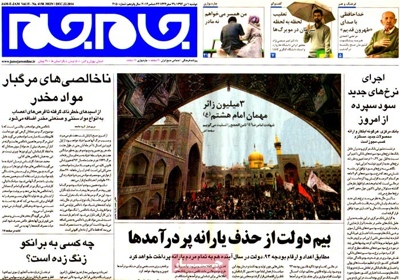
Jamejam: The government seems too afraid to cut the cash subsidies of high-income individuals next year.


Jame jam newspaper 12 - 22


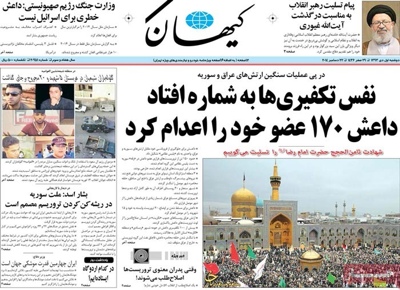
Kayhan: IS terrorists are desperate following major operations by the Iraqi and Syrian armies. IS has executed 170 fighters from among its own ranks.


Kayhan newspaper 12 - 22


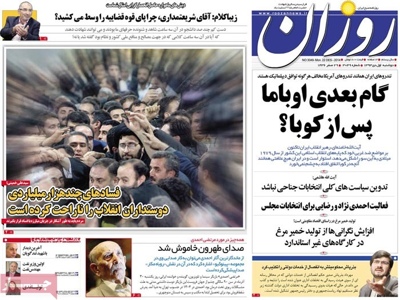
Roozan: What will be President Obama’s next move after Cuba? Just like their American peers, hardliners in Iran are opposed to any kind of diplomatic deal.


Ruzan newspaper 12 - 22


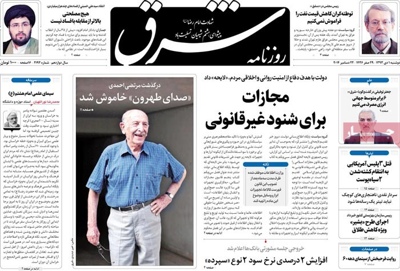
Sharq: [Veteran actor] Morteza Ahmadi, who was known as “The Voice of Tehroon [a colloquial pronunciation of Tehran]” has died at the age of 90.


Shargh newspaper 12 - 22


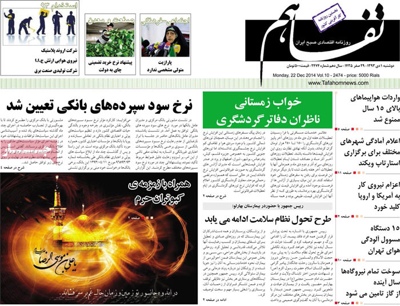
Tafahom: Imports of airplanes older than 15 years have been banned.


Tafahom newspaper 12 - 22


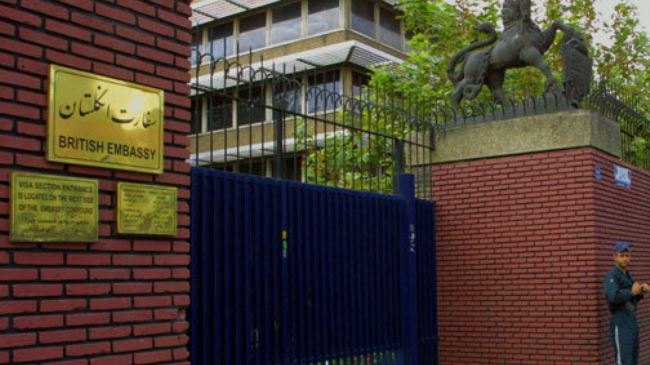
Iran MPs to visit UK to discuss embassy reopening

iran-uk-embassy

A delegation of Iranian parliamentarians is expected to head to the UK capital, London, in the near future for talks on full reopening of the British embassy in Tehran, a lawmaker says.

Head of the Iran-Britain Parliamentary Friendship Group Abbas Ali Mansouri Arani said Sunday that the delegation would pay a visit to London in the coming months upon both verbal and written invitations from the British side.

According to Arani, Richard Bacon, the vice chairman of the Britain-Iran Parliamentary Friendship Group, verbally invited Iranian lawmakers to visit London during his short stay in Tehran, where he attended a conference on fighting extremism earlier this month.

He further expressed hope that meetings between the Iranian and British sides would remove the existing obstacles, adding that reopening of the UK embassy in Tehran would facilitate obtaining visas for Iranians.

Arani added that during the visit, the Iranian delegation will also look into the problems facing Iranian nationals living in the UK.

In November 2011, Iranian lawmakers voted by a large majority to downgrade diplomatic ties with the UK in response to Britain’s decision to impose sanctions on the Central Bank of Iran over the allegation that Tehran is pursuing non-civilian objectives in its nuclear energy program.

Two days after the decision by the Iranian Majlis, hundreds of Iranian students staged a protest outside the British embassy in Tehran, pulling down the UK flag and demanding the expulsion of the British ambassador.

Following the incident, UK announced in November 2011 that it is withdrawing its diplomatic staff from Iran and that the Iranian embassy in London would be closed.

Nearly two years after their diplomatic ties were severed, Iran and Britain agreed in October 2013 to appoint non-resident chargés d’affaires as a first step toward reopening their respective embassies.

On February 20, Tehran and London officially resumed direct diplomatic relations.

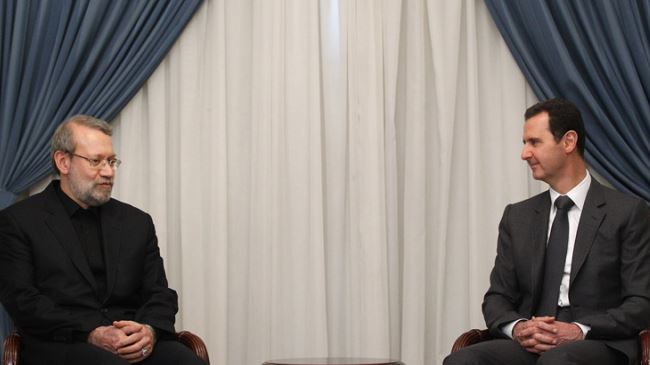
Iran will keep supporting Syria’s anti-terror fight: Larijani

Iran-Syria-Assad

Iran’s Parliament (Majlis) Speaker Ali Larijani says Tehran will continue to fully support the Syrian government in its battle against terrorism and efforts aimed at helping the success of national dialog in the Arab country.

“The Iranian government and nation are standing by the Syrian people and are prepared to expand all-out cooperation with the Syrian government in order to establish regional stability and security,” Larijani said in a meeting with Syrian President Bashar al-Assad in Damascus on Sunday.

He added that the Syrian government’s efforts to safeguard the country’s territorial integrity and counter terrorists should be appreciated.

Since the outset of the crisis in Syria, Iran believed that the developments in Syria were aimed at spreading terrorism, violence and instability in the region, the Majlis speaker said.

Syria has been grappling with a deadly crisis since March 2011. The ISIL terrorists, who control parts of Syria and Iraq, are engaged in crimes against humanity in the areas under their control.

More than 200,000 people have been killed so far in the conflict in Syria, according to UN High Commissioner for Human Rights Zeid Ra’ad Zeid al-Hussein.

The Syrian president, for his part, said his government is keen on uprooting terrorism and extremist ideology while working on reaching national reconciliation at the same time.

Assad added that Iran and Syria have managed to resist many problems and succeeded in foiling plans of the enemies and terrorists.

He emphasized that Damascus is ready to boost cooperation with Tehran in an effort to fulfill the two sides’ interests and improve security across the Middle East.

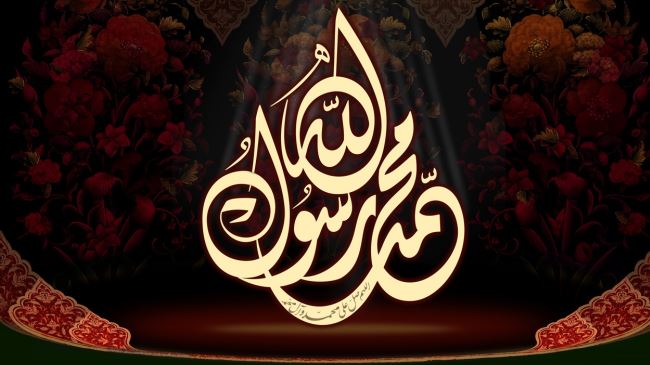
Muslims marking demise anniversary of Muslim Prophet

Islam-prophet

The 28th day of the month of Safar (the second month in the lunar calendar) marks the demise of the Prophet Mohammed (PBUH). The day also marks the martyrdom of the holy prophet’s grandson Imam Hassan (PBUH), the second revered Shiite imam.

Nationwide mourning ceremonies are also being held to mark the tragic events on Sunday.

Prophet Mohammed (PBUH) was born in about 570 AD in the Saudi Arabian city of Mecca. He became the final prophet by God at the age of 40. He passed away at the age of 63 after disseminating the message of Islam for 23 years.

Imam Reza (PBUH), the eighth Imam of Shiites, who was martyred on the last day of the month of Safar, will be honored held in Iran on December 23.

Cuba resistance invalidated US sanctions, isolation policy: Iran

Iran Issues Statement on US Bid to Reinstate UN Sanctions

Iranian Foreign Ministry Spokeswoman Marzieh Afkham said Saturday that Cuba’s resistance over the past 54 years since the country’s revolution has “proved that the policy of isolation and sanctions pursued by domineering powers against the will and resistance of independent nations and governments is fruitless and ineffective.”

Pointing to the US acknowledgement that isolating Cuba had been ineffective, the Iranian official said the recent development surrounding Washington-Havana relations could be a step toward decreasing tensions in the region.

In a major policy shift, US President Barack Obama described US policy toward Cuba outdated and ineffective and announced that Washington and Havana will restore diplomatic relations more than 50 years after they were broken.

“I do not believe we can continue doing the same thing for over five decades and expect a different result,” Obama said during remarks at the White House on Wednesday, adding, “Isolation has not worked.”

Cuba and the United States have not had diplomatic relations since 1961.

The United States imposed a partial trade sanction on the Caribbean island nation in October 1960. The measure later evolved into a full trade embargo in February 1962.


Iran world’s fourth missile power: Defense Min.

Iran-Fateh-Missile

“Iran has an acceptable status among countries possessing missile capabilities, and stands after the United States, Russia and China,” Brigadier General Hossein Dehqan said in a televised interview with Al-Alam channel on Friday.

“In proportion to possible threats against the country, we have tried to increase the range of our missiles,” the Iranian minister added.

The country is currently striving to boost the accuracy of the missiles and make them radar-evading, he noted.

Over the past years, Iran has made important breakthroughs in its defense sector, attained self-sufficiency in producing important military equipment and systems and enhanced the preparedness of its forces by holding various drills.

Iran, however, has repeatedly assured other nations, especially regional neighbors, that its military might poses no threat to other countries, insisting that its defense doctrine is merely based on deterrence.

Dehqan further pointed to efforts by the US and its allies to include the issue of Iran’s missile capability in the nuclear talks between Tehran and the P5+,1 and said the negotiations would only cover the nuclear issue.

“What we are discussing with the P5+1 is merely the nuclear issue and no other topic has been put and will be put on the agenda,” the defense minister said.

He noted that Iran decides about its own missile and defense capabilities and no other entity will be able to impose its will on the country’s decisions in the missile sector.

Iran and the P5+1 countries — the United States, Russia, China, Germany, France and Britain – have held several rounds of negotiations on ways to tackle the obstacles in the way of clinching a final comprehensive agreement on Tehran’s nuclear program.


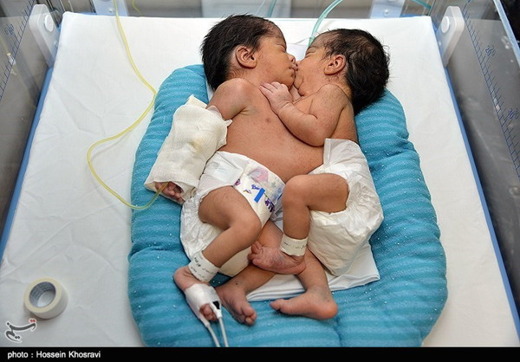
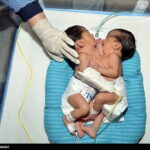
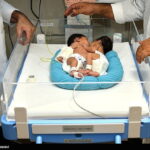
Twin sisters, joined at heart and liver, are born in Shiraz (photos)

Twin sisters

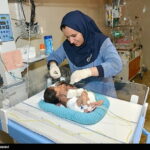
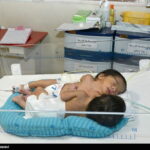
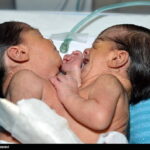
In Shiraz, twin girls who share aortas, hearts and livers have been born. Doctors say the conjoined newborns are likely to undergo surgery to have their hearts separated when they turn three months. Their livers could be disjoined when they become one year old.

The following are the photos Tasnim News Agency released of the conjoined twins on December 20:


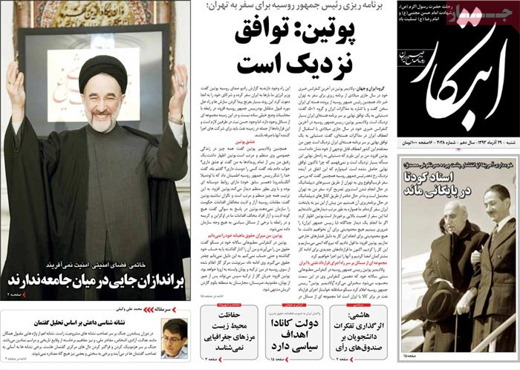
There is no place for subverters in society

ebtekar daily-khatami

On December 20, Ebtekar, a daily, quoted former President Mohammad Khatami as telling representatives of 70 student organizations affiliated to public and private universities that a security atmosphere does not necessarily ensure security. What appears below is the translation of his remarks which cover a wide range of questions:

Highlighting the fact that university students need to be equipped with the means of critiquing and evaluate themselves as well as society, the founder of BARAN [Foundation for Freedom, Growth and Development of Iran] Mohammad Khatami said that a security atmosphere won’t ensure security.

Referring to the fact that the Islamic Republic has originated from a revolution, Khatami said, “The Islamic Republic the founder of the revolution approved of respects the public as well as their vote, privacy and rights. While it wants the public to be free and the country to be developed, it also seeks to offer values that render life gentle and progressive; the values whose absence in today’s world has given rise to plenty of problems. To embrace such lofty ambitions, we need to put up with some pressures and shortcomings. That is not too hefty a price for such a cause.”


Acquiring knowledge and skills is the major mission of university students

Urging university students to reflect on and delve deeply into their present position [in society], what their objectives in life are and where they are heading for, Khatami said, “University is a hub of knowledge, research, thinking and innovation. Today, knowledge is the driving force behind the creation of a developed human society on economic, political and cultural fronts. The major mission of university students is to acquire knowledge and skills. Students as well as others at universities should redouble their efforts to make up for our historical underdevelopment, so that we could compete with major players in today’s competitive world.”


Unbridled power leads to dictatorship and corruption

“If you don’t want to get sidetracked, you should equip yourself with the means of critiquing in order to evaluate yourselves as well as society. If unbridled power remains un-critiqued, it will lead to dictatorship and massive corruption,” Khatami advised university students. […]

“Reformists and university students should critique themselves. Evaluation of society is also necessary. Have we ever wondered whether every single individual of society meets the requirements for democracy? Have you thought about the reasons why such factors are absent? Critiquing is not the same as fault-finding. Far from that, it is intended to expound on weaknesses and strengths.


Advantages of republicanism which is coupled with morality and Islamic justice

“We want all advantages associated with republicanism, including freedom, freedom of speech and assembly, the decisive role of public vote and the right to self-determination. Also, we want morality and justice which are the core principles of Islam. That is the kind of Islamic Republic we are after, the republic in which people are free and morality reigns supreme, not the one where the most immoral behaviors and deeds are imposed on society in the name of Islam and revolution, where liars lie with impunity. Such behaviors run counter to human nature and [after a while] those who come under fire and are libeled will gain popularity, while liars and those who slander will fall from public grace,” Khatami said.


Common objectives of universities and seminaries

Recalling the Unity between Seminaries and Universities Day, he said “Seminaries and universities cannot be integrated into one entity. Their missions are different. However, they share a number of objectives. Seminaries can tap into the up-to-date knowledge of universities and issue appropriate rules. Likewise, universities can use the experience of seminaries which represent the spiritual aspect of Islam. […] Seminaries shoulder a heavy burden to bring universities and seminaries together to build a better society.”


A security atmosphere won’t ensure security

Stressing that Islamic associations at universities have to be at the forefront of preserving public rights and consider key freedoms enshrined in the Constitution a yardstick, he denounced despotism as a major historic problem and said, “We should lay emphasis on what is said against dictatorship in the Constitution of the Islamic Republic and the parts which focus on public rights. Despotism is a trap that people and rulers might be caught in if they fail to remain vigilant.”

Khatami stated that no society deserves to be under a security and military atmosphere, let alone [Iran’s] society whose revolution has been Islamic and popular.

“In today’s world, a security and military atmosphere cannot ensure genuine security. Freedom and prevalence of an open atmosphere in universities are more essential than the air for breathing. University students should define their activities within the framework of the establishment. When some unfair measures are taken, it’s because the establishment is subjected to injustice.

Those who pass off their own tendencies and taste as those of the establishment and try to repel everyone are doing injustice to the establishment. We are the ones who back the establishment; we support its values and want to move down the same path which is in line with the Constitution. We should hold dialogue with others and reach the conclusion that the security of the country cannot be ensured by fostering a security atmosphere,” Khatami added.


The government has stayed committed to its mottos

In response to a question about the performance of the government, Khatami stated, “Although you are not restricted and you can critique the government as well as those in power, you should take into consideration that the government is wrestling with major issues. It’s true that what is pledged has not been fully fulfilled, but those promises are not expected to be honored overnight. President Rouhani and his government are committed to their vows and they should be helped. There are numerous problems and in fact the damage caused in the past – which I do not want to say was done wantonly – has caused many problems for the country. The efforts of the government to clear those hurdles are up to par.


When solved, outside problems will remove inside woes

He went on to say that if foreign problems are solved, many problems we face at home will be ironed out, but dealing with outside problems should not prevent us from attending to what is problematic inside the country.

“A government which has risen to power as a result of popular vote follows people’s demands. Moderation is a method and reform is a discourse. Although the formation of the latter dates back to 200 years ago, people – with different tastes and demands – have stood by it.

“Over the past two centuries people have disapproved of despotism, dependence, underdevelopment, discrimination and corruption, calling for freedom, independence, progress and justice instead. What they called for was in line with their historical identity which has manifested itself in Islam, an Islam which has created the revolution and lives in conformity with freedom, independence and progress. Those versions of Islam which are in conflict with freedom and progress have nothing to do with Iran’s revolution and the reformist movement. […]”


Stage should be set for moderation, interaction and dialogue

Khatami further said, “The reforms discourse has its roots in the conscience of people. Reformists confirm moderation. The stage should be set for the materialization of moderation which is exactly what people are calling for. The way should be paved to have moderation, interaction, dialogue and discussions.

“Reformists have repeatedly said that they oppose subversive measures. Subversive elements have no place in society. We are seeking the progress of the country and the establishment, and we are all moving in line with the Constitution. The Constitution may come in for criticism, but it’s the base on which society moves forward. It is not a disposable to be thrown away after single use. We fully abide by the Constitution, and whoever respects it is a citizen of the Islamic Republic of Iran and is entitled to all civic rights regardless of their beliefs. If some people claim otherwise, we need to exercise patience and have dialogue”.


On the sidelines

The students present in the ceremony called on Khatami to pay more visits to cities across the country and have face-to-face dialogue with people and students. They also took a swipe at the current state of affairs in universities where, as they said, a security atmosphere prevails. They also criticized the government’s treatment of students. The students expressed concern about the upcoming parliamentary election and asked the former president to have a more active presence in politics.


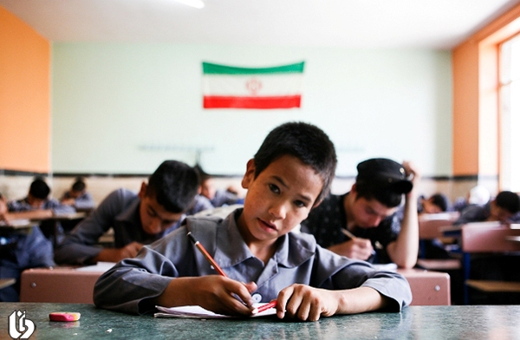
Iran to offer free education services to Afghan children

Afghan children

Alireza RajaiThe eleventh government has decided to implement the so-called education gift to Afghan nationals – a proposal by President Rouhani’s government which allows Afghan students to study in schools across Iran without paying any tuition.
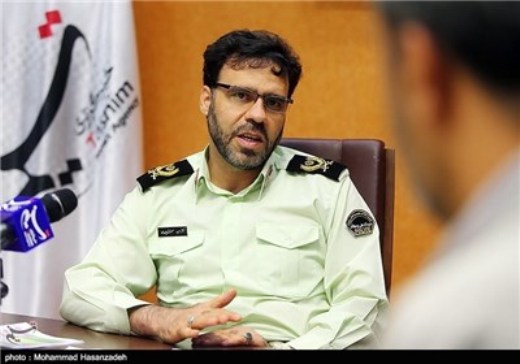

The Iranian Students News Agency (ISNA) on December 20 quoted Alireza Rajaei, an official with the Presidential Office, as saying that the plan calls for equal treatment of Iranian and Afghan students. What comes below is the partial translation of his remarks:

The Afghan population who are living in Iran should not be ignored from cultural and behavioral aspects. A person who does not receive training is likely to get involved in crime; but if they are properly protected, they will lean toward positive things, something which would change violent behaviors to positive ones.

According to the United Nations Convention on the Rights of the Child, children from other countries should be given the same services their peers in the migrant-recipient country get. No discrimination is acceptable when it comes to Iranian schools and those for non-Iranian students. Selective treatments which happen every now and then will be dealt with.

Children born to an Iranian mother and Afghan father are legally considered Afghan nationals up to the age of 18, after which point they can choose either one of the nationalities. When they are still under-18 they should be trained because they cannot return home due to the war and violence in their country of origin. They need to be given identity cards. Iran is exploring ways to solve legal questions in this regard before it can come up with a mechanism for issuing permanent ID cards for the Afghans.

Iran is currently home to 350,000 Afghan students and an additional 500,000 children who have missed the chance to attend school. The Islamic Republic is trying to include them in its macro-educational programs.

Also, some 500 Afghan students are to be given scholarship to study in Iranian universities. Iranian universities are to absorb foreign students, Afghans in particular.

Mistreatment of Afghan nationals by police is totally unacceptable: Official

General Saeed Montazer al-Mahdi

On December 20, Tasnim News Agency quoted Deputy Police Chief for Social AffairsBrigadier General Saeed Montazer al-Mahdi as saying that mistreatment of Afghan nationals at the hands of the police is unacceptable. His comments came after the release of a video in which a police officer mistreats a group of Afghan nationals triggered a backlash. The following is the translation of what the website posted:

Immediately after the news emerged, Iran’s police chief ordered a thorough investigation into the incident to determine where and when it had happened. He also wanted those involved to be identified so that they receive punishment fitting their misconduct.

“What is worth contemplating is that on no account is such approach by police forces acceptable, because police are there to serve the public, and promote abidance by the law,” said the deputy police chief.

“Based on such ideology and in keeping with human principles, we believe that Afghan people are respectable individuals. In fact, they are hardworking people who have got a lot in common with us in terms of religion, culture and history. We always view them as refugees and try to preserve their dignity,” stressed Montazer al-Mahdi.

“Unfortunately, in spite of wonderful services offered by police forces on different fronts and the emphasis laid by the police chief on constant supervision, at times in some parts of the country incidents as such happen. No doubt, those who violate the law and take it into their own hands will be disciplined and punished,” he concluded.