Wednesday, January 14, 2026
Home Blog Page 4864

Iran nuclear deal; to sign or not to sign (PART ONE)

Iran Talks

Will Iran and P5+1 ink a final deal? This question has overshadowed Iran’s domestic, foreign, economic and social policies in the past couple of years. The country is waiting to see the results of the talks before it can make crucial decisions on different fronts. With the talks entering a critical stage, some political experts are concerned that the breakdown of nuclear talks will come with dire consequences in different sectors. The concern stems from the fact that public opinion expects nothing less than settlement of the nuclear case.

Fararu on June 1 asked experts about the talks, their upshot and public expectations. The First Part (Second Partfocuses on the view of Nasser Imani, a principlist political expert. The following is the translation of his remarks:

The eleventh government has focused heavily on the talks with the West and a nuclear deal ever since it has come to power and even prior to that – on the campaign trail. Government’s insistence on the conclusiveness of a deal has caused the expectation of officials and members of the public about a nuclear deal to grow. Even reformist political experts criticize government’s fixation on the issue, which has been reflected on different fronts and among people.

I think government has still time to draw a line between the need for continuing the talks – and efforts to produce results – and certainty about reaching an agreement.

Too much concentration on the certainty of the nuclear deal by the officials of the executive branch – chief among them the president – will have domestic and foreign reflections. Failure to strike a deal would turn the spotlight on it [the certainty of a deal or lack thereof] even more than before.

In case nuclear talks fail to produce a final deal, the very first consequence will be the declining popularity of government and its supporters because people will think that government has hit a stalemate in its biggest project.

A weakened government is to the detriment of the whole establishment. The Supreme Leader has always underlined that he supports all governments [in the country]. This shows how important the position of government is and a weakened government will have consequences for the entire establishment.

No doubt, government will face problems pursuing other projects if the talks break down and its position is undermined, and this would cause the radicals to raise their voice [louder than before].

We need to take into account the fact that the Western side wields more power in the talks, so the focus on the conclusiveness of the talks should not raise [people’s] expectations.

Government’s failure in [nuclear talks and] realizing its economic, social and cultural promises will see other individuals throw their hat in the ring for the next presidential elections, with Rouhani losing his chance of winning reelection.

There is still another possibility: A weakened government may seek to strengthen its [vulnerable] position. To that end, it may make mistakes which would in turn dent the country’s national interests.

This brings us to the conclusion that tying the [solution to] all problems the country is grappling with to the conclusion of a nuclear deal will yield no positive result. Government has to seize the opportunity and do what it can to distinguish between these two issues.

Iran’s IVF baby mothers her own babies

baby

Iran’s first test-tube baby who was born at Yazd Research and Clinical Center for Infertility 25 years ago has given birth to twins.

The Iranian Students News Agency (ISNA) quoted Mohammad Hossein Amir Arjmand as breaking the news on the sidelines of the First International Reproduction Congress, which was held in Tehran from May 23 to 25. The congress hailed Dr. Amir Arjmand as the select veteran scientist and thanked him for his efforts in the field of IVF.

Amir Arjmand initiated his research-based activities at the Research and Clinical Center for Infertility of Shahid Sadoughi University of Medical Sciences and Health Services back in 1989 and worked with Professor Safa Alhasani [who is a Clinical Embryologist in Gynecology and Obstetrics Clinic of the Medical Faculty of the University of Luebeck in Germany and a pioneer in the Human Assisted Reproduction. He contributed to the birth of the first IVF baby in Germany in 1982]. Together they established an embryology lab in Shahid Sadoughi University.

The following is the translation of an excerpt of his remarks:

[…]

Amir Arjmand said the first In Vitro Fertilization (IVF)* pregnancy went to full term in 1990 in Yazd, central Iran, and Iran’s first IVF baby was born later in the same year, adding the baby girl – Vajiheh – is now 25 years old and has given birth to twins.

He went on to say that currently 20 percent of the Iranians are infertile, adding we need to use different methods such as [embryo] cultures, cutting-edge lab equipment, genetic research and early diagnosis to treat those who need assistance and try to transfer the results of infertility treatment [to others].

A study of infertile couples who undergo IVF shows that egg recipients have a 30-45 percent chance of developing an embryo, he said, adding the percentage has grown to 50 percent in some cases.

Amir Arjmand also said that the infertility treatment can be more successful for those who cannot conceive without medical assistance thanks to new methods such as freezing, egg freezing (or human oocyte cryopreservation) and embryo cryopreservation.

He said if a couple cannot get pregnant with their fresh embryo, they can use their own frozen fetus, adding this method has raised their chances of reproduction.


IVF is a form of assisted reproductive technology (ART) in which special medical techniques are used to help a woman become pregnant. It is most often tried when other, less expensive fertility techniques have failed. Medicines, called fertility drugs, are given to the woman to boost egg production.

In vitro fertilization is a process by which an egg is fertilized by sperm outside the body: in vitro (“in glass”). The process involves monitoring and stimulating a woman’s ovulatory process, removing ovum or ova (egg or eggs) from the woman’s ovaries and letting sperm fertilize them in a liquid in a laboratory. The fertilized egg (zygote) is cultured for 2–6 days in a growth medium and is then implanted in the same or another woman’s uterus, with the intention of establishing a successful pregnancy.

Enemy bent on shattering Muslim unity: Sunni scholar

Mowlavi Abdol Hamid

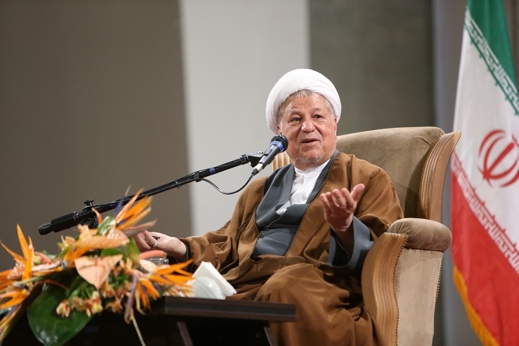
The enemies of Islam are using the weapon of discord as they seek to undermine Islamic nations, Mowlavi Nazir Ahmad Salami, a Sunni member of the Assembly of Experts told a gathering on terrorism, border geopolitics and security in Mashhad on Monday.

The following is the translation of an excerpt of a report Mehr News Agency filed on the comments of the Sunni scholar who hails from Sistan and Baluchestan Province in the southeast:

“Today, efforts to maintain unity are essential,” he said, adding, “We need to avoid things that might play into the hands of the enemy.

Reviving our revolutionary mottos and giving road-map status to the thoughts and instructions of the late Imam and the Supreme Leader have always prevented the materialization of the enemy goals, he said.

Mowlavi Nazir Ahmad Salami went on to say that the nature of differences among states and religions has remained unchanged. “Only the way those differences play themselves out has changed, and now the division in question has manifested itself in the form of IS.”

He further stated that in pursuit of their objectives, the enemies of the Muslim faith seek to oversee the break-up of Islamic nations. “They are trying to redraw the maps of Sistan and Baluchestan in line with a decades-old plot which was seen in Germany almost 90 years ago.”

Iran FM says battle against violence must be within international law

zarif-sco

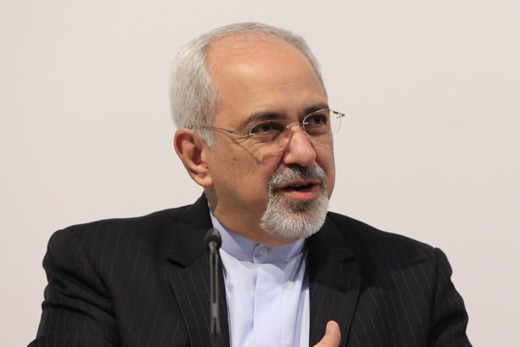
Iran’s Foreign Minister Mohammad Javad Zarif says the battle against violence in the region must be within the framework of international law.

Zarif, who attended a meeting with Russian Foreign Minister Sergei Lavrov in Moscow on Thursday, lashed out at countries which employ double standards with regard to violence, including the crises in Syria and Yemen.

“In the fight against violence, the focus must be put on international law. We are witness to efforts by regional and outside actors who disregard or selectively use international law. Horrifying examples can be seen in Syria and Yemen,” the Iranian foreign minister stated.

The meeting was held on the sidelines of the Shanghai Cooperation Organization (SCO) Council of Ministers of Foreign Affairs and the High-level “Security and Stability in the SCO Region” Conference in the Russian capital.

Zarif also urged the SCO member states “to create a strong legal framework to disarm and defeat those who glorify violence.”

The Russian foreign minister, for his part, touched upon the issue of recruitment by Takfiri terrorist groups, calling for the SCO countries to take a more active role in containing the threat of extremist groups.

“Within the fight against international terrorist organizations, much attention is required on the question of neutralizing the attempts of our citizens to get involved in radical movements, potential terrorists that have gone through special training, and fighters coming back to the territory of SCO countries after participating in armed conflict on the side of extremist groups,” Lavrov said.

The Iranian foreign minister also attended a trilateral meeting with Lavrov and Chinese Foreign Minister Wang Yi to discuss a number of regional and international issues, including the ongoing negotiations over Tehran’s nuclear program and the deadly conflicts in Iraq, Syria and Yemen.

The SCO is a Eurasian political, economic and military organization founded in 2001. It is comprised of China, Kazakhstan, Kyrgyzstan, Russia, Tajikistan and Uzbekistan as its full members.

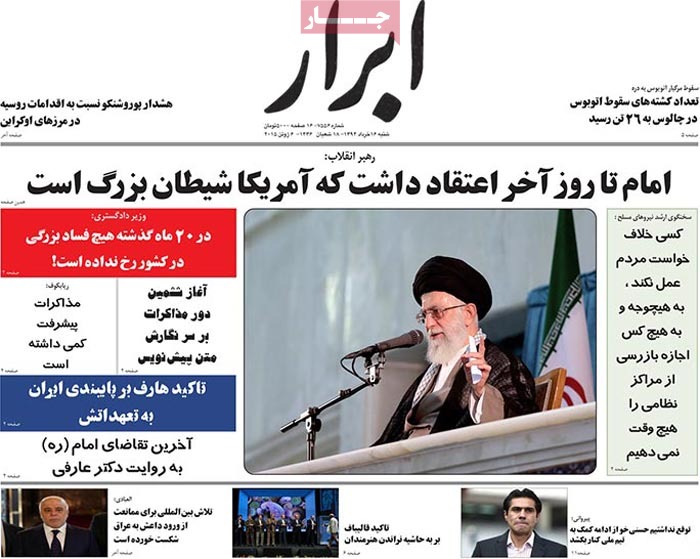
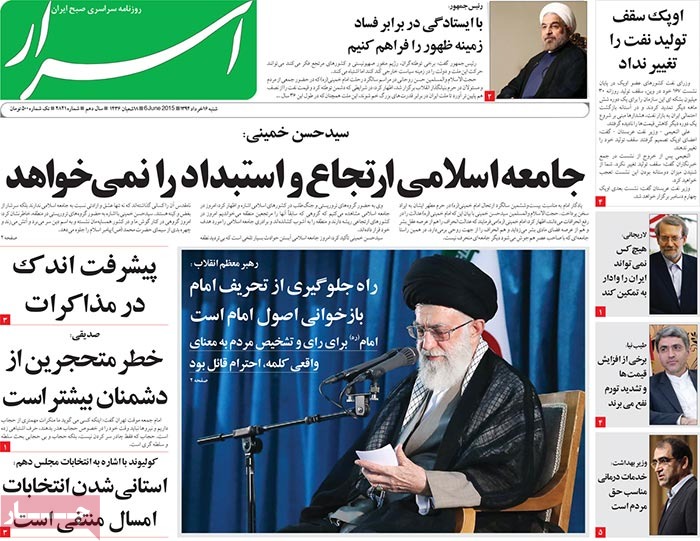
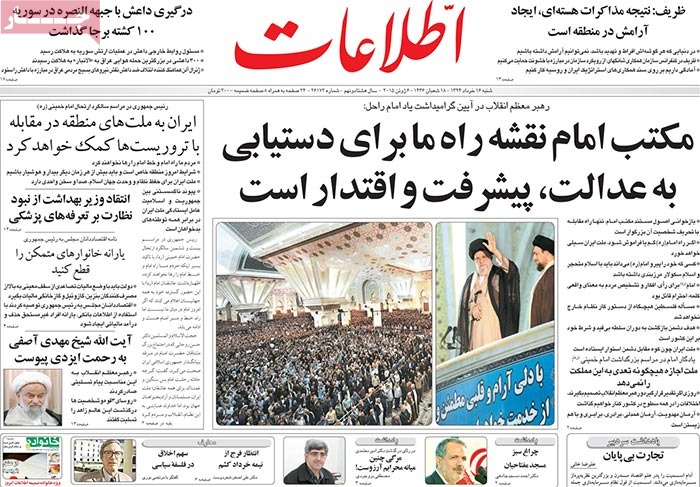
Iran mourns Imam Khomeini’s decease anniversary

Imam Khomeini

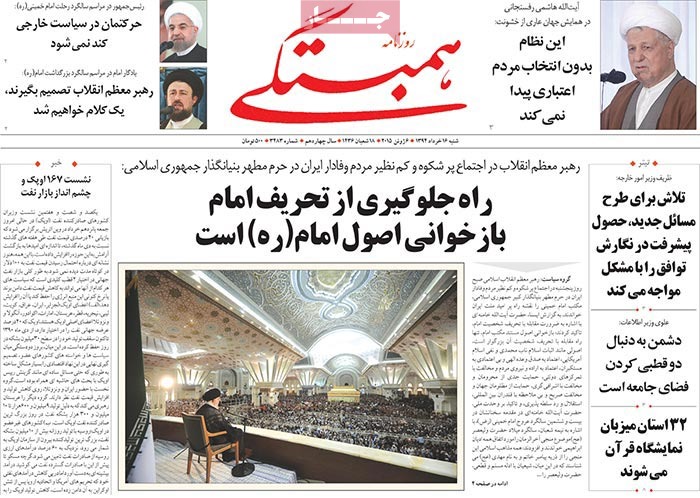
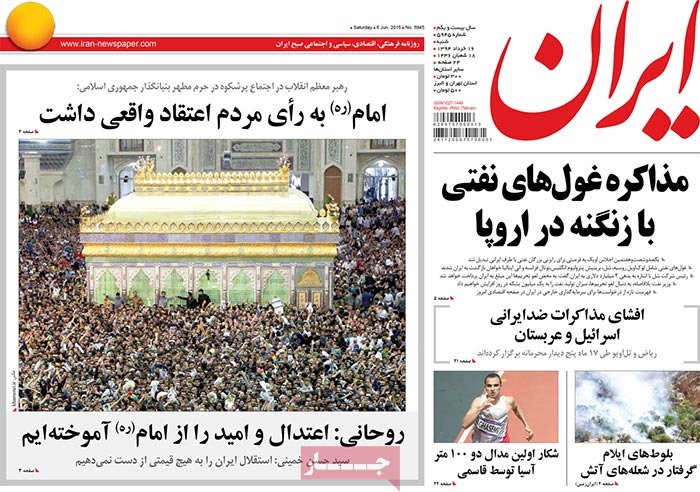
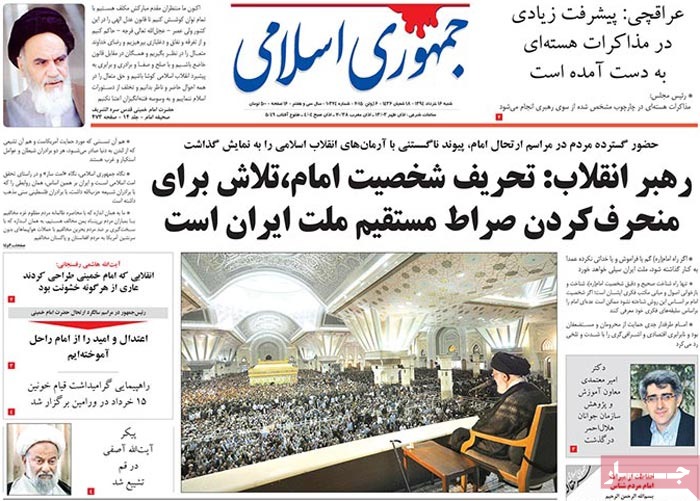
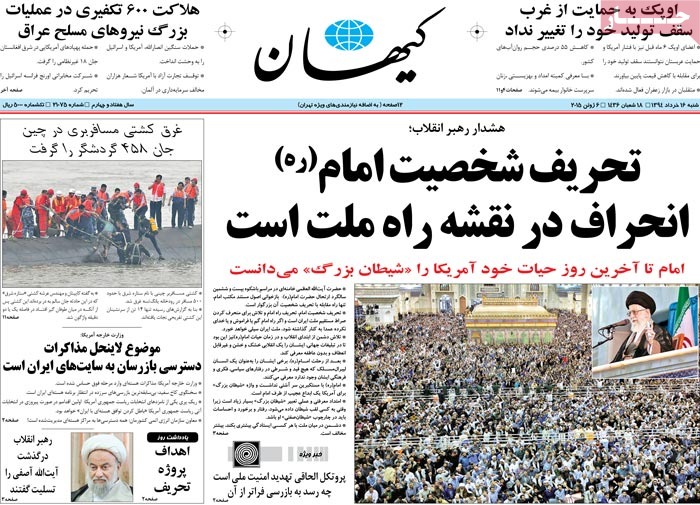
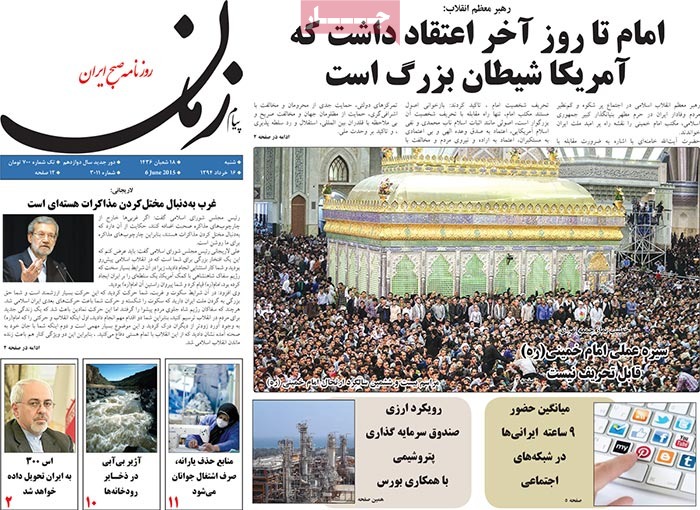
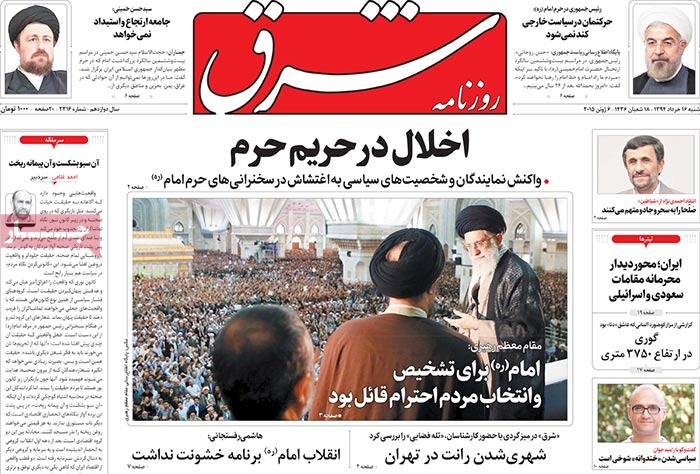
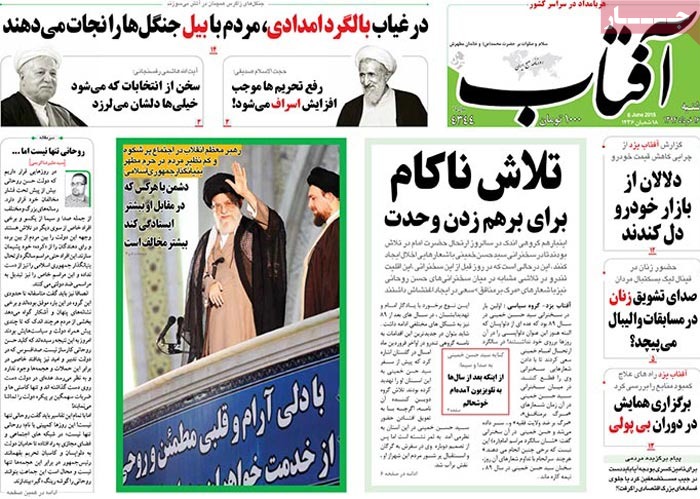
A large number of people and officials have converged at Imam Khomeini’s mausoleum in the Iranian capital, Tehran, to mark the passing away of the late founder of the Islamic Republic.


Supreme Leader


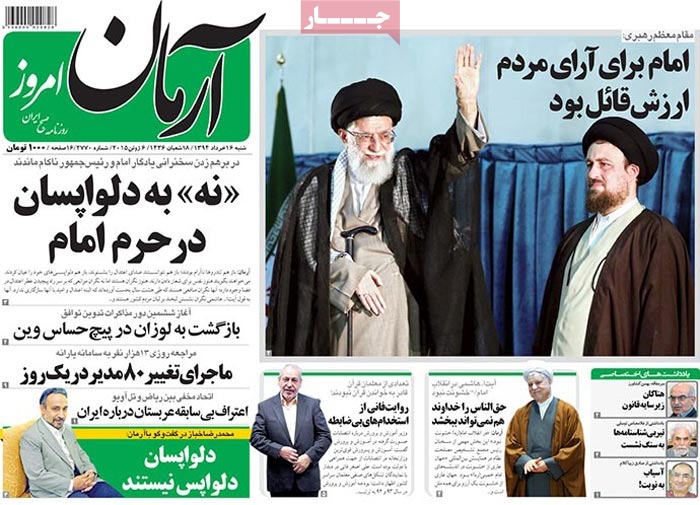
Leader of the Islamic Revolution Ayatollah Seyyed Ali Khamenei addressed the gathering of mourners at the shrine. Imam Khomeini’s grandson, Hojjatoleslam Seyyed Hassan Khomeini, also delivered a speech during the ceremony.

Ayatollah Khamenei said Imam Khomeini favored and emphasized the participation of people in different areas, including in military, political, and economic issues.

Imam Khomeini had real belief in the people, and respected people’s viewpoints even if he disagreed with them, the Leader said.

“Imam was openly opposed to world bullies,” Ayatollah Khamenei said, adding that the late founder of the Islamic Republic championed the cause of the oppressed.

Elsewhere in his remarks, the Leader referred to police brutality in the US and said Iran opposes the violence perpetrated by US police just as the Islamic Republic opposes the acts of violence committed by the Takfiri ISIL group.
Ayatollah Khamenei said Iran also opposes the Saudi military strikes against Yemen in the same way the Islamic Republic opposes the Israeli attacks against Gaza.
The Leader also emphasized that the issue of Palestine will never be off Iran’s agenda.

The Leader warned against the divisive polices of certain entities, including the Takfiri groups in Iraq and Syria, against Shia and Sunni Muslims, calling on Muslims not to fall victim to such plots.

According to Press TV’s correspondent at the mausoleum, nearly 1,000 guests from various countries are attending the mourning ceremony. Four hundred of the foreign attendees are scholars and researchers, who have been conducting studies on the thoughts and life of Imam Khomeini.


Imam Khomeini


Every year, millions of Iranians from across the country travel to Tehran to pay homage to the late founder of the Islamic Republic.

Rouhollah Mousavi Khomeini, better known as Imam Khomeini, was born in the central Iranian city of Khomein on September 24, 1902 to a family of scholars.

He led Iran’s 1979 Islamic Revolution, which culminated in the overthrow of the US-backed Mohammad Reza Pahlavi’s monarchy. Pahlavi was Iran’s last monarch.

Imam Khomeini passed away on June 4, 1989 at the age of 87.

Bus crashes into ravine, leaving 23 dead (PHOTOS)

Bus crashes

A north-bound bus with 40 Iraqi nationals on board plunged into a ravine on Tuesday, killing 23 passengers on the spot and leaving others injured.

The cause of the deadly crash in Mazandaran Province is under investigation.

The following are images the Iranian Students News Agency has released of rescue efforts:


Iran urges regional cooperation against terrorism

Zarif

Iranian Foreign Minister Mohammad-Javad Zarif on Wednesday called for cooperation among regional states to fight terrorism and extremism.

Upon arrival in Moscow to attend a Shanghai Cooperation Organization conference themed ‘Security and Stability in Region’, the Iranian top diplomat told IRNA extremism is a menace which threatens every country in region and added, ‘To counter it, regional and trans-regional cooperation is required.’

Zarif said he will hold bilateral and tri-lateral meetings with his counterparts from China, Russia and Tajikistan.

‘In the meetings, we will discuss extremism in the region, latest nuclear developments, the situation in Yemen, Syria and Iraq and Daesh as well as bilateral issues,’ he added.

The Shanghai Cooperation Organization is an inter-governmental and international organization that was founded on June 15, 2001 in Shanghai, China.

Kazakhstan, China, Kyrgyzstan, Russia, Tajikistan and Uzbekistan are the founding member countries. Iran, Afghanistan, Pakistan and India have observer status in the organization.

Iranians will smash sanctions, foil plots: President Rouhani

Rouhani-Imam

President Hassan Rouhani said Wednesday that Iranians are determined to defy unjust pressures, smash sanctions and foil the plots hatched against their country.

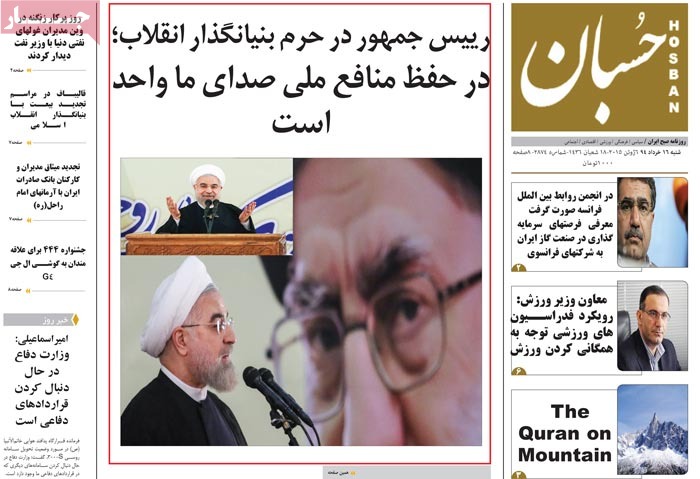
Addressing a large gathering to mark the demise anniversary of the founder of the Islamic Republic Ayatollah Seyyed Ruhollah Khomeini at his mausoleum, the president praised the leadership and statesmanship of late Imam Khomeini in leading the Islamic Revolution to victory in 1979, and said, ‘Imam Khomeini’s message resonates in our people’s mind, enabling us to stand against the plots hatched by major powers in the region.’

Iran has not only resisted and secured peace inside the country, Rouhani added, it has also assisted regional nations and will continue doing so.

‘The Iranian nation is helping the peoples of Iraq, Syria, Lebanon, Yemen and other regional nations in their fight against terrorism, violence and extremism. Relying on Almighty Allah’s power, we can ultimately defeat these machinations.’

President Rouhani also criticized certain governments in the region which he said are misusing their natural resources and purchasing arms to use against oppressed nations such as the Yemeni people.

Referring to the sharp drop in crude oil prices from 120 dollars per barrel to 40-50 dollars, he said Iranians have proved successful in the face of challenges over the past 36 years.

Iran’s return to oil market gradual: Zanganeh

Zangeneh

Iranian Oil Minister Bijan Namdar Zanganeh says Iran’s return to global oil market will be gradual once international sanctions against the country are lifted.

Speaking at the 6th OPEC International Seminar in the Austrian capital city of Vienna, the Iranian minister added, “Immediately or one month after the sanctions are lifted, we will pump half a million barrels per day to the market and after 6-7 months, we will reach one million barrels [a day] and I don’t believe that with the maturity of OPEC it will have a bad effect on the market.”

Emphasizing that Tehran attaches great importance to its share of the market, Zanganeh said, “…for long-term and mid-term, the new form of Iranian contract for new projects … will be introduced and we [will] sign new contracts based on this new framework and structure, which we believe will be more attractive for the investors” and international oil companies.

Zanganeh went on to note that “oil market stability through supply balance will remain [a] priority for OPEC in all circumstances.”

He added that oil price must be held at a level that would motivate investment and promote competition.

“The energy industry must be depoliticized, free from sanctions and limitations and [with] access to financial services, technology and markets,” in order to ensure further development of production capacity in OPEC member countries, Zanganeh said.

Upon his arrival in the Austrian capital, he called for an “appropriate decision” by OPEC to curb a global oil supply glut.

“It’s very clear that we have oversupply in the market and this oversupply puts pressure on the price,” Zangeneh told Press TV, adding, “And now it’s our responsibility to review this situation and to take an appropriate decision for balancing the market but it depends on consensus among all OPEC members.”

The Organization of the Petroleum Exporting Countries (OPEC) is hosting its 6th International Seminar at the Hofburg Palace in Vienna, Austria, on 3−4 June 2015. The theme of the event is “Petroleum: An Engine for Global Development.”

Major topics to be discussed at the seminar include the global energy outlook, market stability, oil investments, technology and the environment, and the state of the world economy.

Alligator makes it to industrial no-go zone (PHOTOS)

Alligator

An alligator has found its way onto a gas platform in southern Iran, apparently in search of food.

The giant gator caused no problem for the personnel and was eventually led back to the swamp with the help of workers of the rig.