Friday, May 8, 2026
Home Blog Page 486

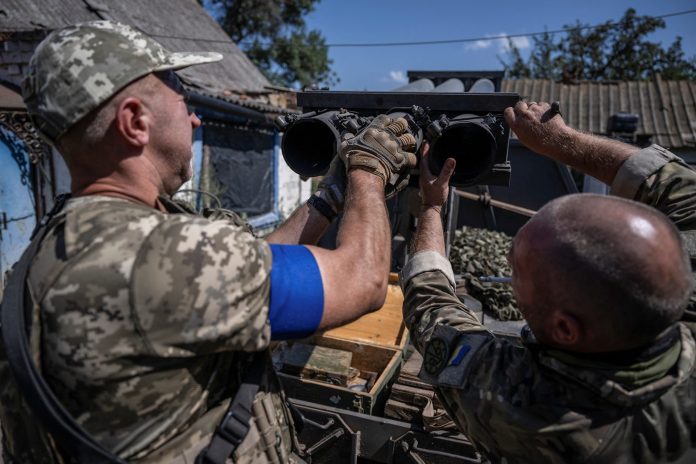
Ukraine says agrees to 30-day ceasefire if Russia abides by it

Russia Ukraine War

Ukraine is ready to take such a step only if Russia adheres to the terms of the ceasefire in the same way.

The announcement comes as one of the main conclusions of the U.S.-Ukraine talks in Jeddah, in which the two sides sought a common path toward a peace deal after weeks of tense relations.

The ties between Kyiv and Washington grew sour after a heated exchange between President Volodymyr Zelensky and U.S. President Donald Trump in the White House on Feb. 28, which led to the U.S. halting military and intelligence support.

“Ukrainian proposal for this meeting with the Americans was three things: ceasefire in the sky — missiles, bombs, long-range drones — and ceasefire at sea, as well as measures to establish trust to this process, first of all – the release of prisoners,” Zelensky said following the meeting.

“The American side understands our arguments, accepts our proposals, I want to thank President (Donald) Trump for the constructiveness of our teams’ conversation,” he added.

The president added that as part of the deal, the U.S. agreed to resume intelligence sharing and defense assistance for Ukraine.

“And today, there was a proposal from the American side to take the first step right away and attempt to establish a complete ceasefire for 30 days, not only regarding missiles, drones, and bombs, not only in the Black Sea but also along the entire front line,” Zelensky said.

“Ukraine accepts this proposal.”

Zelensky added that the U.S. “must convince Russia” to abide by it.

During the talks, the Ukrainian delegation proposed to implement a partial truce in the sky and at sea, while the U.S. side wanted “to try to do more,” a source close to the Presidential Office told the Kyiv Independent.

Russia’s stance toward a partial ceasefire is unclear, the source added. Moscow has repeatedly rejected freezing hostilities along the current front line, believing it has the upper hand on the battlefield.

“Within a certain period of time, we will prepare a final agreement on how to end the war. Now, the discussions concern only the first steps,” the source said.

Ways to enforce a possible ceasefire also remain uncertain. Kyiv has previously emphasized that firm security guarantees from the U.S. and other partners should be a key part of any cessation of hostilities, arguing that Russia has repeatedly violated multiple ceasefires since the start of its aggression in 2014.

The Trump administration has been reluctant to provide security guarantees to Kyiv and instead urged Europe to take responsibility for Ukraine’s post-war stability. According to U.S. officials, the proposed minerals deal agreement could function as a security guarantee itself.

The readout from the Jeddah meeting said that both Zelensky and Trump “agreed to conclude as soon as possible a comprehensive agreement for developing Ukraine’s critical mineral resources to expand Ukraine’s economy, offset the cost of American assistance, and guarantee Ukraine’s long-term prosperity and security.”

The Ukrainian delegation included President’s Office Head Andriy Yermak, Foreign Minister Andrii Sybiha, Defense Minister Rustem Umerov, and Yermak’s deputy, Pavlo Palisa. The U.S. delegation was led by Secretary of State Marco Rubio and National Security Advisor Mike Waltz.

In the coming days, Trump’s envoy for the Middle East, Steve Witkoff, is also expected to travel to Moscow to meet with Russian President Vladimir Putin. Witkoff previously traveled to Moscow in February for the release of U.S. teacher Marc Fogel from a Russian prison and has emerged as a key figure in Washington’s effort to negotiate a peace between Russia and Ukraine.
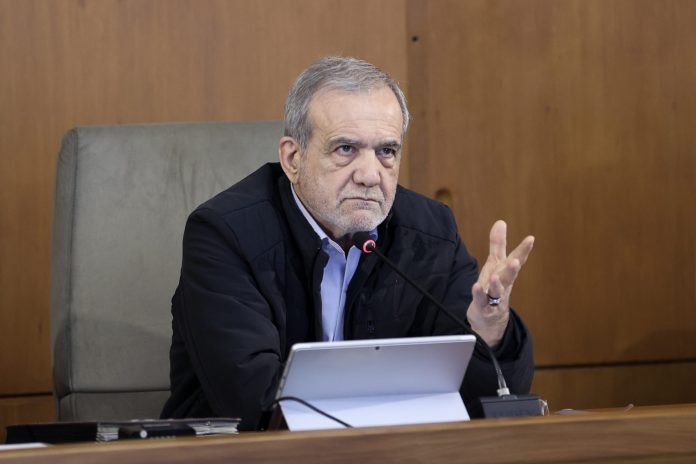
‘Do whatever the hell you want’: Iran President to Trump

Masoud Pezeshkian

“We must maintain relationships with the world. We do not want to be estranged or quarrel with anyone, but that does not mean we will bow in humiliation before anyone,” Pezeshkian stated during a meeting of the Iran Entrepreneurs Forum in Tehran on Tuesday.

“We may die with honor, but we will never live in disgrace.”

Pezeshkian rejected what he characterized as an ultimatum from Donald Trump, referencing a letter reportedly sent by the US president to Iran.

The letter demanded that Tehran halt its nuclear and missile programs and take other measures in exchange for sanctions relief.

“It is unacceptable for someone to come along and say, ‘Don’t do this, don’t do that, or else.’ I won’t come to negotiate with you. Go do whatsoever you want,” Pezeshkian stated.

He criticized Trump for disrespecting his Ukrainian counterpart, Volodymyr Zelensky, while pressuring him to agree to a deal with Russia.

The Iranian president stressed Trump’s conduct in his recent meeting with Zelensky at the White House was “truly shameful.”

“If negotiations are conducted with dignity and based on mutual respect and shared interests, we will sit down and talk,” he continued, adding, “But the language of threats and coercion is absolutely unacceptable.”

The president emphasized the importance of strengthening Iran’s private sector as a means to counteract Western sanctions.

“If we do not sanction ourselves, America or anyone else will not be able to easily sanction us.”

Tensions between Iran and the US have significantly worsened since Trump unilaterally withdrew from the nuclear deal, called the Joint Comprehensive Plan of Action (JCPOA), in 2018.

The JCPOA, reached in 2015, required Iran to implement confidence-building measures to limit its nuclear activities in exchange for sanctions relief.

Following the withdrawal, the Trump administration launched a “maximum pressure” campaign aimed at crippling Iran’s economy through severe sanctions targeting its oil exports, banking sector, and other critical industries.

US officials openly admitted that the policy was designed to weaken Iran economically and politically.

However, it also exacerbated regional tensions and strained relations with America’s European allies, who remained committed to the JCPOA.

In response, Iran gradually reduced its compliance with JCPOA commitments while maintaining that its nuclear program remains peaceful.

The upcoming JCPOA termination day in October 2025 has further heightened tensions, as it could mark a turning point for international restrictions on Iran’s nuclear activities.

Iran has repeatedly stressed its readiness for negotiations on the removal of sanctions, provided they are conducted on equal footing and in a manner that preserves national dignity and sovereignty.

Tehran hosts major Picasso exhibition featuring rare works

The exhibition, inaugurated on Tuesdy, was attended by Antonio Sánchez-Benedito Gaspar, Spain’s Ambassador to Iran, senior cultural officials, and prominent artists.

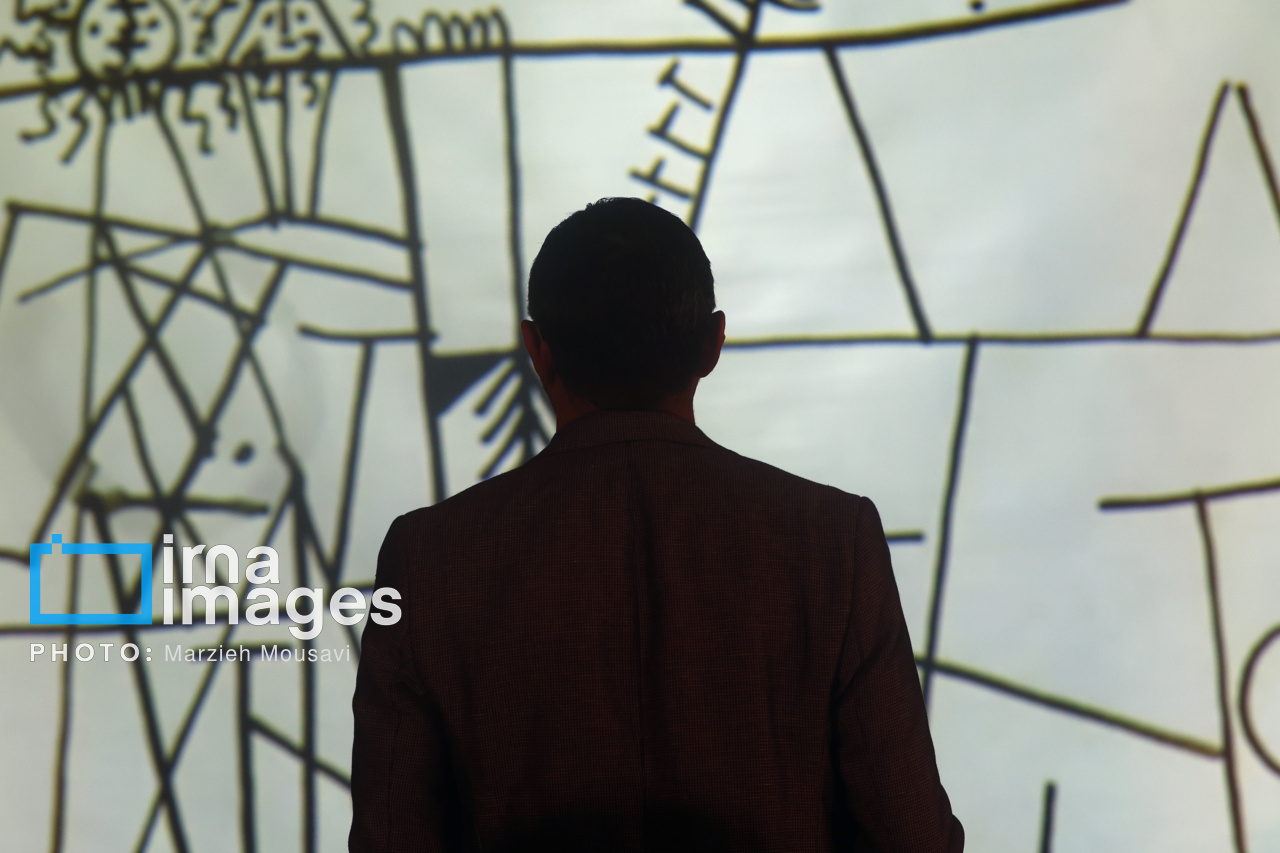
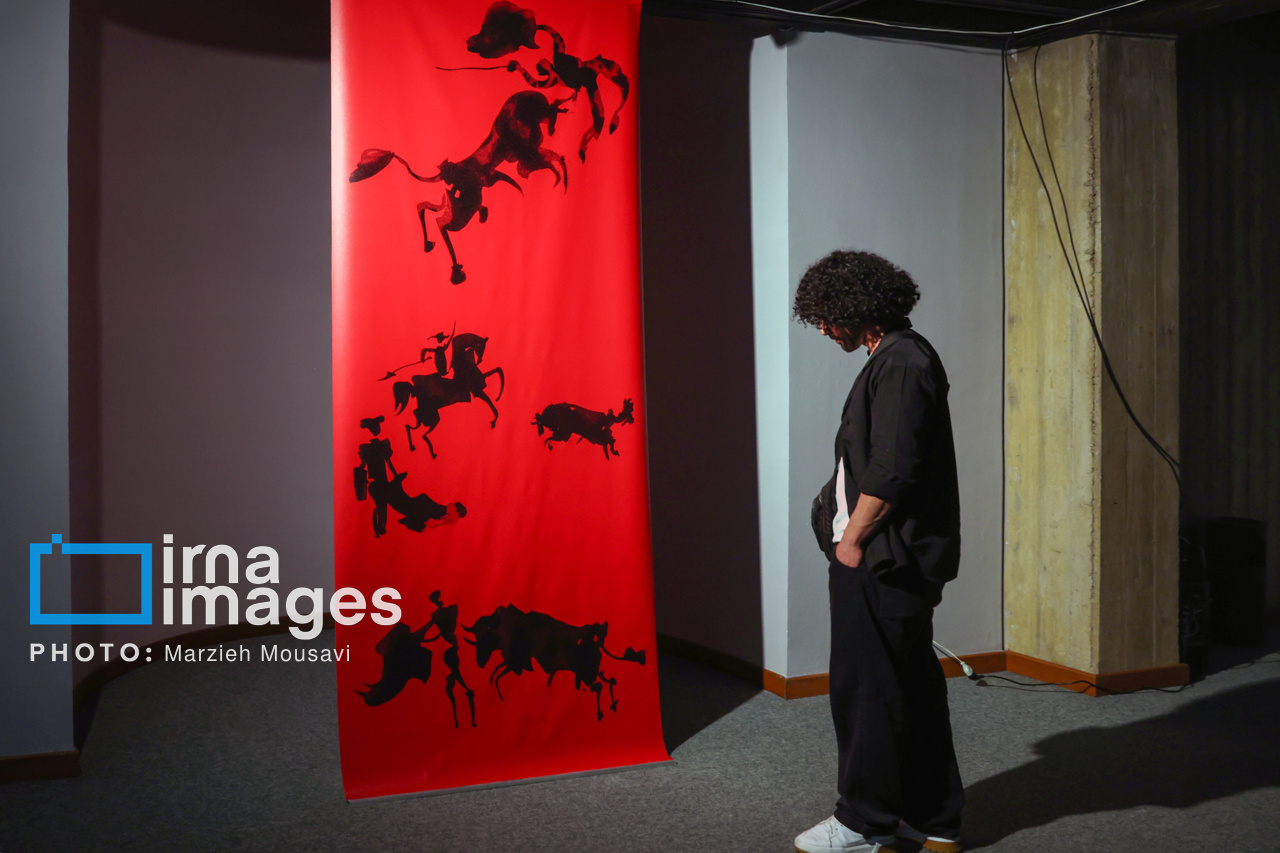
The exhibition includes pieces from various periods of Picasso’s career, featuring 12 aquatint prints from Tauromachia (The Art of Bullfighting), alongside other significant works such as Painter and His Model, An Open Window to Rue Penthièvre, Baboon and Young, and multiple versions of Weeping Woman. These works, part of the museum’s collection, are being displayed in Tehran for the first time.

The exhibition also features works by Iranian artists like Bahram Dabiri, Bahman Mohasses, and Hannibal Alkhas, as well as international figures such as Georges Braque, Robert Delaunay, and Joan Miró.

During the opening ceremony, Spain’s ambassador highlighted Picasso’s role in modern art, describing him as a pioneering figure in Cubism and a passionate advocate for peace, as reflected in his famous anti-war painting Guernica.

Nadereh Rezaei, Deputy Minister of Cullture and Islamic Guidance, emphasized the museum’s commitment to reinterpreting its collection through fresh narratives, stating that Picasso in Tehran offers a new perspective on the artist’s impact on global and Iranian art.

The exhibition runs through April 20, 2025.

Aerial target shooting carried out in Iran-China-Russia naval exercises

Iranian Navy

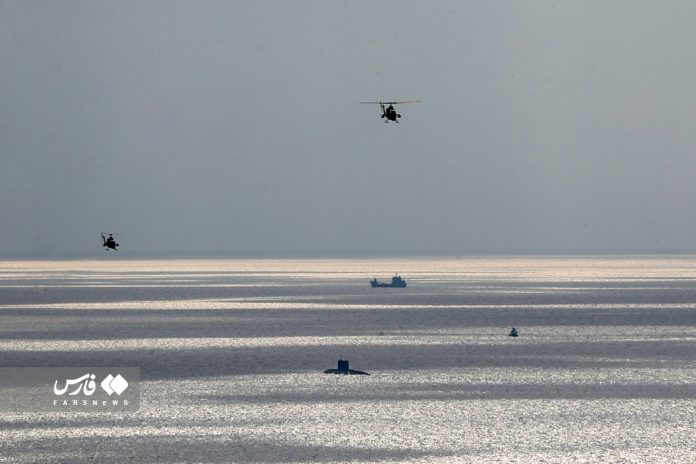
Rear Admiral Mostafa Tajeddini, deputy operations commander of Iran’s Navy, said the night shooting exercise, considered one of the most crucial naval drills, was conducted successfully by participating units. A daytime shooting operation was also carried out, he added.

“The execution of day and night aerial target shooting requires precise coordination and step-by-step orders,” Tajeddini said. He noted that the exercise was designed around a shared tactical language between Iranian naval forces—including the Islamic Republic of Iran Navy and the Islamic Revolution Guards Corps (IRGC) Navy—as well as their Chinese and Russian counterparts.

Tajeddini highlighted the key difference between the 2025 Maritime Security Belt drills and previous editions, pointing to the larger number of participating units and countries.

He also emphasized the increased involvement of aerial units, including helicopters and fixed-wing aircraft, in deeper operational areas.

The Security Belt-2025 is the fifth China-Iran-Russia joint naval exercise since 2019.

VP says Iran neither consults, nor takes orders on nuclear policy

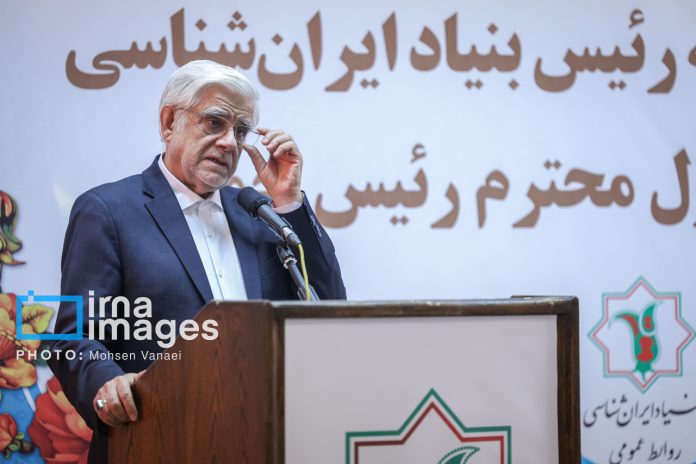
Speaking at a ceremony marking the handover of leadership at the Iranology Foundation, Aref addressed the issue of “Iranophobia” propagated by Western countries.

He stressed the need for serious efforts to counter this narrative, stating that ECO member states, regional countries, and Islamic nations are Iran’s priorities for fostering ties and presenting the Islamic Republic’s image.

“Unfortunately, some Arab countries have been influenced by the ugly term ‘Iranophobia,’ and we can see its impact on them,” Aref said.

He added that some Islamic countries have questioned Iran’s nuclear intentions, asking whether Tehran is genuinely not pursuing nuclear weapons.

“We believe that if one innocent person is unjustly killed, it is as though all of humanity has been killed. Can such a culture pursue nuclear weapons?” he said.

Aref emphasized that Iran’s cultural values prioritize the pursuit of knowledge, even if it requires traveling to distant regions.

He further stated that Iran aims to maximize the use of advanced technologies and share them with others.

“Nuclear technology should be employed to promote humanity and address societal issues,” Aref said.

He reaffirmed that Iran’s nuclear policy is independent, adding, “We do not consult with anyone or take instructions on this matter; whatever we achieve will also be shared with others.”

He emphasized that the country’s strategic framework has been approved by Leader of the Islamic Revolution Ayatollah Seyed Ali Khamenei, who has issued a fatwa on the subject.

Gaza war behind record high US anti-Muslim incidents: Report

Protest US Universities

The Council on American Islamic Relations said it recorded the highest number of anti-Muslim and anti-Arab complaints – 8,658 – in 2024 since it began publishing data in 1996.

Most complaints were in the categories of employment discrimination (15.4%), immigration and asylum (14.8%), education discrimination (9.8%) and hate crimes (7.5%), according to the CAIR report.

Rights advocates have highlighted an increase in Islamophobia, anti-Arab bias and antisemitism since the start of Israel’s devastating assault on Gaza following a deadly October 2023 Hamas attack.

Demonstrators have for months demanded an end to U.S. support for Israel. At the height of college campus demonstrations in the summer of 2024, classes were canceled, some university administrators resigned, and student protesters were suspended and arrested.

Human rights and free speech advocates condemned the crackdown on protests which were called disruptive by university administrators. Notable incidents include violent arrests by police of protesters at Columbia University and a mob attack on pro-Palestinian protesters at the University of California, Los Angeles.

“For the second year in a row, the U.S.-backed Gaza genocide drove a wave of Islamophobia in the United States,” CAIR added.

The CAIR report also details police and university crackdowns on pro-Palestinian protests and encampments on college campuses.

Last month, an Illinois jury found a man guilty of hate crime in an October 2023 fatal stabbing of a 6-year-old Palestinian American boy.

Other alarming U.S. incidents since late 2023 include the attempted drowning of a 3-year-old Palestinian American girl in Texas, the stabbing of a Palestinian American man in Texas, the beating of a Muslim man in New York and a Florida shooting of two Israeli visitors whom a suspect mistook to be Palestinians.

In recent days, the U.S. government has faced criticism from rights advocates over the arrest of Mahmoud Khalil, a Palestinian graduate student who has played a prominent role in pro-Palestinian protests at Columbia University.

Negotiations only way to save Israeli captives’ lives: Hamas

Israel Hostages

In a statement on Monday, Hamas said Israel’s prime minister Benjamin Netanyahu “is obstructing the implementation of the agreement for purely personal and partisan reasons, and the last thing he cares about is the release of the captives and the feelings of their families.”

Hamas reiterated its full commitment to the implementation of the agreement, expressing its readiness for the immediate start of the ceasefire’s second-phase talks.

Meanwhile, the movement added the Israeli regime “continues to violate the agreement and refuses to start its second phase”, adding this “procrastination” will “increase its isolation and expose the falsity of its narrative to the world.”

Hamas pointed out that the truce deal was brokered by international mediators and witnessed by the world, which requires obligating the regime to implement the agreement as the only way to recover the captives.

Israel launched the campaign of genocide in Gaza on October 7, 2023. It has killed more than 48,400 Palestinians there so far.

In January, the Israeli regime was forced to agree to a ceasefire deal with Hamas given the regime’s failure to achieve any of its objectives, including the “elimination” of the Palestinian resistance movement or the release of captives.

During the first phase of the deal, Hamas exchanged 33 Israeli captives and five Thais for some 2,000 Palestinians.

The 42-day stage of the truce, which was marred by repeated Israeli violations, expired on March 1, with Israel refraining from stepping into talks for the second stage of the agreement.

Hamas has insisted on proceeding to negotiations on a permanent ceasefire before agreeing to any further releases of Israeli captives.

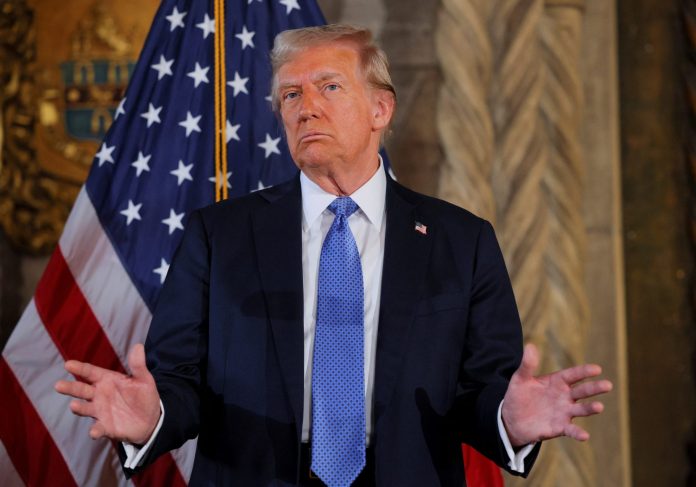
Russia ‘doesn’t have cards’ in peace negotiations with Ukraine: Trump

The Ukrainian and U.S. delegations are to hold talks in Jeddah, Saudi Arabia, on ending Russia’s war. The participants are expected to discuss potential ceasefire options and a mineral resource deal between the U.S. and Ukraine.

“I say they (Ukraine) don’t have the cards. Nobody really has the cards. Russia doesn’t have the cards. What you have to do is you have to make a deal, and you have to stop the killing. It’s a senseless war, and we are going to get it stopped,” Trump said.

Trump’s recent statement contradicts his previous ones, in which he claimed the opposite about Ukraine and Russia.

On Feb. 20, Trump stated that Russia held “the cards” in any peace talks with Ukraine as it occupies a significant part of Ukrainian territory.

Eight days later, the U.S. president told his Ukrainian counterpart, Volodymyr Zelensky, during a heated argument in the White House that he “was not in a good position” regarding the war and did not have “the right cards.”

Following the spat in the Oval Office on Feb. 28, the U.S. suspended its military and intelligence aid for Ukraine. The Ukrainian delegation is expected to discuss the resumption of military aid in Saudi Arabia.

The delegations will also discuss territorial issues, security protocols, and intelligence sharing, according to Trump’s Middle East envoy, Steve Witkoff.

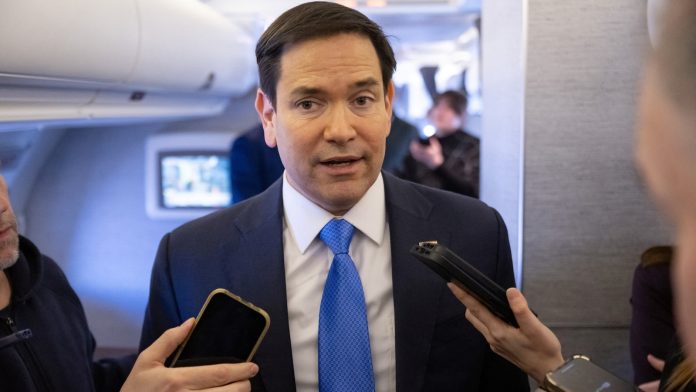
Ukraine must make concessions in any peace agreement: Rubio

Speaking while en route to Jeddah, Saudi Arabia, for discussions with senior Ukrainian officials, Rubio emphasized the necessity of compromise from both Ukraine and Russia, stressing that difficult decisions would be required on both sides.

“The most important thing that we have to leave here with is a strong sense that Ukraine is prepared to do difficult things, like the Russians are going to have to do difficult things to end this conflict or at least pause it in some way, shape or form,” he told reporters.

Rubio’s remarks came just over a week after a tense White House meeting between President Donald Trump and President Volodymyr Zelensky. The meeting resulted in the Trump administration halting military aid to Ukraine due to disagreements over security guarantees in a proposed deal involving Ukraine’s natural resources.

While Rubio did not specify details of a potential agreement, he made it clear that mutual concessions would be key to any diplomatic resolution.

Addressing the military situation, Rubio expressed skepticism about a definitive victory for either side.

“I think both sides need to come to an understanding that there’s no military solution to this situation,” the secretary of state said.

“The Russians can’t conquer all of Ukraine, and obviously it’ll be very difficult for Ukraine in any reasonable time period to sort of force the Russians back all the way to where they were in 2014.”

He also added that determining Russia’s willingness to compromise would be a crucial step in future negotiations.

Discussions in Jeddah are unlikely to include Trump’s earlier proposal, which suggested that U.S. financial interests in Ukrainian natural resources could serve as compensation for American military support.

Rubio also clarified that Ukraine’s access to Starlink, the satellite internet service provided by Elon Musk’s SpaceX, was never under threat. the U.S. still has leverage over Moscow and is attempting to bring Russia to the negotiating table. He also indicated that the resumption of military aid to Ukraine would be a topic of discussion.

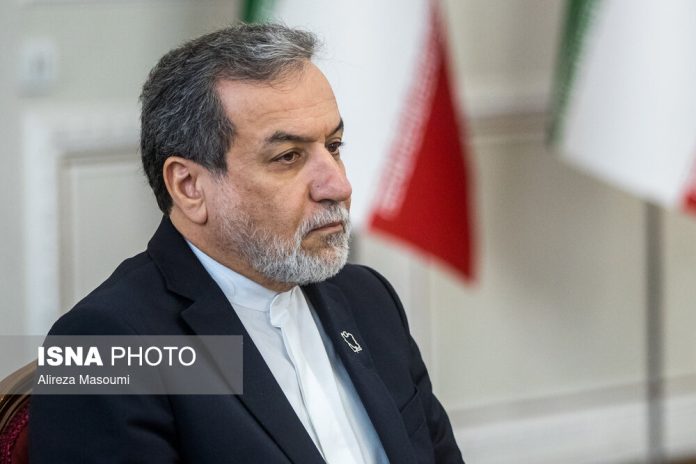
Iran blames US for targeting Iraqi nation by revoking sanctions waiver

Abbas Araghchi

“It is extremely deplorable that the US administration has decided to target the innocent people of Iraq by attempting to deprive them of access to basic services such as electricity, especially ahead of the coming hot months of the year,” Abbas Araqchi said in a post on X on Monday.

“We stand with the Iraqi people and remain firm on our commitment to the Iraqi Government, which we will engage with to repel unlawful US actions,” he added.

Earlier, Washington announced it has revoked the waiver from Iran sanctions that allowed Iraq to import electricity from its eastern neighbor.

Currently, approximately 80 percent of Iraq’s electricity generation depends on natural gas, making the country heavily dependent on Iranian imports to sustain its power grid.