Friday, May 8, 2026
Home Blog Page 487

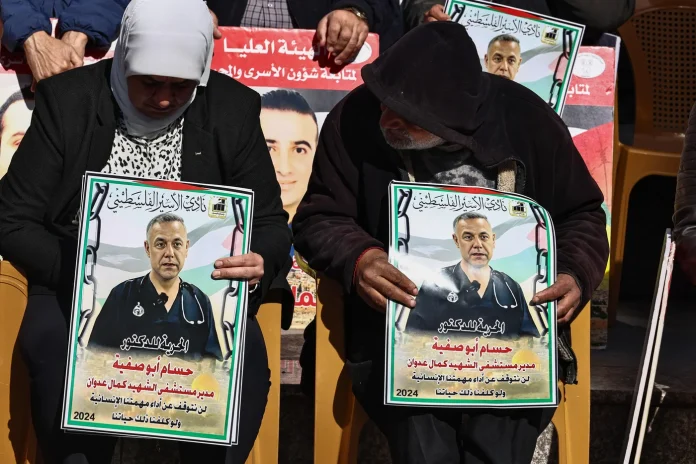
Gaza hospital head recounts torture and isolation in Israeli detention center

Gaza War

Speaking to Arab48, the lawyer of Dr Hussam Abu Safiya said that he was prevented from meeting anyone, including his lawyer, from the day he was detained on 27 December until 10 February.

In late December last year, the hospital was stormed by Israeli troops following nearly three months of a suffocating blockade and constant air strikes on its departments and the area surrounding them.

All medical staff, patients, and their relatives were taken out of the hospital at gunpoint, forced to strip down to their underwear and transferred to an unknown location.

The Palestinian health ministry said dozens of doctors were taken to detention centres for interrogation, including Abu Safiya.

Lawyer Ghaid Qassem was able to visit the doctor in the notorious Ofer prison in the occupied West Bank, where he has been detained for over 70 days after spending nearly two weeks at the Sde Teiman detention camp in the Negev desert.

Qassem’s visit on 6 March was only the second lawyer visit granted to Abu Safiya since his incarceration and came after several pleas by lawyers.

“Until February 10, 2025, Abu Safiya was denied the right to meet with any lawyer, with Israeli authorities explicitly refusing to allow anyone to visit him, preventing him from documenting the violations that took place,” she stated.

According to Qassem, the paediatric doctor was arrested and imprisoned for refusing to obey expulsion orders by the Israeli army “because his conscience and professionalism required him to remain in the hospital, especially with the presence of dozens of patients and wounded children.”

His lawyer detailed that he was isolated for 14 days in Sde Teiman and an additional 25 days in Ofer. He was later transferred to Section 24 in Ofer, where detainees from Gaza remain separated from other prisoners.

“The longest period of interrogation that Abu Safiya endured was 13 consecutive days, with each session lasting between eight to 10 hours. Throughout this entire time, he was subjected to relentless and brutal abuse, torture, and assault,” Qassem continued.

She added that the detainees are “almost completely isolated inside the prison”, without any knowledge or information about the outside world, unless they are allowed a visit.

Qassem said that intelligence services psychologically torment prisoners with news of their loved ones’ deaths, regardless if it is true or not.

“The situation of all Palestinians inside Israeli prisons is catastrophic and deplorable, but specifically, the situation of Gaza prisoners is exceptional and more difficult because they have no previous experience with imprisonment,” she added.

Abu Safiya’s lawyer describes the abuse and torture present in Israeli detention centres as “unprecedented”.

“If we talk about the Sde Timan prison, it is a slaughterhouse in every sense of the word,” she said.

“We are talking about prisoners who have been shackled for 10 months, prisoners whose limbs have been amputated without treatment, elderly prisoners who are shackled and blindfolded, prisoners who have lost 70-90 kilograms of their weight.”

“Addionally, there’s the issue of the bitter cold, as the prisoners are held in open cages, meaning that they are exposed to wind and rainwater, and they are forced to sit on the ground at all times and are forbidden from talking to each other and from praying and reading the Quran,” she added.

In late February, Israeli media aired footage of Abu Safiya, visibly exhausted and shackled by both hands and feet, being escorted by Israeli forces.

Qassem said the doctor was surprised that he was being filmed and was not informed prior to the broadcast.

Regarding Abu Safiya’s legal situation, the lawyer said the Israeli authorities attempted to reframe Abu Safiya’s case as a regular security case in order to file an indictment.

“After a series of interrogations and severe torture to force him to sign anything they could use as evidence for the indictment, they were unable to find any grounds against him after more than 45 days,” she added.

“They then returned his case to its original designation (illegal fighter), and the file of an illegal fighter carries no rights, whether in terms of representation or an indictment. Each time, the decision to extend his detention is renewed.'”

However, Qassem says that she left Abu Safiya in high spirits, ending the meeting with the following message: ”A human being is history, and their history is defined by a position that is taken and studied.”

Abu Safiya’s experience of torture is one of many inside Israeli prisons.

In early April last year, a doctor at an Israeli field hospital where Palestinians detained from Gaza are held described harrowing details of conditions, including limb amputation due to handcuff injuries and prisoners forced to defecate in nappies.

The unnamed doctor working at the Sde Teiman facility, between Gaza and Bersheeba in the Negev desert, wrote about the experiences in a letter to Israel’s defence minister, health minister and the legal adviser to the government. The letter was reported by Haaretz.

“This makes all of us – the medical teams and you, those in charge of us in the health and defence ministries – complicit in the violation of Israeli law, and perhaps worse for me as a doctor, in the violation of my basic commitment to patients, wherever they are, as I swore when I graduated 20 years ago,” he wrote.

The last groups of freed Palestinian detainees showed signs of distress, abuse, starvation and medical negligence in Israeli-run prisons and detention centres.

A number of them have only received medical attention after their release.

In one clip, a former detainee in a bus entering the Gaza Strip warned about the condition of those remaining in prison, shouting: “Prisoners [inside Israeli jails] are in danger. Save them.”

Rampant torture has been recorded in civilian and military detention facilities across Israel in recent months, resulting in the deaths of more than 60 Palestinians since 7 October 2023, among them at least 39 from Gaza.
UNRWA chief warns of ‘deepening hunger’ in Gaza as Israel blocks aid

Gaza War

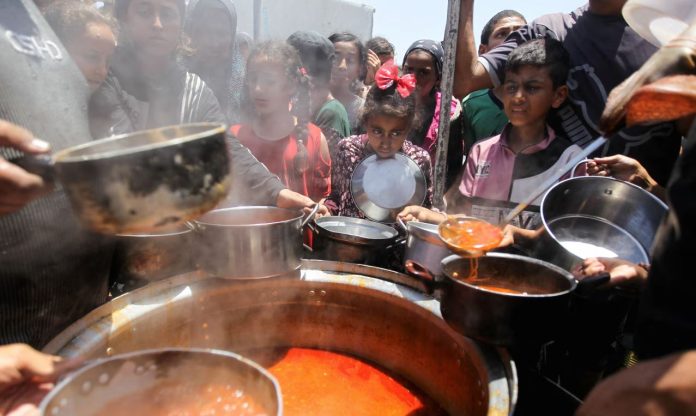
“Whatever the intent is, it’s clearly a weaponisation of humanitarian aid into Gaza,” Lazzarini told reporters at UN offices in Geneva on Monday.

“It is critical that humanitarian aid is allowed into Gaza again to maintain the progress made during the first phase of the ceasefire and meet people’s basic needs,” he said, adding that there remains a risk of returning to the “deepening hunger” seen before the recent ceasefire.

Lazzarini heads up UNRWA, which has been mandated by the UN General Assembly to provide assistance to Palestinians, in Palestine and neighbouring countries, since December 1949.

The agency provides schooling and healthcare services, and could only be replaced by “capable Palestinian institutions” within “a Palestinian state”, Lazzarini has repeatedly said, amid his agency being banned by the Israeli government.

Lazzarini told journalists that “a fierce disinformation campaign”, legislation outlawing UNRWA in Israel’s parliament and “the suspension of funding by key donors” have taken a toll on the agency.

He warned that UNRWA cannot be allowed to “implode”.

“Collapse would create a dangerous vacuum in the occupied Palestinian territory and send shockwaves through Jordan, Lebanon and Syria,” Lazzarini added.

“An environment in which children are deprived of education, and people lack access to basic services, is fertile ground for exploitation and extremism,” he said.

“This is a threat to peace and stability in the region and beyond.”

The agency’s financial situation is also “critical and precarious”, Lazzarini added.

Prior to January 26, 2024, the United States was UNRWA’s largest funder.

Following accusations from Israel, the administration of former US President Joe Biden cut its contributions to UNRWA entirely, promising it would continue to provide aid to the Gaza Strip through alternative UN agencies, such as the World Food Programme, and non-government organisations.

However, according to The Times of Israel, US funding for Gaza’s relief efforts may have been caught up in US President Donald Trump’s administration’s sweeping cuts to the US Agency for International Development (USAID).

While it is not clear exactly which USAID programmes are being cut, US Secretary of State Marco Rubio wrote in a post on X on Monday that “after a 6 week review we are officially cancelling 83 percent of the programs at USAID”.

The Trump administration had initially said that the only exceptions to the cuts would be aid programmes in Israel and Egypt.

Rubio is currently in Saudi Arabia, where he discussed Gaza reconstruction efforts with Saudi Crown Prince Mohammed bin Salman on Monday, according to the US State Department.

Saudi Arabia is one of dozens of countries to have voiced support for a $53bn Egypt-led plan to rebuild Gaza as an alternative to Trump’s plan to forcibly displace all Palestinians from the Strip.

The rebuilding Gaza plan is among many factors being considered by negotiators from Israel and Hamas and mediators from Egypt, Qatar and the US at talks aimed at reviving the ceasefire agreement, which has stalled after Israel refused to enter into the second phase of the deal.

Hamas on Monday announced that Israel has also failed to live up to its side of the agreement by refusing to withdraw its troops from the border area between Gaza and Egypt, known as the Philadelphi Corridor, and preventing outside aid from reaching Gaza directly.

Iran’s navy chief says Trump’s statement on US power ‘delusional’

Shahram Irani

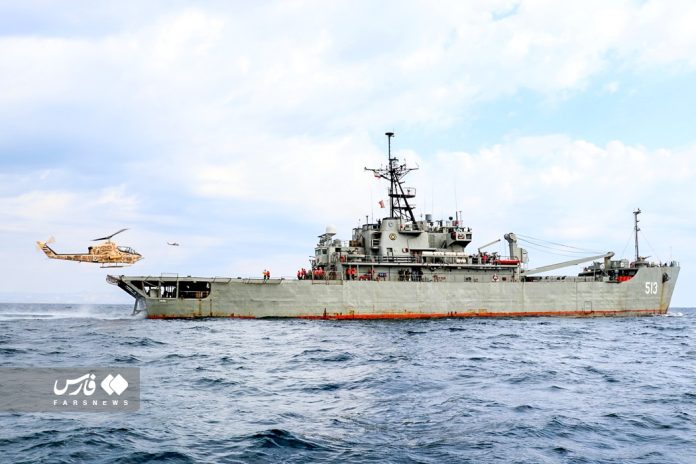
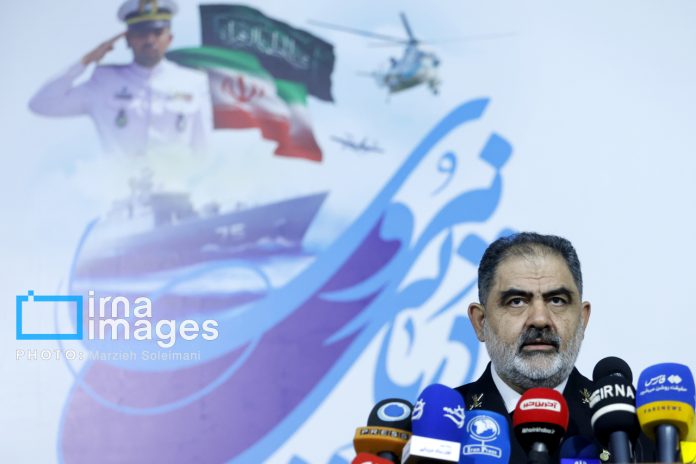
In reaction to Trump’s comments suggesting that the United States is not concerned about the joint naval exercises involving Iran, China, and Russia—asserting that the U.S. is stronger than all of these countries—Rear Admiral Irani said on Monday that Trump’s remarks stem from an “illusion.”

He stated that the participation of three countries in the military exercise, titled “Security Belt 2025,” is focused on fostering security, contrasting it with the presence of countries like the United States, which consistently contributed to global instability.

Rear Admiral Irani emphasized that the number of maritime actors on the global stage has grown, and member nations of the Shanghai Cooperation Organization and BRICS possess the capability to play a positive role in the maritime economy.

Additionally, he added that other regional countries have also made strides in maritime activities through their efforts and will join these exercises in the future.

The 7th combined Maritime Security Belt 2025 exercise is set to take place in the northern Indian Ocean, featuring naval forces from Iran, Russia, and China, along with observers from various regional nations. The exercise is designed to enhance security, promote sustainable maritime interactions, and strengthen naval cooperation among the three participating countries.

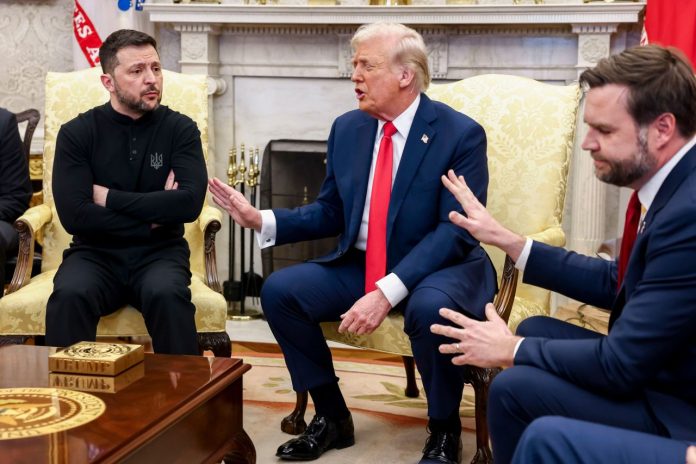
Zelensky apologized in letter to Trump: US envoy

“Zelensky sent a letter to the president. He apologized for that whole incident that happened in the Oval Office,” Witkoff said Monday on Fox News.

“I think that it was an important step and there’s been a lot of discussion between our teams and the Ukrainians and the Europeans who are relevant to this discussion as well.”

U.S. and Ukrainian officials are set to meet in Saudi Arabia this week to pick back up on peace negotiations to end the war with Russia.

Witkoff added he thought Zelensky sending Trump a letter to apologize for the fiery meeting was “progress.”

In Trump’s joint address to Congress, he shared that he received a letter from Zelensky in an effort for the countries to smooth out ties. Trump said he appreciated the letter, which came just days after the U.S. halted military assistance to Ukraine.

Shortly after the fiery meeting between Zelensky and Trump, the Ukrainian leader called it a “regrettable” gathering but stopped short of issuing an apology.

Zelensky, however, signaled that Ukraine was still ready to come to the negotiating table after the meeting, where the U.S. and Ukraine had been slated to come to an agreement on a minerals deal.

Witkoff said it’s important for the officials to discuss security protocols for Ukrainians, territorial issues and a utility plan.

“These are not complicated things, they just … need to be put on the table and everybody needs to be transparent about what their expectations are, then we can begin to have a discussion about how we compromise,” he added.

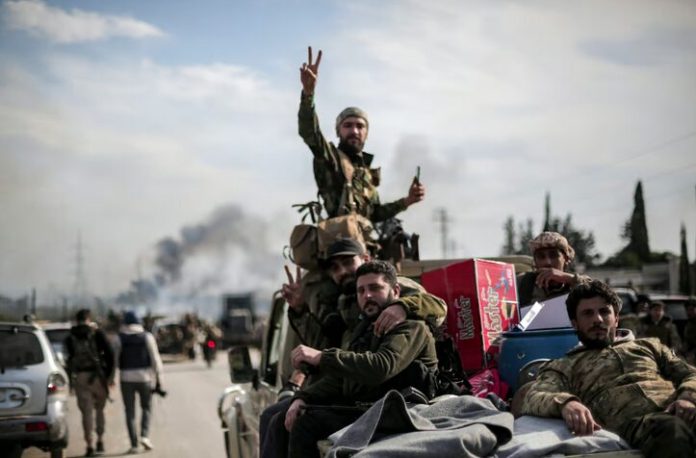
Syria new rulers announce end of military operation against Assad loyalists

Spokesperson Hassan Abdul Ghani made the announcement on Monday, saying in a statement on X that security threats had been neutralised in Latakia and Tartous provinces.

“Having achieved [the neutralisation of the security threats] we announce the end of the military operation,” Ghani added.

“We were able … to absorb the attacks of the remnants of the toppled regime and its officers” and push them from “vital” locations.”

The Syrian Observatory for Human Rights reproted on Monday that nearly 1,500 people had been killed in the violence since Thursday.

The majority, the war monitor reported, were civilians killed by security forces and allied groups in the heartland of the Alawite minority, to which deposed President Bashar al-Assad belongs.

Syria’s interim leader President Ahmed al-Sharaa of Hayat Tahrir al-Sham (HTS) pledged on Sunday to hunt down the perpetrators of the violent clashes and said he would hold to account anyone who overstepped the new rulers’ authority.

Al-Sharaa’s office also noted it was forming an independent committee to investigate the clashes and killings carried out by both sides.

Abdul Ghani added on Monday that the security forces would cooperate with the investigation committee, offering full access to uncover the circumstances of the events, verify the facts and ensure justice for the wronged.

“We were able to absorb the attacks from the remnants of the former regime and its officers. We shattered their element of surprise and managed to push them away from vital centres, securing most of the main roads,” he stated.

“We are paving the way for life to return to normal and for the consolidation of security and stability,” Abdul Ghani said, adding that plans were in place to continue combating the remnants of the former government and eliminate any future threats.

However, following relative calm in the weeks following al-Assad’s fall in December, instability and violence are starting to grow in Syria.

The fighting on the Mediterranean coast began last week when pro-Assad forces coordinated deadly attacks on the new government’s security forces.

The ambush spiralled into revenge killings as thousands of armed supporters of Syria’s new leadership flocked to coastal areas.

The government then sent reinforcements to Latakia and Tartous in order to regain control.

Iran, a long-term al-Assad ally, denied on Monday any involvement in the violence.

Media reports including from the Saudi-owned Al Arabiya TV channel have suggested that Iran and allied groups in the region were behind the violence.

Al-Sharaa had blamed the violence on “attempts by the remnants of the toppled regime and foreign parties behind them to create renewed sedition and pull our country into civil war”.

Regional media had then followed up by pointing the finger at Tehran.

However, a spokesman for Iran’s Ministry of Foreign Affairs rejected the accusation and condemned attacks on minorities in Syria.

“This accusation is completely ridiculous and rejected, and we think that pointing the finger of accusation at Iran and Iran’s friends is wrongly addressed, a deviant trend, and a hundred percent misleading,” Esmaeil Baghaei said.

“There is no justification for the attacks on parts of the Alawite, Christian, Druze and other minorities, which have truly wounded the emotions and conscience of both the countries of the region and internationally,” he added.

Tehran helped to prop up al-Assad during the country’s long war and provided him with military advisers.

Foreign Minister Abbas Araghchi said on Friday that Tehran has remained “an observer” of the situation in Syria since the takeover by HTS.

“We have no relationship with the current Syrian government, and we are not in a hurry in this regard,” he added.

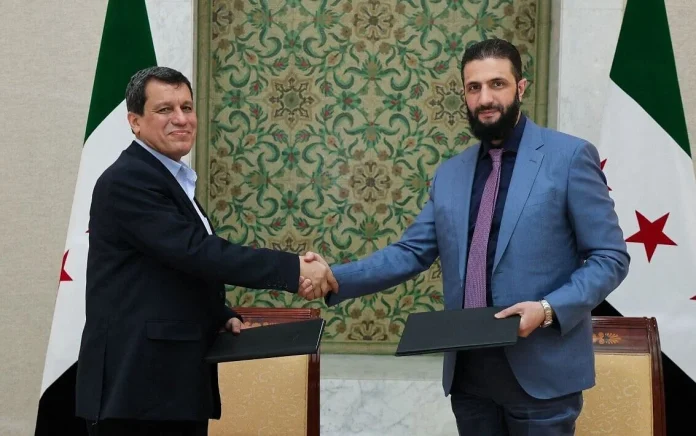
Kurds to merge with Syrian state institutions in landmark agreement

Interim President Ahmad al-Sharaa announced the deal on Monday, saying it was aimed at “ensuring the rights of all Syrians in representation and participation in the political process and all state institutions based on competence, regardless of their religious and ethnic backgrounds.”

The deal will also recognize Syria’s Kurdish community as an integral part of the state, tens of thousands of whom were previously denied citizenship under the decades-long rule of the Assad government.

“We consider this agreement a real opportunity to build a new Syria that embraces all its components and ensures good neighborliness,” SDF General Commander Mazloum Abdi said in a statement on X.

The deal is one of the biggest developments in the country since the rebel alliance led by Sharaa toppled former President Bashar al-Assad in December.

By integrating the Kurdish community, it hopes to guard against the possibility of further sectarian strife in the country, which suffered through more than a decade of war before Assad’s downfall.

Crowds gathered across the Syrian cities of Aleppo, Homs, Hama, Tartus, Deir Ezzor and Hasaka to celebrate the agreement. Fireworks lit up the sky over the landmark Aleppo Citadel in the early hours of Tuesday.

The move comes amid the worst violence the country has seen in years as security forces fight supporters of Assad.

The deal between Syria’s interim government and the SDF guarantees the Kurdish-led group’s support to the Syrian state in combatting the Assad remnants and any other threats to the country’s security and unity.

The SDF, which was not part of the rebel alliance that overthrew Assad, is presently the most powerful non-governmental force in the country and holds strategic territories, primarily in the northeast.

Under the new deal, those areas would come under the control of the central government, including border crossings, airports, and oil and gas fields. A ceasefire would go into effect across Syria and displaced Syrians would return to their homes.

Executive committees have been tasked with making sure the agreement is implemented by the end of the year.

While the SDF has been a key US partner in the fight against Daesh, it is largely made up of fighters from a group known as the Peoples’ Protection Units (YPG), which is considered a terrorist organization by neighboring Turkey.

EU, ICAO approve Iran fuel management for intl. flights 

Iran Airport

The operations deputy of Homa announced that annually, the Iranian airline is audited by the EU-ETS and ICAO’s CORSIA for all international flights, regarding the emission of
greenhouse gases.

Javad Sharifi said the purpose of these audits is to monitor the method and amount of greenhouse gas emissions and to enforce international laws in order to protect the environment.

The airline’s operations deputy added that given the type of Homa’s international flights, it is obliged to comply with these requirements and is therefore evaluated annually by auditors. Sharifi noted that with Homa’s continuous efforts and follow-ups, the audits were held and verified for the Iranian flag carrier.

He underlined that as the first airline in Iran, Homa has been observing the environmental standards related to CO₂ emissions in accordance with the requirements of ICAO for more than 10 years and has had a very favorable performance in all audits. He noted that Iran’s flag carrier, as a leader in the country’s aviation industry, continues to move towards sustainable development and will maintain its commitment to international environmental requirements.

Senior commander: Countering terrorism, maritime piracy primary goals of Iran-Russia-China joint naval drill

Iranian Navy

Rear Admiral Mostafa Tajeddini elaborated on the exercise’s goals during a press conference on Monday with the commanders of Russian and Chinese units participating in the 2025 Maritime Security Belt joint exercise.

Tajeddini highlighted the strategic importance of the Northern Indian Ocean region in international trade, noting that ensuring the complete security of shipping lanes in this area—particularly in the “Golden Triangle” encompassing the Strait of Hormuz, the Strait of Malacca, and the Bab-el-Mandeb Strait—is not only crucial for safeguarding economic interests on the global stage but also requires cooperation and coordination among the naval forces of various countries. For this reason, this trilateral naval exercise holds significant importance.

The exercise spokesperson emphasized that various scenarios have been planned, including assisting distressed vessels, conducting humanitarian and medical operations, conducting search-and-rescue missions, securing shipping lanes and communication lines, and maintaining maritime navigation safety.

He added that Qatar, Iraq, South Africa, Oman, the United Arab Emirates, Sri Lanka, Pakistan, Azerbaijan Republic, and Kazakhstan are participating as observer nations in this exercise.

He stressed that the exercise is being conducted at the initiative of the Iranian Navy, with the active participation of the Islamic Revolution Guard Corps Navy, and centers on the collaboration of Iran, Russia, and China.

The seventh joint exercise of the Maritime Security Belt 2025 will begin on Tuesday in the Chabahar region, in Southern Iran.

US arrests pro-Gaza student leader at Columbia University

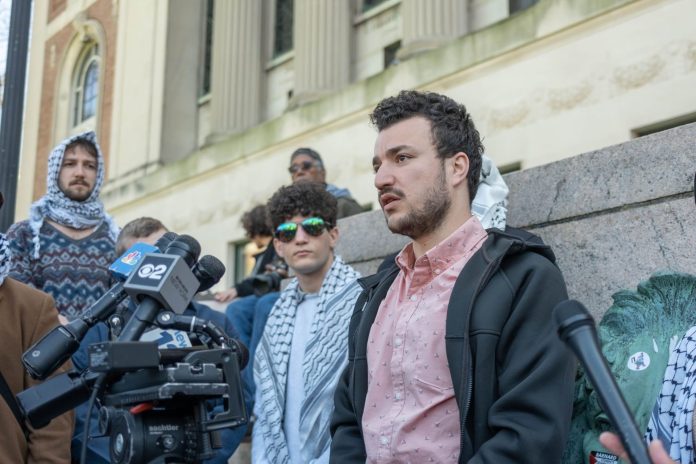
The student, Mahmoud Khalil at the university’s School of International and Public Affairs, was arrested at his university residence on Saturday, the Student Workers of Columbia union said in a statement.

Khalil’s wife is a US citizen and he has a permanent residency green card, the union said. He remained in detention on Sunday. Khalil’s wife declined to comment through one of Khalil’s fellow students.

Khalil’s lawyer, Amy Greer, told the Associated Press news agency that she spoke by phone with one of the ICE agents during the arrest, who said they were acting on State Department orders to revoke Khalil’s student visa. Informed by the lawyer that Khalil was in the country as a permanent resident with a green card, the agent said they were revoking that too, according to the lawyer.

Greer added the authorities declined to tell Khalil’s wife, who is eight months pregnant, whether he was accused of committing a crime. Khalil has since been transferred to an immigration detention facility in Elizabeth, New Jersey.

“We have not been able to get any more details about why he is being detained,” Greer told the AP.

“This is a clear escalation. The administration is following through on its threats.”

The arrest appeared to be among the first known actions under President Donald Trump’s pledge to deport international students who joined the protests against Israel’s war in Gaza that swept college campuses last year. His administration has claimed participants forfeited their rights to remain in the country by supporting Hamas, which is designated as a ‘terror’ organisation by the US.

The move has been described as an attack on First Amendment freedoms.

Khalil, an Algerian citizen of Palestinian origin, has been one of the school administrators’ lead negotiators of the pro-Palestinian student protesters, some of whom set up a tent encampment on a Columbia lawn last year and seized control of an academic building for several hours in April before police entered the campus to arrest them. Khalil was not in the group that occupied the building but was a mediator between Columbia provosts and the protesters.

The protesting students called for Columbia’s divestment from companies with ties to Israel, a ceasefire and an end to the war that killed nearly 50,000 Palestinians and turned the enclave into rubble after nonstop bombardment. The US provided the bulk of the ammunition for the war.

Columbia said last year that it would consider expediting some of the students’ demands through its investments committee.

Rights groups have accused Israel of committing genocide in Gaza – home to 2.3 million people. Despite a ceasefire in place since January 19, Israel has blocked the entry of any aid into Gaza since March 1, drawing condemnation from rights groups and aid agencies.

The October 7, 2023, Hamas attack on Israel and subsequent Israeli military offensive on Gaza led to months of pro-Palestinian protests that roiled US college campuses.

At least 1,100 people were killed in the Hamas attack and some 240 people were taken captive. Most of the captives have been released as part of truce deals. A new round of truce talks will resume in the Qatari capital, Doha, on Monday.

A spokesperson for Columbia said the school was barred by law from sharing information about individual students.

The Department of Homeland Security and the State Department, which oversees the country’s visa system, did not respond to questions from the news agencies. It was not immediately clear on what grounds ICE agents arrested Khalil. The ICE comes under the US Department of Homeland Security.

In an interview with the Reuters news agency a few hours before his arrest on Saturday about the Trump administration’s criticism of Columbia, Khalil said he was concerned that he was being targeted by the government for speaking to the media.

The Trump administration on Friday said it had cancelled government contracts and grants worth about $400m to Columbia University. The government announced the cuts and the student deportation efforts are due to “anti-Semitic” harassment at and near Columbia’s Manhattan campus.

“What more can Columbia do to appease Congress or the government now?” Khalil stated before his arrest, noting that Columbia had twice called in police to arrest protesters and had disciplined many pro-Palestinian students and staff, suspending some.

“They basically silenced anyone supporting Palestine on campus and this was not enough. Clearly, Trump is using the protesters as a scapegoat for his wider agenda [of] fighting and attacking higher education and the Ivy League education system.”

In response to the announced grant cuts on Friday, Columbia’s interim president, Katrina Armstrong, said the school was committed to combating anti-Semitism and was “working with the federal government to address their legitimate concerns”.

Protesting students have denied the charges of anti-Semitism.

Maryam Alwan, a Palestinian American senior at Columbia who has protested alongside Khalil, said the Trump administration was dehumanising Palestinians.

“I am horrified for my dear friend Mahmoud, who is a legal resident, and I am horrified that this is only the beginning,” she added.

US Secretary of State Marco Rubio said last week that international students who support Hamas, which the US has designated a “terrorist” organisation, face visa revocation and deportation.

On Thursday, Columbia issued a revised protocol for how students and school staff should handle ICE agents seeking to enter private school property.

The school announced ICE agents without a judicial arrest warrant may be allowed to enter its private property in “exigent circumstances”, which it did not specify.

“By allowing ICE on campus, Columbia is surrendering to the Trump administration’s assault on universities across the country and sacrificing international students to protect its finances,” the Student Workers of Columbia said in its statement.

Khalil lives in a university apartment building near Columbia’s main gated campus.

Iranian Forensics Org.: 78 people killed in Chaharshanbeh Suri incidents in 4 years

Chaharshanbe Suri

The organization said the highest number of fatalities took place in 1402, with the death toll standing at 28.

According to this report, those killed include 65 men and 13 women and most of the deaths are young people, mostly in the age group under 30 years old. While noting that national occasions should be upheld, the Iranian Forensics Organization urged all citizens to avoid dangerous acts such as use of firecrackers.

It also asked all Iranians to pay attention to safety tips and recommendations.

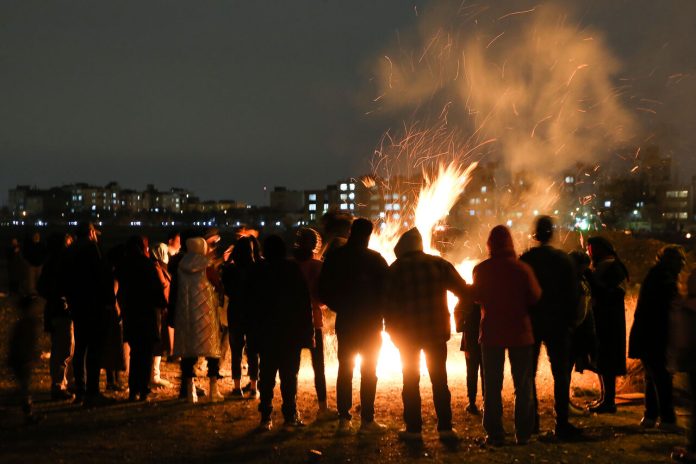
Chaharshanbe Suri is an ancient Persian festival marking the eve of the last Wednesday before the Persian New Year (Nowruz).

According to ancient traditions, jumping over burning bushes was a way of honoring this ritual. However, in recent years, the use of strong fireworks and explosives on this night has led to casualties.