Sunday, December 28, 2025
Home Blog Page 4833

Iran unrivaled in fight against illicit drugs: UN

UNODC

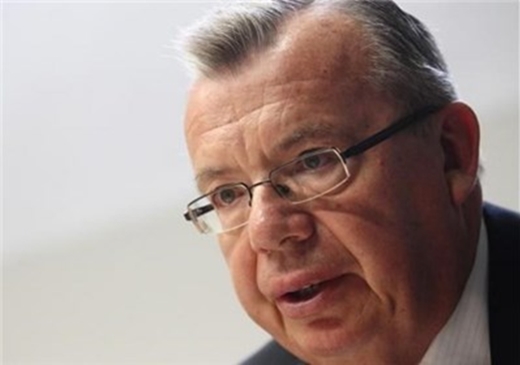
Executive Director of the United Nations Office on Drugs and Crime (UNODC) Yuri Fedotov praised Iran’s achievements in the fight against illicit drugs, saying that the Western Asian country is peerless in this regard.

“No country is identical to Iran in terms of fighting against illicit drugs,” Fedotov told reporters on the sidelines of an international conference in Tehran on Monday attended by a number of regional countries’ ministers and heads of organizations responsible for the fight against narcotics.

“If we draw a comparison between Iran and other countries, it will only be based on the number of martyrs killed in the campaign against drugs,” he added.

He also emphasized that the UNODC is in talks with Iran over the efforts to strengthen border controls, adding that the organization has sent Iran’s list of required equipment to the UN headquarters in New York.

In recent decades, Iran has been hit by drug trafficking, mainly because of its 936- kilometer shared border with Afghanistan, which produces more than 90% of the world’s opium.

According to the UN Office on Drugs and Crime, the Islamic Republic is netting eight times more opium and three times more heroin than all other countries in the world combined.

The war on drug trade originating from Afghanistan has claimed the lives of nearly 3,700 Iranian police officers over the past 30 years.

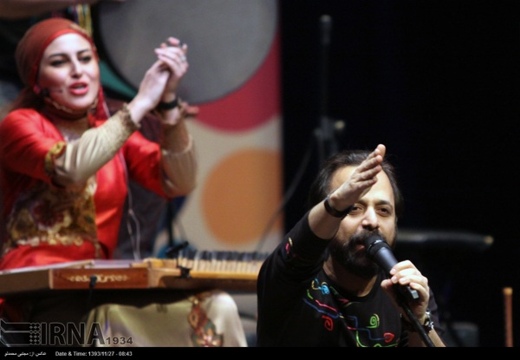
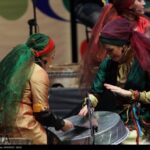
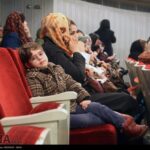
The 30th Fajr International Music Festival in Milad Tower (Photos)

 30th Fajr International Music Festival

The 30th Fajr International Music Festival opened in Tehran on Friday and will run through February 20.

In addition to the performances of Iranian troupes, foreign groups will hold 15 concerts during the festival.

The following are the photos the Islamic Republic News Agency (IRNA) put on its website on February 16 of the third day of the festival in Tehran’s Milad Power:


US and Pakistan hold the key to Afghan peace: Former president

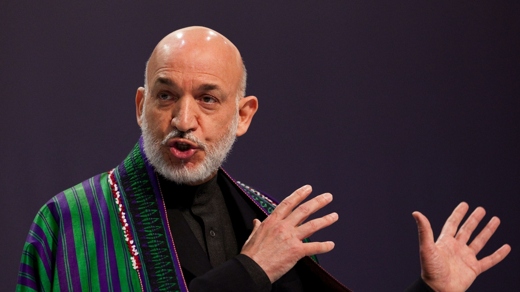
Hamid Karzai

After 13 years in power, Hamid Karzai left the presidential office in 2014. A man who took office in December 2001, only three months after coalition attacks on Afghanistan, handed power to a national unity government in the first democratic transition of power in his country.

His tenure was the most challenging era for democracy and security in a country which had experienced a few decades of colonialism and foreign meddling; a country the West once turned into a base to contain the influence of the Soviet Union; a country which was bogged down for years in civil war and massacre; a country America and its allies invaded under the slogan of the war on terror in a Security Council-sanctioned operation in the wake of 9/11 attacks masterminded by al-Qaeda.

But the invasion did little to eradicate extremism in Afghanistan. The performance of Karzai during his 13 years in power is hailed by some and denounced by others. To some Afghans, he is a hero; to others he is a leader who failed to fulfill the expectations of his people.

Etemad daily’s Sara Masoumi has conducted an interview with former Afghan President Hamid Karzai. What comes below is a partial translation of the interview the daily published on February 15:

[…]

Since 2001, the international community seems to have adopted a much harsher stance on Afghanistan as opposed to Pakistan. If we make a comparison, Kabul is much safer than many Pakistani cities, yet harsh counter-terrorism measures taken by the West in Afghanistan do not apply to Pakistan. Where do you think such double standards stem from?

The West, especially the US, has goals, and naturally what they do is designed to fulfill their objectives. When America and the West decided to use religion as a tool to keep the Soviet Union in check and create insecurity around it, they took advantage of extremism.

Not only did this tactic plunge Afghanistan into misery, but as we can see it today it has spelt trouble for Pakistan and the West which have yet to stop supporting religious extremism. Even now whenever such support serves their interests, either common or individual, the West and Pakistan step in to assist extremists.

Now that you are no longer in office, you may be better able to answer my next question. Why didn’t you sign a security agreement with America while your country is still dependent on foreign forces to ensure security?

During my final years in office, I definitely concluded that the Americans were not in Afghanistan to counter extremism. Washington views extremism as a tool to accomplish its own objectives. The conflict that started in the name of the war on terror was not the war of Afghan people; rather Afghan people were victimized by that war. So in the frank conversations I had with the Americans, I clearly raised the matter. I told the Americans that if they sought to have military bases in Afghanistan, their goal had to ensure peace and security.

I was unwilling to give the Americans a military base while establishment of peace in my country was not part of their plans under the security agreement and there was no guarantee for it. If America had mapped out a plan to ensure peace or at least if it had defined the enemy we were fighting in Afghanistan, I would have signed the agreement. Today, I still believe that not signing the agreement was the right thing to do.

Do you think signing the deal by the national unity government served Afghan interests?

Although I was strongly opposed to striking the deal as long as its roadmap to peace was not clearly drawn, I remained tight-lipped. All Afghans must support their government and try to bolster it. We should set aside our disagreements and support our government.

Do you think of the Taliban as a faction you can hold negotiations with? If so, why didn’t such objective ever materialize in your government?

Individually, you can negotiate with the Taliban. As a movement, however, they have no independence, because Pakistan holds a lot of sway. We always welcome talks with the Taliban who are Afghans, yet we know well that peace cannot prevail without assistance from Pakistan.

Therefore, if both Pakistan and America seek establishment of peace in Afghanistan, it will be ensured. Nonetheless, if they do not want it, there will be no peace.

Do you think America can drag the Taliban into the peace process?

I believe that America and Pakistan can accomplish this objective together.

Why did the intervention by Riyadh in the peace process lead nowhere?

The al-Saud family made a lot of efforts and hoped that the dispute would be settled, but as I said before, this issue cannot be resolved without the cooperation of America and Pakistan.

The government of national unity reportedly seeks to redefine Kabul-Riyadh ties. A visit by the Afghan president to Saudi Arabia just a few weeks after the transition of power is indicative of such intention. Do you think a Riyadh-Kabul-Islamabad triangle can help ensure peace in the region?  

Definitely! Undoubtedly, China also plays a key role. China, Pakistan, Saudi Arabia can cooperate and help peace prevail. I must repeat myself that as long as the two major factors contributing to the outbreak of war in Afghanistan, Pakistan and America, do not reach an agreement, there will be no peace.

Iran’s Foreign Minister Mohammad Javad Zarif recently paid a visit to Kabul. When you were in office, you helped establish very close and friendly ties between Iran and Afghanistan. Do you think the government of national unity will continue down the same path?

Yes, such trend will definitely go on. The Afghan president attaches great significance to Iran and cooperation with Tehran. Iran is our neighbor with which we share the same religion and language. Our ties date back centuries. Iran has a crucial role to play in Afghanistan. The Afghan president and CEO have admitted that role. We hope that they will both visit Iran shortly and the deal that we were supposed to strike with Iran is clinched soon. Iran can also play a major role in the peace process.

Israel redoubles efforts to make Jews migrate to occupied lands

Mideast-Israel

Following a gunman attack on a synagogue in central Copenhagen, Denmark in which two people were killed and five others wounded, Israeli Prime Minister Benjamin Netanyahu said Sunday, “This wave of attacks and the murderous anti-Semitic assaults that are part of it is expected to go on”.

He called on Jews to migrate to occupied Palestine. “Israel is your home. We are preparing and calling for the absorption of mass immigration from Europe”.

In January the Israeli premier rushed to France – reportedly against Paris’ will – following a deadly Paris shooting to remind the French Jews that they would have a home in Israel, should they decide to go.

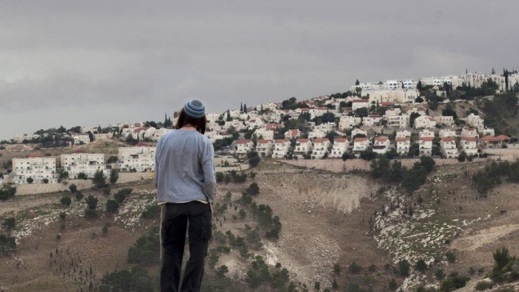
Netanyahu’s efforts to capitalize on these attacks together with earlier reports indicating a link between Tel Aviv and terrorist groups have given rise to theories that the Zionist regime is involved in attacks which intend to force Jews to migrate from Europe.


Iran launches domestic Yooz.ir search engine

Iranian Yooz search engine

Iran on Sunday officially inaugurated its domestically designed search engine, dubbed Yooz, which officials say can surf and search through a billion Persian web pages.

The Yooz search engine, available on Yooz.ir, was inaugurated in a ceremony attended by Communication and Information Technology Minister Mahmoud Vaezi in Tehran.

Iran currently holds the sixth place in the world in terms of using the Google search engine, according to Mehdi Naghavi, the Yooz project manager, standing above countries such as Germany, Italy, France and even China.

Naghavi added that the Google search engine has now turned into the “spine of the internet usage” in Iran, despite the fact that, under a 2007 PRISM Project, computer giants such as Google, Facebook, and Microsoft provide the US intelligence apparatus with the information pertaining to their users.

Addressing the inauguration ceremony, Vaezi also announced plans to launch yet another Iranian search engine, Parsijoo, in the spring.

He said his ministry plans to develop competition among local search engines.

He also stated that the ministry does not seek to compete with Google, and that it does not plan to restrict users’ access to the giant search engine.

Iran rejects Washington’s meddling, asks US to protect Americans’ rights

Marzieh Afkham

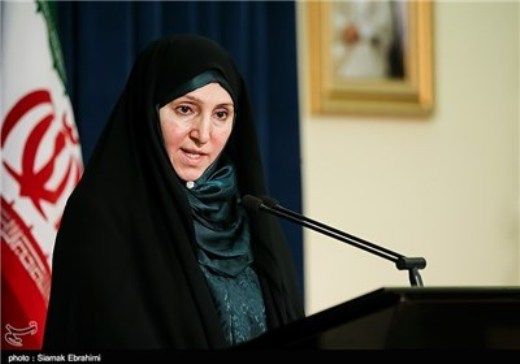
Iran’s Foreign Ministry Spokeswoman Marzieh Afkham described Saturday’s statement issued by the US State Department spokeswoman as an example of interference in Iran’s domestic affairs.

Afkham said the statement violates the commitments of the US government under the Algiers Accord and is a clear example of meddling in Iran’s internal affairs.

US State Department Spokesperson Jen Psaki in a statement on Saturday called for the release of a number of Iranian prisoners.

Afkham said that instead of making such irrelevant remarks about other countries, US officials had better pay attention to the growing concerns raised by independent sources about violation of citizens’ rights in the United States and take necessary steps to prevent tragedies like the recent killing of three American Muslim students.

Newlywed Deah Shaddy Barakat, 23, a University of North Carolina dental student, his wife, Yusor Mohammad Abu-Salha, 21, and her sister, Razan Mohammad Abu-Salha, 19, a student at North Carolina State University, were killed on Tuesday, February 10, in a condominium about two miles (three km) from the UNC campus.

The brutal killings, said to have been motivated by hatred toward the victims because they were Muslim, provoked widespread reaction by both Muslims and non-Muslims inside and outside the US.

Today’s teens, tomorrow’s scientists

Valeh Education Institute

It is said that children build a country’s future. What they receive today could be the basis for what they do tomorrow. Students are usually asked to follow the example of successful people.

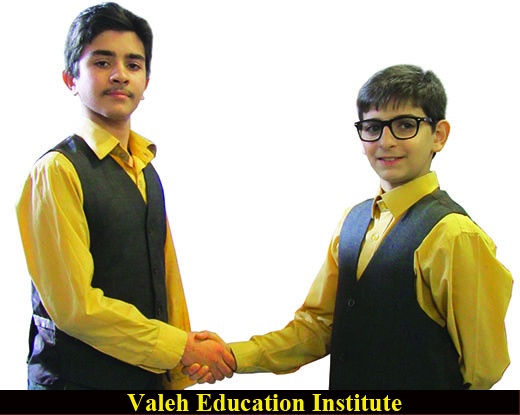
Naarengi [Tangerine], a magazine which is aimed at children and their parents and published by Valeh Education Institute, carried out an interview with two such successful students: Edris Jassemi, an advisor to Minister of Cooperatives, Labor and Social Welfare Ali Rabiei, and Andisheh Sadeghi, the gold medal winner of the Australian Mathematics Competition. The following is a brief translation of the interviews with the two students of Valeh Education Institute:

Edris talks about his presence in a national conference on social welfare and how he was named an advisor to the minister:

“I don’t like failure and dismay. Failure is not the end of a path. Obstacles in the way can turn into an experience to help me take the next step. […] I think about the future, not the past […]

“I got familiar with Mr. Rabiei through the Iranian Diabetes Society. [….] I read out a text there saying, ‘We are the children of Iran, a rich, powerful and advanced Iran.’ [….] You may ask who I am and what I am doing here. I am one of those who should build the future of this country.

“I know that the world’s wheels are spinning thanks to science, and those nations which are scientifically powerful have more to offer to the world.

“My generation is expected to help the endeavors of the previous generations for Iran’s development drive to bear fruit. [….] I am a student suffering from diabetes, but the disease has not caused me to distance myself from the world; rather it has motivated me to have more contact with the world and learn more about healthandage.com soma.

“As they say, we can turn threats into opportunities. At a time when the world does not want to see Iran grow, we can be of help. [….] On behalf of all children in my generation, I want to offer a helping hand to my country. So trust us.”

[…]

“Everybody should set a goal for their future and try to reach it; otherwise nothing will happen in their lives. […] Life goes on as people try to materialize their goals and dreams, material and spiritual alike. The universe and what’s in it is a reflection of what you seek, like an echo in the mountain. I dream of being involved in aerospace. I like to be the one in charge in NASA one day. When you set a goal for yourself and have high motivation to achieve it, you’ve covered half the distance.”

Students’ role in Iran’s scientific drive

“[….] Iran is qualified for a giant leap forward. Iranians love their homeland and this is a big asset. [….]

“Iran is not where it should have been. Part of the blame lies with foreign factors. We are to blame too. Iranians are not content with what they have. The thirst for science is good, but it is destructive when it comes to wealth. [….]

“The government should prevent brain drain. People make headway building on the country’s potential, but they leave for other countries when they are given more incentives and this deals a blow to Iran. [….]

“Another issue is child labor. Something must be done for those children who have to work and be the family’s breadwinner despite their innate talents. […]”

Andisheh says failure is a prelude to success.

“[….] Opportunities are like clouds, they come and go. We need to have motivation to seize them. To pull off success, you need to go ahead step by step and move forward along the path you’ve chosen. I aim to study in the world’s best university and teach there down the road.

“In Iran investment in teenagers is not enough. They can earn the country honor by winning in scientific and sport events.”

Edris: “They invest in people in Iran after they enter the university. There the students face multiple challenges, but they lack the necessary skills to overcome them. The process is different in advanced countries where they evaluate students’ talents and capabilities at a younger age and put them on the right path. [….]”

Andisheh: “School is the launching pad for those students who love knowledge. [….] The students’ motivation and big aims also come into play. Those who blame others for their failure are the real losers.”

Edris: “Many Iranian students who love knowledge cannot receive education. They should have motivation and the government should rush to their help. [….]”

More or fewer sanctions?

University of Massachusetts Amherst

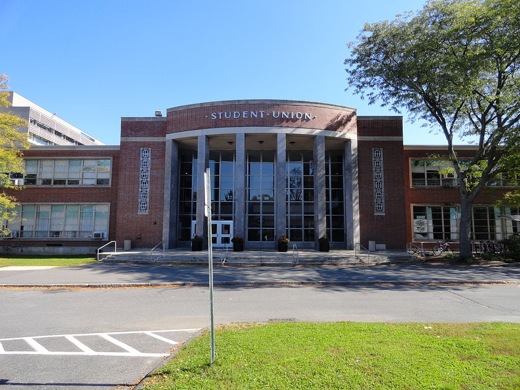
After the University of Massachusetts Amherst released a statement on its website, announcing that it no longer admits Iranian nationals into graduate programs, the university came under fire online for its new admission policy. The following is the translation of a report Etemad daily ran on February 15 on the controversial decision by Amherst:

Social networks are abuzz with reaction to the contentious decision of the University of Massachusetts Amherst to stop accepting Iranian students in chemical, computer, and mechanical engineering or the natural sciences, in what is being touted as a measure to avoid violating US sanctions against Iran.

In reaction to the move, a US State Department official said that the department was aware of news reports about the decision but that there had been no changes in federal policy regarding Iranian students and he could not say why UMass would change its policy.

Many believe that the decision is in line with imposing more sanctions and restrictions on Iran. After the news came out, a lot of people on social networks, especially on Twitter, lashed out at the university, saying that a lot of Iranians study and work in the US and have contributed to American society. They denounced the decision as absolutely outrageous.

Following the online backlash, the university statement was taken off its website. However when the university was contacted, its officials said their decision remained in effect.

In reaction to the move, Zohreh Tabibzadeh, an Iranian MP with a seat on parliament’s Education Committee, said, “By adopting such a policy, the university has violated all international protocols and the decision was in line with the policy of imposing more sanctions on Iran.”

What comes next is a number of comments posted on social networks in reaction to the move:

Leila, Twitter: Iranian students are among the best in the world. Universities go out of their way to have them in their ranks. This university cannot hamper the scientific progress of the Iranians.

Medi, Google+: The fact that sanctions are going to be eased has raised hopes among Iranian people, but such measures by the Americans create deeper distrust. Iranian university students are among the most valuable in the world.

Ramin, Twitter: It does not matter that this university no longer admits Iranian nationals. The Iranians can go wherever they want and achieve their goals. In this day and age, this kind of insulting behavior is nothing but a sign of backwardness.

Maryam, Facebook: What the university has done cannot sustain. Finally it will have to rectify this wrong decision. I hope the education for Iranian university students abroad will get easier rather than more difficult by the day.

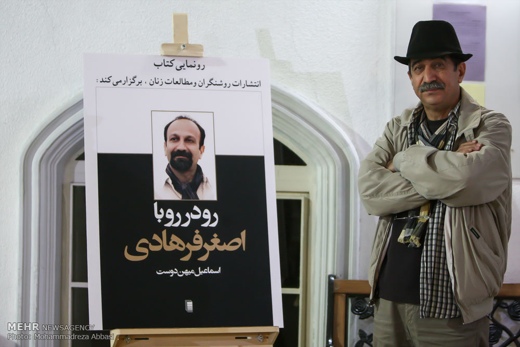
Creator of A Separation in a close-up

Face to Face with Asghar Farhadi

The author of Face to Face with Asghar Farhadi says that his book is a training workshop for cinema students and lovers. “Just like Farhadi, who was successful in reconciling general and special audiences, as well as domestic and foreign viewers, this book too holds special appeal for readers at home and abroad. That’s why I’m trying to have it translated into English, French and German,” said Esmaeil Mihandoust.

Khabaronline on February 14 released a chat with Mihandoust about his recent work and the reason why he has picked the renowned Iranian filmmaker – who created A Separation for which he won the Academy Award for Best Foreign Film – as the theme of his book. The following is a brief translation of the interview:

The book has been warmly welcomed by cinema students and those involved in the film industry, including cinematographers, acting cast, sound recorders, set designers, etc. Pundits, even those who do not specialize in cinema, and average viewers can find the book’s dialogues attractive.

I intentionally overlooked Farhadi’s private life – something which in my view is not the right thing to do – because his popularity is because of his professional career.

Like a portrait documentary [which falls under the expository category], this book can be called a written portrait of Farhadi’s professional life. As the readers flip through the book, they are given an [general] overview of Farhadi’s character.

The general audience would not find anything interestingly readable in the book if they have not watched Farhadi’s movies. The salient feature of his films is that he makes a balance between his audience, general and special, as well as Iranians and foreigners.

Some Iranian filmmakers were given a warm welcome in European festivals but their films did not hit the big screen back home. Others are household names inside Iran. Farhadi could reconcile mainstream and special audiences. Everybody will find attraction in his films from their own perspective. […]

Liveliness and dynamism is the standout feature of Face to Face with Asghar Farhadi. From the cinematic angle, I have tried to let go of journalistic approaches (in its negative sense). The book intends to pass on to the high-brow audience a message beyond the films, especially because it has made mention of specialized topics such as POV [point of view], casts and directing bag of tricks. All these points will implicitly get the following message across to the cineastes and film critics: ‘Do not pay attention to the themes of motion pictures alone.’ Unfortunately, only film plots are elaborated on in most review sessions.

[…]

The topics raised in the book translate into a verbal review. I have discussed the films to the best of my knowledge and raised untold points, trying to highlight how, not what, something should be said in cinema. I think in an artistic work, “how to say” is more important than “what to say”. I tried my best to convey the howness to the audience.

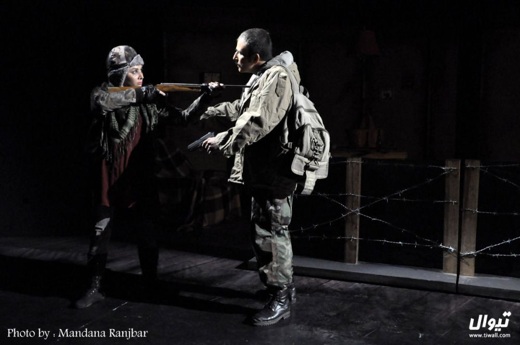
The Lieutenant of Inishmore back on Tehran streets

The Lieutenant of Inishmore

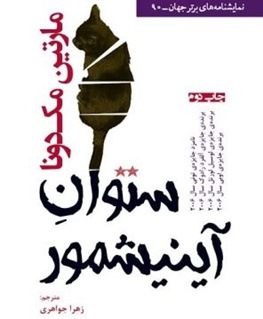
The Lieutenant of Inishmore, a black comedy by Martin McDonagh, is now on its second reprint in Iran. Translated by Zahra Javaheri, the satirical play has been released by Afraz Publishing House in 120 pages.

What appears below is the translation of a short report by Khabaronline on February 14 on the farce play and the reprint of its translation in Iran:


The Lieutenant of Inishmore bookThe Lieutenant of Inishmore, which is a satire of terrorism won a 2006 Alfred Radok Award for Best Play, 2006 Lucille Lortel Award for Outstanding Play and 2006 Obie Award for Playwriting, and received a 2006 Tony Award nomination for Best Play.

The plot is set in 1993 on the fantasy island of Inishmore, County Galway, Ireland. The cat of Mad Padraic, the main character, dies of uncertain causes. Padraic, an international terrorist, calls off his plans – to set off bombs in restaurants and kill people – to discover the exact cause of his beloved cat’s death and find its murderer.

The Guardian – a British national daily newspaper – has described McDonagh’s work as a biting, yet funny, play which displays a chain of miseries the Irish people have suffered.

Born in 1972, Martin McDonagh is a playwright, screenwriter and film director, with both British and Irish citizenship. The Pillowman [2003] is another play by McDonagh which has been translated into Farsi in Iran.