Thursday, December 25, 2025
Home Blog Page 480

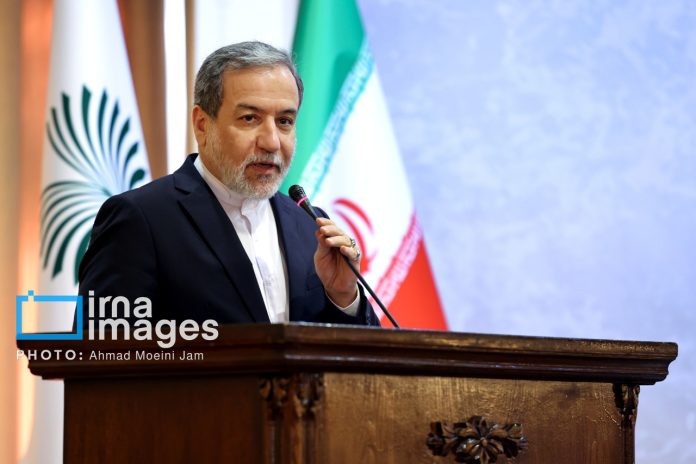
FM: Policy of excluding Iran from regional arrangements failed

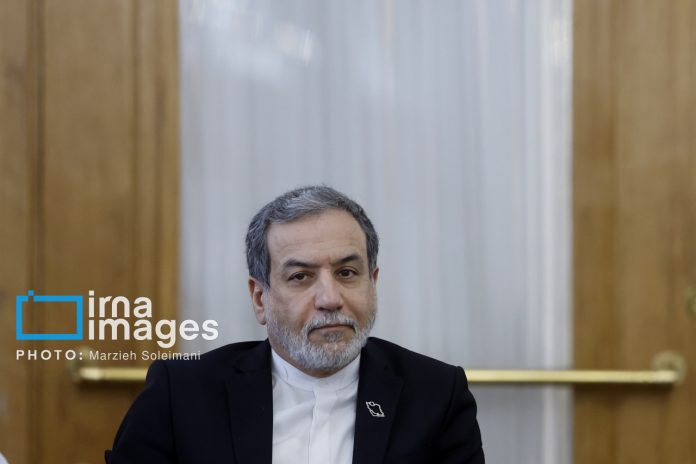
During his Tuesday remarks at the eighth conference on the history of Iran’s foreign relations at the Institute for Political and International Studies of the Foreign Ministry in Tehran, Araqchi noted that the all-out economic war through illegal sanctions against the great Iranian nation is just one aspect of the decades-long efforts by extra-regional powers led by the United States to this end.

Araqchi emphasized that the Persian Gulf is entering a new era of regional cooperation, adding that this is a result of active diplomacy and the neighbor-centric foreign policy of the Islamic Republic of Iran, as well as the perceptual changes occurring in some regional countries.

The Iranian Foreign Minister stated that the Islamic Republic of Iran, having the largest borders with the Persian Gulf and control over the Strait of Hormuz, plays an irreplaceable role in maintaining stability and security in this waterway and its surrounding areas, pursuing a strategy of maximum indigenous security in the Persian Gulf.

He warned that certain extra-regional powers have kept this waterway in a state of “permanent” tension to secure their illegitimate interests by militarizing the region and selling and stockpiling billions of dollars in weapons, thereby obstructing the path to cooperation and peaceful coexistence among the nations and countries of the region to justify their permanent presence.

Araqchi stated that the continuation of comprehensive regional cooperation requires all-encompassing collaboration among regional countries and a firm commitment to the principles of neighborly policy and mutual interests and security of the Persian Gulf states.

The Iranian Foreign Minister also emphasized the need for unified security in the Persian Gulf, stating that everyone must benefit from security; otherwise, security will not exist for anyone.
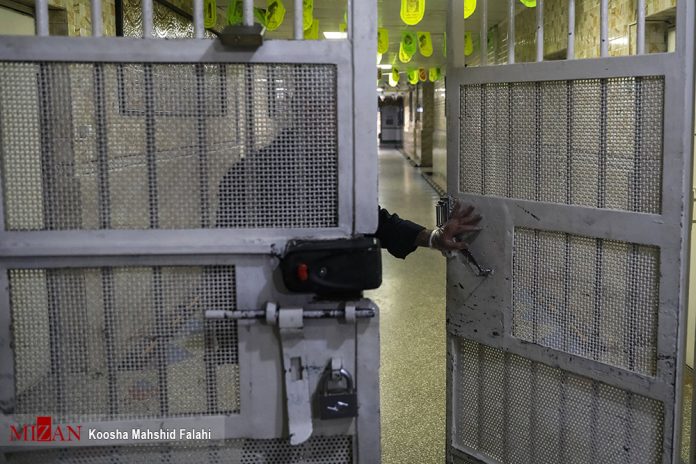
Iran judiciary says two detained British nationals engaged in espionage 

Iran Prison

According to Asghar Jahangir, the individuals entered Iran under the guise of tourism but were engaged in intelligence gathering across multiple provinces.

Jahangir noted that they collaborated with front organizations affiliated with intelligence services of hostile Western nations, using research and academic activities as a cover.

The arrests took place in January, and the investigation into their activities is ongoing.

Additionally, British Ambassador to Iran, Hugo Shorter, met with the two detained individuals at the Kerman Prosecutor’s Office following coordination between judicial and security authorities.

The meeting was held at the ambassador’s request and with judicial approval.

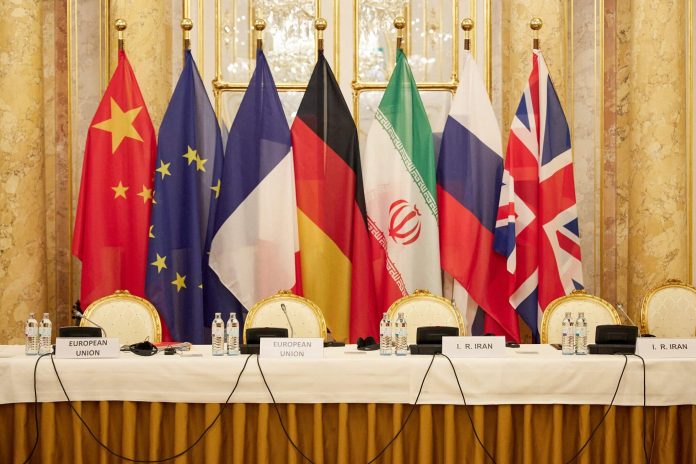
Iran says ready to resume talks with European Troika

Araqchi and Switzerland’s Special Envoy for the Middle East and North Africa Wolfgang Amadeus Bruelhart held a meeting on the sidelines of the 8th Indian Ocean Rim Association (IORA) conference in Muscat on Monday.

Araqchi highlighted the long-standing and positive relations between the two countries, both bilaterally and multilaterally, and commended Switzerland’s efforts as the protector of American interests. He also hailed Switzerland’s constructive role in promoting peace and stability in the region.

The Iranian foreign minister welcomed the upcoming political consultations between the two countries in Tehran and emphasized the importance of continued dialogue and cooperation.

Araqchi also referred to three rounds of negotiations between Iran and three European countries, reiterating Iran’s readiness to continue the discussions.

He stressed that Iran does not tolerate the language of threats or pressure, asserting that the policy of maximum pressure will certainly fail.

For his part, the Swiss envoy provided an overview of Switzerland’s efforts to promote global peace and stability, acknowledging Iran’s significant and influential role in the region.

He also underscored the importance of ongoing bilateral negotiations on various regional and international issues. Bruelhart reiterated Switzerland’s willingness to continue discussions and consultations, including at the upcoming round of talks in Tehran.

The two diplomats also talked about several topics of mutual interest in the regional and international affairs.

Russia-US talks begin in Saudi capital without traditional handshakes for press

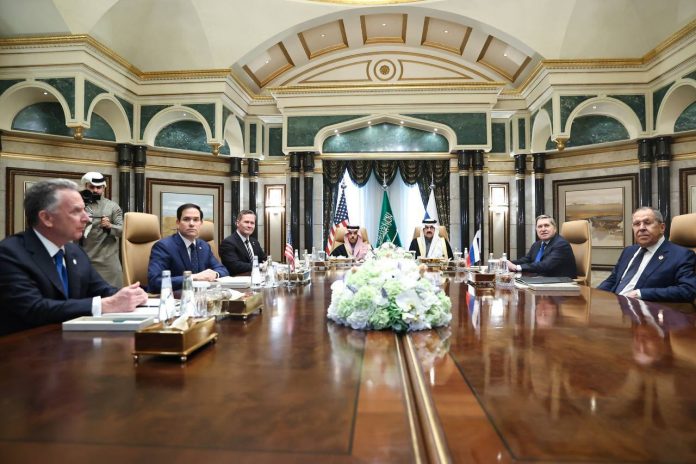
The members of the delegations are seated around a large rectangular table. The Russian side is seated on the right and the American side on the left. From the Russian side, Foreign Minister Sergey Lavrov and Kremlin Aide Yury Ushakov are at the negotiating table. Opposite them are three US negotiators: President Donald Trump’s national security advisor Mike Waltz, Secretary of State Marco Rubio and the US leader’s special envoy to the Middle East Steve Witkoff.

Representatives of Saudi Arabia sit at the head of the table.

Representatives of the Russian and American media were simultaneously led to the meeting venue, with Russian and US journalists waiting in different parts of the building. The press entered the room when the negotiators were already seated at the table.

The meeting is being held in one of the royal family’s palaces, Diriyah in the Albasateen complex. Flags of Russia, the United States and Saudi Arabia are displayed at the entrance, and a purple carpet is laid out.

Neither Ukraine nor its EU backers are taking part in the talks. In the run-up to the meeting, Ukrainian leader Volodymyr Zelensky signaled that Kiev was not invited and that it “considers any negotiations about Ukraine that are being held without Ukraine as having no results.”

The high-stakes talks became possible after a phone call between President Donald Trump and Putin last week. Following the conversation, Trump said he does not think it is “practical” for Ukraine to join NATO, adding that Kiev has very little chance of regaining territory that has become part of Russia over the past decade.

Iran FM reaffirms refusal to negotiate under pressure

Abbas Araghchi

“What matters is not beautiful words and interviews, but what has been signed,” the top diplomat stressed in an interview with Iran’s al-Alam television network, referring to a memorandum signed by US President Donald Trump earlier in February.

The document restored Washington’s “maximum pressure” policy towards the Islamic Republic that was initiated during Trump’s first tenure.

Under the approach, the US left a multi-party and United Nations-endorsed nuclear agreement between Iran and others. It then restored the sanctions that the deal had lifted, and mounted even more illegal economic restrictions against the Islamic Republic.

“The instructions given to various US ministries to exert ‘maximum pressure’ on the Islamic Republic of Iran are crystal clear. This is what has been documented, signed, and will be the benchmark for their (the Americans’) actions,” the Iranian official noted.

Araghchi pointed out that Iran had never bowed to threats or responded to pressure with concessions.

“The ‘maximum pressure’ has never worked when it comes to Iran… The resolutions and sanctions against Iran have not been effective,” the foreign minister asserted.

Iran has been responding to the US’s pressure tactics by further diversifying its economic and trade partnerships, finding more ways to bypass the sanctions, reinvigorating domestic production, and further reinforcing its cooperation with its key allies, including Russia and China.

Araghchi criticized the US for its merely verbalizing empty rhetoric, apparently referring to Washington’s alleging an interest in negotiating with Tehran or its threats of taking military action against the Islamic Republic.

He warned that Tehran would not be fooled by mere words, saying, “So far, we have not seen anything except some hollow threats of military attacks, which even they, themselves, know have no basis. We have not seen anything else except the signed document, which clearly outlines their policy.”

The foreign minister highlighted Iran’s resilience and determination to defend its dignity and sovereignty.

“The Iranian nation has always defended its honor and dignity with determination.”

The official, however, said if Washington chose to rather address the Iranian nation with “respect and dignity, naturally, we will respond in kind,” he added.

“Iran will not engage in any negotiations under maximum pressure and threats,” he repeated, adding, “We will adjust ourselves according to their policy.”

Netanyahu says Israel committed to Trump’s plan for Gaza

Gaza War

In a statement on Monday, Netanyahu said he was “committed to US President Trump’s plan for the creation of a different Gaza”.

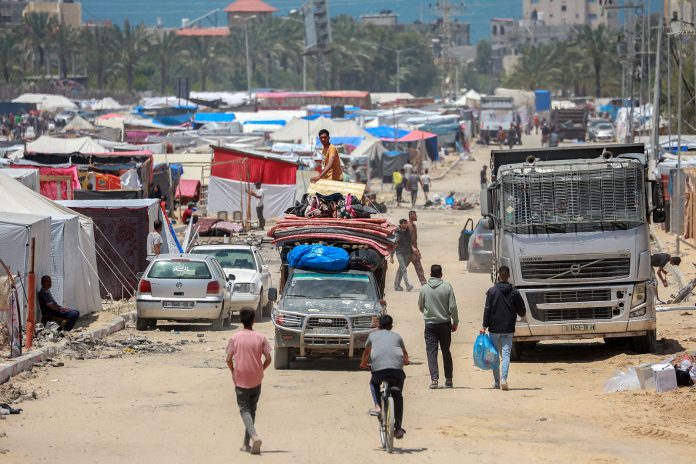
The Israeli leader also promised that “neither Hamas nor the Palestinian Authority” would govern the enclave at the end of the 15-month war, which has killed more than 48,000 Palestinians and led to a dire humanitarian crisis.

Netanyahu’s remarks come a day after he hailed “Trump’s bold vision for Gaza’s future” during a meeting with US Secretary of State Marco Rubio in Jerusalem.

Human rights groups have slammed the Trump administration’s push to take over Gaza and forcibly displace Palestinians as a violation of international law amounting to ethnic cleansing.

Supporting Trump’s plan, Israel’s Defence Minister Israel Katz announced on Monday that he would establish a special directorate for the “voluntary departure” of Palestinians from Gaza.

Israel’s Coordinator of Government Activities in the Territories (COGAT) unit presented an initial proposal which would see “any Gaza resident who wants to emigrate to a third state” be given “extensive assistance” to do so, according to Katz’s office.

“That includes special departure arrangements through the sea, air, and land, among other things,” Katz’s office said in a statement.

Trump’s proposal has been widely denounced by Arab countries, but it will be on the agenda during Rubio’s visits to Saudi Arabia and the United Arab Emirates this week.

Rubio was welcomed by Saudi Crown Prince Mohammed bin Salman on Monday in Riyadh, the latest stop on the top US diplomat’s first visit to the Middle East.

“The Secretary and the Crown Prince reaffirmed their commitment to implementing the ceasefire in Gaza and ensuring that Hamas releases all hostages, including American citizens,” a State Department spokesperson stated in a readout of the talks.

“The Secretary underscored the importance of an arrangement for Gaza that contributes to regional security.”

Saudi Arabia is spearheading Arab efforts to develop a counterproposal to Trump’s plan for Gaza, which could involve a Persian Gulf-led reconstruction fund and a deal to sideline Hamas.

The Saudi Foreign Ministry has stressed it rejects any attempts to displace Palestinians from their land.

Rubio said in a recent interview that the US remained open to alternative proposals from Arab governments, but for now, “the only plan is the Trump plan”.

Also on Monday, Israel’s security cabinet discussed the second phase of the Gaza ceasefire.

The second phase – in which Hamas is to release dozens of remaining captives in exchange for more Palestinian prisoners, a lasting truce and the withdrawal of Israeli forces from Gaza – has yet to be agreed to.

So far, 19 captives taken from Israel have been freed as part of the first phase of the ceasefire deal that began on January 19. A total of 33 captives are expected to be released at staggered intervals during this stage.

Netanyahu has noted that “the gates of hell will be opened” on Gaza if all the captives are not freed.

Iran FM says Yemen critical element in Palestinian victory over Israel

Yemen Houthis

Araghchi, who is in the Omani capital of Muscat to attend the 8th Indian Ocean Conference, made the remarks in a meeting with Yemen’s Ansarullah resistance movement spokesman Muhammed Abdul Salam on Monday.

Araghchi commended the honorable solidarity of the Yemeni government and nation with the oppressed people of Palestine in the face of the Israeli regime’s occupation and genocide in the Gaza Strip.

He reaffirmed Iran’s principled stance on support for Yemen’s territorial integrity and national sovereignty. “Stability and security in Yemen are important for the overall security and sustainable development of the region.”

Referring to the recent visit of the UN secretary-general’s special envoy for Yemen to Tehran, Araghchi underscored the usefulness and effectiveness of continuing dialogue and diplomacy, reaffirming Iran’s ongoing support for the Yemeni government and people.

Abdul Salam, who is also the head of the Yemeni national negotiating delegation, praised the Palestinian resistance movement Hamas for imposing a ceasefire on the Israeli regime.

He said Yemen is following up on the developments in the region and the implementation of the Gaza ceasefire and is fully prepared to counter any aggressive moves.

He praised Iran’s political and spiritual support for the Yemeni people and government in the face of adversaries.

Abdul Salam said Yemen’s future actions in support of the Palestinian people depend on the other side’s full adherence to the ceasefire.

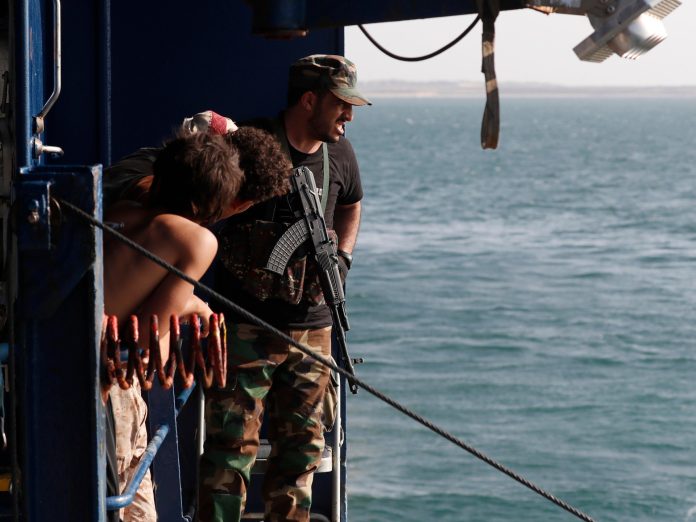
Since October 2023, when the Israeli regime launched the genocidal war in Gaza, Yemen has been staging hundreds of retaliatory operations against sensitive and strategic Israeli targets to devastating economic results for Tel Aviv.

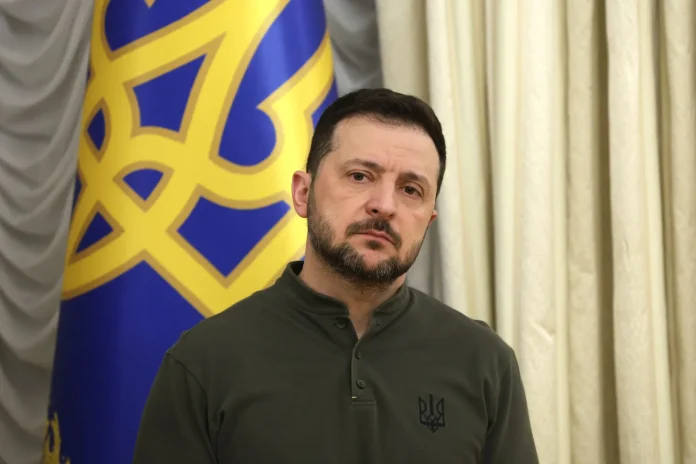
Zelensky says Ukraine ‘refuses to recognize’ Russia-US summit

Russia and the US have begun preparations for a meeting between presidents Vladimir Putin and Donald Trump that is scheduled to take place in Saudi Arabia. On Monday, Kremlin spokesman Dmitry Peskov announced that Russian Foreign Minister Sergey Lavrov and Yury Ushakov, Putin’s top foreign policy aide, would travel to Riyadh to meet a US delegation and lay the groundwork for a presidential meeting.

Following the Kremlin’s announcement, US State Department Spokesperson Tammy Bruce announced in a statement that “Secretary of State Rubio, National Security Adviser Mike Waltz and Special Envoy Steve Witkoff will meet with the Russian delegation in Riyadh Tuesday”.

“Ukraine will not take part [in the talks],” Zelensky told journalists, commenting on the development.

Kiev “knew nothing” about Moscow and Washington’s plans, he stated, adding that the Ukrainian government would treat any talks “about Ukraine without Ukraine” as “null and void” and would not recognize their results.

Kiev will not take part in the US-Russian negotiations in Riyadh and considers them meaningless, Zelensky stressed.

The Ukrainian leader also admitted that Russia and the US have a “bilateral negotiation track” and have every right to talk in this format.

Peskov earlier told journalists that talks between Trump and Putin would also be devoted to the restoration of bilateral relations.

Commenting on the developments, Lavrov stated Putin and Trump had agreed to leave behind “an absolutely abnormal period” in bilateral relations, during which Moscow and Washington had barely communicated.

Zelensky also plans to visit Saudi Arabia on Wednesday. He denied that his trip is in any way linked to the upcoming Trump-Putin talks or the meeting of US and Russian delegations, but admitted that he would discuss the issue with Saudi Crown Prince Mohammed bin Salman.

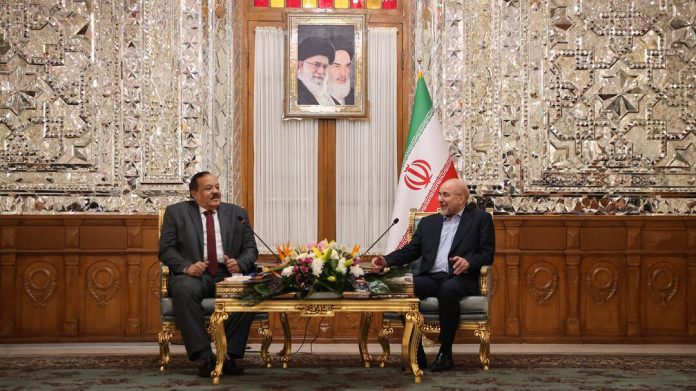
Iran backs unified governance in Sudan: Parliament speaker

Qalibaf made the remarks during a meeting with the Sudanese Foreign Minister, Ali Yusuf Ahmed Al-Sharif, in Tehran on Monday.

He reiterated Iran’s support for stability, unified governance, and territorial integrity in Sudan, expressing hope that these goals will be achieved in the near future.

However, Qalibaf warned that enemies will always hatch “new plots” to disrupt peace in Sudan, and said “necessary planning” should take place to counter their schemes.

“We should know, first and foremost, that the enemy of the Islamic nations and countries in the region is the Zionist regime,” he added.

Sudan has been embroiled in a deadly conflict over the past two years. Hundreds of thousands of people have been killed and millions displaced from their homes.

Qalibaf said Iran was eager to enhance political ties with Sudan while also pursuing economic and trade relations.

He also added that the Iranian Parliament, specifically the Iran-Sudan Parliamentary Friendship Group, was ready to establish relations with the Sudanese Parliament once stability is restored in the country.

Ahmed Al-Sharif said Sudan was grateful for Iran’s expression of support for the stability and unity in his country.

He added that Sudan was ready to establish effective parliamentary relations with Iran following the formation of the Sudanese Parliament.

Additionally, he expressed hope that Iran would contribute to the reconstruction of Sudan.

Iran and Sudan agreed to restore their diplomatic relations late in 2023 following a seven-year break.

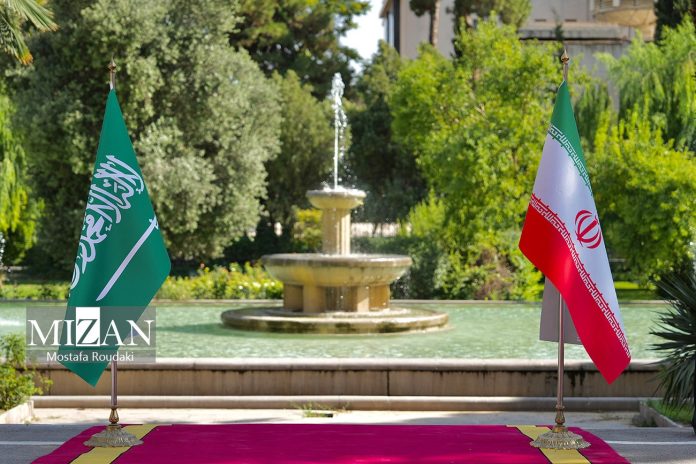
Iranian, Saudi economy ministers discuss bilateral ties

Iran and Saudi Arabia Flags

Iran’s Economy Minister Abdolnaser Hemmati and his Saudi counterpart Mohammed Aljadaan have discussed ways to expand economic cooperation between their countries.

The two ministers met on Sunday evening on the sidelines of the Conference for Emerging Market Economies, which is held in the Saudi city of AlUla on February 16-17.

Hemmati and Aljadaan emphasized the importance of developing trade and customs cooperation, bilateral investment and avoiding double taxation.

They also emphasized facilitating financial processes related to Iranian Hajj pilgrims.

The Iranian economy minister traveled to Saudi Arabia on Saturday to attend the AlUla Conference for Emerging Market Economies co-organized by the Saudi Finance Ministry and the International Monetary Fund (IMF).

Iran and Saudi Arabia restored their relations in March 2023 under a China-brokered deal, following a seven-year hiatus. The two sides have ever since worked on expanding their ties in various sectors including politics, economy and culture.