Saturday, December 27, 2025
Home Blog Page 4785

Mystery cemetery in northern Iran (PHOTOS)

Mystery cemetery 00

There is a famous village in the northernmost part of Iran which is known for its mystery cemetery.

Sepid [White] Cemetery located in Galugah, a small town in Mazandaran Province, is said to be the first Muslim cemetery in Iran. Almost everyone in the village has heard mysteries about the graveyard.

Locals believe that the white soil of the cemetery does not let corpses decompose; they even believe that the sins of those buried in the graveyard are completely forgiven.

The wonders of the cemetery and beliefs of villagers in supernatural powers of the place have attracted many from far-off and nearby villages to vie for a grave in the cemetery for their deceased.

Another distinctive feature of the cemetery is its vertical grave stones which are engraved with images of the tools that the dead used in their professions when they were alive.

To let visitors know the gender of those buried, there are special symbols which add beauty to the look of the graveyard.

The famous cemetery is growing by the day, swallowing the nearby land to secure more space for the dead.

Snapshots of the cemetery posted online by the Young Journalists Club: 

Iran’s Tasisat Daryaei wins AFC Futsal Club Championship

139405162303215155831344

Tasisat Daryaei from Iran claimed the title of the 2015 AFC Futsal Club Championship on Friday.

Tasisat defeated Kuwait’s Qadsia 5-4 at the Nagshe Jahan Stadium in Isfahan to become the first Iranian club since 2012 to win the AFC Futsal Club Championship.

Asghar Hassanzadeh scored twice and there were single goals from Ghodrat Bahadori, Reza Sangsefidi and Vahid Shamsaee as the Iranian side claimed the title.

Hamad Hayat and Abdulrahman Alwadi, also with a brace, were on target for the Kuwaiti club while Abdulrahman Altawail’s late goal made for a nervous finish for the home team.

President Rouhani, Foreign Ministry offer felicitations on Reporter’s Day

144513

President Rouhani issued a statement on Friday offering congratulations on National Reporter’s Day.

Underlining the role of reporters in conveying the realities to the people, the president described reporters as ‘the living conscience and awake eyes’ of society on the path to growth and prosperity.

The president said that responsible reporters are actually dependable and friendly advisers to senior officials and executives of the country.

Rouhani called on the Ministry of Culture and the Islamic Guidance and the Ministry of Labor, Social Welfare and Cooperatives to support reporters and pledge to remove their financial difficulties and give them more professional freedom.

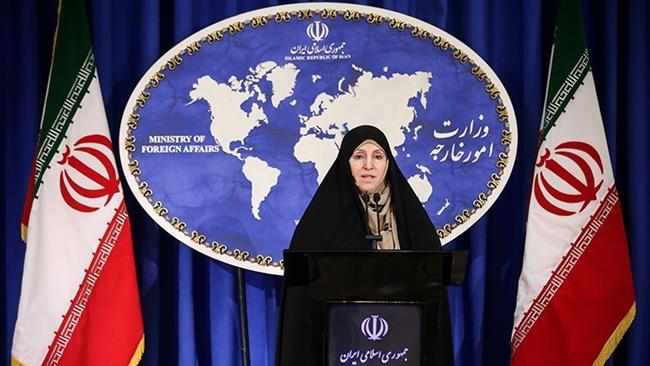
In another development, the Ministry of Foreign Affairs issued a statement and offered felicitations on National Reporter’s Day.

National Reporter’s Day marks the martyrdom of IRNA correspondent in Afghanistan Mahmoud Saremi 17 years ago in the northern Afghan city of Mazar-i-Sharif.

In its statement, the Foreign Ministry appreciated efforts by Iranian media for satisfactory coverage of nuclear negotiations between Iran and six world powers.

Highlighting the role of the media in raising public awareness, the statement hailed the non-stop efforts of all reporters, particularly those active in the area related to the Foreign Ministry.

The statement wished success and prosperity for all those engaged in this ‘sensitive and difficult job’.

Gunmen attack checkpoint in Marivan, no one hurt

81711377-70080835

The deputy governor-general of the western province of Kurdistan said on Friday that counter-revolutionary elements launched a ‘childish attack’ on a checkpoint in Marivan last night in a desperate attempt to jeopardize the provincial security. No one was hurt.


Alireza Ashenagar, who visited the scene of the attack, told IRNA that that the attack had left no casualties.

‘Fortunately, thanks to the vigilance of security forces and the personnel of the checkpoint, the counter-revolutionary elements gained nothing and fled the scene immediately,’ Ashenagar said.

No one was hurt in the attack and only minor financial damage was inflicted on the checkpoint, he said.

Iran renews support for Iraq’s territorial integrity

13940119000255_PhotoI

Iranian Deputy Foreign Minister Hossein Amir Abdollahian once again voiced Tehran’s support for peace, stability and the territorial integrity of Iraq.

“Iran reiterates the need for Iraq’s solidarity and territorial integrity as well as political partnership of all tribes of the country in accordance with Iraq’s constitution,” Amir Abdollahian said in a meeting with an Iraqi Kurdistan Region delegation in Tehran on Friday.

He pointed to Iran’s support for the axis of resistance, and stressed that the campaign against terrorism is one of Iran’s irrevocable foreign policy principles.

In May, Deputy Head of Iraq’s Patriotic Union of Kurdistan (PUK) Barham Salih in a meeting with Amir Abdollahian in Tehran appreciated Iran’s effective support for Iraq under difficult conditions, especially in the campaign against Takfiri terrorists.

“I appreciate the Islamic Republic of Iran’s support for the Iraqi nation, especially the country’s Kurdish people under the difficult epoch-making conditions,” Salih, a former prime minister of Iraqi Kurdistan Region, said.

Salih said that radicalism is a threat to the entire region and the regional countries should boost their cooperation to confront extremists.

The Iranian deputy foreign minister, for his part, appreciated Salih’s constructive role in Iraq’s new developments, and underlined the need for boosting national unity in Iraq through the balanced participation of all tribes in the Arab country’s political structure.

Amir Abdollahian pointed to Iraq’s regional status, and said that consolidation of stability and security in Iraq is a prelude to regional security.

“The Islamic Republic of Iran will continue its effective and constructive role in supporting

US, West bid to satisfy Zionists to no avail: Iran cleric

28cc5bfe-fe82-4df0-8227-5248bf7ed9c3

A senior Iranian cleric says the United States will definitely fail to change the hostile attitude of the Israeli regime toward the recent breakthrough in the nuclear talks between Iran and P5+1.

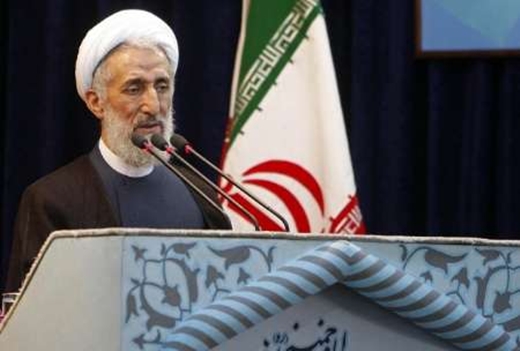
Tehran interim Friday prayer leader Ayatollah Mohammad Emami Kashani said in a sermon to worshipers that the US and the Western states cannot make Israel satisfied with the successful outcome of the nuclear negotiations on the Iranian nuclear program as the real intention of the Zionist regime is to wipe out all nations in the world.

“You want to satisfy the leaders of the Zionist regime with the recent negotiations and agreements with Iran, but be sure that they won’t be satisfied, because they want to destroy all nations in the world, because they want their hands stained with the blood of all nations,” he said addressing the US and its Western allies.

The senior cleric rejected the West’s claims that the pressure of sanctions brought Iran to the negotiating table, saying that the only way to answer such rantings would be the realization of the resistance-based economy as outlined by Leader of the Islamic Revolution Ayatollah Seyyed Ali Khamenei.

Tehran and P5+1 – the US, Russia, China, France, Britain and Germany – finalized the Joint Comprehensive Plan of Action (JCPOA) over the Iranian nuclear program on July 14.

Tel Aviv has been the main critical voice against the breakthrough in the talks between Iran and the six world powers. The regime has long been engaged in heavy lobbying to hamper the diplomatic efforts aimed at closing the Iranian nuclear dossier.

Ayatollah Emami Kashani further rejected as “mere lies” Western allegations that Iran pursues a non-civilian nuclear program and backs terrorism, adding that it is the Westerners who are the real supporters of terrorism.

“It is you (Westerners) who train terrorists, it is you who export terrorism,” said the senior cleric, holding the West to task for supporting the criminal Zionist and Saudi regimes.

“The evil Saudi regime, the Zionist regime, and the deviant ISIL group are three evil sides which are all alike and in collusion.”

Iran to unveil new oil contracts in London

Bijan Namdar Zangeneh

Iran will introduce its new oil contracts at a London conference planned for December as the country seeks to boost recovery from its fields with the help of foreign companies, Minister of Petroleum Bijan Zanganeh says.

Energy officials have said Iran has identified nearly 50 oil and gas projects worth $185 billion up for grab.

“New contracts with foreign companies will be signed in the IPC (Integrated Petroleum Contract) framework which I think will be more attractive,” Zanganeh said.

Under the new formula, Iran will cede exploration, development and production operations on an oilfield exclusively to a foreign contractor. Foreign companies will be required to commit to optimal and sustainable production from the field and transfer of technology.

IPC is replacing buyback deals which required the host government to pay the contractor an agreed price for all volumes of hydrocarbons it produced.

Under the IPC, the National Iranian Oil Company (NIOC) will set up joint ventures for crude oil and gas production with international companies which will be paid with a share of the output.

Oil majors including Royal Dutch Shell, France’s Total, BP and Italy’s Eni have indicated interest in Iran’s new projects.

Deputy Petroleum Minister Amir Hossein Zamaninia said Friday European companies sought to return to Iran as soon as possible after the removal of sanctions.

Over the past month, Iran has hosted government officials and executives of big companies from Germany, France and Italy to discuss new grounds for cooperation.

“All the three delegations from Germany, France and Italy were very serious in their negotiations and sought to return to Iran as soon as possible after the annulment of the sanctions,” Zamaninia said.

In their talks, the Iranian side underlined the need for transfer of technology and investment, he said.

“Investment by European companies and their partnership with our private sector for construction of equipment and tools will not be restricted to the Iranian market; rather, the doors of regional markets will open to this cooperation.”

Different things led to conclusion of the deal: Diplomat (PART ONE)

Baidi Nejad

Iran and P5+1 know, beyond a shadow of a doubt, that nuclear talks, especially the home stretch of the talks over the past two years, are unprecedented in relations between Iran and world powers, Hamid Baidinejad, an Iranian diplomat who was part of the expert team representing Iran in grueling talks with P5+1 said.

He said the policies adopted by different governments involved in the talks played a role in the conclusiveness of the negotiations, but what was of great significance in nailing down the deal was “the Iranian resolve which made the policy of coercion and sanctions ineffective and proved to the other side that it should agree to a deal that would recognize the Iranian nuclear rights.”

He went on to say, “If someone other than President Rouhani had been in charge of the talks, we wouldn’t have been able to come this far.”

The following is the translation (PART ONE) of an excerpt of the comments made by this Iranian diplomat – who spent the two months leading to the July 14 deal away from Iran – in an interview with the Iranian Students’ News Agency (ISNA). The original story was headlined “It was only Rouhani who could lead the talks this way.”

– As far as our national interests go, these talks were unique and constitute a milestone in the contemporary political history of our country. Of course, that holds true for P5+1 too. Although P5+1 are all major powers, the kind of talks they had with us was unprecedented. That is particularly true about the Americans who have never conceded so much in any negotiations. Basically the Americans are the ones who set conditions at the negotiating table, but at the nuclear talks they let go of their traditional stance after three decades.

– What brought the five permanent members of the Security Council together as a group was the reputation of the council which, as an international institution, is tasked under the UN Charter with settling issues related to international peace and security. In other words, we were dealing with a group whose members not only cared about their political, economic and national interests, but also about the reputation of the Security Council. This made the talks all the more complicated.

– Iran never insisted on anything beyond its inalienable nuclear rights. We always wanted to have an industrial nuclear capability to generate electricity and tap into the benefits of nuclear energy. The double standards and restrictions, which were applied when Bushehr Nuclear Power Plant was under construction, created worries in the country that we might not be able to procure the nuclear fuel we would need. That prompted us to work on nuclear fuel; of course, developing nuclear fuel is an absolute right under the NPT.

The US initially didn’t want us to make progress on that front. It took the Americans years to come to terms with the fact that it could not use the weapon of coercion to discourage us from developing peaceful nuclear technology. In bringing pressure to bear, the US did all it could, including issuing military threats against Iran. In the resolutions they issued against us, especially in Resolution 1929, they did not leave out any restrictions against our country.

– When our country was in talks with the European Three, under a political understanding, the establishment decided to suspend its enrichment activity for a limited period of time. That was designed to inject stability into the country’s nuclear program as a whole and secure a comprehensive deal. The European countries knew that failure to clinch an agreement would usher in new political conditions which were bound to be anything but constructive. Despite that, they failed to agree to Iran’s minimal nuclear demands at that juncture.

Some foreign politicians were under the illusion that they could offer political and economic incentives to Iran in exchange for a halt to its enrichment. That came despite the fact that we told them time and again that we were not willing to abandon our nuclear rights in return for such incentives. In fact, we were saying we didn’t want to put our nuclear program up for sale. Still, we were willing to talk to them about the extent, type and timing of enrichment.

Back then we could clearly see that the Europeans were taking into account the American security considerations and the US was unwilling to accept Iran’s enrichment. That left us only one option and that was what happened: we resumed enrichment and focused on the full fuel cycle. In response, they took Iran’s nuclear case to the Security Council and slapped sanctions on us.

The policies adopted by different governments have surely had an impact on the process of talks; but over the past 12 years the macro policies of the establishment on the nuclear front have remained unchanged and the Supreme Leader has overseen the overall management of the country.

– If Iran had been an isolated country in the world with no role in regional and international developments, the sanctions could have remained in place. But, since Iran is a strategically important country and plays a significant role in the region and around the world, the policy of sanctions and isolation lost its efficacy. So contrary to expectations, Iran’s authority grew even when sanctions were in place.

Of course, there were some twists in regional conditions too. The US failed to secure its objectives in Iraq and Afghanistan and the region saw the emergence of extremist groups. All these factors contributed to the holding of a new round of talks. To say what would have happened if the global developments had taken a different turn would be too hypothetical and wouldn’t change anything.

Highlights of Ettela’at newspaper on August 6

Ettelaat6

 “Inflow of capital and technology and joint exports of goods are Iran’s top priority in cooperating with Europe,” President Hassan Rouhani said at a meeting with the visiting Italian ministers of foreign affairs and economic development.

He further said that the two countries can open a new chapter in their relations in political, economic, cultural, scientific and tourism arenas.

 US Secretary of State John Kerry has said that war with Iran would be disastrous for the US and Israel.

The US top diplomat further said that rejection of the Vienna accord by Congress won’t keep the Iran sanctions regime in place.

 Seventy terrorists were killed in a US drone strike on Nangarhar, Afghanistan.

Taliban and IS terrorists were locked in a gun battle when they came under fire from the air.

Meanwhile sources close to the Taliban have said that a son of Mullah Omar, the deceased former leader of the group whose death in 2013 was confirmed last week, has been placed under arrest by the new ringleader of this terrorist grouping.

 Iran’s new Syria initiative will be presented to the United Nations.

A deputy foreign minister has said that the plan will be put forth after close consultation with Damascus.

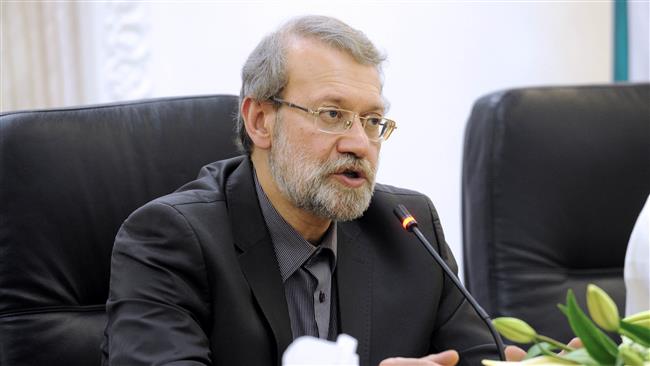
 The Iranian parliament speaker has said that Saudi Arabia is trampling human rights in Yemen.

“Saudi airplanes have bombed mosques, markets and residential areas hundreds of times,” Ali Larijani said.

 A Kerman Week will open in Tehran’s Milad Tower tomorrow with the first vice-president in attendance.
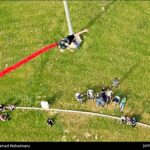
The festival is meant to make members of the public familiar with Kerman and its spiritual and material richness.
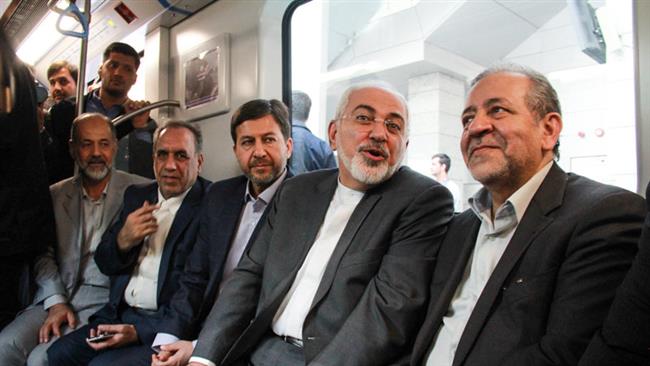
US, allies to blame for terror spread in ME: Zarif

Mohammad Javad ZArif

Iranian Foreign Minister Mohammad Javad Zarif has blamed the United States and its allies in the Middle East for the spread of extremism and terrorism in the region.

The tactless policies and measures of the US and its allies, particularly Israel, have brought nothing but war, destruction and extremism for the Middle East and around the world, Iran’s Foreign Ministry website quoted Zarif as saying on Thursday.

Iran’s top diplomat stressed that Tehran’s foreign policy is consistent, noting that the Islamic Republic has always sought to establish friendly ties with its neighbors and counter the mutual threats in the region, including foreign aggression, extremism, terrorism and sectarianism.

His comments follow US President Barack Obama’s latest remarks against the Islamic Republic, which Zarif described as the ones meant to please Israel as well as critics inside the US.

US President Barack Obama pauses as he delivers a speech about Iran’s nuclear conclusion, August 5, 2015 at American University in Washington, DC. (AFP photo)


The foreign minister’s reaction came after a Wednesday speech by Obama in which the US president accused Iran of supporting terrorism, saying Washington has many differences with Tehran despite the recent nuclear agreement.

Zarif also touched upon the recent nuclear conclusion between Iran and P5+1 over Tehran’s nuclear program, saying that the agreement has dismantled the basis of the “Iranophobic plot.”

Those who still pursue the Iranophobia plot are only trying to make profits by selling lethal weaponry and do not care about wasting the region and the world’s limited resources, he went on to say.

Zarif further warned the US that the civilized world has set aside the use of threat in foreign policy, noting that such a tactic is both illegal and inefficient.

The wars waged by the US over the past 50 years have only inflicted severe loss upon the American people and brought about insecurity and instability for the whole world, he stressed.

The Iranian foreign minister also called on the US government to seize the opportunity and win the trust of the Iranian nation following the July 14 nuclear conclusion, saying this can only be realized if American authorities change their “wrong policies.”