Friday, May 1, 2026
Home Blog Page 4772

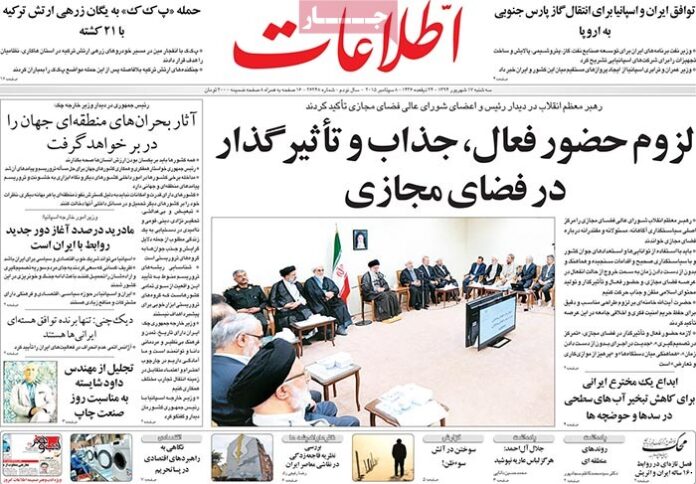
Highlights of Ettela’at newspaper on September 8

Eteelaat

 At a meeting with members of the Supreme Cyberspace Council, Ayatollah Khamenei underlined the country’s active, impressive and effective presence in cyberspace.

The Supreme Leader also called for measures to tap into the potential of the country’s young talents and for sound policymaking as well as coordinated efforts to shed the country’s current passivity in cyberspace.

 An Iranian inventor has worked out a method to reduce the vaporization of water in dam reservoirs.

 Tehran and Madrid have arrived at an agreement on the transfer of the natural gas of Iran’s South Pars field to Europe via Spain.

The Spanish development and transportation minister has said that direct flights between Iran and Spain will be established.

 An attack by members of Kurdistan Workers Party (PKK) on a Turkish armored column has left 21 dead.

Immediately after the deadly attack, Turkish warplanes bombed the positions of PKK.

 The fallout of regional crises will haunt the whole world, President Rouhani said at a meeting with the Czech foreign minister.

The president also appealed for consultation among world nations in defeating the scourge of terror and its repercussions.

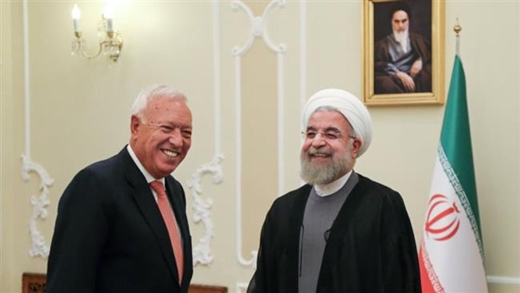
 The Spanish foreign minister has said that Madrid seeks to open a new chapter in relations with Tehran.

The top diplomat said that Spain could be a good political and economic partner for Iran.

 Former US Vice-President Dick Cheney has said that the Iranians have been the only winner of the nuclear deal.

In another development, the UN nuclear watchdog said that there has no diversion in Iran’s nuclear activities.

 At a ceremony to mark Print Day, the services of Davood Shayesteh have been praised.


Iran’s food industries waiting for investment to enter international markets

milk_and_chocolate

The huge untapped potential of Iran’s food industry and a favorable regional market lend additional significance to food exports and give momentum to the country’s drive to secure self-sufficiency.

According to a report by the Iranian government on its performance over the last two years, food exports have been up 27 percent, while imports of foodstuff have dropped 9 percent.

It is worth noting that progress across the food industry has been anything but consistent. For instance, dairy products along with chocolate and confectionary account for over 50 percent of food exports, while the vegetable oil industry which once had high potential now meets merely 10 percent of the domestic needs and the rest is imported from abroad.

Experts believe that on top of setting objectives, supportive regulations are key to consistent progress in the food industry and fulfillment of its objectives.

The following is the translation of an excerpt of a report about Iran’s food industry SMT daily published on September 5:

In this industry raw materials account for most of imports and the dairy industry has had the least amount of imports over the last two years, said Secretary of Food Industries Association of Iran Kaveh Zargaran.

He added, “The dairy industry is at the forefront of food exports with a 28 percent share.”

Zargaran said that presently, the food industry is operating at 40 percent of its capacity, adding, “When it comes to food exports, Iran is heavily dependent on Iraq. In light of the good relations Tehran has established with Moscow, we can dedicate a noticeable share to Russia in order to boost our exports. Russia imports 70 percent of its food and agricultural raw materials from abroad and because of strains in Russia-EU relations, a great opportunity has arisen for Iran to capture a larger share of the Russian market.”

He went on to say, “Russia imports over $4 billion in dairy products and Iran is capable of meeting the Russian need. In other areas such as chocolate, confectionary and agricultural raw materials, Iran has tremendous potential, too.”

The secretary of the Food Industries Association said that in order to fulfill the objectives of the food industry, finding our way to new markets must top our agenda.

Meanwhile, Abolhassan Khalili, a member of the association, said, “At present, Iraq and Afghanistan are major importers of Iran’s food products.

Without doubt, following the removal of sanctions, Iran can launch cooperation and establish mutual relations with more regional and international companies and thus have robust economic relations with countries across the world. We can raise the volume of exports if production is viewed from a competitive angle.”

Khalili further said, “We can better tap into the present potential of processed food products. In fact, Iran is capable of turning into a leading exporter of processed food.”

On Iran’s potential for attraction of foreign investment to bolster exports, he said, “Given Iran’s easy access to high seas [which translates into easy transport of exports] and the borders it shares with 10 countries, Iran can be a great opportunity for foreign investment in the food industry whose infrastructure is in favorable conditions.”

Khalili went on to say, “With the establishment of new plants to complete the production chain, particularly in the packaging industry, we can promote the volume of food exports. We also need to pursue targeted investment to minimize the risk of losses.”

Since the Iranian food industry is operating at 40 percent of its capacity and the great market potential of neighboring countries, especially Russia, plans to boost food exports seem to be necessary.

To that end, steps must be taken to clear the hurdles in the way of production and exploit the untapped potential. A hands-off approach to the food industry, particularly when it comes to the pricing of raw materials, can render food exports more competitive.

Tehran welcomes foreign investors: President Rouhani

cad130b3-52f0-4c6a-8595-073864bfa4f8

President Rouhani has said that Tehran embraces foreign investors and entrepreneurs.

“Under the new circumstances and following the Vienna agreement, Tehran welcomes the presence of foreign investors and entrepreneurs and Spanish companies can enter the Iranian market as well,” said Rouhani in a meeting with Spanish Foreign Minister Jose Manuel Garcia-Margallo in Tehran on Monday.

[…]

There exists great economic, industrial, scientific and cultural potential in Iran, said President Rouhani, expressing hope Tehran-Madrid cooperation will further expand.

Iran also enjoys numerous potentialities in the areas of energy, oil and natural gas, downstream industries, infrastructure, and academic matters as well as cooperation between research and tourist centers, said the president, who noted that the presence of Spanish investors and entrepreneurs in Iran can give fresh impetus to cooperation between the private sectors of both sides.

President Rouhani also said he would like to see a direct air route established between Tehran and Madrid.

The president hit out at the development of nukes, saying, “Nuclear weapons have never ensured security for countries.”

He said Iran stands ready to work closely with Spain at regional and international levels, including in the war on terrorism.

“Today, the Middle East region is grappling with the scourge of extremism, violence and terrorism, but this scourge will never stay limited to a single region or a single territory,” said President Rouhani.

He urged all countries to join a global campaign against terror.

The visiting Spanish foreign minister, for his part, expressed hope sanctions imposed on Iran will be lifted as soon as possible.

He said the two countries have common ground when it comes to dealing with terrorism, stressing the need for political and peaceful solutions to regional crises, including the conflict in Syria.

Spanish firms are eager to set up offices in Iran, the foreign minister said.

He said Spain can serve as a conduit for the transfer of Iran’s natural gas to Europe, and expressed hope establishment of a joint Iran-Spain cooperation commission will see the full existing potential for mutual cooperation realized.

[…]

Tehran, Prague to finalize economic roadmap

7e64b835-f888-4b6a-a9db-3c8f012cbe01

Iranian Minister of Economic Affairs and Finance Ali Tayyebnia has said that Iran and the Czech Republic are working on an economic roadmap aimed at boosting bilateral ties between the two countries.

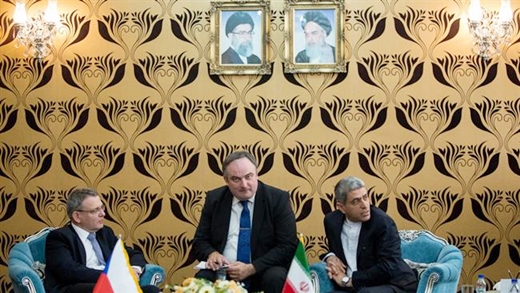
“During my previous visit to Prague, I raised the issue of drafting a roadmap of economic cooperation between Iran and the Czech Republic. Fortunately, upon the agreement of both sides, the process started some time ago and now the roadmap is being finalized,” Tayyebnia said after a meeting with Czech Foreign Minister Lubomir Zaoralek in Tehran on Monday.

“We hope that this roadmap can pave the way for the promotion of economic, trade and banking cooperation between the two countries,” he added.

The Iranian minister of economy also pointed to the recent customs and investment agreements between Iran and the Czech Republic and said Tehran welcomes the presence of Czech investors in the county’s lucrative market.

Czech Minister of Foreign Affairs Lubomir Zaoralek described Iran as a “credible partner” and said Prague is ready to sign economic cooperation agreements with Tehran.

“We are ready to expand cooperation with Iran in diverse industrial and trade sectors including agriculture, transportation, and technology transfer,” said the Czech foreign minister.

He also hailed the conclusion of nuclear talks between Iran and P5+1, saying that Prague seriously supports the nuclear agreement.

“Fortunately, the ground has been prepared for the removal of sanctions [against Iran] in the European Union and it is possible to expand trade ties between Iran and the EU,” Zaoralek said.

Leader calls for active, effective presence in cyberspace

Leader

Supreme Leader of the Islamic Revolution Ayatollah Seyyed Ali Khamenei on Monday elaborated on the need for Iran’s active presence in cyberspace, and urged young people’s proactive role in the field.

Addressing the chairman and members of the country’s Supreme Cyberspace Council, Ayatollah Khamenei underlined the necessity to produce attractive and authentic Islamic content in the cyberspace.

Highlighting the cyberspace’s influence as an “excellent soft power” in different fields, including culture, politics, economy, lifestyle, faith, religious beliefs and morality, Ayatollah Khamenei called for correct policy-making, wise and coordinated measures to bring, without any further delay, the country out of the existing passivity in cyberspace.

We should shed our passivity in cyberspace by tapping into the potential of young talents and taking wise measures, Ayatollah Khamenei noted.

In a decree on Saturday, the Leader appointed new members of the council, and outlined the primary policies that members of the council should implement during their 4-year term.

Ayatollah Khamenei referred to “defining policy, macro management, planning, making necessary and timely decisions as well as efficient and up-to-date monitoring” in the cyberspace as the council’s overriding duty.

The Supreme Leader also called for efforts to elevate Iran to a cyber-power at the level of global, influential powers.

The council brings together the president, the parliament speaker, the judiciary chief, ministers of communication, culture, science, intelligence, education, defense, as well as the Islamic Revolution Guards Corps (IRGC) and police chiefs, a number of other officials and individuals.

Established in 2012, the council is tasked with defining policy and coordinating decisions regarding cyberspace.

Iran, Russia renew call for negotiated solution to Crises in Syria, Yemen

russia - iran flags
russia - iran flags

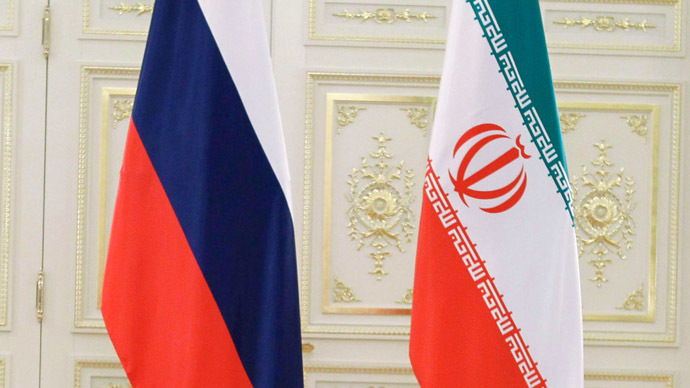
Senior Foreign Ministry Officials from Iran and Russia underlined the two countries’ support for finding political solutions to ongoing crises in Yemen and Syria.

The Russian Foreign Ministry announced on Monday that the country’s Deputy Foreign Minister Mikhail Bogdanov and Iranian Deputy Foreign Minister Hossein Amir Abdollahian discussed in a phone call earlier on Monday the situation in war-torn Syria and Yemen.

“The sides underlined that there was no alternative to finding a political solution to the Syrian and Yemeni crises in line with international law and the UN Charter,” the ministry said in a statement.

Syria has been mired in civil war since 2011 as Syrian forces loyal to President Assad have been fighting several extremist terrorist groups, including the Islamic State in Iraq and the Levant (ISIL).

Yemen has also been engulfed in a military conflict between Shiite Houthis, the country’s main opposition, and forces loyal to ex-President Abd Rabbuh Mansur Hadi, who is in exile in Saudi Arabia.

In late March, a Saudi-led international coalition began airstrikes against Houthis in Yemen at the request of Hadi. It also imposed a land, sea and air blockade on the country.

World needs Assad to save Syria: Velayati

Velayati

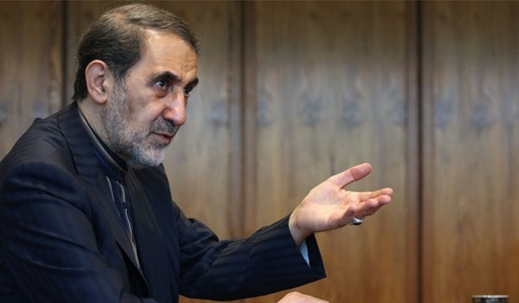
The Supreme Leader’s advisor for international affairs Ali Akbar Velayati has blasted certain Western and regional countries for their attempts to overthrow Syrian President Bashar al-Assad and said Assad is the only one to save Syria.

Velayati made the remarks after meeting with Spanish Foreign Minister Jose Manuel Garcia-Margallo in Tehran on Monday.

“We discussed the issue that settling the crisis in Syria is not possible militarily and can only be resolved through political means,” he told reporters, elaborating on the content of his talks with Garcia-Margallo.

Velayati blasted certain regional and Western states’ interference in Syria as the main contributor to “instability in Syria”, saying that Iran has repeatedly underlined the necessity for an independent government in Syria if the world does not want to have another Libya.

“Yet, some countries persisted in overthrowing Bashar Assad, which was a mistake and the world is now facing its repercussions,” he added.

Noting that militants from 80 countries are fighting in Syria, Velayati said, “No one can save Syria from this situation like Assad and the UN Security Council members as well as the neighboring and regional states should try to find a solution.”

Earlier, Foreign Minister Mohammad Javad Zarif called on supporters of terrorist groups in Syria to stop their attempts to overthrow the Arab country’s legitimate president, and expressed regret that their insistence on toppling President Assad has blocked peace and tranquility in the country.

“Those who have set a condition about the Syrian president in the past two years should be blamed for the continued war and they should account for the bloodshed in the past few years,” Zarif said in a joint press conference with Garcia-Margallo.

Stressing that merely the Syrian people are entitled to make a decision about their country’s president, he called on supporters of the terrorist groups to give up their selfish motives and short-term benefits that they pursue at the expense of the Syrian people, and let the restoration of peace and reconciliation happen in Syria.

“We insist that everyone try the political solution to end the crisis in Syria and give up their dream of bringing about an end to the situation in Syria through military means,” Zarif said.

Iran is ready to promote dialog with Spain: Speaker

Larijani-Spain

Parliament Speaker Ali Larijani has said Iran is ready to increase its level of negotiations and cooperation with Spain.

He made the remarks in a meeting with visiting Spanish Foreign Minister Jose Manuel Garcia-Margallo, Public Works Minister Ana Pastor and Industry, Energy and Tourism Minister Jose Manuel Soria in Tehran on Monday.

He said Iranians do not regard Spain negatively and added, “This positive background can be employed to activate cooperation in all areas of mutual interest in an appropriate manner.”

Referring to the views of lawmakers as manifestation of people’s votes which can facilitate mutual understanding and promote relations between Iran and Spain, Larijani said both countries enjoy vast potential in the field of trade and economy.

The Spanish foreign minister said that his country has always welcomed cooperation with Iran and that in the wake of the nuclear agreement, the ground is ripe for advancement of ties.

He hailed the nuclear agreement between Iran and P5+1 reached in Vienna in July and said, it has made Iran’s role in the establishment of stability, peace and tranquility in the region more significant.

“Spain is trying to be among the first European countries to put in operation its cooperation with Iran when sanctions are lifted,” he said.

On activity of terrorist groups in Syria, he said the Spanish government believes there is a diplomatic solution to the Syrian crisis which should be terminated through democratic procedures.

In other developments, Spanish Minister of Industry, Energy and Tourism Jose Manuel Soria met Iranian Energy Minister Hamid Chitchian. At the meeting the Spanish minister expressed Madrid’s readiness for production and distribution of electricity in Iran.

Also Spanish Public Works Minister Ana Pastor and Iranian Minister of Road and Urban Development Abbas Akhundi discussed bilateral relations and an increase in transportation, housing and urban development ties.

Parliament not to affect nuclear deal nature: Negotiator

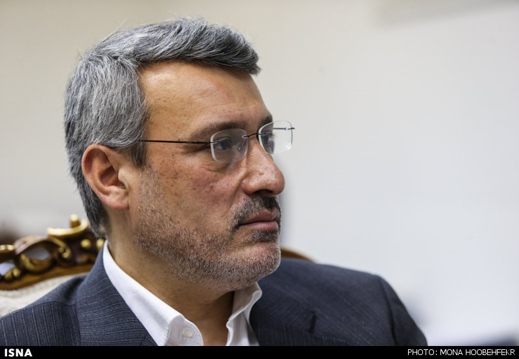
Baidi Nejad

Head of the technical team of Iranian nuclear negotiators said on Monday that the Joint Comprehensive Plan of Action is a political document, and its ratification in Parliament will not change its nature from political to legal.

Director General of the Foreign Ministry’s Political and International Security Department said that under international law, the criterion for recognizing an international document is the will of the people who have devised that document.

“From the very beginning, the negotiators had no doubt that this document is a political one, inclusive of voluntary commitments for both sides,” he added.

The chief legal expert of the Iranian nuclear negotiations team also said that from day one, the will of the negotiating sides was that the document was not legal in nature; therefore, there is no need for the Parliament’s ratification of it.

“Our main worry is that we will turn a political and voluntary commitment into an obligatory and abiding text. The nature of this document is political and voluntary and no sound mind will turn a voluntary, non-abiding text into an obligatory one,” he said.

Baidinejad added, “Of course if by turning JCPOA into an obligatory text for ourselves we could have also convinced the other countries to turn it into a legal text for themselves as well, it would have been a different story, but despite our Parliament’s ratification, the document will remain merely a political text for other countries, not a legal one,” he said.

In response to a question on the accusation that signing the deal has resulted in the demolition of 100 natural rights of Iran, Baidinejad said that if there is a right, no text can demolish it. “In international law a right is either natural or it must be recognized in accordance with an international agreement.”

“From this viewpoint, enrichment is not an absolute right. We consider it our natural right but the Westerners do not believe so. One of the differences of opinion on the NPT is whether it considers enrichment a right, or not. It was us who said that either Iran’s enrichment right will be recognized, or we will not negotiate,” he added.

Baidinejad referred to the US policy-shift in recognizing Iran’s enrichment right. “Bill Burns emphatically said in the negotiations: We are ready to recognize Iran’s enrichment right for the first time, but we will negotiate about its extent,” he said.

Member of the negotiations team said, “This is a part of our history. The nuclear negotiations file will not be closed, but there is no need to open files for new antagonist arguments. The nuclear file is a national file. When the US does not intend to turn it into a controversial debate in its country, why should we do so in our country?”


Parliament and JCPOA

Baidinejad also said that Parliament can play three roles regarding the JCPOA. “They might play no role at all regarding JCPOA, which is the first case. The second option is that they will ratify it, and ratifying is the most perfect thing that the Parliament can do with that text,” he said.

He said that both those options are ‘imprecise’, adding, “The nuclear negotiations team from the very beginning believed that the middle and realistic way is Parliament’s full engagement with JCPOA, effective participation in approving of and implementing it, thorough understanding it, and preparing the path for its proper implementation.”

Supreme Leader misinterpreted

On Supreme Leader’s recent comments in a meeting with members of the Experts Assembly, Baidinejad said, “It is surprising that although the Leader’s comments were quite clear, some media journalists said that the Leader made everyone’s duty clear as it is now Parliament that should ratify JCPOA.”

Baidinejad said that the Leader’s comments are quite technical and precise. Whether Parliament will approve of JCPOA, or not is a technical discussion, not a discussion between the government and Parliament. Nor is it a political debate.

“The point is that legal interactions should make clear whether there is any need to Parliament’s ratification of the JCPOA, or not,” he said,

He said that if the Parliament will come up with the conclusion and the lawmaking bodies in the country will approve of its decision that it is necessary for Parliament to ratify JCPOA, the government will have no problem with it, because Parliament’s stand is not opposing JCPOA.

AEOI chief: JCPOA modification not possible

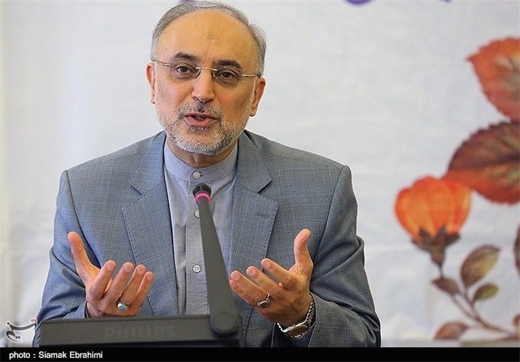
Salehi

Head of the Atomic Energy Organization of Iran (AEOI) Ali Akbar Salehi reminded the country’s parliamentarians that the finalized text of a comprehensive nuclear deal between Tehran and six world powers could not be amended or revised.

Speaking to reporters in the city of Isfahan on Monday, Salehi said the Joint Comprehensive Plan of Action (JCPOA) could not undergo any changes during the process of scrutiny in Iran’s parliament.

With any change, the other side will blame the failure of JCPOA on Iran, and Tehran will consequently lose everything, he added.

Iran and 5+1 (Russia, China, the US, Britain, France and Germany) on July 14 reached a conclusion on a lasting nuclear agreement that would terminate all sanctions imposed on Tehran over its nuclear energy program after coming into force.

The 159-page deal has its own opponents and proponents both in Iran and the other countries that are parties to JCPOA, particularly the US.

Diplomats have already made it clear that the document could be either approved or rejected, and no amendment or revision could take place.

Salehi also pointed to Iran’s cooperation with Russia in building nuclear power plants, saying the construction process of the country’s second nuclear power plant will kick off by March 2016.

Geological and seismological studies are now underway on the new nuclear power plant’s site, he noted.

On Saturday, head of Russia’s State Atomic Energy Corporation (Rosatom) said that preparation work for the construction of the second unit at Iran’s Bushehr nuclear power plant has begun.

In 2014, Iran and Russia agreed to build two new nuclear reactors on the Bushehr site, starting in the fall of 2015.