Thursday, December 25, 2025
Home Blog Page 475

US threatens to shut down Starlink in Ukraine: Reuters

Starlink

US and Ukrainian officials are currently negotiating the terms of a revised minerals deal after President Volodymyr Zelensky refused to sign an initial proposal. US President Donald Trump has stated that the parties are “pretty close” to an agreement.

US negotiators have warned that Ukraine would lose access to Starlink terminals, owned by billionaire Elon Musk’s company SpaceX, if Kyiv did not sign the deal, sources told Reuters.

Starlink internet terminals have played a crucial role in securing communications in the war in Ukraine. Last year, Ukraine announced that approximately 42,000 terminals were in operation across the military, hospitals, businesses, and aid organizations.

Washington first raised the prospect of shutting off Starlink service after Zelensky rejected the deal presented by US Treasury Secretary Scott Bessent, sources said. The agreement reportedly sought a 50% stake in Ukraine’s natural resources, including critical minerals, oil, and gas, without offering Ukraine any concrete security guarantees.

The Starlink threat came up again in talks with US Special Envoy Keith Kellogg, who met with Zelensky and other Ukrainian officials in Kyiv.

A source told Reuters that the loss of Starlink access would be devastating for Ukraine.

“Ukraine runs on Starlink. They consider it their North Star,” the source continued, adding, “Losing Starlink … would be a massive blow.”

Two Palestinian children killed in West Bank by Israeli army

Israel Army

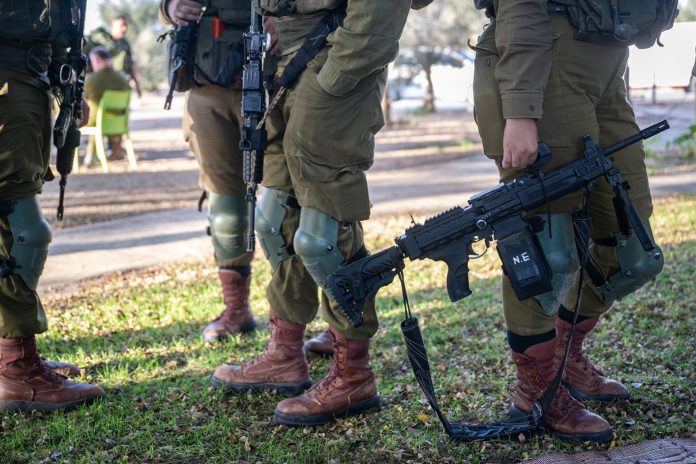
Ayman Nasser al-Haymouny, 12, was killed in Hebron while 13-year-old Rimas al-Amouri was shot in the Jenin governorate, the Palestinian Ministry of Health and the Wafa news agency confirmed.

Israeli forces opened fire on al-Haymouny and shot him when he was visiting relatives south of Hebron. He was rushed to hospital where he died from his injuries.

Al-Amouri was shot in the abdomen and taken to Jenin Government Hospital where she was pronounced dead shortly afterwards.

She was shot while standing in the courtyard of her family home in the Jenin area on Friday afternoon, Defense for Children International – Palestine (DCIP) said.

An Israeli soldier in an armoured car, stationed approximately 50 metres (164 feet) from al-Amouri, fired at least five bullets into the courtyard where she was standing, hitting her in the back, DCIP added.

“Both Ayman and Rimas were targeted suddenly and without warning in the back with lethal force by Israeli soldiers safely positioned inside armoured vehicles,” DCIP’s Ayed Abu Eqtaish said.

“Israeli forces have nothing but contempt for Palestinian children’s lives and systemic impunity means they will face no consequences,” he added.

The killings come as the Israeli military carries out large-scale raids across the occupied West Bank for several weeks now, including in Nablus, Tulkarem, Jenin and Nablus overnight.

Israeli troops have killed more than 50 Palestinians since their offensive in the northern part of the occupied West Bank started on January 21, right after the Gaza ceasefire deal was agreed.

It has inflicted severe damage on water and sanitation infrastructure for Palestinian communities, according to a report from the UN’s humanitarian office (OCHA).

However, since the UN’s reporting period ended on Monday, several more Palestinians have been killed, including the two children on Friday night.

OCHA also counted 34 incidents of Israeli settler violence towards Palestinians in its latest report.

Satellite images reveal Saudi Arabia may be quietly expanding ballistic missile force

Fabian Hinz, a defence and military researcher at the International Institute for Strategic Studies (IISS), analysed the images in a report.

Riyadh first established long-range surface-to-surface missiles in the 1980s in response to the Iran-Iraq war and the broader proliferation of missile capabilities in the region.

Details about the development of its missile programme since then have been scarce, as the Persian Gulf kingdom rarely displays its long-range weaponry openly.

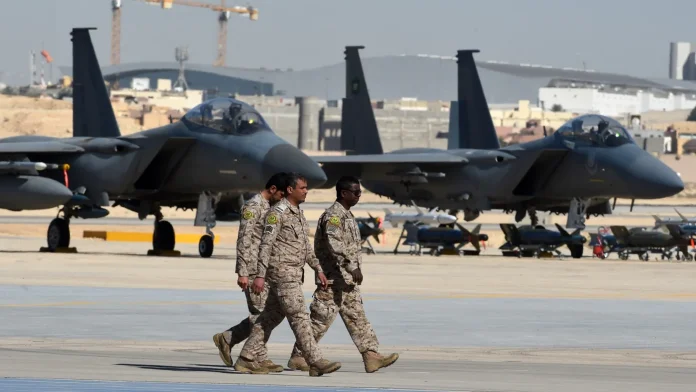
The IISS report found what appears to be the construction of an underground missile base near the town of al-Nabhaniyah in central Saudi Arabia. Construction began in 2019 and was mostly complete by early 2024, it added.

The site marks the first facility of its kind built since the 1980s, the report stated.

Signs that the site is a missile base, Hinz said, include: a similar style of administrative building to other Saudi missile bases, a similar geographical separation between the underground complex and overground residential and administrative areas, and a tunnel entrance resembling that of an existing base.

Contractor records also show that the project in al-Nabhaniyah falls under the defence ministry.

The report also adds that new construction has taken place at the existing Saudi missile force base in Wadi al-Dawasir. The latest addition is a large building, which may serve as an operational or support building within the complex.

The IISS also notes signs of modernisation and expansion at a missile base headquarters in Riyadh, as well as new tunnels or underground sections constructed at bases in al-Hariq, Raniyah and al-Sulayyil.

Saudi Arabia’s long-range missile capabilities remain highly secretive.

The kingdom carried out a large-scale military exercise with a display of its Chinese-made Dongfeng-3 ballistic missiles in 2014, showcasing the missiles for the first time.

In December 2021, CNN reported that Saudi Arabia was actively manufacturing its own ballistic missiles with Chinese assistance, citing US intelligence assessments.

The Intercept reported in May 2022, citing a US intelligence source, that Riyadh was planning to import Chinese ballistic missiles under a programme named “Crocodile”.

As part of Saudi Arabia’s Vision 2030 programme to diversify the economy and reduce dependence on oil, the kingdom is attempting to boost its domestic defence manufacturing industry.

“The apparent absence of ballistic-missile use in Saudi Arabia’s campaign against Ansarullah (the Houthis) indicates that these systems might serve more as a strategic deterrent than a war-fighting capability,” wrote Hinz.

“As such, their true role may only come to light in crisis.”

Over 24,000 tons of medicinal plants produced annually in Iran’s Sistan and Baluchestan

Speaking to IRNA on Saturday, Dahmarde noted that the cultivation area for medicinal plants spans 4,109 hectares, with over 200 species of agricultural, garden, forest, and rangeland plants identified in the region.

Key medicinal plants cultivated in the province include henna, hibiscus, indigo, damask rose, garlic, green cumin, fennel, and black seed.

Dahmarde emphasized the importance of expanding the cultivation of low-water, high-value crops and strengthening processing industries to boost farmers’ incomes and ensure sustainability amid water scarcity and prolonged droughts.

The mountainous regions of Taftan Peak in Khash, Birak Mountain in Saravan, and Bazman in Iranshahr are highlighted as major hubs for medicinal plant growth.

Dahmarde stressed that despite the province’s significant potential in medicinal plant production, industrial methods are underutilized, limiting the sector’s contribution to regional development.

He called for greater academic involvement to enhance the role of medicinal plants in the province’s economy, noting that while Sistan and Baluchestan leads in this field, its economic impact remains modest.

Hamas releases remains of Israeli captive Shiri Bibas after ‘mix-up of bodies’

On Friday, Hamas released the remains of Bibas, whose misidentification in a handover earlier prompted anger in the Israeli government and threatened to derail the fragile Gaza ceasefire deal.

Bibas’s community, Kibbutz Nir Oz, also confirmed her identity on Saturday, just hours before the seventh captive-prisoner exchange under the ceasefire agreement.

“After the identification process at the Institute of Forensic Medicine, this morning we received the news we feared the most. Our Shiri was murdered in captivity and has now returned home to her sons, husband, sister, and all her family to rest,” the Bibas family announced in a statement published on Saturday.

Hamas had agreed to hand over the bodies of Bibas and her two young sons Kfir and Ariel along with the remains of a fourth captive on Thursday under a ceasefire that has halted fighting in Gaza since last month.

Hamas said the children and their mother were killed in an Israeli air attack in November 2023.

Four bodies were delivered, but Israel later said one of the remains did not belong to the elder Bibas.

On Friday, Prime Minister Benjamin Netanyahu pledged to “ensure that Hamas pays the full price” for what he described as a “violation” of the ceasefire deal.

Hamas later admitted “the possibility of an error or mix-up of bodies”, which it attributed to Israeli bombing of the area that had killed several people.

Basem Naim, a member of the Hamas political bureau, stated “unfortunate mistakes” could occur, especially as Israeli bombing had mixed the bodies of Israeli captives and Palestinians, thousands of whom were still buried under the rubble due to relentless Israeli bombardments.

“We confirm that it is not in our values or our interest to keep any bodies or not to abide by the covenants and agreements that we sign,” he added.

Ismail al-Thawabta, director of the Hamas-run Gaza Government Media Office, said Netanyahu “bears full responsibility for killing her and her children”.

The incident underscored the fragility of the ceasefire deal reached with United States backing and with the help of Qatari and Egyptian mediators last month.

Six living captives are due for release on Saturday in exchange for 602 Palestinians in Israeli prison, most of whom have been detained without charge or trial. Negotiations for the second phase of the ceasefire are expected to start in the coming days.

Trump says Zelensky ‘not very important’ for meetings

Volodymyr Zelensky

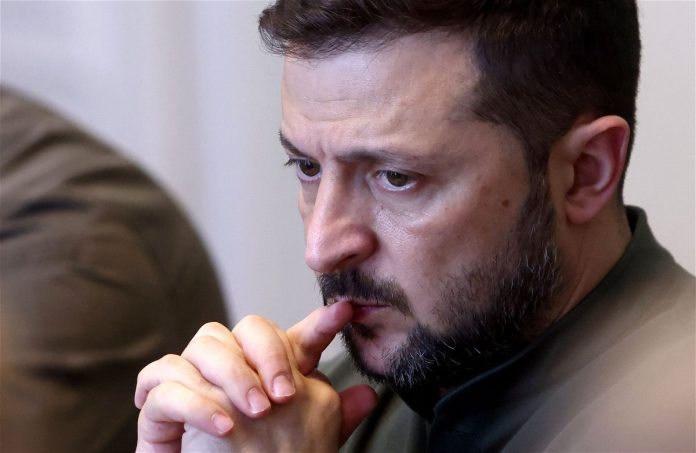
Trump ramped up his ongoing criticism of the Ukrainian leader in an interview with Fox News’ Brian Kilmeadeon on Friday, during which he suggested Zelensky was an obstacle to making any deal to end the conflict with Russia and suggested the it is “not very important” to have him at meetings at all.

“He’s been at meetings for three years with a very, with a president who didn’t know what the hell he was doing,” Trump said, referring to his predecessor Joe Biden and dismissing Zelensky’s complaints about Ukraine not being represented during recent talks between Moscow and Washington in Saudi Arabia.

“He’s been at the meetings for three years and nothing got done. So I don’t think he’s very important to be at meetings to be honest with you… He’s – he makes it very hard to make deals. But look what’s happened to his country, it’s been demolished,” Trump added.

Earlier this week, the US president branded Zelensky a “dictator” for refusing to hold presidential elections, and claimed the Ukrainian leader had an extremely low approval rating in his country.

When repeatedly pressed by the host about whether Russia was responsible for the ongoing conflict, Trump dodged the question, suggesting that other parties were at fault. The US president also reiterated his claim that the hostilities would never have started if he had been in office at the time.

”Every time I say, oh, it’s not Russia’s fault, I always get slammed by the fake news. But I’m telling you, Biden said the wrong things. Zelensky said the wrong things. They got attacked by somebody that’s much bigger and much stronger, which is a bad thing to do, and you don’t do that. But Russia could have been talked out of that so easily,” Trump asserted.

Ties between Kiev and Washington appear to have rapidly deteriorated in a matter of a week, with Trump and Zelensky, as well as other senior officials from the two nations, trading various accusations. Among other things, Zelensky has claimed that the US leader was “living in a disinformation bubble” allegedly created by Russia and has also rejected a proposed deal that would give the US access to Ukraine’s rare-earth minerals to compensate for military aid. He has also refuted Trump’s estimates on the amount of aid Kiev has received, claiming it had not got even half of the sum.

On Wednesday, Trump branded Zelensky a “dictator without elections,” claimed that the Ukrainian leader has had an extremely low approval rating and warned that the Ukrainian leader would not “have a country left” should he continue with his policies. Top US officials, including National Security Adviser Mike Waltz, stated Trump has grown frustrated with Kiev’s rhetoric, branding it “unfortunate” and “unacceptable.”

Iran launches major joint military exercise Zolfaghar 1403

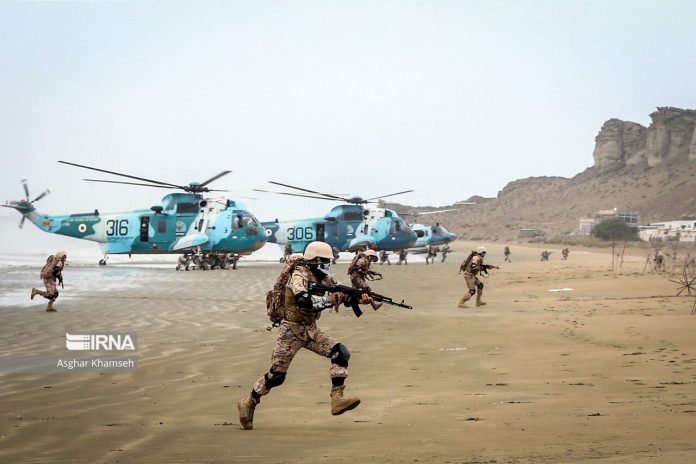
The large-scale drill involves infantry, armored, and mechanized units, as well as defense systems, naval forces, and subsurface and surface vessels, which have been deployed to the exercise area in recent days.

The participating forces began executing various operational exercises, marking the start of the main phase of the joint drill.

According to Admiral Habibollah Sayyari, the commander of the exercise, the primary objective of the maneuver is to enhance the defensive and deterrent capabilities of Iran against potential threats on land, air, and sea.

Admiral Sayyari emphasized that any adversary considering an attack on Iran’s territorial integrity or national interests should be aware of the severe consequences they would face.

He stated, “Any enemy that imagines it can harm our territorial integrity or our interests on land, air, or sea will undoubtedly face significant damage in return.”

The exercise also aims to test new tactics developed by the younger generation within the Iranian Army.

Admiral Sayyari highlighted that the drills serve as a platform to evaluate advanced weaponry, including new, smart, precision-guided munitions and various missile systems, which are integrated into the military’s operational framework annually.

Arab leaders discuss alternatives to US plan for Gaza

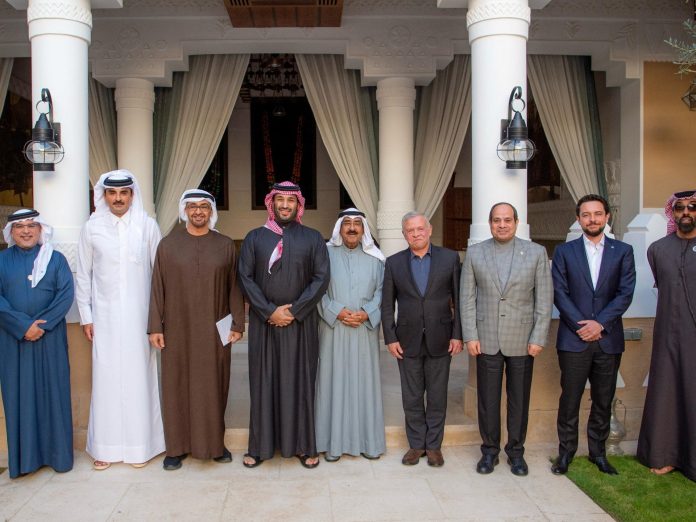
The gathering on Friday in Riyadh was meant to respond to a plan raised by US President Donald Trump for the US to “take over” Gaza, permanently forcibly displace its residents and turn the Palestinian enclave into the “Riviera” of the Middle East.

Arab leaders have roundly rejected Trump’s proposal, saying it throws out decades of work towards Palestinian self-determination, treads on the rights of residents of Gaza and will perpetuate a regional cycle of violence.

They hope to present an alternative plan with unified support at a March 4 Arab League meeting in Cairo, Egypt.

Saudi Crown Prince Mohammed bin Salman had called the Riyadh meeting, which was attended by Jordan’s King Abdullah II, Egyptian President Abdel Fattah el-Sisi, Qatari Emir Sheikh Tamim bin Hamad Al Thani, UAE President Sheikh Mohammed bin Zayed Al Nahyan, Kuwaiti Emir Sheikh Meshal al-Ahmad Al Sabah and Bahrain Crown Prince Salman bin Hamad Al Khalifa.

No official account of the meeting had been released Friday by any of the countries involved, and it was not immediately clear if any details of a plan had been agreed to.

Reporting from Riyadh, Al Jazeera’s Hashem Ahelbarra said Friday’s meeting began with the presentation of a reconstruction plan developed by Egypt and envisioned as part of a three-phase ceasefire deal between Hamas and Israel.

Only the first phase of that agreement, which has seen a pause in fighting and the exchange of captives, has so far been agreed to. A second phase would see a complete end of fighting, while a third phase aims to address rebuilding the devastated Palestinian enclave.

Ahelbarra added the Arab leaders are hoping to build off of the Egyptian plan before the Cairo meeting, so they can “put on a united front with a new proposal that can be easily sold to the Americans and the international audience”.

“We’re talking about extremely difficult things that could shape the entire region for many years to come.”

Still left to be decided was the question of how reconstruction would be funded in an Arab-led plan, he added. Earlier this week, the World Bank, United Nations and European Union said it cost over $53bn to rebuild Gaza, including $20bn in the first three years.

Any reconstruction plan also overlaps with the wider questions of political and security control of Gaza when the war ends, Ahelbarra said.

Israel and many of its Western allies have rejected the prospect of Hamas remaining in control of the enclave following the war. Israel has also refuted the Palestinian Authority taking control of Gaza, despite more support from the international community for that possibility.

Observers say the urgency of reaching an agreement is particularly acute for Egypt and Jordan, who Trump has pressured to accept displaced Palestinians en masse.

The US president has threatened to withhold hundreds of millions of dollars in aid if they do not comply. Both countries have rejected the scheme.

For its part, Cairo has not publicly released its preliminary reconstruction plan.

However, former Egyptian diplomat Mohamed Hegazy had previously outlined a plan in what he described as “three technical phases over a period of three to five years”.

A first six-month phase would focus on “early recovery” and the removal of debris, he said.

The second phase would see an international conference set out a detailed plan for restoring infrastructure and rebuilding Gaza.

A final phase would see the provision of housing and services and the establishment of a “political track to implement the two-state solution”, he added, referring to eventual Palestinian statehood.

Speaking to Al Jazeera, Abdulaziz al-Ghashian, the director of research at Riyadh-based Observer Research Foundation Middle East, said all the countries involved in Friday’s meeting are determining how to respond to an “administration in the United States that is almost proud of trying to support [Israeli Prime Minister Benjamin] Netanyahu blindly”.

“And we have a prime minister in Israel that is trying to really try his luck and maximise his effort,” he stated.

Al-Gashian added that any Arab-led plan “cannot discern between economy, politics and security”, including a path to Palestinian self-determination.

“The reality is, all these things are very interconnected,” he said, adding, “And we need to start thinking about this in a more interconnected, synergetic way.”


US opposes use of ‘Russian aggression’ in upcoming G7 statement on Ukraine: FT

Russia Ukraine War

The Group of Seven, comprising the US, UK, Canada, France, Germany, Italy, and Japan, has traditionally issued declarations of support for Ukraine since February 2022, routinely using terms such as Russia’s “war of aggression” and “unprovoked full-scale invasion.”

However, according to the FT’s sources, US envoys are now advocating for softer language, proposing references to the “Ukraine conflict.”

Washington’s reported objections to the usual phrasing follow Wednesday’s remarks by US President Donald Trump, who blamed the conflict on Kiev and described Ukrainian leader Volodymyr Zelensky as a “dictator without elections.” Zelensky responded by accusing Trump of being trapped in a Russian “disinformation bubble.”

The US is also refusing to co-sponsor a draft UN resolution set for February 24 which also condemns ‘Russian aggression’, Reuters reports, citing sources. This marks a stark shift by Ukraine’s most powerful Western ally and highlights a widening rift between Zelensky and Trump, the news agency reported.

Earlier this week, the US and Russia held a high-level diplomatic meeting in Saudi Arabia, aiming to lay the groundwork for a peace settlement in Ukraine and restoring dialogue between Moscow and Washington.

Following the talks, Russian Foreign Minister Sergey Lavrov stated that the Russian and American delegations “not only listened but also heard each other.”

Russia has argued that the Ukraine conflict was provoked by NATO expansion towards its borders, Kiev’s aspirations to join the US-led military alliance, and Ukraine’s policies toward the Russian-speaking Donbass region.

Trump and US Defense Secretary Pete Hegseth have since downplayed the likelihood of membership for Kiev as an outcome of a peace settlement.

Trump also suggested last week that Russia should be readmitted into the G7. The country joined the group in 1998, making it the G8, and remained a member until 2014. The group suspended Moscow’s membership in March of that year after Crimea voted to join the country in a referendum, which the West claimed was an illegal annexation.

US could withdraw military forces from Central, Eastern Europe: Bild

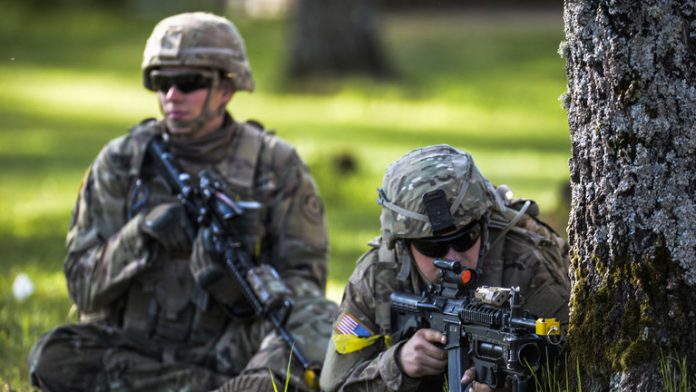
Bild claimed that European members of NATO “feared” that the high-level US-Russia talks in Saudi Arabia on Tuesday, could lead to such an outcome. The German media outlet quoted an anonymous Western European security official as saying, “according to our information, we’re talking about [Vladimir] Putin’s 2021 demands, that is, the withdrawal of US troops from all NATO states that joined the alliance after 1990.”

In December 2021, Russia presented the US and NATO with a list of proposals aimed at reshaping the security architecture in Europe, and to rule out Ukraine’s accession. The West rejected the Kremlin’s overture as an ultimatum at the time.

Bild also quoted former Lithuanian Foreign Minister Gabrielius Landsbergis who posted on X on Tuesday that “it seems much more than likely” that the Kremlin would renew its demands that “NATO must go back to its 1997 borders, retreating from everything except East Germany.” He noted that while Trump technically cannot unilaterally implement a “reversal of NATO enlargement,” he could still “withdraw US troops from the Eastern Flank, which would have almost the same effect.”

The nations that would theoretically be affected include Albania, Bulgaria, Croatia, the Czech Republic, Estonia, Finland, Hungary, Latvia, Lithuania, Montenegro, North Macedonia, Poland, Romania, Slovakia, Slovenia, and Sweden.

A Romanian official made similar allegations on Wednesday. Cristian Diaconescu, the president’s chief of staff and adviser for defense and national security, alleged that while the US team had rejected Moscow’s supposed demands in Riyadh, “the situation can change from hour to hour or from day to day,” and Washington could eventually cave in.

On Friday, Kremlin spokesman Dmitry Peskov dismissed the claims as “not true,” adding, however, that Moscow’s concerns regarding “NATO’s military infrastructure having inched toward our borders as part of several waves” are “no secret to anyone.”