Tuesday, December 30, 2025
Home Blog Page 4749

Iran reaffirms commitment to international campaign against terrorism

fararu-news-website-13-237

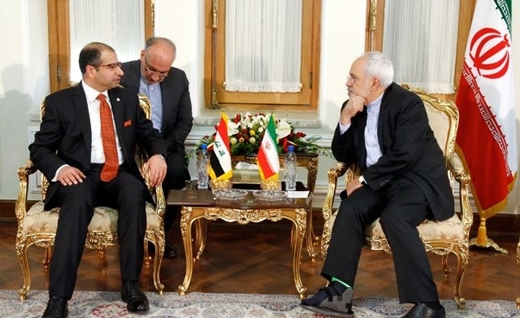
Iran is determined to establish a joint front to counter terrorism and extremism, Foreign Minister Mohammad Javad Zarif said in a meeting with visiting Iraqi Parliament Speaker Salim al-Jabouri.

Zarif expressed hope that regional governments can solve their issues through dialogue.

Underlining the necessity of peace and stability in Iraq and partnership of all Iraqi groups in building the future of the country, Zarif said that Iraq is one of the most influential Arab and Islamic countries that has to regain its status as soon as possible.

The foreign minister said that Iran will stand by the Iraqi government and nation to help solve their internal problems, as well as regional and international problems, particularly in the campaign against violence and extremism.

The Iraqi parliament speaker congratulated Zarif and the Iranian nation on the conclusion of a nuclear deal with six world powers and said the deal would benefit the entire region.

Al-Jabouri hailed Iran’s support for the Iraqi nation, calling on the Iranian government to stand by Baghdad in solving its internal crisis and fighting extremism.
Larijani, Jabouri discuss closer Tehran-Baghdad ties

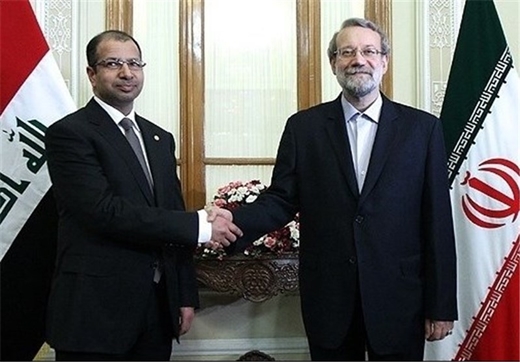
Larijani-Iraq

Iranian Parliament Speaker Ali Larijani and his Iraqi counterpart, Salim al-Jabouri, held talks on a host of issues, including ways to promote bilateral relations between the two neighboring countries.

The meeting in Tehran on Saturday between Larijani and Jabouri also covered regional and international issues as well as the latest developments in war-stricken Iraq.

Iraqi sources said Jabouri would discuss the national reconciliation plan in Iraq and the fight against terrorists in the Arab country in his meetings with Iranian officials.

Iraq has been facing the growing threat of terrorism, mainly posed by the ISIL terrorist group.

The ISIL militants made swift advances in much of northern and western Iraq over the last summer, after capturing large swaths of northern Syria.

However, a combination of concentrated attacks by the Iraqi military and the volunteer forces, who rushed to take arms after top Iraqi cleric Ayatollah Ali al-Sistani issued a fatwa calling for the fight against the militants, have blunted the edge of the ISIL offensive.

Amid tensions in Iraq, Iran is known as the first country to help the Arab country and has always voiced support for Iraq’s solidarity and prosperity.

West’s lack of seriousness against ISIL root cause of migrant crisis: Iran’s Shamkhani

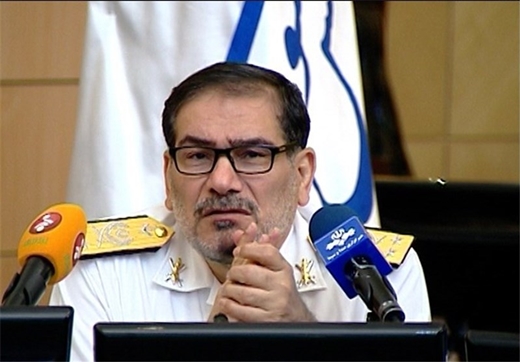
Shamkhani

Secretary of the Supreme National Security Council (SNSC) Ali Shamkhani blamed the present refugee crisis on the “lack of seriousness” of the West’s so-called military coalition in the battle against the ISIL terrorist group.

Shamkhani, in a meeting with Iraq’s parliament speaker in Tehran on Saturday, said “suspicious” attempts are underway to employ the acts of terrorism carried out by ISIL in order to keep “insecurity, instability and crisis” in place across the Middle East.

He said the massive exodus of refugees from Syria and Iraq is the result of the West’s lack of seriousness in fighting the ISIL terrorists via a so-called military coalition.

Shamkhani said a surge in the number of refugees arriving in Europe has let the world public opinion know about the pains that the oppressed people of Syria and Iraq have been suffering.

The top Iranian official also expressed confidence that Iraq will ultimately overcome the terrorist crises and regain the regional place it deserves.

For his part, Iraqi Parliament Speaker Salim al-Jabouri thanked Iran for its continued support for his country’s government and nation.

He also said Baghdad is making efforts to prevent recruitments by the Takfiri terrorist groups.

The Iraqi speaker is visiting Iran to hold talks on a range of issues, such as the national reconciliation plan in Iraq and the fight against Takfiri terrorists in the Arab country.

Iranian researchers crafting driverless cars ‘gradually morphing into robots’

car

Two Iranian scientists are revolutionizing research and development in the field of driverless automobiles.

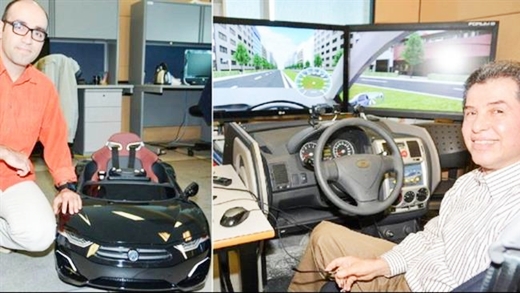
Ahmad Rad, a professor at Simon Fraser University (SFU)’s School of Mechatronic Systems Engineering, is conducting research on driverless cars and advanced driver-assistance systems at SFU’s Surrey campus.

“So maybe automobile is a misnomer,” Rad said during an interview at the Autonomous and Intelligent Systems Laboratory on the campus in Burnaby, in Canada’s British Columbia.

“What we’re seeing now is a paradigm shift, in a sense that the car that we know is gradually morphing into an autonomous robot. The task of a driver will change from driving to supervising the car.”

Rad and PhD student Mehran Shirazi displayed the driving simulator consisting of a car seat with a steering wheel, a dashboard, and—in place of a windshield—three flat-screens showing a city street. Two infrared cameras sit on the dash, facing the driver.

The professor explained that the cameras constitute an eye tracker which discerns where the driver is looking. This system can detect whether a driver is sending a text message, intoxicated, or falling asleep.

Rad’s research team uses Fatal Vision goggles to simulate the impairment associated with particular blood-alcohol concentrations. In the future, he predicted, an automated car will temporarily take over from a distracted driver, and pull over and park or head home if someone is unfit to drive.

“The human is driving the car,” Rad said. “But once it sees that the human is talking (on a cellphone) or sending texts, it will take over. Or, in worse cases, if the car recognizes that this person is drunk, it will take control of the car.”

According to Rad and Shirazi, cars of the future will pair the eye tracker with a front-facing camera. This camera will be used to detect jaywalkers and road signs.

Nevertheless, Rad predicted that fully driverless cars will not become widespread for another 20 years as developing the artificial intelligence required for self-driving cars is a very demanding job.

President: Iranian nation to decide oil prices in post-sanction era

Rouhani

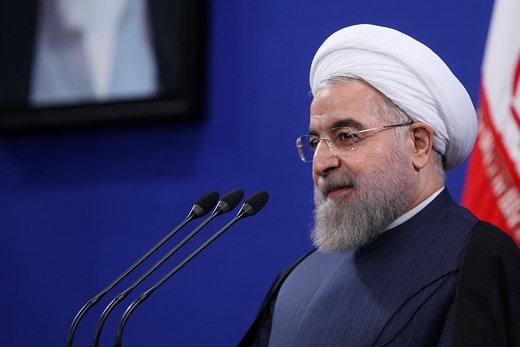
President Hassan Rouhani said on Saturday that the great Iranian nation will decide how much oil to sell and where to sell it, to what bank account to deposit its money, and where or how to spend it.

He took a swipe at former President Ahmadinejad for claiming that he deserves to lead the global community which prompted the enemies of the Iranian nation to impose crippling sanctions on Iran.

“Unfortunately, miscalculated measures by former statesmen undermined the prestige and glory of the Iranian nation,” President Rouhani said in a critical tone.

He said that in the past, due to dependence on oil and the outward looking nature of the Iranian economy, others instructed Iran on oil sales and the prices were decided by the market and not by Iranians themselves.

He added that Iran under sanctions had to export only one million barrels of oil and not more, which amounted to a drag on the Iranian nation, dealing a blow to national pride and dignity.

“Our nation has resisted and the resistance of our nation deserves to be praised and be told well done. Our nation should know that the arrogance and the big powers have put shackles on the economic movement of Iran and impeded its progress, targeting its dignity, freedom, trade and sale of their resources. And now, the Joint Comprehensive Plan of Action (JCPOA) means breaking all those shackles,” he said.

“That (JCPOA) is what our national heroes held talks with six major powers around the clock for two years and fought for each word and sentence of it so that context of the deal was achieved. No one can claim throughout history that the context of the deal is inconsistent with the dignity and majesty of Iranian nation. You do see that whole the world and all countries, excluding an illegitimate regime and a number of extremists inside the US, have been humbled by the agreement, viewing it as being in line with international peace.”

Salehi: JCPOA not to pace down Iran nuclear growth

Ali Akbar Salehi

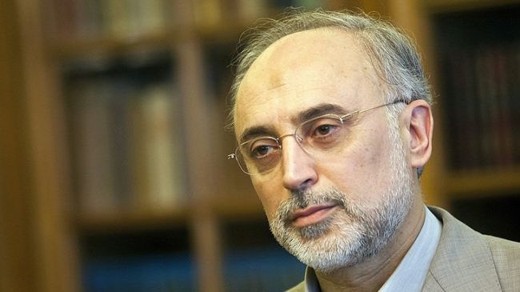
Head of the Atomic Energy Organization of Iran Ali Akbar Salehi said the Joint Comprehensive Plan of Action (JCPOA) will not pace down the development of Iran’s nuclear program.

He stressed that the document will have no adverse effect on the development of Iran’s nuclear program.

The official said the restrictions which JCPOA entails will by no means restrict Iran in its nuclear activities.

He welcomed the sessions the Iranian parliament’s JCPOA Review Committee holds to examine the text of the Iran nuclear deal in the presence of relevant officials and said that such meetings help improve transparency and deflate certain concerns.

He assured people that the Iranian nuclear industry will suffer no slowdown in technical aspects because of JCPOA.

Salehi went on to explain that the restrictions put in place by JCPOA cover areas Iran has no intention of wading into in the coming years.

For example, he said, Iran possesses no platinum, so naturally it has no plans to produce any metals from it either.

One important achievement of the Iranian negotiating team was to make the document guarantee Iran’s right for enrichment which was achieved after 12 years of talks, he added.

The Iranian nuclear chief further stressed that only a few countries have such a right.


As for Iran’s uranium resources, Salehi said reserves in two points of the central province of Yazd have already been spotted which will be exploited soon.

Salehi: JCPOA not to pace down Iran nuclear growth

Salehi

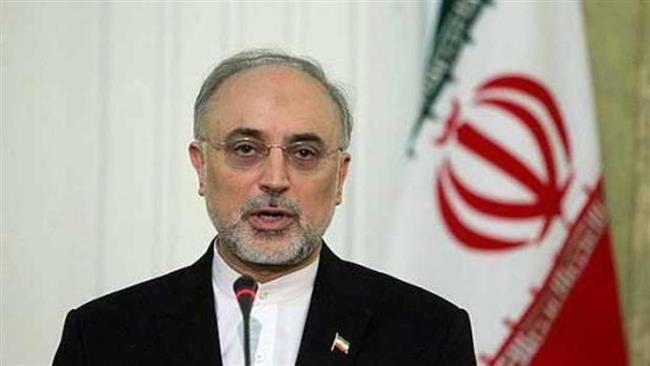
Head of the Atomic Energy Organization of Iran Ali Akbar Salehi said the Joint Comprehensive Plan of Action (JCPOA) will not pace down the development of Iran’s nuclear program.

He stressed that the document will have no adverse effect on the development of Iran’s nuclear program.

The official said the restrictions which JCPOA entails will by no means restrict Iran in its nuclear activities.

He welcomed the sessions the Iranian parliament’s JCPOA Review Committee holds to examine the text of the Iran nuclear deal in the presence of relevant officials and said that such meetings help improve transparency and deflate certain concerns.

He assured people that the Iranian nuclear industry will suffer no slowdown in technical aspects because of JCPOA.

Salehi went on to explain that the restrictions put in place by JCPOA cover areas Iran has no intention of wading into in the coming years.

For example, he said, Iran possesses no platinum, so naturally it has no plans to produce any metals from it either.

One important achievement of the Iranian negotiating team was to make the document guarantee Iran’s right for enrichment which was achieved after 12 years of talks, he added.

The Iranian nuclear chief further stressed that only a few countries have such a right.

As for Iran’s uranium resources, Salehi said reserves in two points of the central province of Yazd have already been spotted which will be exploited soon.

IAEA plans no inspections of Iran military site: AEOI

Iran Complains to IAEA about US’ Unlawful Behaviours

An Iranian nuclear official says no inspections of Iran’s military sites are on the agenda of a planned visit by inspectors of the International Atomic Energy Agency (IAEA) to Iran.

Deputy Director of the Atomic Energy Organization of Iran (AEOI) Ali Asghar Zare’an said on Saturday that IAEA inspectors are scheduled to arrive in Tehran on Tuesday for talks.

“In this round of the negotiations, inspections of [Iran’s] military sites are not on the agency’s agenda,” he added.

The AEOI official emphasized that there is no “measure or directive” on inspecting the country’s military sites.

Zare’an noted that discussions would be held on practical measures in the future within the framework of the agreement reached between Iran and P5+1 known as the Joint Comprehensive Plan of Action (JCPOA) on Tehran’s nuclear program.

On July 14, Iran and the IAEA signed a road map for “the clarification of past and present issues” regarding Iran’s nuclear program in the Austrian capital, Vienna. The deal came on the same day Iran and the P5+1 group of countries reached an agreement over Tehran’s nuclear program.

In its most recent update on Iran’s nuclear program on August 27, the UN nuclear agency confirmed Iran’s compliance with its commitments regarding its nuclear program.

The IAEA said Iran has maintained its level of uranium enrichment, nuclear research and development and other activities in line with its declarations to the UN nuclear monitoring body.

[Zarean also said that preparatory measures for construction by Russia of one of two 1,050 MW nuclear power plants are underway and actual construction will start in early 2016.]  

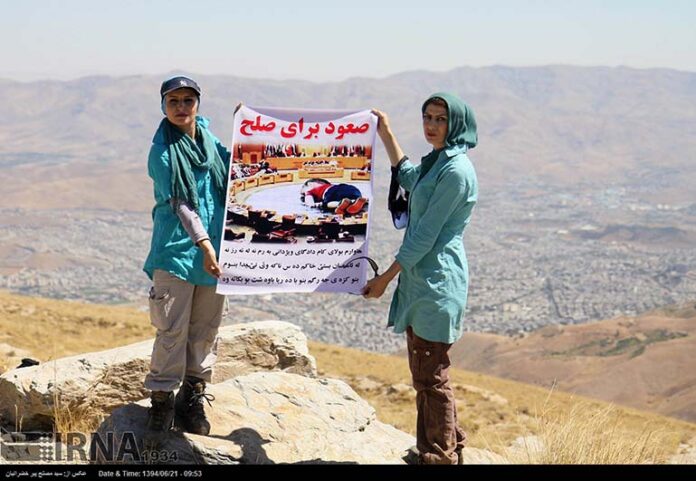
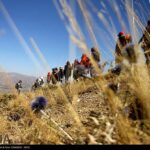
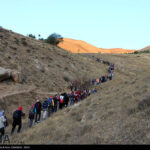
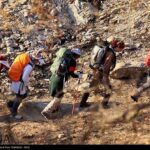
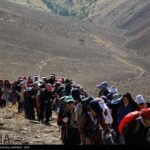
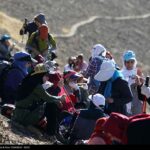
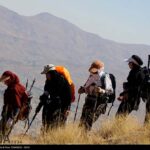
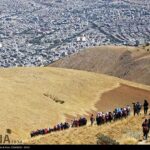
Iranian women scale mountain to promote peace (PHOTOS)

Iranian women scale mountain-4520472

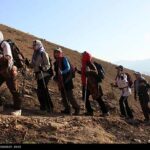
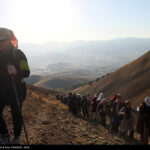
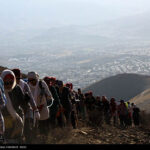
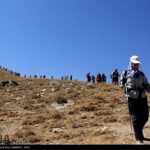
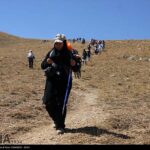
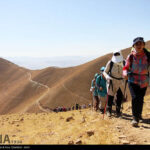
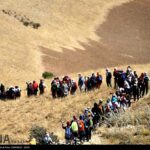
Scores of female climbers scaled the Abidar Mountain in Sanandaj in western Iran on Friday as part of an “Ascent for Peace” program.

The following are images of the ascent released by the Islamic Republic News Agency:


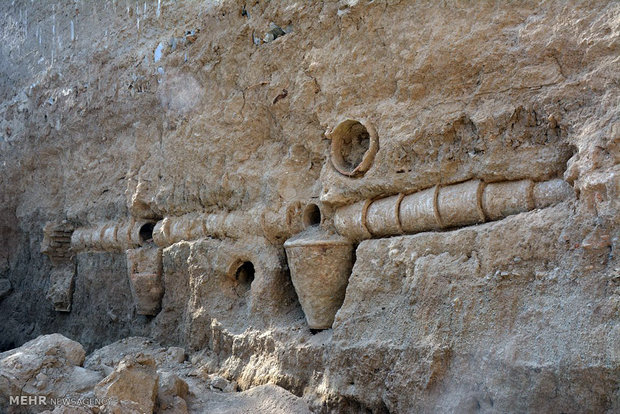
Ancient Aqueduct System Unearthed in Iran’s Borujerd

Ancient Aqueduct System Unearthed in Iran's Borujerd

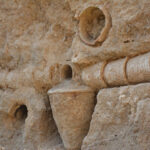
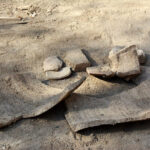
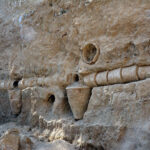
An official of Lorestan’s Cultural Heritage, Handicrafts and Tourism Organization announced the discovery of water transfer installations of an ancient aqueduct during excavations in Borujer; according to a report by Mehr News Agency.

The official, Hojjat Yar-Mohammadi, said the ancient aqueduct includes a smart water distribution system as a part of a historic castle. Pottery crocks in the system cleaned up and purifid the water.

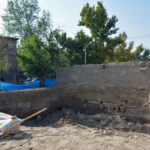
Noting that the discovered items have been documented, he said the organisation has yet to decide whether the system’s site should be kept intact, or the historical items should be taken to another place for protection.

Nothing can be said about the historic era of the discovered system. According to the official, the experts in the Cultural Heritage Organization are studying the system. A special unit is also in charge of protecting this cultural heritage.

Borujerd had two layers of protection in the past. The first included as many as 57 towers that surrounded the entire town; and the second was built inside this area of around 280 hectares, designed to protect the government castle which includes the ancient aqueduct.

The government’s castle was like a big garden inside the town with a well-designed water system. Clay pipes – Tanpusheh in Farsi – transfer the water in the system. Big pottery distributed the water and removed the mud. This helped minimizing the risk of blockage in the flow of water. What stands out about this old system is its optimal use of water resources.