Wednesday, April 29, 2026
Home Blog Page 4735

Iran president praises parliament bill endorsing nuclear deal

Rouhani-TV

President Rouhani has hailed the parliamentary bill endorsing Iran’s landmark nuclear agreement with six world powers.

In a live televised interview on Tuesday, President Rouhani thanked lawmakers for adopting a bill which gives his administration the go-ahead to implement the Islamic Republic’s nuclear deal with six world powers, known as the Joint Comprehensive Plan of Action (JCPOA).

He said Iran and P5+1 start implementing the agreement next week, three months after the UN Security Council endorsed the agreement.

Parliament on Tuesday approved a bill which allows the administration to voluntarily implement its July 14 nuclear agreement with P5+1 under certain conditions.

The outlines of the bill were approved in parliament on Sunday.

Iran’s Guardian Council is set to examine the bill on Wednesday before signing it into law.

Under the Iranian Constitution, the Guardian Council, a 12-member body consisting of six Islamic law experts and six jurists, is tasked with vetting legislative and presidential candidates, supervising elections and overseeing the bills passed in parliament for conformity with the Constitution and Islamic principles.

[…]

Sanctions-defeating policies

The president pointed to the illegal US-led economic restrictions against the Islamic Republic, saying, although trade and oil bans had not been unprecedented, Iran was the first country in the world to be subjected to banking sanctions.

Rouhani said his administration’s economic policies had caused the West to realize that imposing sanctions against Iran was ineffective, adding that this also gave the country the upper hand in the nuclear negotiations with P5+1.

“The administration’s measures carried the message that the sanctions would no longer be effective. Why were the sanctions lifted? Because they saw that the sanctions were no longer effective,” said the president.

“We will see the effects of sanctions relief in our economy,” said Rouhani.

He noted that the unprecedented fall in oil prices was also a plot to make Iran step back from its demands throughout the nuclear talks. But, the president said, this scheme failed too.

Rouhani referred to his administration’s economic policy for curbing the country’s inflation. He said that his administration managed to slash inflation which stood at over 40 percent in 2013 to around 15 percent the following year.

The president said his administration would continue the same inflation curbing policy in the future.

Rouhani said Iran is expected to gain $25 billion from selling oil this year, the lowest in ten years. The president added that Iran’s oil revenues reached $119 billion in 2011 when his predecessor Mahmoud Ahmadinejad was in office.

He added that the expected sanctions relief would let Iran sell oil without any restrictions in the coming years.

Need for Hajj stampede clarification

President Rouhani once again expressed his condolences over the September 24 deadly crush during the Hajj rituals in Mina, near the holy Saudi city of Mecca, and said the causes of the tragic incident should be clarified for the Muslim world and the Iranian nation.

He added that the clarification of the aspects of the Mina stampede would prevent the recurrence of such incidents in the future.

Rouhani said the tragic incident showed lack of foresight on the part of Saudi rulers which led to the deaths of thousands of men and women from across the Muslim world, including Iran.

According to tallies given by foreign officials, the death toll from the deadly Mina stampede has reached 1,674.  The Saudi kingdom, however, has yet to provide a complete report on the tragedy including an update on its earlier death toll of 769.

Officials at Iran’s Hajj and Pilgrimage Organization say about 4,700 people, including 464 Iranians, lost their lives in the tragedy.
Implementing JCPOA opens way for foreign investment: Nobakht

Nobakht-Press

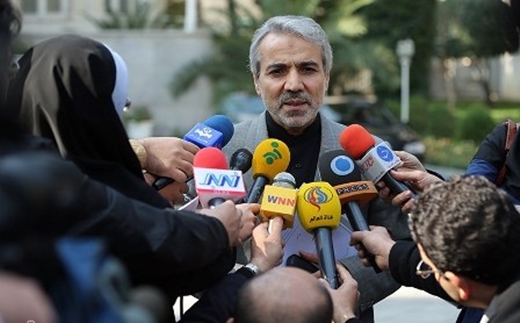
Director of the Management and Planning Organization Mohammad Bagher Nobakht said Tuesday that implementation of the Joint Comprehensive Plan of Action will mark the beginning of cooperation with foreign companies and investors.

Since the government has initiated the resistance-based economy which requires boosting non-oil exports, the economy needs joint investment, Nobakht said after a meeting with the Japanese foreign minister.

“We also need modern knowledge and technology to secure our share of the world markets. Iran’s share of the world markets which has now reached its minimum level should be increased,” he said, adding, “We select the countries for investment which have modern technology to help create markets for Iranian exports.”

Nobakht, who also serves as the government spokesman, said that the Japanese companies have voiced their readiness for cooperation with Iran in the post-sanctions era. They enjoy the advantage of having a good image in the Iranians’ historical memory compared with other countries.

He said that the Japanese companies have capabilities in different fields and thus could be a suitable economic partner for the Iranian firms.

Nobakht said that the Japanese delegation has been told that Iran is not an 80-million market for foreign exports; rather it is a big factory for producing valuable goods in collaboration with various companies under joint venture deals.

The Japanese companies are interested in direct investment in Iran, given Iran’s capacities, they can undertake activities in jointly-run plants and roll out high-quality products, he added.

Leader aide urges immediate end to wars in Syria, Yemen

Velayati-UN

A senior Iranian official has called for an immediate end to ongoing conflicts in Yemen and Syria, saying these countries are bogged down in critical conditions.

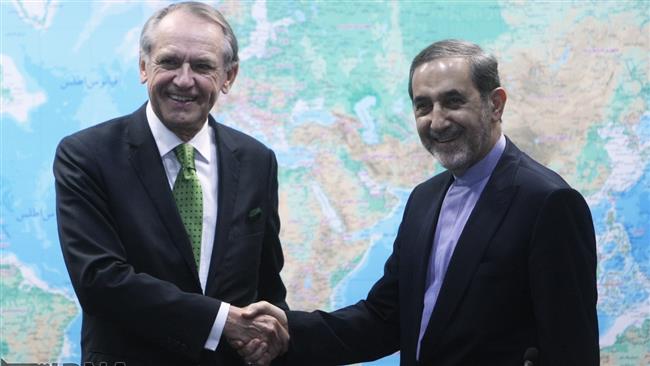
“War in Yemen and Syria must end quickly and we must exhaust [our potential] in favor of establishing peace,” Ali Akbar Velayati, a foreign affairs advisor to Leader of the Islamic Revolution Ayatollah Seyyed Ali Khamenei, said in a meeting with United Nations Deputy Secretary General Jan Eliasson in Tehran Tuesday.

“Terrorists from more than 80 world countries are present in the [Middle East] region and have engaged in a war against legitimate governments in the region through forming extremist groups,” he added.

Velayati also said that Saudi Arabia is conducting airstrikes on residential areas across Yemen and damaging the country’s infrastructure.

[…]

The UN envoy, for his part, pointed to the critical situation in the Middle East and urged more efforts to establish peace and security in the region.

Eliasson said the UN would spare no efforts to improve peace and security in the region.

UN inaction on Yemen war unacceptable

Secretary of the Supreme National Security Council (SNSC) Ali Shamkhani said the UN failure to show serious reaction to foreign intervention in Yemen is “unacceptable.”

At a meeting with Eliasson Tuesday, Shamkhani said that the United Nations refrained from taking decisive action to end military aggression, arms supply and financial aid to terrorists as well as suppression of Muslims in the occupied Palestinian territories. Such failures raise serious questions about the UN performance.

The SNSC secretary added that Iran has staved off the spread of terrorism and genocide in Syria and Iraq by supporting the legal and popular governments of Syria and Iraq.

“Western countries must change their approach toward the establishment of lasting security in the region through a genuine fight against terrorism,” Shamkhani said.

The UN deputy chief, for his part, hailed Iran’s efforts in settling refugees over the past decades and said Iran’s experience is needed for dealing with refugee crises in other countries.

Political solutions needed

Iran’s Foreign Minister Mohammad Javad Zarif also met with the UN official, stressing the importance of solving the ongoing crises in the region through political approaches.

He said that the intensity of the regional crises is directly linked to the conduct of political leaders in the region.

“The realities of the region must be discussed in a realistic way,” Zarif said.

He added that all world countries must prioritize countering threats posed to regional countries.

Iran, Japan must improve relations: President Rouhani

Rouhani-Japan-FM

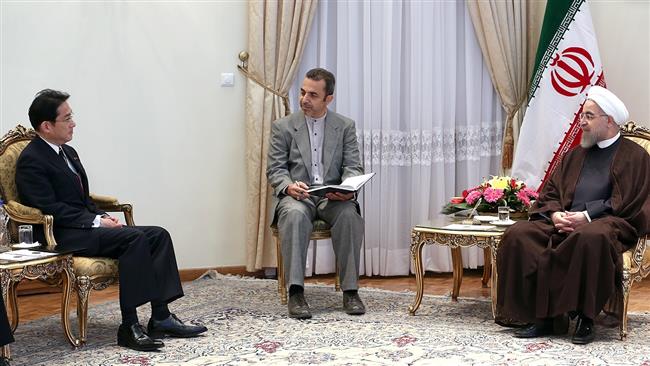
President Rouhani has said “very appropriate” grounds have been prepared for Iran and Japan to improve relations and to make up for previous shortcomings.

At a meeting with visiting Japanese Foreign Minister Fumio Kishida in Tehran Tuesday, President Rouhani said bilateral cooperation can reach an appropriate level given the political will of the two sides.

He said Tehran and Tokyo can cooperate in different sectors including energy, the environment, transportation, dam construction, culture and research.

Considering the existing capacities and the new circumstances, Iran and Japan should work for closer cooperation which will serve the two nations and the region, Rouhani said.

He added that the two countries can also make joint investment in the auto-making industry for the entire region, including the Central Asia and the Caucasus.

Japan’s determination to boost Iran ties

The Japanese foreign minister, for his part, said his country is determined to enhance relations with Iran in all fields, particularly economy.

He welcomed a landmark nuclear agreement reached between Iran and six world powers in July and expressed hope that Iran and Japan would make use of the opportunity created after the agreement to improve economic, political and cultural ties.

[…]

Iran supports Japan’s long-term activities in Iran

Nematzadeh

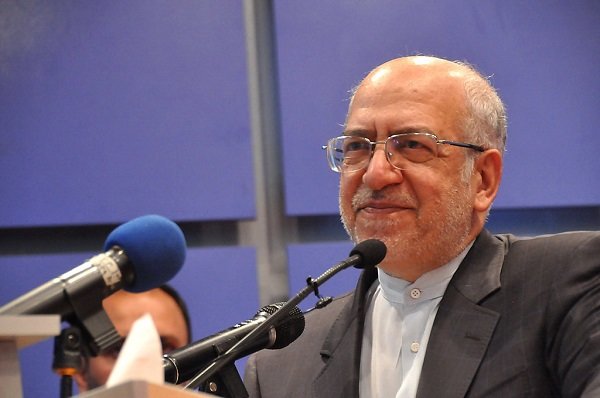
Iran supports any long-term economic contribution to and investment by the Japanese companies in the country, the minister of industries, mines and trade said Tuesday at a meeting with visiting Japanese Foreign Minister Fumio Kishida.

Mohammad Reza Nematzadeh added that there are a lot of trade grounds for the two countries to boost cooperation.

He said his ministry is willing to establish relations with the Japanese side in areas of production, technology and engineering, adding closer ties with Iran will create a big market for the Japanese companies.

He also said that the Iranian products should also be available on Japan’s markets.

Nematzadeh said that a win-win agreement between Iran and six world powers proved that Iran is honest in its use of peaceful nuclear energy.

[…]

My threats against Zarif and Salehi were serious: MP

Hosseinian

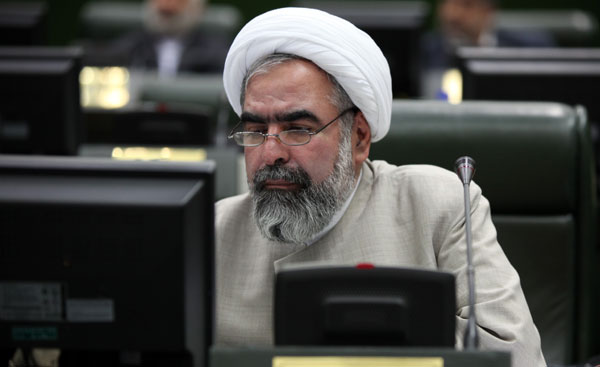
Tehran MP Ruhollah Hosseinian told reporters on Tuesday that he does not have a guilty conscience for what he told Director of the Atomic Energy Organization of Iran (AEOI) Ali Akbar Salehi, adding that he was completely serious in what he said.

The principlist deputy who threatened the nuclear chief in a boisterous parliament session on October 11 which ended in the passage of the general outlines of the Joint Comprehensive Plan of Action (JCPOA) elaborated on his remarks in a press conference.

The following is the translation of a part of what Entekhab.ir quoted him as telling reporters on October 13 after being released from hospital:

On what he told Foreign Minister Mohammad Javad Zarif and Salehi, Hosseinian said, “After the release of the Lausanne statement, when Mr. Zarif attended a parliamentary committee session, I criticized him and told him that he had given psychological ammunition to the enemy.

Although, we do not seek to develop a nuclear bomb, the enemy was under the impression that the Islamic Republic had the capability to do so.”

Hosseinian went on to say, “I told him that the Zionist regime of Israel would threaten us with nuclear bombs on a daily basis after Iran was stripped of such a tool. In fact, a few days later, the former Israeli defense minister threated to bomb Iran with nukes.

Once again, I reminded Mr. Zarif that if the Zionist regime attacked Iran or if the US launched a strike against Iran because of JCPOA, people would arrest you and put you on trial. I also told Mr. Salehi that [at that time] if I were in charge, I would make him dig out cement from the core of the Arak Reactor, throw him inside and encircle him with cement. I did not say that I would pour cement on him, I said I would encircle him with it.”

On the approval of the general outlines of JCPOA and its impact, he said, “God willing, the good promises by President Rouhani will come true and all economic woes of the country will go away, inflation will disappear, we will leave behind recession and we will have a country which will be overflowing with welfare; I say prayers for that day to come.”

He added, “I told Zarif and Salehi that I hope my prediction about JCPOA won’t come true, but if it does happen, I will treat them the very same way I told them I would.”

MP on JCPOA: Do not send wrong signals to people

Pour Ebrahimi

The general outlines of the Government’s Reciprocal and Proportional Action Bill on the implementation of the Joint Comprehensive Plan of Action (JCPOA) cleared the Islamic Consultative Assembly on Sunday (October 11). As the chamber was hotly debating the bill, Ardebil MP Kamaleddin Pirmoazen told fellow deputies that any delay in the implementation of JCPOA (and terminating the sanctions) will inflict billions of dollars in losses on the country.

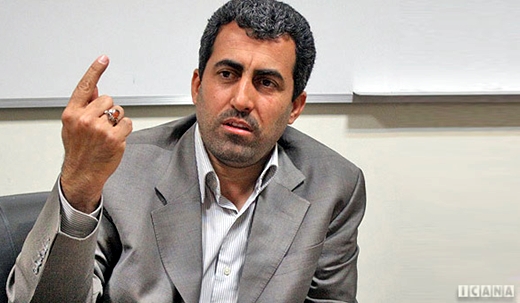
Pirmoazen’s comments drew an immediate reaction from a member of parliament’s Economic Committee who asked his colleagues not to make inappropriate remarks on the bill. The following is the translation of part of what Mohammad Reza Pour-Ebrahimi said in an interview with Tasnim News Agency on the same day:

Pour-Ebrahimi said that comments that Iran will suffer ($100-150 million in losses) if JCPOA is not put into effect are to the detriment of the government, adding that people should not be fed misinformation.

He further said that from the early days of nuclear talks, people were told that [after the conclusion of the Iran nuclear deal] huge national economic developments would be around the corner as a result of international contracts Iran would sign, but now [after the Iran nuclear deal] neither the termination of sanctions nor big changes in the country have materialized.

The Kerman MP said that Iran’s economy needs structural reforms, adding it is true that sanctions have left an adverse impact on our economy, but sanctions alone cannot be blamed for all [economic] woes.

Tying the improvement of the country’s economy and [fulfillment of] people’s subsistence needs to the removal of sanctions will generate false and unrealistic expectations in society to which the government such respond, he said.

Before the nuclear talks with P5+1, the government blamed the sanctions for most of the economic woes, but today it has realized that everything is not tied to the [termination of] sanctions, he added.

[…]

The MP went on to say that if sanctions are lifted, Iran would – at best – return to where it stood in 2011 when the country’s economic growth was not in positive territory and its employment level was far from satisfactory.

To claim that non-implementation of the Joint Comprehensive Plan of Action would cause Iran to lose billions of dollars [in revenues] does not serve the government’s interest. Will the country gain the same amount of money [billions of dollars] after sanctions are removed? That is the question the government needs to answer.

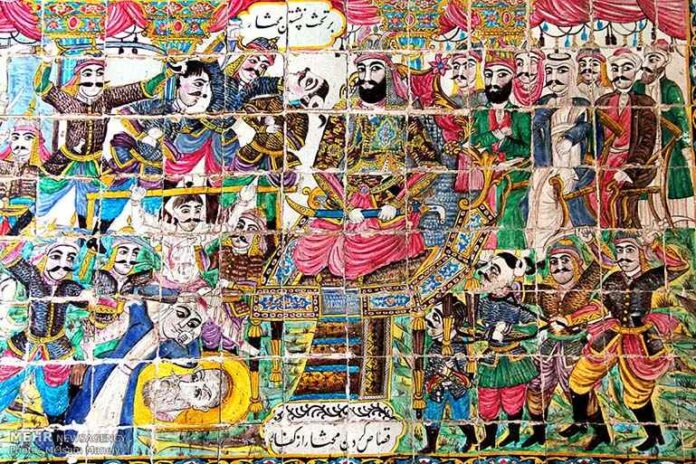
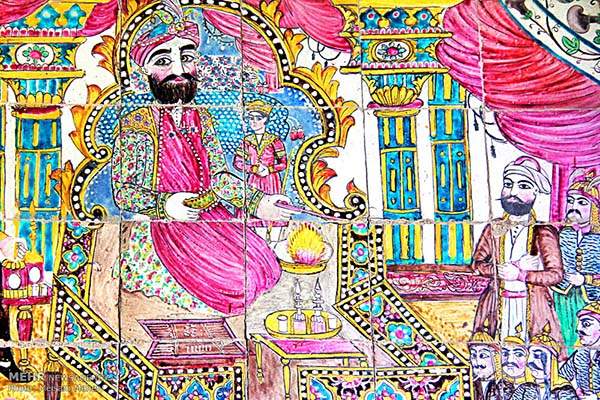
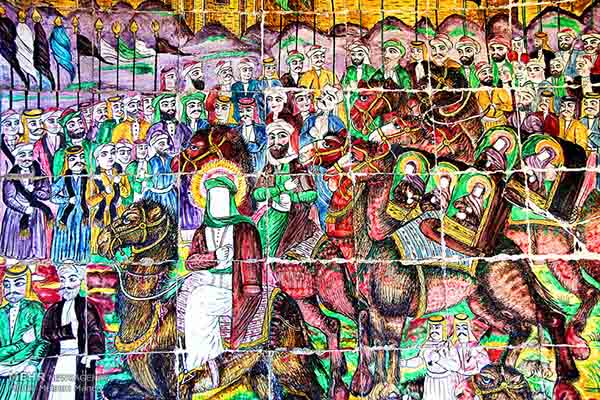
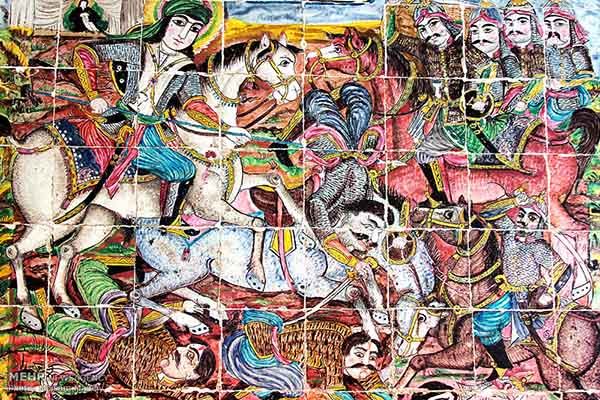
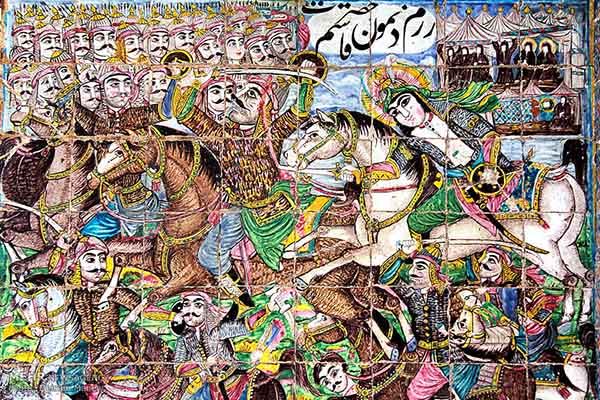
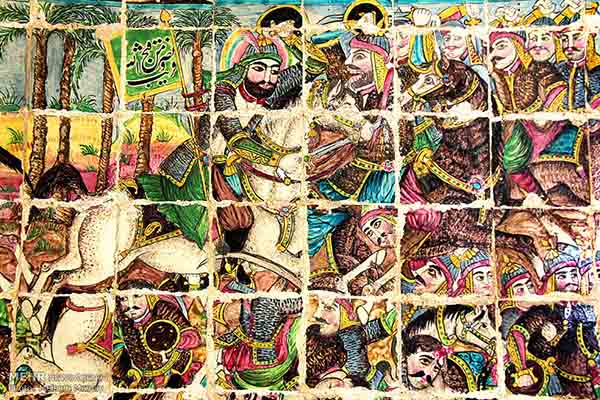
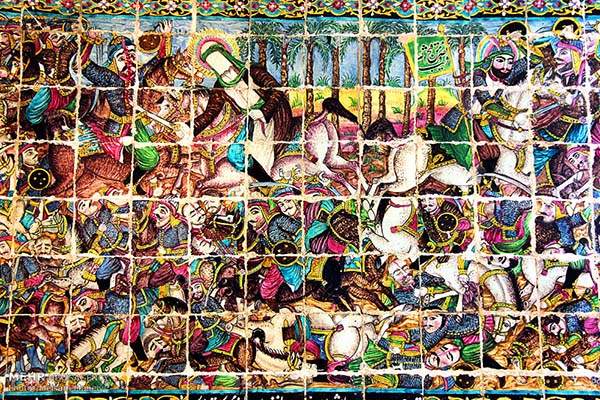
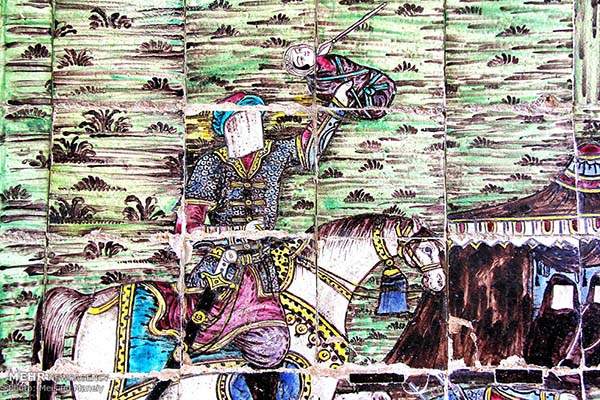
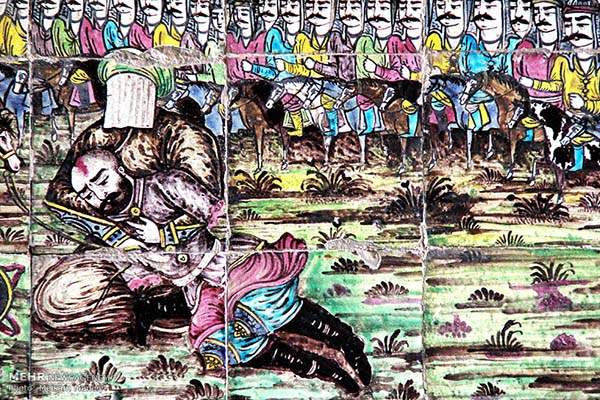
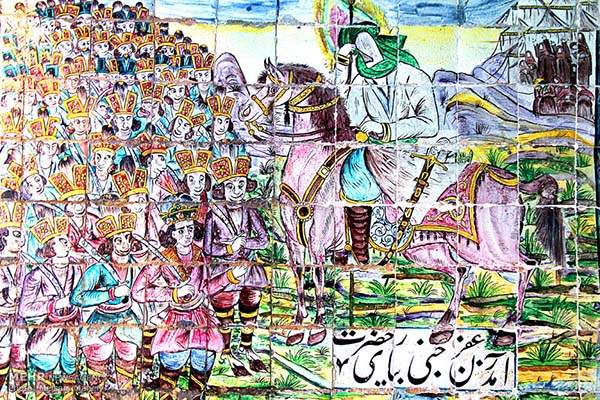
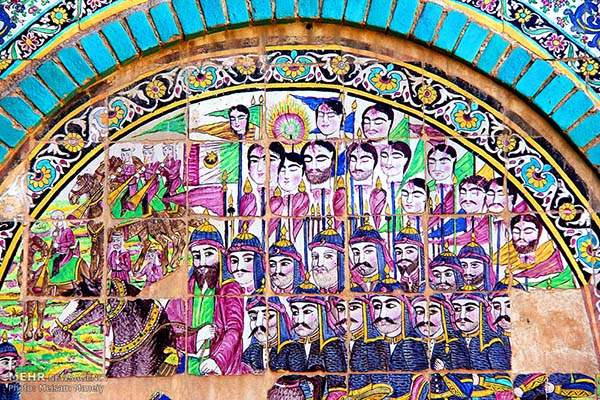
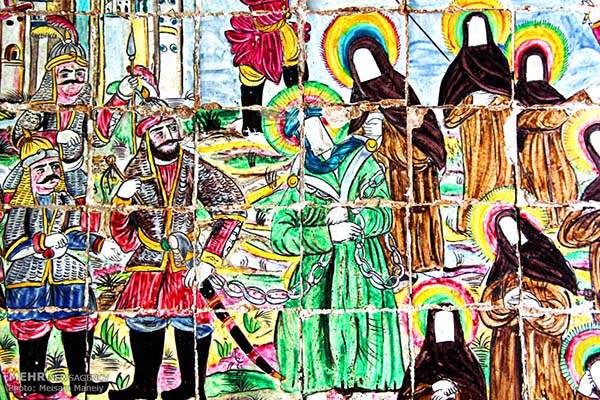
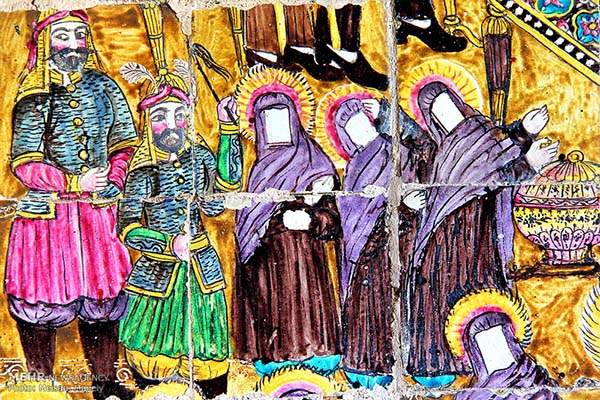
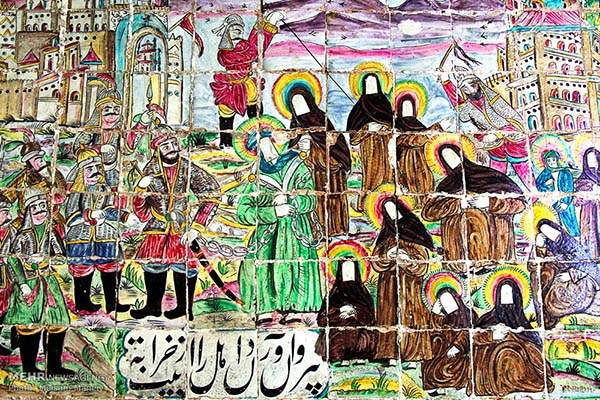
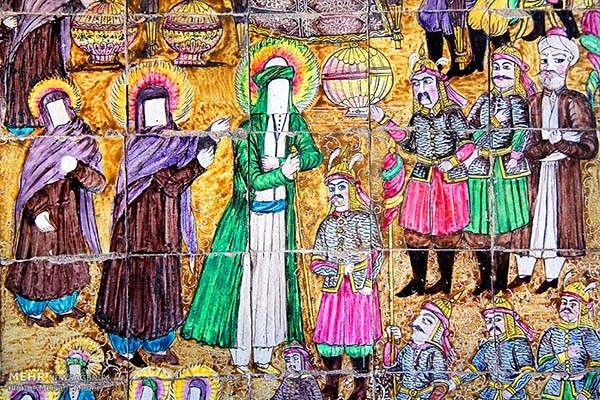
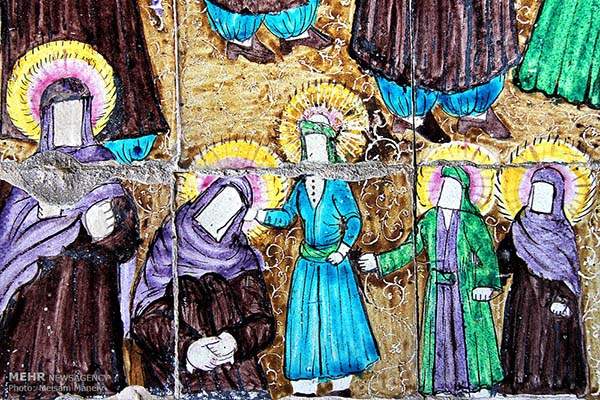
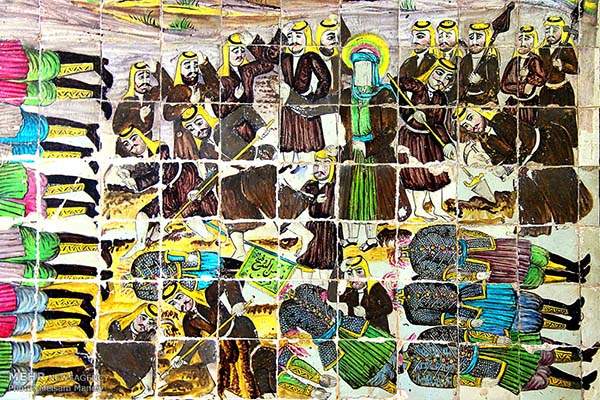
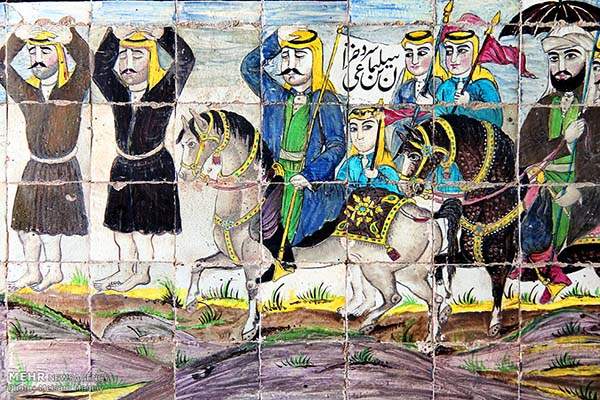
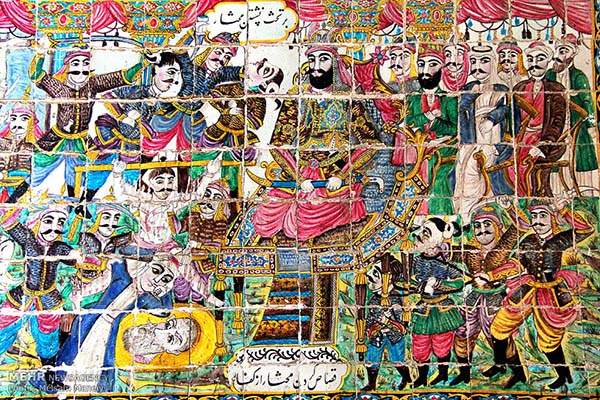
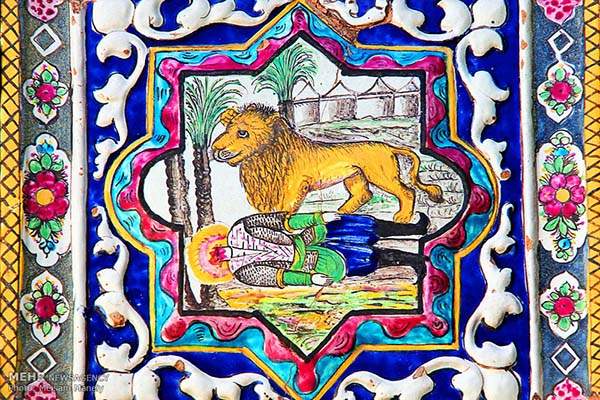
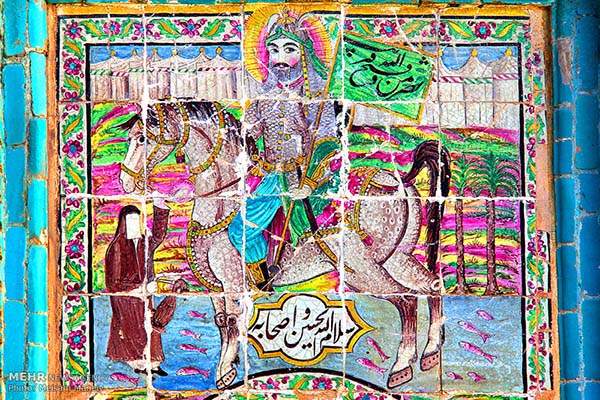
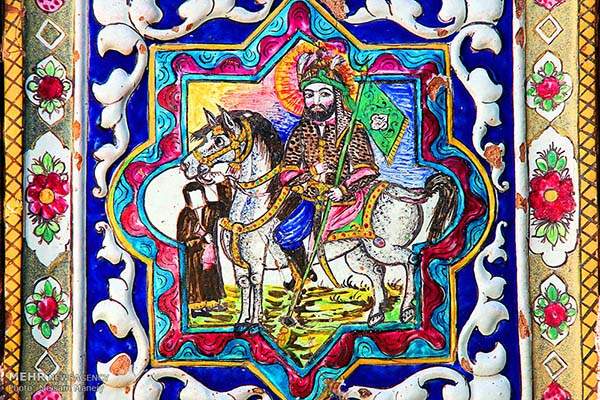
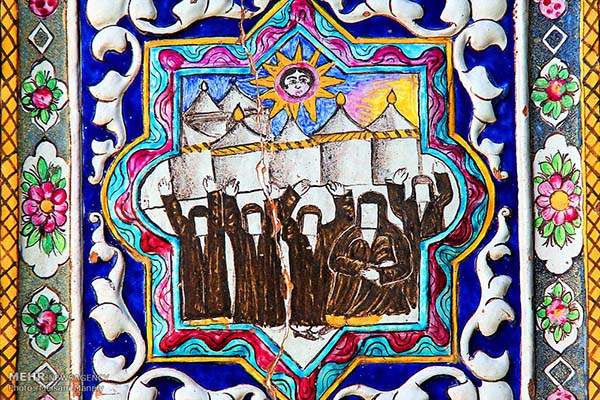
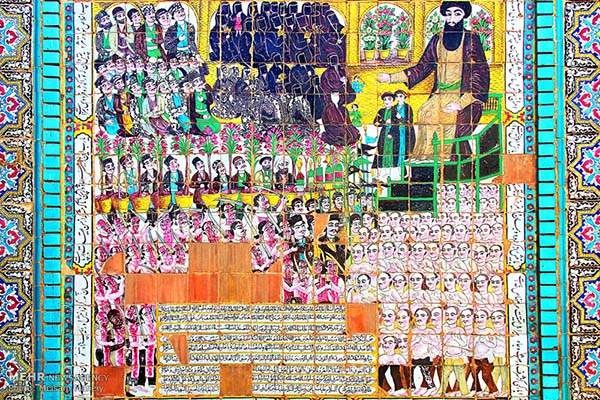
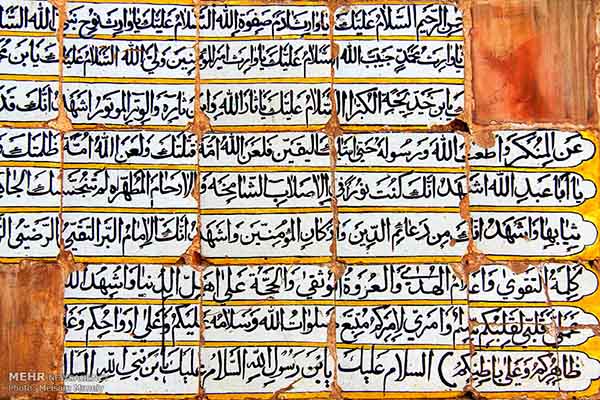
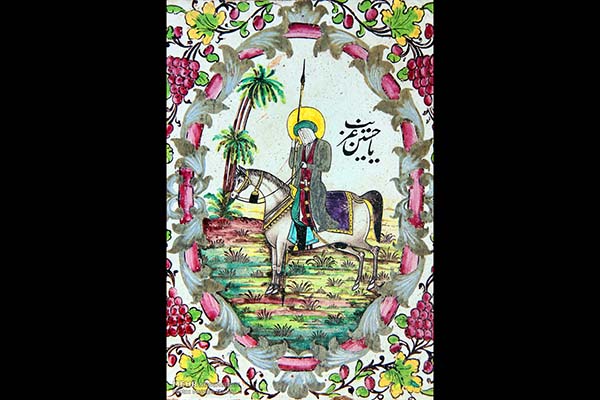
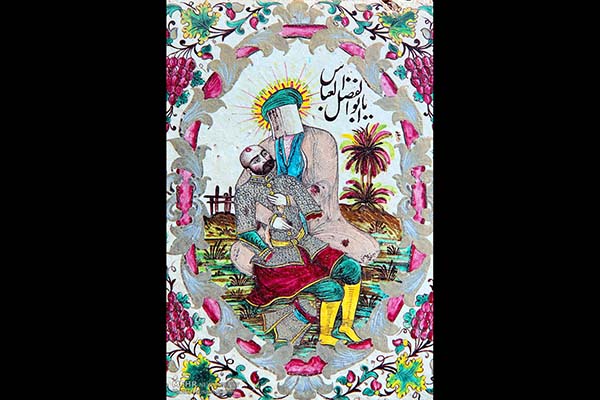
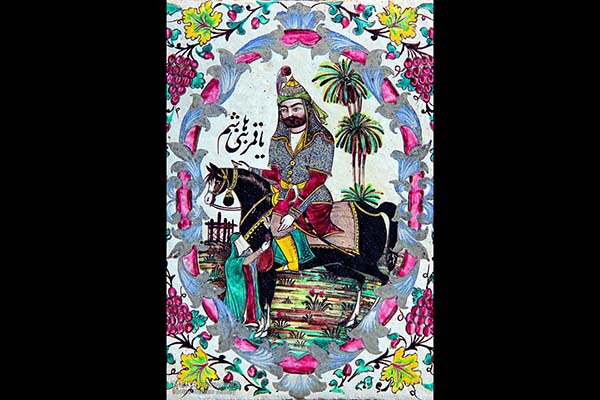
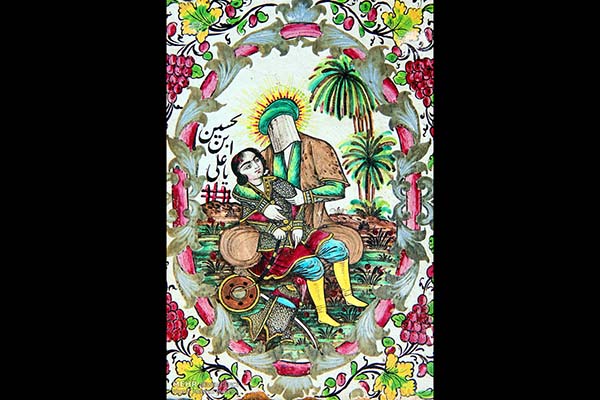
Marvelous Tileworks of Moaven-ul-Molk Tekyeh

Moaven al-Malek_00

Moaven-ul-Molk Tekyeh in the western city of Kermanshah dates back to the Qajar era. What makes Moaven-ul-Molk stand out among other religious theaters is the remarkable tiles used in its construction.

These tiles feature images of battles led by the Prophet Muhammad and Ali ibn Abi Talib, the first Shiite Imam, the battle of Karbala and ancient Persian kings.

Mehr News Agency has put online photos of the tekyeh:

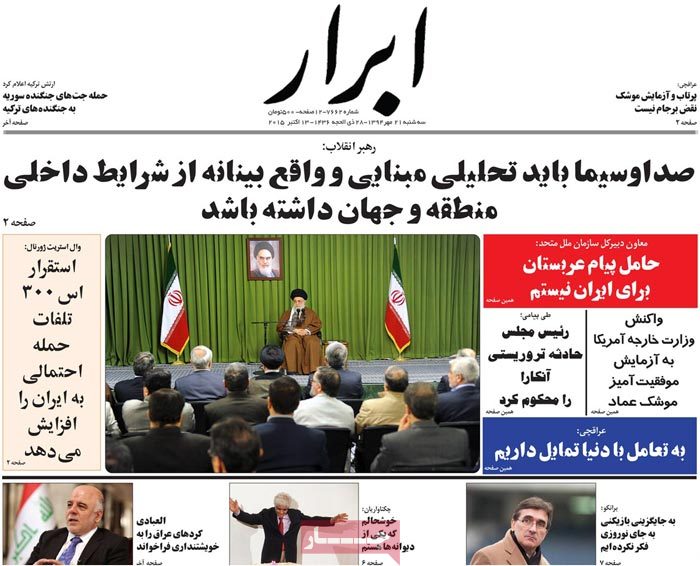
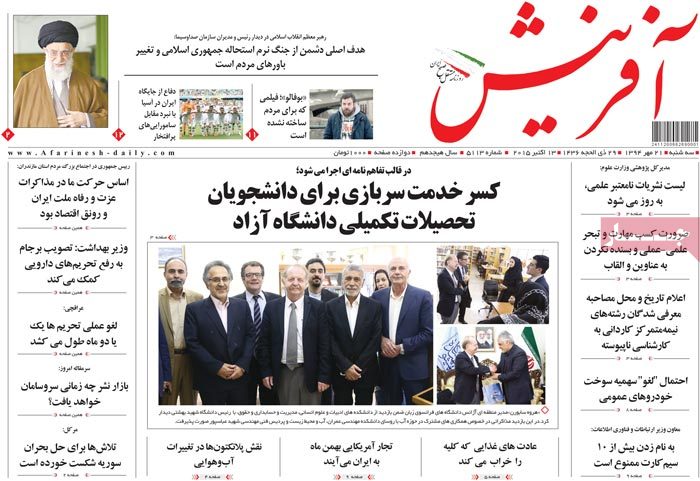
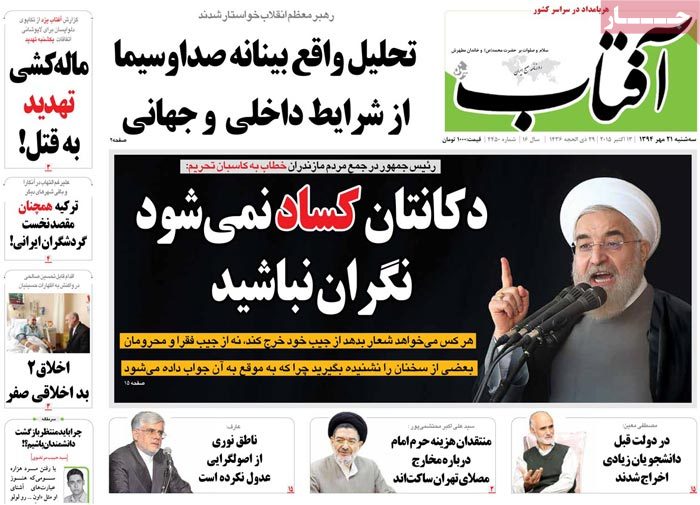
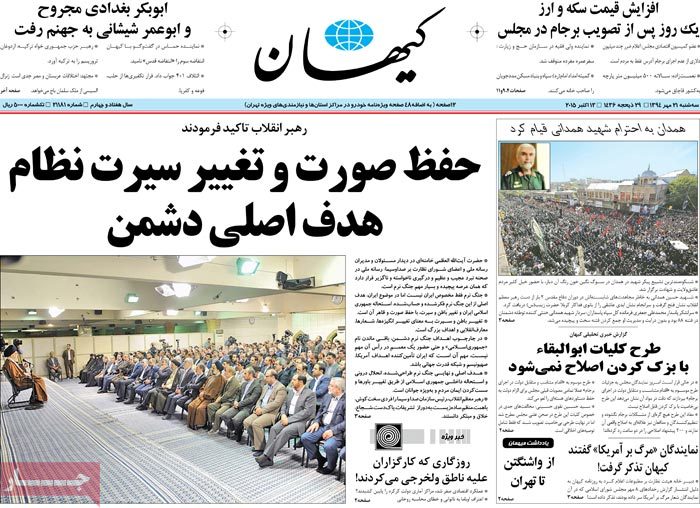
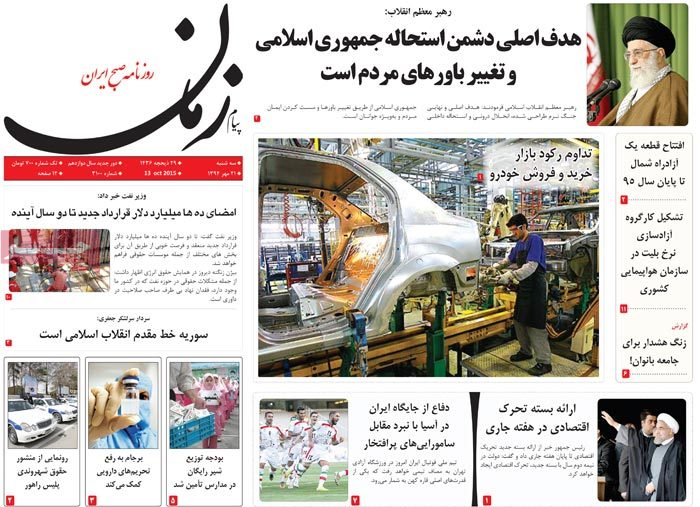
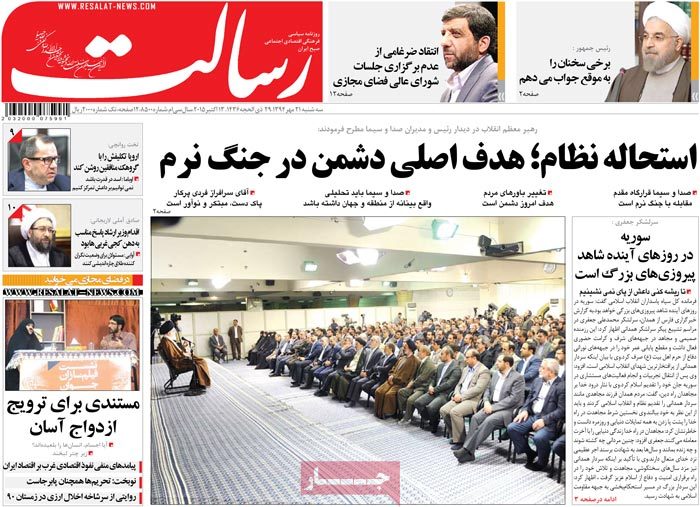
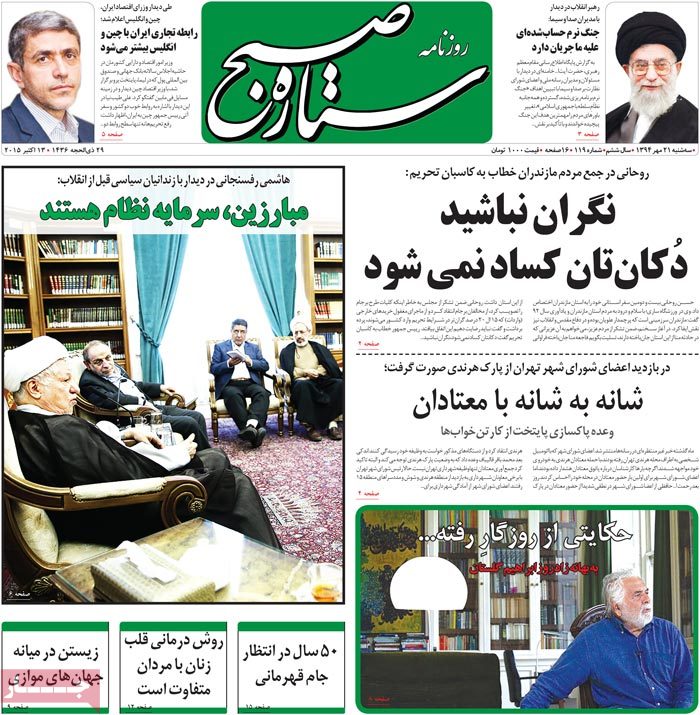
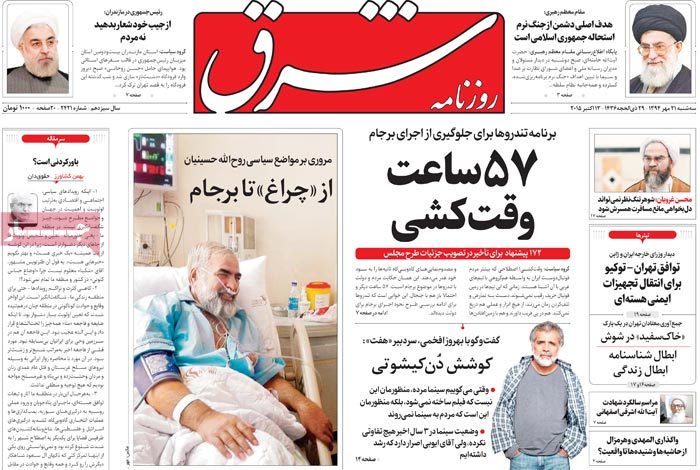
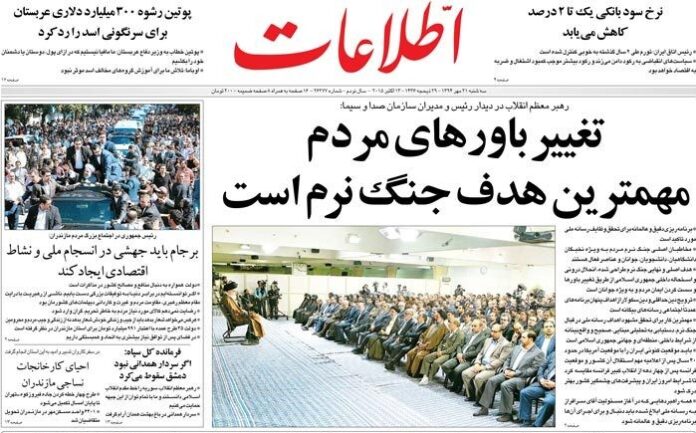
A look at Iranian newspaper front pages on Oct. 13

Iranian Newspapers Headlines

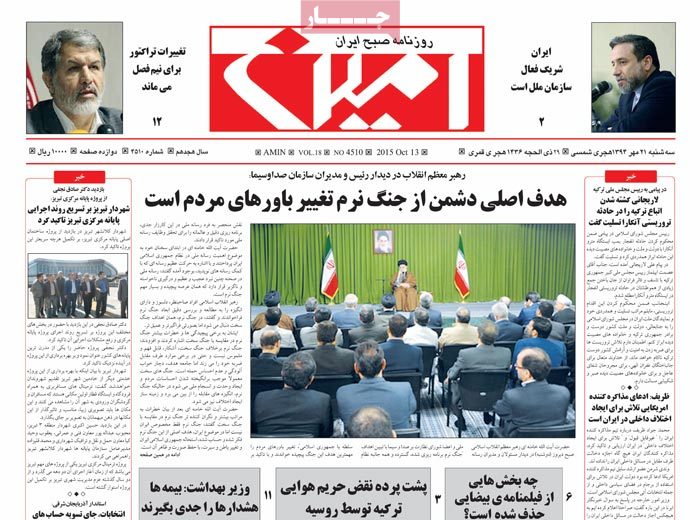
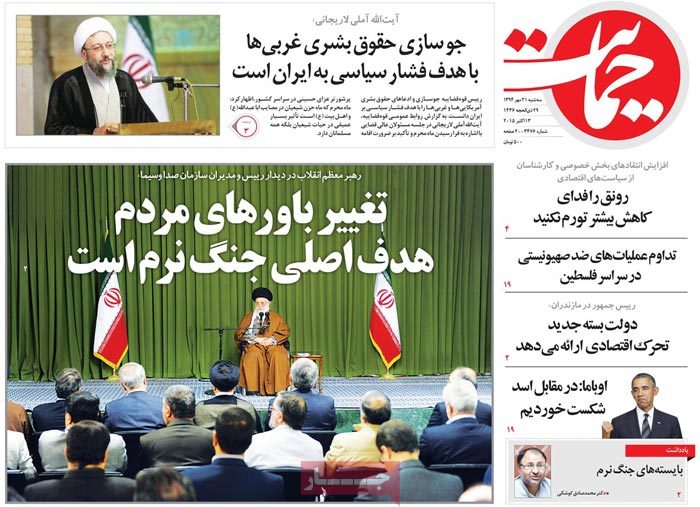
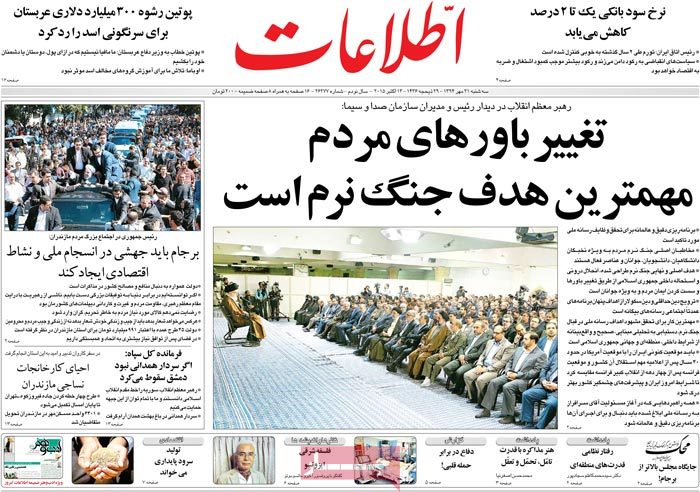
The warning by the Supreme Leader that the enemy is intent on changing the beliefs of the Iranians and comments by the president on economy, sanctions and the Joint Comprehensive Plan of Action dominated the front pages of Iranian newspapers on Tuesday.


Ettela’at: “The soft war is primarily aimed at changing public beliefs,” said the Supreme Leader at a meeting with IRIB managers.

Ayatollah Khamenei further said detailed, wise planning is needed to secure the stated objectives of the national broadcaster.


Abrar: “IRIB should present realistic analyses of local, regional and international conditions,” said the Supreme Leader at a meeting with the senior managers of the national broadcaster.

Abrar: The deputy foreign minister has said that Iran is willing to interact with the rest of the world.


A look at Iranian newspaper front pages on Oct. 13


Afarinesh: The health minister has said that adoption of JCPOA will help terminate medicinal sanctions the country is facing.

Afarinesh: The deputy foreign minister has said that it will take a month or two for termination of sanctions to take effect in practice.


A look at Iranian newspaper front pages on Oct. 13


Aftab-e Yazd: “Don’t worry, your business won’t collapse,” President Rouhani said in a [sarcastic] comment aimed at those who have made a career for themselves out of sanctions.

He further said official sloganeering should not come at the expense of the poor and needy.


A look at Iranian newspaper front pages on Oct. 13


Amin: Parliament Speaker Ali Larijani has offered condolences to his Turkish counterpart on the deaths of Turkish citizens in terrorist bombings in Ankara.


A look at Iranian newspaper front pages on Oct. 13


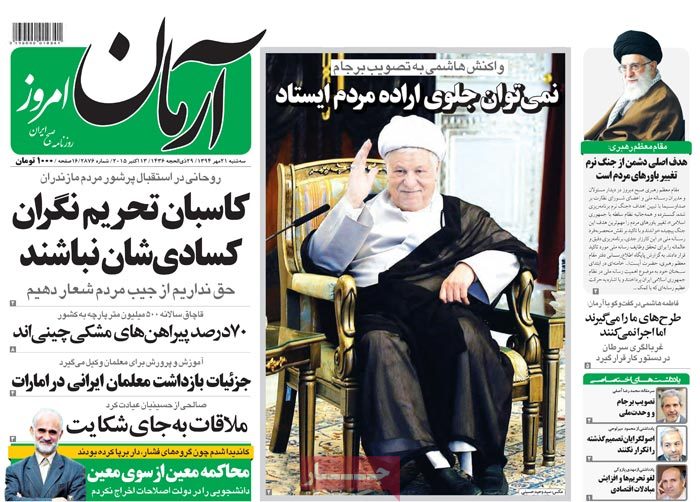
Arman-e Emrooz: “One cannot defy the will of the public,” Chairman of the Expediency Council Ayatollah Akbar Hashemi Rafsanjani said after the approval by parliament of the Joint Comprehensive Plan of Action.

Arman-e Emrooz: Instead of filing a complaint, Director of the Atomic Energy Organization Ali Akbar Salehi has paid a bedside visit to Ruhollah Hosseinian [the same MP who threatened him with death in an open session of parliament on Sunday].


A look at Iranian newspaper front pages on Oct. 13


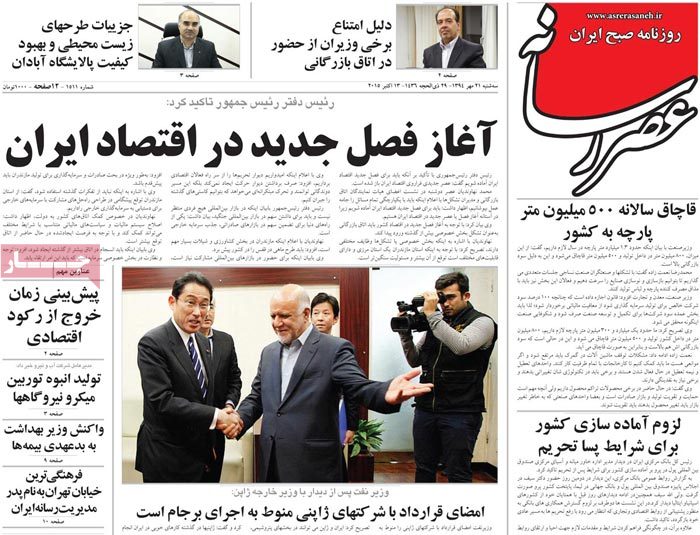
Asr-e Rasaneh: A street in Tehran has been named after the father of the country’s media management: Professor Ali Akbar Farhangi.


A look at Iranian newspaper front pages on Oct. 13


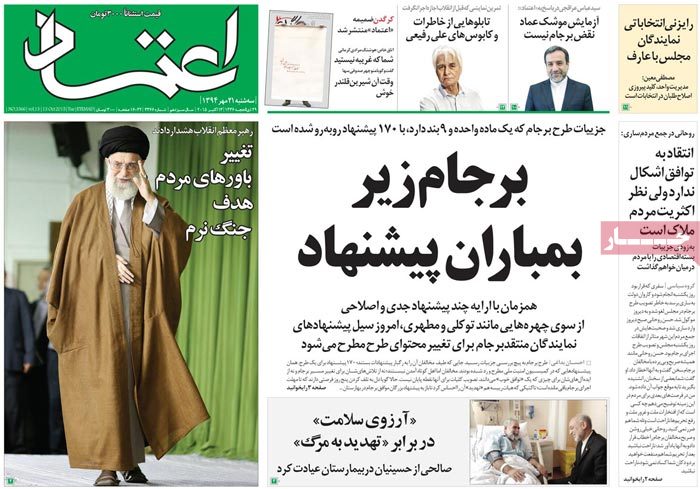
Etemad: President Rouhani has said being critical of the [nuclear] deal is ok, but what counts is the viewpoint of the majority.
 

A look at Iranian newspaper front pages on Oct. 13


Hemayat: The judiciary chief has said that the human rights allegations the West levels against Iran are meant to ratchet up political pressure on the country.


A look at Iranian newspaper front pages on Oct. 13


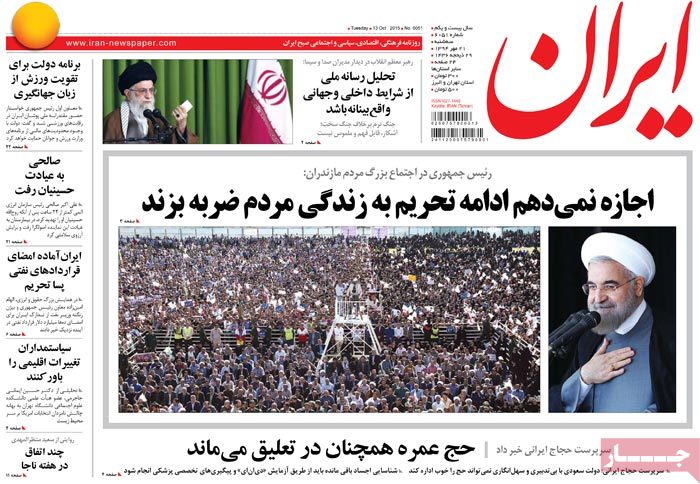
Iran: “I won’t allow sanctions to deal a blow to people’s lives,” said the president in a speech in Mazandaran.

Iran: Minor Hajj remains suspended, said the caretaker of Iranian Hajj pilgrims.


A look at Iranian newspaper front pages on Oct. 13


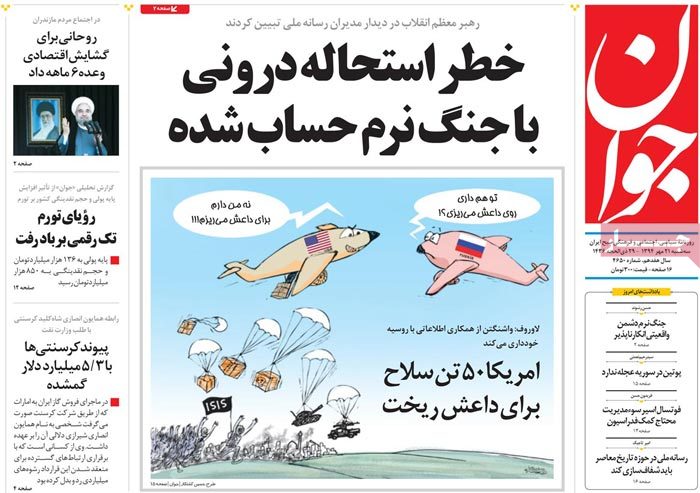
Javan: Rouhani has promised to improve the country’s economy in six months.


A look at Iranian newspaper front pages on Oct. 13


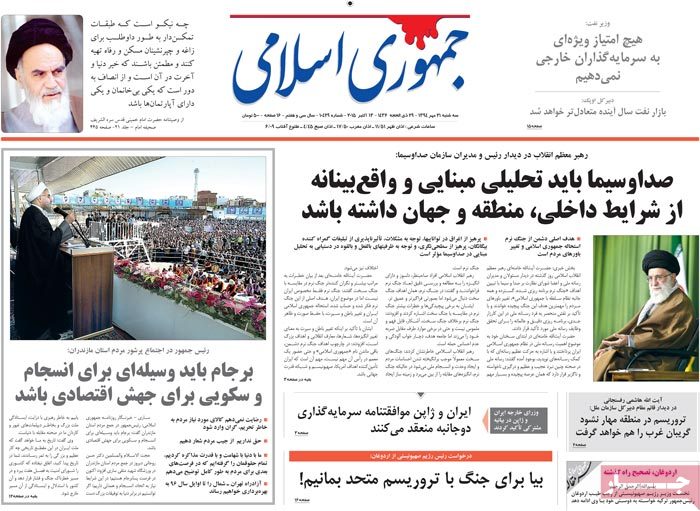
Jomhouri Islami: Iran and Japan will sign a bilateral investment deal, the foreign ministers of the two countries said in a joint statement.


A look at Iranian newspaper front pages on Oct. 13


Kayhan: “The enemy seeks to keep the façade of the establishment in place and change its nature,” warned the Supreme Leader.


A look at Iranian newspaper front pages on Oct. 13


Payam-e Zaman: “Contracts worth tens of billions of dollars will be signed within the next two years,” said the Iranian oil minister.


A look at Iranian newspaper front pages on Oct. 13


Resalat: “Europe needs to clarify its stance on the Hypocrites [a reference to Mojahedin Khalgh Organization],” said Iranian deputy foreign minister.


A look at Iranian newspaper front pages on Oct. 13


Setareh Sobh: The economy minister has said that trade ties between Iran, China and Britain will be boosted.


A look at Iranian newspaper front pages on Oct. 13


Sharq: Tehran and Tokyo have reached an agreement on the transfer of nuclear safety equipment.


A look at Iranian newspaper front pages on Oct. 13


Highlights of Ettela’at newspaper on October 13

Ettelaat-13-oct

♦ “The soft war is primarily aimed at changing public beliefs,” said the Supreme Leader at a meeting with IRIB managers.

Ayatollah Khamenei further said detailed, wise planning is needed to secure the stated objectives of the national broadcaster.

♦ Interest rates are to go down by between one and two percent.

The chairman of Iran Chamber of Commerce said that inflation has been tamed over the past two years.

♦ President Putin has turned down $300 billion in bribes to bring down President Assad.

It came as President Obama admitted American efforts to train anti-Assad groups have been ineffective.

♦ President Rouhani has said that the Joint Comprehensive Plan of Action should be a leap in national cohesion and economic dynamism.

He further said his government has always been after safeguarding national interests in talks [with other countries].

♦ “Had it not been for Brigadier General Hossein Hamedani, Damascus would have fallen,” said IRGC Commander Major General Mohammad Ali Jafari.

♦ Mazandaran Textile plants have been revived during a visit to the Caspian province by President Rouhani.