Thursday, December 25, 2025
Home Blog Page 473

Hamas halts talks with Israel until release of Palestinian prisoners under Gaza ceasefire accord

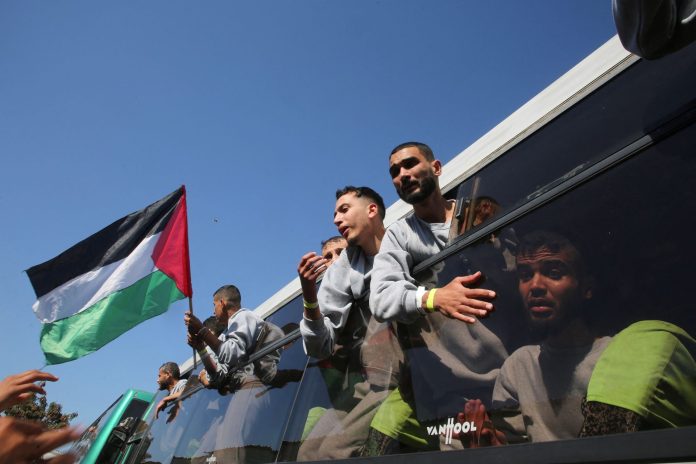
Israel was scheduled to let go 620 prisoners on Saturday under the first phase of a Gaza ceasefire and prisoner exchange agreement in return for six captives freed by Hamas, but the Israeli government delayed the releases citing what it called “humiliating hostage handovers.”

“There will be no talks with the (Israeli) enemy through mediators before the release of the prisoners agreed upon in swap for the six Israeli captives,” Hamas leader Mahmoud Mardawi said in a statement.

“The mediators must oblige the enemy to implement the deal,” he added.

Early Sunday, Hamas condemned Israel’s delay in releasing the Palestinian prisoners as a “violation” of a Gaza ceasefire and prisoner swap agreement.

The Gaza ceasefire and prisoner swap deal took effect last month, halting Israel’s genocidal war, which has killed more than 48,300 victims, mostly women and children, and left the enclave in ruins.

The International Criminal Court issued arrest warrants in November for Israeli Prime Minister Benjamin Netanyahu and his former Defense Minister Yoav Gallant for war crimes and crimes against humanity in Gaza.

Israel also faces a genocide case at the International Court of Justice for its war on the enclave.

Terrorist group Jaish al-Adl claims responsibility for assassination of Iranian police officer in Khash

Crime Scene

The victim, identified as Colonel Mohammad Reza Sanadi, was reportedly shot dead while on duty.

The so-called Jaish al-Adl terrorist group has claimed responsibility for the attack. In a statement, the group admitted to targeting Colonel Sanadi.

Local police officials confirmed that efforts are underway to identify and apprehend the perpetrators.

“Investigations are ongoing, and we are committed to bringing those responsible to justice,” a spokesperson stated.

Further details will be released as the situation develops.

Iran faces security challenges in the region, particularly in areas bordering Pakistan, where militant groups like Jaish al-Adl have been active.

The group has been involved in several attacks targeting Iranian security forces and civilians in recent years.

On Saturday, the terrorist group claimed responsibility for a bomb attack on the office of a major foundation responsible for providing housing for the deprived in the provincial city of Chabahar.

Iran condemns Israel’s violation of Lebanon sovereignty

In a social media post on Sunday night, Iranian Foreign Ministry spokesman Esmaeil Baghaei said the regime hit a new low when its fighter jets flew at an extremely low altitude over the funeral ceremony.

Baghaei added Israeli warplanes tried fustily to intimidate hundreds of thousands of brave Lebanese and others who had gathered to pay tribute to their heroes, martyred Hezbollah leader Seyed Hassan Nasrallah and his deputy and appointed successor Seyed Hashem Safieddine.

He stressed that the flyover was not only a serious violation of Lebanon’s sovereignty and territorial integrity but also a vicious act of terrorism against civilians.

Baghaei called on the United Nations Security Council to condemn the move.

Nasrallah, the iconic leader of the Lebanese resistance, was assassinated in Israel’s strikes on southern Beirut on September 27, 2024, following the regime’s week-long bombing campaign that hit many areas from the country’s south to the capital.

Safieddine was also assassinated in an Israeli attack on October 3, 2024.

Hezbollah postponed funeral ceremonies for both leaders due to fears of Israeli attacks on the ceremony.

Israel won’t allow Syria military south of Damascus: Netanyahu

Israeli Army

Addressing a military ceremony in Israel on Sunday, Netanyahu demanded the “full demilitarisation of southern Syria from troops of the new Syrian regime in the Quneitra, Daraa and Suwayda provinces”.

“We will not allow forces from the HTS organisation or the new Syrian army to enter the area south of Damascus,” Netanyahu said, referring to the Hayat Tahrir al-Sham group, which spearheaded the offensive that toppled longtime Syrian leader President Bashar al-Assad last December.

He also warned that Israel would not accept any threats to the Druze community in Syria, who live in the Golan Heights, a Syrian territory illegally occupied by Israel, and other parts of southwestern Syria.

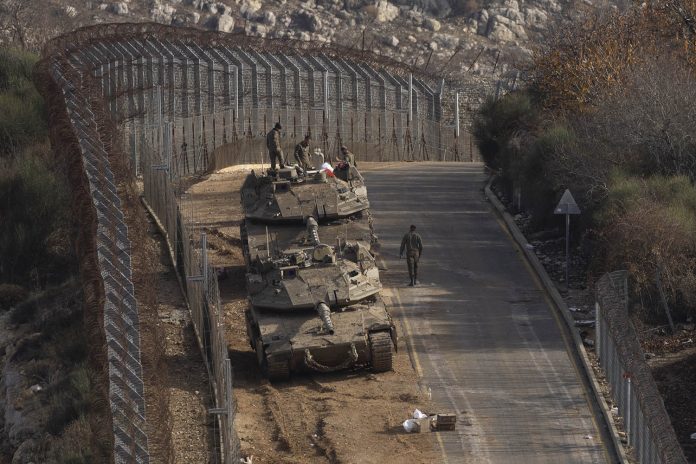
Israel has taken advantage of al-Assad’s fall to expand into a buffer zone between the Israeli-occupied Golan Heights and southern Syria, breaching a United Nations agreement brokered in 1974.

The Druze are a religious minority found across several countries in the region. In Syria, many have expressed their opposition to Israeli expansion into the southwest of the country, and thousands living in the occupied Golan Heights have refused to take Israeli citizenship.

However, in Israel, the majority of the Druze population supports the Israeli state and men are conscripted into the military.

Israel occupies approximately two-thirds of the Golan Heights, with the UN-administered buffer zone spanning a narrow, 400-square-kilometre (154-sq-mile) area. The rest has been controlled by Syria.

In 1974, Israel and Syria struck a ceasefire agreement that determined the Golan Heights would be a demilitarised buffer zone.

But shortly after the fall of al-Assad last December, the Israeli military moved within the buffer zone and has carried out hundreds of air strikes on Syrian military assets.

Israel has justified its attacks on Syria for years by claiming it is eliminating Iranian military targets. However, Iran has stressed none of its forces are currently in Syria, and the new Syrian government has indicated it has no desire to fight Israel.

Israeli forces have currently established two posts on Syria’s Mount Hermon and seven others in the buffer zone, Israeli Defence Minister Israel Katz said.

On Sunday, Netanyahu added that Israeli troops would remain on Mount Hermon and in a buffer zone in the occupied Golan Heights for “for an indefinite period to protect our communities and thwart any threat”.

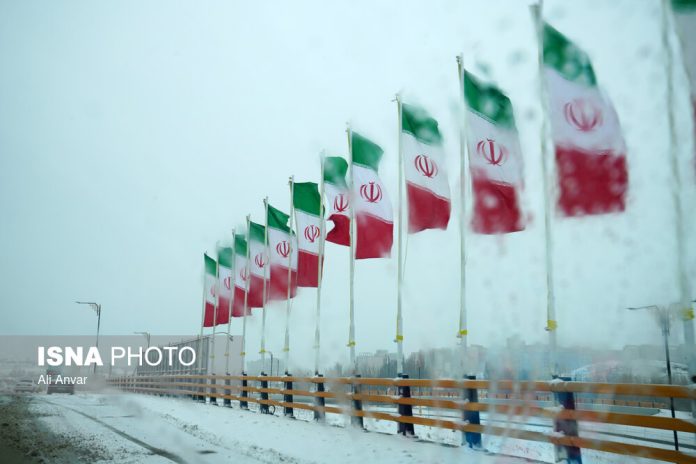
Heavy snowfall, extreme cold force closure of schools, offices across Iran

The decision comes as the country grapples with a dual crisis of extreme weather and ongoing energy shortages, including frequent power and gas outages.

The affected regions include all provinces in Iran, with the exception of Sistan and Baluchestan, Hormozgan, Yazd, Bushehr, Kohgiluyeh and Boyer-Ahmad, and Khuzestan.

In the capital Tehran, all schools, universities, and government offices, with the exception of medical and service centers, will remain closed, the province’s governorate announced.

Since the onset of the cold season, several provinces have experienced repeated closures due to gas shortages, power cuts, and the shutdown of power plants.

The Meteorological Organization of Iran has warned that the cold spell will intensify in the coming days, urging citizens to avoid non-essential travels.

Travelers have been advised to carry snow chains and heating equipment if they must venture out.

Mountaineers have also been cautioned against climbing to high altitudes due to the dangerous conditions.

The weather stations indicate that the hottest and coldest areas in Iran over the past 24 hours have been Rask in Sistan and Baluchestan, with a maximum temperature of +32 degrees Celsius, and Zarrineh in Kurdistan, with a minimum temperature of -25 degrees Celsius.

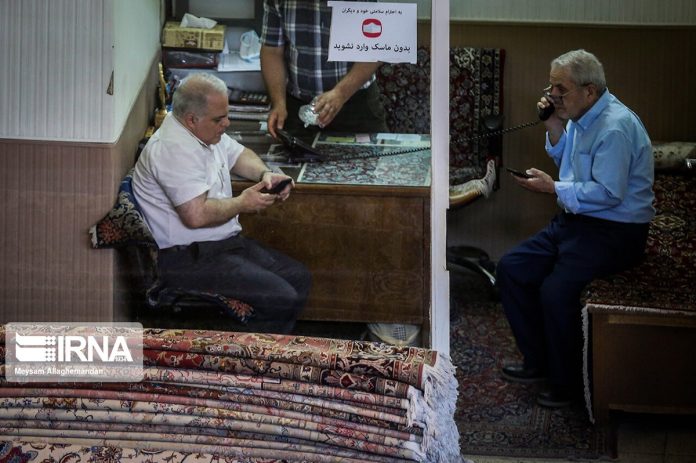
Parliamentary research center: Only 19% of Internet users in Iran do not use VPNs 

Mobile Internet Iran

The findings were published in the report “Assessing Public Opinion on Government Digital Services and Internet Policies.”

The survey, conducted via telephone in December 2024, included responses from 1,100 participants.

Out of 914 respondents who answered the question “What type of VPN do you currently use?”, 49.4% reported using free VPNs, while 30.3% said they use paid VPN services. Only 18.9% stated that they do not use any VPN.

Another section of the survey asked participants, “To what extent do you think President Pezeshkian’s government will be able to lift internet filtering and restrictions?”

Responses were mixed: 24.8% said “not at all,” 26.7% said “to a small extent,” while 20.5% believed the government would be able to lift restrictions “to a large extent.”

Meanwhile, 11.2% had “high expectations” for change, and 16.8% either did not respond or chose “I don’t know.”

This survey was conducted before the recent unblocking of Google Play and WhatsApp, which may have influenced public perception on the issue.

Israel says expanding West Bank offensive, soldiers to remain ‘for next year’

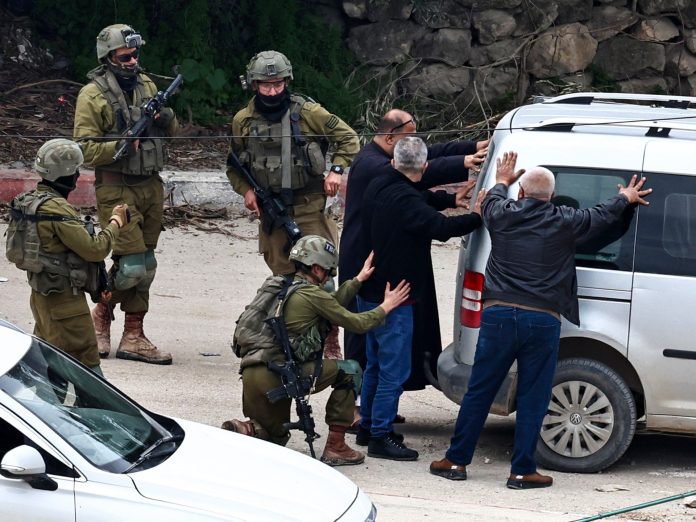
Defence Minister Israel Katz on Sunday stated the army had “evacuated” three refugee camps in the northern West Bank and had been ordered to remain there “to prevent the return of [Palestinian] residents”.

“So far, 40,000 Palestinians have evacuated from the refugee camps of Jenin, Tulkarem and Nur Shams, which are now empty of residents,” he said in a statement.

“I have instructed [soldiers] to prepare for a prolonged presence in the cleared camps for the next year and to prevent the return of residents and the resurgence of terrorism,” he added.

For more than a month, Israeli forces have been raiding Palestinian homes and using bulldozers to destroy critical infrastructure. The assaults have largely focused on Jenin and Tulkarem.

The Israeli army announced tanks have been deployed in Jenin for the first time in the West Bank since the end of the second Intifada, or uprising, in 2005.

Nabil Abu Rudeineh, spokesman for Palestinian President Mahmoud Abbas, condemned the decision to deploy tanks in the northern West Bank.

“This is a dangerous Israeli escalation that will not lead to stability or calm, and we warn of this dangerous escalation,” he stressed.

Since January 19 when the Israel-Hamas ceasefire came into effect in the Gaza Strip, Jenin and its adjoining refugee camp have been under Israeli siege and at least 27 Palestinians have been killed there.

Israeli Prime Minister Benjamin Netanyahu instructed the military to carry out an “intensive” operation in the West Bank after explosions on Thursday on empty buses near Tel Aviv in what Netanyahu’s office described as an attempted mass attack.

No casualties were reported in the explosions, and no group has claimed responsibility.

Meanwhile, the Palestinian news agency Wafa reported that Israeli army and settler attacks also continued on Sunday across the West Bank.

Israel has killed more than 900 Palestinians in the West Bank since the war in Gaza erupted on October 7, 2023.

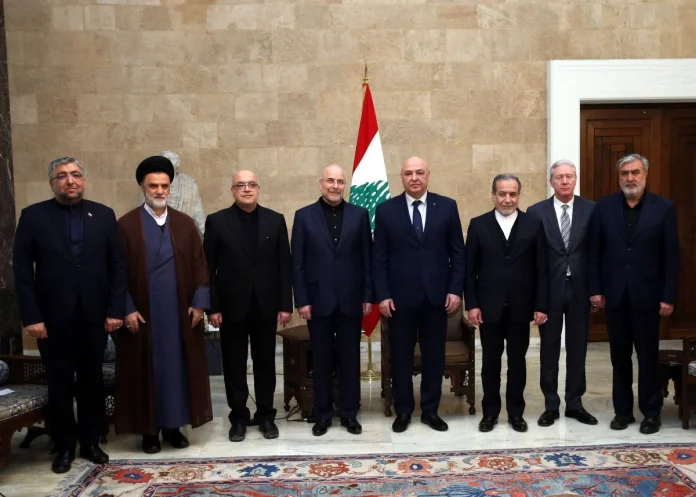
‘Lebanon is tired of others’ wars’: President tells Iranian speaker

“Lebanon paid a heavy price for the Palestinian cause,” Aoun also told Mohammad Bagher Ghalibaf, according to the Lebanese Presidency, adding that the country still backs a two-state solution that is favoured by Arab nations in the region.

In Baabda Palace, the Iranian parliament chief reportedly said Tehran backs any decision by Lebanon that is taken free of foreign interference in its affairs.

Ghalibaf added Iran is ready to contribute to the rebuilding of the Gaza Strip alongside Arab and Islamic countries.

Ghalibaf and Foreign Minister Seyyed Abbas Araghchi traveled to Beirut to take part in the commemoration ceremony for martyred Hezbollah leader Sayyed Hassan Nasrallah as well as Executive Council chief Seyyed Hashim Safieddine.

Nasrallah was assassinated in Israel’s bombardment of southern Beirut on September 27, 2024. Using 85 tons of explosives, Israeli jets leveled six residential buildings in Dahiyeh, following a week-long bombing campaign that hit many areas from southern Lebanon to Beirut.

Safieddine was assassinated in an Israeli attack in October 2024.

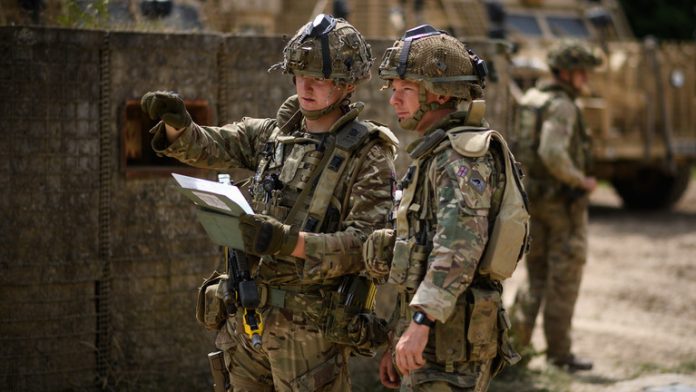
Britian, France plan to dispatch 30,000 peacekeepers to Ukraine: WSJ

However, that plan depends on persuading US President Donald Trump to commit to a limited American military role, the report said. While Washington has ruled out sending its forces to Ukraine, the UK and France hope the US agrees to supply a limited contingent with critical support, particularly when it comes to air defense, logistics, and intelligence.

European officials interviewed by the paper insist that “without Trump’s backing, the European plan to send peacekeepers faces a difficult path.”

The envisioned “reassurance force” would be primarily composed of British and French troops, and would focus on safeguarding vital infrastructure, cities, and ports, rather than being positioned along the front lines with Russia. Another facet of the roadmap would be the active use of drones and satellites to monitor Russia’s compliance with a potential ceasefire, WSJ reports.

Previous media reports said that while the UK and France have long been proponents of deploying troops to Ukraine, several other EU members have been reluctant to seriously entertain the idea.

Moreover, Kiev is also skeptical. Mikhail Podoliak, an adviser to Ukrainian leader Volodymyr Zelensky, stated on Friday that the deployment of foreign peacekeeping forces “does not seem very realistic for now.” He suggested that Kiev’s Western backers increase their defense spending instead.

Zelensky previously indicated that Ukraine could require up to 200,000 European soldiers to guarantee any peace deal with Russia, with Western media reports arguing that amassing such a force would be a serious challenge for the West.

Meanwhile, Russian Foreign Minister Sergey Lavrov has firmly rejected the deployment of NATO troops in Ukraine as unacceptable, and Moscow has stated that any foreign military presence will be considered a legitimate target.

In November, Russia’s Foreign Intelligence Service (SVR) announced that the West might attempt to “essentially occupy Ukraine” under the guise of deploying peacekeepers. The SVR claimed that the plans could involve deploying up to 100,000 troops in Ukraine and partitioning the country into four large occupation zones.

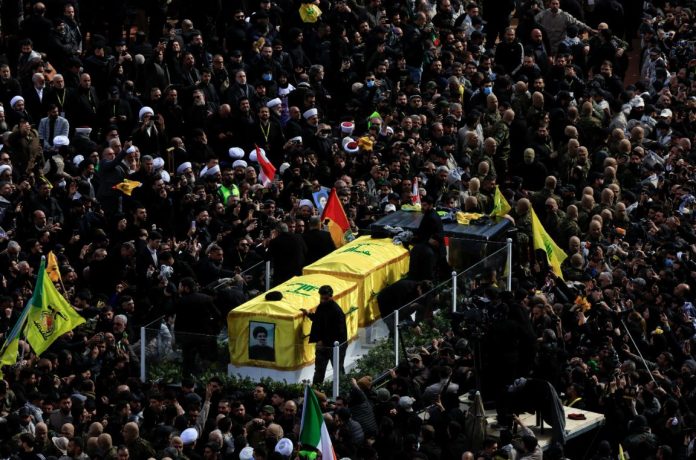
Mass funeral held in Lebanon for slain Hezbollah leader Nasrallah

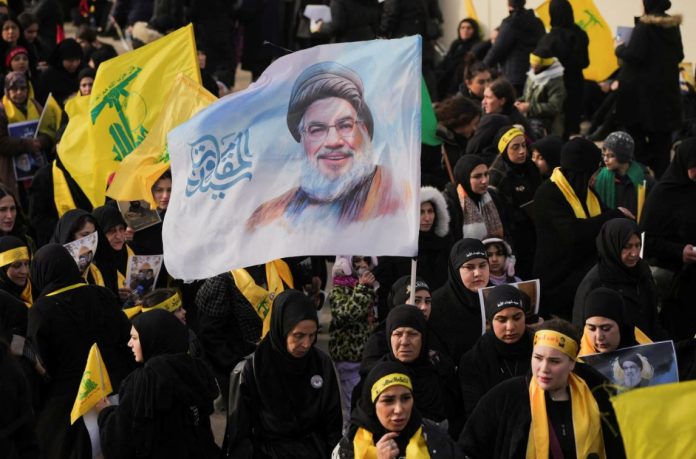
The public funeral, delayed for security reasons, began at 1pm local time (11:00 GMT) on Sunday at Beirut’s Camille Chamoun Sports City Stadium, which has a capacity of about 50,000 people.

The event kicked off with a speech by Iran’s Supreme Leader Ayatollah Seyyed Ali Khamenei that was read out at the funeral.

Then, the decorated coffins of Nasrallah and his heir apparent Hashem Safieddine – killed in another Israeli air attack a week later were slowly driven into the stadium. Both coffins were draped with yellow clothes – the colour of the Iran-backed group.

At the sight of the coffins, the crowd erupted in cheers and then followed the journey into the stadium in silence.

In a televised speech, Hezbollah leader Naim Qassem stated the group would keep following the path of Nasrallah.

“We will uphold trust and walk on this path, we will uphold your will,” Qassem said referring to Nasrallah, adding: “You are still with us: your… path and struggle live within us” and “I am loyal to the legacy Nasrallah”.

Hezbollah organisers installed thousands of extra seats on the pitch and many more outside, where mourners will be able to follow the ceremony on a giant screen.

In the run-up to the funeral, giant portraits of Nasrallah and his heir apparent Hashem Safieddine – killed in another Israeli air attack a week later – have been plastered on walls and bridges across south Beirut.

Hezbollah official Ali Daamoush told reporters on Saturday that about 800 personalities from 65 countries will attend the funeral in addition to thousands of individuals and activists who came from around the world.

“Come from every home, village and city so that we tell the enemy that this resistance will stay and is ready in the field,” Daamoush said, referring to Israel.

Nasrallah, the face of Hezbollah for more than three decades, and Safieddine had temporarily been buried in secret locations over fears their funerals could be targeted by Israeli forces.

Nasrallah will be buried in a piece of land near the airport road in Beirut’s southern suburbs. Safieddine will be laid to rest in his hometown of Deir Qanoun en-Nahr in southern Lebanon.

Meanwhile, the Lebanese state media reported that Israeli planes flew at low altitude over Beirut during the funeral ceremony.

“The hostile warplanes flew at low altitude over the skies of Beirut and its suburbs,” the National News Agency said, hours after it reported Israeli air attacks targeting the area between Qleileh and Sammaaiyah in south Lebanon’s Tyre district.

A fragile ceasefire has been in place in Lebanon since November 27, ending months of cross-border warfare between Israel and Hezbollah that escalated into a full-scale conflict in September.

Under the ceasefire deal, Israel was supposed to fully withdraw from southern Lebanon by January 26, but the deadline was extended to February 18 after Israel refused to comply.

The Israeli army withdrew from southern Lebanese towns on Tuesday, but maintains a military presence at five border outposts.