Wednesday, December 31, 2025
Home Blog Page 4693

The rise and fall of ISIS, causes and circumstances

Paris Attacks

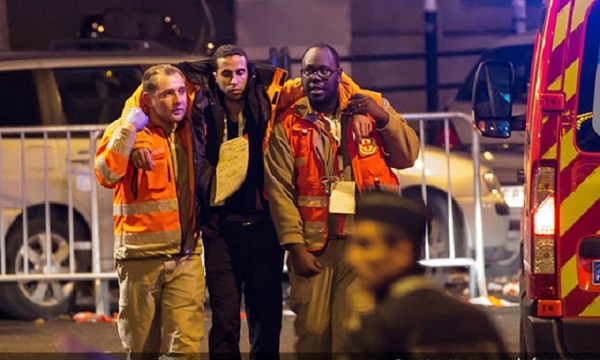
The terror attacks in Paris late Friday were just the tip of the iceberg whose scope is highly likely to be expanded in the future. The enormity of the attacks clearly shows that security and military approaches alone will not work when it comes to the elimination of terrorism.
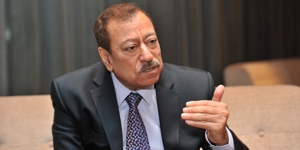
Atwan
Abdel Bari Atwan

Abdel Bari Atwan, a prominent Arab writer, has described the terror attacks in Paris as the tip of the iceberg, saying that to understand terrorism [better], people should pause to think about the reasons why such a phenomenon has emerged.

The fact of the matter is that this phenomenon is the direct result of military interventions, weakened central authority in [certain regional] countries, and efforts to redraw the Middle East map in line Western interests and plans, he added.

Tasnim News Agency on November 15 published the remarks of Atwan, who is the editor-in-chief of Rai al-Youm, an Arab world digital news and opinion website, on six main reasons behind coordinated terror attacks by ISIS. The following is the translation of part of what the Iranian news agency quoted Atwan as saying in an article originally titled Europe in shock; six key reasons behind ISIS attacks:

In less than two weeks, ISIS carried out more than four terrorist attacks – including exploding a Russian passenger plane, attacks on two security and military training bases [in Baghdad], suicide bombings in Dahiyeh, a crowded suburb of Beirut, and multiple Paris attacks – which have been unprecedented in a decade in terms of scope, psychological impact, and human losses.

Six main reasons behind terrorism  

To understand terrorism, why it has emerged and how its power has grown, we need to take into account and analyze the following six points:

First: Constant contempt for Arab and Muslim nations

Second: Disillusionment of millions of illiterate, jobless youth who are not living in the present and have no promising future

Third: The West’s support for the corrupt, dictatorial governments of Arab countries

Fourth: Military interventions which began in Iraq and extended to Libya, Syria and Yemen

Fifth: Racial and sectarian classifications which have turned into the main bone of contention in regional civil wars

Sixth: Promotion of a Takfiri mindset through modern social communications media by ISIS. It is worth mentioning that ISIS has over 50,000 Twitter accounts with its sympathizers releasing as many as 100,000 tweets on a daily basis.

West still in a state of denial about its role in helping terrorism [to grow]

Most, if not all, Western countries are not willing to admit that these reasons are a factor [in the emergence of ISIS] and that they have had a role in preparing the ground for terrorism – which is a dangerous phenomenon – to grow. But the fact of the matter is that terrorism is a phenomenon which has been created as a result of military interferences and efforts to redraw the Middle East map simply to introduce Israel as the regional heavyweight.

The bloody attacks which were carried out in Paris by militants using suicide vests and rifles serve the interests of ultra-rightist parties and groups and their racist policies against more than 30 million Muslims in Europe who are mostly living in France, Germany and Italy.

When such a situation leads to acts of violence and retaliatory attacks, it will trigger confrontation, and the specter of fear, horror and instability will haunt the world. That will most likely be more horrific than Friday’s attacks in Paris in terms of magnitude.

The West should not rely simply on military and security solutions

The Western governments are expected to look for solutions – other than security and military approaches – to counter the destructive phenomenon of terrorism. To that end, they are expected to focus – more than anything else – on their Middle East policy, because those who detonated train stations in Madrid and London held up their reaction to the [US-led] invasion and occupation of Iraq and the killing of millions of people there as reason behind the acts of terror they committed.

Furthermore, ISIS has in a statement claimed responsibility for the Paris attacks, saying that the attacks were launched in response to the bombardment of its positions [by the anti-ISIS coalition of which France is a member].

All things considered, we are not saying that security solutions should be dispensed with, because all governments are entitled to defending the interests of their people and eliminating any terrorist activity which poses a threat to their countries. What matters more is the fact that elimination of threats should come with a well-thought-out attitude toward terrorism, and not policies which are adopted based on superficial reactions.

Bashar Assad’s thinly veiled criticism of France

The condolence message of Syrian President Bashar Assad to his French counterpart [in the wake of the Paris attacks] is believed to have come with a kind of reproach. “What France suffered from savage terror [on Friday] is what the Syrian people have been enduring for over five years,” said Assad in his message.

It sounds as if Assad was asking whether his warnings that some signs should be thoroughly studied had been heeded.

What unfolded in France on Friday was a sort of terrorist act which does not distinguish between nations, religions and faiths. It is where the real threat of this phenomenon lurks, something which makes it all the more necessary [for us] to study terrorism from different angles. After all, what we witnessed in Paris is likely to be the tip of the iceberg.
Iran’s FM on diplomacy, domestic politics and future (PART TWO)

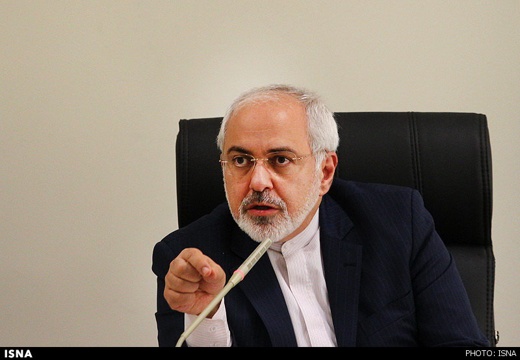
Zarif-Iran FM

Iran’s foreign minister says any measure he takes comes with a price for him. The head of Iran’s diplomacy machine weighs in on what the opponents of the Joint Comprehensive Plan of Action (JCPOA) have done to counter his efforts at home, and says that the Worriers [opponents of the president’s policy of moderation and interaction] have one main objective: “to attack the diplomatic team of the Rouhani administration”.

For the Worriers simply “attacking” is important; and the content of JCPOA, the stroll with the US secretary of state in a Geneva street, or the unplanned handshake with US President Barack Obama on the sidelines of the UN General Assembly are merely what they need to use as a pretext to target the most powerful part of the eleventh government: the Foreign Ministry and the diplomat at its helm.

Mohammad Javad Zarif has had different firsts during his two years in office, among them the appointment of the first spokeswoman of the Foreign Ministry and appointment of the Islamic Republic of Iran’s first female ambassador. Zarif has appeared in parliament to defend his performance more than all of his predecessors in post-Revolution Iran. He has held more than 50 meetings with his US counterpart.

Conducting an interview with Zarif is ironically an easy, tough task. It is easy since there are multiple questions – thanks to a barrage of criticism unleashed by his opponents – to ask him about, and it is tough since his response to a seemingly simple question may play into the hands of his opponents to launch a torrent of fresh attacks against the foreign minister.

Sharq daily’s Maryam Yousefi was given face time with the foreign minister on the day he was expected to induct the new spokesman of his ministry. Her questions covered a wide range of issues including the Worriers, their threats and JCPOA and Zarif answered all of them despite his busy schedule. The following is PART TWO of the full translation of what Zarif said in the interview (PART ONE):


Have measures of some countries like Turkey or the Saudi-led war in Yemen helped Iran secure more clout and bargaining power?

Yes, at the same time, some regional countries have undermined their roles in the region by adopting wrong policies. All these factors have contributed to Iran playing a more powerful role in the region. Of course, Iran’s role is intended to bring security to the region and reassure our neighbors that they should not be worried about Iran. Those who seek to stoke war and dispute in the region should be concerned, because they cannot pursue such a policy anymore.

If regional countries are in pursuit of peaceful relations and want to live in peace and avoid interfering in other countries’ affairs, we tell them that Iran’s policy is completely in keeping with that goal.

Let’s go back to JCPOA and the debates surrounding it at home. A JCPOA Oversight Commission is to be formed soon at the Supreme National Security Council. Its make-up and how it is supposed to be set up have provided a new excuse to the Worries [President Rouhani’s opponents] as far as the implementation of JCPOA is concerned. Has the Foreign Ministry proposed a list of commission members?

It’s for the Supreme National Security Council to make a decision in this regard. As a member, the Foreign Ministry will contribute to the decision-making process.

Under the Supreme Leader’s guidelines and decisions by parliament and the Supreme National Security Council, the Foreign Ministry has a duty to follow up on JCPOA. The negotiations that my colleagues and I held in Vienna were aimed at setting the stage for the implementation of JCPOA and we will forge ahead with our efforts to that end.

Does it mean that as the head of the nuclear negotiating team you have not proposed anyone as member of the JCPOA Oversight Commission?

No, I have made no suggestions about the composition of the commission. It’s a decision that the Supreme National Security Council must make and we will contribute to the process. We have not said anything about who should be named to the commission.

The number of threats against you by your opponents from across the political spectrum is on the rise. For example, you have been threatened to be impeached, buried in cement, or even be tried. There are even reports that you have been threatened with assassination. Is that true?

Maybe someone else has heard this threat, I haven’t. I think it’s unlikely of our friends and those who are critical of the government’s policies to get involved in such measures.

What was said in parliament over the past weeks was natural. We hear such remarks again and again. There have been some threats, but an assassination threat is unlikely to have been made.

How far do you think the opponents of JCPOA will go?

In a society where there are differences of opinion, disagreement is quite natural. We view the Supreme Leader’s word as final and we think that after he presented a framework for the implementation of JCPOA and approved the agreement in principle, all focus should be centered on its implementation to make the most of the deal.

Time and again, I have said that debating the strengths and weaknesses of JCPOA is history. [On a scale of 0-100], we might give a score of 5 or 95 to the nuclear deal. Whatever score we give to JCPOA, either 5 or 95, it’s time to tap into its positive aspects. Otherwise, the score of JCPOA will be zero, in other words, we will get zero, because the outcome will be zilch.

Regardless of factional leanings and interests, JCPOA is a national and not a factional matter; it belongs to the Leader and the whole nation, and it has to be used to advance our national interests.

The resistance-based economy relies on domestic potential and interacts with the rest of the world. In its implementation, our foreign policy can help people overcome their pocketbook issues. JCPOA creates such an atmosphere and we all need to make efforts to that end.

ISIS threats to attack international targets should be taken seriously

paris

An Iranian expert in international relations says that ISIS threats to launch attacks on international targets should be taken seriously.

Ali Bigdeli, who is an expert on US and European affairs, further said that the first thing that should be done in the fight against ISIS is to eliminate the institutes which meet the terror grouping’s economic needs. “These institutes are largely based in the Persian Gulf sheikhdoms. Backed by the West, these institutes have created ISIS in the region simply to counter the influence of Shiism.”

On November 15, Shafaqna, the Shia News Agency, published an interview with Bigdeli on recent terrorist attacks in the world and ISIS threats that its next targets will be Rome, London and Washington. The following is the translation of part of his remarks in the interview:

Multiple terror attacks were unleashed in Paris a day before international talks were held in Vienna on Syria. And a summit of world leaders at G20 in Istanbul will be held in a few days’ time. It was a while ago that ISIS addressed France in a statement warning that if Paris ratcheted up its involvement in the anti-ISIS coalition, the terror group would stage a 9/11-style attack in France.

Threats by ISIS – that London, Rome and Washington are next in line to be targeted – should be taken seriously.

What is certain is the fact that ISIS is trying to flex its muscle to terrorize other countries, and prompt people in those countries to pile pressure on their governments to leave the anti-ISIS coalition.

[…] France seems almost unlikely to announce that it will no longer get involved in the Middle Eastern issues because such a decision constitutes a chink in its armor. The world, [especially] the West, is facing a phenomenon it has helped create, but today they [a reference to Western countries] are suffering its consequences. For Westerners, this phenomenon [ISIS] has spiraled out of control. […]

ISIS has proved in practice that it can carry out attacks beyond the borders of its self-proclaimed caliphate. Prior to this, ISIS had released a statement addressing [French President] Francois Hollande [over his country’s engagement in the anti-ISIS coalition].

A few days ago, France announced that it would provide more air support [to the anti-ISIS coalition] in Syria and Iraq. The Paris attacks were a response to France’s recent decision. If Rome, London and Washington are the terror group’s next targets, officials [in Italy, Britain and the US] need to beef up security […].

All countries which have been involved in efforts which helped form this ominous phenomenon [ISIS] should cooperate [in the fight against the notorious terror grouping]. ISIS has terrorized the whole world and it is natural for people to live in constant fear. […]

ISIS has become an international institute with its geographical reach going beyond Iraq and Syria. Now a global network, ISIS is growing militarily, politically and geographically. This has rendered the battle against the terror group all the more difficult.

ISIS is transforming from a guerrilla group into a political institute which issues passports, ID cards, and stamps, establishes trade contacts [with other nations], and has [diplomatic] missions in other countries. To take on ISIS, the institutes supplying finances to the terror group should be eliminated first. Sheikhdoms in the Persian Gulf are home to these ISIS-supporting institutes which have been created to counterbalance the Shiite influence in the region. ISIS has now turned into a creeping power which has created hardships for nations, especially the Western countries.

MP: Boycotting the press was an auspicious phenomenon

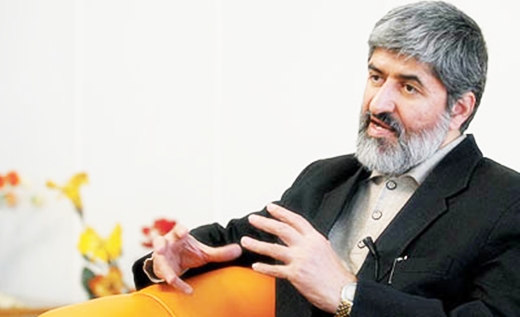
Motahari

A Tehran MP has welcomed as an auspicious phenomenon the boycott by certain principlist media of the 21st edition of the Press and News Agencies Exhibition.

In an opinion piece, Ali Motahari wrote that although such a boycott was unprecedented, it should be viewed as a blessing. Fararu.com on November 14 published Motahari’s analytical piece on boycotting the press event. The following is the translation of the piece in its entirety:
Boycotting the press exhibition – by certain publications and news agencies which stick to the principles of the Guardianship of the Islamic Jurist (Velayat-e Faqih) as well as those who always talk about safeguarding the establishment and view any protest as opposition to the core essence of the establishment and even [reject it as an attempt to trigger] regime change – was unprecedented and unnecessary. What they were protesting was not strong enough to warrant a boycott.

Nonetheless, such a boycott was an auspicious phenomenon from one perspective: these individuals who are the pioneers of [obeying] the Leader and protecting the establishment acknowledged that the right to protest has been recognized in the Islamic Republic and that any protest cannot and should not be viewed as a battle against the establishment or an attempt to cause regime change.

Certainly these individuals and groups that have gone into protest mode now realize better [than before] that those who protested the election results back in 2009 were not aiming to bring about regime change. [The individuals and groups can now understand that] the charges against them have no foundation. These charges are merely rooted in the negative thought that basically “protest” does not make any sense in the Islamic Republic and that any protest amounts to opposition to the establishment and the principle of the Guardianship of the Islamic Jurist!

Now that the followers of the Leader have taken the lead in protest at part of the establishment’s performance, they need to see that the critics and opponents are entitled to greater latitude as far as protests and expression of opinions are concerned.

If the reformist rivals of these publications and news agencies had been behind the boycott, it is unclear what labels they would have attached to them. Probably they would have been accused of opposition to the establishment, exhilarating the enemy and carrying out the orders of foreigners. And some may have been taken into custody.

Anyway, the decision to boycott should be described as an auspicious boycott, a boycott which is perhaps a turning point in changing the approach of certain principlists toward critique and protest and in softening the tough policies on critics and protesters, including ending the strict treatment of the individuals who were arrested following the post-election riots in 2009 [a reference to Mehdi Karroubi and Mir-Hossein Mousavi, two presidential candidates who were placed under house arrest for disputing the election results and stirring unrest in the country].


Note: Fars, one of the agencies that boycotted the event, has since said the decision by some principlist media to stay away from the Press and News Agencies Exhibition has been merely guild-related and drawing an analogy between the boycott and what unfolded in the wake of the 2009 presidential elections is illogical.

A look at Iranian newspaper front pages on Nov. 16

Iranian Newspapers Headlines

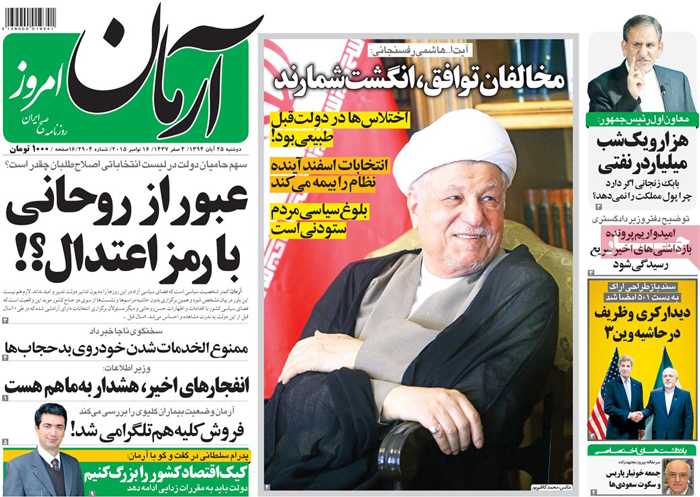
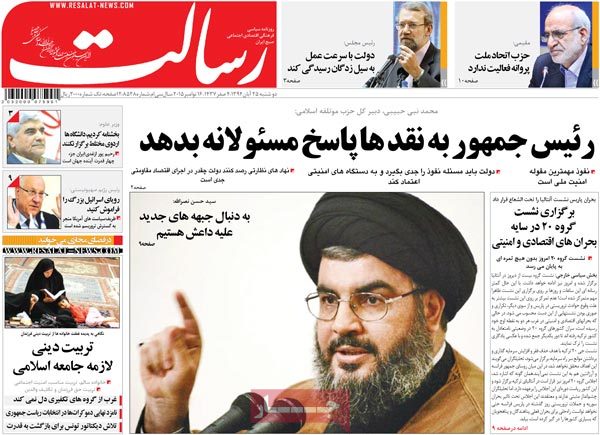
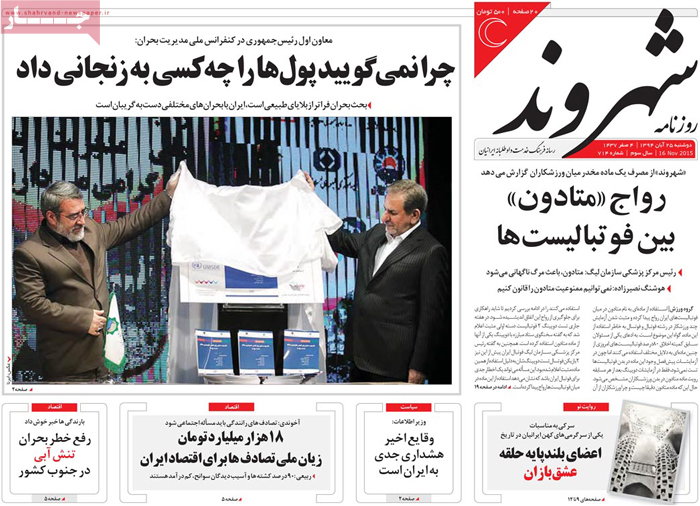
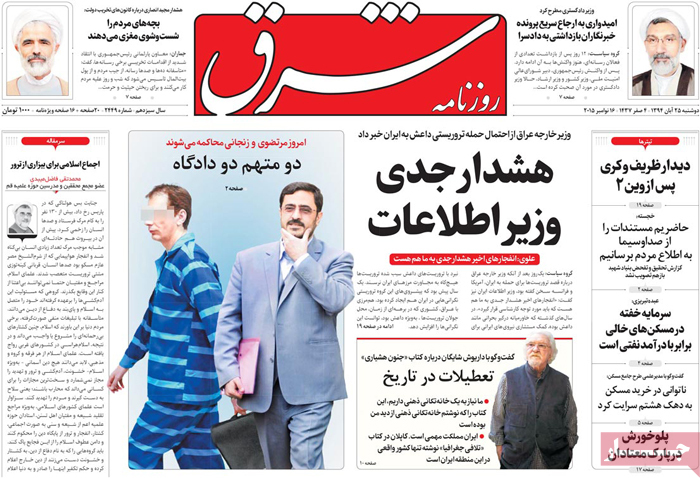
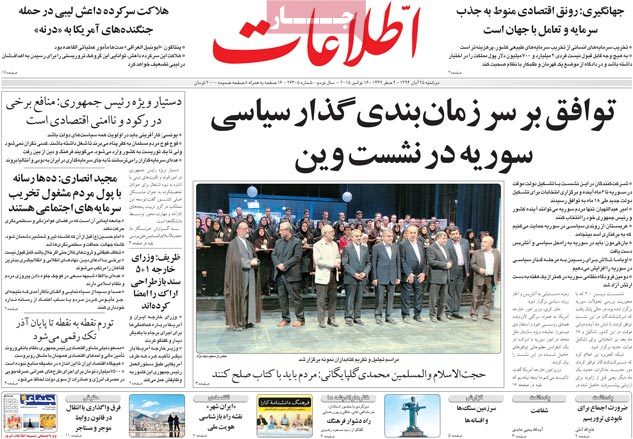
The comments of the first vice-president about Babak Zanjani and those of the intelligence minister about a spate of terrorist attacks around the world and the message those attacks send to Iran dominated the front pages of Iranian newspapers on Monday.


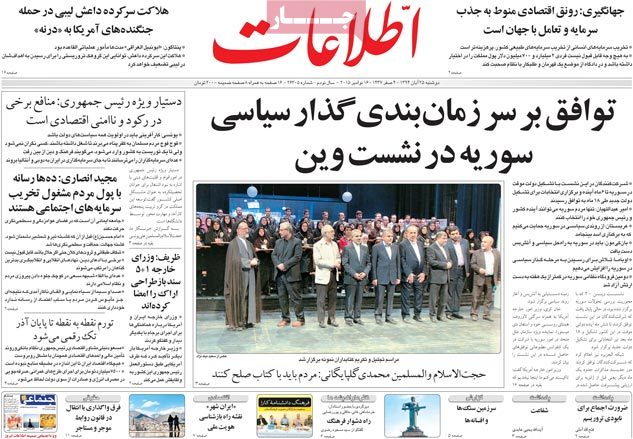
Ettela’at: The Vienna talks have produced a timetable for political transition in Syria.

It came as a second military airport was freed by the Syrian army in less than a week.


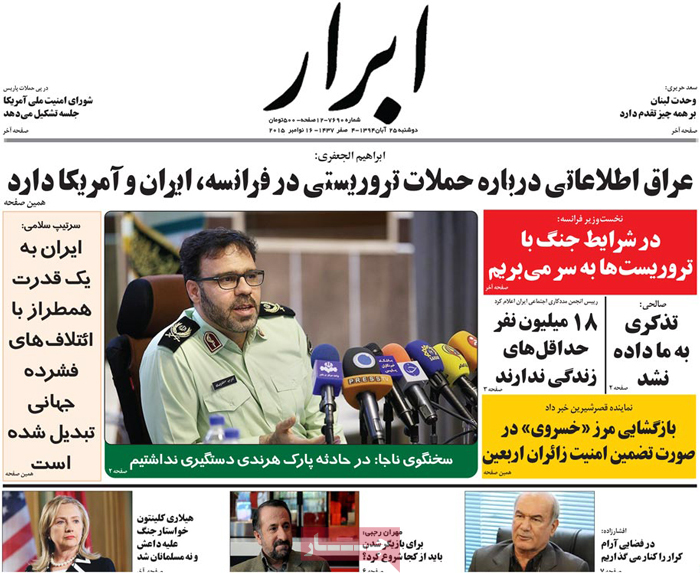
Abrar: The Iraqi foreign minister has said that Baghdad has intelligence about terrorist attacks in France, Iran and the US.


A look at Iranian newspaper front pages on Nov. 16


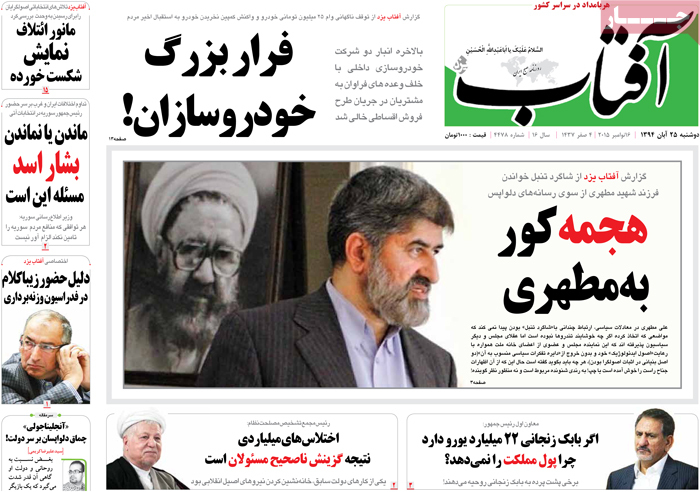
Aftab-e Yazd: The great escape of automakers!

Despite the failure of the two local carmakers to keep their end of the bargain during the sale on installment of their products, their storage facilities have been emptied.


A look at Iranian newspaper front pages on Nov. 16


Arman-e Emrooz: The cars whose occupants are caught flouting the Islamic dress code will be denied [municipal] services, said a spokesman for the police.


A look at Iranian newspaper front pages on Nov. 16


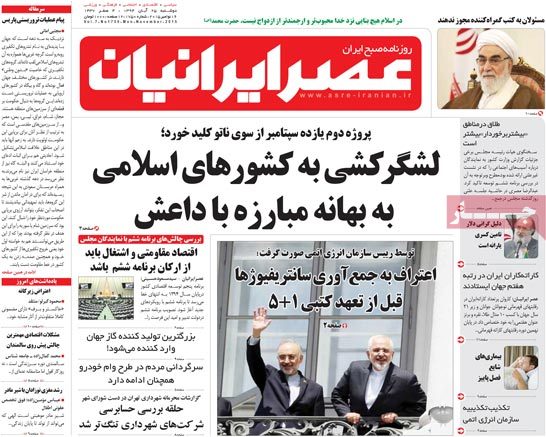
Asr-e Iranian: The director of the Atomic Energy Organization has admitted to removal of centrifuges before written guarantees were secured from P5+1.


A look at Iranian newspaper front pages on Nov. 16


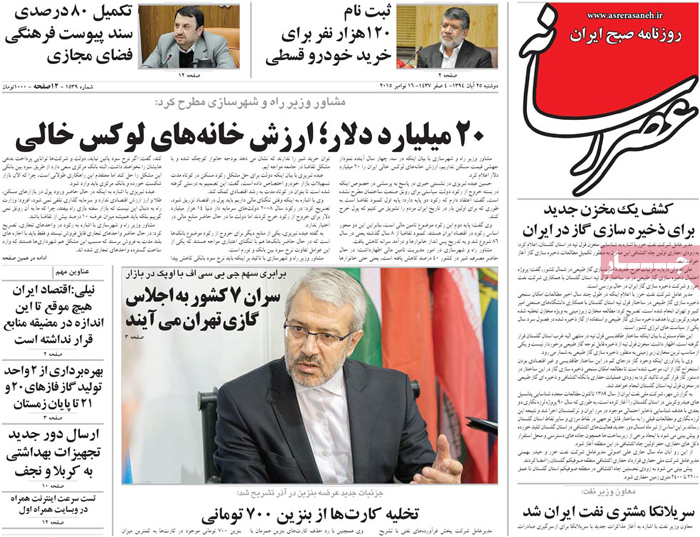
Asr-e Rasaneh: The value of luxury houses and apartments with no occupants in the country runs into $ 20b.


A look at Iranian newspaper front pages on Nov. 16


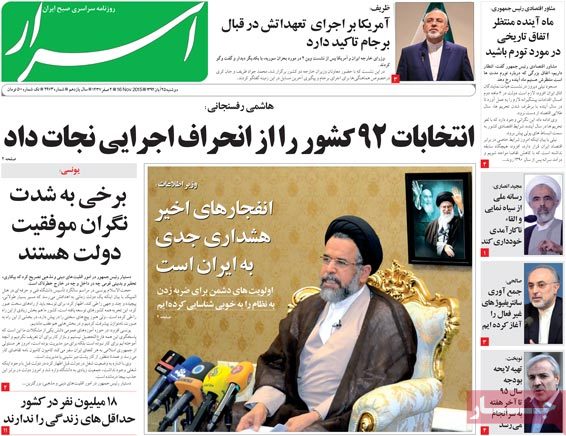
Asrar: The director of the Atomic Energy Organization of Iran has said that removal of idle centrifuges has started.


A look at Iranian newspaper front pages on Nov. 16


Ebtekar: Turnout in upcoming elections will insure the establishment, said Chairman of the Expediency Council Ayatollah Akbar Hashemi Rafsanjani.


A look at Iranian newspaper front pages on Nov. 16


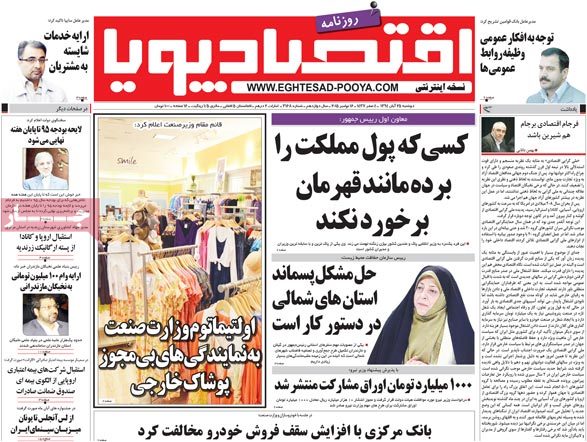
Eghtesad-e Pooya: Settling the problems facing waste management in northern provinces is on the agenda, Director of the Environment Protection Organization Masoumeh Ebtekar said.


A look at Iranian newspaper front pages on Nov. 16


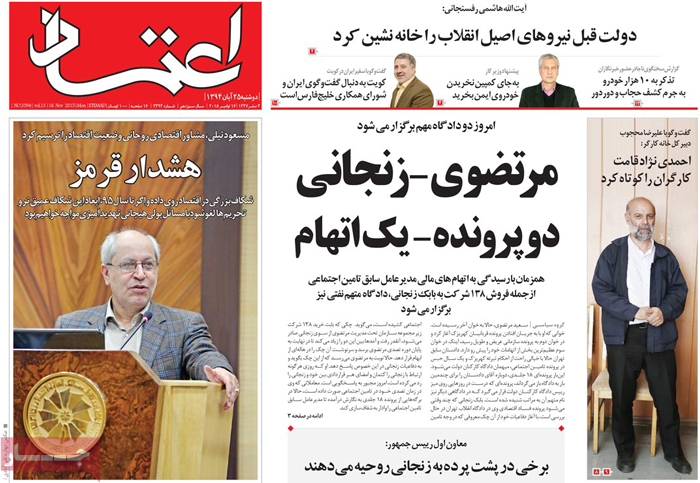
Etemad: Two important hearings are held today: Mortazavi and Zanjani, two cases involving the same charge: [corruption].


A look at Iranian newspaper front pages on Nov. 16


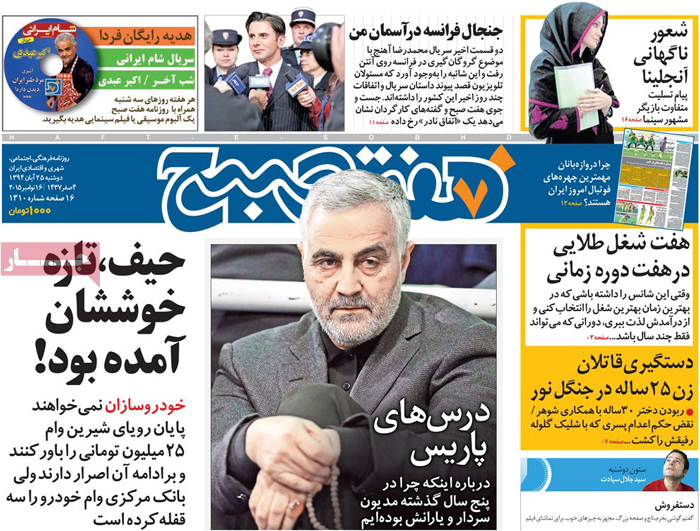
Haft-e Sobh: Lessons from Paris

Why have we been indebted to the general [a reference to Major General Ghasem Soleimani] and his men over the past five years?


A look at Iranian newspaper front pages on Nov. 16


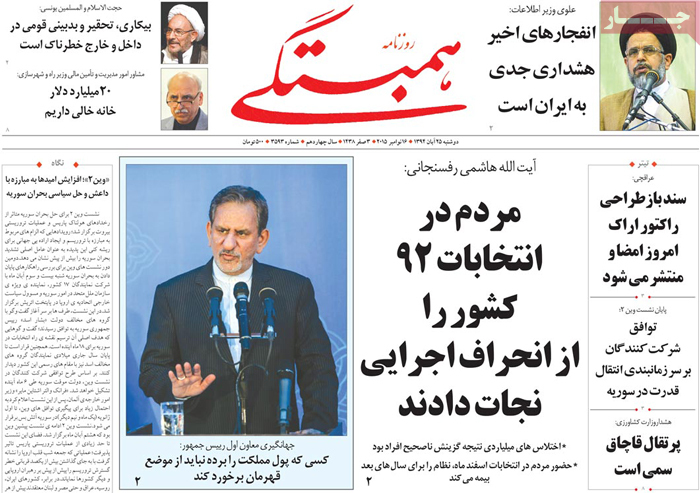
Hambastegi: The recent blasts were a serious warning to Iran, said the intelligence minister.


A look at Iranian newspaper front pages on Nov. 16


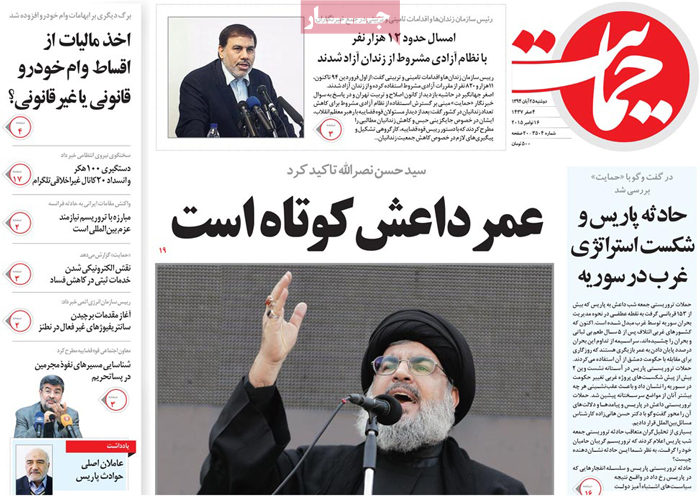
Hemayat: Police have apprehended 100 hackers and blocked 20 immoral Telegram [a very popular messaging app] channels.


A look at Iranian newspaper front pages on Nov. 16


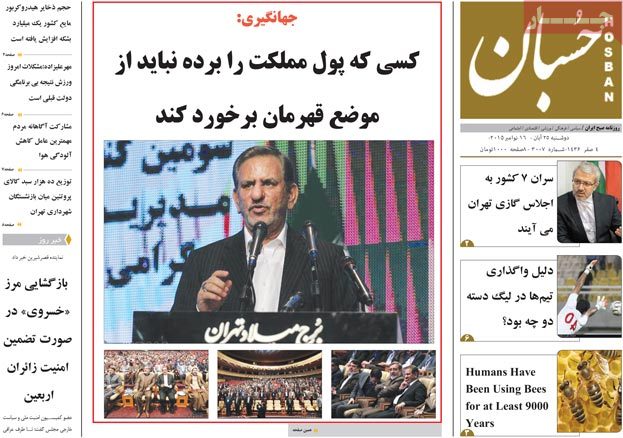
Hosban: Seven world leaders will travel to Iran to attend a summit of Gas Exporting Countries Forum.


A look at Iranian newspaper front pages on Nov. 16


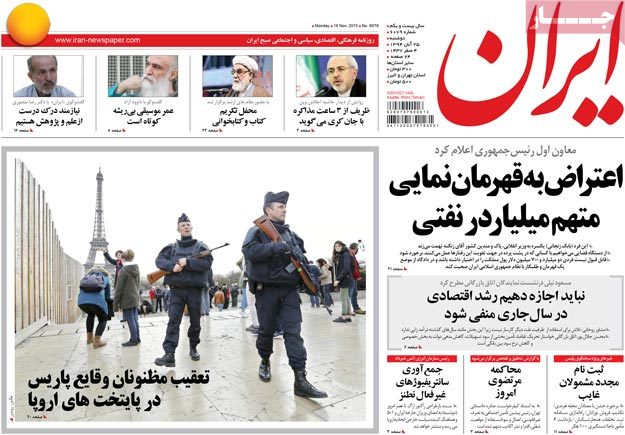
Iran: The first vice-president has protested the heroic gestures of Babak Zanjani [the young billionaire on trial for corruption] in court.


A look at Iranian newspaper front pages on Nov. 16


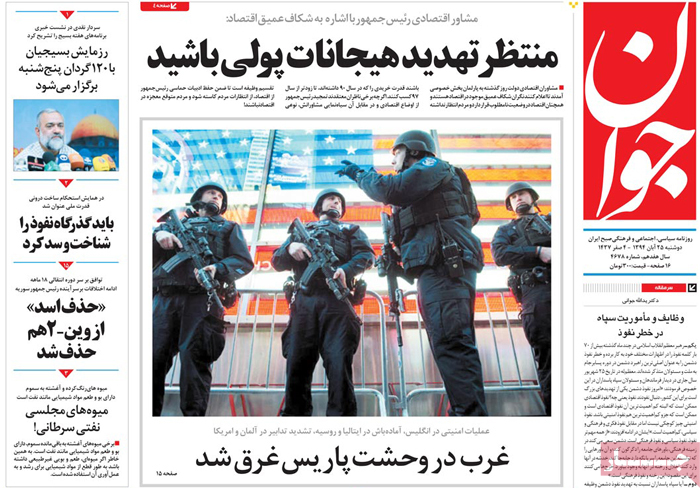
Javan: The commander of the Basij force has said that maneuvers involving 120 battalions will be held on Thursday.

Javan: Be on the lookout for the threat monetary excitements may cause, said an economic advisor to the president as he recalled the wide economic gaps in the country.


A look at Iranian newspaper front pages on Nov. 16


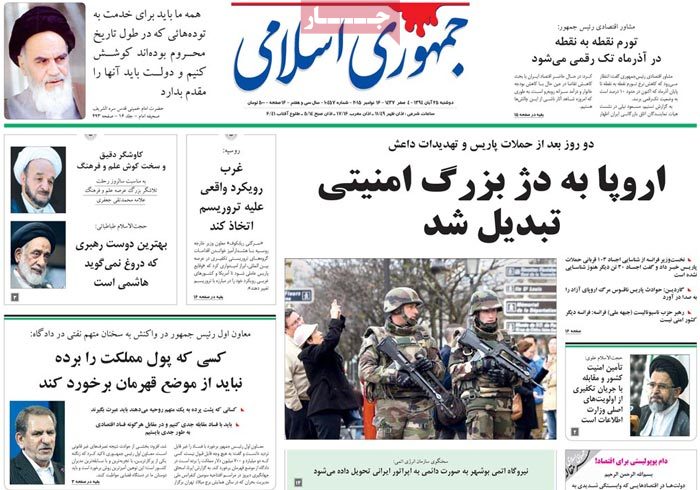
Jomhouri Islami: Two days after terrorist attacks in Paris and new threats by IS, Europe has turned into a big security fortress.


A look at Iranian newspaper front pages on Nov. 16


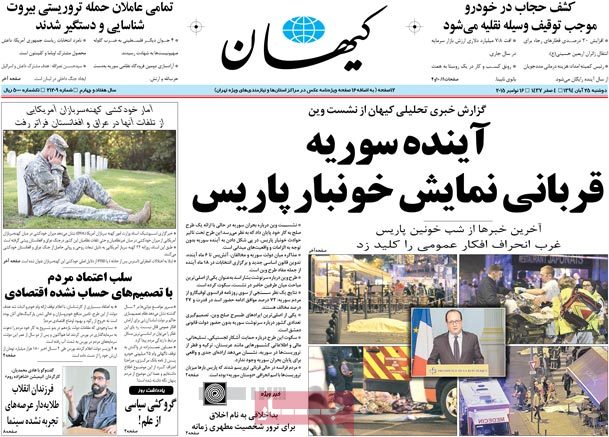
Kayhan: All those behind terrorist attacks in Beirut have been identified and arrested.


A look at Iranian newspaper front pages on Nov. 16


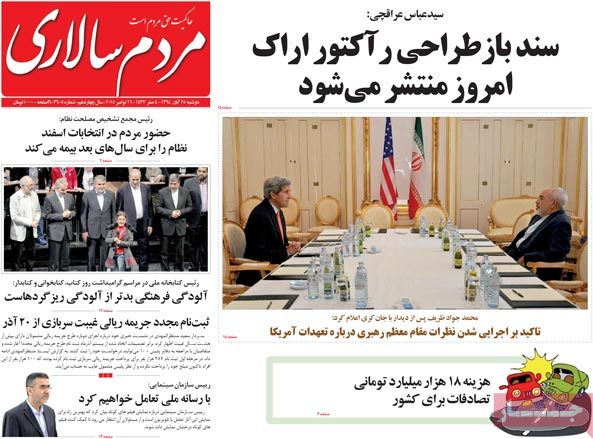
Mardomsalari: After a meeting with John Kerry, Foreign Minister Zarif said that the views of the Supreme Leader will be complied with in the implementation of the Joint Comprehensive Plan of Action.


A look at Iranian newspaper front pages on Nov. 16


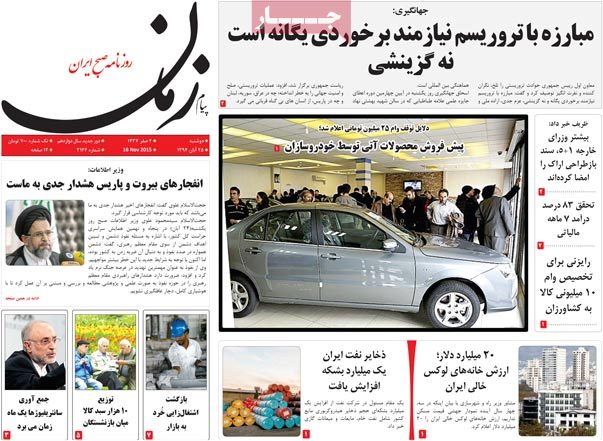
Payam-e Zaman: Iran’s oil reserves are up by 1 billion barrels.


A look at Iranian newspaper front pages on Nov. 16


Resalat: The parliament speaker has urged government to rush aid to those affected by recent flooding.


A look at Iranian newspaper front pages on Nov. 16


Shahrvand: Road accidents cost the national economy $ 6b, said the minister of roads and urban development.


A look at Iranian newspaper front pages on Nov. 16


Sharq: The justice minister has expressed hope the cases of reporters who have recently been arrested will soon land on the prosecutor’s desk.


A look at Iranian newspaper front pages on Nov. 16


Highlights of Ettela’at newspaper on Nov. 16

ettlaat16

 The Vienna talks have produced a timetable for political transition in Syria.

It came as a second military airport was freed by the Syrian army in less than a week.

 The country’s economic boom hinges on inflow of capital and interaction with the rest of the world, said the first vice-president.

Eshagh Jahangiri further said that it is unacceptable to see an individual siphon off $ 2.7b in public funds and then talk in an overbearing, heroic fashion in a court of law.

 An IS leader in Libya has been killed in a strike by US fighter jets against Derna.

The Pentagon says Abu Nabil al Anbari was once an Alqaeda operational commander.

 Recession and economic insecurity serve the interests of some individuals, said Ali Younesi, a special advisor to President Rouhani.

He further said creation of jobs should be the priority policy of the government.

 Scores of media outlets are using public funds to chip away at social assets, the vice-president for parliamentary affairs said.

Majid Ansari further said some are hiding behind religion, revolutionary institutions and revolutionary fervor to commit the worst sins.

 Foreign Minister Zarif has said that the foreign ministers of P5+1 have signed a document on the reconfiguration of Arak’s reactor.

It came after Zarif and his US counterpart held talks in Vienna to make the necessary coordination for the implementation of the Joint Comprehensive Plan of Action.

 The point-to-point inflation rate will slip into the single digits next month.

Masoud Nili, an economic advisor to the president, said the banking system and provision of finances to businesses are still facing problems.

Bushehr power plant to be handed to Iranian operator permanently: Official

Kamalvandi

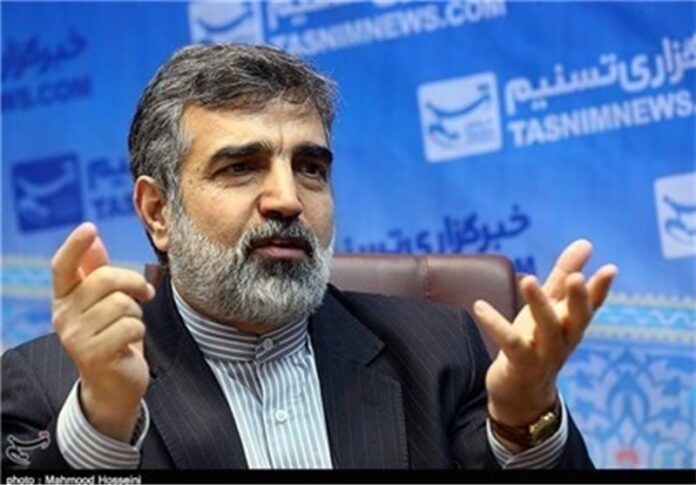
Spokesman for the Atomic Energy Organization of Iran (AEOI) Behrouz Kamalvandi announced that Russia plans to permanently hand over the Bushehr nuclear power plant to its Iranian operator in the coming months.

The nuclear power plant will be fully delivered to the Iranian side by the Russian state company Rosatom by the end of the current Iranian year (March 19, 2016), Kamalvandi said on Saturday.

“Since two years ago, works (in the nuclear facility) have been done by the Iranian operator and the Russians have only supervised the activities of the Iranian experts,” he noted.

He further pointed to the recent meetings between Director of the Atomic Energy Organization of Iran (AEOI) Ali Akbar Salehi and Deputy CEO of Rosatom Nikolay Spassky, saying the talks have had positive outcomes.

In the negotiations with the Russian officials, the latest measures on mutual cooperation between the two countries within the framework of the Joint Comprehensive Plan of Action (JCPOA) were also discussed, Kamalvandi said.

Iran’s only nuclear power plant in Bushehr, which produces 1,000 megawatts of electricity, became officially operational and was connected to Iran’s national grid in September 2011.

The Russian-Iranian agreement on the civilian use of nuclear energy, followed by a deal to construct Iran’s first nuclear power plant, dates back to 1992.

In 2014, Iran and Russia reached an agreement under which the latter is to build two new nuclear reactors on the Bushehr site, starting in the fall of 2015.

Iran nixed Assad ouster clause in Vienna: Deputy FM

Hossein Amir-Abdollahian

Iran says it opposed the inclusion of a clause that would have asked for the removal of Syria’s President Bashar al-Assad from power in the statement that was issued following recent talks in Vienna on the Syrian conflict.

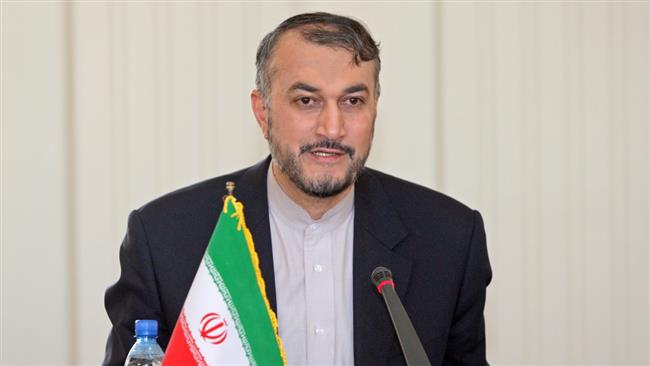
Iranian Deputy Foreign Minister for Arab and African Affairs Hossein Amir-Abdollahian, who attended the Saturday talks in the Austrian capital as a member of the Iranian delegation, said on Sunday that some foreign ministers insisted during the negotiations that the Syrian head of state be ousted from his position.

“The Islamic Republic of Iran did not allow this issue to be included in the final statement,” he said, adding, “We emphasized that only the people of Syria have the right to decide on this matter.”

Since March 2011, Syria has been beset by foreign-backed militancy, which has so far claimed the lives of over 250,000 people and displaced millions of others.

The Vienna talks were a continuation of October 30 negotiations in the Austrian capital, which had been attended by representatives from 17 countries, including Iran, as well as envoys from the United Nations (UN) and the European Union (EU).

The second round of the Vienna talks was attended by senior representatives from 17 countries, the UN, the EU and the Arab League.

According to the joint statement released by the UN following the second round, the participants agreed that Syria should have a transitional government in six months and hold elections in 18 months.

Amir-Abdollahian said, “Some participants insisted that if the envisaged trend goes well in a six-month period, Bashar Assad should not contest the upcoming elections,” which the Iranian official said “was an unprincipled position.”

“In response, we stressed unequivocally that only Assad himself can decide on his participation or non-participation in the elections and [that] it is only the people of Syria who can say whether they will vote for him or not.”

Ali Haidar, the Syrian minister of national reconciliation, echoed the remarks by Amir-Abdollahian, saying that no one is allowed to devise a timeframe on any Syria peace plan and that only the Syrians should decide the mechanisms to achieve peace.

“Syrians are solely responsible for making the changes to techniques and structure. Nobody is allowed to put timetables, even if they were friends or enemies. They are not allowed to say what should be changed in Syria in the structure and techniques,” he said.

“Vienna and any other meetings are requested to do one thing which is creating the international atmosphere for the dialog of Syrians among each other and any other thing is the Syrians’ responsibility.”

France, Lebanon terror raids alert to Iran, too: Intelligence minister

Seyed-Mahmoud-Alavi

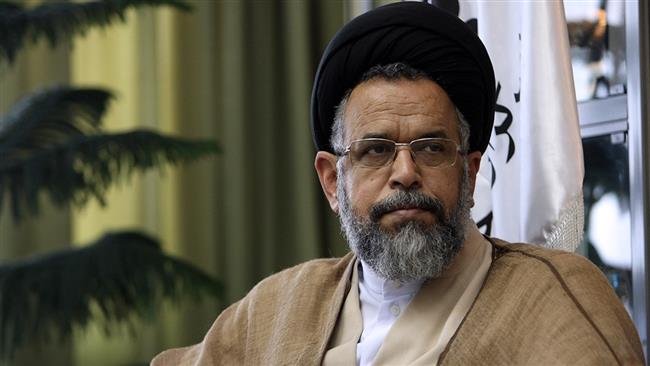
Iran’s Intelligence Minister Mahmoud Alavi says the recent terrorist attacks in France and Lebanon are also an alert to the Islamic Republic which should exercise more vigilance.

Referring to the recent deadly blasts in the French and Lebanese capitals, Alavi said, “Of course, the recent blasts are a serious alert to us too and should be subjected to expert attention,” he said on Sunday.

A series of coordinated armed attacks and explosions hit Paris on Friday, killing at least 132 people and injuring some 350 others. On November 12, 44 people were killed and nearly 240 more sustained injuries when two large explosions rocked a security post in Hussaineya Street in the crowded Borj al-Barajneh neighborhood in a southern suburb of Beirut.

The Takfiri terrorist group of Daesh, which has overrun parts of Iraq and Syria and is tyrannizing the population there, has claimed responsibility for the terror strikes in both cities.

The Iranian minister referred to “foreign infiltration” and “Takfiri terrorists” as the most important soft and hard threats against the country respectively.

“The enemy has always been intent on infiltration and dealing a blow to the country. Currently, however, we face more of this threat considering the new circumstances,” he added.

“The main priorities of the Intelligence Ministry,” Alavi said, “are ensuring the country’s security and confronting the Takfiri movement.”

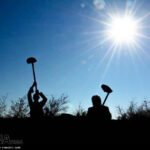
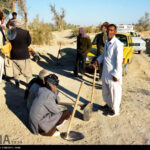
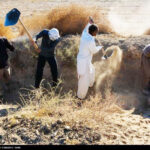
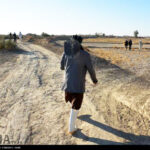
Farmers clearing once brimful water canals (PHOTOS)

2985072-4640642

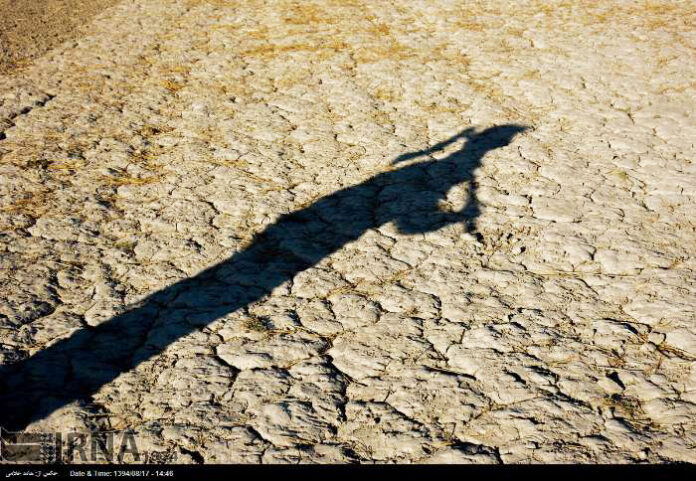
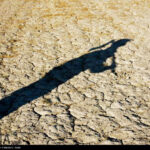
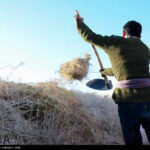
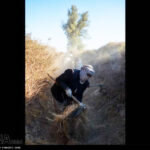
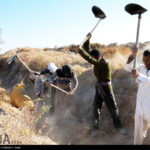
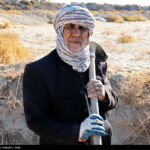
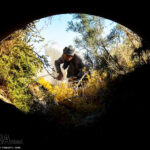
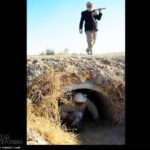
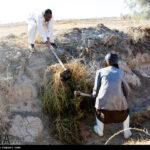
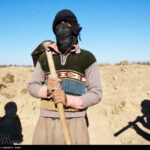
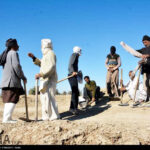
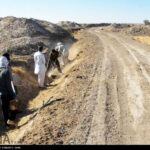
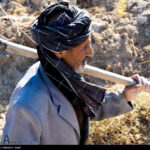
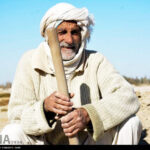
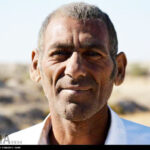
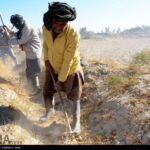
As part of an age-old tradition, farmers in the southeastern Iranian province of Sistan and Baluchestan dredge the bottom of the canal that brings water to their farmland.

The tradition has not drifted into oblivion, the region has been in the grip of an 18-year dry spell though.

The following images have been published by the Islamic Republic News Agency: