Saturday, December 27, 2025
Home Blog Page 4665

Ettela’at managing editor arraigned: Spokesman

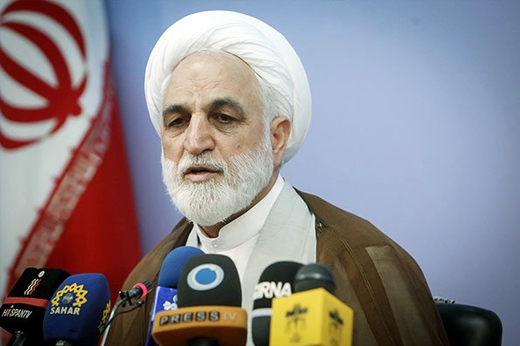
Mohseni Ejei

A recent republication by the Ettela’at daily of an interview former President Mohammad Khatami gave to Lebanon’s As-Safir daily has caused quite a stir on the country’s media stage.

Judiciary Spokesman Gholamhossein Mohseni Ejei dedicated a major part of his news conference on Sunday to the issue. The following is the translation of part of his comments as reported by Vaghaye-e Etefaghiyeh daily on December 14:

Prosecutors at the Special Court for the Clergy summoned [Mahmoud] Doaei twice. The first time, he made a promise [not to release news stories about and images of the former president]. In light of the fact that the daily went ahead with its measures, he was called in once again.

During the second appearance, he was arraigned and released on bail. The case is set to be sent to court for trial. The other day, Doaei made statements in his defense. Prosecutors allege that Doaei has acted against a directive of theirs which is based on a decision of the Supreme National Security Council and that charges should be brought against any person or media outlet that violates the directive.

The decision to bring charges against the managing editor of this daily shows that the ban [on the former president] remains in effect. When the Supreme National Security Council makes a general decision, its secretariat maps it out. The ban [on stories about the former president] comes on a prosecutorial order which has its roots in the decision of the council.

Prosecutors do not issue rulings, they issue judicial orders. As long as the council’s decision remains in place, prosecutors can issue indictments against individuals. And as long as judicial orders remain in place, they are legally binding. Failure to comply with such orders carries punishment.

Iran to Check Possible Breach of JCPOA in US Visa Waiver Bill: Diplomat

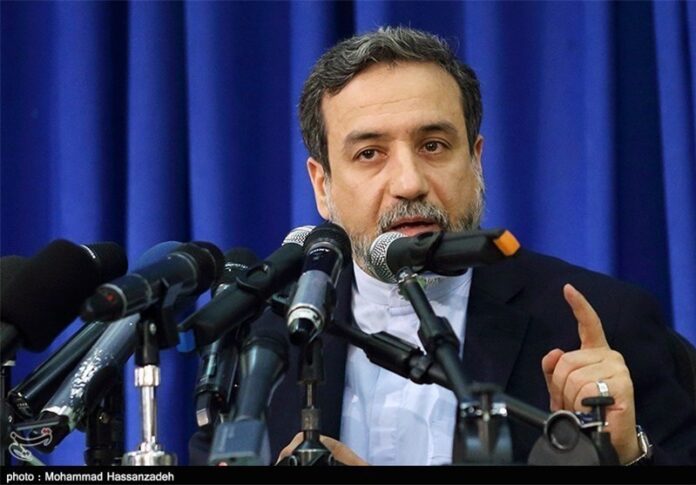
Abbas Araghchi

A senior Iranian foreign ministry official said Tehran would take “action” against Washington if a new bill passed by the US House of Representatives tightening visa-free travel to the US is proved to have breached the July comprehensive nuclear deal between Iran and world powers.

Iran’s Deputy Foreign Minister for Legal and International Affairs Abbas Araghchi said Iran is negotiating with P5+1 (Russia, China, the US, Britain, France and Germany) and with the European Union’s foreign policy coordinator on the recent legislation passed by the US House of Representatives.

According to the bill, which was passed by 407 to 19 on Tuesday, visitors from the 38 “visa waiver” countries will need to obtain a visa to travel to the US if they have been to Syria, Iraq, Iran or Sudan in the past five years.

Araghchi said the bill has “diverse legal aspects” and Iran is examining them.

“If it is proved to be in breach of the Joint Comprehensive Plan of Action (JCPOA), we will take action,” he said.

Araghchi noted, though, that the bill has not been finalized yet.

Citizens of 38 countries, many in the EU, can currently fly to the US without applying for a visa under America’s Visa Waiver Program.

The new legislation initially said those eligible for the waiver program who had travelled to “terrorist hotspots” like Iraq and Syria where the ISIL terrorist group controls territory would need to obtain a US visa.

But the final version included Iran and Sudan to the list of countries.

The bill HR158 means citizens of many EU countries and the rest of the 38 states participating in the program who travel to Iran for pleasure or business will have to obtain a visa should they ever want to enter the US.

The decision comes before implementation of the JCPOA.

The final nuclear deal, known as a big confidence-building step in relations between Iran and the West, is going to terminate all nuclear-related sanctions against Tehran after coming into force.


Iranian Diplomat: No Disagreement between Iran, Russia over Syria

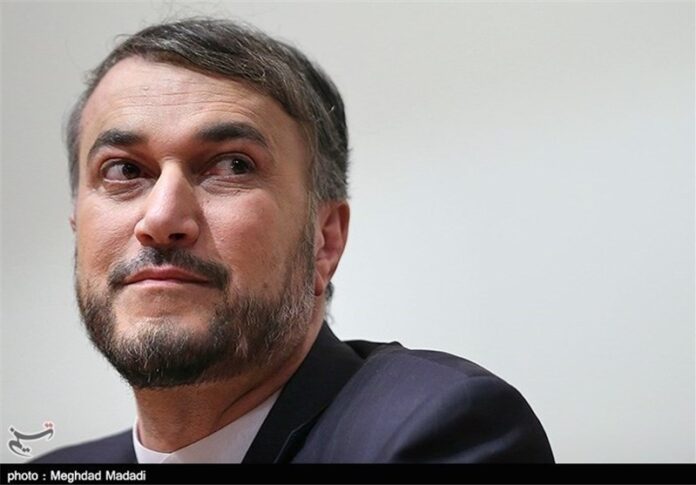
Amir Abdollahian

Iran and Russia have no disagreement over Syria, a senior Iranian foreign ministry official underlined on Sunday.

The comment by Iranian Deputy Foreign Minister for Arab and African Affairs Hossein Amir Abdollahian came in reaction to some media reports on alleged disagreements between Tehran and Moscow over Syria.

Amir Abdollahian said that both Iran and Russia “are seriously helping the Syrian army in fighting against terrorism”.

He also denied claims that Iran is withdrawing its military advisers from Syria, and said, “Iranian military advisers are continuing their counterterrorism measures.”

The Iranian diplomat further described as “positive” Russia’s move against terrorism in Syria which is underway in coordination with the Syrian government.

Syria has been gripped by civil war since March 2011 with Takfiri terrorists from various groups, including Daesh (ISIL), currently controlling parts of it.

According to the United Nations, more than 250,000 people have been killed and one million wounded during the conflict.


A look at Iranian newspaper front pages on Dec. 14

Iranian Newspapers Headlines

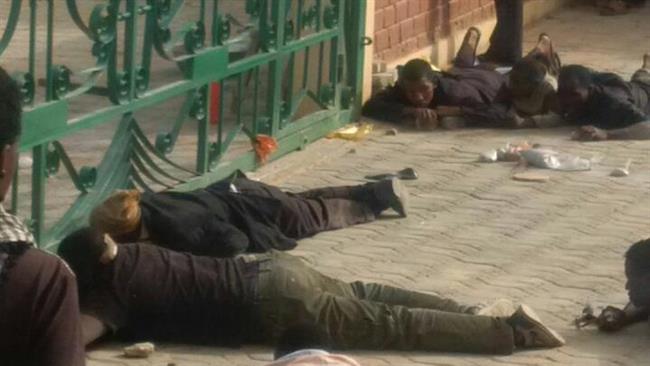
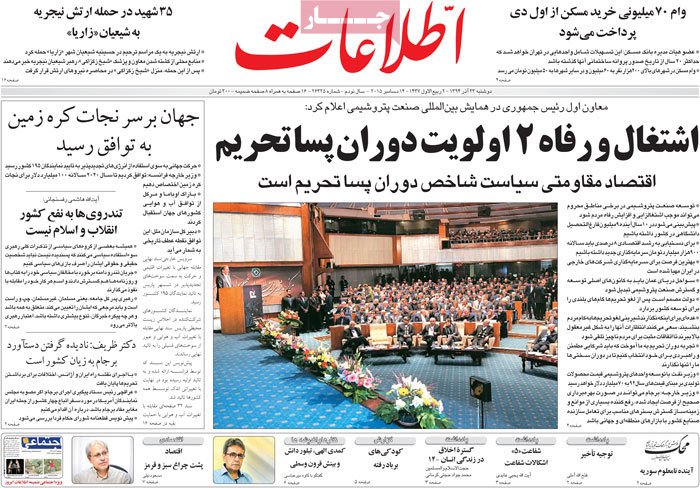
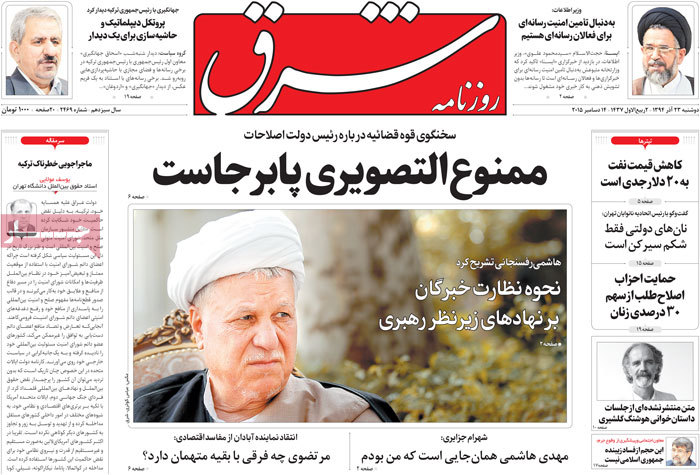
Tehran playing host to a 12th edition of Iran Petrochemical Forum and the wide-ranging comments of the Judiciary spokesman dominated the front pages of Iranian newspapers on Monday. Also on the cover of reformist-leaning dailies were the all-important remarks of the chairman of the Expediency Council about upcoming elections and the Assembly of Experts.   Ettela’at: Employment and welfare will be [the country’s] top priorities in the post-sanctions era, First Vice-President Eshagh Jahangiri told an international petrochemical forum. He further said that the resistance-based economy will be the flagship policy of the post-sanctions era. Ettela’at: As of December 22, home loans totaling around $23,000 will be on offer. Ettela’at: Thirty-five were killed when the Nigerian army staged an attack on a Shiite funeral service in Zaria. Ettela’at: The world agreed to save Planet Earth. The representatives of 195 countries have given a nod to a global march toward renewable energies. Ettela’at: Ayatollah Hashemi Rafsanjani has said that going to extremes won’t serve the interests of the Revolution and Islam. The chairman of the Expediency Council further said that some groups always take political advantages of the warnings of the Supreme Leader whose real and legal reputation should not be used in political gamesmanship. Ettela’at: Foreign Minister Mohammad Javad Zarif said that failure to take note of the achievements of the Joint Comprehensive Plan of Action will harm the country’s interests. He further said that implementation of the Iran-IAEA roadmap has spelled an end to divisions over the removal of sanctions.   A look at Iranian newspaper front pages on Dec. 14  

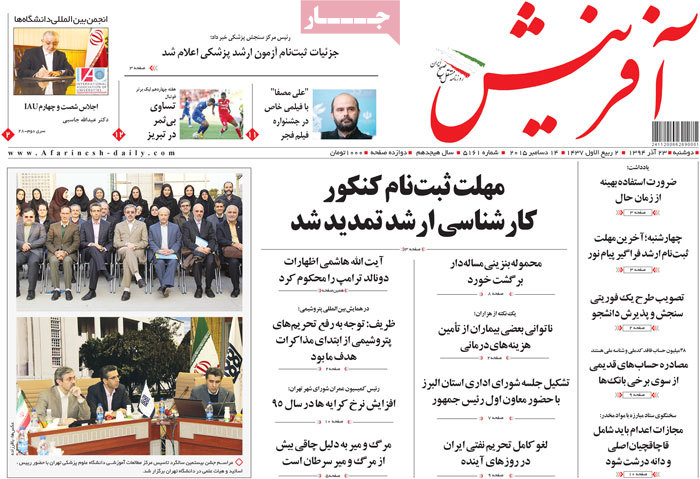
Afarinesh: Ayatollah Hashemi Rafsanjani has denounced the comments of Republican presidential candidate Donald Trump.   A look at Iranian newspaper front pages on Dec. 14

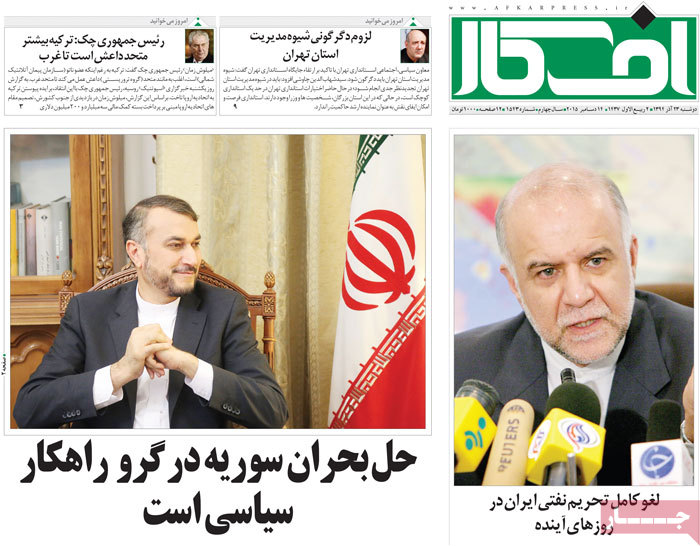
Afkar: The solution to the Syrian crisis lies in a political approach, said an Iranian deputy foreign minister.   A look at Iranian newspaper front pages on Dec. 14

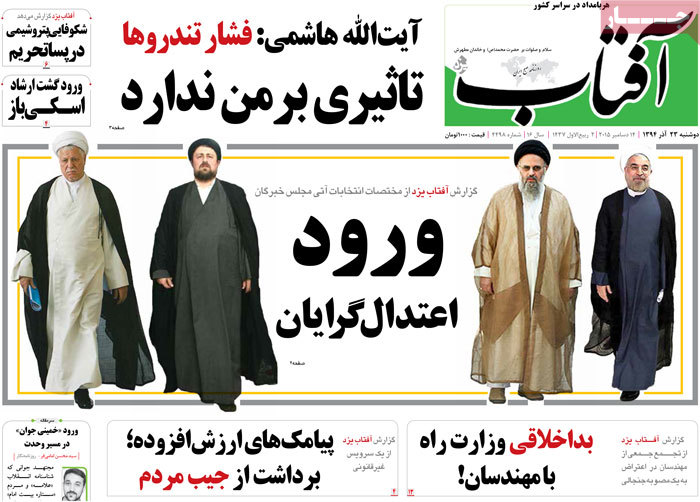
Aftab-e Yazd: Chairman of the Expediency Council Ayatollah Akbar Hashemi Rafsanjani has said that hardliner pressure won’t have an impact on him.   A look at Iranian newspaper front pages on Dec. 14

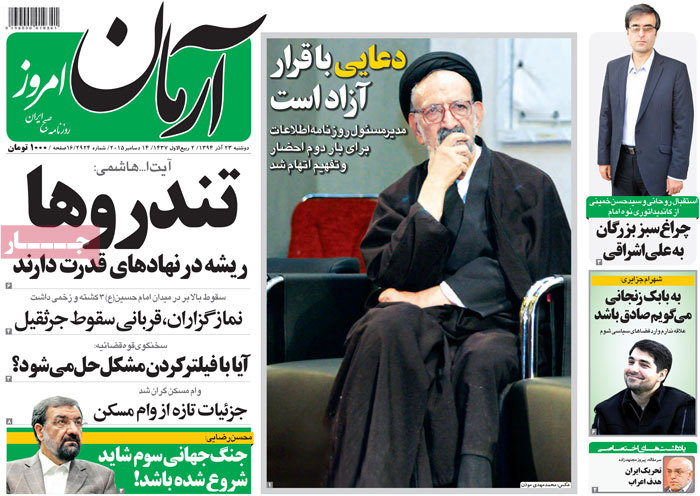
Arman-e Emrooz: The managing editor of Ettela’at daily is out on bail. Seyyed Mahmoud Doaei was summoned to court for a second time and arraigned. [It came after his daily republished an interview former President Mohammad Khatami gave to a Lebanese newspaper. According to the Judiciary, there is a ban on publication of news stories and images of the former reformist president in place in Iran.]   A look at Iranian newspaper front pages on Dec. 14

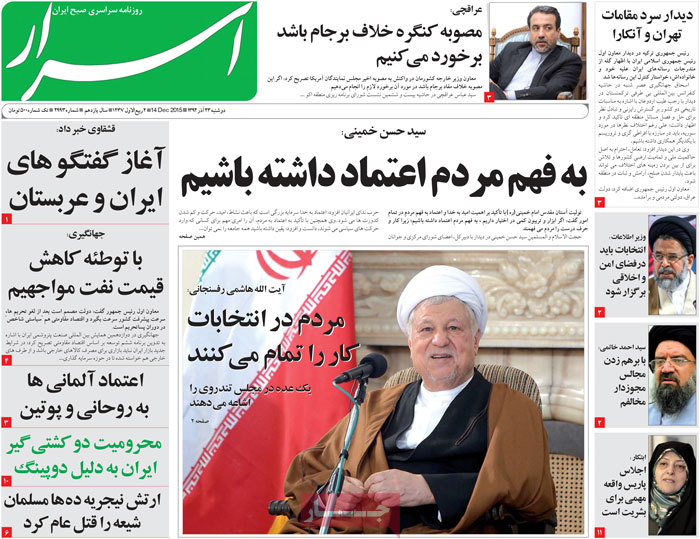
Asrar: The first vice president has said that Iran is facing a plot to keep oil prices low. Asrar: The director of the Environment Protection Organization has hailed the Paris summit on climate change as a “milestone for humanity”. Asrar: Two Iranian wrestlers have been banned from the sport for using performance enhancing drugs.   A look at Iranian newspaper front pages on Dec. 14

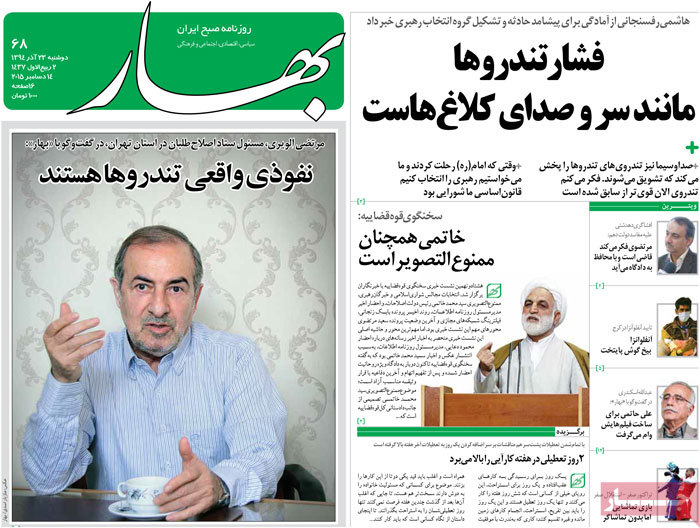
Bahar: The Judiciary spokesman has said that the ban [on publication of news about and images of former President Mohammad Khatami] is still in effect.   A look at Iranian newspaper front pages on Dec. 14

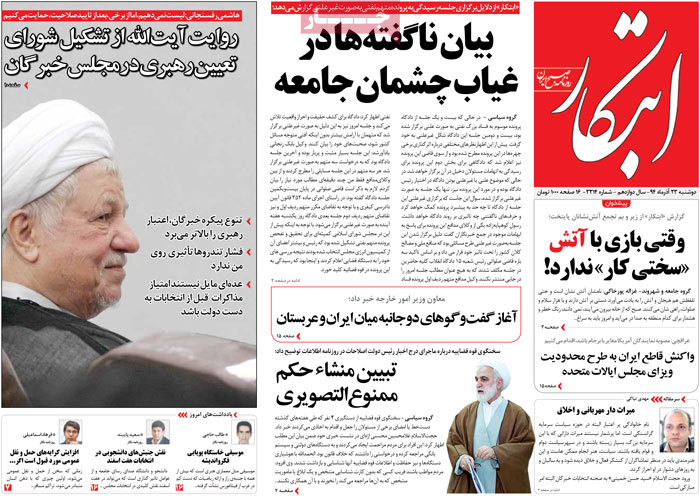
Ebtekar: The deputy foreign minister has reported the start of bilateral talks between Iran and Saudi Arabia. Ebtekar: Abbas Araghchi, a deputy foreign minister, has said that if the recent decision of the US House of Representatives turns out to contradict the provisions of the Joint Comprehensive Plan of Action, Iran will take action. Ebtekar: Ayatollah Rafsanjani has said that a leadership election council has been formed at the Assembly of Experts.   A look at Iranian newspaper front pages on Dec. 14

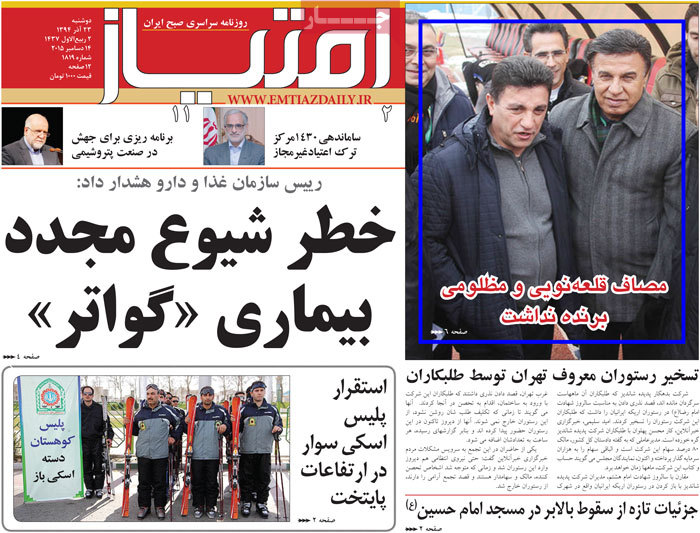
Emtiaz: Police on skis have been deployed to ski slopes of the capital.   A look at Iranian newspaper front pages on Dec. 14

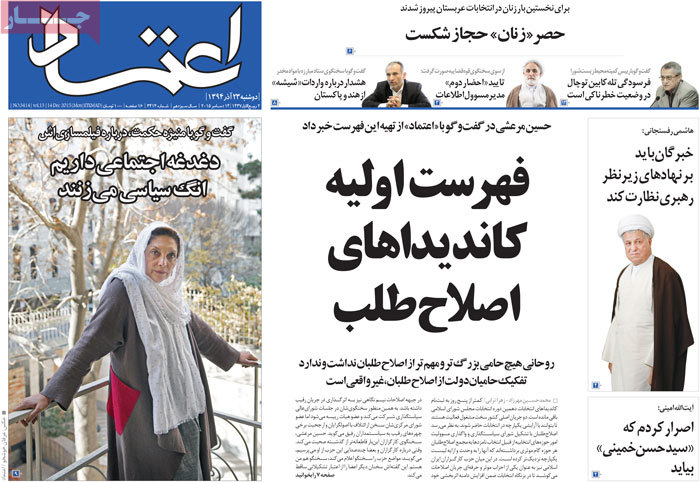
Etemad: Tochal Cable Car [in the mountains to the north of the capital] is in dangerous conditions.   A look at Iranian newspaper front pages on Dec. 14

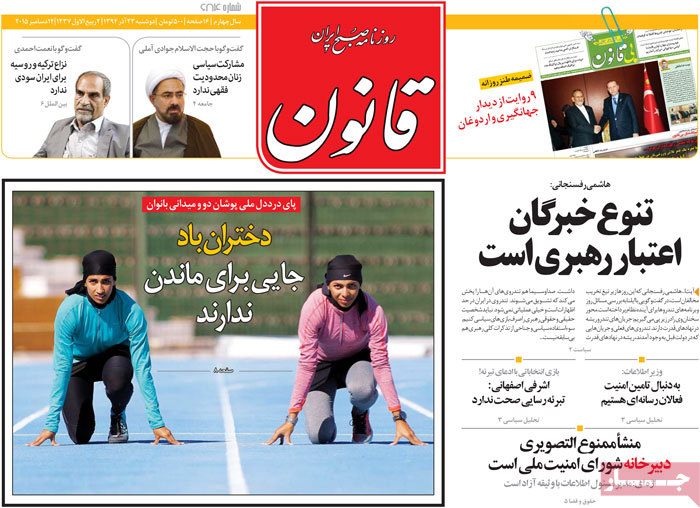
Ghanoon: A broad-based Assembly of Experts will promote the cachet of the leader, said Ayatollah Hashemi Rafsanjani.   A look at Iranian newspaper front pages on Dec. 14

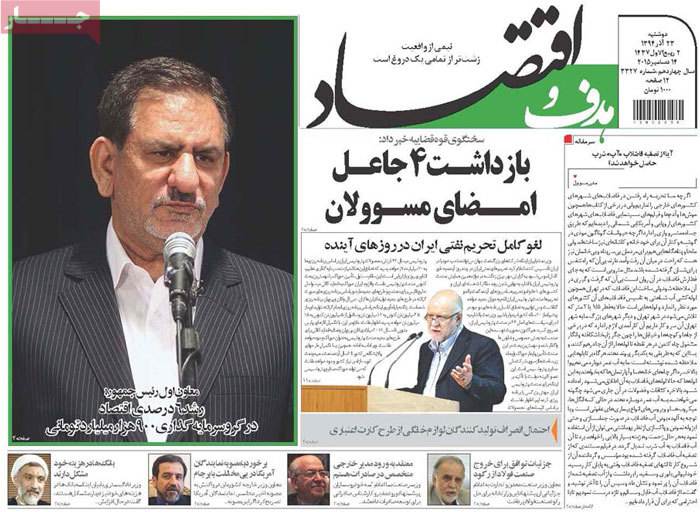
Hadaf va Eghtesad: The Judiciary spokesman has said that four people have been arrested for forging the signature of senior officials.   A look at Iranian newspaper front pages on Dec. 14

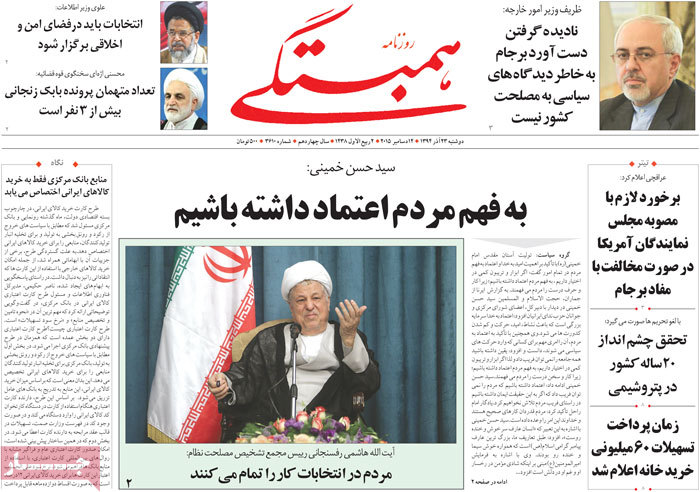
Hambastegi: The number of defendants in the Babak Zanjani corruption trial is more than three, said the Judiciary spokesman.   A look at Iranian newspaper front pages on Dec. 14

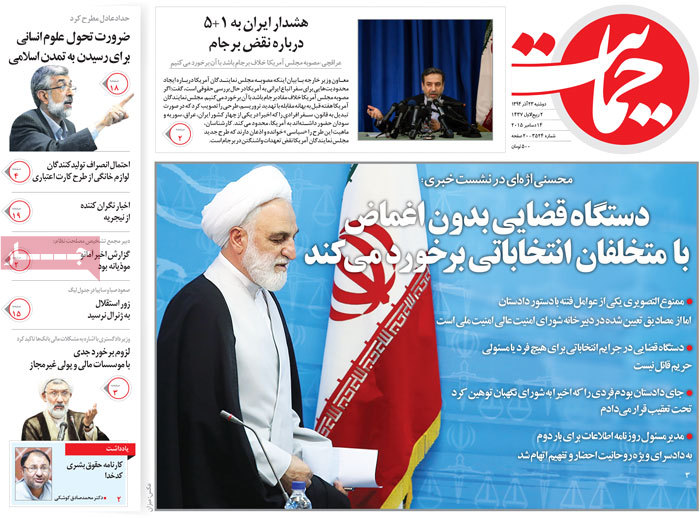
Hemayat: The Judiciary spokesman has said that if he were a prosecutor, he would have brought charges against the individual who recently insulted the Guardian Council. Hemayat: The justice minister has said that unauthorized financial and monetary institutes should be seriously dealt with.   A look at Iranian newspaper front pages on Dec. 14  

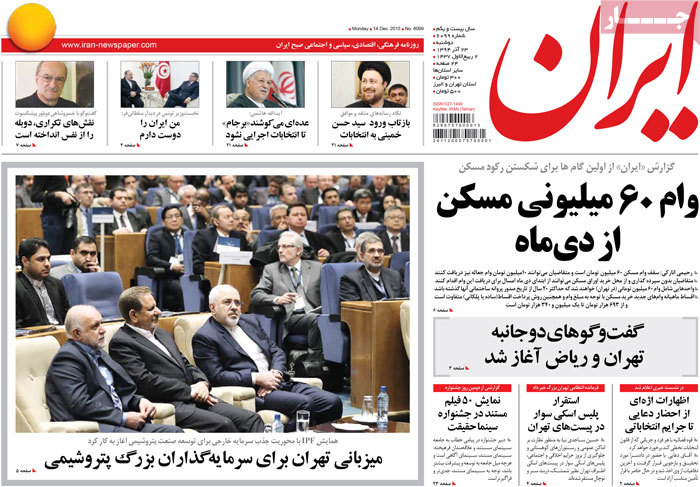
Iran: There are individuals who do not want the nuclear deal to be implemented before elections are held in late February, said the chairman of the Expediency Council.   A look at Iranian newspaper front pages on Dec. 14

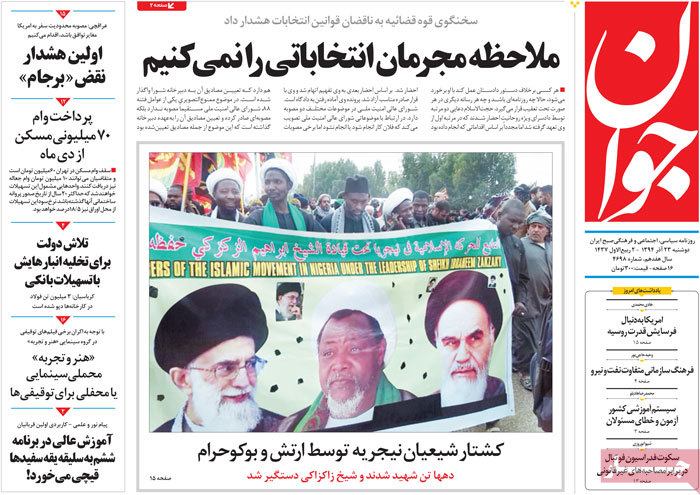
Javan: The Judiciary spokesman has said that those who commit electoral offenses will be seriously dealt with.   A look at Iranian newspaper front pages on Dec. 14  

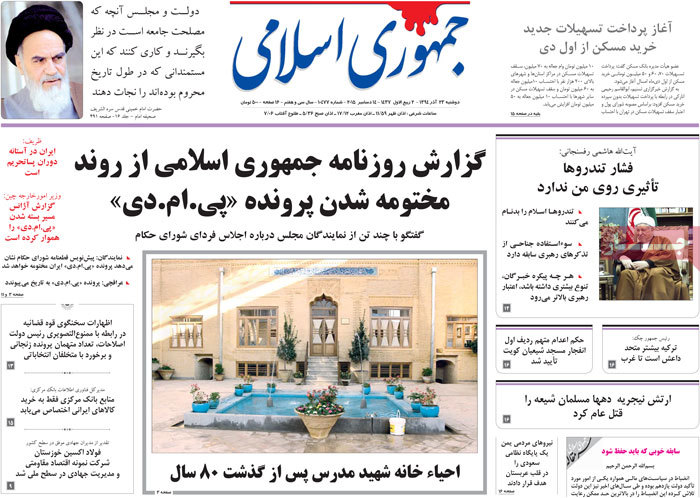
Jomhouri Islami: Foreign Minister Zarif has said that Iran is on the cusp of the post-sanctions era. His deputy meanwhile said that the so-called PMD (possible military dimension) file will soon be history. And a number of MPs have said that the draft resolution of the IAEA Board of Governors shows that Iran’s PMD case will be declared closed.   A look at Iranian newspaper front pages on Dec. 14

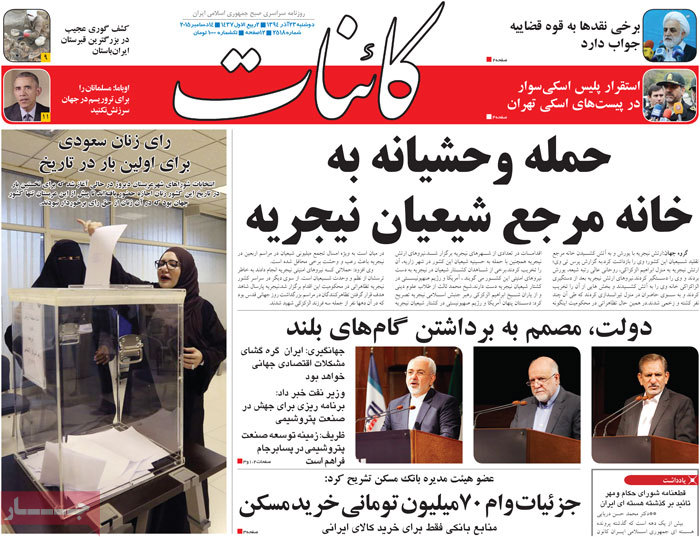
Kaenat: Government is determined to take giant strides. Oil Minister Zanganeh: Planning is underway to make a leap in the petrochemical industry. Foreign Minister Zarif: The stage is set for development of the petrochemical industry in the post-sanctions era.   A look at Iranian newspaper front pages on Dec. 14  

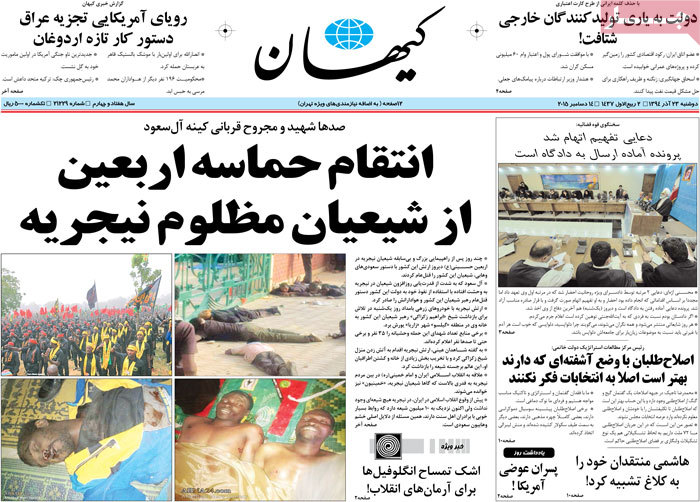
Kayhan: The American dream of an Iraqi breakup is on the agenda of Erdogan.   A look at Iranian newspaper front pages on Dec. 14

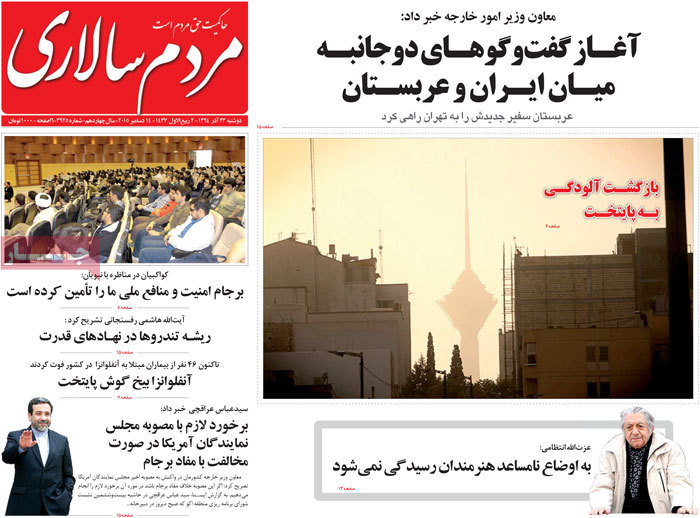
Mardomsalari: Influenza is inching in on the capital. Forty-six people have died of the flu across the country so far this year.   A look at Iranian newspaper front pages on Dec. 14

Nasl-e Farda: With salary talks around the corner, laborers have sent a letter to the president.   A look at Iranian newspaper front pages on Dec. 14
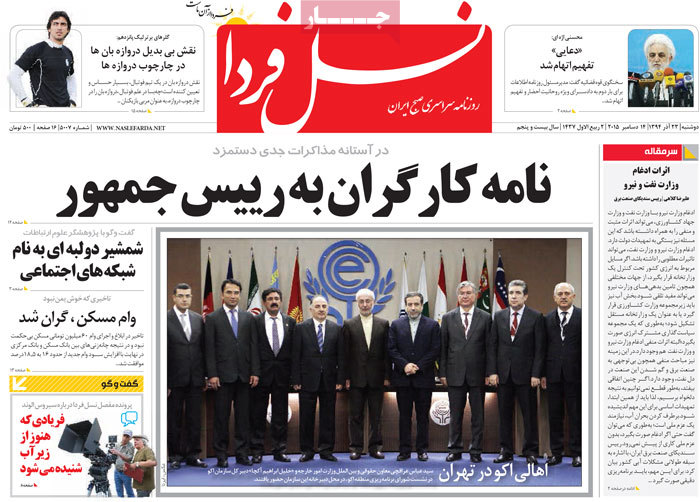

Resalat: Ayatollah Nasser Makarem Shirazi has urged Azeri statesmen to respect the religious sentiments of their people.   A look at Iranian newspaper front pages on Dec. 14  
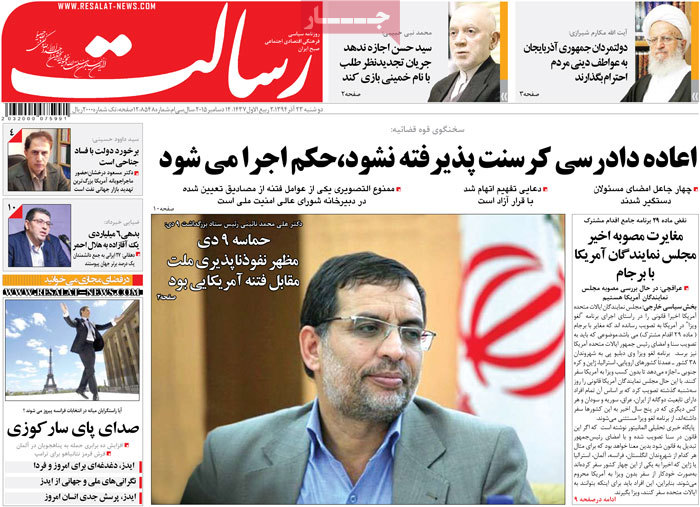

Saheb Ghalam: As many as 250,000 engineers graduate from Iranian universities each year.   A look at Iranian newspaper front pages on Dec. 14  
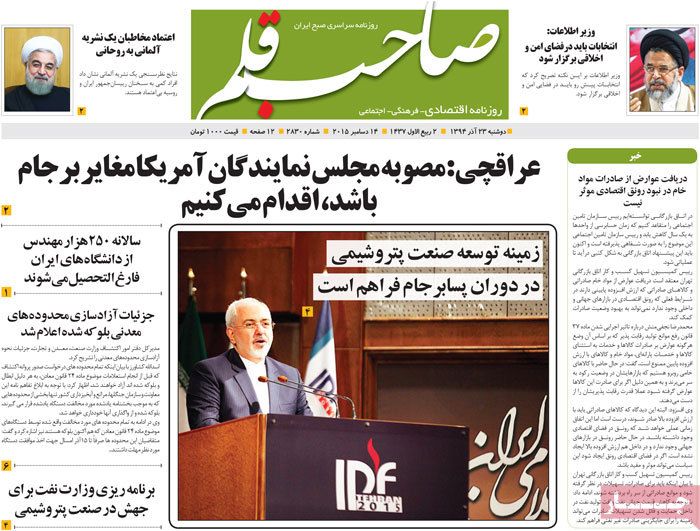

Sayeh: The Joint Comprehensive Plan of Action was the result of efforts to ward off war, said Secretary of the Expediency Council Mohsen Rezaei.   A look at Iranian newspaper front pages on Dec. 14  
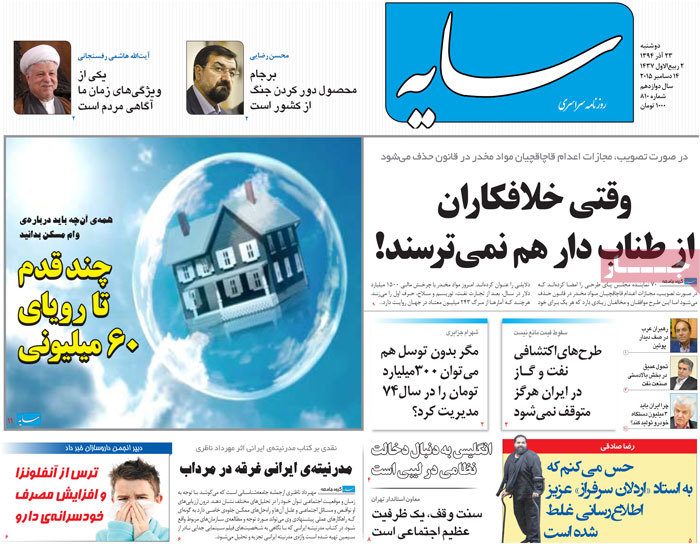

Sharq: The intelligence minister has said that efforts are being made to ensure job security for those involved in media.   A look at Iranian newspaper front pages on Dec. 14

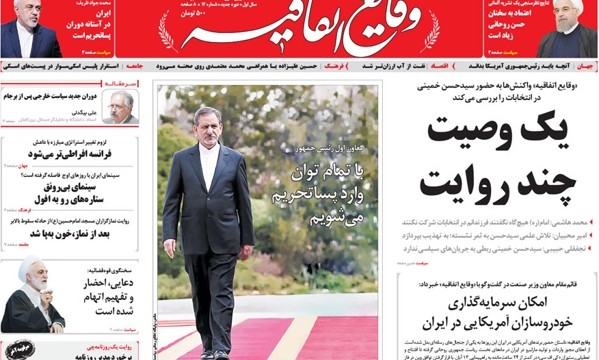
Vaghaye-e Etefaghiyeh: The deputy minister of industries, mines and trade has said that American automakers can invest in Iran.   Vaghaye
Sixth Development Plan: To trim a fat government

Government

The eleventh government finally put out its proposed draft of the Sixth Development Plan with some delay. Downsizing the Power [Energy] Ministry and merging part of it with the Oil Ministry to form a new Energy Ministry is one of the main goals of Iran’s 6th Five-Year Development Plan (2016 – 2021).

Dissolution of a number of organizations affiliated to the Ministry of Industries, Mines and Trade, mergers and bans on new hiring by state agencies, dissolution of the Housing Foundation, etc. envisioned in the proposed bill [drafted by Iranian Management and Planning Organization] all show the eleventh government’s determination to trim the government. Experience has shown that such downsizing does not necessarily bring about a decline in government costs and that the shrinking of the government should be done with some considerations.

Vaghaye-e Etefaghiyeh on December 13 published a piece on the drafted Sixth Development Plan. The following is the translation of part of that piece:

The birth of [new] Energy Ministry

Creation of a new energy ministry and dissolution of parts of the Power Ministry which focused on energy comes as the ministry has the most subsidiaries in the country. These subsidiaries placed a heavy burden on the government’s shoulders. […]

The Oil Ministry which is a giant ministry is unable to handle certain parts of itself. By the end of the first year of the Sixth Development Plan, the Energy Ministry will be created after the energy-related parts of the Power Ministry are merged with the Oil Ministry.

The Environment Protection Organization, the Forests, Range and Watershed Management Organization, and Iran Water Resources Management Organization will integrate to form a new Environment Protection, Natural Resources and Water Organization run under the supervision of the president.

Transformation of Ministries of economy and industries

Under the Sixth Development Plan, the responsibilities of the ministries of industries and agriculture on the commercial front will be delegated to the Ministry of Economic Affairs and Finance which is among the smallest ministries in the country.

The Trade Promotion Organization of Iran will merge with the Organization for Investment Economic and Technical Assistance of Iran to create a new Organization for Development of Foreign Economic Ties in the Economy Ministry. The Iran International Exhibition Company will be ceded to the private hands, and the Consumers and Producers Protection Organization will be dissolved and its responsibilities will be handed over to the private sector’s [trade] unions and guilds.

Scaling down the government size and hiring

Dissolution of University of Applied Science and Technology, and the shutdown or takeover by the private sector of more than 50 percent of the branches of Payame Noor University is simply part of the plans to make the government thinner.

Under the Sixth Development Plan, only 15 percent of executive bodies are to be dissolved. The government has characterized the deletion of these bodies as a decision in line with efforts to help the resistance-based economy. The question is whether downsizing the government can help maintain its efficiency and reduce its size.

The previous cabinet showed that the government costs can be raised by reducing the number of [state] institutions and increasing the unrestrained hiring [in government offices]. But the fact is that a smaller government does not mean the number of institutions and companies should be decreased; rather, it translates into the agility of the government, something Ahmadinejad failed to do.

[…] In other words, the Rouhani administration is not expected to repeat the mistake of its predecessor and start a wave of hiring (as the labor minister has put it).

Iran calls on Nigeria to respect religious figures, sites

Shia muslims Nigeria

Iran has called on Nigerian authorities to respect religious figures and sites following two days of deadly persecution against the country’s Shia Muslims.

“Nigeria… is now dealing with problems arising from extremism and Takfiri terrorism and we hope that in these conditions preservation of calm and national unity in battling terrorism is prioritized while rash and unconstructive measures are avoided,” IRNA quoted Iran’s Foreign Ministry Spokesman Hossein Jaber-Ansari as saying on Sunday.

Jaber-Ansari expressed sorrow over the recent bloody clashes, which broke out between Muslim worshipers and government troops earlier in the day.

Nigerian forces raided the home of the leader of the Islamic Movement of Nigeria, Ibrahim al-Zakzaky, and arrested him after reportedly killing several of those protecting him including one of the group’s senior leaders and its spokesman.

Since their arrest, the fate of Zakzaky and his wife remains unknown

The developments followed the Saturday clashes between troops and Shia Muslims in the country’s city of Zaria, in Kaduna state, in which at least 15 people were killed and many more injured.

Reports said soldiers opened fire on the people attending a ceremony in Hussainiyyah Bagheeyatullah, a religious center in the northern city. The Shias had reportedly stopped the convoy of the Nigeria’s Chief of Army Staff, Lieutenant General Tukur Yusuf Buratai as the top Shia cleric was planning a speech in the religious center.


Iran: Sanctions to be lifted in ‘next few days’

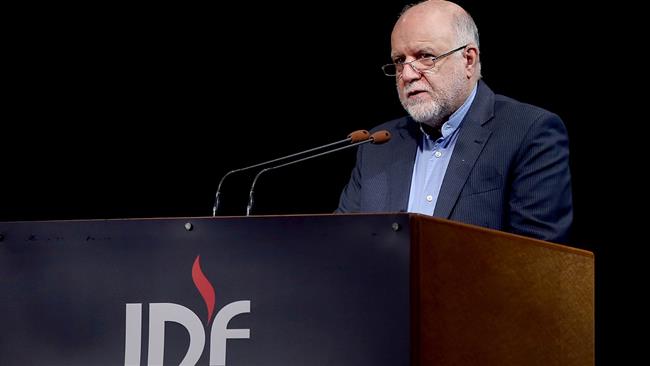
Zangeneh-oil-min

Oil Minister Bijan Zangeneh says oil sanctions against Iran will be lifted in the “next few days.”

He made the announcement as Iran’s Petrochemical Forum (IPF) opened in Tehran with an appeal to foreign companies to re-open their offices in the resource-rich country.

“Iran’s oil sanctions will be completely annulled in the next few days,” Zangeneh said.

The lifting of sanctions will enable the country to fulfill its 20-year vision plan, including its target to produce $70 billion of petrochemicals a year at current prices, the minister added.

“Iran has enough feedstock at its Persian Gulf coasts for new projects, including its plans for production of ethylene from LNG, ethane and propane,” Zangeneh said.

The minister called on leading energy companies to re-open their offices in Iran in order to get Iranian support.

“Oppressive sanctions will be removed soon and international exchanges will become possible,” he said.

Managing Director of the National Petrochemical Company (NPC) Abbas Sheri Moghaddam said Iran’s petrochemical production will hit 70 million tonnes in the new Persian year which begins on March 20, 2016.

The products will be worth $27 billion at current prices, the official said.

“After nuclear negotiations, we must expect a boom in the petrochemical sector,” Sheri Moghaddam added.


A third World War may be in the cards: Iranian official

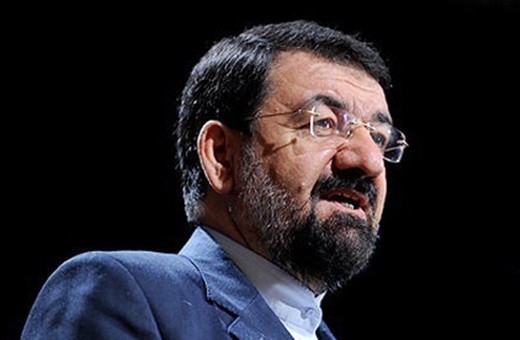
Mohsen Rezai

Mohsen Rezaei, the secretary of Expediency Council, in a TV talk show on Channel One on December 12 said the Middle East region is like a powder keg on the threshold of a massive explosion.

The following is the translation of part of his remarks that has been released on the website of the Young Journalists Club:

The Middle East is pregnant with a massive explosion

The secretary of the Expediency Council says the Middle East is pregnant with a giant explosion which has its roots in border violations.

He added: “This is a danger that threatens all regional states, and if all countries are against the eruption of a big war they should roll up their sleeves to prevent this big peril from materializing and put out this flame. The UN can play an effective role in this regard.

“Given regional developments, a truly global mobilization, not based on national interests, is needed to take shape among all regional states.

“The US is currently trying to rescue Takfiri groups, and it does not want to defuse the explosion. It is simply after intensifying that explosion in the Middle East. They [the Americans] are willy-nilly escalating the regional insecurity.”

Time is ripe to use diplomatic potential to bring about a Turkey-Russia agreement

Mohsen Rezaei said: “We do not accept hasty measures in regional developments. In light of regional developments, Iran should tap into its capabilities, including diplomatic potential, because it is the best time to secure an agreement between Turkey and Russia.

“Iran can presently use its active diplomacy to bring Turkey and Russia closer to each other and temper tensions between the two countries.”

The secretary of the Expediency Council further said what happened defies logic. When aircraft stray into a country’s airspace, they should be issued warnings.

“We have witnessed several times during the past years that the aircraft belonging to Greece have strayed into Turkey’s airspace and Turkey has warned them. Similar incidents involving Turkish aircraft crossing Greece’s airspace have taken place. The two countries have limited their response to warnings and no shot has been fired. What happened to the Russian aircraft is a serious puzzle; the Turkish air force fired instead of issuing a warning.”

[Moscow and Ankara have been locked in a war of words since November 24, when Turkey downed the Russian Su-24 fighter jet over Syria, claiming that it had entered Turkish airspace, an accusation strongly rejected by Moscow.]

Why Turkish forces are deployed to Iraq?

On Turkish military presence in Iraq, Major General Rezaei said: “Over the past 30 years Turkey has repeatedly entered Iraq. Those troop movements were solely aimed at cracking down on the opposition and they (Turkish forces) had never been in Iraq for long-term tours.

“However, this time Turkey intends to station its forces in Iraq. Turkish soldiers are now alongside Daesh forces. Some analysts believe that Turkey has entered Iraq to support Daesh.

“There are other analysts who believe this [the deployment of Turkish forces to Iraq] has been plotted by Masoud Barzani [President of the Iraqi Kurdistan Region since 2005] to establish an independent country in northern Iraq.

Secretary of Iran’s Expediency Council Mohsen Rezaei then underlined: “There are also some other analysts who say the US, which is after disintegrating Iraq, has tasked Turkey with doping its dirty work.”

Rezaei added: “No matter how you look at it, the final analysis would be negative.”

Rasht designated as UNESCO Creative City of gastronomy

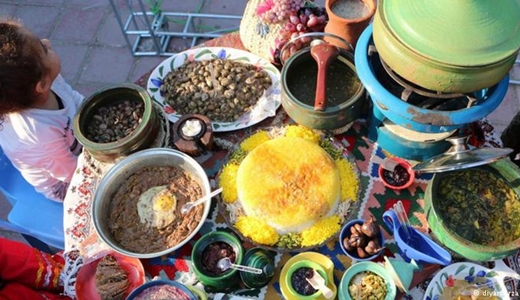
Gilan Foods

Rasht, the capital city of Gilan Province, has made it into UNESCO’s Creative Cities Network for its gastronomy (the practice or art of choosing, cooking, and eating good food).

Rasht is now among 47 cities from 33 countries that are part of the network in seven creative fields — crafts and folk art, design, film, gastronomy, literature, media arts and music.

Khabaronline.ir on December 13 released a report on inclusion of Rasht in the UNESCO list. The following is a brief translation of the report:

The city’s mayor has said that designation of Rasht as a UNESCO Creative City of gastronomy is a major step toward introduction of brand names based in the city.

Mohammad Ali Sabet-Ghadam further said that at a gathering in Paris on Wednesday UNESCO Director-General, Irina Bokova, announced the designation of 47 cities from 33 countries as new members of the UNESCO Creative Cities Network.

He further said that Rasht is the only Iranian city which was designated as a creative city in terms of cookery, adding that Isfahan was selected as a creative city in terms of crafts and folk art.

Adelaide (Australia), Barcelona (Spain), Bergen (Norway), Budapest (Hungary), Detroit (the United States), Liverpool (United Kingdom of Great Britain and Northern Ireland), Rome (Italy), Montevideo (Uruguay), Salvador (Brazil) and Singapore (Singapore) are among new additions to the UNESCO list.

Launched in 2004 and now comprising 116 Member Cities, the UNESCO Creative Cities Network aims to foster international cooperation with and between cities committed to investing in creativity as a driver for sustainable urban development, social inclusion and cultural vibrancy.

“The UNESCO Creative Cities Network represents an immense potential to assert the role of culture as enabler of sustainable development. I would like to recognize the many new cities and their countries that are enriching the Network with their diversity” declared the Director-General, as UNESCO celebrates in 2015 the 10th anniversary of the Convention on the Protection and Promotion of the Diversity of Cultural Expressions.

Sheida Mahnam, Ph.D., UNESCO Manager of Social and Humanity Sciences, for her part, said that a number of Iranian cities could make it to the UNESCO Creative Cities Network list, but the fact is that except for the municipalities of Rasht and Isfahan which contacted and consulted UNESCO, the municipalities of other cities did not have active cooperation.

“[…] We invited Ms. Esther Kuisch Laroche, the director of the UNESCO Cluster Office in Tehran and UNESCO’s representative to the Islamic Republic of Iran, to visit Rasht. […] I also met with Melika Medici, a project officer for UNESCO’s Creative Cities Network, a month ago and asked about UNESCO’s decision. She was hopeful. […] On December 11, UNESCO announced the decision of the jury which revealed that two Iranian cities have been recognized as creative,” said Mahnam.

She went on to say that UNESCO’s decision is a golden opportunity for Rasht to turn around its tourism industry, expressing hope that Iran can be an active member of the UN Creative Cities Network and – as a result – absorb more tourists and revenues to the northern city.

[…]

A female athlete whose career is built on ice

Iran Icy girl-3

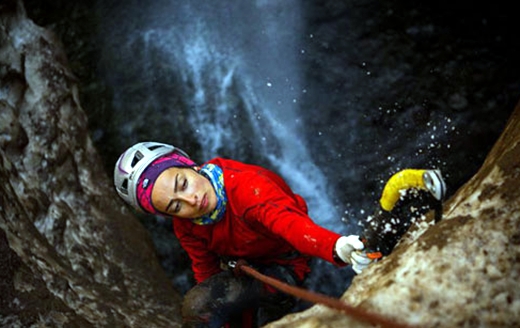
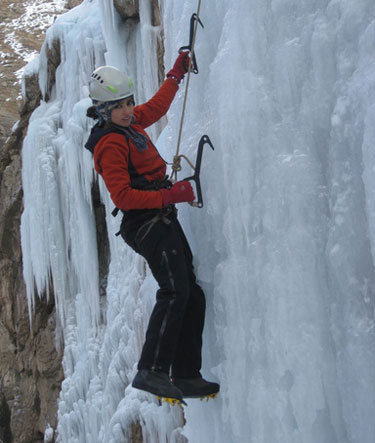
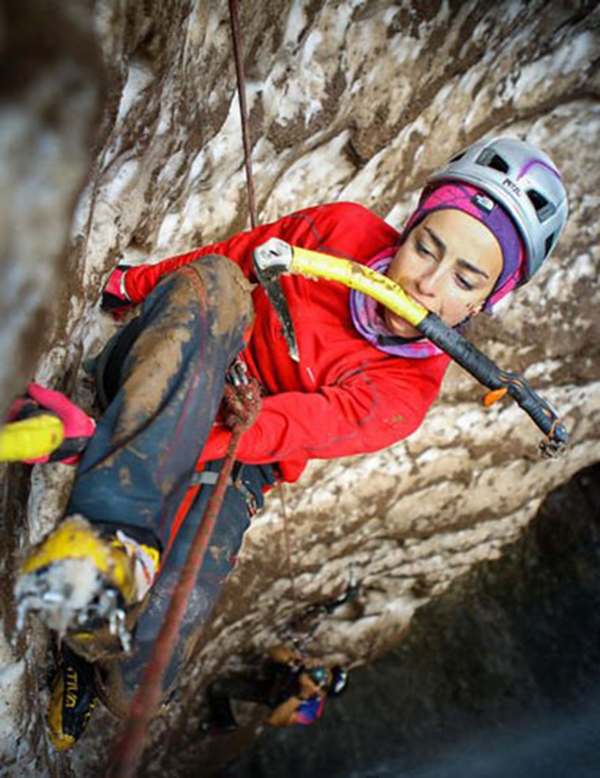
She is not in the habit of walking on solid or hard earth. Zohreh Abdollahkhani, 31, is always doing climbing here and there. When she was a child, she started mountain climbing with her parents just for fun. At 18, she decided to do sports professionally.

Iran Icy girl
Zohreh Abdollahkhani

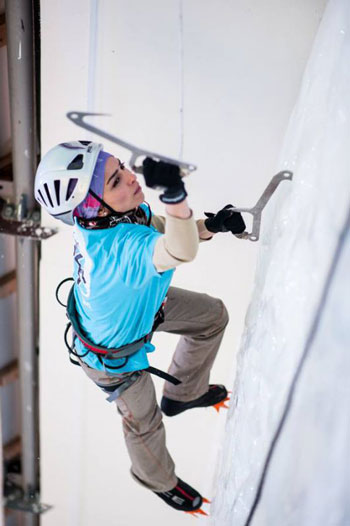
In 2003, she took up rock climbing despite her coach’s opposition and two years later she won her first national medal. In 2010, Zohreh decided to embark on a profession that would later earn her a nickname: Iran’s icy girl. Her success came in a climbing trend: she placed third in the Asian Ice Climbing Championship [in 2014] and was invited to the ice climbing competition in Sochi during the 2014 Winter Olympics.

Alef.ir on December published an interview with the Iranian ice climber, who is also a national top student in aviation. The following is a brief translation of the interview:

Why rock and ice climbing?

[…] I started climbing with my parents. At first I didn’t think I would ever do professional sport. I simply didn’t want to focus on science and lead a one-dimensional life.

A late start

[…] I started climbing in 2003 and secured my first national medal in 2005. I have yet to pull off an international medal; now I stand tenth in the world.

Titles and medals

[…] In 2014, I finished third in the Asian Ice Climbing Championship. In 2015, the world’s top 30 athletes were invited to the Olympic Games. Mr. Masoud Zeinali (who won a silver medal in the Asian Championship) and I represented Iran, and we were named as members of an inspiring team from Iran.

[…]

Any support

We are not given enough support. […] If we receive more support, the result would be better. When you take care of everything singlehandedly, the going gets tough.

[…]

Spending

The costs of ice climbing are high, because the equipment we use is imported and only a few countries possess the technology to make such devices. In Iran, only a few women are doing this sport professionally and the importer prefers to import the equipment and devices the male athletes use. […]

Iran Icy girl-2Iran vs. other countries

The medal I won in the Asian games was the first medal a non-Korean athlete had secured. The Koreans had already secured all Asian medals. […] When the medal-awarding ceremony came to an end, the head of the Japanese team came over and thanked me, saying that what I did showed that a non-Korean too can collect a medal. It was a turning point in efforts to end the Korean dominance in the Asian ice climbing.

[…]

We went to the competitions on our own and nobody expected us to win medals. When we came home, those in charge couldn’t believe that we had been awarded medals. It is not the case in other countries. The athletes are treated differently; they are given credit and confidence to be able to win medals and titles. We in Iran did reverse engineering. First we won medals, then we said that such a discipline did exist.

[…]

Future plans

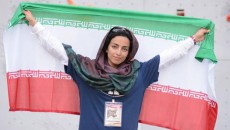
I will forge on with my efforts as long as I think there is hope. I hope my hope will not be dashed. I always think of an Olympic medal and the [raising of the] Iranian flag. I hope this becomes a reality. Also I have a personal wish: to go to the Pole and do ice climbing there.

First Iranian girl in Pole

Iran Icy girl-4The environment has been one of my concerns all these years. Ice climbers can send images of ice melting and can tell the world of a disaster in the making. I think we can show these images to the world. […] After all, I cannot do ice climbing when there is no ice.

[…]

Family support

To do sports at a professional level, women need family support. A large number of girls abandon sports only because their husbands, fathers or men in their families do not lend them support. I was lucky I had my family’s support.

[…]

A woman such as Niloufar Ardalan, the captain of the national women’s futsal team lacked such a support. Many women make progress thanks to their spouses’ support. […]

A sense of confidence

Once I was asked what I would do if I were left in a desert. I said I would find a way out. To tell the truth, I’ve learnt it from sports: I suffer failures, sustain losses, cry and then wipe my tears and stand on my own two feet. I do not allow a problem to affect me for long. This is the spirit of sports; you have to stand up again.

Iran Icy girl-1


Ice climbing is the activity of ascending inclined ice formations. Usually, ice climbing refers to roped and protected climbing of features such as icefalls, frozen waterfalls, and cliffs and rock slabs covered with ice refrozen from flows of water.