Friday, December 26, 2025
Home Blog Page 4596

Developed countries endangering world peace by mistreating others: Iran

Gholam-Ali Khoshroo, Iran’s ambassador and permanent representative to the UN, made the remarks on Monday, addressing an open meeting of UN foreign ministers on behalf of the Non-Aligned Movement (NAM), whose rotating presidency is currently being held by the Islamic Republic.

“Developed countries’ disregard for the economic and social rights of developing states has jeopardized world peace and security,” he said, condemning the “hostile unilateral economic measures” adopted by the world’s powers against developing countries.

He said NAM has always demanded that the international community adhere to such principles as “respecting [countries’] sovereignty, equality, independence, opposition to the use of force or threats to apply force,” etc.

He also said that “refraining from recourse to adversarial unilateral economic measures as a means of applying pressure on NAM members and restraining their freedom and independence, opposition to the categorization of countries as good and evil based on one-sided and unjustifiable criteria, and resort to preemptive defense theories by some countries against others” were other NAM principles relevant to the UN Charter.

The envoy reasserted the movement’s position that the world body’s Charter enjoys various capacities, which could be used toward the resolution of international crises.

In conclusion, he warned against gratuitous recourse to the Charter’s Chapter VII, which authorizes the UN Security Council to allow measures such as sanctions or military intervention if countries do not meet its demands.

He said resorting to Chapter VII of the Charter should be a last resort and only come when a real and serious threat is posed to international peace and security.

NAM, an international organization with 120 member states and 21 observer countries, is considered to be not formally aligned with or against any major power bloc.

‘Japanese banks eyeing foothold in Iran’

Katsuyuki Kawai, an adviser to Japan’s Prime Minister Shinzo Abe, has asked the governor of the Central Bank of Iran (CBI), Valiollah Seif, to help lay the groundwork for the expansion of Japanese banks’ operations in Iran, IRNA reported on Tuesday.

Kawai told Seif that Japanese banks seek to know more about their Iranian counterparts and how they operate.

The CBI chief for his part welcomed a recent decision by Japanese government to scrap banking restrictions against Iran and said the move will pave the way for stronger banking cooperation.

On January 22, the Japanese cabinet approved the lifting of the sanctions following the implementation of a nuclear deal between Iran and the US, the EU, China and Russia.

The deal, called the Joint Comprehensive Plan of Action (JCPOA), had been reached in July 2015.

Seif also said Iran views Japan as a major economic partner in East Asia, pointing to an increase in potentials for further economic exchange between the two sides.

He also welcomed a plan by the Japanese premier to visit Iran.

Abe’s visit to Tehran is meant to expand cooperation especially in the oil sector, officials have said.

Iran’s Petroleum Minister Bijan Namdar Zangeneh said Monday that the current visit by Kawai and his accompanying delegation to Iran is aimed at reviewing issues of mutual interest and making preparation for the Japanese premier’s trip to Iran this year.

Japan was one of the key clients of Iran’s oil before US-led sanctions were imposed on the Islamic Republic in 2012. Iran also hosted several leading Japanese companies in its oil and gas projects before the sanctions were put in place.

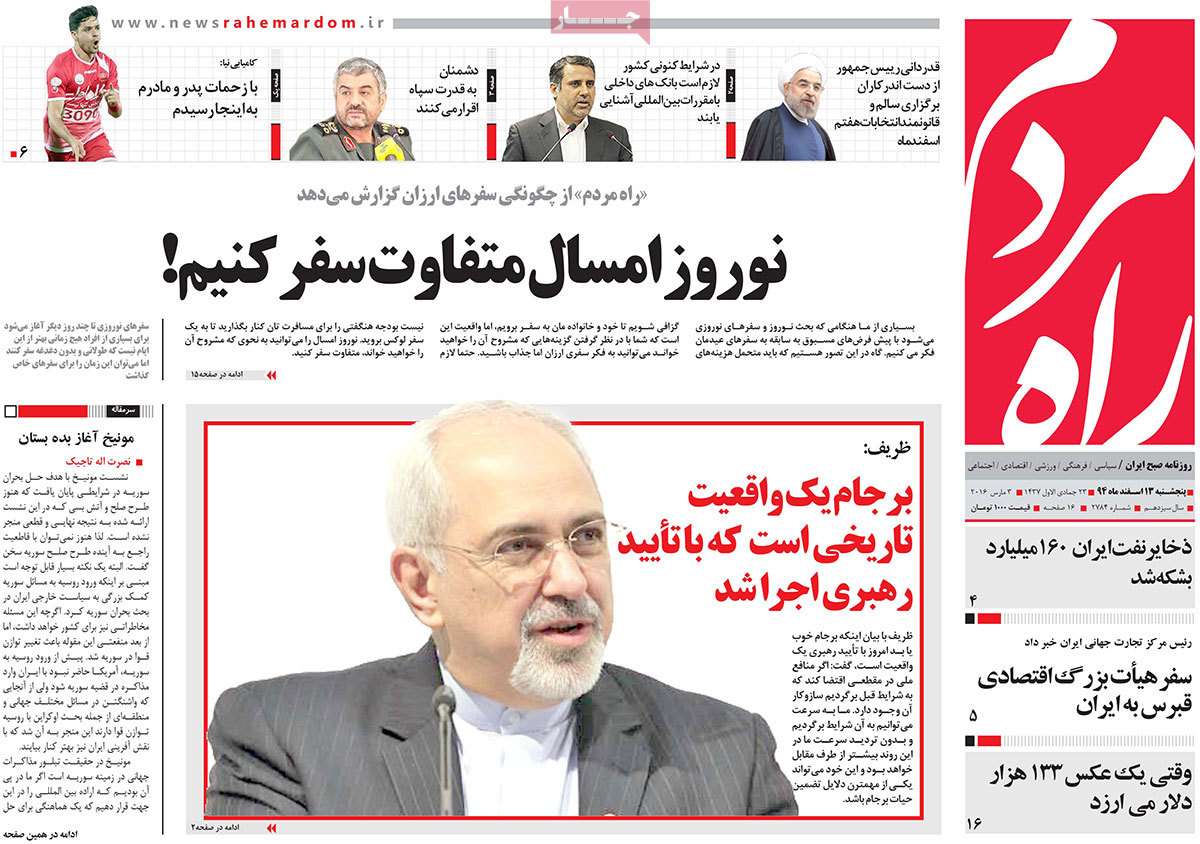
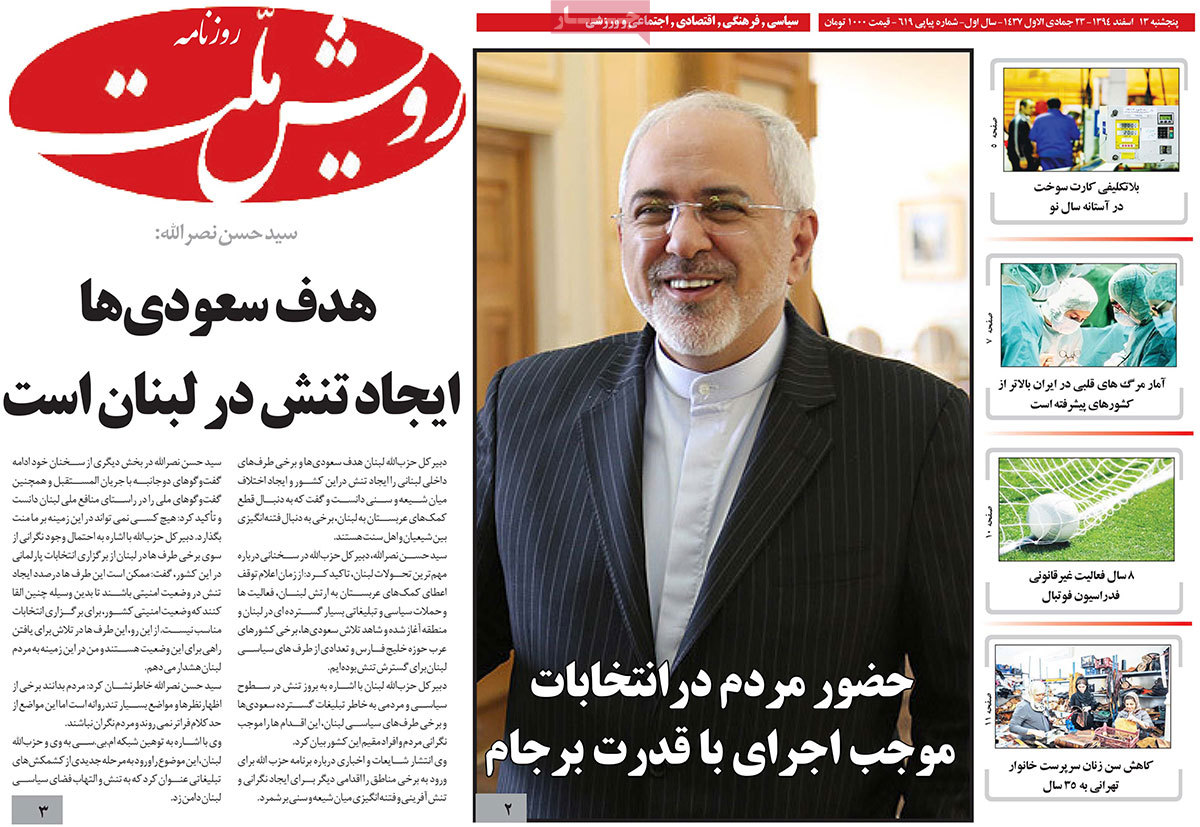
Iran’s Nuclear Deal Can Be Model for Settling Crises, Zarif Says

Zarif

You cannot expect to enjoy security while others lack security, Zarif said, addressing Belgium’s Royal Institute for International Relations, also known as the Egmont Institute, in the Belgian capital of Brussels on Monday.

“We should know that crises (in the world) are common threats and challenges for all of us,” he said, adding that any crisis should be seen from a global point of view.

The Iranian top diplomat further said that the nuclear agreement reached between Tehran and the Group 5+1 (Russia, China, the US, Britain, France and Germany) was one of the “rare cases” in which diplomacy worked.

The reason behind the resolution of the disputes over Iran’s nuclear program was a change in approaching the issue, Zarif said.

He went on to say that the model of the nuclear deal can be used for all crises across the world.

The agreement, which was finalized on July 14, 2015, after months of intense negotiations, was enforced on January 16 this year.

Elsewhere, the Iranian foreign minister pointed to the massacre of Yemenis by the Saudi regime, saying Riyadh sees its interests “not in having friendly neighbors but in eliminating them.”

Yemen’s defenseless people have been under massive attacks by a coalition led by the Saudi regime for nearly a year but Riyadh has reached none of its objectives in Yemen so far.

Since March 2015, Saudi Arabia and some of its Arab allies have been launching deadly airstrikes against the Houthi Ansarullah movement in an attempt to restore power to the fugitive former President Abd Rabbuh Mansour Hadi, a close ally of Riyadh.

More than 8000 Yemenis, including many women and children, have died in the Saudi-led aggression so far.

Zarrin Rood Cave (PHOTOS)

Zarrin Rood limestone cave, one of the most beautiful caves ever discovered, is located in Zanjan province.

The following images have been released by Mehr News Agency :


America is untrustworthy, after every step forward comes a step back – Iranian ex-ambassador

Freed from decades of economic sanctions, Tehran has got doors open for new opportunities for its businesses to prosper. With economic growth comes the political, as Iran is asserting its role as an influential player on the international scene – and, especially, in the Middle East. However, with some neighbors not too happy with Iran’s deal, and America’s constantly changing partner-or-enemy attitude, how can it influence what’s going on in the region right now? And, can it have an impact on the global balance of power? We ask veteran Iranian diplomat – ambassador Seyyed Hossein Mousavian these questions:


Sophie Shevarnadze: Veteran Iranian diplomat, ambassador Seyyed Hossein Mousavian, welcome to the show, it’s really great to have you with us. Ambassador, the lifting of international sanctions has shaken off the isolation. Has it made Iran more friends or enemies?
Seyyed Hossein Mousavian: Definitely, Iran would have more friends. You can see the relations with different countries from China to Europe, even, many bilateral issues with the U.S., how positively is going on – it is a clear sign of the positive impact of the nuclear deal on Iranian foreign policy.

SS: Saudi Arabia broke off diplomatic ties with Iran earlier this month due to violence at the Saudi embassy in Tehran that followed the Saudi execution of a Shia cleric. Iran’s foreign minister Mohammad Javad Zarif said ‘Riyadh was looking for an excuse to break off relations’ – do you think that’s the case? I mean, what does Saudi Arabia stand to gain from upping the confrontation?

SM: I believe this is true, unfortunately, because the Saudis are going to do everything they can to prevent rapprochement between Iran and the big powers, after the Iranian nuclear deal. To my understanding, the Saudi’s main issue, main problem, main concern is that Iran now has upper hand in the region and they have lost their influence on many critical issues in the region. You know, from 2005 to 2013 or even 2015, for about 10 years, Saudis, they tried everything they could to prevent a possible peaceful nuclear settlement between Iran and the world powers. Even, they pushed the U.S. to attack Iran, however they failed. After 2011, they tried to convince the U.S. to attack Syria and they were presenting the notion of ‘Assad must go’ – neither the U.S. attacked Syria, and today Assad is in power, and Europeans, Americans – the Western countries – now they understand that Assad is a part of solution and they have left the notion of ‘Assad must go’. They invaded Yemen, they have killed thousands of civilians and it is a quagmire for them, because they feel that really they are in a crisis.

SS: We’re gonna get to Syria and Yemen in just a bit, but before we do that, do you think this break in relations between the Saudis and the Iranians will last for long? Could there be a long term Cold War between the two countries?

SM: I don’t believe that would be long-term, something like Iran and the U.S., for 35-37 years. It may take about one year, ultimately, they would go for re-establishing the relations.

SS: But with so much hostility towards Iran from Sunni states in the Middle East, is there are danger of an actual military confrontation between Iran and Saudi Arabia?

SM: I really don’t believe Saudi Arabia would ever try to go to military confrontation, because they already tried during the war in 1980-1988, the most powerful Arab army, Iraq, invaded Iran. Saudi Arabia, other Arab countries, they supported Saddam after 8 years, now Saddam is gone, they failed and Iran is one of the most powerful countries in the region, and Iran is very much stable. They tried already, and they know their capacity. They even haven’t been able to manage Yemen and Bahrain, after military campaign in Bahrain which is smaller than one of the Iranian cities. Therefore, I don’t believe they would ever go for military confrontation with Iran.

SS: Once again, Iran’s foreign minister Mohammad Javad Zarif has said that Saudi Arabia is panicking over Iran’s possible reconciliation with the West. Why is this prospect so scary for the Saudis?

SM: See, Saudis… if you want to understand Saudi’s mindset, they now are thinking: after 37 years of the most coercion policies against Iran: military war, economic war, political war, now how strong and stable and influential Iran is in the region. Despite the fact that Iran had no relations with the U.S., was in hostilities with the U.S., Iran-U.S. relations were always not good, but now they are really afraid that such Iran, if it’s going to have normal relations with the Western countries, less confrontational situation with the U.S. and more engagement with the international powers – these would increase the role and influence of Iran in the region. This is their issue. That’s why they are going to do everything to block a better relation between Iran and the international community.

SS: Saudis are now conducting a campaign in Yemen, like you’ve said – fighting against the Houthis, a popular Shia movement that aligns itself with Iran. Is Saudi Arabia fighting a campaign against the Houthis to prevent Iran from having influence there?

SM: I don’t believe so, because they know very well, Houthis or Zaidis – they really have nothing to do with Iran. They have been ruling Yemen for 1,000 years. They were removed off from the power in early 1960s when Egypt invaded Yemen. Therefore, they have roots, they have history of 1,000 rule in Yemen. Of course they have good relations with Iran, no doubt about it, but the Saudis, with invasion of Yemen, they have pushed Houthis and Zaidis to have more cooperation, strategic relations with Iran – otherwise they could have good relations with Houthis; after Egyptian invasion in early 1960s Saudis were actually supporting Houthis, that’s why I believe, this is their own mistake, it is not Iranian issue.

SS: But what about the Yemeni Houthis? Can then they count on Iran’s help in the matter?

SM: I believe they count more than everything on themselves, and their power and their people. Houthis want their share, their role – they believe they have been removed from the power, they have been deprived from their own legitimate share, therefore military strike, military campaign would never resolve Yemen issue. You know thousands of civilians have been killed by Saudi strikes, still this is really a quagmire for a Saudi Arabia, in Yemen. I believe, like the nuclear deal, the diplomacy would work for Yemen. I believe they can – Iran and Saudi Arabia, with other regional powers and international powers, – they can immediately sit together to have a transitional government and to have a peaceful election and leave it to Yemenis nation to decide who should rule Yemen.

SS: So you don’t see the Yemen issue turning into a proxy war between Saudi Arabia and Iran, right?

SM: I really don’t believe this is the case. This is more a Yemeni-Saudi issue.

SS: Sure.

SM: This is not an Iranian issue.

SS: But Saudis have been bombing Yemen for a year now with no end in sight. Has the conflict stuck? Have they become bogged down there?

SM: This is my belief. Now, everybody is saying, even the Republicans in the U.S., they are worried that Yemen would become Vietnam of Saudi Arabia. Everyone understands, Saudi is spending billions of dollars, killing thousands of civilians, have achieved zero in Yemen. Therefore, this… I believe, Iran also should understand Saudi Arabia, Iran also should try to help Saudi Arabia, to find a face-saving solution or a face-saving exit from the Yemen crisis, and this is a way to go: Saudis, ultimately, they would understand they have to stop the war. They would have to stop bombing Yemenis and they would have to go for diplomacy.

SS: Now, Iran has invested considerably in both Iraq and Syria, helping both militaries to confront and beat back Islamic State. Seeing how the progress against the terror group is so slow, is there a danger of Tehran getting bogged down in fight against ISIS?

SM: ISIS is not created by Tehran. Everyone knows the source of ideology, the source of money, the source of weapons is from Saudi Arabia and some Sunni countries – the source of ideology is wahhabism, the source of money and weapons is from Saudi Arabia and some Arab ally countries… Iran practically is the victim of expansion of terrorism in the region by the Saudi Arabia – therefore, Iran has no choice but to fight terrorism. In Syria and Iraq, practically, this has been the Iraqi government and Syrian government inviting Iran to help them to fight ISIS. Iran has been invited by the legitimate and legal governments in Damascus and in Baghdad, to cooperate to fight against ISIS. In the absence of invitation of the two governments, Iran would never be involved in Syria and in Iraq.

SS: But they are now, so do you think it’s going to get stuck there? Because the progress is very slow…

SM: If Iran is stuck there, I believe the region and the international powers, they would be stuck too. It is not Iran issue. The world now understands: ISIS, Al-Qaeda, the wave of new terrorism in the Middle East is the main source of threat to international peace and security…

SS: Okay, so let me put it this way: do you think everyone will be stuck in the conflict of ISIS and Iraq and Syria? Do you think this is going to drag on forever?

SM: If the current trend continues, I believe everyone would be stuck, because there’s no real cooperation between regional powers and international powers to fight ISIS. Some countries, like Iran and Syria, they are fighting ISIS, some countries like Turkey and Saudi Arabia, they are supporting ISIS. In such a situation, who can be sure that the region and the international community would be able to win over ISIS?

SS: Both Iran and Saudi Arabia are members of different anti-ISIS coalitions. Is any coordination in this fight possible?

SM: I believe the coordination should be between the two big coalitions: one coalition is led by the U.S. and Arab allies, Western allies, and the other coalition is between Russia, Iran, Iraq and Syria. We need the Coalition of Coalitions. If there’s such cooperation in order to coordinate the activities between the two coalitions fighting ISIS, I believe Iran and Saudi Arabia also would be able to cooperate within such a framework, fighting ISIS.

SS: So how is the Coalition of the Coalitions possible with a cutting of a diplomatic relations between Riyadh and Tehran. Won’t this affect negotiations on Syria? I mean, do you really see Saudis and Iranians, sitting down at the same table?

SM: Iran and the U.S., they don’t have diplomatic relations. How could they negotiate to resolve the nuclear issue? This is a good example. Iran and the U.S, they don’t have diplomatic relations, how they could negotiate to resolve the current issues like the sailors, like the exchange, the swap of prisoners? Iran and the U.S. also are negotiating on how to manage Syria. Therefore, diplomatic relation really is not the obstacle that can prevent the cooperation. What we need is political intention – even in the absence of the diplomatic relations. If there’s a good political intention, like Tehran and Washington – how have they been cooperating in the last two years – Iran and Saudi Arabia also can negotiate within the international framework.

SS: Now, donations coming from private sources inside Saudi Arabia play a huge role in ISIS’ funding. It’s a known fact. Is it impossible to trace and shut them down?

SM: I believe, the world powers, they have really never been serious to block the source of funding for terrorism in the Middle East. Remember what they did against Iran during nuclear crisis? How many resolution, the U.S. Treasury representatives, they were going to every country to block every financial cooperation and transactions with Iran. They have never done such a move to fight ISIS, because they know the problem is within some governments in the region, and the Western allies, ultimately, would be accused of funding terrorism.

SS: Another major player in the region – Turkey – is also facing a threat from ISIS. I mean, Islamic State is blowing people up in Turkish cities, but Iraq’s PM says he sees no evidence that Turkey is serious about fighting the Islamic State. Why is that, in your opinion?

SM: Because, there has been a lot of evidence, recognized even by Western countries, that Turkey has been supporting ISIS, buying their oil, arms to ISIS are coming, a big part of it, is coming across Turkish border. Turkey, practically, is supporting Jabhat al-Nusra, another terrorist groups. Therefore, there is a big international suspicion against the role of Turkey in supporting of terrorism, to bring the government of Assad to a total collapse. As long as Turkey is in such a situation, I don’t believe even the world powers would be able to trust Turkey fighting terrorism.

SS: The Taliban is very much alive in Afghanistan, and now ISIS is establishing a foothold in it on Iran’s border. What’s Iran going to do about that, if anything?

SM: Iran definitely would be powerful to defend its borders, everyone now recognizes the fact that Iran is very stable, despite of all the crises around the Iranian border: crisis in Iraq, crisis in Pakistan, crisis in Afghanistan… Iran has been able to handle its security and stability despite of all crises for over a decade. Therefore, I don’t believe Taliban or ISIS would be able to harm Iran.

SS: Would Iran be willing to help Afghanistan in a fight against Taliban or ISIS?

SM: There are negotiations for reconciliation between Afghanistan government and Taliban. Many people, they see a little bit of difference between ISIS and Taliban. Taliban, also, they have moderate versions. Iranians would not object if there’s going to be a peaceful settlement and cooperation between Kabul and Taliban in order to bring stability in Afghanistan. As long as Taliban is not going to have terrorist activities against Iran, and as long as Taliban is ready to negotiate for peaceful settlement with Kabul, I don’t believe Iran would go to war against Taliban.

SS: About the sanctions, with the lifting of them, Iran can return to oil market and is increasing its output of up to 500,000 barrels per day. In an already oversupplied market, how much benefit can it really have? I mean, as Iranian oil will most likely drive the general price for commodity down….

SM: I really don’t count too much on the oil issue for Iran after sanctions, because nowadays the price has dropped to something like $25, $22, and many people are talking about possible lower drop, even up to $15 – but lifting sanctions would make possible for Iran to move other dimension of their economy. It is not only about the oil. The private sector of Iran would be revived. Iran has a very powerful private sector. Practically, private sector was isolated or extremely weakened during the sanctions. Iranian banks would be able to have transactions with international banks. Foreign countries would like to come for financing, trade, investment in Iran. This is something which would help Iranian economy to have more engagement on industry, on technology, on investment with the international community. Although, I am afraid, the oil price would not really help Rouhani’s government.

SS: Now, Obama Administration has reached a deal with Iran. But at home, in America, the treaty was met with opposition from Republicans. Will the new American President be pressured by those interests to assume a tougher line with Iran?

SM: I think, any Republican candidates or even Democrats, including Hillary Clinton, most probably they would have tougher policies against Iran. Nevertheless, we are now thinking about normal diplomatic relations between Iran and the U.S. It’s not going to happen soon. The key issue is to prevent a confrontation between Iran and the U.S. The advantage of diplomacy on nuclear, high-level direct engagement was preventing a war. This is a very-very important issue and I believe the next administration whether Republican or Democratic, they would try to have a direct channel with Iran also. They are not going to close such a channel. Secondly, such a direct channel has helped the U.S. and Iran to resolve some of the bilateral issues, like the financial dispute in Hague, now the U.S. is going to pay $1.4 bln dollars to Iran, after 35 years of disputes; sailors, coming to Iranian waters, about the prisoners that were exchanged. This direct channel would help to bring down the tensions, bilateral conflicts between Iran and the U.S. We are now thinking, and I don’t believe it would be realistic to think about Iran-U.S. strategic engagement because of the nuclear deal. Nuclear deal was only about nuclear, preventing a war.

SS: Yeah, but it was still hailed as an opportunity to build a relationship between Washington and Tehran. But now the U.S. has just slapped Iran with new sanctions over its missile tests… Is this a move to reassure lawmakers at home?

SM: See, Iranians, they cannot trust the U.S. exactly because of this behavior. We had nuclear deal, we had implementation of nuclear deal, right one day after the U.S. imposed new sanctions on missiles – the U.S. Congress is tirelessly looking to impose new sanctions. The governor of Texas is saying: ‘I’m not going to implement the joint plan of action of the nuclear deal, despite Washington has signed the deal’ – the fact is, the U.S. is not united about Iran. There’s a big cleavage within the U.S. on how to deal with Iran. As long as we have such an internal, domestic fighting in the U.S. on how to deal with Iran, I don’t believe we would be able to have improvement on Iran-U.S. relations, because every positive step would be rewarded by a negative step of some lobby groups, Republicans or even radical Democrats in the U.S.

SS: Thank you very much for this interview. (Russia Today)

Moscow favors powerful Iran in Middle East

Talking to IRNA on Tuesday, Member of Russian Defense Ministry Public Council Igor Korotchenko said that a strong Iran would serve Russian interests in the Middle East because cooperation between the two countries could bolster peace and friendship in the region.

Saying that Saudi Arabia presently functions as a geopolitical rival for Iran in the region, he stressed a stronger Iran will benefit Russian policies in the Middle East.

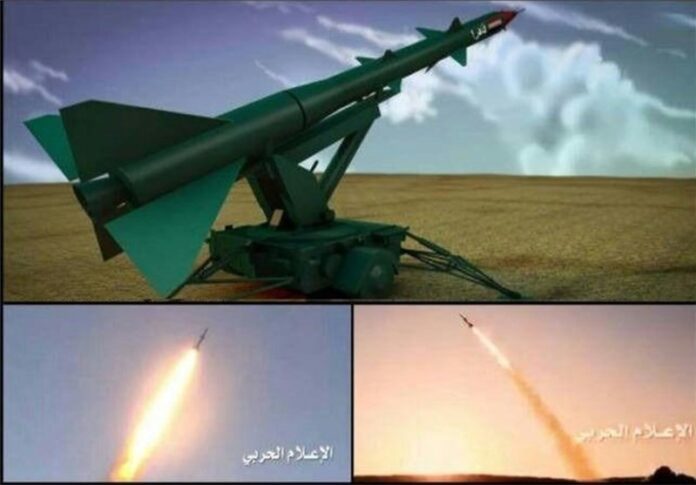
Turning to purchase of Russia’s S-330 missiles by Iran, he expressed satisfaction about the deal and said it is a wise decision made by Russian leaders.

As for the upcoming visit of the Saudi king to Russia which is slated for March, Korotchenko said the trip is a regular diplomatic visit of no particular significance during which regional issues including situation in Syria will be discussed.

He further stressed Russia’s inflexible policies in Syria and said Moscow seeks to solve the issue through Iran’s contribution.

The Russian official further described Iran as very significant partner for Russia.

Prof Samii awarded Serbian Medal of Merit

The Golden Medal of Merit is annually awarded to scientists active in cultural, scientific, technical and sports sectors by Serbian President.

After receiving the medal, Dr. Samii met with the Serbian president with the presence of Iranian ambassador to Serbia.

Professor Majid Samii was born in Tehran on 19 June 1937. After having completed his high school education in Iran, he moved to Germany, where he started his medical study at the University of Mainz.

He has been the president of the International Society for Neurosurgery and was elected as the founding president of the Congress of International Neurosurgeons (MASCIN) in 2003.

In 2007, he received Chinese top award – ‘Friendship Award’, from the Prime minister of China for his contribution to the medical progress of the country.

In 2014, Professor Samii was named world top neurosurgeon and garnered Golden Neuron Award by World Academy of Neurological Surgery. He had earlier received the 2014 Leibniz Ring Prize in Berlin.


81966125-70526221

US Destroyed Hospital in Idlib Not Russia: Syrian Envoy

“Concerning the hospital which was destroyed, in actual fact it was destroyed by the American Air Force. The Russian Air Force has nothing to do it with,” Ambassador Riad Haddad told Rossiya 24 television late on Monday.

The ambassador turned the tables on allegations that the hospital had been targeted in Russian airstrikes in Idlib, and added that there is “intelligence information” that proves that the warplanes of the US coalition struck the hospital.

Attacks on civilian infrastructures and the hospital in northern Syria reportedly left some 50 people dead on Monday.

The remarks came after Turkey accused Russia of perpetrating a “war crime” on its border.

The US has been carrying out airstrikes inside Syria since September 2014 without any authorization from the Syrian government or a UN mandate.

‘Iran, Turkey willing to boost ties’

He made the remarks in a meeting with Leader of the Republican People’s Party (CHP) Kemal Kılıçdaroğlu.

Continuation of talks with Turkey’s high ranking officials is on the agenda in order to open a new chapter in bilateral cooperation on regional issues, he added.

Bikdeli’s mission in Turkey has ended and he has had meeting with several Turkish politicians, including Leader of the Grand Unity Party (BBP) Mustafa Destici and Felicity Party (SP) Leader Mustafa Kamalak.

Sayyari: Iran mulls presence in int’l waters

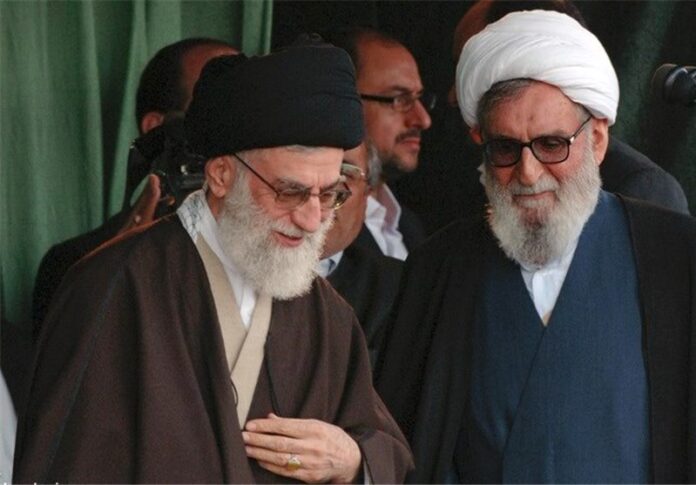
Several months ago, Supreme Leader stressed the importance of the development of the country’s southern coasts of Makran and Sea of Oman.

“This region [Makran Coasts and Sea of Oman] is an epicenter of the Navy’s mission, and I will provide the government with necessary recommendations on the necessity of reviving the region’s status,” Ayatollah Khamenei said.

He further praised the navy for its achievements over the past three decades.

Supreme Leader called for access to open seas and said access to the international waters provides defensive advantages which should be taken serious by the officials.

In recent years, Iran’s Navy has increased its presence in international waters to protect naval routes and provide security for merchant vessels and tankers.

In line with international efforts against piracy, the Iranian Navy has also been conducting patrols in the Gulf of Aden since November 2008 in order to safeguard merchant containers and oil tankers owned or leased by Iran or other countries.

Iran’s Navy has managed to foil several attacks on both Iranian and foreign tankers during its missions in international waters.