Wednesday, December 24, 2025
Home Blog Page 4528

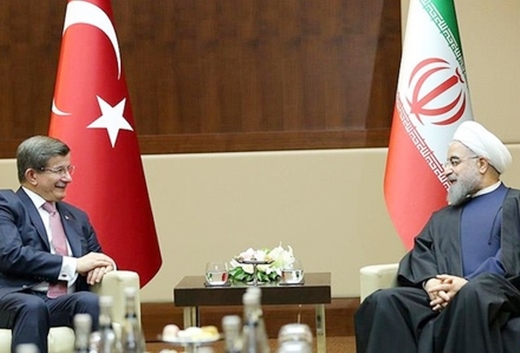
Davutoğlu: We support Iran, Turkey banking cooperation

Davutoğlu expressed his happiness toward visiting Iranian President.

Referring to Iranian great hosting during his trip to Tehran, Turkish PM emphasized on his country’s intention to boost Iran-Turkey ties and cooperation comprehensively.
He noted that changing preferential trade agreement between Iran and Turkey to Free Trade Agreement was important.

He reiterated that existing cooperation capacities have to be developed proportional to developing relations.

The Iranian president arrived in Istanbul to attend the Summit Meeting of Organization of the Islamic Cooperation (OIC) in the Turkish port city on April 13.

President Rouhani held bilateral meetings with heads of states on the sidelines of the 2-day OIC Summit meeting.

Iran, EU ready to promote bilateral cooperation

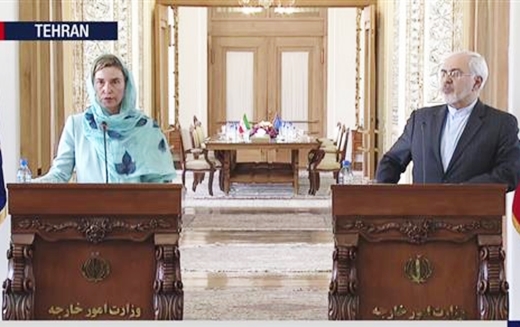
“We do not see the missile tests as a breach of the JCPOA,” she said on Saturday during a joint press conference with Iranian Foreign Minister Mohammad Javad Zarif in Tehran.

She was referring to the Joint Comprehensive Plan of Action, the nuclear agreement reached between Iran and the P5+1 states — Russia, China, France, Britain, the US and Germany — in Vienna last July.

Mogherini, however, said “this doesn’t mean that we are not concerned.”

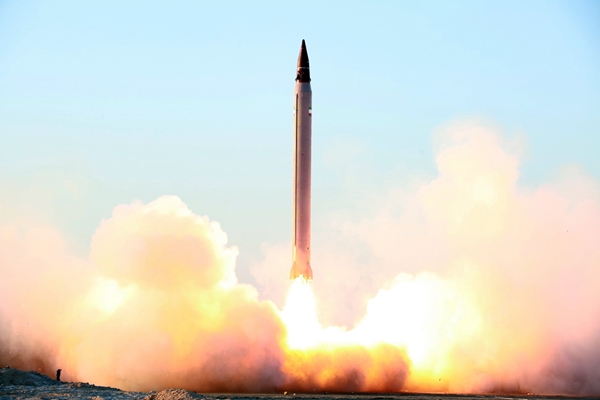
On March 9, Iran successfully test-fired two ballistic missiles as part of military drills to assess its defense capabilities. The missiles dubbed Qadr-H and Qadr-F were fired during large-scale drills, code-named Eqtedar-e-Velayat.

A day earlier, the country’s Armed Forces fired another ballistic missile called Qiam from silo-based launchers in different locations across the country.

The US claims that Iran’s missile tests violate the UN Security Council Resolution 2231 that endorsed the JCPOA.

Zarif, in turn, told the presser that Iran’s missile tests neither breach the JCPOA nor any United Nations Security Council resolutions as the missiles “are not designed to carry nuclear weapons.”

‘New beginning’ in Iran-EU ties

Elsewhere in the press conference, the two sides underscored their determination to promote Iran-EU bilateral relations in various areas, particularly economy, as well as cooperation on other issues of international importance.

Zarif said Mogherini’s trip to Tehran could be a “new beginning” in ties between Tehran and the 28-nation bloc.

“Today is the serious beginning in the relations between Iran and the European Union and we hope that this cooperation leads to common interests, progress and international development for the people of Iran and EU,” Zarif said.

He said economic and financial cooperation as well as the opening of a permanent EU office in Tehran is on the agenda of talks, adding that four statements are to be issued at the end of the discussions.

Referring to last July’s nuclear agreement, Zarif said Tehran and the EU “will cooperate to remove the remaining obstacles in the way of the JCPOA’s implementation.”

“We are certain that the EU’s political and economic interests lie in implementation of the Joint Comprehensive Plan of Action and cooperation with Iran,” the Iranian foreign minister said.

‘Diplomacy works’

The top EU diplomat, for her part, said her visit to Tehran is focused on a broad spectrum of topics from the expansion of bilateral ties to regional issues.

She further hailed the nuclear deal reached between Iran and the P5+1 states adding that the JCPOA proved “diplomacy works.”

“Iran has delivered on its side of the deal and so has the EU by lifting the sanctions,” the EU official said.

After the JCPOA went into effect on January 16, all nuclear-related sanctions imposed on Iran by the European Union, the Security Council and the US were lifted. Iran, in return, has put some limitations on its nuclear activities.

The EU official further said the 28-nation bloc will support the Iranian bid to join the World Trade Organization.

Mogherini has traveled to the Iranian capital on a one-day visit at the head of a high-ranking political and economic delegation comprising seven European commissioners.

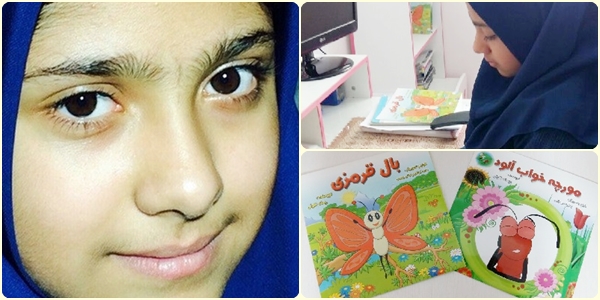
Two books by 11-year-old author enter market

Nekouei told IRNA that she had started writing stories when she was only six and she is now at sixth grade in her hometown of Jahrom, southwest of Iran.
She believes reading books was an incentive for her to write stories and that she started reading before entering school. Her parents have always encouraged and helped her to read books, she noted.
She said she used to use her imaginations and plot her stories before going to school and used to narrate them to her mother who would write them while she herself illustrated the stories.
Nekouei said she authored and illustrated two other books when she was nine and that she plans to have them printed in a near future.
One of her printed works, ‘Sleepy Ant’ is a 12-page story on a heavy-eyed ant that is tired of being lazy and tries to solve its problem.
The other work, ‘Red Winger’ is an 8-page story on a butterfly that is unhappy about its red wings and wishes to have them colorful.
Jahrom is a county located 193 kilometers southeast of Shiraz.

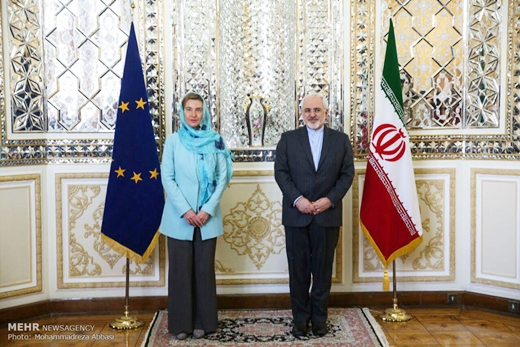
Zarif, Mogherini hold talks in Tehran

After bilateral talks on various issues, the two are to attend a joint press briefing.

During her visit to Tehran, Mogherini is to discuss with the Iranian officials about establishment of EU permanent mission here as well as issue of Syrian crisis.

She is also scheduled to meet with senior Iranian officials later in the day.

Mogherini arrived in Tehran this morning at the head of a high-ranking political and economic delegation including seven EU commissioners in the fields of energy, scientific research, the environment, education, sports and industry.

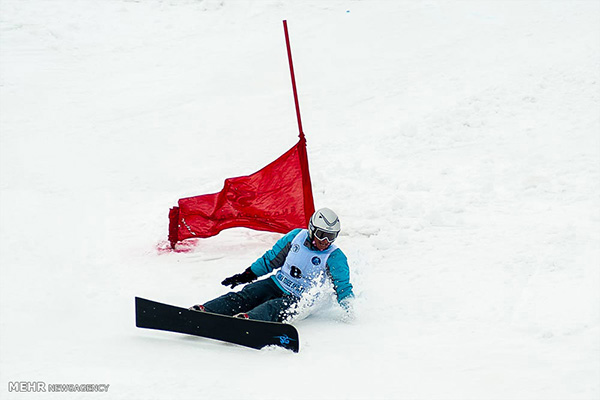
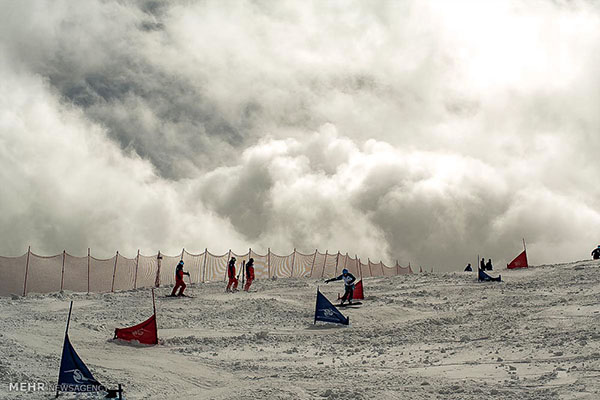
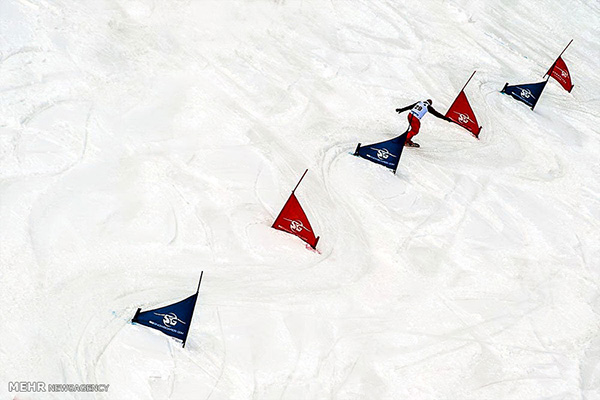
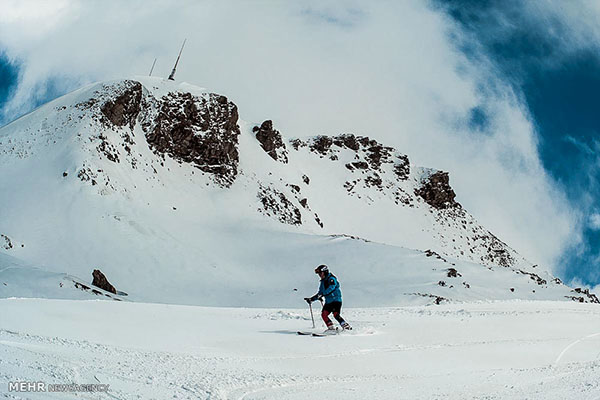
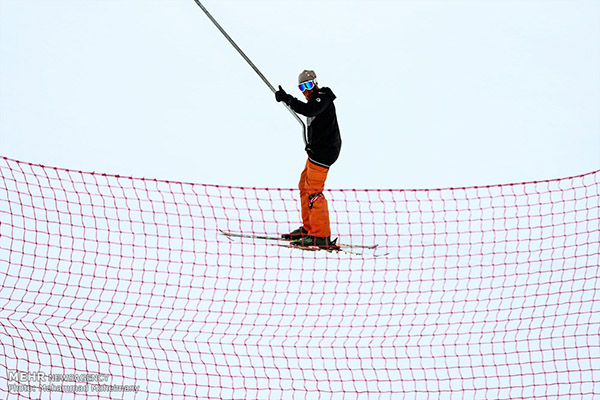
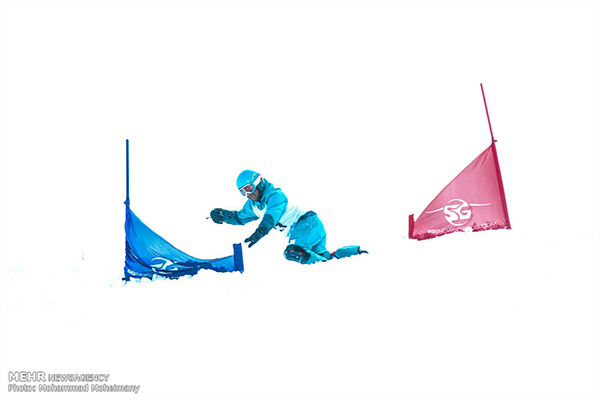
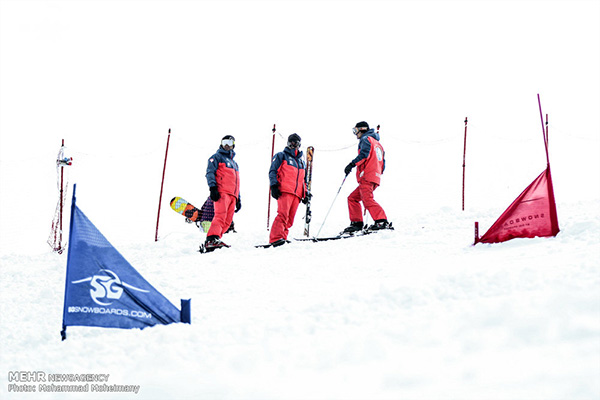
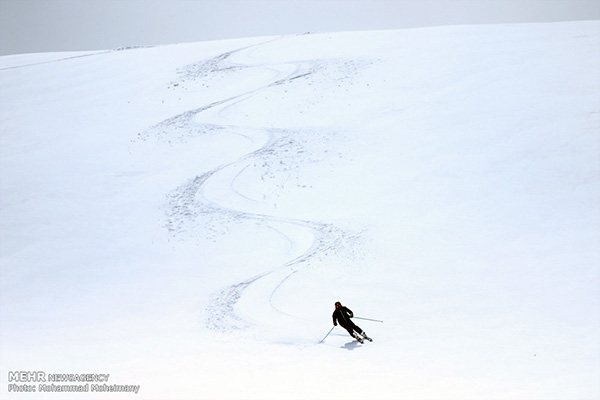
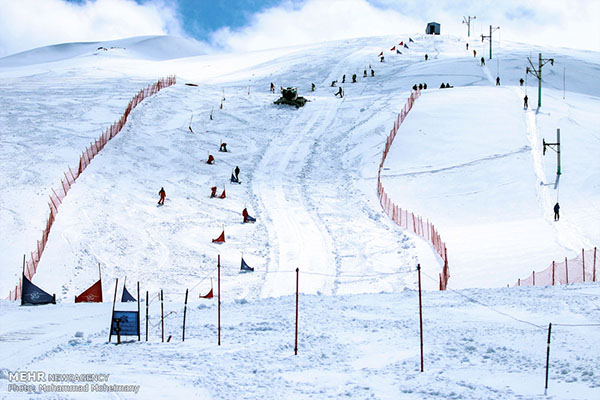
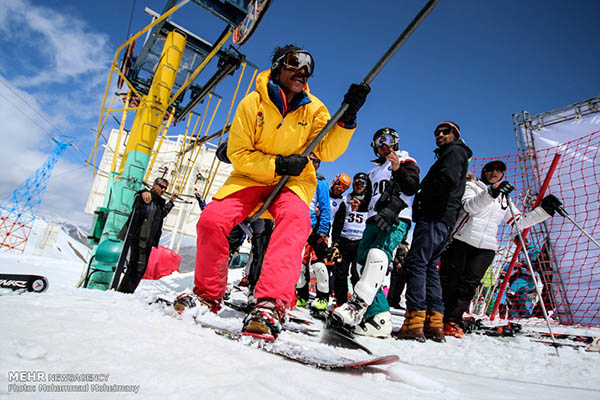
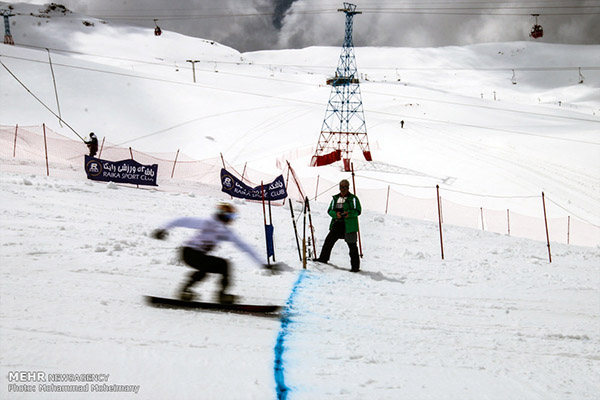
Dizin ski resort hosts intl. snowboard competition

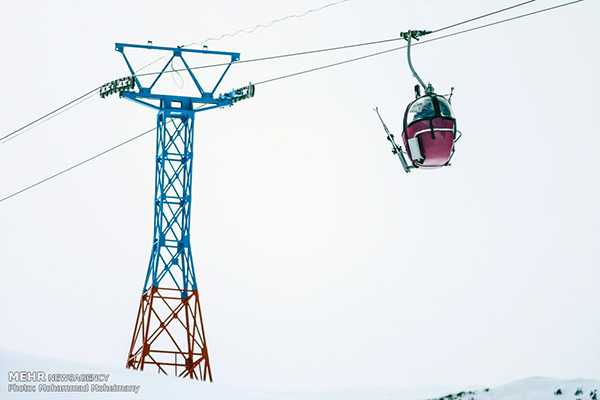
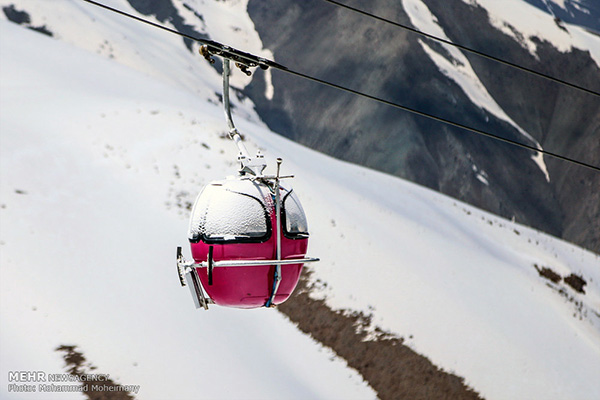
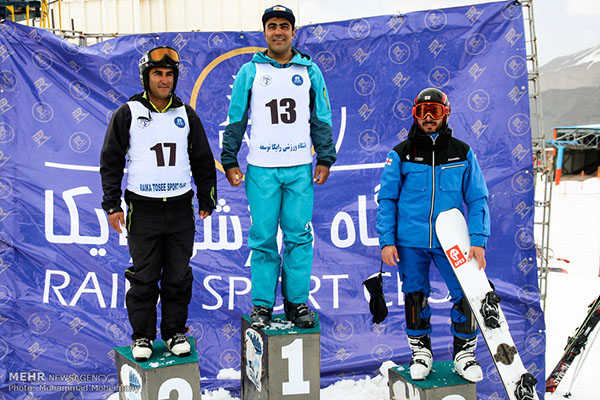
Iran is hosting an international snowboard competition event in Dizin ski resort, north of the capital Tehran. The competition has provided ski enthusiasts to showcase their skills and talents.


9th Traditional Food Festival

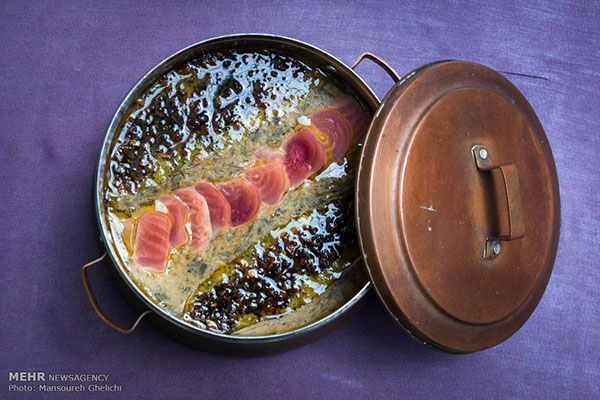
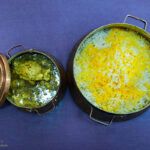
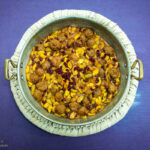
9th Iranian festival of traditional food was helf Friday at Rahyar Educational Complex, Tehran, aiming to help talented and needy students.


Why Iran Needs Ballistic Missiles: A Missile for a Missile

During the eight-year war imposed on Iran by the currently-overthrown Iraqi dictator Saddam Hussein, cities and residential areas, hospitals and schools across Iran, including in the capital city of Tehran, were hit by enemy missiles.

In those years, a bitter slogan came to life, and remains in people’s minds: “The response to a missile is a missile.” This slogan was what the people of Iran demanded from Iranian statesmen and military commanders during the eight-year conflict.

Iranian people, in rallies attended by thousands and even millions, shouted “A missile for a missile,” but their demands were not met, since Iran did not have missiles. The world, however, just watched. 

At the very end of 2014, US President Barack Obama highlighted this bitter truth in an interview with National Public Radio (NPR). In those days, the deal between Iran and world powers over Tehran’s nuclear energy program had not yet been signed. Obama said, “Iran suffered from a terrible war with Iraq, in which millions of their countrymen were lost. They have legitimate defense concerns.”

Kobra Asupar, in her article in Javan newspaper, revives the expression “A missile for a missile”. The article is a review of a small part of Iran’s contemporary history, and reminds Iranians of a difficult time.

Here is the full text of the article, which urges the international community to deal with Iran’s missile program in the same way as that of the US or Israel.


Having settled the issue of alleged concerns over Iran’s nuclear program, the US and its Arab allies are now worried about Iran’s missile program. As could be predicted, the US is preparing the grounds for a new JCPOA [Joint Comprehensive Plan of Action – the text of the nuclear deal finalized by Tehran and the six world powers back in July 2015]. Using media propaganda and psychological warfare, the US presented its own (and its allies’) problem with Iran’s nuclear technology as an international issue, and now that it has managed to resolve this, it is jubilantly proceeding to address the next issues. This time, it is Iran’s missile program!

Back on April 7, US Secretary of State John Kerry referred to Iran’s ballistic missile activity, and said, “We say very clearly to Iran that we’re prepared to work a new arrangement to find a peaceful solution to these issues… We look for Iran to make it clear to everybody that they are prepared to cease these kinds of activities that raise questions about credibility and questions about intention.”

It seems quite ridiculous if you think about it carefully; the world’s largest manufacturer and exporter of military equipment and weapons, and the country that enjoys the world’s most advanced missile systems is concerned by Iran’s missile program! Even more ridiculously, it expects Iran to acknowledge and understand its irrational concern, and even to voice its preparedness to resolve the problem. It is laughable that the US Secretary of State wants the intentions and objectives behind Iran’s missile program to be clarified! For what purpose is a missile used? Isn’t it clear? Of course, the US uses them aggressively, while Iran wants them for self-defence. The Americans are unaware of this; however, as mentioned, the US is seeking to internationalize its own personal problems, and those of its Arab allies, over Iran’s missile program.

The US is worried about Iran’s missile system; it has the right to be worried, because the missile system prevents Washington from realizing its objectives regarding Iran. An Iran with ballistic missiles is dramatically different from an Iran without them. With ballistic missiles, Iran would never be treated in the same way as Yemen, Iraq, and Afghanistan. Therefore, the US would have to forget about the military option which it once had on the table.

The UNSC imposed fresh sanctions against Iran’s missile program just when the nuclear deal was being celebrated in Iran

Progress and capability are terms which discourage Americans from using aggressive rhetoric against Iran. Right at the time when the nuclear deal was being celebrated in Iran, the United Nations Security Council, thanks to the ever-present concerns of a polite and smart United States, approved a resolution that imposed restrictions on Iran’s testing of ballistic missiles. This way, the JCPOA could not derail the path of the USA’s permanent hostility towards the Islamic Republic. In those days, President Hassan Rouhani’s administration did not take the resolution seriously enough, and even tried to downplay it, but as time passed, it came to be seen that the concerns over the resolution were not undue. This time, sanctions may be imposed on the country on the pretext of its missile program. The US is likely to highlight any unethical behavior, and this is what destroys the building of trust.

Nevertheless, we should not let anyone treat Iran in an especially different way. We do not have any problem; it was the West’s behaviour that taught the world, Iran in particular, that as long as aggression and hegemony dominates the world, it is not possible to establish security without homegrown military advances, particularly missiles, or else your country would be invaded militarily.

Iran learned from the West’s behaviour that security cannot be established without indigenous military advancements

For eight years, the Iranian people paid a heavy price, both physically and financially, for such global ferocity during the 1980s war imposed by Iraq. Now, we have the current conditions in Palestine, Afghanistan, Iraq, Syria, Yemen, and the like in front of us. Whatever solution the ever-concerned “global” community has found and implemented for American or Israeli missiles should be used for Iranian missiles as well. If their missile systems are dismantled, those in Iran should be treated in the same way. If they abandon their missiles, Iran would do the same, but their missile systems are upgraded on a daily basis; no one is there to stop them. They are encouraged and supported, and they are constantly making rhetorical military threats against Iran. Under such circumstances, it would be better for them to keep quiet on the Islamic Republic of Iran’s defense system. A missile for a missile, and negotiation for negotiation!

Once Washington and Tel Aviv dismantle their missiles, Iran would do the same. But until that time, they had better avoid talking about Iran’s defences.

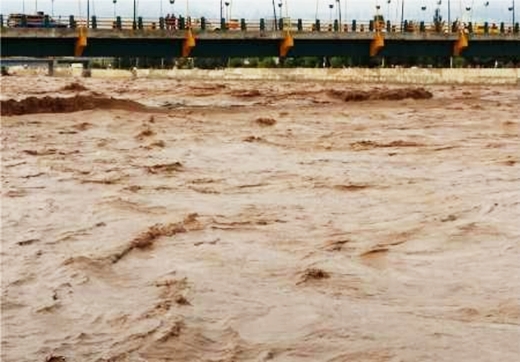
6 people killed, gone missing in floods

‘Four people have been killed and two others have gone missing in the recent floods across the country,’ Amin Saberi-Nia said on Friday night.

Earlier on Friday, spokesman of Red Crescent Relied and Rescue Organization said that relief workers are fully ready to provide services for people affected by floods at 126 cities in 12 provinces.
Mostafa Mortazavi said that Khuzestan, Ilam, Lorestan, Isfahan, Fars, Chahar Mahal-Bakhtiari, Northern and Razavi Khorasan, East Azarbaijan, Gilan, northern Bushehr and Hamedan were marooned by flood waters after incessant heavy rains.

Some 5,600 people affected by the flood were provided with relied aid, he said, warning about the raising level of water in Karoun River after heavy rains.

President Hassan Rouhani has earlier called on Vice President Es’haq Jahangiri to mobilize all the resources available to help villagers hit by floods in Iran.

The President made the phone call on Thursday from Istanbul, Turkey, where he is attending the OIC Summit.

Rouhani was briefed on the latest measures taken in Khuzestan, Ilam, Lorestan and West Azarbaijan provinces to help the people affected by floods.

Stressing the use of all capacities available for managing the floods, President Rouhani underlined notifying the people in a timely way and urged all managers in the aforementioned provinces to cooperate with the relevant authorities.
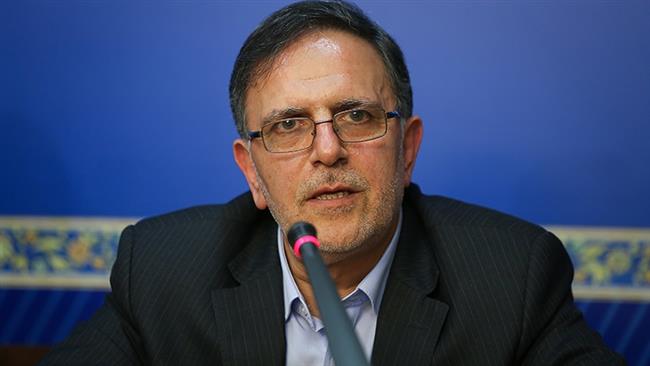
CBI governor: Iran’s trade partners return in post-sanctions era

Valiollah Seif

‘The upgrade of Iran’s status at an international level resulted in cooperation with the foreign trade partners in the post-sanctions era,’ Seif said in a Thursday meeting with US Secretary of Treasury Jack Lew in Washington.

‘Our goal is making full use of the huge trade, investment and financial capacities of Iran in its $1.4 trillion,’ he added.

Seif reiterated that the Central Bank of Iran has had considerable progress in restoration of stability to macro economy, improvement of budget management and strengthening the banking system and it has also been successful in improving the infrastructural reforms to increase job opportunities and reducing reliance of the country’s economy on oil.

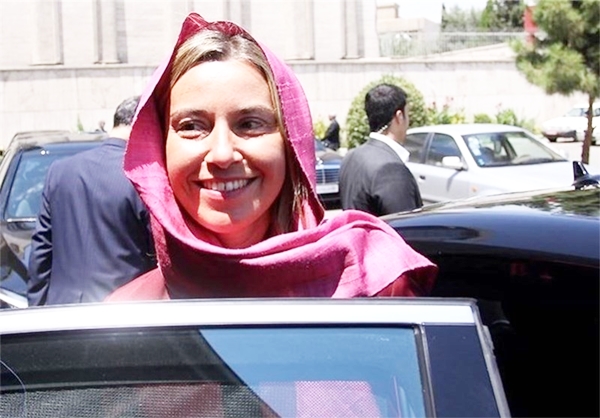
EU chief arrives in Tehran for expanding ties

Mogherini arrived in Tehran on Saturday, heading a high-ranking diplomatic-economic delegation consisting of seven EU commissioners in the fields of energy, scientific research, environment, sports and industry.

Mogherini is due to hold talks with senior Iranian officials during her one-day visit.

She plans to meet with Iranian Foreign Minister Mohammad Javad Zarif, Parliament Speaker Ali Larijani and Secretary of Supreme National Security Council Ali Shamkhani.

EU foreign policy chief is accompanied by seven EU commissioners and plans to discuss expanding trade ties between Iran and the EU and removing obstacles on opening an EU office in Tehran.

Mogherini and Zarif are expected to sign a statement and some agreements on oil and energy.

Mogherini would leave Tehran on Saturday but a number of EU commissioners would stay in Tehran for further talks.