Sunday, December 28, 2025
Home Blog Page 4516

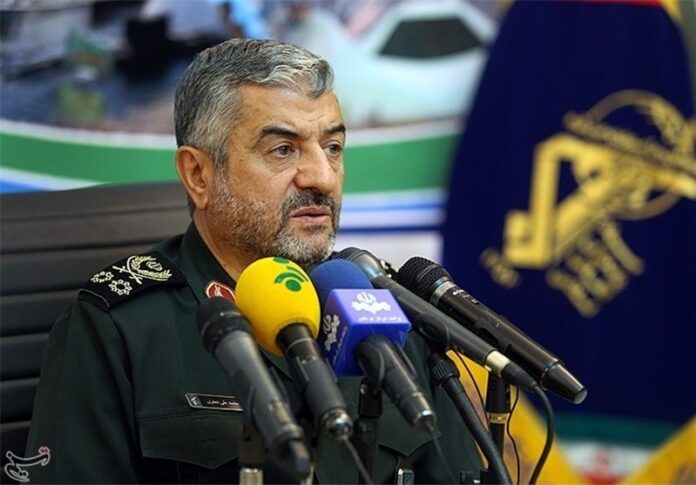
IRGC Commander Warns against Enemies’ Soft War

“We have been facing a war for years, but we just do not feel it,” General Jafari said in a meeting with a group of IRGC commanders in the northwestern Iranian city of Tabriz.

“What threatens the Islamic Iran today is the soft war, the enemy’s cultural and political war, against us,” he stated.

“We are all responsible today to counter the enemy’s soft war,” the IRGC commander said, adding that cultural problems are the main concern of the Leader of the Islamic Revolution Ayatollah Seyed Ali Khamenei.

Leader of the Islamic Revolution Ayatollah Seyed Ali Khamenei has in many occasions raised the alarm at the effects of an extensive soft war the enemies have waged against Iran, saying one of the main objectives is to change the religious and political beliefs of people, particularly the youth.

Back in October 2015, the Leader in a meeting with IRIB officials highlighted the IRIB’s heavy responsibility in the face of the “complicated, colossal and critical” arena of the enemy’s soft war.

Unlike the actual and hard warfare, soft war is impalpable and the target society may not feel the attack even after the enemy strikes a blow, Ayatollah Khamenei warned.

While hard war provokes public sentiments and strengthens national unity, soft war kills the other side’s motives and brings about division, the Leader explained.

Imam Khamenei also described the enemy’s main objective in the soft war against Iran as a “metamorphosis of the Islamic Republic of Iran” by changing its nature and maintaining its facade.

In the enemy’s soft war, it does not matter that the title “Islamic Republic” would remain intact or even a cleric leads the country, but what matters is that Iran would serve the interests of the US, Zionism and the global power network, the Leader explained.

Ayatollah Khamenei also cautioned against the plots that aim to influence the people’s “religious, political and cultural beliefs” in the soft war, referring to the Iranian younger generation and intelligentsia as the main targets in the onslaught.

“The main and ultimate objective of the engineered soft war is the internal breakup and metamorphosis of the Islamic Republic through a change in the beliefs and weakening the people’s faith, particularly those of the youth,” Ayatollah Khamenei underlined.


A look at Iranian newspaper front pages on Feb 10

Iran Newspaper front pages

Bahman 22 (February 11) is marked as the anniversary of the victory of the 1979 Islamic Revolution. Iranians celebrate the day by street rallies every year to show the world they as ever before support the revolution despite all the economic hardships they have been going through since they overthrew the Shah. All the papers on February 10, 2016 published headlines calling on the people to renew their allegiance to the revolution by participating in the national rallies on Thursday.

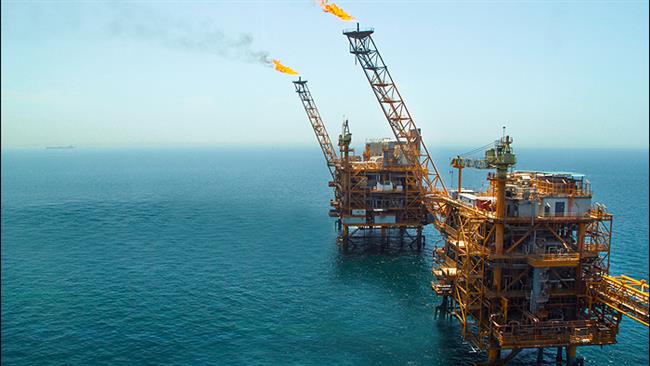
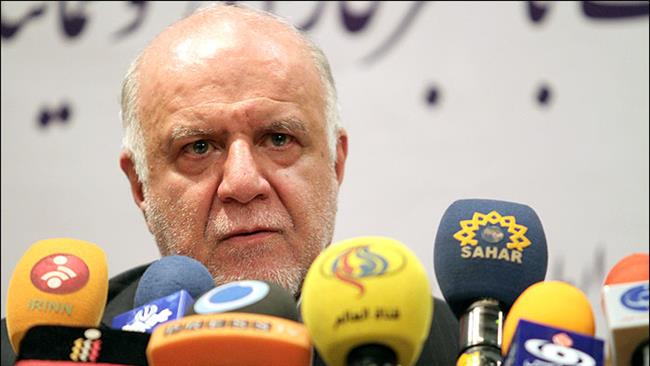
On Tuesday, Iranian Minister of Petroleum Bijan Zangeneh held a press conference in which he outlined the ongoing developments in the country’s energy sector. He answered many questions by the reporters about a range of issues including details of new model of oil contracts, known at Iran IPC, and the latest updates about the country’s major oil and gas projects. Iran is now developing the world’s biggest gas field in Persian Gulf waters which is said to contain 8% of the world’s gas reserves. Zangeneh’s answers to different queries by the reporters where highlighted by most papers on Wednesday.

Iran is also trying Babak Zanjani for a major oil scam. Recently a wave of calls has begun asking maximum punishment for the guy for disrupting the country’s economy under the sanctions. Many papers covered this in their front pages as well.

Here are the highlights:


Ettela’at:

1. Iran Air Force equipped with Nasr cruise missiles

2. FM: Saudi troop to attack Syria at US suggestion

3. Rouhani: Win-Win will be the basis of Iran ties with world

4. 3.7% on-year rise in birth rate since March

5. ISIS born from Vahabi thinking: Shamkhani
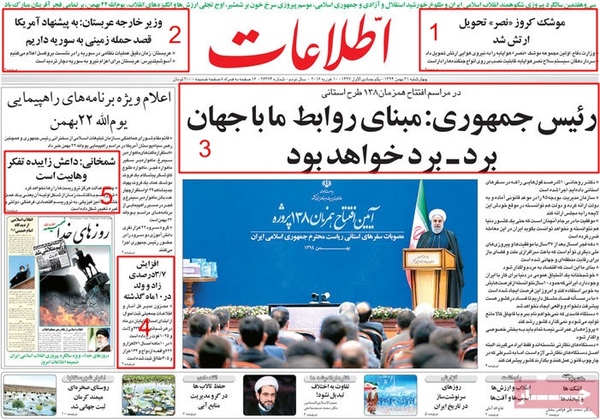


Ettelaat daily


Abrar:

1. Fear looms in Abadan with 1,000 shots

2. Iranian nation to celebrate revolution anniversary in Bahman 22 rallies

3. Iran, EU to boost ties

4. Japan to consider sanctions on North Korea

5. World Community worried about N. Korea moves
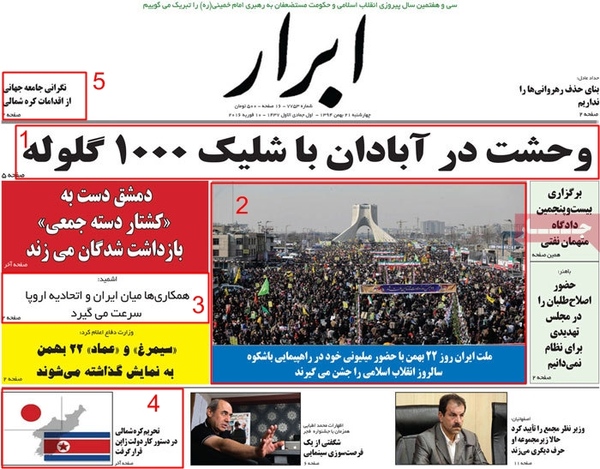
 

Abrar daily


Arman-e Emrouz:

1. Hashemi is not alone…

2. “Principalists will be sunk in the see of election surprises”

3. Everyone will come tommorrow [Anniversary of the victory of the Islamic Revolution on 22nd of Bahman]

4. Smugglers poised to take New Year market for a ride

5. No more than 5 will win votes from this list [Principalists object the list of candidates presented by the coalition of factions]

6. Drug abuse in bright daylight: Iran Police
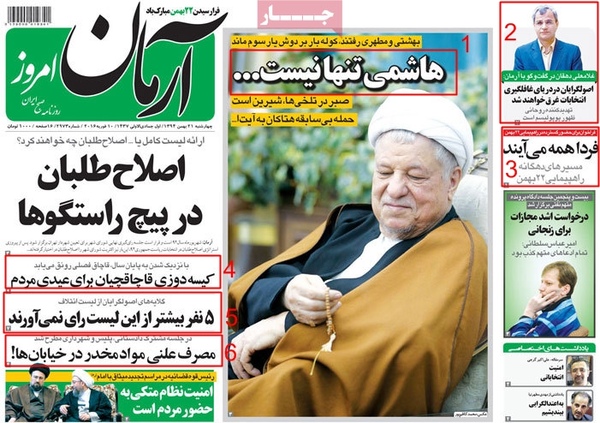
 

Arman Emrooz daily


Ebtekar:

1. Celebrating the victory [referring to the anniversary of the victory of the 1979 Islamic Revolution]

2. Rouhani: Nuclear deal rendered Iran, P5+1 peaceful

3. Oil Minister: We will not be adamant about IPC

Iranian Minister of Petroleum Bijan Zangeneh said his ministry will not be at loggerheads with dissenters about the new contract model, known as Iran Petroleum Contract or IPC.
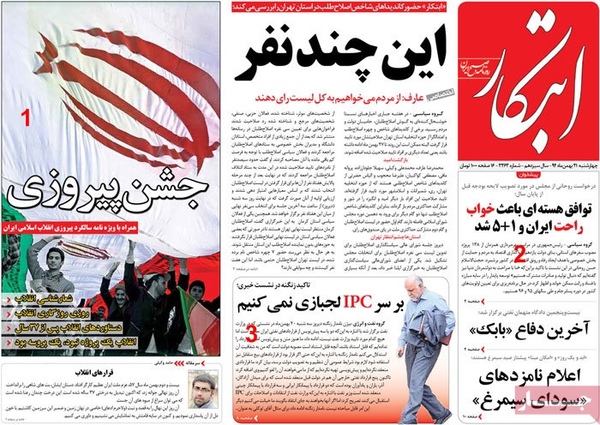
 

Ebtekar


Asrar:

1. FM: We must make Nuclear deal irreversible

2. President: World eager to cooperate with Iran

3. Iran can reinvigorate part of global economy: Vice President

4. Iraqi city of al-Ramadi freed totally

5. Trivial mistakes in talks could harm the nation: AEOI Chief

6. 50,000 worn-out hospital beds in Iran

7. Mogherini aide: EU, Iran to boost ties

8. Report of Saudi Embassy attack submitted to Leader: Deputy Interior Minister
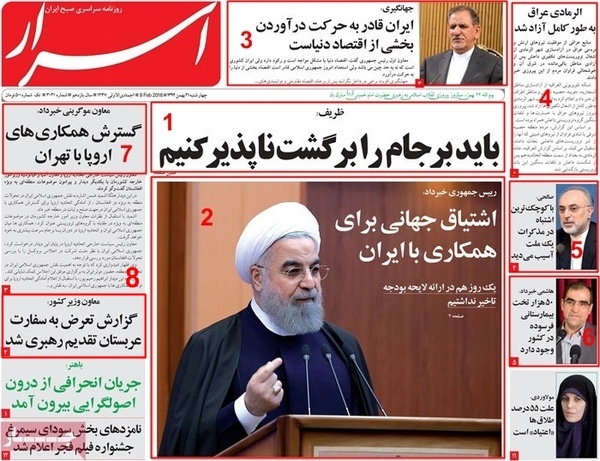
 

Asrar daily


Keyhan:

1. Witness tomorrow: Nation’s response to 3 years of American makeup

2. March of imported fruits in Iranian market; severe losses of Iranian orchard owners

3. EU calls on NATO to curb refugee crisis

4. Iraqi Army on alert to salvage Mosul

5. Next year national budget at odds with production, economic prosperity
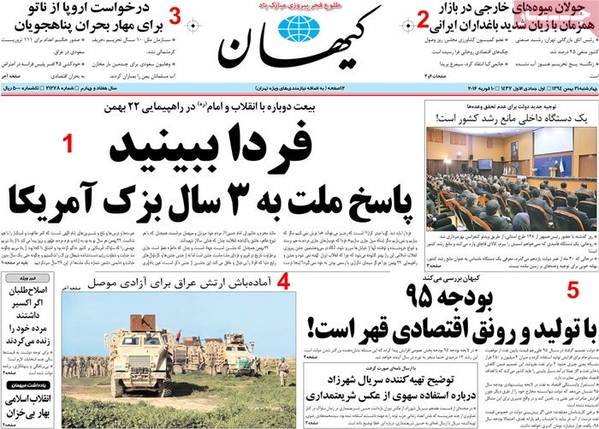
 

Kayhan


Etemad:

1. Capital punishment for oil criminals

2. List of reformists on alert [Prominent reformist figures are holding intensive meetings for finalizing the list of Tehran candidates for late February parliamentary elections]

3. Oil industry will never stop running as long as I am in office: Iranian Petroleum Minister
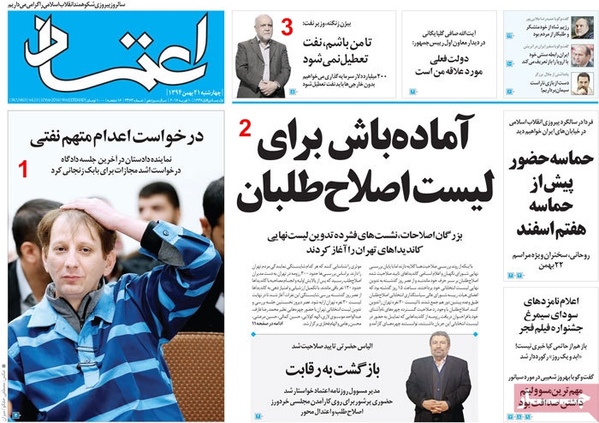
 

Etemad daily


Aftab-e Yazd:

1. Day of unity; a report about reformists calling on the Iranian nation to participate in the 22nd Bahman rallies across the country

2. American tourists flock Iran
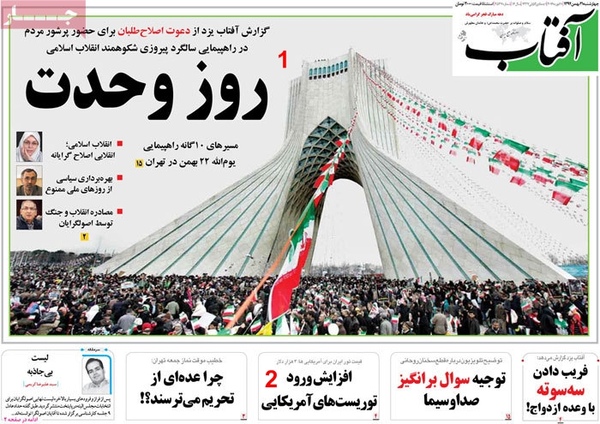


Aftabe yazd


Afkar:

1. AEOI Chief: Iran considers building small power plants

2. Putin: Turkey must take first step in normalization of ties
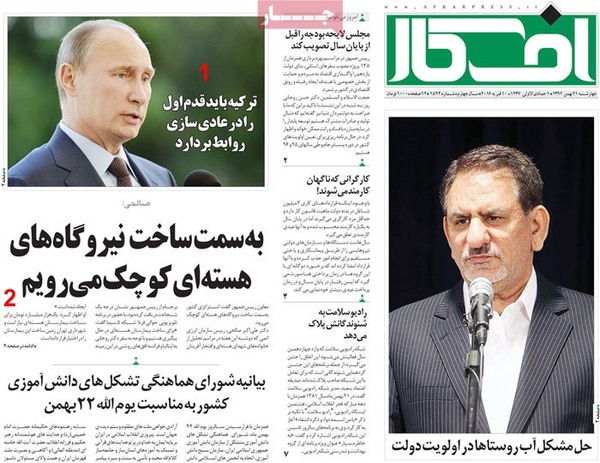
 

Afkar daily


Emtiaz:

1. Deliberations for building three cemeteries in Tehran

2. Iran oil industry needs $200b for development: Minister

3. Iran to offer 4G internet to all major cities
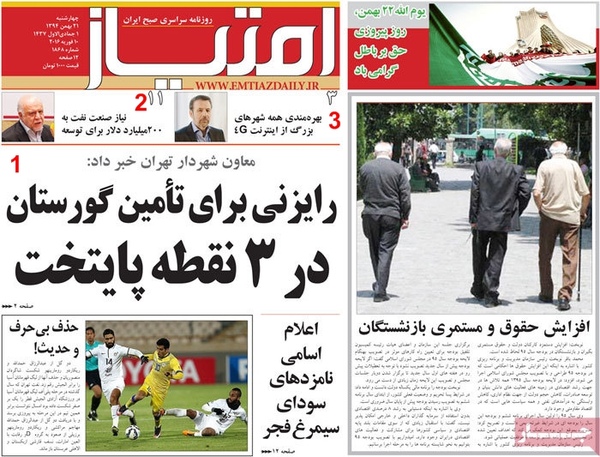
 

Emtiaz daily


Amin:

1. President Rouhani: We will not make promises that we cannot keep

2. Drug addiction cause of 55% of divorce files: Vice President
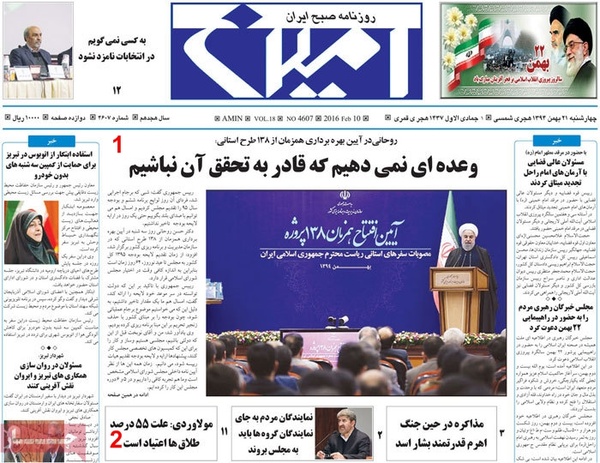
 

Amin daily


Resalat:

1.  Principalist MP: Livelihood, security, development, motto of principalists in parliament election

2.  Qom Seminary teachers: Enemy seeks to derail revolution by influence and sedition

3.  22nd Bahaman rallies in 1,000 cities, towns

4.  Wealth of 62 magnates equal to wealth of half of the world population

5.  Vicious circle of green continent leaders in dealing with refugee crisis
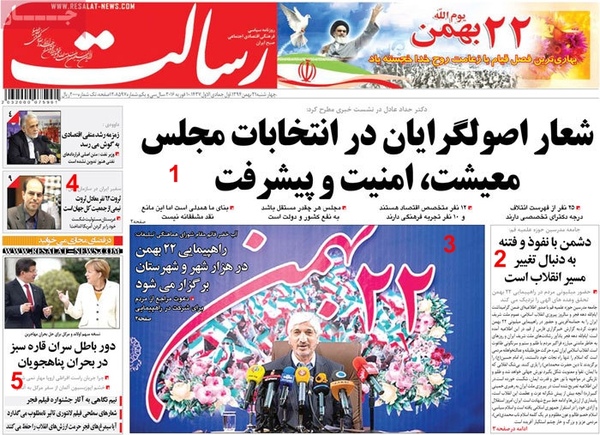
 

Resalat


Iran:

1. President: No development can be expected with corruption, monopoly

2. Fajr Film nominees announced

3. Call for all citizens to partake in Bahman 22 rallies
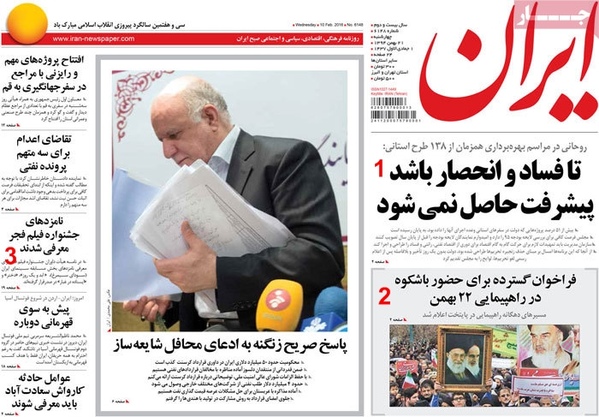
 

Iran daily


Payama Zaman:

1. 70% satisfaction at healthcare services [in Iran]

2. Underground firms on the rise

3. Iran eyes 11th Asia Futsal cup
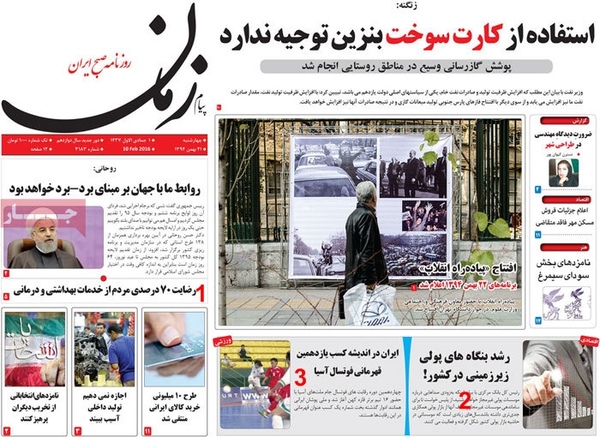
 

Payame zaman daily


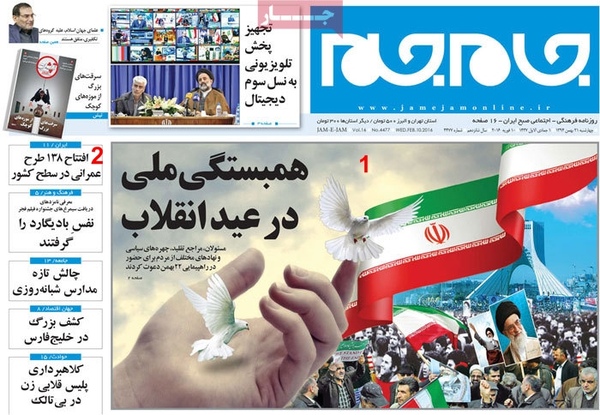
Jamejam:

1. National unity on Revolution eve

2. 138 development projects launched across Iran
 

Jame Jam daily


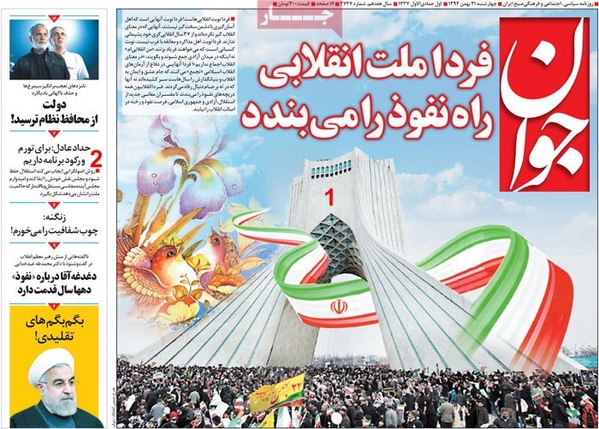
Javan:

1. Iranian nation to stop foreign influence [on Bahman 22 rallies]

2. MP: Principlist coalition has plans for inflation, recession
 

Javan daily


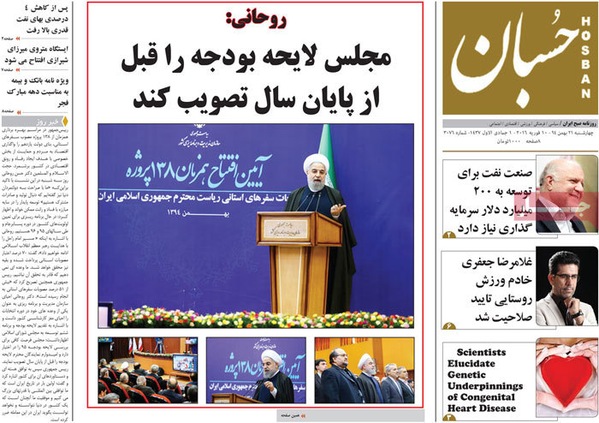
Hosban:

 Rouhani urges Parliament to pass budget bill before yearend
 

Hosban daily


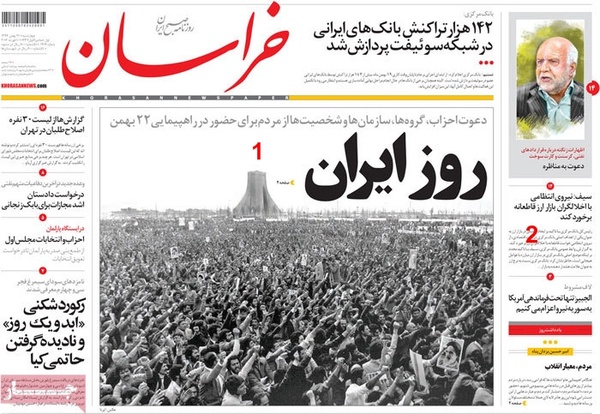
Khorasan:

1. The day of Iran

2. CBI Chief: Police combats forex disrupters
 

Khorasan daily


Rah-e Mardom:

1. Grounds broken for building Khatam 1,000-bed Hospital

2. 16% rise in price of MS drugs in post-sanctions!
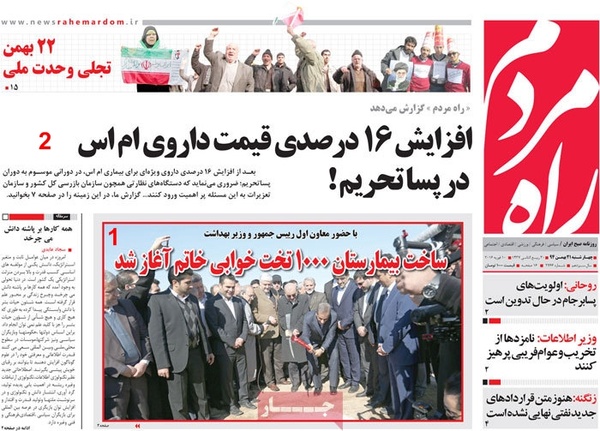
 

Rahe mardom daily


Abrar Eqtesadi:

1. Russia bids to sell Iran oil pipes

2. Ban on skyscrapers not retroactive

3. No plans to raise fuel prices: minister

4. CBI: Government no longer adjusts forex rate
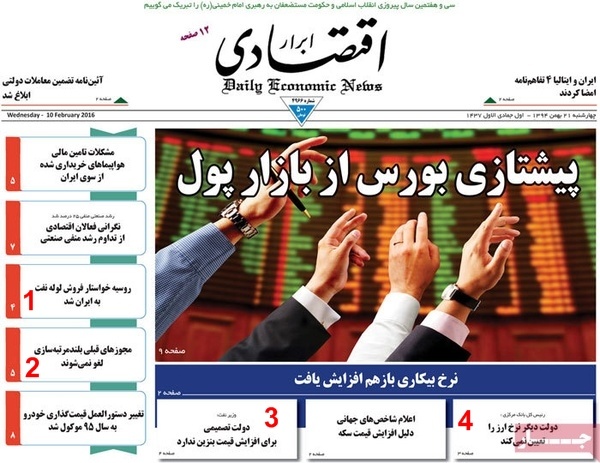
 

Abrare Eghtesadi


Ta’adol:

1. CBI double standards in forex market

2. Iran concedes offers Tehran-Tabriz electric railway to Italy

3. Saving natural resources by breaking state monopoly

4. NATO may enter refugee crisis
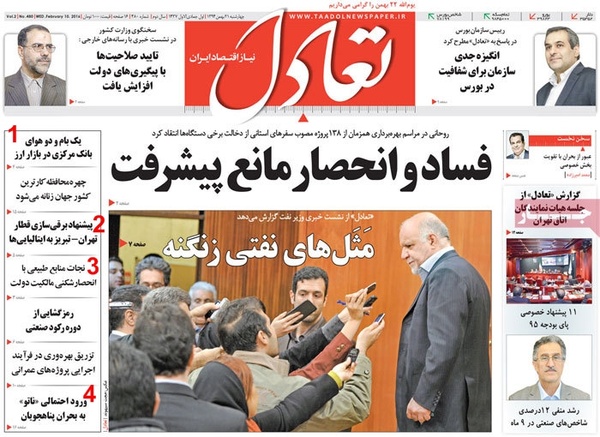
 

Taadol daily


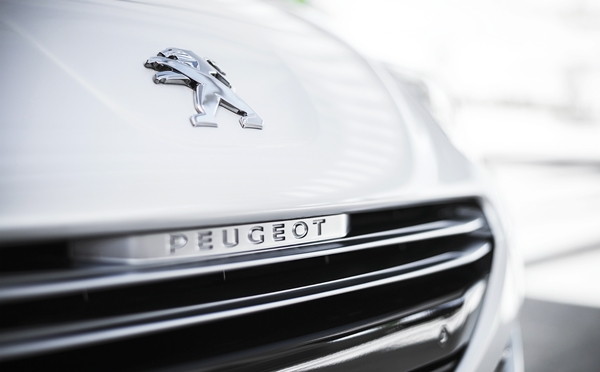
Road to Iran’s Market Full of Potholes for France’s Peugeot

The French auto manufacturing company PSA Peugeot Citroen started its negotiations with the Iranian side a few months before Iran and the Group 5+1 (Russia, China, the US, Britain, France, and Germany) implemented a deal over Tehran’s nuclear energy program. The French knew that the Iranians are too dissatisfied with their re-entrance to the country’s market, and that they will need more time to revive the severed ties between Peugeot and Iran Khodro Company (IKCO), the leading Iranian car manufacturer. Therefore, there was no time to waste.


The two Iranian and French carmakers held extensive reconciliatory talks during the months leading to the implementation of the nuclear deal (JCPOA). The Iranian President Hassan Rouhani also signed contracts during his recent visit to France. However, it seems that neither of the two moves has helped the train of industry and trade to get back on the track of co-operation.

A summary of two independent reports by Fararu news website translated by Iran Front Page (IFP) clearly shows that the road ahead of Peugeot cars in the Iranian market is not that much paved. Does the French partner of IKCO, the largest carmaker in the Middle East, enjoy the marketing skill to restore its lost reputation for a powerful return to the major and competitive market of the new Iran? Such renowned brands as Mercedes Benz, Fiat, and the like are coming!


Iranian Parliament to Boycott Peugeot: MP

An Iranian lawmaker Alireza Zakani has announced that the parliament is preparing a plan to boycott the French carmaker Peugeot.

Despite the contract Peugeot had with Iran until 2014, it unilaterally terminated its implementation two years before the end of the contract, Zakani told Fars News Agency.

This incurred heavy losses on the Iranian side, the IKCO, and consequently, customers of Peugeot cars in Iran were faced with a lack of services and car parts, he added.

He further pointed to certain reports indicating that the French side has refused to transfer the technology to its Iranian partner during 17 years of IKCO’s co-operation with Peugeot, and the Iranian side is always assembling car parts, being dependent to France in major technologies.

Therefore, he added, Iranian parliamentarians have considered the continuation of partnership with Peugeot as being against national interests.

The lawmakers have boycotted the French company to encourage domestic carmakers to work with the world’s best auto manufacturers, Zakani noted.

He also referred to the remarks recently made by Iranian Minister of Industry, Mine, and Trade Mohammad Reza Nematzadeh on the secrecy of the contract with Peugeot, saying that such a secrecy is not acceptable since the IKCO is a state-owned factory.

If these Iranian carmakers were owned by the private sector, the contracts could be secret, but they are state-owned and belong to all the Iranian people, he said, stressing that the carmakers cannot keep secrets on such contracts, and the parliament members should monitor the details.

“The country does not have a good experience of these secret deals,” he added.


Peugeot Urged to Compensate for Iran’s Losses: IKCO

Managing Director of Iran Khodro Company Hashem Yekke Zare announced that the IKCO has told the French company during the negotiations that Peugeot was the one that left Iran and incurred losses on IKCO, and thus should compensate.

“The exact amount of compensation is €427.600.000,” Yekke Zare noted.

He further explained about the contract with Peugeot, saying that it is very beneficial for Iran, and that IKCO has insisted on its interests during the negotiations.

Yekke Zare also touched upon the secrecy of the contract, and noted, “At the international level, the contracts made between carmakers are usually not publicized.”

The secrecy of the contract means that the release of the contract’s details might disrupt the relations with partners and rivals, he added.

The IKCO chief also noted that 80% of the contract with Peugeot can be publicized, but the rest, 20%, is secret.

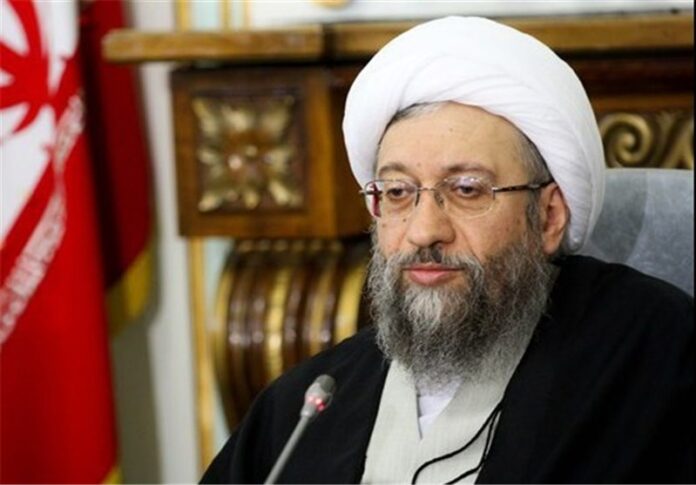
High Turnout in Elections to Disappoint Enemies: Iran’s Judiciary Chief

“The significance of the (Iranian) Establishment hinges on people’s presence and their votes,” Ayatollah Amoli Larijani said, after paying tribute to the late founder of the Islamic Republic Imam Khomeini here in Tehran.

People’s presence in political scenes such as elections has always guaranteed the Islamic Revolution, he noted, adding that the enemies are disappointed by such participation.

A high turnout will make the enemies abandon their plots for aggression and domination, the Iranian judiciary chief went on to say.

In similar remarks on Monday, Leader of the Islamic Revolution Ayatollah Seyed Ali Khamenei said massive presence of people in the upcoming elections as well as rallies marking the anniversary of the Islamic Revolution’s victory will secure the country against hostile schemes.

Addressing the Iranian Air Force and Air Defense commanders and personnel in Tehran, Ayatollah Khamenei described elections as “revitalization of the nation and a new pledge of allegiance to the goals of the Revolution.”

Massive turnout in the polls will give more dignity to the country and the Establishment and safeguard them, Imam Khamenei underlined.  “Hence, it is everyone’s duty to cast their ballots.”

The Assembly of Experts and the parliamentary elections are slated to be held simultaneously on February 26.

There will be 290 seats in the Iranian parliament and 88 in the Assembly of Experts up for grabs.

Members of the assembly are directly elected to office by people for an eight-year term. It holds biannual meetings to appoint a new chairman.


IRGC says countering ‘common enemy’ of Muslims in Syria, Iraq

“The Islamic Revolution Guards Corps…within the framework of its advisory and supportive missions in the Muslim Syrian and Iraqi nations is countering the common enemies of the Islamic Ummah, including Daesh and Takfiri terrorists,” the IRGC said in a statement on Tuesday.

It said the IRGC’s activities beyond Iran’s borders lie within the framework of its “significant mission in safeguarding the [ideals of the 1979 Islamic] Revolution” in an uncompromising manner.

The IRGC called on the Iranian people to watch out for enemy plots, warning that the “treacherous US” is attempting to “infiltrate” Iran under the cover of the implementation of Tehran’s nuclear agreement with the six world powers.

More than 260,000 people have been killed and millions more have been displaced in more than four years of turmoil in Syria. The government’s battle against militants has seen a major boost over the past months especially since late September 2015 when Russia began supporting Damascus through combat sorties against terrorist groups.

Iraq has fought its own battle against the Daesh Takfiri group since summer of 2014, with government forces managing to dispel the terrorists from key urban areas in north and west of the country.

Iran needs $200bn oil investments

“To develop the joint fields and enhance recovery of oil reservoirs as well as secure development targets, we need investment totaling $200 billion dollars,” Bijan Zangeneh, Iran’s oil minister told reporters.

Zangeneh said the upstream sector requires $130 billion in investments, while $70 billion needs to be injected into processing facilities and oil refineries.

“We have to think to provide it through foreign resources and be after acquiring of technology,” he said, adding that Iran’s domestic resources are not sufficient enough to develop the country’s oil industry, as reported by Sputnik news agency.

Elsewhere in his remarks, Zangeneh said three draft oil agreements have been prepared and a fourth is on the way. However, he did not specify for which projects the drafts are being worked out.

The Iranian minister further emphasized that Iran will put at least 15 new oil projects on tender in the new Iranian calendar year (to being on 21 March 2016).

Zangeneh emphasized that the priority for awarding the projects will be given to those that are situated on Iran’s shared borders.  He also emphasized that the projects that require new technologies to boost their Improved Oil Recovery (IOR) rate will be also prioritized.

Officials have said Iran will ramp up production by 500,000 barrels per day (bpd) within a short time after the removal of sanctions and raise it to 1 million bpd within six months.

In mid-January, the country saw a wide range of nuclear-related economic sanctions lifted when a deal that it had reached with the P5+1 group of countries last summer was implemented.

A main theme of the sanctions included bans on investments by foreign companies in the country’s oil projects.

Iran has also revolutionized its oil contracts to make its projects more attractive to the investors. The country revealed the new format of its oil contracts which is named Iran Petroleum Contract (IPC) last year.  Under the IPC, different stages of exploration, development and production will be offered to contractors as an integrated package, with the emphasis laid on enhanced and improved recovery.

IPC is replacing buyback deals. Under a buyback deal, the host government agrees to pay the contractor an agreed price for all volumes of hydrocarbons the contractor produces.

But under the IPC, NIOC will set up joint ventures for crude oil and gas production with international companies which will be paid with a share of the output.


Iran ready to discuss oil with Saudis

“We support any form of dialogue and cooperation with OPEC member states including Saudi Arabia,” Zangeneh told reporters.

He said some Persian Gulf countries have announced that they are looking for trying to make economic benefits for themselves by helping to push down oil prices.  “But what they want to achieve is not at all for economic gains,” said Zangeneh.

“If there were a strong political will, the price of oil would have been balanced within one single week,” IRNA quoted him as saying.

The Iranian oil minister had in early January emphasized that the current oil prices harm all producers and certain countries’ insistence on overproduction is politically motivated.

“None of the oil producers is happy with the existing prices which will harm suppliers in the long term,” he has emphasized.

According to the Iranian minister, “there is a political will behind OPEC indecision over production ceiling in the organization.”

OPEC has been producing nearly a million more barrels of oil each day than its 30 million bpd ceiling for the past 16 months.

The organization approved a Saudi plan to scrap allocating fixed production quotas to member countries in its December 2011 meeting and introduced output ceiling of 30 million barrels per day (bpd) which does not specify quotas.

Zangeneh has described the decision a “historic mistake”, saying “making up for this big mistake and reviving the quota system in OPEC is a very hard task.”

Because of overproduction chiefly by Saudi Arabia and non-OPEC producers, there is currently up to 2.5 million bpd of excess oil in the market which has caused crude prices to lose around 60% of their value since mid-2014.


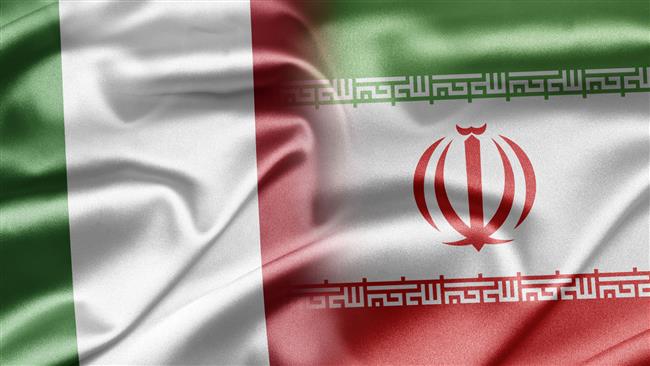
Iran eyeing joint food exports with Italy

The announcement was made by Masoud Khansari, the president of Tehran Chamber of Commerce, in a meeting with the visiting Italian Minister for Agricultural, Food and Forestry Policy Maurizio Martina.

Khansari told Martina that the value of supplies of food to Russia as well as the regional markets in 2015 stood at $108 billion.  He emphasized that a major share of such supplies can be jointly provided by Iran and Italy, IRNA reported.

The official further said that Italy was Iran’s top European trade partner throughout the years when the Islamic Republic was under sanctions.

He added that Iran hopes the economic contracts that were signed during a recent visit by President Hassan Rouhani to Italy would be implemented to promote the level of trade between the two countries.

Martina is visiting Iran together with a major delegation comprising 310 Italian entrepreneurs and officials.  Earlier on Tuesday, Iran and Italy signed a number of Memorandums of Understanding (MoUs) for cooperation in areas of energy, transportation and trade expos.

On a related front, IRNA has quoted Riccardo Monti, the president of the Italian Trade Agency, as saying that the Italian market is open to Iranian products.

Monti added that reopening of the Iranian market is a unique opportunity for business, which will be beneficial to both nations.

The value of Iran’s exports to Italy stood at €1 billion in 2015.

Last month, Iran’s President Hassan Rouhani visited Italy, where the two countries signed several contracts, worth up to €17 billion, covering various sectors including health, transportation, agriculture and energy.


Islamic Revolution’s Ideology Diametrically Opposed to Takfirism: Iran’s Shamkhani

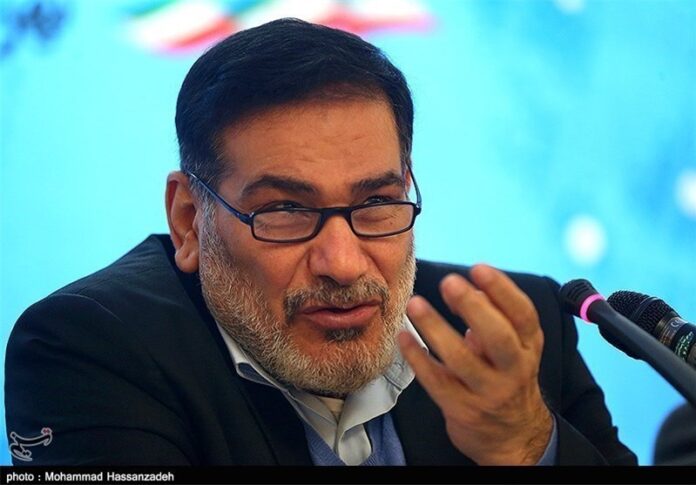
Addressing a conference on Takfiri terrorism in Tehran on Tuesday, Shamkhani described the 1979 Islamic Revolution as a “role model” for the Islamic Awakening movements that is “diametrically opposite” to Takfiri thinking.

The Islamic Revolution, led by the late Imam Khomeini, established a new political system in Iran based on Islamic values and democracy.

Shamkhani further emphasized that the West is using Takfiri terrorist groups, like Daesh (ISIL), as a tool to pursue its policy of spreading Islamophobia.

The objective behind Islamophobia is to undermine the holy status of Islam and its progressive rules and justify secularism in the region and the world, the Iranian official stated.

Daesh, as a Takfiri group in Iraq and Syria, is believed to be supported by the West and some regional Arab countries.

The terrorist group has been committing heinous crimes against all ethnic and religious groups, including Shias, Sunnis, Kurds, Christians, Izadi Kurds and others in Iraq, Syria and several other countries.


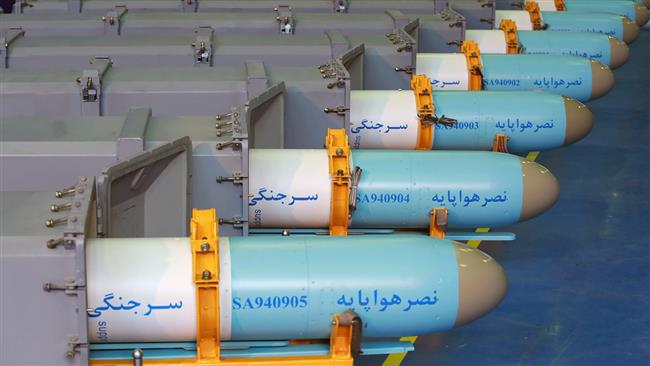
Iran Air Force equipped with Nasr cruise missiles

Iran’s Aerospace Industries Organization affiliated with the Ministry of Defense on August 25, 2015 launched the production line of Nasr cruise missile in a bid to upgrade the country’s deterrence.

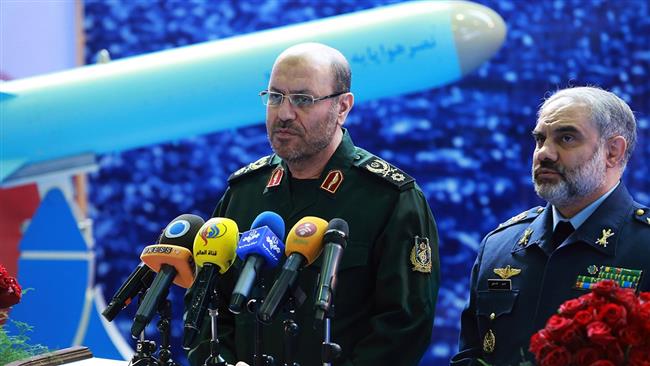
The cruise missiles were handed over to Iran’s Air Force on Tuesday in a ceremony in the presence of Iran’s Minister of Defense Brigadier General Hossein Dehqan and the Islamic Republic of Iran Air Force (IRIAF) chief, Brigadier General Hassan Shah Safi.


General Dehghan


Dehqan said Defense Ministry experts have the capability to supply the strategic needs of the Iranian Armed Forces in different sectors.

He noted that nothing can hinder or stop the Defense Ministry’s move towards further empowering the Armed Forces.

The minister said Nasr cruise missiles are precise enough to hit targets and significantly boost the operational and tactical power of the Armed Forces.

“The Nasr air-launched system can be installed on different types of jet fighters,” the Iranian defense minister pointed out.

In recent years, Iran has made major breakthroughs in its defense sector and attained self-sufficiency in producing important military equipment and systems.

The Islamic Republic also regularly conducts military drills to enhance the defense capabilities of its military and to test modern military tactics and equipment.

Iran has repeatedly said that its military might poses no threat to other countries, reiterating that its defense doctrine is based on deterrence.