Tuesday, May 5, 2026
Home Blog Page 451

Trump posts footage of US military operation in Yemen

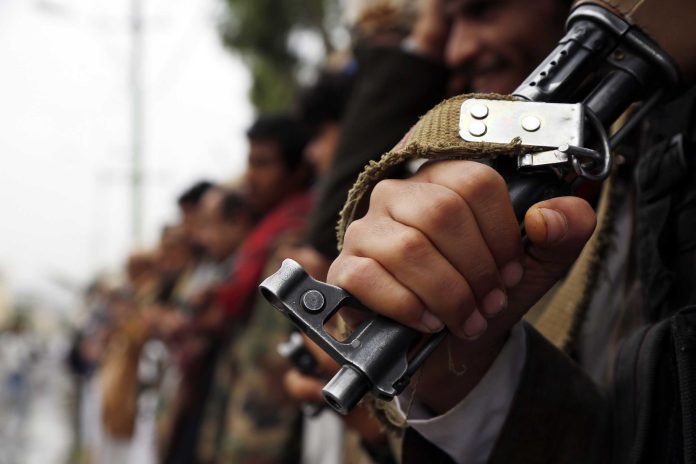
Yemen Houthi

The video, apparently filmed by a drone, shows dozens of people standing in an oval on a rural terrain.

A munition falls from the sky, causing an explosion and leaving a large crater. Two vehicles and no bodies are visible in the aftermath.

“These Houthis gathered for instructions on an attack. Oops, there will be no attack by these Houthis!” the president wrote.

“They will never sink our ships again!”

Some were quick to suggest online that the people in the video were civilians participating in a tribal gathering, and posted photos of similar gatherings in Yemen in the past.

The Houthis control a large part of Yemen, including its capital, Sanaa. The armed group has been attacking merchant vessels in the Bab-el-Mandeb Strait off the Red Sea and firing ballistic missiles at Israel in solidarity with the Palestinians in Gaza.

The US stepped up its strikes in Yemen last month, as Trump vowed to restore the safety of navigation in the vital shipping area.

“Your attacks must stop … If they don’t, hell will rain down upon you,” Trump wrote on his Truth Social platform in March.

Yahya Saree, the spokesman for the Houthi military, reiterated on Friday that the group “will not abandon its religious, moral, and humanitarian duties toward the oppressed Palestinian people, regardless of the repercussions.”

FM: Turkey wants no conflict with Israel in Syria

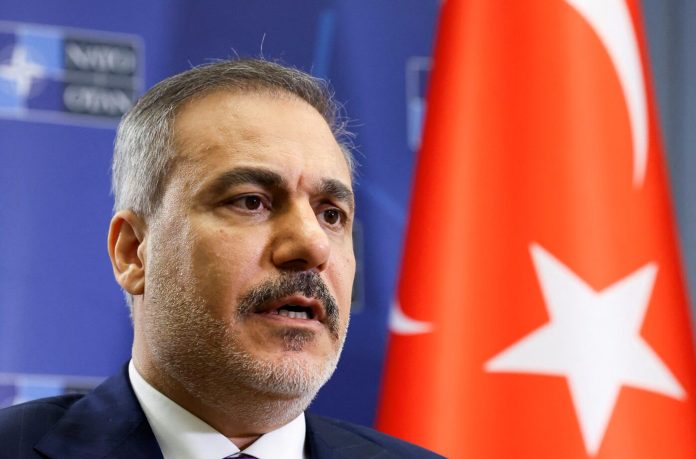
Speaking to Reuters on the sidelines of a meeting of NATO foreign ministers in Brussels, Hakan Fidan said that if the Syrian government wanted to have “certain understandings” with Israel, then that was its own decision.

Israel has launched repeated air strikes on Syria and has been capturing more territory since the ousting of former President Bashar al-Assad in December.

Fidan’s comments come as Turkey steps up efforts to strike a deal with Damascus that would give Ankara control over northern Syria’s Tiyas airbase, also known as T4, where it plans to deploy air defence systems.

Sources familiar with the matter told Middle East Eye earlier this week that Ankara and Damascus have been negotiating a defence pact since December.

The agreement would see Turkey providing air cover and military protection for Syria’s new government, which currently lacks a functioning military.

Fidan warned that while he did not want to see Israel and Turkey – longstanding allies that have fallen out over Israel’s assault on Gaza – collide in Syria, Israel’s attacks risked future regional instability.

Although Israel views a Turkish military presence in Syria as a potential threat, Ankara aims to stabilise the country by leveraging its military capabilities and filling the power vacuum left by the withdrawal of Russia and Iran.

Omer Ozkizilcik, a non-resident fellow for the Syria Project in the Atlantic Council, told MEE that Israel’s prime aim in Syria was to have a “weak Damascus”.

“With the fall of the Assad regime, Israel sees a united Syria as a geopolitical risk. Its strategy to exploit, especially the Druze, but also the Kurds and the Alawites, to prevent a unified Syria is not going as Israel hoped,” he added.

“So, Israel is lobbying to maintain US sanctions against Syria and continues to target positions in Syria to prevent stability and refugee returns.”

Ozkizilcik stated the deployment of Turkish air defences and air force to Syria would limit Israel’s freedom to control the skies.

“Turkey’s role in Syria will have no effect towards Israel. It will focus on countering [the Islamic State group] as Turkey wants to convince Trump to withdraw from Syria and to deter a possible Iran-led attack on Syria from Iraq or Lebanon. I think Israel also knows this,” he explained.

“In short, Israel doesn’t see a threat from Turkey in Syria but doesn’t want to be contained in its current operational freedom to bomb Syria.”

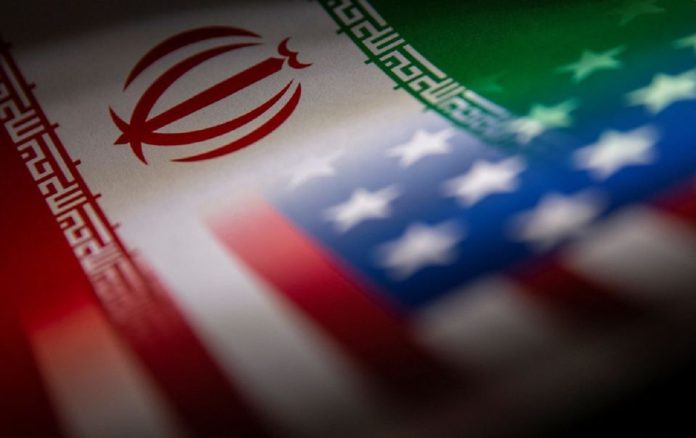
Iranian newspapers clash over talks with US: “Suicidal Surrender” vs. “A Step Forward”

Iran US Flags

In a fiery editorial titled “Negotiating with the US is Suicide Out of Fear of Death,” Hamshahri’s editor-in-chief, launched a scathing attack on advocates of diplomacy.

He dismissed talks as neither “wise, honorable, nor rational,” echoing the Leader’s long-standing skepticism of Washington.

The article argued that Iran’s strengthened military and nuclear capabilities, along with its regional influence, render negotiations unnecessary.

He accused proponents of dialogue of “political panic,” alleging they amplify US threats while ignoring Iran’s deterrence power.

“Why negotiate when America is weaker than ever, with no regional allies, a struggling economy, and no appetite for war?” he wrote.

On the other side, Jomhouri-e Eslami, known as a pragmatic outlet, framed engagement as a strategic necessity.

The paper praised Tehran’s reported response to a US diplomatic letter as a “step forward,” emphasizing that even indirect talks could ease economic sanctions and isolation.

It pointed to domestic support for dialogue, noting that even some officials privately welcomed the move despite public anti-US rhetoric.

However, the paper advised caution, suggesting indirect talks first to test Washington’s sincerity.

It also warned of hardline “saboteurs” who benefit from perpetual conflict, urging officials to prioritize national interests over other things.

Iranian president dismisses deputy over controversial Antarctic vacation

Masoud Pezeshkian

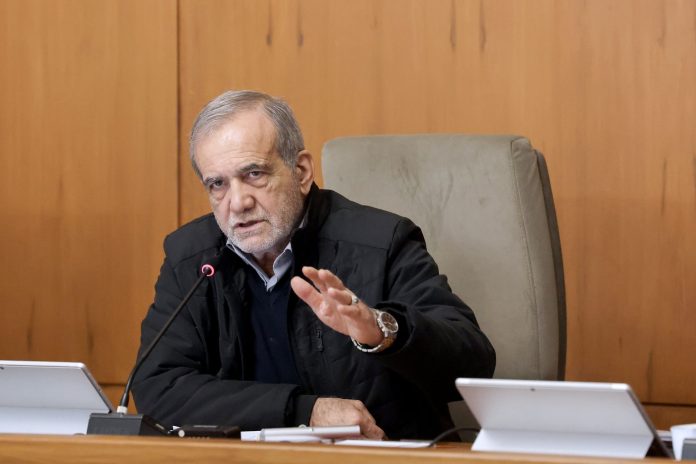
In his dismissal letter, President Pezeshkian acknowledged Dabiri’s years of service but stated, “In a government that prides itself on following Imam Ali’s model of simple living, such expensive leisure travel by officials – even at personal expense – is unjustifiable while many citizens face economic hardships.”

“Your long-standing friendship, collaboration, and valuable service as Parliamentary Deputy in the 14th administration do not preclude our primary commitment to honesty, justice, and the promises we made to the people. Therefore, we regretfully cannot continue our cooperation with you in the administration,” the letter read.

The decision came after photos of Dabiri’s Antarctic trip circulated on social media, sparking widespread criticism.

Dabiri had previously refused to resign, saying he would only step down if formally dismissed.

Government Spokesperson Fatemeh Mohajerani commented on the incident, noting, “While personal lifestyle choices are private, cabinet members must recognize their actions carry greater public sensitivity.”

Dabiri served as the presidential liaison to Iran’s parliament.

US says ‘testing’ if Russia is serious about peace in Ukraine

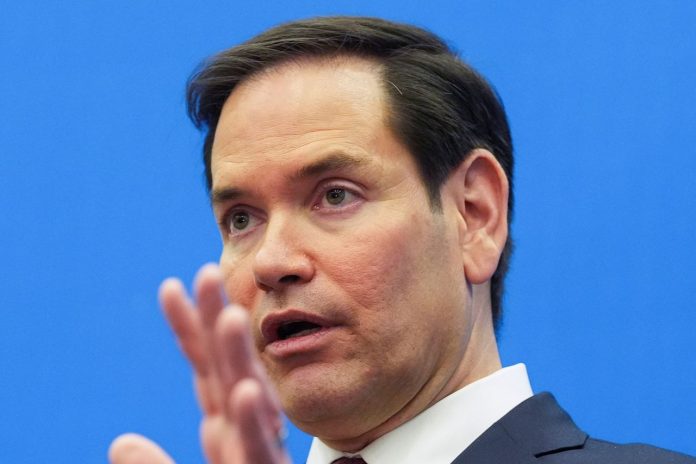
“We’re testing to see if the Russians are interested in peace,” Marco Rubio told journalists in Brussels after talks with NATO allies.

“Their actions – not their words, their actions – will determine whether they’re serious or not, and we intend to find that out sooner rather than later.”

He added: “The Russians and [Vladimir] Putin will have to make a decision about whether they’re serious about peace or not. If it’s a delay tactic, [Trump]’s not interested in that. We will know soon enough, in a matter of weeks, not months, whether Russia is serious about peace or not.”

Rubio also appeared to strike a more sympathetic tone towards Kyiv, noting that the Ukrainians “have shown a willingness to enter, for example, into a complete ceasefire”.

US officials appear to be growing increasingly impatient with the lack of progress in the ongoing peace negotiations. While Trump continues to publicly suggest that Putin wants to end the war, there is growing recognition within the US administration that the Kremlin is unlikely to back down from its maximalist demands before it commits to peace conditions that would effectively dismantle Ukraine as an independent, functioning state and pull it firmly into Russia’s sphere of influence.

On Friday a Russian missile attack killed at least 18 people, including nine children, in a residential area of the central Ukrainian city of Kryvyi Rih, local officials announced.

​The attack on the hometown of Volodymyr Zelensky, the Ukrainian president, damaged residential blocks and sparked fires, Serhiy Lysak, the region’s governor, wrote on the Telegram messaging app.

At least 50 people were wounded, the emergency services said, adding that the figure was growing.

Zelensky responded by calling on the west to exert greater pressure on Moscow. “The whole world sees it,” he wrote on Telegram.

“Each missile, every attack drone proves that Russia seeks only war.”

Russia claimed it had targeted a gathering of servicemen but Ukraine accused Moscow of “again spreading false information”.

“The missile struck a residential area with a playground,” the military’s general staff said in a statement on Telegram.

“Through this latest violation of the norms of international human rights, the insidious enemy shows that it is in no way seeking peace but rather intends to continue its invasion and war to destroy Ukraine and all Ukrainians,” it added.

Russia has previously rejected a US proposal for a full and immediate 30-day ceasefire, to which Ukraine had agreed. Meanwhile, neither side appears to be adhering to an earlier agreement to temporarily halt strikes on energy infrastructure during that period.

European allies have been urging Washington to take a tougher stance on Moscow and push for a serious commitment to a ceasefire, with some suggesting that a clear deadline should be set.

Moscow “owes an answer to the United States”, which had “worked very hard to come up with a mediation effort and a ceasefire proposal”, the French foreign minister, Jean-Noël Barrot, said in Brussels, standing alongside the British foreign minister, David Lammy.

“[Putin] could accept a ceasefire now, he continues to bombard Ukraine, its civilian population, its energy supplies,” Lammy stated, adding, “We see you, Vladimir Putin, we know what you are doing.”

There was similar rhetoric among other European allies of Ukraine, with the German foreign minister, Annalena Baerbock, dismissing Putin’s talk of negotiations as “nothing but empty promises”. She accused the Russian leader of “playing for time by raising ever-new demands”.

The Kremlin this week sent an envoy to Washington, marking the first time since the start of Russia’s full-scale invasion that a senior Russian official had travelled to the US for talks with American counterparts.

Kirill Dmitriev met Steve Witkoff, Trump’s senior adviser on Russia negotiations, as well as Rubio at the White House on Wednesday. Dmitriev described the meetings as evidence of a “positive dynamic” between the two countries and claimed progress had been made towards peace in Ukraine.

Rubio, the US’s top diplomat, took a more cautious stance, saying he hoped Dmitriev would deliver a clear message to Moscow.

“He’ll take some messages back, and the message is the United States needs to know whether you’re serious or not about peace,” he stated.

Trump has previously suggested he would impose a 25% or even 50% tariff on countries buying Russian oil if he concluded that Putin was obstructing peace talks.

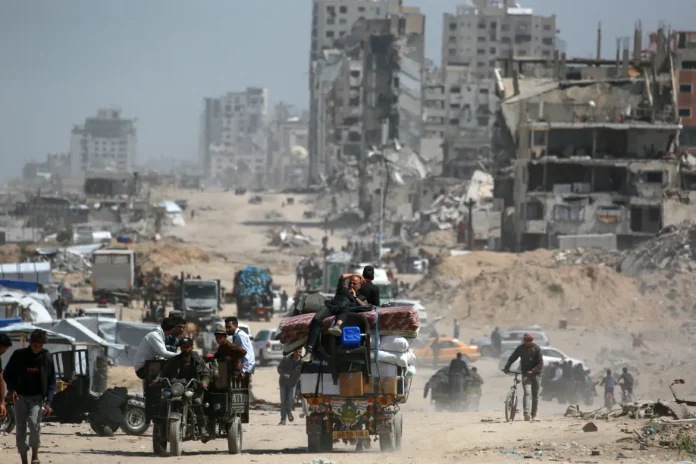
UN says Israel turned two-thirds of Gaza into no-go zones

Gaza War

Among the restricted areas is a large swath of southern Rafah, where Israel’s military issued a new displacement order on March 31, declaring it was returning to “fight with great force”.

The restrictions also cover parts of Gaza City, where Israeli troops launched a new ground offensive on Friday morning to expand their “security zone”.

These escalations have triggered one of the largest mass displacements of the war, pushing hundreds of thousands of Palestinians – many already displaced multiple times – to flee yet again.

The military push follows Israeli Prime Minister Benjamin Netanyahu’s threat to intensify the offensive to pressure Hamas into further concessions.

“We are now dividing the Strip and we are increasing pressure step by step so they will give us our hostages,” Netanyahu said in a video message on Wednesday.

Israel resumed its attacks in Gaza on March 18, shattering a two-month ceasefire after talks with Hamas broke down over the next phase of the agreement.

Netanyahu wants Hamas to release the 59 remaining Israeli captives in exchange for Palestinian prisoners and aid, but without Israel committing to end the war or pull out troops. For a final ceasefire deal, Netanyahu insists Hamas must disarm – a demand the group calls a “red line” – and has openly backed plans for Israel to seize security control of Gaza and push Palestinians out.

Hamas calls for a return to the previously agreed three-stage ceasefire framework and has offered to free all the captives at once in return for a permanent ceasefire.

Since October 7, 2023, Israel’s war in Gaza has killed 50,523 Palestinians and wounded 114,638. At least 1,200 people were killed in Israel during the Hamas-led October 7 attacks and 250 taken captive.

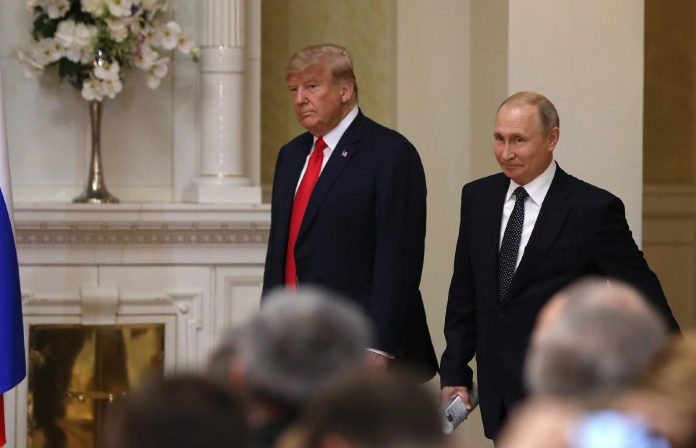
Trump’s team advises against calling Russian leader for now: NBC

Trump Putin

On March 30, Trump said he is “very angry” at Putin about the lack of progress, but plans to speak to him in the near future. Trump and Putin held a phone call on March 18 amid peace talks in Saudi Arabia to end Russia’s war against Ukraine.

Despite Trump saying he plans to speak to Putin days earlier, no call between the two leaders has been scheduled, the unnamed officials said, adding his advisors are against the idea until the Russian leader commits to a full ceasefire.

The report added that it is possible Trump will abruptly decide he wants to speak to Putin.

Moscow has shown signs it is unwilling to move forward on a peace deal with Ukraine, and Russian authorities have listed maximalist demands in ceasefire negotiations with Ukraine and the U.S.

Ukraine has agreed to a U.S.-proposed full 30-day ceasefire, saying on March 11 that Kyiv is ready if Russia also agrees to the terms. So far, Moscow has refused.

On April 2, U.S. President Donald Trump’s special envoy for Ukraine, Keith Kellogg, said Ukraine and Russia are already approaching a ceasefire despite prior reports that a ceasefire is unlikely in the coming months.

Police: 838 die in road accidents in Iran during Nowruz holidays

That’s according to Commander of Iran’s Traffic Police Brigadier General Seyed Teimour Hosseini.

He added that 19,166 people have been wounded during the period.

Hosseini said Nowruz travelers have started returning to their cities in huge numbers and noted that the volume of road traffic has increased significantly since Thursday.

Referring to the strict monitoring of traffic violations by the police, he said as of April 2, any driver who commits a traffic violation will have his license confiscated for three months.

The policec commander added that throughout the implementation of this plan, 3,166 violators have been identified so far, and their licenses have been confiscated and they have been fined as well.

In other remarks, Hosseini underlined that many travelers have postponed their return to the last days of the holidays, saying despite repeated police warnings about travel time management, traffic on the roads has significantly increased.

Millions of Iranians travel to tourist destinations in the country during Nowruz each year.

The high number of deaths this year came despite that Iranian traffic police and other officials urged citizens to join the “No to Accidents” campaign and avoid dangerous driving behaviors.

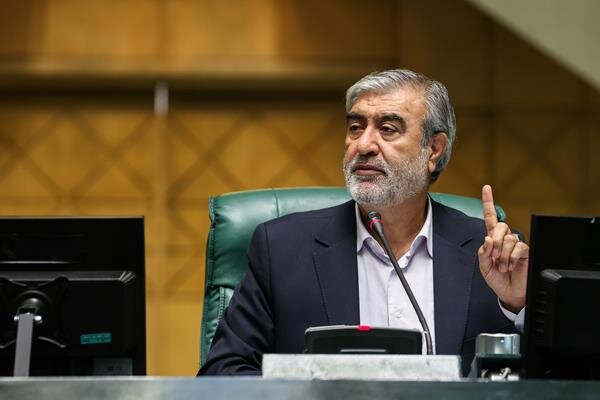
Iranian MP: Iran will negotiating with US on an equal footing

Ebrahim Azizi added that Iran’s stance is logical and it’s open to dialogue.

While noting that the US has gone back on its word frequently in the past, Azizi said various events over the past half a century have shown that the US does not keep its promises and only talks about negotiations.

The MP went on to say that the US is not trustworthy today either.

He also referred to the developments in West Asia and their impact on the equations and said under such circumstances, Iran must act rationally and intelligently.

Azizi stressed that today, the issue of energy control in West Asia, which sits on 60 percent of the world’s resources, has caused countries to set their sights on this region.

The Iranian lawmaker added that wisdom, prudence, and intelligence dictate that Iran should use all possibilities in the enemy’s combined war.

Azizi also pointed to the threats by the US and Israel against Iran, saying, “We strongly warn the oppressive and bullying leaders of the US and Israel to stop threatening the great people of Iran and to know that if they create insecurity, we will make the entire world unsafe for them.”

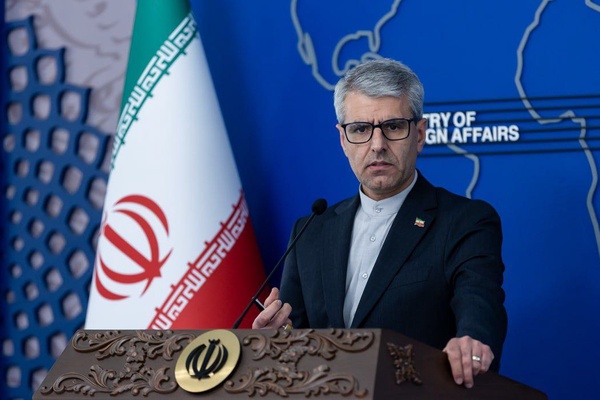
Iran spox deplores instrumental use of rights mechanisms by Germany, UK Against Tehran

Esmail Baqaei

He condemned the two countries’ leading role in pushing an anti-Iranian resolution at the UN Human Rights Council, stating that they lack the moral standing to lecture others on human rights.

Baqaei emphasized that the resolution’s content is factually incorrect, relying on unsubstantiated claims attributed to unnamed individuals, rendering it legally baseless and invalid.

The Foreign Ministry spokesperson also pointed to the hypocritical approach of the UK, Germany, Canada, and other sponsors of this anti-Iran resolution over the past two years regarding the Israeli regime’s genocide in Gaza and the crimes of the regime against the people of Lebanon and Syria.

He pointed out that the UK is one of the biggest political, financial, and military backers of the Zionist regime, with its foreign secretary absurdly claiming that proving genocide in Gaza would require the slaughter of millions more.

Baqaei also said Germany is the second-largest arms supplier to Israel, with its foreign minister openly justifying the killing of innocent Palestinian women and children. These two countries have no moral authority to preach human rights to others.

Baqaei urged the UK, Germany, and other Western sponsors of the anti-Iran resolution to prove their sincerity in expressing concern over Iran’s human rights situation by ending their compliance with US-led illegal and inhumane sanctions against the Iranian people—sanctions that constitute crimes against humanity.