Wednesday, December 24, 2025
Home Blog Page 4461

Iran to Keep Boosting Defense Might: Commander

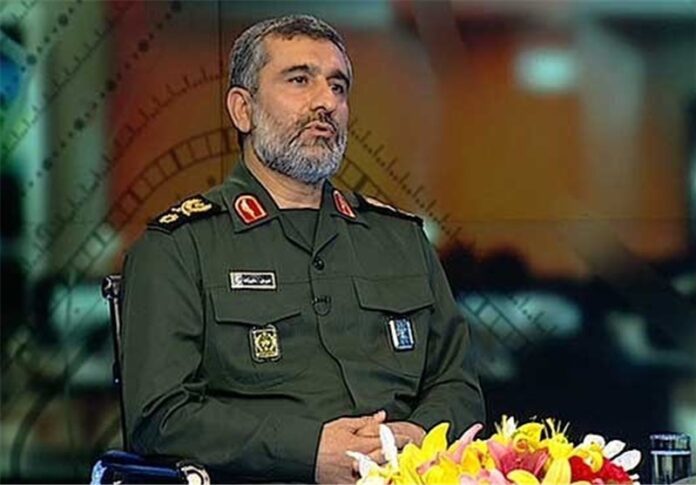
Hajizadeh told the state television that enemies are seeking to undermine Iran’s defense and missile capabilities but the process of boosting the country’s defense power has not stopped even for a single day during the past 31 years.

He added that expansion of the Islamic Republic’s defense and missile might will insure the Iranian nation and deter enemies from even thinking to attack Iran.

Elsewhere in his remarks, the Iranian general downplayed the recent sanctions by the US against Iranian companies and individuals, describing them as futile.

The US Treasury Department on Thursday blacklisted two Iranian companies for supporting Iran’s missile program. It also sanctioned two British businessmen it said were helping an airline used by the IRGC.

The new US sanctions against Iran came following the successful test-firing of ballistic missiles by the IRGC earlier this month, which Iran insists are rightful and aimed at enhancing the country’s defense and deterrence capabilities.

The IRGC forces test-fired two types of Qadr ballistic missiles during the ‘Might of Velayat’ drills in north of Iran on March 9.


Iran to continue full support for Syria: Official

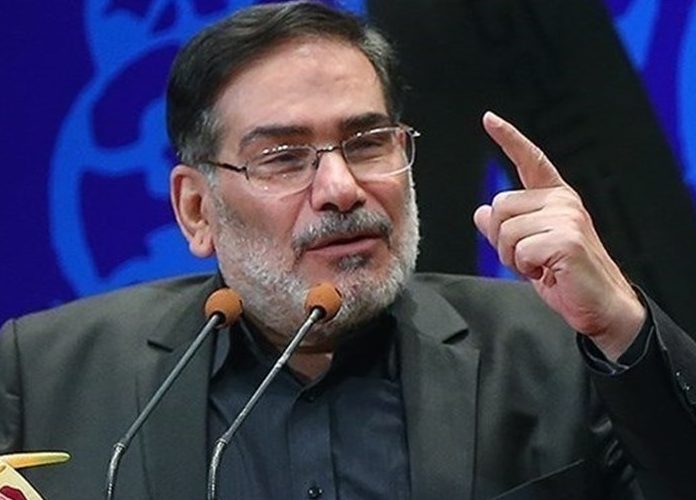
Secretary of Iran’s Supreme National Security Council (SNSC) Ali Shamkhani made the remarks in a congratulatory message to Syria’s President Bashar al-Assad on the recent gains by Syrian forces against Takfiri militants and the liberation of the ancient city of Palmyra in the west-central Homs Province.

“The real resolve and determination of the Syrian nation, government and army to purge the territories occupied by terrorist and Takfiri groups is reason for praise and pride, and these sacrifices and acts of gallantry will be registered in the region’s history,” Shamkhani said.

“On this path, the Iranian government and armed forces will continue their full support for Syria and the axis of resistance,” he added.

Pointing out that the Takfiri Daesh terrorists threaten the entire world, Shamkhani described Syria as the front-line of the fight against terrorism, calling on the international bodies to support Damascus in its anti-terror campaign.

“International organizations and countries claiming [to fight terrorism] should stop whitewashing the image of certain terrorist groups and getting them involved in peace talks and, instead, focus their efforts on support for the Syrian government and a real fight against terrorism,” Shamkhani said.

On Sunday, Syrian armed forces successfully established full control over Palmyra, inflicting what the army called a “mortal blow” to militants.

The major gain came after Syrian army advances in the western and northern parts of Palmyra during the previous several days and intensive military operations in the south.

The ancient city had fallen to Daesh last May. The Syrian army and allied forces kicked off an assault earlier this month to take Palmyra back with the help of Russian airstrikes.

The liberation of Palmyra now opens up eastern Syria to the army and deals a heavy blow to the Takfiri Daesh terrorists, who are in control of most of the two provinces of Dayr al-Zawr and Raqqah.

Since 2011, Syria has been gripped by a militancy it blames on some foreign governments. The conflict has reportedly claimed the lives of more than 470,000 people.

President Rouhani Offers Condolences to Pakistan over Lahore Terrorist Attack

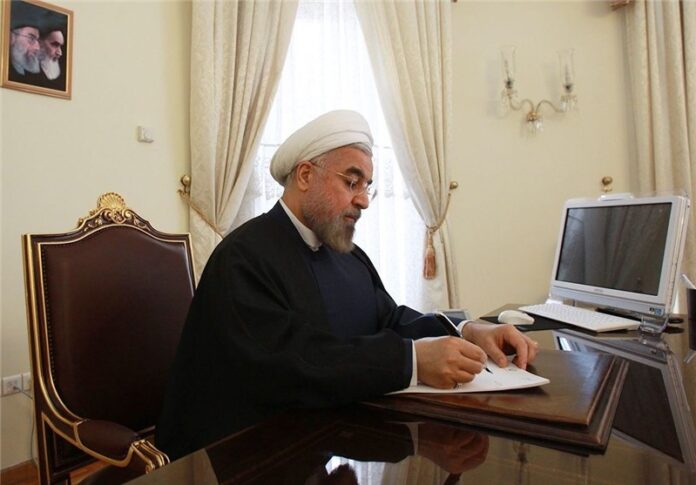
In a message to Pakistani Prime Minister Nawaz Sharif, the Iranian chief executive offered condolences to the premier and nation of the neighboring country and the bereaved families of the victims of the “painful tragedy”.

He underlined that the Islamic Republic of Iran condemns any act of terrorism and believes that violent acts and killing innocent people are only committed by those who see their survival in creating insecurity, instability and spreading hatred and extremism.

At least 70 people were killed and 300 others, mostly women and children, wounded after a bomb went off outside a park in the city of Lahore in northeastern Pakistan on Sunday.

A faction of Taliban, which calls itself Jamaat-ul-Ahrar, claimed responsibility for the attack.

It was Pakistan’s deadliest attack since the December 2014 massacre of 134 school children at a military-run academy in the city of Peshawar that prompted a government crackdown on extremists.


Iran condemns terrorist attacks in Iraq, Pakistan

At least 65 people were killed and 280 others, mostly women and children, wounded after a bomb went off outside a park in the city of Lahore in northeastern Pakistan on Sunday. A faction of Taliban, which calls itself Jamaat-ul-Ahrar, claimed responsibility for the attack.

On Friday, a bomb explosion at a soccer stadium near the Iraqi capital, Baghdad, claimed the lives of 41 people and injured 105 others. The Takfiri Daesh terrorist group claimed responsibility for that bombing attack.

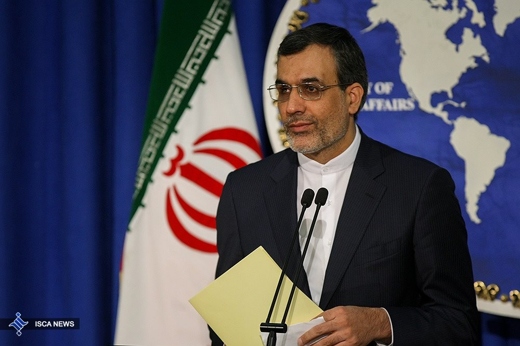
Iran’s Foreign Ministry Spokesman Hossein Jaberi Ansari on Monday said the two terrorist attacks once again demonstrated that terrorists and extremists are targeting all manifestations of ordinary life in human societies.

“No place and no echelon of societies is spared their (the terrorists’) danger,” he said.

The recurrence of terrorist attacks in the different parts of the world puts further emphasis on the necessity for an immediate, comprehensive, and international confrontation with the ominous phenomenon of terrorism and extremism, said the Iranian official.

Jaberi Ansari also offered Tehran’s condolences to the Iraqi and Pakistani nations and governments and the bereaved families of the victims.

On Sunday, UN Secretary General Ban Ki-moon condemned the bombing attack at Gulshan-i-Iqbal Park in the Pakistani city of Lahore, calling it an “appalling” act of terrorism.

“The secretary general calls for the perpetrators of this appalling terrorist act to be brought swiftly to justice, consistent with human rights obligations,” a UN statement said.

Ban called on the Pakistani government “to do its utmost to put in place protective measures to ensure the personal security of all individuals, including religious minority communities living in the country.”

The UN chief added that he “extends his heartfelt condolences to the victims and their families, and expresses his solidarity with the people and government of Pakistan.”

Iran’s Rouhani, Russia’s Putin Discuss Latest Developments in Syria

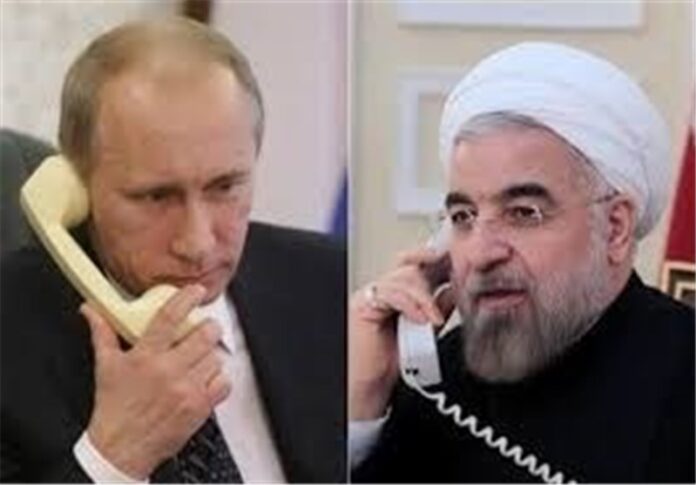
“A detailed discussion was held on the Syrian issue, first and foremost in regard to the successful actions of the Syrian army, which was able to push Daesh extremists out of the historic city of Palmyra with the help of Russian Air Forces. It was noted that this was a truly significant event,” Kremlin said in a statement on Monday, Sputnik reported.

The two leaders also exchanged views on a number of bilateral issues and agreed to intensify bilateral contacts at various levels, according to the statement.

Early on Sunday, Syrian state television quoted a military source as saying the army had taken “complete control over the city of Palmyra”.

Palmyra, known as the “bride of the desert”, used to attract tens of thousands of tourists a year before the Syrian conflict started in 2011.

In May 2015, Daesh (also known as ISIL or ISIS) took the city and later demolished some of its best-known monuments.

Capturing the city is a major victory for Syrian President Bashar al-Assad’s government.

With Russian support, it has made steady gains in recent months against Daesh and other groups it is fighting.

Earlier this month, Putin ordered the withdrawal of some fighter jets from Syria, but said that strikes against Daesh and another group, the Nusra Front, would continue.

Those groups have been excluded from a Russian and US-brokered ceasefire that began on February 27 and has largely held.

Syria has been gripped by civil war since March 2011 with Takfiri terrorists, including Daesh, currently controlling parts of it, mostly in the east.

The Syrian conflict has killed at least 260,000 people, according to the UN, and more than half of Syria’s pre-war population of 22.4 million has been internally displaced or fled abroad.

Iran responds to US actions by boosting missile power: Zarif

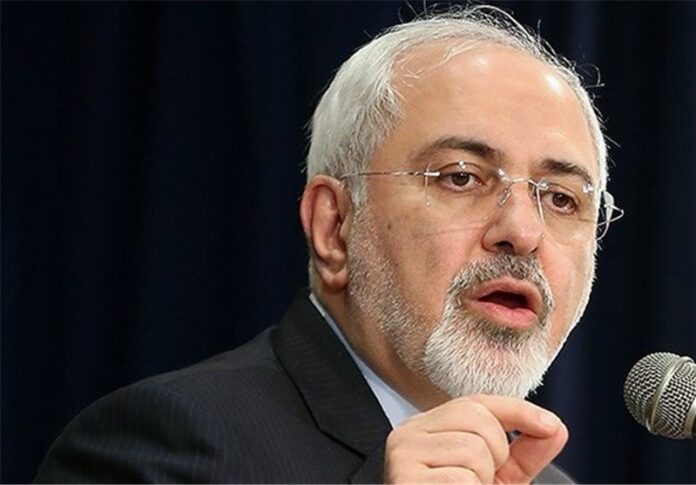
“We will respond to recent US measures against Iran’s missile program by further boosting our missile power,” Zarif said on Saturday.

He added that Tehran has no limitations on developing its missile program “because this program has nothing to do with nuclear weapons.”

In line with Iranian President Hassan Rouhani’s order, Iran will continue to enhance its missile capabilities, Zarif stressed.

In an order to Iran’s Defense Minister Brigadier General Hossein Dehqan on December 31, 2015, Rouhani urged acceleration in the production of “various types of missiles” needed to improve the country’s defense capabilities..

On Thursday, the US Treasury Department blacklisted two Iranian companies claiming that the firms backed Iran’s ballistic missile program. Washington also claimed that the companies are working for an industrial group, which the US alleges is in charge of Iran’s ballistic missile program.

The blacklisting came after the Islamic Revolution Guards Corps (IRGC) successfully test-fired two more ballistic missiles on March 9 as part of military drills to assess the IRGC’s capabilities. The missiles dubbed Qadr-H and Qadr-F were fired during large-scale drills, code-named Eqtedar-e-Velayat.

On March 8, Iran fired another ballistic missile called Qiam from silo-based launchers in different locations across the country.

Zarif, who was accompanying Iran’s President Hassan Rouhani in his two-day visit to Pakistan, also said comments by the US presidential candidates regarding the Islamic Republic’s missile program should not be taken seriously.

He added that personal views of the person in charge will not change the fact that Washington is legally bound to respect the nuclear agreement, dubbed the Joint Comprehensive Plan of Action (JCPOA), reached between Iran and the six world powers in July 2015.

The US administration should comply with its obligations in practice, Zarif said, stressing that some US presidential candidates, under the influence of the Zionist lobby, are making such comments against Iran which should not be heeded.

Last week, US presidential candidates took the stage at the 2016 American Israel Public Affairs Committee (AIPAC) policy conference to voice unconditional support for the Israeli regime in an apparent attempt to attract more campaign funding from the influential Zionist lobby in the run-up to the 2016 presidential election.

To get the green light, the hopefuls voiced support for Israel by attacking Iran and Palestine more than ever before.

Republican hopeful Donald Trump said he would end the JCPOA, calling the agreement “catastrophic.”

“My number one priority is to dismantle the disastrous deal with Iran,” he said, adding, “I have been in business a long time. I know deal making. And let me tell you, this deal is catastrophic. For America, for Israel and for the whole of the Middle East.”

Ted Cruz also did his best not to fall behind in the race to win Israel’s support, saying, “On the first day in office, I will rip this catastrophic Iranian nuclear deal to shreds.”

On Iran’s recent missile tests, the Texas senator said, “If I am president, and Iran launches a missile test, we will shoot that missile down.”

Republicans claim that Tehran’s missile program poses a threat to global security, while Iran categorically denies the claim, arguing that it is solely defensive.

Iranian President Urges Unity among Muslim Nations against Terrorism

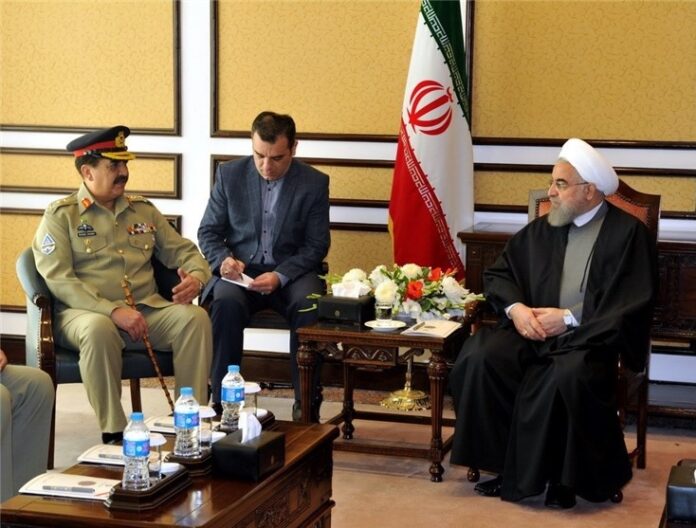
“The resolution of regional issues is possible only through constructive political dialogue and the time has come for Muslim countries to unite against terrorists and act in unison,” President Rouhani said in a Saturday meeting with Pakistani Chief of Army Staff General Raheel Sharif in Islamabad.

“Iran and Pakistan, as two significant and influential countries in the region, can make joint efforts to fulfill this important (duty),” he added.

The president further touched upon “close and age-old” defense cooperation between Tehran and Islamabad as well as deep-rooted cultural ties between the two nations, saying that Iran and Pakistan are “strategic depths” for each other and the fact has been proved in tough times.

General Sharif, for his part, emphasized that his country’s army supports efforts to boost Tehran-Islamabad cooperation and considers the ties in line with the interest of the two nations.

Heading a high-ranking delegation, including 60 Iranian businessmen, Rouhani arrived in Islamabad on Friday at the invitation of his Pakistani counterpart Mamnoon Hussain and Nawaz Sharif.

President Rouhani’s two-day trip to Pakistan, which is paid in response to Sharif’s last year trip to Iran, is aimed at discussing ways to further strengthen trade and economic relations and holding consultation with senior Pakistani officials on the latest developments in the region.

Iran, Pakistan Cooperation against Terrorism to Serve Region, World: Rouhani

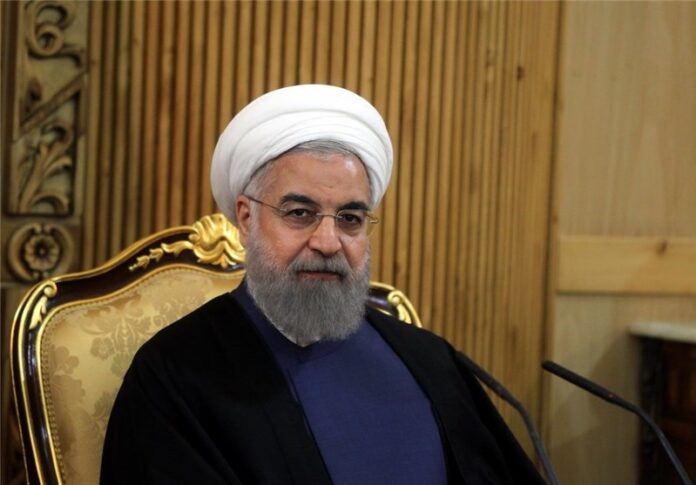
Speaking to reporters before leaving Tehran’s Mehrabad Airport for Islamabad, the president underlined the need for regional and international collaborations between Iran and Pakistan, saying that the two sides can cooperate in ensuring security in the region and fighting terrorism “which certainly would be in the interest of the two countries, the region and the world as terrorism is a global problem.”

He further described Pakistan as a country with great people and one with which Iran has many religious, cultural and historical commonalities.

Iran has maintained good ties with Pakistan since its independence and “today, the two countries’ relations are strategic,” Rouhani said.

He added that Tehran is keen to expand ties with Islamabad in different political, economic and cultural areas.

The president also highlighted the necessity of ensuring security in joint border areas and said the security pact already signed by the two countries should be implemented as soon as possible.

Heading a high-ranking delegation, Rouhani will arrive in Islamabad later on Friday at the invitation of his Pakistani counterpart Mamnoon Hussain and Prime Minister Nawaz Sharif.

President Rouhani’s two-day visit to Pakistan will take place in response to Sharif’s last year trip to Iran.

Promoting bilateral ties and particularly boosting economic cooperation in the new atmosphere created by the nuclear deal between Tehran and six world powers (JCPOA), will be high on agenda during the visit.


Spokesman Questions Legitimacy of Appointing UN Human Rights Rapporteur for Iran

In a statement late on Thursday, Jaberi Ansari described the decision at the UN Human Rights Council (UNHRC) to extend the mandate of Ahmed Shaheed as politically-motivated and biased.

The composition of countries supporting the decision like Saudi Arabia, the United Arab Emirates (UAE) and Qatar, whose people are witnessing systematic violations of human rights by their governments, indicates the fact that the move was politically motivated, the spokesman said.

He emphasized that it also proved the West’s instrumental use of the international mechanism for protecting human rights (UNHRC).

The Islamic Republic is committed to its obligations regarding the promotion of human rights in compliance with its constitution and religious values, Jaberi Ansari said, adding that accordingly, Tehran has always cooperated with the UN human rights mechanisms, including the Universal Periodic Review (UPR).

The UPR is a unique mechanism of the Human Rights Council (HRC) aimed at improving the human rights situation on the ground of each of the 193 United Nations (UN) Member States.

Under this mechanism, the human rights situation of all UN Member States is reviewed every 4.5 years.

Various reports by Ahmed Shaheed have attacked the Islamic Republic. The reports have come under criticism by many independent observers who have questioned them for being based on accounts provided by expatriates and terrorist groups such as Mojahedin-e Khalq Organization (MKO).

Iran: Missile tests are legitimate measures to boost defense might

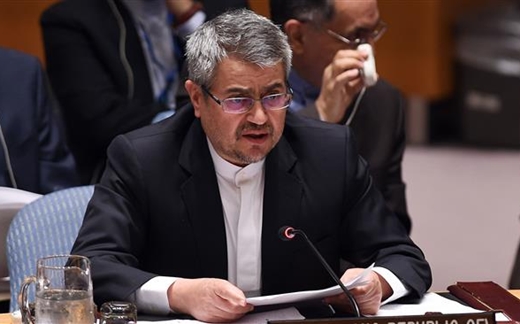
Khoshroo made the statements in a letter to UN Secretary General Ban Ki-moon after recent missile-test launches by the Iranian military forces rejecting a campaign of disinformation as well as efforts to misinterpret Security Council resolution 2231 that followed.

He stressed that Iran’s missile test launches were aimed to exercise the right to self-defense in the case of any armed attack.

‘Iran, as a country living in the most unstable and volatile region of the world, is fully entitled to build a credible conventional capability to deter and defend against any aggression,’ the letter said.

‘For decades, Islamic Republic of Iran has been under threat of use of force by the United States and the Israeli regime in flagrant violation of Article 2 (4) of the UN Charter.’

Last year, the Israeli regime even took military threat against Iran to its extreme when Moshe Yaalon, the defense minister of this regime, threatened to use nuclear bomb against Iran, Khoshroo said.

He added: ‘the same regime remains the only one in the region in unlawful possession of nuclear weapons and the only obstacle in the way towards establishing a nuclear weapon free zone in the Middle East.’

‘We expect the Council to live up to its Charter responsibility of maintaining international peace and security and address the threats to use force against a UN member state,’ the envoy said.