
Picturesque sceneries of nature in Bouralaan region near the city of Maku in West Azarbaijan province with a view of the Ararat Mountain in the background.
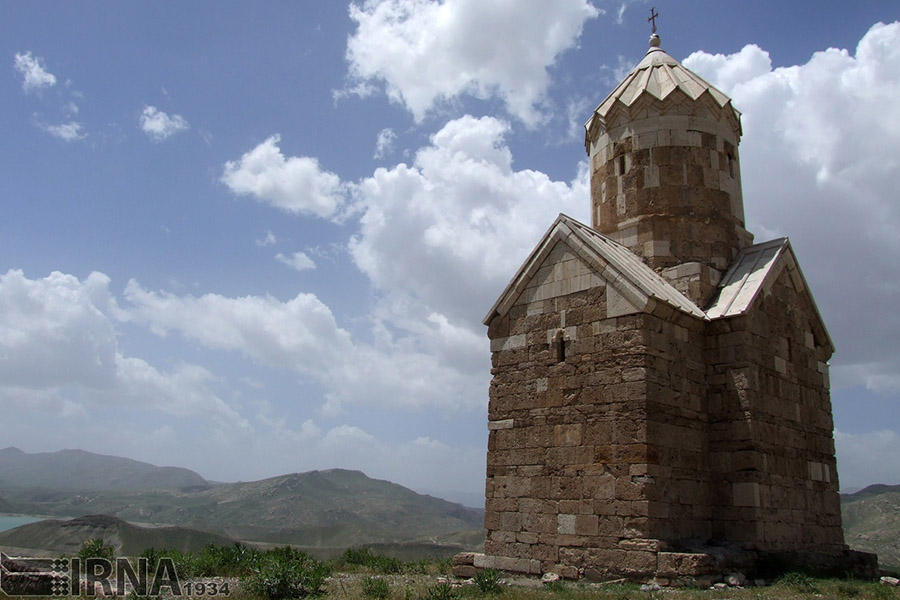
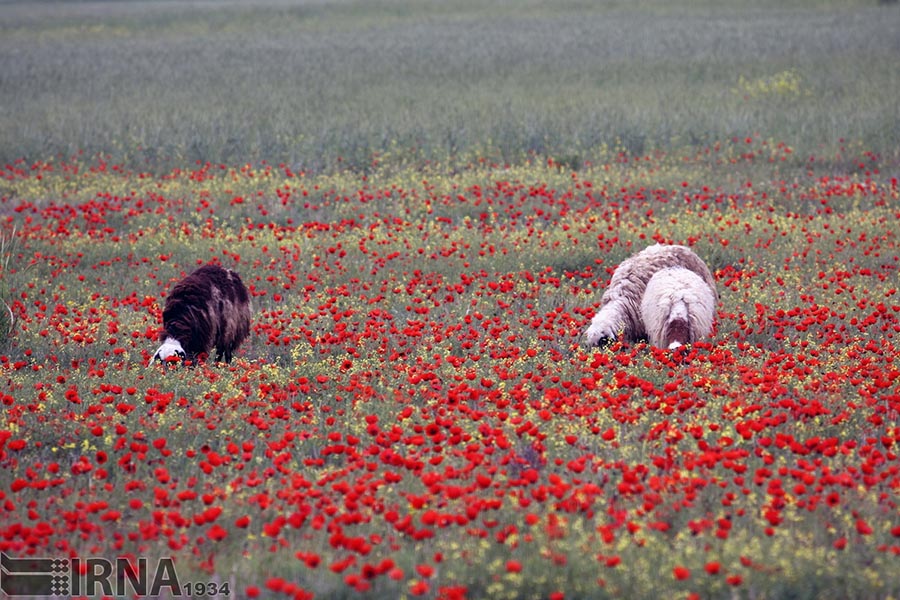

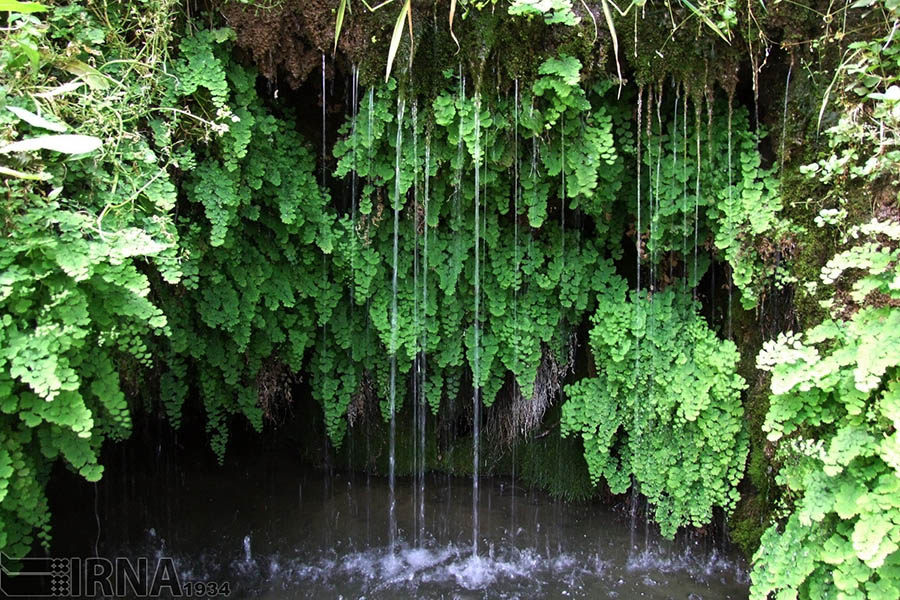
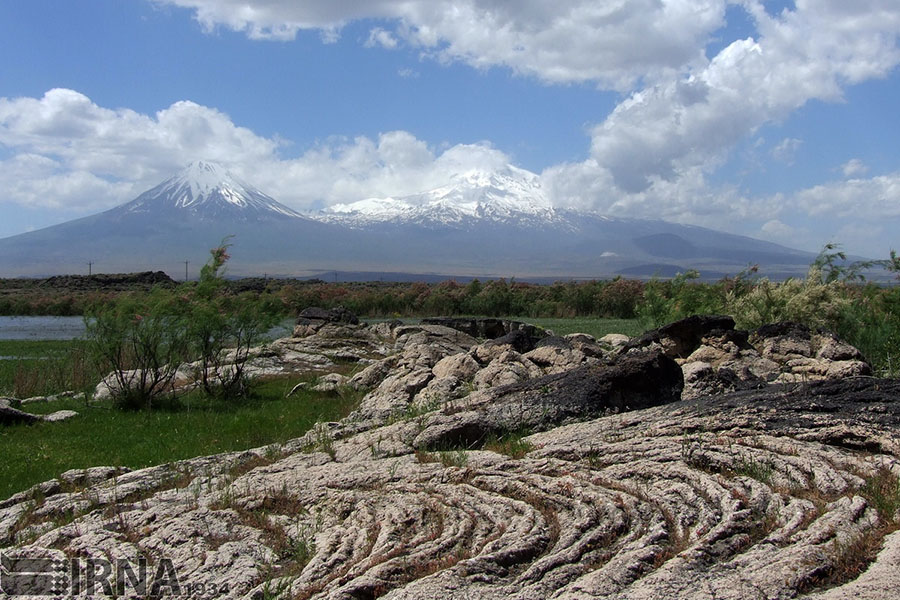

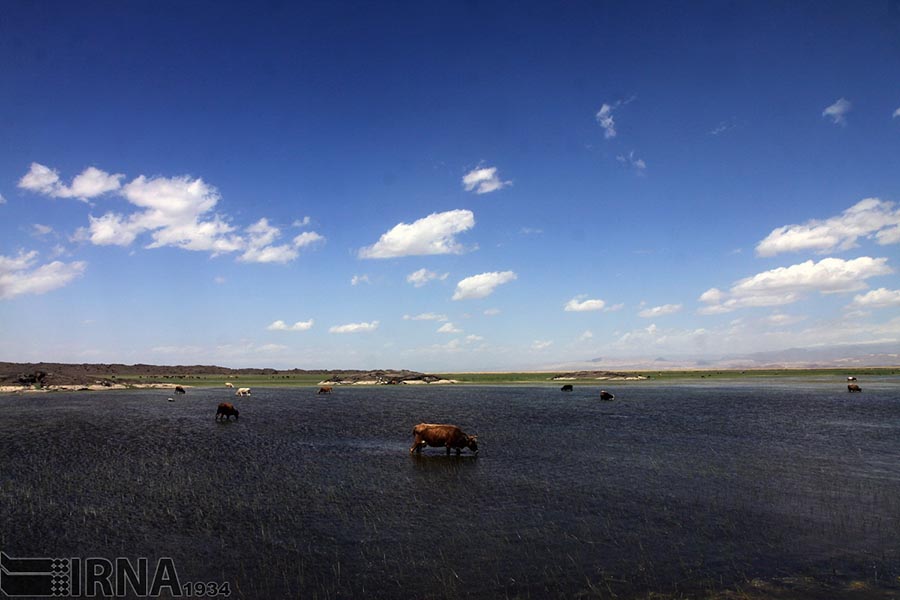
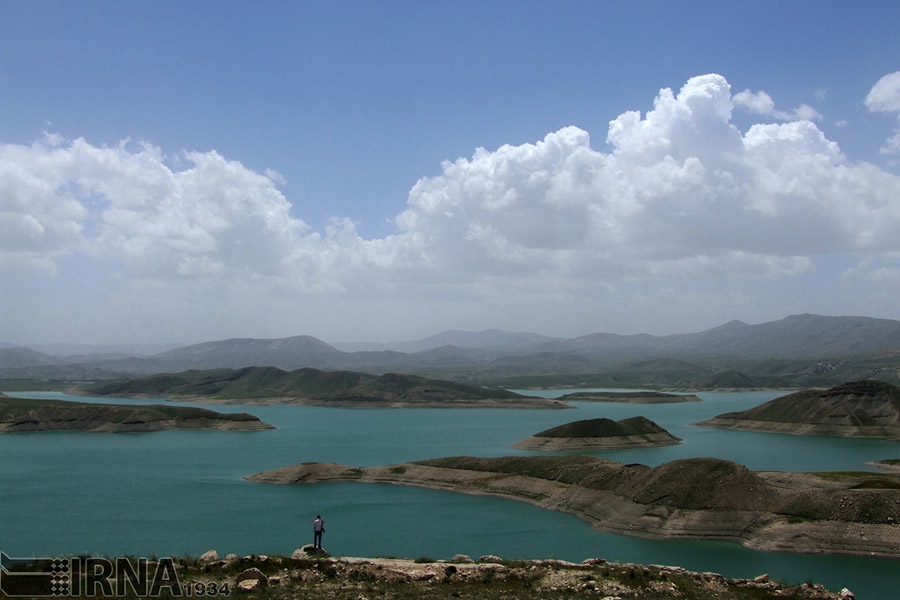

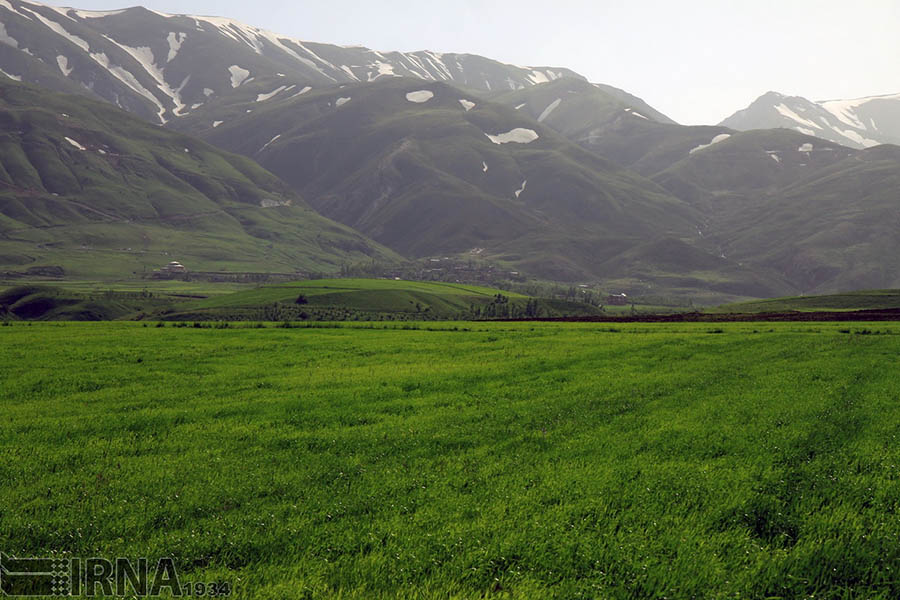
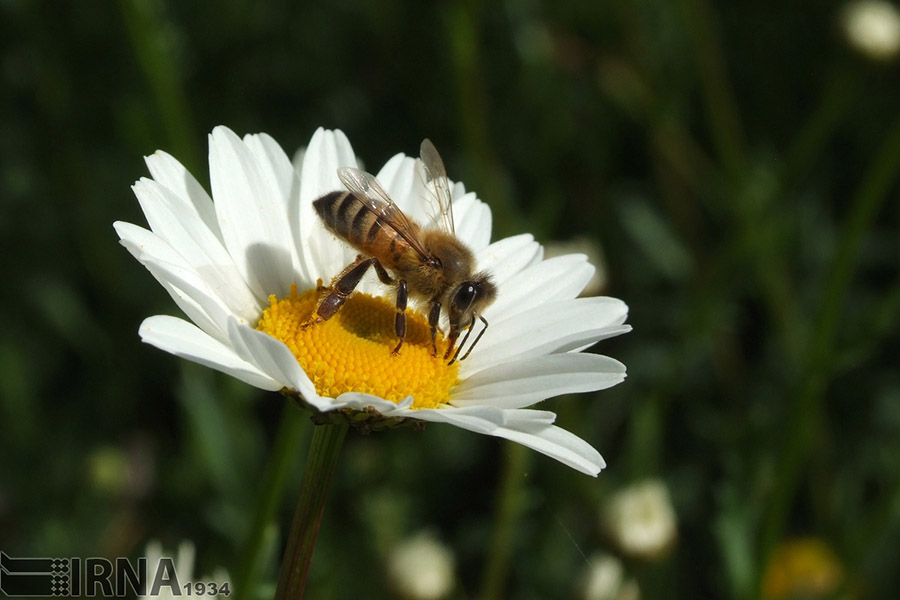
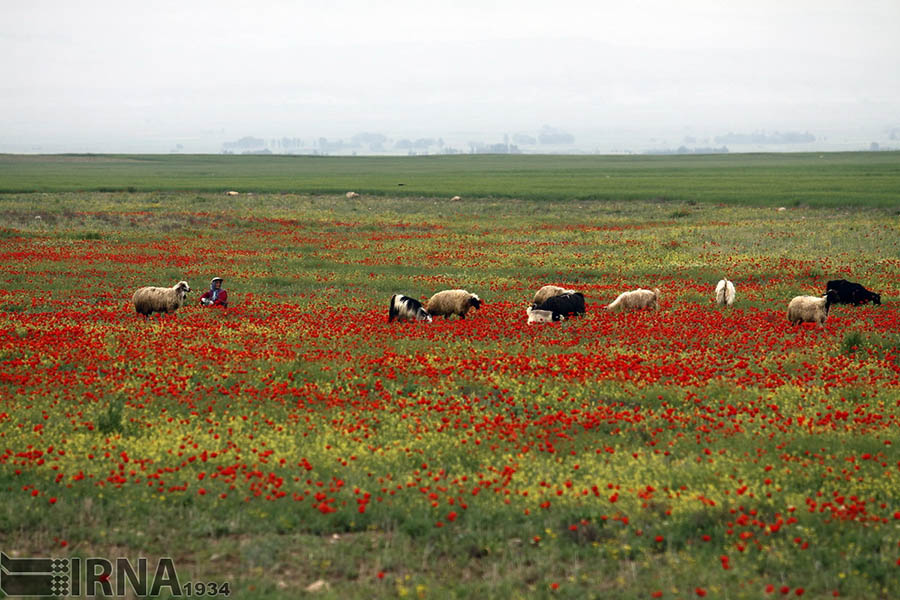

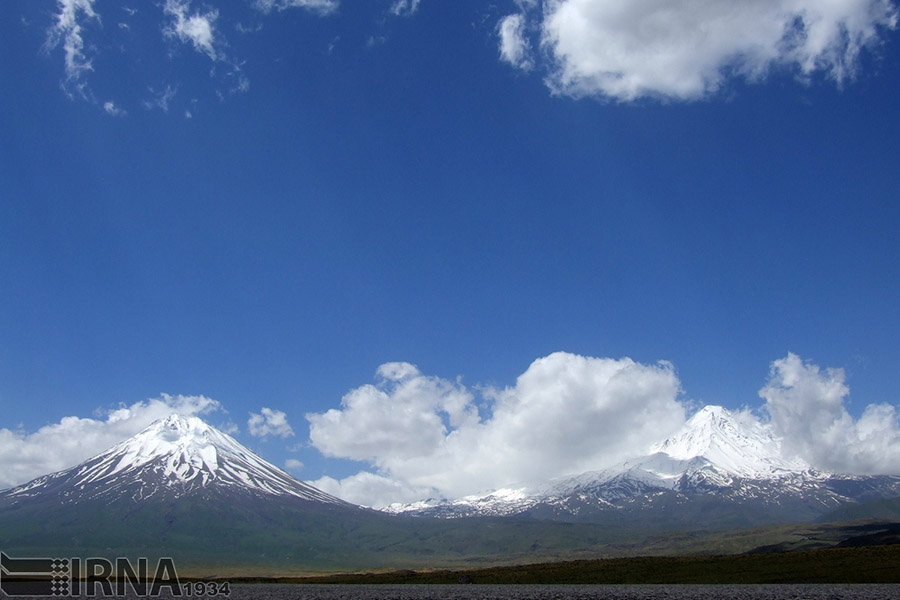
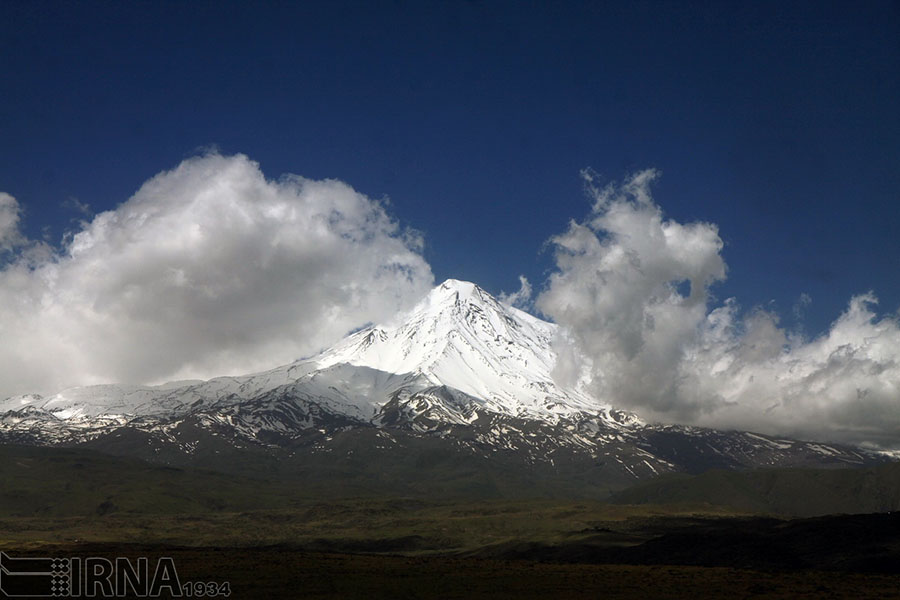

Picturesque sceneries of nature in Bouralaan region near the city of Maku in West Azarbaijan province with a view of the Ararat Mountain in the background.
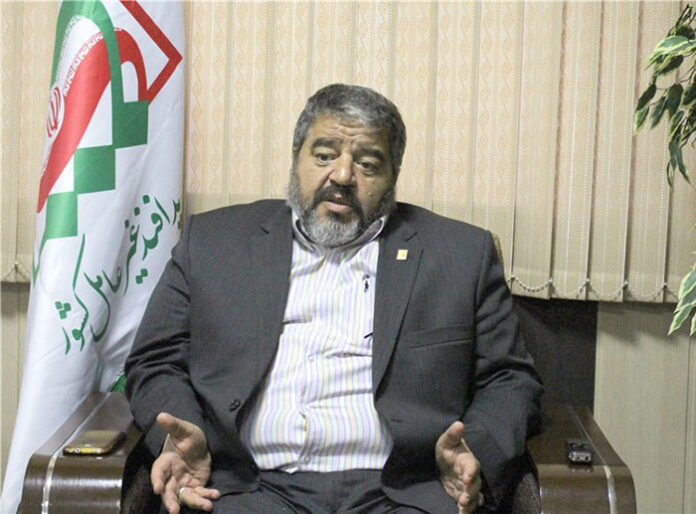
In a session of the Parliament’s National Security and Foreign Policy commission on Tuesday, July 12, General Jalali emphasized the necessity for measures to ensure the health and safety of high-ranking officials facing the threat of bioterrorism, member of the commission, Javad Karimi Qoddousi, told Tasnim.
Warning against “biological weapons” that may target authorities and official figures, the commander cautioned that such hostile tactics could be widely employed and trigger a biological war in future, the lawmaker stated.
According to the MP, General Jalali also noted that the Civil Defence Organization is considering the possibility that some renowned Iranian figures with suspicious diseases may have fallen victim to bioterrorist attacks.
It comes after Secretary of Iran’s Supreme National Security Council (SNSC) Ali Shamkhani on July 1 announced the establishment of a committee to study whether a young Iranian individual who died recently has fallen victim to bioterrorism.
Speaking on the sidelines of a memorial ceremony for Ali Dadman, the son of a former minister who died of cancer recently at the age of 36, Shamkhani said the SNSC has set up a committee to study different aspects surrounding the death.
There is speculation that Dadman developed severe cancer abruptly after returning from a foreign trip.
The issue of bioterrorist attacks against Iranian individuals has raised concerns over the past few weeks.
Bioterrorism is terrorism involving the intentional release or dissemination of biological agents, such as bacteria, viruses, or toxins, to target people.
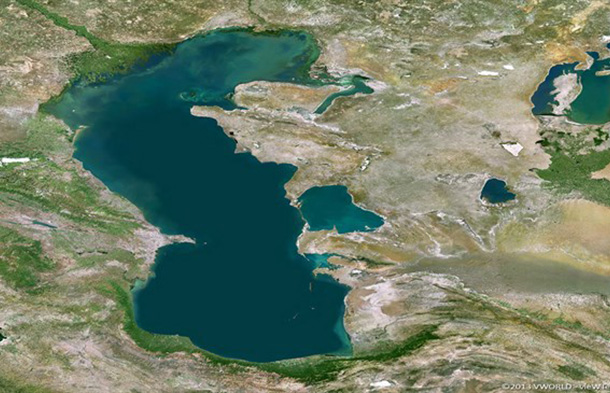
It would be relatively optimistic to think that participants in the Astana meeting will be able to resolve the outstanding issues and reach a conclusion, Zarif told reporters upon his arrival in the Kazakh capital on Tuesday.
Though the differences have been widely narrowed, there still exist issues that need to discussed and settled, he added.
As regards the common grounds, Zarif said the Caspian littoral countries have developed good cooperation to conserve the environment and protect the flora and fauna of the lake, adding that there is also a consensus that Caspian Sea should remain the “sea of peace and friendship” without the presence of outsiders.
Accompanied by a high-ranking delegation, including legal and political experts, Zarif is joining his counterparts from Azerbaijan, Kazakhstan, Turkmenistan and Russia for talks on the legal status of the lake.
Two days ago, a special working group from Iran arrived in Astana to participate in the expert-level talks ahead of the ministerial meeting.
The working group’s sessions were part of efforts to draft the convention on the legal status of the Caspian Sea.
The 45th meeting of the special working group of the Caspian Sea concluded in Russia’s capital of Moscow on June 10 with a communiqué.
The Caspian Sea is the largest enclosed water body on earth by area, variously classed as the world’s largest lake or a full-fledged sea.
The Caspian Sea Convention will determine the territorial rights of littoral states as well as other matters related to the world’s largest landlocked body of water.
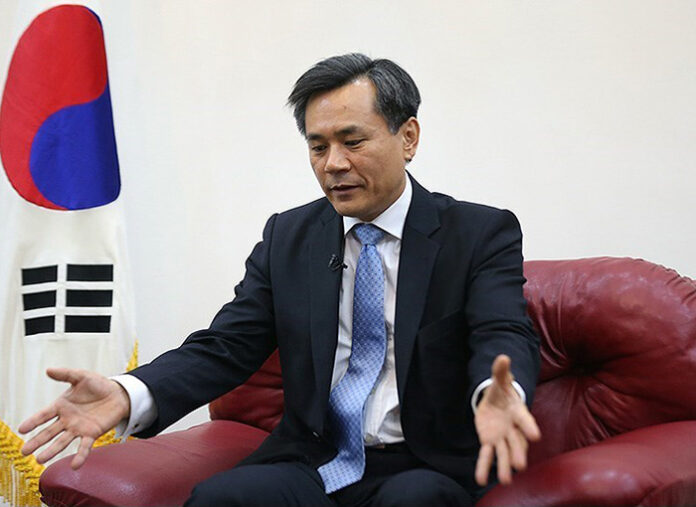
Here is IFP’s translation of excerpts from a report by Fars:
Addressing an international exhibition on stock exchange, banking and insurance (FINEX 2016) held in Tehran on Monday, July 11, Kim Seung-ho emphasized that the signatories of the nuclear deal between Tehran and world powers [Joint Comprehensive Plan of Action, also known as the JCPOA] are obliged to take the necessary steps to reopen banking transactions as soon as possible.
“The President of South Korea, accompanied by a team of senior government officials, travelled to Iran shortly after the JCPOA was clinched between the country and the Group 5+1. I truly hope a day comes when we can expand our economic and trade relations,” he said.
Ambassador Kim: In spite of JCPOA, South Korean Foreign Ministry still has to smuggle money into Iran using briefcases!
Kim described full implementation of JCPOA by its signatories as a necessary step and noted, “The implementation of JCPOA can make a big change in Iran’s economy and I, as a diplomat, believe that the country has entered a new era and can write a new page in its history; a page full of good news for its people.”
“South Korea is impatient to be a big part of the good news,” he noted, adding, however, that writing on that page needs ink and the ink is the reopening of banking transactions.
In the post-sanctions era, plenty of Western and non-Western countries have expressed their desire to revive and strengthen economic ties with Iran.
“It is necessary to re-establish banking and monetary transactions between Iranian and foreign banks and to boost joint ventures and investment,” he added.
He stressed that the parties to the nuclear deal are expected to ask their banks to transfer Iran’s money into South Korea.
“It is a shame that 6 months after the implementation of JCPOA, our Foreign Ministry has to smuggle its money into Iran using briefcases,” Kim went on to say.
“Prosperity will find its way into Iran’s market if the JCPOA gets the shackles off the country’s economy,” he said.
“Although the parties to the deal well know that they have to fulfil their part of the deal, the companies in the private sector refrain from doing business with Iran.”
Kim drew an analogy between these companies and two ships that are fighting each other, and said, “Companies in the private sector are worried that crossing the border might sink their ships.”
Kim described Iran as a safe investment haven and underlined, “It’s high time for the West to remove the obstacles and seize the opportunity to open a new chapter in its troubled history with Iran.”
He suggested that Iranians and their banks should make way into international financial systems and promote their banks to achieve international standards, which would guarantee a profitable investment.
The South Korean envoy stressed that Iran sits atop an 80-million market, plethoric natural resources and loads of untapped potentials.
He finally touched upon Iran’s estimable position in the region and the world, saying, “Iranian government should prepare plans to introduce the country’s untapped potentials to the world.”
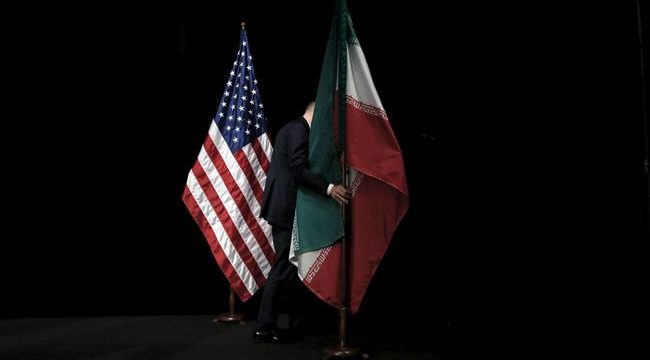
According to a Monday report by Politico, as covered by Press TV, the letter was penned by bipartisan signatories.
“Given the stakes, the US will need more, not less, engagement with Iran,” they wrote.
The figures include retired Sens. Tom Daschle (D-S.D.), Mark Udall (D-Colo.), Carl Levin (D-Mich.), J. Bennett Johnston (D-La.), and Nancy Kassebaum (R-Kan.), as well as former Rep. Lee Hamilton (D-Ind.), it revealed.
Also among the signatories are former Air Force Chief of Staff Gen. Merrill McPeak and Nobel Prize winners Leon Cooper and Burton Richter.
“The US should develop policies that increase the chances of cooperation with Iran, minimize confrontation,” the letter read.
“We acknowledge that opportunities will be limited for testing Iran’s willingness to work directly with the US due to the political uncertainties in both countries in the coming year, but engagement should be the US government’s long-term goal.”
It urged the creation of a direct diplomatic channel, with deputy foreign ministers at either end, which would obviate the need for the countries’ top diplomats to contact one another. It also suggested the creation of a contact regime with “emergency communications capability.”
Should Washington widen the current distance between the two sides, it would risk jeopardizing US interests in the Middle East and invite further open conflict for the US there, the signatories warned. Shortening the distance, however, would benefit both countries’ respective interests, they said.
However, they described it as incumbent upon the US chief executive to “influence Iran’s actions in the region,” and to not risk alienating its regional allies, most importantly Israel, at the cost of closer Iran engagement.
Politico reminded that the next US president could reverse any trust-building measure which Obama could potentially take toward the Islamic Republic.
As a case in point, it referred to GOP aspirant Donald Trump, who has threatened to tear up the nuclear agreement between Iran and the world powers, including the United States, which was reached last year and which put an end to nearly a decade of a dispute over Iran’s nuclear program.
On June 14, Leader of the Islamic Revolution Ayatollah Seyyed Ali Khamenei pointed to the threats by some US presidential hopefuls to scrap the nuclear agreement, known as the Joint Comprehensive Plan of Action (JCPOA), saying the Islamic Republic will strongly respond to any such move.
“We will not violate the JCPOA, but if the opposite side violates it — as US presidential candidates are currently threatening to tear up the JCPOA — if they tear up the JCPOA, we will burn it,” the Leader stated.
The letter by the US figures also urged communication between the US Treasury Department and the Central Bank of Iran to more easily address questions surrounding the relief of sanctions promised under the JCPOA.
Under the deal, Iran agreed to limit its nuclear program and provide enhanced access to international atomic monitors in return for the termination of all nuclear-related sanctions imposed by the United States, the United Nations (UN) and the European Union (EU) against the country.
The US Congress, however, has been taking various measures aimed at preserving the obstacles in the way of US and European trade with Iran. European banks have balked at the idea of resuming transaction with Iran, fearing punitive US measures.
Earlier in the month, the Republican-weighted US House of Representatives voted by voice to pass two amendments to a financial services spending bill aimed at barring Chicago-based Boeing from selling commercial passenger aircraft to Tehran.
The move came just a month after Boeing and Iran’s national airline Iran Air reached a USD 25-billion agreement. According to the deal, a total of 80 aircraft will be sold and a further 29 will be leased with Boeing’s support.
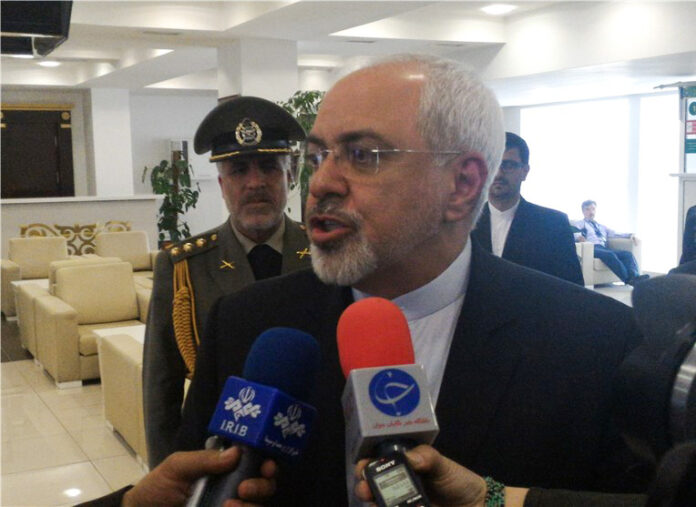
Here’s IFP’s translation of Zarif’s remarks, as reported by Khabar Online.
“The MKO group has been present in France for many years. It is not the first time that they are organizing this political game. They hold it every year, and a number of people with clearly defective political background from different countries attend the meeting and deliver speeches,” Zarif said.
“It is nothing new, and their policies have always been the same,” he went on to say upon his arrival in the Kazakh capital of Astana on Tuesday, July 12.
“Many media outlets focused on the participation of a person who has been the creator of both Al Qaeda and Taliban and had a very shameful role in the Saudi regime’s actions in the region. He has unfortunately attended the meeting and delivered his speech, and this shows the incompetence and imprudence of such people, who have tied their future to terrorists just like what Saddam Hussein did,” he added.
A number of Saudi officials and supporters of MKO, including Saudi Prince Turki bin Faisal Al Saud, attended the gathering of the terrorists in Paris on Saturday, July 9, and made anti-Tehran remarks.
The MKO – listed as a terrorist organization by much of the international community – fled Iran in 1986 for Iraq and was given a camp by former Iraqi dictator Saddam Hussein.
They fought on the side of Saddam during the Iraqi imposed war on Iran (1980-88). They were also involved in the bloody repression of Shiite Muslims in southern Iraq in 1991 and the massacre of Iraqi Kurds.
The notorious group is also responsible for killing thousands of Iranian civilians and officials after the victory of the Islamic revolution in 1979.
More than 17,000 Iranians, many of them civilians, have been killed at the hands of the MKO in different acts of terrorism including bombings in public places, and targeted killings.

Newspapers on Tuesday covered the remarks by Judiciary Chief Ayatollah Sadeq Amoli Larijani, who criticized the US double-standard policies towards the issue of terrorism.
Ali Akbar Velayati, an advisor to the Leader of the Islamic Revolution, also slammed the West over the JCPOA implementation. The remarks were widely covered by Iran’s papers.
Another top story was the election of Theresa May as the British Prime Minister. The female politician was compared with Margaret Thatcher in several front pages today.
The above issues and many more are covered in the following headlines:
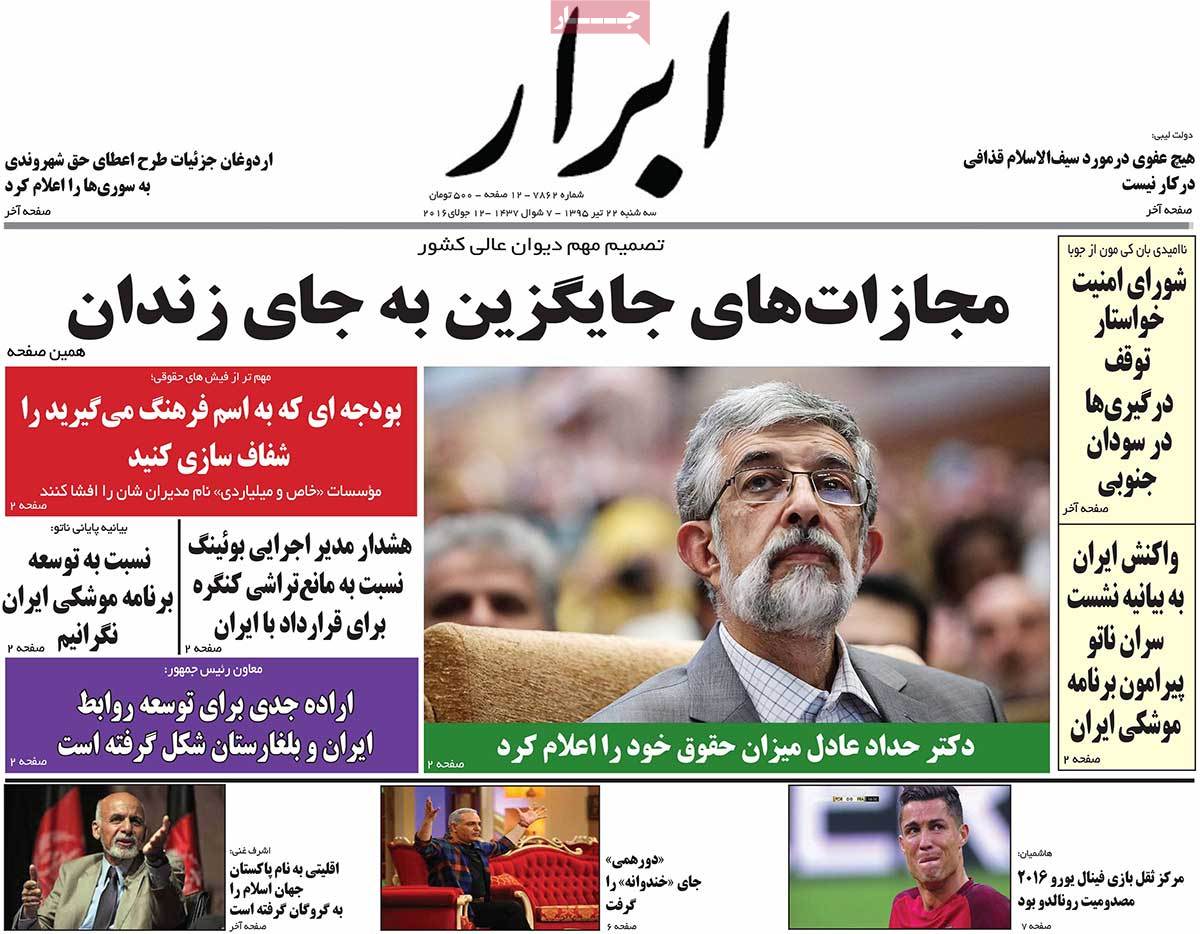
Abrar:
1- Important Decision Made by Supreme Court: Alternative Punishments Instead of Incarceration
2- First VP Highlights Serious Will for Development of Iran-Bulgaria
3- Boeing Executive Warns US Congress against Sabotaging Deal with Iran
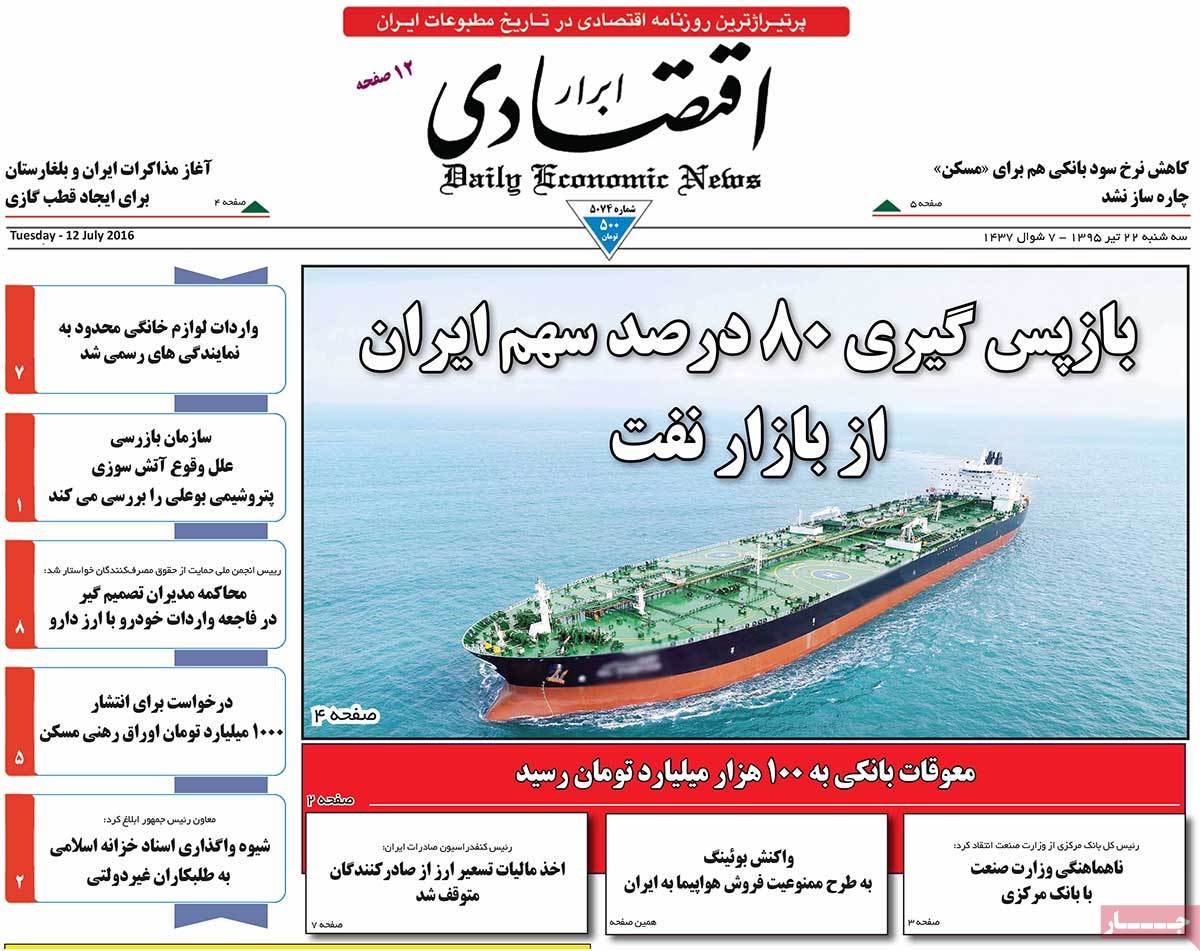
Abrar-e Eqtesadi:
1- Iran and Bulgaria in Talks for Creating Gas Hub
2- Home Appliances Can Only Be Imported by Official Representatives
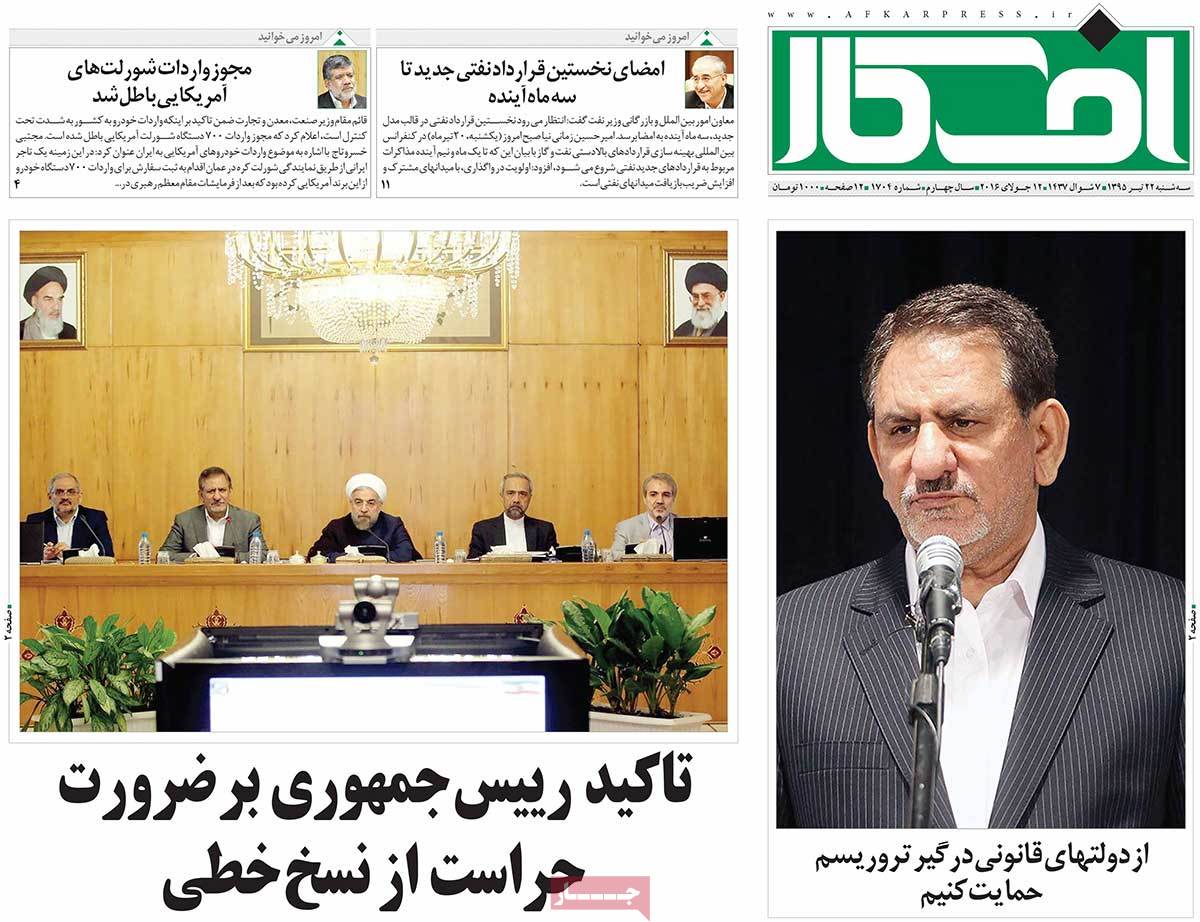
Afkar:
1- Licence for Import of US-Made Chevrolet to Iran Revoked
2- First New Oil Contract to Be Signed in 3 Months: Deputy Minister
3- President Rouhani Underlines Need for Protecting Historical Manuscripts
4- First VP: We Should Support Legitimate Governments Engaged in Fight against Terrorism
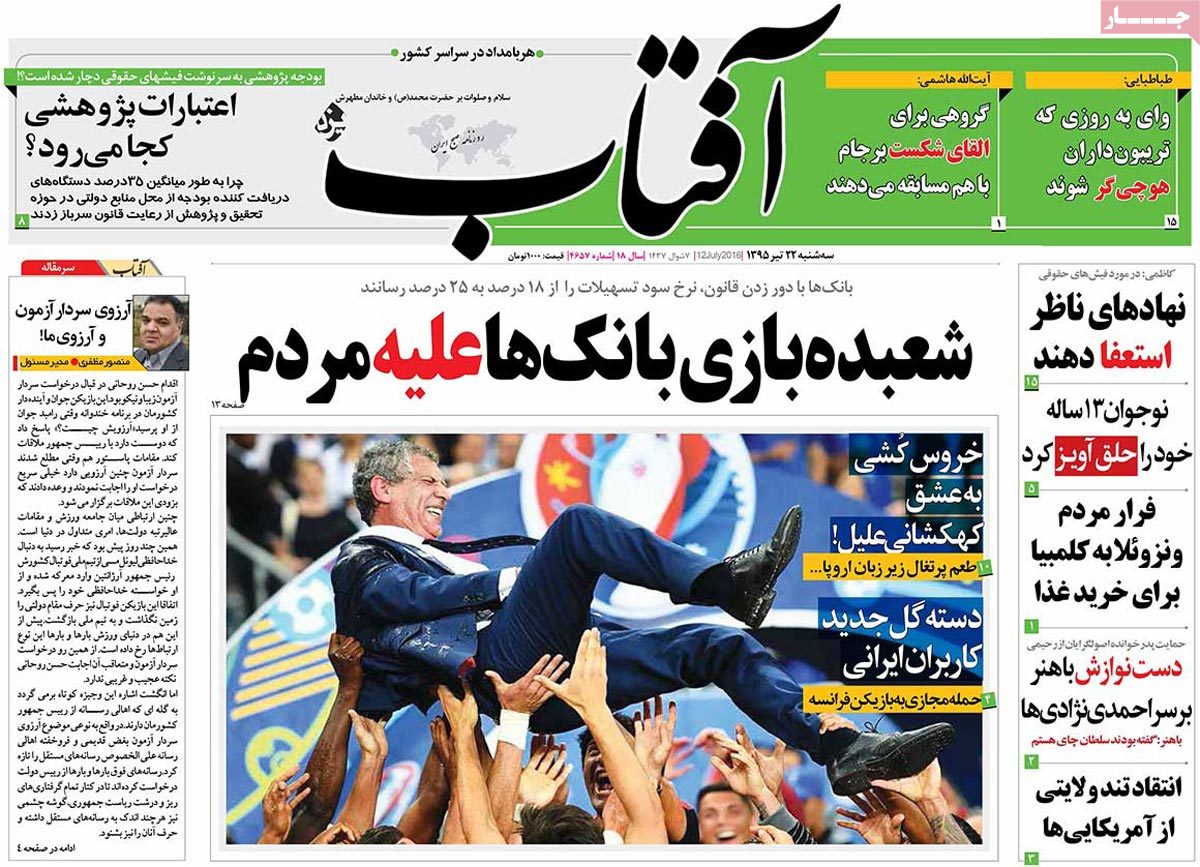
Aftab-e Yazd:
1- 13-Year-Old Teenager Hangs Himself in Tehran
2- Venezuelan People Flee to Columbia to Buy Food
3- Leader’s Advisor Velayati Harshly Criticizes the US
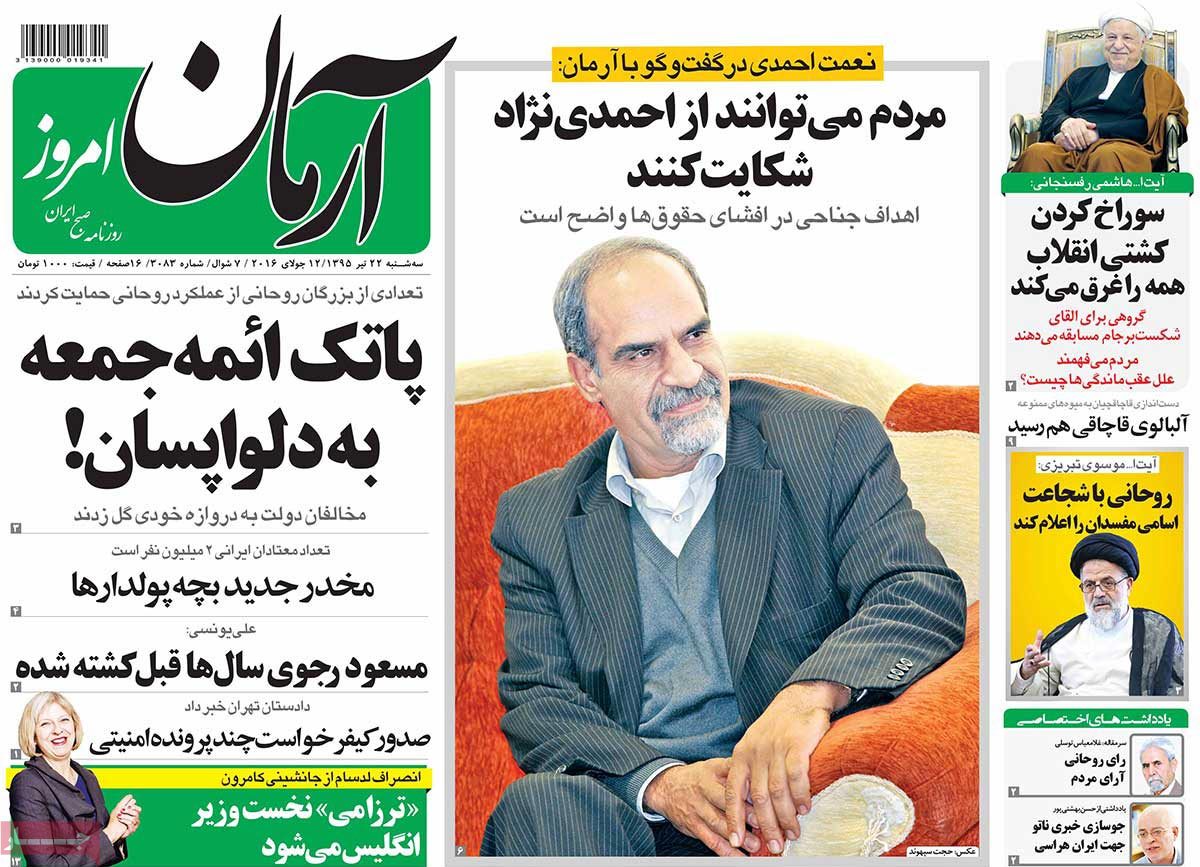
Arman-e Emrooz:
1- Friday Prayers Imams Voice Their Support President Rouhani’s Performance
2- Masoud Rajavi Had Been Killed Many Years Ago: President’s Advisor
3- People Can File Lawsuit against Ahmadinejad
4- Cleric Urges Rouhani to Bravely Declare Names of Corrupt Officials
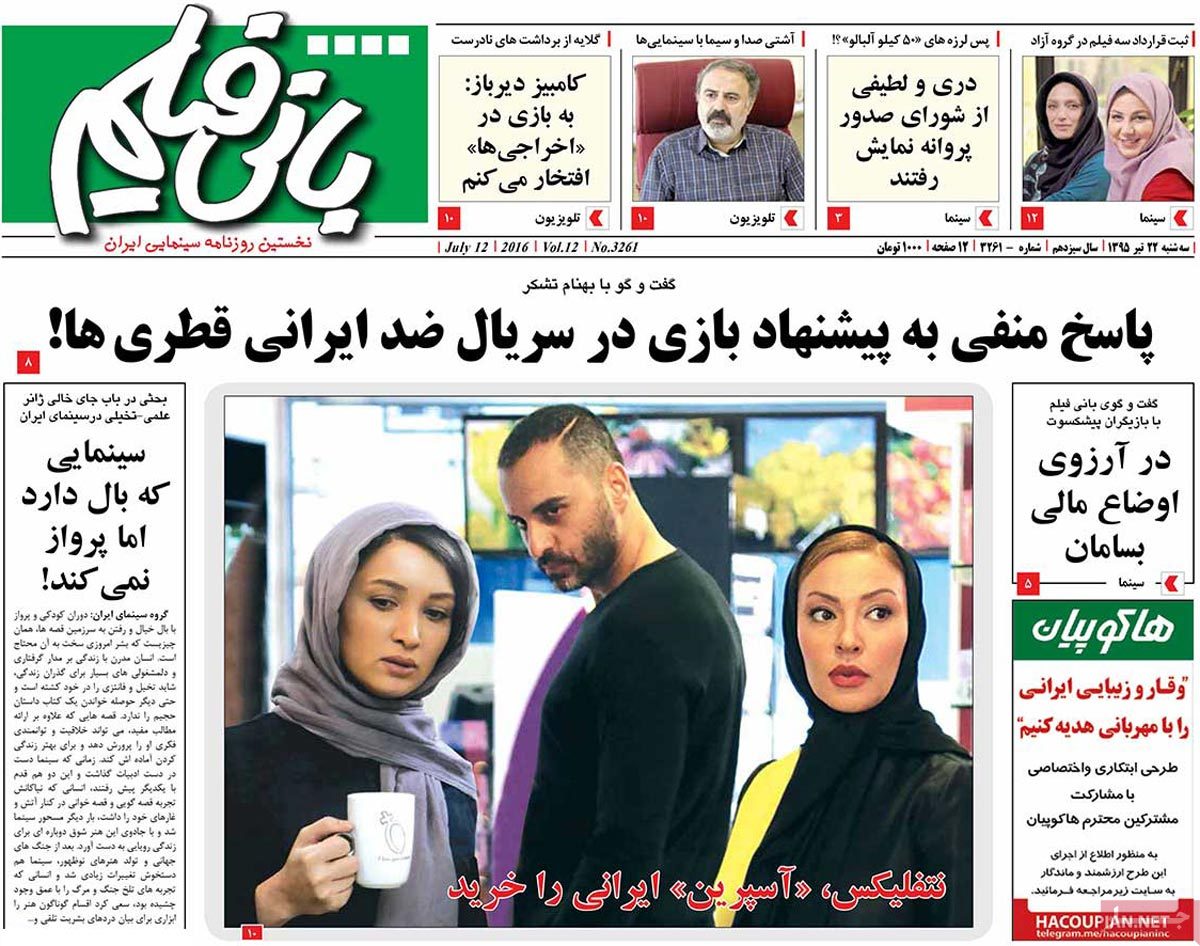
Bani Film:
1- Netflix Buys Iranian TV Series “Aspirin”
2- Iranian Actor Behnam Tashakkor Rejects Qataris’ Offer to Play in an Anti-Iran TV Series
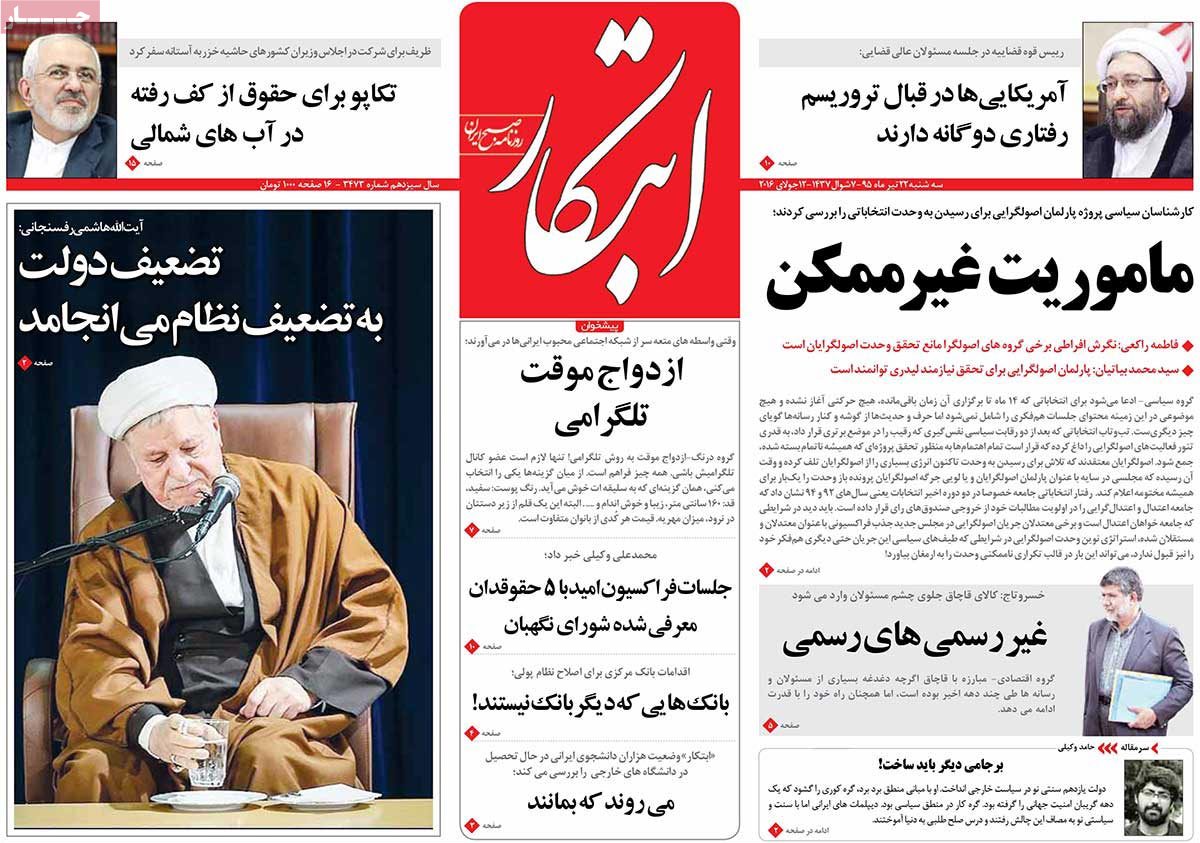
Ebtekar:
1- Americans Show Double-Standard Behaviour towards Terrorism: Judiciary Chief
2- Weakening the Government Leads to Weakening the Establishment: Rafsanjani
3- Zarif Visiting Astana to Reclaim Iran’s Lost Rights in Northern Waters [Caspian Sea]
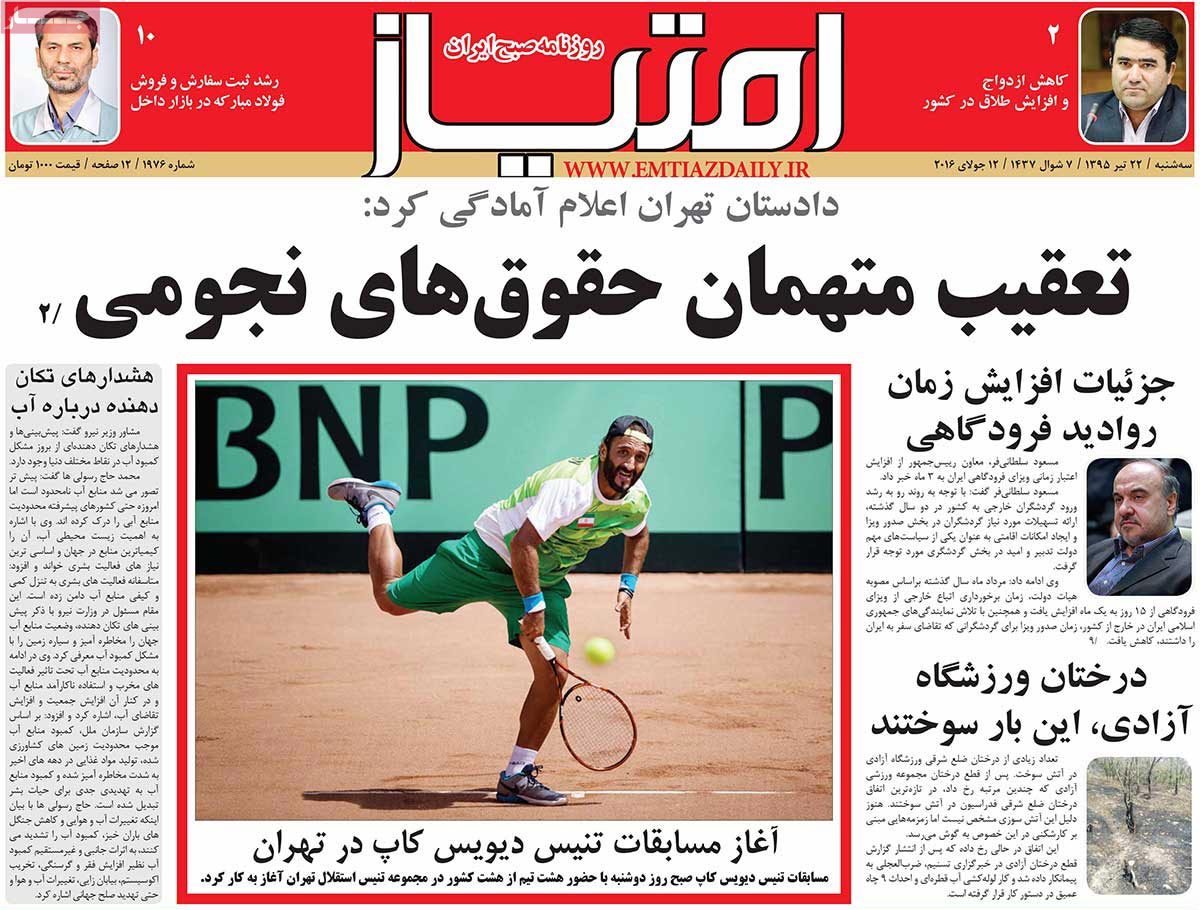
Emtiaz:
1- Decrease in Marriage and Increase in Divorce in Iran
2- Tehran Prosecutor General Ready to Prosecute Those Who Received Astronomical Salaries
3- Extension in Time of Visas Issued in Airport
4- Shocking Warnings over Water Shortage
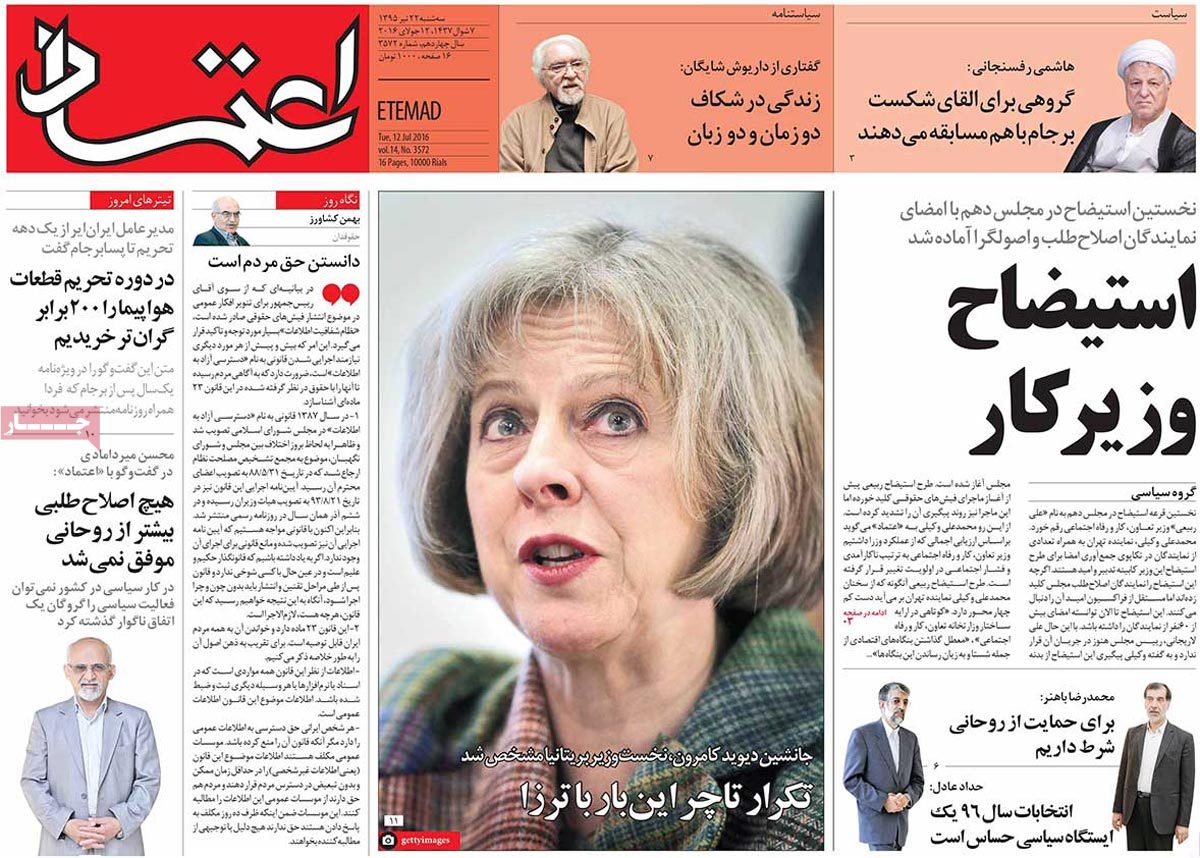
Etemad:
1- Tenth Parliament to Impeach Labour Minister as Its First Impeachment
2- Senior Conservative Bahonar: We Have Conditions for Supporting Rouhani [in next year’s presidential elections]
3- In Time of Sanctions, We Bought Plane Parts 200 Times More Expensive: Iran Air Chief
4- Repetition of Thatcher, This Time with Theresa May
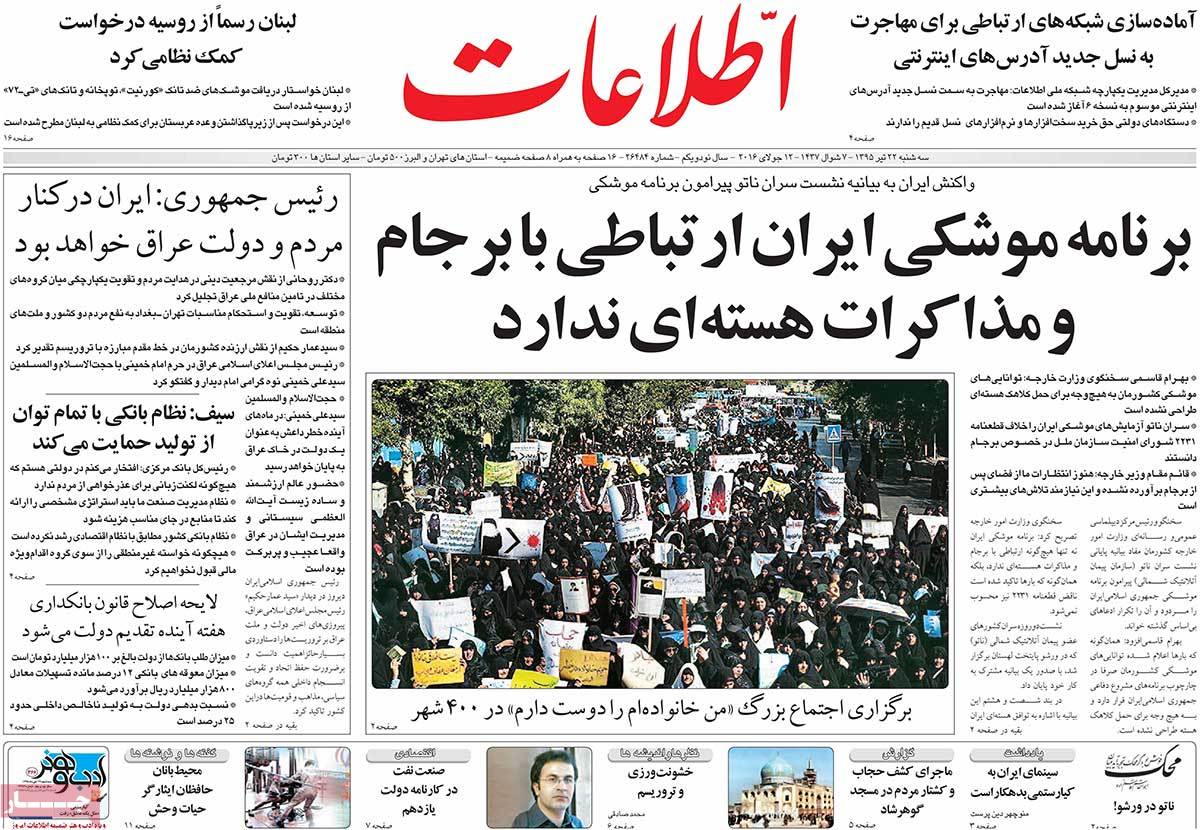
Ettela’at:
1- Iran’s Missile Program Has Nothing to Do with JCPOA and Nuclear Talks: Iran’s Reaction to NATO Statement
2- Lebanon Officially Asks for Russia’s Military Aid
3- Iran to Stand by Iraqi People and Gov’t: Rouhani
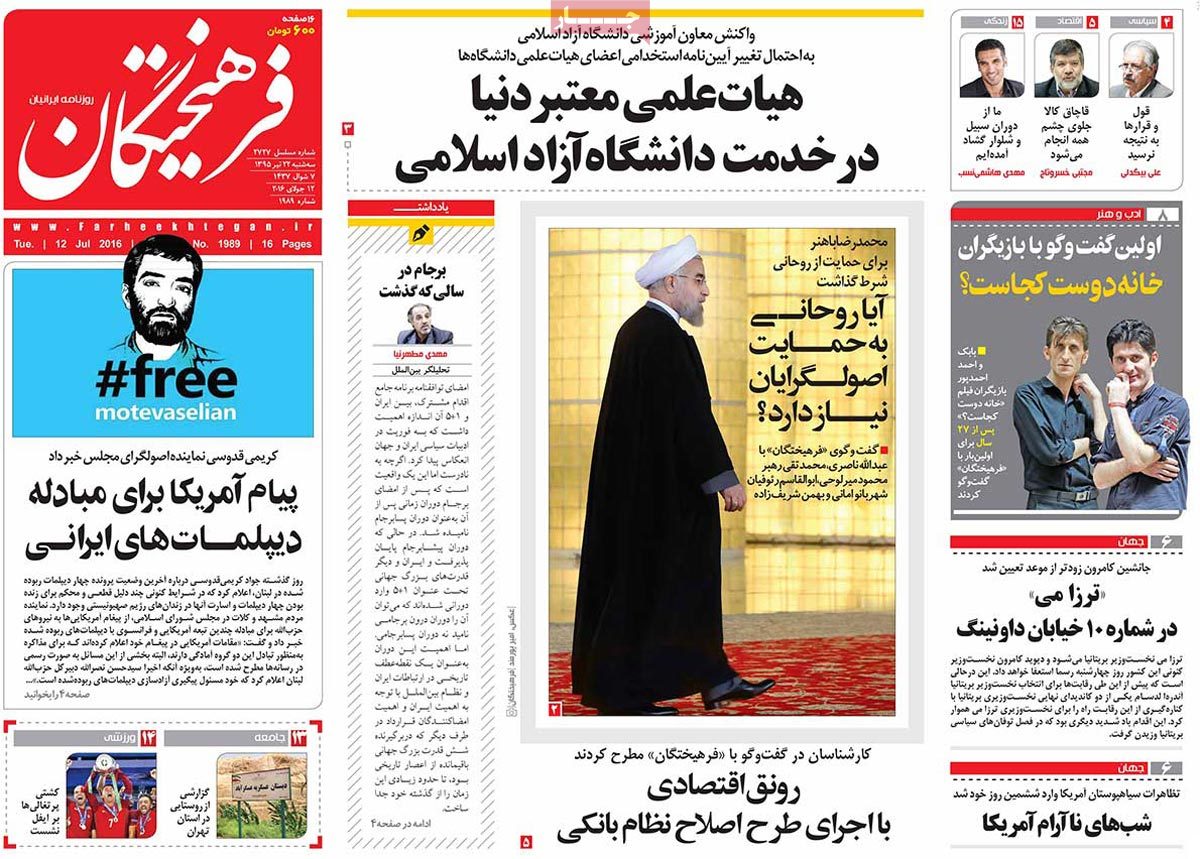
Farhikhtegan:
1- MP Reveals US Message for Exchange of Iranian Diplomats Kidnapped in Lebanon
2- Does Rouhani Need the Support of Conservatives?
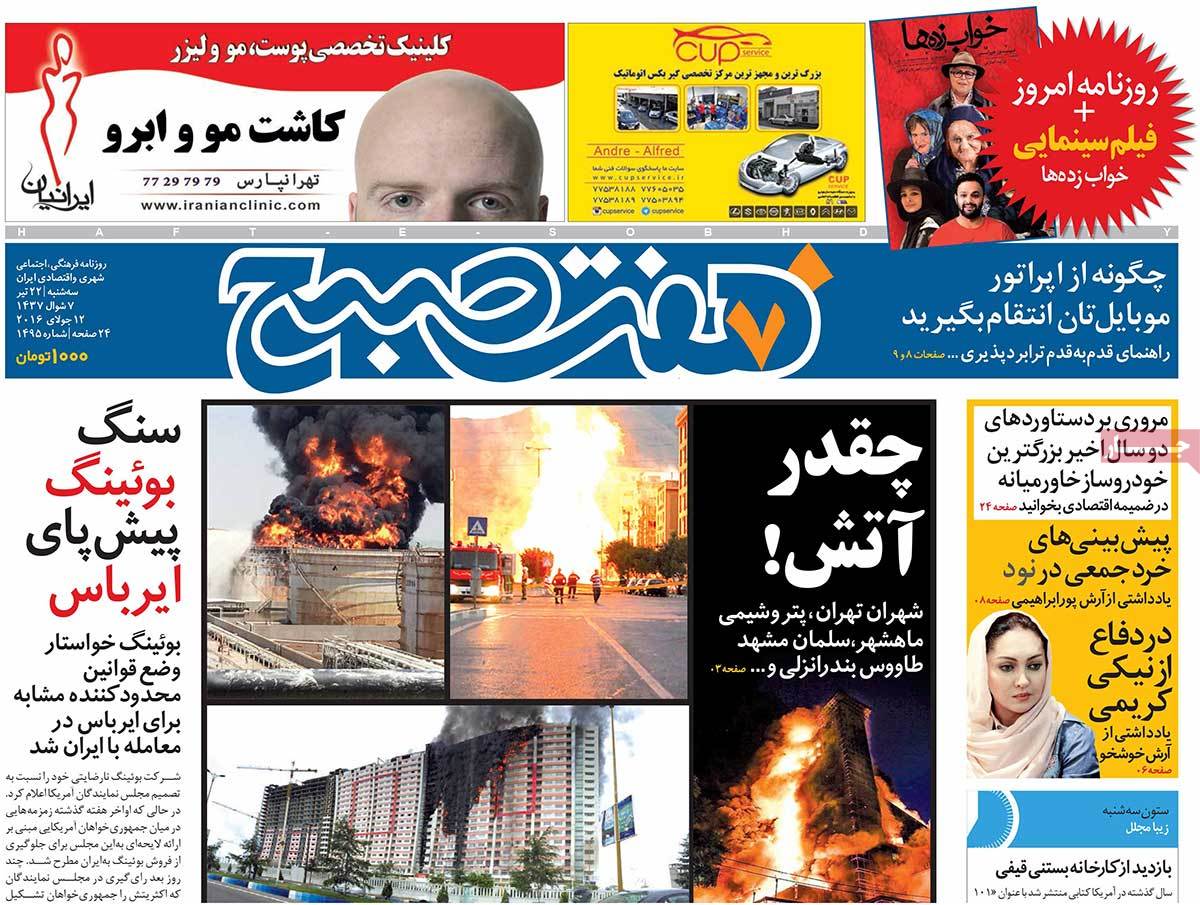
Haft-e Sobh:
1- How Much Fire! Several Fire Accidents in a Few Days: Tehran’s Shahran, Mahshahr Petchem Complex, Residential Tower in Bandar Anzali, Salman Commercial Tower in Mashhad
2- Boeing Calls for Restricting Airbus from Deal with Iran
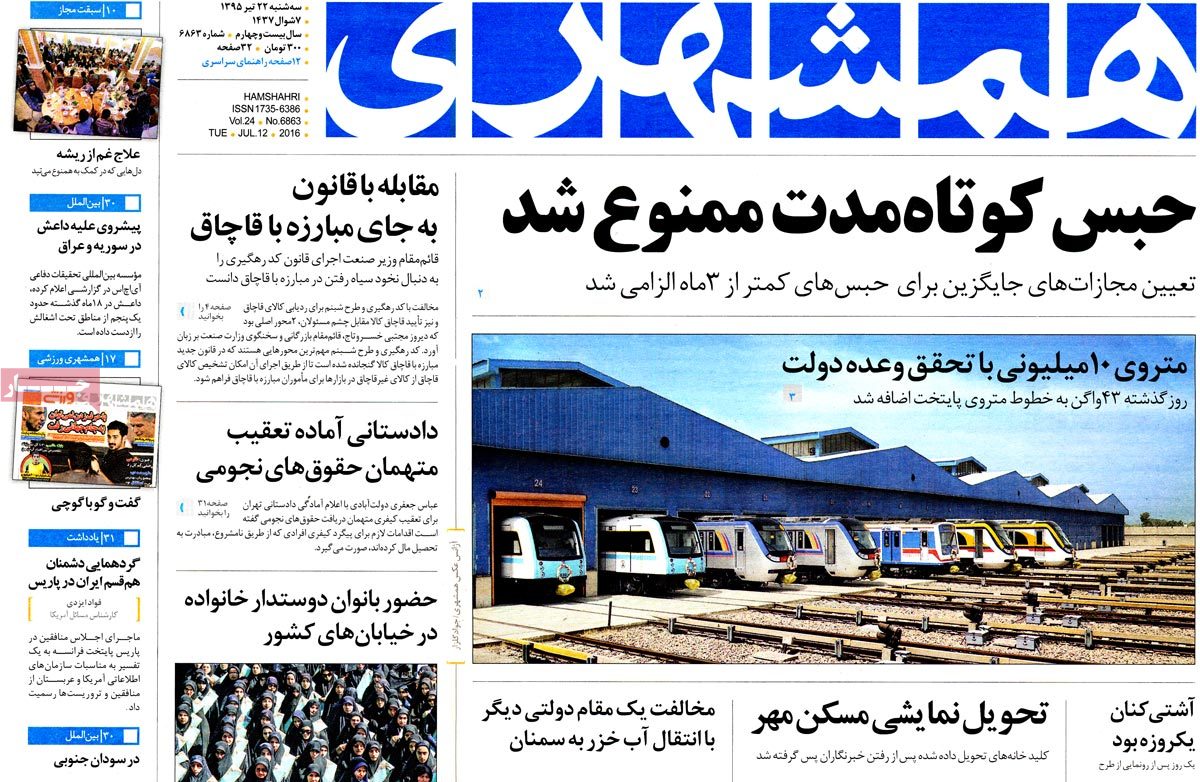
Hamshahri:
1- Short-Term Incarceration Prohibited: Alternative Sentences Should Be Issued
2- Gathering of Iran’s Enemies in Paris
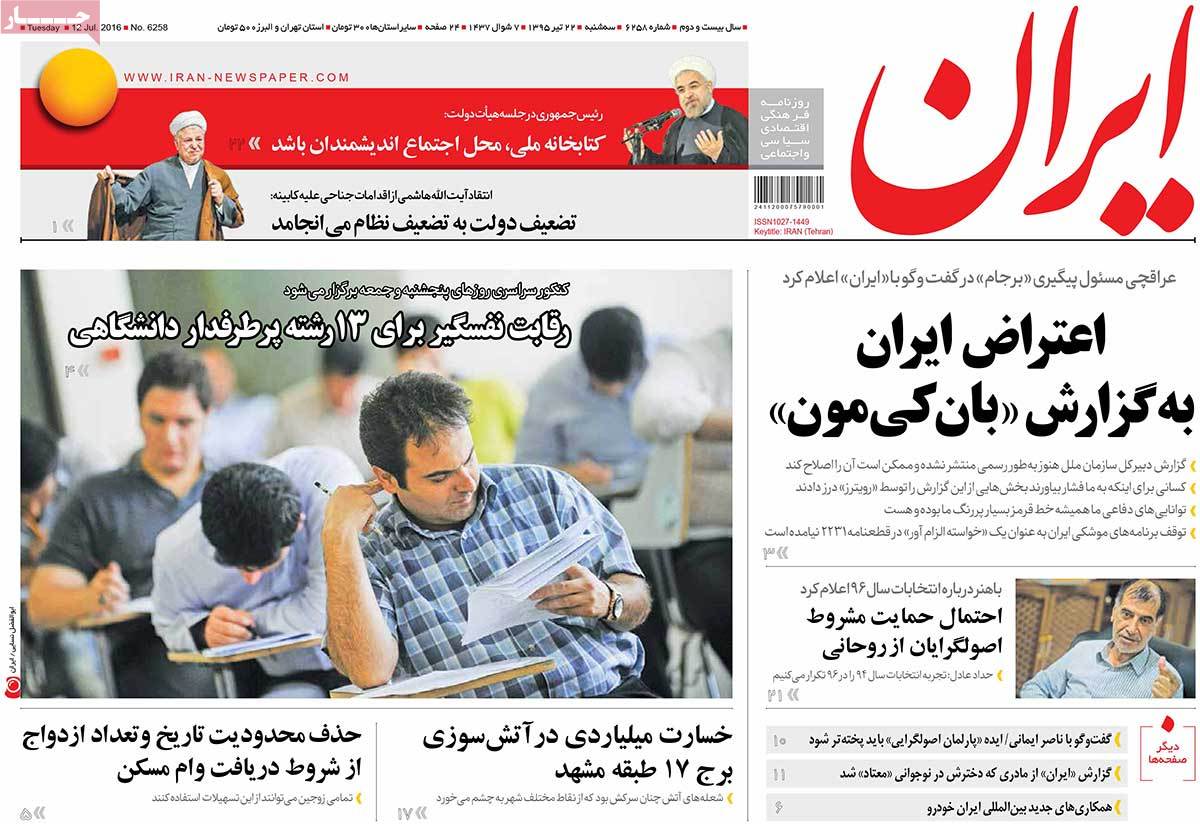
Iran:
1- Iran Protests at Ban’s Report
2- Iran Khodro Company’s New International Collaborations
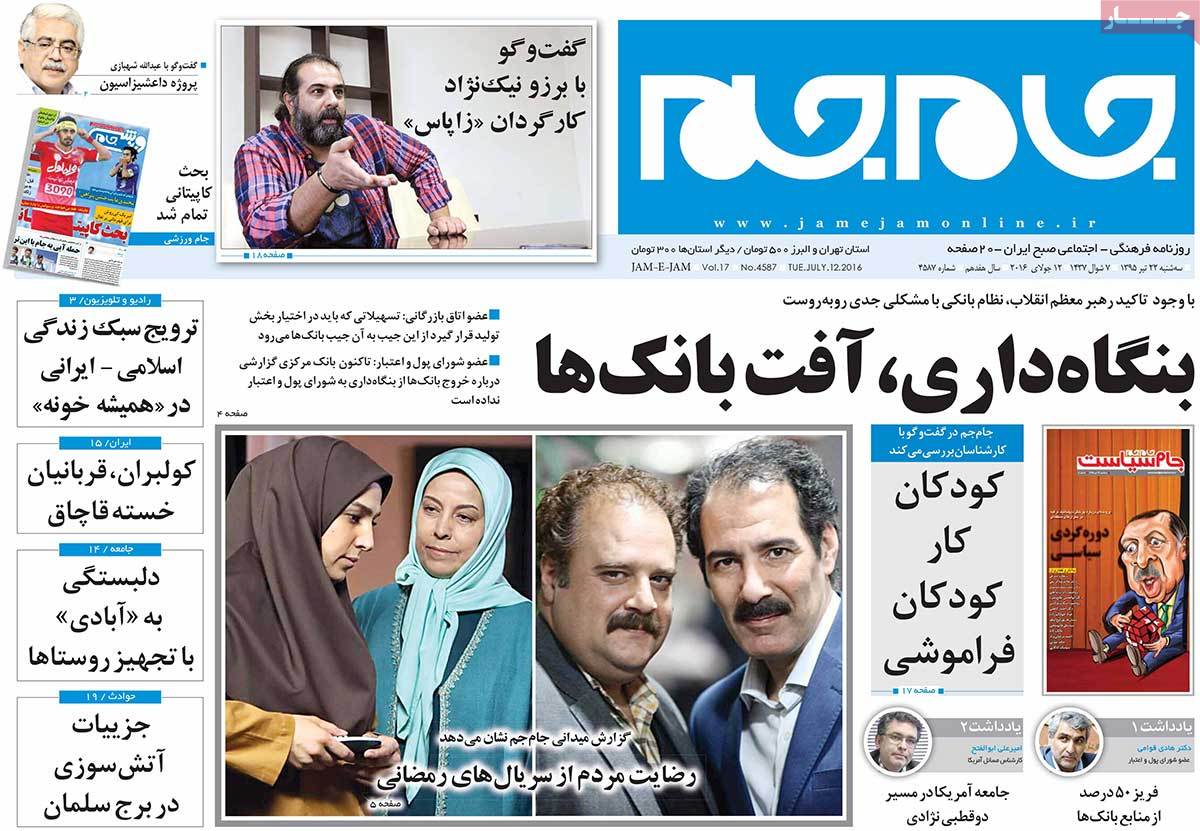
Jame Jam:
1- US Community on Verge of Racial Bipolarization
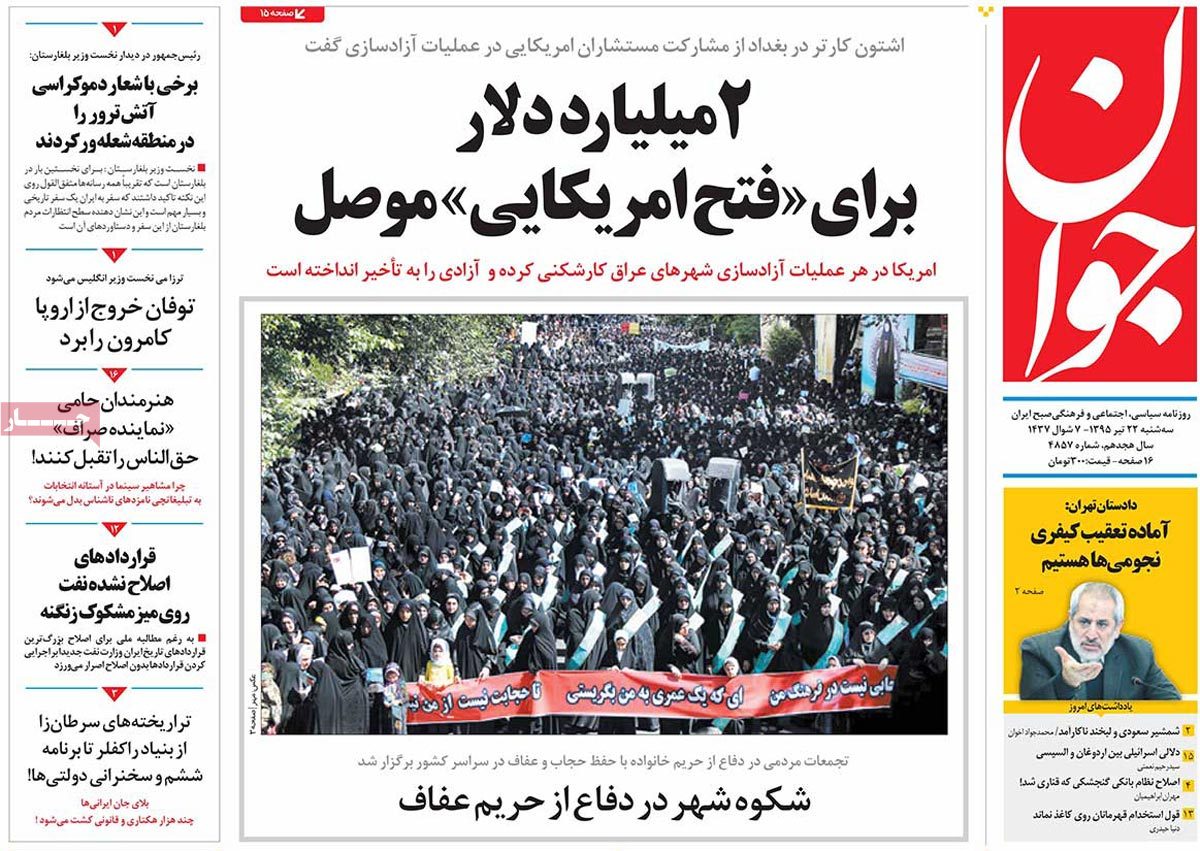
Javan:
1- $2bn for “American Conquest” of Mosul: Carter, in Baghdad, Talks of American Advisors’ Participation in Operation to Retake ISIS-Held City
2- Some Have Fanned Flames of War in Region While Chanting Slogans for Democracy: Rouhani
3- Israel’s Mediation between Erdoğan and Sisi
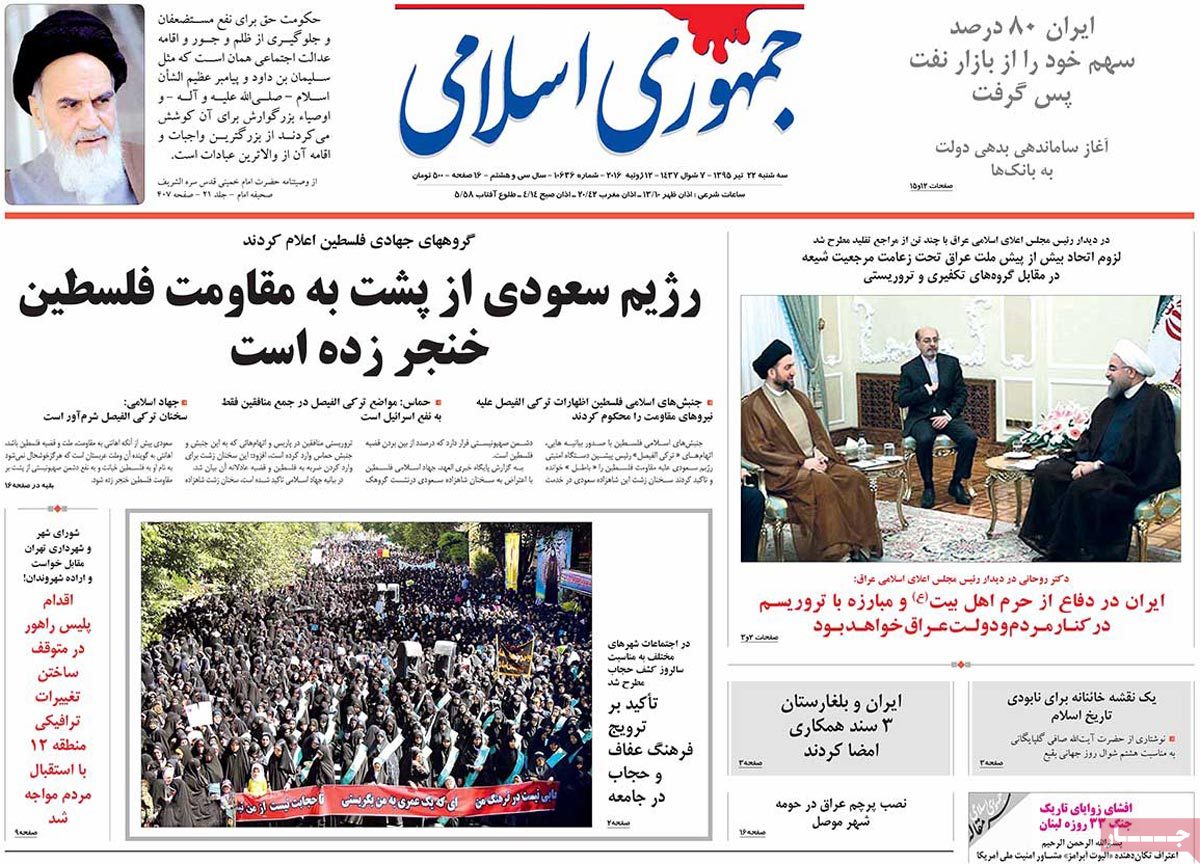
Jomhouri Eslami:
1- Iran Restores 80% of Its Oil Market Share
2- Saudi Regime Has Stabbed Palestinian Resistance in the Back: Jihadi Palestinian Groups
3- Iran and Bulgaria Sign 3 MoUs
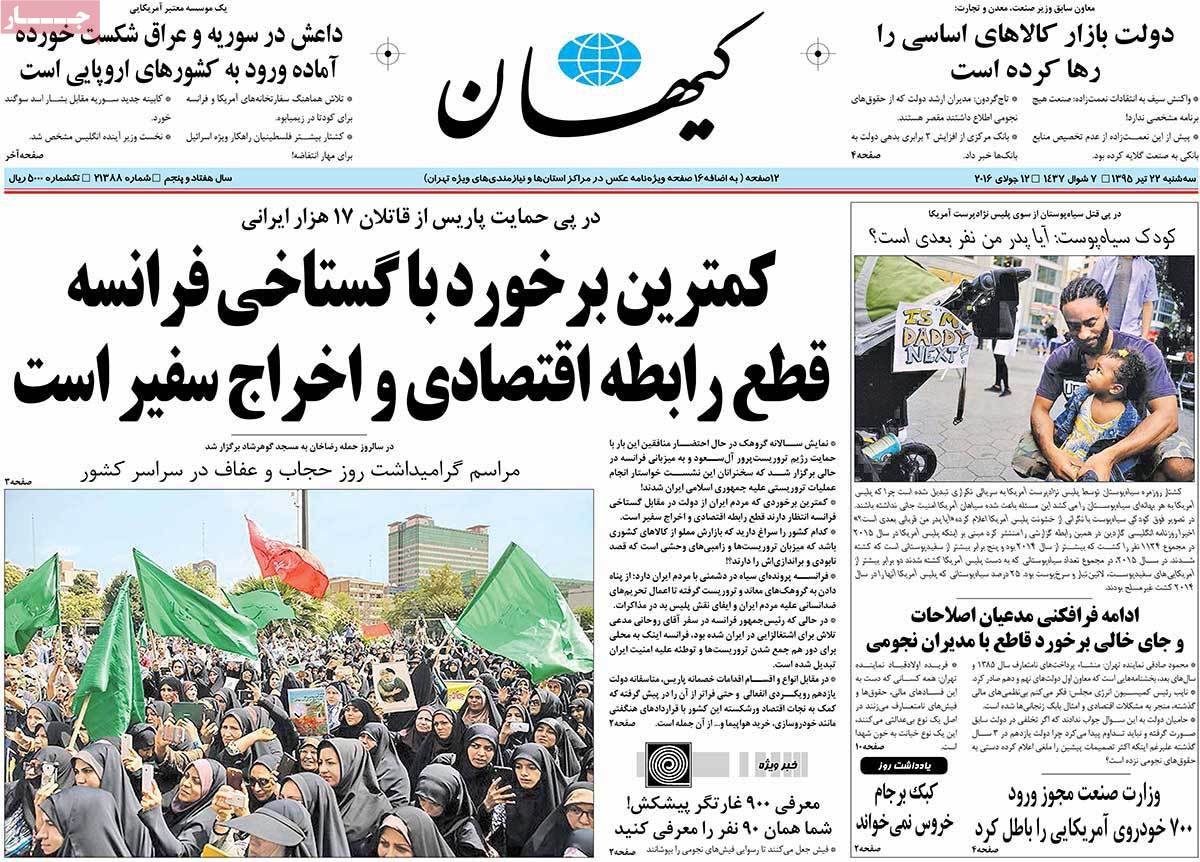
Kayhan:
1- Severance of Ties with France and Expelling French Ambassador Is the Least Iran Should Do in Reaction to Paris’s Support for Murderers of 17,000 Iranians [MKO]
2- After Being Defeated in Iraq and Syria, ISIS Is Ready to Enter European States
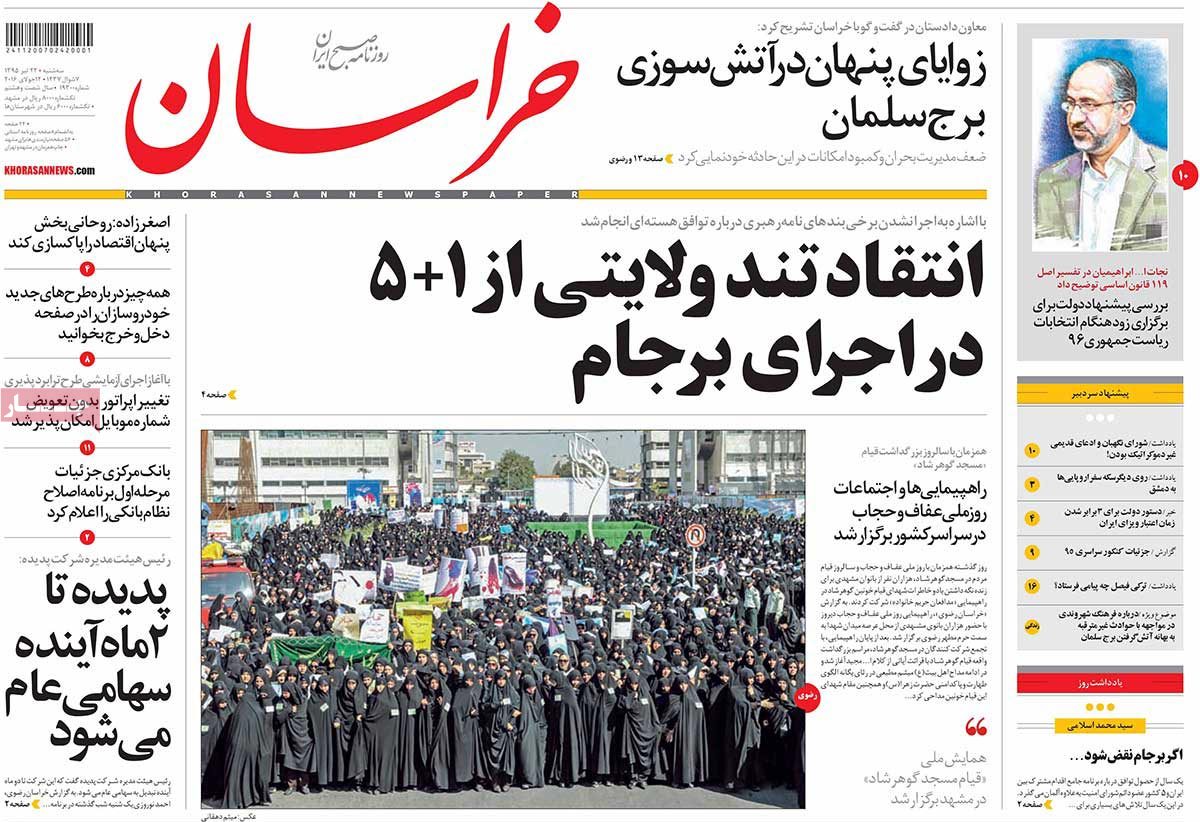
Khorasan:
1- Velayati Strongly Slams Group 5+1 over JCPOA Implementation
2- Rallies and Demonstrations Held across Iran to Mark National Day of Hijab
3- It’s Now Possible for Cell Phone Users to Change Their Operator without Changing Their Phone Number
4- Guardian Council and the Old Claim of Being Undemocratic
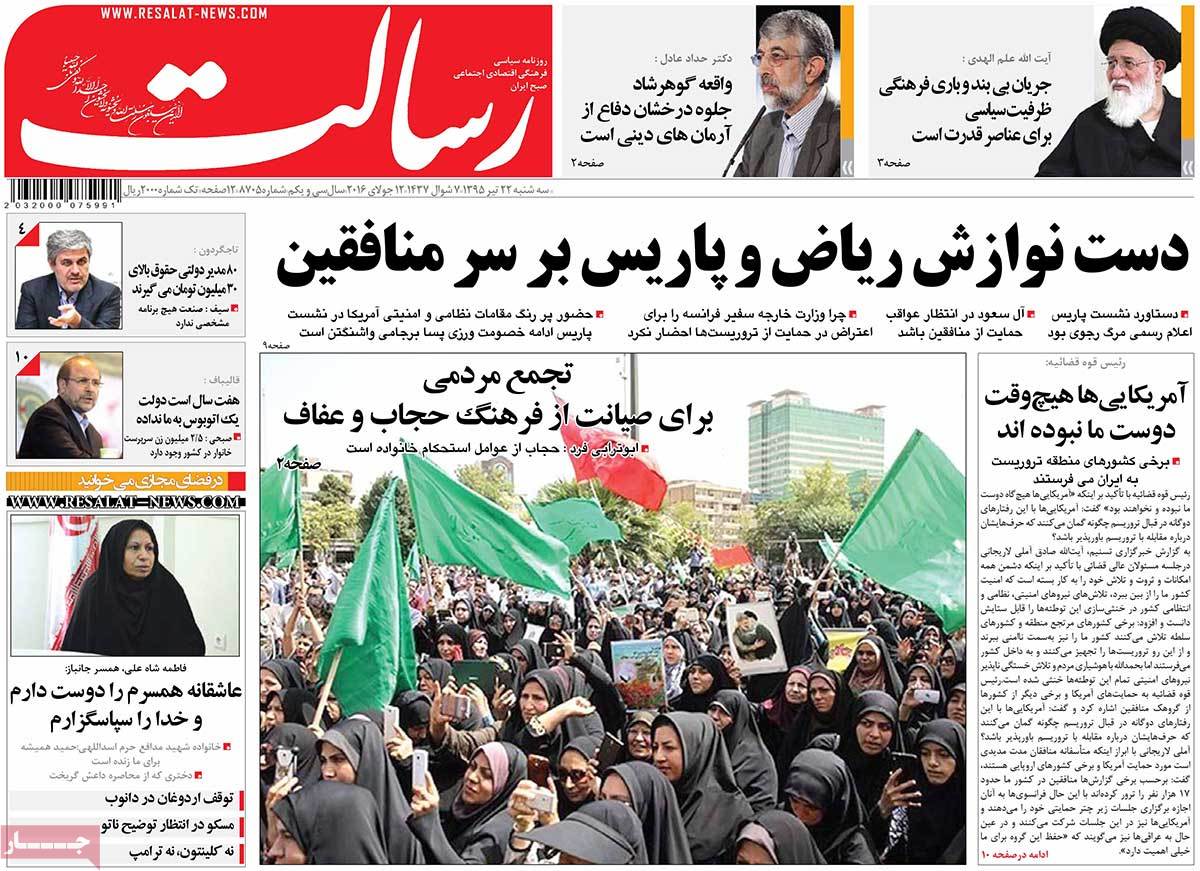
Resalat:
1- Al Saud Should Be Expecting Consequences of Its Support for the MKO
2- Americans Have Never Been Our Friends: Judiciary Chief
3- There Are 2.5m Iranian Women Who Shoulder All Family Responsibilities
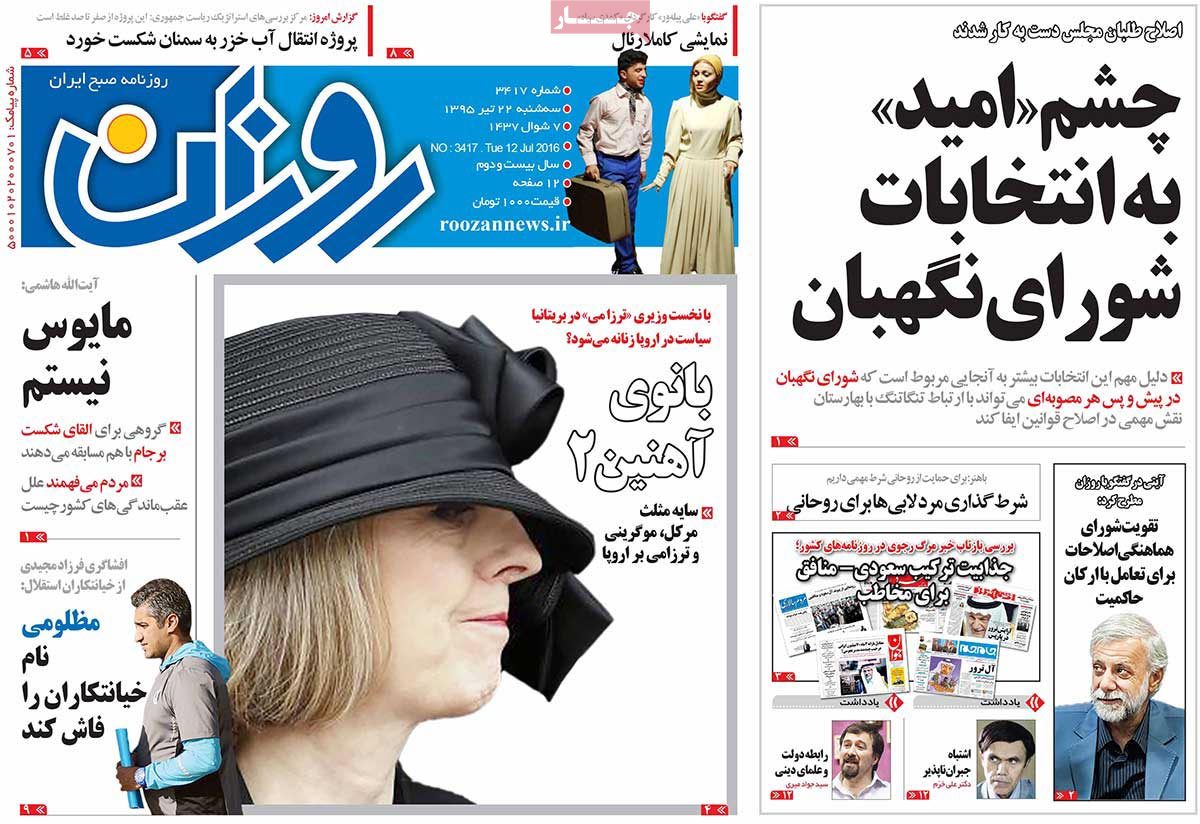
Roozan:
1- Reformists Awaiting Results of Guardian Council Elections [in which a number of its legal experts are going to be replaced]
2- Iron Lady Number 2: Will Politics in Europe Become Female-Dominated?
3- Project to Transfer Caspian Sea’s Water to Semnan Failed
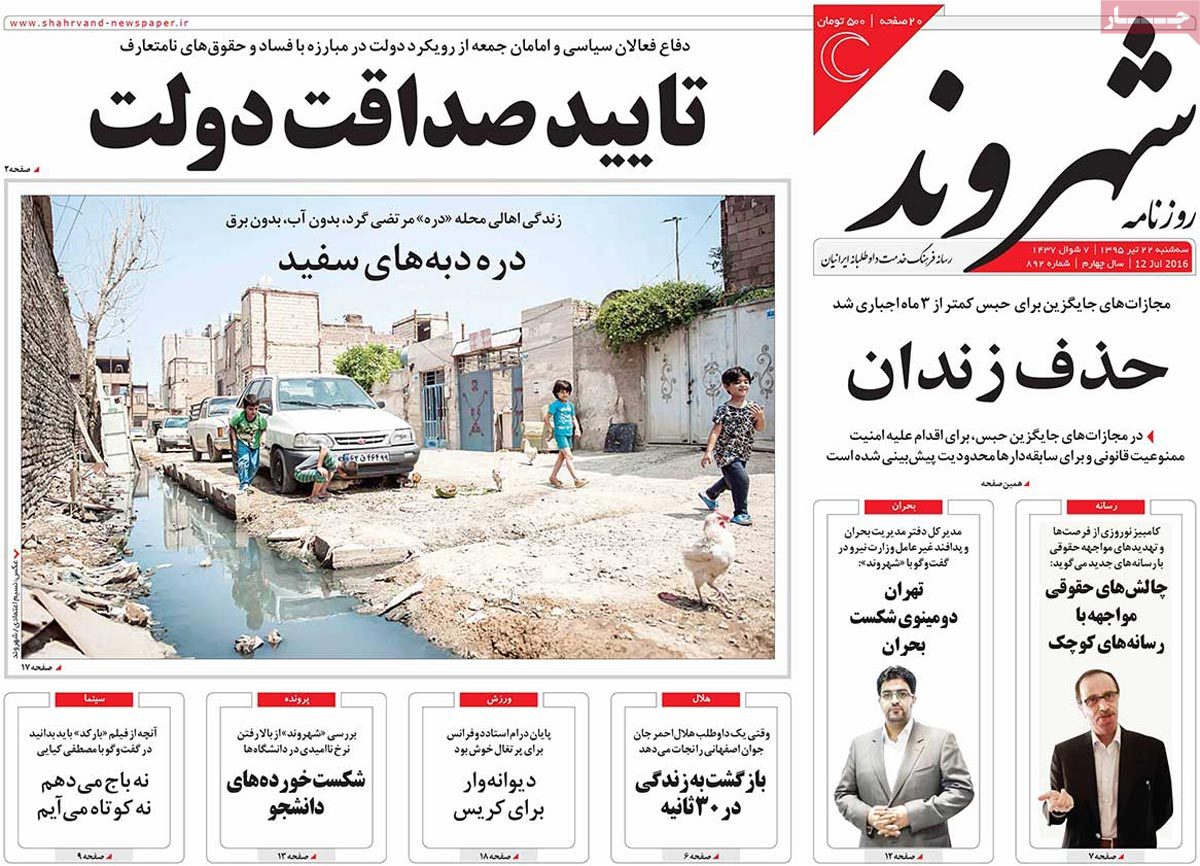
Shahrvand:
1- Political Activists and Senior Clerics Acknowledge Honesty of Rouhani’s Administration
2- Alternative Punishments Must Be Used for Prison Terms Less than 3 Months
3- Increasing Rate of Frustration among University Students
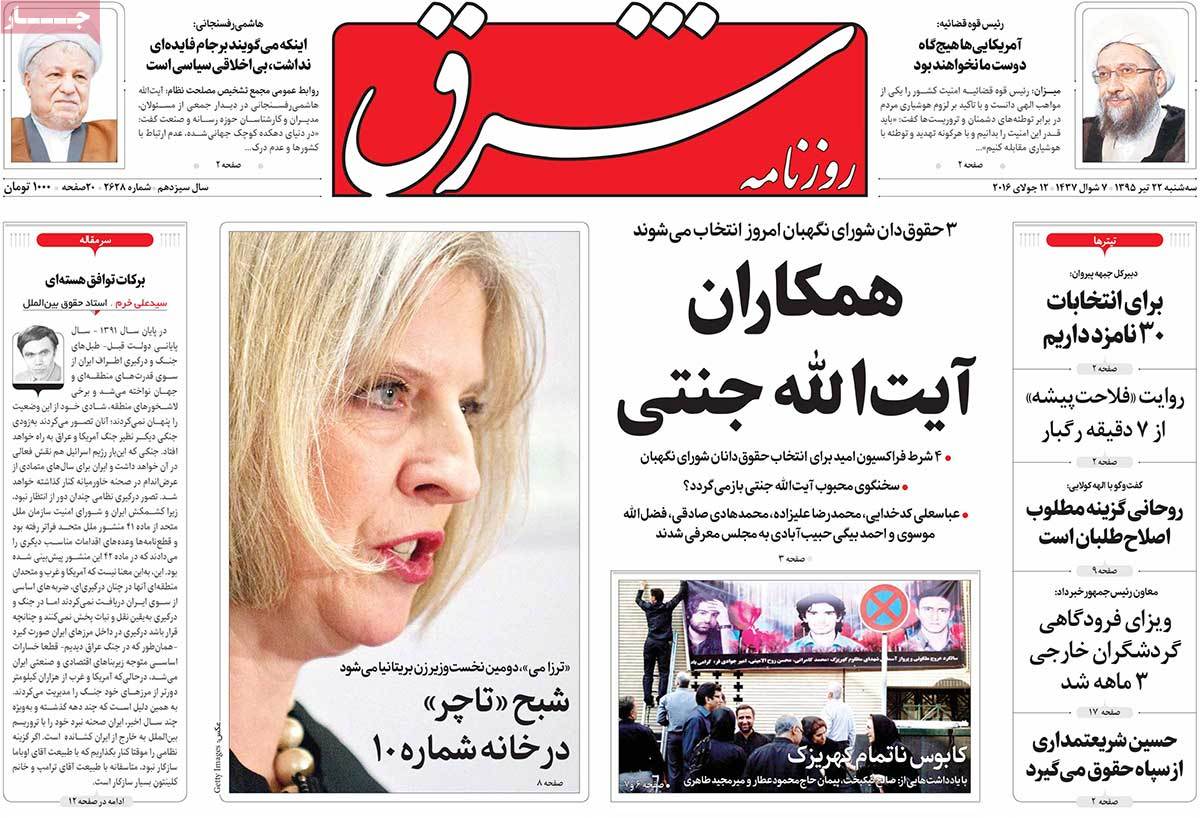
Shargh:
1- Ayatollah Jannati’s Colleagues: 3 Jurists of Guardian Council to Be Elected Today
2- Thatcher’s Ghost in Number 10: May to Become 2nd Female PM of Britain
3- It’s Politically Unethical to Say JCPOA Has Had No Benefit: Rafsanjani
4- Foreign Tourists Can Obtain 3-Month Visa in Airport
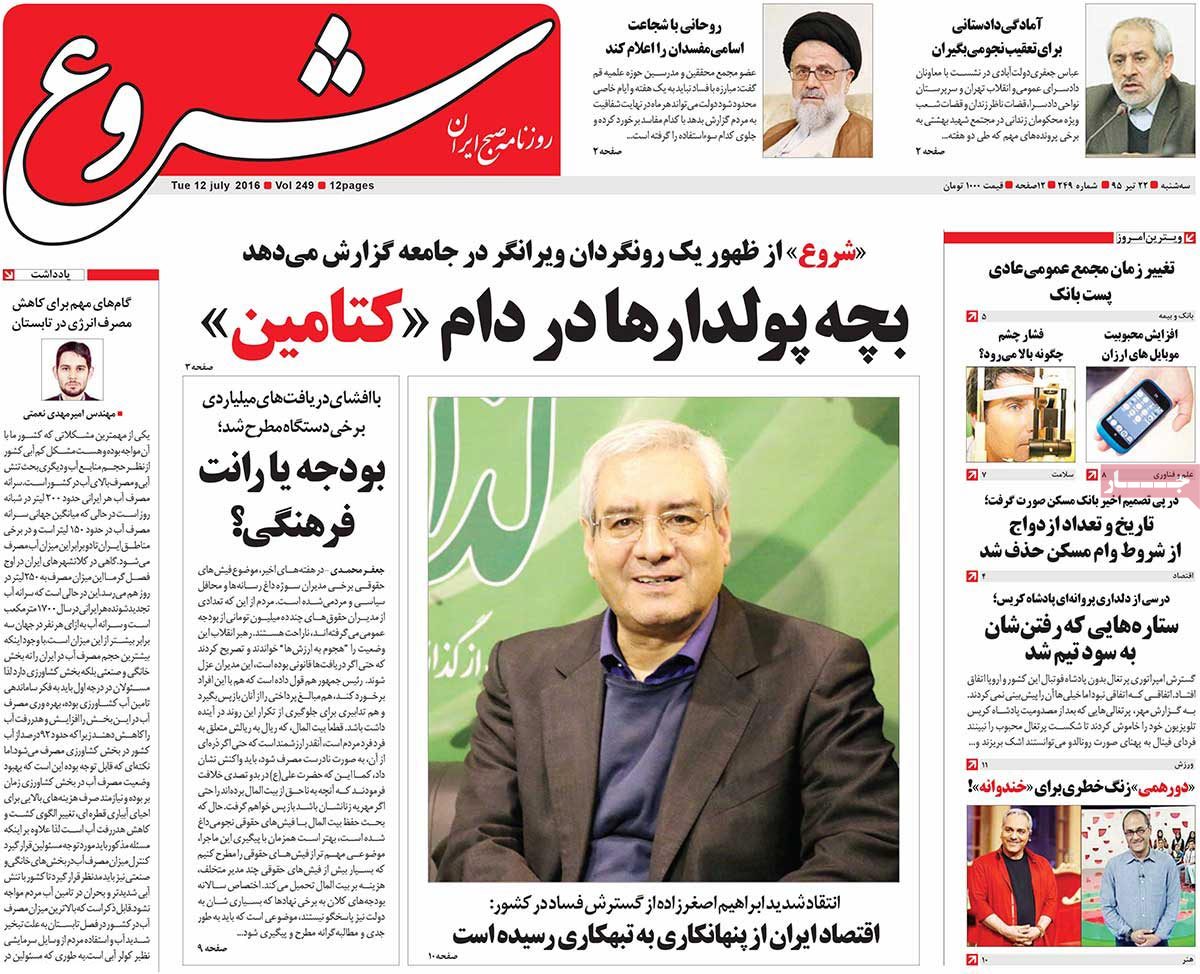
Shorou:
1- Ketamine, the New Substance Emerging among Rich Kids in Iran
2- Major Steps to Reduce Energy Consumption during Summer
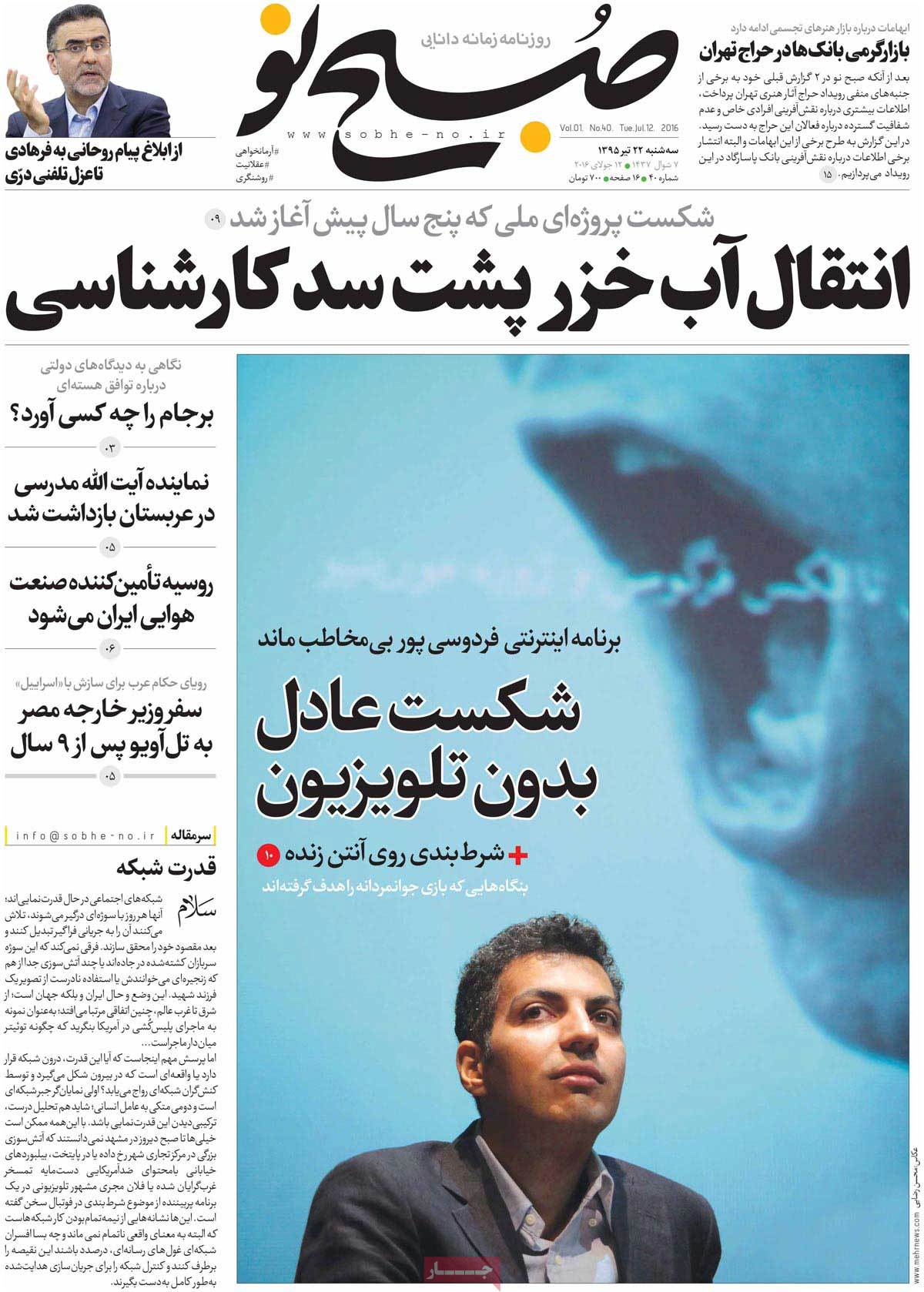
Sobh-e Now:
1- Ayatollah Modarresi’s Representative Arrested in Saudi Arabia
2- Egyptian FM Visits Tel Aviv after 9 Years: Arab Leaders’ Dream of Compromise with Israel
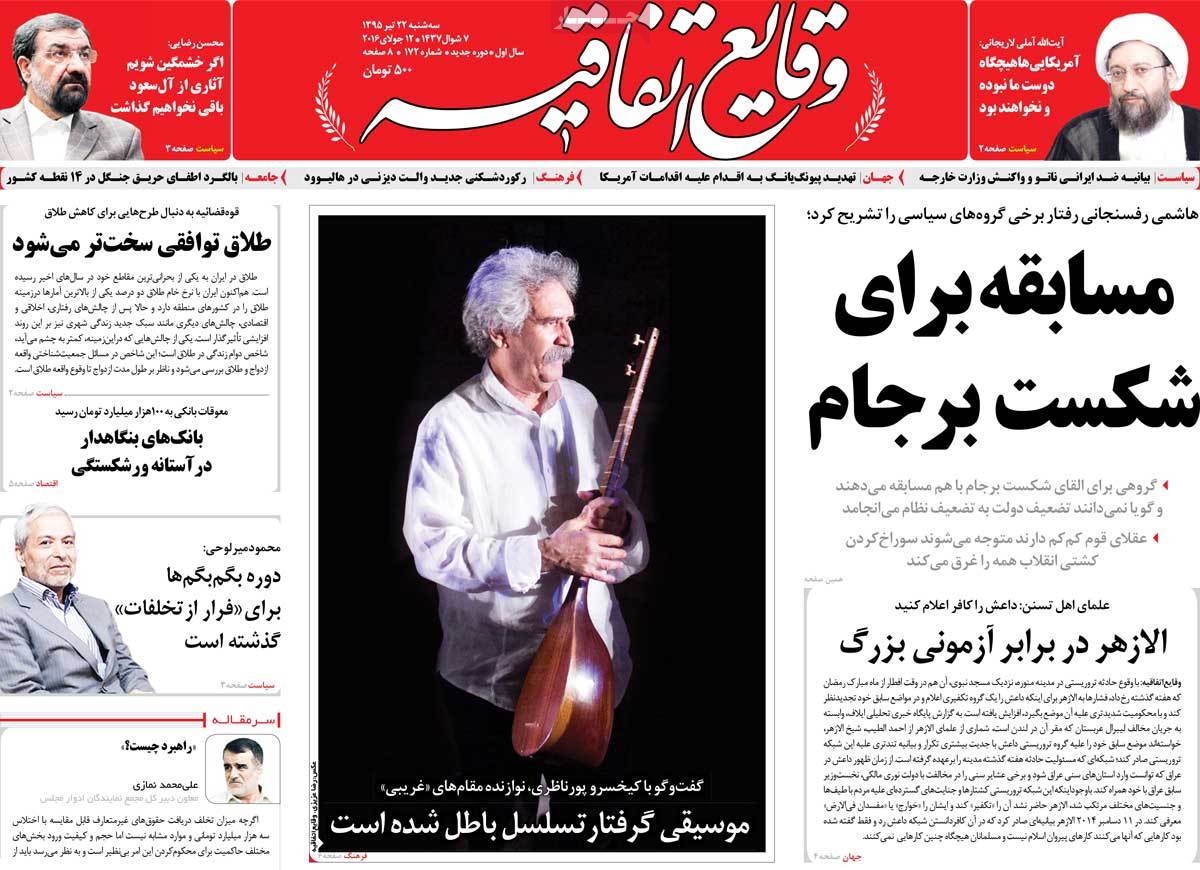
Vaghaye Ettefaghieh:
1- Sunni Clerics Call for Declaration of ISIS as Apostates: Big Test for Al-Azhar
2- If We Get Angry, Nothing Would Remain from Saudi Arabia: General Rezaei
3- Competition for JCPOA Failure: Rafsanjani Criticizes Behaviours of Certain Groups
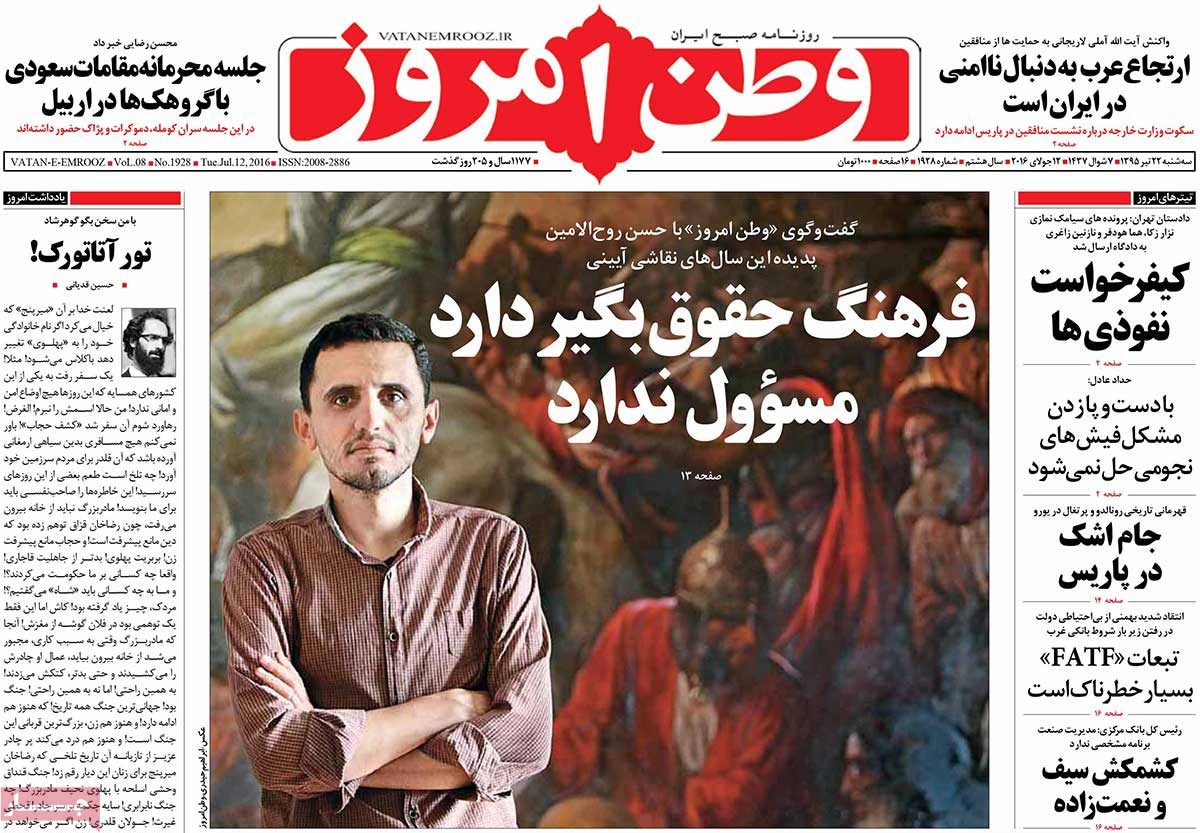
Vatan-e Emrooz:
1- Saudi Arabian Officials Holding Secret Meetings with [Anti-Iran] Groups in Erbil: IRGC General Rezaei
2- Arab Reactionaries Want to Cause Insecurity in Iran: Judiciary Chief
3- Repercussions of FATF Are Very Dangerous: Ex-CBI Governor
Earlier on Monday, July 11, Reuters quoted an American commander as saying that the IRGC had dispatched five military vessels to monitor a US warship hosting one of America’s top generals on a day trip through the Strait of Hormuz, Persian Gulf, coming as close as 500 yards.
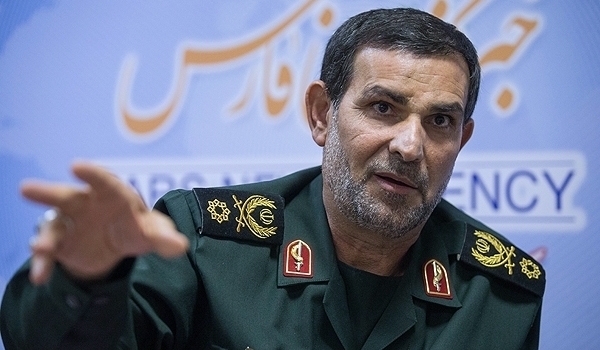
In response, General Tangsiri said on Tuesday, July 12, that “monitoring foreign vessels in regions where the IRGC Navy conducts its missions is not a new thing and it is always done on a routine basis and round the clock.”
He underlined that the IRGC Navy is tasked with monitoring the traffic of every foreign vessel precisely and sensitively, “especially those of the enemies of the Islamic Revolution and the Great Satan, the US”, whose presence is a threat to Iran.
Tangsiri underlined that the monitoring mission has been carried out for years and the western media’s fuss over the issue is the result of their incorrect understanding, as reported by Fars.
According to the Reuters’ report, the five Iranian vessels consisted of four speedboats, three with mounted machine guns, as well as a guided missile patrol ship.
One of the four speedboats that reportedly approached the New Orleans and its escort, a US Navy guided missile destroyer, the USS Stout, cut its engines and watched as the US warships passed.
An hour earlier, a larger Iranian guided-missile patrol craft came by.
US officials stressed that such approaches fell within the category of professional interactions, the kind they see during 90 per cent of the US Navy’s roughly 250 transits through the Strait of Hormuz each year.
Reuters quoted Army General Joseph Votel, head of the US military’s Central Command, as saying, “As you’ve seen in a relatively compressed space here, there is great opportunity for miscalculations.”
“We don’t always have a lot of time to deal with those interactions. I think what we’ve probably learned here today is that it’s measured in minutes,” Votel said.
Back in January, the IRGC Navy captured 10 US Navy sailors near Farsi island inside Iran’s territorial waters in the Persian Gulf, but released them a day later following an apology and after technical and operational investigations indicated that the intrusion was unintentional.
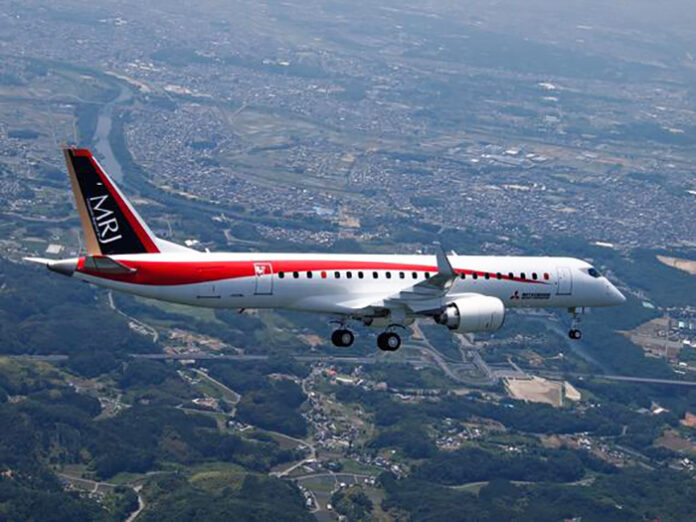
Iran is reportedly planning to purchase 80 regional passenger jets from Japan’s Mitsubishi, according to a report by Tasnim, as translated by IFP.
The unit of Mitsubishi Heavy Industries began market surveys into Iran last September, four months before the US lifted the sanctions. The Japanese company has been touching base with flag carrier Iran Air and Iran Aseman Airlines, as well as the country’s aviation authorities.
Mitsubishi Aircraft and the Iranian carriers are discussing purchase orders during the Farnborough Air Show, which kicked off on Monday, July 11, in the London suburb.
Iran Air is weighing purchasing 80 70-seat Mitsubishi Regional Jets and using them for domestic routes. Executives from both sides also discussed a possible deal last month during the International Air Transport Association conference in Dublin.
Mitsubishi Aircraft is partnering with the Japanese government in this endeavour, aiming to make use of state-backed financing. Because Mitsubishi Aircraft is developing the 90-seat model first, the company plans to deliver the 70-seater in 2019 at the earliest.
Rivals Embraer of Brazil and Canada’s Bombardier are also marketing their aircraft in Iran. Europe’s Airbus has reached agreement with Iran for the purchase of 118 planes. US-based Boeing also announced a deal with Iran Air in late June.
Because of economic sanctions, Iran had been unable to replace its aging aircraft. The government said it needs between 400 and 500 passenger planes over the next decade. Airlines based in Qatar and Dubai had monopolized that demand up to now. Tehran is also planning to expand its airports and transform the city into a Mideast hub.
However, several American legislators maintain a hard line against selling commercial aircraft to Iran. Both Airbus and Mitsubishi Aircraft procure many parts from the US, Nikkei reported.
Despite the stagnation in new sales due to the global economic slowdown, Mitsubishi Aircraft is stepping up its sales operation toward the goal of selling 1,000 planes.
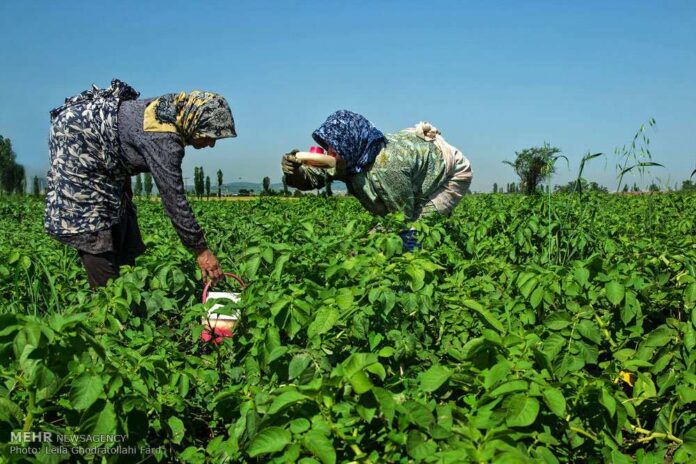
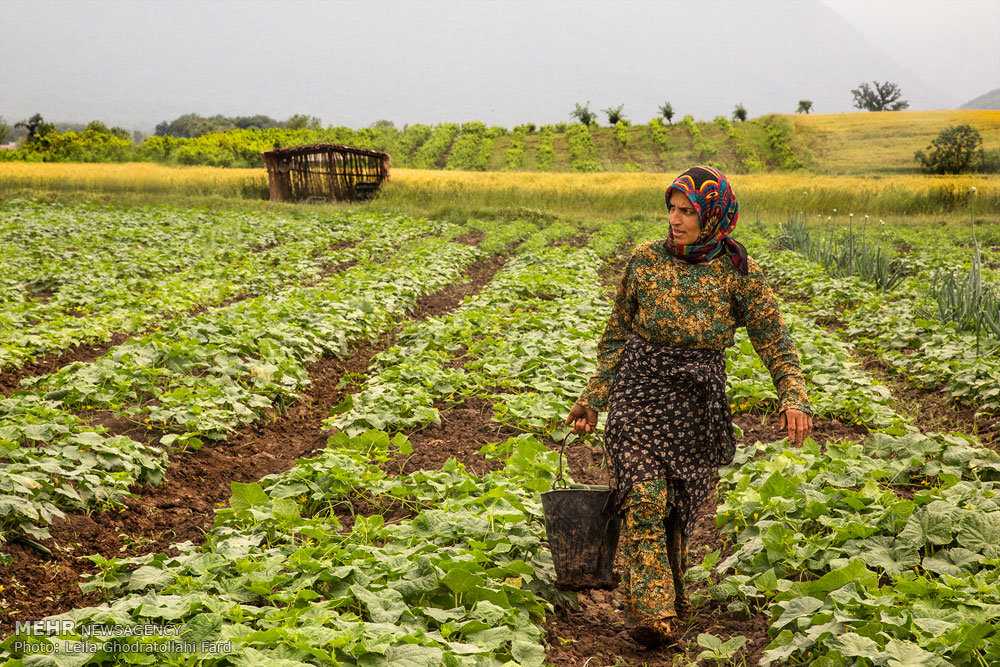
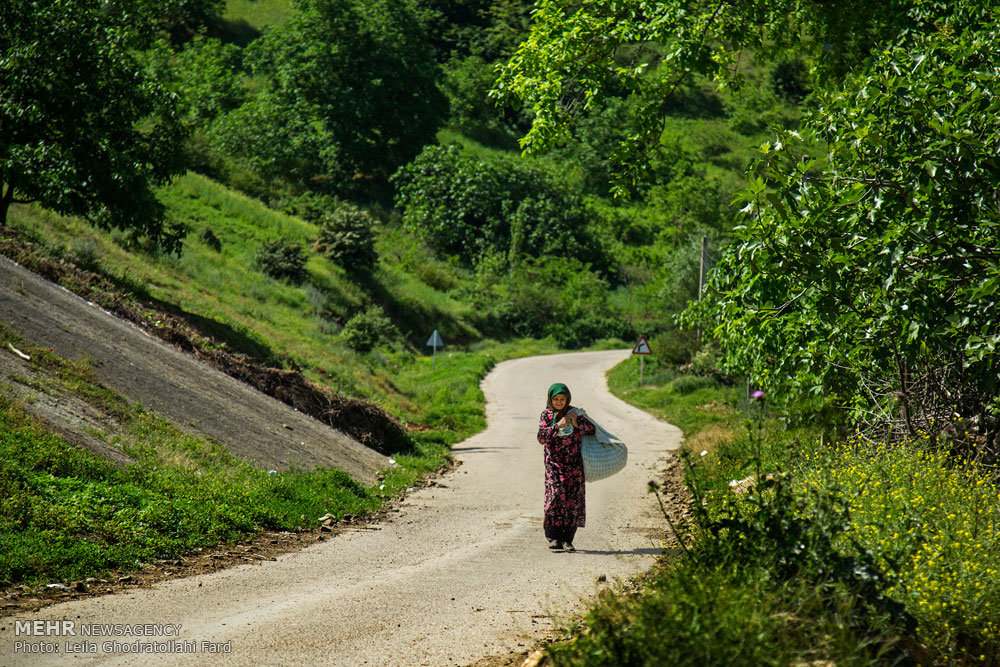
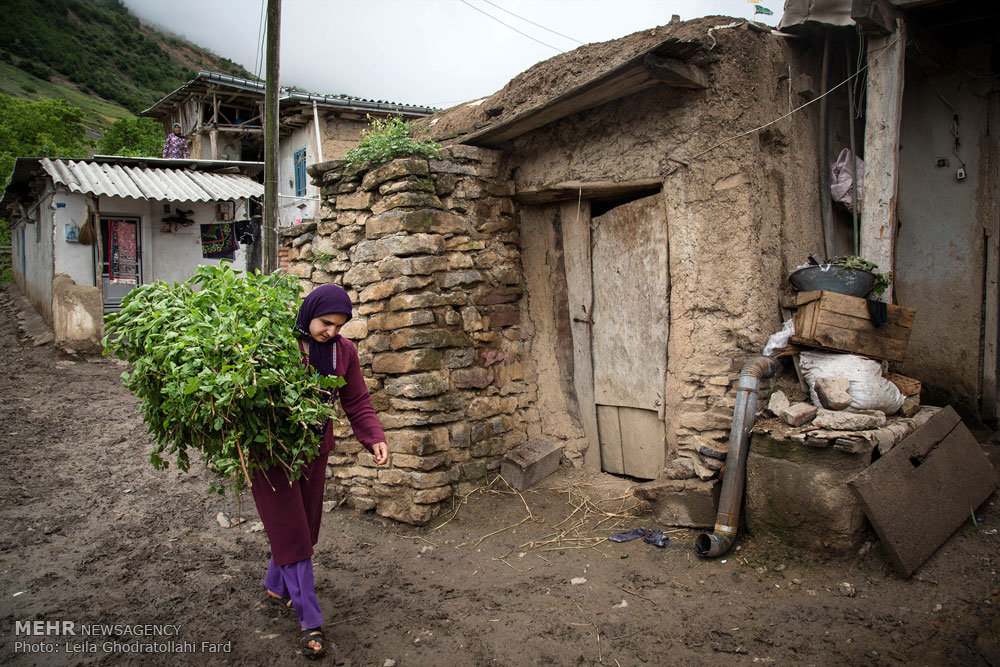
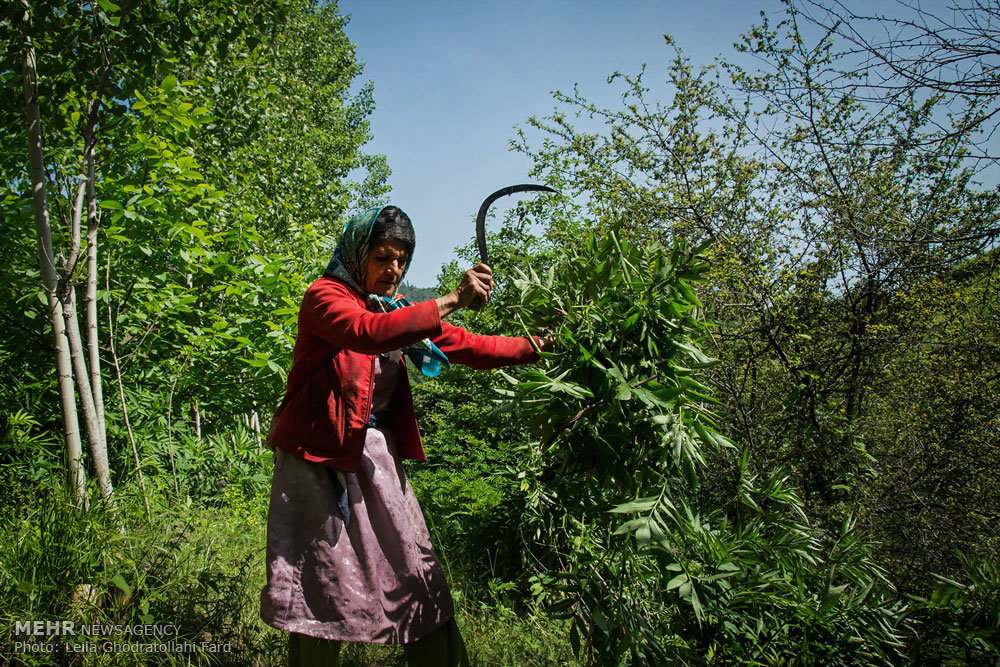
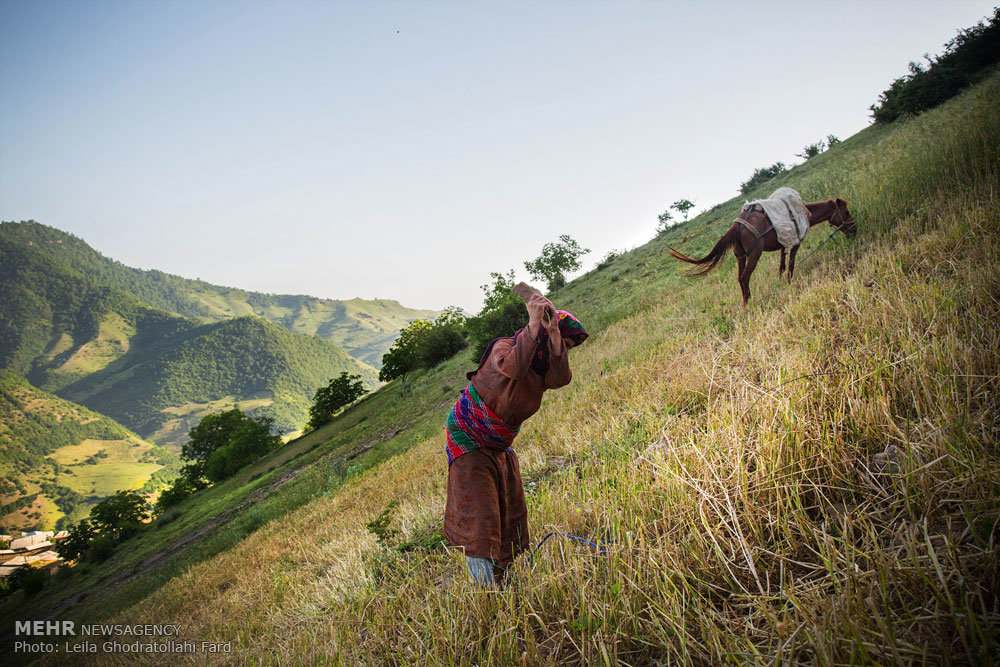
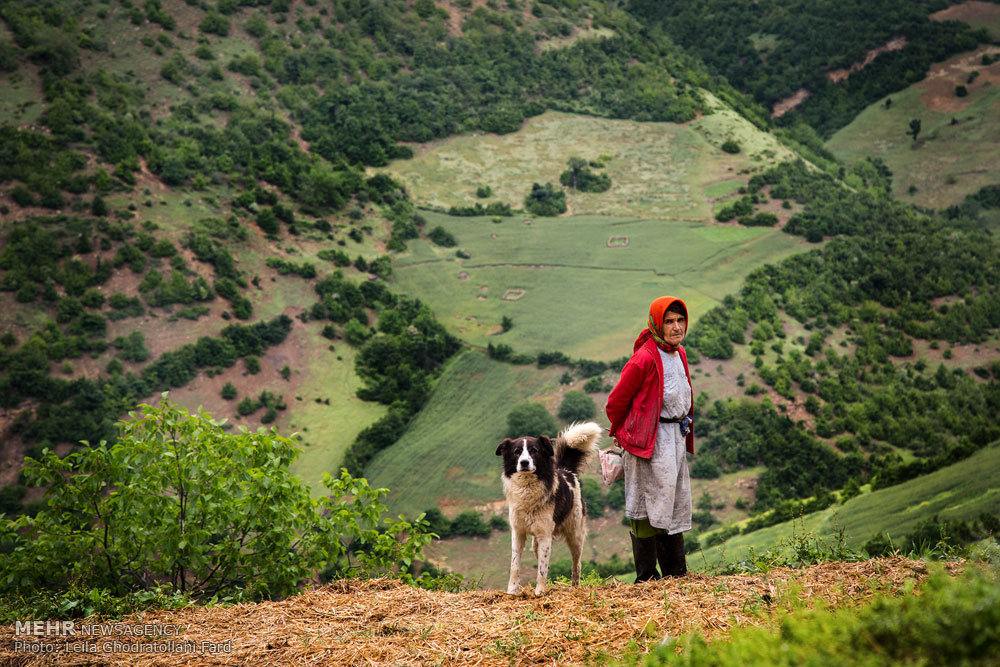
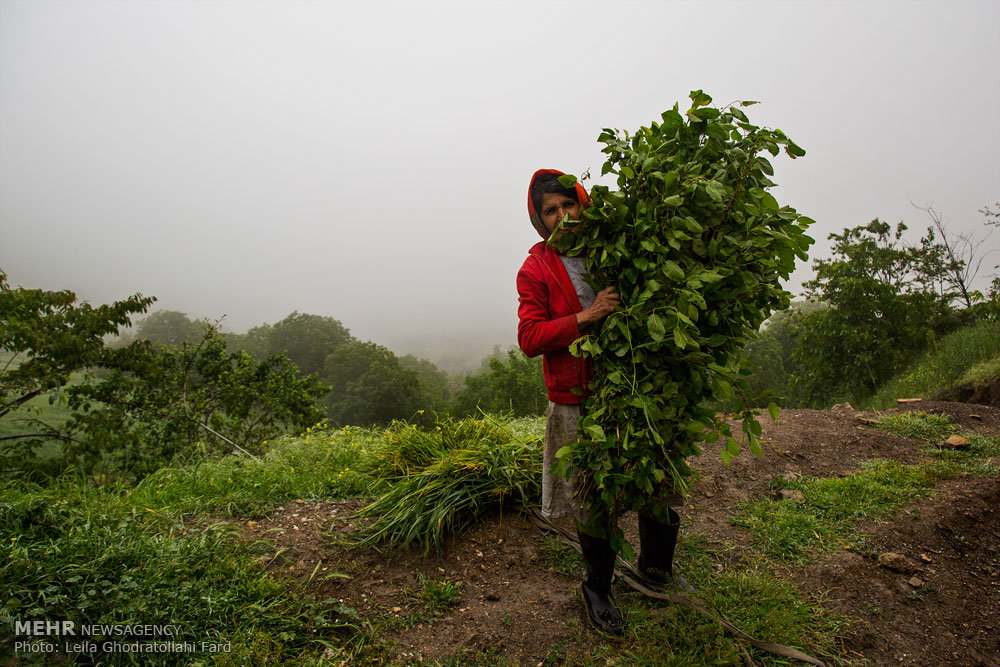
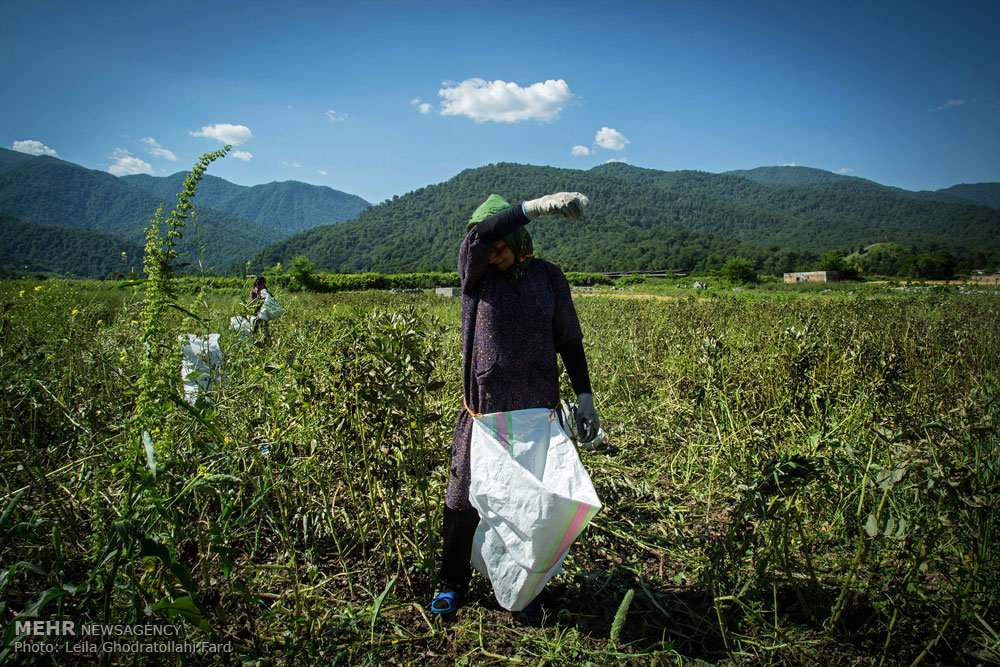
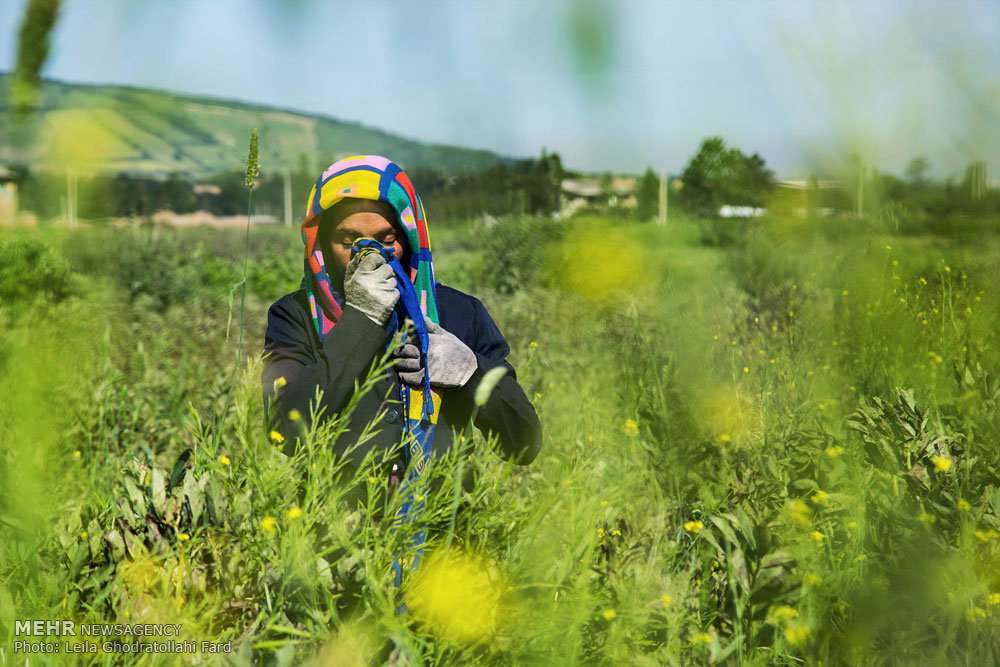
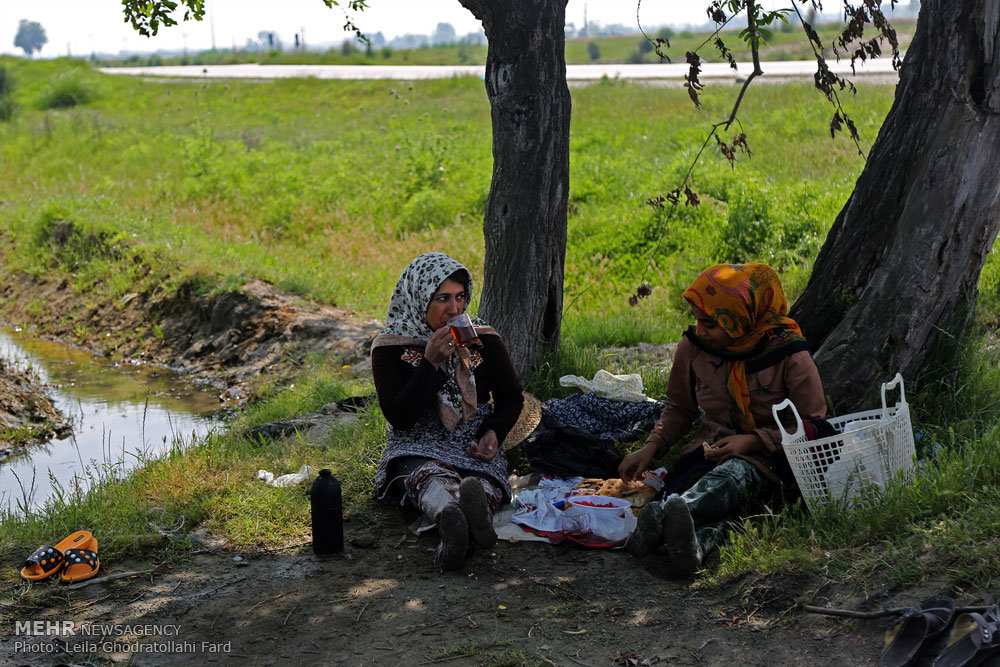
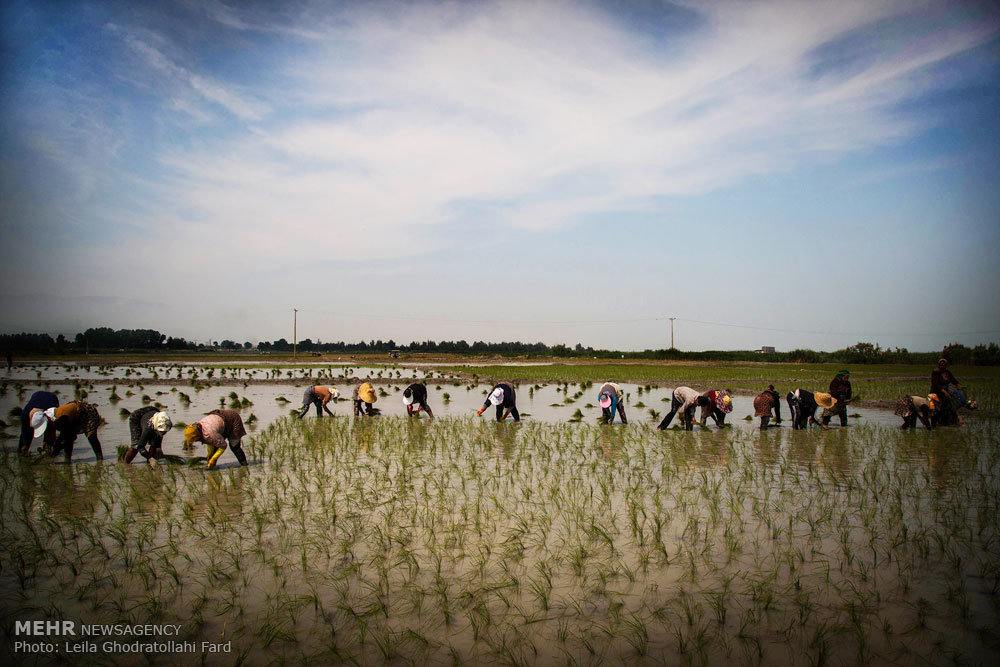
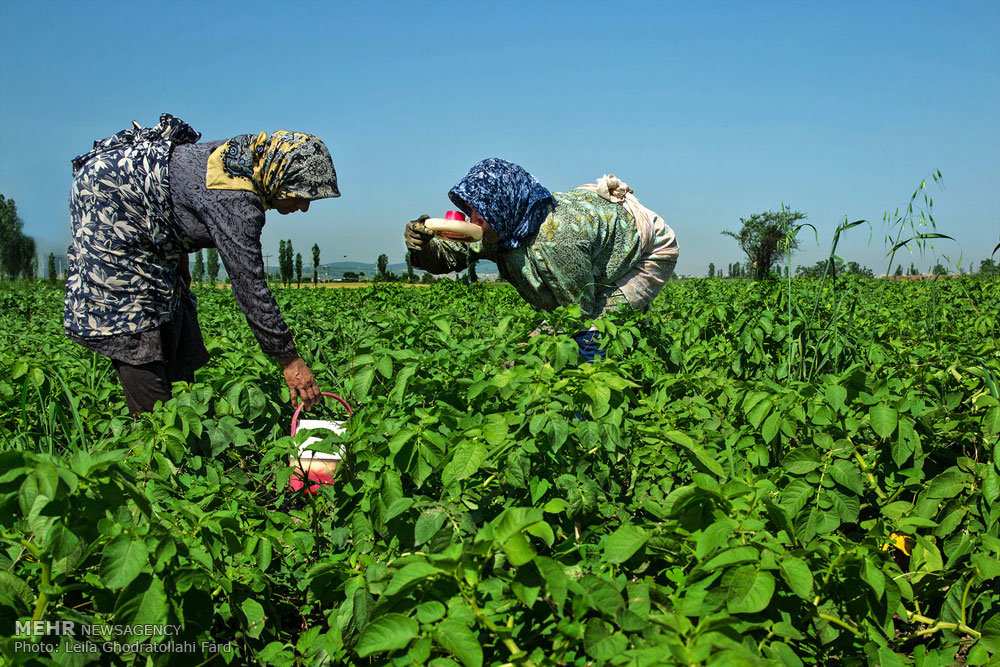
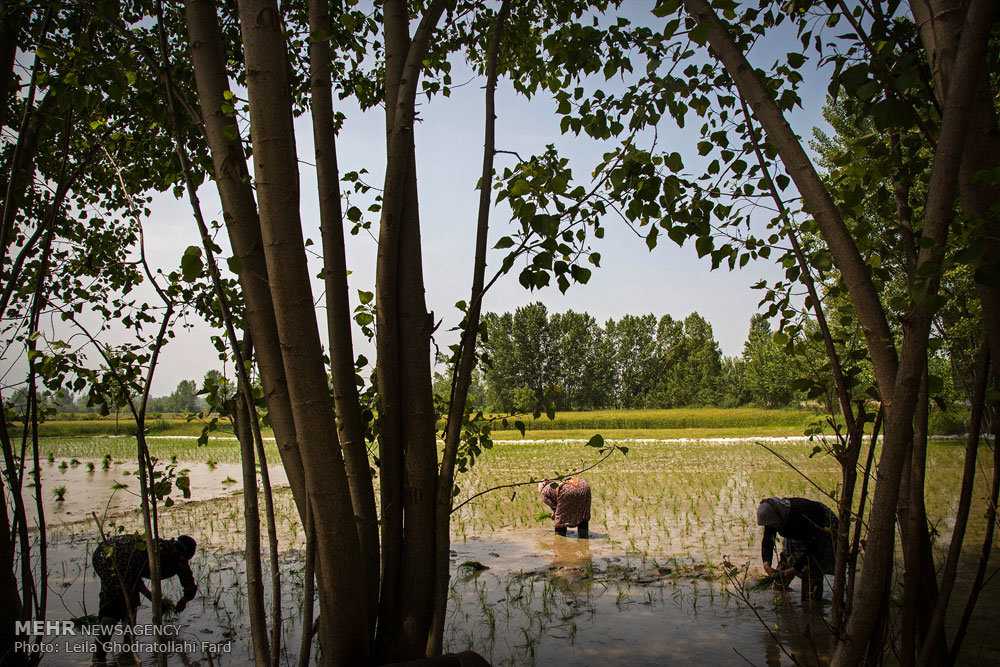
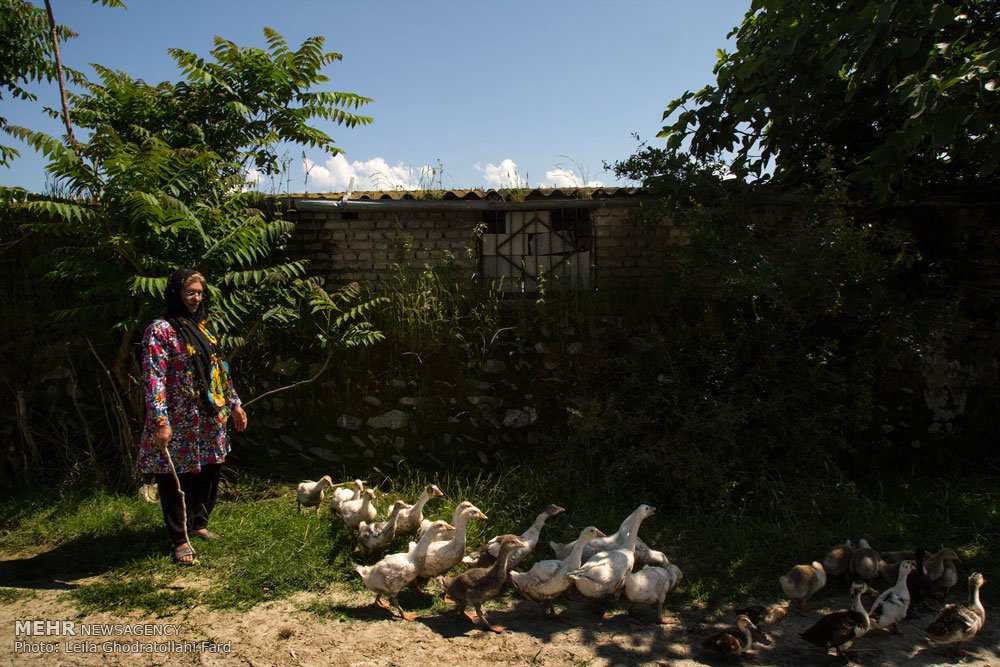
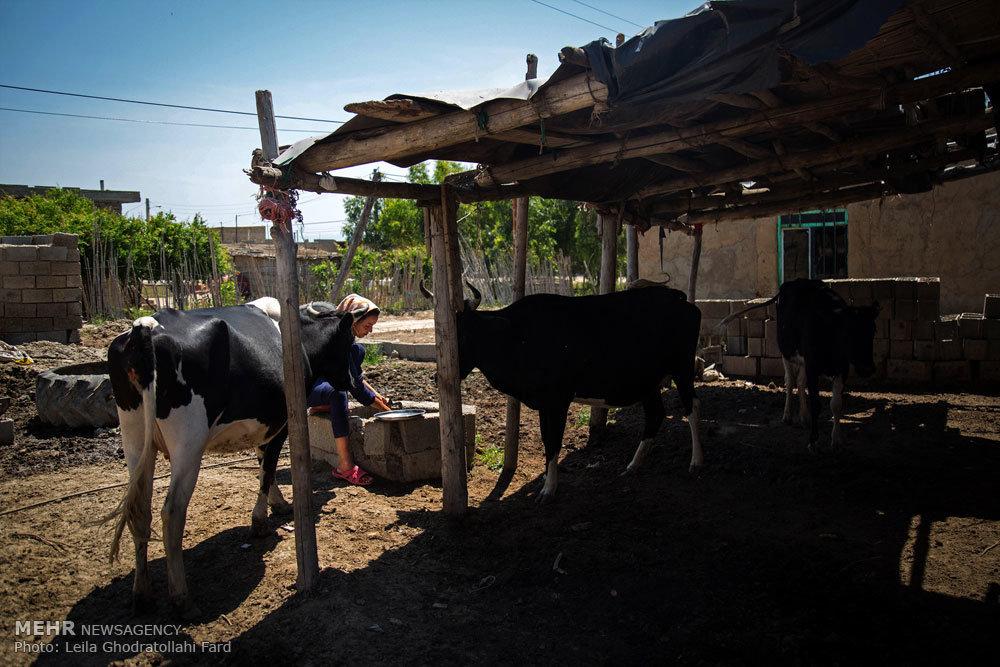
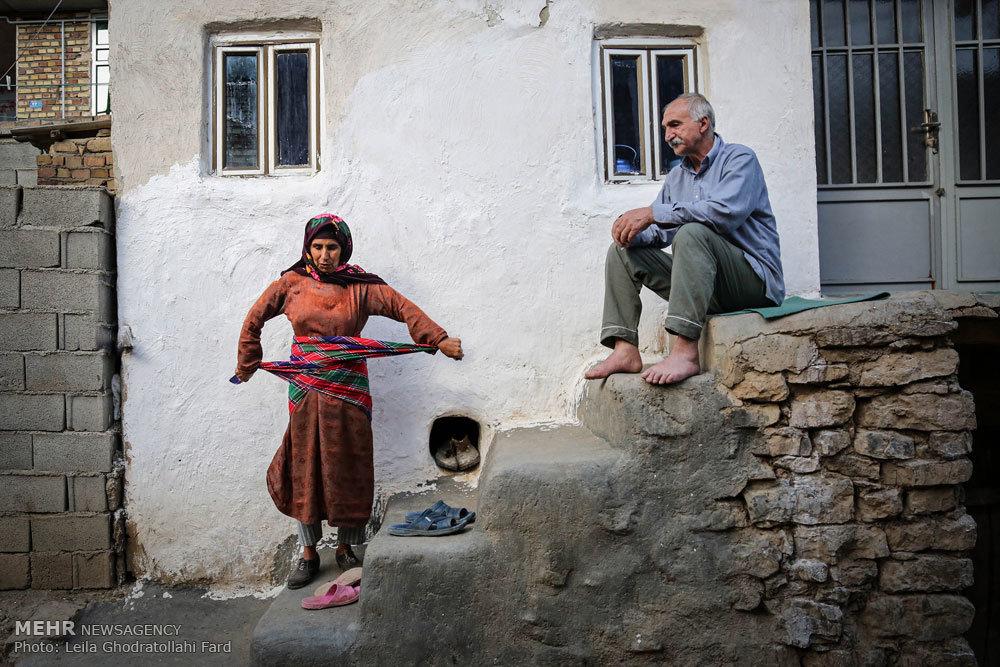
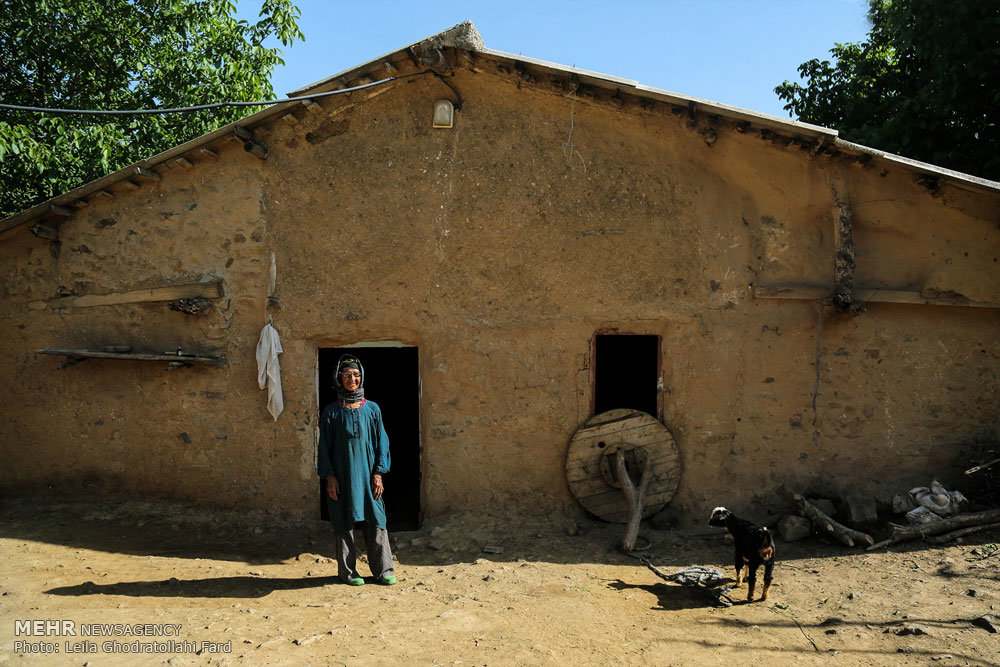
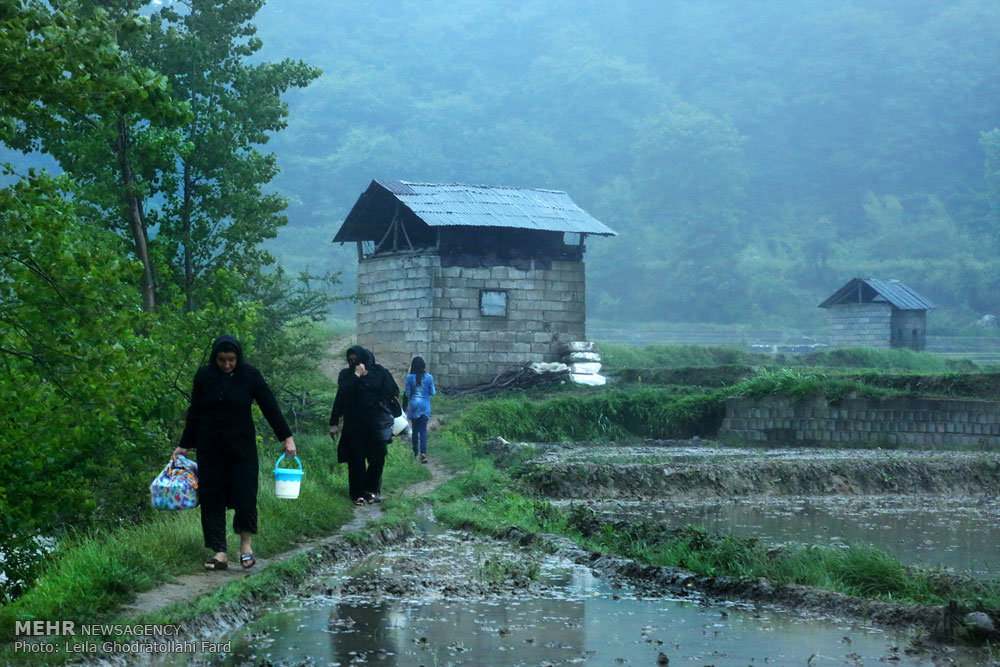
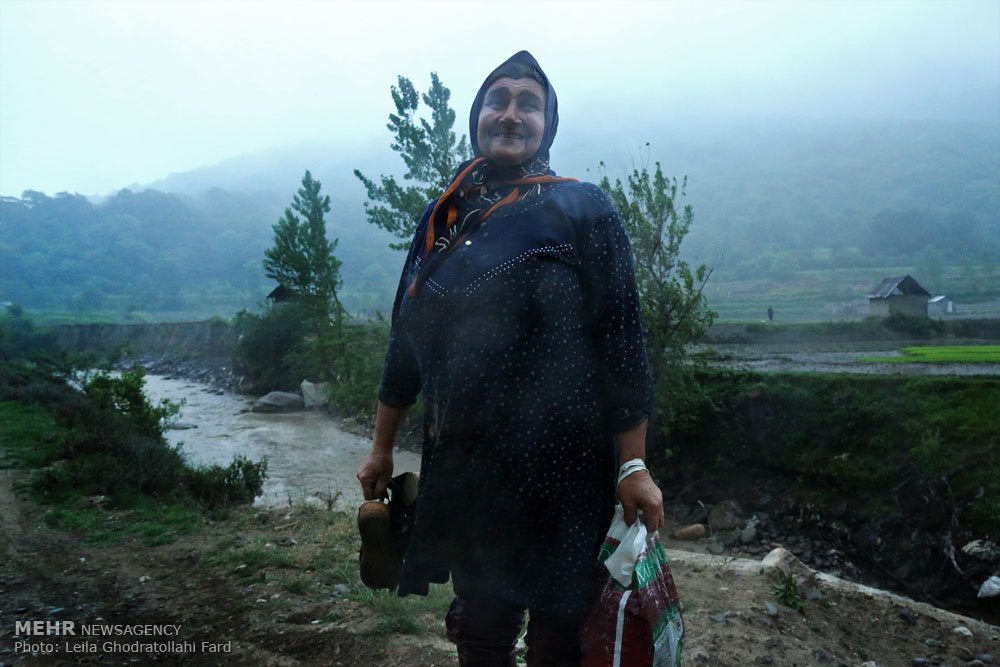
Northeastern province of Golestan is economically dependent on agriculture, and women play a key role in running the industry though in a traditional way.



© All Content by IFP News ( Iran Front Page ) is licensed under a Creative Commons Attribution 4.0 International License.
