Thursday, December 25, 2025
Home Blog Page 440

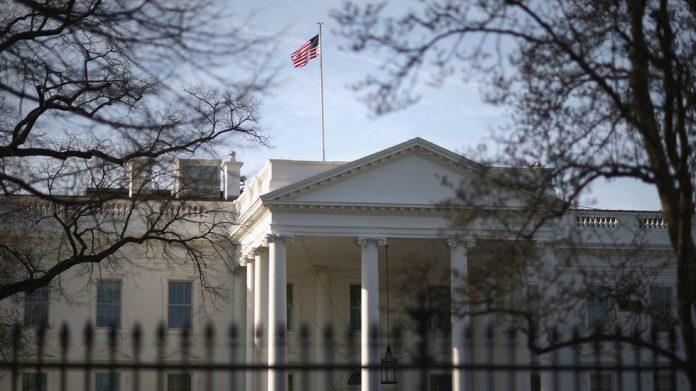
US ownership of Ukraine’s power plants ‘best protection’ of energy infrastructure: White House

White House

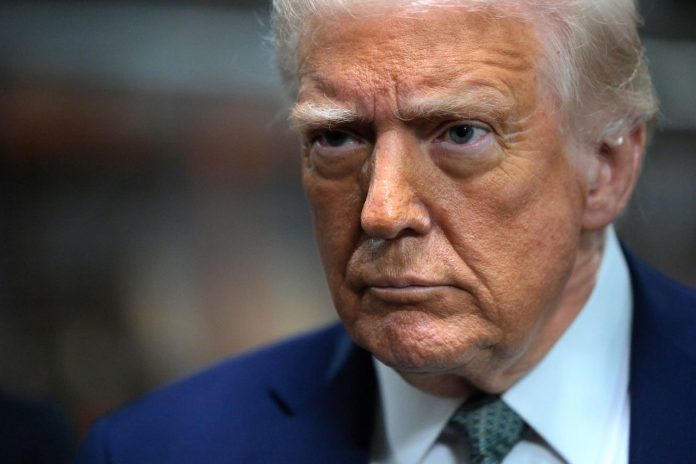
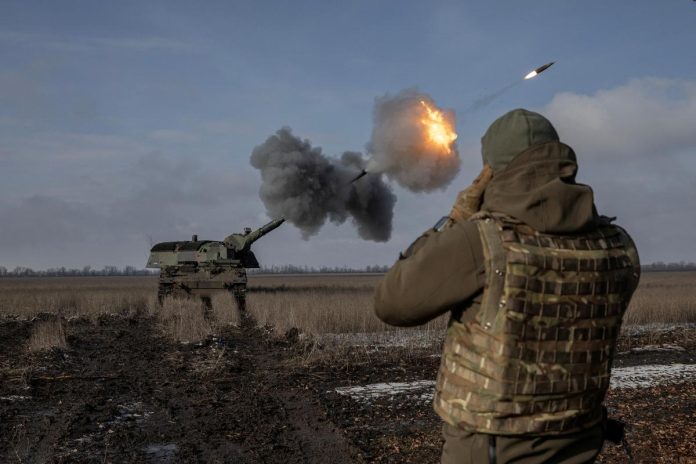
Trump and Zelensky discussed Ukraine’s electrical supply and nuclear power plants during the call, according to a readout of the conversation presented by White House Press Secretary Karoline Leavitt during a press briefing.

Trump said the U.S. could be “very helpful in running the plants with its electricity and utility expertise,” adding that “American ownership of those plants would be the best protection for that infrastructure and support for Ukrainian energy infrastructure.”

It is unclear from the readout what energy infrastructure or nuclear power plants the U.S. could help run or acquire. Trump had stated that as part of peace deal talks, he had discussed Russian-occupied territory with Ukraine, including the Zaporizhzhia nuclear power plant — Europe’s largest nuclear site — that has been under Russian control since the early days of the invasion.

“There’s a power plant involved, a very big power plant involved. Who is going to get the power plant, and who is going to get this and that, and so you know it’s not an easy process. But phase one is the ceasefire,” Trump continued.

The Trump-Zelensky phone call follows an hour-and-a-half-long conversation between the U.S. president and Russian President Vladimir Putin a day prior on March 18. Following the call, Putin said he had agreed to a limited 30-day pause on energy attacks.

Russia has been targeting Ukraine’s civilian energy infrastructure since 2022. In recent months, Moscow has intensified aerial campaigns with bombardments by swarms of Shahed drones a nightly occurrence.

Ukraine has also launched regular attacks on Russia’s fossil fuel production — a major revenue source for the Russian state. Zelensky stated after the call with Trump that he had also agreed to stop strikes on Russia’s energy infrastructure.

Material losses from Russian attacks on Ukrainian energy infrastructure have amounted to “billions of dollars,” according to Energy Minister Herman Halushchenko.

Halushchenko noted that Russia has launched more than 30 mass strikes on Ukraine’s energy infrastructure over the three years of its full-scale invasion.

Over the past three years, Russian troops have occupied territories hosting energy facilities producing 18 gigawatts (GW) of generation.

Israeli troops resume Gaza ground operation, seize part of Netzarim Corridor

Israel Army

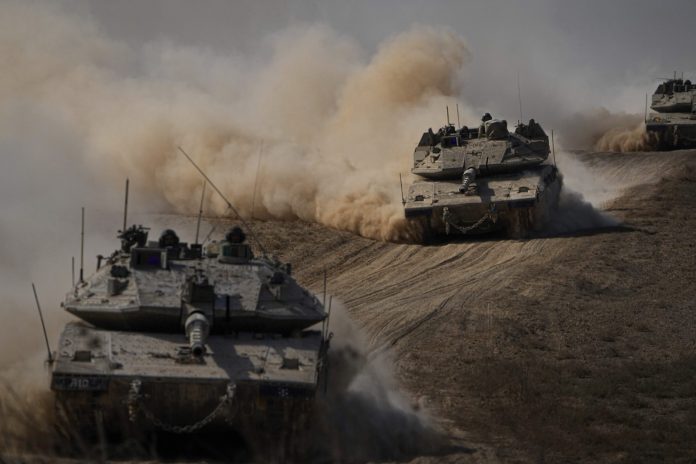
The Israeli army announced its forces retook control of the centre of the Netzarim Corridor on Wednesday to expand a “security zone and create a partial buffer between the north and south of the Strip”.

Last month, Israeli soldiers withdrew from the corridor, which bisects Gaza, allowing civilians in central and southern Gaza to return to what remained of their homes in the north after more than a year of war.

The ground manoeuvre comes after Israel resumed bombing Gaza, killing more than 400 people on Tuesday after accusing Hamas of refusing a new version of the ceasefire under which many of the 59 remaining captives being held in Gaza – the majority of whom are believed to be dead – would be released without Israel having to agree to end the war.

To put pressure on Hamas to accept the new deal, Israel earlier this month blocked all aid deliveries into the Strip and cut electricity to the enclave.

Hamas insisted Israel should stick to the original ceasefire agreement, signed in January, according to which the two sides were to negotiate the handover of the remaining captives, a permanent cessation of hostilities and the pullout of Israeli troops from Gaza.

“Why do we have to present proposals while there exists a signed agreement with international parties acting as guarantors?” Taher al-Nono, media adviser for the head of the Hamas political bureau, told Al Jazeera.

“There is also a [United Nations] Security Council resolution. We have positively responded to all the efforts made towards us. It was [Israeli Prime Minister Benjamin] Netanyahu that has backed down on the agreement. It was Netanyahu who turned a blind eye to it. Therefore, it is Netanyahu, not Hamas or the resistance, that should be pressured to comply.”

On Wednesday, Israeli Defence Minister Israel Katz threatened to escalate the offensive if all the captives held in Gaza were not freed and Hamas was not eliminated from Gaza.

“Israel will act with an intensity that you have not seen,” he added.

Gaza health authorities announced dozens of people were killed on Wednesday in several Israeli air raids, including a foreign UN employee killed in an attack on a UN compound in central Gaza.

Medics said they are struggling to cope with the sharp increase of fatalities and wounded as hospitals lack medical supplies amid the renewed Israeli blockade.

Thousands protest against detention of Istanbul mayor

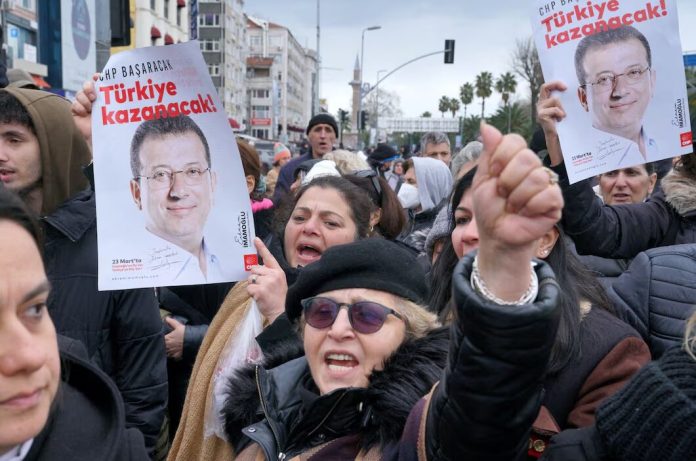
Several roads had been closed, some social media platforms were restricted, and a four-day demonstration ban was put into place in an attempt to thwart protests.

However, despite the ban, many gathered outside the Istanbul’s police headquarters, the City Hall, and outside the headquarters of İmamoğlu’s Republican People’s Party (CHP).

One protester called the arrest “unlawful” and “baseless”.

“This is not democracy. It’s a sham of democracy. The people do not deserve this. We are upset of course. As humans, we are upset,” he said.

Riot policed blocked off roads leading to the Vatan Security Department, where the mayor was taken following his arrest.

İmamoğlu is a popular oppositon leader and the main rival of President Recep Tayyip Erdoğan. A total of 100 people, including the mayor and several other prominent figures, were arrested.

İmamoğlu and his aides are suspected of alleged corruption, including extortion and fraud, as well as aiding the Kurdistan Worker’s Party (PKK), an outlawed party classified as a terrorist organisation by Ankara, Washington and other Turkish allies.

İmamoğlu’s arrest comes amid a wider crackdown on opposition figures, which has been criticised as a politically motivated in an attempt to silence dissent.

A day earlier, Istanbul University revoked the mayor’s bachelor degree, a requisite for running in elections under Turkish law.

Speaking at a news conference on Wednesday, the leader Republican People’s Party (CHP) Özgür Özel mirrored the criticism. He claimed Erdogan, who has experienced significant losses in local elections last year, targeted İmamoğlu as he feared losing to him in the ballots.

Özel also accused authorities of a “coup attempt”.

“They can do any evil. We are ready for any evil they can do. Because it is clear that the issue is not a political struggle, but a matter of existence or non-existence for the country,” he added.

Turkey’s Justice Minister Yilmaz Tunc countered the allegations, and reminded that the courts operate independently.

“Characterizing investigations carried out by an impartial and independent judiciary as something like a coup, or using similar terms is extremely dangerous and incorrect,” Tunc stated.

The justice minister emphasised that the judiciary “does not take instructions from anyone.”

“Linking investigations and cases initiated by the judiciary to our president is, at best, presumptuous and inappropriate. The separation of powers between the legislature, executive and judiciary is essential in our country,” he concluded.

On Tuesday, European Commission President Ursula von der Leyen expressed deep concern over İmamoğlu’s arrest, and reminded Turkey of its obligation to uphold democratic values.

“Turkey is and an EU candidate country, Turkey must uphold the democratic values, especially the rights of elected officials,” von der Leyen told reporters in Brussels.

“We want Turkey to remain anchored to Europe, but this requires a clear commitment to democratic norms and practices, and it is key that Turkey respects these fundamental principles,” she added.

American judge rules Palestinian activist Mahmoud Khalil to remain in US for now

Khalil, a Palestinian who completed his studies at Columbia University in December, will remain in the US for the time being.

In his order on Wednesday, district judge Jesse Furman explained that, given the fact that Khalil was in detention in New Jersey at the time his lawyers submitted their petition, it meant that the New York court he presides over “lacks jurisdiction over most, if not all, of Khalil’s claims”.

The New Jersey court will now decide whether Khalil’s arrest for pro-Palestinian activism was unconstitutional.

The judge also reaffirmed a previous ruling that blocked Khalil’s deportation in the absence of a court order, which should also remain in effect “unless and until the transferee court orders otherwise”.

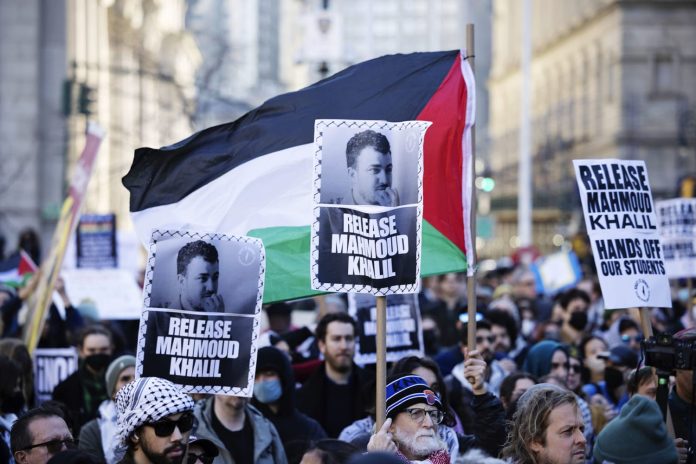
Khalil, a permanent US resident with a green card who took part in Columbia University’s pro-Palestinian protests last spring, was arrested in New York City on 8 March. He was transferred first to New Jersey and then to Louisiana, where he is currently detained.

Khalil’s legal team argued that if the court allows this case to play out in Louisiana, it would reward the Trump administration’s unlawful attempt to manipulate jurisdiction by transferring Khalil across state lines in the middle of the night.

Hours after his arrest, Khalil’s attorneys filed a petition for a writ of habeas corpus alleging that ICE’s arrest and detention of Khalil on the basis of his speech and activism for Palestinian human rights violates the Due Process Clause and the First Amendment of the US Constitution.

Khalil has not been accused of a crime, and his legal team has argued that the Trump administration is unlawfully retaliating against him for his activism and constitutionally protected speech.

Khalil’s lawyers have also advocated for his return to New York. They have requested that he be released on bail, which would allow him to reunite with his wife, a US citizen who is due to give birth next month.

Speaking about the judge’s decision, Khalil’s wife, Dr Noor Abdalla, said: “This is a first step, but we need to continue to demand justice for Mahmoud. His unlawful and unjust detention cannot stand. We will not stop fighting until he is home with me.”

Dictated over the phone yesterday, Khalil shared a wide-ranging letter, entitled, “Letter from a Palestinian Political Prisoner in Louisiana”, speaking about the injustices he sees at the Louisiana detention centre to the overnight killing of people in Gaza after the ceasefire was derailed.

He narrates his personal and family history and what he calls Columbia University’s complicity in his arrest and its surrender to federal pressure, which has impacted 22 Columbia students who have been expelled, suspended or had their degrees temporarily revoked.

“I have always believed that my duty is not only to liberate myself from the oppressor but also to liberate my oppressors from their hatred and fear. My unjust detention is indicative of the anti-Palestinian racism that both the Joe Biden and Trump administrations have demonstrated over the past 16 months,” Khalil wrote.

He added that while he awaited legal decisions that hold the future of his wife and child in the balance, those who “enabled my targeting remain comfortably at Columbia University. Presidents Shafik, Armstrong, and Dean Yarhi-Milo laid the groundwork for the US government to target me by arbitrarily disciplining pro-Palestinian students and allowing viral doxing campaigns – based on racism and disinformation – to go unchecked.”

“In the weeks ahead, students, advocates, and elected officials must unite to defend the right to protest for Palestine. At stake are not just our voices but the fundamental civil liberties of all. Knowing fully that this moment transcends my individual circumstances, I hope nonetheless to be free to witness the birth of my first-born child.”

Khalil’s legal team is seeking his release on bail and is also urging the court to issue a preliminary injunction that would immediately release him from detention and block the Trump administration’s invocation of the foreign policy bar, a vague and rarely-used provision of the 1952 Immigration and Nationality Act.

The foreign policy bar authorises the government to exclude or remove non-citizens whom the US secretary of state designates as foreign policy concerns. The administration is invoking the provision to revoke the visas and green cards of noncitizens who have engaged in speech supportive of Palestinian rights.

The filings say the administration is abusing the INA’s foreign policy provision to retaliate against the constitutionally protected expression of views the administration opposes.

Trump calls on Iran to stop aiding Houthis

Trump stated reports suggest that Tehran has lessened its support for the Houthis, but said Iran is “still sending large levels of Supplies”. It is unclear if the president is referring to reports from his officials, or the media.

“Iran must stop the sending of these Supplies IMMEDIATELY. Let the Houthis fight it out themselves,” he said on his proprietary social media website.

“Either way they lose, but this way they lose quickly. Tremendous damage has been inflicted upon the Houthi barbarians, and watch how it will get progressively worse — It’s not even a fair fight, and never will be. They will be completely annihilated!” he added.

The Houthi group has been attacking Israeli-linked ships passing through the Red and Arabian seas, the Bab al-Mandab Strait, and the Gulf of Aden with missiles and drones since late 2023, disrupting global trade for what it stressed was a show of solidarity with the Gaza Strip.

The group halted its attacks when a ceasefire was declared in January between Israel and the Palestinian group, Hamas, but it threatened to resume the attacks when Israel blocked all humanitarian aid into Gaza on March 2.

Following the recent threats from US officials against Iran, the ambassador and permanent representative of the Islamic Republic to the UN warned that any aggressive actions would have dire consequences, for which Washington would bear full responsibility.

Amir Saeed Iravani stated in a letter to Kristina Markus Lassen, the rotating president of the UN Security Council, and Antonio Guterres, the UN Secretary-General, that the Islamic Republic of Iran firmly defends its sovereignty, territorial integrity, and national interests against any hostile actions.

Iravani condemned the recent hostile remarks from senior US officials, including Donald Trump, against Iran, adding that the US is attempting to justify its illegal aggressive actions and war crimes against Yemen with these desperate claims and has clearly threatened to use force against Iran.

US President Donald Trump recently ordered a new round of US military attacks against Yemen and threatened to attack Iran for its support of Yemenis.

The Iranian ambassador called on the UN Security Council to take a clear and principled stance in condemning these provocative statements and to urge the United States to adhere to its commitments under the UN Charter.

In the letter from Iran’s envoy, it was stated that the Houthis and Yemeni officials operate independently in their decision-making and actions, emphasizing that their operations are in support of the people of Gaza and in response to the violation of Yemen’s sovereignty and territorial integrity.

Zelensky agrees to halt attack on Russian energy infrastructure during phone call with Trump

Russia Ukraine War

“One of the first steps toward fully ending the war could be ending strikes on energy and other civilian infrastructure. I supported this step, and Ukraine confirmed that we are ready to implement it,” Zelensky said on X following the hour-long call with Trump.

The call between Trump and Zelensky came a day after the U.S. president spoke with Russian President Vladimir Putin on the phone.

Following the call, Putin announced he had agreed to a 30-day truce on strikes on energy infrastructure. The same night, Russia carried out a large-scale drone attack that targeted energy infrastructure and other facilities.

Russia has been bombing Ukraine’s civilian energy infrastructure since 2022 and has been steadily expanding its air campaigns in recent months, with bombardments by swarms of Shahed drones now a nightly occurrence.

Ukraine has also launched regular drone attacks on Russia in response. Over 330 Ukrainian drones targeted Moscow. Other strikes have targeted Russia’s fossil fuel infrastructure.

Trump’s special envoy, Steve Witkoff, has told Bloomberg TV a complete ceasefire to the Ukraine conflict could be implemented within “a couple of weeks”.

Sanctions imposed by Washington on Moscow could be relaxed once such an agreement is reached, he added.

Iranians prepare Haft-Seen tables to welcome Nowruz, Persian New Year

Nowruz, which marks the first day of the Iranian calendar year on March 20 and coincides with the vernal equinox, is celebrated by millions of people in Iran and other countries with Persian cultural heritage.

The Haft-Seen table is the centerpiece of Nowruz celebrations, featuring seven symbolic items that start with the Persian letter “S”. Each item carries deep cultural and spiritual significance.

Sabzeh (sprouted wheat or lentils), representing rebirth and growth; samanu (sweet pudding), symbolizing wealth and fertility; senjed (dried oleaster fruit), signifying love and affection; seer (garlic), representing health and medicine; seeb (apple), symbolizing beauty and vitality; somaq (sumac), representing the sunrise and the triumph of good over evil; serkeh (vinegar), symbolizing patience and wisdom.

In addition to these seven items, the Haft-Seen table often includes other symbolic objects, such as a mirror reflecting the universe, candles representing light and enlightenment, goldfish symbolizing life and vitality, painted eggs representing fertility, and a book of poetry and the Qur’an reflecting wisdom and spirituality.

Families gather around the Haft-Seen table at the exact moment of the equinox, known as Saal Tahvil, to welcome the New Year with prayers, well-wishes, and the exchange of gifts.

The table remains in place for 13 days, until the end of the Nowruz holidays, when families celebrate Sizdah Bedar by spending the day outdoors and discarding the Sabzeh in nature, symbolizing the cycle of renewal.

The tradition of Haft-Seen dates back thousands of years and is an integral part of Nowruz, which marks the arrival of spring and the start of the Iranian solar calendar. As families gather around their Haft-Seen tables, they reflect on the past year and express their hopes for a prosperous and joyful future.

Despite modern challenges, the enduring popularity of Haft-Seen and Nowruz celebrations highlights the resilience of Persian traditions and the universal hope for a brighter future.

Several killed in Gaza as Israel continues air attacks

Israeli raids have killed dozens of people, including a foreign aid worker, in Gaza a day after it launched a wave of strikes that shattered the ceasefire with Hamas.

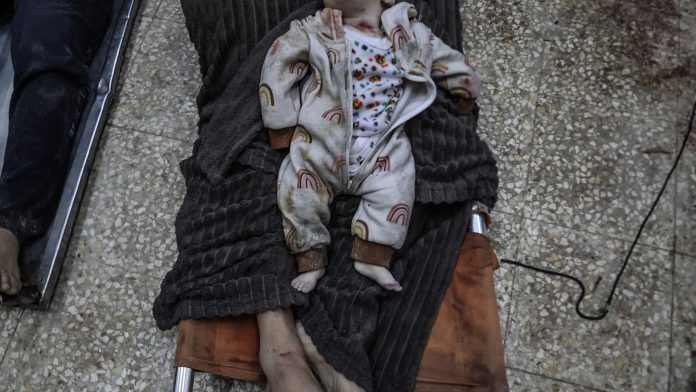
The deadly Israeli attacks early on Wednesday targeted Khan Younis and Rafah in southern Gaza, as well as Gaza City’s Sabra neighbourhood in the north. Tents housing forcibly displaced people were also hit, killing a mother and a child.

The Palestinian Health Ministry announced that an international aid worker was killed and five others were wounded in an Israeli attack on central Gaza.

Wednesday’s attacks came after over 400 Palestinians were killed, many of them children, as Israel resumed its full-fledged bombing of Gaza on Tuesday, shattering a fragile ceasefire with Hamas that had been in place since January 19.

According to the Palestinian Ministry of Health, at least 436 people were killed including at least 183 children, 94 women, 34 elderly people and 125 men. At least 678 others were injured, many critically, with more still trapped under the rubble.

Major Persian Gulf markets in red on geopolitical woes

Palestinian group Hamas and Israel accused each other of breaching the truce. It had broadly held since January and offered respite from war for the 2.3 million inhabitants of Gaza, which has been reduced to rubble.

Egypt and Qatar, the mediators in the ceasefire accord along with the United States, condemned the Israeli aggression, while the European Union, in a statement, deplored the breakdown of the ceasefire.

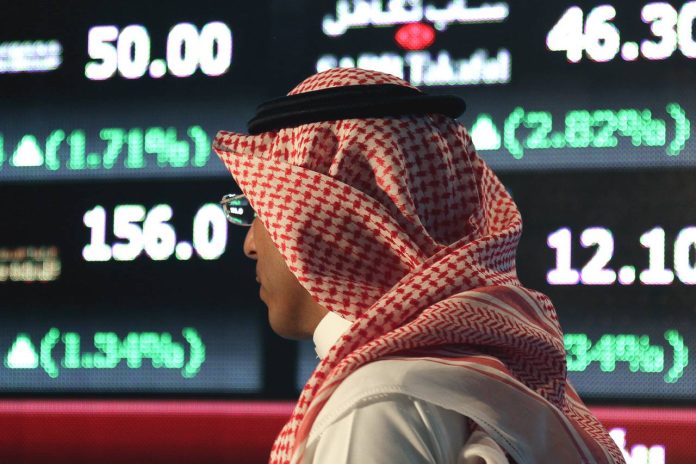
Saudi Arabia’s benchmark index dropped 0.3%, hit by a 0.2% decline in Al Rajhi Bank and a 0.9% slide in Saudi Arabian Mining Company.

United Electronics Company slipped 2.9% on trading ex-dividend.

Dubai’s main share index lost 0.3%, weighed down by a 1.7% drop in top lender Emirates NBD. Abu Dhabi’s benchmark index eased 0.2%.

US President Donald Trump has vowed to continue Washington’s assault on Yemen unless the Houthis end their attacks on ships in the Red Sea.

Oil prices fell on the day after Russia agreed to Trump’s proposal that Moscow and Kyiv stop attacking each other’s energy infrastructure temporarily, which could lead to more Russian oil entering global markets.

The Qatari index lost 0.3%, with Qatar International Islamic Bank dropping 2.2% on ex-dividend trade.

21 people killed in road accidents across Iran in 24 hours

Iran Chalus Road

Colonel Ahmad Karami Assad added that 625 people were also injured during the period.

He noted that from March 15 when the Nowruz holidays started, 13,195 accidents have happened in Iran, killing 87 people and injuring 3,075.

Regarding the causes of accidents, he said lack of attention to the road ahead on highways accounts for 47%, sudden lane changes for 4%, inability to control the vehicle for 22%, and veering to the left for 11%.

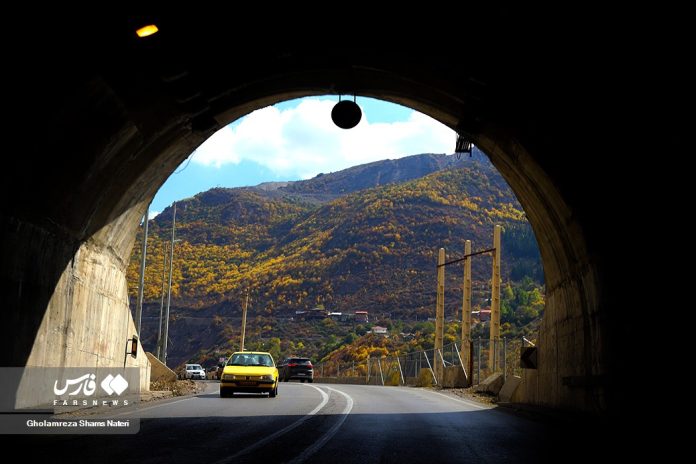
Karami Assad underlined that the roads leading out of Tehran towards the northern cities, especially Chaloos and Firoozkooh, are experiencing heavy traffic congestion.

According to the traffic police commander, for this reason, the Tehran-North Freeway and Karaj- Chaloos Road have been made one-way towards Chaloos.

He also urged all travelers to observe the traffic rules and be cautious on the roads to ensure a safe journey.