Thursday, January 15, 2026
Home Blog Page 4387

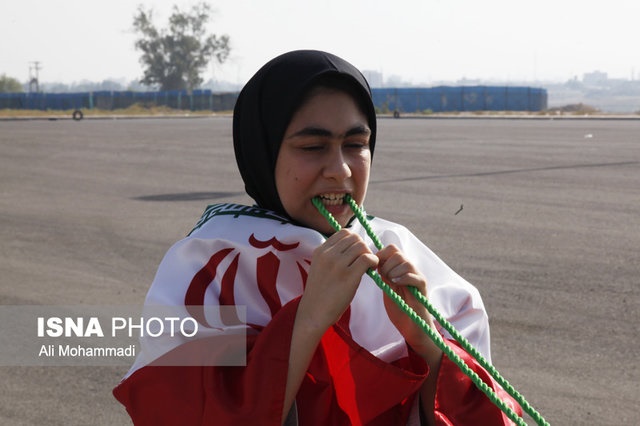
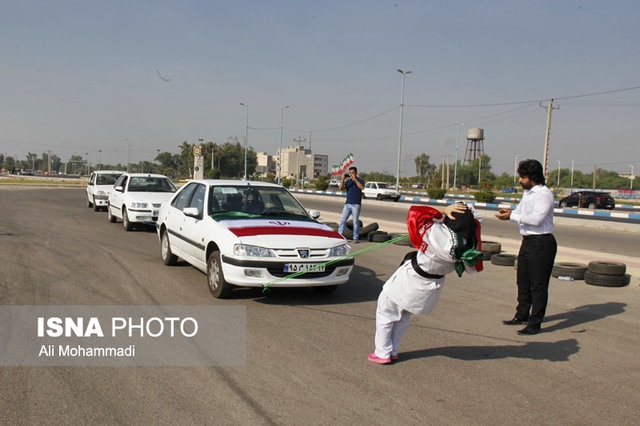
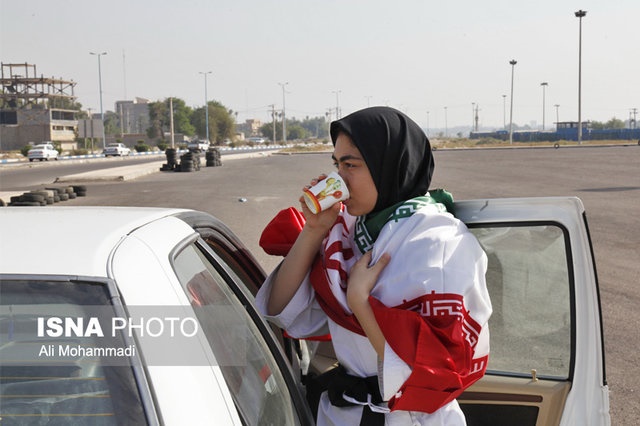
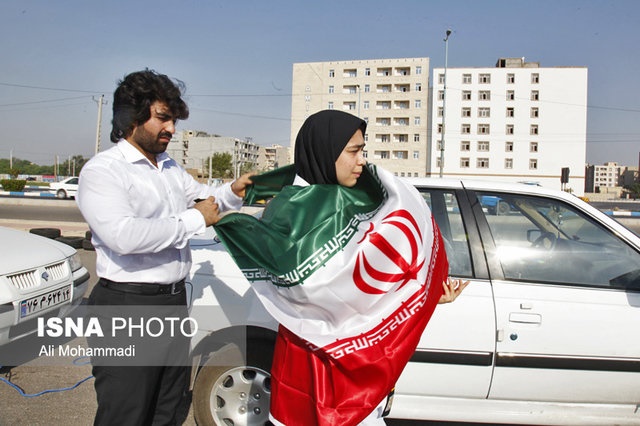
16-Year-Old Iranian Girl Pulls a Car with Her Teeth

16-8-1-15323057327151

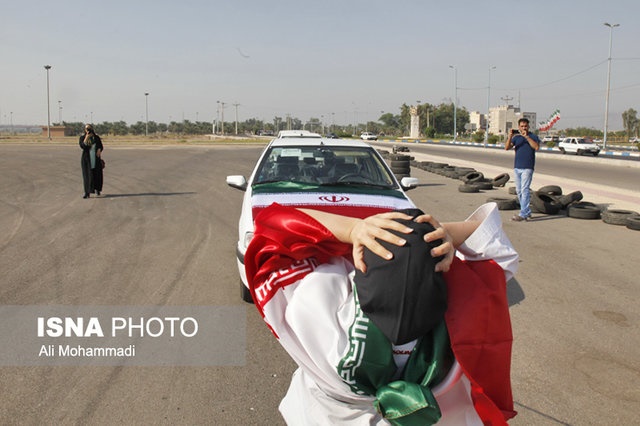
Faezeh Sarlak is a 16-year-old girl from Iran’s southwestern city of Ahvaz. She recently pulled a car using her teeth.
Here are ISNA’s photos of her move:

Iranian Love Story Illustrated on a $5,800 Manteau

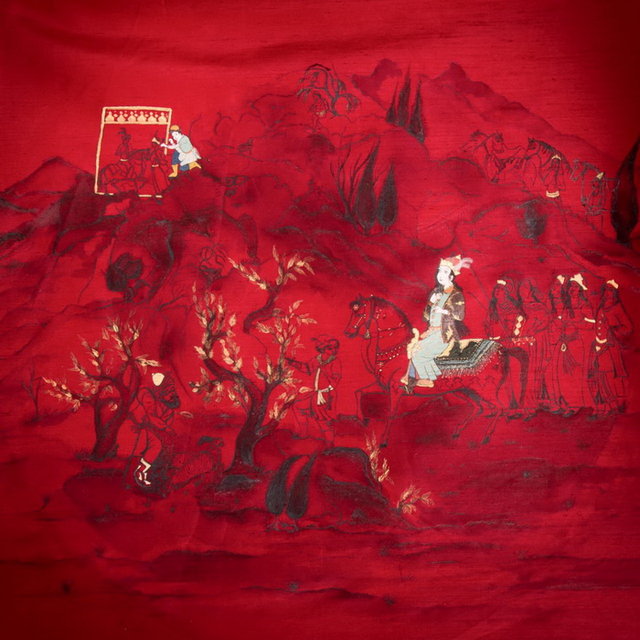
Shirin and Farhad story on  Manteau

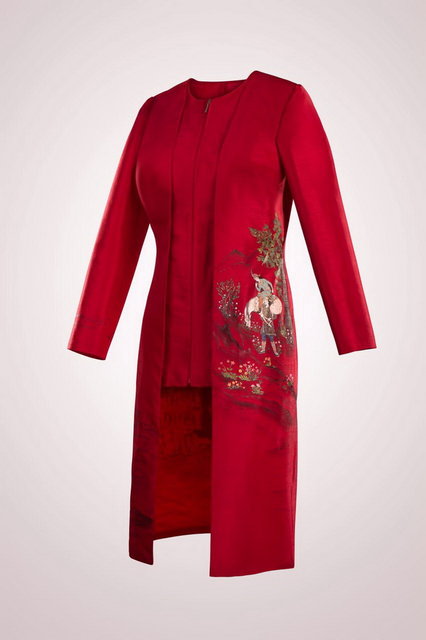
“I spent 245 hours to finish the miniature of Shirin and Farhad story in several illustrations on a silk manteau”, the designer Sara Alamzadeh said in an interview with ISNA, as translated by IFP.

Shirin and Farhad ManteauShe has also handwritten a poem by Vahshi Bafghi, a prominent Iranian poet of the Safavid era, in calligraphy on the manteau.

Shirin and Farhad is the title of a famous Persian epic romance by the Persian poet Nizami Ganjavi (1141–1209).

The manteau was demonstrated in Niavaran Palace for one week, Alamzadeh said, adding, “15 visitors and a number of foreign tourists were eager to buy it.”

The miniature of Farhad and Shirin is based on the painting technique of Kamal ud-Din Behzad, a great Iranian painter and head of the royal ateliers in Herat and Tabriz during the late Timurid and early Safavid periods.

“The orders have not been finalized yet; however; each one takes me 2 to 3 months to complete. We post the manteaux to customers when they are ready. There is no price discrimination against foreign tourists,” Alamzadeh went on to say.

Alamzadeh referred to the promotion of exquisite paintings and mythologies of Iranian culture as her major goal, adding, “I designed the miniature of Shirin and Farhad love story on a plain, simple manteau to make it eye-catching at the first sight.”

She acknowledged the high price of manteau and said, “I understand that only a few people can afford to buy the manteau; however, as an Iranian I meant to promote my country’s paintings, illuminations, miniatures, and myths.”

Although the manteau is not for everyday use, it is washable as the designs are strongly knitted and totally colour-safe.

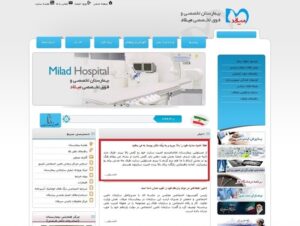
Dissatisfied Patient Hacks Milad Hospital’s Website

Milad Hospital

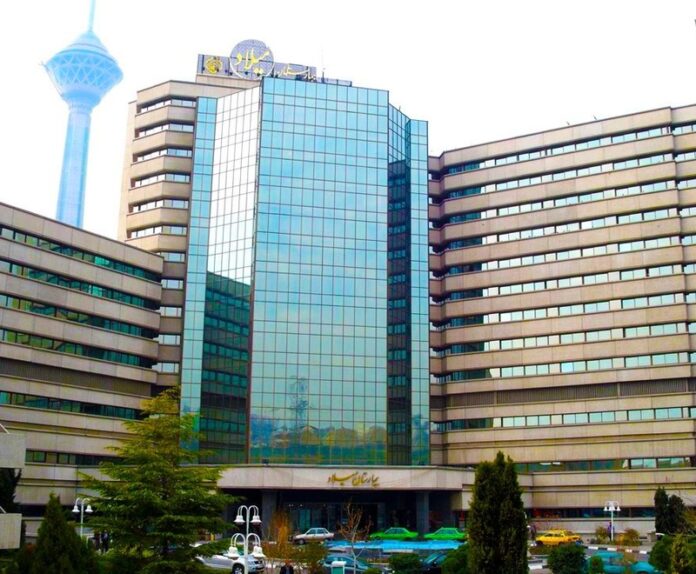
According to a report by Mehr, as translated by IFP, the website of Tehran’s well-known Milad Hospital was hacked by the irritated patient.

Milad hospital website hackedThe hacker posted a comment on the homepage, expressing complaints over the queue management system of the hospital.

In a sarcastic comment, the patient also pointed to the website poor security.

“Kindly, improve your website’s security and book me an appointment for a skin doctor,” the hacker posted.

“I believe you are in desperate need of improving your website’s security because the hacking process took me only a few seconds.”

The hacker left a post in the “contact us” section of the hospital’s website just to see how long it takes before it grabbed the attention of hospital’s authorities.

The disgruntled patient also gave his Telegram account ID and voiced his preparedness to help improve the website’s security conditions.

“I didn’t mean to disturb you, indeed,” the hacker said, asking for apology.

Int’l Army Games 2016: Iran Ranks 1st in Suvorov Attack

Int'l Army Games 2016

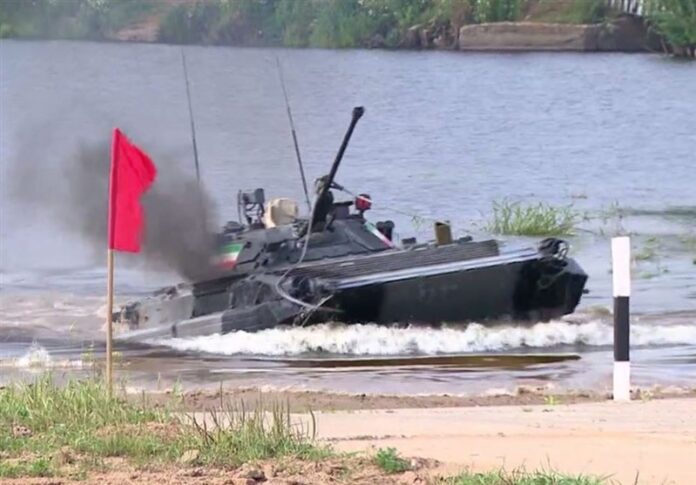
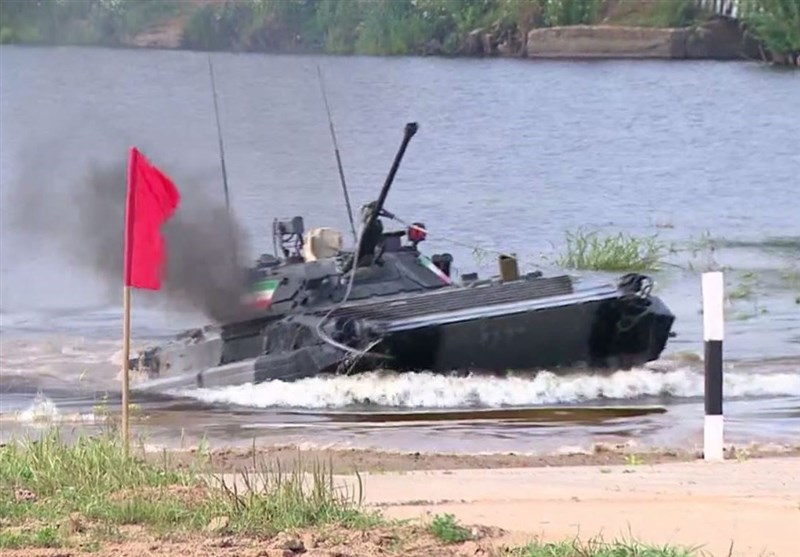
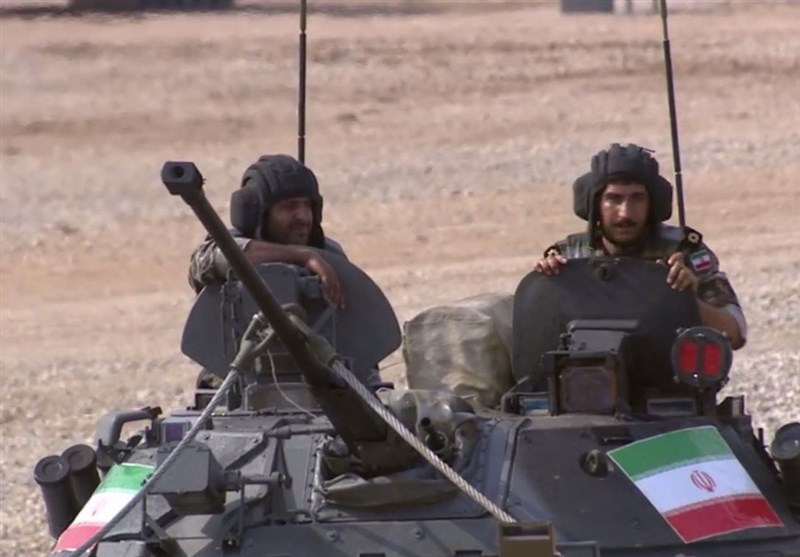
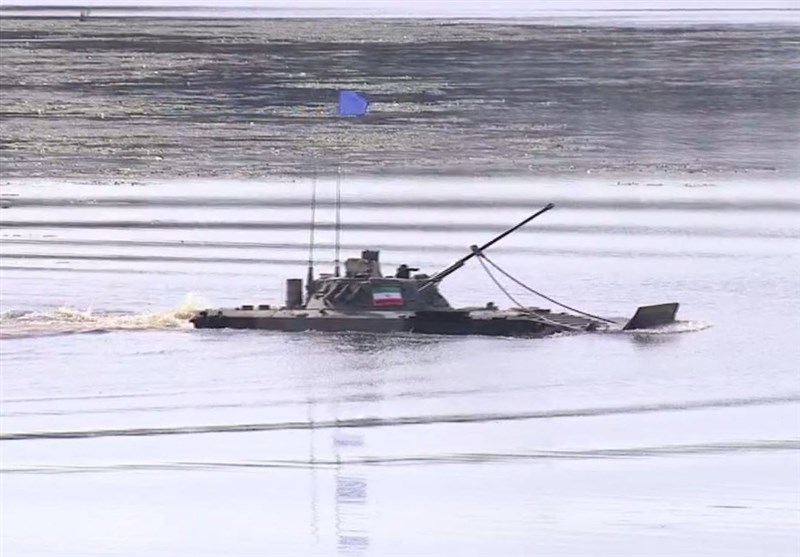
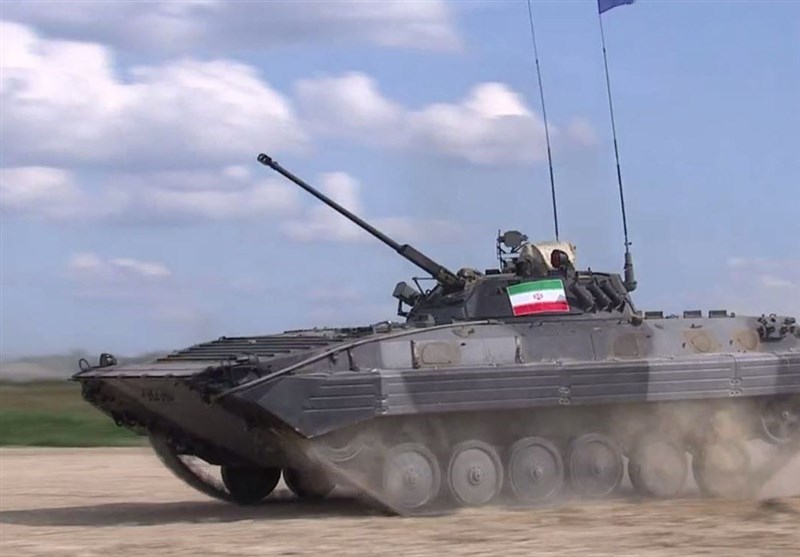
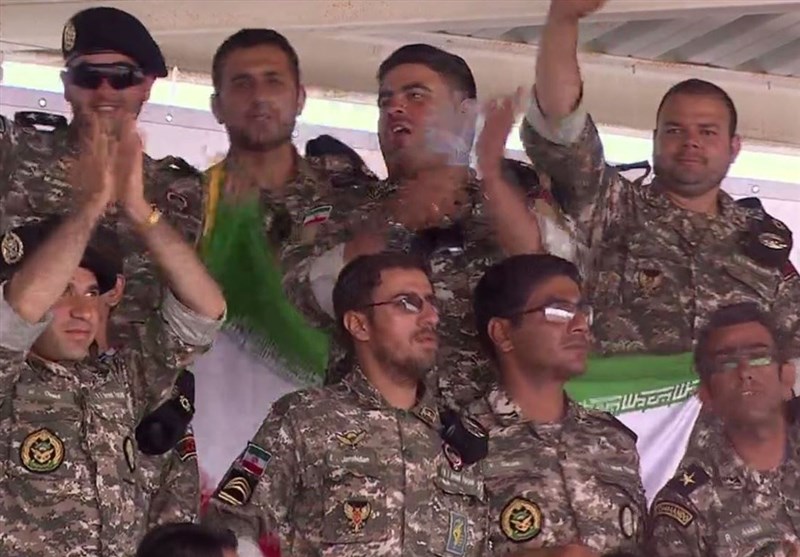
The Iranian team of artillery troops, comprising commandos from the Army and the Islamic Revolution Guards Corps (IRGC), ranked first in the Suvorov attack in their group.

The Iranian team crossed the finish line in less than 39 minutes, while runner-up Russians finished after more than 55 minutes.

Venezuela came third in the group.

Later on Tuesday, Russia managed to win the title in the first stage of the seaborne assault competition. Marines from China took the second place, while the Iranians ranked 4th.

The International Army Games kicked off in Russia on Saturday with over 3,000 military personnel from 20 countries participating in the Olympic-style military drills.

The annual event began with a tank biathlon competition and would continue until August 13.

Unlike previous years, this year’s competition is taking place in two countries -Russia and Kazakhstan- and includes 23 events in field, air and marine training.

According to the Russian defense ministry, the competition features 121 teams from Russia and 19 countries, representing Europe, Asia, Africa and Latin America. In addition, 11 other countries have sent over their representatives to observe the competitions that are expected to test the combat readiness of tanks, fighter jets, snipers and many other disciplines.

Famous Saudi Cleric Promises Heavenly Maidens to Terrorists

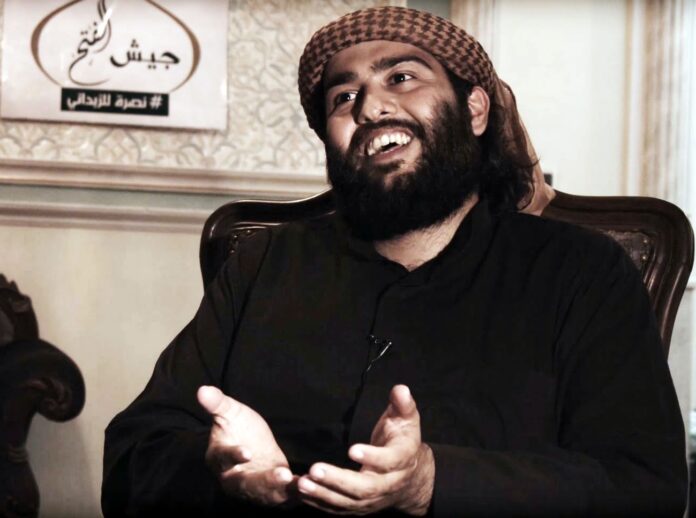
Saudi cleric Abdullah Al-Muhaysini

According to a report by Al-Alam News Network, as translated by IFP, Muhaysini said in a video that the battle of Aleppo will be the greatest epic in the history of fighting in the Levant.

In this video, Muhaysini, a pro-Nusra Front cleric and leader of the Syria-based Jihad Callers Centre, promised the terrorists under his command that 72 houris are waiting for each of them in the paradise.

The video was released as Syrian Army troops, backed by voluntary forces, have liberated more territories near the city of Aleppo in their large-scale military offensive to recapture the strategic northern city from terrorist groups.

The Syrian forces, who are closing in on terrorists from the southern parts of Aleppo, received fresh logistical support on Monday night and managed to liberate two areas in the southwestern suburbs of the city.

The Syrian forces also flushed fighters of the Jaish al-Fatah terrorist group out of residential areas south of Aleppo.

Lands in the Handarat Camp in north of Aleppo were retaken after heavy clashes with the terrorist groups, while the Syrian artillery and Russian fighter jets continue targeting the militants amid the operation, Tasnim reported.

Syria has been gripped by civil war since March 2011 with various terrorist groups, including ISIS, currently controlling parts of it.

According to a report by the Syrian Centre for Policy Research, the conflict has claimed the lives of over 470,000 people, injured 1.9 million others, and displaced nearly half of the country’s pre-war population of about 23 million within or beyond its borders.

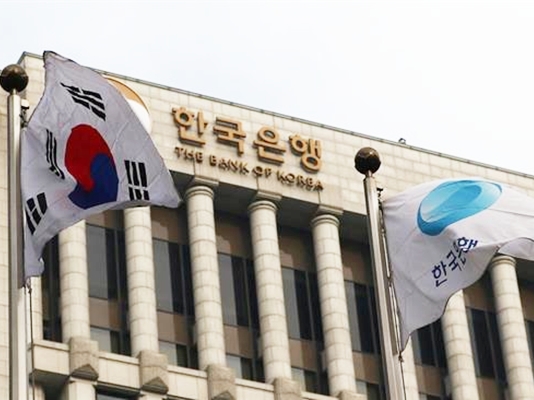
US Allows South Korea to Do Iran Trade In Euros: Report

f5dee344-3bf1-4a0f-8b72-f963e0045ba8

Financial transactions are currently conducted in the local won currency between the two countries because US sanctions prohibit dollar-based trade with Iran.

Iran prefers a payment system in euros but South Koreans say it is impossible because they have to convert payments into dollars which could go against US law.

According to Korean media reports, the US government has indicated its readiness to allow payments in euro with Iran and Seoul will start trial run in the new system as early as next month.

The euro-based payment system will allow Korean financial institutions to make monetary transactions in euro via European banks as intermediaries, news reader and mobile content distribution platform Pulse reported.

“Under the system, when Korean companies would send money to European banks that would exchange won into euro before transferring the money to Iranian banks,” it said.

The new system will facilitate monetary transactions between Iran and South Korea which signed $45.6 billion of project deals in May and accelerate their revival of trade relations which shriveled under sanctions.

According to Pulse, South Korean companies have been under compliance of US sanctions and Seoul still needs to confer with Washington about the scope of reviving trade and launching new business ventures in Iran.

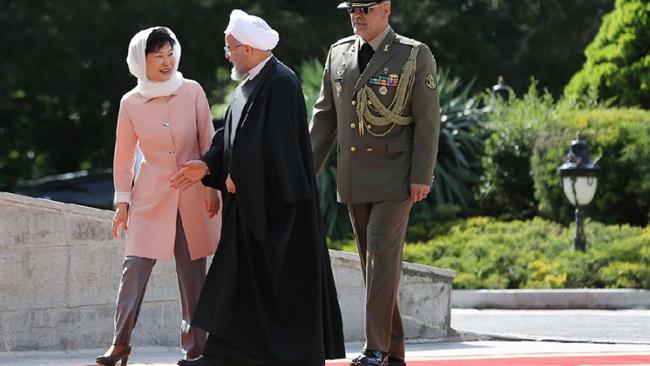
Park Geun-hye visited Tehran in May for the first tour of Iran by a South Korean president to Iran since 1962, accompanied by representatives of 236 South Korean companies and organizations.

0c91b985-05c9-418b-9bff-7f911988361cThe two sides signed a number of agreements in the fields of oil and gas, railroads, tourism, and technology, and agreed to re-establish direct flights between Tehran and Seoul.

Iranian President Hassan Rouhani said then they agreed to increase their bilateral trade from the current $6 billion per year to $18 billion in the coming years.

President Park also met Leader of the Islamic Revolution Ayatollah Seyyed Ali Khamenei who told her the US should not influence the extent of Iran-South Korean ties.

“Relations between Iran and South Korea should not be dependent on sanctions or influenced by the United States or any grudges US may hold” against Iran, the Leader said.

South Korea is one of the biggest customers of Iranian crude oil. Since the lifting of sanctions, Iran has raised its oil and gas condensate exports to the Asian country to 400,000 barrels per day, a fourfold increase since the nuclear deal was implemented.

According to Pulse, South Korean businesses in industries including construction, shipbuilding, and automobile, have received payment so far in won via accounts named under Iran Central Bank managed by Woori Bank and Industrial Bank of Korea.

“Likewise, Iranian companies promoted trade with their Korean counterparts by receiving payment from Iran Central Bank. There have been no actual money transfers between Woori Bank and IBK and Iran Central Bank.”

The dollar-based payment system will be a boon to Korean companies and policy institutions, helping them accelerate trade with Iran.

Korean shipbuilders have already signed 3 trillion won ($2.7 billion) of initial deals with Iran while state utility firms are engaged in multi-billion-dollar energy projects. Six construction firms have also been selected as the preferred bidder for an order for 2.3 trillion wons of hospital construction project.

The Export-Import Bank of Korea has introduced a $15 billion financial package support for local businesses and is in final talks with the Iran Central Bank for a deal to support exports.

Pulse said the Korea Trade Insurance Corporation also seeks to sign a deal worth 5 billion euros for export financing support with Iran.

Ukraine Ambassador Pledges Push to Lift Visa Requirements for Iranians

139505061602585378232384

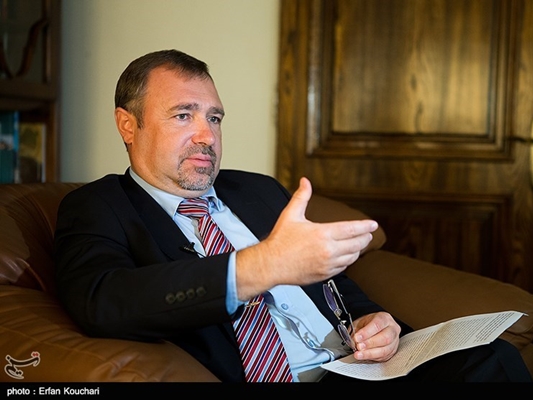
In an exclusive interview with the Tasnim News Agency, Mr. Buldiliak expressed the confidence that Iran and Ukraine can manage to end visa requirements for bilateral visits.

He also highlighted the upward trend in economic cooperation between Tehran and Kiev, referring to a multi-billion-euro agreement the two countries have recently signed in the railroad industry.

What follows is the full text of the interview:

Tasnim: Some time ago, Ukraine’s foreign minister paid a visit to Iran and met with Iranian officials. Since then, how much progress has been made in the bilateral relations? In what specific areas has the progress been made? How high is the volume of bilateral trade and is it close to the one-billion-dollar target set last year?

Ukrainian ambassador: The visit of the minister of foreign affairs of Ukraine Mr. Pavlo Klimkin to Iran was aimed, first of all, to start the political dialogue between Ukraine and Iran anew. It is no secret that a visit of such level has not been held for the last 13 years. And it is also important to mention that no meeting of the intergovernmental commission on economy and trade has been held in 12 years, until this year. Now, while our bilateral relations have a huge potential for development, there are a few obstacles in our way. The first and foremost need is to speed up the political dialogue. During the meeting between Mr. Klimkin and the president of the Islamic Republic of Iran, H.E. Mr. Hassan Rouhani said that no third country can influence the cooperation between Ukraine and Iran. We welcome this attitude – no intermediary is needed for our dialogue. In this regard, the negotiations on the level of Vice-MFAs is planned in the nearest future – in August this year.

Second, tremendous effort has been made on the way to simplify the procedure of visa issuance. Next month the visit of the director of the counselor department of the Ukrainian MFA to Iran is planned. I hope that during the “counselor consultations” with his Iranian colleague an elaborate, step-by-step mechanism of simplification will be made. The situation in this area right now is unsatisfactory for the Iranian side and we acknowledge this. Right now it is easier for an Iranian businessman to get a visa to Germany than to Ukraine.

Answering your questions about the volume of the overall trade between Ukraine and Iran, I must touch upon another stumbling stone on the way of the development of our economic relations. I mean banking transactions. During the last joint economic commission where the Ukrainian vice president of the central bank was present, who held talks with the vice president of the Central Bank of Iran, they agreed to exchange the lists of the reliable banks who could start such transactions in a short period of time.

As far as I know, Ukrainian Exim Bank and the bank of the Middle East of Iran (Khavar-e-Mianeh) are operative in this plan. Still, technical issues (the difference of the official and non-official exchange rates in Iran and the reform of the banking sector in Ukraine) prevent these processes from starting. Under these circumstances the Ukrainian and Iranian companies look for other ways to facilitate the trade processes. They use intermediaries from other countries like China, Turkey, Georgia and the United Arab Emirates. In this way, the statistics of our bilateral trade is not very good. It is only 210 million euro for the first 6 month of 2016 – a decrease in almost 35% in comparison to the last year, while the same statistic concerning Ukraine’s trade with the states I just mentioned has increased. This indicator is disturbing, especially while there is persistent information that numerous Ukrainian companies are closing new deals with their Iranian counterparts. But I believe that the situation will change for the better in the nearest future. 1 billion US dollar turnover between our countries is an absolutely real figure and we may even achieve it this year, provided that direct transactions between our banks will start soon.

Tasnim: Iran and Ukraine have recently signed an MoU in the railroad sector and on implementing large-scale railroad projects in Iran. Do you have more details on this? When will it take effect?

Ukrainian ambassador: I wasn’t present in Kyiv during the signing of the MoU between the Ministry of Infrastructure of Ukraine and the Ministry of Roads and Urban Development of Iran, but I do know that the Ukrainian companies, both state and private, have been invited to take part in the railway projects in Iran, which are evaluated to cost over 10 billion euro. I must say that it is an extremely important step on the way to bring our economic relations to a new level. One can already see the results of this MoU – some Ukrainian machine building companies like “Krukiv wagon building plant” and “Azovmash plant” are holding talks with “Kors wagon” and “Pars wagon” companies to make industrial joint ventures to further work in Iran.

Tasnim: Do you see any progress regarding Iran and Ukraine’s cooperation in the field of producing airplanes and helicopters? What types of aircrafts does this include?

Ukrainian ambassador: I do not only see, I do everything I can to promote the negotiations between the Ukrainian aircraft producers and Iranian companies. As you may know, Ukraine is the only country that contributed to the development of the Iranian aviation industry even during the worst sanctions against your country. Our enterprise “Antonov” together with the “HESA” enterprise produced 19 airplanes “IRAN-140-100”. After the unfortunate accident at the Mehrabad airport in August 2013, the joint production of this beautiful machine was stopped. We are close now, however, to start the negotiations about it once more.

As for the helicopters, our big companies like “Motor-Sich” are ready to cooperate with Iranian partners in the sphere of helicopter maintenance, especially the engine.

Tasnim: Do Iran and Ukraine have any cooperation in military related areas? There have been some speculations on transferring Kh-55 cruise missiles from Ukraine to Iran. Do you confirm it?

Ukrainian ambassador: I can comment that Ukraine complies to the decision of the UN Security Council which restricts military-related cooperation with the Islamic Republic of Iran. While this is a sensitive topic, I will provide my personal thought about this matter –we have a lot of unused potential in this sphere.

And I must say the speculations on transferring Kh-55 cruise missiles from Ukraine to Iran are most likely untrue.

Tasnim: Ukraine’s Minister of Infrastructure has referred to mutual cooperation on a multimodal transport route connecting Iran to Europe via Ukraine. Have any practical efforts been made on this field? How much time would this project need to take place?

Ukrainian ambassador: Let me explain. Multimodal transport route means that a company may send their wares using several different means of transport – for example, take it by truck to Azerbaijan, then by the railway to Georgia, then ferry it by sea to Ukraine, then – again by railway to Poland, and so on and so forth.

Ukraine is ready for this. Our transportation system is diversified and not expensive to use. We already have existing agreement in this area – an international protocol of a meeting between the customs officials of Ukraine, Georgia, Iran and Azerbaijan, which happened in January 2016. Some shipments from Iran to Germany through the territory of Ukraine, as far as I know, have already happened. All we need now is non-oil export of Iran to the EU to rise, which, I am sure, is just a matter of time.

Tasnim: Are there any trips planned for Iranian officials, including Foreign Minister Zarif, to Ukraine or Ukrainian officials to Iran in near future? Is there yet any plan for visits at the level of leaders?

Ukrainian ambassador: We are expecting a visit of the Minister of Energy of Ukraine Mr. Igor Nasalik in 4 days, and a visit of the Minister of Agriculture of Ukraine Mr. Taras  Kutoviy in 2  months. They are extremely important.

The invitation for President Petro Poroshenko was set forth by Iran’s President Hassan Rouhani, who met earlier with Ukraine’s foreign minister. We are currently working on planning and mapping out the details of his visit, especially its date. Preparations for this visit should be made carefully, because the last time a Ukrainian President visited Iran goes back to 20 years ago and that means important documents should be prepared and signed. This has resulted in very serious political talks. It explains why the Iranian and Ukrainian officials visit each other’s countries.

Therefore the visit of the president of Ukraine to Iran shall positively bring the previous visits to fruition. It also creates a pathway and a general perspective for the years to come. All these, of course, are on the task list for the President’s first trip, but I hope the heads of the two countries can pay bilateral visits more often.

Tasnim: Is it possible to get rid of visas between the two countries?

Ukrainian ambassador: The agreement planned for the first step does not mean we can get rid of visas, but it signifies the mechanisms of issuance will be eased. For example, if someone comes to the embassy with their passport and invitation in their hands, their visas will be issued in no time. Furthermore, those travel agencies that visit us at the embassy will simply get their visas, too.

Tasnim: Why should someone have an invitation if they want to travel to Ukraine as tourists?

Ukrainian ambassador: Tourists do not need invitations and can get their visas using their residence voucher. I’m quite confident we can obtain success in this area, because I was in charge of consular affairs for 5 years in Beijing and another 5 years in Shanghai, which brought me rich experiences.

In fact, in all those years, I was taking care of the visa issuance procedures for the Chinese. For instance, an agreement was placed into effect this year which helped the Chinese get a visa to visit Ukraine during summer merely in 15 days.

That is how we intend to first talk about easing the process in Iran and after that, I promise as the ambassador that we embark on a journey to lift the visa issuance. But we should not forget that diplomacy is the art of moves and tools. This is my point of view as the Ukrainian ambassador to Iran.

Blazes in Iran’s Petchem Plants Caused by Lack of Funding for HSE: Zanganeh

Zanganeh

“Regarding HSE issues, the Oil Ministry has done what it had to do,” Zanganeh said in an interview with the Tasnim News Agency.

“Not only during and after the incidents but also since the current administration took office (in 2013), some instructions (on HSE) have been sent to all production and process units of the country’s oil industry, including petrochemical units,” he noted.

He further emphasized that lack of funding for the HSE sector and the negligence of some private companies are behind the incidents, adding, nonetheless, that probes are still underway to determine the exact cause of each of the incidents.

The spokesman for the Iranian Parliament’s Energy Commission had said earlier that Zanganeh will participate in a meeting of the commission to explain about the causes of the recent blazes.

On Friday, a storage tank in the Bistoon Petrochemical Complex in Iran’s western province of Kermanshah caught fire but the fire was extinguished on the same day and left no casualties.

Preliminary indications suggested that a fault in the electrical system may have caused the incident.

It came less than three weeks after the most serious incident in the history of Iran’s petrochemical industry, when an inferno broke out at Bu Ali Sina Petrochemical Refinery Complex in Mahshahr and raged at a giant storage tank for more than two days.

First Series of Airbus Planes to Be Delivered to Iran by Autumn

Akhondi

According to a report by ILNA, as translated by IFP, the purchase of passenger planes from the giant plane-makers Airbus and Boeing in an attempt to renovate the country’s aging fleet was a big achievement after the landmark nuclear deal between Iran and world powers, not only in the field of roads and urban development, but also at the national level.

Iran has embarked on direct negotiations with the American aerospace giant Boeing, which, if finalized, will become the biggest civil trade agreement between the two countries after the 1979 Islamic Revolution.

“In the direct negotiations with Airbus and Boeing, Iran’s stance has always been independence and authority,” Akhondi said.

“There is no reason for breaching the deal,” he noted, adding, “A major part of the technical issues have been dealt with and the first series of Airbus passenger planes will arrive in the country by the end of autumn.”

He further gave an assurance to the private sector that there will be no leaning towards any state-run entities and all the concessions will be made based on completely equal competitive conditions.

A Look at Iranian Newspaper Front Pages on August 2

Iran Newspaper front pages

All newspapers on Tuesday covered the remarks made by the Leader of the Islamic Revolution Ayatollah Seyyed Ali Khamenei in an address to a large group of people from different parts of Iran. In the address, the Leader referred to the nuclear deal between Tehran and world powers (JCPOA), and complained that it has not had any influence on people’s lives after 6 months. Ayatollah Khamenei also criticized the US violation of its commitments, and reiterated the unreliability of Washington.

Another top story today is the live TV address President Hassan Rouhani is going to deliver tonight. In its Tuesday issue, Kayhan has listed a large number of questions and asked the President to answer them in his address. Most of them are focused on his promises about the outcomes of JCPOA as well as his vow to improve the country’s economic situation.

Newspapers also covered a recent order by President Rouhani to postpone the government’s nationwide employment test due to gender discriminations. Rouhani said that gender equality and fairness should be observed in all job vacancies, and women’s rights should be ensured. Among the Tuesday newspapers, Iran published an article in favour of the order, and Javan criticized it, saying that the move is just aimed at receiving women’s votes in next year’s presidential elections.

The above issues as well as many more are highlighted in the following headlines:


Abrar:

1- JCPOA Hasn’t Had Any Tangible Influence on People’s Lives: Leader

2- Being a Revolutionary Means Having a Free Nation with Freedom of Thought, Expression, and Criticism: Rouhani

3- 2 Iranians Who Had Joined ISIS Were Killed in Past Year’s Clashes: Army Ground Force Commander

4- Will General Soleimani Take Part in Operation to Liberate Mosul?

A Look at Iranian Newspaper Front Pages on August 2


Aftab-e Yazd:

1- Leader: Negotiation with the US Is Not Allowed in Any Issue

2- Tehran-Riyadh Ties Not in Critical Conditions Yet: Analyst

3- Government’s Major Step towards Helping Women: Ultimatum to Women’s Department for Preparing Bill on Protecting Women against Violence

A Look at Iranian Newspaper Front Pages on August 2


Asrar:

1- JCPOA Once Again Proved US Disloyalty: Leader

2- Great Pressure on Government to Filter Social Media: Rouhani

3- Belief in Social Justice Is Main Advantage of Reformists: Aref

4- Those of Criticize Government Haven’t Read Policies of Resistance Economy: First VP

5- If Reactionaries Had Remained Silent, Islamic Revolution Would Become a Model for Muslims: Rafsanjani

6- Some Use Lies and Accusations to Criticize Government: Senior Conservative Bahonar

A Look at Iranian Newspaper Front Pages on August 2


Besharat-e Now:

1- President: Sanctions Didn’t Have Any Honour for Iranian People

2- Bahonar: Who Would Believe Ahmadinejad’s Trips Aren’t Part of His Campaign for Presidential Elections?

3- Wells to Swallow Persepolis: The Historical Site on Verge of Destruction

A Look at Iranian Newspaper Front Pages on August 2


Etemad:

1- Fourth Year of Rouhani’s Presidential Term Begins [today is the anniversary of his inauguration]

2- An Exclusive Article by Members of Muscat Nuclear Talks on Logic and Hypertext of JCPOA

A Look at Iranian Newspaper Front Pages on August 2


Ettela’at:

1- Relying on Domestic Capacities the Only Way to Solve People’s Problems: Leader

2- Brain Mapping Lab Opened in University of Tehran

3- The Right Policy Is to Think Wisely, Not to Shout Slogans: President

A Look at Iranian Newspaper Front Pages on August 2


Haft-e Sobh:

1- Chess of Power in the Middle East

2- Munich Shooter Was from a Peaceful Neighbourhood in East of Tehran: Haft-e Sobh’s Efforts to Find Relatives of Sonboli

 A Look at Iranian Newspaper Front Pages on August 2


Hosban:

1- $2.8m Export of Knowledge-Based Products to 4 Countries

2- Iran’s Young Basketball Players Claim Asian Title

3- $2.3bn Credit to Be Allocated for Providing Villages with Natural Gas

A Look at Iranian Newspaper Front Pages on August 2


Iran:

1- Sanctions Should Have Been Lifted All at Once, Not Gradually: Leader

2- Administrations in Khuzestan Province Are Half-Closed Due to Temperature of over 51 Degrees Celsius

3- Old Woman Waiting to Hear from His Martyred Son: Love Story of a Mother Who Waited for 32 Years with a Radio in Hand

4- Gender Discrimination, an Obstacle to Meritocracy [article about the recent move by President Rouhani to postpone the government’s employment test because of discriminations against women]

A Look at Iranian Newspaper Front Pages on August 2


Jahan-e San’at:

1- Wasteful Construction of Dams and Extraction of Underground Waters No Longer Possible: Environment Dept. Chief

2- 4 Iranian TV Documentaries Inscribed on UNESCO’s Memory of the World Register: Iran’s Cultural Documents in World Memory

A Look at Iranian Newspaper Front Pages on August 2


Javan:

1- People’s Economic Problems Are My Constant and Deep Concern: Leader

2- If It Is Proved that the US Had a Role in Turkey Coup, It’d Be a Major Scandal for Washington: Ayatollah Khamenei

3- Senior Cleric: It’s Unlikely that We [Association of Combatant Clergies] Support Rouhani [in Next Year’s Presidential Votes]

4- Why the Experience of JCPOA Doesn’t Wake Them Up? [Editorial]

5- Postponing [Government] Employment Test in a Bid to Receive Women’s Votes [in Elections]

A Look at Iranian Newspaper Front Pages on August 2


Jomhouri Eslami:

1- US Has a Role in All Problems in the Middle East: Leader

2- 300mcm Increase in Gas Output under Rouhani’s Gov’t: Oil Minister

3- It’s a Mistake to Attribute Violence to Islam: Pope

A Look at Iranian Newspaper Front Pages on August 2


Kayhan:

1- Leader: After 6 Months, JCPOA Hasn’t Had Any Impact on People’s Lives

2- Recent Reciprocal Visits by Foreign Businesspeople Have Been Fruitless So Far: Leader

3- Ayatollah Khamenei: Authorities Should Set Fire on Smuggled Goods before Eyes of People

4- Mr President! Answer These Questions in Your TV Address Tonight

5- Iraqi Ambassador to Tehran: If It Wasn’t for Popular Mobilization Units, ISIS Would Have Taken the Wives and Girls of Those Who Criticize These Forces

A Look at Iranian Newspaper Front Pages on August 2


Resalat:

1- Senior Cleric: What Happening in Middle East Is Consequences of Western Human Rights

2- CIA Chief’s Remarks Are Meddlesome; President Should Take Stance against Brennan

A Look at Iranian Newspaper Front Pages on August 2


Shargh:

1- Europeans Queuing Up for Iran’s Oil Tenders: Oil Minister

2- 2 New Female Ambassadors to Be Appointed by Iran’s Foreign Ministry

3- JCPOA Did No Harm to Iran; We Benefited from It: Conservative Figure

A Look at Iranian Newspaper Front Pages on August 2