Thursday, December 25, 2025
Home Blog Page 438

Iran’s exports to Americas surge 4.5-fold; free trade with Venezuela nears finalization

Iran Trade

Ahmad Firouzi, Director General of the Europe and America Office, in an interview with ILNA news agency revealed that Iran’s exports to the Americas in the Iranian year 1403 (March 2024 to March 2025) grew 4.5 times compared to the previous year. Notably, exports to Brazil surged by 8.5 times.

While imports from the Americas saw a slight decline, Firouzi emphasized Iran’s growing trade momentum in the region.

He also highlighted advancements in trade relations with Venezuela, stating that only one step remains to finalize a free trade agreement after two decades of negotiations.

Regarding Europe, Firouzi noted a slight decrease in trade due to market access restrictions.

However, Iranian traders have adapted by leveraging alternative routes and third countries to maintain their presence in European markets.

In 1403, Iran expanded its commercial centers in Europe and Asia, with Serbia, Bosnia and Herzegovina, and Oman granting permits for new trade hubs. Furthermore, Iran posted its second commercial attaché in Hungary.

Firouzi underscored ongoing efforts to diversify trade partnerships, including negotiations for free trade agreements with Serbia and revised preferential trade deals with Cuba and Bosnia and Herzegovina.

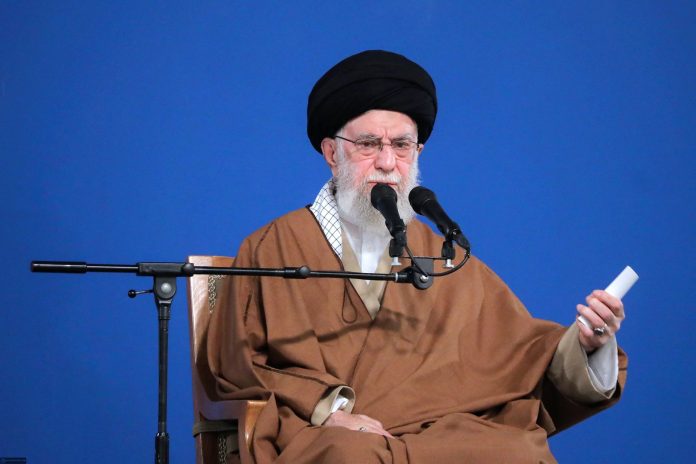
Iran’s Leader warns against threats, rejects proxy allegations 

Ayatollah Khamenei criticized the United States and its allies for their approach toward Iran, stating that threats and pressure will never yield results.

“The Americans must understand that they will never achieve their goals in dealing with Iran through threats,” he said.

The Leader also took aim at Western politicians for labeling regional resistance groups as “proxies of Iran,” saying it is a “major mistake.”

He stated that nations like Yemen and other resistance movements in West Asia act based on their own motivations and interests, not as surrogates for Iran.

“The people of Yemen and other resistance centers in the region have their own motivations. Iran does not need proxies. The term ‘proxy’ is an insult to these nations,” he asserted.

Ayatollah Khamenei highlighted the ongoing struggle in Palestine, praising the resilience of Palestinians and other regional groups opposing Israeli actions.

He reiterated Iran’s unwavering support for Palestinian and Lebanese fighters defending their lands against the “malice and oppression” of the Israeli regime.

“We have always supported those who resist oppression, and our positions are clear. From the fighters in Palestine to those in Lebanon and Gaza, we stand with them,” he said.

The Leader also addressed Iran’s defensive posture, emphasizing that while the country does not seek conflict, it will respond decisively to any aggression.

“We have never been the initiators of a conflict or confrontation. However, if anyone acts with malice and starts a conflict, they should know they will face severe consequences,” he warned.

In addition to addressing regional issues, the Leader touched on Iran’s domestic achievements and the importance of national unity.

He expressed optimism for the new Iranian year, calling on the Iranian people to remain resilient in the face of challenges and to continue striving for progress and self-sufficiency.

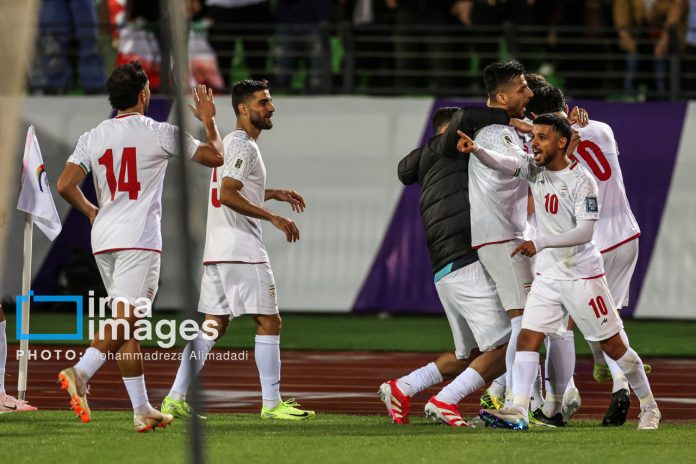
Iran defeats UAE 2-0 in world cup qualifier amid stadium controversy

The match, held at Tehran’s Azadi Stadium, was marred by an embarrassing delay due to a stadium lighting failure but ended with Iran inching closer to World Cup qualification.

The game started at 19:30 local time, with Iran creating early chances.

In the fourth minute, a long pass from Roozbeh Cheshmi found Mehdi Ghaedi behind the UAE defense, but he failed to convert.

Moments later, Ghaedi’s pinpoint cross was met by Sardar Azmoun, who set up Mohammad Mohebi, but UAE goalkeeper Khalid Eisa denied the effort.

After just ten minutes, one of the stadium’s floodlights malfunctioned, forcing a long stoppage. Despite a 15-minute wait, the referee directed players to the locker rooms. Shortly after, the lights were restored, and play resumed following an additional warm-up.

Iran broke the deadlock in first-half stoppage time when Ghaedi’s clever chip found Azmoun, who headed the ball past the goalkeeper.

Early in the second half, a Mohebi goal was ruled offside by VAR. However, in the 70th minute, Mohebi outran the UAE defense and coolly slotted Iran’s second goal.

With this victory, Iran leads Group A with 19 points, needing just one more point against Uzbekistan on March 25 to secure qualification.

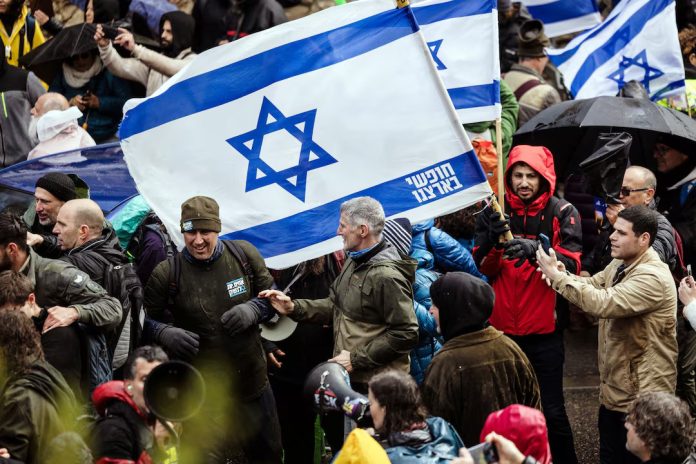
Anti-Netanyahu Israelis clash with police over plan to sack Shin Bet head

Police fired water cannon and made numerous arrests as scuffles broke out during the protests in Tel Aviv and close to the prime minister’s residence in Jerusalem, where police said dozens of protesters tried to break through security cordons.

Over the past three days, demonstrators protesting against the move to sack Shin Bet head Ronen Bar have joined forces with protesters angry at the decision to resume fighting in Gaza, breaking a two-month-old ceasefire, while 59 Israeli hostages remain in the Palestinian enclave.

“We’re very, very worried that our country is becoming a dictatorship,” Rinat Hadashi, 59, said in Jerusalem, adding, “They’re abandoning our hostages, they’re neglecting all the important things for this country.”

Netanyahu stated this week he had lost confidence in Bar, who has led Shin Bet since 2021, and intended to dismiss him.

The decision followed months of tension between the two over a corruption investigation into allegations that a number of aides in Netanyahu’s office were offered bribes by figures connected with Qatar.

Netanyahu has dismissed the accusation as a politically motivated attempt to unseat him but his critics have accused him of undermining the institutions underpinning Israel’s democracy by seeking Bar’s removal.

In a letter to the government that was distributed by Shin Bet as ministers met to formally approve his dismissal, Bar said the decision was founded on “baseless claims that are nothing more than a disguise for completely different, extraneous and fundamentally unacceptable motives.”

He has already announced that he intended to step down early to take responsibility for the intelligence failures that allowed the attack on Israel on Oct 7, 2023, to take place.

The angry scenes on Thursday highlighted divisions that have deepened since Netanyahu returned to power as head of a right-wing coalition at the end of 2022.

Even before the war in Gaza, tens of thousands of Israelis were joining regular demonstrations protesting at a government drive to curb the power of the judiciary that critics saw as an assault on Israeli democracy but which the government said was needed to limit judicial overreach.

On Thursday Yair Golan, a former deputy Chief of Staff in the military who now leads the opposition Democrats party, was pushed to the ground during a scuffle, drawing condemnation and calls for an investigation by other opposition politicians.

Former Defence Minister Benny Gantz noted the clashes were a direct result of divisions caused by “an extremist government that has lost its grip.”

In Tel Aviv, demonstrators rallied outside the Kirya military headquarters complex as ministers met to formally approve the dismissal of Bar.

Since the start of the war, there have also been regular protests by families and supporters of hostages seized by Hamas during its attack on Israel from Gaza on Oct. 7, 2023 that have sometimes echoed the criticisms of the government.

With the resumption of Israel’s campaign in Gaza, the fate of 59 hostages, as many as 24 of whom are still believed to be alive, remains unclear and protesters said a return to war could see them either killed by their captors or accidentally by Israeli bombardments.

“This is not an outcome the Israeli people can accept,” The Hostages and Missing Families Forum, a group representing hostage families, announced in a statement.

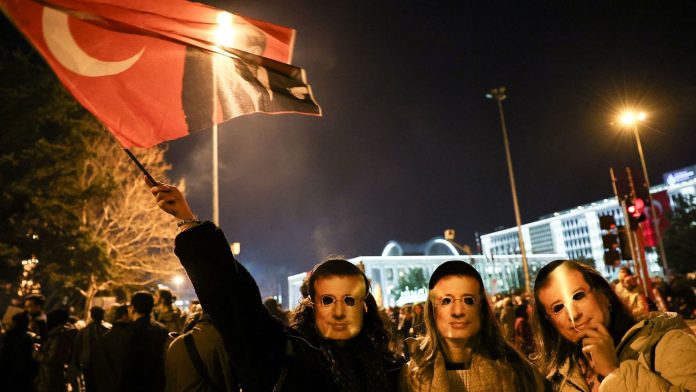
Thousands rally in Istanbul for 2nd night over mayor’s detention

Mayor Ekrem Imamoglu was arrested in a dawn raid on his residence on Wednesday over alleged corruption and terror links, escalating a crackdown on opposition figures and dissenting voices. Several other prominent figures, including two district mayors, were also detained.

The detention of the popular opposition leader deepened concerns over democracy and sparked protests in Istanbul and elsewhere, despite road closures and a four-day ban on demonstrations in the city.

It also caused a shockwave in the financial market, triggering temporary halts in trading on Wednesday to prevent panic selling.

Addressing the rally outside city hall, Ozgur Ozel, the leader of mayor’s Republican People’s Party, or CHP, called on supporters to take to the streets to claim their rights without resorting to violence.

“Yes, I am calling the people to the streets,” he said.

Mansur Yavas, the mayor of the capital Ankara and another popular opposition figure, joined the rally, calling on all opposition parties to join forces against “injustices.”

Police blocked a group of youths who attempted to breach a barricade in an effort to march toward Taksim, Istanbul’s central square and used pepper spray to break them up.

The Interior Ministry said six police officers were injured in scuffles with demonstrators in Istanbul.

In Ankara, police deployed tear gas and water cannons to disperse a protest at the city’s prestigious Middle East Technical University. Protests also broke out in the cities of Adana and Izmir.

Critics see the crackdown as an effort by Erdogan to extend his more then two-decade rule following significant losses by the ruling party in local elections last year. Government officials reject claims that legal actions against opposition figures are politically motivated and insist that the courts operate independently.

Omer Celik, the spokesman of Erdogan’s ruling Justice and Development Party, disputed allegations by the opposition that the detentions were government-orchestrated and urged respect for the judicial process.

“What a politician should do is to follow the judicial process,” Celik told journalists, adding, “None of us have any information about the content of the (criminal) file.”

He also rejected accusations leveled by the main opposition Republican People’s Party, or CHP, that the mayor’s arrest amounted to a “coup” saying, “The name of our party, our president can only be associated with democracy — on the opposite side of a coup.”

In his first comments on the mayor’s detention, Erdogan accused the opposition of failing to respond to the allegations of corruption with evidence or legal arguments.

“The opposition never responds to the allegations brought forward by the judiciary,” Erdogan stated, adding, “Instead, they confine the matter to political slogans, resorting to the easy way of provoking their base and deceiving the public.”

Earlier, Interior Minister Ali Yerlikaya said authorities had detained dozens of people for sharing “provocative” social media content related to the mayor’s detention.

The authorities identified 261 social media accounts that shared posts that allegedly incited public hatred or crime, including 62 that are run by people based abroad, Yerlikaya wrote on X. At least 37 of the suspected owners were detained and efforts to detain other suspects were continuing.

Imamoglu’s arrest came just days before he was expected to be nominated as the opposition Republican People’s Party’s presidential candidate in a primary scheduled for Sunday. The party’s leader has said the primary will go ahead as planned.

Prosecutors accused Imamoglu of exploiting his position for financial gain, including the improper allocation of government contracts.

In a separate investigation, prosecutors also accuse Imamoglu of aiding the outlawed Kurdistan Workers’ Party, or PKK, by allegedly forming an alliance with Kurdish groups for the Istanbul municipal elections. The PKK, behind a decades-long insurgency in Turkey, is designated a terrorist organization by Ankara, Washington and other allies.

It was not clear when authorities would begin questioning the mayor, who can be detained without charges for up to four days. Analysts say Imamoglu could be removed from office and replaced by a “trustee mayor” if he is formally charged with links to the PKK.

Before his detention, Imamoglu already faced multiple criminal cases that could result in prison sentences and a political ban. He is also appealing a 2022 conviction for insulting members of Turkey’s Supreme Electoral Council, a case that could result in a political ban.

This week, a university nullified his diploma, citing alleged irregularities in his 1990 transfer from a private university in northern Cyprus to its business faculty, a decision Imamoglu said he would challenge. The decision effectively bars him from running for president, since the position requires candidates to be university graduates.

Imamoglu was elected mayor of Turkey’s largest city in March 2019, a historic blow to Erdogan and the president’s Justice and Development Party, which had controlled Istanbul for a quarter-century. Erdogan’s party pushed to void the municipal election results in the city of 16 million, alleging irregularities.

The challenge resulted in a repeat of the election a few months later, which Imamoglu also won. The mayor retained his seat following local elections last year, during which his party made significant gains against Erdogan’s governing party.

US, Israel to discuss Iran’s nuclear programme within days: Report

Iran nuclear program

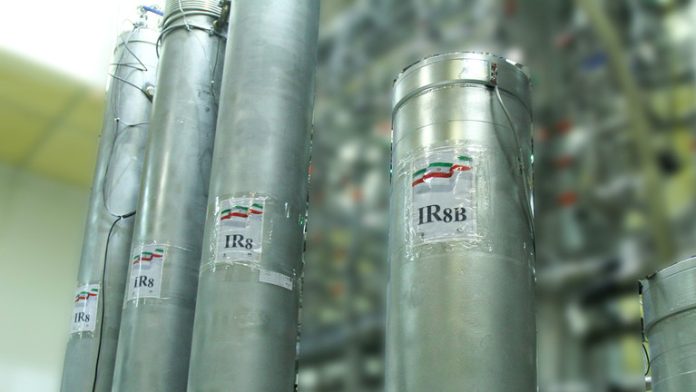
The planned meeting follows US President Donald Trump’s letter to Iran’s leadership earlier this month in which he warned Tehran that it had the choice of either striking a nuclear deal with the US or facing possible military action.

The Israeli delegation will be led by Strategic Affairs Minister Ron Dermer and national security advisor Tzachi Hanegbi and will meet with senior Trump advisors, the Washington-based source told Reuters.

The two teams are expected to discuss the potential for US-Iran nuclear talks and regional issues related to Tehran, the source said, speaking on condition of anonymity.

Axios was the first to report on the scheduled meeting in Washington.

Russian president sends letter to new Syrian leadership

Syria War

The message comes after a recent surge of violence in the war-torn country, which Moscow has strongly condemned while calling for swift action to resolve the crisis.

According to Peskov, in his message to the Syrian leader, Putin expressed “his support for efforts to swiftly stabilize the situation in the country in the interest of preserving its sovereignty, independence, unity, and territorial integrity.”

Putin also reaffirmed Russia’s commitment to fostering “practical” cooperation with Damascus on a full range of bilateral issues, “with the goal of strengthening the traditionally friendly Russian-Syrian relations,” the presidential spokesman added.

Syria’s Mediterranean coast was gripped by the worst wave of violence in early March after clashes erupted between newly formed security forces and local militias, which Western media have labeled as loyalists of former Syrian President Bashar Assad.

The Alawite Muslim minority, to which Assad belongs, has allegedly launched an uprising against the new government in Latakia and Tartus provinces. The violence has been concentrated in Alawite-populated areas.

As the situation deteriorated, Russia and the US called for a closed United Nations Security Council meeting on March 10 to address reports of mass civilian killings. According to the Syrian Observatory for Human Rights, at least 1,500 civilians have been killed, most of them Alawites. Numerous extremely graphic videos circulating online claimed to show the new security forces torturing and executing civilians, including women and children, in broad daylight.

Syria’s transitional government later declared the end of its military operation in the affected areas. It also announced a plan to target supporters of the former leadership, blaming them for the ongoing crisis.

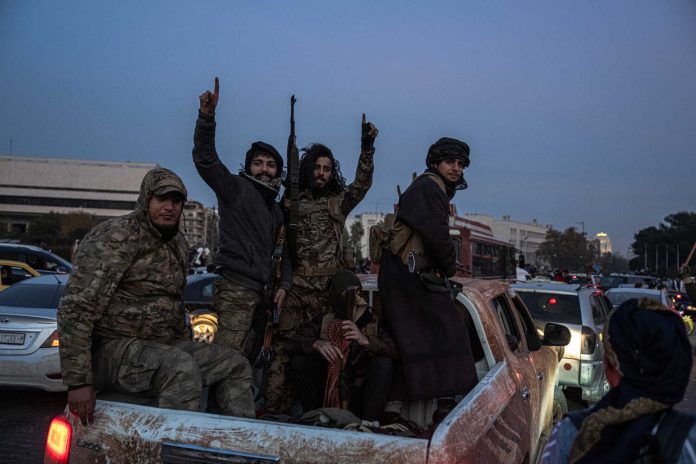
The Syrian government collapsed in late 2024 after militant forces opposing then-President Assad launched a swift and unexpected offensive, seizing control of Damascus within days. The country’s military disintegrated during the assault and has since been replaced by newly formed security forces.

Despite granting Assad asylum after his ouster, Russia remains engaged with Syria’s new leadership, maintaining operations at Khmeimim Airbase and a logistical support center in Tartus.

Germany reopens its diplomatic mission in Syria after 13-year closure

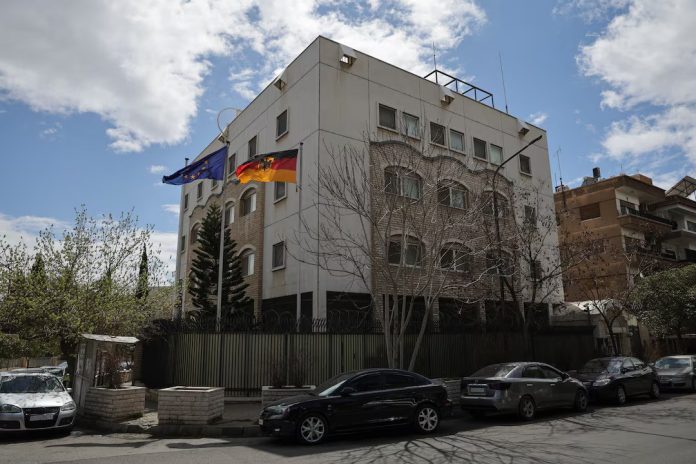
“Minister Baerbock officially reopened Berlin’s embassy in Damascus,” German special envoy to Syria, Stefan Schneck, said on X.

“We are pleased to work closely with all Syrians for a better Syria,” he added.

The envoy stated the working team in the embassy is “still small.”

“The visa and consular affairs will remain managed from Beirut for the coming period,” he added.

Many Arab and foreign countries closed their diplomatic missions in Syria following a deadly crackdown launched by the ousted government of Bashar al-Assad against pro-democracy protests in 2011.

Assad, Syria’s leader for nearly 25 years, fled to Russia after armed groups took control of Damascus in early December

Ahmed al-Sharaa, who led anti-government forces to oust Assad, was declared president for a transitional period in late January.

Also on Thursday, al-Sharaa met in Damascus on Thursday with Baerbock and European Parliament member Armin Laschet.

A presidency statement did not provide details about the content of the meeting, which came shortly after Germany announced the reopening of its embassy in Damascus.

This was the second visit by the German foreign minister to Syria since the fall of the al-Assad government in December. Baerbock’s first visit was in January.

“The German Embassy in Damascus has officially reopened, and we will support Syria politically and economically,” Baerbock said following the reopening of the diplomatic mission.

“The Syrian people need assistance and reconstruction,” she added, reiterating her country’s solidarity with Syrian efforts for peace.

“The first steps toward unifying the country have been taken, and the next must involve all segments of society.”

“Syria must belong to all Syrians, and we called on the government to prosecute those responsible for the crimes,” Baerbock said, stressing that the country’s political process must include all ethnic and religious groups before refugees return.

At a donor conference for Syria held in Brussels earlier this week, Germany pledged 300 million euros to bolster Syria’s economic stability.

During the event, participants pledged 5.8 billion euros to support Syrians and refugee-hosting nations.

Iran’s Expediency Council to review CFT, Palermo Conventions separately from FATF 

FATF

Mohsen Dehnavi noted that the Council’s mandate is strictly limited to evaluating these two conventions.

Dehnavi, responding to criticism over this decision, explained that the Expediency Council intervenes in cases where there is a dispute between the Iranian Parliament and the Guardian Council.

He went on to say that since the Parliament had approved Iran’s accession to the CFT and Palermo conventions, a detailed, independent review of each was deemed necessary.

The FATF, an international watchdog for financial crimes, has long urged Iran to adopt these conventions as part of its broader recommendations for transparency and anti-money laundering measures. The Palermo Convention focuses on combatting transnational organized crime, while the CFT Convention requires states to cut off financial support to terrorist groups.

Iran’s position on these agreements has been deeply divisive. Proponents argue that joining them would facilitate international banking transactions, help reintegrate Iran into the global financial system, and reduce restrictions on trade. They believe non-compliance has further isolated Iran economically.
Opponents, however, warn that adopting these conventions would expose Iran’s financial transactions, making it harder to circumvent U.S. sanctions and conduct trade through alternative channels.

While some view ratification as a means to economic relief, others see it as a potential threat to Iran’s financial autonomy.

Taliban frees US detainee

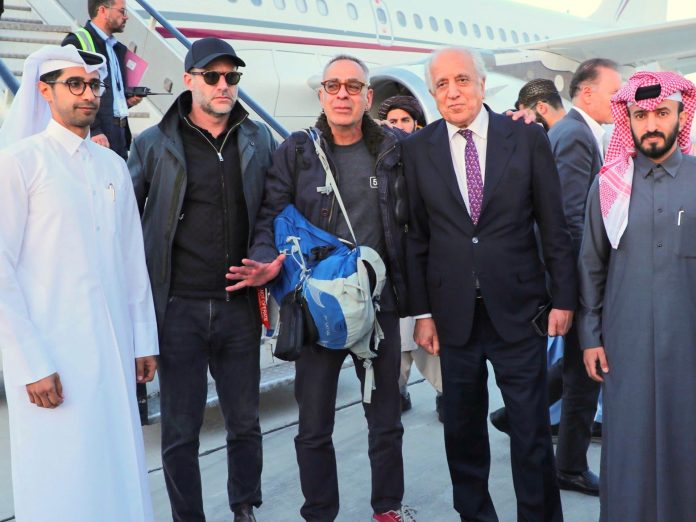
The release on Thursday of George Glezmann, who was abducted while travelling as a tourist in Afghanistan in December 2022, marks the third time a US detainee has been freed by the Taliban since January.

In a statement, Secretary of State Marco Rubio said Glezmann’s release represents a “positive and constructive step”.

He also thanked Qatar for its “instrumental” role in securing the release.

“Today, after two and a half years of captivity in Afghanistan, Delta Airlines mechanic George Glezmann is on his way to be reunited with his wife, Aleksandra,” Rubio wrote.

“George joins American Ryan Corbett and William McKenty, who were released from Afghanistan on the night of President Donald Trump’s inauguration and returned home to their families.”

Corbett and McKenty, however, had been allowed to leave under a deal reached during the administration of US President Joe Biden, which was also brokered by Qatar.

The Taliban has previously described the release of US detainees as part of its global “normalisation” effort.

The group remains an international pariah since its lightning takeover of Afghanistan in August 2021: No country has officially recognised the Taliban government, although several countries continue to operate diplomatic facilities in the country.

Afghanistan’s takeover came as the Biden administration oversaw a withdrawal outlined by the first administration of President Trump.

The Republican leader negotiated with the Taliban in 2020 to end the war in Afghanistan, and he agreed to a 14-month deadline to withdraw US troops and allied forces.

The agreement was controversial for leaving out the Western-backed Afghan government, which was toppled amid the US’s chaotic exit from the country in 2021.

Unlike the detainee release deal reached under Biden with the Taliban, Glezmann’s departure from Taliban custody did not involve an exchange of prisoners held by the US, an official briefed on the matter told The Associated Press news agency.

The official described the move as a goodwill gesture.

The Trump administration has not articulated a clear policy for how it will approach dealings with the Taliban government during the president’s second term.

However, Trump has been a regular critic of how the Biden administration oversaw the withdrawal from Afghanistan.

A bomb attack at Kabul’s airport in the final days of the withdrawal killed at least 170 Afghan civilians seeking to flee the country, as well as 13 US soldiers.

Trump repeatedly referred to the “Abbey Gate” bombing as he campaigned for a second term in 2024, calling it “the most embarrassing day in the history of our country”.

The Republican leader has regularly maintained the withdrawal would have been more orderly under his watch, though he has curtailed foreign funding and refugee programmes that aid Afghans since returning to office.

For its part, the Biden administration had largely blamed the first Trump administration for leaving it ill-equipped to meet the withdrawal deadline.

Critics also point out that hundreds of thousands of Afghan citizens who worked for US forces and on US-backed projects still remain in Afghanistan, in danger of retribution from the Taliban.

Others live in precarious situations in refugee camps, including in neighbouring Pakistan.

An estimated 10,000 Afghans who had been approved to travel to the US found themselves stranded after Trump suspended the refugee programme in January.

Advocacy groups have urged the Trump administration to reverse course and ensure the refugees are transported to safety.

In his statement on Thursday, Rubio acknowledged other US citizens are still being held by the Taliban. US officials say they include Afghan American businessman Mahmood Habibi. The Taliban has denied holding Habibi.

“President Trump will continue his tireless work to free ALL Americans unjustly detained around the world,” Rubio said.