Friday, January 2, 2026
Home Blog Page 4303

Iran Stopped Daesh from Turning into State: President Rouhani

2d9425e2-0fed-4fc1-8f20-a41ebbd88733

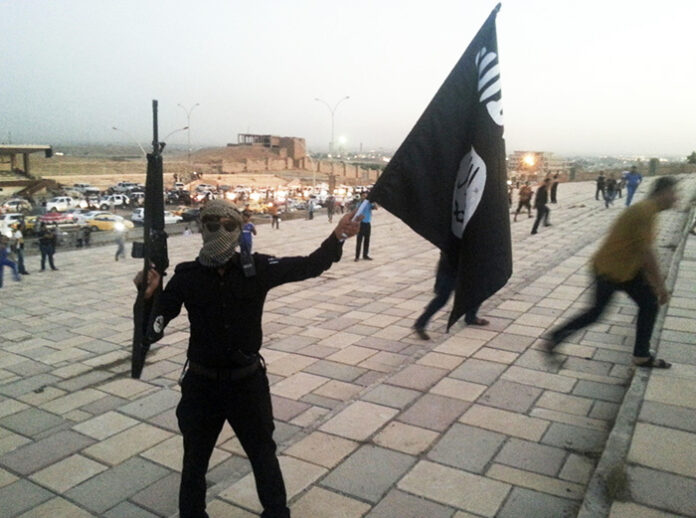
“If it were not for Iran’s assistance and role, you would not be seeing [just] a group named Daesh, [rather] you would be seeing a large Daeshstate in Syria and Iraq, and the region would be facing a big endless war,” President Rouhani said, addressing a group of Malaysian intellectuals and media people in the Malaysian capital of Kuala Lumpur on Saturday.

Such a war, he said, could have even turned into an international one.

The Islamic Republic has been providing advisory assistance to the militaries of Iraq and Syria in their fight against Daesh on requests from the governments of the two Arab countries.

Daesh started ravaging Iraq and Syria in 2014.

Rouhani said Iran’s regional policy was predicated on the four principles of “fighting Takfiri terrorism on the ground,” “effective contribution to peace, ceasefire, and humanitarian assistance,” and “the non-disintegration of countries and preservation of geographical borders,” and “recourse to electoral processes and the rule of people.”

He said there had to be a ceasefire in Yemen and Syria and the people there had to be expeditiously supplied with humanitarian aid.

The region’s geographical borders must stay the same, President Rouhani said, adding that the disintegration of countries is dangerous and can compound problems and fan regional wars.

“Governments cannot be selected for the people of the region from outside, and anyone who assumes power through people’s vote should be respected by all,” he said.

The Iranian president also warned against attempts to cause sectarian rifts between Shias and Sunnis.

He voiced satisfaction with the discourse used by a large part of the Muslim world, including Iran and Malaysia, concerning the Islamic culture was marked by “moderation.”

Rouhani is on a three-leg tour of Southeast Asia, which started out in Vietnam and will finally take him to Thailand.

Separately, the Iranian president had met with Tan Sri Pandikar Amin Mulia, the current speaker of the Dewan Rakyat, the lower house of the Parliament of Malaysia. He has also met with Malaysian Prime Minister Najib Razak.

US Eases More Sanctions against Iran after Nuclear Deal

bfde4c60-1ee9-4ae1-a86c-fa243786e886

The Treasury Department published new guidance on Friday allowing businesses to do dollar transactions with Iran by offshore banking institutions as long as they do not enter the US financial system.

The department also removed a blanket ban on foreign transactions with Iranian firms that may be run by individuals who are subject to US sanctions. The Treasury describes those people as “specially designated nationals” or SDNs.

Iran and the P5+1 group – the US, Britain, France, China, Russia plus Germany – reached the nuclear agreement, known as the Joint Comprehensive Plan of Action (JCPOA), on July 14, 2015.

In accordance to the JCPOA, which took effect in January, Iran has undertaken to put limitations on its nuclear program in exchange for the removal of nuclear-related sanctions.

The US, however, has continued to maintain sanctions on Iran and a number of Iranian companies and individuals, prompting complaints from Tehran that Washington is failing to implement its side of the deal.

Iran says the US is scaring foreign companies from doing business in or with the country, as they fear punishment for violating sanctions.

“As has been stated by the International Atomic Energy Agency (IAEA), Iran has remained committed to its commitments,” Ali Akbar Salehi, the head of the country’s Atomic Energy Organization, said on Friday.


salehi


“While the other side – it’s very clear now to public opinion and it’s not a secret – has not really delivered on the promises; that the sanctions would be removed and that banking transactions would go back to normal, that trade would speed up and economic relations would be enhanced. These have not been materialized to the extent that we expected,” he told The Guardian.

According to the new Treasury guidance, foreign transactions with non-sanctioned entities that are “controlled in whole or in part by an Iranian or Iran-related person on the SDN list” are “not necessarily sanctionable.”

Since January, the IAEA, which is tasked with overseeing the implementation of the JCPOA, has released regular reports confirming the peaceful nature of Iran’s nuclear activities and Tehran’s commitment to the agreement.

Iran: EU Document Positive but Partly Unrealistic

bahram qassemi

The European Parliament on Thursday voted on a roadmap for relations with Iran, charting out “EU strategy towards Iran after the nuclear agreement.”

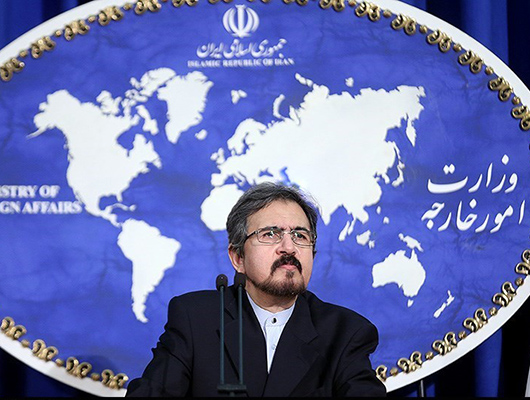
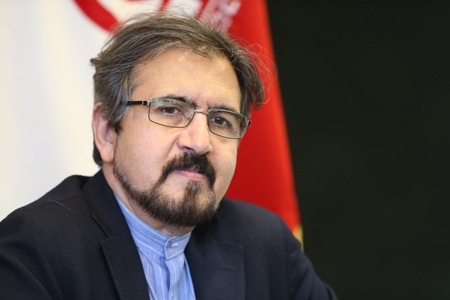
Iranian Foreign Ministry spokesman Bahram Qassemi said the resolution contains “positive and promising points which can help to expand relations between Iran and the European Union and open a new horizon in bilateral ties.”

“However, this resolution also contains some points concerning the human rights situation in Iran which do not correlate with the existing realities and are partly affected by the negative propaganda against the Islamic Republic of Iran.”

Such content, he said, is not conducive to the betterment of the relations between the Islamic Republic and the EU.

“While human rights negotiations are set to be held between Iran and the EU in the near future, the adoption of such positions is questionable and unconstructive and does not in any way help elevate the human rights discourse and [only] reinforces speculations of intervention in our country’s domestic affairs,” he said.

Qassemi also said that while the resolution had a merely advisory nature and was not binding, the members of the European Parliament had better be more realistic and more forward-looking.

The resolution foresees the normalization of the bloc’s ties with Iran following the 2015 nuclear agreement between the Islamic Republic and six world powers. The EU’s high representative for foreign affairs and security policy coordinated for the talks that culminated in the deal.

Authored by Richard Howitt, who represents Britain’s Labour Party at the European Parliament, the document “welcomes Iran’s contribution to the fight against ISIS,” referring to Daesh by an English acronym but also criticizes Iran’s human rights record.

US Source of Persian Gulf Woes: IRGC Admiral

ali-fadavi

In an interview with the Tasnim News Agency, Rear Admiral Ali Fadavi highlighted the IRGC Navy’s vigilant presence in the southern waters and its success to ensure security of the Persian Gulf and the Strait of Hormuz.

Asked about occasional encounters with American forces in the Persian Gulf, the commander said all such events originate from the source of corruption, namely the US.

The US forces are the root cause of all evil acts in the Persian Gulf and in West Asia, Fadavi added, saying Americans have two objectives, fulfilling their own interests and showing hostility to the Islamic Republic.

Despite all American evil conducts, the situation is under control and Iran is in charge of security across the Persian Gulf and the Strait of Hormuz, he added.

In comments in May, Leader of the Islamic Revolution Ayatollah Seyed Ali Khamenei also hammered the US for its schemes against Iran’s military presence in the Persian Gulf and made it clear that the Islamic Republic will continue to demonstrate power at its home, the Persian Gulf.

“The Persian Gulf is the Iranian nation’s home …, and the coasts of the Persian Gulf and large parts of the Sea of Oman coasts belong to this strong nation,” Imam Khamenei said at the time, adding, “Today, the enemies are biting off more than they can chew. For example, they draw plans that Iran should not hold military war games in the Persian Gulf.”

Iranian, Swiss Diplomats Discuss Humanitarian Crisis in Syria

Speaking in a Friday meeting with Head of the Swiss Humanitarian Aid Unit (SHA) Manuel Bessler in Geneva, Jaberi Ansari emphasized the necessity for paying attention to humanitarian aspect of the conflicts in the Middle East region, Syria in particular.

He further said by ignoring the political aspect of the Syrian conflict and the anti-terrorism campaign in the Arab country, the ongoing efforts to resolve the crisis would yield no result.

The Iranian diplomat also stressed the need for closer cooperation between Iran and Switzerland to help resolve humanitarian crisis in Syria.

Bessler, who is also Swiss deputy foreign minister, praised Tehran’s role in the formation of the upcoming trilateral talks among Iran, Syria and Switzerland aimed at facilitating the delivery of humanitarian assistance to the Syrian people.

Syria has been gripped by civil war since March 2011 with various terrorist groups, including Daesh (also known as ISIS or ISIL), currently controlling parts of it.

According to a report by the Syrian Center for Policy Research, the conflict has claimed the lives of over 470,000 people, injured 1.9 million others, and displaced nearly half of the country’s pre-war population of about 23 million within or beyond its borders.

In the meantime, Iran has remained a close ally of Syria and supports its legitimate government in the face of foreign-backed militancy.

Iranian Researchers Reduce Noise Pollution Using Nano-Fibres

57361840

Advent of modern society, technology and industrial progresses led to noise pollution which has affected the world highly, but recently many researchers have become interested in this topic and made their best efforts to solve the issue.

After the emergence of nanotech in the world of science, many new doors have been opened to solve this problem and now a new step has been taken by Iranian researchers.

“We studied the sound absorption of the reinforced nano-fibres with graphene and it was shown that reinforced nano-fibres can acquire impedance-matched surface to airborne sound at special frequencies,” said Dr. Reza Rasouli, a researcher at Zanjan University.

He stated, “We found that fibres without graphene oxide were spun continuously and randomly, whereas by doping with graphene oxide, the mode of fibres is changed and some nodes form on the fibres coating.”

“The sound absorption coefficient was measured by impedance Measurements in the frequency range from 700 to 1600 Hz show that use of graphene oxide as a reinforcing phase increases sound absorption coefficient of the samples.”

The results of all the experiments done by the Iranian researchers led to reducing noise pollution to a great extent. This tech can be used in auto industry and factories as well.

Muharram Mourning Ceremonies Underway in Tehran

Millions of Shiite Muslims across Iran, including Tehran, are mourning the anniversary of martyrdom of their third Imam, Hussein bin Ali (AS) and his companions in the Battle of Karbala.

Here are Tasnim‘s photos of a ceremony held in the Iranian capital:

France’s PSA, Iran’s SAIPA Seal Joint Venture Deal

SAIPA - PSA Group

Based on the deal, Citroen cars will be produced in Iran’s central city of Kashan at a plant which will be jointly owned by the two companies.

The agreement between Citroen and SAIPA – which has been the French company’s historic partner in Iran since the 60s – lays the foundations for a new strategic partnership between them.

The joint-venture will accordingly invest above €300 million in manufacturing and R&D capacity over the next five years.

“With more than 50 years of presence in Iran, PSA Group through this new strategic partnership is clearly committed to the deployment of a rich product plan that meets the expectations of Iranian clients,” Carlos Tavares, Chairman of the PSA Group Managing Board, has been quoted as telling the reporters after signing the agreement.

The agreement envisages the transfer of technology and a significant level of local content, Reuters reported.

Also, Citroen models will be sold throughout the country through a network dedicated exclusively to the brand. No less than 150 Citroen outlets will open in the next 5 years, Reuters added.

Consistent with the core model strategy deployed in the Push to Pass plan, the production in Kashan of three vehicles adapted to the heart of Iranian market will start in 2018, Business Wire reported. From early 2017, imported vehicles will be staging Citroen’s comeback in the country.

SAIPA, along with Iran Khodro, dominates Iran’s massive market of about 80 million people. It consists of seven manufacturers and roughly contributes at least 30% to the total car production in Iran at above 300,000 cars per year.

Iran is the Middle East’s largest auto market with a population of 80 million. The automobile industry is seen as Iran’s biggest non-oil sector, accounting for nearly 10% of the country’s gross domestic product (GDP).

Iran Warns Regional States against Following Warmongers

Yemen-under-attack

“Countries which launched a cruel war against the defenseless Yemeni people, after one year and a half since the beginning of the aggression and [committing] numerous crimes against the Yemeni people, are trying to justify their ignominious defeat through such claims,” Iranian Foreign Ministry Spokesman Bahram Qassemi said on Friday.

He urged countries which cannot endure the most minor consequences of wars not to fall for warmongering policies.

In his recent allegations against Iran, the Emirati Minister of State for Foreign Affairs, Anwar Bin Mohammad Gargash, claimed that Iran is sending weapons to Yemen’s Houthi Ansarullah fighters and this would only prolong the war in Yemen.

He added that Houthi’s recent targeting of an Emirati military vessel, Swift, is part of systemic aggression and premeditated escalation aimed at undermining any political solution to the Yemeni crisis.

On Saturday, Yemeni forces targeted and destroyed the Emirati military vessel in a rocket attack near the Red Sea port city of Mokha.

The Iranian Foreign Ministry’s spokesman on Tuesday also denied claims made by a US official that a missile used by Yemen’s Houthi Ansarullah fighters to destroy the Emirati military vessel was made by Iran.

Qassemi said the US should take a look at its own heavy dossier concerning the supply of arms and weapons to those attacking civilians in Yemen instead of putting the blame on others.

Yemen has been under Saudi military strikes since late March 2015. The war was launched in a bid to reinstate Abd Rabbuh Mansur Hadi, who has stepped down as president but is now seeking to grab power by force. The United Nations puts the death toll from the military aggression at about 10,000.

Houthi Ansarullah fighters, allied with Yemeni army factions, and forces loyal to Yemen’s former president Ali Abdullah Saleh have united and are fighting back the Saudi invaders.

Iran, Malaysia to Double Trade Volume

Rouhani Malaysia

Speaking at a joint press conference with Malaysian Prime Minister Najib Razak in Kuala Lumpur on Friday, President Rouhani urged the Southeast Asian country to invest in Iran in the post-JCPOA and post-sanctions era.

“Iran supports investment by Malaysian companies in the oil, gas and petrochemical sectors,” he added,

According to President Rouhani, the two sides decided today to restore the volume of bilateral trade ties to the pre-sanctions level in the first step and double it immediately afterwards.

The Iranian president underlined intensifying the efforts to stimulate the two countries’ banking ties, and called for collaboration with Malaysia in the Halal food industry, academic and technological fields and tourism industry.

As regards the other subjects discussed in the meeting with Razak, President Rouhani pointed to mutual concerns about conflicts provoked in the Islamic world by foreigners and the threat of terrorism.

Heading a political and economic delegation, President Rouhani embarked on a tour of Southeast Asia on Wednesday that first took him to Vietnam.

He will later fly to Thailand to attend the 2nd Asia Cooperation Dialogue (ACD) Summit.