Sunday, April 26, 2026
Home Blog Page 4278

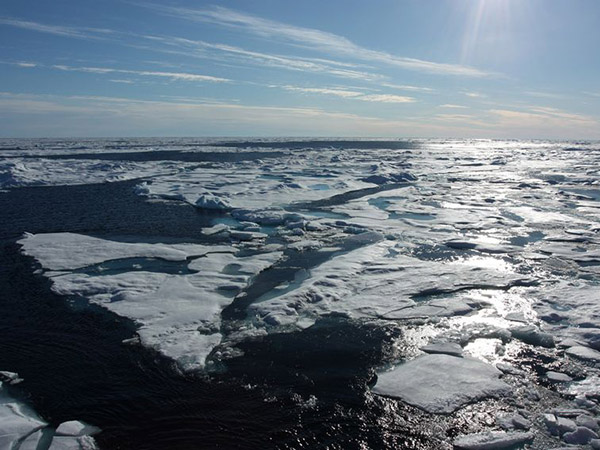
Arctic Ocean May Be Ice-Free by 2045

arctic ocean

According to a report covered by ISNA, this year’s minimum Arctic sea ice extent tied with 2007 for the second-lowest on record, and its regrowth in fall and winter is proving to be sluggish. From Oct. 1 to 15, ice extent increased by less than one-third of the 1981-2010 average gain for that period; by Oct. 31, Arctic sea ice extent stood at 2.73 million square miles, the lowest extent in the satellite record for that date.

Meanwhile, a new study in the journal Science argues that computer models have been underestimating Arctic sea ice loss, and that the region could become effectively free of summer sea ice by 2045. The study compared annual human-caused greenhouse gas emissions with observations of September Arctic sea ice extent over the period 1968 to 2000. They found that the two elements had a strong linear relationship, to the extent that it was possible for them to calculate that every additional metric ton of carbon dioxide emitted into the atmosphere resulted in the loss of about 33 square feet of Arctic sea ice.

This enabled them to come up with a way of showing how individual actions contribute to changes in the Arctic. For example, they calculated that every seat on a flight from London to San Francisco comes at a cost of about 54 square feet of sea ice. The annual carbon emissions of the average American would be enough to melt about 500 square feet — nearly 10 times as much as the average Indian, for example.

“So far, climate change has often felt like a rather abstract notion. Our results allow us to overcome this perception,” said Stroeve.

Researchers then used their discovery to look at the Arctic’s future, and found that an additional 1,000 gigatons of carbon would be enough to reduce Arctic sea ice cover in September to below 386,000 square miles — which, given that that ice would be tucked into a few pockets such as northern Greenland, would effectively render the Arctic Ocean ice-free. At present rates of CO2 emissions, which are around 35 gigatons per year, that scenario would unfold by around 2045.

They found that the extent of ice loss outpaced that in most computer models, because those models likely underestimate the amount of Arctic warming that is taking place. Measurements of air temperatures above the Arctic Ocean remain limited.

“Models are not perfect,” a researcher said. “And if you can use observations by themselves to forecast when Arctic ice will go away maybe that’s in some ways better.”
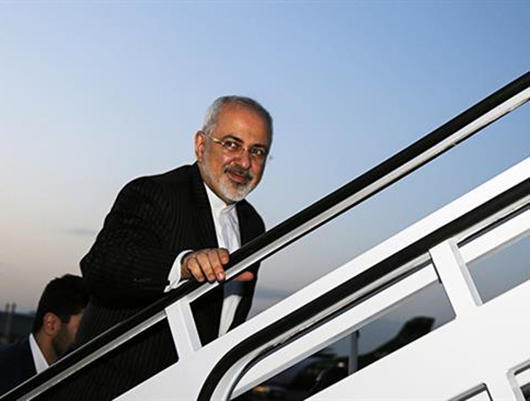
Iranian FM to Start Visits to Lebanon, Eastern Europe Today

Mohammad Javad Zarif


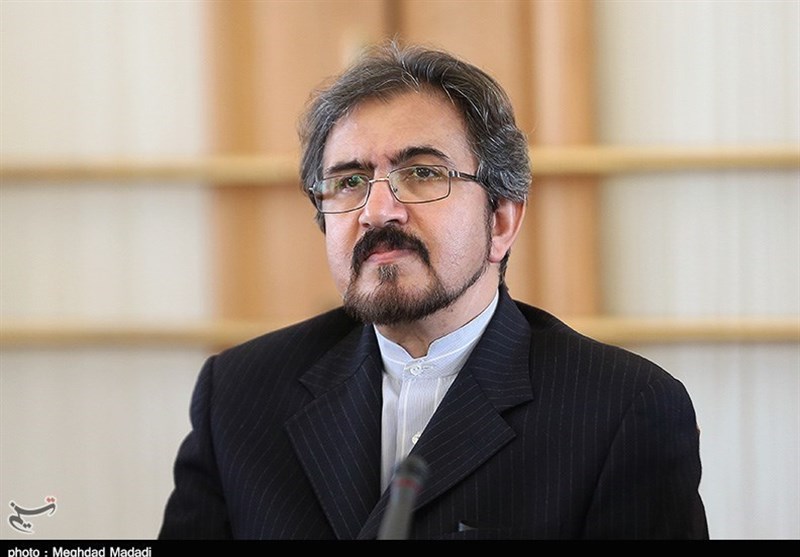
According to a report by YJC, as translated by IFP, Foreign Ministry Spokesman Bahram Qassemi said in his weekly press conference that Foreign Minister Zarif will leave Tehran for Beirut in the coming hours.

“In Lebanon, he will confer with Lebanese officials on bilateral relations and the recent election of the Lebanese president. Regional developments will also be explored during the meetings,” he noted.

“Lebanon is an influential country in the Middle East, and there have always been consultations between the two countries in different levels,” Qassemi went on to say.

Zarif is scheduled to meet with new Lebanese President Michel Aoun on Tuesday, November 8, he said.

Then, the Iranian FM will leave Beirut for Eastern Europe to visit Romania, the Czech Republic, and Slovakia, the Iranian spokesman added.

“We have had good cooperation with these countries since past decades; therefore, the trip will be made as part of Zarif’s periodical visits, and completes the chair of previous trips. It will helps us create further understanding and balance,” he noted.


Bahram Qassemi


Enhancement of Iran’s Ties with Czech Republic

Qassemi referred to Tehran-Prague relations, and hailed Zarif’s visit to the Czech Republic as a “positive move”. He expressed the hope that Iran-Czech relations would be restored to normal status once again.

“For different reasons, Iran’s ties with Czech had remained at the level of charge d’affaires, but we have agreed to upgrade it to the level of ambassador, and this is being realized. The Czech envoy has been introduced as their ambassador, and our charge d’affaires will also continue his mission as Iran’s ambassador.”

“We hope we would be able to promote our understanding and interaction with the Czech Republic at higher levels thanks to these efforts,” he added.

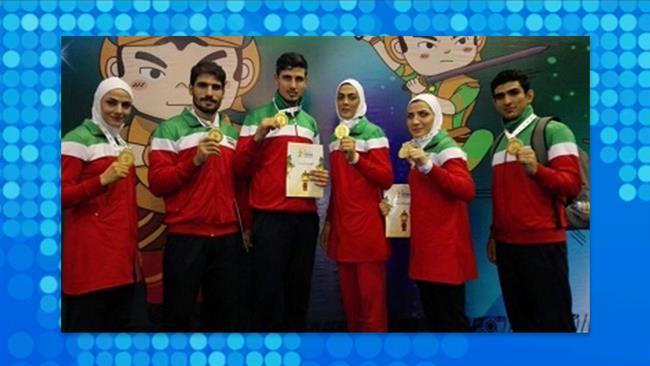
Iran Wushu Fighters Stand Second in Sanda World Cup

21bbd2c9-ddc8-4427-be6e-004180054604

Having won four gold and three silver medals, the Islamic Republic of Iran stood behind China, with 10 gold medals.

The Philippines collected two gold, a silver and three bronze medals to secure the third place.

On Sunday, Iranian sportswoman Maryam Hashemi lost to a representative from China in the last contest of the women’s minus 70-kilogram category of the Sanda (sparring) discipline in the central Chinese city of Xi’an and received the silver medal.

Erfan Ahangarian also lost to by his Chinese opponent in the men’s minus 65-kilogram class, and won another silver for Iran.

In the men’s minus 70-kilogram category, Mohsen Mohammad Seifi prevailed over his Jordanian rival Ali al-Qaisi and got the gold medal.

Iran’s wushu artist Amir Fazli conceded a defeat to a Chinese athlete in the men’s minus 85-kilogram category and was awarded the silver medal.

Hamidreza Qolipour collected another gold medal for Iran in the men’s 85-kilogram category after his Romanian opponent did not show up for the final competition.

The achievements came a day after Shahrbanou Mansourian beat her Filipino opponent Hergie Bacyadan 2-1 in the final contest of the women’s minus 65-kilogram category.

Earlier on Saturday, Sedigheh Dariaeivarkadeh collected the gold medal in the women’s minus 60-kilogram section after defeating her Vietnamese opponent Nguyen Thi Trang.

Sanda, sometimes called Sanshou or Lei tai, has all the combat aspects of wushu, but includes many more grappling techniques.

The 8th edition of Sanda World Cup started in Xi’an, China, on November 4 and wrapped up on November 6, 2016. The international tournament brought together a total of 71 world champions from 19 countries, including Belarus, China, France, the Islamic Republic of Iran, Italy, Russia and Vietnam.

The Wushu Federation of the Islamic Republic of Iran had dispatched a seven-strong delegation to the contests.

US Presidents All Alike, Iran Expects No Change: Senior Official

velayati

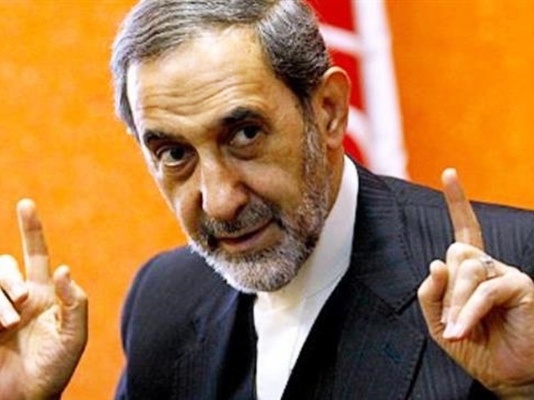
“We have witnessed Reagan, Bush, Clinton, and Obama presidencies,” said Ali Akbar Velayati, making passing references to presidents who took office in the US after the Islamic Revolution of 1979. “They all treated Iran the same way, and not one of them is different from the others.”

Velayati, who advises Leader of the Islamic Revolution Ayatollah Seyyed Ali Khamenei on international affairs, was speaking in a televised interview on Sunday night.

Remarking on the characteristics of the competing US presidential candidates, Hillary Clinton and Donald Trump, Velayati said they were “the two sides of the same coin.”

“One shows the US’s true face, and the other is the face of America with make-up. This gentleman (Trump) is the un-retouched face of America, and that lady (Clinton) is the US’s retouched face.”

‘Why should we talk Syria with US?’

Responding to a question on whether Iran should negotiate with the US on Syria — as some people believe it should, Velayati dismissed such beliefs.

“Are they (the Americans) representing the Syrian people so they can dictate what they should do and so that we need to negotiate with them on who should be Syria’s president?” Velayati asked, rhetorically.

“Why and based on what entitlement are the Americans saying that, ‘[Syrian President] Bashar al-Assad must leave and the person that we have in mind be president?’”

Recalling the experience of previous, fruitless Iranian talks with the US, Velayati said Iran once engaged in negotiations with the US under the auspices of the United Nations (UN) over Afghanistan.

“But as soon as the Americans invaded Afghanistan, … Bush named Iran… part of the ‘axis of evil,’” he said referring to the then-US president George W. Bush.

“This is our experience of negotiations with the US under the auspices of the UN,” he said.

‘Iran’s Iraq, Syria presence preventative’

Turning to the issue of Iran’s advisory military help to Iraq and Syria, Velayati said the presence of Iranian advisers there worked to “vaccinate” Iran against the spillover of insecurity.

He also said that one reason for the Iranian presence in the two Arab countries was to prevent their disintegration, which is a plan of the US. “Should such a thing happen, a domino effect would sweep the region.”

‘Saudi Arabia bogged down in Yemen like US in Vietnam’

Velayati also said that Saudi Arabia has been stuck in a cul-de-sac in Yemen, just as the US was bogged down in Vietnam during its war on the Asian country.

Should the Yemenis set their minds to it, they can seize every area they desire across Saudi Arabia, he said, saying that Yemen will emerge victorious from the war, though it has a long road ahead of it in the face of the aggressors.

‘US no more in the saddle’

The senior Iranian official also touched on the US’s position in the world today and said Washington was no more exercising a monopoly over power.

“The presence of the Islamic Republic and its allies and countries like Russia and China, as well as the European countries… [all] show that today’s world is no more unipolar,” he said.

‘Iran was right to negotiate on nuclear issue’

Velayati was asked whether he still supported a deal that Iran has struck with six world powers, including the US, even as Washington has failed to meet some of its commitments under the agreement.

“What would we have done instead of negotiating? And we had to negotiate the right way. And if we didn’t negotiate the right way, what were we supposed to do?”

“An alliance had been formed against Iran in the world by the Americans… Thus, we had to dismantle that alliance,” he said, further explaining Iran’s motive to engage in the nuclear talks.

Iran and the six other countries, namely Russia, China, France, Britain, the US and Germany, signed the nuclear deal last year. The deal is dubbed the Joint Comprehensive Plan of Action (JCPOA) and went into effect on January 16, resolving a long-running dispute over the Iranian nuclear program.

Iran Bans Pilgrims from Visiting Iraq’s Samarra over Security Concerns

saeed-ohadi

After heavy losses in Mosul, the ISIS elements committed a heinous crime in Samarra on Sunday morning, launching two suicide bombings, the first of which occurred in a parking lot in Samarra and the second at the sites pilgrims were traveling to the shrine.

Suicide bombers driving ambulances packed with explosives killed many people, including 9 Iranian pilgrims, and 2 bus drivers in two Iraqi cities of Tikrit and Samarra.

132 pilgrims, including 97 Iranians, were also wounded in the blasts, Ohadi said, as reported by IRNA.

“Immediately after the attacks, the Iranian Red Crescent Society (IRCS) and Hajj pilgrimage and embassy staff rushed to the scene and in coordination with the Iraqi officials, four helicopters transferred the pilgrims to the hospitals in Baghdad and Kadhimiya,” Ohadi noted.

Pointing to the security situation in Samarra on the verge of the 40th day after the martyrdom of Imam Hussein and the restrictions on travel to the city, Ohadi said 9 caravans dispatched to Samarra on behalf of Hajj and Pilgrimage Organization were at the shrine at the time of the blasts.

Considering the arrangements made with the security forces, they were kept at the shrine and were transferred to Baghdad in the afternoon, on Sunday.

Finally, he announced, in coordination with the staff and representative of the Islamic Republic in Baghdad, pilgrims are strictly banned from traveling to Samarra.

Accordingly, Head of Iran’s Emergency Medical Service announced on Monday that 88 injured Iranians are already transferred to 10 hospitals in Iran.

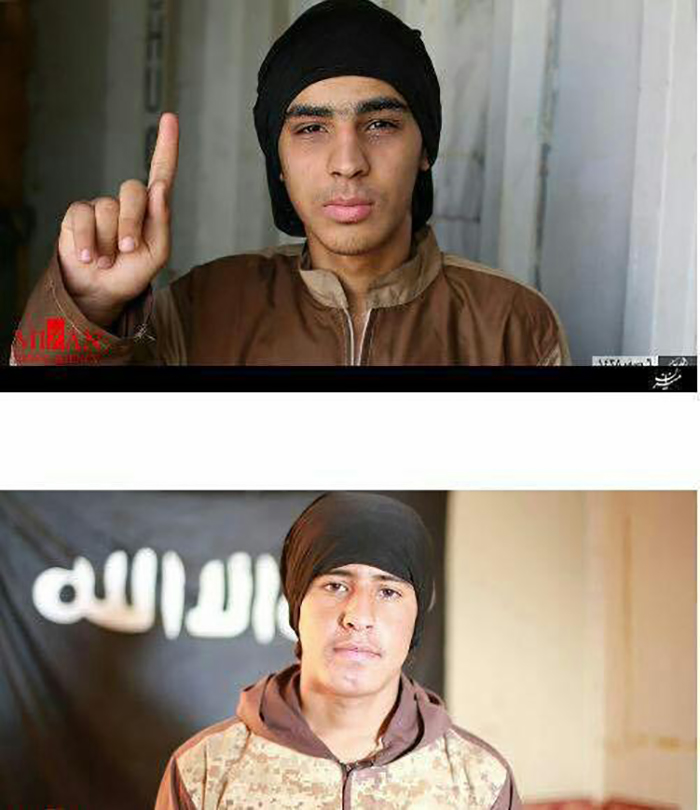
Meanwhile, the ISIS terrorist group, which claimed the responsibility for the attacks, has published the photos of the two suicide attackers. Here are the photos, released by Mizan:

Terrorist

Iran’s Zarif Hold Talks with Swedish Deputy FM in Tehran

zarif

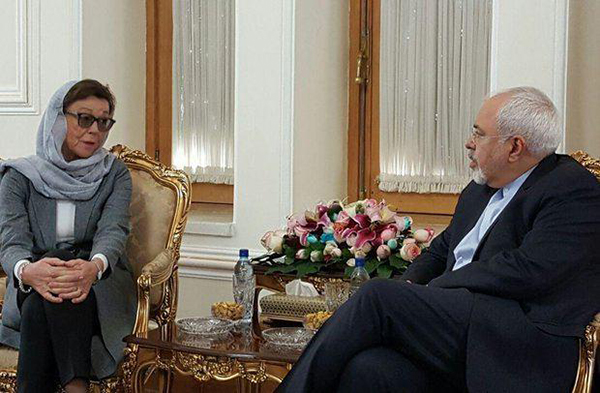
Annika Söder, the State Secretary to Swedish Minister for Foreign Affairs Margot Wallström, is in Tehran at the head of a political delegation.

During her meeting with Foreign Minister Zarif on Monday morning, the two sides highlighted the need for expansion of bilateral ties, and conferred on the most pressing regional and international developments.

The two diplomats further exchanged views on sending humanitarian aid to war-torn countries.

According to Sweden’s Ambassador to Tehran Helena Sångeland, the Scandinavian country will make a ministerial visit to Tehran in December, which includes a business delegation.

A high-level delegation will also travel to Iran at the beginning of next year to discuss bolstering of commercial ties, as reported by Mehr and edited by IFP.

Iran Makes History at FIE Saber World Cup

FIE Saber World Cup

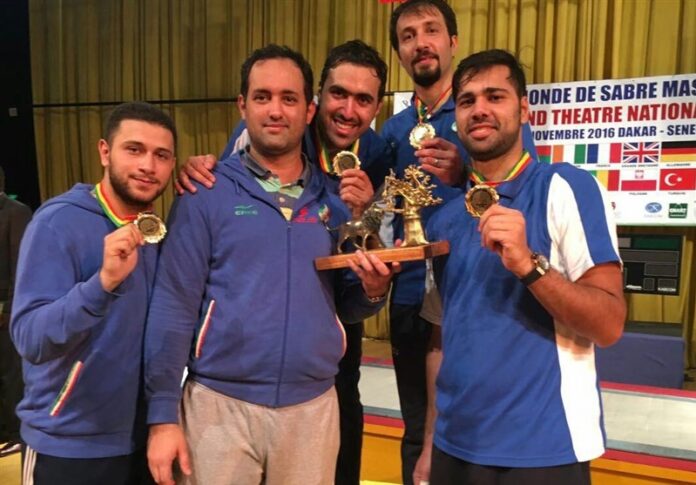
It’s the first time the Persians claimed the title in the competition.

South Korea came third after beating Hungary 45-40 in this competition which began on Friday.

Iran started the campaign with a 45-22 victory over Japan and edged USA 45-44 in Round of Eight.

The Iranian team also defeated South Korea 45-35 in the semi-final.

Twenty teams took part in the World Cup saber at the Grand Theater in Dakar, Senegal.

After the stage of Dakar, the teams will travel to Budapest (Hungary), Padua (Italy), Warsaw (Poland) and Madrid (Spain).

The winning team of the World Cup is named after these five steps, say the organizers.

ISIS Launches Chemical Attack in Iraq’s Mosul

isis

ISIS on Sunday fired mortar shells containing chemicals at positions of Iraqi troops who are advancing against the terrorist group in Mosul, Sky News Arabia said on Sunday, citing Kurdish sources.

The report added that the Takfiri group had also deployed small drones carrying chemical explosives to blow up the government troops.

On Sunday, the commander of Nineveh Liberation Operation, Lieutenant General Abdul Amir Yarallah, said in a press statement on Sunday that the 9th armoured division of the army had recaptured the village of al-Razaqiyah, and raised the national Iraqi flag over a number of buildings there.

Yarallah added that Iraqi government forces inflicted heavy losses on the ISIS forces during heavy clashes with the Takfiri militants.

Iraqi soldiers also established control over the village of Hawijah al-Hassan south of Mosul, located some 400 kilometres north of the capital, Baghdad.

Additionally, ISIS terrorists executed seven fellow extremists in central Mosul on charges of fleeing the battlefield. An informed source, speaking on condition of anonymity, told Arabic-language al-Sumaria television network on Sunday that the ISIS terrorists were decapitated with blunt knives as their hands and legs were cuffed.

The source added that the slain militants were accused of escaping clashes with Iraqi army soldiers and allied fighters from the Popular Mobilization Units in Kokajli district, which lies east of Mosul.

Iraq’s Joint Operations Command also announced in a statement that ISIS official in charge of military affairs, identified as Mohannad Hamed al-Makani but better known by the nom de guerre, Abu Aisha al-Bilawi, and a number of his foreign aides have been killed in an Iraqi Air Force strike against Yaramjah neighbourhood of Mosul.

Moreover, Iraqi army soldiers destroyed three cars rigged with explosives in Awizah village, and cut ISIS supply lines in the al-Sadah district north of Mosul.

The developments came a day after five high-ranking commanders of the ISIS terror network stole millions of dollars from the group and fled to neighbouring Syria.

Al-Sumaria television channel reported that the quintet, among them a militant identified as Abu Bara Kakhtani and responsible for the group’s treasury affairs, has left Mosul for the city of Tal Afar, situated 63 kilometres west of Mosul, and are planning to take refuge in the small town of Ba’aj next and Syria eventually.

The ISIS leadership has ordered a search operation to find the commanders and execute them.

After months of preparation, Iraqi army soldiers, backed by volunteer fighters and Kurdish Peshmerga forces, launched an operation on October 17 to retake the strategic northern city of Mosul from ISIS terrorists.

So far, a large number of villages and districts around the city, located 400 kilometres north of Baghdad, have been purged of the extremists.

Iraqi Prime Minister Haider al-Abadi has vowed that Mosul, once Iraq’s second largest city before ISIS militants overran it in June 2014, will be fully recaptured by year-end.

Egypt Dismisses Reports on Oil Minister’s Visit to Iran

Tarek El Molla

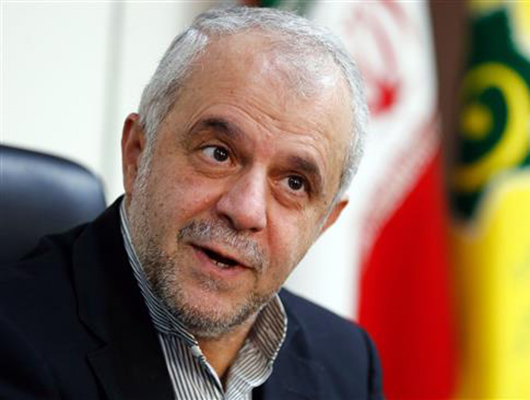
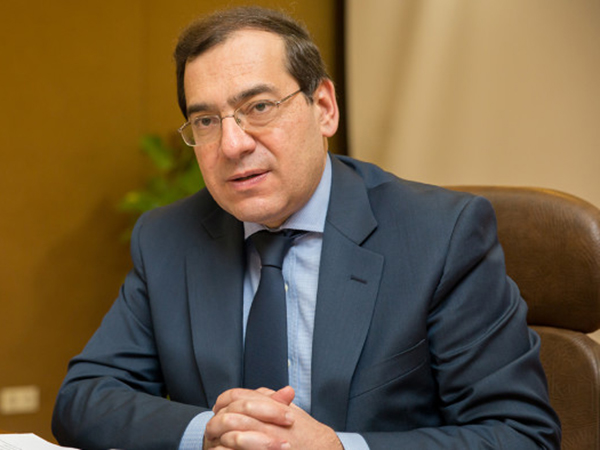
Egypt’s Petroleum Minister Tarek El Molla was reportedly on his way to Iran on Sunday to meet with senior officials and try to secure a new oil agreement, according to Reuters, which cites sources “close to his delegation” and another individual who allegedly accompanied the minister to Cairo International.

This was, however, denied by the ministry’s spokesperson Hamdy Abdel Aziz who told Al Masry Al Youm that El Molla left to attend a two-day energy summit in Abu Dhabi where he is expected to promote investment in the industry. The wire had framed the alleged Iran visit as part of the fallout of Aramco’s delay in October fuel shipments.

On that front, future fuel shipments from Saudi Aramco are still in question, but the agreement has not been cancelled, Abdel Aziz told the newspaper, as reported by Enterprise and covered by IFP.

Another source with whom Al Mal spoke claims it is unlikely that Aramco will deliver the shipment slated for November.

Abdel Aziz said the ministry has contracted sufficient gasoline and diesel shipments to meet domestic demand for November; the ministry should have locked in December supplies by the middle of this month, he said.

Reuters had claimed that El Molla has decided to sign a contract with Iran after Saudi Arabia suspended its oil agreement last month.

After that suspension, Egypt voted in favor of a Russian-backed UN resolution on Syria in October that excluded calls to stop bombing Aleppo, which Saudi Arabia strongly opposed.

Saudi Arabia has showered Egypt with billions of dollars in aid since 2013, when President Abdel Fattah al-Sisi ousted elected Mohammed Mursi of the Muslim Brotherhood and banned the movement, which Riyadh opposes.

The Saudi deal was for 700,000 tonnes of oil products a month for five years under a $23 billion deal between Saudi Aramco and the Egyptian General Petroleum Corporation (EGPC) to be paid off over 15 years.

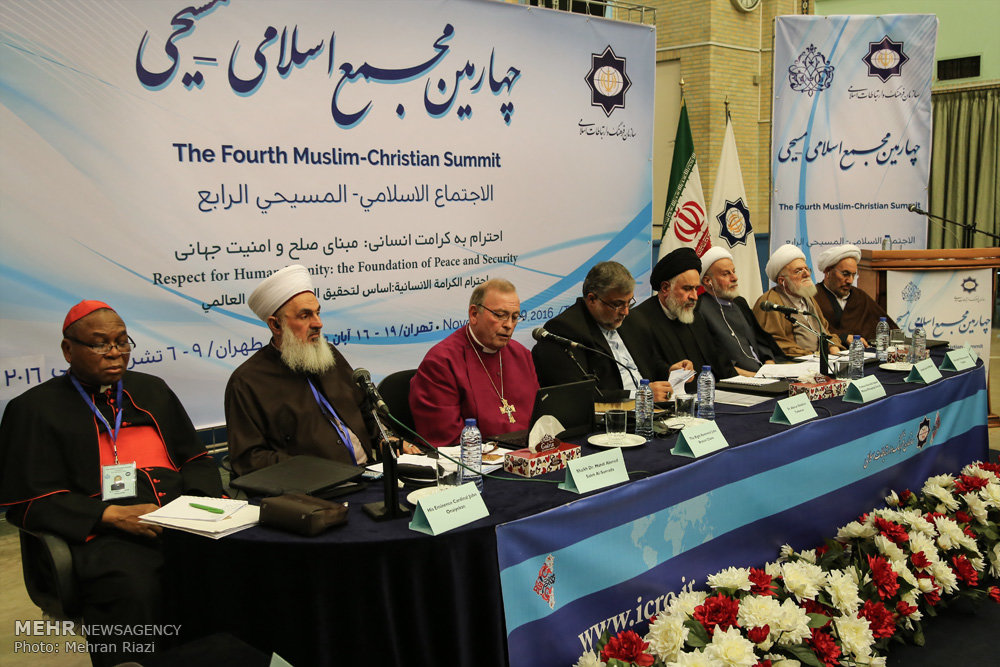
4th Muslim-Christian Summit Underway in Tehran

Muslim-Christian Summit

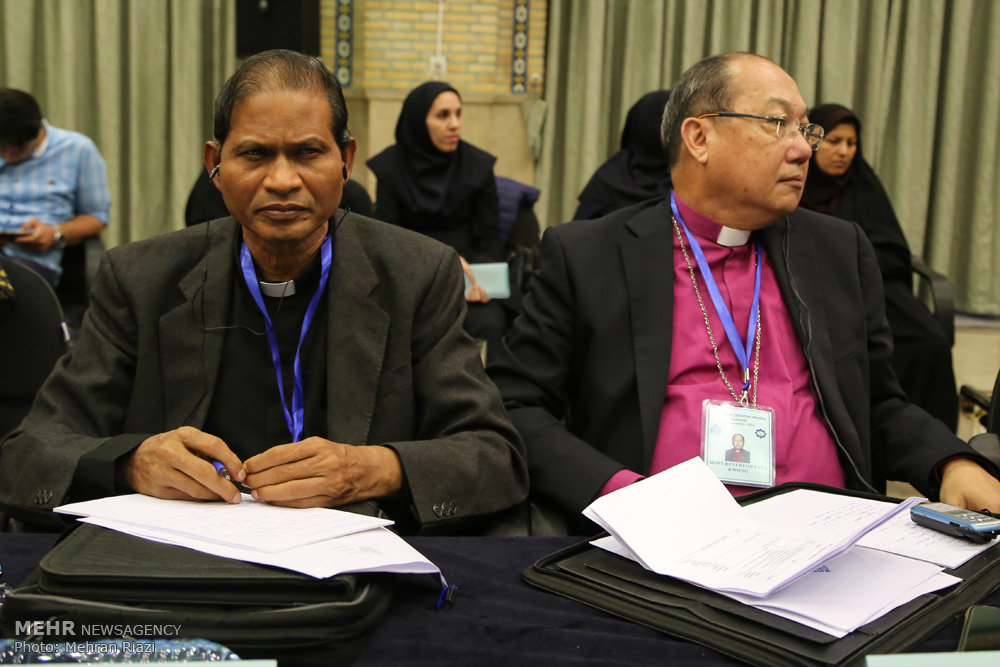
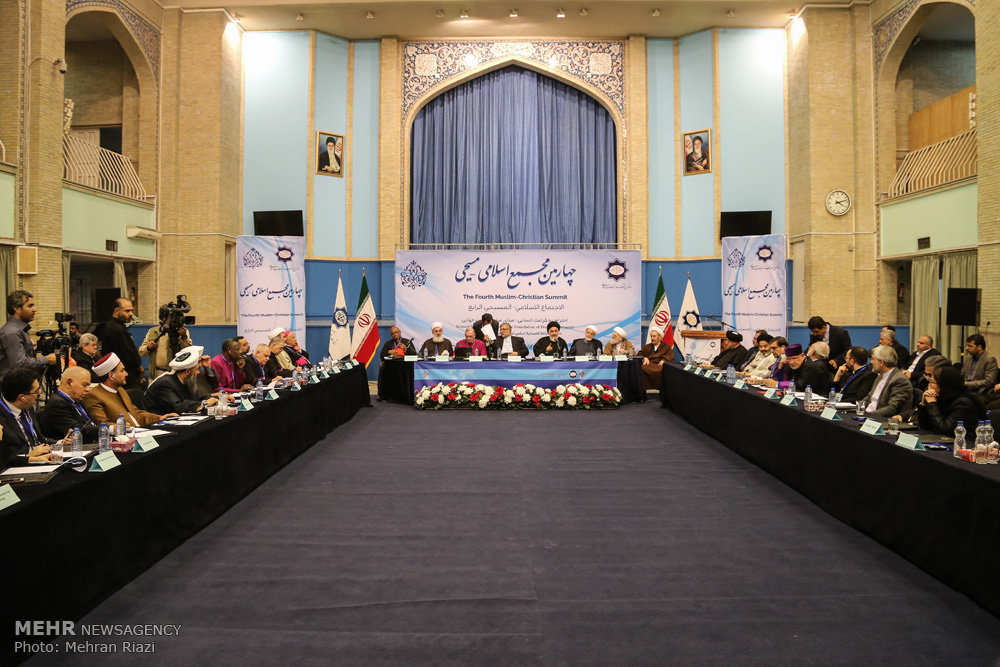
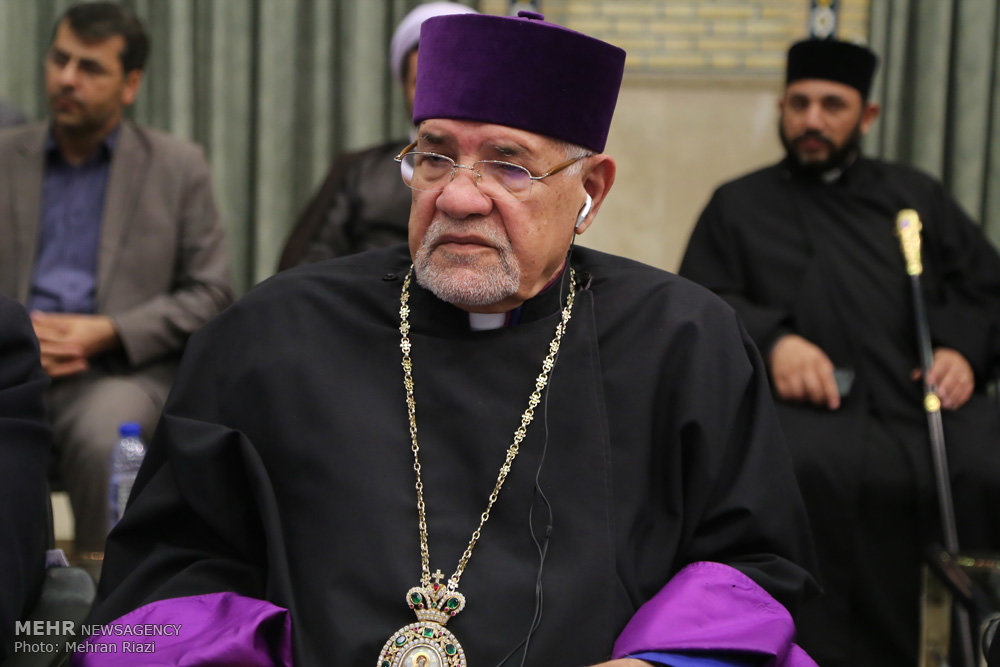
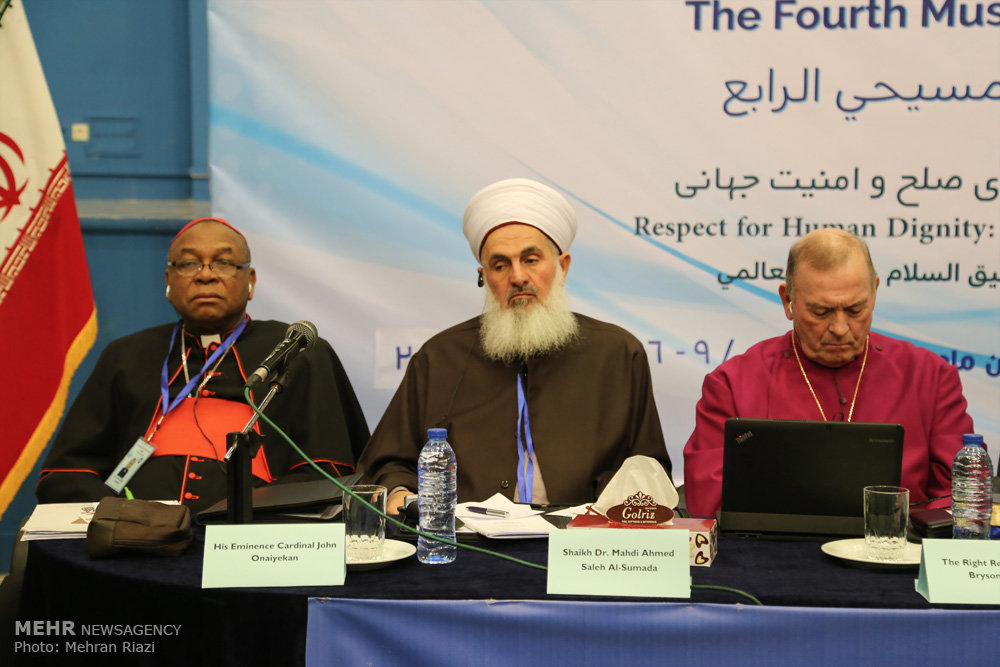
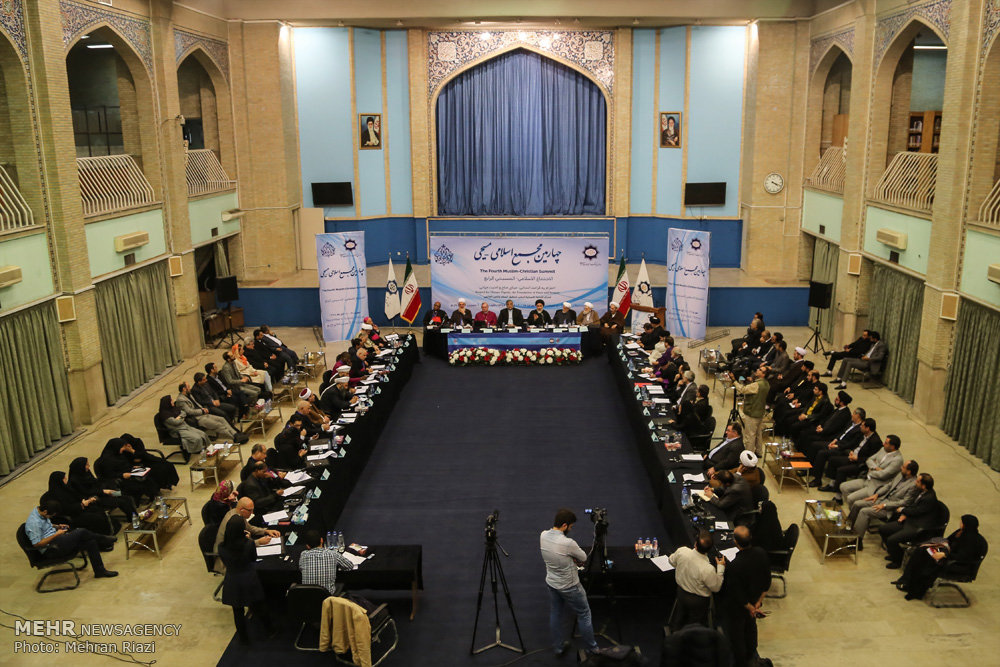
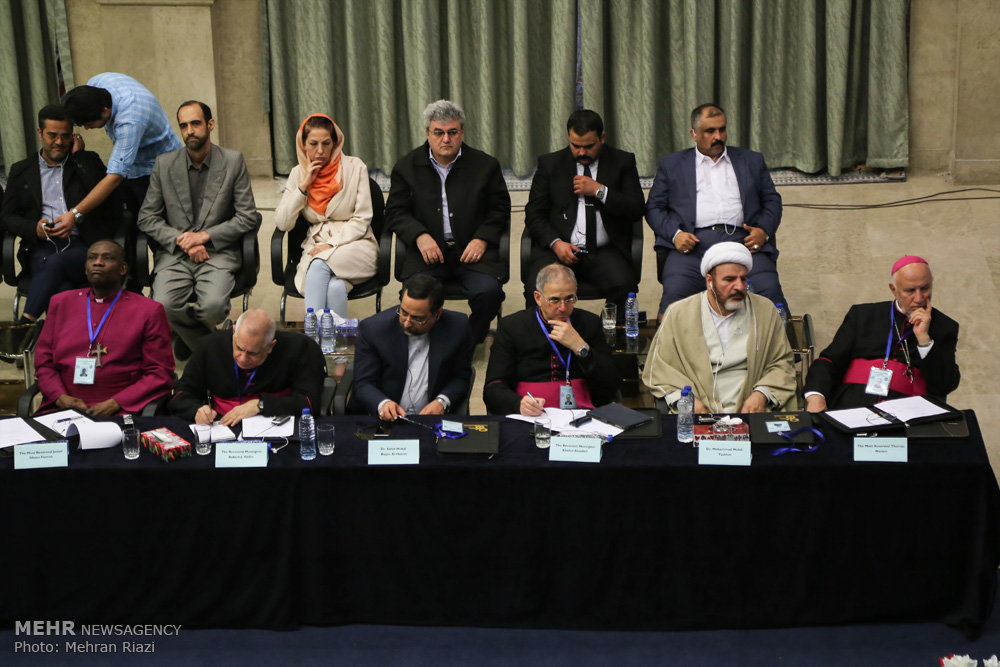
Representatives of Shiite and Sunni Islam as well as Catholic and Anglican Christianity gathered in the 4th Christian-Muslim Summit kicked off on Sunday in Tehran.

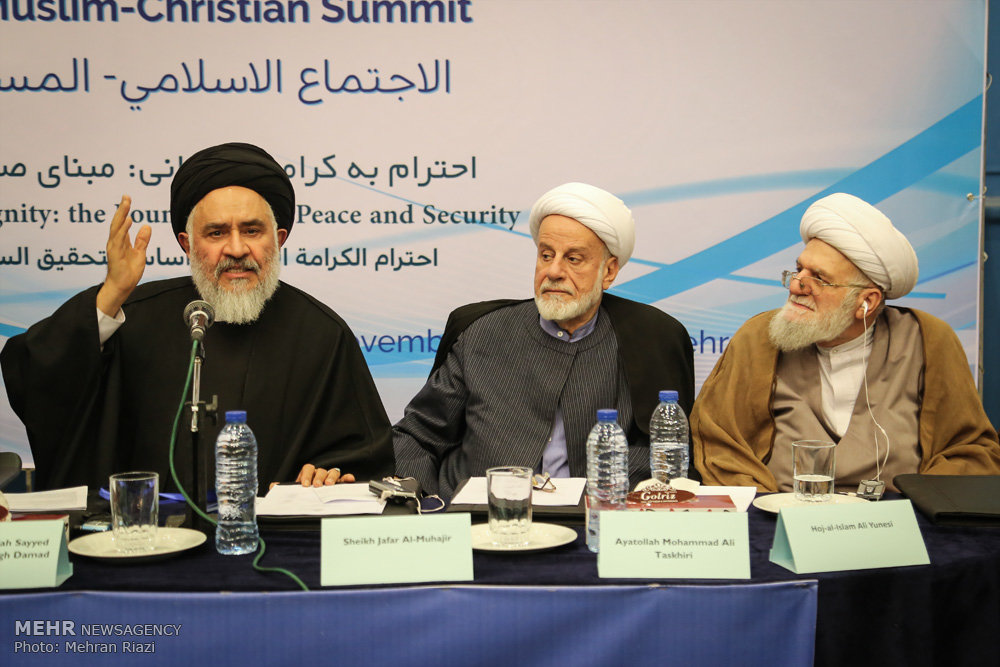
According to a report by the official website of Iran’s Islamic Culture and Communication Organization, the summit started its work with the motto ‘Respect for Human Dignity: the Foundation of Peace and Security’.

The opening ceremony was attended by Ayatollah Taskhiri, an advisor to the Leader of the Islamic Revolution Ayatollah Seyyed Ali Khamenei and Ali Younesi, who is President Hassan Rouhani’s special aide on ethnic groups and minorities’ affairs.

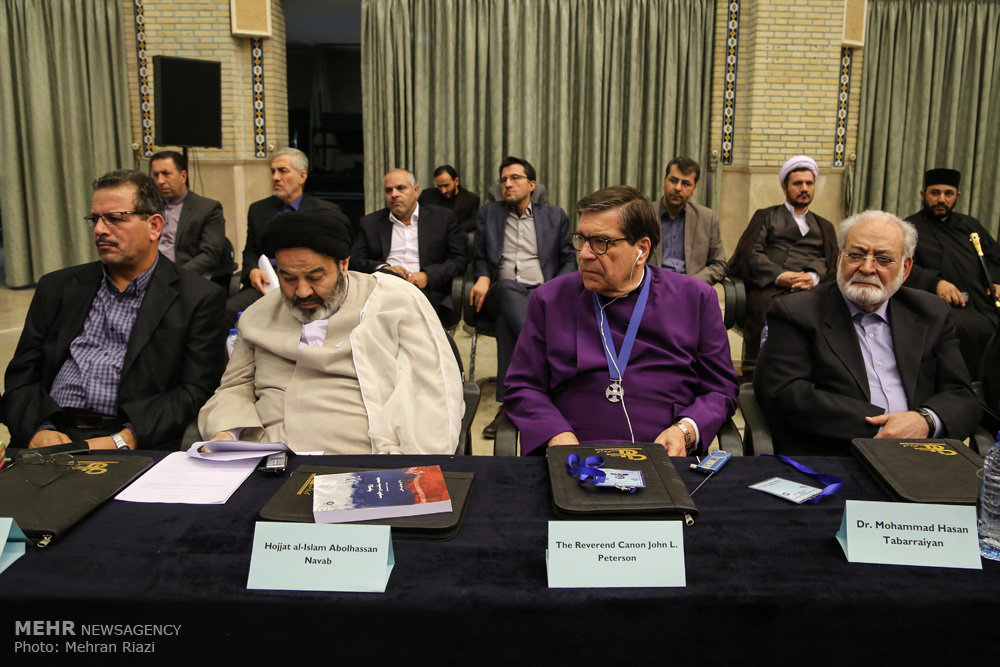
Several thinkers from Iran, Iraq, Lebanon, Nigeria, the US, Switzerland, Vatican, Italy, India, France, Britain, and Hong Kong were also present in the ceremony.

The issues discussed in this summit include “Religious dialogue: A solution to global peace and security”, “Role of family in establishment of peace and security”, “Religions’ solution for countering religiophobia and Islamophobia”, “Role of religions in avoiding violent actions”, “The necessity for cessation of violence in Palestine, Syria, Yemen, Bahrain, and Iraq”, and “The necessity for cessation of support for ISIS, Nusra Front, Al-Qaeda, and other terrorist groups.”

The closing ceremony of the summit will be held on Wednesday, November 9.

The idea of holding Christian-Muslim summits was raised in a 2008 meeting between the Bishop of the Episcopal Diocese of Washington, DC, John Bryson Chane, and the then Iranian president in Tehran.

The first Christian-Muslim summit was held in 2009 in Washington, DC, in the US. The Lebanese capital of Beirut hosted the second summit in 2011 and the third was held in The Vatican in 2014.

Here are Mehr’s photos of the opening ceremony held in Tehran: