Monday, December 22, 2025
Home Blog Page 4259

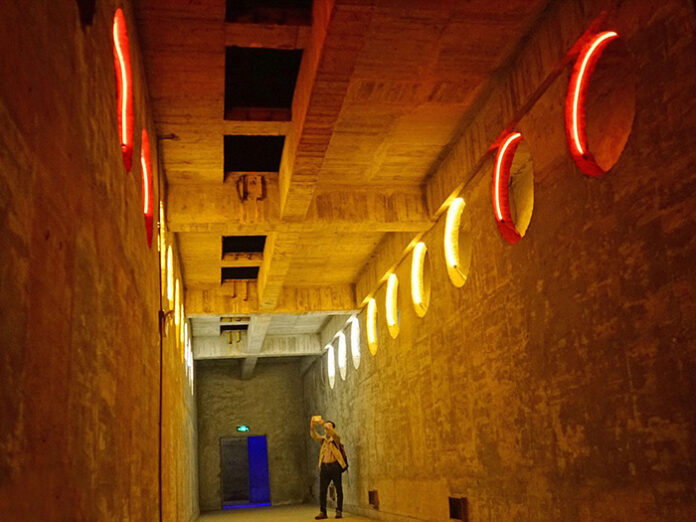
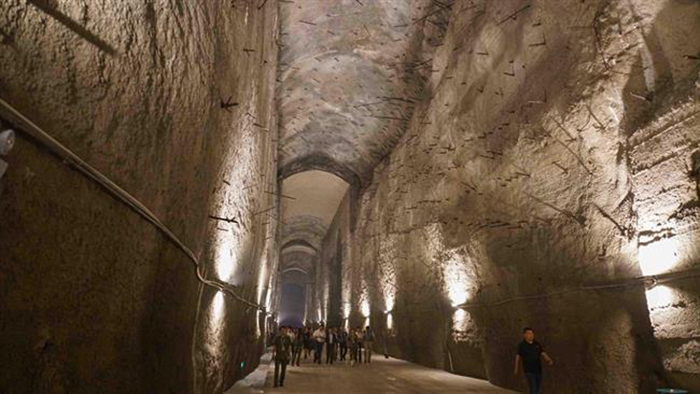
World’s Largest Man-Made Cave Opened to Public

http://ifpnews

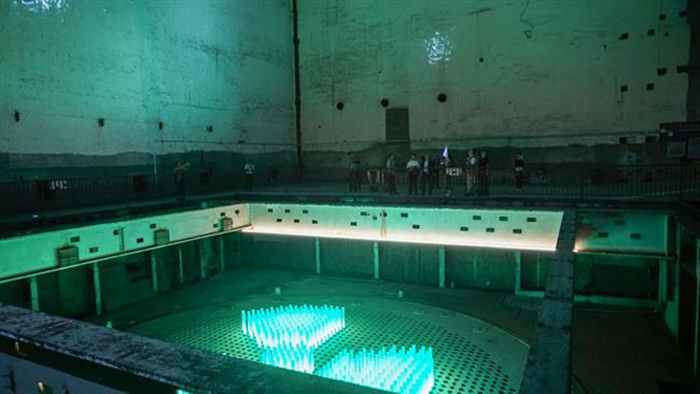
The cave was designed to manufacture plutonium using a nuclear reactor. It was built in the 1960s and over 60,000 soldiers were involved in the project.

largest man-made cave - ChinaNow visitors can explore the vast underground complex including the central computer room and some of the main thoroughfares which have been fitted with light and educational displays.
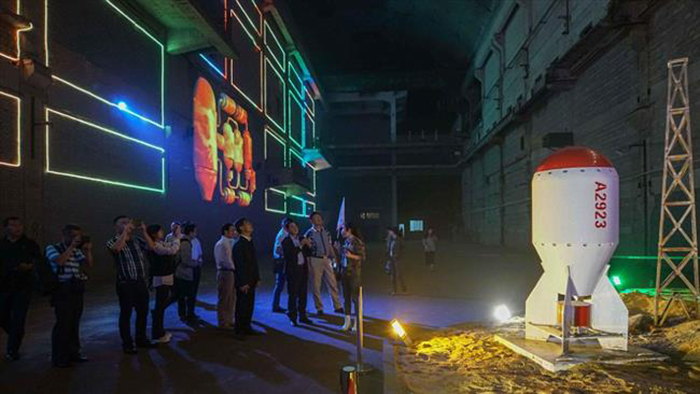
largest man-made cave-ChinaBuilt to withstand an earthquake of up to 8-magnitude on the Richter scale, the project was only declassified in 2002.

largest man-made cave-China

Apple Mistakes Iraqi Man for Saddam Hussein!

Saddam Hussein

According to a report by YJC, as translated by IFP, Sharakat Hussain, 26, had bought the £799 iPhone for his sister last month but returned it after she said she did not want the gift.

photo_2016-10-30_14-08-03The 26-year-old, from Birmingham, was allegedly told that because of the large amount, he’d receive the money through a bank transfer.
But after waiting for weeks, he still hadn’t received the money.

Eventually, he received an email from the tech giant and was stunned when they allegedly asked him to prove he was not the deceased Iraqi dictator.

He was then told by an admin worker that due to his surname, he could be on a Government’s Denied Parties list, which meant he wasn’t allowed to be sold an iPhone.

Sharakat, a father-of-two, told the Sun, ‘I thought the email was spam, I was stunned to learn it was real. I was furious to be linked to Saddam.’

Saddam Hussein was hung in Iraq in 2006, but for some reason, staff at Apple still managed to mix the two up.

The company have reportedly promised to sort out the refund.

Saudi Officer Gunned Down in Eastern Province

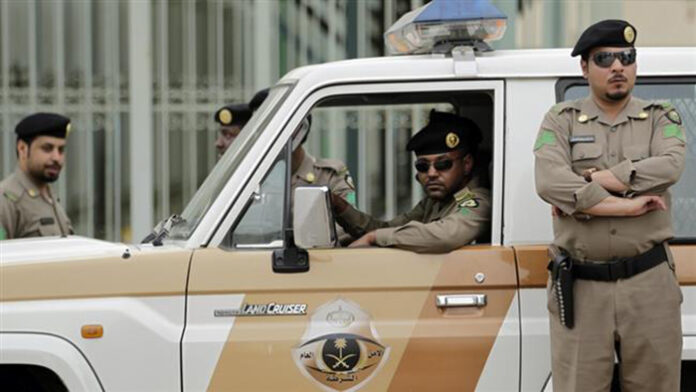
Saudi police officers

The attackers fired shots at the vehicle in the district’s al-Majidiah area on Sunday, Saudi Sabq news website reported.

In a similar incident last week, gunmen shot dead two Saudi Arabian security personnel in Dammam, the capital of the Shia-dominated province..

The country’s al-Arabia television network said the officers, who were both killed in the city’s al-Dhabab neighborhood, were driving back home.

Back in September, gunmen had also killed two police officers in Dammam.

The kingdom has witnessed a spate of deadly shootings and bombings targeting security forces or the country’s Shia minority over the past year. The local branches of Daesh have claimed responsibility for many of the attacks.

The Eastern Province has also been the scene of peaceful demonstrations since February 2011.

Protesters have been demanding reforms, freedom of expression and the release of political prisoners as well as an end to economic and religious discrimination against the oil-producing region.

Shiite Volunteer Forces Roll Up Sleeves to Rebuild Liberated Christian Towns

Shiite

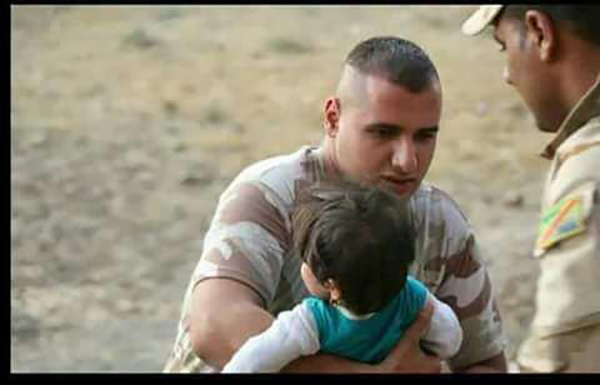
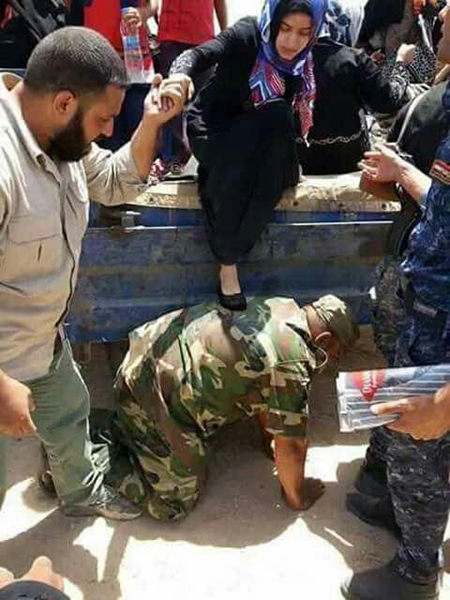
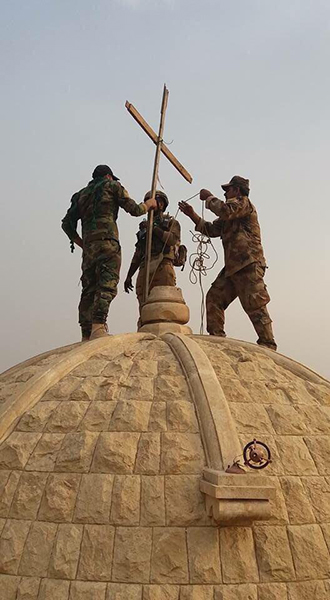
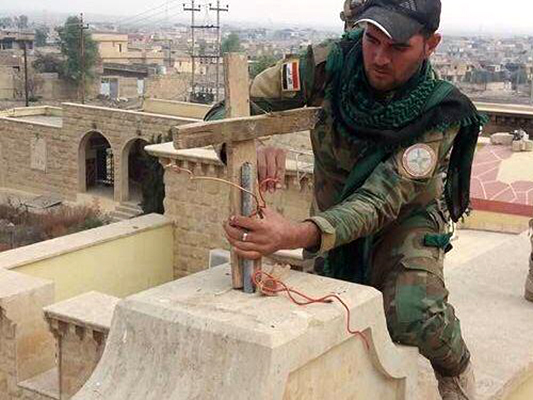
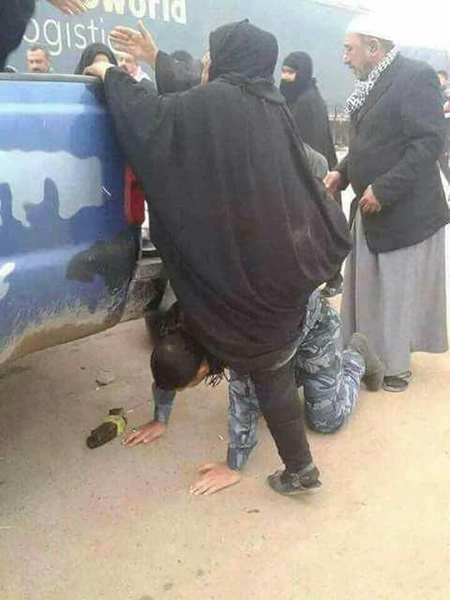
According to a report by News Rescue, as covered by IQNA, Shiite volunteer forces have been seen in several pictures portraying their humanity, helping Christians rescued from the ISIS terrorist group and even restoring Churches broken down by the fanatic terrorists.

The humanitarian move has received huge attention in social media, and several photos and messages have been published about it.

Shuaib Ahmad, a social media user, said in a post in Twitter, “West calls them “Shia militias” but they restore Iraqi Christian churches after battling with Wahhabi ISIS terrorists.”

He went on to say that “This is how Iraqi Shiite army save lives of Iraqi Sunnis and Iraqi Christians from Sunni /Salafi /Takfiri ISIS terrorists.”

Here are photos of these Shiite forces helping Christians:


Pilot Cuts Flight Time to Save Afghan Worker’s Arm

Aseman Airline

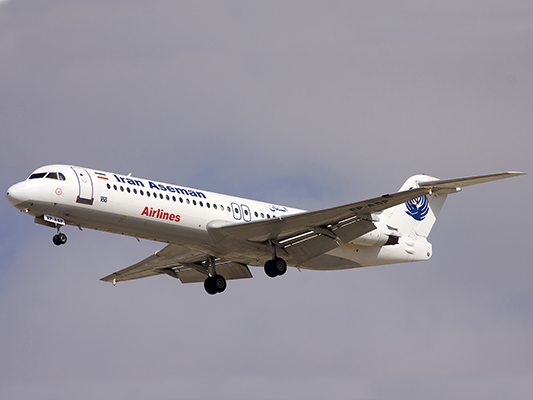
According to a report by Fars, as translated by IFP, the aircrew of Mashhad-Ahvaz Flight No. 3883 of Aseman Airline on Friday successfully reduced the flight time by landing in the southern city of Shiraz to replant Mozaffar Soltani’s severed hand.

Soltani, an Afghan construction worker, had his arm completely cut off by a concrete mixer where he was working a few hours earlier and must have been rushed to the Shiraz Hospital for replantation.

A surgical team, led by Dr. Liaghat, carried out the procedure at Ordibehesht Hospital in Shiraz, after they received the patient 20 minutes earlier than expected thanks to Captain Izadi, the pilot, and his crew members’ efforts to deliver the patient in the golden time for replantation.

Dr. Liaghat said shortly after the operation that the patient’s conditions were satisfactory.

Soltani is being recovered and will soon be able to use his hand again.

Washington’s Anti-Iran Efforts Are Because US Doesn’t See Itself Beneficiary

Iran to Join FATF

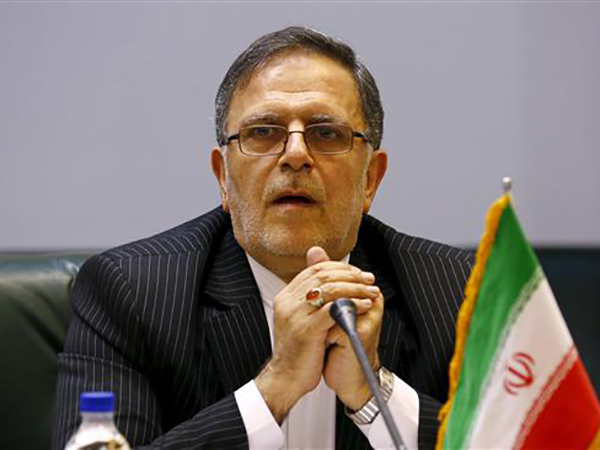
Valiollah Seif, the chancellor of the Central Bank of Iran (CBI), said this has made the US behave differently from other parties involved in a nuclear deal they signed with the Islamic Republic last year.

The deal between Iran and the five permanent members of the Security Council plus Germany – the so-called P5+1- came into effect in January. It envisages certain steps by Iran to limit its nuclear energy activities in return to moves by the P5+1 to lift certain economic sanctions against the country.

“The P5+1 want to increase the level of their trade activities with Iran after the implementation of the deal,” Seif told a top Chinese banking delegation.

“They are interested in using the opportunities that investing in Iran provides them so as to have a stronger access to regional markets.”

This is while, he said, the US is not interested in the prospects for the expansion of trade ties between Iran and other countries, particularly its own peers in the P5+1.

The US maintains a series of primary sanctions against Iran which are effectively discouraging businesses from approaching Iran over fears that they may face hefty fines by Washington.

At the heart of punitive measures still in place by the US are strong restrictions against dollar-based transactions involving the Islamic Republic.  This has already prompted complaints from Tehran as a manifestation of how America is failing to properly implement its share of the nuclear deal with Iran.

Saudi Strikes Meant to Break Down Yemenis’ Resistance: Iranian Diplomat

Jaberi-Ansari

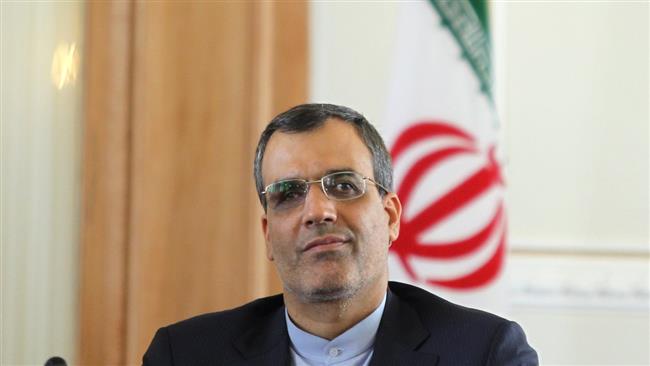
“Saudis’ attacks on Yemeni civilians and infrastructures are a deliberate move in order to break down resistance of the country’s people,” Jaberi Ansari said in a meeting with Switzerland’s State Secretary in the Federal Department of Foreign Affairs Yves Rossier in Tehran on Saturday.

He also pointed to the alleged shooting of missiles at a US Navy destroyer in the Red Sea off the coast of Yemen, saying, “It is possible that the move was carried out by the opponents of the Sana’a government with the aim of preparing the ground for the US military intervention in Yemen.”

US officials said the USS Mason, which was accompanied by the USS Ponce transport dock, came under a missile attack as it was operating north of the Bab el-Mandeb Strait on October 12.

However, none of the missiles hit the ship or caused any damage, the officials added, claiming that the attacks were launched from a territory in Yemen controlled by the Houthi Ansarullah fighters.

Saudi Strikes Meant to Break Down Yemenis' Resistance: Iranian Diplomat

An unnamed military official allied with the Houthi movement rejected as “baseless” the US claims, saying Pentagon’s accusations were an attempt to provide a pretext for the intelligence and logistics support it has provided to Saudi Arabia in its military campaign against Yemen.

“Such claims aim to create false justifications to step up attacks and to cover up for the continuous crimes committed by the Saudi coalition against the Yemeni people,” said the Yemeni official.

Jaberi Ansari further stressed the importance of maintaining security across the Bab el-Mandeb Strait.

“Security of the international waterway of Bab el-Mandeb Strait is important for us and must be respected by all sides,” the Iranian official said.

He also called for serious talks in Yemen by observing the rights of all the warring sides.

Saudi Arabia has been waging war on Yemen since March 2015. The war was launched in an unsuccessful attempt to reinstate Abd Rabbuh Mansur Hadi, who has resigned as Yemen’s president.

The war has killed at least 10,000 people, amid countless reports suggesting the deliberate and indiscriminate targeting of civilian infrastructure by Saudi forces and mercenaries.

The Swiss official, for his part, said the Yemeni crisis must be solved through political approaches.

Rossier is in Tehran to hold talks with senior Iranian officials on the latest developments in the Middle East, particularly in Yemen, Syria and Iraq.

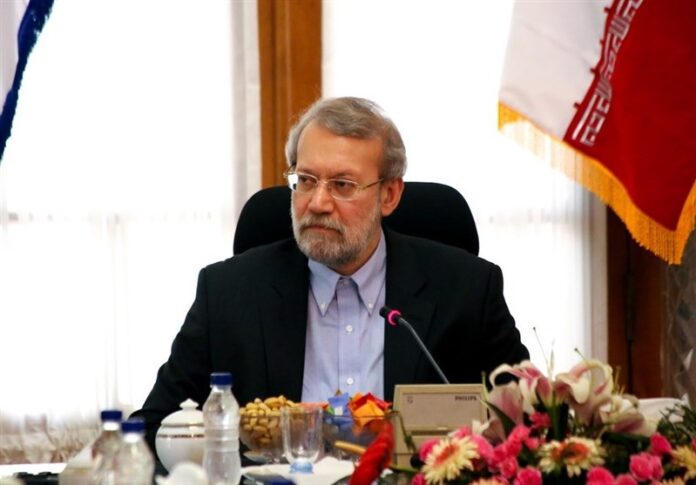
Conflict, Terrorism in Mideast Serving Israel: Larijani

Ali Larijani

“The [critical] situation and chaos in the region has been created by a number of terrorists and the enemy does not want this chaos to end,” Larijani said on Saturday.

He added that all Muslim countries, including Syria, Yemen and Iraq, are entangled in conflicts and only the Israeli regime benefits from such a chaotic situation.

He noted that even American and Israeli experts and strategists have confirmed that the current conflicts in the Muslim world best serve the interests of the Zionists and that any success by Iran and the Lebanese resistance movement, Hezbollah, would be detrimental to them.

The top Iranian parliamentarian added that whenever promising prospects emerge for putting an end to the regional conflicts, the world powers rush to hold meetings and try to prolong the crises.

He said these powers have reinforced their links with terrorist groups operating in regional countries and are covertly providing them with weapons and military equipment.

Since March 2011, Syria has been hit by militancy it blames on some Western states and their regional allies. The Syrian military is engaged in an operation to rid the country of Daesh and other terrorist groups.

Over the past months, Syria has managed to recapture swathes of land from Daesh and other groups in the east and north of the country. The Syrian military has used the assistance of fighters from Hezbollah as well as advisory military support from Iran. Russia also helps Syria in the fight against terrorists through a series of coordinated airstrikes on their positions.

This is while Iraqi army troops, backed by fighters from allied Popular Mobilization Units, have been engaged in military operations to win back regions held by Daesh and have managed to liberate most of these areas.

The militants have been committing heinous crimes against all ethnic and religious communities in the northern and western parts of Iraq.

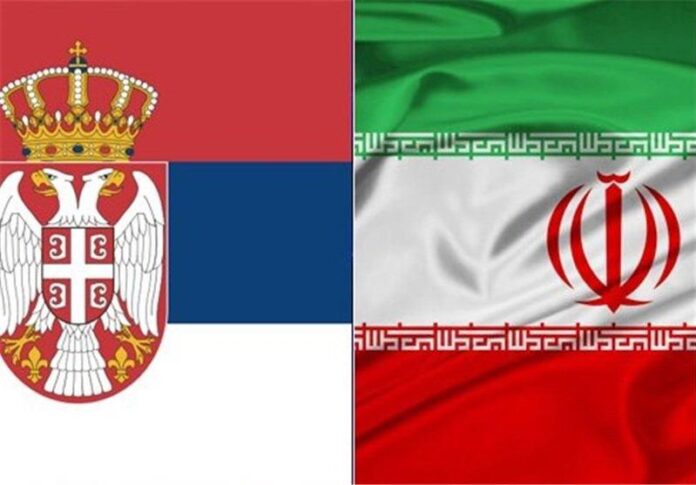
Major Steps Taken for Enhancement of Iran-Serbia Cooperation

Iran Serbia flags

Deputy Prime Minister of Serbia and Minister of Trade, Tourism and Telecommunications Rasim Ljajić, held talks with Iranian Ambassador to Belgrade Majid Fahimpour in the Serbian capital on Friday, where the two sides highlighted expansion of cooperation, particularly in the fields of tourism and agriculture.

The establishment of Iran’s Trade Center in the Balkans and Serbia’s Tourism and Trade Information Center in Tehran were the other topics of discussion between the two sides.

Ljajić expressed readiness for holding the 15th Iran-Serbia Joint Economic Commission’s meeting, which is due in February 2017 in Belgrade, and voiced the country’s interest in restoring the level of trade transactions between the two countries to the point it was during the former Yugoslavia.

In the 14th Iran-Serbia Joint Economic Commission that was held last year in Tehran, the two countries signed four MoUs and expressed satisfaction with the outcomes of the meeting, as reported by Mehr and edited by IFP.

According to the Serbian deputy PM, drafts of a number of other MoUs for cooperation are being prepared to be signed during the 15th Joint Economic Commission’s meeting.

The two sides also highlighted the need for establishing direct flights between Tehran and Belgrade in a bid to encourage businessmen and tourists to make more trips between these two countries.

Healing Substance Discovered in Remote Cave

cave

According to a report by IRNA, as translated by IFP, Mousa Dehghannezhad, head of the Environment Department of Saravan in southeastern Iran, announced that his team has found a substance called Mummia in a remote cave.

He said that there were a lot of rumours going around on the social media about the existence of an unknown animal in Kalehgan County.

“The rumours had caused panic among the indigenous people so we searched the entire area immediately.”

“The searching process took us two days but to no avail,” Dehghannezhad said

Instead, he added, “we discovered a cave with an entrance as high as two metres and as wide as 70cm. Inside the cave was 8 metres high and one metre wide.”

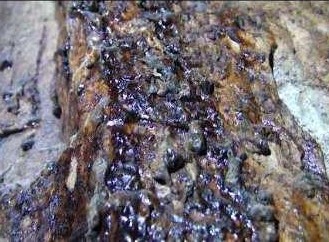
He noted that right from the beginning they noticed a strong smell in the cave. After further investigations, it came out to be from a substance named Mummia.

“All over the place, from ceiling to the walls, was covered with this miraculous substance,” Dehghannezhad stressed.

He went on to say, “Mummia is often found in remote, inaccessible areas; it oozes out from the fractures inside the caves where sunlight never reaches.”

Dehghannezhad added that the cave is located in the north of Kalehgan County in zero point border area.

Mummia is a blackish brown substance that leaks out spontaneously from the cracks and fractures found in the vicinity of underground oil reserves and high mountains.  It has many health benefits such as healing bone fractures, treatment of stomach ulcers, bruises and tendons, joint pain, cardiovascular disease and sexual dysfunction.

Animals, too, make use of this substance to heal injuries on their bodies.

Kalehgan County which is located 347 km southeast of Zahedan, the capital of Sistan and Baluchestan Province, is bordered with Pakistan.