Sunday, December 28, 2025
Home Blog Page 4232

Muslim World Today Is Far from Ideal Conditions: Iran’s Larijani

larijani

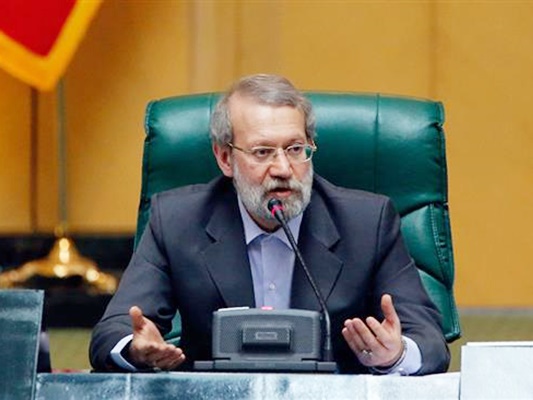
“We have to admit that the Muslim world today is far from the ideals outlined by our prophet and Imam Reza (AS) [the eighth Shiite Imam],” Larijani said, according to a report by ICANA, as translated by IFP.

He further criticized the Wahhabi ideology promoted by Saudi Arabia for tarnishing the image of Islam, and said, “Instead of trying to understand the genuine truth of Islam’s prophetic doctrine, Wahhabism has approached the Islamic mentality and its divine realm in a skin-deep way.”

“Nowadays we need to introduce the essence of Islamic mentality, as it was in our prophet’s doctrine, more than ever,” he noted, mentioning that Wahhabism rises from a superficial doctrine that ignores the philosophic considerations of Islam’s scholars.

Iran’s President and Judiciary Chief Order Action on Deadly Train Crash

Iran Train Crash

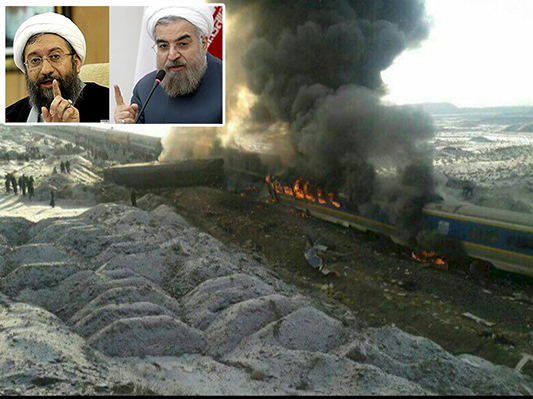
Iranian President Hassan Rouhani and Judiciary Chief Ayatollah Sadeq Amoli Larijani in separate messages ordered action to ascertain the cause of a deadly train crash in the province of Semnan, to find those possibly at fault, prevent the recurrence of such incidents, and provide immediate relief aid for the injured.

In a letter to First Vice-President Eshaq Jahangiri, President Rouhani expressed grief at the loss of people in the Friday’s train crash, including a number of the Islamic Republic of Iran Railways staffers.

He also assigned the responsible organizations, particularly the Roads and Urban Development Ministry, the job of investigating the incident, finding its causes and identifying the individuals possibly at fault.

Moreover, the president called for necessary technical and managerial measures to stop a recurrence of such incidents, Tasnim reported.

President Rouhani further commanded the medical and rescue organizations, particularly the Health Ministry, to do whatever possible to take care of the injured and administer treatment to them.

The Judiciary Chief Ayatollah Amoli Larijani also urged the Chief Justice of Semnan Province to immediately start probing into the issue and prosecute the culprits behind the tragic accident.

Turkey Threatens to Let Migrant Flood into Europe Resume

Erdogan

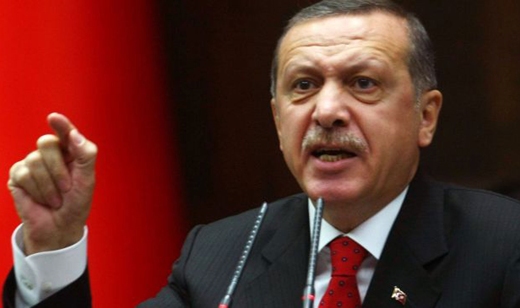
“You did not keep your word,” the president said in a speech here, addressing Europe.

“You cried out when 50,000 refugees were at the Kapikule border,” he said, referring to the border crossing with Bulgaria, one of the busiest in the world even in normal times. “You started asking what you would do if Turkey would open the gates. Look at me — if you go further, those border gates will be open. You should know that.”

According to a report covered by IRNA, Erdogan was referring to an agreement between Turkey and the European Union in which the bloc gives Turkey up to €6 billion (about $6.3 billion) through 2018 in exchange for Turkish cooperation on keeping migrants from crossing into Europe, New York Times reported.

The agreement mandated an acceleration of talks on Turkey’s joining the union, which the European Parliament voted on Thursday to suspend. While the vote was nonbinding, Mr. Erdogan made clear that he was angered by it.

The agreement has been broadly successful in reducing much of the refugee and migrant flow into Europe this year, with crossings from Turkey dropping below 100 a day recently, compared with 2,000 a day before the agreement, which was signed last March.

Iraq Says It Will Participate in OPEC Deal to Cut Output

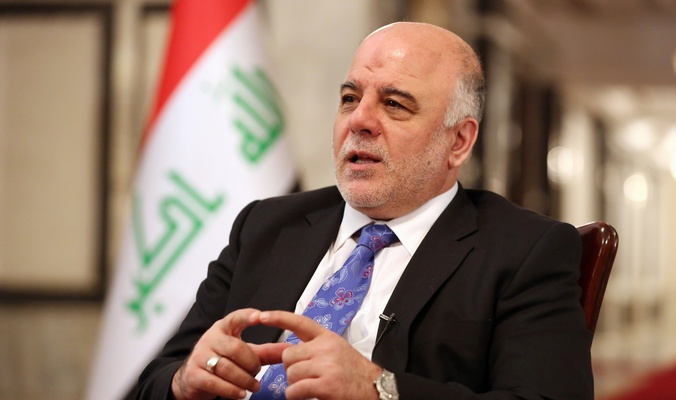
“Iraq will cut its output to preserve prices,” Al-Abadi told reporters in Baghdad. The country wants OPEC to reduce production by a total of 900,000 barrels a day when it meets next week in Vienna because low prices are hurting global investment in the industry, he said.

The premier’s statement could improve the chances that the Organization of Petroleum Exporting Countries will implement its September pledge to reduce crude output to remove a global oversupply and boost prices. OPEC failed to finalize the details of supply curbs Tuesday, largely because of Iran and Iraq’s resistance to making any reductions. The government in Baghdad had argued that it needs all possible resources for its fight against Islamic State.

OPEC agreed on Sept. 28 in Algiers to reduce output to 32.5 million to 33 million barrels a day. OPEC estimates it pumped 33.6 million barrels a day last month, meaning a 900,000 barrel cut would place production in the middle of that range.

A $1 increase in the price of oil boosts Iraq’s revenues by $1 billion a year, Al-Abadi said. “If OPEC cuts down output at 1 million barrels a day, this will help prices to go up and Iraq will make gains from this,” he said, as reported by Bloomberg.

If there’s no agreement to restrict output, the International Energy Agency has said that oil prices are likely to fall in 2017 as the surplus persists. OPEC’s own estimates of supply and demand also show that the Algiers agreement would barely drain a record oil surplus next year without the cooperation of non-members such as Russia, the world’s largest energy exporter. Officials from Kremlin and other non-OPEC nations will meet with the group in Vienna on Nov. 28.

Saudi Arabia, OPEC’s largest producer, has expressed optimism that consensus can be reached to cut supply, although oil prices have been volatile amid speculation that previous demands for exemptions from Iran and Iraq could thwart a deal. Iran has insisted that it should be allowed to restore output to pre-sanctions levels, which it pegs at about 4 million barrels a day.

After rising to a one-year high of $53.73 a barrel last month in the wake of OPEC’s Algiers accord on output cuts, benchmark Brent crude slipped to $48.97 a barrel as of 12:29 p.m. in Singapore on Thursday. Prices remain less than half their level in mid-2014 amid a persistent global oversupply.

Iraq remains capable of paying money due to oil companies operating in the country, Al-Abadi said. “We have talks with these companies, complicated talks, and we cut the finance of unnecessary spending programs” while supporting the continuity of funding necessary to raise oil output, he said.

Cuban Revolutionary Fidel Castro Dies Aged 90

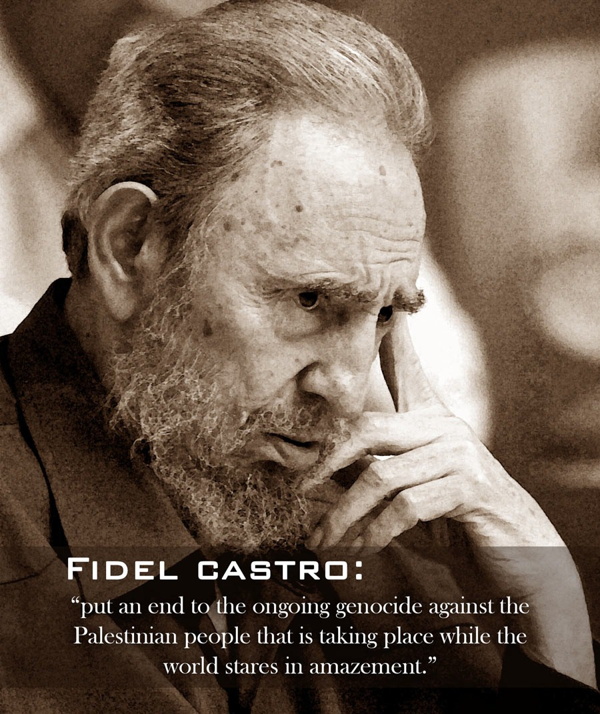
Quotes of global leaders and public figures about the issue of Palestine
Fidel Castro-Quotes-Palestine

“The commander in chief of the Cuban revolution died at 22:29 hours this evening (03:29 GMT Saturday),” President Raul Castro said.

Fidel Castro ruled Cuba as a one-party state for almost 50 years before Raul took over in 2008.

His supporters said he had given Cuba back to the people. But he was also accused of suppressing opposition, BBC reported.

Iran Escorted over 3,800 Ships in Gulf of Aden: Navy chief

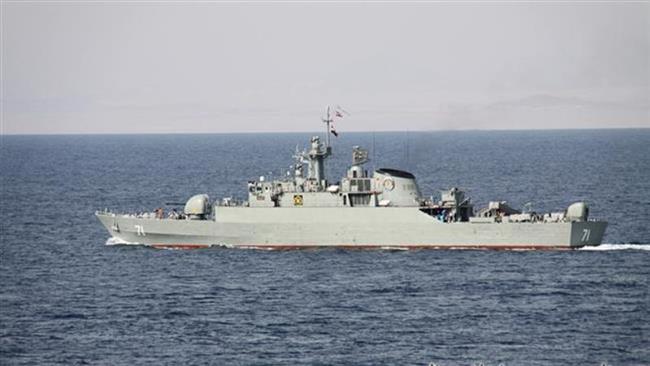
The file photo shows the Iranian Navy’s Alvand destroyer.

“Today, the strength of the Iranian Navy is on display in the high seas by ensuring the security of the country’s maritime routes,” Iran’s Navy Commander Rear Admiral Habibollah Sayyari said in the pre-sermon address to worshipers at the weekly Friday Prayers.

He added that Iran’s coastal areas enjoy full security thanks to the naval forces’ might.

The Navy chief pointed to Iran’s great achievements in defense and military sectors and emphasized that the Islamic Republic does not need any foreign power to supply its required equipment and has successfully conducted different military and naval drills by deploying domestically-manufactured products.

“The Islamic Republic’s fleets are currently present in South Africa’s Port of Durban and the Islamic Republic of Iran’s flag has been raised in the high seas, [including] the Indian Ocean, the Atlantic Ocean and the Mediterranean Sea,” Sayyari pointed out.

He added that Iranian naval forces are powerfully conducting their mission in the high seas to defend the country’s maritime borders and “allow no power to even think about [carrying out] any aggression” against the Islamic Republic.

On November 21, Sayyari said an Iranian naval fleet entered the Atlantic Ocean for the first time after a port call in South Africa.

“For the first time, the 44th flotilla of the Iranian Navy, consisting of the Alvand destroyer and the Bushehr [logistic vessel], succeeded in circling the African continent and have sailed into the Atlantic Ocean,” the Navy chief said.

The dispatch of the 44th flotilla to the high seas shows the naval forces’ might and strength, he said and added that the Iranian Navy has also sent five other fleets carrying the message of peace and friendship to other countries.

In recent years, Iran’s Navy has increased its presence in international waters to protect naval routes and provide security for merchant vessels and tankers.

In line with international efforts against piracy, the Iranian Navy has been conducting patrols in the Gulf of Aden since November 2008, safeguarding merchant containers and oil tankers owned or leased by Iran or other countries.

Iran’s Navy has managed to foil several attacks on both Iranian and foreign tankers during its missions in international waters.

Iran Says Imports of Cars from US ‘Authorized’

cars

Farhad Ehteshamzadeh, the president of Automobile Importers Union of Iran, was quoted by the domestic media as saying that he had made an inquiry to the same effect from the Ministry of Industry, Mine, and Trade.

The Ministry, Ehteshamzadeh emphasized, announced that only imports of cars that have been produced by American brands are banned.

He added that imports of American brands that have been produced in a third country are also forbidden, ISNA news agency reported.

Ehteshamzadeh added that 500 Iranian citizens have imported non-American brands of automobiles, but the Iranian police still failed to register them.  He expressed hope that the related institutions would take note of the announcement of the Ministry of Industry, Mine, and Trade and allow the cars to be registered for use in Iran.

ISNA had earlier reported that the police was failing to register Honda, Toyota, Volvo and BMW cars that had been imported in Iran from the US.

In May, Iran’s media reported that Minister of Industry, Mining and Trade Mohammad-Reza Nematzadeh had ordered a ban on imports of US-made cars into the country.

This followed reports that a cargo of 200 Chevrolet cars was on its way to Iran.

Nematzadeh, the media reported, had moved to stop the cargo after the Leader of Iran’s Islamic Revolution Ayatollah Seyyed Ali Khamenei called for avoiding imports of American products.

Iran and the US have had no diplomatic ties since the 1979 Islamic Revolution.

Iran, Iraq More Determined to Fight Terror: Larijani

hilla-terror

“Terrorists and their supporters must know that the Islamic Republic of Iran will continue with its constructive and effective measures to fight terrorism,” Larijani said in a message on Friday.

“Such crimes will make Tehran and Baghdad more resolved in their battle against terrorism and extremism,” he added.

The top Iranian parliamentarian expressed his sympathy to the families of the victims.

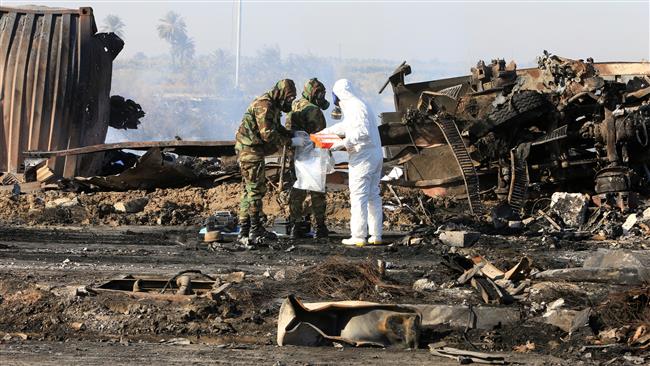
About 100 people, most of them Shia Iranian pilgrims, were killed after explosives placed in a truck were set off at a gas station in the Shomali village in the suburbs of al-Hilla, 100 km south of Baghdad, on Thursday.

The pilgrims were en route back to Iran from the Iraqi holy city of Karbala, where they had attended religious rituals commemorating Arba’een, the 40th day after the martyrdom anniversary of Imam Hussein (PBUH), the third Shia Imam.

Daesh Takfiri terrorist group claimed responsibility for the attack in an online statement.

Terrorists’ brutal acts show desperation: Iran VP

Meanwhile, Iranian First Vice President Es’haq Jahangiri said on Friday that terrorists are conducting savage and brutal measures out of desperation.

“Undoubtedly, such inhuman measures will make the Islamic Republic of Iran’s nation and administration more determined in supporting the Iraqi government and nation in the war against terrorism,” Jahangiri said in a message.

Denouncing the act of terror by Daesh Takfiri group, he said the massive participation of Shia pilgrims in the Arba’een rituals and unprecedented achievements made by the Iraqi Muslims through the unity of people of various ethnicities and faiths in the campaign against Daesh terrorists and their sponsors made the “blood-thirsty terrorists and enemies of Islam” more desperate.

Jahangiri extended his condolences to all Muslims across the world, particularly in Iran.

The latest act of terror by the Daesh Takfiri group came as Iraqi army soldiers and allied fighters have been leading an offensive to retake the strategic Iraqi city of Mosul, the last Daesh bastion in the country, since October 17.

Iran’s President Urges Stronger Action by Iraq after Hilla Terrorist Attack

president-rouhani

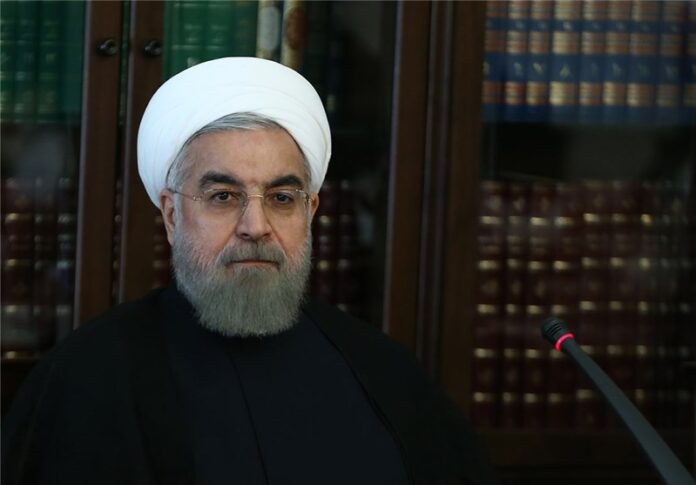
In a message on Friday, President Rouhani decried the brutal attack as sign of the deep sense of frustration that bloodthirsty terrorists feel after the magnificent Arbaeen rituals in the holy city of Karbala, attended by millions of pilgrims.

He also urged the Iraqi government to counter the cruel perpetrators of such inhumane attacks in a more decisive manner, expressing the Iranian government’s preparedness to provide medical assistance for victims of the massive blast.

The president then reaffirmed Iran’s determination to fight off terrorism and extremism.

At least 100 people have been killed and dozens wounded in the suicide truck bomb blast at a gas station near the town of Hilla, 100 km (62 miles) south of Baghdad, on Thursday.

At least 25 Iranians, returning from Arbaeen pilgrimage in Karbala, have been pronounced dead in the attack as of Friday morning.

Daesh (ISIL, also known as ISIS) terrorist group claimed responsibility for the assault.

The gas station has a restaurant on its premises that is popular with travelers. Five pilgrim buses were set afire by the blast from the explosives-laden truck, a police official said.

Iraq’s Joint Operations Command said the vehicle was packed with 500 liters of ammonium nitrate, a chemical compound used in many explosive devices.

Djibouti President Must Stop Acting on Others’ Orders: Iran

Iranian Foreign Ministry Spokesman Bahram Qassemi on Friday urged Djibouti officials to avoid “making any remarks which are basically and fundamentally at odds with existing realities” and instead rely on their “wisdom, defer to unbiased sources and steer clear of the indoctrination of agitators in the region.”

He added that the Djibouti president had better stop rehashing false and baseless remarks made by others and review his one-sided statements through realism and a genuine concern for stability and the interests of regional people.

Qassemi emphasized that such “stances will never help [promote] regional peace and security and solve the Syrian, Yemeni and Bahraini crises in particular.”

The Iranian spokesperson urged Guelleh to “study the history and civilization of the world, particularly the region, more precisely.”

The Djibouti president on Wednesday claimed that Iran has been intervening in the affairs of many Arab countries, including Yemen, Bahrain, Syria and Iraq, inciting sectarian strife and destabilizing peace and stability in these countries.

He also said that Arabs have the right to combat this alleged destructive role played by Iran in the region using various available and possible means.

Djiboutian Foreign Minister Mahamoud Ali Youssouf said on January 6 that the African country has severed its diplomatic relations with Iran, following in Saudi Arabia’s footsteps.

Riyadh cut off diplomatic relations with Iran on January 3, following demonstrations held in front of the Saudi embassy in Tehran and its consulate in the northeastern city of Mashhad by angry protesters who slammed the Al Saud family for the killing of top Shia cleric Sheikh Nimr al-Nimr.