Friday, December 26, 2025
Home Blog Page 4225

Iranian Speaker Hails Castro as 20th Century’s Unforgettable Figure

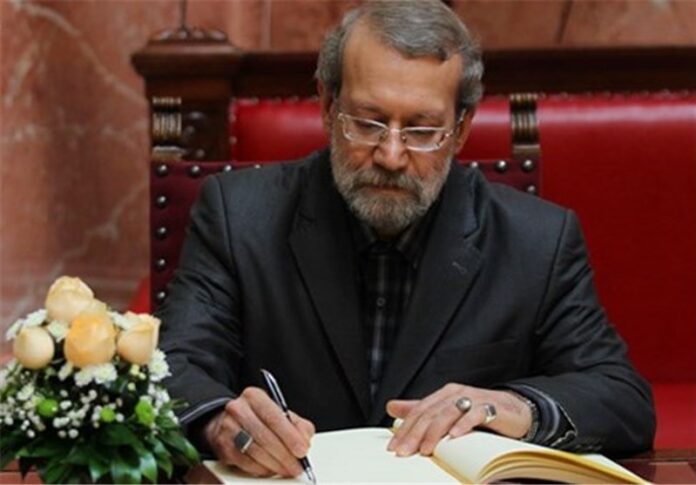
larijani

In a letter to President of Cuba’s Parliament Juan Esteban Lazo Hernandez, the Iranian speaker paid tribute to the late Cuban leader as a revered figure known for his struggle for freedom and fight against colonialism.

Fidel Castro was born in 1926 to a Spanish immigrant father and a Cuban mother. He took power in a 1959 revolution and ruled Cuba for 49 years with a mix of charisma and iron will, creating a one-party state and becoming a central figure in the Cold War.

Castro died on Friday at the age of 90. The Cuban government has announced a funeral for him on December 4. Havana also announced nine days of mourning.

Iranian, Mauritanian Officials Discuss Parliamentary Ties

Hossein Amir Abdollahian

Former Iranian deputy foreign minister Hossein Amir Abdollahian, who is now a special aide to the parliament speaker in international affairs, met with head of Iran-Mauritania Parliamentary Friendship Group Med ould Ahmed ould Vall in Tehran on Sunday.

Highlighting the significance that Iran attaches to ties with African states, Amir Abdollahian said formation of the parliamentary friendship group between Iran and Mauritania contributes to the enhancement of bilateral relations.

Elsewhere, he blamed the Islamic world’s conflicts on the plots hatched by the Zionist regime of Israel and certain international players, describing Palestine as the Muslim world’s overriding issue that should not be put in the shade.

For his part, the Mauritanian official voiced his country’s willingness to broaden relations with Iran, calling for implementation of previous agreements between the two nations.

Ahmed ould Vall also affirmed that the Israeli regime and Western countries are attempting to consign the issue of Palestine to oblivion.

Expansion of relations with African nations in all fields is top on the agenda of Iran’s foreign policy.

Iranian President Hassan Rouhani has repeatedly stressed his administration’s interest in boosting ties with African states.

[:ar]

Leader Urges Iranian Navy’s Stronger Presence in High Seas

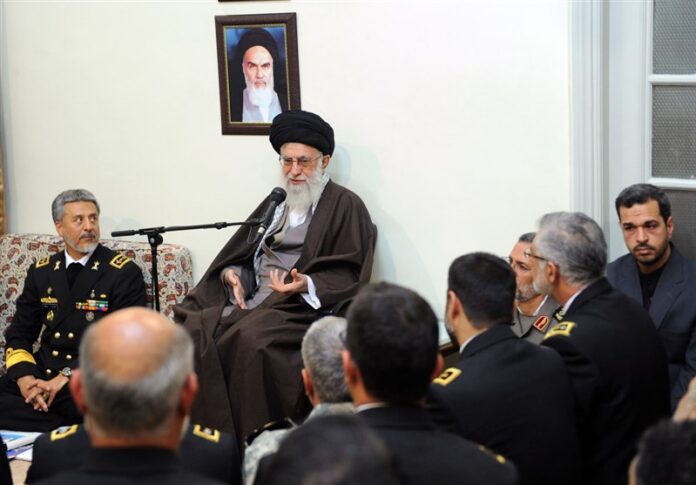
Iran Supreme Leader

“Our country has long maritime borders and a long history of seafaring. Thus, the power and capability of the Islamic Republic’s Navy should be in line with the merit and level of the Islamic Establishment and the country’s history,” Ayatollah Khamenei said Sunday in a meeting with the Navy’s commanders and officials on the occasion of the national Navy Day.

Ayatollah Khamenei described the Navy’s mighty presence in international waters as a factor that contributes to the strength and capability of the country, stressing that the depth of such presence should be increased.

In recent years, Iran’s naval forces have increased their presence in high seas to secure naval routes and protect merchant vessels and oil tankers against pirates.

Earlier this month, the Navy’s 44th flotilla of warships sailed around the African continent and entered the Atlantic Ocean for the first time.

There are also plans for Iranian Navy vessels to sail across the Atlantic Ocean in the future.

Elsewhere in the Sunday meeting, Ayatollah Khamenei referred to Washington’s plans to renew sanctions against Iran, reiterating that such a move would be a breach of the JCPOA (Joint Comprehensive Plan of Action- a nuclear agreement between Iran and world powers).

The Leader dismissed the notion that it will not be new sanctions but renewal of previous sanctions.

“There is no difference between starting a sanction and restarting it after it expires and the second one also constitutes a violation of previous commitments by the other party (to the JCPOA),” the Leader said.

The comments came after US lawmakers passed a bill on November 15, renewing sanctions on Iran for 10 years.

The House of Representatives voted 419 to one for a 10-year reauthorization of the Iran Sanctions Act, or ISA, a law first adopted in 1996 to punish investments in Iran’s energy industry.

On Wednesday, Ayatollah Khamenei had said that the implementation of the anti-Iran bill will translate into a breach of the JCPOA, warning the US government that Iran would certainly react to it.

“If such extension (of anti-Iran sanctions) is implemented and comes into force (in the US), it will be definitely a violation of the JCPOA,” the Leader said, underscoring, “They (Americans) should know that the Islamic Republic of Iran will certainly show reaction to it.”

Iran’s Railway Chief Resigns over Deadly Train Collision

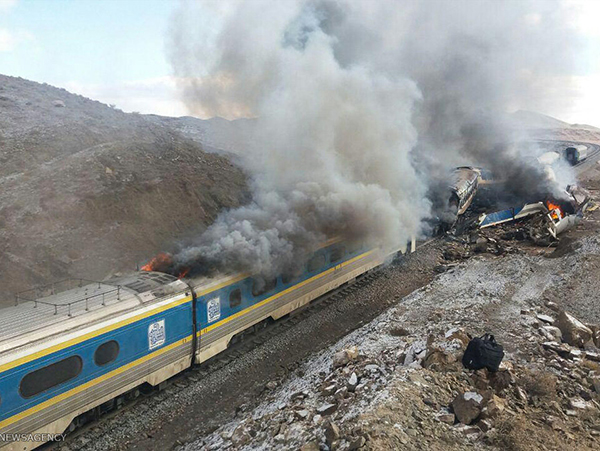
Train Crash in Iran

Speaking to IRIB news on Saturday night, Managing Director of the Islamic Republic of Iran Railways Mohsen Pourseyyed Aqaei said the Minister of Road and Urban Development Abbas Akhoundi has accepted his resignation.

In reaction to the resignation, Hesamoddin Ashna, the cultural advisor to President Hassan Rouhani, said in a post on his Twitter account, “A capable manager disembarked so that the train of public trust would arrive at the desired destination safe and sound.”

Earlier, Iran’s First Vice-President Eshaq Jahangiri had noted that Iranian executives in Rouhani’s administration are ready to resign after major events, even if they are not guilty.

In the meantime, Iranian lawmakers are working on a plan to impeach Akhoundi for what they call his weak performance that led to the terrible train crash, Tasnim reported.

In reaction to the possible impeachment, Jahangiri warned against politicized and partisan reactions to the deaths of Iranian people.


How Did Passenger Trains Collide in Spite of Advanced Automatic Systems?

According to a report by Tasnim, as translated by IFP, Jahangiri noted that the Islamic Republic’s railway system has been equipped with latest safety systems in recent years.

While train is commonly known as the safest means of transportation thanks to Iran’s fully-automatic systems, it should be investigated why the advanced control systems have failed to prevent such a tragic disaster, he added.

The incident’s death toll has risen to 49, while dozens of others were wounded in the crash, which occurred at around 8 a.m. Friday in a mountainous area near Haft-Khan station, on the railroad linking the cities of Semnan and Damghan.

A passenger train travelling between capital Tehran and the northeastern holy city of Mashhad was stopping near the station when another train hit it from behind, setting a number of cars ablaze.

5 Dead in Chopper Crash in Caspian Sea

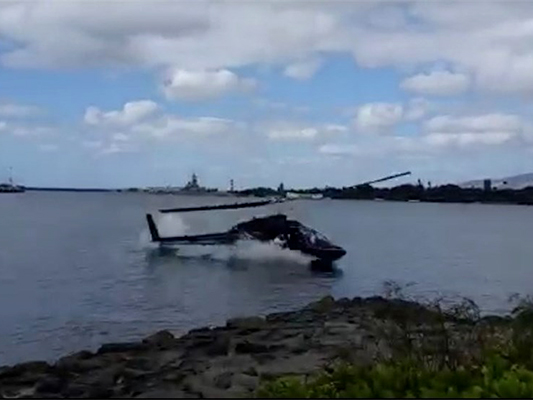
Chopper

The Governor of Behshahr Khaleq Sajjadi said all five passengers on board were killed and Red Crescent Society rescue teams found their dead bodies.

Hossein Jafarzadeh, Hassan Mohammadi, Ali Mardasi, Reza Sangheri and Gholamreza Mirzaei passed away during the accident.

Technical failure caused the crash after the helicopter with five on board took off on a mission to carry an injured person from an oil platform, Khaleqi noted, as reported by Mehr.

Meanwhile, the IRGC spokesman announced that the helicopter that crashed in the Caspian Sea early Sunday was a Mil Mi-17 chopper in possession of the Islamic Revolution Guards Corps (IRGC) Aerospace Force.

According to Head of the IRGC Public Relations Department General Ramezan Sharif, the IRGC helicopter was at disposal of Khazar Exploration and Production Company (KEPCO), a subsidiary of the National Iranian Oil Company (NIOC).

The aircraft was dispatched to Amir-Kabir semi-submersible drilling rig in the Caspian Sea, 20 kilometres off the port of Amirabad, at around 4:30 a.m. local time, to rescue an employee suffering a heart attack, Sharif explained.

After picking up the individual, the helicopter began to fly back to shore, but crashed shortly after take-off and descended into the sea, killing all five people on board, he said.

The oil company’s worker and four IRGC servicemen, all colonels, lost their lives in the crash, he noted.

The general said the cause of the incident is under investigation, Tasnim reported.

Amir-Kabir is the first Iranian facility for the extraction of oil and gas from the Caspian Sea.

This is the second helicopter crash this year in Mazandaran; the first one was an emergency helicopter dispatched to an accident on the Haraz Road, which crashed into high voltage power cables due to poor visibility caused by thick dust while it was trying to land.

Cartoon: Fidel Castro Dies after Years of Defying US

castro

In Hosseinpour’s cartoon, entitled ‘Fidel Castro died with tiredness of living for 90 years’, the Cuban guerrilla is shown as he is smoking the cigarette of US.

Iran Hopeful about OPEC Deal on Output Cuts

Zanganeh

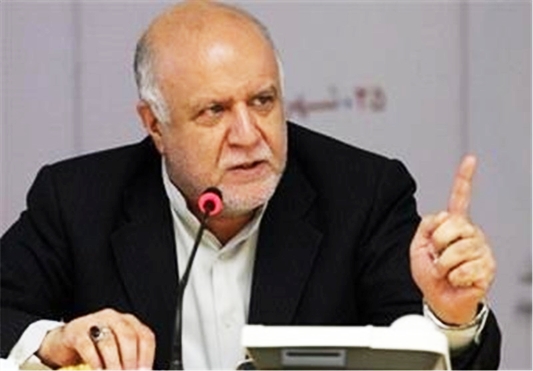
“The [ongoing] discussions show that OPEC can reach a sustainable agreement over its production and the management of the market,” Iran’s Petroleum Minister Bijan Zanganeh was quoted by the domestic media as saying.

“If we reach an agreement – which I’m optimistic we will – the prices will rise. This is what the international economy also demands,” Zanganeh told reporters after meeting the visiting Algerian Energy Minister Noureddine Boutarfa, Shana news agency reported.

The Iranian minister emphasized that Iran had carefully studied Algeria’s proposal – as presented by Boutarfa – on the production of each country. He said Iran would present its views on the proposal in the upcoming OPEC meeting in Vienna this coming Wednesday.

On a related front, Shana quoted Boutarfa as saying that Algeria’s proposals called for 1.1 million barrels per day (mb/d) in cuts by OPEC members and decreases totaling 600,000 bpd by non-members.

“If OPEC members … agree, oil prices will reach $50 to $55 next year and $60 by the end of the year,” Bouterfa was quoted as saying.

Zanganeh further emphasized that a key topic in his discussions with the Algerian energy minister was a plan to exempt Iran from OPEC production cut scheme.  He acknowledged that Libya and Nigeria could also be excluded from the plan, but said Iraq had presented no request to that effect as of yet.

OPEC member states in their last meeting that was held in Algeria in September agreed to reduce their collective production to 32.5 mb/d. Iran, Libya and Nigeria were exempted from the plan.

Nearly 500,000 kids living under siege in Syria: UNICEF

syrian-children

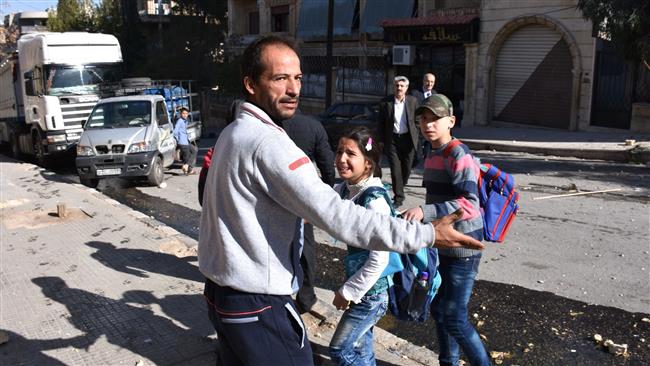
UNICEF said in a press release on Sunday that the 500,000 children are trapped in areas almost completely cut off from sustained humanitarian aid and basic services, some for nearly two years.

The agency also said that 100,000 children are living under siege in militant-held eastern part of Aleppo city alone.

“For millions of human beings in Syria, life has become an endless nightmare – in particular for the hundreds of thousands of children living under siege,” said UNICEF Executive Director Anthony Lake.

He further highlighted the dire situation in which children are holed up, saying they “are being killed and injured, too afraid to go to school or even play, surviving with little food and hardly any medicine. This is no way to live – and too many are dying.”

UNICEF further called for lifting the siege in Syria to allow unconditional humanitarian access.

The situation in Aleppo is of particular concern as the city remains divided between government forces in the west and terrorists in the east.

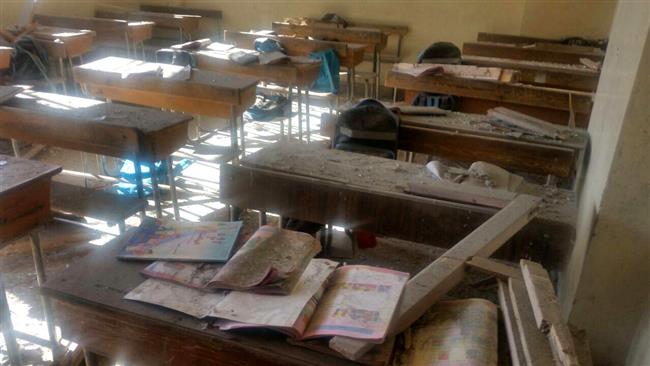
Last week, at least eight children lost their lives in a militant attack on a school in western Aleppo.

The Syrian army has set up several humanitarian corridors for people to leave Aleppo. However, terrorists are said to be preventing civilians from leaving the city in a bid to use them as human shields.

Locals say they are scared to use the exit routes for fear of militant snipers as well as mines and bombs planted by Takfiri elements.

The militants have been dealt heavy blows over the past few months amid advances made by Syrian army forces and their allies on the ground, with the support of Russia’s aerial campaign.

syrian-war‘Over 400 flee militant-held eastern Aleppo’

More than 400 civilians have reportedly managed to flee the eastern Aleppo controlled by terrorists as the Syrian government forces tighten the noose around the militants in the battered city.

The so-called Syrian Observatory for Human Rights said on Sunday that the civilians escaped overnight to Aleppo’s recently liberated district of Masaken Hanano and were taken to government-held regions.

Syria’s official SANA news agency reported that army soldiers on Saturday evening secured the exit of tens of locals who were besieged by terrorists, and transported them to a safe area.

Local authorities are working to provide the civilians with relief aid, the report added.

Meanwhile, in what is regarded as a major breakthrough in Syria’s anti-terror fight, the army soldiers and their allies retook Masaken Hanano, the largest neighborhood formerly held by the militants, on Saturday.

Separately on the same day, there were reports of clashes between Syrian troops and militants in the nearby districts of Haidariya and Sakhur.

The terrorists, however, intensified their rocket attacks on western Aleppo overnight, leaving at least four civilians dead and dozens injured, the observatory said.

Israeli Rabbi Allows Citizens to Burn Arabs!

Shmuel Eliyahu

According to a report covered by IRNA, Shmuel Eliyahu, the municipal chief rabbi of Safed, says it is permissible to break the Sabbath in order to stop, and even shoot, Arab arsonists.

Another spiritual leader also suggested that the wildfires raging in Israel are divine punishment for the delay in legalizing outposts in the West Bank.

“The prime minister described the arson as terrorism … it’s a miracle that people weren’t burned alive, but we don’t rely on miracles. It’s certainly permitted and required to violate Shabbat to stop the fire and the arsonists. And if necessary, also to shoot them,” Eliyahu said on Facebook.

Eliyahu believes that if the permission had been introduced earlier, the cities of Beit Me’ir, Carmiel and Haifa “would have been spared from this disaster”.

“I hope that the chief of staff and the police commissioner will give clear instructions to soldiers and police officers and citizens drawn from the fact that the fires have not finishes, and it is their responsibility,” he added, according to Ynetnews.

How Margret Thatcher Paid Millions to Keep SAS Iran Embassy Siege Secrets

Margret Thatcher

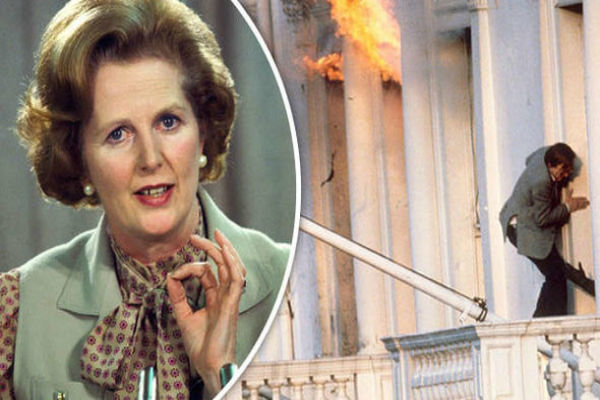
According to a report covered by Mehr, the building of Iranian Embassy in Princes Gate became the focus of world attention in 1980 when the Special Air Service was filmed abseiling and using battering rams to storm it in a dramatic rescue of 24 hostages.

One died and another had earlier been shot dead, sparking the dramatic rescue.

Operation Nimrod ended a six-day siege by members of a radical Iranian Arab separatist group – but also left the magnificent South Kensington building in ruins.

Founder of the Islamic Revolution Ayatollah Khomeini immediately called on Britain to foot the £2 million repair bill, arguing that it was the SAS who had caused the damage during the 17-minute raid.

For two years the demand was brushed aside by Thatcher, Express reported.

The siege propelled the SAS to global fame. The assault team later revealed the Prime Minister even gave orders for them not to use smoke screens, so as to not obscure TV cameras as the group swung through Embassy windows.

Such was the image of the regiment that it was even “loaned” to allies to resolve terror and hostage-related disputes in foreign countries.

Their secret war on terror was nearly compromised when Iran threatened to sue. The dossier reveals how, within weeks, a stunning letter arrived from Iran’s Essex-based insurance brokers.

Sent by recorded delivery, it demanded payment for damage to the embassy and contents from the “unfortunate incident”, adding, “It would seem the damage was directly caused by the SAS rescue operation which itself took place under the direct orders of Her Majesty’s Government.”

It was the first time anyone had tried to sue the Government since 1978, when the owner of a car blown up by the Army in Northern Ireland claimed compensation.

Ministers feared that paying for damage caused by the military operating under Metropolitan Police supervision would create a legal minefield.

A letter by Foreign Secretary Francis Pym eventually forced Mrs Thatcher’s hand.

Writing in August 1982, he said: “The building has since deteriorated and is now unsafe.

Neighbours, Westminster City Council and the general public are becoming increasingly restive at the continuance of this dangerous eyesore.”

Mr Pym warned that “recourse to any judicial means of solving the dispute could lead to a call for evidence that we would prefer not to offer”.

Millions of pounds in overseas trade deals were also riding on a deal.