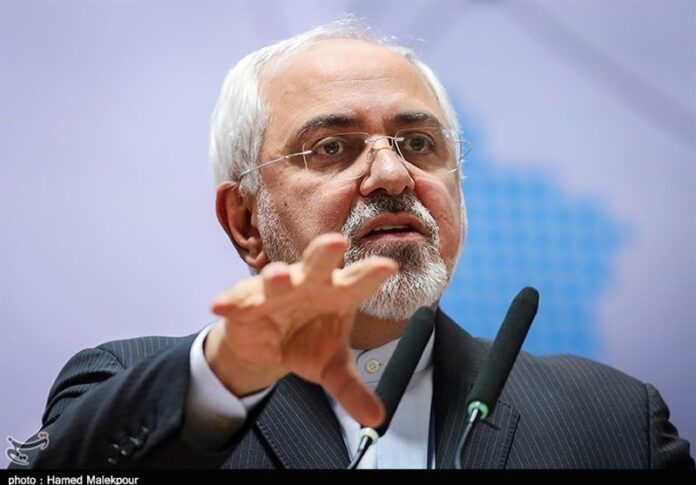
In an article published in the Iranian Review of Foreign Affairs on Friday, Zarif said, “The twin problems of terrorism and extremism, far beyond the never-ending polemics among politicians, stand out as the natural outcome of intrinsic failings in the current (and recent) international situation.”
Following is the full text of the Iranian minister’s article:
How to Handle the Enabling Conditions for Extremism and Terrorism
‘Much is being articulated today about the formidable challenge presented to the global community by terrorism and extremism, and on the approaches to combat and contain—and hopefully eradicate— them. Regardless of where each state stands on these twin challenges, and whatever the quintessence of the official policy of this or that country, the international community in its entirety shares the common conviction that these problems need to be addressed urgently. The global community must be rid of them as effectively as possible, and I doubt the exigency of the challenging task before us all is in any question.
The twin problems of terrorism and extremism, far beyond the never-ending polemics among politicians, stand out as the natural outcome of intrinsic failings in the current (and recent) international situation. They are neither confined to any part of the world, are exclusive to one religion, nor can they be combated on a regional basis and then only through heavy reliance on military hardware. After a decade-and-a-half of wholesale failure in combating post-9/11 terrorism, ugly realities on the ground push us to look at these challenges with open eyes—without illusions or indeed self-delusion. It should have become all too clear by now that a successful, effective fight against these two cancerous phenomena calls for a comprehensive approach and a multi-pronged strategy which depends, first and foremost, on a sober understanding and recognition of their enabling social, cultural, economic and global conditions.
Containing – and the ultimate physical elimination – of extremist terrorist organizations on the ground is certainly required, but only as a necessary first step and only as a component of a much larger effort. Problems of a global nature with deep-seated roots call for the requisite proper understanding and genuine global cooperation in confronting them.
Misperceptions, misrepresentations, and misplaced finger-pointing abound; and to get to the real enabling social and global conditions, the erroneous assumptions must be debunked. The dominant and official spin on terrorism and extremism, whether in the U.S. or elsewhere, appears to be generally tailor-made for domestic consumption, or as the rationale for certain policy lines and actions. This being the case, it isn’t surprising to hear the national security advisor of a major regional state, for example, say, “extremists and the Syrian forces will destroy each other on the battlefields of Syria.” That line of thinking and policy explains to some extent how and why the situation has reached the current impasse. Myopic views of a complex situation, let alone the pursuit of shortsighted self-serving policies, are bound to fail. And of course, they have, as everyone can see, and not only in Syria.
There is a second myth to debunk. It is easy for us in West Asia to blame the West as the ultimate culprit in our problems. There is no shortage of history here. The long shadows and painful memories and enduring, yet divisive, heritage of the ‘lines drawn in the sand’ during and after the First World War, still reverberate and haunt many states and communities in West Asia. Simultaneously, it has been even more convenient for the West to blame us – Muslims in the West Asia region – irrespective of our divergence, disagreements and even disputes and conflicts. Finger-pointing in both directions, and within the region, is perhaps the easiest diversion for everybody. But this is neither accurate nor helpful, as our world has become far more complicated than ever before.
The third myth to debunk concerns the presumed direct relationship between dictatorship and extremism, and the oft-repeated axiomatic assertion that democracies do not fight each other. While there is some truth to it, the actual situation we face today is more complex than the statement would indicate, and defies convenient explanations. When one witnesses Western-born and -educated individuals, raised in democratic, affluent Western societies and who speak French or English as their mother tongues, yet brandish the beheading of innocent human beings in Syria and Iraq on television screens and in cyberspace, then one cannot seek refuge in depicting simplistic scenarios and engage in politically-correct blame games. Children raised in democratic environments are killing their neighbors, as well as each other. It is simply unconvincing to blame such bloody atrocities on a certain faith, or solely on the educational or even political system in any West Asian society.
Global, internal and regional enabling conditions
The situation we find ourselves in, as ugly as it is, is too serious for a game of blaming each other. The fact is that while we can recognize there is a lot of blame to go around, we need to break the habit of always throwing the ball into another side’s court. If we’re willing to engage in honest soul-searching, it will start with raising simple but serious questions, such as: what is it that creates an extremist out of a youngster born and raised in France, or for that matter, in other European or North American societies? Even as much as a similar youngster born and raised in Afghanistan, Syria, Yemen, Libya, Saudi Arabia, or elsewhere in our region? We all must start by looking at extremism as a common predicament and a common problem, not one confined to a certain region, race, religion, or sect.
Lack of hope
Looking at some of the enabling conditions, hope, or actually the lack of hope – is central to the equation. And this is precisely where the hard facts puncture the monolithic presumptions relegating the problem at hand to a region and society, developed or developing, Western or Eastern, Muslim or otherwise. It is now a widely-established fact—and not merely theoretical speculation or even academic analysis—that a common thread that binds all those engaged in extremist violence is that they feel, and regard themselves, as marginalized in their respective societies—even globally. They believe that they have no hope for a better future, they see no actual and feasible possibility for productive self-fulfillment in an enabling and humanely conducive social environment – whether in Western societies which are becoming more and more introverted and xenophobic, or in the region in the grip of underdevelopment and without meaningful possibilities for representative government. The wave of nationalistic sentiments expressed at the ballot box in recent years, from Europe and crossing the Atlantic, might, unfortunately, only be more fodder for the hopelessness described. But in the region, even if one admits that significant differences exist among various states on practical approaches to elections as a form of popular representation, it can be readily agreed that in very few countries in West Asia are there possibilities for the populace to vent their frustration through the ballot box, a box or even concept which simply does not exist in many other countries in the region.
Marginalization, disenfranchisement, disrespect
While in Western countries, the ballot box generally functions well, the problem lies in another dangerously exacerbating trend: when significant parts of the institutionally-marginalized population find themselves at the losing end of the economic bargain, and worse still, see their beliefs, their values, and their sanctities targeted on a regular basis, we shouldn’t be too surprised that some of them, no matter how tiny a minority, will turn to something other than peaceful protest. As a European politician once publicly stated, “In the West, if you attack blacks, you’re a racist; if you attack Jews, you’re an anti-Semite; but if you attack Muslims, then you are exercising your freedom of expression”. It is ironic, but a candid reflection on a real and yet problematic condition: the direct assault on the existence and identity of the targeted population or community. It is thus bound to create resentment and anger that has nothing to do with any belief system.
The existing and rich literature in the field of social analysis, along with the well-researched findings of numerous case studies in various societies—including in the specific case of social unrest in France a few years back—gives us a disquieting picture of the reality of marginalization and socio-cultural and political alienation. Our task therefore is to win what is a race between desperation and the rekindling of hope.
Delving deeper, though, we are reminded that quite a fuzzy set of factors are at play. Some of the people who have committed some of the worst acts of barbarism in the name of Islam have not even been practicing Muslims. It is curious that the person who walked into the kosher grocery in Paris and began randomly shooting people was accompanied by his girlfriend – not exactly a relationship that a practicing, let alone fanatic, Muslim would be engaged in. The Nice attack in France—running over men, women, and children with a truck—was perpetuated by someone who was known to frequent bars. Drinking alcohol is also not compatible, as most people know, with the practice of the faith. So, what we are faced with is a socio-cultural problem, and not solely a religious phenomenon: a social phenomenon caused by a deeply-felt state of deprivation, alienation, and marginalization in an otherwise affluent and developed environment, one that practically denies security, respect, engagement, and hope for disenfranchised individuals, groups and communities. The relevance of the question of identity – and the ugly unacceptable consequences when and where it is bruised – can hardly be over-emphasized. This is one enabling condition that needs to be tackled and remedied.
Intervention and hegemonic tendencies
Another issue to examine is the endemic and age-old problem of foreign invasion and occupation, and what it has brought in its wake. The almost seventy-year state of occupation in Palestine is the most pressing. This has been further compounded by the systematic political and military interventions by the United States to preserve, perpetuate, and create its desired regional configuration and architecture and a “new world order”. When President George H.W. Bush proclaimed the emergence of a “new world order” in his address to the UN General Assembly, it was premised on the illusion that the United States had won the Cold War, whereas in fact the Soviet Union collapsed largely due to its own internal rot. In a non-zero-sum world, the West hadn’t won the Cold War; the Soviets had simply lost it. But the illusion created a mentality and subsequent momentum to try to institutionalize the perceived conquest through repeated military engagements – which occurred almost once a year under both Presidents Bush (senior) and President Clinton, and not merely under George W. Bush. Some may have forgotten the almost annual and major operations in Iraq in the 90s, the invasion of Somalia, the attack against Libya, Kosovo, and elsewhere in Europe during the first post-Cold War decade; all of which reflected the U.S. wish to use its superior military force to institutionalize its temporary supremacy in the shaken global order.
That pattern of active U.S. resort to military force reached a new climax with the 2001 ascendance of the neocons in Washington. The tragedy of 9/11 precipitated the full-scale invasion and occupation of Afghanistan, and then subsequently the invasion and occupation of Iraq. Incidentally, these two American military adventures destroyed two of Iran’s mortal enemies –the Taliban in the east and the Ba’athist regime in the west. But for us, judging them from a longer term and region-wide perspective, those interventions have always been deemed as costly and disastrous political gambles that will inevitably result in instability that threatens all legitimate actors in the region. In February 2003, shortly before the US invasion of Iraq, and while serving as Iran’s Ambassador and Permanent Representative to the United Nations, I stated before the Security Council: “Given the state of Iraqi society and the whole region, there are so many wild cards, and no party could fit them beforehand into its calculations with any degree of certainty. But one outcome is almost certain: extremism stands to benefit enormously from an uncalculated adventure in Iraq.” That conviction was widely shared by my colleagues from the region, even though few were willing to say it publicly. It didn’t take a genius to reason as such. It only reflected a simple calculus of basic facts of action-and-reaction in our region.
It is now abundantly clear that those two failed gambles lie at the very root of the ongoing tragic situations we witness today in Afghanistan, Iraq and Syria. Fifteen years after the invasion of Afghanistan, is it more secure today than in 2001? Aside from the satisfaction in seeing the Taliban defeated, the fact remains that the injured psyche of the Afghan people and a consequent deep sense of resentment continue to bedevil war-ravaged Afghan society. The continued state of insecurity and internal strife, further compounded, among others, by a lack of serious investment in the Afghan economy, have led to the burgeoning drug economy. The net result of foreign invasion has been a continuation of rampant violence and unchecked terrorist activity, along with an unrivaled drug trade, providing much of the world’s heroin, that we in Iran must confront.
The military adventure in Iraq has given rise to the chain of events and the intractable situation now gripping our neighborhood: the emergence and onslaught of terror groups such as Daesh and the Al-Nusrah Front; and a cycle of totally unprecedented ruthless, barbaric violence. Numerous examples of suicide terror acts in recent years, including by recruits as young as 14, point to the deep-seated anger among the populace subjugated to contemptuous foreign occupation. It is not just a matter of ideological indoctrination and brainwashing of an isolated bunch of fanatics. It is well-organized, well-financed campaign, using state-of-the-art communications systems and advanced brainwashing techniques in order to recruit and train hordes of enthusiastic suicide bombers. The so-called ‘appeal of terrorist groups’ is indeed confounding and mind boggling; it defies our shared understanding of the modern world. Many analysts have written on the deep-seated sense of powerlessness and resentment caused first by the still unsettled Palestinian question and in more recent times by the violent occupation of other Arab and Muslim territories. So, all of us have come to reap what others have sown in these lands, which has been suffering the long-term consequences of those ‘lines drawn in the sand’ a century ago.
It is important to draw an even wider conclusion from the ill-fated military adventures in our region. Most simply put, the age of hegemony is long past its sell-by date. The global developments in the post-Cold War era, particularly the multiplicity of actors on the global scene, have made it impossible for any single global power, however disproportionately advantaged in its military, economic and ideational might, to act as a hegemon. The mere fact that non-state actors have become significant and determining security actors is one reason contributing to the demise of hegemony. Such tendencies between 1990 and 2005 have cost trillions of dollars for American taxpayers, and much grief, misery and loss of human life for all. They continue to take a heavy toll in our region and beyond in the form of extremist violence. It is hoped that misplaced nationalism will not attempt to resuscitate such disastrous tendencies, however appealing their simplified populist reverberations may have been to an electorate or not. It must be recognized and appreciated by all regional actors that the same applies to regional hegemonic tendencies. This is particularly the case in West Asia, which is already paying a heavy toll because of global hegemonic aspirations. It is expected that other regional powers join Iran in accepting this fundamental characteristic of our times.
Internal ingredients
To understand what has been happening on the ground in the societies in the grip of strife and violence, it is certainly misleading to only focus on external factors or rely on conspiracy theories. The concrete – and plainly observable – facts all around should be enough: developing societies ripped apart by invasion and occupation, stymied development processes, rampant and worsening poverty with all of its negative consequences for the social fabric, including widespread unemployment and bleak prospects for a reasonable healthy future, all point to the unhealthy social environment which serves as the conducive breeding ground for all kinds of social ills – and self-feeding, spiraling political violence.
Failure of the state
The most significant internal component of the complex mosaic before us is the failure of the state system to respond to the fundamental demand of a populace for dignity. The fact remains that some of the worst suicide bombers have come from the most affluent societies in West Asia, and some from quite well-to-do families. The full story of the 9/11 perpetrators is common knowledge; 15 out of 19 came from Saudi Arabia, 2 from the UAE, and only one from Egypt and Lebanon. So, poverty and deprivation do not appear to explain everything. The question then becomes why it is that people coming from an affluent background turn to the type of ‘irrational’ behavior befitting ‘desperados’. For analysts trying to explain the unprecedented surge of seemingly senseless violence in our part of the world, the primary local reason lies in the historical failure of the state system to address – and effectively respond to – the fundamental aspirations of its people.
The inherent logic of the revolt of the disenfranchised masses against unaccountable and generally dysfunctional state apparatuses in West Asia is not difficult to fathom; a revolt against the entire state system and its inability to address the basic needs and aspirations of the populace. It can certainly be understood – and analyzed – in terms of the Islamic World’s frustrating inability to resolve the Palestinian situation, but it is not merely limited to it. Much could be said and written about the institutional faults and shortcomings in these societies accounting for the current predicament but that’s not the issue here, except insofar as it bears on the twin problems of extremism and terrorism.
Diversion tactics
The frustration of the youth that is being masterfully manipulated by extremist demagogues and their financiers to vent – albeit temporarily – through senseless and barbaric violence against innocents, is ultimately directed against the very foundations of the states in the region. Therefore, it is dangerously misleading to try to defuse this existential internal threat through diverting the anger towards fabricated external enemies. As alluded to earlier, some governments in the region have instigated, armed and financed extremist groups, such as Daesh and Al-Nusrah, utilizing them in proxy wars in Syria, Iraq and elsewhere. While this delusional naivete has caused hundreds of thousands of fatalities, it has not, and will not, lead to the “desired” outcome of “Syrians and extremists killing each other off in the battlefields of Syria.” Rather, monsters have been created who not only are not exterminated through bloodshed, but in fact broadcast pictures of their brutality to attract new recruits. And the focus of their real anger has already re-emerged to bite the hands that fed and nourished them.
Ideology of exclusion
Beyond the failed, unresponsive and unaccountable state apparatus, and the attempt to divert its focus, there exists also a pseudo-ideological component based on division, hatred, and denunciation and rejection of “the other”. This ideology has nothing to do with the genuine, original message of Islam – as reflected in the Book and in the Prophet’s tradition. But regrettably within the Muslim community there exists an ideology based on the notion of “Takfir”, or rejection-contrary to the very fundamental Qur’anic teaching. Takfiri groups including Al-Qaeda, the Taliban, Daesh, Al-Nusrah and a host of other smaller new variants, have been fully and lavishly financed by easily traceable petrodollars. This has been undertaken and pursued through a worldwide network of mosques and religious schools, both in Muslim societies as well as elsewhere. Such massive propagation of hatred has been sold globally, and particularly to the U.S. and its allies, for nearly four decades as a “moderate” Islam to confront a “radical” Iran. As such, it has not only been tolerated by the United States and its western allies, but even promoted and protected.
But the Takfiri perversion of Islam metastasized in West Asia and beyond as a result of the deepening popular resentment emanating from the protracted U.S. adventures in Afghanistan and Iraq, coupled with wide-spread frustration with the domestic social, economic and political deadlock. Along the process, demagogues turned this perverted misreading of Islam into a well-organized collectivity of disparate groups and forces – some with significant military capability, also drawing on the remnants of the Ba’athists in Iraq – and expansive outreach networks finding recruits from the marginalized Muslim minorities in the West. The self-perpetuating pattern of an action-reaction cycle has brought the sense of immediate and imminent threat to the very door of the advanced, democratic societies presumed to be immune to such phenomena. That’s why – and how – the festering problem considered germane to a certain area, locality, and culture, has forced itself on the international community as a source of practically omnipresent active threat, spanning from East Asia all the way through West Asia, North Africa, Europe, and even North America.
The regional factor
There is obviously a regional component to the current extremist violence, particularly in Iraq and Syria. The fall of Saddam Hussein and the emergence of a popularly elected government in Iraq produced anxieties in some regional countries regarding a disequilibrium in West Asia in favor of Iran that needed to be reversed at all cost, at least as they saw it. The Iraqi Al-Qaeda, led by Zarqawi, in an arranged marriage of convenience with the remnants of Ba’athist generals, led by Ezzat Ebrahim al-Douri, ensured instability and violence in post-Saddam Iraq, and later emerged as Daesh and other similar groups. Regional backing—by purported allies of the west—for forces such as these cannot be ignored. The anxiety was further exacerbated into a panic after the fall of certain “friendly” governments in North Africa and an uprising in Yemen.
What has ensued went beyond Iraq and brought misery and bloodshed to Bahrain, Syria and Yemen and is poised to engulf Afghanistan and Central Asia. The chain of action-and-reaction, combined with other events and certain statements – regardless of the initiators or the culprits –has benefited extremist terrorists, and presents a danger of escalation and conflict.
The very existence of the threat and its seemingly die-hard nature, as the situation in Iraq and Syria amply manifest, has led to a growing collective awareness across the globe, although to varying degrees, as well as an increasing level of international political consensus on the urgent need to confront the phenomenon and the threat head-on. Iran, itself a victim of terrorism since the early days of the Revolution, believes in the imperative of decisive, comprehensive and collective regional and international response to this menace and its underlying enabling conditions. The initiatives of “Dialogue among Civilizations”, proposed by Iran in 1998 (well before 9/11 and before any notion of a “clash of civilizations” took hold among the general public), and “World Against Violence and Extremism” (WAVE) proposed by President Rouhani in 2013, and both endorsed by the UN General Assembly, accurately diagnose the enabling social, cultural and global conditions that have given rise to the formation and spread of extremist violence. Success depends on engagement of all actors, at both regional and international levels.
As for the regional component, Saddam Hussein’s aggression against Iran in September 1980 and the costly 8-year-long conflict that ensued has taught everyone in the Persian Gulf region the enduring lesson that they shall not be allowed to descend into another military conflict. Iran had hoped, seemingly in vain, that its neighbors would have learned from the aftermath of the Iran-Iraq war that the monster they created to destroy a manufactured enemy ended up as their own nightmare. The war also underlined the imperative of regional security arrangements and mechanisms, which was enshrined in paragraph 8 of UN Security Council resolution 598 which brought the Iran-Iraq war to an end. That provision continues to be relevant for promoting regional security cooperation.
While such forces as Daesh and its offshoots must be effectively debilitated and defeated, meaningful restoration of peace and stability to West Asian, and particularly the Persian Gulf region, hinges on the promotion of a set of common principles of mutual understanding and collective regional security cooperation.
History – and the concrete examples in other regions, most notably in Europe and Southeast Asia – tells us that the countries in the region need to surmount the current state of division and tension and instead move in the direction of erecting a working and yet modest and realistic regional mechanism; one that can start with a regional dialogue forum. Such a forum should be based on generally recognized principles and shared objectives, notably, respect for sovereignty, territorial integrity and the political independence of all states; the inviolability of international boundaries; non-interference in internal affairs of others; the peaceful settlement of disputes; the impermissibility of threats or use of force, and the promotion of peace, stability, progress and prosperity in the region. A forum such as this could help promote understanding and interaction at the levels of government, the private sector and civil society, and lead to agreement on a broad spectrum of issues, including confidence- and security-building measures; combating terrorism, extremism and sectarianism; ensuring freedom of navigation and the free flow of oil and other resources; and the protection of the environment.
Such a regional dialogue forum could eventually develop more formal nonaggression and security cooperation arrangements. While this dialogue must be kept to relevant regional stakeholders, existing institutional frameworks for dialogue, and especially the United Nations, must be utilized. A regional role for the United Nations, already envisaged in Security Council resolution 598, would help alleviate concerns and anxieties, particularly of smaller countries, provide the international community with assurances and mechanisms for safeguarding its legitimate interests, and link any regional dialogue with issues that inherently go beyond the boundaries of the region.
Cognitive adjustment
Delving into the fundamentals of various actual situations in the West Asia region – whether for example in Syria or in Yemen – including why and how each situation has evolved as it has, is outside the realm of this essay. However, it shouldn’t be difficult to fathom the reasons, factors, and policies that have contributed to the development and emergence of these tragic situations. As an American politician once said, “Everybody is entitled to their own opinion, but they are not entitled to their own facts.” Facts are indisputable in this equation, and it is time for all to agree on the facts before attempting to tackle the problem.
With the benefit of hindsight and looking at the larger global situation, it is necessary to fully recognize the dichotomy between two opposing outlooks in approaching regional and international crises: a zero-sum mentality versus a non-zero-sum approach. In a globalized world, where everything from environment to security, has been globalized, it is virtually impossible to gain at the expense of others. Zero-sum approaches lead to negative-sum outcomes. Put in very simple terms, the stark choice is between a “lose-lose” scenario as opposed to a “win-win” solution. There is no middle ground.
Consequently, conflicts in Iraq, Syria, Yemen and Bahrain do not have a military solution. I cannot emphasize that more strongly. They require a political solution, based on a positive-sum approach, where no genuine actor – naturally apart from those who lead extremist violence—is excluded from the process or marginalized in the outcome. Alas, this dictum is easier said than actually practiced, or even believed. One might, however, seek refuge in the wisdom of the dictum, “where there is a will, there is a way.” The recent positive development in Lebanon in electing a new president, following two long years of bitter politicking, and in OPEC where all parties set aside their differences to reach a mutually beneficial resolution—or more accurately avoid a generally disastrous outcome—reflect a simple but important political lesson: the parties concerned gave up their maximalist – zero-sum – expectations in favor of a working compromise. Looking at other situations, particularly Syria and Yemen, one can take a cue from the Lebanese and hope that a political process of sorts – that is, a process of give and take and a process requiring compromise and inclusion—might be relied upon in bringing the current unspeakable carnage to an end. And the sooner the better.
Notwithstanding the difficulties involved in each crisis, there are always possibilities for exploring and eventually arriving at an outcome that is acceptable to all concerned. Or, more bluntly, there is always a way of “getting to yes”: but to do so, the definition of the problem needs to be re-examined. Once a problem is defined in a non-zero-sum way, the most important step has been taken toward resolving it. The challenge is first and foremost cognitive in nature and essence. Once actors are prepared to set aside their predispositions and think differently, policies and actions will follow.



 In Hermitage Museum, which is located in Saint Petersburg, Russia, more than 3 million excellent items are publicly displayed in six building. The main building- the Winter Palace- has been the residence of Tsars. The luxurious palaces and rooms of museum have been designed by well-known architects in different periods.
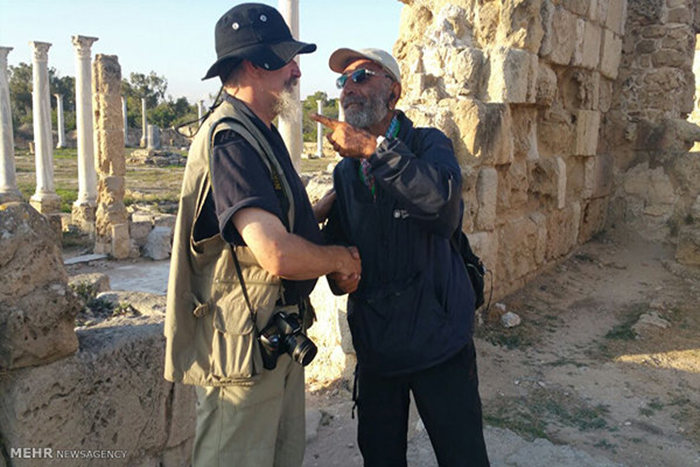
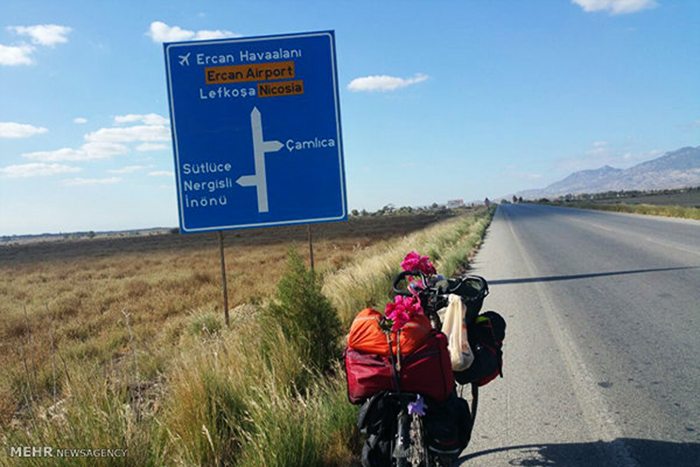 The laughing man