Monday, December 29, 2025
Home Blog Page 4176

President Zuma Calls on South Africans to Show Solidarity with Palestinians

south africa’s president

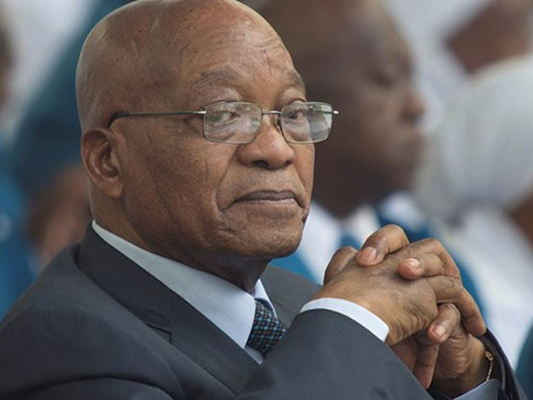
Speaking at the 105th anniversary celebration of the ruling African National Congress (ANC), President Zuma reiterated the party’s solidarity with the “oppressed people of the world”, citing “Palestine” as an example.

“The people of Palestine continue to suffer in their rightful quest for self-determination … We reiterate that we firmly discourage travel to Israel for causes not related to fostering peace in the region,” Zuma was quoted by the Africa News website as having said in a speech heard by thousands of party supporters.

Zuma also said his party supported of UN Resolution 2334, which was passed last month by the Security Council and which condemned Israeli presence in Judea, Samaria, and Gaza. He called on the Palestinian people to unite and achieve their goal, according to Africa News.

Zuma and other members of his party have continuously expressed anti-Israel sentiments in recent years.

South Africa has also imposed rules requiring that goods imported from Judea, Samaria and eastern Jerusalem display special labels.

Ayatollah Khamenei Condoles Demise of Ex-President Rafsanjani

Leader - Rafsanjani

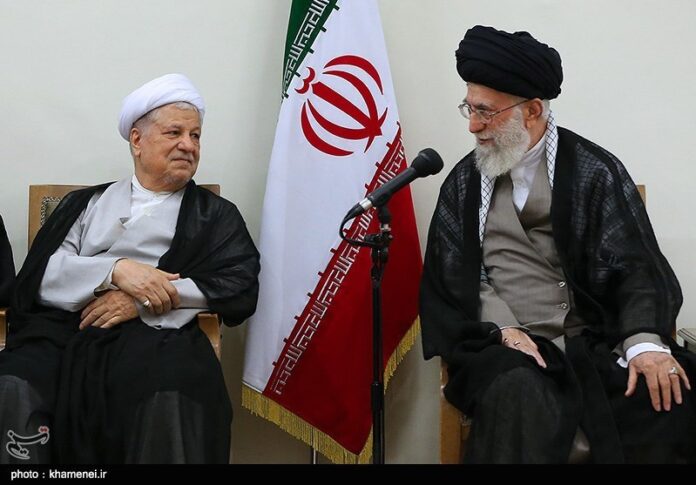
The Leader in his message of condolence expressed his regret and sorrow over Ayatollah Rafsanjani’s ‘sudden death’, and described him as ‘an old friend’ and ‘a comrade’ during the struggles of Islamic Revolution.

Ayatollah Khamenei further referred to 59 years of his cooperation with Rafsanjani, and stressed that his loss was overwhelming and very hard to bear.

Ayatollah Khamenei added that he and Rafsanjani had gone through many hardships and difficulties in these years.

The Leader said Rafsanjani’s high intellect and unique intimacy in their years of friendship had been a reliable support for all those years working with him, Press TV reported.

Ayatollah Khamenei further stated that some differences in opinion between the two, which occurred at times during this long period, could never sever the friendship ties between him and Ayatollah Rafsanjani.

The Leader also condoled with Rafsanjani’s wife, children, brothers and the rest of his family, wishing God’s mercy and forgiveness for the deceased cleric.

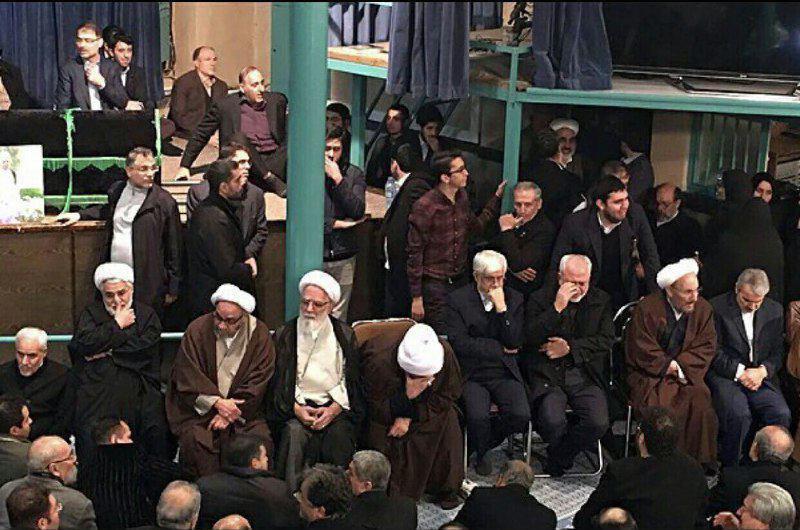
Rafsanjani JamaranIn separate messages, President Hassan Rouhani, Parliament Speaker Ali Larijani, Secretary of Guardian Council Ayatollah Ahmad Jannati, Judiciary Chief Ayatollah Sadeq Amoli Larijani, and Foreign Minister Mohammad Javad Zarif also condoled his demise.

In his message, Zarif described Rafsanjani as “a great scholar and scientist” and the “old friend of the Leader of the Islamic Revolution Ayatollah Seyyed Ali Khamenei and the late Founder of the Islamic Republic Imam Khomeini.”

Ayatollah Rafsanjani passed away at a hospital in northern Tehran on Sunday at the age of 82 due to a heart condition.

He was among the main aides to the late founder of the Islamic Republic, Imam Khomeini.

He played an influential role both during the anti-Shah struggles before the victory of the Islamic Revolution and afterwards through various stages of the establishment of the Islamic Republic of Iran.

Rafsanjani was also a key figure during the eight years of Iraq’s imposed war on Iran (1980-88), serving as substitute to commander-in-chief of the armed forces.

Iran’s Ex-President Rafsanjani Dies at 82

Hashemi Rafsanjani

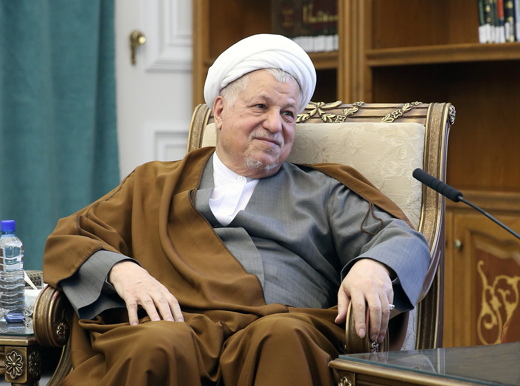
Ayatollah Hashemi Rafsanjani was taken to Shohada-ye Tajrish Hospital in northern Tehran after a reported heart attack on Sunday evening. However, he passed away in spite of doctors’ efforts.

Rafsanjani was one of the pillars of Islamic Revolution’s victory in 1979, and the establishment of the Islamic Republic.

He served as the country’s deputy commander during the eight-year imposed war against Iraq in the 1980s, and later served two four-year terms as the president of Iran.

Until the end of his life, he remained an influential figure in Iran, and headed the Expediency Council, a body which is intended to resolve disputes between the parliament and the Guardian Council.

Iran Making $3m Investment in Production of Haemophilia Drug

factor viii

Hassan Alamolhodaei, the head of Khorasan Province’s Science and Technology Park, announced that Astan Quds Razavi – a non-governmental institute that manages the Holy Shrine of Imam Reza [eighth Shiite Imam] in Mashhad, northeastern Iran – has financed a knowledge-based project to produce homogeneous drugs for patients suffering from Factor VIII deficiency.

“Astan Qods Razavi invested $3m in one of the largest Iranian drug manufactory plants which will produce recombinant factor VIII and is to come into operation soon,” he said.

“The knowledge-based firms of this complex have taken important steps in turning knowledge to product, producing wealth and meeting the technological needs of national and provincial executive organs in different industries.”

He went on to say that the technological plans of these firms have been implemented in cooperation with Iranian refineries, ministries and organizations, as well as public and private institutions, according to a Farsi report by Khorasan newspaper.

Mohammad Sadeq Qazizadeh, the chief of Iran’s Power Research Centre, also noted that the knowledge-based firms of this park have the potential to turn the Park into an economical hub in Iran if they put their abilities together.

Factor VIII is one of the proteins involved in blood coagulation. It is a protein which helps blood coagulation in consecutive reactions.

Lack of the factor causes Haemophilia A.

While there are over 100 recombinant drugs in the world, Factor VIII is one of the most complicated ones.

Iran would be able to save at least $60m if it could mass-produce the drug.

Iran in Talks with American and Italian Firms to Revive 2 of Its Oldest Brands

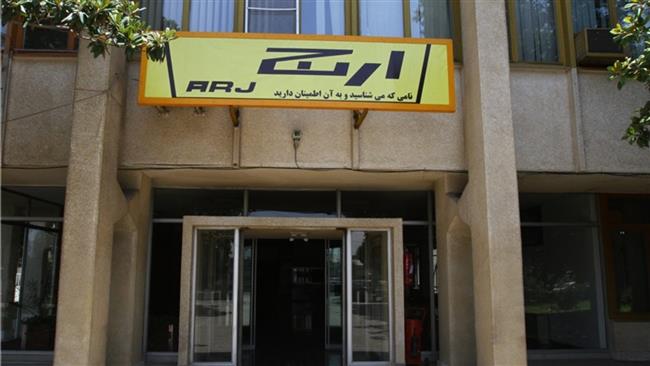
Iran’s ARJ household production company

The announcement was made by Abbas Hashemi, the director general for household devices affairs of the Ministry of Industry, Mine, and Trade.

Hashemi was quoted by the domestic media as saying that the companies with which talks to were underway on the same front were multinational conglomerate corporation General Electric (GE), the American multinational manufacturer and marketer of home appliances Whirlpool Corporation, and the Italian Ariston Thermo Group.

“A number of old plants in which household devices were produced were not renovated over the past decades and the technologies used in them belong to the first day of their establishment,” Hashemi told Iran’s IRNA news agency.

“To the same effect, the Ministry of Industry, Mine and Trade has stepped forward to hand over companies like ARJ and others to the private sector so that they can form joint ventures with reputable foreign brands.”

The official emphasized that Iran’s private sector alone lacks the capability to make the required investments to revive companies like ARJ and Azmayesh.

The solution, he said, is to hand over such companies to the private sector so that they can form joint ventures with foreigners to revive these brands.

Established in 1937, ARJ was the first and the biggest producer of home appliances in Iran which started its activities by producing water coolers and refrigerators.  It later expanded its production line to include gas heaters, washing machines, freezers and other devices.

Azmayesh is ARJ’s biggest domestic rival that was established in 1959 to produce an almost similar line of products.

Reports emerged in the media in May 2016 that both companies had already gone bankrupt.  Officials rejected this at the time but emphasized that both companies would be handed over to the private sector in what they said was part of a plan to salvage them.

French FM to Attend Economic Meeting in Tehran

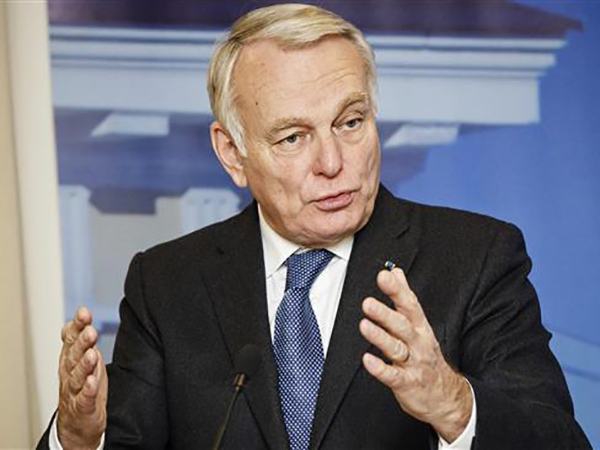
French Foreign Minister Jean-Marc Ayrault

The French foreign minister will arrive in Tehran late in January to participate in a session of Iran-France joint economic commission, which is slated to be held with the participation of the two countries’ officials.

Iran and France will reportedly hold the economic session after some 17 years.

Former French Foreign Minister Laurent Fabius paid a day-long visit to Tehran in late July at the invitation of his Iranian counterpart Mohammad Javad Zarif. He held talks with senior Iranian officials, including President Hassan Rouhani, Zarif, Minister of Petroleum Bijan Zangeneh and Head of the Department of the Environment, Massoumeh Ebtekar.

Fabius’ visit to Iran, the first by a French foreign minister to the Islamic Republic in 12 years, came few months after Iran and the five permanent members of the United Nations Security Council – the United States, France, Britain, Russia and China – plus Germany started implementing the nuclear agreement they signed last year.

Iran and the P5+1 group of countries signed the nuclear deal, known as the Joint Comprehensive Plan of Action (JCPOA), on July 14, 2015.

During the Iranian president’s historic visit to Paris in January 2016, Iran and France signed a series of basic trade deals thought to be worth billions of dollars.

Rouhani and his French peer Francois Hollande oversaw the signing of the deals that concerned cooperation in a range of sectors such as aviation, car manufacturing and oil among others.

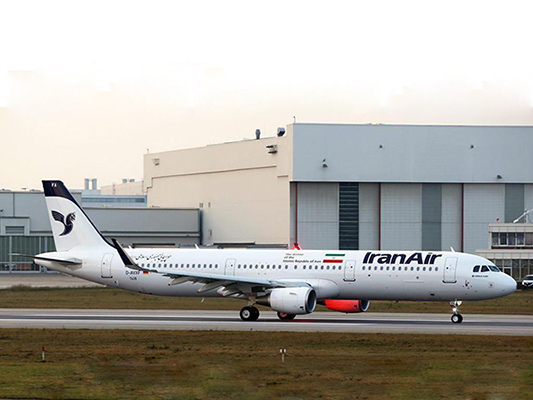
Airbus Delivers First Plane to Iran Air after Decades of Sanctions

Airbus

The agreement between Iran and Airbus, which was signed during a recent visit by President Hassan Rouhani to Paris, allows delivery of 100 Airbus planes to various Iranian airlines.

The first Airbus A321 is brand-new product and will shortly arrive in Iran after necessary preparation for flight.

Iran Air and Airbus finalized the deal in December 22 2016 and just after three weeks, it is taking effect with the first Airbus coming to Iran, thus renovating an outdated air fleet the government had been seeking to build anew, Mehr reported.

Managing Director of Iran’s national carrier, Iran Air, Farhad Parvaresh, had told reporters earlier that Iran would receive 7-8 planes by the end of 2016.

The lucrative deal includes 46 Airbus A320s, 38 Airbus 330s, and 16 Airbus A350s. Iran Air (Homa) will pay for all these planes within a decade.

New US Congress Using Old Ways in New Year: Sanctions and Military Threat

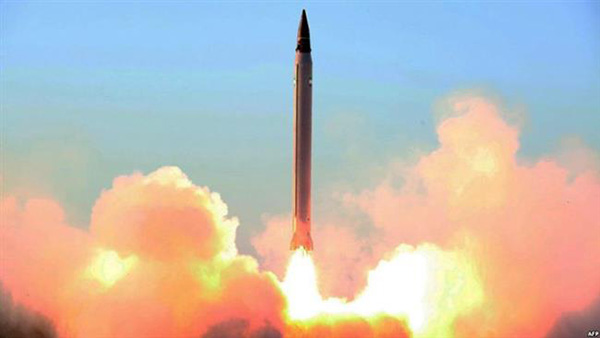
 Emad ballistic
Iran successfully test-fires its domestically-built Emad ballistic missile on October 11, 2015.

Soon after the beginning of their work, the members of 115th US Congress introduced two anti-Iran laws on January 3.
One of them is a proposal introduced by Alcee Hastings, a member of the Congressional Committee of Foreign Affairs, to authorize the use of United States Armed Forces to achieve the goal of preventing Iran from obtaining nuclear weapons. The other bill entails imposing new sanctions on Iran to prevent its missile program.
“New measures taken by the Congress, as well as statements by American officials, prove how Washington is afraid of Iran’s military power and its progress in missile industry,” said Ardeshir Nooriyan, an Iranian lawmaker, according to a Farsi report by ICANA.
“The hostile approaches and pretexts adopted by American authorities were predictable after the nuclear deal with Iran,” he added.
“It is Washington’s strategy to create an atmosphere of Iranophobia in the international community and impose political and economic sanctions against Iran.”
He went on to say that Washington is using Iran’s missile program and humanitarian activities as a pretext to implement anti-Iran policies. “Our Leader has always warned us about the hostile positions of the United States.”
Nooryian stressed that the US sanctions won’t stop Iran from developing its missile defence industry. “It is an essential part of our homeland security. We endeavor to expand it.”

Prerequisites of Attracting Foreign Investment to Iran’s Mining Industry

Foreign Investment

While there is no detailed information about Iran’s mining sector, authorities endeavour to introduce mining opportunities to foreign investors during conferences and meetings.

“Despite the small number of international meetings held in Iran, they have proved to be effective in attracting foreign investment,” said Kourosh Shabani, a manager in Iranian Mining Engineering Organization.

“Of course we should show the realities of mining as they are so that foreign investors know how are the conditions of this industry.”

“Many groups of investors have travelled to Iran, but just to examine the circumstances. No one has invested in mining industry. Banks didn’t provide facilities as they should. No goal will be realized by the mere participation of foreigners in conferences.”

“It is better to distinguish between domestic and foreign investors,” he noted, referring to international investors who tend to analyse all circumstances before taking action.

“By adopting a different approach to foreign investors, we can encourage them to take part in Iranian mining sector,” he added, according to a Farsi report by SMT newspaper

“We should build necessary infrastructure, improve business conditions and stabilize our rules to make foreign investors sure that they can transfer their money into Iran to take part in mining industry. Any investor – domestic or foreign – wants to be certain of his investment profitability.”

While Iranian mining industry has a huge capacity for international investment, imperfect infrastructure may put off measures, he added.

“Government and related organizations should develop the required infrastructures such as transportation, water and gas,” he noted.

“We can also cooperate with foreign investors in infrastructure planning and building.”

Shabani also emphasized the importance of accurate information about mining sector.

“While Iranian Engineering Organization is very well-informed about active mines and level of sources, we still haven’t collected any detailed, reliable data.”

“We lack a comprehensive data bank in mining sector to be used by international investors. If a particular organization is responsible to develop such a system, the information will lag the factual data just for a few months.”

Photos of Egyptian Kids Getting Married Spark Outrage in Arab Media

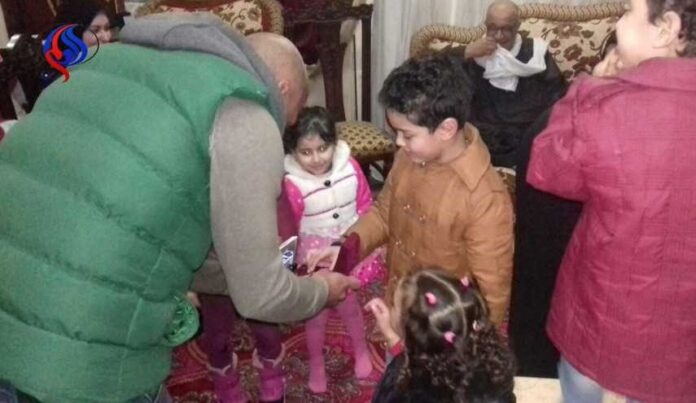
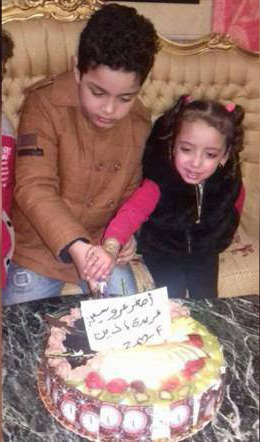
Kids Getting MarriedAccording to a report by IFP, the issue of forcing young children into engagement or marriage is an ongoing problem in Egypt as the government claims it is to enforce harsh penalties to counter the practice.

The engagement ceremony photos of Zain, a 7-year-old second grader, and his 4–year-old cousin Faridah, hit the internet by storm and provoked a debate on social media over the ‘rights’ and wrongs of the practice, Al Arabiya reported

According to some tweets from sources close to the children’s family in the al-Qalyubia province, Faridah’s father selected his nephew as the future husband for his daughter as an “incentive for excelling academically at school,” a decision that apparently received the backing of the family.

According to other sources, a dowry of $1,000 was paid to the girl’s family with the agreement that both children would wed when they reached legal age.