Thursday, December 25, 2025
Home Blog Page 4136

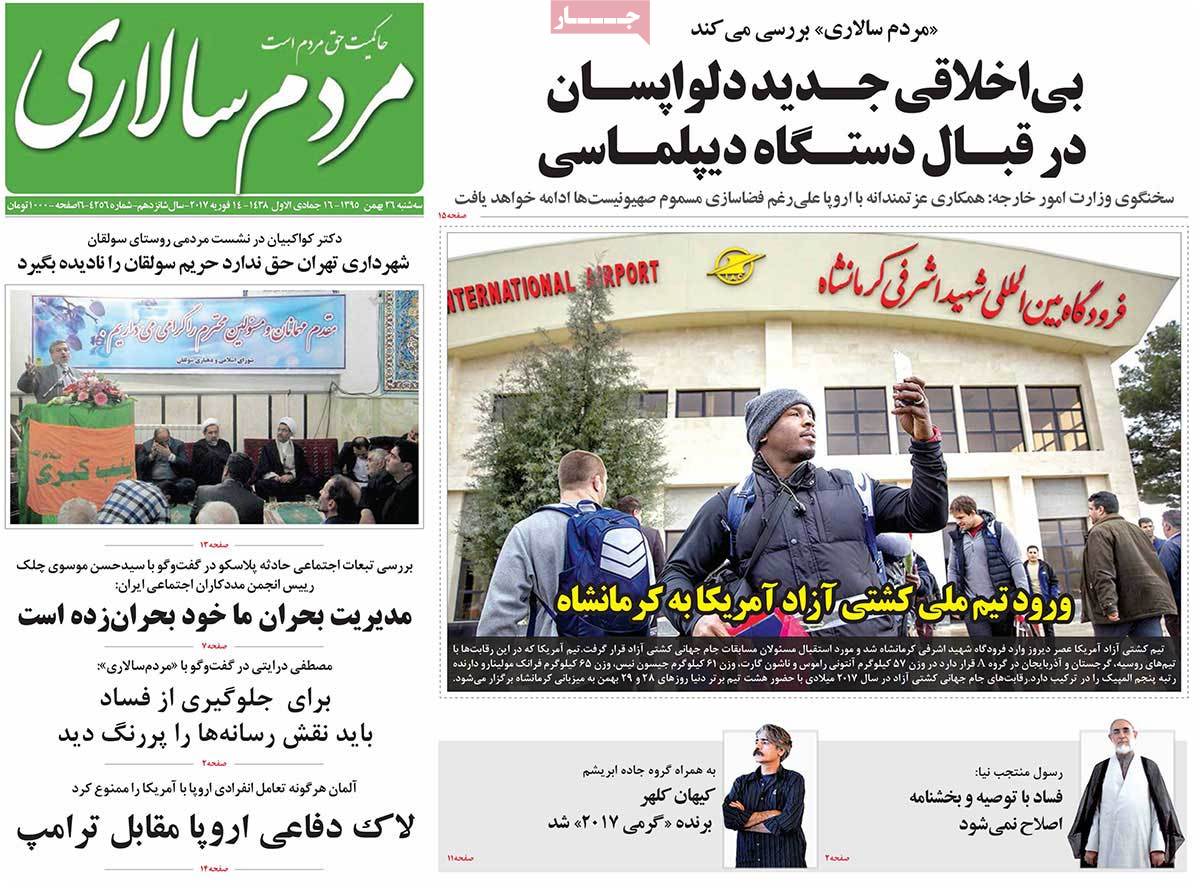
Foreign Ministry Mulling over American Wrestlers’ Presence in Upcoming World Cup in Iran

iran-fm

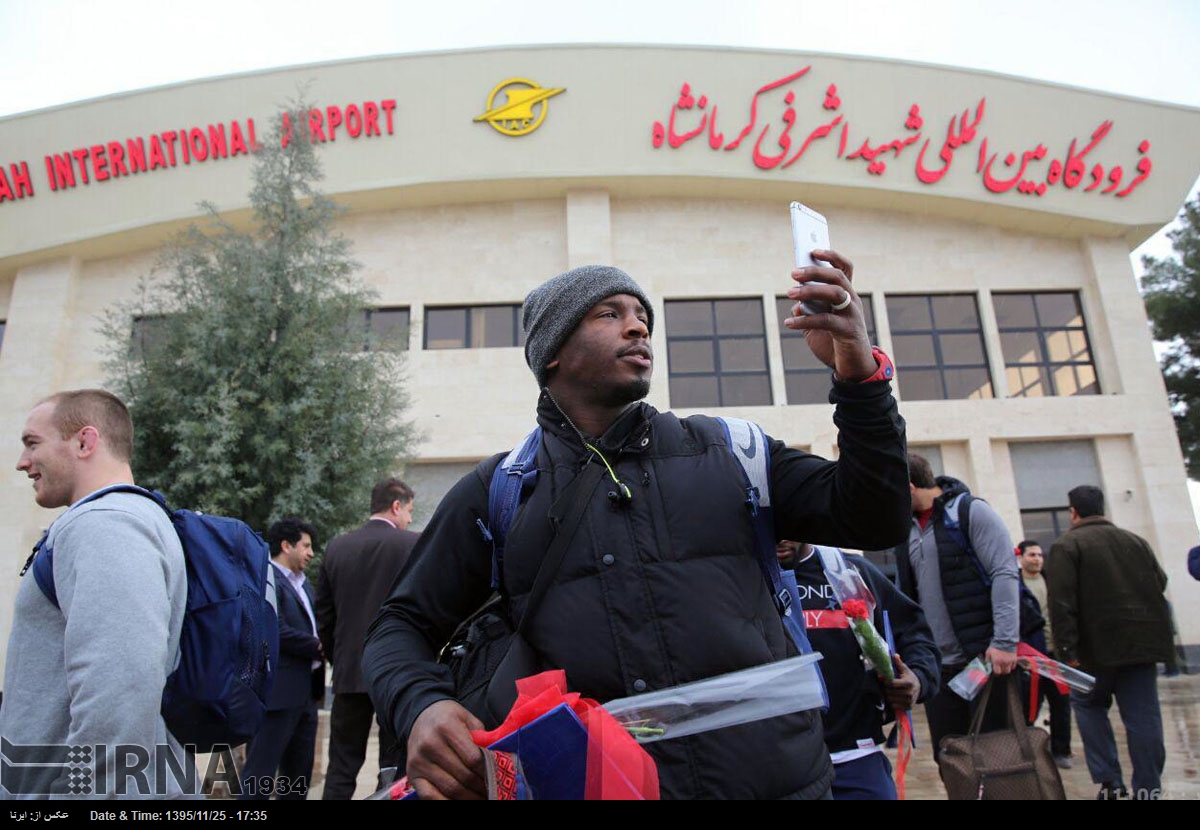
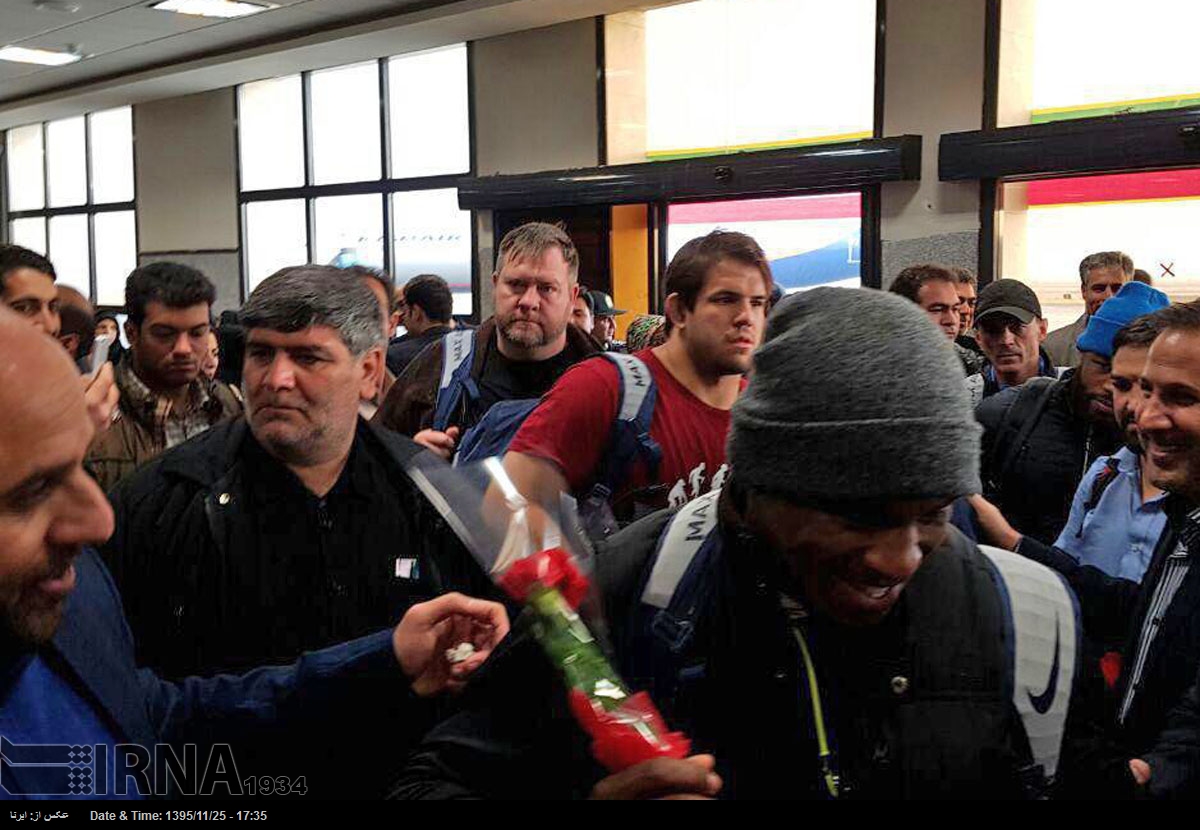
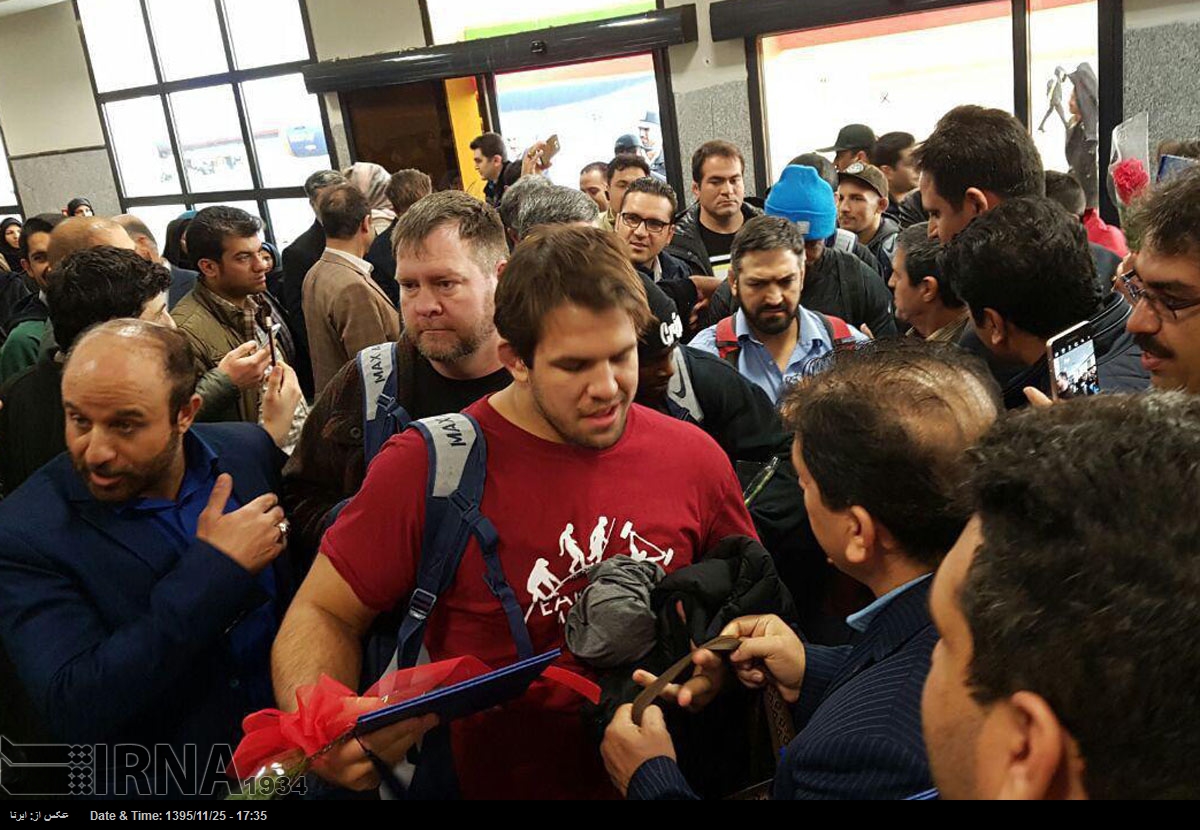
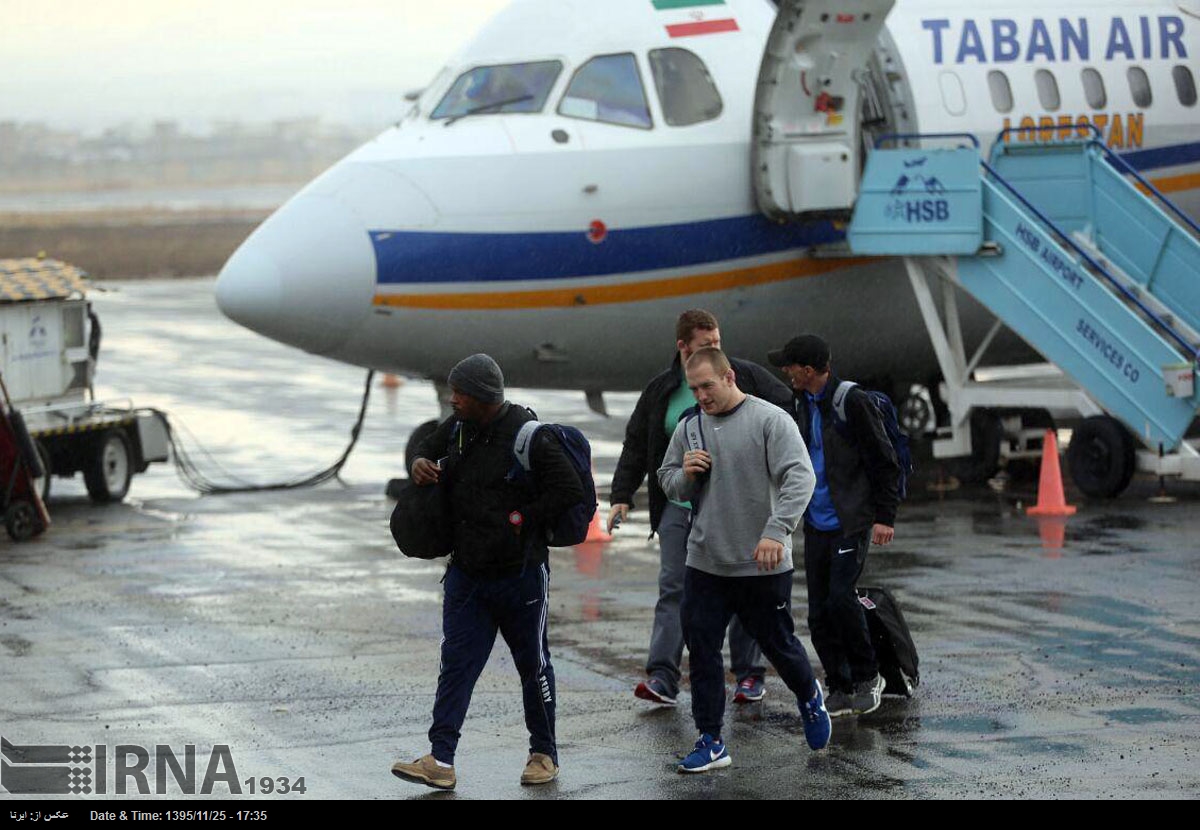
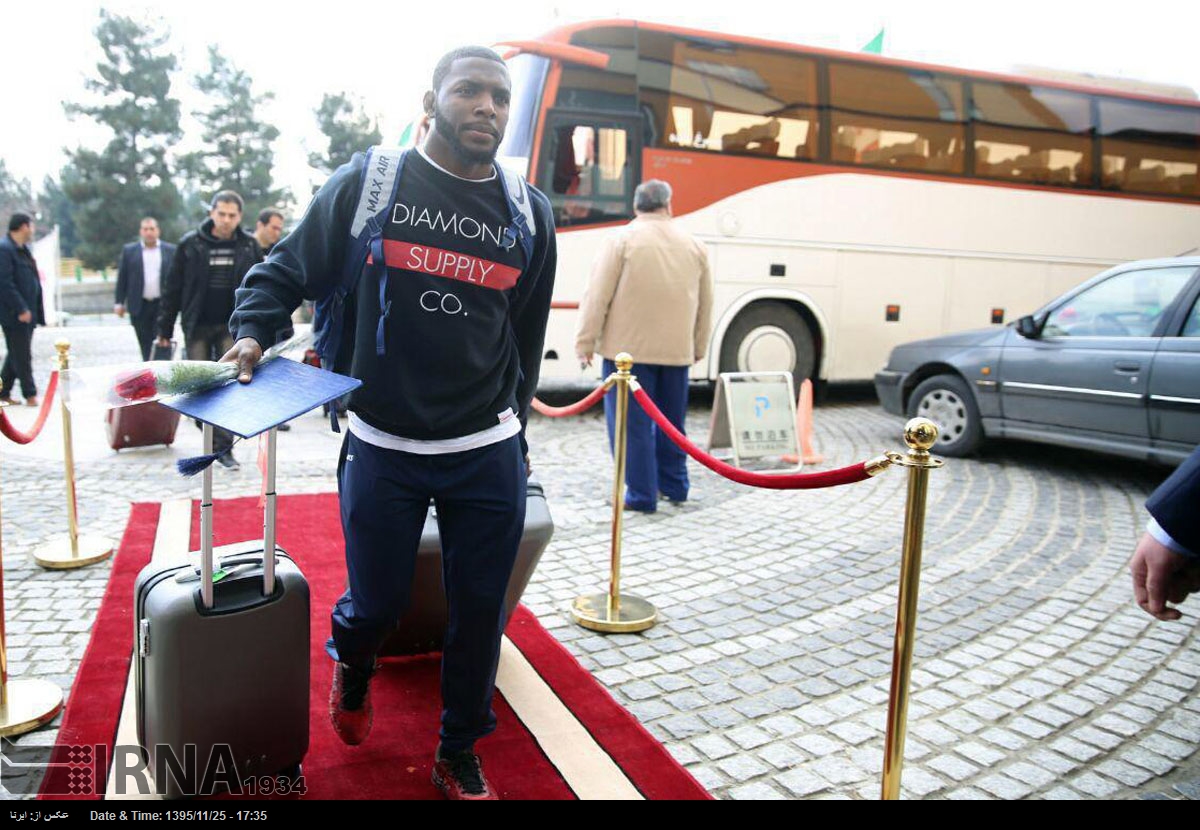
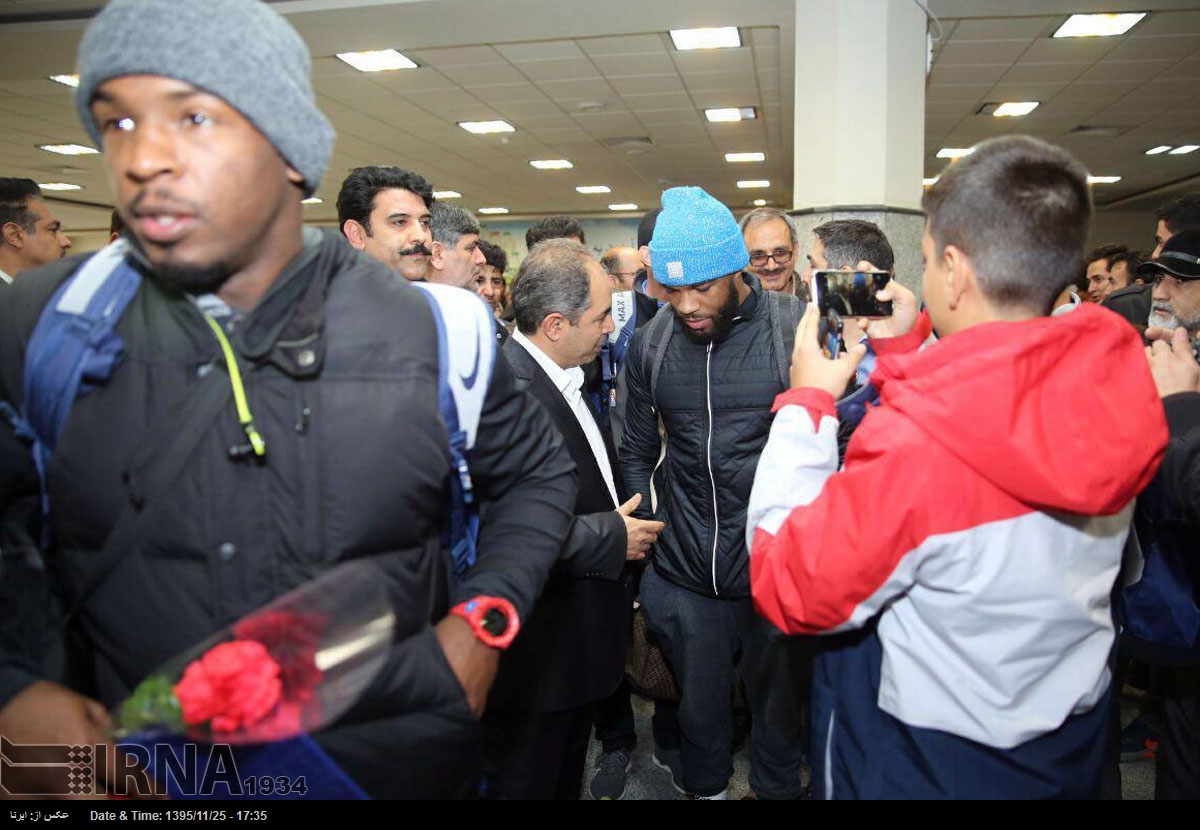
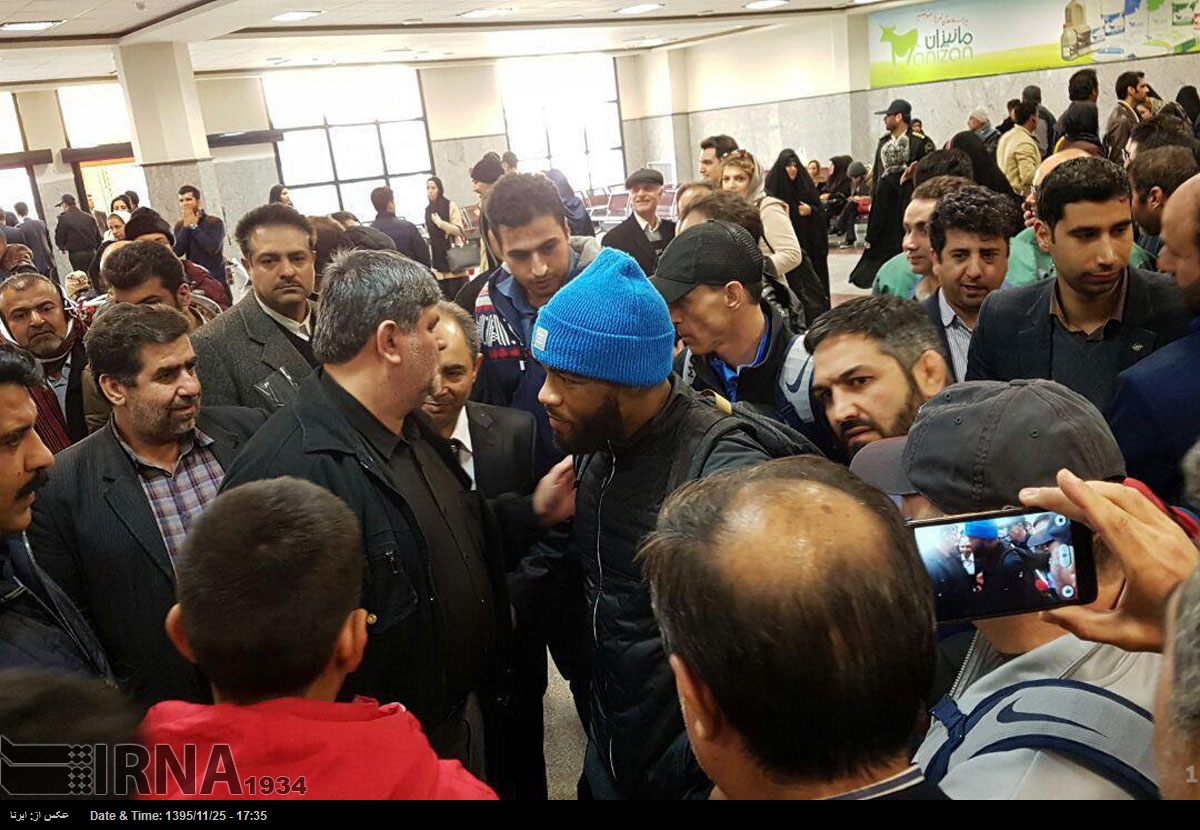
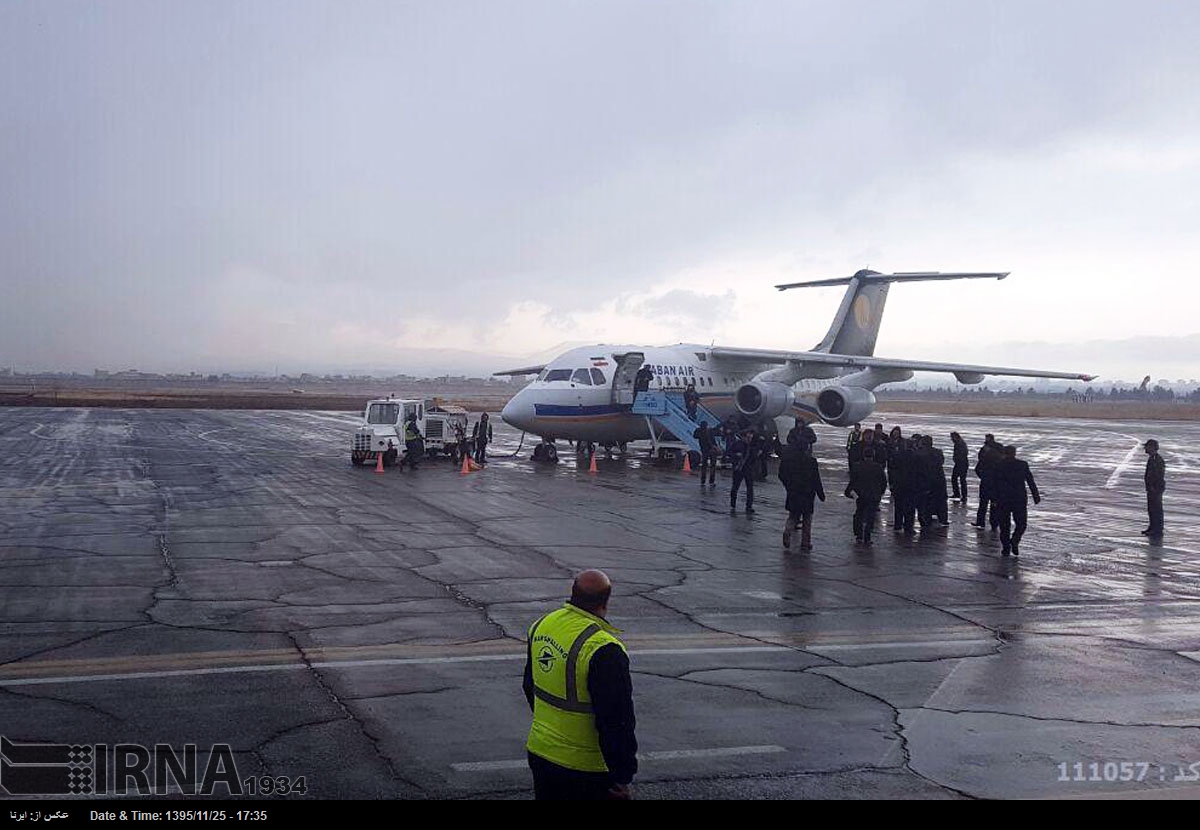
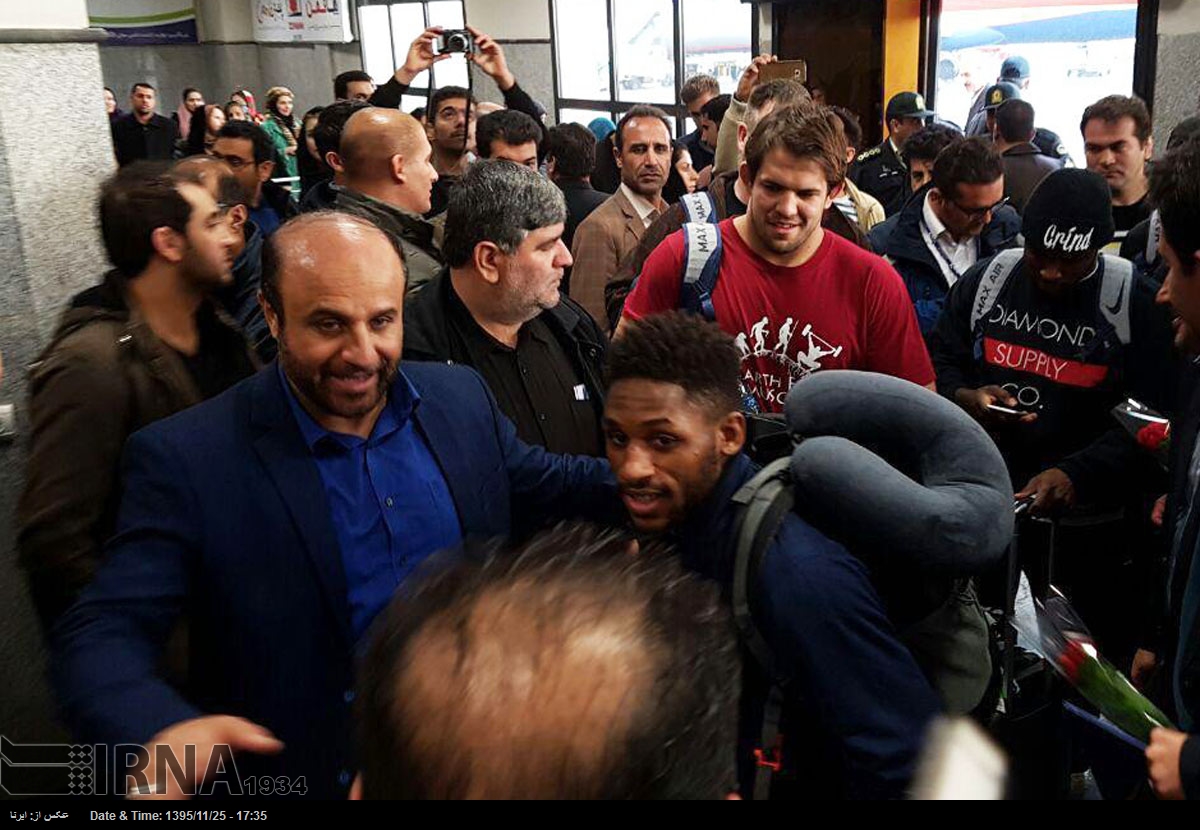
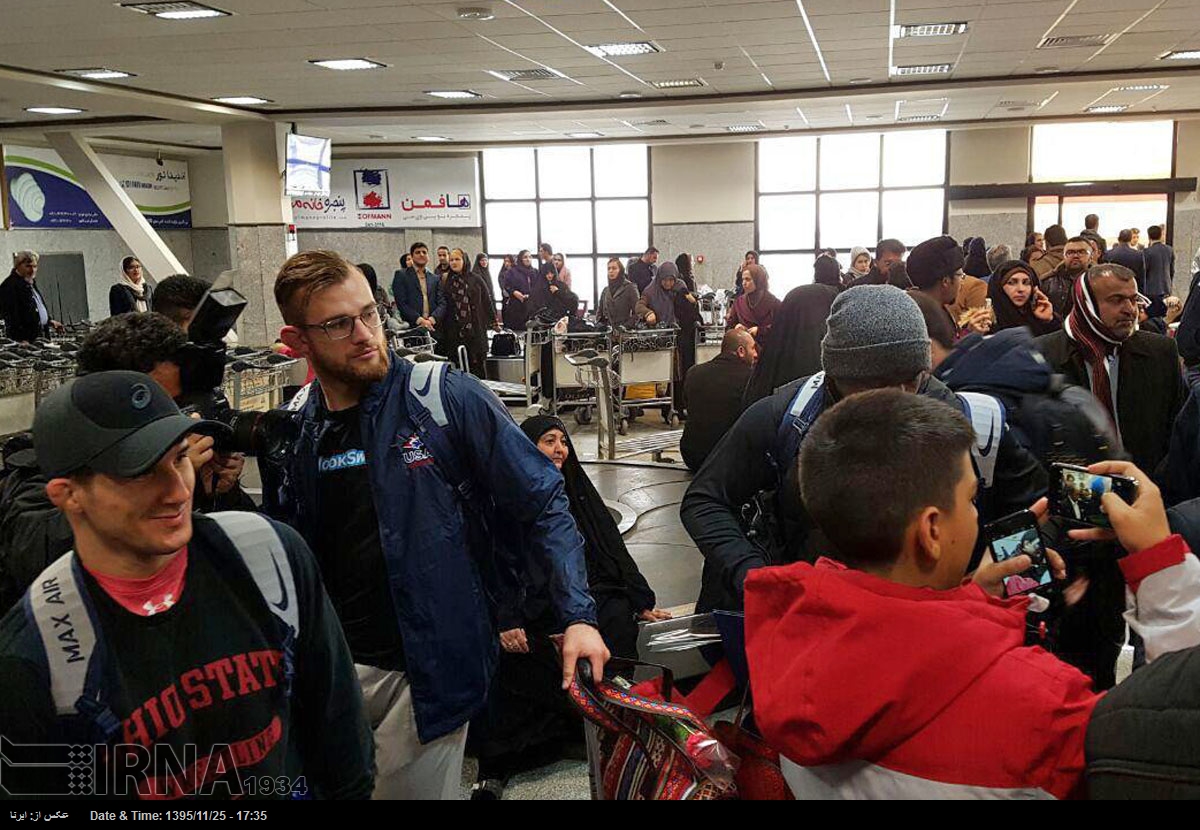
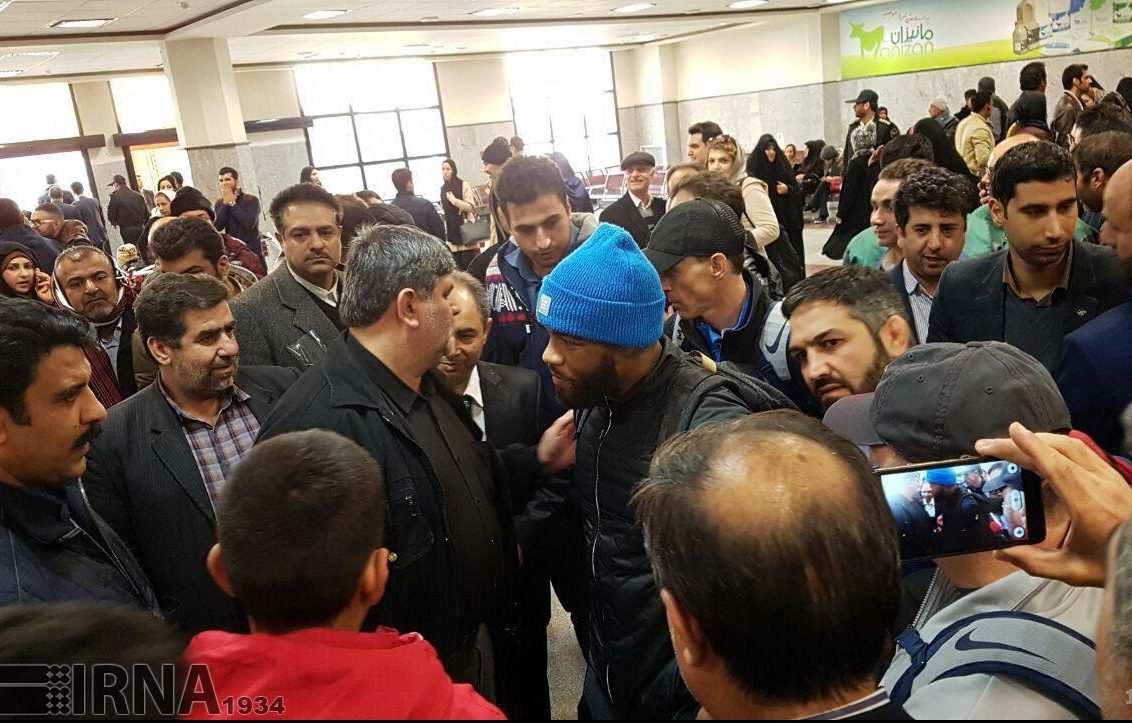
Following media speculations about the presence of the US wrestling team in Iran Wrestling World Cup due to be held in mid-February in Western city of Kermanshah, the Foreign Ministry has tasked a committee set up in cooperation with relevant institutes at the Ministry to make necessary decisions in this regard.

The Foreign Ministry stressed that it will safeguard the Iranian nationals’ rights and defend interests of Iranian people in such cases.

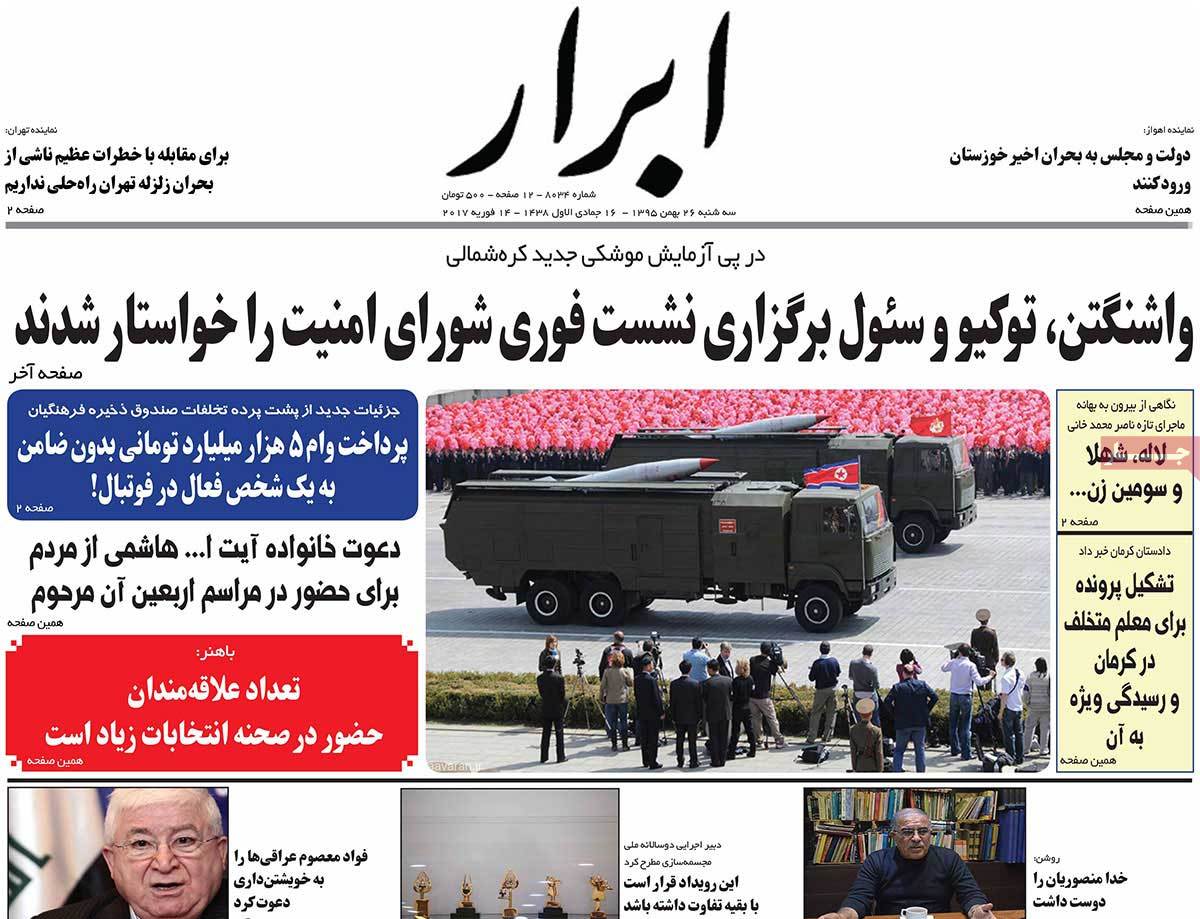
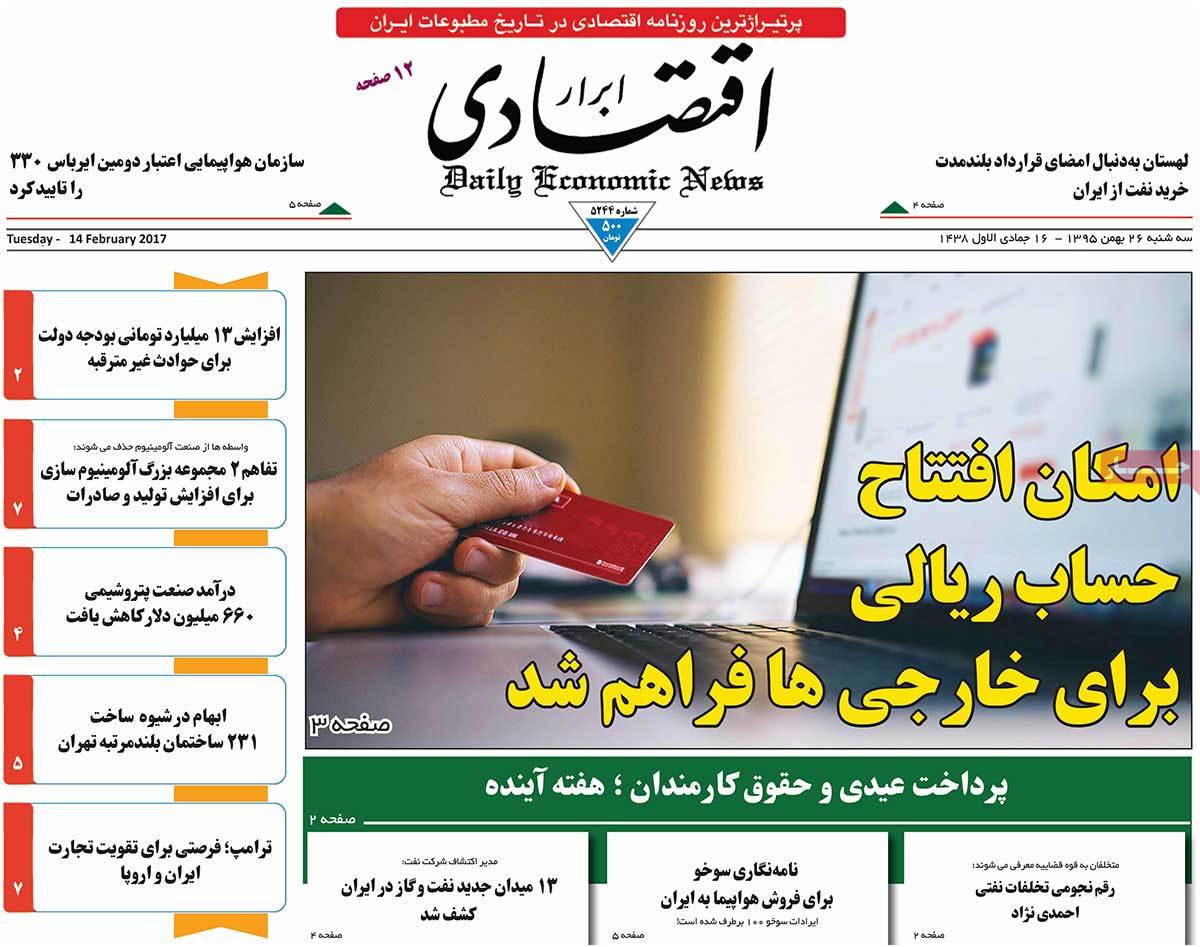
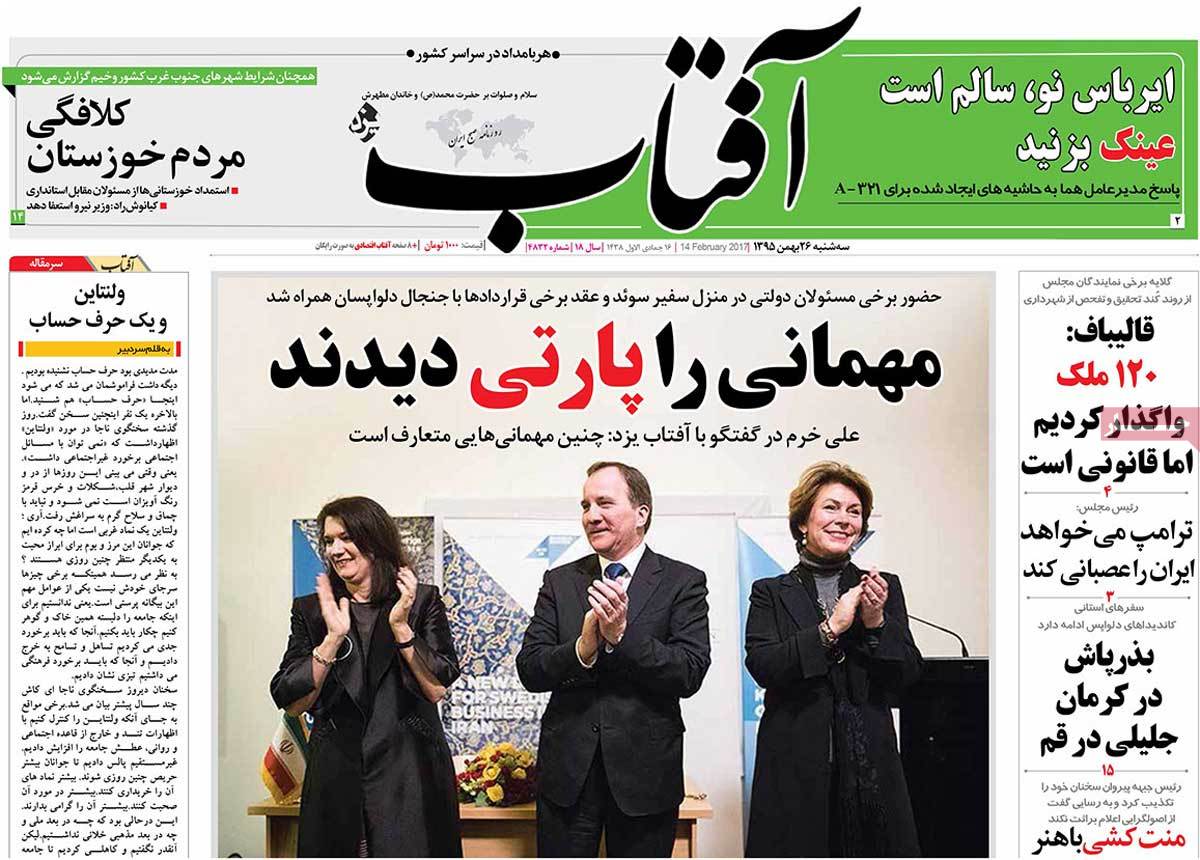
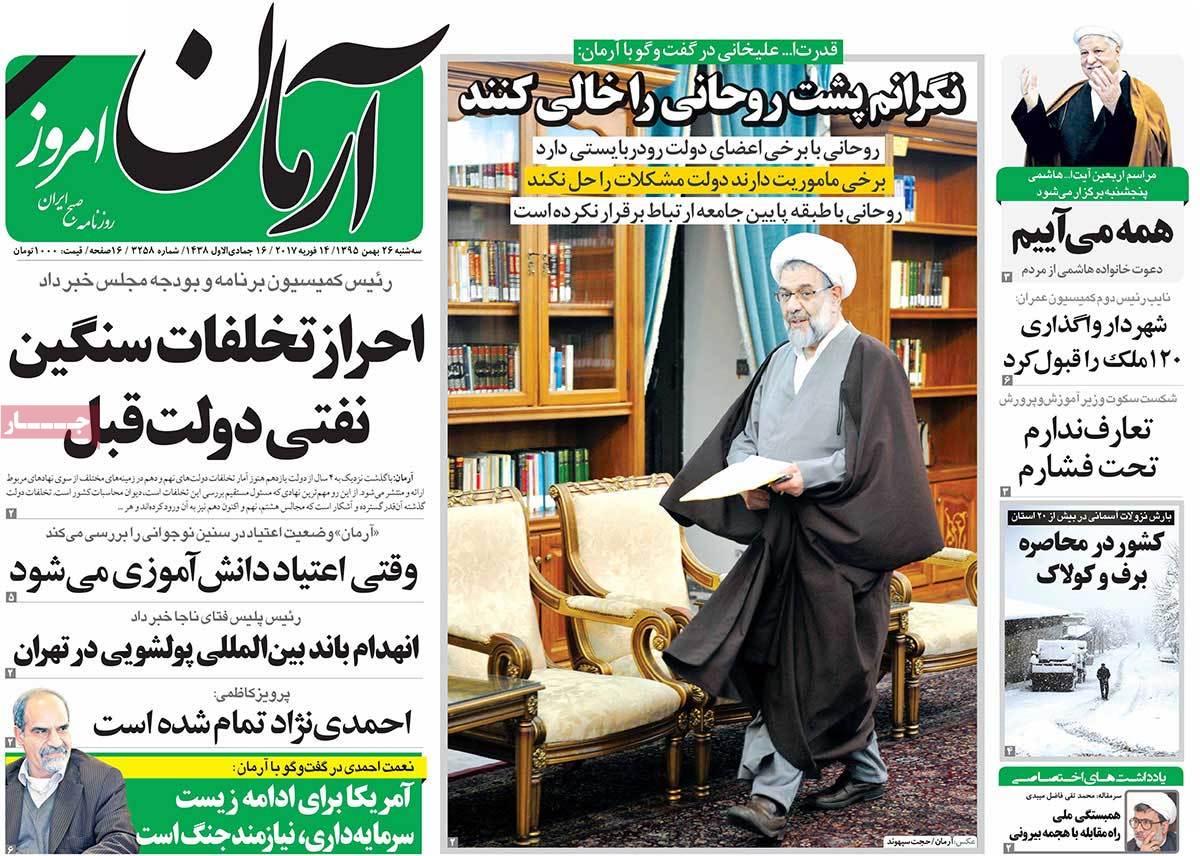
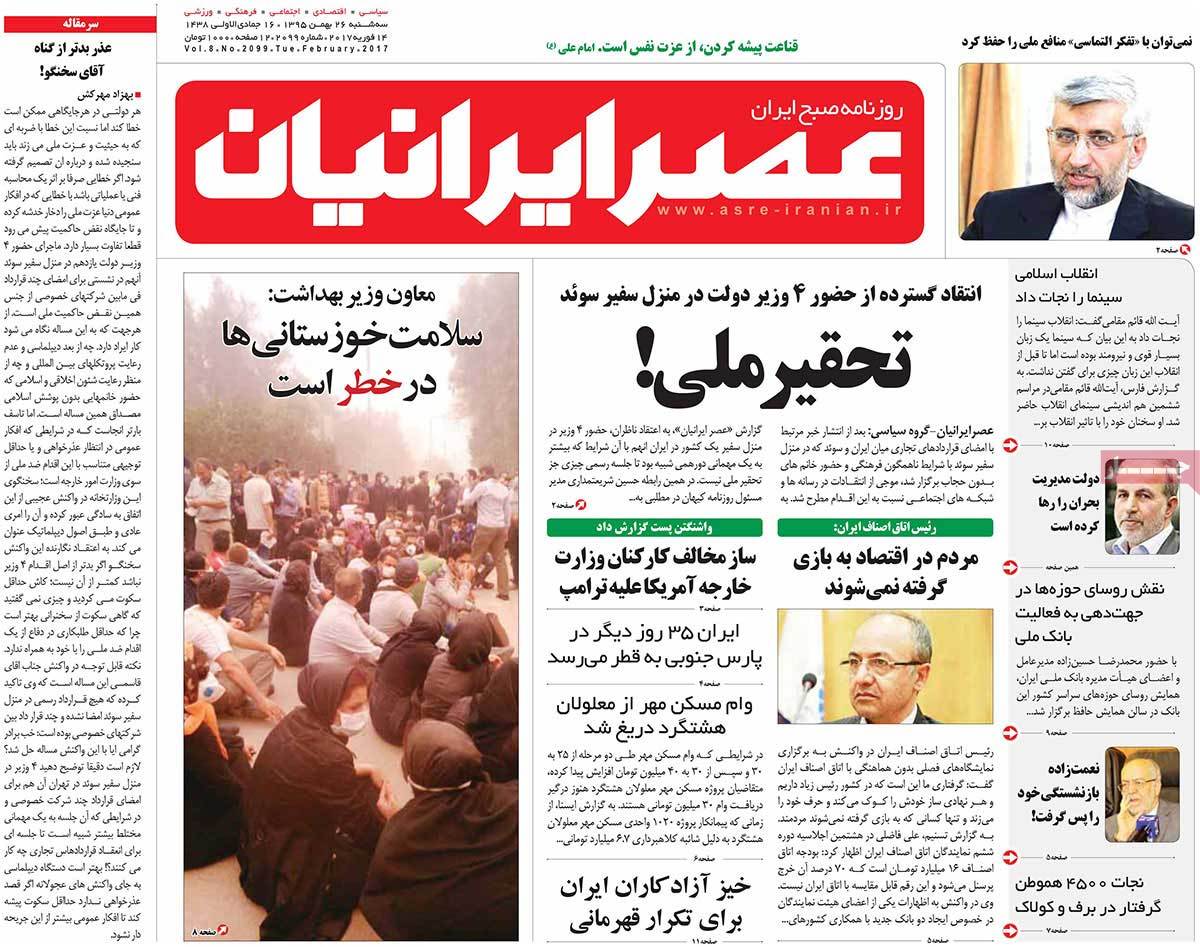
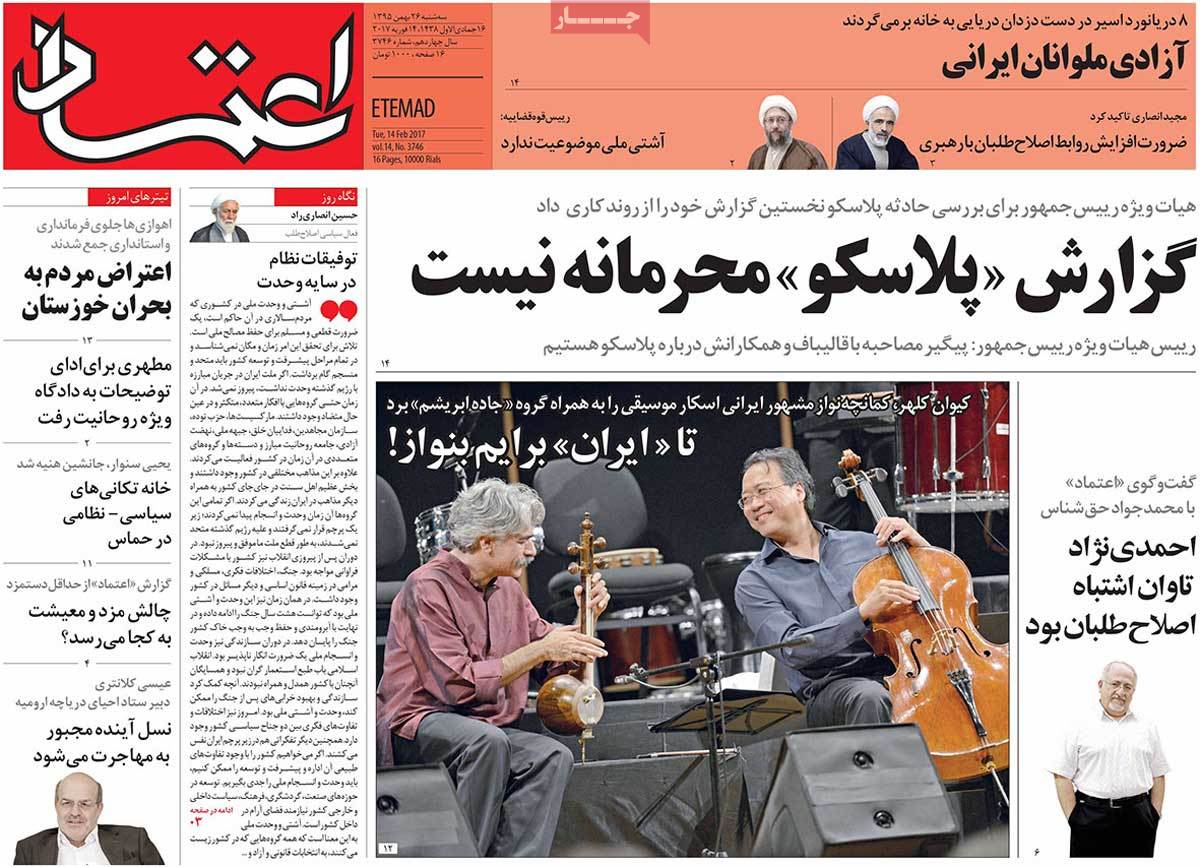
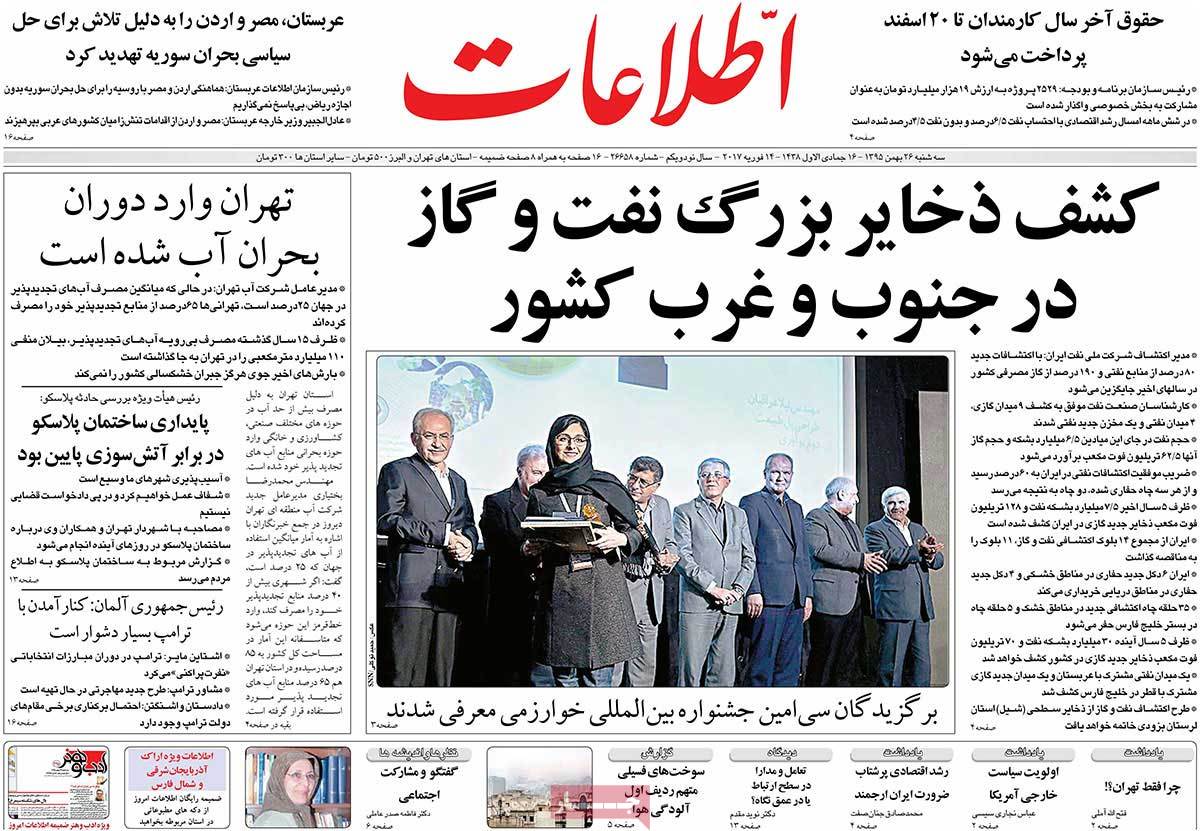
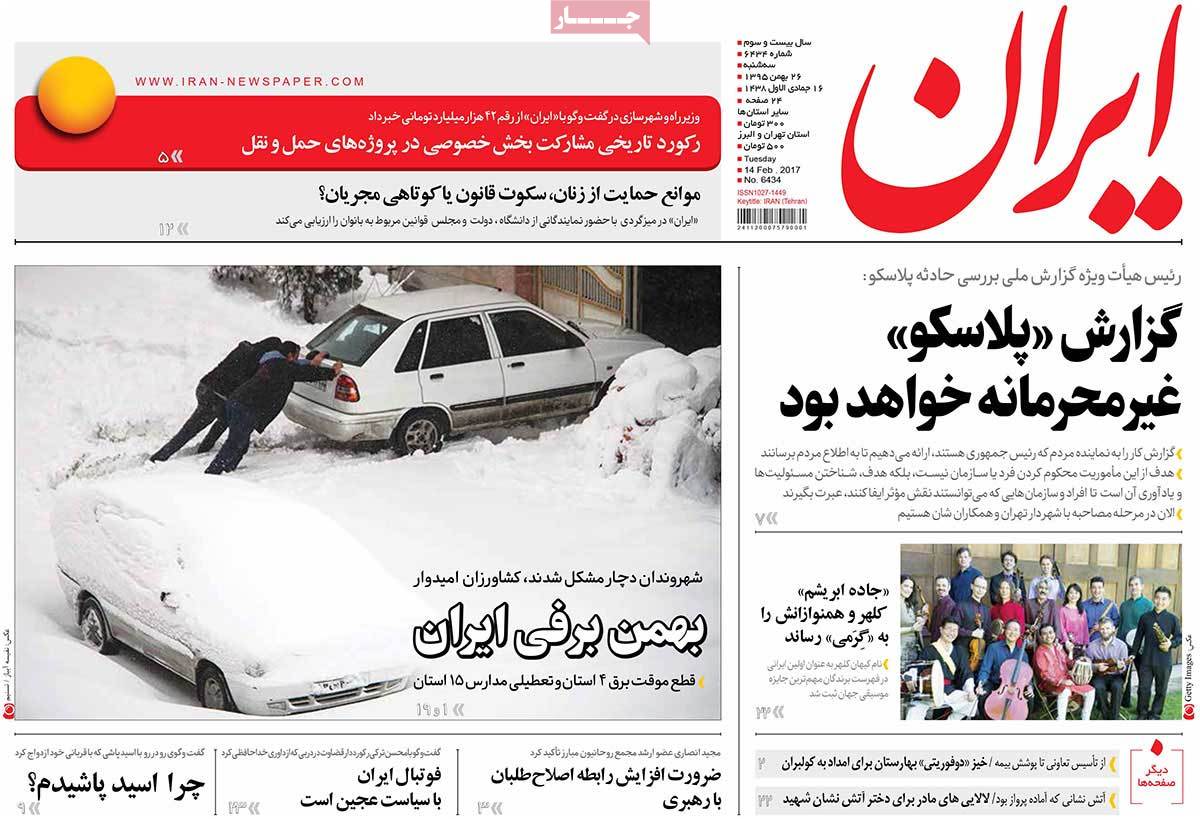
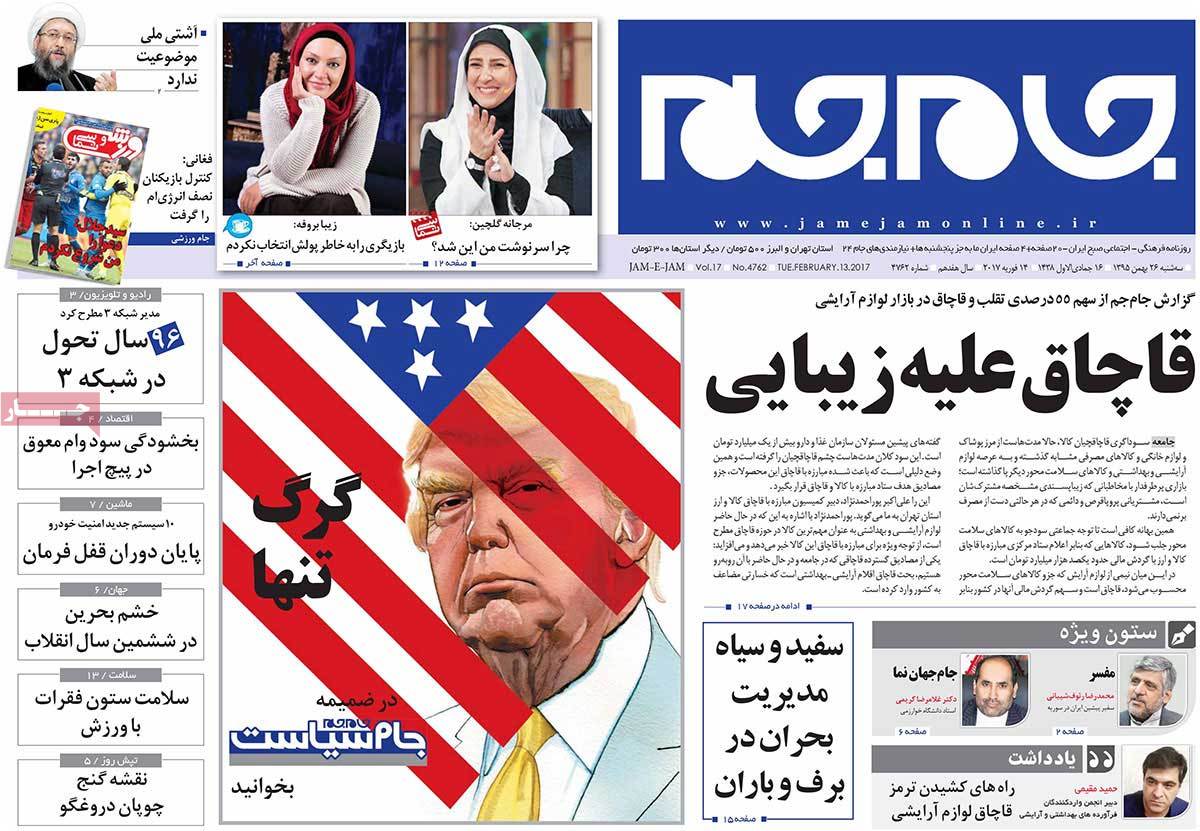
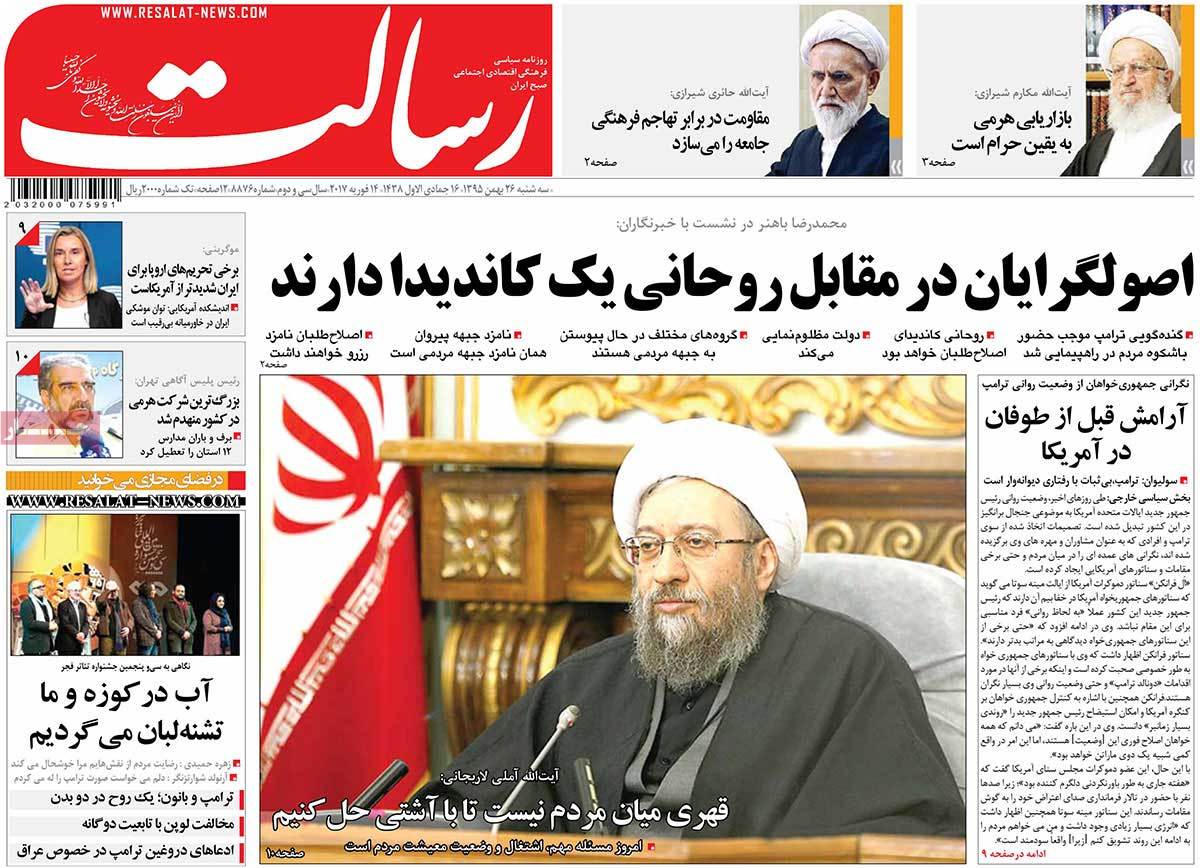
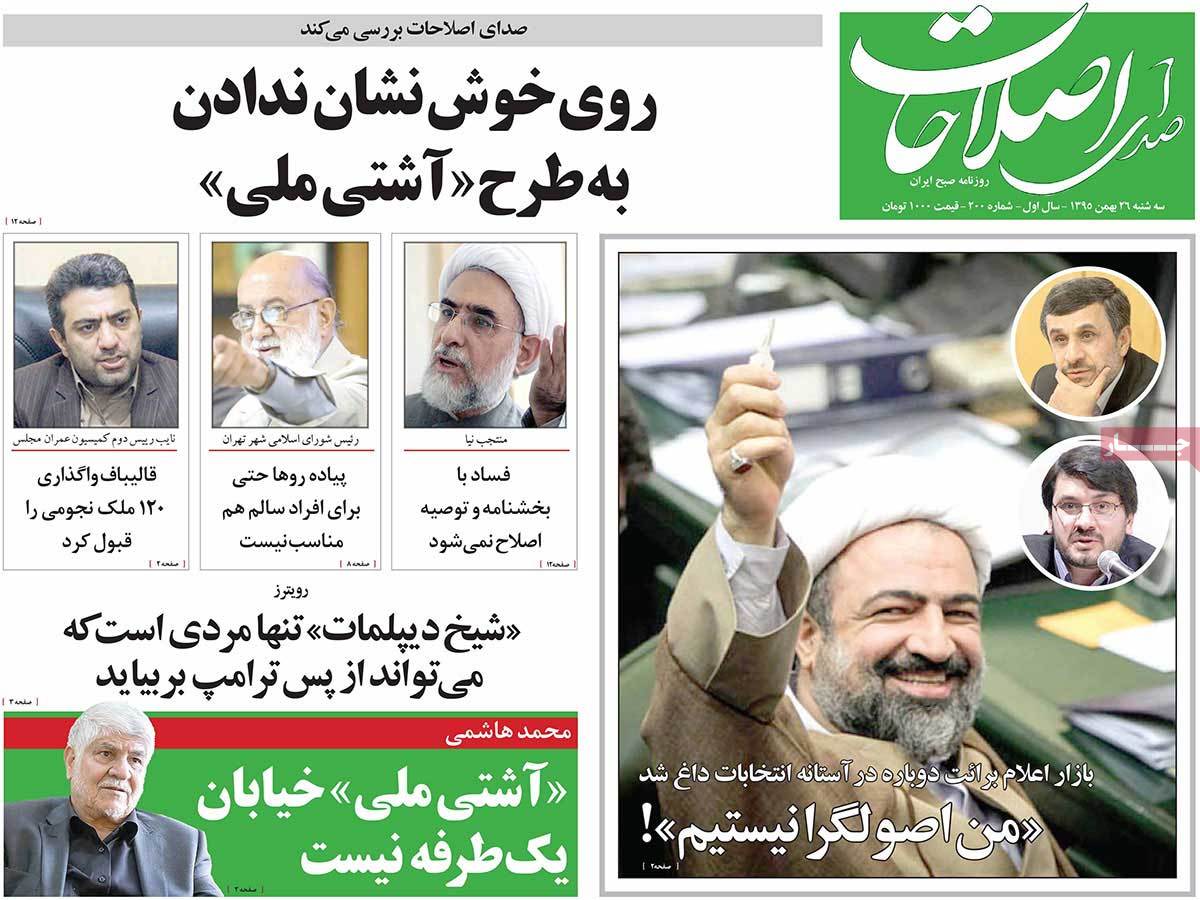
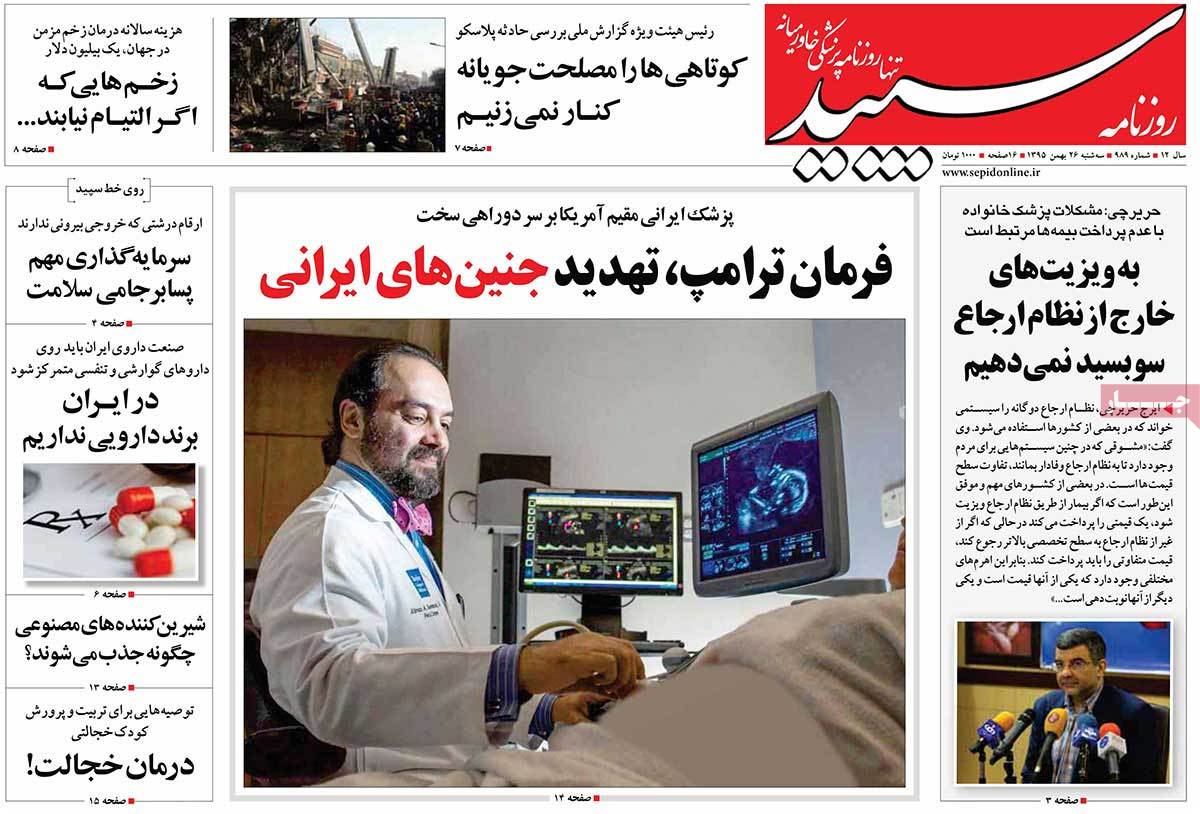
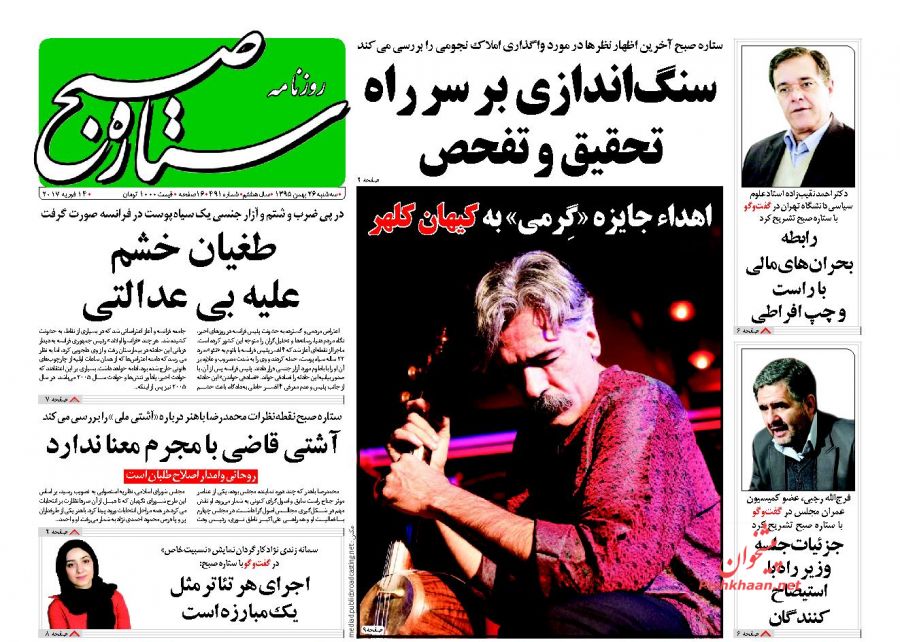
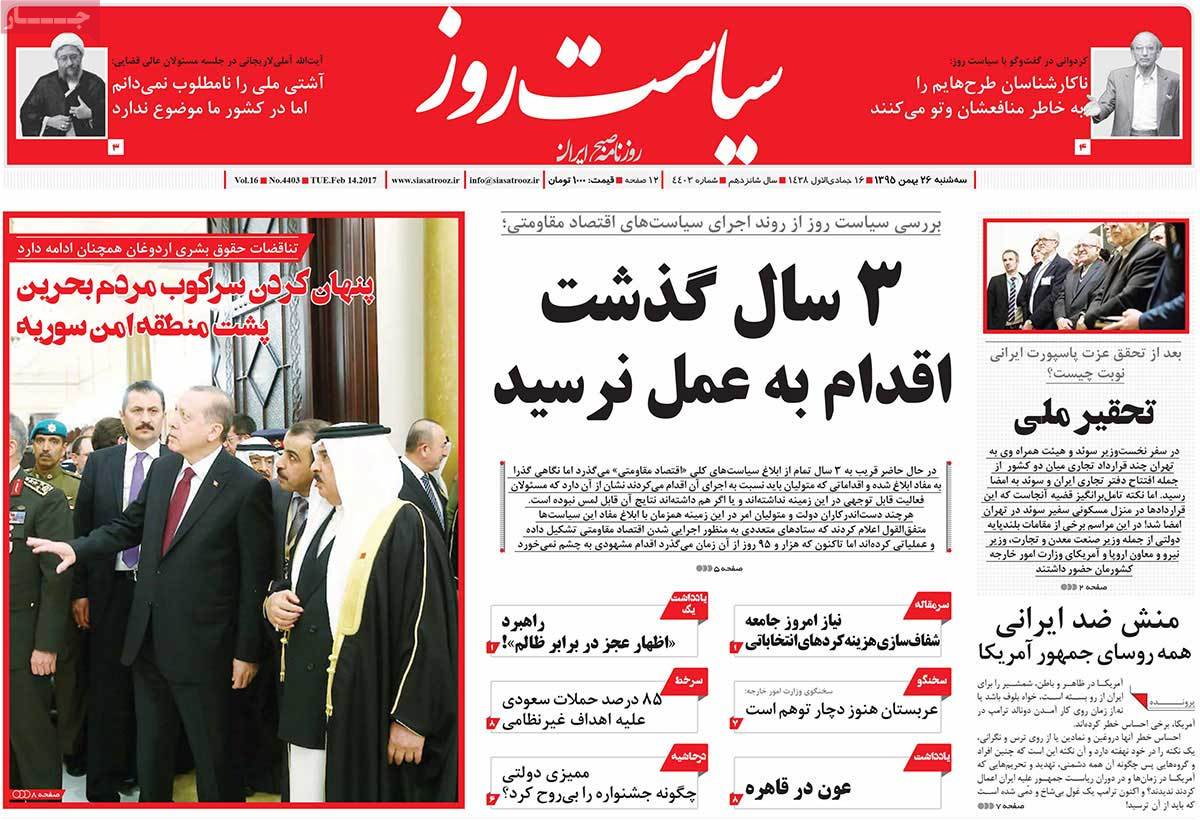
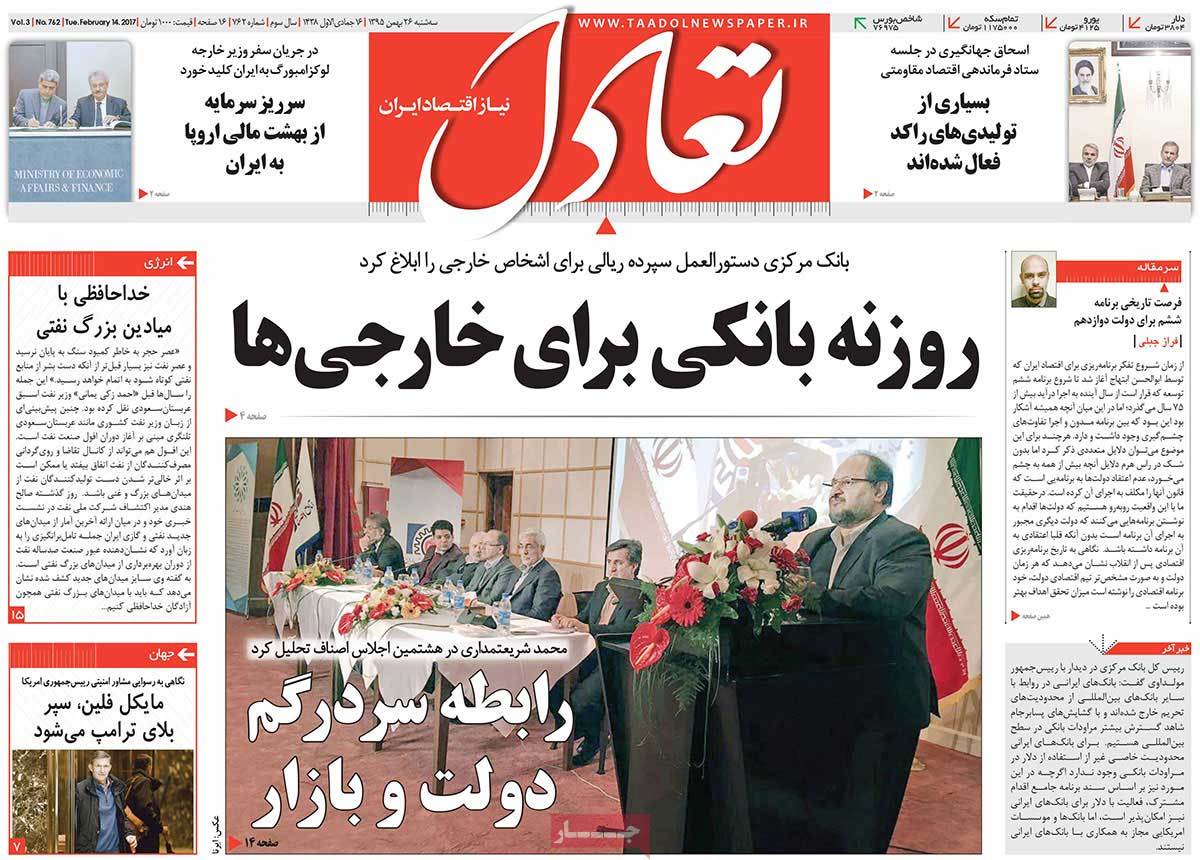
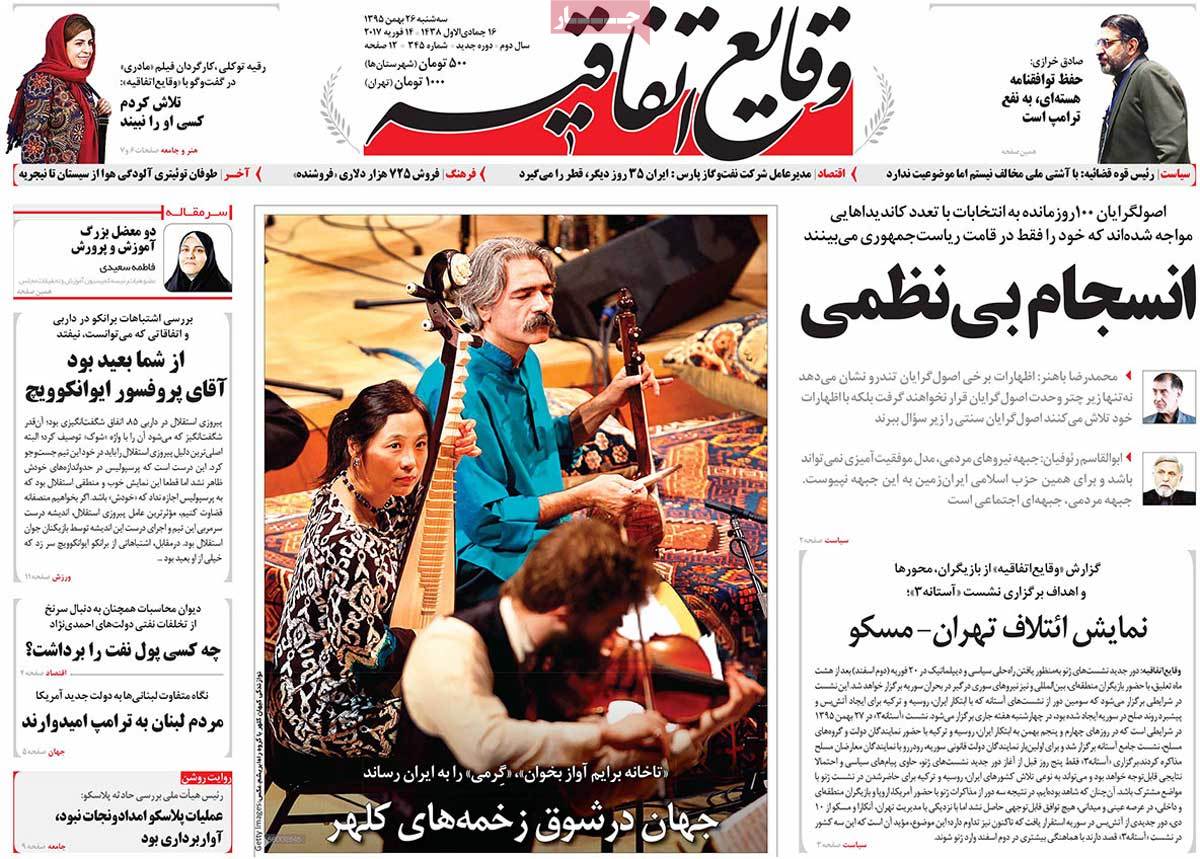
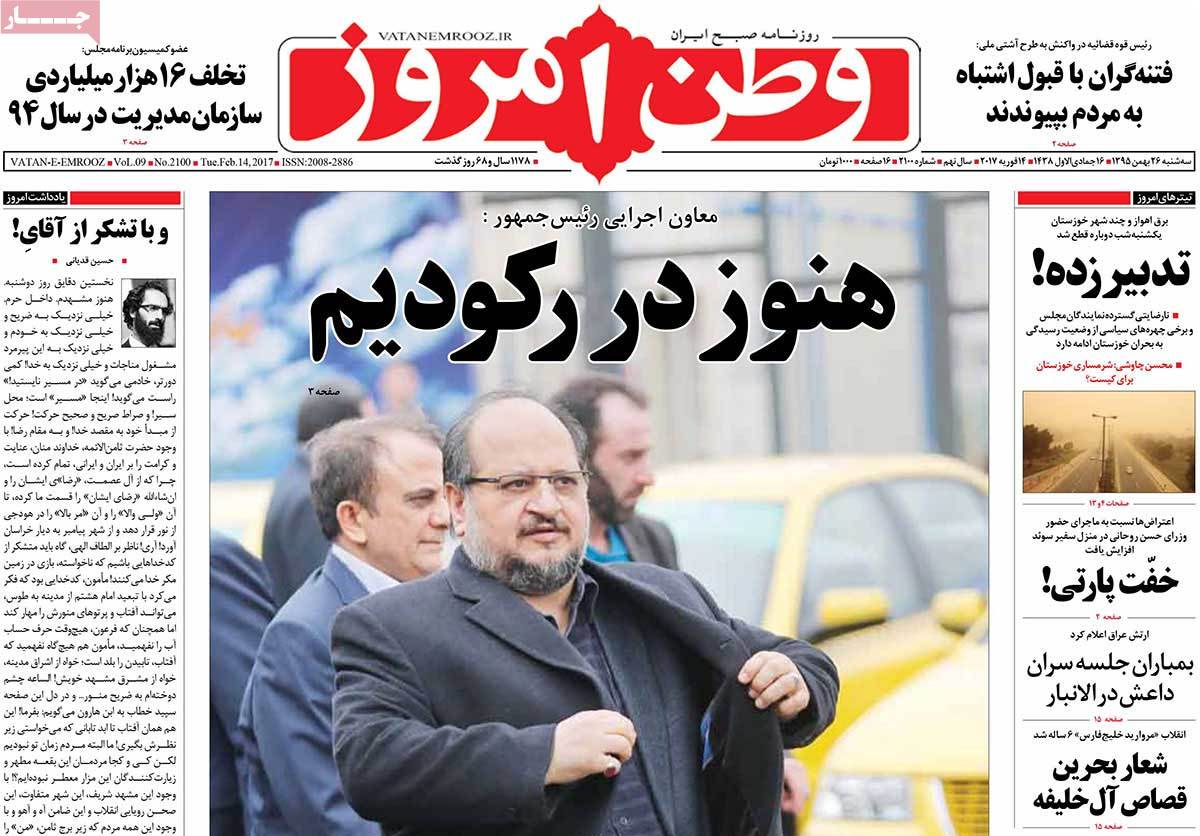
A Look at Iranian Newspaper Front Pages on January 30

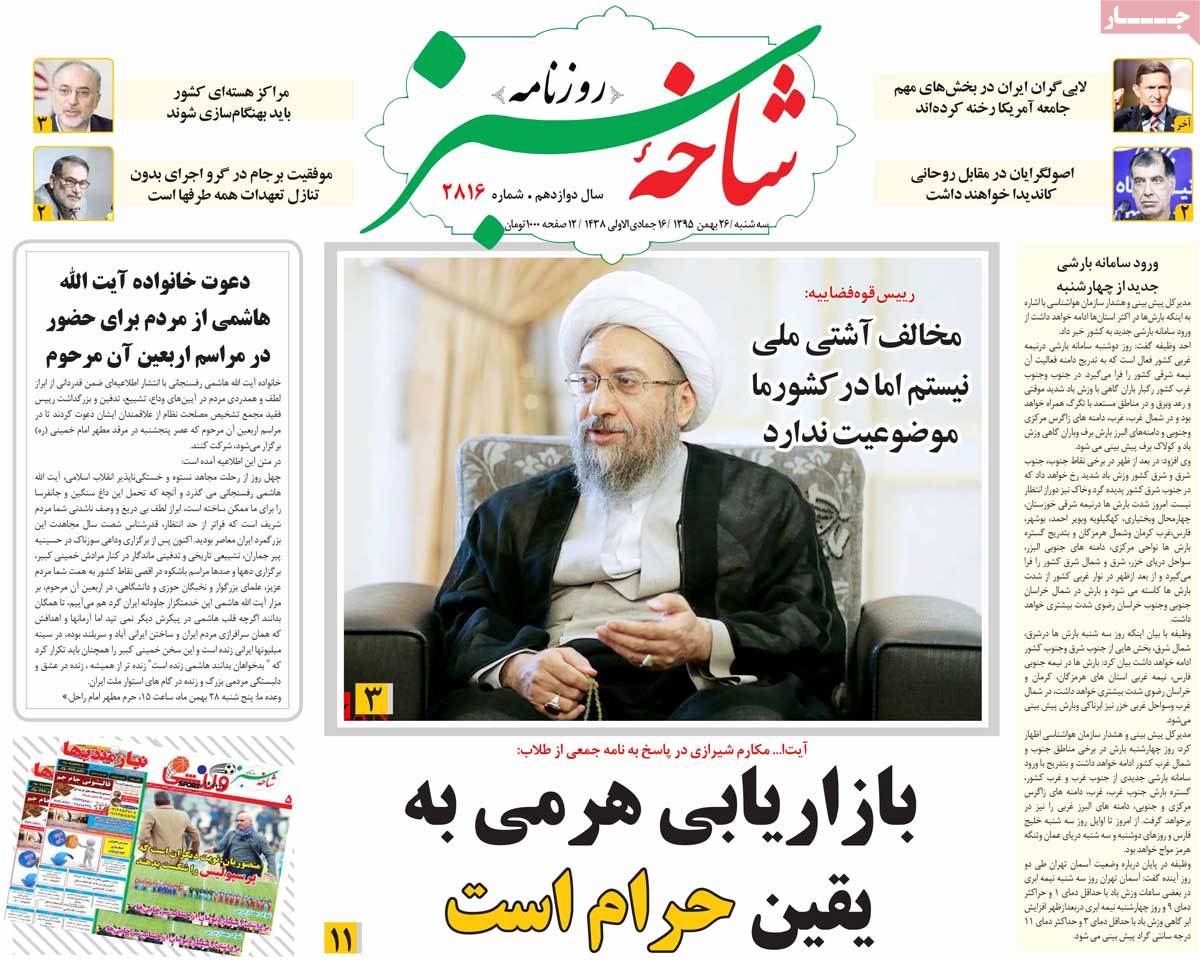
A Look at Iranian Newspaper Front Pages on November 19

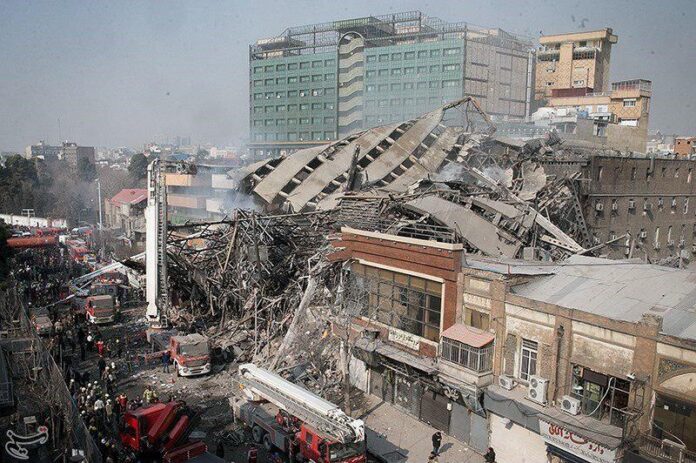
Newspapers today covered a message released by Ayatollah Khamenei, the Leader of Iran’s Islamic Revolution, in praise of selfless firefighters killed in the recent tragic collapse of Plasco Building in Tehran. They also covered the funeral ceremony slated to be held on Monday morning in Tehran.

The visa restrictions introduced by US President Donald Trump and the global protests against the racist decision also received great coverage.

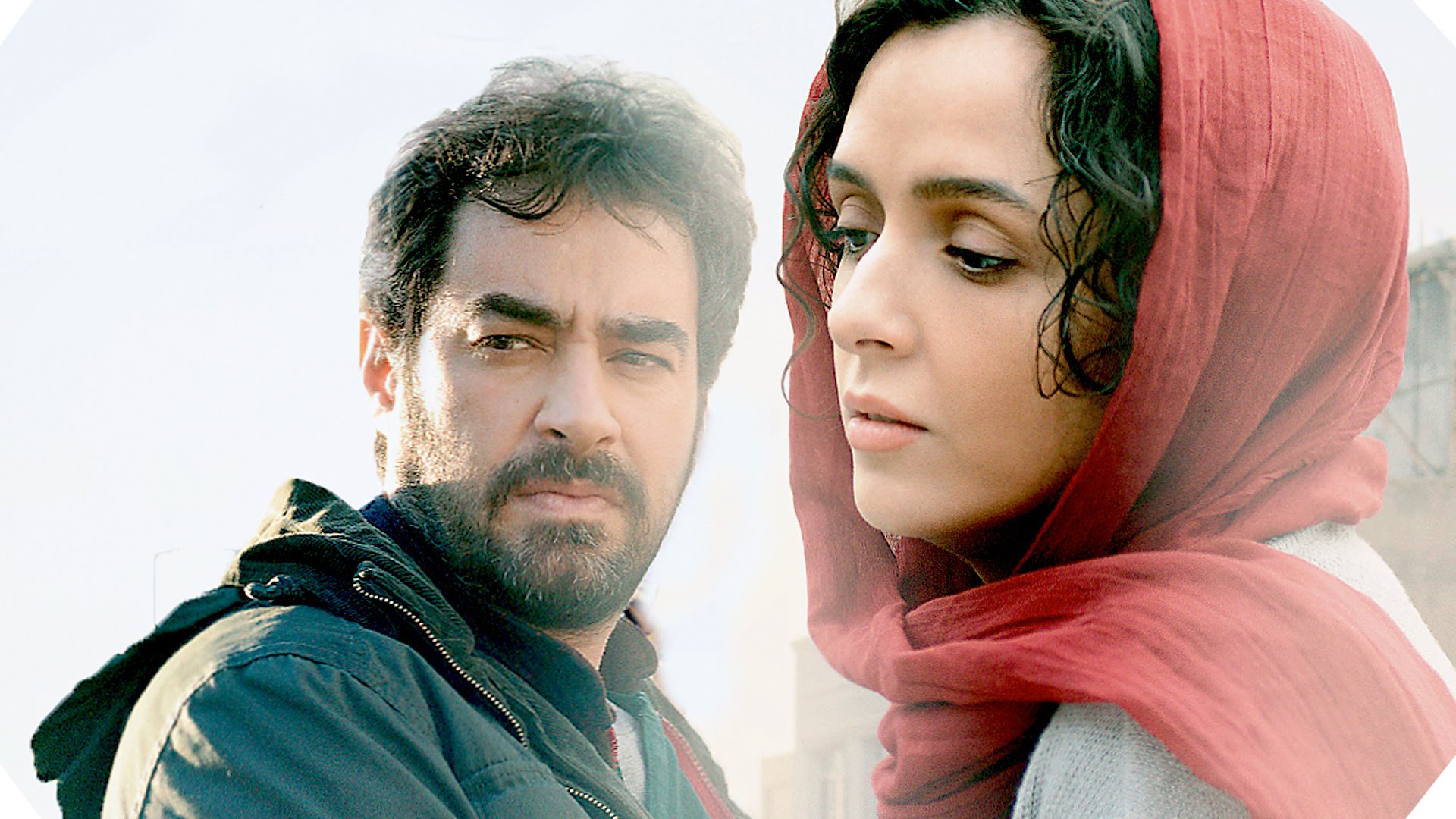
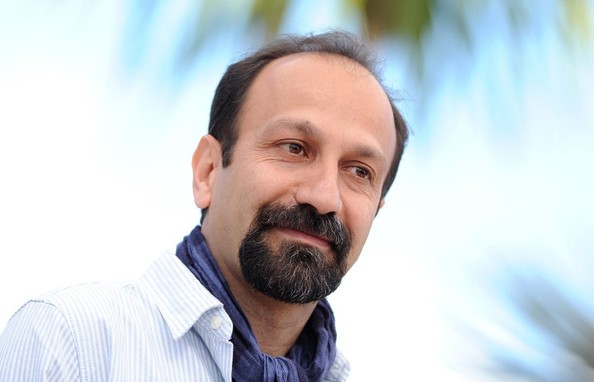
A top story today was the decision made by Asghar Farhadi, the acclaimed Iranian filmmaker whose film has been nominated for Best Foreign Language film Oscar this year, to boycott the upcoming Academy Awards ceremony in protest at Trump’s visa ban, which includes Iranian citizens.

The above issues, as well as many more, are highlighted in the following headlines:


Afkar:

1- Parliament Speaker: US Government Suffers from Fear of Itself

2- Swiss Envoy to Tehran Summoned to Foreign Ministry over Trump’s Visa Ban

A Look at Iranian Newspaper Front Pages on January 30


Aftab-e Yazd:

1- From Qazipour [conservative Iranian MP] to Zuckerberg against Trump’s Decision!

2- Asghar Farhadi: I Won’t Attend Oscars Ceremony

3- Government’s Biggest Pain Is the Words It Uses: Vice-Speaker of Iran’s Parliament

A Look at Iranian Newspaper Front Pages on January 30


Amin:

1- Massive Protests against Trump’s Executive Order

A Look at Iranian Newspaper Front Pages on January 30


Arman-e Emrooz:

1- Leader’s Message in Praise of Firefighters’ Sacrifice: These Martyrs Will Never Be Forgotten

2- Rouhani in a Big Test. He Has a Role beyond a President in May Presidential Elections: Politician

3- US Outraged by Trump; Swiss Envoy Summoned to Iran’s Foreign Ministry over US Muslim Ban

A Look at Iranian Newspaper Front Pages on January 30


Bahar:

1- Trump’s Bubble Getting Bigger: US President’s Big Steps to Fulfil Campaign Promises

A Look at Iranian Newspaper Front Pages on January 30


Ebtekar:

1- Once upon a Time America: World Reacts to Trump’s Visa Ban for Citizens of 7 Muslim States

A Look at Iranian Newspaper Front Pages on January 30


Etemad:

1- What Will Happen to Confidential Memoirs of Ayatollah Rafsanjani? His Son Says Their Release Can Be Negotiated with Senior Figures of Establishment

2- Asghar Farhadi in Protest at Trump’s Visa Ban: I’m No Exception, I Won’t Come to US

3- Parliament Speaker’s Reaction to Iranian Actress’s Move to Boycott Oscars Ceremony: Our Artist’s Position Was Symbol of National Pride

4- US vs. US: American Airports Turn to Hubs for People’s Massive Protests against Visa Ban

A Look at Iranian Newspaper Front Pages on January 30


Ettela’at:

1- Brave Firefighters Reminiscent of Those Who Sacrificed Their Lives during Iran-Iraq War in 1980s: Leader

2- Iran Officially Protests at Trump’s Racist Decision

3- Islamic Inter-Parliamentary Union (IIPU): Quds Is Muslim Community’s Spiritual Capital

A Look at Iranian Newspaper Front Pages on January 30


Haft-e Sobh:

1- 25 Documented Stories about Trump’s Decision: Sahar’s Old Parents Arrested, Google’s Support for Sanaz, Fate of National Team’s Defender, and Rudy Giuliani

2- Taraneh Alidousti Makes It Difficult for Asghar Farhadi [to decide about his travel to US for Oscars ceremony]: Iranian Director Expected to Make Most Difficult Decision of His Life

A Look at Iranian Newspaper Front Pages on January 30


Iran:

1- Farhadi Withdraws from Attending Oscars Ceremony: I Thereby Express My Disgust over Unfair Conditions Imposed on Iranians and Citizens of 6 Other Countries for Entering US

2- Academy Awards: We’re Seriously Troubled by Possible Ban on Farhadi’s Entry to US as Supporter of Filmmakers and Human Rights

3- Fact-Finding Committee Formed for Plasco Incident

4- Hollande: I Warned Trump and Asked Him to Respect Nuclear Deal

A Look at Iranian Newspaper Front Pages on January 30


Jame Jam:

1- Iran’s Leader Urges People to Remember Selfless and Devoted Heroes and Learn Lessons from Their Sacrifice

2- Trump’s Islamophobia: Wave of Criticisms against US President’s Policies Continues

A Look at Iranian Newspaper Front Pages on January 30


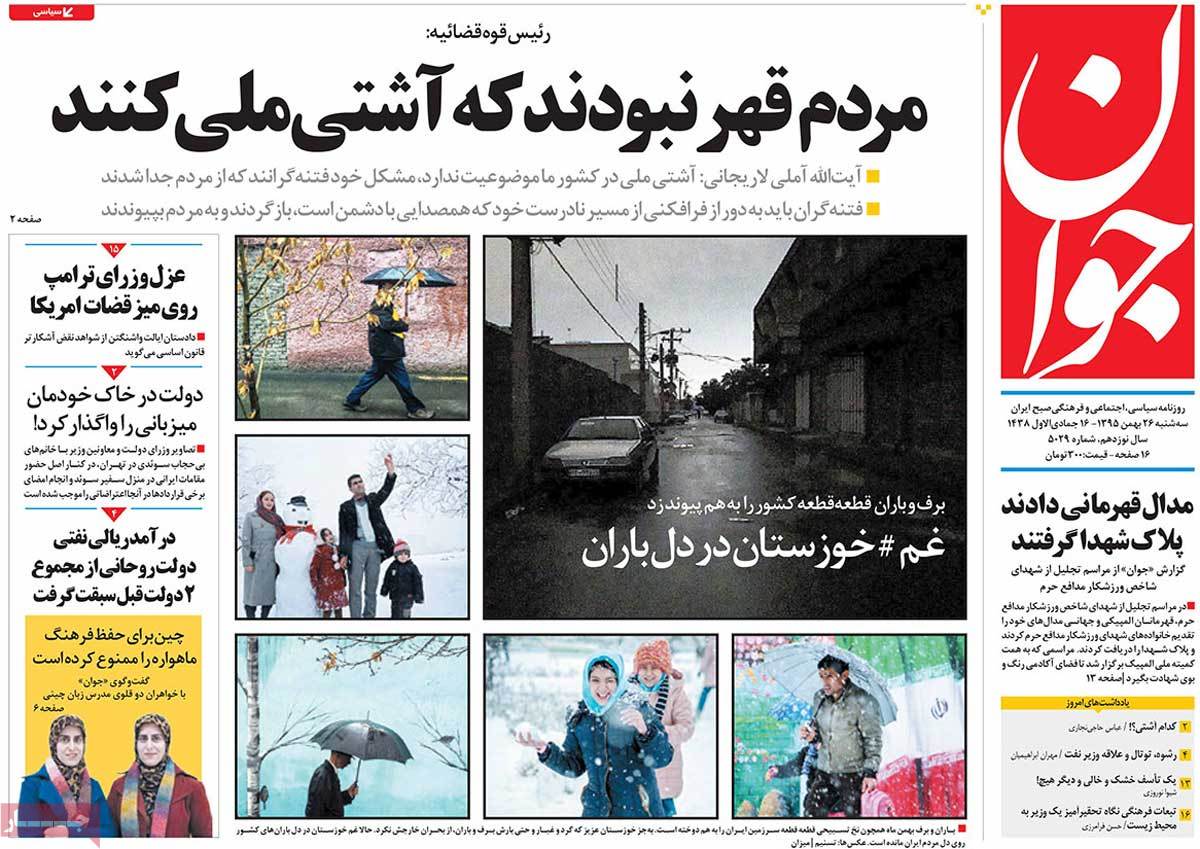
Javan:

1- Int’l Community against American Democracy

2- Zarif: We Saw How US Is Friend of Iranian People!

3- Trump’s Reaction to US Media Protests: Let This FAKE News and Failing New York Times Fold!

A Look at Iranian Newspaper Front Pages on January 30


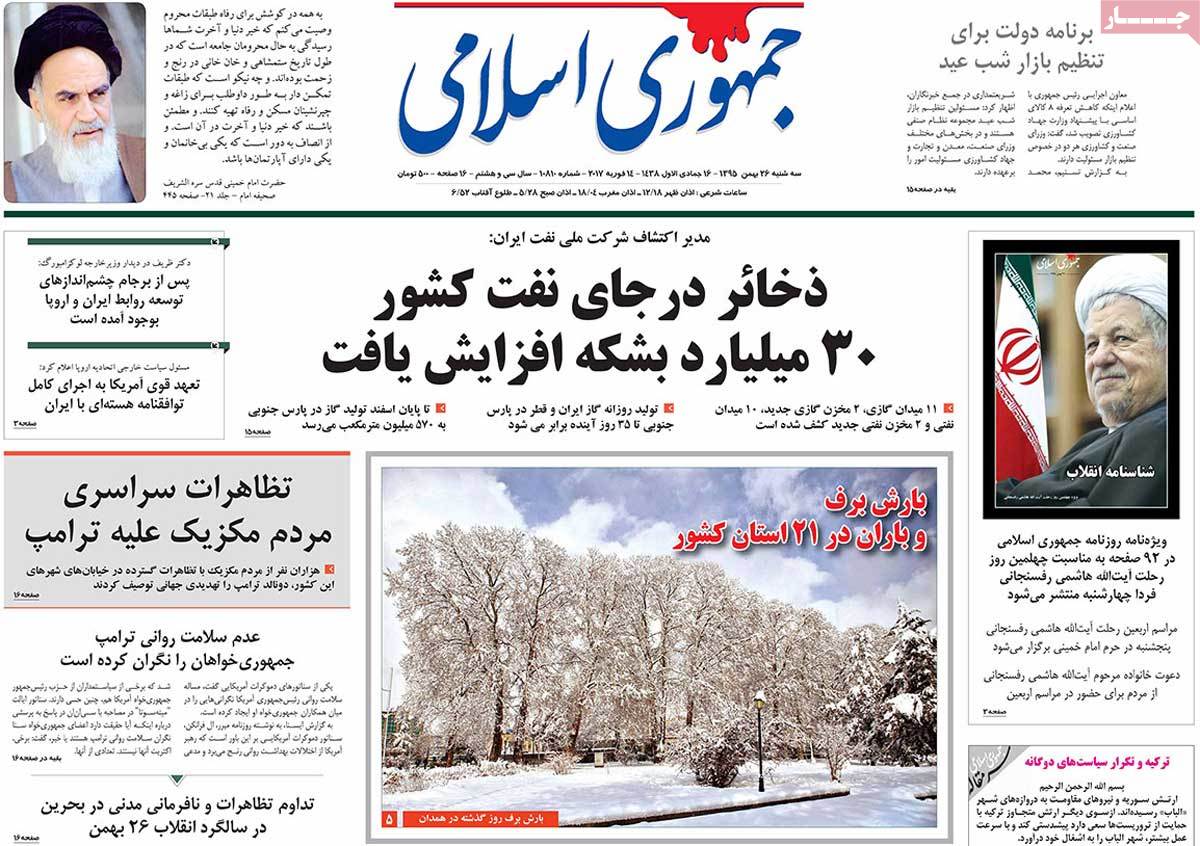
Jomhouri Eslami:

1- Trump’s Policies Unites the World against US

2- Seminary Students and Teachers Hold Protest Rally to Condemn Bahraini Regime’s Suppression of Revolutionaries and Insults to Sheikh Isa Qassim

3- Europe Defends Iran Nuclear Deal against Trump

A Look at Iranian Newspaper Front Pages on January 30


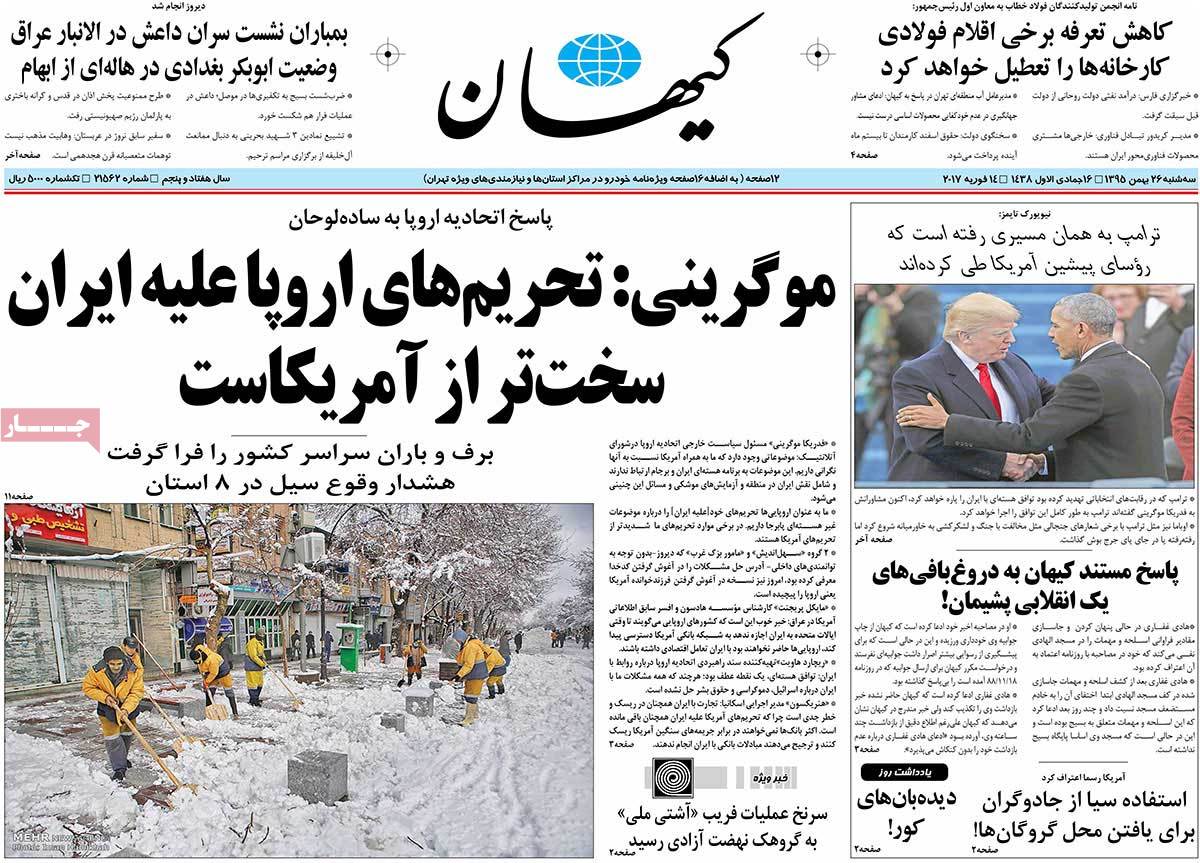
Kayhan:

1- Least Expectation from the Government: Ban Entry of US Citizens to Iran

2- US and Saudi Arabia Competing with Each Other in Slaughtering People in Yemen

A Look at Iranian Newspaper Front Pages on January 30


Khorasan:

1- Those Killed While Serving People Won’t Be Forgotten: Iran’s Leader

2- Tension in Airports and Global Protests against Trump’s Immigration Order

A Look at Iranian Newspaper Front Pages on January 30


Resalat:

1- Funeral Service for Heavenly Firefighters

2- California’s Independence Begins: Trump, the Messenger of US Disintegration

A Look at Iranian Newspaper Front Pages on January 30


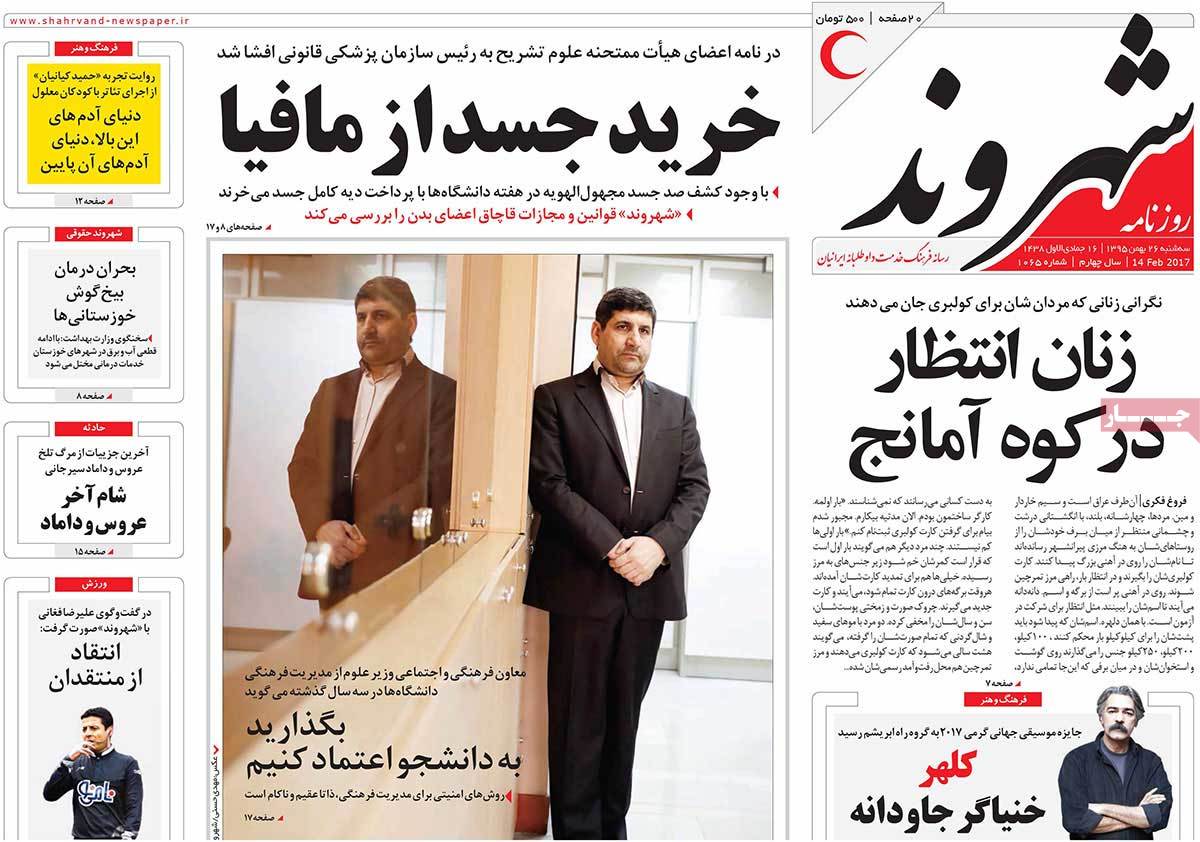
Shahrvand:

1- One Village of Help: Rescue Workers and People in a Village in Iran’s Western City of Sardasht Save 6 People Entrapped under Avalanche

A Look at Iranian Newspaper Front Pages on January 30


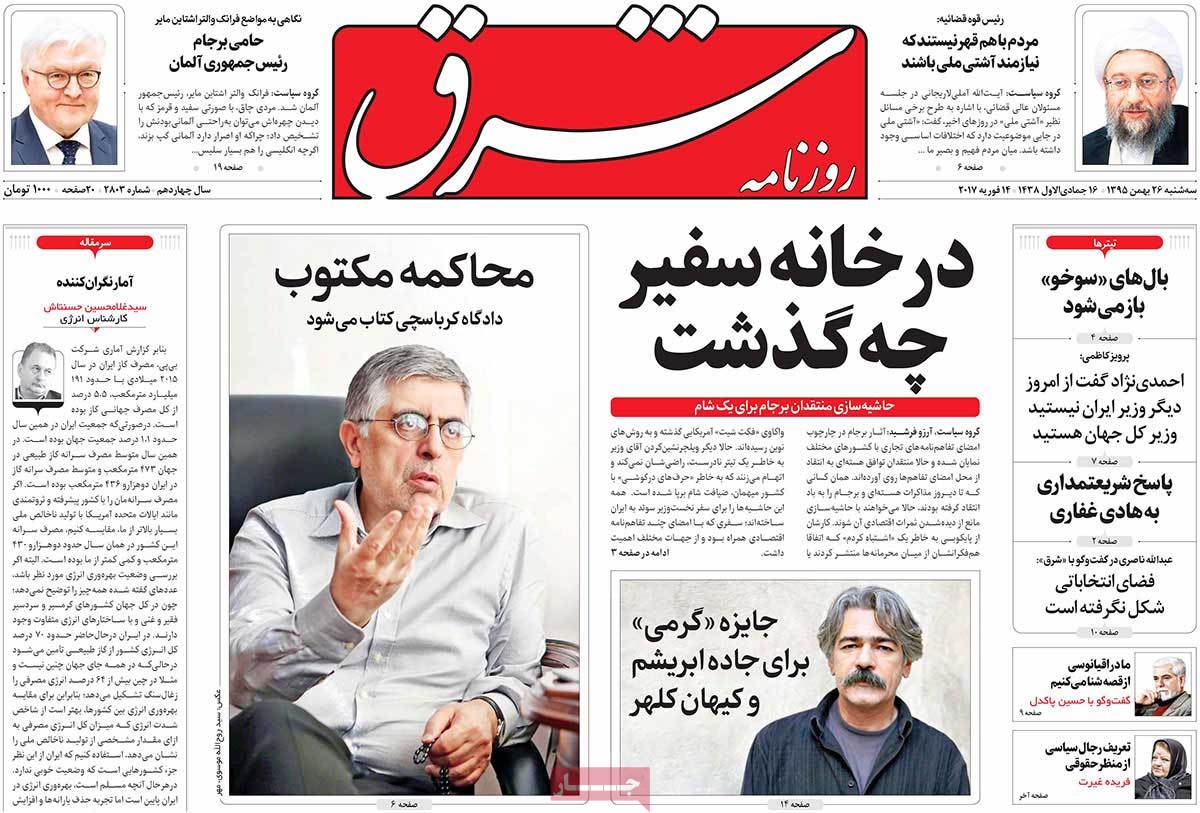
Shargh:

1- Asghar Farhadi Withdraws from Academy Awards

2- Larijani Praises Taraneh Alidousti

3- French FM to Visit Iran

A Look at Iranian Newspaper Front Pages on January 30

Tehran’s High-Risk Areas Menacing Citizens’ Lives: Defence Official

Jalali

According to a Farsi report by Khabar Online News Agency, Brigadier General Gholam-Reza Jalali, the head of Iran’s Civil Defence Organization, said the security of cities is directly linked with the safety of their citizens.

He added that civil defence measures are required to be given greater prominence in managerial and infrastructural urban dimensions and layers.

Jalali stressed that as per the Establishment’s general policies outlined by the Leader of the Islamic Revolution Ayatollah Seyyed Ali Khamenei, the Iranian government is required to reduce the number of such areas in Iranian cities.

“At present, there is a large number of high-risk areas in, or in the proximity of, Iranian metropolises that threaten the lives of the citizens, given that many of Iranian cities, such as Tehran, have failed to be developed according to strict urban construction and municipal engineering criteria and had been deprived of a comprehensive and codified plan for their expansion.”

He stressed that Iranian municipal infrastructure fails to contain urban risks, adding, “There is a huge number of centres producing and storing chemicals and poisonous materials in these cities, but no plan has been formulated for managing the possible tragic incidents there. In many cases, people are unaware of the existence of such places and their possible threats.”

Therefore, Jalali said, cities have gradually turned into the Achilles’ heel of countries, given the increasing number of human-caused threats, growing menace of natural disasters as well as their greater vulnerability.

“Gas transfer pipelines as well as other energy arteries can pose grave risks to the cities.”

He urged holding expert meetings to review and discuss issues such as paying greater attention to emergency housing and evacuation in urban development plans, promoting the multi-purpose use of urban infrastructure and spaces and decreasing the vulnerability of high-risk energy transfer and generation infrastructure such gas pipelines.

At the present era, wars, inevitably, are spread to cities, he regretted, adding that urban management patterns are not detached from urban structure models.

“Therefore, the power of people’s will is amongst the main components of a country’s national power.”

He called for greater attention to challenges facing emergency evacuation and housing by implementing comprehensive disaster preparation plans.

Jalali stressed that such plans are required to ensure better preparedness in the face of emergencies and natural disasters.

“To adopt appropriate civil defence measures, we are required to devise an effective management structure, provide necessary means and appoint competent commanders.”

Iran Is neither Xenophile, nor Xenophobe: President Rouhani

Rouhani

“We’re neither xenophile, nor xenophobe. We’re Muslims, Iranians and revolutionary people,” said the President at the late Imam Khomeini’s mausoleum in Tehran on Monday.

Attending the Imam mausoleum to renew allegiance to the late Founder of the Islamic Republic on the occasion of the 38th anniversary of the victory of the 1979 Islamic Revolution, President Rouhani said the country “will make use of constructive interaction with the world to benefit its own people.”

MP Criticizes Rouhani’s Gov’t for Failing to Pursue Lawsuits against US

No Talks as Long as US Maintains Sanctions, Bullying: Iran

Yahya Kamalipour was quoted by ICANA as saying, “Despite the efforts made and measures adopted, we don’t have a good track record in pursuing Iran’s lawsuits against the US.”

The vice-chairman of the Parliament’s Judicial-Legal Commission criticized the performance of the Legal Department of the Presidential Office, and noted Iran has not been very successful in following up the cases it has brought at international circles over the violation of the nation’s rights.

He expressed the hope Iran will be able to use better mechanisms and seasoned experts to reclaim its violated rights by filing lawsuits at international circles.

“We are weak in legal and diplomacy domains. That we can’t get a positive, definitive, and effective result from the lawsuits we file shows we haven’t had a good performance in the international arena,” said the MP.

It is noteworthy that the world’s negative view about Iran affects the issuance of verdicts in Iran’s favour, he said, adding if Iran appears in courts with determination, it will be able to win the lawsuits it has filed against Washington.

According to ICANA, some Iranian lawmakers are demanding an investigation into the fate of the lawsuits Iran has brought against the US at international circles, and that’s why the performance of the Legal Department of the Presidential Office has been put under the microscope by the Parliament.

Iran Categorically Denies Allegations of Its Support for Taliban

Taliban

Mohammad-Ebrahim Rezaei, a member of the Iranian Parliament’s National Security and Foreign Policy Commission, said the claims raised by certain Afghan statesmen and provincial officials about Iran providing Taliban with arms support are entirely unfounded.

According to a Farsi report by ICANA, he added that the Islamic Republic of Iran vigorously denies such allegations and news.

“The philosophy behind the formation of such terrorist groups in Afghanistan is merely expressing hostility against Iran and dealing blows to the country. It is quite astounding that Afghan officials accuse Iran of backing these terrorists.”

Due to their Zionist, American, Wahhabi and Saudi nature, these groups have been shored up by the US, Saudi Arabia and Israel from the very first day of their formation, Rezaei stressed.

“Therefore, any relationship between Iran and these terrorist groups in absolutely impossible.”

Rezaei regretted the fact that some provincial governors and statesmen in Afghanistan are still under the US influence, adding this will jeopardize the interests of Afghan people.

He said undoubtedly, as long as the US maintains control over Afghanistan, terrorism will keep casting its shadow on the county.

Over the past few decades, relations between Iran and Afghanistan have constantly strengthened.

Earlier, Hayatullah Hayat, the governor of Afghanistan’s Helmand Province, in an interview with Radio Liberty claimed that, “Taliban militants have hit a base in the country with missiles supplied by Iran.”

35th Fajr Int’l Film Festival Kicks Off in Tehran

35th Fajr Film Festival

“We are responsible to improve the infrastructure for the (movie) industry,” he said at the top annual cinematic event, which honored four veteran cineastes and awarded the winners of four categories of promotional items, Mehr News Agency reported.

“Iranian cinema today reflects social issues in the community. The number of film productions and ticket sales in recent years show people’s tendency towards the (seventh) art. Movies have a unique role in cultural development.

We have confidence in our filmmakers and believe we can reduce social harm and develop morality and social values with your help,” Salehi-Amiri said, and called the event “the festival of hope and vitality.”

Head of Iran Organization of Cinema Hojatollah Ayoubi pointed to the rise of the young generation of filmmakers.

“This year, half of the movies in the festival are productions of young filmmakers. When I watched the films, I was really amazed. I believe the next fiscal year (starts March 21) is a brilliant year for Iran cinema since we have filmmakers who make movies despite all the constraints and introduce Iranian cinema to the world.”

Addressing the culture minister, he said, “This year, the youth have proved themselves. In this year’s edition, there are unique social films replete with hope. The (young) filmmakers have adopted a sympathetic and in-depth approach to the issues.”

  In the Footsteps of Veterans

Ayoubi noted that the young generation of film directors has followed in the footsteps of veterans to keep Iran cinema alive on the global scene.

He praised actress Taraneh Alidoosti, 33, (who plays the lead female role in Iran’s nominee in the best foreign language film category at the Oscars 2017) for her decision not to attend the Academy Awards ceremony next month in a show of support to her countrymen, following the latest visa ban for citizens of seven countries including Iran, issued by US President Donald Trump.

“This is the power of Iran cinema…that an Iranian actress boycotts the Oscars,” Ayoubi said.

Part of the event was dedicated to paying tribute to four veteran cineastes, actor Mohamad Kasebi, 66, producer Gholamreza Mousavi, 65, cinematographer Touraj Mansouri, 62, and screenwriter Farhad Tohidi, 60, who received an honorary Simorgh (the festival statuette of an Iranian legendary bird) and a commendation plaque.

Mousavi also hailed Alidoosti and appreciated her gesture.

Winners of three categories of the best trailer, best poster and best photo were announced and received their Crystal Simorgh awards and honorary diplomas.

Analyst Describes Syria Peace Talks in Astana as a Step Forward

Astana

Sabah-ZanganehSabah Zanganeh, a former Iranian envoy to the Organisation of Islamic Cooperation (OIC) and a senior analyst, has discussed the results of Syria peace talks in Astana in a Farsi interview with Shargh daily newspaper.

Here is the full text of the interview:

After a few rounds of peace talks in Astana, now there is a clearer image of the Syria war and the positions different parties hold in this issue.

The summit was held after Iran, Russia and Turkey decided to initiate direct negotiations between the official delegation of Syrian government and the armed rebels.

The statement released at the end of Astana talks explained the different political and diplomatic axioms of the Syrian crisis invoked by the three countries that arranged the ceasefire between the two parties of the war.

Besides calling for a lasting ceasefire and helping the war-hit people, the statement emphasized the need to abandon the armed conflicts and start serious political bargains.

The reaction shown by the rebel party, who tried to create an unusual atmosphere for diplomatic negotiations, however, should be considered as a propagandist one: the rebels expressed their discontent just after the statement was made, and laid down conditions for participating in the future negotiations. Such behaviour shows that they wouldn’t enter the negotiations if were the conquerors of the battlefield.

The rebels endeavour to boost the morale of their associated forces throughout Syria. Such positions are widely supported and urged by Saudi Arabia; some factions receive support from Qatar: by adopting an opposing position, they somehow put pressure on other parties to give them advantages.

The debate is going on between the two sides: Syria, Iran and Russia on the one hand, Turkey as the intermediary between these countries, and armed groups and terrorists on the other hand. Turkey should convince them to participate in the peace talks.

Although the first step was taken, by taking such a stance, the rebels make way for more bargains. Turkey participated in the preparation of the final statement, and at the same time, expressed its opposition as announced by the rebels.

The issue is still being raised in the form of bargains: coming days and weeks will make it clear that how long the ceasefire will last; whether the rebels intend to violate it again or not. In case of violation, the Syrian government and its allies will be practically able to have the upper hand in the battlefield.

The opposition is facing another problem, too: the other rebels who didn’t participate in the negotiations. They raise accusations against the ones who attended the talks; however, the conditions set at the end of Astana Process show that rebels want to hypocritically indicate they were considerate of other parties’ opinions as well.

The negotiations have already left an opening: the parties have committed themselves to the peace talks and ceasefire. It shows that the past is over, and the Syrian issue has entered a new phase. The transmission from military to political phase has taken a lot of energy.

If the advantages given to the rebels are reckoned and other countries recognize them, other opposing forces will be attracted to the negotiations. If they are still willing to continue the military option, no one could guarantee that their main groups, namely terrorists, will remain safe from the attacks of any other party in the Syrian scene.

There are two parallel ways here: the way pursued by the groups who respect the ceasefire, and the one of whoever doesn’t believe in peace talks. Now that Trump is the US President, Washington will likely cooperate with Russia in a limited framework, even if the measures and orientation of this cooperation aren’t still clear. The US may give Russia some advantages to depict its huge propaganda of fighting against terrorist groups until their annihilation.

The volatility of Syria’s situation and diverse possibilities should be considered in political views, as everything will be uncertain until all secretaries and undersecretaries of Trump administration are appointed, and start their foreign visits.

Female ISIS Commander Flees Mosul with Millions of Dollars

ISIS Female

According to a Farsi report by Fars News Agency, a security source in Nineveh province, Iraq, announced that the ISIS commander of Al-Khansa women battalion has fled Mosul with millions of dollars.

Al Sumaria reported that she intended to escape to the Syrian border with some others. ISIS terrorists are alert to arrest them.

“The commander of Al-Khansa battalion has fled to Al-Bajaj, western Nineveh, with a Tajik and four Arab women,” added the source.

This commander was responsible for attracting women to ISIS, and training them to be prepared for suicide attacks.

20 Civilians Killed in US Airstrikes on Yemen

1-_yemen_230

A source told Aljazeera that at least six homes were destroyed and a number of civilians were trapped under the rubble in Yakla District, in the southern province of al-Bayda. Eight women and eight children were among those killed, a provincial official, who did not want to be named, and tribal sources told AFP.

The killed Al-Qaeda figures were identified as brothers Abdulraouf and Sultan al-Zahab, and Saif Alawi al-Jawfi.

Three US helicopters were reportedly involved in the attacks, firing missiles and helicopter machine guns.

There was no comment from Washington on the raids.

The operation was the first in Yemen attributed to the US since President Donald Trump took office on January 20.