Monday, December 22, 2025
Home Blog Page 4102

Iranian Billionaire Not to Be Executed before Repaying His Debts

Mohammad Jafar Montazeri, the Iranian Prosecutor General, announced that Babak Zanjani’s death sentence is final, but he won’t be executed until he returns the money he has stolen, the majority of which is kept outside Iran, according to a Farsi report by Basij Press.

Zanjani was arrested in December 2013 over accusations that he withheld more than $2.7 billion in revenues from oil that he had sold on behalf of the Oil Ministry and the National Iranian Oil Company (NIOC).

In March 2016, the Court of First Instance convicted him and two accomplices, Hamid Fallah-Heravi and Mahdi Shams-Zadeh, of “spreading corruption on earth,” and sentenced them to death. The three defendants were also ordered to repay funds owed to the NIOC and other state organizations.

Later in December, Iran’s Supreme Court upheld the death sentence issued by the Court of First Instance.

Iran Trying to Cope with Environmental Crisis in Southwest

khuzestan

As Iranian people are grappling with a dangerous dust pollution crisis in southwestern province of Khuzestan, the country’s administration and parliament are taking several measures to resolve this problem.

Agriculture Minister Mahmoud Hojjati travelled to Khuzestan as the representative of Iranian President and his administration on Tuesday morning, according to a Farsi report by ISNA.

He has been assigned to cope with the dust problem by controlling its domestic origins.

At the beginning of his mission, Hojjati visited the origins of the dust pollution in a 130,000ha area in southern and eastern Ahvaz, the capital of Khuzestan.

The representatives of Khuzestan in Iran’s Parliament also met Ali Larijani, the Parliament Speaker, on February 15, according to a Farsi report by ICANA.

Pointing to the history of Khuzestan in the Islamic Revolution, the representatives complained about the Iranian authorities’ failure to address the province’s problems.

They called for immediate action to cope with the crisis, conveying Khuzestan people’s discontent with current problematic situation: environmental issues, the dust pollution, water shortage, defective water system in some areas, and insufficient funds.

They called for a workgroup to sort out these various problems by taking swift and serious measures.

“There may be problems with the constructional funds,” Larijani affirmed, “As they aren’t properly allocated in Iran. With a population of 80 million, 90% of the state’s budget is spent on current costs, leaving only 10% for the construction.”

“It was agonizing to see the dust pollution and the following power and water cut in Khuzestan,” he stressed, confirming Khuzestan’s grave situation.

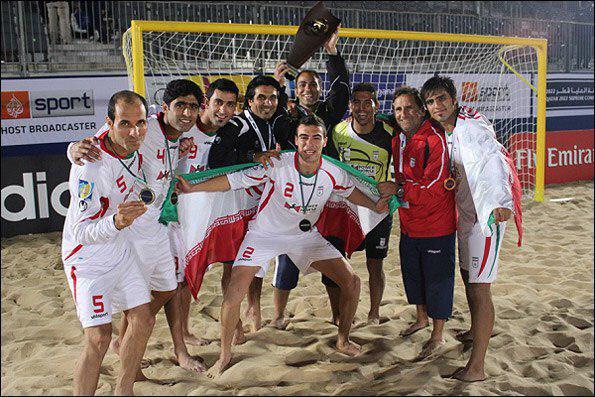
Iran Earns Second Victory in Persian Beach Soccer Cup

1395112710041575110013244

The Iranian team defeated Ukraine 8-7 in penalty shootout after the two teams finished 3-3 in regular time.

Iran started the tournament with a 3-1 victory against Poland.

The Persian Beach Soccer Cup is underway in the southern city of Bushehr between February 14- 16.

Team Melli moved top of the standing with two victories, followed by Italy, Poland and Ukraine.

Iran has been scheduled to meet Italy on Thursday.

Mohammad Hossein Mirshamsi’s side will head to Malaysia for the AFC Beach Soccer Championship in early March and know that a solid tournament on home sand will serve as ideal preparation.

IRGC’s Gyrocopters Pose Challenges to Persian Gulf States: American Enterprise

gyrocopters

“If the IRGC is successful at developing the gyrocopter for Special Forces missions, it could pose some challenge to neighboring states and the [Persian] Gulf Cooperation Council,” Michael Rubin wrote in a recent article in American Enterprise.

“After all, the relatively quiet and low-flying craft can evade radar notice,” the report added.

“Iran has long faced security challenges along its rugged and sparsely populated border regions, especially in its Kurdish and Baluch areas which are prone to insurgency and smuggling,” it went on to say.

American Enterprise further noted that in recent years, Iran has used unmanned aerial vehicles to conduct surveillance in these regions.

However, it added, media reports indicate the country has recently switched to using lightweight, manned gyrocopters for surveillance, and these light aircraft pose a challenge to Iran’s neighbours.

US Should Expect Further Shockwaves after Flynn’s Resignation

Heshmatollah Falahatpishe

“Under the current political circumstances in the United States, it can be said that fault lines are beginning to surface in US politics and larger quakes than Flynn’s resignation will likely occur in the future,” Heshmatollah Falahatpisheh also said in a talk with ICANA on Tuesday.

Flynn stepped down after revelations that he had discussed US sanctions on Russia with the Russian ambassador to the United States before Trump took office on Jan. 20 and misled Vice President Mike Pence about the conversations, Reuters reported.

Hours earlier, it was reported that the Justice Department had warned the White House weeks ago that Flynn could be vulnerable to blackmail for contacts with Russian envoy Sergey Kislyak.

Flynn’s departure was a sobering development in the early days of Trump’s presidency, a 24-day period during which his White House has been repeatedly distracted by miscues and internal dramas.

 Second Blow

“It is the second shock blow that the US ruling system has dealt to Trump after a US court ruled to suspend an immigration ban ordered by him,” Falahatpisheh said.

Trump’s executive order, issued on January 27, blocked the citizens of seven predominantly Muslim countries, including Iran, from entering the US for 90 days and suspended the entry of all refugees for 120 days, except for Syrians who faced an indefinite ban.

However, US District Judge James Robart in Seattle challenged Trump’s executive powers by putting on hold the travel bans, which drew a widespread international outcry.

The US Justice Department filed an appeal against the ruling of the Seattle court on behalf of Trump’s administration, but has so far failed to quash the ruling.

Flynn submitted his resignation hours after Trump, through a spokesman, pointedly declined to publicly back Flynn, saying he was reviewing the situation and talking to Pence.

Flynn had promised Pence he had not discussed US sanctions with the Russians, but transcripts of intercepted communications, described by US officials, showed that the subject had come up in conversations between him and the Russian ambassador.

Such contacts could potentially be in violation of a law banning private citizens from engaging in foreign policy, known as the Logan Act.

Retired General Keith Kellogg, who has been chief of staff of the White House National Security Council, was named the acting national security adviser while Trump determines who should fill the position.

Int’l Car Exhibition Kicks Off in Tehran

Every car brand in the country and those looking to make market entry are attending this year’s Tehran Auto Show.

The auto show started on Tuesday and will run through Saturday, February 18. The expo has dozens of new cars on display from European and East Asian car firms. Local automakers like Iran Khodro Group (IKCO), Pars Khodro and SAIPA have also participated in the event.

According to a report by Financial Tribune, there is a significant shift in car producers’ offers this time. As with several other developing economies, SUVs and smaller crossovers are playing an increasingly important role. Acknowledging this level of interest, several local and foreign brands are now responding to that new market.

In the case of crossovers, many are looking to Chinese, Korean and Japanese brands to get a good deal on a new car; however, even the Russians are now making a move into this sector with the UAZ Patriot, which would be the first Russian car to enter Iran’s market in over a decade.

BYD has also taken pride of place with their new vehicles including the BYD e6 and S6 crossover models. In the case of BYD it will be the first fully fledged fully electric car on show.

Meanwhile Renault’s new Koleos has taken pride of place at that company’s stand with dozens of people looking to get a sit in the new car.

But new cars like the Koleos, Tiggo7 from Chery aside, many of the vehicles looking to make market entry in Iran continue to be out of the price range of most car buyers in Iran.

Iran is now officially the largest car producer in the wider Middle East  and Central Asia region with an expected 1.35 million cars produced by the end of the current Iranian year. SUVs and crossovers are likely to take a larger slice of total sales by April.

Car industry analysts, enthusiasts and car producers alike see this week’s show as a litmus test in terms of what the public think of the current offering. They are also like be taking notes on how many of the new models are received.

In the last year alone, SAIPA and Iran Khodro signed deals to produce the Changan CS35, DongFeng H30 Cross and also the Haima S7 and even with those models coming from China they were 80% more expensive than their original price in mainland China.

The 2017 edition of the show is being held at Shahr-e Aftab (Sun City) at the south side of the capital and is accessible by car and also Tehran Metro.

Iran Boosting Production and Export of Its Medicinal Herbs

Medicinal Herbs

At present 140,000 hectares are under the cultivation of medicinal herbs in Iran. The Agriculture Ministry plans to increase the figure to 500,000 hectares within 10 years, IRNA reported.

According to Fariborz Gheibi of Forests, Range and Watershed Organization, every year locals harvest some 20 million tons of medicinal herbs from rangelands.

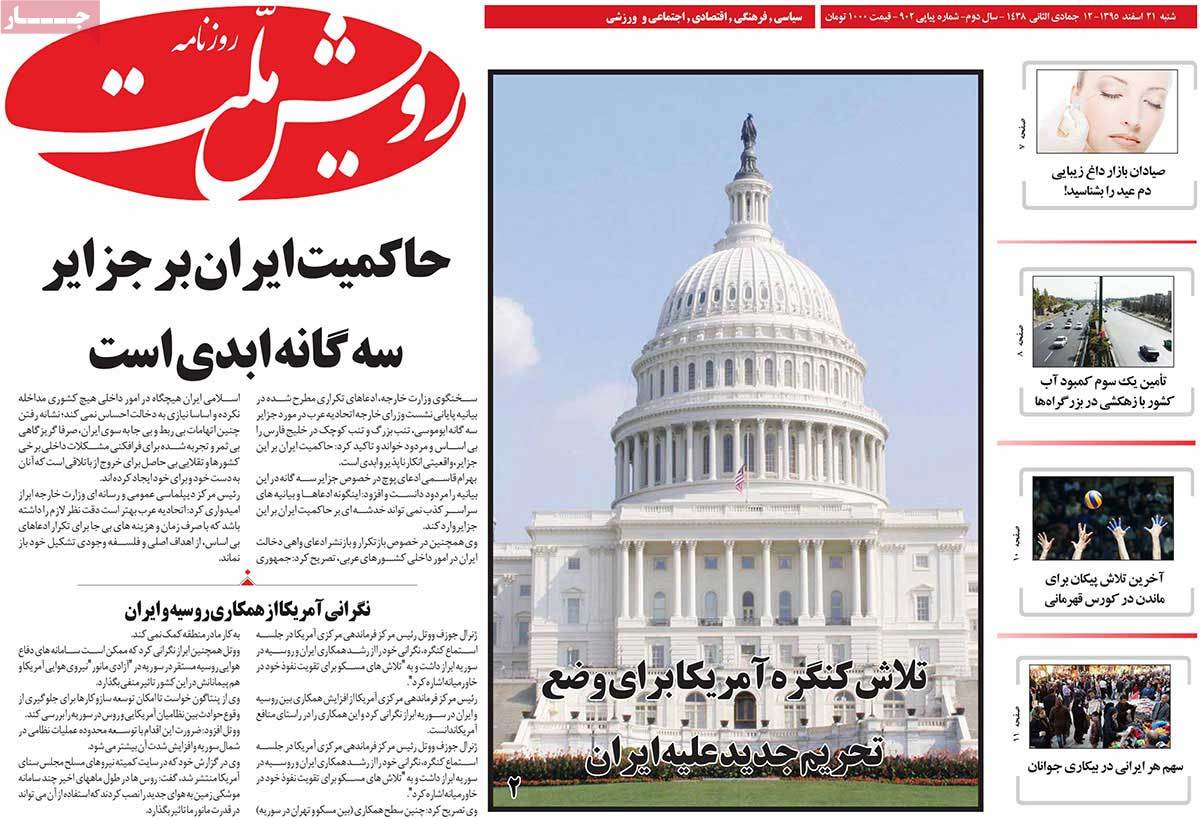
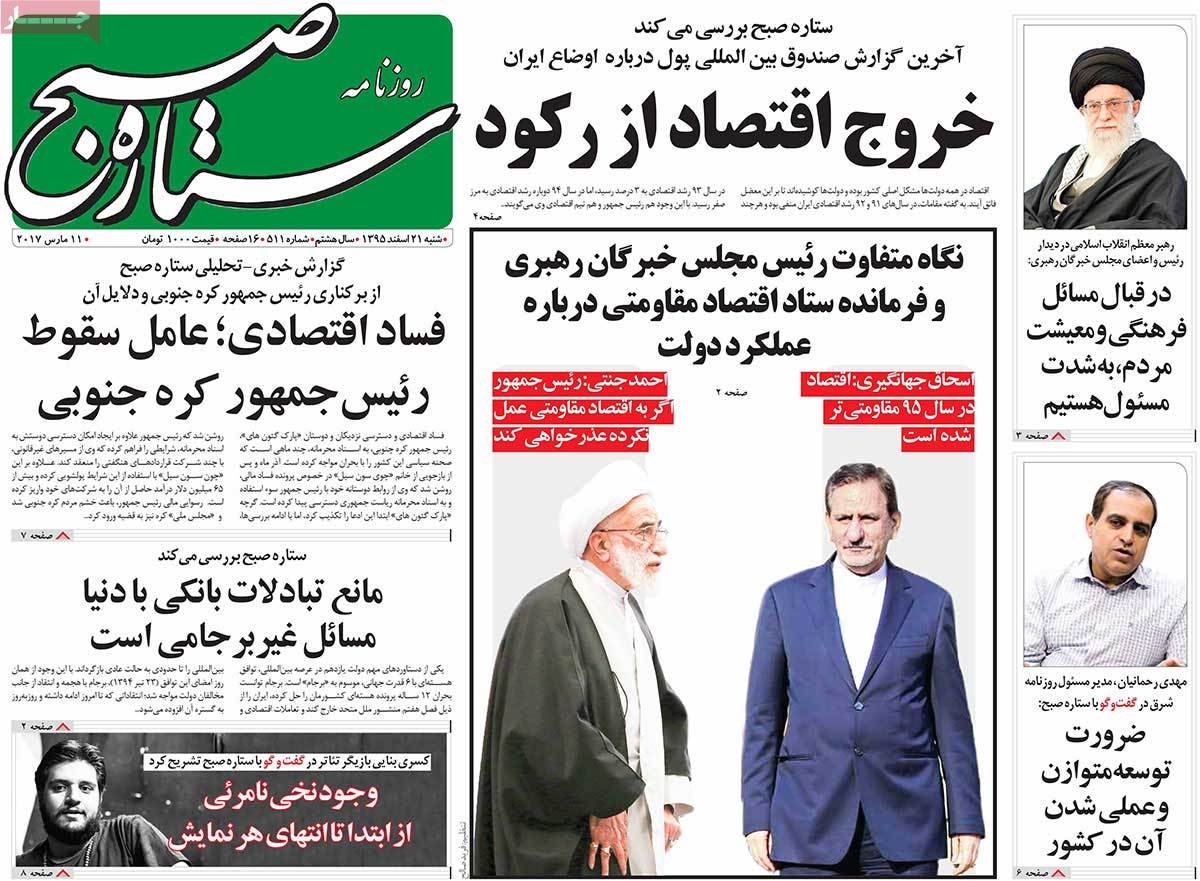
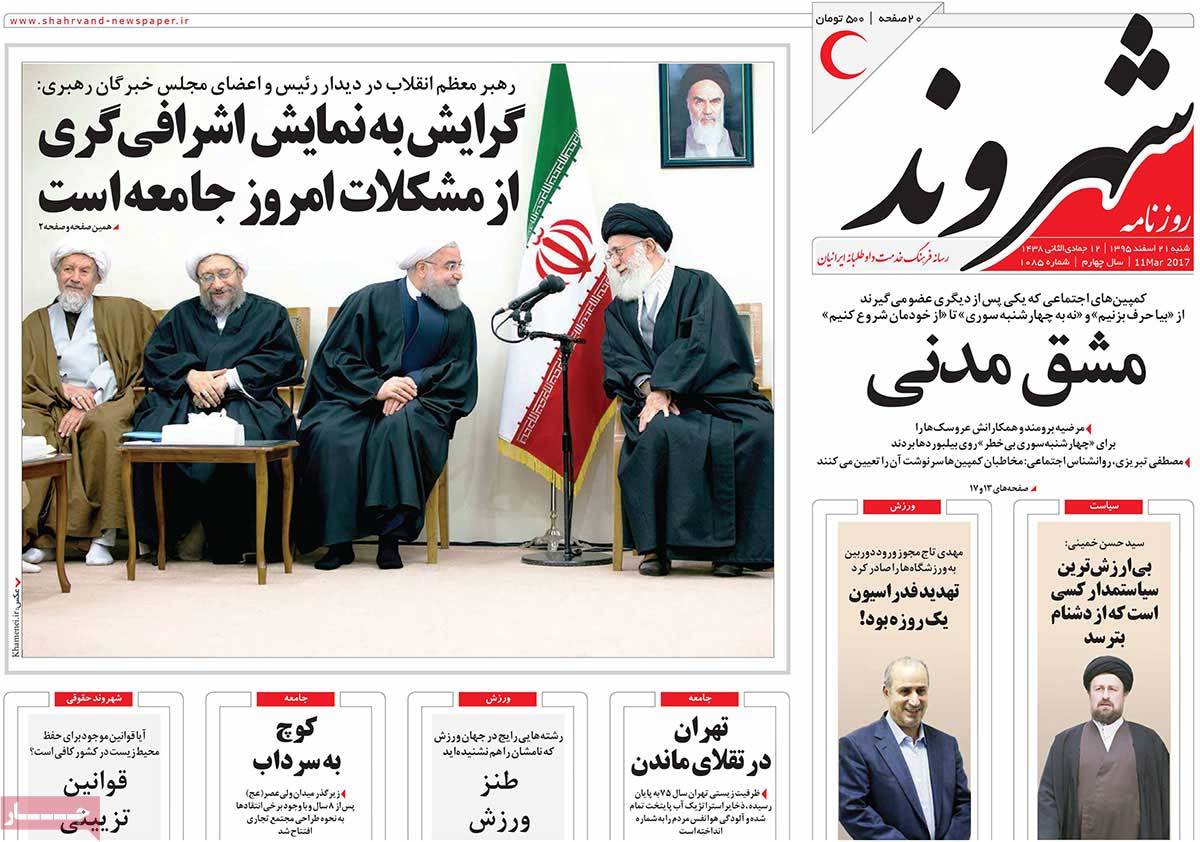
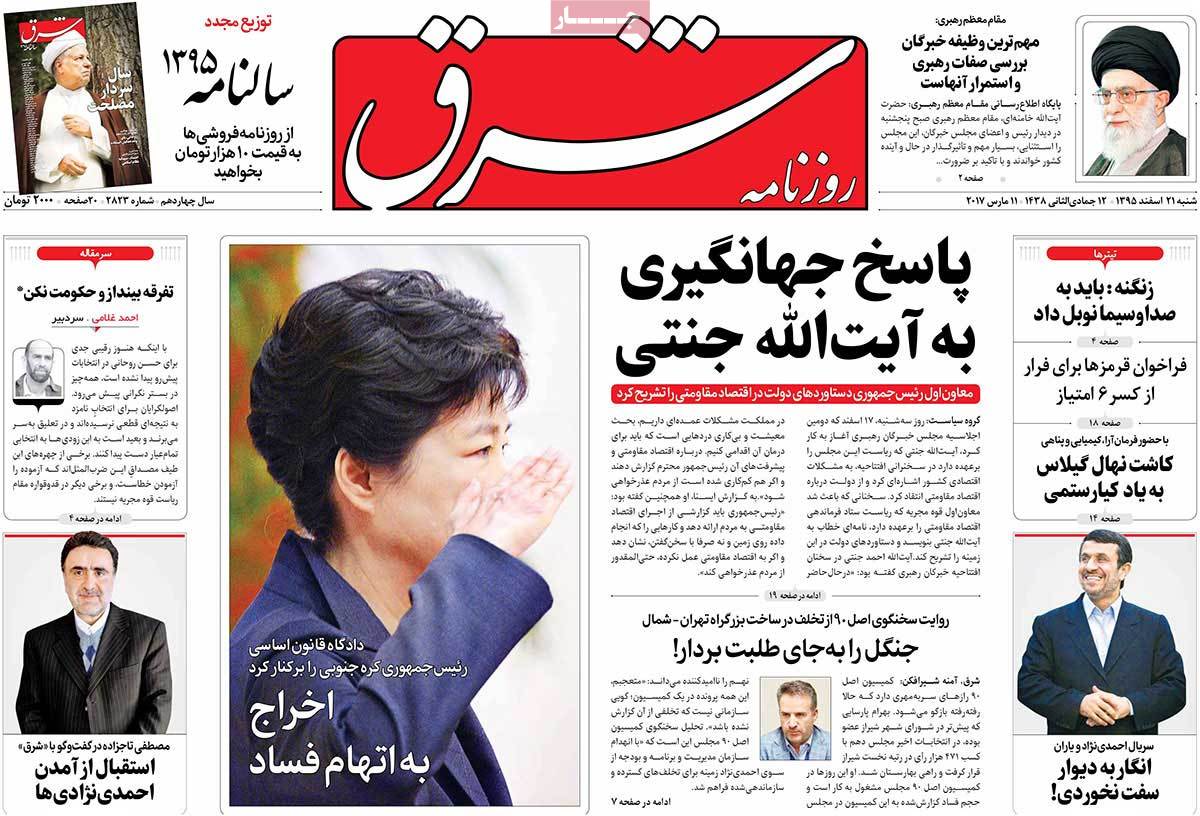
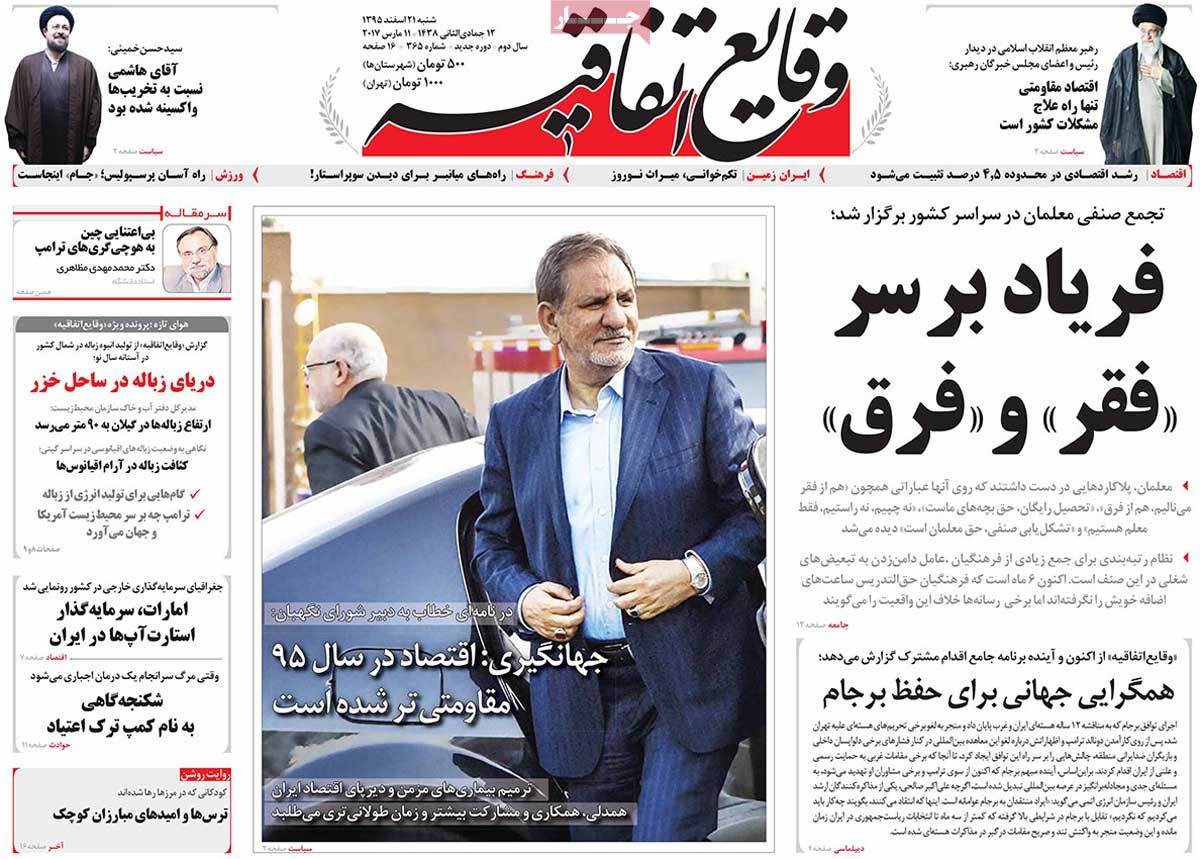
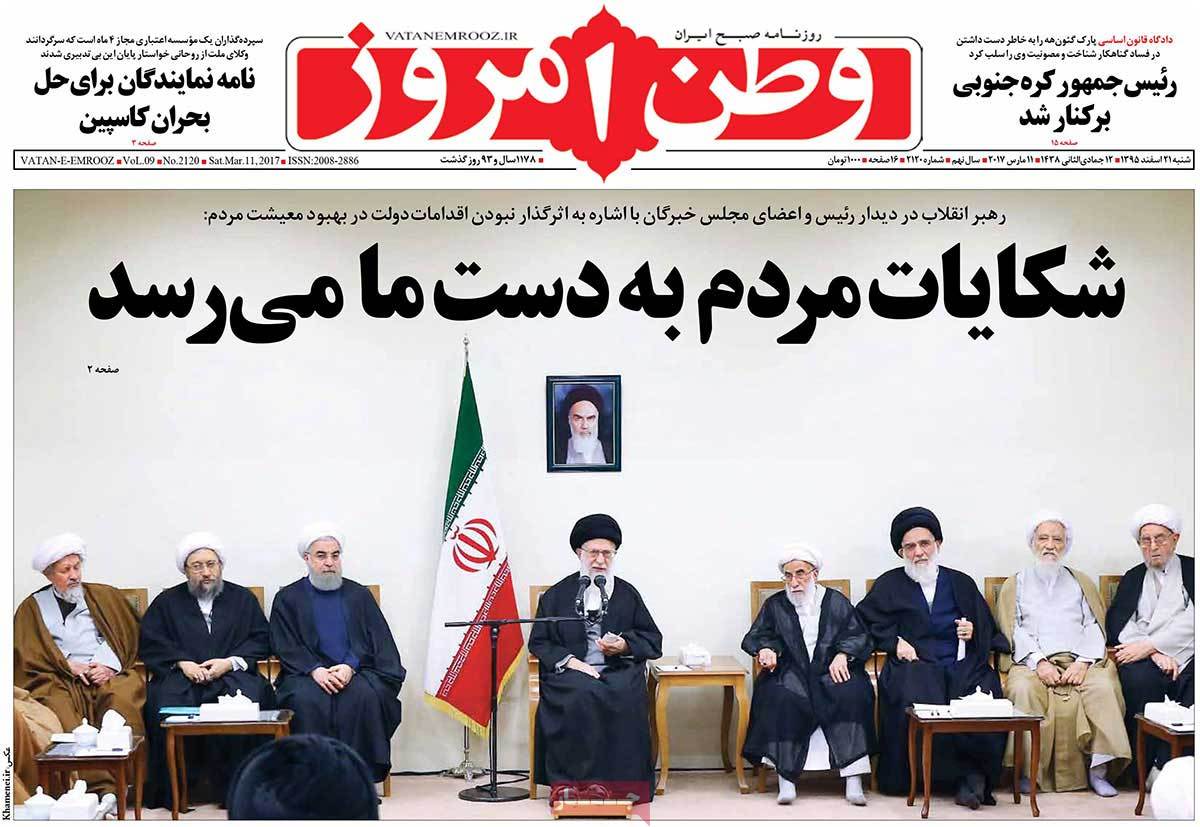
A Look at Iranian Newspaper Front Pages on February 16

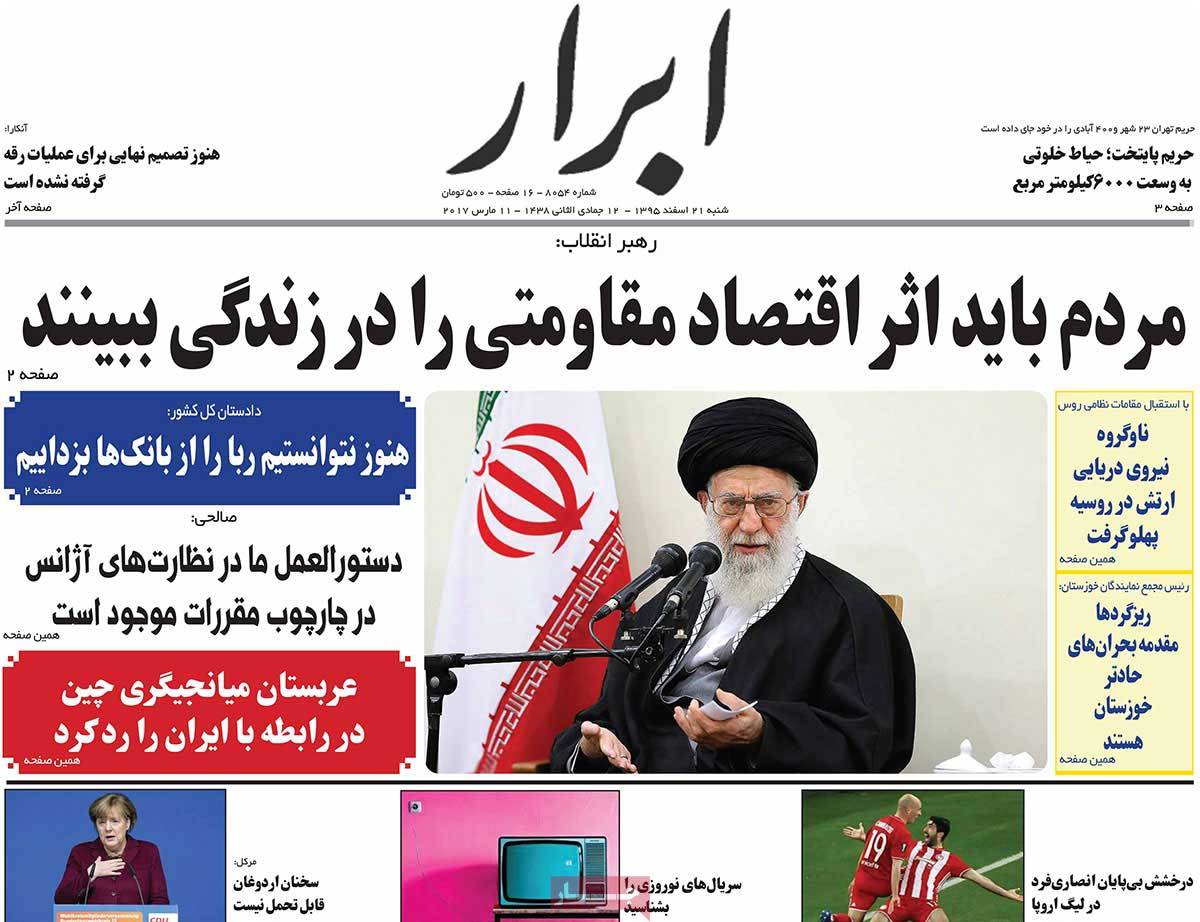
The main story in all Iranian newspapers today was the remarks made by Ayatollah Seyyed Ali Khamenei, the Leader of Iran’s Islamic Revolution, in a meeting with a group of Iranian people in Tehran. The Leader talked about various issues, including the idea of ‘national reconciliation’ proposed by certain reformists, the massive turnout of Iranian people in February 10 revolution rallies, and people’s complaints about Iranian official’s weak performance in resolving their issues.

Newspapers also widely covered the one-day trips of President Hassan Rouhani to Oman and Kuwait and his talks with Omani Sultan and Kuwaiti Emir about the resolution of regional misunderstandings.

The ongoing dust pollution crisis in Iran’s southwestern province Khuzestan and the government’s measures to deal with the dangerous situation also remained a top story today.

The above issues, as well as many more, are highlighted in the following headlines:


Abrar:

1- Leader: It’s a Sheer Lie that a Military Confrontation with Iran Was Imminent Had JCPOA Not Been Signed

2- Navy Commander: Whoever Thinks about Anti-Iran Aggression Will Receive a Response that Makes Him Regret

3- White House: Trump and Netanyahu Will Discuss Iran

4- Representatives of Iran, Russia, and Turkey to Hold Bilateral Talks ahead of Astana Meeting

5- Without JCPOA, Trump Would Have Lots of Instruments to Counter Iran

6- South Korea Using Border Speakers to Announce Murder of North Korean Leader’s Brother

A Look at Iranian Newspaper Front Pages on February 16


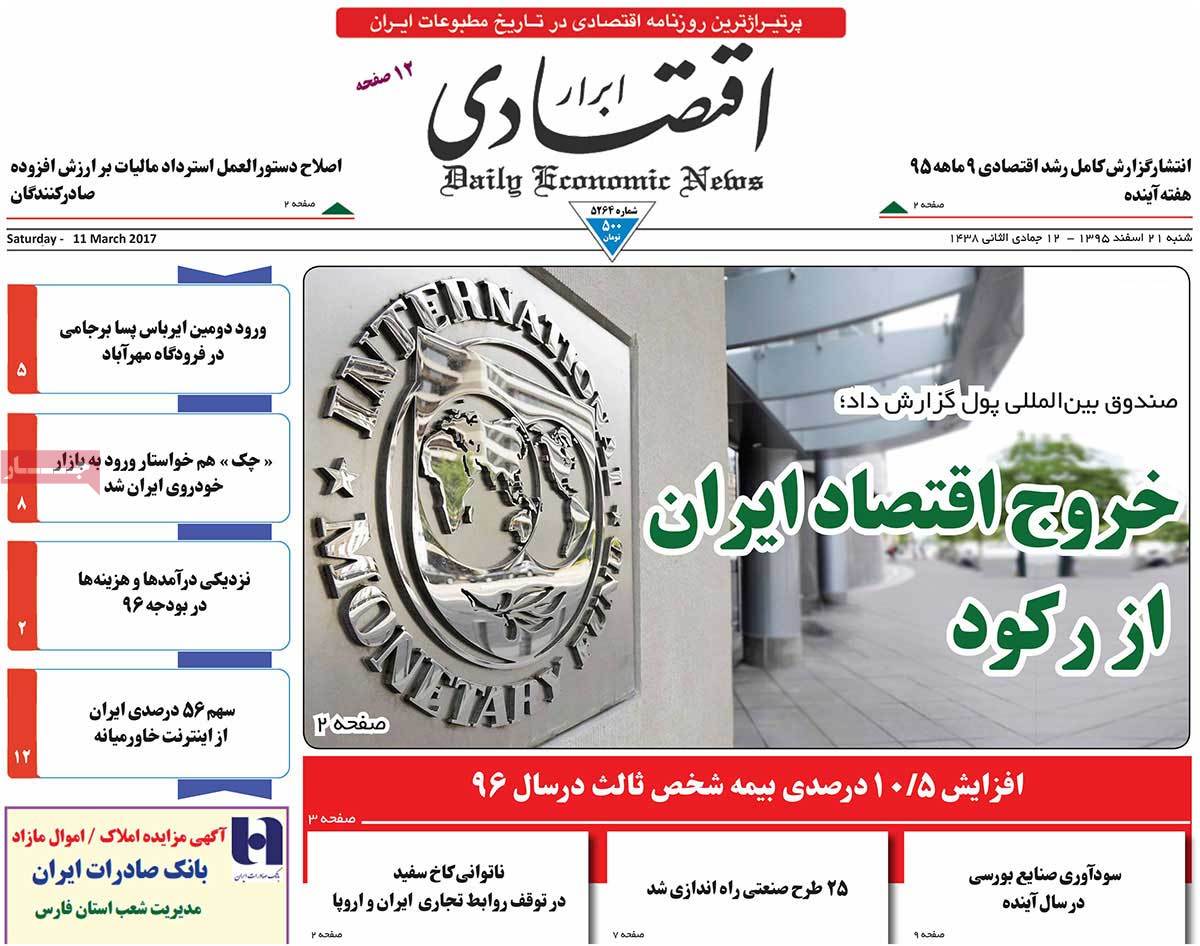
Abrar-e Eqtesadi:

1- Italian Planes en Route to Iran

2- Talks with Denmark and France for Production of Euro-5 Petrol

3- Europeans Endeavouring to Strengthen Trade Ties with Iran: Bloomberg

4- President Rouhani Calls for Development of Tehran-Muscat Economic Relations

A Look at Iranian Newspaper Front Pages on February 16


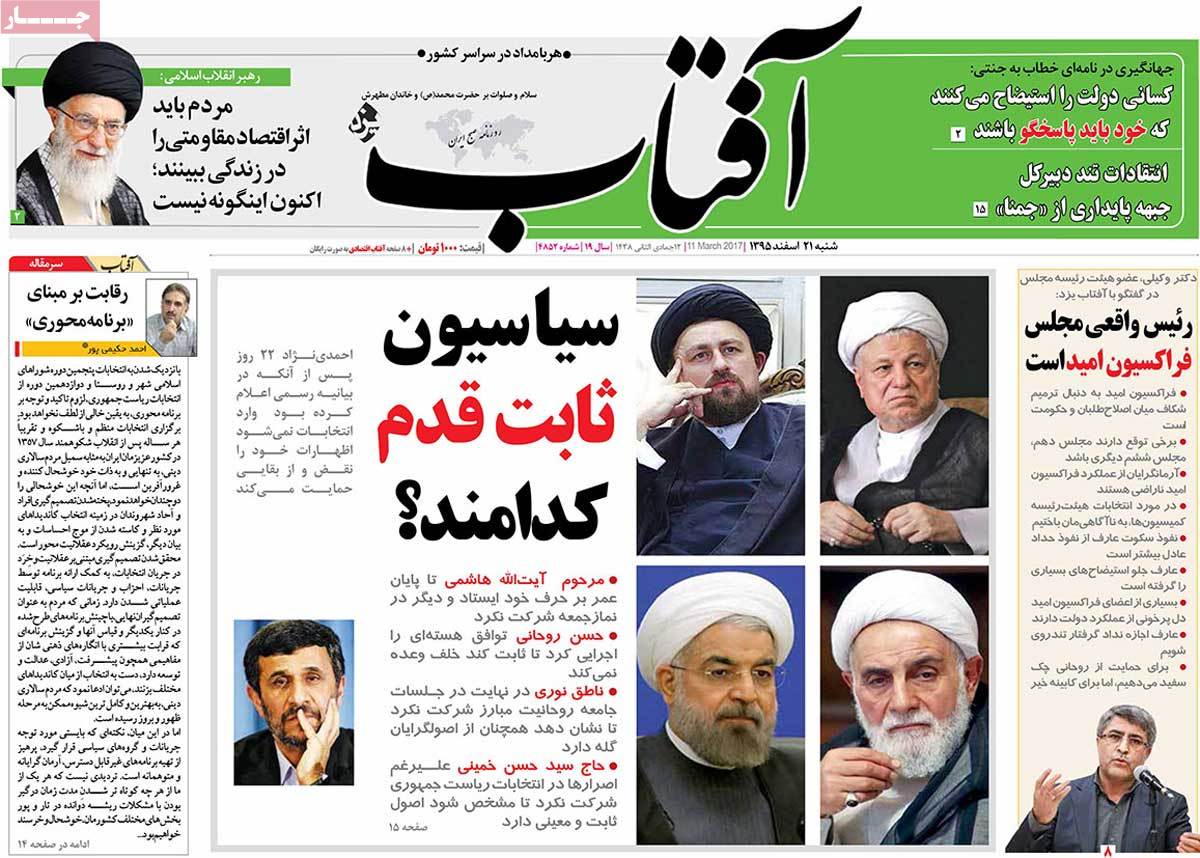
Aftab-e Yazd:

1- Iran’s Leader: National Reconciliation Doesn’t Make Any Sense. People Are Already United. So Why Do You Talk about Reconciliation? Yes, People Are against Those Who Took to Streets on the Day of Ashura in 2009, Beating and Stripping the Young Basiji Shamelessly and Brutally. They Are against Them, and They Won’t Reconcile with Them

A Look at Iranian Newspaper Front Pages on February 16


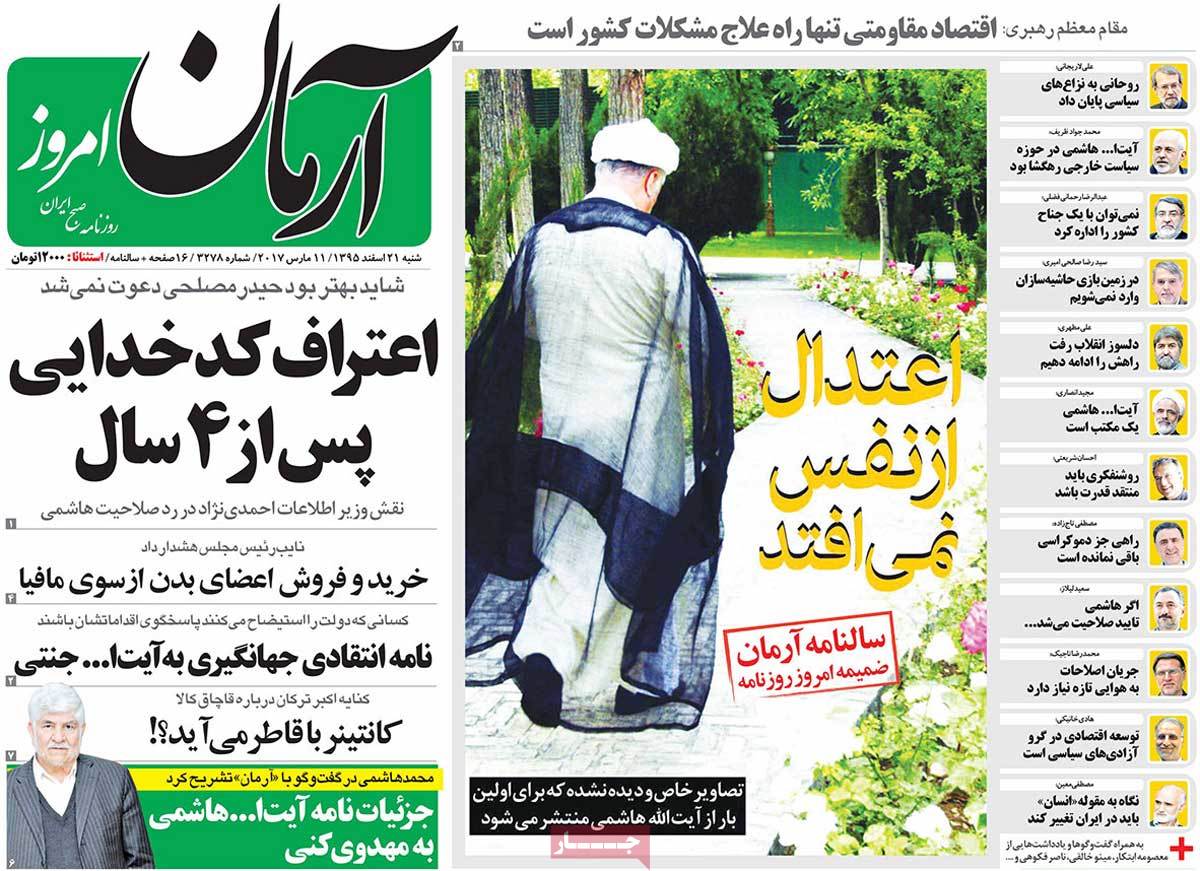
Arman-e Emrooz:

1- Today, 40th Day after Death of Ayatollah Rafsanjani to Be Commemorated in Imam Khomeini’s Mausoleum

2- President Rouhani’s One-Day Trips to Oman and Kuwait: Middle East Thirsty for Win-Win Game

3- Rouhani to Emir of Kuwait: Negotiation Is Only Way to Resolve Regional Misunderstandings

A Look at Iranian Newspaper Front Pages on February 16


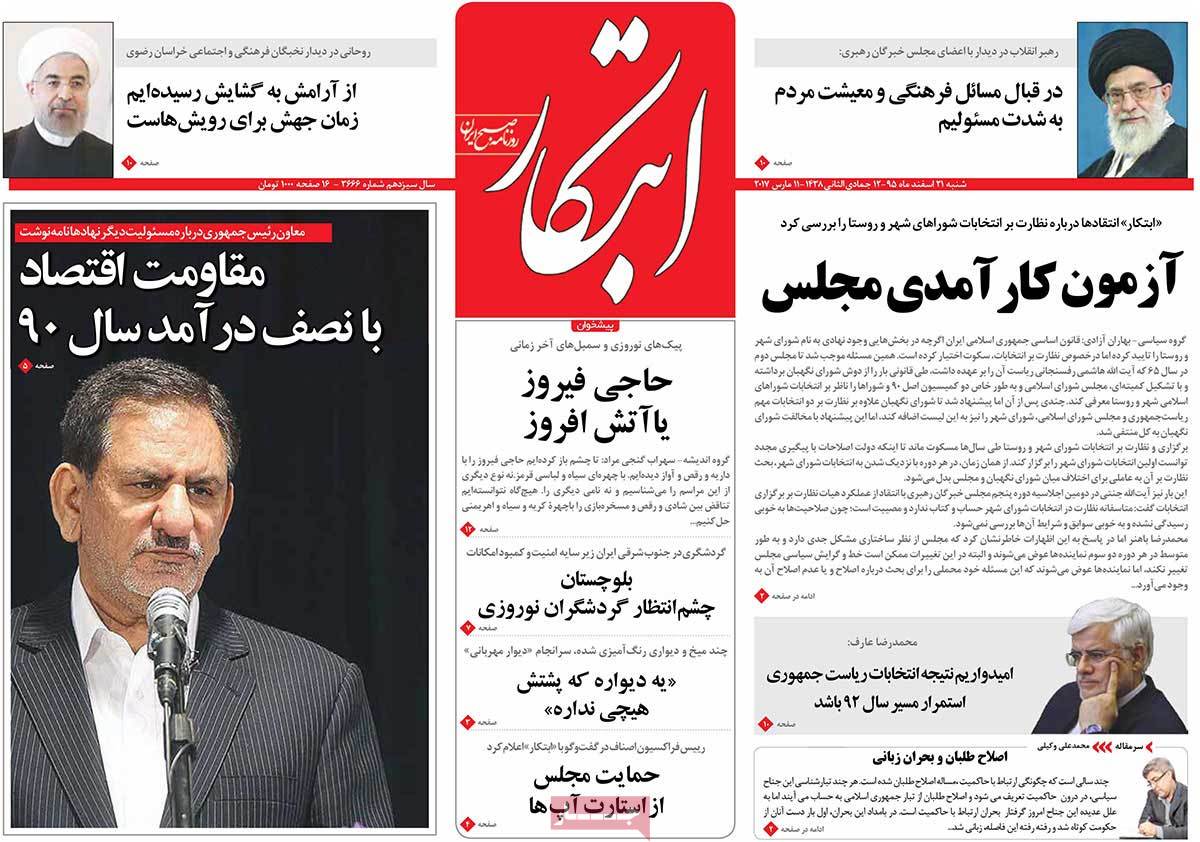
Ebtekar:

1- Parliament Speaker: Khuzestan Crisis among Iran’s Priorities

2- Province of Those Who Don’t Have Any ID Cards: Thousands of Iranians Living in Sistan and Baluchestan Province in Southeast Still Looking for Their Identities

A Look at Iranian Newspaper Front Pages on February 16


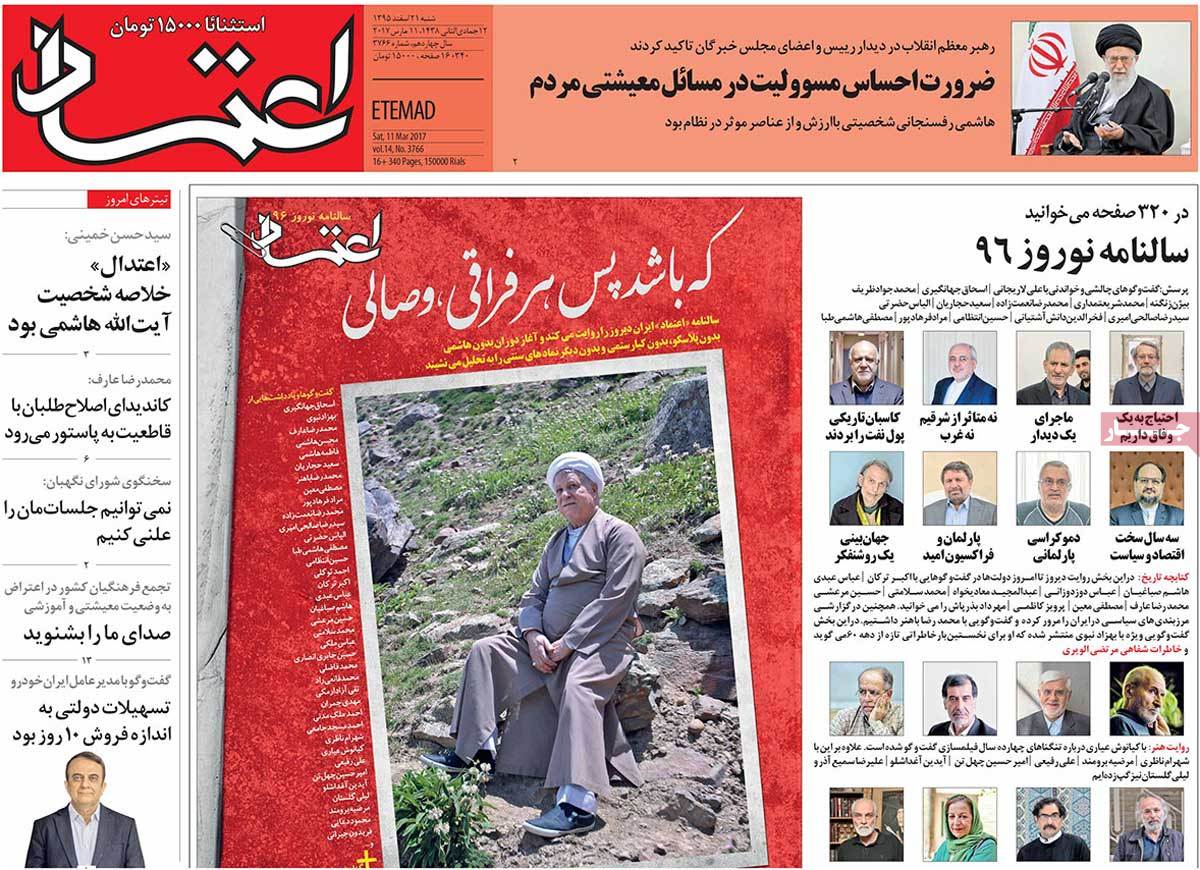
Etemad:

1- Beginning of Regional Talks: Rouhani Talks of Iran’s Resolve to Settle Differences in Visits to Oman and Kuwait

2- Parliament Speaker Urges Formation of Special Working Group for Crisis in Khuzestan Province

3- Oil Minister: Total Deal to Be Finalised in Two Months

A Look at Iranian Newspaper Front Pages on February 16


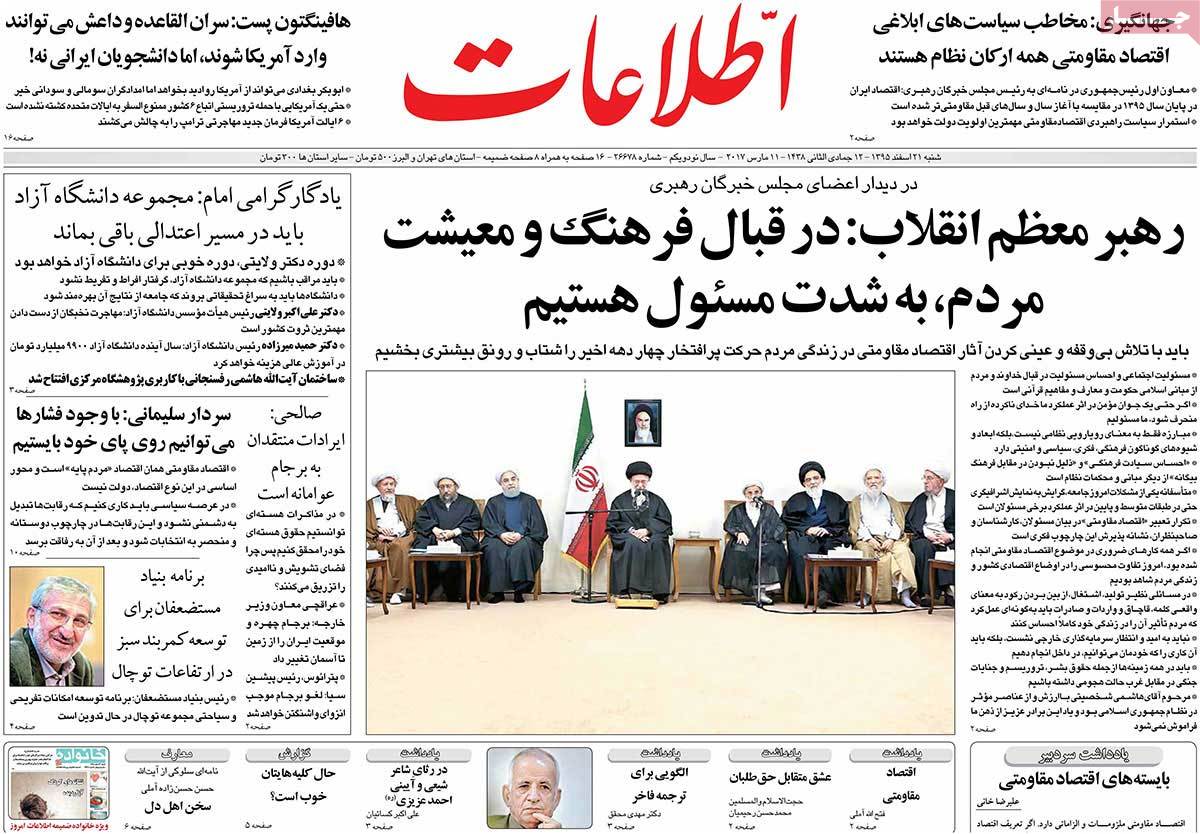
Ettela’at:

1- Leader: People Do Not Approve of Discrimination and Negligence of Certain Problems

2- Pentagon Admits US Army Has Used Weapons with Uranium in Syria

3- Iran’s President in Oman: Tehran’s Military Power Is a Strong Back for Regional Security

A Look at Iranian Newspaper Front Pages on February 16


Ghanoon:

1- Interview with Iranian Manager of US Wrestling Team Visiting Iran for World Cup: We Feel We’re Home

2- Women’s Names on Ballots: Lawmakers and Jurists Waiting for Guardian Council’s Interpretation of ‘Man of Politics’ [which will allow women to run for presidential votes]

3- Female Swedish Diplomats’ Visit to Tehran Sparks Controversy: Sweden Gripped by Issue of Hijab

A Look at Iranian Newspaper Front Pages on February 16


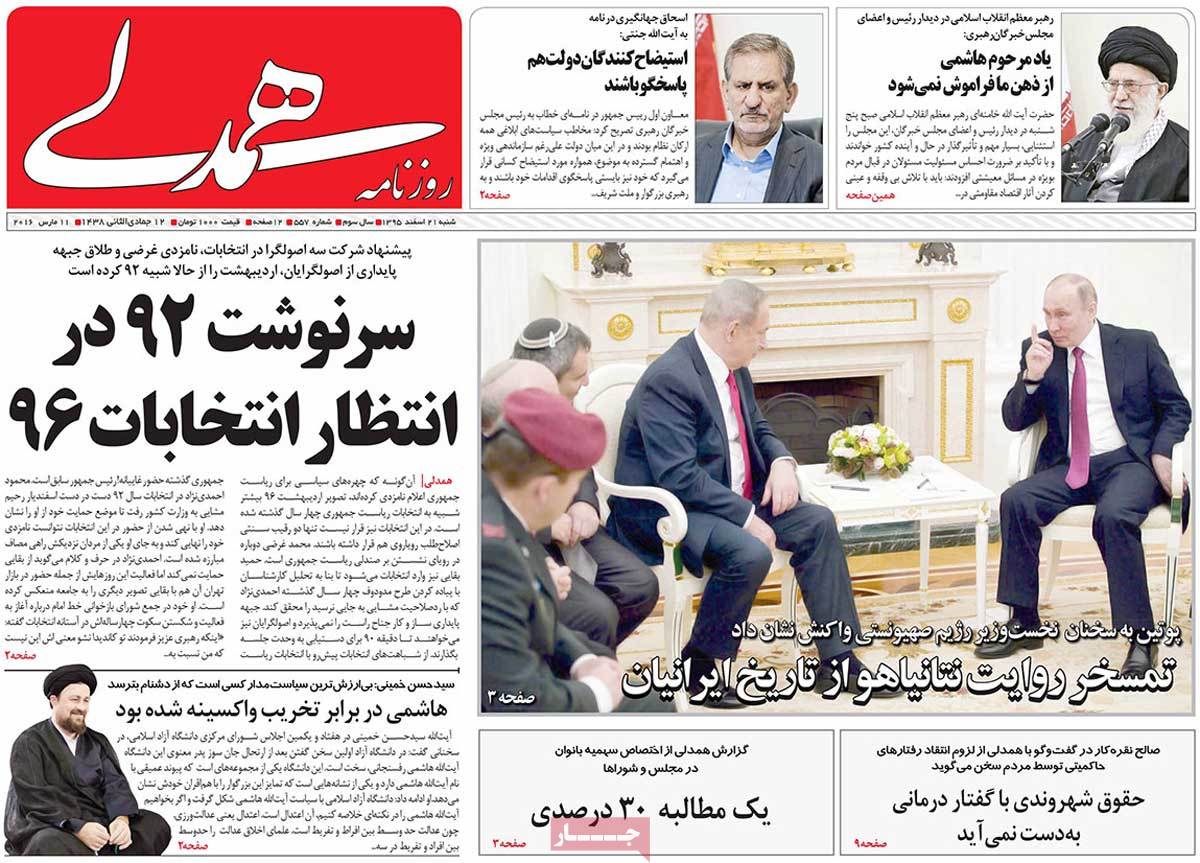
Hemayat:

1- Deputy FM: Snapback of Sanctions Means Scrapping Nuclear Deal

2- Al Khalifa and Erdogan Make a Secret and Dangerous Deal: Leader of Bahrain’s Shiites to Be Exiled to Turkey

A Look at Iranian Newspaper Front Pages on February 16


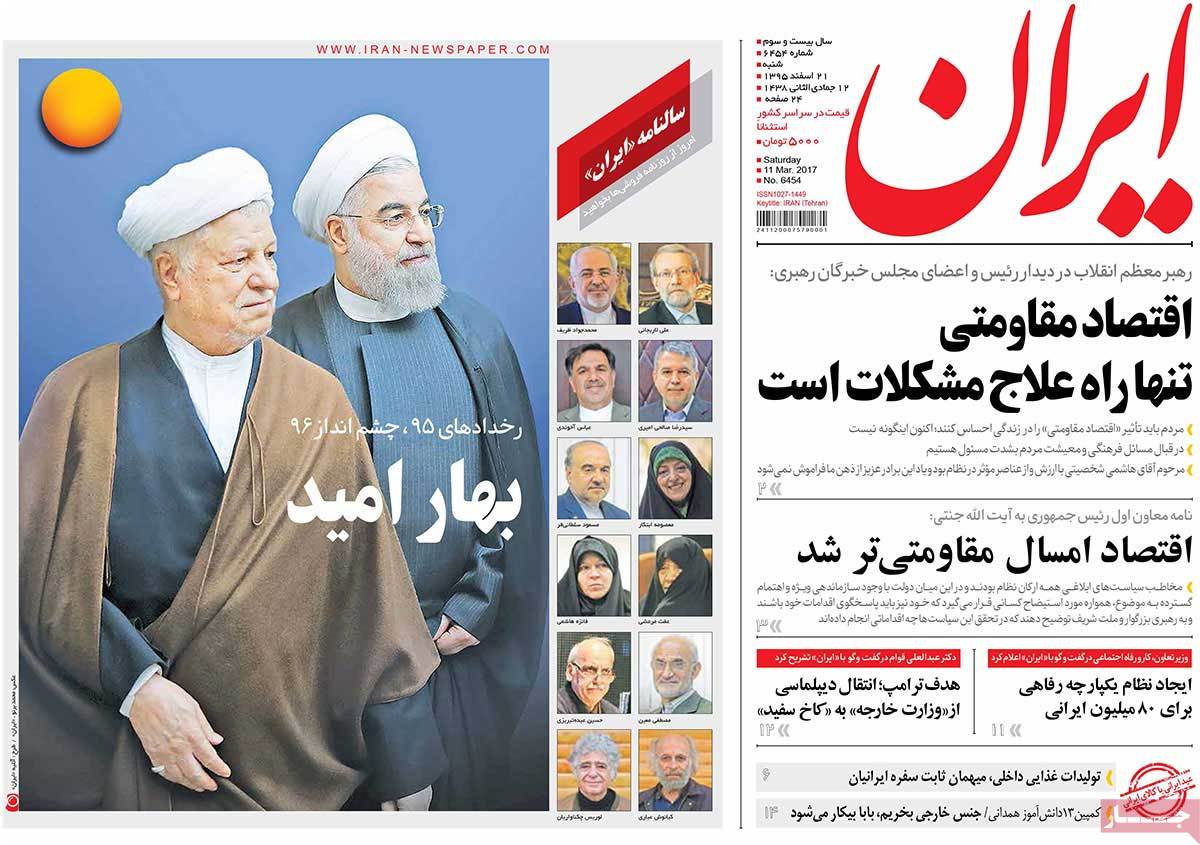
Iran:

1- Iran’s Leader: This Year’s 22 Bahman Rallies [February 10] Brought about Respect and Dignity for Iran and Revolution

2- Oman’s Sultan and Kuwait’s Emir Receive Iranian President: Southern Neighbours’ Positive Response to Rouhani’s Regional Initiative

3- Rouhani: All Countries Must Unite against Such Inclusive Issues as Terrorism

A Look at Iranian Newspaper Front Pages on February 16


Jame Jam:

1- Leader: People Have Complaints about Unemployment, Economic Downturn, and Inflation

2- President Rouhani: Iranophobia Is an Ultra-Regional Plot

A Look at Iranian Newspaper Front Pages on February 16


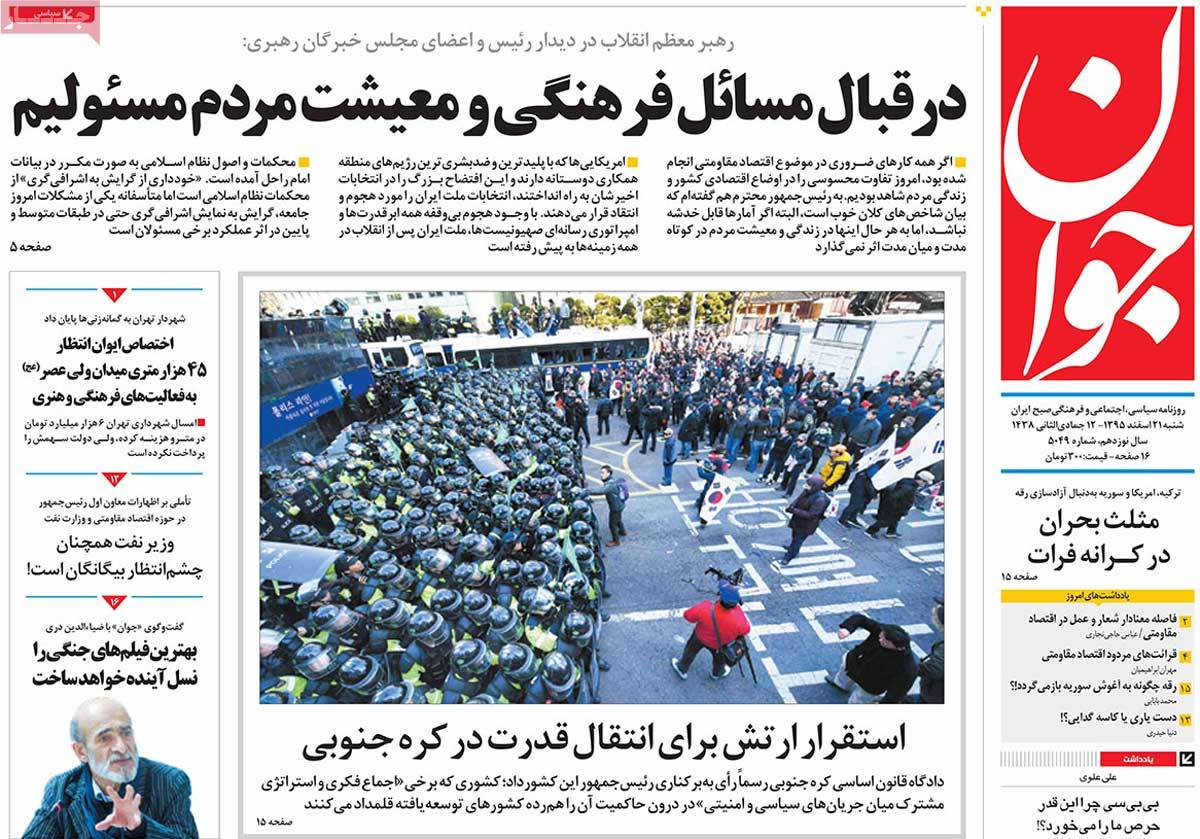
Javan:

1- Iran’s Leader: People Suffering from [government’s] Indifference to Problems

2- Deputy FM Araqchi, Just like Zarif, Separated JCPOA’s Efficiency from Government’s Performance

3- US on Verge of ‘Kremlingate’: Increased Pressure on White House to Explain about Trump’s Ties with Russia

A Look at Iranian Newspaper Front Pages on February 16


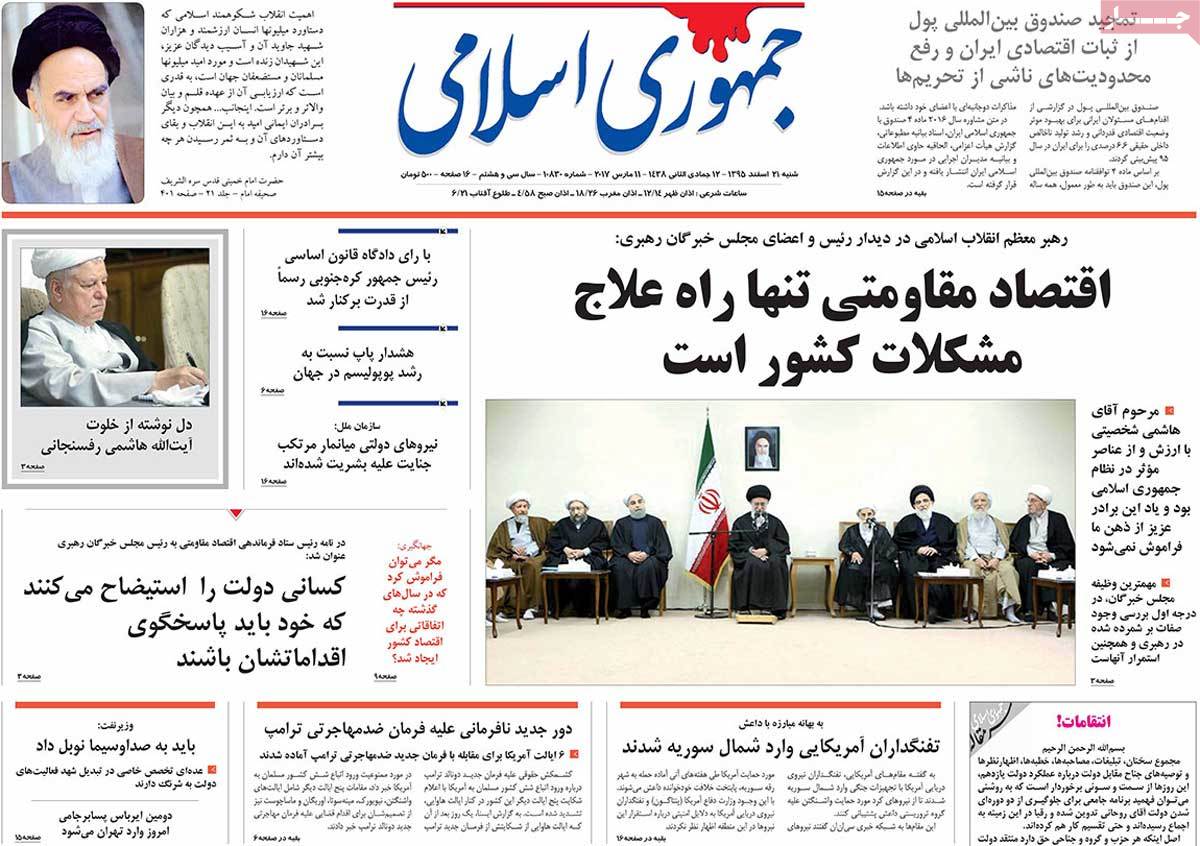
Jomhouri Eslami:

1- Ayatollah Khamenei: Today, Everyone Admits Dignity and Power of Iranian Nation and Iran’s Decisive Role

2- President Rouhani: Tehran Always Welcomes Expansion of Bilateral and Regional Ties with Neighbours

3- White House: Trump Wants Russia to Return Crimea; Kremlin: Crimea Is Part of Russia and Not Negotiable

A Look at Iranian Newspaper Front Pages on February 16


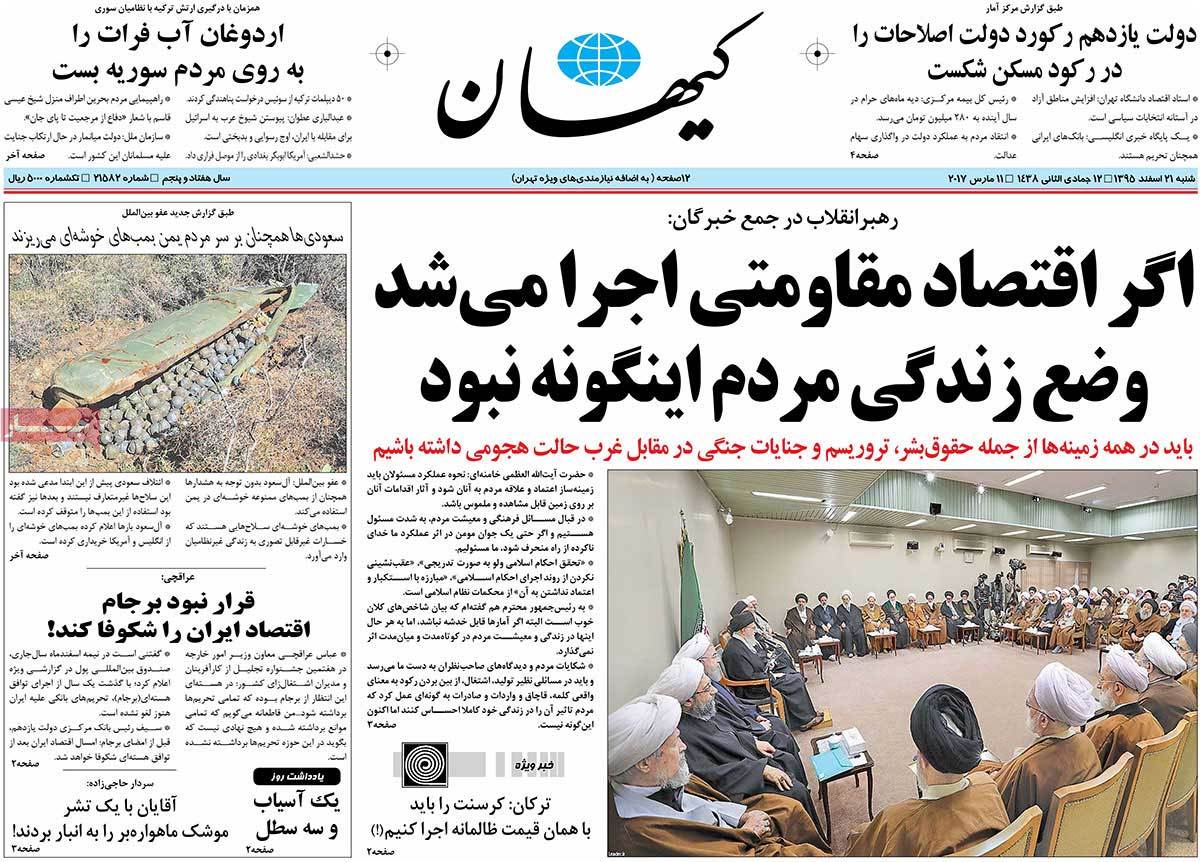
Kayhan:

1- Trump’s Harsh Remarks against Iran Nothing More than a Bluff

2- Head of Munich Security Conference: Era of West [dominance] Is Over and New Order Is Coming

A Look at Iranian Newspaper Front Pages on February 16


Resalat:

1- Leader: People Won’t Reconcile with Those Who Caused Sedition in 2009

2- Interior Minister: Iran’s Financial and Monetary Systems Not Compatible with Resistance Economy

3- Economy Minister: All Economic Sectors, Expect for Construction, Have Grown

4- Deputy FM: US Sanctions in Monetary and Banking Fields Still in Place

A Look at Iranian Newspaper Front Pages on February 16


Shahrvand:

1- Leader: Efforts to Show Iran’s Establishment as an Inefficient Ruling System Are Futile

2- Message of Unity: Oman’s Sultan Receives Rouhani by Firing 21 Cannonballs as Message of Friendship; Emir of Kuwait, Crown Prince, Prime Minister, and All Ministers Welcome Rouhani

3- Deputy Head of Iran’s Environment Dept. Declares Sources of Dust Pollution in Khuzestan Province: 100,000ha Critical and 30,000ha Hypercritical

A Look at Iranian Newspaper Front Pages on February 16


Vaghaye Ettefaghieh:

1- A Report of Rouhani’s One-Day Visits to Oman and Kuwait: Iran’s Message of Peace for Arabs

2- Advisor to Iranian Parliament Speaker Amir Abdollahian: Muslim World Should Take Common Stance on Issue of Palestine

A Look at Iranian Newspaper Front Pages on February 16

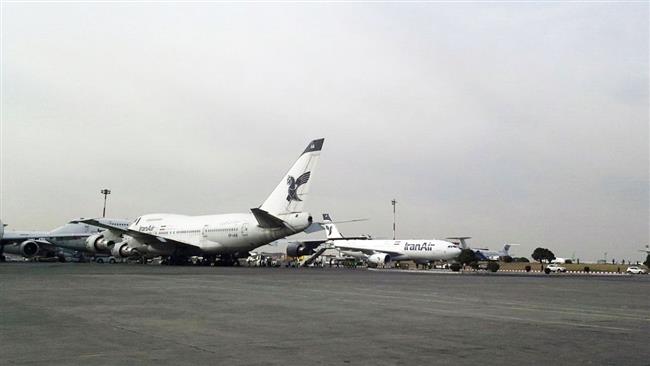
Iran in Final Stages of Purchasing ATR Planes

“Negotiations for the purchase of aircraft from ATR have reached the final stage and at the moment, the two sides are at the stage of exchanging documents,” Akhoundi said.

The minister added that with the finalization of document exchange, the introduction of the first ATR aircraft into Iran’s air fleet will begin to be followed up through official channels.

The deal was first signed in February 2016 in Tehran following the commercial discussions held in Rome and Paris during visit of Iranian President Hassan Rouhani to those countries.

Tel Aviv Quietly Withdraws Ambassador from Cairo

photo_2017-02-16_11-48-44

Sources told The Telegraph that Ambassador David Govrin was quietly pulled out of Egypt at the end of last year over security concerns.

News of Govrin’s withdrawal from Egypt was first reported on Facebook by Amin el-Mahdy, an Egyptian political analyst who maintains contacts with Israeli officials.

Mr el-Mahdy said he did not believe that the ambassador was withdrawn over security fears and said instead that the move was the result of behind the scenes political tensions between Egypt and Israel.

He said he believed that Benjamin Netanyahu, the Israeli prime minister, and Abdel Fattah el-Sisi, the Egyptian president, were in a disagreement over Gaza and its border with Egypt and that the argument had led to Mr Govrin being brought home.

Egypt and Jordan are the only Arab countries to have diplomatic ties with the Israeli regime; however, Tel Aviv’s insistence on its occupation policies on the one hand, and the Egyptian and Jordanian people’s protests against ties with Israel on the other hand, have always kept the tensions high.