Wednesday, December 31, 2025
Home Blog Page 408

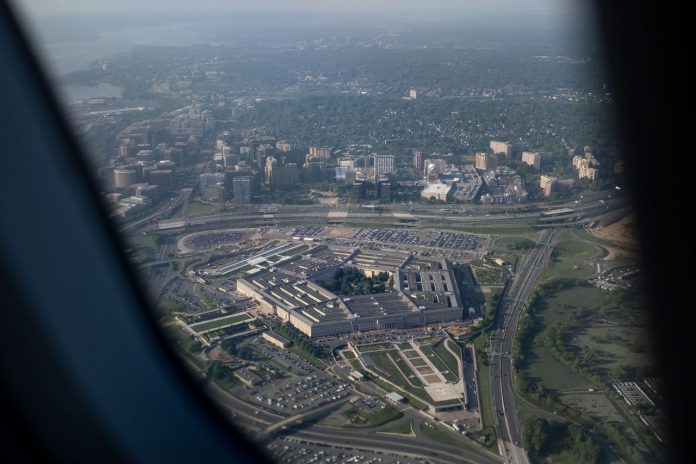
US says approved sale of Eitan PowerPack engines to Israel

Pentagon

“The United States is committed to the security of Israel, and it is vital to U.S. national interests to assist Israel to develop and maintain a strong and ready self-defense capability,” the Pentagon said in a statement, adding the proposed sale will enhance Israel’s capability to meet “current and future” threats.

The estimated cost of the sale is $180 million.

The principal contractor will be Rolls-Royce Solutions America, Inc. in Novi, Michigan, it said.

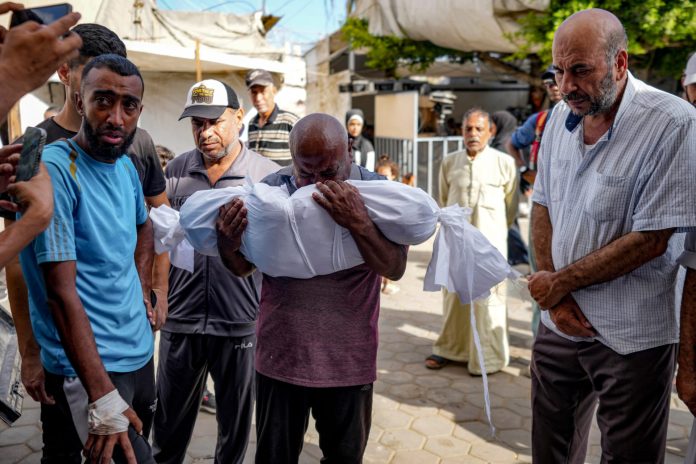
The US has long been criticized for providing support to Israel in its war in the Gaza Strip, where more than 51,000 victims, mostly women and children, have been killed since Oct. 7, 2023.

Several American lawmakers, including Sen. Bernie Sanders, frequently demand that the US government stop supplying weapons to Israel and being complicit in Israel’s war in Gaza.

European energy giants consider restoring gas supplies from Russia’s Gazprom: Reuters

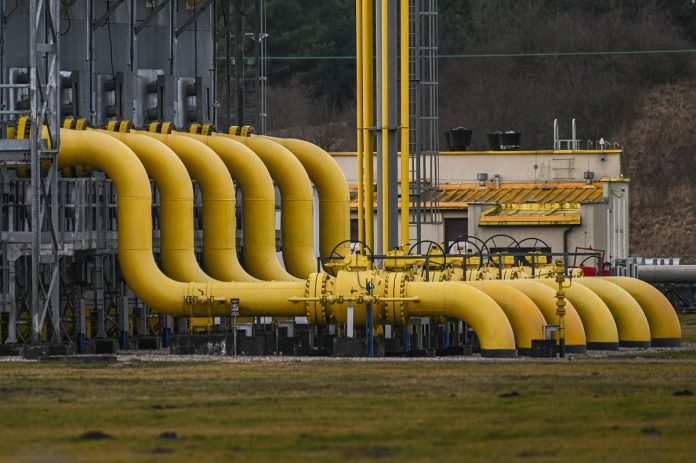
Gas station Europe

Following the outbreak of the full-scale war in 2022, the European Union has restricted energy imports from Russia, profits from which fuelled Moscow’s ability to wage the war against Ukraine.

The U.S. increased its supplies to Europe to cover the deficit. Under the Trump administration, however, European relations with the U.S. have soured and European businesses began to be wary of dependency on Washington and began to look for other options.

Europe has few options, as negotiations with Qatar to increase liquefied natural gas (LNG) volumes have reached a deadlock. Although the deployment of renewable energy sources has accelerated, the pace is not fast enough to allow the EU to feel secure, according to Reuters.

“If there is a reasonable peace in Ukraine, we could go back to flows of 60 billion cubic meters (of Russian gas), maybe 70, annually, including LNG,” Didier Holleaux, executive vice president at France’s Engie, told Reuters in an interview.

France’s Engie is partially state-owned and was one of the largest buyers of Russian gas before the all-out war in Ukraine. Holleaux added that Russia could supply around 20-25% of EU needs, down from 40% before the war.

Patrick Pouyanne, the head of the French oil company TotalEnergies, highlighted another concern: Europe should not over-rely on U.S. gas. TotalEnergies is a large U.S. LNG exporter and sells Russian LNG from the private firm Novatek.

“We need to diversify, many routes, not over-rely on one or two,” Pouyanne told Reuters.

“Europe will never go back to importing 150 billion cubic meters from Russia like before the war … but I would bet maybe 70 bcm.”

Germany, which relied heavily on cheap Russian gas before Russia’s large-scale invasion, is now also considering at least partial resumption of supplies.

Several companies that are residents of the Leuna Chemical Park, one of Germany’s largest chemical clusters hosting plants of Dow Chemical and Shell, among others, emphasized the need to resume Russian supplies.

“We need Russian gas; we need cheap energy — no matter where it comes from,” said Klaus Paur, managing director of Leuna-Harze, a mid-sized petrochemical maker at the Leuna Park.

“We need Nord Stream 2 because we have to keep energy costs in check.”

“We are in a severe crisis and can’t wait,” stated Christof Guenther, managing director of InfraLeuna, the park operator.

He added the German chemical industry has cut jobs for five quarters in a row, something not seen for decades.

“Reopening pipelines would reduce prices more than any current subsidy programs,” Guenther continued.

Despite attempts to maintain its presence in Europe, Gazprom’s gas exports to the EU remained low.

Gazprom’s financial woes stem largely from the EU’s decision to reduce reliance on Russian energy following the full-scale invasion of Ukraine.

Compounding its troubles, Russia’s direct pipeline gas supplies to the EU have ceased completely after Ukraine refused to extend its transit agreement with Gazprom beyond Dec. 31, 2024.

Iranian teacher suspended over alleged student corporal punishment

Schools in Iran COVID

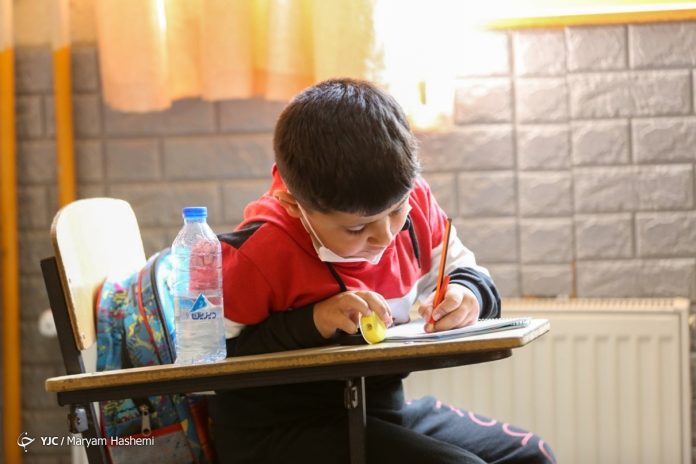
Hashem Nazemi-Jalal, Kordestan’s Education Director General, confirmed that the accused teacher was suspended pending a final ruling by the provincial disciplinary committee.

“Given the sensitivity of the case, an emergency session of the administrative violations board was convened at 9 PM last night to expedite proceedings,” he stated on Tuesday.

Nazemi-Jalal noted that while a fair review may take time, the ministry has approved invoking Article 13 of Iran’s Civil Servants Disciplinary Code, authorizing a three-month suspension during the investigation.

Local parents’ groups have demanded stricter oversight, while teachers’ associations emphasize due process for the accused educator.

Iran’s culture minister: Decline of domestic media authority poses national security threat

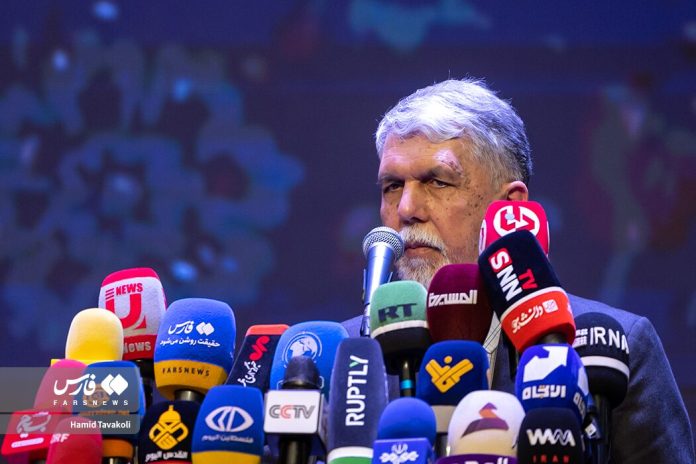
Speaking at the closing ceremony of a media festival in Tehran, Salehi emphasized the critical role of media in shaping Iran’s “soft power” and preserving social cohesion.

The minister highlighted a troubling shift in Iran’s media landscape: while state television was the primary news source for 82% of Iranians in 2000, its dominance has sharply declined due to the rise of foreign-based digital and satellite platforms.

“If domestic media lose their authority, and foreign outlets like the BBC fill that void, it’s akin to handing over our strategic weapons to outsiders,” he asserted.

Salehi outlined how media, alongside culture, art, and diplomacy, forms the backbone of a nation’s soft power – “capturing hearts and minds rather than territory.”

He warned that outsourcing the influence to foreign actors undermines Iran’s ability to project its narrative globally, citing how Palestinian media have recently shifted global perceptions through strategic storytelling.

Salehi urged reforms to restore trust in domestic journalism through professionalization, regulatory evolution, and cultural appeal.

He explained the media must balance criticism with national interests, adding the governance should adapt to allow “constructive dissent” while safeguarding sovereignty.

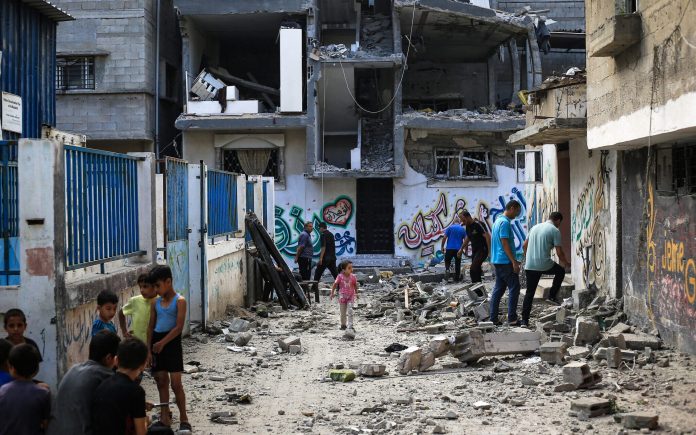
Over 70% of Gaza schools directly hit by Israel: UN

Gaza War

“About 88% of schools in Gaza require reconstruction or major rehabilitation,” the UN agency said in a statement.

“This includes 162 UNRWA schools that once served hundreds of thousands of boys and girls.”

The refugee agency lamented that the Israeli war on Gaza has displaced, traumatised, and deprived Palestinian children of education.

“Education in Gaza is a casualty of war,” it added.

The Israeli army renewed a deadly assault on Gaza on March 18, shattering a ceasefire and prisoner exchange agreement that took hold in January.

Nearly 51,000 Palestinians, most of them women and children, have been killed in Gaza in a brutal Israeli onslaught since October 2023.

The International Criminal Court issued arrest warrants last November for Israeli Prime Minister Benjamin Netanyahu and his former Defense Minister Yoav Gallant for war crimes and crimes against humanity in Gaza.

Israel also faces a genocide case at the International Court of Justice for its war on the enclave.

Thousands of Israeli academics, teachers, medics sign petitions to release hostages in Gaza

Israel Hostages

According to the Haaretz newspaper, approximately 3,500 academics signed a petition supporting a previous letter from Israeli Air Force reservists demanding the return of the hostages and the end of the war.

“We, members of the academic staff in higher education institutions, join the call of the Air Force soldiers and demand the immediate return of the hostages, even if it requires halting the war at once,” the petition stated.

The academics argued that “the war primarily serves political and personal interests. Its continuation will lead to the deaths of hostages, soldiers, and innocent civilians and will drain the reserve forces.”

They added that “as shown in the past, only a negotiated agreement can ensure the safe return of the abducted to Israel.”

In a similar petition, over 3,000 teachers emphasized that “this is not a call to refuse military service, but a plea to save lives,” the daily added.

About 1,000 parents also signed a separate letter, stating: “For the sake of our children’s future, we refuse to raise them in an endless war, and we will not turn a blind eye to the killing of children.”

“We reject the dangerous idea that there are no innocents in Gaza. We refuse to abandon the hostages or dehumanize others,” the parents wrote.

Meanwhile, nearly 3,000 Israeli medical professionals, alongside three Nobel laureates, signed another petition calling on the government to free hostages held in Gaza by halting the ongoing war, Yedioth Ahronoth reported.

About 150 former Israeli soldiers who served in the Golani Brigade, an elite infantry unit, signed a petition Monday for the government to secure the release of the hostages by ending the war, Israel Army Radio said.

Earlier Monday, former Israeli Prime Minister Ehud Barak and former Chief of Staff Dan Halutz signed a petition signed by 1,525 Armored Corps soldiers urging the release of hostages, even if it meant ending the war.

The same day, the Yedioth Ahronoth newspaper said in another report that more than 1,600 veterans from the Paratroopers and Infantry Brigades also signed a letter urging the government to bring back all hostages, even if it meant stopping the war.

About 170 graduates of the elite “Talpiot” military intelligence program signed a letter demanding the hostages’ release through the end of the war, while emphasizing that they were not calling on reservists to refuse service.

In their letter, the graduates of the army’s Talpiot Academy voiced support for several calls by soldiers and veterans denouncing the government’s war policy as serving “political and personal interest” rather than security needs, according to the Army Radio.

“The continuation of the war does not contribute to any of its stated goals,” said the letter, warning that continuing the war would only lead to more deaths, including captives, army soldiers, and innocent civilians.

The petitions are part of a wider wave of public appeals from current and former Israeli military personnel, all demanding the return of hostages and an end to the war.

Since Thursday, soldiers have signed nearly 10 petitions demanding an end to the Gaza war, according to an Anadolu count.

Prime Minister Benjamin Netanyahu has threatened to dismiss active-duty soldiers who signed the petitions.

The Israeli army renewed its assault on Gaza on March 18, shattering a Jan. 19 ceasefire and prisoner exchange agreement.

Nearly 51,000 Palestinians, most of them women and children, have been killed in Gaza in a brutal Israeli onslaught since October 2023.

The International Criminal Court issued arrest warrants last November for Netanyahu and his former Defense Minister Yoav Gallant for war crimes and crimes against humanity in Gaza.

Israel also faces a genocide case at the International Court of Justice for its war on the enclave.
Dust Storm in Iran’s Khuzestan Province Sends Hundreds to Hospitals; Government, Educational Institutions Shut Down

Dust storm Iran

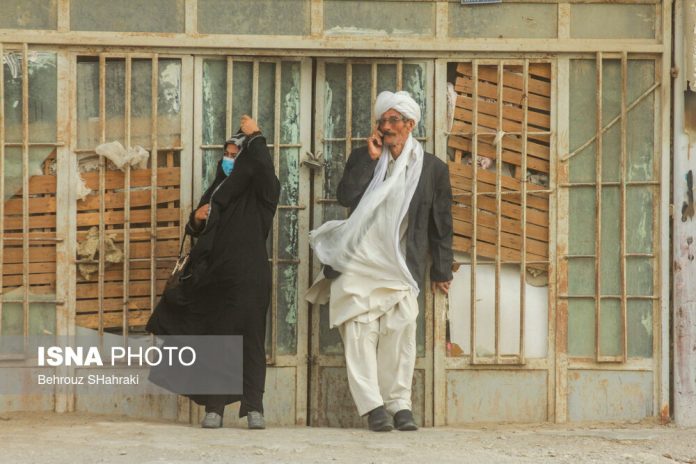
Dr. Meisam Moazi, Deputy of Treatment at Ahvaz Jundishapur University of Medical Sciences, stated that around 20 patients of various ages were hospitalized, while the rest were discharged.

He urged all residents of the province, especially high-risk groups such as children, pregnant women, the elderly, and those with respiratory diseases, to stay indoors as much as possible during polluted days.

The Khuzestan Meteorological Department issued a red-level warning for dust particles originating from Iraq and Saudi Arabia, expected from late Monday until Tuesday.

Following the dust storm, all government offices in Khuzestan switched to remote work, and educational institutions across the province suspended in-person activities on Tuesday.

Due to the severe dust storm sweeping Khuzestan after the influx of dust masses from Iraq and Saudi Arabia, the concentration of PM10 pollutants in Ahvaz and Hamidiyeh reached 67 times the permissible limit on Tuesday morning. Nineteen cities experienced “hazardous” and “brown” air quality conditions.

Turkey detains Iranian academic in controversial arrest, Iran demands immediate release

Turkish Police

Beyzaie, a faculty member at Tabriz University, was taken into custody on February 14, while preparing to board a flight to Tehran with his family at Istanbul Airport.

According to Ali Akbar Velayati, Chairman of the Islamic Azad University Board of Founders, Turkish police deported Beyzaie’s family but held the professor without providing any legal justification.

“Despite repeated inquiries, Turkish officials have failed to offer any reasonable explanation for the unlawful detention,” Velayati told Tasnim News Agency.

The arrest has sparked outrage in Iran, with officials calling it a violation of international law and bilateral agreements.

Velayati emphasized that Iran has consistently sought cordial relations with Turkey based on mutual respect and legal frameworks.

“This arbitrary detention runs counter to all diplomatic norms and the spirit of neighborly relations,” he stated.

Iranian Foreign Ministry officials have reportedly intensified efforts to secure Beyzaie’s release, though no breakthrough has been achieved.

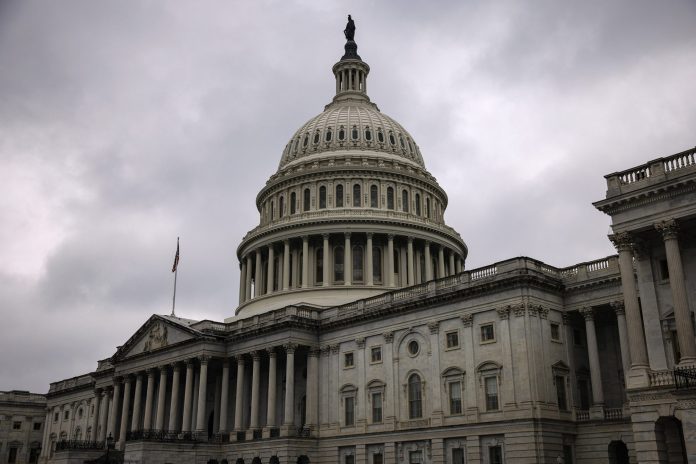
US lawmakers look to bolster Ukraine, sanction Russia: Reuters

US Congress

Representative Greg Meeks, the top Democrat on the House Foreign Affairs Committee, introduced the Ukraine Support Act, which would provide security and reconstruction funding for Ukraine and impose steep sanctions on Russia, according to a copy of the bill seen by Reuters.

The bill, which has not yet been made public, was filed two weeks after Republicans and Democrats in the Senate introduced stiff sanctions that would be imposed on Russia if it refuses to engage in good-faith peace negotiations with Ukraine.

The efforts in Congress reflect increasing concern among lawmakers from both parties about Ukraine’s fate, as Republican President Donald Trump has taken a more conciliatory stance toward Moscow since starting his second term on January 20.

Trump, who is trying to broker a peace agreement, has repeatedly blamed Ukrainian President Volodymyr Zelensky for the three-year-old conflict even though it began with Russia’s full-scale invasion of Ukraine. He did so again on Monday, with a complaint about Kyiv asking for missiles.

Congressional aides who helped write the House bill said their goal was to influence negotiations on any Ukraine-related legislation eventually passed by Congress. Parts of the bill were expected to appear in any final broad Ukraine package even if the measure itself cannot find a way forward in the Republican-majority House.

“This bill obviously will be part of the legislative conversation,” one stated.

The effort was given additional urgency on Sunday, when two Russian ballistic missiles hit the center of the northern Ukrainian city of Sumy as residents attended Palm Sunday church services. Kyiv announced the attack killed 34 people and wounded 117, dozens of them civilians.

Russia’s defence ministry claimed it had targeted a gathering of Ukrainian commanding officers in the city.

Trump administration officials have been increasingly at odds over how to settle the Ukraine-Russia conflict, Reuters has reported, with some suggesting Ukraine should cede territory to Russia and others favoring more direct support to Ukraine.

The House bill is divided into three sections and would provide more support than the Ukraine legislation in the Senate.

The first affirms support for Ukraine and NATO and includes measures to help Ukraine rebuild, including creating the position of a special coordinator for Ukraine reconstruction.

The second provides security assistance for Kyiv, including direct loans and military financing, and the third would impose stiff sanctions and export controls on Russia, including on financial institutions, oil and mining and Russian officials.

While many members of Congress from both parties have strongly supported Ukraine during the three-year conflict, many of Trump’s closest Republican allies have grown cooler since his party took control of the House two years ago, and then the White House and Senate in January.

Gaza facing ‘worst’ humanitarian crisis since Israel’s attacks began: UN

Gaza War

“Office of the Coordination of Humanitarian Affairs (OCHA) warns that the humanitarian situation is now likely to be the worst it has been in the 18 months since the outbreak of hostilities,” UN spokesperson Stephane Dujarric said during a news conference.

“It has now been a month and a half since any supplies were allowed through the crossings into Gaza, by far the longest such halt to date,” he added.

Expressing the grim situation in the Gaza Strip, Dujarric said there is “a surge in attacks causing mass civilian casualties and the destruction of some remaining infrastructure that’s needed to keep people alive.”

He also denounced Israeli authorities for issuing four new displacement orders over the weekend, stressing that the evacuation orders are “further reducing the limited space available for families.”

“Civilians are effectively trapped in increasingly fragmented and unsafe enclaves in Gaza, where access to essential services for survival is dwindling day by day,” he added.

The UN official noted that about 70% of Gaza is now under displacement orders or classified as “no-go zones,” requiring coordination with Israel for humanitarian access.

“Displacement orders are, of course, undermining access to half of all water wells across the Gaza Strip,” he said, adding that “dwindling supplies” have forced aid workers to ration and reduce deliveries.

Asked whether Israel is committing a war crime by blocking aid into Gaza, Dujarric stated, “Israel has responsibilities under international law, as the occupying power, to adequately provide basic services and humanitarian aid to the people of Gaza. That is not happening.”

“We will let judicial bodies decide whether things are so; at least this violates international law.”

Since March 2, Israel has closed Gaza’s crossings, blocking essential supplies from entering the enclave.

The Israeli army also renewed a deadly assault on Gaza on March 18, shattering the ceasefire and prisoner exchange agreement that took hold in January.

Nearly 51,000 Palestinians, most of them women and children, have been killed in Gaza in a brutal Israeli onslaught since October 2023.

The International Criminal Court issued arrest warrants last November for Israeli Prime Minister Benjamin Netanyahu and his former Defense Minister Yoav Gallant for war crimes and crimes against humanity in Gaza.

Israel also faces a genocide case at the International Court of Justice for its war on the enclave.