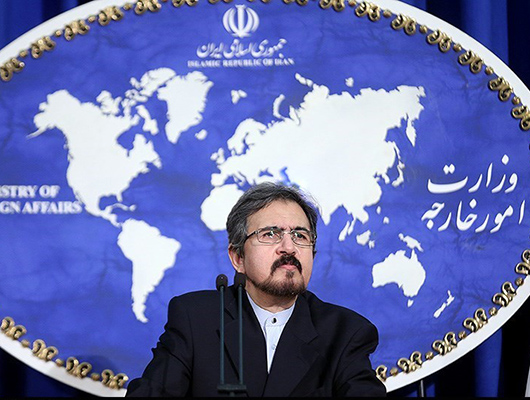
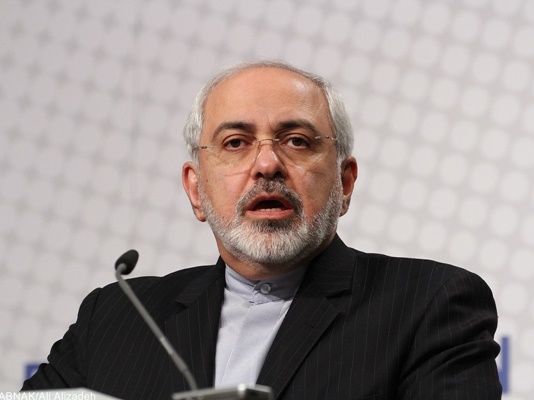
“Breaking: Our Navy operates in – yes, correct – the Persian Gulf, not the Gulf of Mexico,” Iran’s top diplomat said in a recent tweet on Wednesday.
“[The] Question is what [the] US Navy [is] doing 7,500 miles from home,” he added, criticizing the US Navy’s presence in the Persian Gulf.
His remarks came after reports of a close encounter between an Iranian vessel and the US warship USS Mahan in the Persian Gulf.
US officials claimed that the Iranian vessel has come within just 1,000 yards of the USS Mahan in the Persian Gulf on Monday.
The US officials said the Iranian “fast-attack craft” had its weapons manned, to which the USS Mahan responded by manning its own weapons, sounding the danger signal, firing a flare and altering course to avoid the oncoming Iranian ship.
The clashes, which erupted near the town of Mirjaveh in the province of Sistan-and-Baluchestan while the Iranian forces were patrolling the area, also left three other border guards injured, IRIB News Agency reported.
The so-called Jaish ul-Adl terror group claimed responsibility for the attack in a statement.
Photos and a video clip have emerged of burning fuel or gas at the Damascus International Airport. Al Manar TV, which is affiliated with the Lebanese Resistance Group Hezbollah, says the Israeli regime has been probably behind the explosions.
Russian news agency Sputnik also reported that Israel was behind the attack.
The reports say that there were five airstrikes against the airport or its vicinity, Al Masdar reported.
It has not been revealed yet the nature of the damage to the airport, but the strikes occurred at around 03:25 A.M. local time.
According to Al Manar, initial indications were that the blast had caused only material damage and not deaths.
The Damascus International Airport is still used for civilian flights, including routes to Qamishli in Syria’s northeast, Tehran in Iran and Dubai in the United Arab Emirates.
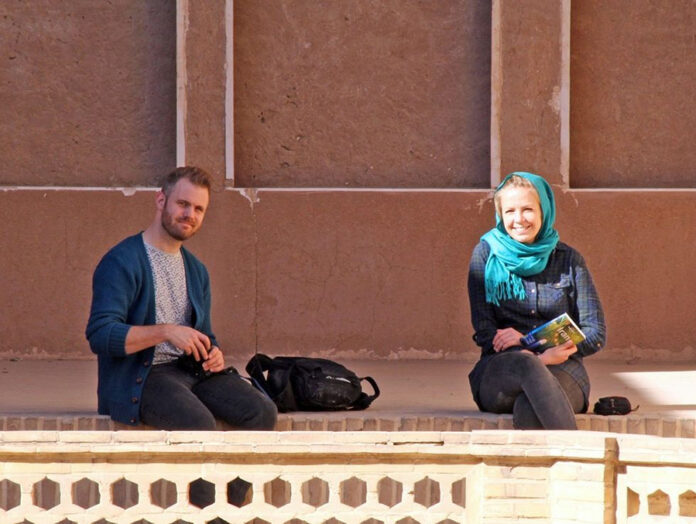
As shown by official figures, Iran, as a tourist destination, has gained greater popularity among foreigners in the past four years, particularly after the beginning of the implementation of the Joint Comprehensive Plan of Action (JCPOA), the nuclear deal signed between Iran and six world powers, in 2016, which is a tangible achievement by the country’s incumbent government.
According to a Farsi report by the Vaghaye Ettefaghieh newspaper, over the past few days, discussions about issues pertaining to Iran’s upcoming presidential elections (due to be held on May 19) gradually began to overshadow other topics and news. The spontaneous creation of the hashtag #Tangible_Changes, as a reaction to the performance of the Rouhani administration, started an interesting trend in social network, to which a large number of social media users responded by mentioning the positive changes they had witnessed in the past four years since the beginning of President Rouhani’s term in office.
One of the comments, written in response to the hashtag, read: “These days, happy and surprised foreign tourists are seen in every part of Tehran, while strolling along and having fun. And this means #Tangible_Changes [have been made].”
Confirming reports and claims by eyewitnesses, official figures also indicate that since 2013, particularly following the signing of the nuclear deal, also known as the JCPOA, [between Tehran and P5+1] in 2015, the number of foreign tourists visiting Iran has experienced an unprecedented growth.
Tourism experts give numerous analyses of the spike, stressing that the international community’s changed attitude towards Iran, which has led to the formation of a positive image of the country in people’s mind, has greatly contributed to the growth. Nevertheless, it should be noted that Iran is still far from having the necessary tourism infrastructures.
However, by making Iran a safe and secure place for foreign tourists, the first step has been taken successfully to guarantee their greater presence in the country.
The number of tourists from Germany (29,000), France, Italy, Russia, the Netherlands, the UK, Sweden, Austria, Spain and Switzerland (4,000) to Iran has been subject to a gradual increase over the past four years, placing them among the top 10 countries in terms of the number of tourists visiting Iran in the world.
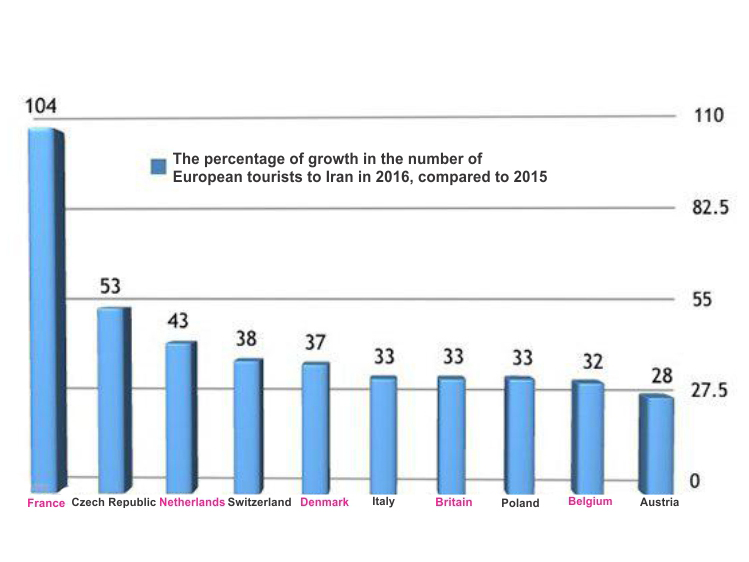
The diagram presented above, shows the rise in the percentage of European tourists to Iran from March 20, 2016 to September 21, 2016 compared to the corresponding period in 2015. The increasing trend began after the signing of the nuclear deal and, then, became quite noticeable in the first few months after the beginning of JCPOA implementation. The number of foreign visitors to Iran in 2015 indicated a 3-percent growth compared to that of a year ago.
This is while, as more time elapsed since the Implementation Day of the JCPOA (January 16, 2016), in view of the efforts to present Iran as one of the world’s important tourist destinations, the number of foreign visitors to the country during March 20, 2016-September 21, 2016 witnessed an increase of 40-percent compared with the figure for the same duration of last year.
Figures by Iran’s Cultural Heritage, Handicrafts and Tourism Organization (ICHTO) show that in this period, 117,619 foreign tourists visited Iran. In the same time span in 2015, the figure stood at 87,314.
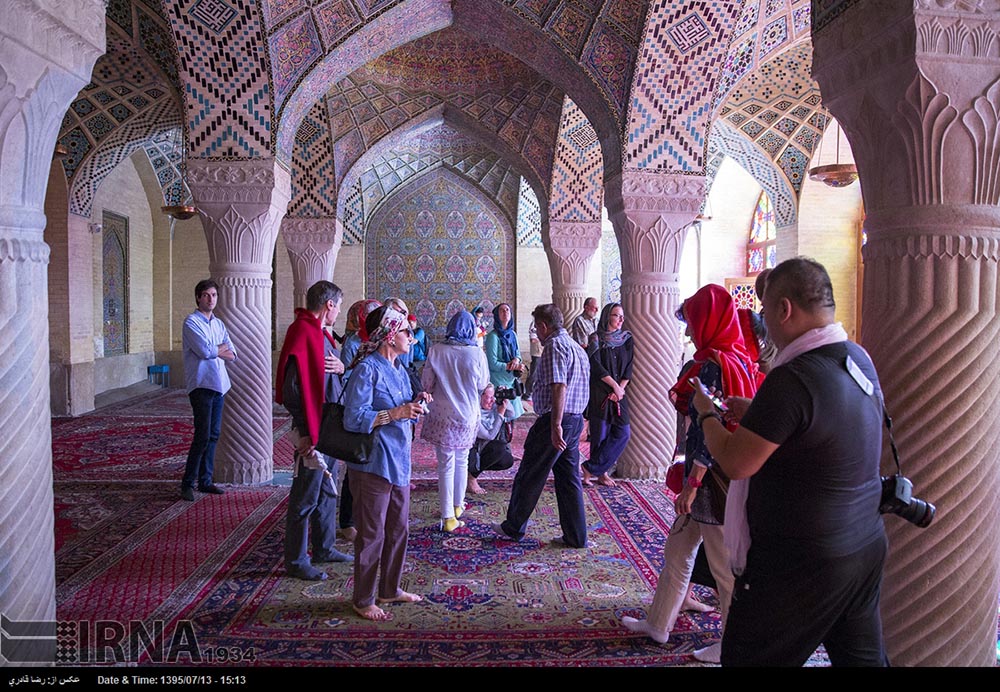
Foreign Tourists-Shiraz
During the six-month period in 2016, France ranked first in terms of witnessing the highest growth (104.1 percent) in the number tourists to Iran after the going into effect of the JCPOA, followed by the Czech Republic (53.4 percent) and the Netherlands (43.3 percent).
This rise occurred while, although Western sanctions against Tehran has been lifted, foreign tourists still were (and are) faced with a number of problems, posed by the Western society, for travelling to the Middle Eastern country. For instance, a few while ago, in its post-JCPOA resolution, the US Congress announced that the citizens of those 38 countries whose nationals can usually enter the US without a visa, per the Visa Waiver Program, such as Britain, France and Japan, will require to obtain a visa to be allowed entry to the country, should they have been to Iran once even as a tourist.
Despite such limitations, the ICHTO managed to play host to a large number of Europeans in 2016, in view of the improved atmosphere pervading Iran’s foreign relations in the post-JCPOA era.
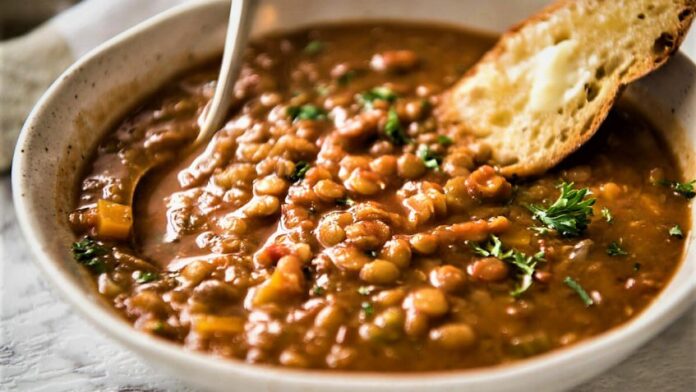
First wash the red lentil and mix it with the olive oil, chicken broth, onions, garlic and chopped carrots, and put the cocktail on the oven with an average temperature until it boils. Then turn down the oven and let the mixture remain on the fire for 1.5 hours. Mix the soup off and on. Then add vinegar or lime juice, plus salt and pepper. If the soup is too thick, add some water. Then pour it into a dish and garnish it with celery leaves. Due to its lentil and vegetables, the soup contains a lot of fibre. It is very useful for children as well as adults and those suffering from diabetes type 2.
* Kookoo vegetables include coriander, parsley, dill, chives, scallion and a little mint.
Recipe:
Chop the leek, spinach and scallion. Pour around 1 spoonful of oil into the frying pan and put it on the stove. Sauté the chopped leek before adding the chopped spinach. Then leave that on the flame for 3 minutes. Mix the eggs and add to them the spinach, leek, scallion and Kookoo vegetables. Then add salt, pepper and walnut. Fry them all on low temperature. Then turn the cutlet upside down, so that the other side is fried as well.
Foreign Ministry Spokesman Bahram Qassemi referred to Turkey’s Tuesday airstrikes on areas near the city of Sinjar deep into the Iraqi territory as a violation of the Arab country’s national sovereignty and territorial integrity, and voiced the Islamic Republic’s support for the Iraqi government’s position in this regard.
“Violating the national sovereignty of other countries with any motive or justification is a breach of international laws and established rules,” Qassemi noted in a statement on Wednesday.
He also stressed that such moves will prepare the grounds for continuation and reinforcement of instability in the region.
If nappy rash is not treated, it will result in infectious and fungal skin diseases. Fungal infection is more prevalent among babies who take antibiotics. Nappy rash comes out in a rash and gradually develops into one consistent red-colored spot.
First Step to Treat Nappy Rash
One of the most useful and simplest ways to control and treat nappy rash is to change the baby at short intervals. Each time parents change the infant’s nappy, they had better not wrap it up immediately. They should let air circulate around the baby’s skin for some time to help alleviate the burn.
Prompt Treatment
Among the key factors which make it all the more necessary to treat nappy rash promptly is the possibility of developing skin infection, fungal diseases and severe sensitivity, which could turn into ulcers in the long run. So, parents should not ignore the possibility of coming down with soreness and infectious skin disease.
Causes of Nappy Rash
The major cause of nappy rash is moisture. Children urinate a lot coupled with a watery stool. Even highly-absorbent nappies will leave behind some moisture on the baby’s fine skin. An infant whose skin remains in contact with a dirty nappy for a long time may develop nappy rash.
Best Treatment for Nappy Rash
Until 150 years ago, there was no chemical medicine, and doctors used to prescribe medicinal herbs for their patients. Thanks to the country’s ecological features and age-old history in traditional medicine and herbal remedies, grounds are prepared in Iran for conducting specialized scientific research on the treatment of various diseases through identification and production of medicinal herbs. Arnebia euchroma L is one of those medicinal herbs, which has been used throughout the history in healing dangerous wounds. Daru Darman Salafchegan Company, as a knowledge-based producer of herbal medicine in Iran, has managed to produce an herbal ointment named “Mum Derm”, which helps mothers relieve their babies of nappy rash.
The company has passed all clinical tests and obtained the required licences for the ointment at the international level. It is now prepared to sign deals with applicant companies across the world, offering its herbal products based on (up to) two-year usance contracts.
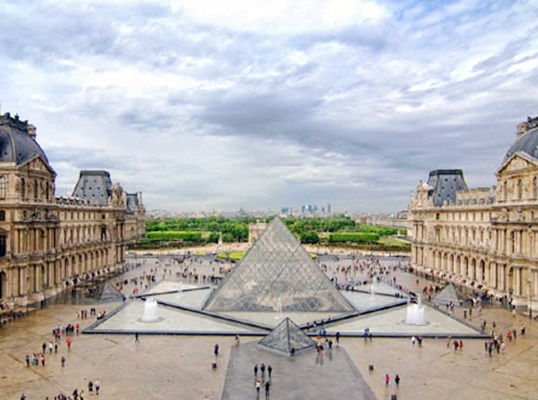
The director of Iran’s Museums and Historical Properties Office, Mohammad-Reza Kargar, declared that Louvre Museum, located in the French capital of Paris, plans to put its antiquities and artefacts on show in an exhibition titled “Louvre in Tehran” in the Iranian capital.
According to a Farsi report by IRNA, Kargar said the holding of the expo is as per a Memorandum of Understanding between the cultural heritage directorate of the National Museum of Iran and the French museum, signed in March 2017.
He added the four-month exhibition will feature precious artefacts and antiquities, kept at the museum, belonging to the civilizations of ancient Greece, Egypt and Rome and a number of works by French artists.
“This will be the first time in the history that the museum intends to lend its artefacts and antiquities to Iran. This is indicative of the two sides’ great trust in each other and their advanced level in museum management.”
Inviting Iranians to visit the exposition, he stressed that showcasing these artefacts and antiquities not only helps Iranian people gain greater knowledge of the ancient civilizations, but also displays Iran’s cultural capabilities, highlights the country’s stability and security, and is a leap forward in its museum management.
Kargar noted that other countries such as Armenia and South Korea will also hold exhibitions in Iran in the year that will end in mid-March 2018.
Mexico has also proposed to hold an expo of its ancient civilization’s antiquities and artefacts in Iran, he added.
“Do not pay much attention to Trump’s words,” Zarif said, speaking to reporters on the sidelines of a cabinet session in Tehran on Wednesday.
He made the remarks in reaction to Trump’s comments published on Sunday. The US president said it was “possible” that the US would not remain in the nuclear deal.
“I believe they have broken the spirit of the agreement,” Trump told the Associated Press. “There is a spirit to agreements, and they have broken it.”
Trump had earlier made the same accusation against Iran Thursday. In response, Zarif said Washington itself has not remained committed to the text of the JCPOA, let alone to its spirit.
Deputy Foreign Minister for Consular, Parliamentary and Iranian Expatriates’ Affairs Hassan Qashqavi announced that Iran’s May 19 presidential election will be held in 103 countries and Iranian expats can cast their ballots in 279 stations and 132 embassies and consulates.
He noted that 30 ballot boxes will be located in various US cities, 19 in the UAE and 12 in Britain, Mehr reported.
Qashqavi also referred to the huge number of Iranians living in Canada, and regretted that negotiations on holding the election in Canada have yet to bear any fruits due to lack of diplomatic ties with the North American country.
He said statistics revealed that approximately 2.5 million Iranians residing in foreign countries were eligible to participate in elections.

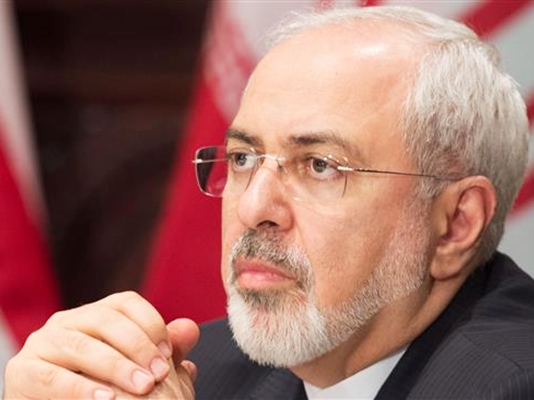
 “[The] Question is what [the] US Navy [is] doing 7,500 miles from home,” he added, criticizing the US Navy’s presence in the Persian Gulf.