Tuesday, December 23, 2025
Home Blog Page 4044

500kg Egyptian Loses Half Her Weight after Surgery in India

500kg Egyptian Loses Half Her Weight after Surgery in India

Egyptian national Eman Ahmed Abd El Aty weighed 500 kilogrammes (1,100 pounds) when she arrived in Mumbai in February on a specially modified plane to undergo emergency weight-loss surgery.

In videos provided this week by the Saifee Hospital, where the 37-year-old successfully had bariatric surgery last month, Abd El Aty can be seen sitting up and smiling while listening to music.

“She looks a happier and slimmer version of her past self. She can finally fit into a wheelchair and sit for a longer period of time, something we never dreamt of three months back,” said a statement from doctors, announcing that she had lost 250 kilos.

Abd El Aty had not left her home in Egypt’s Mediterranean port city of Alexandria for two decades until she arrived in India’s commercial capital on February 11, AFP reported.

She was put on a special liquid diet to get her weight down to a low enough level for doctors to perform bariatric surgery, essentially a stomach-shrinking bypass procedure carried out on those wanting to lose excessive weight.

The diet helped Abd El Aty lose around 100 kilos in a month, allowing doctors to operate on her in early March.

Abd El Aty’s family say that as a child she was diagnosed with elephantiasis, a condition that causes the limbs and other body parts to swell, leaving her almost immobile.

The Egyptian has suffered several strokes and faced a series of other serious ailments owing to her weight including diabetes, high blood pressure, hypertension, and sleep deprivation. She is unable to speak properly and is partially paralyzed.

“She continues to lose weight rapidly and is awaiting the moment she can fit into a CT scan machine to know the cause of her right-sided paralysis and convulsions,” doctors added in the statement published on the “Save Eman Cause” website Wednesday.

Muffazal Lakdawala, the doctor leading Abd El Aty’s treatment, added in a separate post that they hoped to put her on a trial obesity drug in six months. Doctors are trying to procure it from the United States, he said.

In July last year, the Guinness Book of World Records recorded American Pauline Potter as the world’s heaviest woman at 293 kilos, well above Abd El Aty’s current weight.

Fajr Int’l Film Festival Starts Work in Tehran

Fajr Int'l Film Festival Starts Work in Tehran (3)

“A film festival is not just for watching movies, it is an artistic and cultural occasion as well,” acclaimed Iranian filmmaker and the festival secretary Reza Mirkarimi said at an informal session with the press and film critics at the six-storey Charsou Cineplex on Thursday.

“We have done our best to hold an organized festival with independent identity and specific purpose, and selected quality films to achieve the standards.”

However, as he pointed out, a festival, as big as the annual Fajr, needs a cinema complex with at least 15 halls. In the current edition, three different cineplexes across Tehran (10 halls in total) are hosting the enthusiasts.

By the end of the festival on April 28, a total of 140 movies from 58 countries, in competition and non-competition sections, will be screened at ten halls in Tehran. The number of halls shows a 100% increase over last year’s edition.

About 350 foreign guests from 66 countries are attending the 8-day festival and this is a significant number, but Mirkarimi believes, “the number does not matter, what is important is who is coming. Over 70% of directors whose works are present in the festival will attend.”

The festival is programmed to elicit the expertise of its guests so there will be educational sessions with several of them in Charsou Cineplex and at two universities.

On Thursday, ‘The Teacher,’ a 2016 Slovak-Czech movie directed by Jan Hrebejk, was screened for the audience. A beautiful drama, the story is set in Bratislava, 1983, and centers on a middle school teacher who manipulates her students’ parents into doing favors for her in exchange for previews of test questions and good grades for their children.

Workshops in Process

The scheduled workshops of the festival, under the title ‘Talent Campus,’ started two days prior to the film screenings. More than 100 young filmmakers from 33 countries are attending the workshops on various cinema issues. The sessions are chaired by experts from Iran and other countries.

Workshops on the first three days include: screenwriting held by Iranian figures Farhad Tohidi, Fereydoun Jeyrani, Mehran Kashani, Naghmeh Samini and Ahmadreza Motamedi; movie production by the A-list Austrian film producer Veit Heiduschka, who produced award-winning movies directed by Austrian director Michael Haneke; directing by Iranian filmmaker Bahman Farmanara; marketing and international sales by Mehdi Yadegari, Shahab Esfandiari and Alireza Shojanouri from Iran; and acting by Iranian actor Reza Kianian.

Members of the festival jury are busy watching and evaluating the film entries in the competition sections.

After a screening session on Friday morning, Iranian filmmaker Kamal Tabrizi, who is a juror for the Panorama of Films from Asian and Islamic Countries section, in response to a question by the Financial Tribune about the films they have watched, said, “We have seen four films so far and it is too soon to talk about the quality. In the next four days, we will have a better insight.”

The 20th Iranian International Film Market (IFM) has also been launched since Friday at Charsou Cineplex where more than 50 domestic and international film companies are presenting their productions. The market creates a platform for Iranian and international producers, distributors, exhibitors and sales agents of films and TV programs to exchange ideas and pool minds.

Hurdles for Co-production

Iran cinema produces over 100 feature films annually, but only few have been made jointly with other countries although it is routine for two or more countries to work on one production.

Elaborating on why Iran has done poorly in this field, Mehdi Yadegari told the Tribune that the main problem “is the difference in costs between Iran and the rest of the world. The budget allocated to a film in Iran is far too less than in other countries. So when it comes to each part’s (financial) share in the production, ours is almost nothing compared to theirs.”

Another factor which hinders the process, he said, is their unfamiliarity with the cultural issues here. “Especially for world documentarians, Iran is an ideal place because it has not been worked on before and has pristine environment to show. But when they come here, they may face restrictions, particularly regarding culture and religion, which can influence their work.”

Currently, the five halls at the downtown Charsou Cineplex, as well as three at Felestin Cinema in central Tehran, and two at Farhang Cinema in northern part of the city, are hosting film enthusiasts.

Here are photos of the first day taken from Mehr and Fars:

Iranian People Adopting More Children

“Since the new law on adoption was approved in 2015 to facilitate the growth and development of abandoned children or orphans in a family environment, the adoption rate has increased considerably,” IRNA quoted Ahmad Meydari, deputy minister of Cooperatives, Labour and Welfare, as saying.

Earlier in March, Minister of Cooperatives, Labor and Social Welfare Ali Rabiei had declared that “around 14,000 children have been adopted by families in the past two years.”

Revision in the adoption laws and new regulations such as temporary guardianship and the possibility for single women and Iranians living abroad to adopt, has led to the rise in the number of children finding new families, according to Financial Tribune.

Previously, strict laws had discouraged many couples from adoption. Today, however, the moderate laws and revised rules make it easier for an orphaned child or one with negligent or irresponsible parents to be part of a new family.

In Iran, temporary guardianship allows a child with negligent parents or parents sentenced to long or life imprisonment to be adopted while their legal guardianship remains with their biological parents or the State Welfare Organization (SWO). Single women older than 30 and couples with children who are financially able to raise a child are eligible for temporary adoption.

Population studies show that the large number of late marriages which may affect a couple’s fertility, as well as the growing number of single women in Iran, may likely increase the number of applicants for child adoption.

Growing up in a proper family atmosphere helps build a child’s character to become stronger and more resilient in adulthood. Therefore, the new adoption policies have been focused on facilitating the procedures of granting guardianship.

US Has Defied Both Letter, Spirit of Nuclear Deal: Zarif

Mohammad Javad Zarif

“We’ll see if US (is) prepared to live up to letter of the JCPOA (the Joint Comprehensive Plan of Action) let alone (to its) spirit. So far, it (the US) has defied both,” Zarif said in a post on his twitter account on Friday.

US Has Defied Both Letter, Spirit of Nuclear Deal: Zarif His comments came after US President Trump claimed on Thursday that Iran is “not living up to the spirit” of the JCPOA, the nuclear deal signed between Iran and the Group 5+1 (Russia, China, the US, Britain, France and Germany), just two days after his administration reported that Iran was complying with the requirements laid out in the nuclear deal.

Elsewhere in his tweet, the top Iranian diplomat asked, “Should I use my highlighter again?”, referring to a tweet he had posted earlier highlighting part of the text of the JCPOA, according to which the US administration had undertaken to support the successful implementation of the accord.

zarif reponse

Veteran Activist Defends Women’s Presidency in Iran  

Veteran Activist Defends Women’s Presidency in Iran

The leading women rights activist, Azam Taleqani, who had signed up to compete in Iran’s May 19 presidential elections but was disqualified by the Guardian Council from running, has defended Iranian women’s right to become a president.

According to a report by IFP, she was born in 1944 and is the daughter of Ayatollah Mahmoud Taleqani, an Iranian theologian, Muslim reformer, democracy advocate and senior Shiite cleric.

Prior to the victory of the 1979 Islamic Revolution, she was involved in the opposition movement and the struggles against Iran’s then-reigning Pahlavi dynasty (1925-1979). She was even imprisoned during the Pahlavi regime. In the first few months following the victory of the Islamic Revolution, she published a weekly newspaper titled “Hijab”, which was most probably among the very first papers published in Iran exclusively for women.

Based on Iran’s Constitution, the Iranian president should be a ‘man of politics’. However, the Guardian Council, the body responsible for interpreting the law and vetting the presidential candidates, has yet to define the term.

Taleqani has for several times run for president in previous elections, but she has been disqualified by the Guardian Council every time. The interesting point is that she has not been disqualified for ‘being a woman’, but rather for not being a ‘man of politics’.

She has repeatedly urged the Council to clearly define the term and explain why women like her, with several years of struggle against the Shah’s regime, cannot become a president in Iran.

A few days ago, she once again released a statement, defending women’s presidency in Iran, and calling on the Council to define the controversial term.

The full text of her statement, as quoted by ISNA in Farsi, reads as follows:

‘Thou mankind, indeed We have created you from a man and a woman and made you peoples and tribes that you may know one another [not to practice racism, be proud of your own race or pedigree and hold your nation dearer than that of others]. Indeed, the most noble of you in the sight of Allah is the most righteous of you. Indeed, [God lays down the criterion for deciding about the superiority of people over one another, as] Allah is Omniscience and fully aware of everything.’ (Verse 13 of the surah titled ‘Al-Hujurat’)

Therefore, all tribes and races [have been and] are equal when initially created by God and none of them is superior or inferior to the rest.

On December 28, 2016, the esteemed Guardian Council of Iran invited all Iranian elites, university professors, seminary instructors, thinkers and theoreticians in the field of law and political science and parties to submit their cogent and reasonable proposals to the Council concerning the clause 5 of the 10th paragraph of the election’s general policies regarding the conditions and criteria required to be met by presidential candidates.

In the initial days after the victory of the Islamic Revolution, it was realized that no restriction had been placed on the presidential candidates in terms of their gender in the draft version of Iran’s Constitution, which had received final approval and been, also, signed into law by Imam Khomeini. A number of the clerics and religious scholars complained about the draft’s failure to clearly and absolutely determine the gender of the country’s president and candidates for the position, saying that it was required to be stipulated in the Constitution that only men are permitted to become Iran’s president. Imam Khomeini urged them to consult other eminent religious scholars of the country. Nevertheless, after seeking other religious scholars’ opinion, they decided not to consent to allow women to be appointed the country’s president and, thus, passed the Article 115 stating that Iran’s president must be elected from the country’s ‘men of politics’ and meet certain criteria.

Therefore, it is evident that Imam Khomeini had refrained from favouring a certain gender and, even, sought to settle the issue through negotiation.

About Iran’s president, it is stipulated in the Constitution:

‘[Iran’s] President must be elected from among the country’s ‘political statesmen’ who meet the conditions and criteria that follow: Potential candidates must be originally from Iran, hold Iranian citizenship, be prudent managers, have a good reputation and background, be trustworthy, pious and true believers and believe in the principles of the Islamic Republic and the country’s official religion.’

Some maintain that the word ‘man’ in the term ‘man of politics’ means males, whereas, some hold that it denotes the president’s character and that the candidate should be an elite. Some people have accepted the former interpretation, while, a number of others believe that the latter holds true. At that time, Ayatollah Seyyed Mohammad Hosseini Beheshti (1928-1981) – an Iranian jurist, philosopher, cleric and politician who was known as the second person in the political hierarchy of Iran after the Islamic Revolution – had been asked to define the word and he had answered that ‘man’ denotes religious and political figures and characters.

Given Imam Khomeini’s call on religious scholars in Qom, Najaf, and Mashhad to support Islam, how is it possible that nearly 40 years after the victory of the Islamic Revolution, such a failure is still witnessed in protecting this absolute right of a large number of the Iranian people? How is it going to be compensated for?

I, as a women who has been involved and has played a role in the victory of the Islamic Revolution, personally am against making a gender-biased interpretation of the word ‘man’ in the term ‘man of politics’ in view of the Quranic pieces of evidence [provided above], according to the tradition of Shiite imams and based on wisdom. I maintain that the notion of women being able to be appointed to the country’s top positions has great religious originality, as displayed and supported by the glorious Muslim school, and also as called for and urged by the religious duty of doing equal justice to all people, this absolute right of the half of the Iranian population is required to be respected on the basis of recognizing equal rights for all people.

World’s Prominent Painters Come Together in ‘Garden of Luminaries’

The book titled “The Garden of Luminaries”, recently published by Aradman Publications, provides readers with a collection of diverse painting schools’ patterns along with a number of artworks by the world’s most prominent painters in the past millennium and a different outlook on the style of these maestros.

According to a Farsi report by the Khabar Online News Agency, using an art therapy approach, the book presents a collection of different art schools’ patterns used by the world’s famous painters to create everlasting masterpieces in the past 10 centuries, particularly the last 300-400 years.

It includes works by Leonardo da Vinci (1452-1519, Italy), Michelangelo di Lodovico Buonarroti Simoni (1475-1564, Italy), Vincent Willem van Gogh (1853-1890, the Netherlands), Pablo Picasso (1881-1973, Spain), Oscar-Claude Monet (1840-1926, France), Marc Zakharovich Chagall (1887-1985, Russia), Salvador Dali (1904-1989, Spain), Andy Warhol (1928-1987, US), Frida Kahlo (1907-1954 Mexico), Rembrandt Harmenszoon van Rijn (1606-1669, the Netherlands), and Gustav Klimt (1862-1918, Austria).

Works by Pierre-Auguste Renoir (1841-1919, France), Paul Cézanne (1839-1906, France), William Thomas Kinkade (1958-2012, US), Edvard Munch (1863-1944, Norway), Sir Peter Paul Rubens (1577-1640, Germany), Grant DeVolson Wood (1891-1942, US), Jacob Isaackszoon van Ruisdael (1629-1682, the Netherlands), Johan Vermeer (1632-1675, the Netherlands), Maurits Cornelis Escher (1898-1972, the Netherlands), Edward Hopper (1882-1967, US), Rene Francois Ghislain Magritte (1898-1967, Belgium), and Camille Pissarro (1830-1903, US) are also included in the book.

van gogh“The Garden of Luminaries” also presents masterpieces by Hans Holbein the Younger (1497-1543, Germany), John Singer Sargent (1856-1925, US), Jean-Honore Fragonard (1732-1806, France), Robert Campin (1375-1444, France), Nicolas Poussin (1594-1665, France), Thomas Gainsborough (1727-1788, Britain), Henri Fantin-Latour (1836-1904, France), James Ensor (1860-1949, Belgium) and Francisco Goya (1746-1828, Spain).

The texts in the book have been compiled and translated into Farsi by Fatemeh Forqani.

The preface of the book reads: “Painting is an activity which helps develop creativity in children and young adults. It also helps adults achieve effective peace and tranquillity which contributes to the beautification of their lives.

In ancient schools of thought, colours and painting were also believed to have a soothing and pacifying impact. In the second chapter of the book, the readers are invited to paint the sketches of some of the works by the well-known artists listed above, in their own way and using their own creativity.

The book has 84 pages and has been published in 1,000 copies. Its price is about $4 in Iran.

Iran’s President Shouldn’t Be Afraid of US: Cleric

Movaheddi Kermani

“The president of Iran should not be afraid of the US,” Ayatollah Mohammad Ali Movahedi Kermani said in an address to worshipers at the weekly Friday prayers in the Iranian capital.

He should rather be able to offer an iron fist to the US and Israel, he went on to say.

The top cleric also urged the presidential candidates to avoid giving false promises that are impossible to be carried out, according to a Farsi report by ISNA.

“People should pick somebody who abides by, and is determined to enforce the precepts of Islam,” he added.

He said people should not fall for a handful of campaign slogans, but, before making their choice, ought to study the track record as well as positive and negative points of the candidates who have been qualified to run for president

Ayatollah Movahedi Kermani also called for the live televised broadcast of the forthcoming presidential election debates, saying the measure would boost the nation’s insight and knowledge about the candidates.

The live broadcast of the debates among the presidential candidates would be “one of the best ways” to enhance the Iranians’ awareness and help them identify the best hopeful, he added.

The senior cleric made the remarks after Iran’s Election Campaign Monitoring Committee decided on Thursday to call off the live broadcast of debates and to cover the debates in recorded version instead.

The decision has drawn widespread criticism among Iranian officials and people, and is expected to be revised or finalised in another session on Saturday.

Elsewhere in his remarks, Movahedi Kermani called for a massive voter turnout in the country’s upcoming presidential election.

He said massive participation of people in the presidential vote will show the Islamic Republic of Iran’s establishment is powerful and enjoys grassroots support.

He then touched upon the process of vetting the hopefuls, which is a duty of the Guardian Council.

“If any candidate has an objection to the Guardian Council’s decision while it is vetting the hopefuls, he should write a letter to the council to be considered. But he should accept the council’s final decision, and not kick up a fuss [over the issue,]” he said.

Ayatollah Movahedi Kermani then referred to the unrest created by protesters following Iran’s 2009 presidential election.

“[After the 2009 election,] some individuals defied the law, created problems for people and brought disgrace upon themselves,” he underlined, urging everybody to comply with the law.

The interim Friday prayer leader also said the president should lead a simple life, reach out to the needy and avoid cronyism.

“The president should also be able to boost economy and pay attention to production and job creation,” he added.

He also said the president should dedicate himself to serving the people.

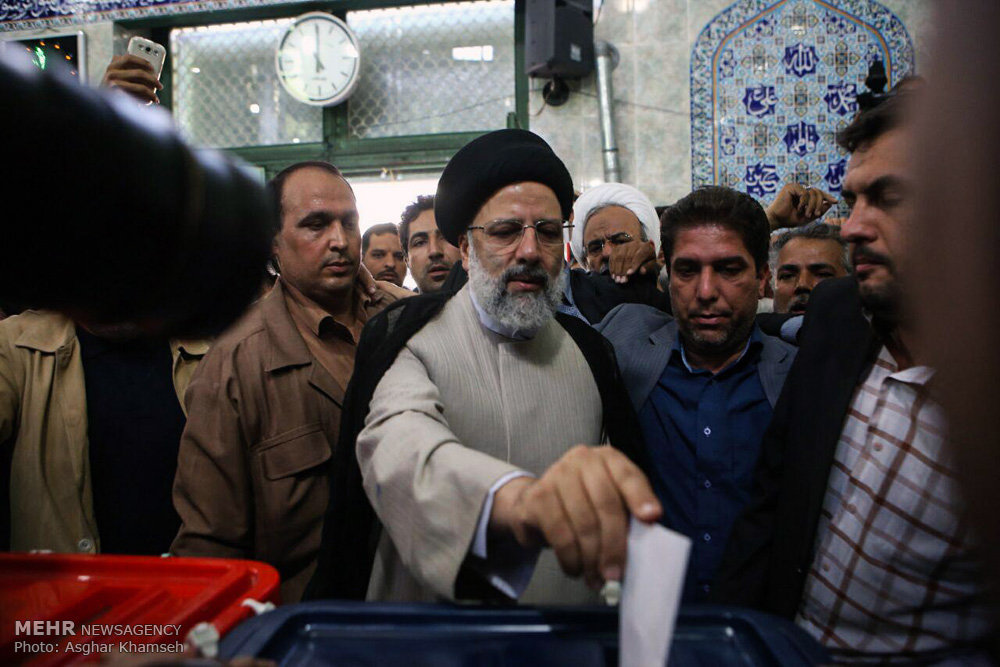
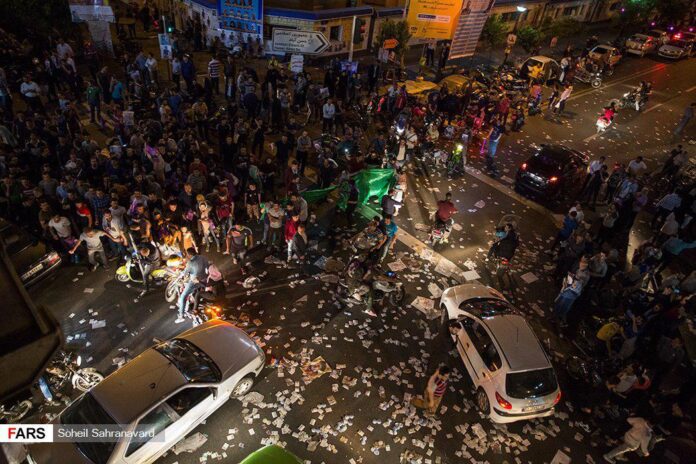
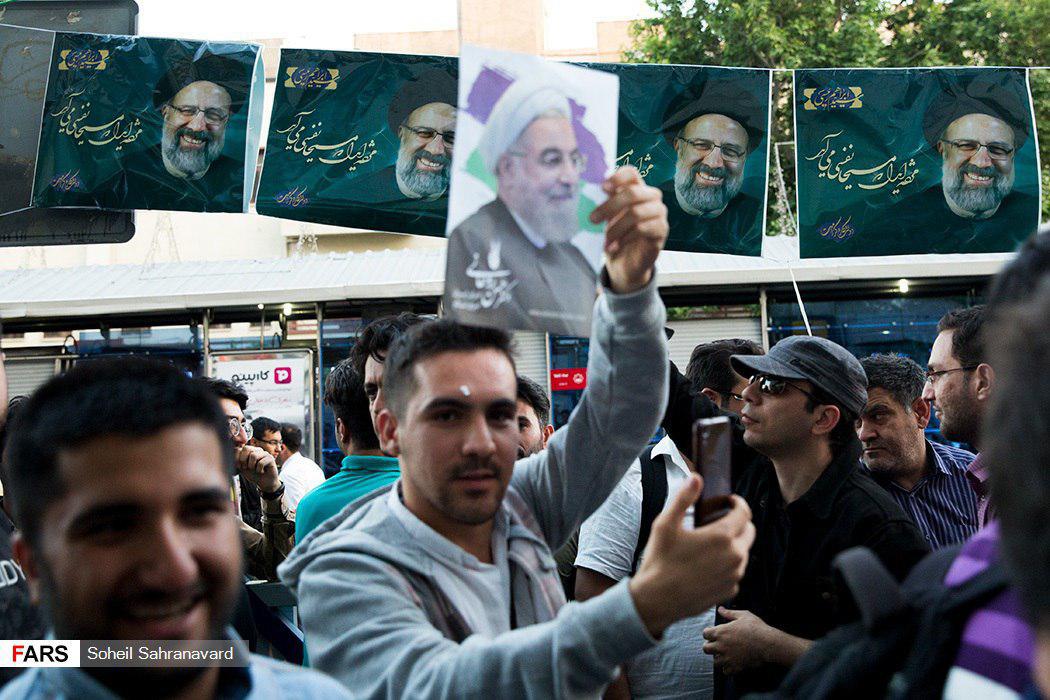
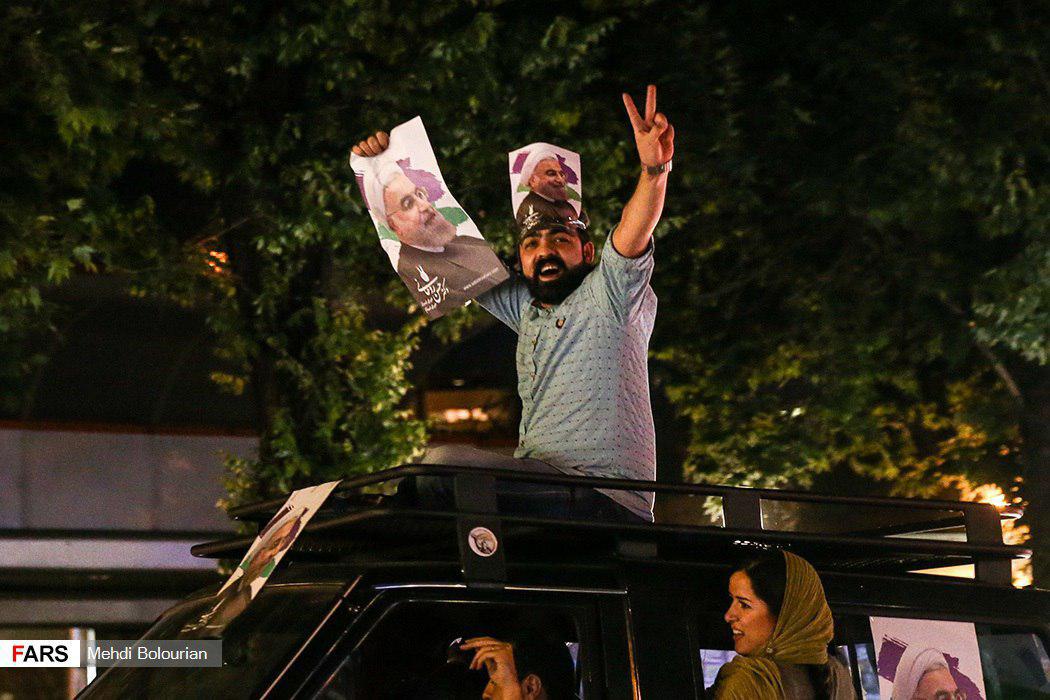
Campaigning officially started on Friday for Iran’s 12th presidential election, a day after the Interior Ministry announced the final list of six candidates vetted by the Guardian Council to run in the presidential election.

Iranian Candidates Start Presidential Campaigns

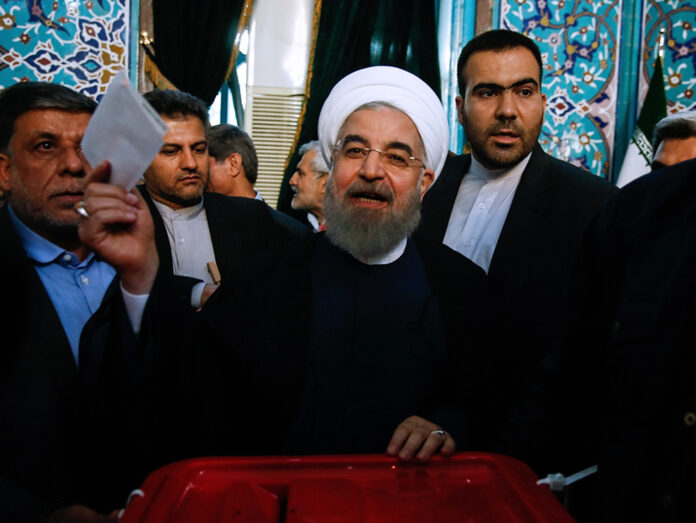
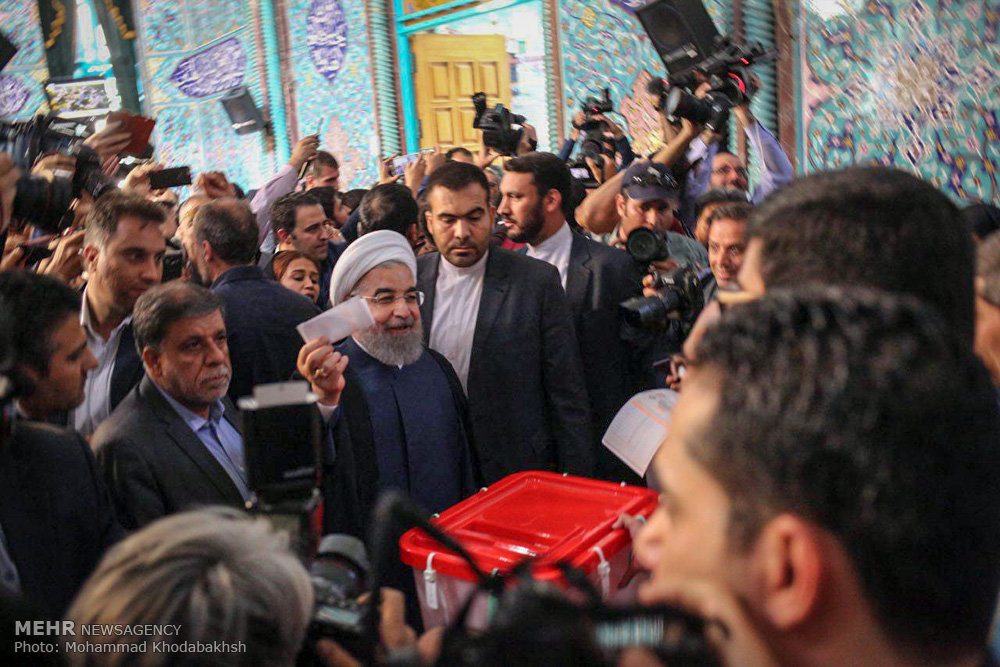
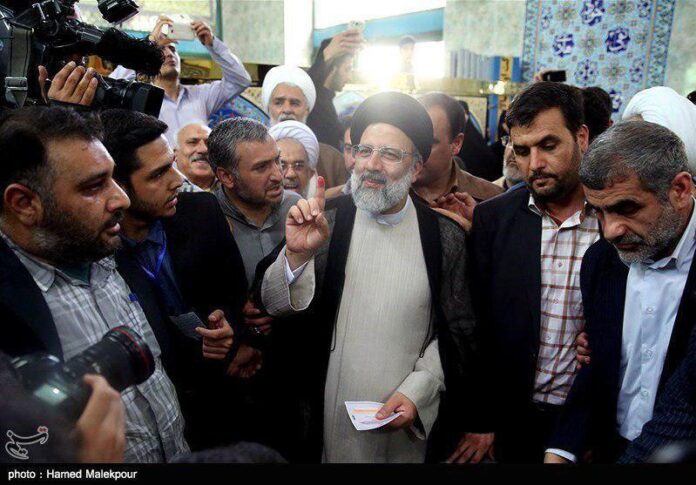
Rouhani’s main rivals in the race appear to be Seyyed Ebrahim Raeisi, a senior cleric who heads a major charity organization, as well as Tehran Mayor Mohammad-Baqer Qalibaf.

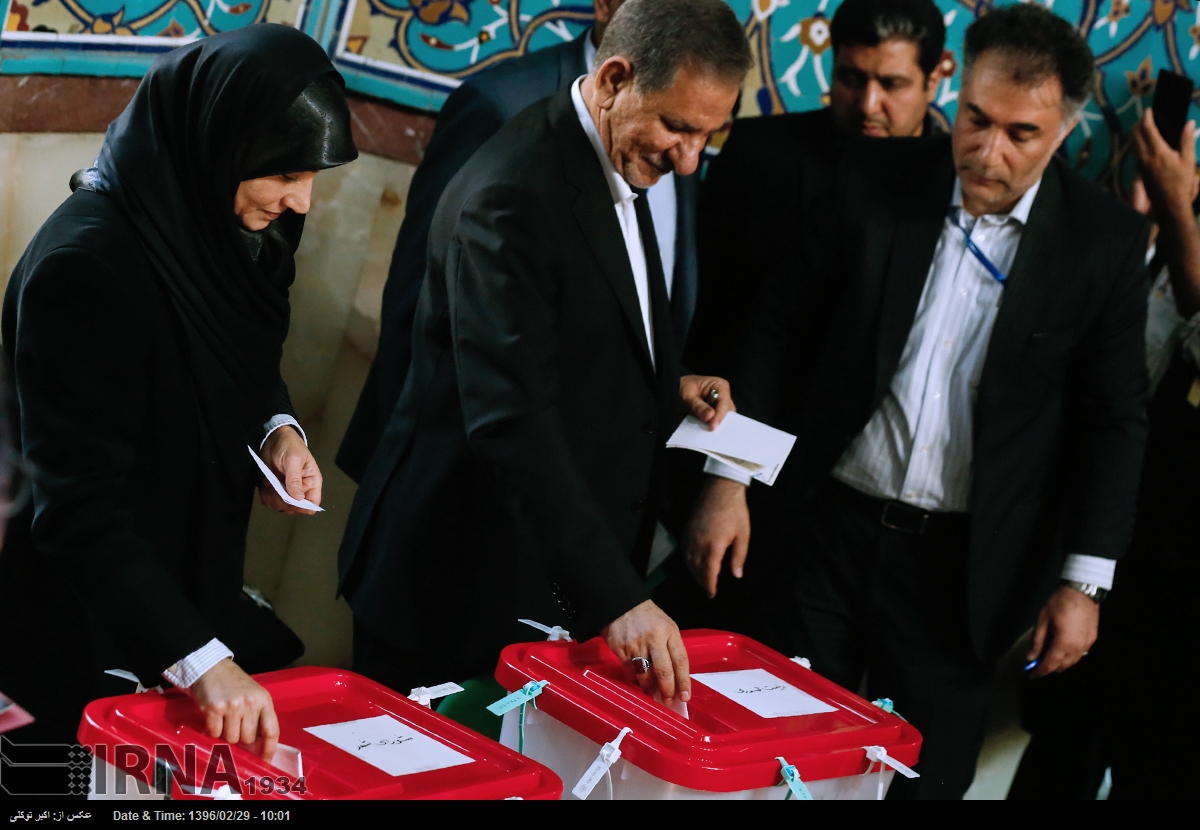
Rouhani’s deputy Es’haq Jahangiri as well as two more low-key candidates are the other contenders who had their qualifications approved by the Guardian Council, Iran’s top vetting body.

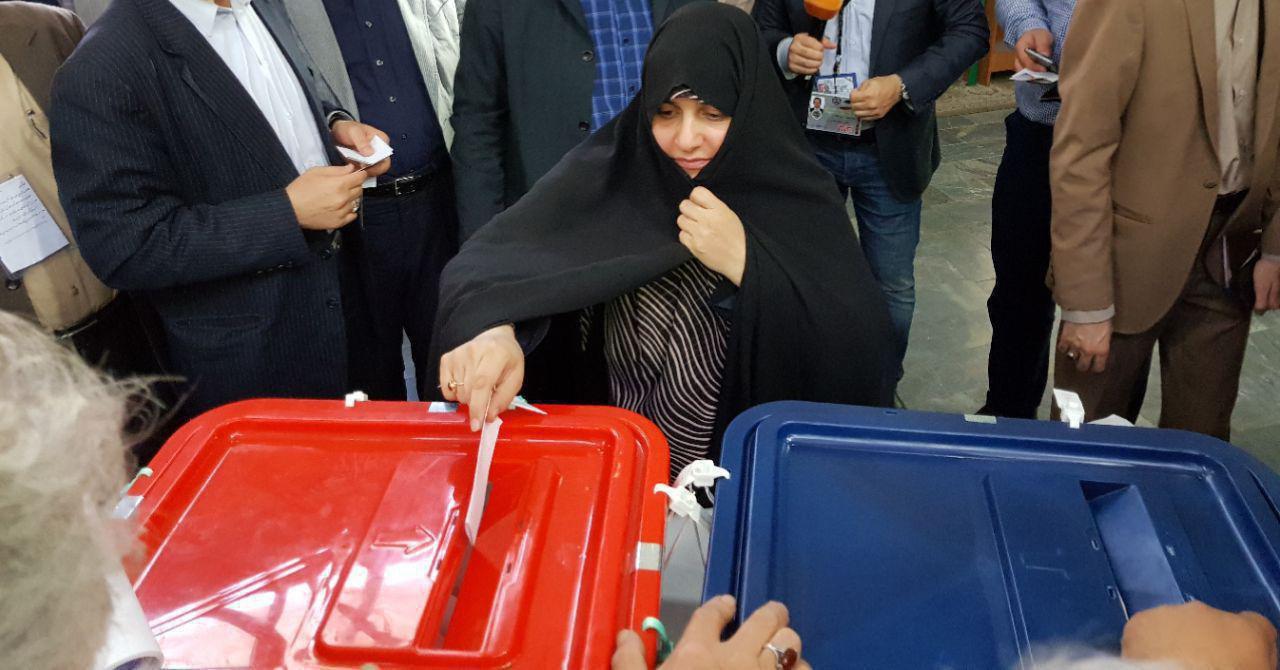
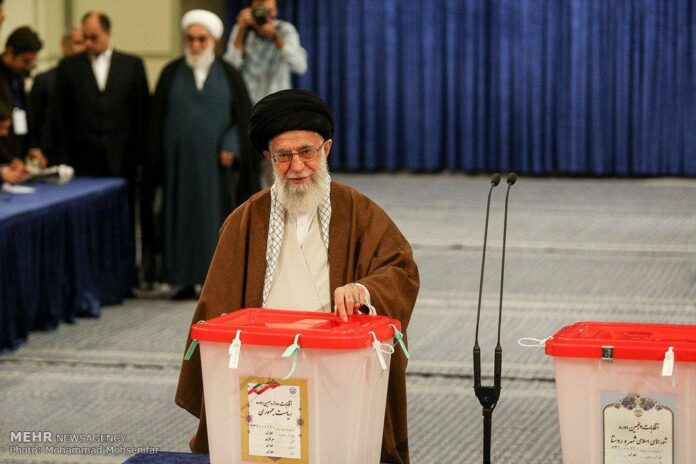
They were among more than more than 1,600 hopefuls who registered to run for president. The voting will be held on May 19 when Iranians will also choose the city and village councilors.

The Interior Ministry announced the list of the qualified candidates late Thursday night after receiving it from the Guardian Council, effectively allowing them to launch their election campaigns.

Key figures disqualified by the council were former president Mahmoud Ahmadinejad and his deputy Hamid Baqaei.

Several lawsuits have been brought against both men over administrative violations during Ahmadinejad’s tenure, Judiciary spokesman Gholam Hossein Mohseni-Ejei has said.

The election commission ruled on Thursday that live TV debates would be banned, prompting criticism by Rouhani and other candidates.

Rouhani narrowly won the election last time with 51 percent in the first round, helped by a divided Principlist camp.

If no candidate wins more than 50 percent, a run-off between the top two is held a week later.

This time around, Raeisi has emerged as a front-runner for the Principlists. He runs a religious foundation in the holy city of Mashhad, which takes care of the shrine of Imam Reza, the eighth Imam of Shia Muslisms.

Qalibaf came second to Rouhani in 2013. He is a war veteran, former Islamic Revolution Guards Corps (IRGC) commander and police chief.

The other two candidates are moderate Reformist Mostafa Hashemitaba and Principlist Mostafa Mirsalim, both veteran office holders since the Islamic Revolution in 1979.

Iran Hopes Astana Process Would End Syria Crisis

Tehran recently hosted a two-day expert meeting attended by representatives of Russia, Turkey, the United Nations, and the Islamic Republic of Iran.

The meeting was part of the International Meeting on Syria, also known as Astana Process. In a communique released after the meeting, the Iranian foreign ministry reaffirmed the necessity of dealing with all aspects of the Syrian crisis at the same time, and expressed the hope that the Astana Process would put an end to the Syrian crisis.

Here is the full text of the communique:

In the framework of the International Meeting on Syria (Astana Process), Tehran hosted the Expert Meeting and the meetings of the Joint Group by the three Guarantor States, on April 18-19, 2017.

In Tehran meetings, delegations of the Islamic Republic of Iran, the Russian Federation and the Turkish Republic discussed the draft documents proposed to the three parties, including documents pertaining to the ceasefire regime (declared on 30 December 2016 in Syria) and its implementation, exchange of detainees and abductees. A delegation of experts from the United Nations joined the trilateral meetings as observers, bringing in invaluable expertise and technical assistance.

The Tehran meeting was held in preparation for the 4th International meeting on Syria, due in Astana on May 3-4, 2017. All delegations agreed to hold next expert-level meeting prior to the high-level meeting on May 2nd.

Reaffirming the necessity of dealing with all aspects of the Syrian crisis at the same time – military aspect and combat against terrorism, finding a political solution through intra-Syrian agreements and the humanitarian aspect – the Iranian Ministry of Foreign Affairs expresses its hope that the Astana Process and other international efforts would bring an end to the Syrian conflict as soon as possible and pave the way for an effective and inclusive combat against terrorism which is a demand of the international community.

Iranian FM’s Reaction to Tillerson’s Contradictory Remarks

Mohammad Javad Zarif

Speaking in an interview with IRNA, Iranian Minister of Foreign Affairs Mohammad Javad Zarif said what the US statesmen need today, more than any other time in history, is to refrain from employing worn-out and useless rhetoric, be pragmatic in the remarks they make and display placid and rational behaviour, showing that they have understood Iran’s realities.

“US statesmen should have learnt their lessons very well from the history, particularly the events and trend of developments in the past four decades,” the Iranian top diplomat noted.

The Americans should know that, under no conditions, have they ever achieved favourable results using the language of sanctions and threats and uttering violent and hostile remarks against Iran and Iranians and will never manage to do so, he went on to say.

Iran’s top diplomat added that the former US statesmen and foreign policy officials also never managed to enact their unrealistic and flawed policies against Iran.

“One day, they send a letter to the US Congress and say that Iran has fulfilled all its commitments on the Joint Comprehensive Plan of Action (JCPOA) [signed between Iran and P5+1] and the next day, in contradictory statements, accuse Iran of harbouring nuclear ambitions, referring to the [nuclear] deal as an agreement to appease Tehran.”

Reiterating what he had posted on his Twitter on Thursday (April 20) in reaction to US Secretary of State Rex Tillerson, Zarif said by levelling unfounded accusations against Tehran, the US cannot retract its confession that Iran has fulfilled all its JCPOA commitments.

He said the US should know that it no longer will be able to divert the international community’s attention [from the nonfulfillment of its JCPOA commitments] by making baseless allegations, the falseness of which has been proved by the International Atomic Energy Agency (IAEA) after closing the possible military dimensions (PMD) file on Iran.

Commenting on Tillerson’s remarks that the US will review its policies towards Iran and the JCPOA, Zarif said, “The deal was an outcome of a review by Tillerson’s predecessors of Washington’s seriously flawed past policies towards Iran and the region. Such policies have been proven wrong in practice for several times.”

Referring to the repetition of unfounded anti-Iran claims by Tillerson and other US officials about terrorism and missile tests, Zarif said, “Iran maintains that its interests, and those of other countries, lie in subduing the unrestrained terrorism imposed on the entire region and the world far from all humanitarian standards, which has, unfortunately, been born out of and spread by the US miscalculations and imprudence and as a consequence of its regional partners’ calumnies about Iran over the past few decades.”

He stressed that undoubtedly, the Islamic Republic of Iran, as a leading country in the fight against this unblessed and ominous offspring, will continue to be in the forefront of the battle to establish peace and security in the region and the world.

The Iranian minister, once again, stressed the peaceful and defensive nature of Iran’s missile defence programs, saying they are the Iranian nation’s absolute and natural right which are not in contradiction to any of the international standards and regulations and the only criterion for the continuation of which is recognizing the defensive needs of the Iranian nation.

Zarif added the collective memory of all people and elites of the world remembers how an arrogant and totalitarian and belligerent dictator imposed a destructive and ominous war on Iran, its people and, even the world, and caused them to witness and suffer a terrible tragedy and, more ghastly than that, was supported by the world powers and a number of the regional states.

“Iranians will never let such bitter historical experiences happen to them again and, by no means, want to suffer the same irreparable losses and experience another devastating war. Iran’s missile defence systems have been deployed and are strengthened exactly to those ends. This policy is not against any country, is quite rational and aimed at bringing peace and stability to the region.”

The Iranian foreign minister also said in view of its experiences and as an independent state, the Islamic Republic of Iran will never allow others to pass tendentious remarks about its purely defensive and transparent policies.

There is no doubt that the interventionist comments and statements made by the US officials will fail to have any impacts on Iran’s deterrent and defensive programs, he added.

He called on the US officials to be pragmatic and realistic in making their remarks and moves, urging the US secretary of state to change the wrong direction he is following at present and honour his country’s commitments to the implementation of the JCPOA.

Zarif said, “As stressed by the Leader of the Islamic Revolution Ayatollah Seyyed Ali Khamenei, Iran will not be going to be the country to breach the JCPOA first. However, it is prepared to deal with any possible scenarios that may unfold to safeguard the interests of the Iranian nation.”