Wednesday, April 8, 2026
Home Blog Page 4043

Farabi does not draw a line between music and math

Farabi book of music
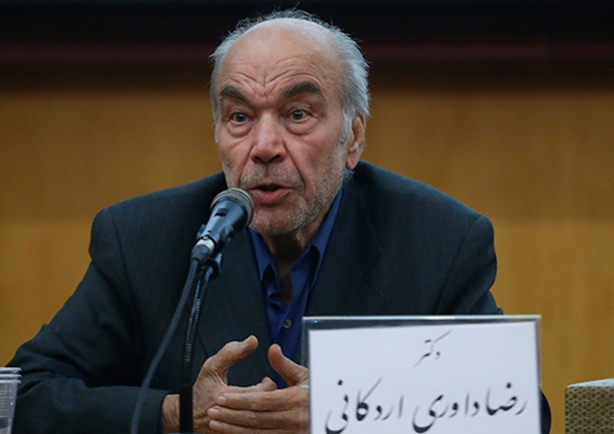
Dr. Reza Davari Ardakani, the president of the Academy of Sciences of Iran

A new translation of Al-Musiqa al-Kabir has been launched in Tehran. The book, which is known in the West as the Book of Music, was written in Arabic by prominent Iranian philosopher Abu Nasr Farabi almost a millennium ago. It has been translated and annotated by late Mehdi Barkeshli. The keynote speaker at the ceremony, which was held at the Conference Center of Sorush Publishing House, was Dr. Reza Davari Ardakani, the president of the Academy of Sciences of Iran, who has hailed Farabi as the founder of Islamic philosophy. The following is an excerpt of a report a 99 issue (July 2014) of Etelaat Hekmat va Marefat Monthly published on the ceremony:

A ceremony was held on June 17 at the Conference Center of Sorush Publishing House to launch a translation by late Mehdi Barkeshli of Al-Musiqa al-Kabir penned by Abu Nasr Farabi. Dr. Reza Davari Ardakani, the president of the Academy of Sciences of Iran, was on hand for the ceremony. […]

In a keynote speech, Dr. Davari Ardakani recalled the importance Farabi attached to music and said, “Almost five decades ago, after years-long research I wrote in a book that Farabi was the founder of Islamic philosophy. Many Orientalists took issue with what I had said, suggesting instead that Islamic philosophy was an imitation of Greek philosophy and thus had no founders. What stands out about Farabi is that he was a well-rounded scientist. Definitely, a person who is good at several branches of science is a successful individual. In the past, scientists would not limit themselves to a branch of knowledge. Specialization of science is a rather new phenomenon. […]

He went on to say that Farabi masterly brought together Greek philosophy, Islamic wisdom and other branches of science which were prevalent at the time. “Whenever he touched on , he would not draw a line between politics and philosophy. That is indicative of his thorough knowledge of Greek philosophy. After all, politics and philosophy were always inter-related.”

Dr. Davari said that nothing walls off music from other branches of science, adding, “In the eyes of Farabi too there is no separation line between music and other sciences. Rather, Farabi places music in the same column as mathematics. To him, music falls into three distinct categories: music that entertains the audience, music that touches the audience, and music that helps the audience fantasize. The third category has been dubbed the most difficult.”

Campaign to Save Freedom Tower Launched

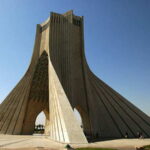
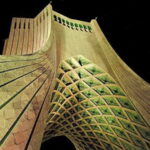
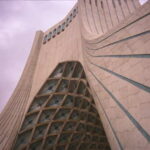
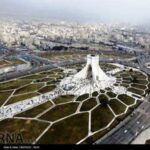
Iran-Tehran Freedom Tower

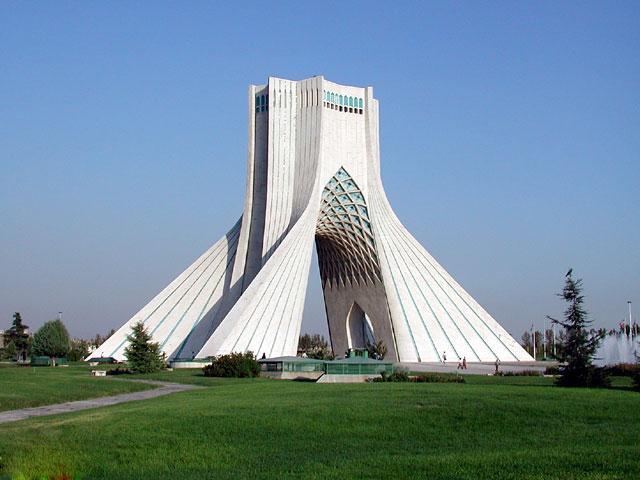
A number of cultural heritage advocates and media activists have launched a campaign to prevent Tehran’s Freedom Tower, a landmark of the capital, from falling into disrepair. A statement issued by the group has called on appropriate officials to renovate the huge structure, declare the area under its arch off-limits to cars and eventually order the formation of a board to manage and safeguard the landmark. The following is a report the Cultural Heritage News Agency released on the story on July 16, 2014:

A statement signed by a number of cultural heritage advocates said, “As a landmark known around the world, Tehran’s Freedom Tower requires more official attention these days. Over the years, this monumental building has eroded and previous renovations seem to have been unable to prevent further damage.”

[…] The statement went on to say, “Freedom Square which is unique in structure and vast in area does have the potential to be used as a venue for cultural interactions. But inaccessibility, penetration of water into parts of the square and the fact that it has turned into a heavily-trafficked rotary of the capital are a source of concern for activists bent on protecting the country’s cultural heritage.”

The signatories called for “additional attention to this precious landmark by the City Council, Tehran Municipality and the Cultural Heritage Organization” and said, “Renovation of the tower under the supervision of veteran experts is the most urgent need of the landmark at the moment.”

The statement also appealed to Tehran Municipality to put a second phase of the square’s gentrification project on fast track. Earlier the municipality had been tasked with renovating the tower and widening the streets around it to keep vehicular traffic as far away as possible from the tower.


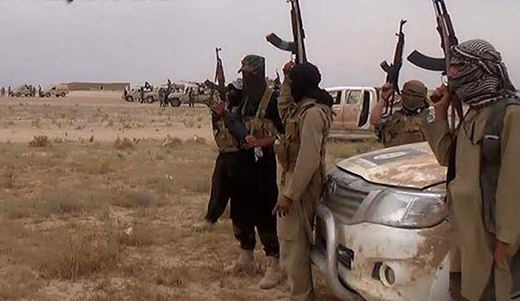
ISIL bomb attack in Baghdad kills 31 people

ISIL in Iraq
ISIL in Iraq

Another 58 people were wounded in the attack, which took place in the central Kazimiyah district, AP reported.

Police officials confirmed the toll, speaking on condition of anonymity because they were not authorized to talk to reporters.

In a statement posted online late Tuesday, the terrorist [ISIL] group, which seized vast swaths of northern and western Iraq last month, claimed the attack and said it was “in response to the hostility of the government” of Prime Minister Nouri al-Maliki and his “criminal militias, who spare no effort in fighting Islam and Muslims.” The authenticity of the statement could not be independently verified, but it was posted on a militant website frequently used by the group.

The terrorists capture of large areas of Iraq last month, including the second largest city Mosul, plunged the country into its worst crisis since US troops withdrew at the end of 2011 and has led to widespread calls for new leadership that can unite the country.

But despite the crisis, lawmakers have struggled to agree on a new government following April elections – in which al-Maliki’s bloc secured the most seats.

After several delays, lawmakers elected a moderate Sunni as parliament speaker on July 15, the first step in the process.

The next is to replace President Jalal Talabani, whose term is set to expire. At least 95 candidates are in the running, Shia lawmaker Adel Shershab told state television on Wednesday. Two names have emerged as front-runners to succeed Talabani — former deputy prime minister Barham Saleh and the Kirkuk provincial governor Najimaldin Karim.

“The parliament is meeting again in order to select the president of the republic in accordance with the constitutional and legal procedures that allow any citizen to run,” al-Maliki said in his weekly address to parliament. “We hope that the parliament will succeed in choosing the president of the republic in accordance with the constitution and the law.”

Talabani, who suffered a stroke in late 2012, returned to the country on Saturday after more than 18 months abroad for medical treatment. Since 2003, Iraq’s political parties have agreed to assign the position of president to a Kurd, prime minister to a Shia and speaker of parliament to a Sunni.

The next president will task someone with forming a new government, and whoever can assemble a majority coalition will become the next prime minister.

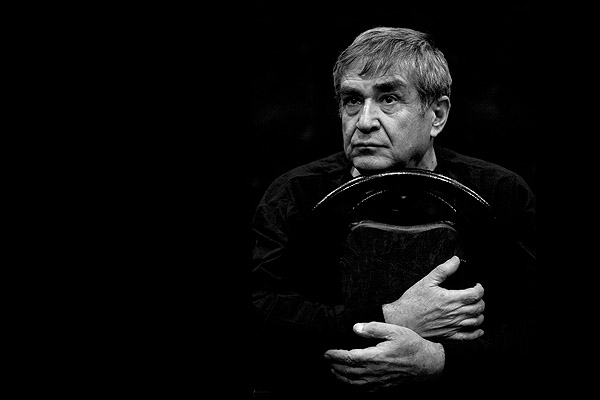
Artists commemorate Hamid Samandarian

Hamid Samandarian
Hamid Samandarian

Iranian theater and cinema artists commemorated the death anniversary of the late theater director Hamid Samandarian on July 13.

Veteran actor Jamshid Mashayekhi, who proudly introduced himself as one of Samandarian’s students, said, “I collaborated with him in two works: ‘The Dead Without Ceremonies’ and ‘Andorra’. I still remember how excited he was during rehearsals. We always favored his notes and advice. I learned a lot from him and I always mention that Samandarian was my teacher in theater.”

Reza Kianian also said, “Samandarian is the second Noushin of Iranian theater.”, “While Abdolhossein Noushin was the first who brought Western theater to Iran, Samandarian was the one who presented theater and mise-en-scene education, trained many theater artists and translated Western theater texts according to scientific and academic standards.”

Samandarian died at the age of 81 in Tehran in July 2012 after prolonged illness.

Samandarian learned the basics of theater under the supervision of some of Germany’s greatest masters.

Upon returning to Iran, he started teaching theater and trained many talented stage actors.

The Iranian artist staged numerous dramas during his lifetime, including ‘No Exit’ by Jean Paul Sartre, ‘Ghosts’ by Henrik Ibsen, ‘The Glass Menagerie’ by Tennessee Williams and ‘Marriage of Mr. Mississippi’ by Friedrich Durrenmatt.

The production of Durrenmatt’s ‘Old Lady’s Visit’ in Tehran about five years ago, was Samandarian’s last dramatic experience.

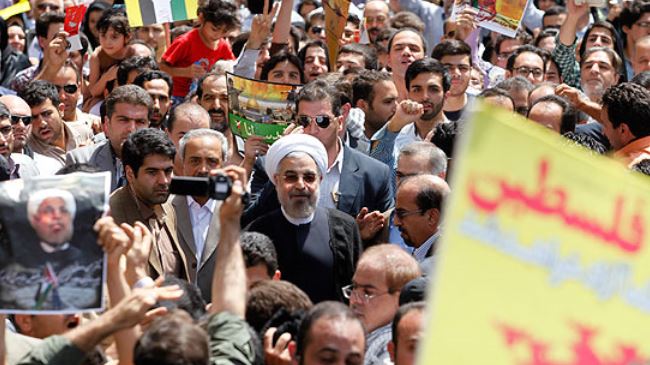
Rouhani decries Israel’s genocidal war on Gaza

Rouhani at Quds Day 2014

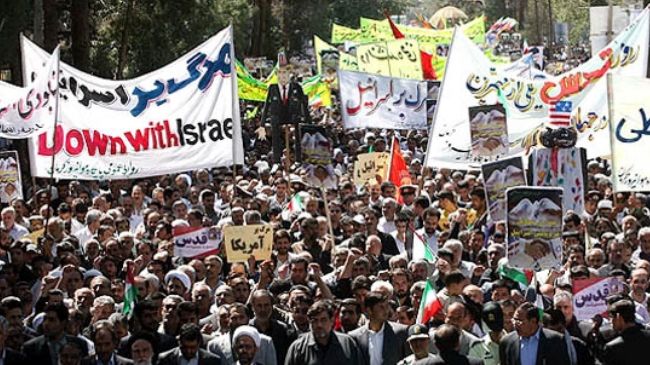
Rouhani who joined International Quds Day rallies in the Iranian capital Tehran on Friday condemned Israel’s war on Gaza as “inhumane and genocidal” and said all Muslims should show their rage and resentment, unity and resistance against Israel.

The Iranian president said that Israel must realize that it cannot continue with its occupation by using weapons and that it needs to heed international demands.

The international community calls for the lifting of the Gaza blockade, release of prisoners, opening of Rafah border crossing and an end to bloodshed and war, Rouhani said.

He said that all Muslims should rise up against Israel, saying there is no way to confront Israel except through unity and resistance.

Iranians in millions took to the streets on Friday to hold rallies to mark International Quds Day and show support for the Palestinian nation in the face of Israeli occupation and atrocities.

The ralliers carrying placards and chanting anti-Israel slogans denounced the Zionist regime’s fresh bloody offensive against the besieged Gaza Strip.

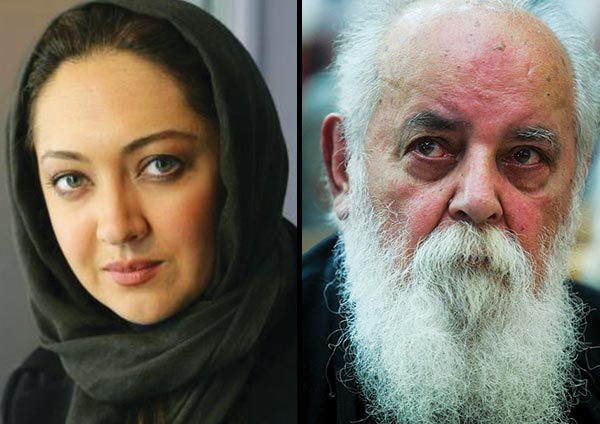
Iranian artists express regret over Gaza massacre

karimi-ebtehaj

Gaza war Eminent Iranian contemporary poet, Houshang Ebtehaj, expressed deep sorrow over the children’s massacre in Gaza Strip.

However, talking about these bloodsheds will not solve anything. In this battle, one side is armed to the teeth and the other side is almost defenseless. This is while the international society shows total indifference to Gaza’s bloodbath – Houshang Ebtehaj

Commenting on the Zionist regime’s crimes in the occupied territory, the poet said, “I feel great grief over the violence used against the innocent Palestinian children. However, talking about these bloodsheds will not solve anything. In this battle, one side is armed to the teeth and the other side is almost defenseless. This is while the international society shows total indifference to Gaza’s bloodbath,”.

Some of the world’s politicians only seek to maximize the benefits of their national and trade companies and do not show any willingness to stop the mass murder, he said.

Ebtehaj noted that throughout the history, whenever humanity wanted to do or achieve something substantial to do away with crime and war, those who only seek their own interests have caused problems.

Meanwhile, Iranian movie star, Niki Karimi, also expressed regret over the relentless slaughter of Palestinian people by Israeli forces.

Ordinary citizens are being killed in Gaza everyday. I wonder what the United Nations is doing on the ground? And where the human rights advocates are? – Niki Karimi

She said, “I wonder how such disasters can occur in telecommunication era when most of the people have access to the internet and know how to use it. How is it possible that the Zionist regime does whatever it wants, while the international society shows no strong reaction?.”

What is currently going on in Gaza is an international disaster, she warned. “Ordinary citizens are being killed in Gaza everyday. I wonder what the United Nations is doing on the ground? And where the human rights advocates are?”

Karimi recalled that, “After the World War II came to an end, those who collaborated with Adolf Hitler to commit all those bloody and brutal crimes were executed. People still talk about Nazi party’s slaughter. However, at present, in 2014, despite the current unprecedented universal media coverage, we still see that such a brutal mass murder goes unnoticed which is very regrettable.”

Hushang Ebtehaj, (born 1928 in Rasht-Iran) with the pen name of H. E. Sayeh (lit. Shade) is an eminent Iranian poet of the 20th century, whose life and work spans many of Iran’s political, cultural and literary upheavals.
In 1987, he moved to Cologne-Germany, with his family and lives there.

Niki Karimi, (born 1971 in Tehran) is an Iranian actress, director, and screenwriter.
Niki has won many awards nationally and internationally such as San Sebastian film festival award for best actress. She has also recently been on the jury for renowned film festivals, including the Locarno International Film Festival and Thessaloniki International Film Festival and Berlin Film Festival and also the 60th Cannes Film Festival.

Millions observe International Quds Day across Iran

Quds Day in Tehran 2014

Iranians from all walks of life numbering in the millions have taken to the streets in the capital Tehran and more than 770 other towns and cities throughout the country to once again vent their anger at the Israeli regime’s brutal oppression of Palestinians over the past decades.

The ralliers are also carrying placards and chanting anti-Israel slogans, condemning the Zionist regime’s fresh bloody offensive against the besieged Gaza Strip amid the silence of the international community.

Thousands of local and foreign journalists are covering the anti-Israeli rallies across Iran.

Meanwhile, millions of people in different countries the world over will also be holding massive rallies on Friday to express their support for the Palestinian resistance against Israel and voice their outrage at the policies of the Tel Aviv regime and its allies.

This year’s anti-Israel rallies are being held as Israeli warplanes and tanks have been pounding numerous sites inside the Gaza Strip and killing innocent residents of the impoverished Palestinian enclave over the past 18 days.

More than 816 Palestinians have so far been killed and over 5,200 wounded since the Israeli military first launched its onslaught on the Palestinian enclave on July 8.

In 1979, Imam Khomeini, the late founder of the Islamic Republic, designated the last Friday of the lunar fasting month of Ramadan as International Quds Day, during which Muslims across the world hold rallies in solidarity with Palestinians.

Iranian finds interruption wipes out short-term memory

memory-brain

A study conducted by an Iranian scientist Cyrus Foroughi and his colleagues at George Mason University, Virginia, has found that if you are bothered for 60 seconds while trying to focus on something then you will have to start afresh because you can’t recall what you were doing.

The researchers said that their findings should be a warning to anyone with a smartphone as users check the devices around 125 times a day. It shows that humans are more similar to goldfish than they might think as the animals have a memory that lasts just three seconds.

The researchers asked test participants to outline an answer to an exam and then write their response under three conditions. Firstly they had to write uninterrupted, secondly they were disrupted three times whilst writing the outline and thirdly they were interrupted three times whilst writing the answer.

During each of the one-minute interruptions, the test subjects had to do maths problems. The findings showed that the breaks caused 95 percent of people taking part to write poorer quality answers. They also wrote less. For those planning to write a paragraph with five points, they only managed to include three even if they did not realize it.

The study has been hailed as ‘breaking new ground’ as it is the first to show the impact that distractions have on the quality of work somebody is trying to carry out.

Foroughi, a doctoral student at George Mason University, Virginia, who led the research, said: “One minute is more than enough to wipe your short-term memory. Most interruptions in the real world can last from 10 to 15 minutes to 10 to 15 seconds.”

Dr. Gary Small, a professor of psychiatry at UCLA Semel Institute for Neuroscience and Human Behavior, who did not take part in the research, likened our brains to a computer and said that you have to ‘boot it up’ if you flit between tasks. He said, “Our brains are hardwired to like things that are new. The new electronic devices offer us this opportunity for novelty.”

Iranian inventor moves from Google to Amazon

Babak Parviz - Iranian Inventor

Babak Parviz, the Iranian architect of Google Glass, has confirmed reports that he’s leaving Google for Amazon. Parviz, who was born in Tehran, moved to the US after getting a bachelor’s degree in electrical engineering from Sharif University of Technology. In the United States, he secured another degree in electrical engineering, this time a Ph.D., from the University of Michigan. The following is an excerpt of a report Haft-e Sobh (Seven-Thirty AM) newspaper ran on the Iranian genius:

Babak Parviz, the man who is credited with the development of Google Glass, has announced the move to Amazon via his Google+ page. Parviz, a heavyweight in the Silicon Valley giant, has said he seeks new goals in moving to Amazon, which is going from strength to strength thanks to the presence of Jeff Bezos at its helm. […]

Six years ago Parviz was named as one of top 35 inventors in the world thanks to his involvement in “smart lens”, another Google project.

Six years ago Parviz was named as one of top 35 inventors in the world thanks to his involvement in “smart lens”, another Google project.

Parviz, who is “super excited” about the move, has not mentioned anything about his exact role at the e-commerce company. However, The Verge website speculates that Parviz might help Amazon with the Fire Phone.

Parviz, a postdoctoral fellow in chemistry and chemical biology at Harvard, has also taught courses at the University of Washington in Seattle and holds several key positions in research centers in Washington State. He has won several awards, among other things, for his innovativeness in genetics and for his development of a single-engine plane back home.

Actions speak louder than words

David Kreps
David Kreps

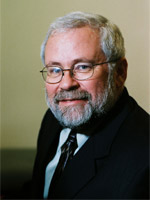
David Kreps is a professor at the Graduate School of Business at Stanford University. His book on microeconomics is taught in Iran’s post-graduate economics schools. A 94th issue of Tejarat-e Farda (Tomorrow’s Trade), out on July 12, 2014, featured an interview with the American economist in which he had fielded 10 questions posed by the weekly magazine’s Ehsan Barin, who admits that the short answers Kreps has provided to his questions are as informative as spending hours listening to lectures on economics. We have chosen the last two questions and answers which are less technical in nature and thus widely understandable.

There are pressure groups both in Iran and in the US trying to prevent President Rouhani and President Obama from reestablishing diplomatic relations between the two countries. As an expert, what do you think is the best strategy for the two presidents?

I’m not an expert on the specifics, and I certainly would not want to offer the presidents any concrete advice. Based on my own expertise, I would offer two insights from theory blended with my observations: A. Actions nearly always speak louder than words. B. In particular, one builds credibility by being credible.

reputation-management is tricky business: X’s reputation with Y is a product of the long-term interactions between X and Y, but it also depends on how X behaved and is behaving with Z and W. – David Kreps

These days, diplomats from Iran and P5+1 (five permanent members of the UN Security Council plus Germany) are trying to work out an agreement on Iran’s nuclear program. Are these talks a repeated game in which the reputation of the countries involved has an important role to play?

The situation is not a repeated game in the formal sense, but to change your phrasing a bit, I think it is obvious that the credibility of the parties to carry out their portions of any agreement is an essential element in reaching an agreement, and reputation is very often a key to obtaining credibility. That said, reputation-management is tricky business: X’s reputation with Y is a product of the long-term interactions between X and Y, but it also depends on how X behaved and is behaving with Z and W. Y, in trying to assess what X will do in the future, looks closely at what X did in the past with Z and W and, at the same time, thinks hard about what X may be called upon to do in the future in re Z and W.


David Kreps
David Kreps

David Marc “Dave” Kreps (born 1950, New York) is a game theorist and economist and professor at the Graduate School of Business at Stanford University. He is known for his analysis of dynamic choice models and non-cooperative game theory, particularly the idea of sequential equilibrium, which he developed with Stanford Business School colleague Robert B. Wilson. – Wikipedia