Tuesday, December 30, 2025
Home Blog Page 404

Iran rejects UK’s ‘unfounded’ allegations

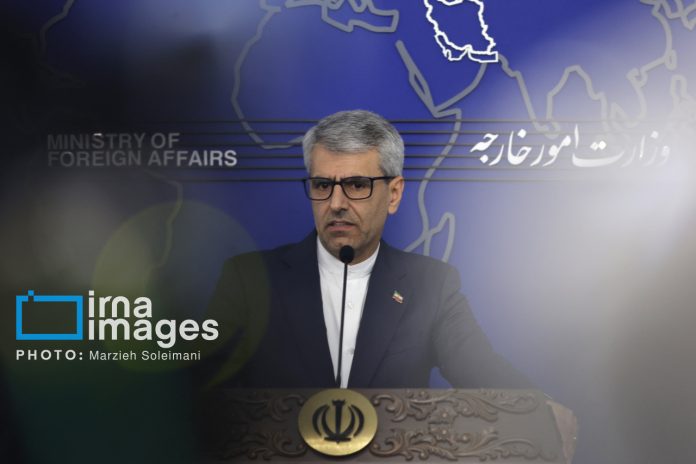
Esmail Baghaei

In a statement released on Wednesday night, Esmaeil Baqaei condemned the recent accusations made by the UK foreign secretary against Iran, slamming the allegations as unfounded and unjust.

He emphasized that attributing the actions of certain groups to the Islamic Republic of Iran is a clear act of deflection, intended to cover up the UK’s own destabilizing activities, particularly in West Asia, the ministry’s website reported.

“Making such claims against Iran reflects a misguided policy that the UK government has, in recent years, become somewhat addicted to,” Baqaei added.

“Despite the Islamic Republic of Iran’s repeated calls for the UK to provide evidence supporting these allegations, the British regime has offered nothing but the repetition of baseless claims,” the spokesman stated.

He said that the UK government’s policy of “making accusations and allegations” toward Iran will bring nothing but discredit to itself.

“The UK regime must understand that pursuing a policy of unfounded accusations and allegations against the Islamic Republic of Iran will deepen distrust and further disrupt diplomatic relations –for which the UK will bear full responsibility,” the spokesman warned.

His statement came after the British government on Monday sanctioned what it said was a Swedish-based criminal network that has allegedly carried out attacks on behalf of Iran against Israeli targets.

“The UK has targeted this criminal network and its leader, Rawa Majid, due to their involvement in violence against Jewish and Israeli targets in Europe on behalf of the Iranian regime. The UK will not tolerate these threats,” UK Foreign Secretary David Lammy claimed in a statement.
EU fails to agree on sanctions on Russian gas: Reuters

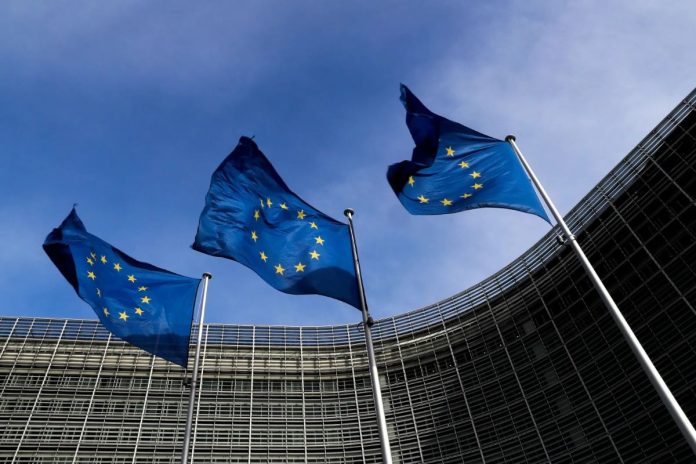
The European Union

This means that restrictions on Russian LNG are unlikely to be part of the EU’s upcoming 17th sanctions package.

Following Russia’s full-scale invasion of Ukraine in 2022, Europe began to wean itself off Russian fossil fuels to avoid financing the Kremlin’s war chest.

Despite these efforts, Europe’s imports of Russian LNG, which is largely not subject to sanctions, have soared to record levels in 2024. A ban on Russian LNG has been debated for months, but the members have struggled to find consensus on the issue.

U.S. President Donald Trump has pushed for the EU to start purchasing U.S. LNG instead, but details of such a potential deal remain unclear.

As economic relations between the U.S. and the EU sour over Trump’s new sweeping tariffs, Brussels wants to use Russian LNG supplies as leverage in trade talks with Washington, a European Commission official told Reuters.

The EU is also careful not to create a dependency on the U.S. either, according to the news agency. Trump’s sweeping import duties on much of the world, as well as a foreign policy pivot away from European partners and embrace of Moscow, raise concerns in Europe that Washington is no longer a reliable partner.

The European bloc plans to completely phase out Russian fossil fuels by 2027, and the European Commission is expected to provide a plan by May 6 – a deadline postponed from March amid uncertainty over Trump’s tariffs.

IAEA Chief engaged in active shuttle diplomacy between Iran, U.S. amid nuclear talks

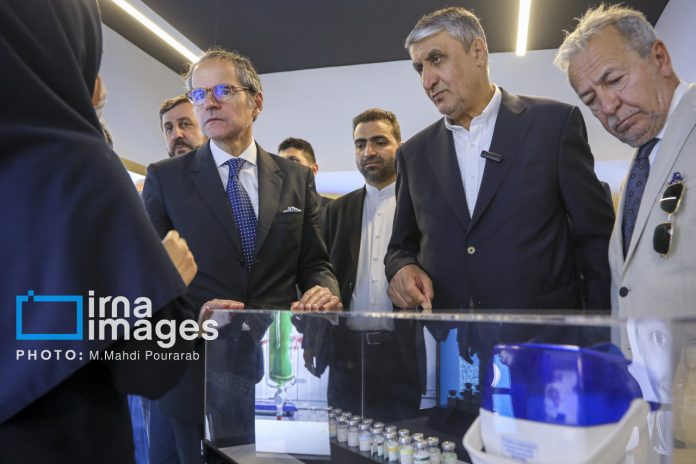
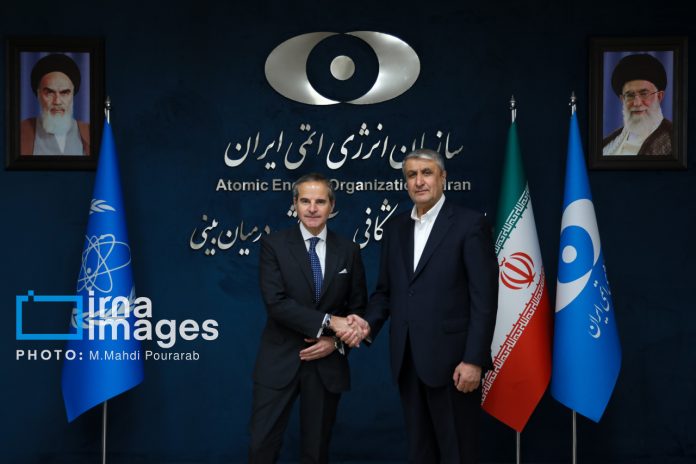
In a joint press appearance with Mohammad Eslami, head of the Atomic Energy Organization of Iran, Grossi stated that he is in constant contact with both Iranian and American negotiators to explore how the Agency can act as a bridge and help facilitate a positive outcome.

Grossi noted that he had “deep and honest” conversations with senior Iranian officials, including Foreign Minister Seyed Abbas Araghchi, and that the discussions centered on how the IAEA can contribute to confidence-building and verifiability of any eventual agreement.

He acknowledged the sensitivity and complexity of the current moment and said the IAEA’s role would be critical in ensuring any nuclear deal is credible and enforceable.

Grossi also visited Iran’s nuclear technology exhibition and expressed admiration for the country’s achievements in peaceful nuclear applications, especially in the fields of medicine and health.
While commending Iran’s technical advancements, he reiterated the Agency’s responsibility to ensure all nuclear activities remain strictly peaceful and non-proliferative.

Eslami emphasized that Iran expects the IAEA to maintain professional neutrality and avoid language or actions that could be exploited by hostile actors.
He confirmed that outstanding issues from the March 2023 joint statement are being addressed constructively, and both sides agreed that remaining matters will be discussed at the technical level in the coming days.

The visit comes at a crucial juncture in the broader diplomatic process. Tehran and Washington are expected to engage in indirect nuclear talks in Rome, and Grossi’s shuttle diplomacy is seen as an attempt to maintain momentum while providing international oversight that could make a deal more palatable to all parties involved.

Non-nuclear issues not on Tehran’s agenda for negotiations with Washington: Iran deputy FM

Iran Nuclear Program

“Basically, nothing has been defined as ‘other topics’ in the negotiations,” Iranian Deputy Foreign Minister for Legal and International Affairs Kazem Gharibabadi said in a televised interview on Wednesday.

Iran believes that the talks with the US should focus on the two main issues of the nuclear program and the lifting of sanctions, he added.

He noted that Iran pursues specific plans and objectives in the talks with the US and “seeks to achieve a win-win, fair, logical and lasting agreement.”

That agreement should be in such a way as to prevent violations in a short period of time or in case of a government change, he explained.

“We have announced that the Islamic Republic of Iran is ready to achieve such an agreement without any humiliation or unreasonable pressure,” Gharibabadi said, adding that during the first round of Tehran-Washington talks, the two sides agreed on the frameworks.

Iranian Foreign Minister Abbas Araghchi and Steve Witkoff, the US president’s special envoy for West Asia affairs, led the first round of indirect talks in the Omani capital of Muscat on Saturday and agreed to resume the talks on April 19 at the same level.

The senior diplomat once again reiterated that Iran would never give up its right to uranium enrichment.

“If the opposite side is concerned about the militarization of Iran’s nuclear program, this issue is negotiable and can be discussed,” Gharibabadi added.

“However, if their goal is the complete shutdown of the nuclear industry, especially enrichment, such a demand is neither logical nor can it be the focal point of the negotiations,” he emphasized.

Gharibabadi made the remark after Witkoff said in a statement on Tuesday that Iran must “eliminate its nuclear enrichment” program to reach a deal with the US, suggesting the Trump administration is hardening its position in negotiations with Tehran.

On Wednesday, the Iranian foreign minister said the issue of enrichment of uranium as part of the country’s peaceful nuclear program is “non-negotiable,” and that Tehran-Washington talks would yield no results if held under pressure and a lack of mutual respect.

Gharibabadi stated the removal of “cruel, illegal and unilateral” sanctions against Iran was among the main issues discussed during the Muscat talks.

“The lifting of these sanctions should be in a way that the Iranian people reap the benefits from its real and practical advantages, rather than being merely inked on paper,” he added.

If sanctions have a negative impact on Iran’s economic interests, they must be removed, the diplomat emphasized.

The Iranian deputy foreign minister said threats and sanctions are not compatible with the logic of negotiations.

Gharibabadi emphasized that Iran is in possession of its own means and will pursue specific mechanisms to respond to threats.

As announced by Leader of the Islamic Revolution Ayatollah Seyyed Ali Khamenei, in case of any threat against Iran’s national security, Tehran would also jeopardize the security of those who have posed the threat, he continued.

Gaza war would ‘end immediately’ if Israeli captives released: US envoy

Gaza War

“I can tell you that the fighting would end immediately, immediately if hostages are released,” said Adam Boehler, US special envoy for hostage response.

“The day that those hostages are released, the fighting will end,” he added.

Boehler’s comments on Wednesday came as the death toll from Israel’s offensive in Gaza reached 51,025, with at least 1,652 Palestinians killed since Israel’s attacks resumed after an earlier ceasefire brokered by Trump’s administration ended in March.

Despite Israel’s ongoing assault on the enclave, Boehler stated the ball was in Hamas’s court.

“They can reach out any time,” he said from the White House lawn.

“Hamas can end this.”

Boehler added that Trump has been clear that “nothing goes forward until all hostages are released”.

“Step one is all hostages released,” Boehler said, adding, “Step two is, let’s figure out this day after.”

He did not elaborate on what that “day after” would look like, only referring briefly to Trump’s suggestion of mass displacing Palestinians from Gaza to neighbouring countries.

Hamas has stressed it will only release more captives if a new agreement to end the fighting is reached first. Such an agreement would need to include guarantees that have so far proven non-starters, including a full withdrawal of Israeli forces from Gaza.

Under the previous six-week ceasefire agreement, Hamas released a total of 33 captives held in Gaza in exchange for an increase in humanitarian aid into the enclave and the release of Palestinian prisoners held by Israel.

A second phase, agreed to in principle, was meant to see the release of all remaining captives held in Gaza in exchange for a permanent end to fighting. A third phase was meant to see the release of all the bodies of captives and the implementation of a reconstruction plan.

But negotiations broke down following the completion of the first phase of the agreement, with Israel immediately renewing attacks. Beyond those killed, the United Nations has announced at least 500,000 Palestinians have been newly displaced in the latest round of fighting.

Earlier this week, Israeli Defence Minister Israel Katz said the military had completed creating a “security zone” between the southern cities of Rafah and Khan Younis. He added that the Israeli military would “vigorously” expand its operation in Gaza.

Israel has estimated that 24 living captives remain in Gaza, all believed to be male soldiers. The bodies of 35 other captives are also believed to still be in the Palestinian enclave.

Boehler, who held direct talks with Hamas officials in March, spoke to Al Jazeera after Hamas dismissed a new Israeli ceasefire proposal calling for the group to fully disarm the day before.

WTO warns of global trade decline amid US tariff war

WTO economists on Wednesday updated their projections for 2025, noting a “substantial downgrade” to the forecast for merchandise trade and a smaller reduction in their outlook for services trade.

Much of the change was driven by new estimates for North America, which is now is projected to see a 12.6 percent decline in exports and 9.6 percent drop in imports this year.

“Our simulations show that trade policy uncertainty has a significant dampening effect on trade flows, reducing exports and weakening economic activity,” Ralph Ossa, WTO chief economist, said in a statement.

“Moreover, tariffs are a policy lever with wide-ranging, and often unintended consequences. In a world of growing trade tensions, a clear-eyed view of those trade-offs is more important than ever.”

Trump has paused the massive taxes on imports from most countries that he initially proposed April 3, but he has escalated retaliatory action against China, levying 145 percent tariffs on most goods.

Trump has also launched other tariffs on Mexico and Canada.

The WTO estimates that the volume of world merchandise trade will fall 0.2 percent in 2025 under current conditions — nearly 3 points lower than expected under a “low tariff” baseline scenario.

Trade could shrink to negative 1.5 percent in 2025 if the Trump administration’s suspended “reciprocal tariffs” take effect, the economists estimate.

Services trade, though not directly subject to tariffs, also will not meet initial projections, the WTO warned, with the global volume now forecast to grow 4 percent slower than initial estimates.

The WTO predicted at the start of the year that world trade would continue its expansion in 2025 and 2026, with merchandise trade growing in line with world gross domestic product estimates and commercial services trade increasing at a faster pace.

The organization recently reassessed the trade outlook because of the drastic tariff changes that Trump has plotted.

“I am deeply concerned by the uncertainty surrounding trade policy, including the US-China stand-off,” WTO Director-General Ngozi Okonjo-Iweala stated in a statement.

“The recent de-escalation of tariff tensions has temporarily relieved some of the pressure on global trade. However, the enduring uncertainty threatens to act as a brake on global growth, with severe negative consequences for the world, the most vulnerable economies in particular.”

“In the face of this crisis, WTO members have the unprecedented opportunity to inject dynamism into the organization, foster a level-playing field, streamline decision-making, and adapt our agreements to better meet today’s global realities,” she added.

IAEA chief visits Iran’s nuclear achievements exhibition following high-level talks

Grossi was introduced to Iran’s latest advancements in areas such as the nuclear fuel cycle, energy production, heavy water technology, radiopharmaceuticals, plasma technology, nuclear fusion, lasers, quantum technologies, nuclear agriculture, industrial accelerators, and nuclear safety systems.

The visit comes amid ongoing indirect talks between Iran and the US, mediated by Oman, aimed at resolving sanctions disputes and nuclear issues.
Grossi’s trip was pre-planned but gains significance as negotiations resumed.

His agenda includes addressing two outstanding safeguards disputes and preparing a comprehensive report on Iran’s nuclear program for the upcoming IAEA Board of Governors meeting, as mandated by a recent resolution.

On Wednesday, Grossi held discussions with senior officials, including Foreign Minister Seyed Abbas Araghchi, who stressed the importance of IAEA maintaining its technical and impartial role, resisting undue external pressures, and adopting clear stances against threats to Iran’s peaceful nuclear facilities.

Mehdi Taremi named Iran’s Athlete of the Year at National Sports Awards

Taremi won “Best Goal” for his Inter Milan strike in addition to his Iran’s Athlete of the Year honors.

Taremi, who was absent in the ceremony due to club commitments, in a video address expressed gratitude and enthusiasm for his goal being chosen in a popular vote as the best.

The 31-year-old forward said, “I’m honored my goal was chosen. We’re united in chasing every club and international trophy – I’ll keep scoring for Iran’s pride.”

Known for his exceptional goal-scoring ability, Taremi has had a remarkable career trajectory.

His international career took off when he joined Al-Gharafa in Qatar and later moved to Portugal’s Rio Ave, where he was the Primeira Liga joint-top scorer in the 2019-20 season.

Taremi’s success continued at FC Porto, where he won multiple domestic titles and established himself as one of the league’s top players.

In 2024, he transferred to Italy’s Inter Milan, further solidifying his status as a global football talent.

Israel says to continue blocking aid to Gaza and soldiers to remain ‘indefinitely’

Gaza War

“Israel’s policy is clear: no humanitarian aid will enter Gaza, and blocking this aid is one of the main pressure levers preventing Hamas from using it as a tool with the population,” Katz said in a statement on Wednesday.

“No one is currently planning to allow any humanitarian aid into Gaza, and there are no preparations to enable such aid.”

For more than six weeks, Israel has refused to allow any aid to enter the enclave.

On Wednesday, Doctors Without Borders became the latest charity to sound the alarm, saying Gaza had been “turned into a mass grave of Palestinians and those coming to their assistance”.

“We are witnessing in real time the destruction and forced displacement of the entire population in Gaza,” Amande Bazerolle, the charity’s emergency co-ordinator in Gaza, stated.

Several rights agencies, including Amnesty International, have described Israel’s blockade on all supplies entering Gaza as a crime against humanity and a violation of international humanitarian law.

Since the start of the war in October 2023, United Nations experts and leading rights groups have accused Israel of carrying out a genocide against Palestinians.

In November, the International Criminal Court (ICC) issued arrest warrants for Israeli Prime Minister Benjamin Netanyahu and former Defence Minister Yoav Gallant, accusing them of a range of war crimes and crimes against humanity.

Days before the ICC issued its arrest warrants, a UN special committee report accused Israel of using starvation as a weapon of war, and policies and practices in Gaza that may amount to a “possibility of genocide”.

In Wednesday’s statement, Katz also added that Israeli troops would remain in Gaza, Lebanon and Syria indefinitely, as the military tightened its grip on the enclave.

“Unlike in the past, the [Israeli military] is not evacuating areas that have been cleared and seized.”

According to Israeli authorities, the Israeli military has turned 30 percent of Gaza into a “security” buffer zone since resuming its offensive on 18 March after reneging on a ceasefire deal.

Israeli officials, including Netanyahu, have defended the wanton destruction and cited military pressure as the only way to secure the release of the 59 captives still being held in Gaza.

“Hamas will continue to suffer blow after blow. We insist that they release our hostages, and we insist on achieving all of our war objectives,” Netanyahu told Israeli troops in northern Gaza on Tuesday.

Hamas has maintained it will not agree to release the captives without a complete Israeli withdrawal from Gaza and a lasting ceasefire.

On Monday, senior Hamas official Sami Abu Zuhri told Al Jazeera Arabic that the Palestinian group was “open to all offers” which sought to “alleviate the suffering of our people”, but accused Netanyahu of setting “impossible conditions” that aim to “sabotage” a potential ceasefire deal.

Iran, Iraq sign agreement for NGL 3100 feedstock supply to border province petrochemical plant

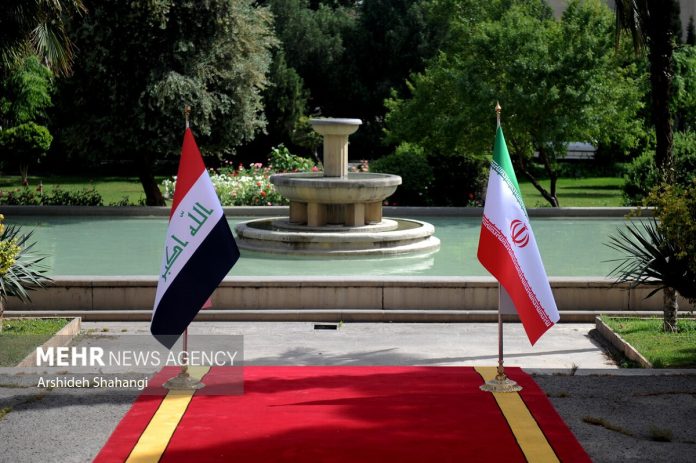
Iran and Iraq Flags

The deal marks a key development in bilateral energy cooperation during Iranian Oil Minister Mohsen Paknejad’s two-day visit to Iraq at the invitation of his Iraqi counterpart.

The visit also culminated in several other agreements covering various areas, including offshore exploration and the transfer of associated gases from Iraq’s border fields to Iran, aimed at providing feedstock for NGL units with private sector participation.

Mehdi Obouri, CEO of Ahdaaf Investment Company, emphasized the daily requirement of 240 million cubic feet of NGL 3100 for the development and operation of the Dehloran Petro-Refinery Project.

He highlighted the importance of achieving full fuel supply and maximizing project capacity, noting that field utilization currently stands at about 50% of its potential.

Obouri said the agreement would play a significant role in addressing Iran’s energy imbalances and resolving environmental challenges in Ilam Province, where the plant is located.

He also stressed that such projects would boost regional employment and prosperity, expressing optimism the Iranian president will inaugurate the national project later this year.