Wednesday, December 24, 2025
Home Blog Page 4028

Miserable Saudis Currying Favour with Israel to Counter Iran

Brigadier General Hossein Dehqan made the remarks in an interview fully broadcast on Arabic-language Al-Manar TV on Monday.

Brig. Gen. Dehqan said that over the past 38 years since the establishment of the Islamic Republic, Saudi Arabia has gone out of its way to interfere in regional affairs to oppose Iran.

He said Riyadh spent lavishly to support the former Iraqi regime and the Persian Gulf littoral states against Iran in the eight-year Iraq-Iran war of the 1980s. He also referred to the Saudi intervention in Lebanese politics and said the Saudi rulers offered massive financial and political support to the groups they wanted in power in Lebanon. The Saudis also offered weapons to such groups.

“Then, let’s looks at what they have done in Iraq and Syria today. At what they are doing in Yemen today,” Dehqan said.

Saudi Arabia has been a known sponsor of extremist Wahhabi groups wreaking havoc in the region and beyond. It has also been leading a group of its vassal states in a war on impoverished Yemen since March 2015.

“Today, what we’re seeing is Saudi Arabia has become so miserable. So much so that it has convinced itself to curry favor with [Israeli Prime Minister Benjamin] Netanyahu and incite it (the Israeli regime) against us,” the Iranian defense minister said.

Last Tuesday, the Saudi defense minister, Mohammed bin Salman, claimed in a televised interview that Saudi Arabia would fight what he called Iranian attempts to expand its influence in the region.

“We are a primary target for the Iranian regime,” Mohammed said.

He also accused Iran of seeking to take over Islamic holy sites in Saudi Arabia. “We won’t wait for the battle to be in Saudi Arabia. Instead, we’ll work so that the battle is for them in Iran,” Mohammed said in controversial remarks.

The Iranian defense minister, in his interview with Arabic-language Al-Manar, responded by rejecting the accusation that Iran was after taking over territory.

“We have never been and will never be after occupying any Arab or Muslim country,” Brig. Gen. Dehqan said.

The Yemeni conflict

Responding to a question on how the Yemeni conflict could end, Brig. Gen. Dehqan said it was easy to think of a solution.

“First [should come] a Saudi withdrawal from Yemen. Second, a Saudi refusal to interfere in the affairs of other Islamic countries. Third, accepting the collective security order in the region, and the pullout of extra-regional forces. Fourth, submitting to people’s rule over their own fate.”

An Israeli war on Iran?

Dehqan was asked if the Israeli regime was capable of launching a war on Iran. He said he would respond by asking a question of his own.

“I answer your question with a question. Could Israel successfully end the 33-Day War [on Lebanon]?” he said.

“Did Hezbollah, in a country limited [in terms of resources] as Lebanon [was], have access to massive financial and arms backup? Did Israel, in the 33-Day War, have any other means in its inventory not to have used?” he further rhetorically asked.

The 33-day Israeli war on Lebanon saw steadfast resistance by Hezbollah, culminating in a pullout of forces by the Israeli regime.

Once again asked if Israel could attack Iran, Dehqan said, “Do not doubt that it would if it could.”

He also drew attention to the resistance likewise put up by the Hamas movement in the besieged Gaza Strip — which has been the target of three unsuccessful Israeli wars — to make his case.

‘Don’t test Iran’

Dehqan said Iran has enough missiles to heavily target any and all aggressors.

Asked about how many missiles Iran had, he said, “Enough to heavily, seriously, and massively target everyone that is standing against us in a short period of time if, God forbid,” aggression is launched against Iran.

He advised ill-wishers, however, not to venture against Iran.

“We advise our enemies, the Americans and their other, feeble servants, not to test us,” the Iranian defense minister said.

‘A mobile Israel in Daesh’

The Iranian minister said the United States would not be able to effectively fight Daesh because the US itself “has created it for use as a tool.”

“It has in fact created a mobile Israel,” he said.

Dehqan said Israel was best enjoying the situation.

“Israel is… laying back and does not face any threats. Daesh is fighting on its behalf and is providing it with security. Daesh is destroying the capacities of the Muslim world, which can otherwise be used to confront Israel’s acquisitiveness and aggression.”

Daesh is wreaking destruction mostly in Iraq and Syria. Former Israeli Minister for Military Affairs Moshe Ya’alon said last month that the regime had just come under fire from the Takfiri terror group’s positions but said the group had “immediately apologized” for the incident.

Tel Aviv is also widely reported to be providing medical support to the extremists in Syria’s Israeli-occupied Golan Heights.

The regime also carries out repeated forays into Syria against the positions of the Lebanese resistance movement of Hezbollah, which has been helping Damascus fight Daesh and other extremist groups.

Dehqan said the Israeli attacks are meant to signal to the extremist groups that Israel has their back.

Advice for Turkey

Brig. Gen. Dehqan also had some advice for Turkey.

“The Turks backed Daesh in a serious manner at first,” he said. “Their perception was that they could topple the legitimate government of Syrian President Bashar al-Assad so that their favorite government would take over there.”

“Later,” he said, “they automatically lost hope of managing the scene as a result of the resistance that was formed within Syria and the fact that Daesh, al-Nusra, and other armed groups were seriously confronted.”

He said after the failure of the anti-Damascus push, the Turkish government helped bring about a ceasefire across Syria by negotiating on the part of the militants, in cooperation with Iran and Russia.

Ankara is now expected to act as a real guarantor of the agreement, he said, stressing that Ankara-backed groups have violated the ceasefire several times.

“Anyway, we advise the Turks, as we have before, to stand at the Syrian nation’s side, help crush the terrorists, not support them, close up their borders to them, and prevent the transfer of arms, equipment, and recruits to them,” the Iranian defense minister said.

Jahangiri to Focus on Knowledge-Based Firms for Job Creation

Speaking at a television talk show on Monday, Jahangiri, the incumbent first vice-president, said he will press on with a package of measures to create jobs if he wins the presidential election.

Pointing to more than one million Iranian university graduates applying for jobs every year, Jahangiri said he would proceed with the current administration’s plans to support knowledge-based companies, which he said have already employed 100,000 students.

He further defended the housing policy of President Hassan Rouhani’s administration, saying young couples have been given long-term loans for buying houses.

Jahangiri also described the fight against “organized corruption” as one of his main priorities since taking a post in the cabinet.

Jahangiri, 60, has been campaigning for the May 19 election along with five other candidates, namely Ebrahim Raisi, Mohammad Baqer Qalibaf, Hassan Rouhani, Mostafa Hashemitaba, and Mostafa Aqa-Mirsalim.

Raisi Explains about Tax Exemption of Foundation He Runs

Addressing a huge crowd of his fans in northwestern city of Oroumiyeh on Sunday, Iranian President Hassan Rouhani strongly criticized those who “talk of the need to pay taxes”, while they have never paid any taxes in the place they are managing.

He was referring to his conservative rival Raisi, who is the custodian of Imam Reza Holy Shrine complex, officially known as Astan Quds Razavi (AQR). The charitable foundation reportedly controls large endowments and business conglomerates.

A few hours after Rouhani’s speech, supporters of Raisi published a video clip in which the conservative cleric explains about the AQR’s tax exemption.

In the video, Raisi says the previous AQR custodian, the late Ayatollah Vaez Tabasi, in a letter sent to the founder of Islamic Republic Imam Khomeini 30 years ago, wrote that the entire economy of the foundation is based on the money received from religious vows and endowments.

“Imam Khomeini in response said that the AQR and its subsidiaries are exempted from paying taxes, and should rather spend the money on pilgrims and the poor,” he noted.

“When I was appointed as the new custodian, I wrote to the Leader of the Islamic Revolution Ayatollah Seyyed Ali Khamenei, and asked about what we should do,” Raisi said.

According to Raisi, the Leader replied, “What Imam Khomeini said should be observed; however, the complex should pay its Value Added Tax (VAT) and withholding taxes.”

The AQR has made all the calculations, and can inform the Iranian people how much it would have to pay if it was not exempted during all these years, he added.

Raisi said the amount of money the AQR has given to the poor is several times more than what it would have to pay the government as tax.

The foundation has actually “helped” the government, because it is the government’s responsibility to help the poor, he added.

Rouhani Slams Conservative Rival for Tax Evasion

Iranian presidential candidate Hassan Rouhani harshly criticized his rivals over their comments during their election campaigns and televised debates so far.

Rouhani particularly took a swipe at presidential hopeful Ebrahim Raisi for his comments regarding tax evasion and the necessity of paying taxes.

“They talk of the need to pay taxes. Have you ever paid taxes in the place you are managing?” said Rouhani, in an apparent allusion to Raisi, who is the custodian of the Imam Reza holy shrine, known as Astan Quds Razavi, in the northeastern Iranian city of Mashhad.

“You are managing an institution which no one dares criticize,” said Rouhani.

Rouhani further touched upon the freedom of expression and lambasted some of the candidates for what he called their background in suppressing the freedom of speech.

He said those who muzzle freedom of expression should not talk about freedom.

Rouhani then referred to comments by some candidates regarding sanctions.

“Are you upset because the business you had made out of anti-Iran sanctions have stagnated in recent years?” asked Rouhani.

“We are opposed to Iran being under sanctions or be cut off [from the rest of the world]. The people want to live in peace with the rest of the world.”

“The person whose associates imported six million tons of wheat to provide bread for people cannot talk of exporting wheat,” he added.

“You talk of [improving the livelihoods of] pensioners. [But one should ask] how are the retirees of your institution doing?” Rouhani further criticized.

Rouhani also slammed the performance of ex-president Mahmoud Ahmadinejad’s government.

“There are some individuals who were at the helm of affairs in the country for eight years, and you saw what they did to Iran and the younger generation,” he noted.

“Some media remained silent for eight years, and now that 650 thousand jobs are created annually, they speak of employment.”

“Some 800 thousand women lost their jobs during the eight years when the previous administration was in power; but in this administration, 750 thousand women were employed every year for three and a half years,” he added.


Iran Calls for Pakistan’s Swift Action to Secure Borders

Rahmani Fazli

In a telephone conversation with Pakistani Federal Minister for Interior and Narcotics Control Chaudhry Nisar Ali Khan on Monday, Rahmani Fazli said Islamabad should prevent the infiltration of terrorists into Iran, smuggling of narcotics and illegal crossing into Iran by Afghan nationals from the Pakistani border.

He pointed to the recent terrorist crime against Iranian border guards serving on the country’s southeastern frontier near the town of Mirjaveh and added that the incident was not expected considering the cordial relations between the two countries.

The Iranian minister invited Ali Khan to pay a visit to Tehran and said, “We are ready to hold a conference on cooperation on security, economic and border issues as soon as possible.”

On April 26, 11 Iranian border guards were killed and three others injured in clashes near Mirjaveh in the southeastern Iranian province of Sistan-and-Baluchestan. The so-called Jaish ul-Adl terrorist group claimed responsibility for the attack, which was launched from the Pakistani soil. The assailants escaped into Pakistani territory immediately after the attack.

Rahmani Fazli also called for enhanced economic interaction and commercial cooperation between the two countries, saying, “Economic interaction in border areas can establish sustainable security along common borders.”

The Pakistani minister, for his part, said his country was resolved to implement bilateral agreements.

He added that the Pakistani prime minister had tasked him with implementing the accords.

Iran’s Persepolis Advances to ACL Round of 16

Persepolis

Needing a win at Azadi Stadium to advance, and for Al Rayyan to fail to defeat Al Hilal in the simultaneous kick-off in Group D, Soroush Rafiei gave the host an early lead after 17 minutes, which was quickly doubled by striker Mehdi Taremi.

Al Wahda struck back just after the half-hour mark as Ahmed Al Akberi found the target, before Sebastian Tagliabue pulled the visitor level on 51 minutes.

Persepolis, though, soon found a second wind as Taremi stepped up to a starring role by scoring three minutes later to restore the home side’s lead and then again with 20 minutes remaining to seal what was ultimately a comfortable victory.

With group leader Al Hilal claiming a thrilling 4-3 victory over Al Rayyan in Doha, the Iranian champion leapfrogged the Qatari team into second place to join Al Hilal in the next phase while Al Wahda finished bottom of the standings.

Iran, Afghanistan Starting Long-Term Strategic Cooperation

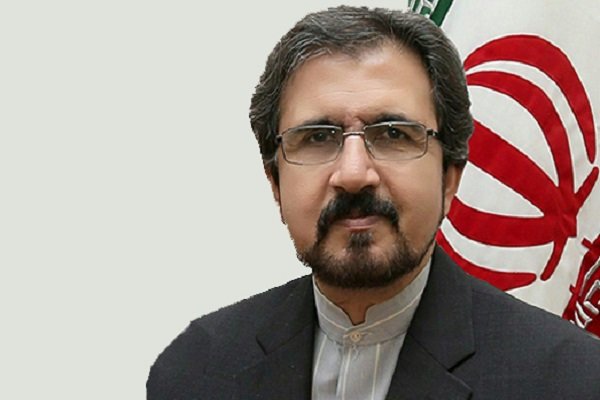
qassemi

Iranian Foreign Minister Mohammad Javad Zarif met with several senior Afghan officials during his day-long trip to Kabul on Sunday.

According to Iranian Foreign Ministry Spokesman Bahram Qassemi, Zarif had fruitful talks with his Afghan counterpart Salahuddin Rabbani, President Ashraf Ghani, National Security Advisor Hanif Atmar, Chief Executive Abdullah Abdullah and former President Hamid Karzai.

Zarif’s meetings with top Afghan officials show the importance that Kabul attaches to the Iranian foreign minister’s trip, Qassemi noted.

“It’s been quite some time that officials of both countries have been in contact and have been holding consultations to formulate a specific framework in order to enhance strategic ties [between the two sides],” said the spokesman.

In these meetings, topics such as mutual economic and commercial cooperation, security and border issues, war on drugs, natural resources, the issue of Afghan immigrants and environment were discussed, said Qassemi.

The two sides also drew up draft documents on long-term strategic cooperation on issues of mutual interest, said the spokesman.

Enemies to Regret Any Aggression on Iran: Top Officer

Chief of Staff of the Iranian Armed Forces Major General Mohammad Baqeri says the enemy should know any miscalculation or act of aggression against the Muslim Iranian territory or establishment will elicit an immediate decisive and crushing response from Iran in the form of reciprocal attacks on the targets and points the country determines.

This scenario will only lead to the enemy’s defeat and regret, he noted.

Baqeri’s comments came in the wake of aggressive remarks against Tehran by Saudi Deputy Crown Prince Mohammed bin Salman, who accused Tehran last week of seeking to “dominate the Muslim world,” and said, “We will work to have the battle in Iran rather than in Saudi Arabia.”

Enemies of Iran are incapable of carrying out a military invasion of the Islamic Republic, Baqeri noted.

Therefore, he added, by employing unworthy terrorists to endanger the safety of the Iranian borders and the country’s interests, they are resorting to approaches adopted by coward thieves and brigands, a move which will only lead to their ultimate humiliation.

Commenting on the recent tragic massacre of nine brave Iranian border guards near Iran-Pakistan borders in an attack launched from the Pakistani side, he regretted that areas in the proximity of the common border in the Pakistani territory have turned into a safe haven for the mercenary terrorist groups sponsored by Saudi Arabia, and they are training, preparing and equipping themselves there.

Last Wednesday, nine Iranian border guards were killed and two others injured in clashes near the Iranian town of Mirjaveh, in the southeastern Iranian province of Sistan-Baluchestan. Another guard was reportedly taken hostage by terrorists after being wounded. The Jaish ul-Adl terrorist group in a statement claimed responsibility for the attack.

“We are not going to tolerate the continuation of the present situation on common borders and expect the Pakistani officials to act responsibly and, by asserting their control over the border areas, capture the terrorists, shut down their bases in their territory and hand them over to Iran,” he added.

Trump’s Visit to Riyadh Will Cost Saudis $68 Million

Donald Trump stands with Saudi Defense Minister and Deputy Crown Prince Mohammed bin Salman before lunch in the State Dining Room of the White House in Washington, Tuesday, March 14, 2017. (AP Photo/Evan Vucci)

According to a leaked ‘secret and urgent’ letter by Saudi King Salman to the country’s finance minister indicates that Riyadh has allocated 257 million rials [nearly $68 million] to the preparations for hosting US President Trump.

According to a Farsi report by Fars News, based on a picture of the secret letter, which has gone viral in the Arab social media, King Salman has ordered the finance minister to prepare the grounds for welcoming Trump, who is going to visit the kingdom in the coming weeks.

A copy of the secret letter has also been sent to the cabinet, the defence ministry, and the ministry of urban and village affairs.

Trump’s Visit to Saudi Arabia Will Cost Them $68 Million

A Look at Iranian Newspaper Front Pages on May 8

Newspapers today continued to cover the remarks made by the Leader of Iran’s Islamic Revolution Ayatollah Seyyed Ali Khamenei in a meeting with a group of teachers, particularly his call on the nation to cast their ballots in the May 19 election.

They also highlighted President Hassan Rouhani’s visit to the bereaved families of the victims of a mine explosion in northeastern Iran. Rouhani was harshly criticized by a number of workers, and this was widely covered by both pro and anti-Rouhani newspapers.

The above issues, as well as many more, are highlighted in the following headlines and top stories:


19 Dey:

1- Zarif: We Have No Such Thing as Good or Bad Terrorist

2- Rouhani: Please You Don’t Talk about Freedom as You Make It Embarrassed!

3- President: They Want to Take Us Back to 4 Years Ago

4- Ayatollah Makarem Shirazi: Certain Campaign Promises Are Instances of Fraud


A Look at Iranian Newspaper Front Pages on May 8


Abrar:

1- Leader: Iran Won’t Submit to Such Documents as UNESCO 2030

2- Kuwaiti Official: Trump to Discuss Arab Countries’ Tension with Iran in Riyadh Visit


A Look at Iranian Newspaper Front Pages on May 8


Aftab-e Yazd:

1- Iran Leader Urges All People to Cast Their Ballots to Save Iran’s Might

2- Safe Protest against Mr President!

  • Bereaved Miners Opened Their Hearts and Raised Their Protest


A Look at Iranian Newspaper Front Pages on May 8


Emtiaz:

1- Ayatollah Javadi Amoli: Fighting Economic Corruption among Judiciary’s Duties

2- All Government Officials Have Declared Their Assets: Judiciary Spokesman


A Look at Iranian Newspaper Front Pages on May 8


Ettela’at:

1- Iran Leader: Nationwide Turnout in Election to Secure Iran’s Might

2- Rouhani’s Special Order to Follow up on Problems of Miners


A Look at Iranian Newspaper Front Pages on May 8


Farhikhtegan:

1- Over 600 Accounts Opened in Foreign Banks after JCPOA: Official

2- Rouhani: The Entire Country Has Empathy with You [miners]

3- Iran Leader Calls for Massive Turnout in Elections


A Look at Iranian Newspaper Front Pages on May 8


Iran:

1- Culture Minister: Artists Don’t Need Charity

2- Int’l Bodies Underline Decreasing Trend of Economic Corruption in Iran


A Look at Iranian Newspaper Front Pages on May 8


Javan:

1- Iran Leader: Elections Stem from Religious Democracy

2- Judiciary: Minister’s Daughter Imports Apparel through an Engineering Firm

3- Angry Miner to Rouhani: I Don’t Have $3 for My Child’s Illness


A Look at Iranian Newspaper Front Pages on May 8


Jomhouri Eslami:

1- French Radicals Defeated, Macron Wins

2- Activists, Political Figures, MPs React to False Promises Made by Certain Candidates


A Look at Iranian Newspaper Front Pages on May 8


Kayhan:

1- Iran Leader: Governments Have No Role in Averting War

2- Judiciary Spokesman: Education Minister is Both a Minister and Apparel Importer

3- Gov’t Supporters Intimidated by Kayhan’s Disclosure of JCPOA Damages


A Look at Iranian Newspaper Front Pages on May 8


Resalat:

1- Raisi in Qom: No Lock Will Be Opened by without People’s Presence

2- Palestinian Jihad Movement: Palestine Belongs to Our Nation from Sea to River


A Look at Iranian Newspaper Front Pages on May 8


Shahrvand:

1- Iran Leader: Political Use of Teachers Not in Teachers’ Dignity


A Look at Iranian Newspaper Front Pages on May 8


Shargh:

1- Rouhani to Rivals: Have You Paid Your Taxes?

2- Rouhani’s Visit to Mine Alleviated Our Pains: Survivor of Mine Explosion

3- Transport Minister: Qalibaf’s Classification of Society is a Joke


A Look at Iranian Newspaper Front Pages on May 8