Saturday, April 25, 2026
Home Blog Page 4000

Arab States Should Hold Talks with Iran: Lebanon’s Jumblatt

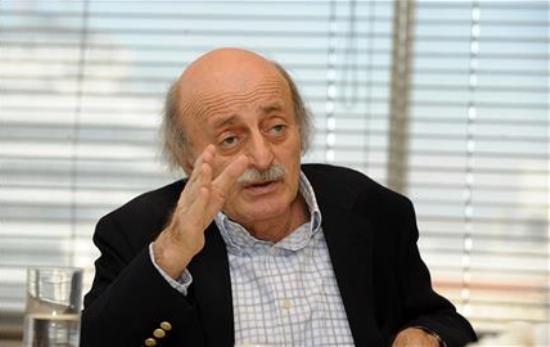
Lebanese Druze leader Walid Jumblatt says Arab countries cannot get into a war with Iran and had better hold talks with Tehran.

In an interview with the RT Arabic channel on the sidelines of his visit to Moscow, Lebanon’s Progressive Socialist Party chief said, “We should take Arab countries’ key interests into consideration, and to that end, holding a dialogue with Iran is a must.”

“Of course, in terms of Arab solidarity, we should see what Iran wants from us and what we want from Iran,” he said.

Jumblatt said Iran and Qatar have common interests and added it would be of no use for Qatar to get close to Iran.

“Finally, Arab countries should become united and take their interests into account,” he noted.

He then touched upon Lebanon’s position on the recent crisis between Qatar and other Persian Gulf Arab states.

“Lebanon has a lot of interests in countries which are members of the [Persian] Gulf Cooperation Council, including Qatar and Saudi Arabia. But whatever the reason behind this crisis, it should be settled with tranquillity and dialogue to help Arab states regain their solidarity. Here, Saudi Arabia should take the initiative,” said Jumblatt.

The Lebanese Druze leader stressed that the Saudi-Qatari crisis would be in the interests of the United States.

“They came [to the region] and sold their arms to us. They look at us and our differences and make fun of us, and at the end, make profit by selling weapons.”

He said US President Donald Trump came to the Middle East, like someone who wants to get engaged in a war, and imposed his conditions on Arab countries.

“But can the Arab world get into a war against Iran? Not at all,” he said.

“We cannot enter into aimless adventurism with Iran. We should hold talks with Iran. We are now involved with Israel and that’s enough for us,” said Jumblatt.


He further expressed his opposition to putting the names of Hamas and Hezbollah movements on the list of terror groups.

“Hamas is a combatant Palestinian group which has come to power through elections,” he said.

Jumblatt highlighted the centrepiece of the Palestine issue is for Palestinians to regain unity as well as the holding of free elections in the West Bank and the Gaza Strip.

“Today, the Arab world is almost desperate and cannot make its presence felt and is getting worse. Neither do I see bright prospects for them in the foreseeable future, nor are they making regular efforts [to improve their situation].”

“The formation of an alliance between moderate Sunni Arab countries and Israel is just an illusion by Tel Aviv and Washington,” he said.

Elsewhere in this interview, he touched upon the situation in Syria and said civil war in the Arab country should end with a transitional government.

He also expressed hope that Saudi Arabia’s plan to end the crisis and fill the gaps in the [Persian] Gulf Cooperation Council will work.

At the same time, he said despite the different viewpoints about Russia, this country is a key player in the region.

During his trip to Moscow, Jumblatt sat down with Russian Foreign Minister Sergei Lavrov and his deputy Mikhail Bogdanov as well as a host of other Russian officials.
ISIS Terrorist Blows Himself Up to Kill His Own Leaders

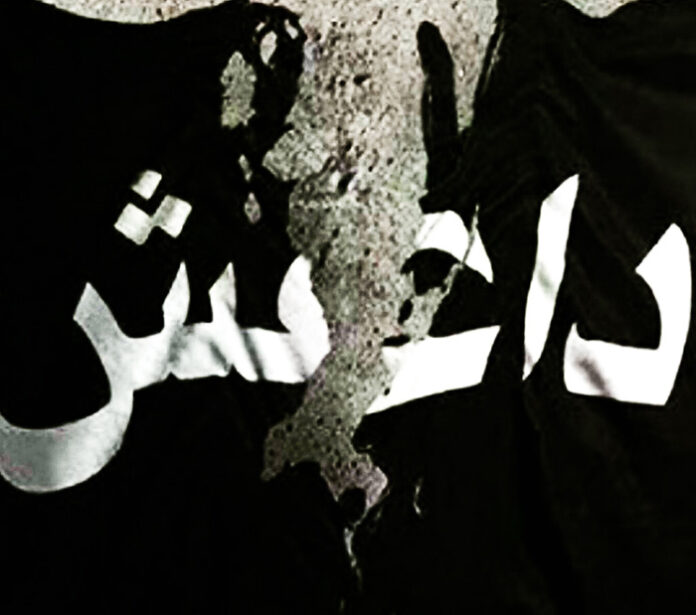
On Sunday (June 25), an ISIS suicide attacker, wearing an explosive belt, detonated himself among a number of the terrorist groups’ leaders who had convened in the Iraqi town of al-Qa’im, located 350 kilometres west of Ramadi, near the Syrian border.

Some of the ISIS elements and leaders were either killed or injured in the explosion, a security official of al-Anbar Province in western Iraq, told the Iraqi TV channel Alsumaria News.

He added the self-detonation was a consequence of the numerous defeats the ISIS has suffered in the northern Iraqi city of Mosul, while operations will also be launched soon to liberate the western regions of al-Anbar Province from the terrorist group.

Since three years ago, Iraqi towns of al-Qa’im, Rawa and Anah have been under the ISIS control. This comes as Iraqi forces are preparing to recapture these cities.

Iran Security Only Achievable in Safe, Developed Mideast: FM

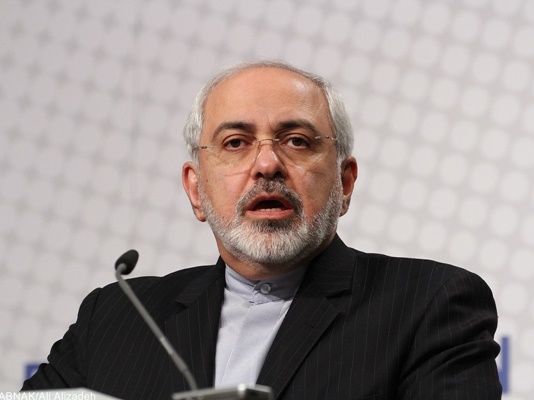
In a Monday address to a gathering of Iranian expatriates living in the German capital of Berlin, the Iranian foreign minister called Iran the strongest nation of the Middle East with the highest public support, and said, “Our security and progress can be ensured only in a safe and developed region.”

“Those [states] which have been trying to ensure their own security at the cost of other nations’ security have achieved nothing but insecurity and degradation,” Zarif went on to say.

He further noted that while a huge wave of prejudice has wreaked havoc on the region and put the regional governments in deep troubles, Iran is totally secure thanks to its nation.

Zarif praised the Iranians for their strong resistance, intention and will in different battles the country has gone through over the past decades, and added this was the strong support of the Iranian nation for the government that forced the world powers to sit for talks over Iran’s nuclear energy program.

He said the success of the talks, which resulted in a nuclear deal between Tehran and the six world powers, was not possible without the Iranian nation’s full support for the negotiating team.

“Do we have anything behind us except for the full support, resilience and participation of our people? Our nation showed resistance to a violent and aggressive enemy and thwarted the plots of Saddam Hussein and his allies. This was the nation who took part in the reconstruction of our country [after the Iraqi imposed war].”

Zarif said, “It was the Iranians who resisted the international sanctions. This was our nation who explicitly announced, during the recent presidential election, that there is no gap between them and the government. The Iranian [nuclear] negotiation team was just a symbolic team representing the determined Iranians. This was the nation who brought the six powers to the negotiating table and clinched the nuclear deal.”

“If we didn’t have the nation behind us, the other sides would not allow us to have even one centrifuge. President Obama once said we would not allow the Iranians to have even one centrifuge, if we could. So we feel proud of this nation,” he said.

He also referred to the statements made by the Leader of Iran’s Islamic Revolution Ayatollah Seyyed Ali Khamenei during the Edi al-Fitr prayers on Monday, and said, as the leader noted, the government must immediately step in and meet the public’s demands.

“Each member of our nation is our patron, and this includes the Iranians who represent their nation here in Berlin. They are not accountable to us. This is us who are accountable to them,” he said.

Foreign Ministry’s Role in Iran’s Development

Elsewhere in his remarks, the Iranian foreign minister said a good chance has arisen to establish an enduring relation with Europe, particularly strong economic relations with Germany.

“If we sit idle, the other sides will seize the opportunities and turn them into threats against us,” he noted.

Zarif said, “We should not allow the thought behind the zero-sum game, which requires being totally devoted to the enemies, to deprive our nation of their choice. As the Leader said today, we need unity and solidarity.”

Therefore, he added, the foreign ministry shoulders the heavy responsibility of taking full advantage of each available opportunity to achieve the country’s goals and pave the way for realization of the Economy of Resistance.

“We also have to expand our country’s scientific and technological ties. We have already made great progress in advanced sciences and achieved a one-digit rank across the globe. We have to develop our local technologies by taking advantage of the world’s developed technologies,” he said.

Zarif further called for attracting the talented Iranians inside and outside the country and added, “No capital is more valuable than the talents of our countrymen in the development of the country.”

The Iranian top diplomat also noted that in the current Persian calendar year – which was named by the Leader as the Year of Resistance Economy, Production, and Employment – Iran’s foreign ministry feels committed to playing a role and paving the way for exporting Iranian products to global markets and create 1,200 new jobs each year.

Spokesman Rejects Riyadh’s ‘Baseless’ Allegations against Iran

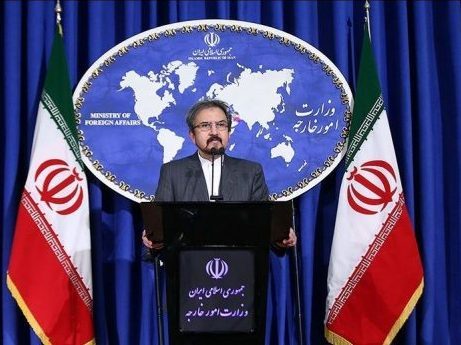
Bahram Qassemi

Speaking in a Farsi interview with ISNA on Monday, Foreign Ministry Spokesman Bahram Qassemi said the allegations made by a Saudi newspaper against Iran are worthless, groundless, and false.

“They have forgotten the fact that, in the modern era and in the time of the development of science, thought, and information technology, it is not like the old times when bigger lies worked better,” Qassemi said.

The Iranian spokesman urged Saudi media and officials to ‘believe that the time of big lies is over’.

His remarks came in reaction to a report by the Saudi newspaper Ar-Riyadh, where it claimed that Saudi Arabia has arrested 3 Iranian nationals for working against the Arab country’s national security. The newspaper says the Iranians were detained three days before the recent terrorist attempt on the Grand Mosque of Mecca.

Iran FM, German Minister Discuss Banking Cooperation

During the meeting, Germany’s Federal Minister of Finance Wolfgang Schäuble welcomed his country’s banking cooperation with Iran, and said German banks are ready to finance economic projects in Iran.

Zarif and Schäuble also talked about the efforts made by German banks to reinforce their cooperation with the Islamic Republic.

The German minister also underlined the significance of implementing the nuclear deal between Tehran and world powers, also known as JCPOA.

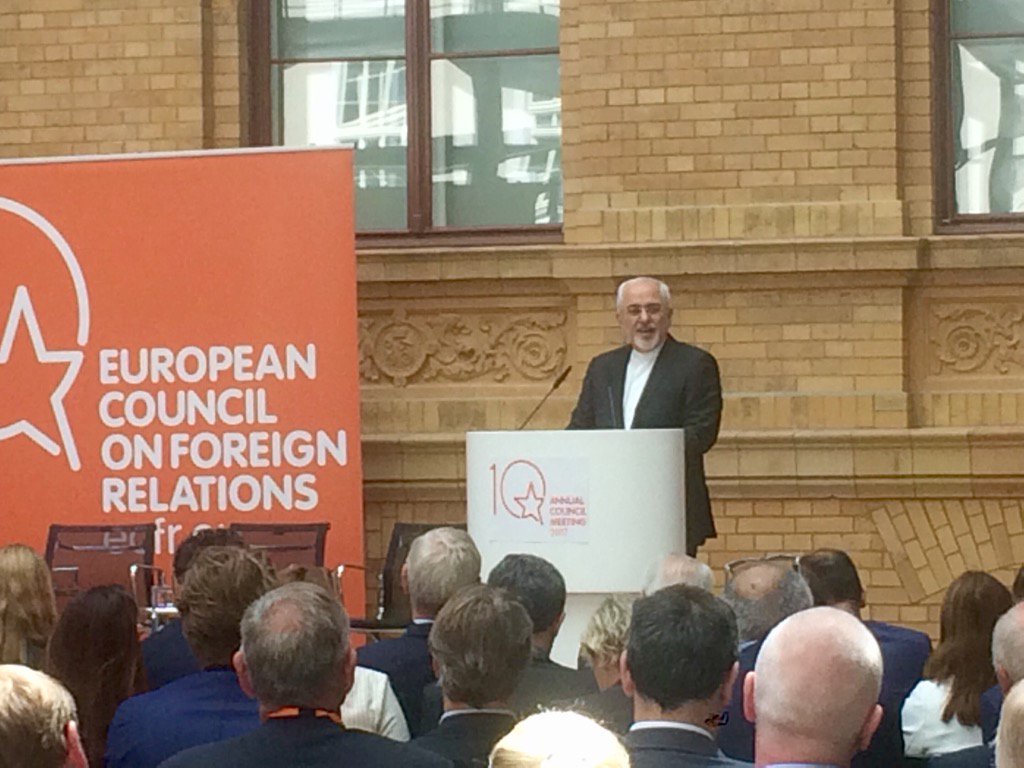
The Iranian foreign minister arrived in Berlin on Monday, and started his talks with German officials after addressing the European Council of Foreign Relations (ECFR).

He is scheduled to leave Germany for Italy as the second and final leg of his European tour.


Iran Uncovers Terror Group’s Huge Arms Depot

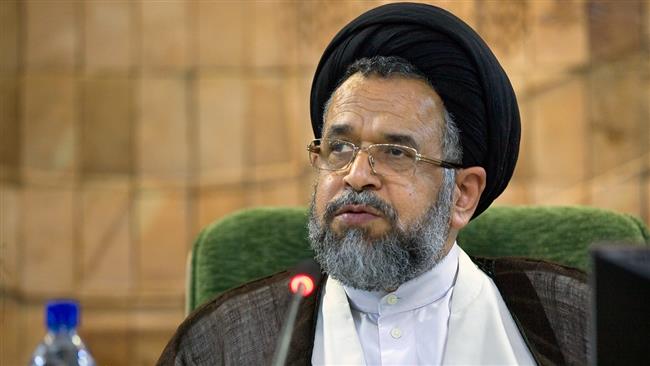
Iran's Intelligence Minister Seyyed Mahmoud Alavi

“Yesterday, we dealt a blow in a timely measure to a terrorist team, which had a very large cache of arms and ammunition in its possession,” Alavi told reporters on Monday.

He added that the Iranian security forces were in full command of the situation and emphasized that their efforts had minimized the possibility of any act of terror by terrorist organizations and groups.

He assured the Iranian nation that the security forces’ operations to counter terrorism were not limited to a specific time period and that Iranians could enjoy peace and security every day.

After the twin terrorist attacks in Tehran in early June, Iran increased its counterterrorism operations across the country.

On June 7, gunmen mounted almost simultaneous assaults on Iran’s Parliament and the Mausoleum of the late Founder of the Islamic Republic Imam Khomeini, killing 17 people and injuring over 50 others. The Daesh Takfiri terrorist group claimed responsibility for the assaults.

The chief prosecutor of the western Iranian province of Kermanshah, Ne’mat Sadeqi, said on Sunday that the country’s security forces rounded up over 50 elements linked to terrorist groups in the province after terrorist attacks in Tehran.

He added that a considerable amount of explosive belts, electronic detonators, and weapons had also been confiscated from the detainees.

Fight against Israel Duty of Every Muslim: Iran Leader

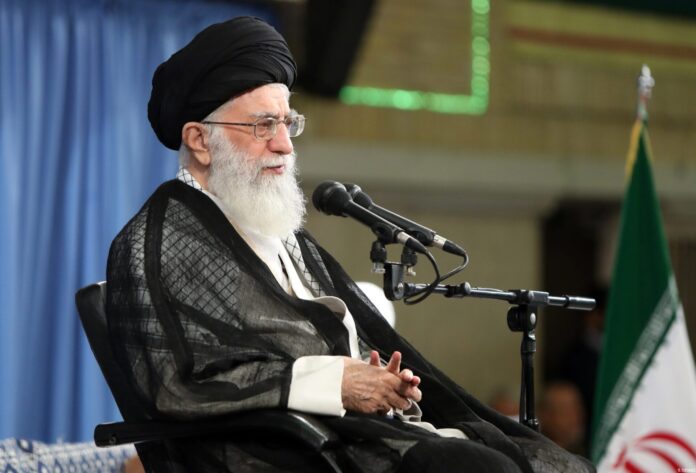
Supreme Leader of Iran

Addressing a huge gathering of people from different social strata and high-ranking officials in Tehran on Monday on the occasion of the Muslim festival of Eid al-Fitr, Ayatollah Khamenei highlighted the importance of the Palestinian issue and described plots to make it fade into oblivion as “a great danger”.

“According to the Islamic jurisprudence, in the face of domination of the enemy on the Islamic land, all Muslims are obliged to fight in any way possible, and for this reason, it is imperative for all Muslims to fight against the Zionist regime,” the Leader said.

“Palestine is the top concern for the Muslim world, but some Islamic countries are acting in a way so that the Palestinian issue would be ignored and forgotten,” the Leader said.

Ayatollah Khamenei further praised the Iranian people’s nationwide rallies on Friday, held in support of Palestinians on the occasion of the International Quds Day, as “an honorable example of Islamic unity”.

“This is what Islamic unity actually means, that is, fasting Shiites take to the streets so magnificently and express empathy and sympathy with the Palestinians, who are Sunnis,” the Leader went on to say.

Millions of fasting Iranian people from different walks of life held rallies in cities across the country on Friday in support of Palestinians, who have been suffering from Israel’s atrocities for decades.

Each year, the International Quds Day is celebrated across the world on the last Friday of the Islamic holy month of Ramadan.

The event’s raison d’être is renewing support for the Palestinians and denunciation of Israel.

The day is also seen as the legacy of the late founder of the Islamic Republic of Iran, Imam Khomeini, who officially declared the last Friday of the holy month of Ramadan as International Quds Day back in 1979.

Europe Can Help Resolve Persian Gulf Conflicts: Iran FM

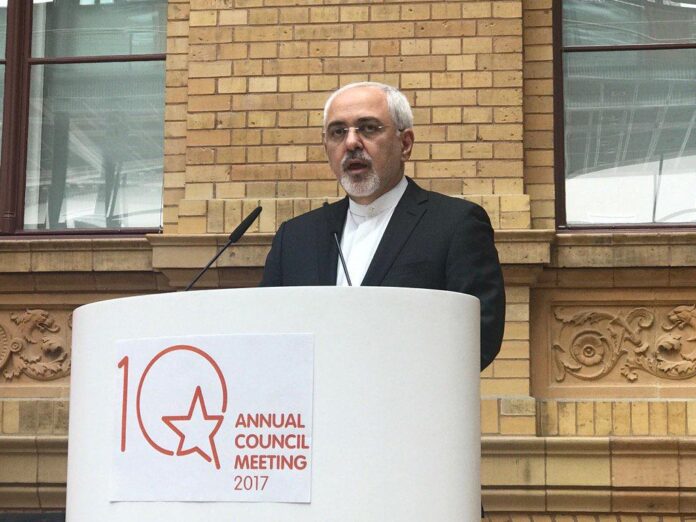
“Europe has the capabilities and values to help resolve Persian Gulf conflicts,” Foreign Minister Mohammad Javad Zarif said in a Monday address to the European Council on Foreign Relations (ECFR) in Berlin.

“With the nuclear issue we had a lose-lose game with the US until we redefined the problem with Europe’s active participation,” the Iranian foreign minister added.

“The nuclear deal between Tehran and world powers worked because it was a victory for all. We must remember the importance of positive-sum thinking,” he went on to say.

“We have to abandon delusions of zero-sum foreign policy, that geography can be changed, and that we can overcome our neighbours,” Zarif noted.Europe Can Help Resolve Persian Gulf Conflicts: Iran FM

The Iranian foreign minister further called for regional security order in wider Persian Gulf region.

“Our region needs a regional security framework. Europe should work on establishing such a framework,” he added.

Zarif stressed that “we need a Persian Gulf regional security forum to promote dialogue over demonization.”

The Iranian foreign minister further pointed to the countries who claimed that Iran and Qatar were supporting terrorism, saying they were trying to shun responsibility for their own failures in addressing the demands of their own people.

“One day it’s Iran, today it’s Qatar,” Zarif said, adding, “It’s an attempt to evade responsibility, escape accountability for this very fundamental … failure of the state system to address, to respond to the demands of its population.”

He said no one can purchase its security from outside, and that foreign policy is not a commodity.

“Arms deals are not partnerships. […] Too many are afflicted by the misconception that security can be purchased.”

“When foreign policy becomes a commodity, then purchasing military equipment becomes your yardstick for measuring who is a terrorist or who isn’t a terrorist,” the Iranian minister added.

Zarif went on saying that the discourse of blame promoted by Saudi Arabia is very much similar to that promoted by the ISIS terrorist group.

“Personal hope is the crucial ingredient for social and international stability. Hopelessness leads to hate,” he added.

The countries in the Middle East have failed to address needs of populace to participate in national life, and this leads to violent reaction of youth, the Iranian top diplomat noted.

Middle East and North Africa region suffers from structural problems, including asymmetry in size, wealth, population, Zarif said.

“The discourse of hate and discourse of exclusion in our region can be exported worldwide creating disaster beyond what you imagine,” he stressed.

Qatar Not to Cut Ties with Iran: Report

A report by Kuwait’s Al-Seyassah daily says that Kuwaiti officials have continued their efforts to provide an atmosphere of agreement to settle the crisis in the Persian Gulf.

This comes as Qataris have not accepted Saudi Arabia’s main demands for ending tension in the region.

Al-Seyassah quoted informed diplomatic sources as saying that Doha did not accept to pay compensation to Saudi Arabia, the UAE, and Bahrain and stressed that it will continue its good relations with the Islamic Republic of Iran.

Saudi Arabia had earlier rejected the possibility of any mediation between Riyadh and Doha.

Qatar Not to Cut Ties with Iran: Report

The split among the Arab states erupted last month after US President Donald Trump visited Saudi Arabia where he accused Iran of “destabilizing interventions” in Arab territories.

Then Saudi Arabia, the UAE, Bahrain, Egypt, Libya, and several other countries broke diplomatic ties with Qatar over allegations that Doha is sponsoring terrorism.

Back in late May, Qatar’s state-run news agency released comments attributed to the country’s Emir Tamim bin Hamad Al Thani in which he described Iran as a force for stability.

Afterwards, Saudi Arabia and the UAE blocked access to Qatari media, including Al Jazeera.

However, the Qatari government claimed that hackers had broken into the QNA website and published the “fake news.”

Tehran-Doha Ties Beneficial to All Mideast Nations: Rouhani

In a telephone conversation with Qatari Emir Sheikh Tamim bin Hamad Al Thani on Sunday, Rouhani said the Iranian government and nation would stand by Qatar.

He added that Iran sought continued cooperation with Qatar and stressed the importance of making use of the enormous bilateral capacities to further strengthen relations.

“[Iran’s] help for Qatar’s economy and the expansion of ties, particularly between the two countries’ private sectors, can be among our common goals,” Rouhani said.

The Iranian chief executive added that the Islamic Republic wanted the rule of moderation and rationality in relations among countries in the region and expressed hope that the existing regional issues would be solved through dialogue.

“We believe that if there is a dispute among regional countries, pressure, threat or sanctions are not an appropriate way to settle disputes,” Rouhani said.

He expressed the Islamic Republic’s readiness to contribute to and help the establishment of peace in the region.

Rouhani further criticized as unacceptable the Saudi-led embargo on Qatar, saying, “Our country’s airspace, land and [territorial] waters will always be open to Qatar as a brotherly and neighboring country.”

The Iranian president also highlighted the significance of unity and integrity in the Muslim world and said Tehran and Doha can undoubtedly cooperate with each other in this field.

Saudi Arabia, Bahrain, Egypt, and the UAE severed ties with Qatar on June 5, officially accusing Doha of supporting “terrorism” and destabilizing the region. Qatar, however, has slammed the measures as unjustified, saying they are based on false claims and assumptions.

In their apparent bid to secure US support and that of Israel, Riyadh, Manama, Cairo and Abu Dhabi suspended all land, air and sea traffic with Qatar, expelled its diplomats and ordered Qatari citizens to leave their countries.

To further pressure Qatar, Saudi Arabia has totally closed its land border with its tiny neighbor, through which much of Qatar’s food supply crossed.

The Qatari emir, for his part, extended his congratulations to the Iranian president on the occasion of Eid al-Fitr, which marks the end of the holy Muslim fasting month of Ramadan.

Al Thani praised Iran’s support for his country and expressed Doha’s readiness to bolster cooperation with Tehran and help solve problems in the Muslim world.

Iran and Turkey are now providing Qatar’s required food supplies.