Saturday, April 11, 2026
Home Blog Page 3973

A Look at Iranian Newspaper Front Pages on July 18

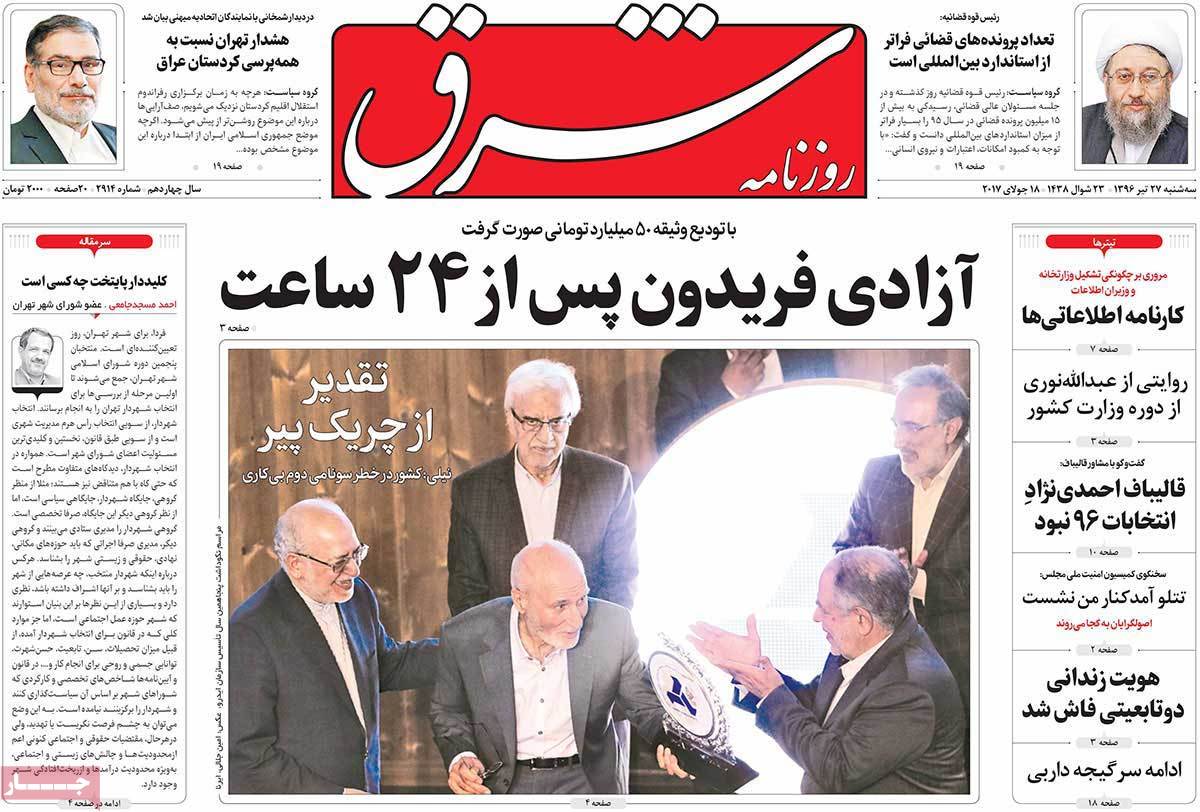
Newspapers today covered the reports on President Hassan Rouhani’s brother and top aide Hossein Fereydoun, who was arrested on financial issues on Saturday night, but was later released on bail after a heart problem that took him to the hospital.

The speculations about President Rouhani’s next cabinet and the remarks made by both conservative and reformist figures about its line-up also remained a top story today.

Chief of Staff of the Iranian Armed Forces Major General Mohammad Hossein Baqeri also appeared on the front pages of several newspapers after he warned the US against putting IRGC on its list of sanctions.

The above issues, as well as many more, are highlighted in the following headlines and top stories:


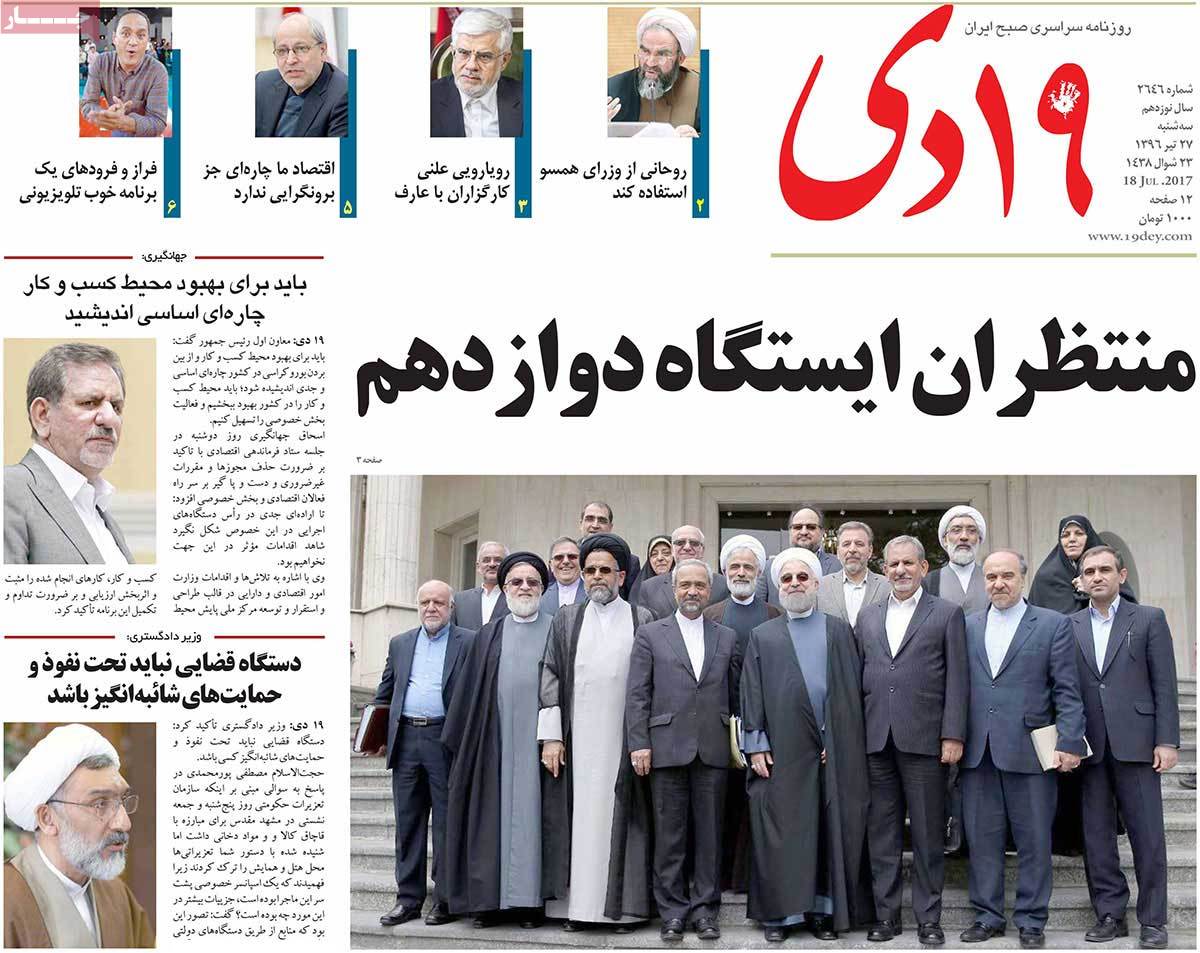
19 Dey:

1- The Ones Waiting for 12th Station [Rouhani’s Second Term]
A Look at Iranian Newspaper Front Pages on July 18 - 19dey


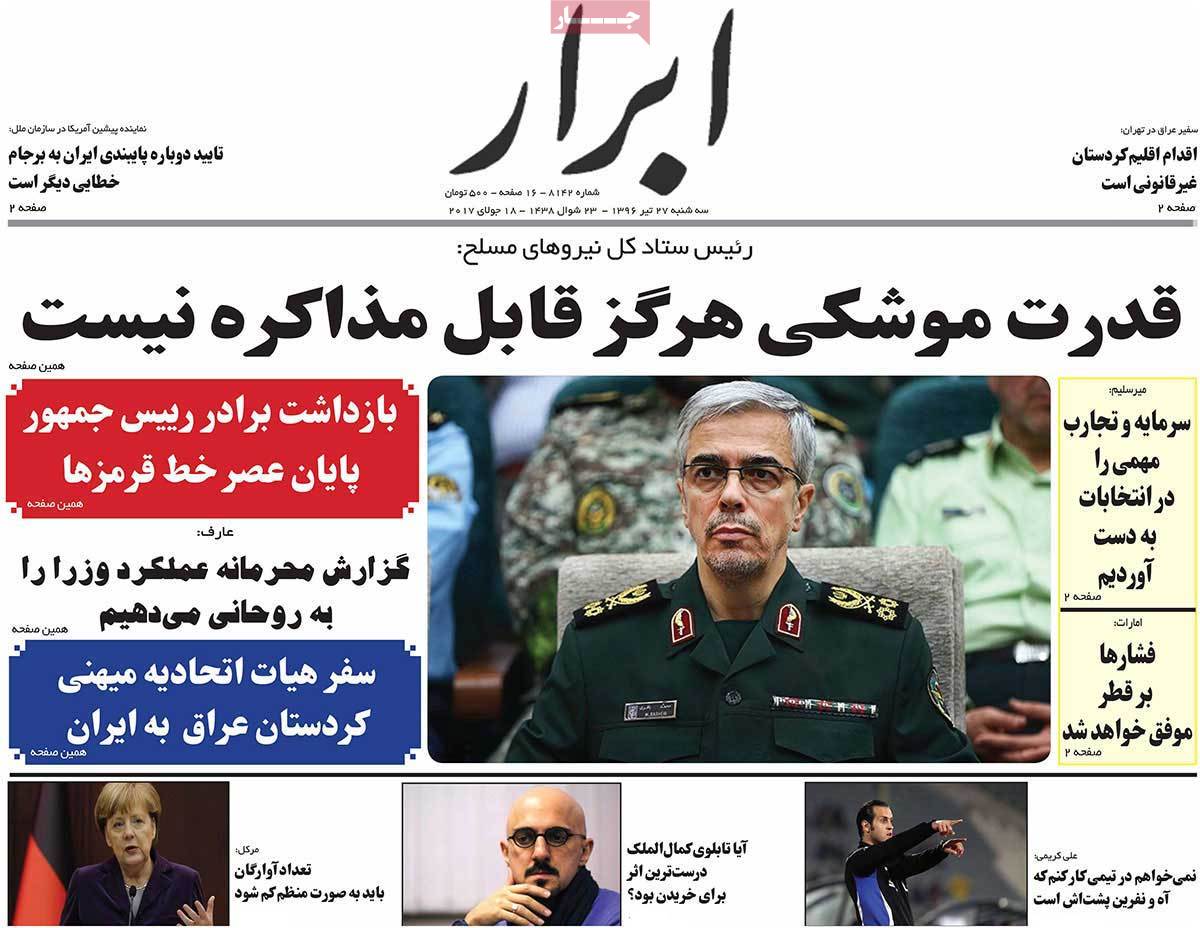
Abrar:

1- Iran’s Missile Power Not Negotiable: Chief of Staff of Armed Forces

2- Iraqi Envoy to Tehran: Kurdistan Region’s Measures Illegal

3- US Ex-Envoy: Recertification of Iran’s Compliance with JCPOA another Mistake

4- Time of Red Lines Over: Rouhani’s Brother Arrested

5- UAE: Pressures on Qatar to Succeed
A Look at Iranian Newspaper Front Pages on July 18 - abrar


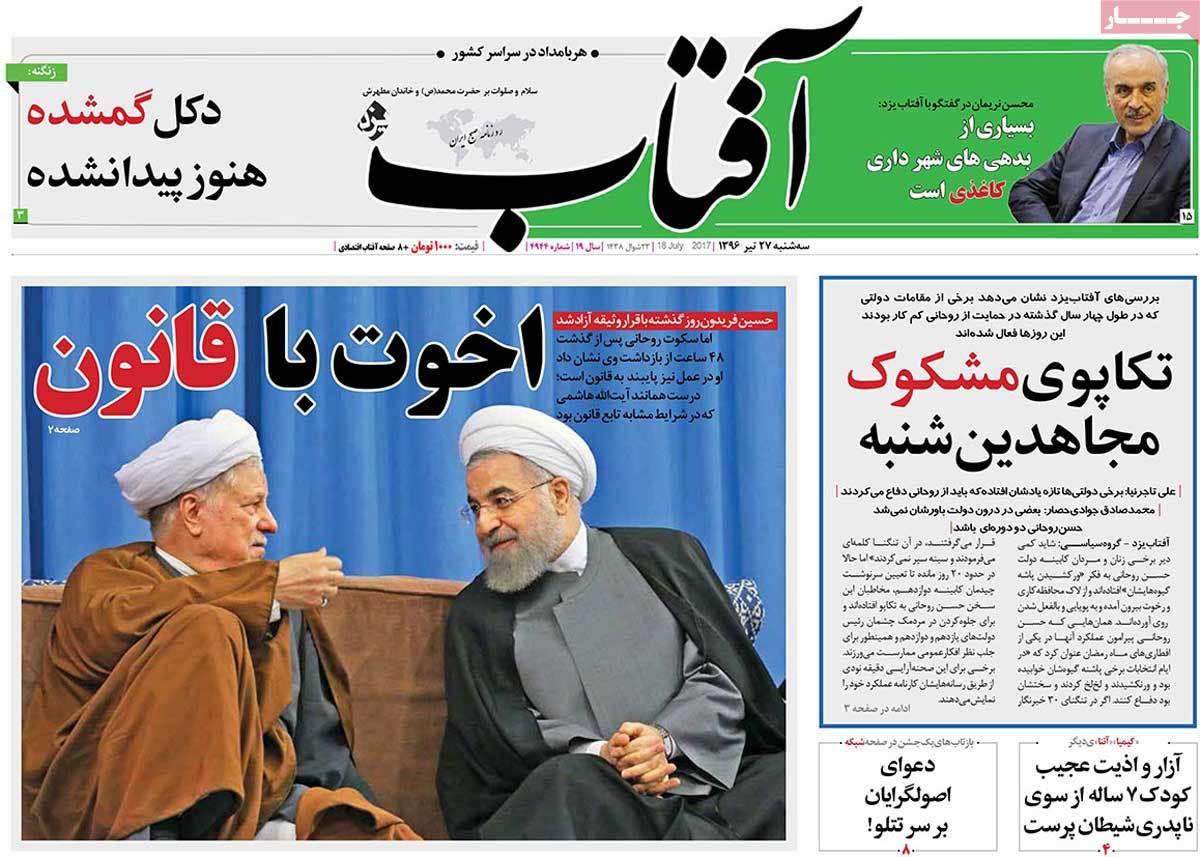
Aftab-e Yazd:

1- Fereydoun Released on Bail

2- Oil Minister: Missing Oil Rig Still Not Found
 

A Look at Iranian Newspaper Front Pages on July 18 - aftab


Arman-e Emrooz:

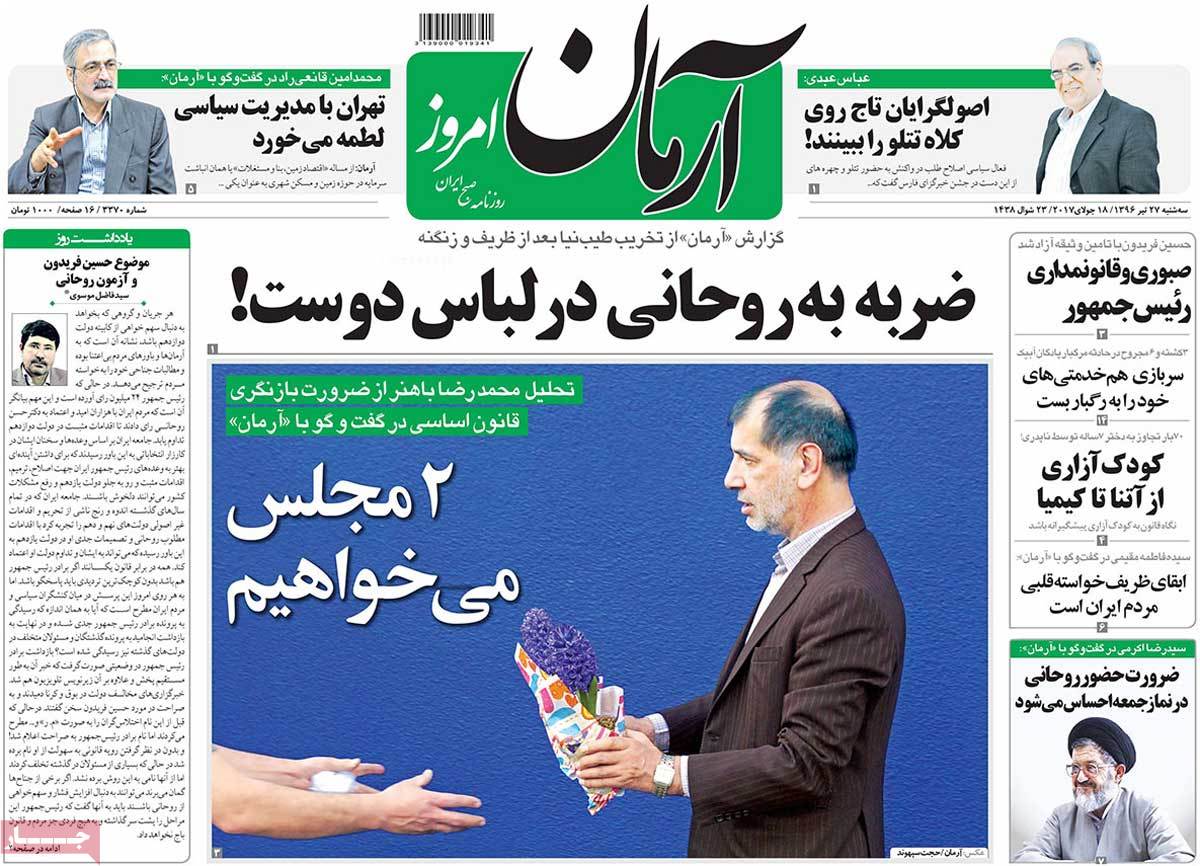
1- Case of Hossein Fereydoun, Test for Rouhani [Editorial]

2- After Zarif, Zanganeh, Now Economy Minister Tayyebnia under Attack

3- FM Zarif’s Re-Appointment Is Heart’s Desire of Iranians
A Look at Iranian Newspaper Front Pages on July 18 - arman


Asrar:

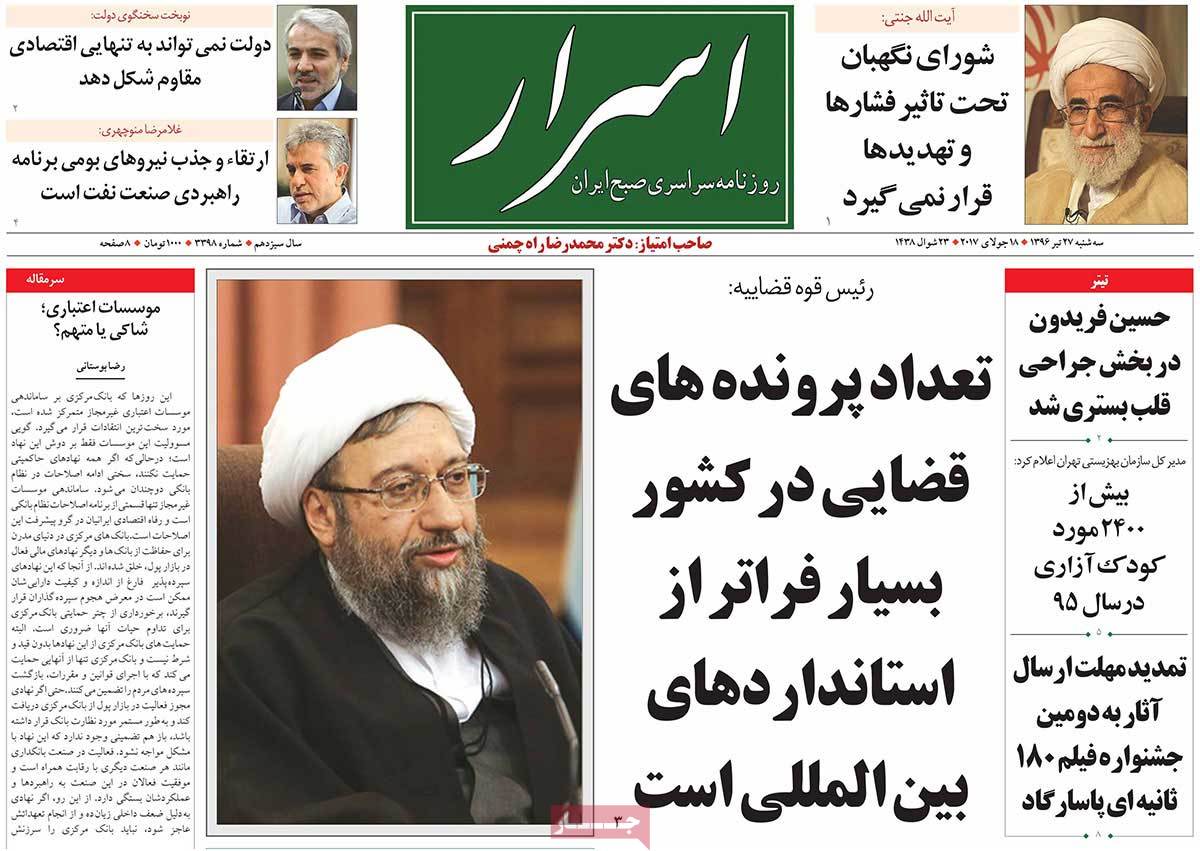
1- Judiciary Chief: Number of Judicial Cases in Iran Way above Int’l Standards

2- Rouhani’s Brother Hospitalized for Heart Problem

3- Over 2,400 Cases of Child Abuse in Iran from March 2016 to March 2017
A Look at Iranian Newspaper Front Pages on July 18 - asrar


Ebtekar:

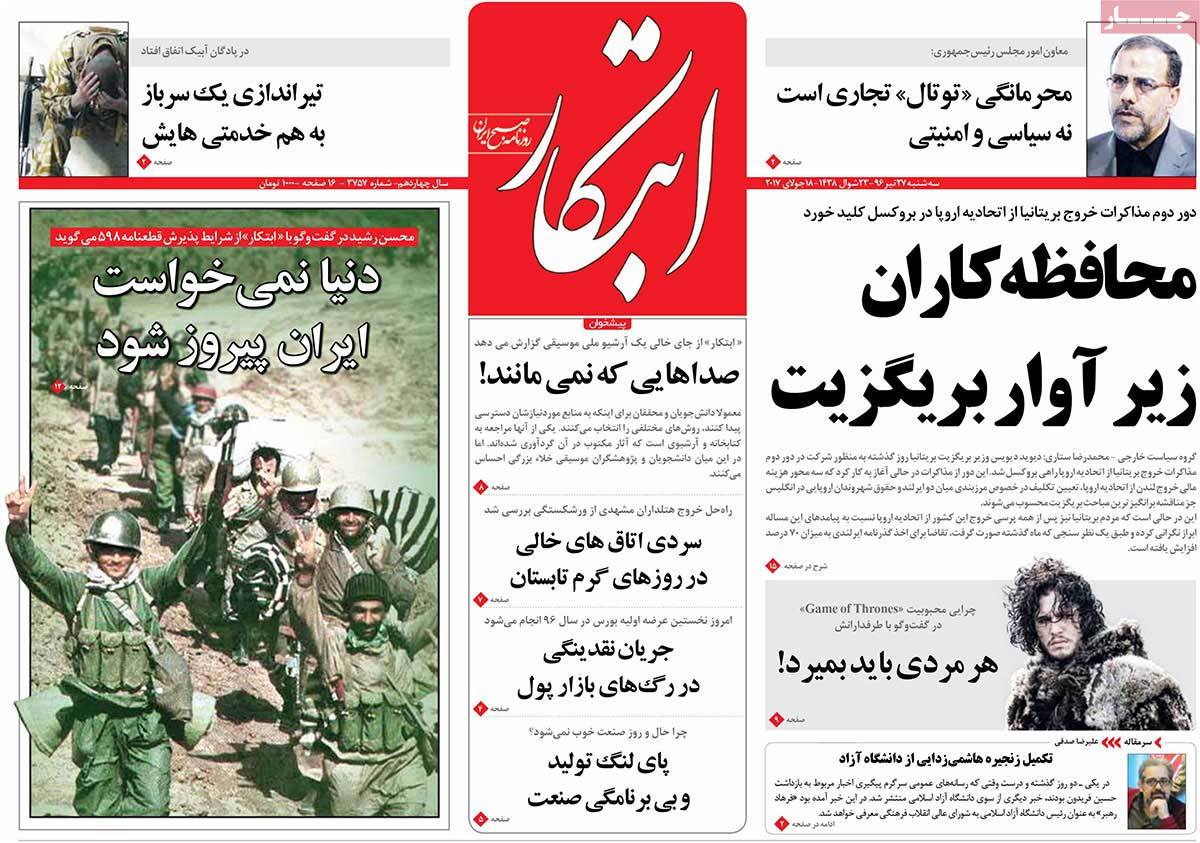
1- Conservatives under Rubble of Brexit: Second Round of Brexit Talks in Brussels

2- Total Deal’s Secrecy for Commercial Reasons, Not Political, Security Issues
 

A Look at Iranian Newspaper Front Pages on July 18 - ebtekar


Etemad:

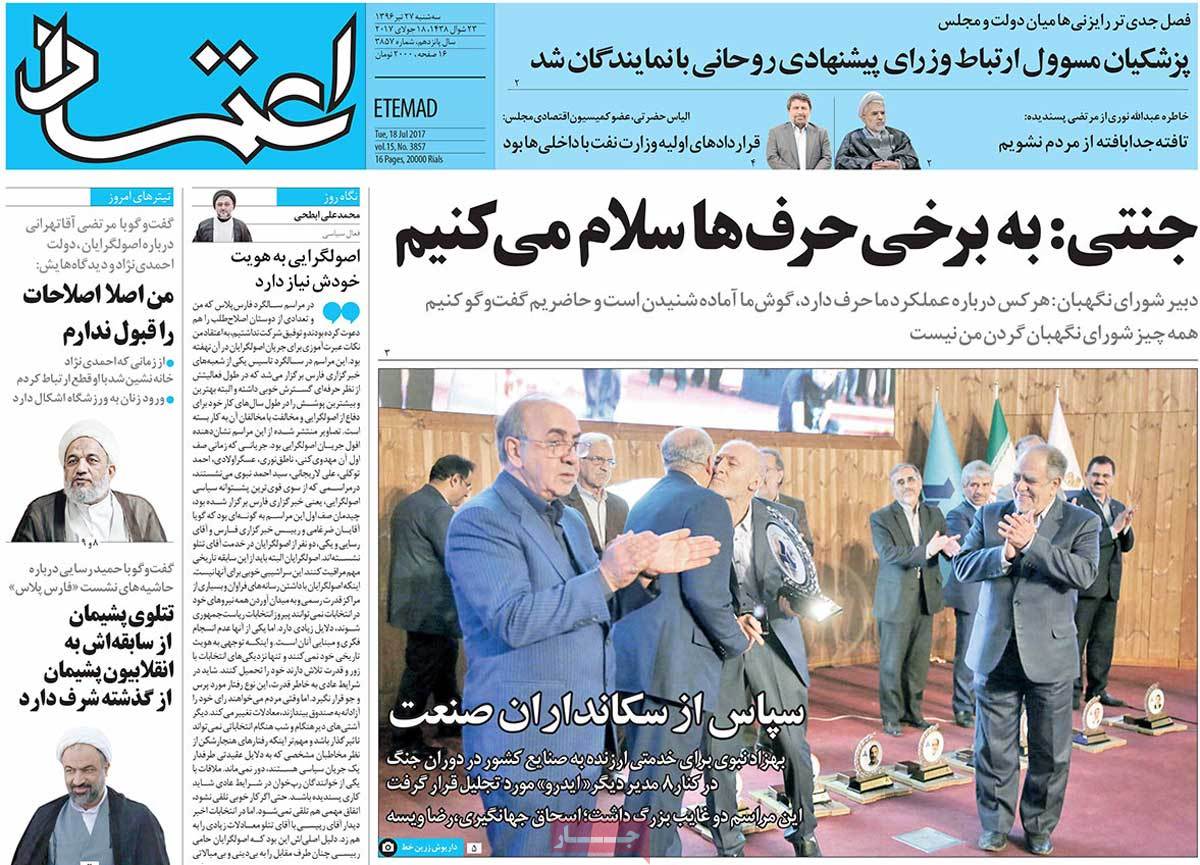
1- Conservativism Needs Its Own Identity: Reformist Figure
A Look at Iranian Newspaper Front Pages on July 18 - etemad


Ettela’at:

1- Exports Only Way to Save Iran’s Industry: Expert

2- Shamkhani: Kurdistan Independence Referendum to Weaken Iraq
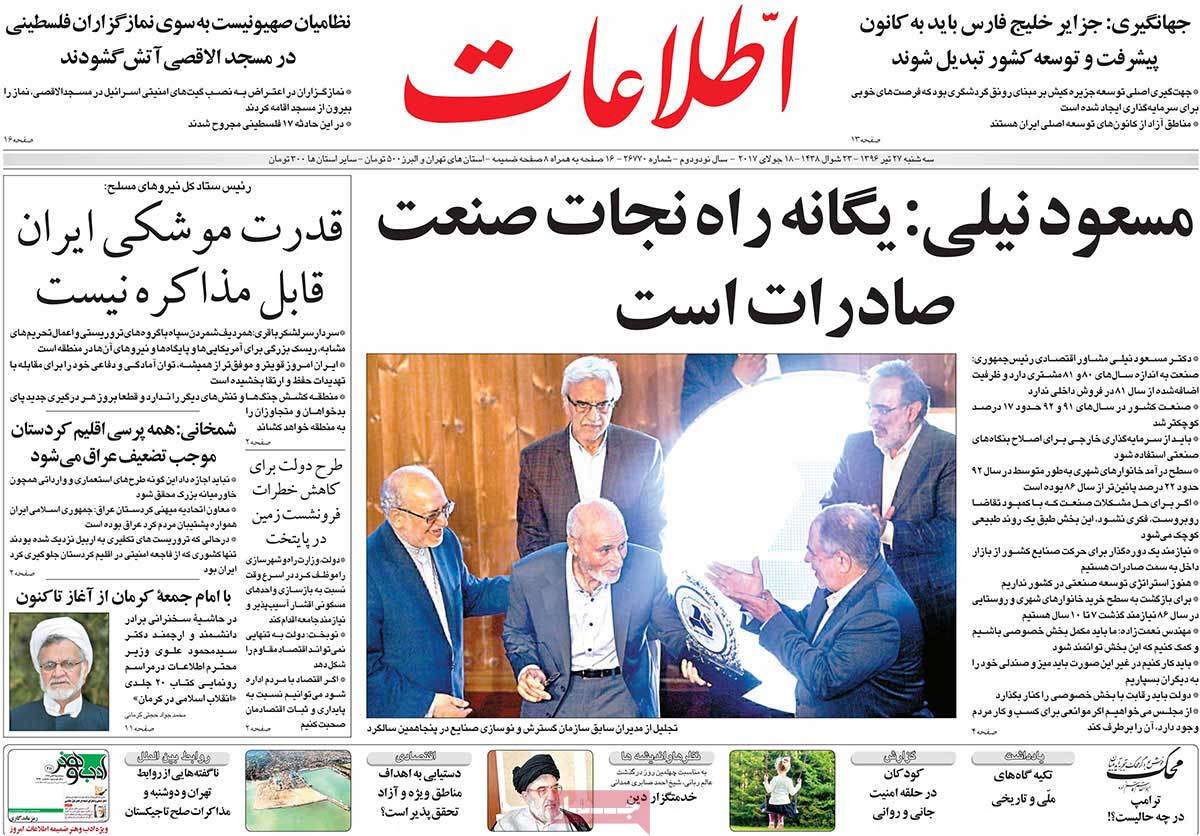
A Look at Iranian Newspaper Front Pages on July 18 - etelaat


Iran:

1- Iran Supports Iraq’s Integrity

2- Garbage Mafia in Tehran: Chinese Businessmen Buying Iran’s Plastic Garbage

3- Iran Replaces Saudi Arabia in Global Association of Exhibition Industry
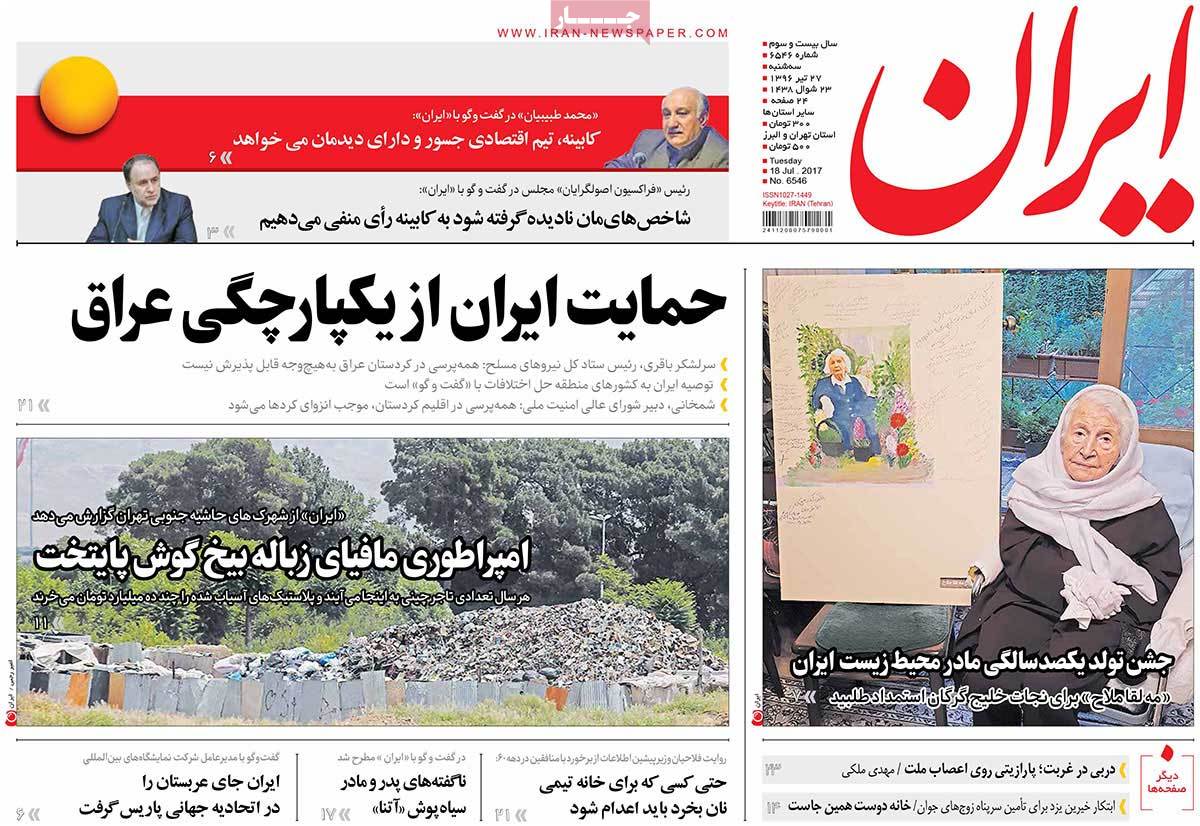
A Look at Iranian Newspaper Front Pages on July 18 - iran


Javan:

1- Rouhani’s Aide: We’ll Remain in Economic Downturn for Next 7 Years

2- US Shouldn’t Put Its Bases at Risk: Iran’s Top General
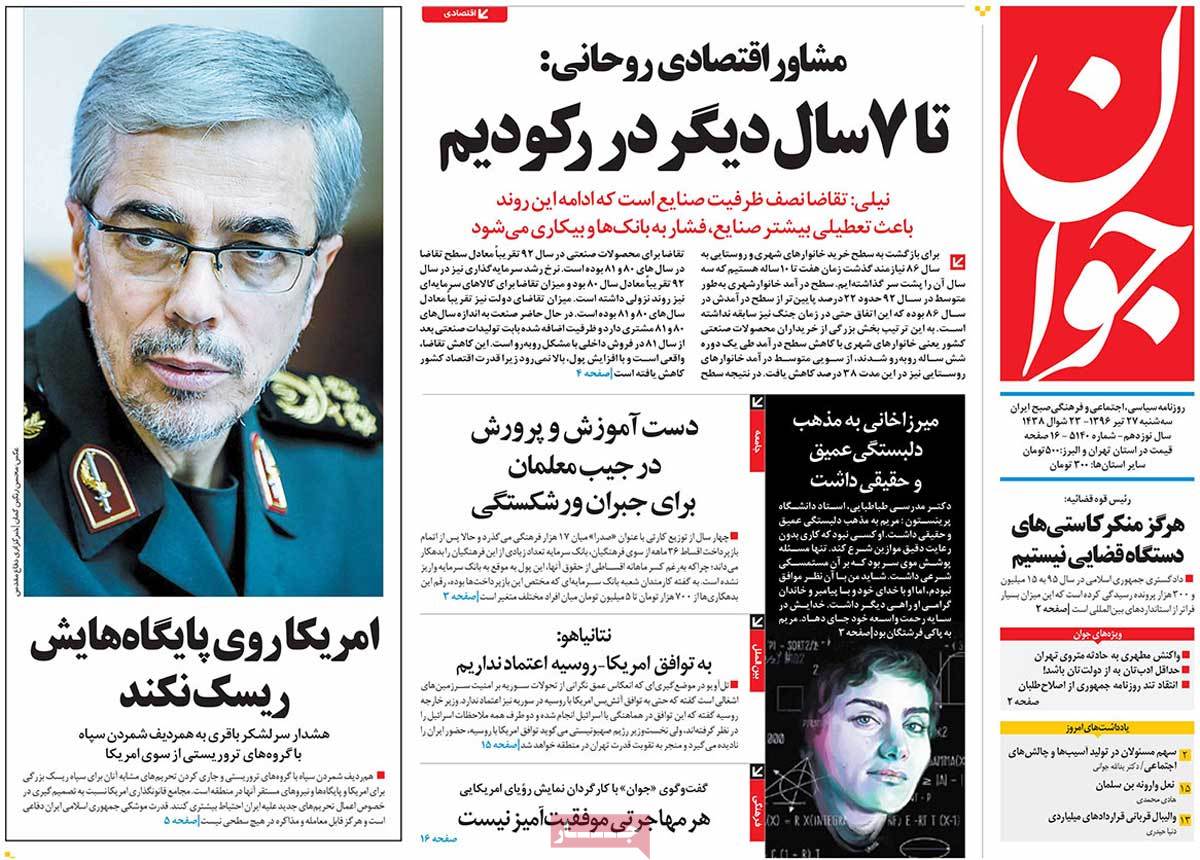
A Look at Iranian Newspaper Front Pages on July 18 - javan


Jomhouri Eslami:

1- Iran Envoy to Oman: Tehran-Muscat Ties Good Model for Persian Gulf States
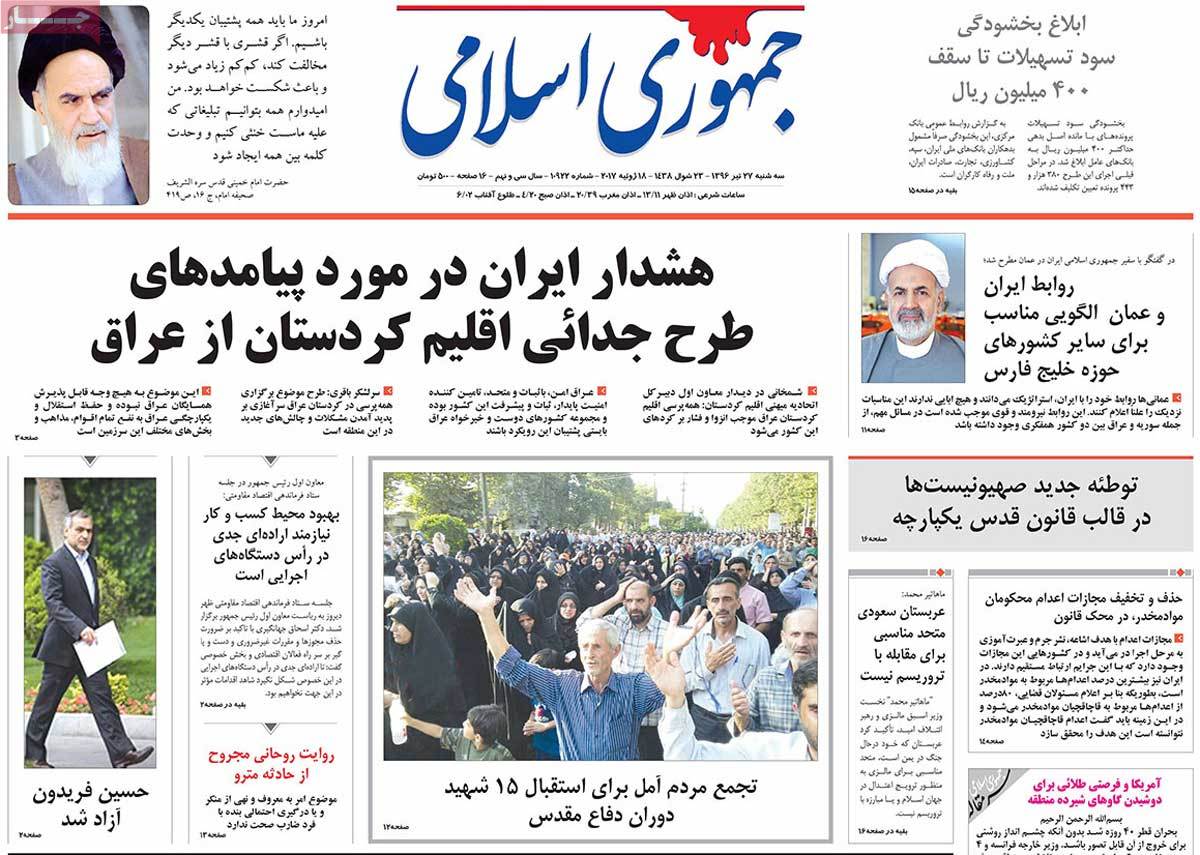
A Look at Iranian Newspaper Front Pages on July 18 - jomhori


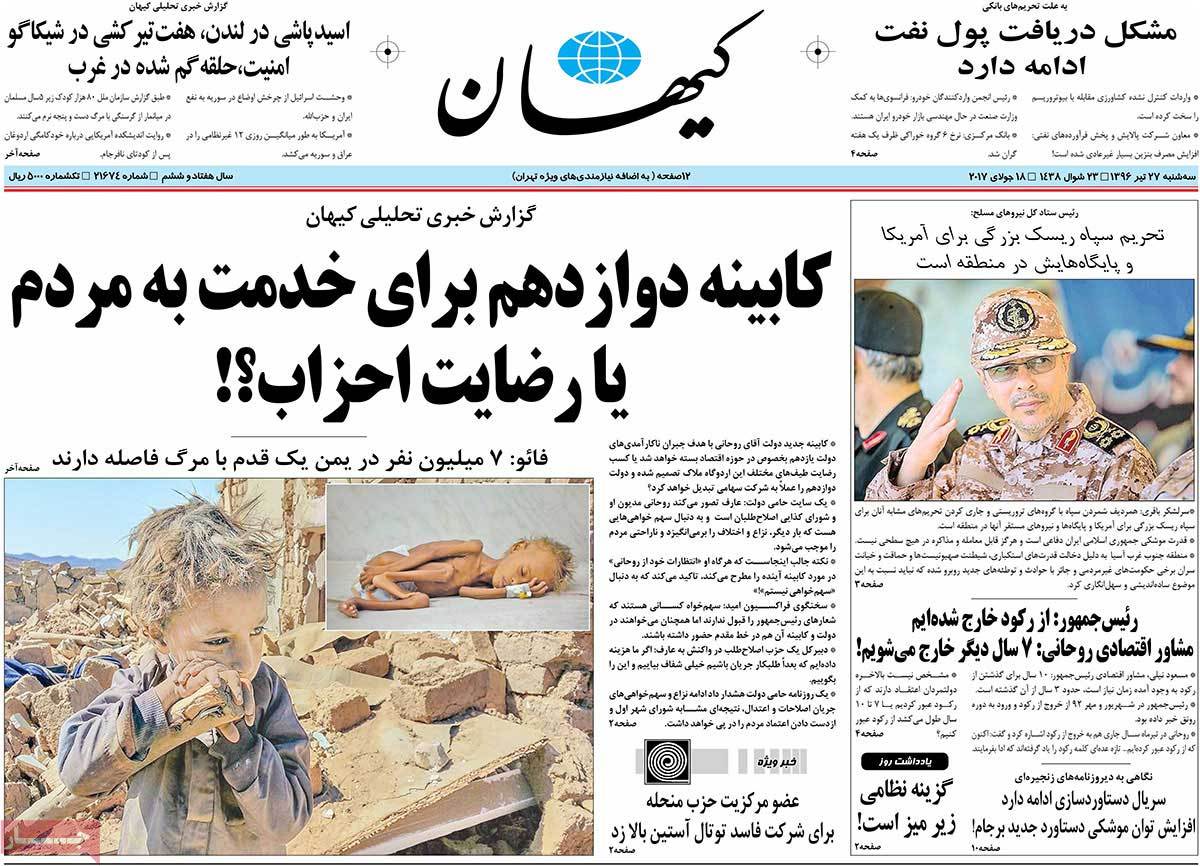
Kayhan:

1- Rouhani’s Next Cabinet to Serve People or Parties?!

2- FAO: 7 Million People in Yemen on Verge of Death

3- Acid Attacks in London, Shootout in Chicago: Security Missing in West
A Look at Iranian Newspaper Front Pages on July 18 - kayhan


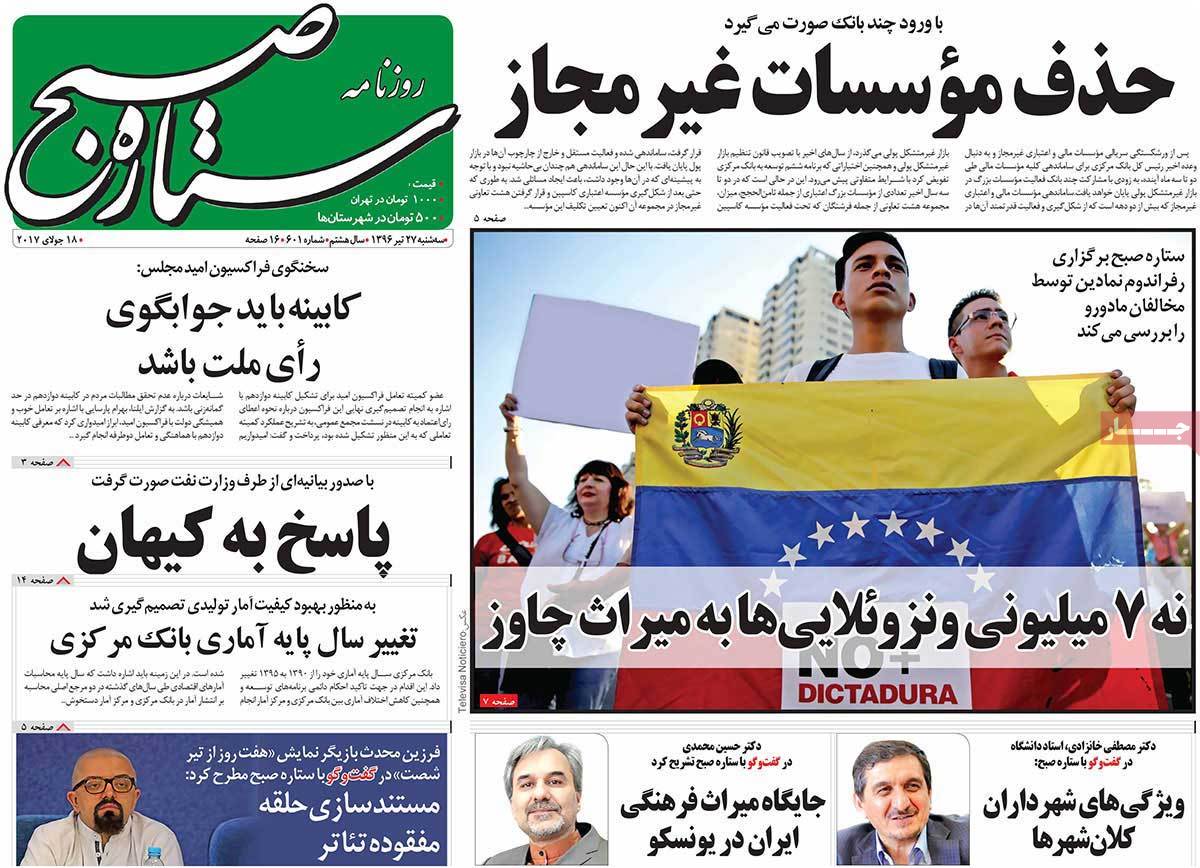
Setareh Sobh:

1- Cabinet Should Be Accountable to People’s Votes: Reformist Figure

2- 7 Million Venezuelans Say No to Chavez’s Heritage

3- Oil Ministry Issues Statement in Response to Kayhan
A Look at Iranian Newspaper Front Pages on July 18  - setaresobh


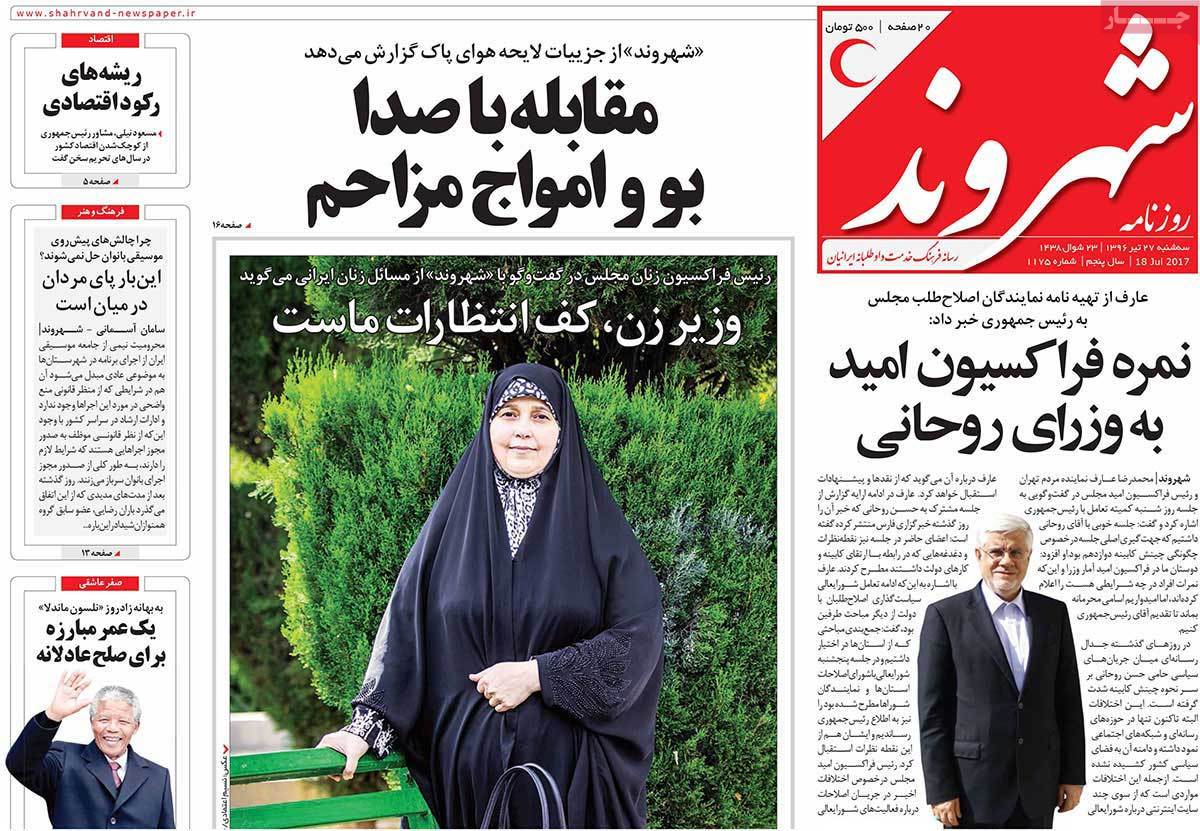
Shahrvand:

1- Appointing Female Minister Minimum Expectation from Gov’t: MP

2- Bill on Clean Air to Counter Disturbing Waves, Unpleasant Smells
A Look at Iranian Newspaper Front Pages on July 18 - shahrvand


Shargh:

1- Iran in Danger of Second Unemployment Tsunami
A Look at Iranian Newspaper Front Pages on July 18 - shargh


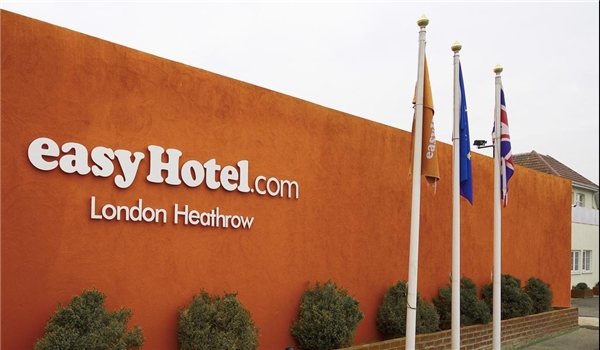
Britain’s easyHotel to Open Branches in Iran

Easy Hotel

The London-based “super budget” hotel said on Monday it has signed deals with British companies 3SV Limited and MHA Hatfield Limited for developments in Iran and Sri Lanka, which will comprise a combination of new-build hotels and takeovers. easyGroup, the holding company for budget airline easyJet, holds a 34.6% stake in easyHotel.
The company expects to open 500 rooms in Iran, according to a report by Business Standard.

“easyHotel has made good progress over the last year against its plans for the international expansion of the brand,” said Guy Parsons, CEO of easyHotel.

“I am pleased to announce a further extension of our franchise network, enabling us to establish the brand’s presence in new territories where there is growing demand from cost conscious consumers for value hotel accommodation,” he said.

Iran is trying to grow its tourism industry and hopes to attract more than 20 million tourists by 2025 and generate $30 billion of revenues a year.

The country is working to diversify its foreign exchange earnings away from petrodollars as the liability of the oil sector is beginning to dawn on the nation following years of sanctions and crude market volatility.

Visitor numbers have already boomed in recent years, rising from 2.2 million annually in 2009 to 5.2 million in 2015.

Websites Filtered Only by Judicial Decrees: Iranian Official

internet-filtering

Iran’s Prosecutor-General Mohammad Jafar Montazeri says the filtering of websites is done only with a judicial decree.

According to a Farsi report by Mizan, he said the deputy prosecutor general for cyberspace affairs sends a judicial decree to the Ministry of Communications and Information Technology to block certain websites or channels in the cyberspace.

The prosecutor general noted that it is either through a judicial decree or “the approval of the working group” that the ministry will be authorized to filter websites.

The working group, which is tasked with determining what content is illegal, meets every two or three weeks, either in person or online as needed, to make the necessary decisions, he said.

He further referred to the recent remarks by ICT Minister Mahmoud Vaezi in criticism of Deputy Prosecutor General Abdolsamad Khorramabadi, and said, “The ICT minister says Mr. Khorramabadi decides on his personal views [on filtering], but definitely this is not the case and the minister cannot bring even one example where Mr. Khorramabadi gave a personal order,” the prosecutor general explained.

He said the minister has a duty to monitor the virtual space and report on the content which could be a threat to the society and the youth.

“The minister is also duty-bound to act upon the orders issued by the Prosecutor General’s Office,” he said.

“We are upset with the Communications and Information Technology Ministry because it does not filter some websites and channels which must be blocked based on judicial decrees or announcements by the working group,” the prosecutor general complained.

He urged the ministry to act upon the recommendations of Leader of the Islamic Revolution Ayatollah Seyyed Ali Khamenei, who has stressed a national web should be established in the country.

“Of course, some actions have been taken, but it is expected that more should be done in this field because the society should not be left at the mercy of channels and websites which are fed by the enemy and which contain content that is against morality, religion and human dignity,” he said

He expressed hope the virtual space will turn into a clean atmosphere through cooperation and coordination.

“What we’re saying is that the Communications and Information Technology Ministry should abide by the law,” he noted.

Iran’s Foreign Ministry Briefs MPs on Nuclear Deal Implementation

The parliament’s National Security and Foreign Policy Commission on Monday received a report from the Foreign Ministry on the status of implementation of the JCPOA, its impacts on the country’s nuclear program and economy, and the other parties’ commitment to the accord over the past three months.

The report asserts that Iran has been pressing on with its peaceful nuclear program during the past three months within the framework of its long-term plans and has launched scientific cooperation with the European countries in this period.

According to the report, Iran has imported another 137-ton cargo of yellowcake (a type of uranium concentrate powder) it had already purchased from Russia, increasing the amount of its stockpile of yellowcake to 360 tons.

The report has also highlighted the close interaction between Iran and the International Atomic Energy Agency (IAEA), saying the UN nuclear agency has once again confirmed Iran’s compliance with the JCPOA.

Despite the many positive results Iran has seen in various fields from the removal of sanctions under the JCPOA, the US remains to be the main obstacle in the way of Iran taking the maximum advantage of the nuclear accord, the report added.

Tehran and the Group 5+1 (Russia, China, the US, Britain, France and Germany) on July 14, 2015, reached a conclusion over the text of the JCPOA.

The accord took effect in January 2016, terminating all nuclear-related sanctions against Iran.

According to a law that requires the Iranian administration to safeguard the nation’s achievements and nuclear rights, the National Security and Foreign Policy Commission has a duty to monitor “the proper implementation” of the JCPOA, and is required to submit a report on the issue to the presiding board of the parliament every six months.

Iran to Withdraw from Nuclear Deal in Case of US Violation: FM

Iranian Foreign Minister Mohammad Javad Zarif made the remark on Monday during an interview with The National Interest magazine.

“If it comes to a major violation, or what in the terms of the nuclear deal is called significant nonperformance, then Iran has other options available, including withdrawing from the deal,” he said.

Zarif further stressed that Islamic Republic wishes for the deal to serve as a solid foundation for all its parties and not the ceiling.

“We wanted that agreement to be the foundation and not the ceiling. But in order for that to serve as a solid foundation, we want to make sure that the obligations by all sides have been fully and faithfully implemented,” he added.

Iran’s top diplomat further noted that the US has shortcomings in commitments stipulated the nuclear accord, while stressing that these shortcomings will be addressed by the joint commission to make sure they are remedied.

“This has been the subject of an ongoing debate within the joint commission, not only during the (US President Donald) Trump administration but also during the previous (Barack) Obama administration, when it took the United States, for instance, several months to clear the purchase of airplanes,” he said in reference to the purchase of Airbus airplanes.

Iran and the five permanent members of the United Nations Security Council – the United States, Britain, France, China and Russia – plus Germany signed the Joint Comprehensive Plan of Action (JCPOA) on July 14, 2015 and started implementing it on January 16, 2016.

Under the agreement, limits were put on Iran’s nuclear activities in exchange for, among other things, the removal of all nuclear-related bans against the Islamic Republic.

The UN Security Council later unanimously endorsed a resolution that effectively turned the JCPOA into international law.

US responsible for situation in Iraq

When asked about a recent New York Times article which claimed that the US had lost in Iraq, Zarif noted that Tehran does not view the regional situation as a winning or losing battle.

“It’s a situation where the initial US invasion of Iraq has led everybody to lose. Because we believe that the situation in today’s world is so interconnected that we cannot have winners and losers; we either win together or lose together,” he said.

“I believe our region requires solutions. And those solutions should emanate from a different approach to issues,” he added.

Iran’s policy is fighting terrorism

Zarif also stressed that Iran has unswerving policy of “fighting extremism and terrorism,” be it in Afghanistan, Iraq or Syria.

“The people who recognized the Taliban regime in Afghanistan are the same as the ones who are imposing pressure on Qatar, the same as the ones who are having difficulty with Iran, both in Syria and Iraq and in the region generally,” he said.

Read More:

Iran’s foreign minister further stressed that several regional countries continue to support terrorist groups active in the Middle East.

“Some countries consistently supported the wrong groups — these are the same countries from whose nationals, almost 94 percent of those engaged in acts of terror,” he noted.

When asked about the future of Iran-US relations, Zarif said that the outcome of such an equation will be determined by Washington’s approach.

“It has to look at Iran as the only country in the region where people stand in line for ten hours to vote,” he said.

raw from Nuclear Deal in Case of US Violation: FM

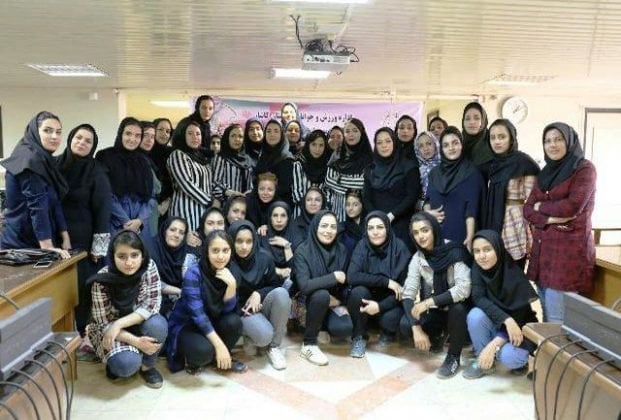
Women’s Arm Wrestling Tournament Held in Iran’s Kashan

A team named “Iron Arms” came first in the competition with a score of 46 points, according to a Farsi report by the Borna News Agency.

“Shaheen” with 43 points and “Nashat” with 37 points finished in the second and third places respectively.

In this tournament, which was organized by the Arm Wrestling Committee of the Sports and Youth Department of Kashan, 40 women and girls competed in 7 teams in 8 weight classes.

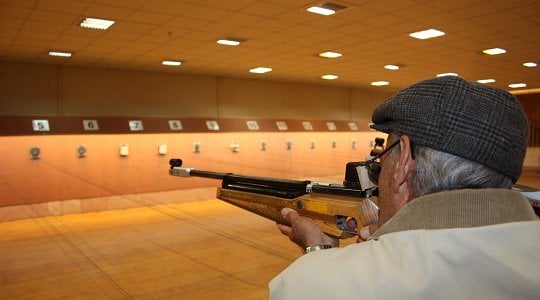
Iran to Hold Annual Sports Festival for Pensioners

Director of Iran’s Civil Servants Pension Fund, Mahmoud Eslamian, said the Sports Festival for the Retired is going to be held every year, IMNA reports.

Eslamian also added that the government is to implement a plan for the cost-free admittance of the pensioners to the provincial sports complexes.

“In this regard, sport committees are formed in coordination with the Ministry of Sports and Youth in the provinces to create conditions where pensioners could enjoy sports facilities.”

He said a sports festival with 5,000 pensioners taking part is one of the successful programs by Civil Servants Pension Fund to return vitality and health to the retired.

Eslamian expressed hope that in the coming years the festival would be held in a much better way with participation of more competitors.

The Iranian official said that 1,300,000 pensioners are considered a huge social capital and support for the Pension Fund.

“Effective interaction at different levels with the retired people, who once were top managers and experts in the country, helps manage the fund in a better way to achieve its goals and give services to its target community,” he pointed out.

Eslamian also referred to recreational and pilgrimage tours as the other plans for the pensioners saying that Civil Servants Pension Fund provided travel financial assistance for 150,000 pensioners last year, and it will hit 200,000 this year.

“The Fund pays over 170 dollars to each pensioner for pilgrimage tours and about 100 dollars for domestic tours.”

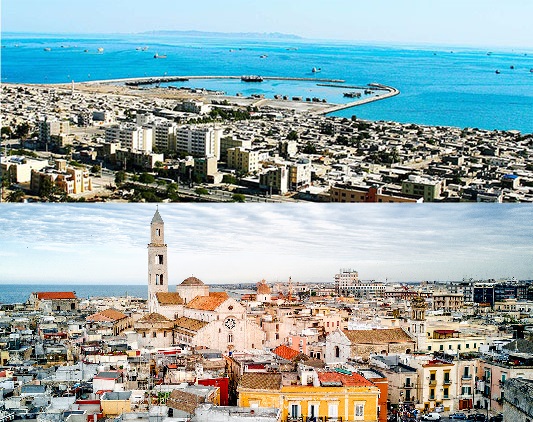
Iran’s Bandar Abbas, Italy’s Bari Become Sister Cities

The governor of Hormozgan, along with Mohsen Ziaei, the Director General of Cultural Heritage, Handicrafts and Tourism Organization of the province, are in the Puglia region in Italy to sign the agreement, Miras-e Ariya website reports.

The website quotes Ziaei as saying that “the authorities of the port of Bari have sent an official note to the Embassy of the Islamic Republic of Iran in Italy calling for the development of relations and extensive engagement with Bandar Abbas port in Hormozgan province.”

Ziaei has also mentioned that this agreement could be a major step towards realization of Hormozgan’s objectives to have access to trans-regional markets.

“This the first time that Hormozgan’s cultural heritage, handicrafts and tourism is being discussed beyond the borders of the neighbouring countries,” he added.

Iraqi Kurdistan’s Referendum Plan to Isolate Kurds: Iran’s Shamkhani

Secretary of Iran's Supreme National Security Council (SNSC) holding talks with Deputy Secretary General of the Patriotic Union of Kurdistan, Abdullah Rasoul, in Tehran on July 17 / Photo retrieved from IRNA

Ali Shamkhani on Monday stressed that the issue of holding plebiscite on Iraqi Kurdistan region’s independence will weaken Kurdistan and the entire Iraqi state.

The Iranian senior official made the remarks in a meeting with Deputy Secretary General of the Patriotic Union of Kurdistan, Abdullah Rasoul Ali, and Chief of the PUK’s Executive Body, Mullah Bakhtiar, in Tehran.

“Following up the issue of holding a referendum will separate and split the Iraqi nation,” Shamkhani said, stressing that such a plebiscite is not a priority and requirement for the country’s people and runs counter to the Iraqi officials’ policies.

He also stressed that some regional and trans-regional states are to undermine Iraq and the large countries in Western Asia.

“Considering the national interests and the interests of the Muslim world, it should not be allowed to see colonial and imported projects such as the Greater Middle East be realized.”

The representative of Iran’s Leader at the SNSC said what the Islamic Republic of Iran hopes for people, parties and groups in northern Iraq is security, economic development and prosperity.

This is a hindrance to the development and growth of terrorist groups, he pointed out.

Elsewhere in his remarks, Shamkhani stated that the victory over ISIS and the liberation of Mosul promises a better future for a united Iraq.

“The victory heralds overcoming foreign seditions that aim at creating divisions in this country.”

He went on to say that a stable and united Iraq provides security and progress across the country and those who are wishing well for Iraq should support this approach.

Iraqi Kurdistan's Referendum Plan to Isolate Kurds: Iran’s Shamkhani

In turn, Abdullah Rasoul Ali gave a report on the latest developments in Iraqi Kurdistan and said that the Islamic Republic has always been the supporter of the Kurdish people of Iraq.

“The link between Iran and Iraqi Kurdistan is historical and based on common civilization. Iraqi Kurdistan is proud of being friend with the Islamic Republic of Iran,” the Iraqi official mentioned.

Rasoul Ali also touched upon Iran’s decisive support for the security of the Kurdistan region and its people during the attacks by the ISIS terrorists.

“While the Takfiri terrorists had approached the gates of Erbil, Iran was the only country that, along with the people of Kurdistan, confronted with ISIS seriously. The Islamic Republic prevented the emergence of a security disaster in Iraq’s Kurdistan.”

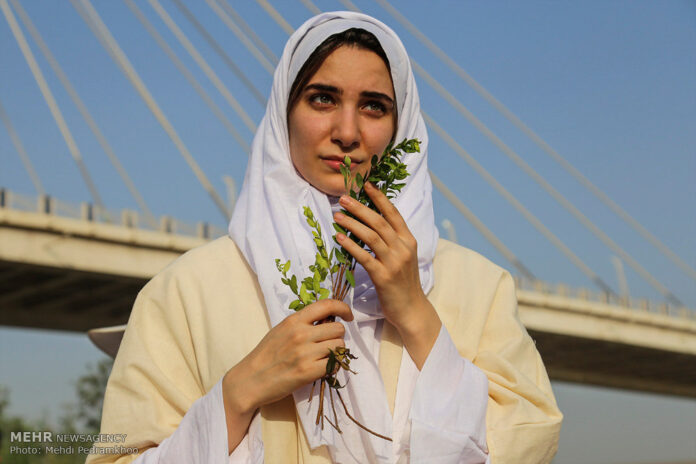
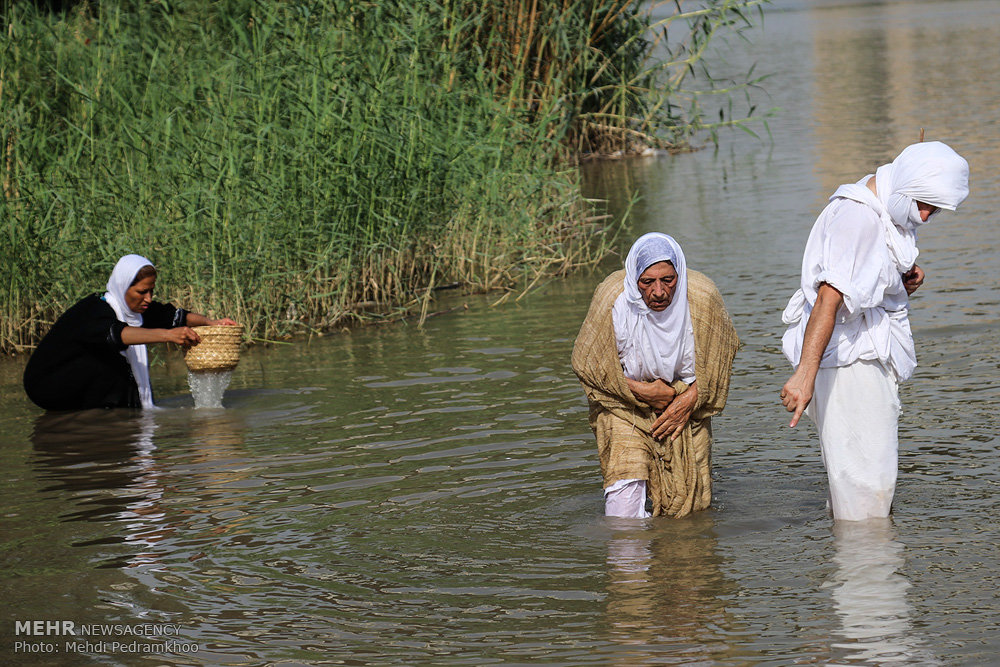
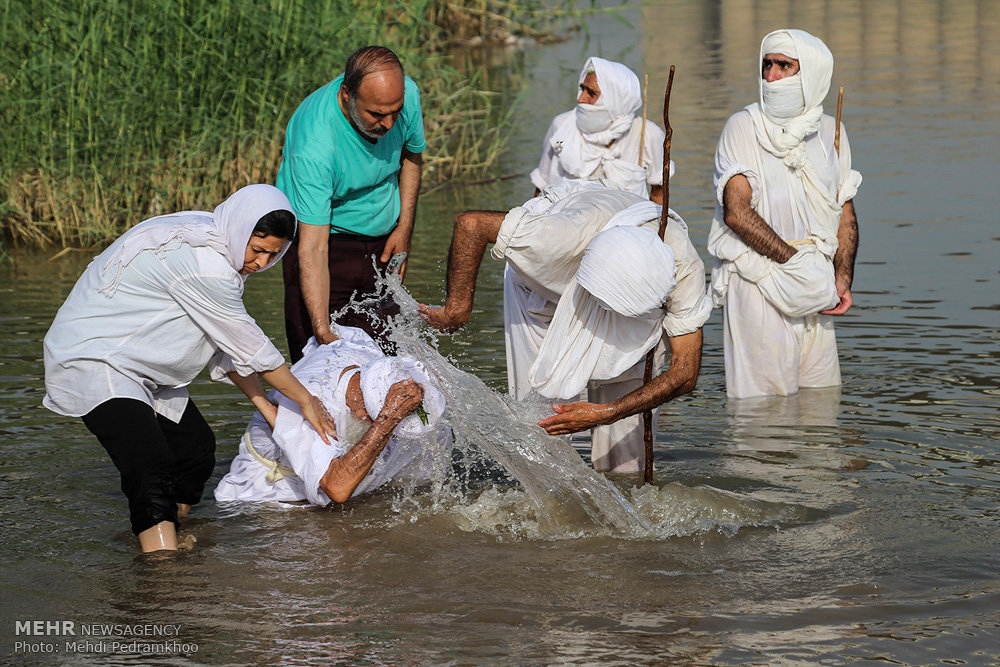
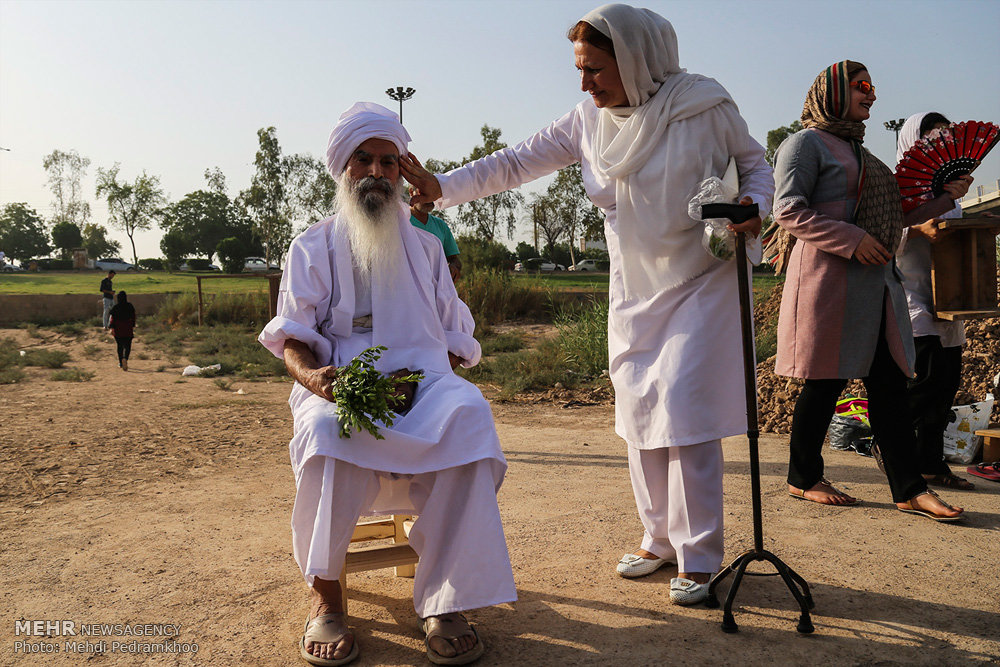
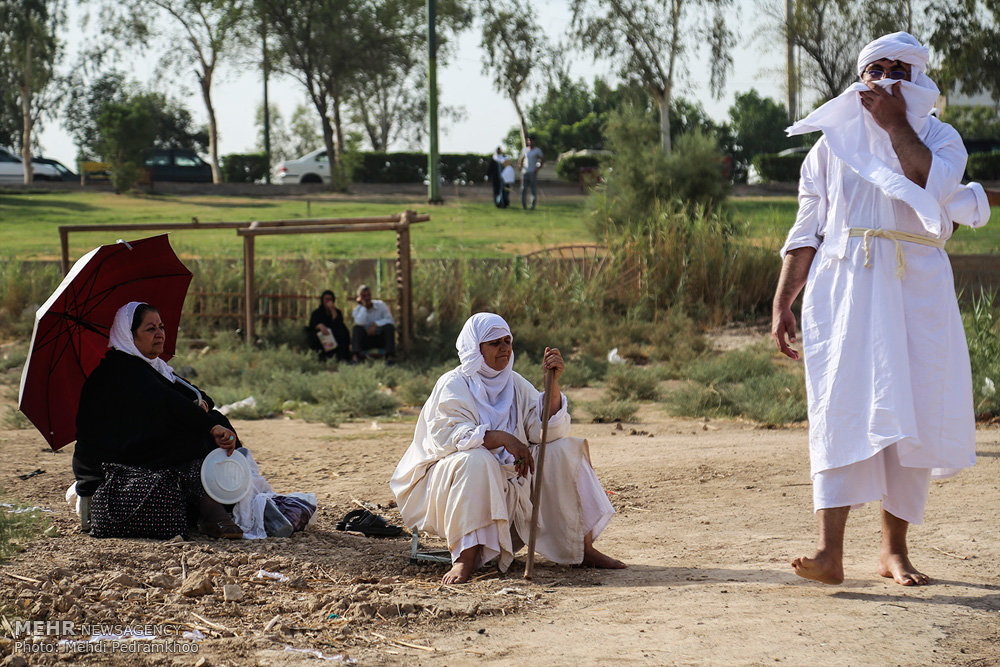
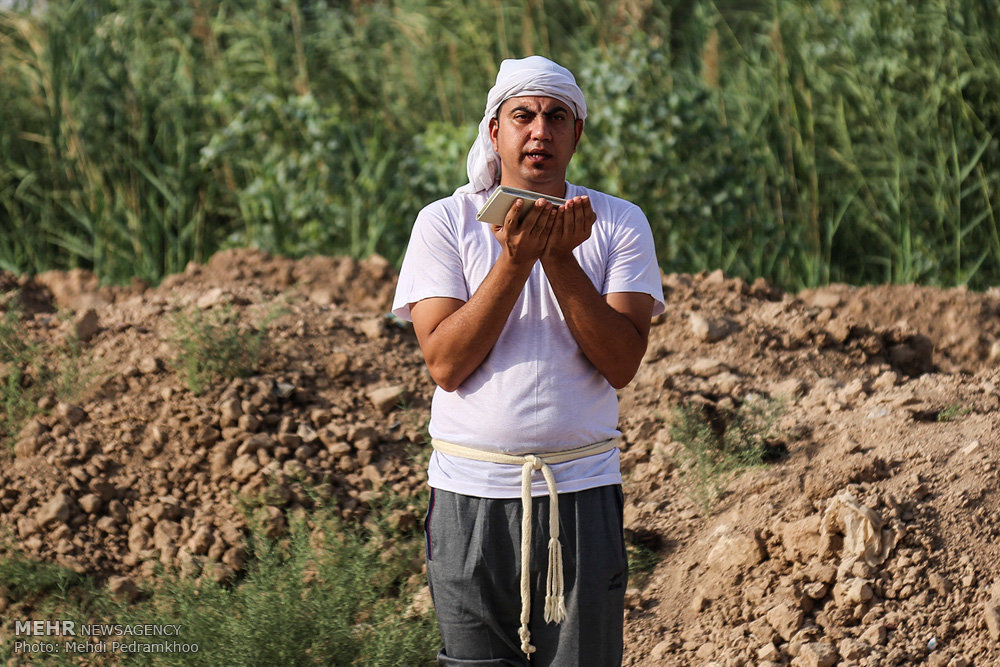
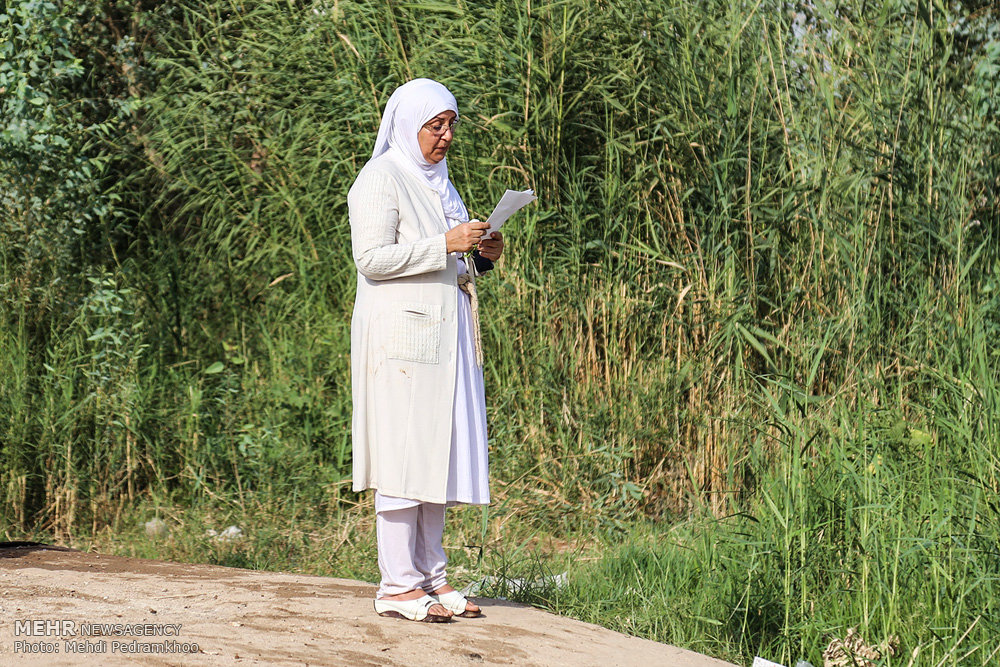
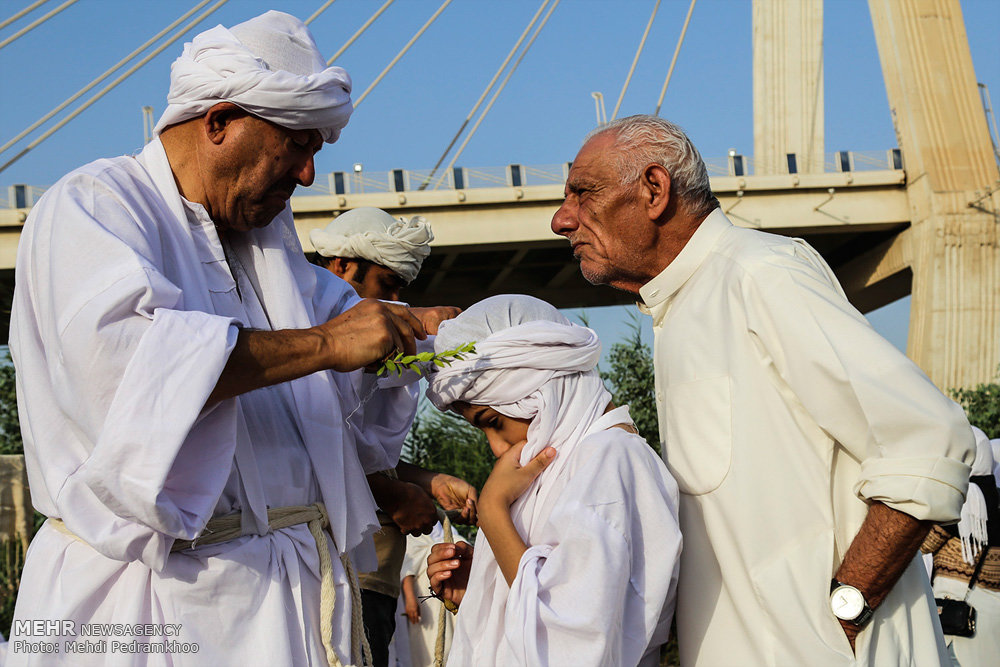
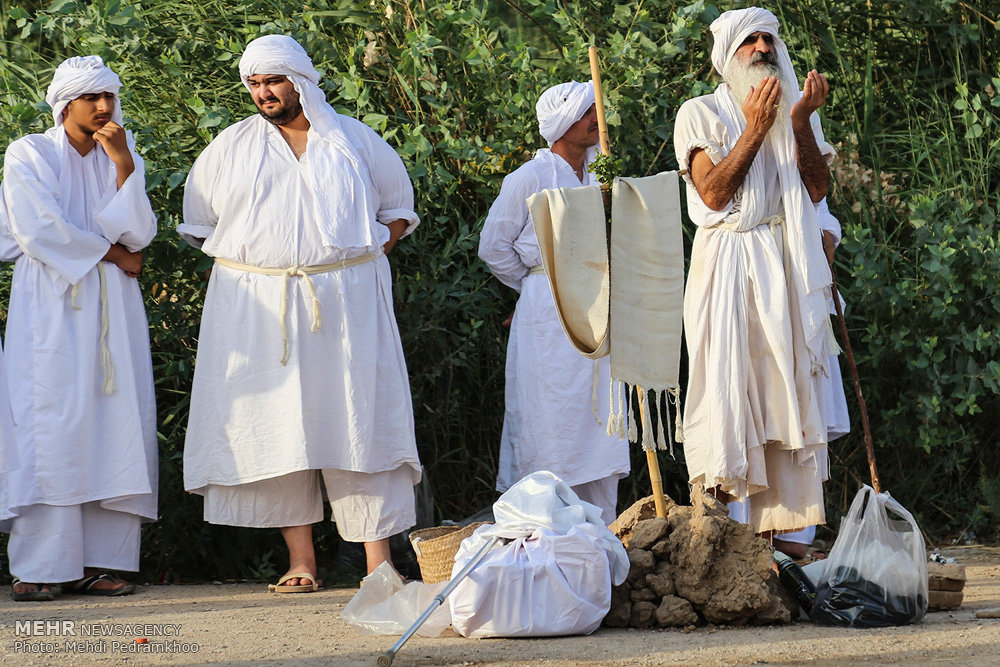
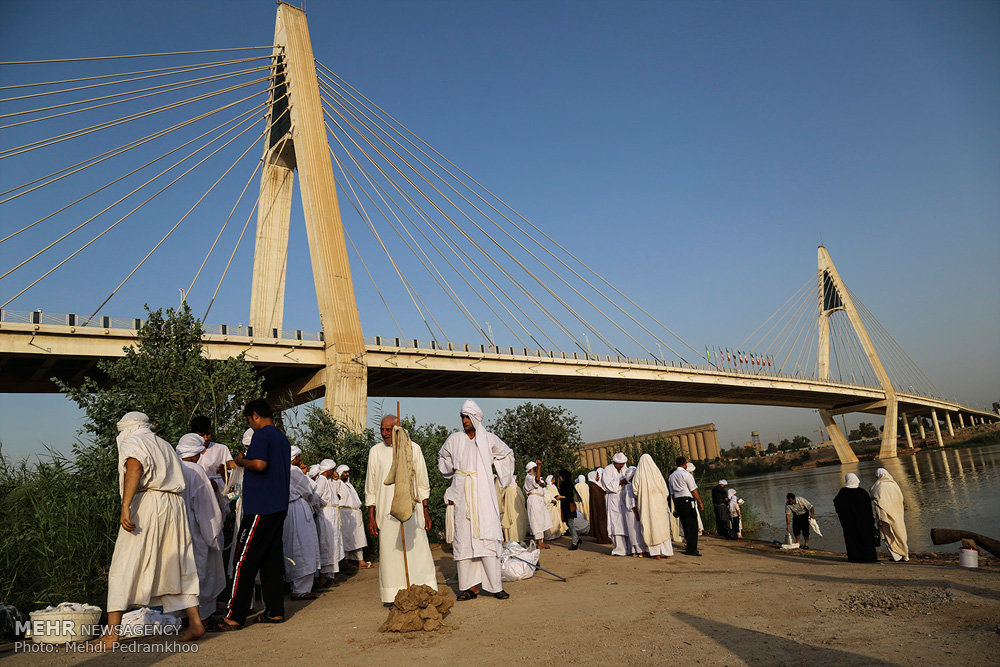
Sabian Mandaeans Perform New Year Rituals in Iran

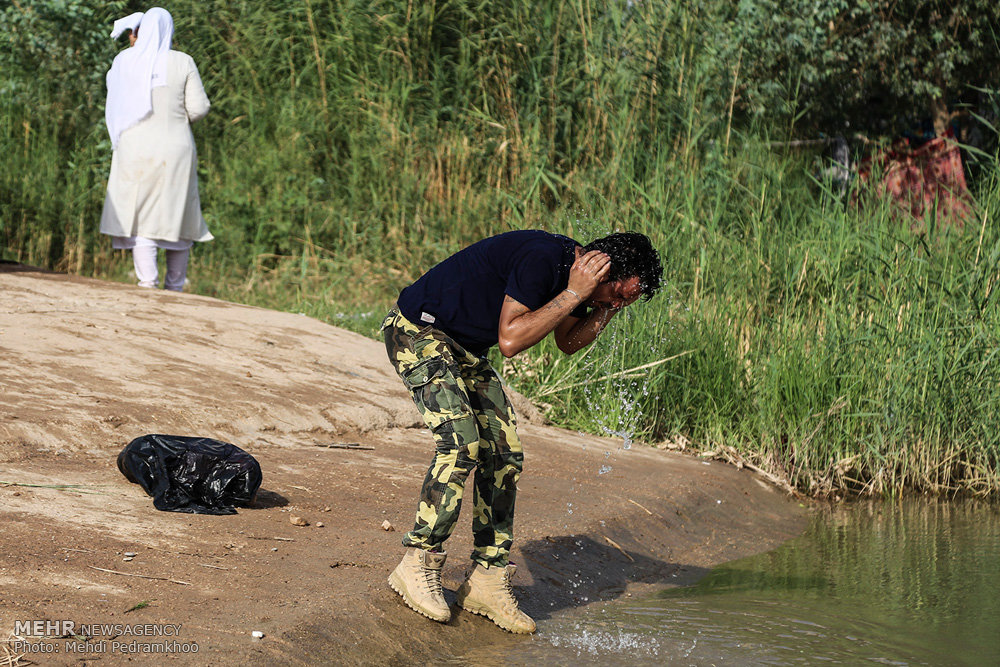
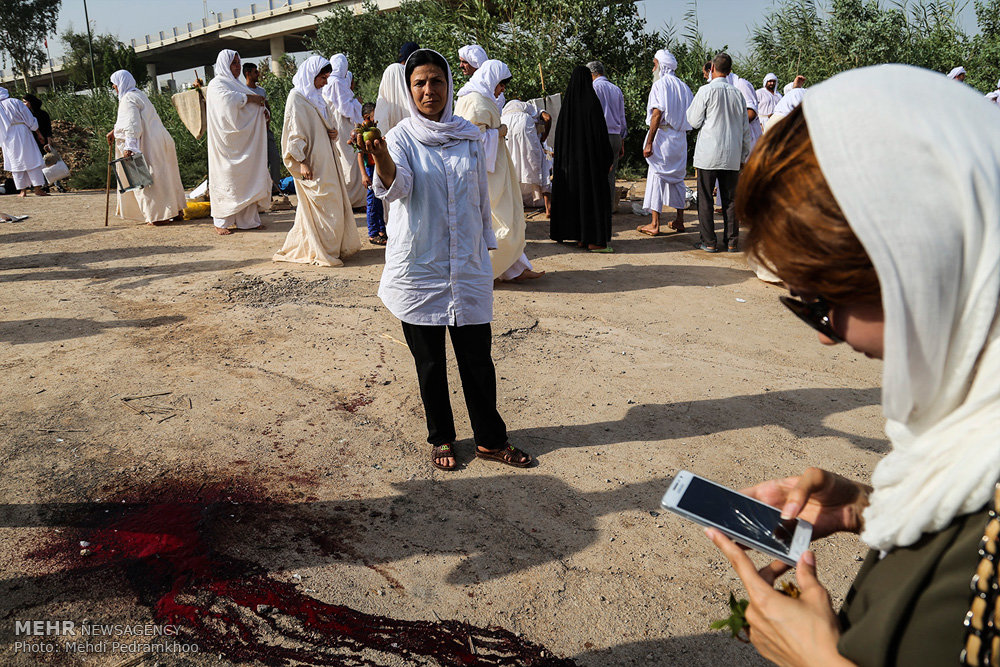
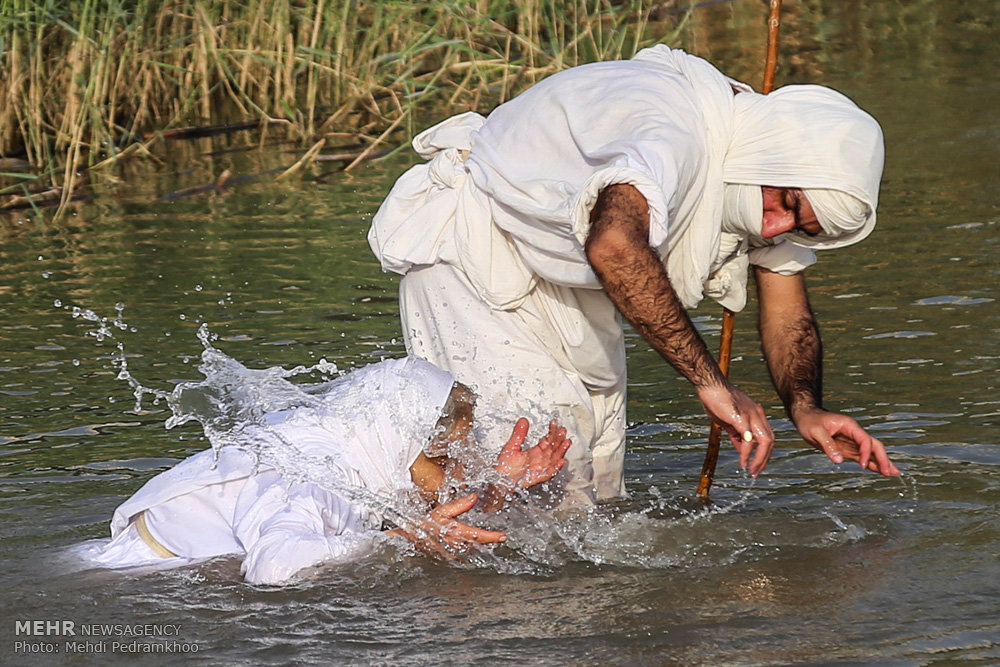
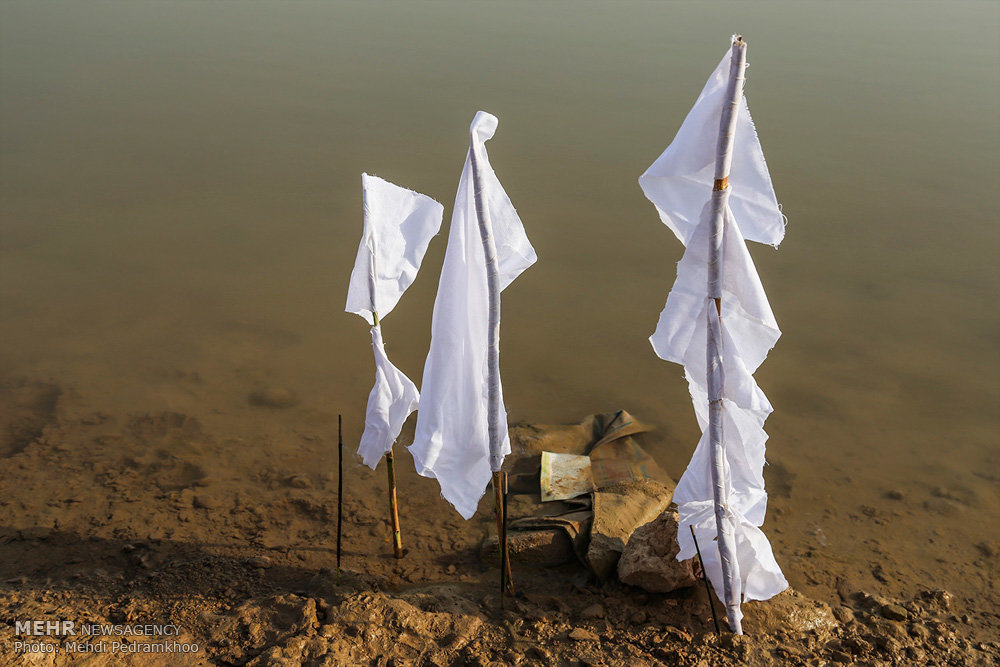
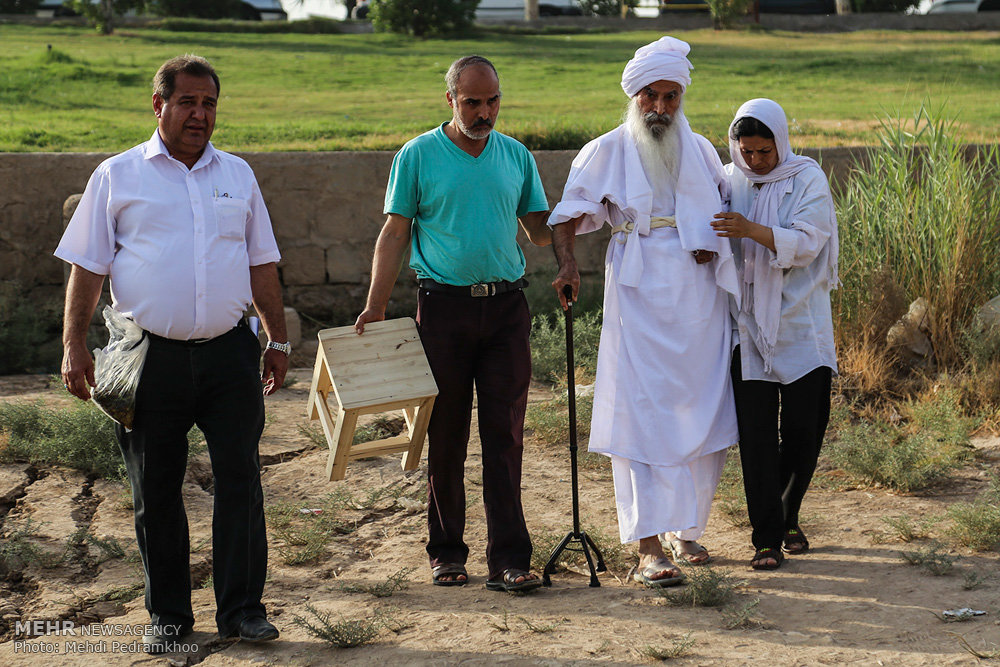
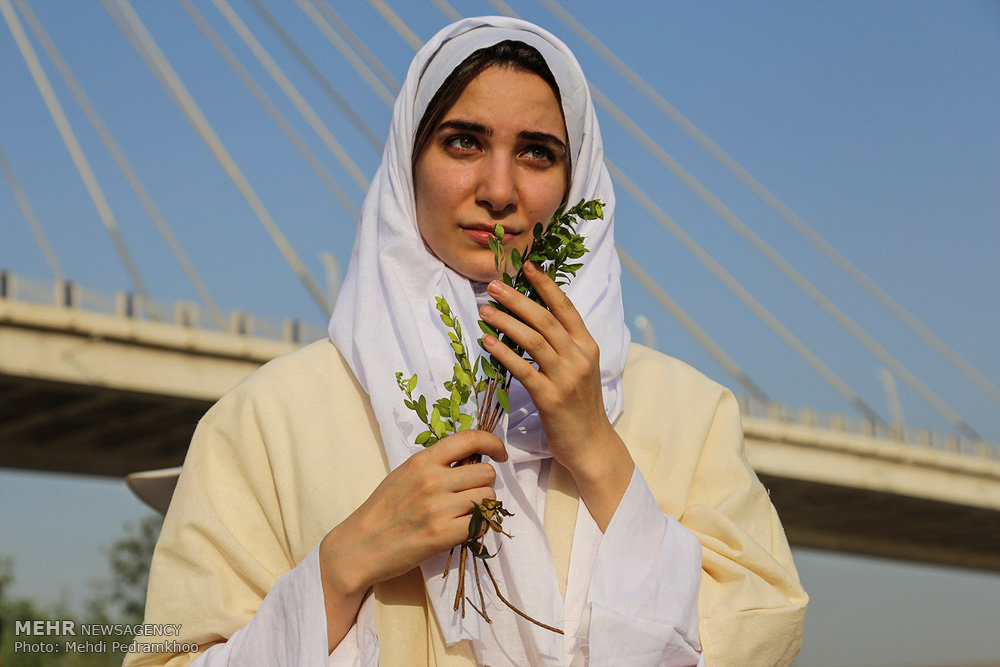
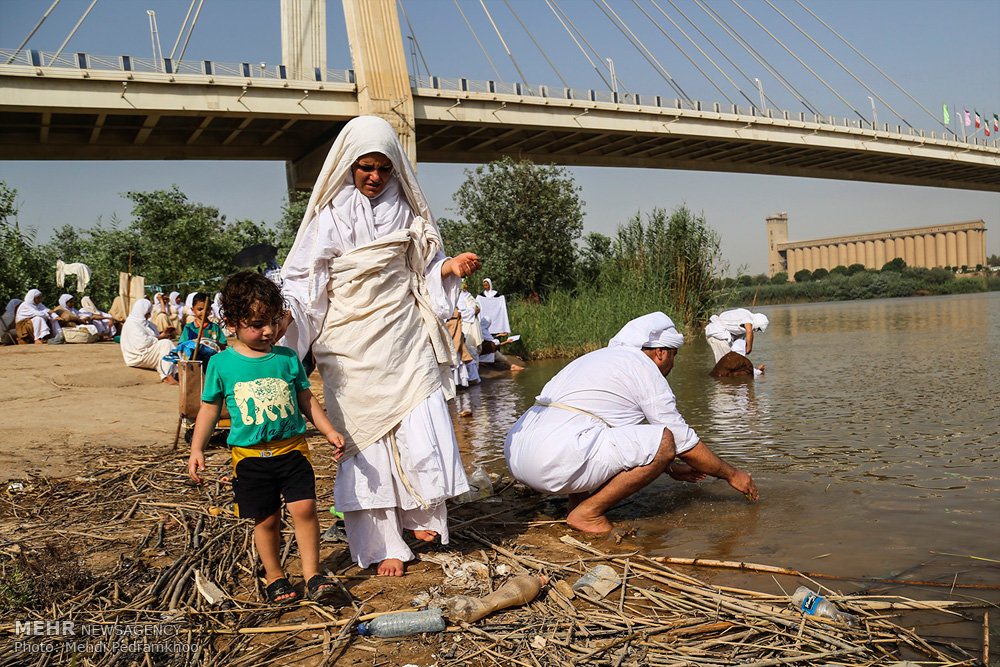
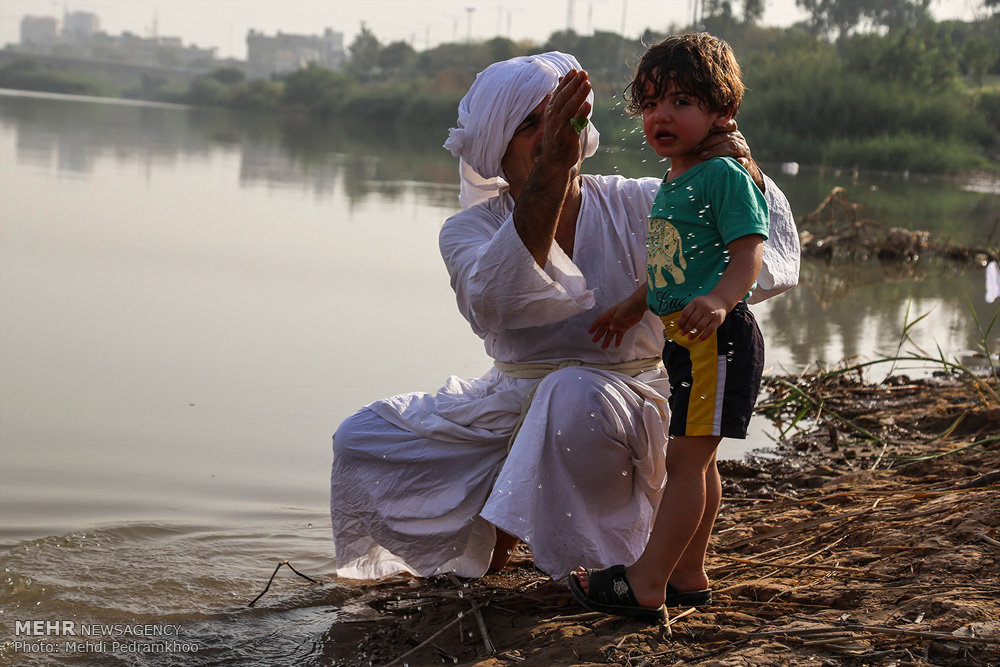
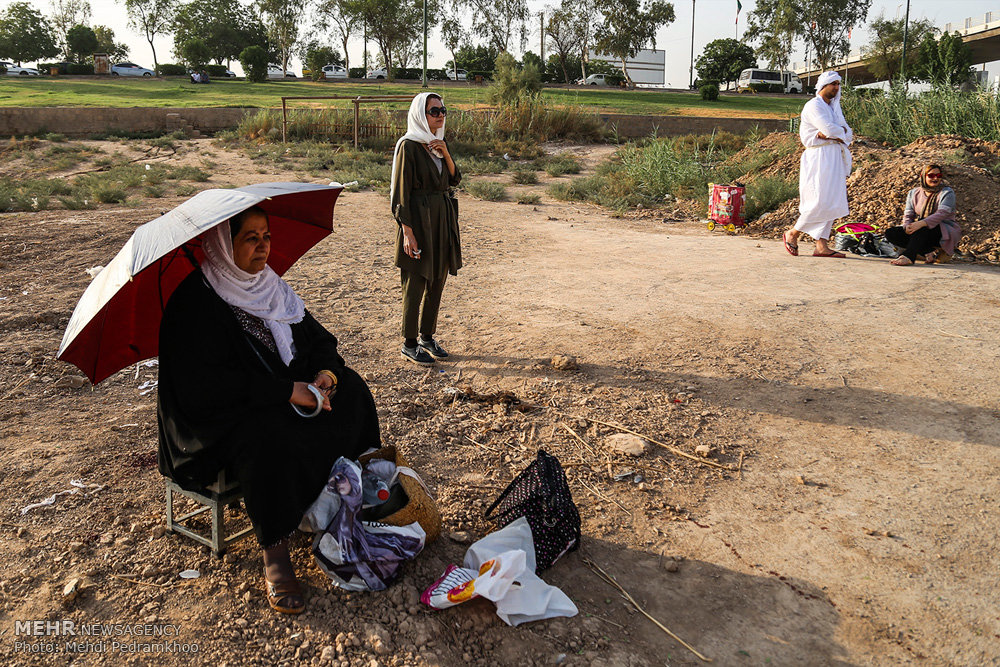
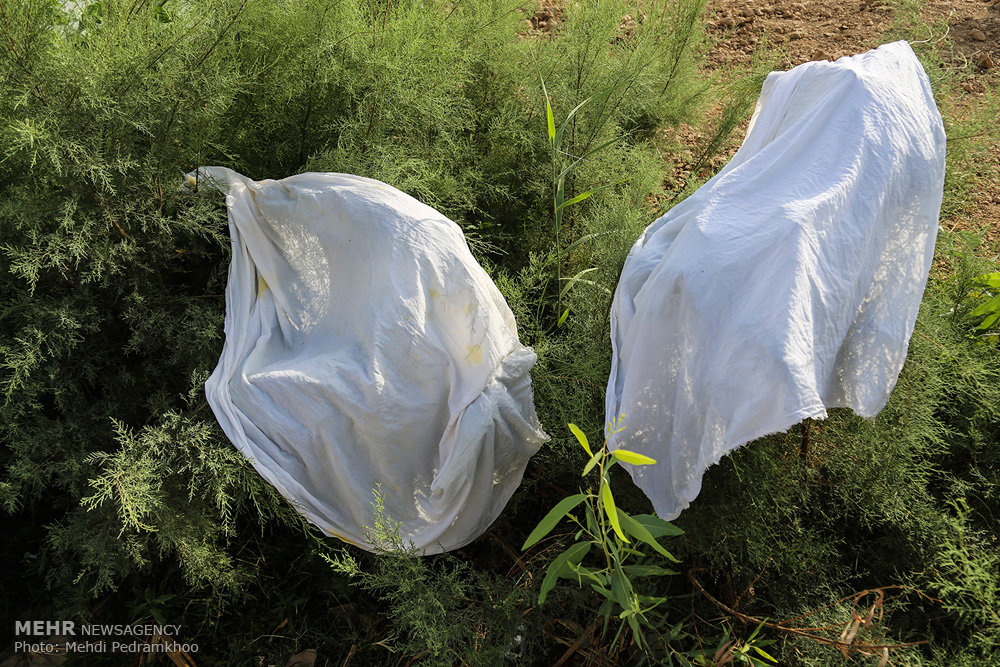
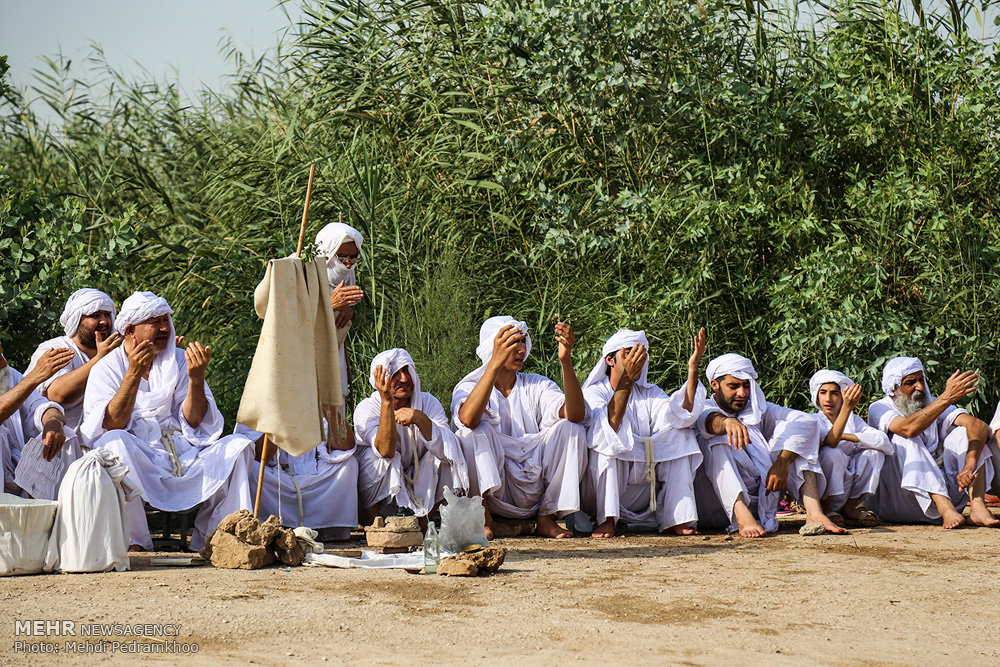
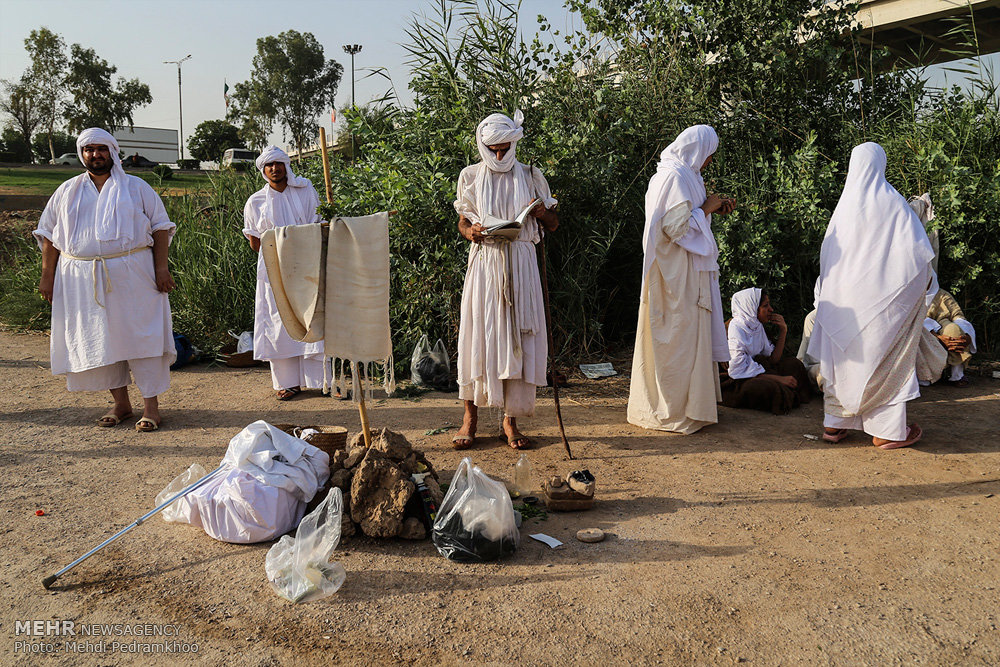
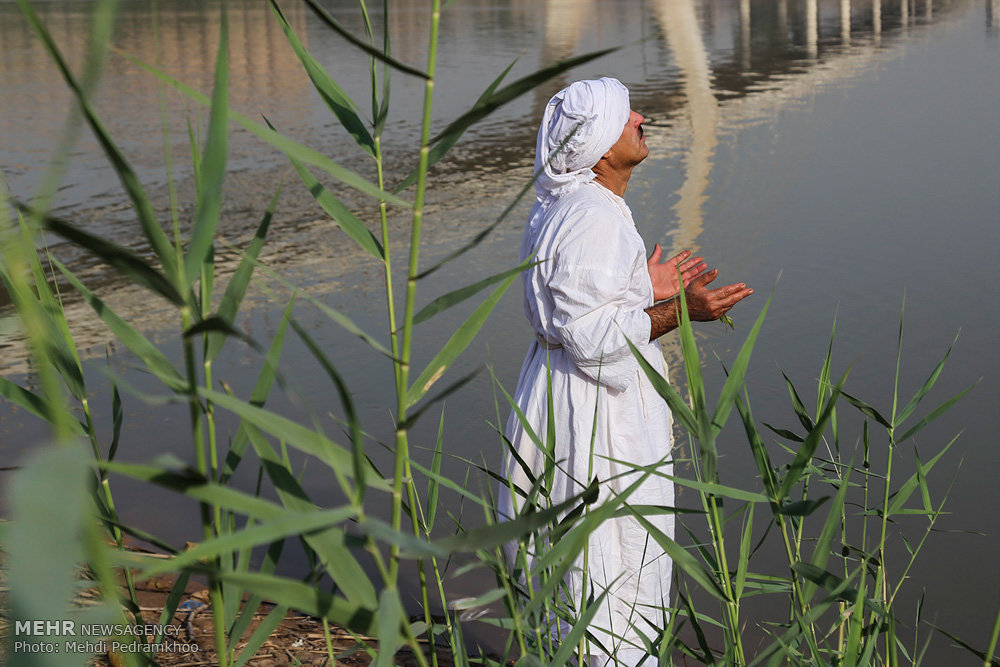
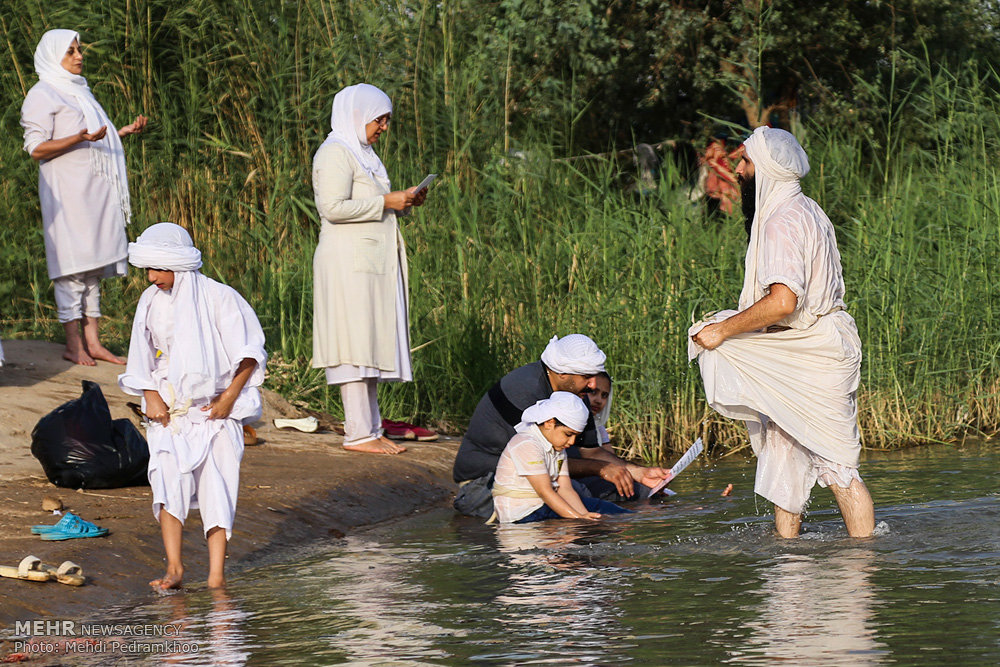
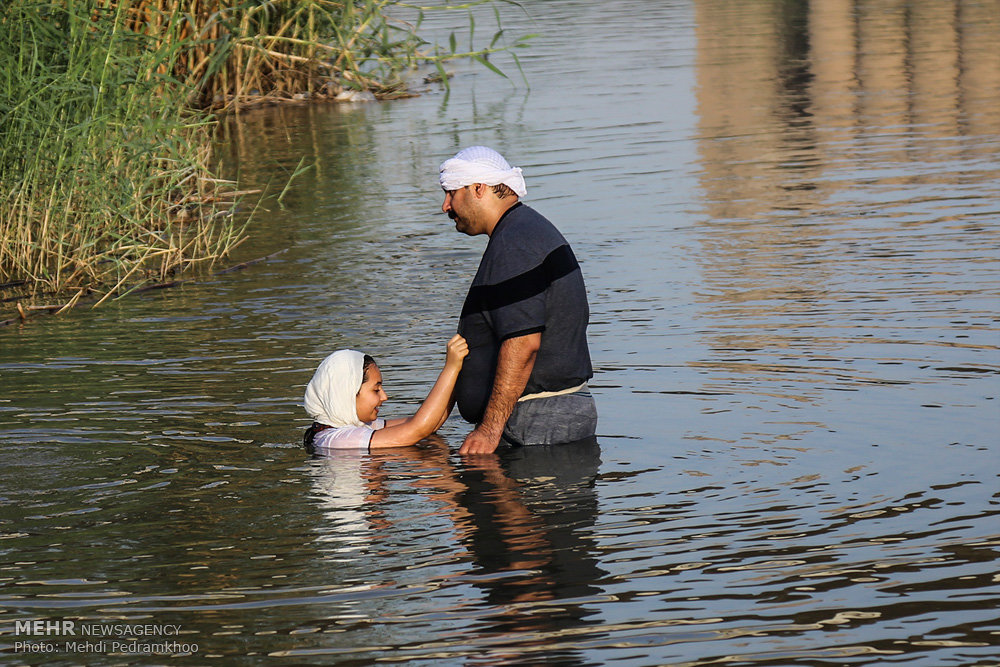
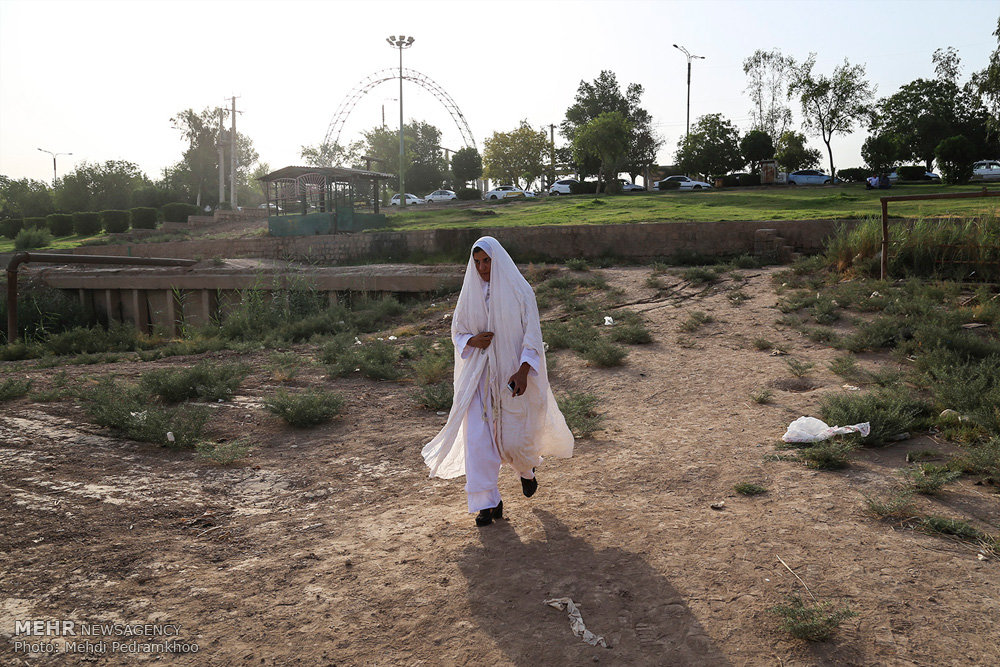
In a ceremony on Monday, a huge number of Sabian Mandaeans gathered in Ahvaz in southwestern Iran to perform the baptism rituals on the anniversary of their New Year.

The central rite of the Mandaeans is immersion in water, which is regarded not only as a symbol of life, but to a certain degree as life itself.

The name of Sabians has been mentioned three times in the Holy Quran as the People of the Book, “the Jews, the Sabians, and the Christians”.

Many scholars have identified the Sabians to be the Mandaeans, a group of individuals adhering to a form of ancient Gnosticism.

According to the UN High Commission for Refugees Background Paper on Iran, the Mandaeans are regarded as Christians, and are included among the country’s three recognized religious minorities.

However, Mandaeans regard themselves not as Christians, but as adherents of a religion that predates Christianity in both belief and practice.

Here are Mehr’s photos of their Monday ceremony in Karun River: