Monday, December 29, 2025
Home Blog Page 394

‘National disgrace’: US lawmakers decry pro-Palestine student detentions on visit to jails

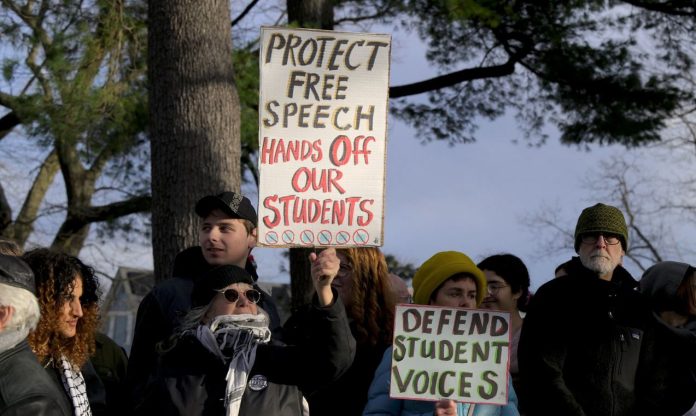
“We stand firm with them in support of free speech,” the Louisiana congressman Troy Carter, who led the delegation, said during a press conference after the visits on Tuesday.

“They are frightened, they’re concerned, they want to go home,” he added.

Öztürk, a Tufts University PhD student, and Khalil, a graduate of Columbia, have been detained for more than a month since US immigration authorities took them into custody. Neither have been accused of criminal conduct and are being held in violation of their constitutional rights, members of the delegation said.

The delegation included representatives Carter, Bennie Thompson, Ayanna Pressley, Jim McGovern, Senator Ed Markey, and Alanah Odoms, the executive director of the ACLU of Louisiana. They visited the South Louisiana Ice processing center in Basile, where Öztürk is being held, and traveled to the Central Louisiana Ice processing center in Jena to see Khalil.

They met with Öztürk and Khalil and others in Ice custody to conduct “real-time oversight” of a “rogue and lawless” administration, Pressley stated.

Their detention comes as the Trump administration has staged an extraordinary crackdown on immigrants, illegally removing people from the country and seeking to detain and deport people for constitutionally protected free speech that it considers adverse to US foreign policy.

“It’s a national disgrace what is taking place,” Markey continued, adding, “We stand right now at a turning point in American history. The constitution is being eroded by the Trump administration. We saw today here in these detention centers in Louisiana examples of how far [it] is willing to go.”

McGovern described those being held as political prisoners. He said: “This is not about enforcing the law. This is moving us toward an authoritarian state.”

Late last month, officials detained Öztürk, who co-wrote a piece in a Tufts student newspaper that was critical of the university’s response to Israel’s attacks Palestinians. The 30-year old has said she has been held in “unsanitary, unsafe, and inhumane” conditions in a Louisiana facility and has had difficulty receiving medical treatment.

Öztürk was disappeared when she was detained, Pressley said, adding that she was denied food, water and the opportunity to seek legal counsel. Khalil missed the birth of his first child, she said. She described Donald Trump as a dictator with a draconian vision for the US.

“They are setting the foundational floor to violate the due process and free speech of every person who calls this country home, whatever your status is,” she noted, adding, “It could be you tomorrow for suffering a miscarriage. It could be you tomorrow for reading a banned book.”

Those in custody are shaken and were visibly upset and afraid, the delegation said. They have said they are not receiving necessary healthcare and that the facilities are kept extremely cold.

“We have to resist, we have to push back. We’re a much better country than this,” McGovern said.

Earlier this month a judge ruled that Khalil, who helped lead demonstrations at Columbia last year and has been imprisoned for more than a month, is eligible to be deported from the US.

The Trump administration has argued that Khalil, a lawful permanent resident of the US and child of Palestinian refugees, holds beliefs that are counter to the country’s foreign policy interests.
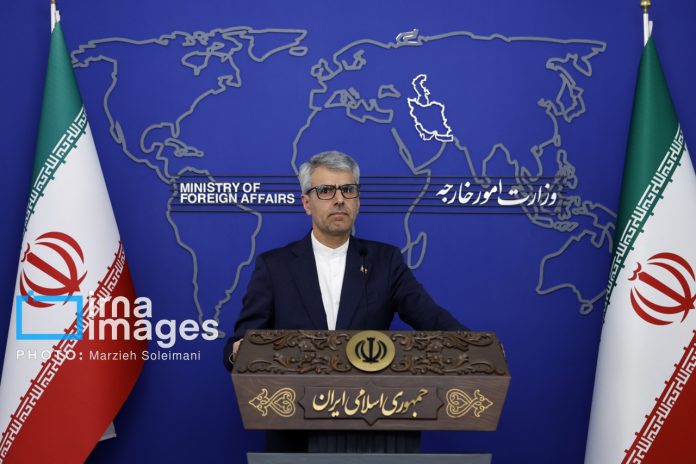
Iran condemns US fresh sanctions amid talks

Esmail Baghaei

In a statement released on Wednesday, Esmaeil Baqaei denounced the US’ policy of imposition of sanctions as a clear sign of the American policy makers’ hostile attitude toward the Iranian people and their ignorance of the rule of law and human rights.

“The US administrations’ structural addiction to economic sanctions against the developing countries as an instrument for intimidation and political pressures violates the fundamental principles of the UN Charter and international law,” he said.

Baqaei added the US sanctions undermine the foundations of the rule of law and free trade, violate the basic human rights of the people in the target countries, and amount to crimes against humanity.

The sanctions against Iran’s economic and trade sectors are bullying and illegal measures that are in direct contradiction to the US’ claim to be pursuing dialogue and negotiations and also indicate the US’ lack of goodwill and seriousness, he stated.

The spokesman held the US internationally accountable for imposing unilateral sanctions against the Iranian nation, saying Washington is held culpable for the egregious violations of human rights in the wake of its criminal measures.

The US Department of the Treasury’s Office of Foreign Assets Control (OFAC) on April 22 designated Iranian national Seyed Asadollah Emamjomeh and his corporate network for their alleged role in shipping Iranian liquified petroleum gas (LPG) and crude oil to foreign markets.

The US has also designated Iranian national Meisam Emamjomeh.

The new sanctions are the seventh such action taken by the US government against Iran since February 4, when US President Donald Trump signed a presidential memorandum ordering a campaign of maximum pressure on the Islamic Republic.

The sanctions come despite the fact that Iran and the US have held two rounds of talks to settle disputes about Tehran’s nuclear program. The indirect talks started earlier this month in Oman’s capital, Muscat, and continued over the weekend in Italy’s Rome.

Top representatives from Iran and the US are scheduled to meet again on Saturday in Muscat to review technical negotiations between their experts that will start on Wednesday in Rome.

Israeli military needs additional $2.6 billion to expand Gaza war: Report

Israeli Army

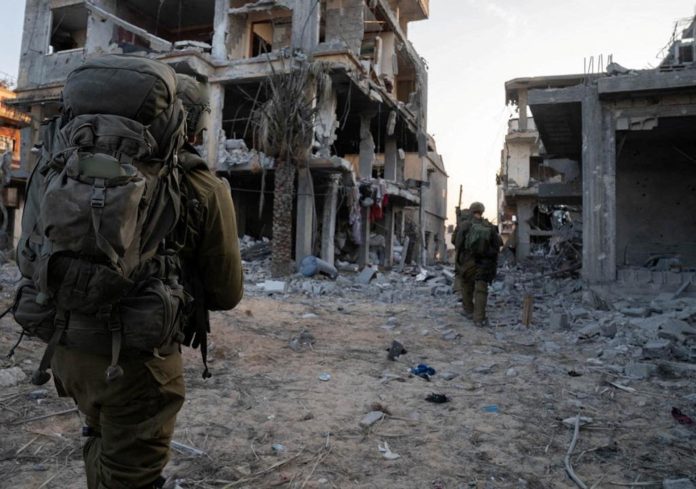
“The renewal of the war in Gaza over a month ago, after the ceasefire, and the plan to expand it with a large-scale ground operation, is incurring significant costs,” the daily said.

It added that the increase is strongly opposed by the Finance Ministry.

“It is inconceivable that, beyond the nearly $31 billion already allocated – including the use of a $2.6 billion reserve fund – another $2.6 billion could be added to an already inflated defense budget,” a senior official told the newspaper.

The paper added that the additional expenses will be used to seize about 40% of Gaza’s territory in the coming weeks, enhancing the security of Israeli settlements near the Gaza border and preventing the resumption of rocket fire into Israel.

According to the figures released by the Israeli economics newspaper Calcalist earlier this year, Israel has spent 250 billion shekels ($67.57 billion) in 2024 for its military onslaught on the Gaza Strip.

The Israeli army resumed its onslaught on Gaza on March 18, shattering a Jan. 19 ceasefire and prisoner exchange agreement.

Israel has killed more than 51,200 Palestinians in the enclave since October 2023, most of them women and children.

Last November, the International Criminal Court issued arrest warrants for Israeli Prime Minister Benjamin Netanyahu and Gallant for war crimes and crimes against humanity in Gaza.

Israel also faces a genocide case at the International Court of Justice for its war on the enclave.

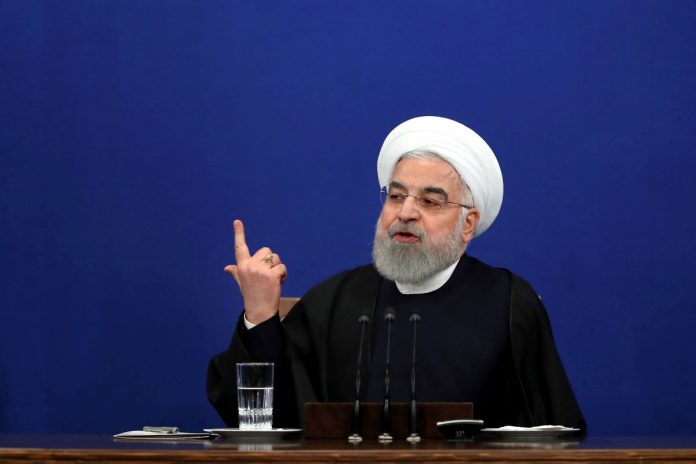
Former Iranian president Rouhani: Political rivals blocked nuclear deal in 2021

Hassan Rouhani

In his remarks on Wednesday, Rouhani revealed new details about the failed negotiations during his final months in office.

“The agreement was prepared for signing,” Rouhani told a meeting in Tehran. “I stepped back in the final weeks because I understood they wanted the deal to happen, but under the next president’s name. I told them, fine – let it be so.”

Rouhani claimed his negotiating team had achieved all of Iran’s key demands by spring 2021.

Then deputy foreign minister Seyed Abbas Araghchi “negotiated the removal of all Trump-era sanctions, even those on the IRGC. They had accepted everything we wanted. I said if they would let us, we could finish it today – just one signature remained.”

“They wouldn’t allow it, just so Rouhani would fail. Who is Rouhani to succeed or fail? They should have thought of the nation,” deplored the former reformist-leaning president, without naming any individual or group.

Rouhani described this as a devastating missed opportunity, but did not give an insight on how they torpedoed the deal supposed to replace the JCPOA.

Yemen’s Houthis conduct rare aerial attack on northern Israel

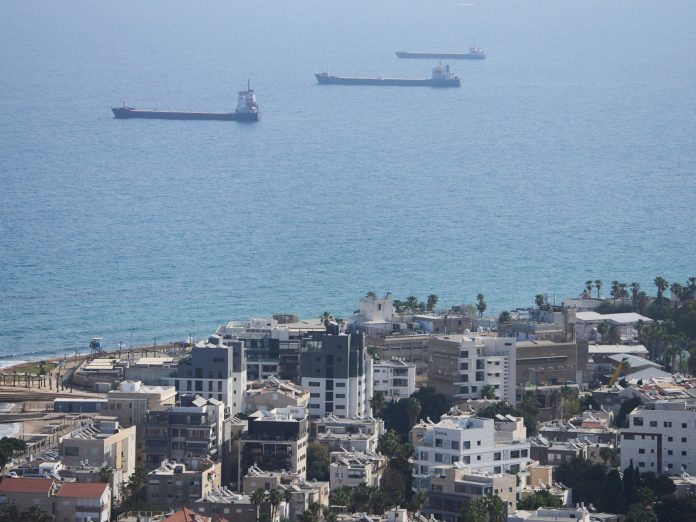
On Wednesday, the Israeli army said that the missile triggered air raid sirens in Haifa, Krayot and other areas west of the Sea of Galilee.

This area is a rare target for the Houthi rebels, who continue to be the target of an intense United States air strike campaign.

Since the war in Gaza broke out in October 2023, the Houthis have repeatedly fired missiles and drones at Israel in what they say is a show of solidarity with the Palestinians.

The rebel group controls swaths of Yemen, and Israel has struck Houthi targets several times inside the country, including in the capital, Sanaa.

The Houthis did not immediately claim the attack, though it can take them hours or even days to acknowledge their assaults.

Meanwhile, US air raids, part of an almost daily campaign that began on March 15, continued targeting the Houthis on Wednesday morning. The Houthis reported US strikes on the Hodeidah, Marib and Saada governorates.

In Marib, the Houthis described a strike hitting telecommunications equipment, which had previously been a US target.

The Houthis, in response, have stepped up their targeting of US drones flying over the country. Houthi military spokesman Brigadier General Yahya Saree stated late on Tuesday that the rebels had shot down an MQ-9 Reaper drone over Yemen’s northwest Hajjah governorate.

MQ-9 Reaper drones, which cost about $30m apiece, can fly at altitudes of more than 40,000 feet (12,100 metres) and remain in the air for more than 30 hours.

The US military and CIA have flown them for years over Afghanistan, Iraq, and now Yemen.

The Houthis claim to have downed 26 MQ-9s over the past decade of the Yemen war.

The US military acknowledged the report of the drone being downed but announced it could not comment further.

The US military says it is targeting Houthi “terrorists” to stop attacks on international shipping in the Red Sea, a crucial global trade route, and Israel.

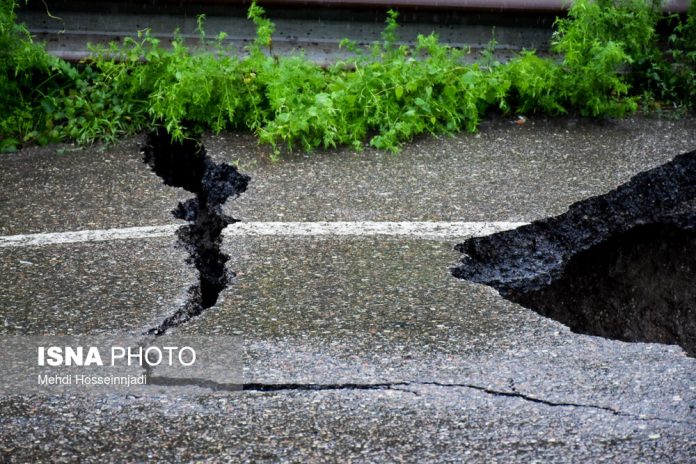
Official: 30 Iranian provinces face land subsidence crisis as wetlands disappear

Iran Flood

The head of Iran’s Department of Environment, Shina Ansari, spoke at a meeting with provincial governors, explaining that climate change and poor water management have created a dangerous situation.

“Subsidence is no longer localized – it threatens national infrastructure and population centers,” said Ansari, demanding urgent policy reforms to address root causes.

The crisis stems from a dangerous combination of climate change impacts and water mismanagement.

“We’ve lost 27 billion cubic meters of renewable water resources,” Ansari stated, noting rainfall has dropped 13% below historical averages while unsustainable agricultural and industrial practices continue draining reserves.

The devastation extends to Iran’s wetlands, with Ansari reporting “66% of our wetlands have become sources of dust storms.” These dried-out ecosystems no longer provide their critical functions of maintaining soil moisture and preventing erosion.

“What we’re seeing is a vicious cycle,” Ansari explained. “Climate change reduces rainfall, we over-extract groundwater, wetlands disappear, and the land sinks further – each problem makes the others worse.”

Environmental experts warn that without immediate policy changes, the damage could soon become irreversible.

IMF cuts growth forecasts for most countries in wake of trade war

imf

The IMF released an update to its World Economic Outlook compiled in just 10 days after U.S. President Donald Trump announced universal tariffs on nearly all trading partners and higher rates – currently suspended – on many countries.

It cut its forecast for global growth by 0.5 percentage point to 2.8% for 2025, and by 0.3 percentage point to 3% from its January forecast that growth would reach 3.3% in both years.

It said inflation was expected to decline more slowly than expected in January, given the impact of tariffs, reaching 4.3% in 2025 and 3.6% in 2026, with “notable” upward revisions for the U.S. and other advanced economies.

The IMF called the report a “reference forecast” based on developments through April 4, citing the extreme complexity and fluidity of the current moment.

“We are entering a new era as the global economic system that has operated for the last 80 years is being reset,” IMF chief economist Pierre-Olivier Gourinchas told reporters.

The IMF said the swift escalation of trade tensions and “extremely high levels” of uncertainty about future policies would have a significant impact on global economic activity.

“It’s quite significant and it’s hitting all the regions of the world. We’re seeing lower growth in the U.S., lower growth in the euro area, lower growth in China, lower growth in other parts of the world,” Gourinchas told Reuters in an interview.

“If we get an escalation of trade tensions between the U.S. and other countries, that will fuel additional uncertainty, that will create additional financial market volatility, that will tighten financial conditions,” he said, adding the bundled effect would further lower global growth prospects.

Weaker growth prospects had already lowered demand for the dollar, but the adjustment in currency markets and portfolio rebalancing seen to date had been orderly, he said.

“We are not seeing a stampede or a run to the exits,” Gourinchas stated, adding, “We’re not concerned at this stage about the resilience of the international monetary system. It would take something much bigger than this.”

However, medium-term growth prospects remained mediocre, with the five-year forecast stuck at 3.2%, below the historical average of 3.7% from 2000-2019, with no relief in sight absent significant structural reforms.

The IMF slashed its forecast for growth in global trade by 1.5 percentage point to 1.7%, half the growth seen in 2024, reflecting the accelerating fragmentation of the global economy.

Sharply increased tariffs between the United States and China will result in much lower bilateral trade between the world’s two largest economies, Gourinchas said, adding, “That is weighing down on global trade growth.”

Trade would continue, but it would cost more and it would be less efficient, he stated, citing confusion and uncertainty about where to invest and where to source products and components.

“Restoring predictability, clarity to the trading system in whatever form is absolutely critical,” he told Reuters.

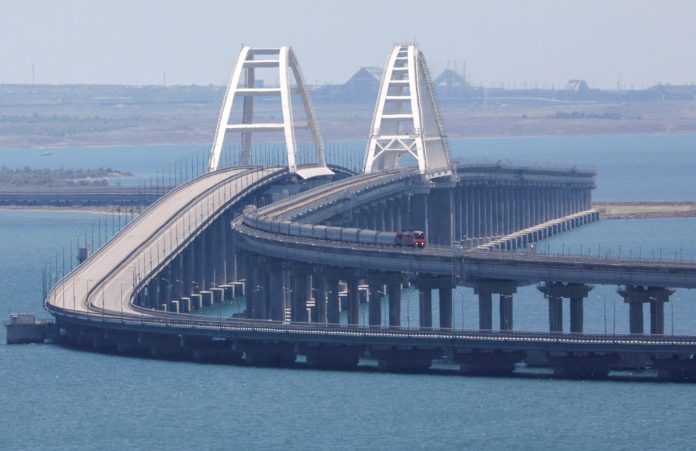
EU says will never recognize Crimea as Russian

Crimean Bridge

Kallas’ comments come in response to reports that the recognition of Crimea as Russian territory is being considered as part of a U.S.-backed proposal to end the war in Ukraine.

“Crimea is Ukraine,” Kallas told the AFP.

“It means a lot for the ones who are occupied that others don’t recognize this as Russian.”

Russia illegally annexed Crimea in 2014, occupying the peninsula with troops and staging sham referendums to justify the seizure of territory. The move was widely condemned as a violation of international law.

Kallas said it would be a mistake to reward Moscow’s land grab by including recognition of Crimea as part of a ceasefire deal.

“Then Russia clearly gets what they want,” she added.

Kallas stated Washington should instead look to mount pressure on Moscow, rather than ceding to Kremlin demands.

“They have tools in their hands to use, actually, to pressure Russia. They haven’t used those tools,” she continued.

“If they are now walking away without using the tools that they have actually in their hands, then my big question mark is, why? Why aren’t they using the tools to really end this war?”

While Europe has largely been shut out of the U.S.-brokered peace negotiations with Ukraine and Russia, talks in Paris on April 17 brought Europe back to the table. U.S. delegates reportedly unveiled their ceasefire proposal during the Paris talks — and are expecting a response from Ukraine during follow-up talks in London on April 23.

Representatives from Ukraine, the U.K., France, and the U.S. will convene in London to continue discussions.

President Volodymyr Zelensky has already ruled out recognizing Crimea as Russian.

Iran parliament rejects urgency bills on daylight saving time changes

Iran's parliament

In Wednesday’s session, lawmakers rejected the “double urgency” and “single urgency” statuses for the bill, meaning the legislation will now undergo standard parliamentary review procedures without expedited processing.

The proposed bill would have empowered the administration to modify Iran’s time zone offset and set official working hours for civil servants.

The country abolished seasonal clock changes in 2022, maintaining UTC+3:30 year-round despite some calls to revert to DST (daylight saving time) as the change adds nearly 1,000 megawatts to peak loads, equivalent to the output of the Bushehr nuclear plant.

Iran’s power grid is under severe strain as a prolonged drought reduces hydropower generation while summer electricity demand reaches record levels, raising fears of widespread blackouts in coming months.

In addition, with rainfall 40% below normal this year, reservoir levels at hydroelectric dams have dropped to critical lows, cutting a key power source just as air conditioning use spikes.

The CEO of state-run Tavanir Power Company, Mostafa Rajabi Mashhadi, said earlier this month that restoring daylight saving time could alleviate up to 15% of Iran’s expected shortfall this summer.

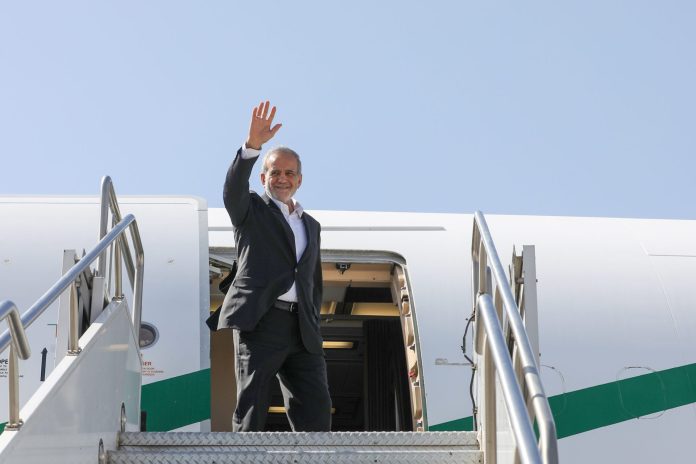
President Pezeshkian emphasizes Iran’s historic ties with Republic of Azerbaijan ahead of visit to Baku

Masoud Pezeshkian

In a coordination meeting ahead of his official visit to Baku, President Pezeshkian said on Wednesday, “The Republic of Azerbaijan and Iran are parts of one body, with peoples on both sides of the border sharing extensive mutual interests rooted in millennia-old bonds of deep friendship and common values.”

The high-level meeting, chaired by President Pezeshkian, brought together Iran’s foreign, roads, energy, tourism, communications, and agriculture ministers, as well as the Central Bank governor, political advisors, and governors of border provinces.

Officials reviewed the latest developments in bilateral relations and discussed ways to enhance cooperation in trade, energy, transportation, and tourism.

The president highlighted the “vast and diverse” potential for deeper ties, expressing optimism that ongoing efforts to resolve misunderstandings would soon lead to a significant boost in relations.

He emphasized that strengthening government, private-sector, and people-to-people collaborations could rapidly advance economic and cultural exchanges.

The Iranian president will travel to Baku on Monday at the invitation of Azerbaijan’s President Ilham Aliyev, the Iranian presidential office confirmed the date on Wednesday.

The official visit, described by Tehran as opening “a new chapter” in bilateral relations, is expected to focus on boosting trade and cross-border cooperation between the neighboring nations.