Sunday, April 19, 2026
Home Blog Page 3933

More Western Tourists, Less Arab Ones Visiting Iran

Although, compared to last year’s figure, the overall number of foreign tourists to Iran has reduced 6.9 percent in the current Iranian year (started mid-March 2017), statistics indicate that the decrease pertains to the number of visitors from the Persian Gulf littoral states, and not that of the European and American ones.

According to a Farsi report by ISNA, the director-general of Iran’s Office for Planning and Supporting Expansion of Tourism Industry, Abdolreza Mohajeri-Nejad, said over 1.14 million foreign tourists travelled to Iran during March 21-June 21, 2017.

This comes as, in the same period last year, the figure stood at more than 1.18 million, up by 6.9 percent, he added.

Mohajeri-Nejad said the decline in the number of tourists from the Persian Gulf littoral states and Iraq is the main reason for the drop in the average number of foreign visitors to the country during the three-month period.

“The number of visitors from these states to Iran was subject to a 9-percent decrease, year-on-year, in the said timespan, under the impact of the country’s weakened ties with the Persian Gulf littoral states – following the attacks on Saudi Arabia’s Embassy and diplomatic mission in Tehran and Mashhad (eastern Iran) in early 2016 – insecurities in the regional states and unfavorable economic condition in Iraq and Syria.”

The downward trend has continued in the past two years, he added.

Mohajeri-Nejad said from March 2016 to March 2017, the average total number of foreign tourists to Iran (over 4.91 million) was also 5.2 percent less than that of the same 12-month period ending mid-March 2016.

However, he said, despite the decrease in the number of tourists from regional countries to Iran during the 15-month period to June 21, 2017, that of European and American visitors to the country has grown 56.6 percent in the same duration.

“The increase has occurred as a result of the going into effect of the Joint Comprehensive Plan of Action (JCPOA) [signed in July 2015 between Tehran and the P5+1].”

Mohajeri-Nejad added from August 2015 to March 2017, a total of 478,826 tourists from western states, particularly Europe, travelled to Iran. This is while, prior to the signing of the JCPOA, from December 2013 to June 2015, the figure stood at 35,852, he said.

He expressed the hope that in case the upward trend in the number of European and American tourists to Iran would continue, the country will definitely manage to achieve the targets stipulated in Iran’s Vision 2025.

As per the Vision 2025, Iran’s annual income from tourism sector is required to reach $25 billion (20 billion tourists per year) in eight years from now. To achieve the target, the country needs to be a destination for 5.1 percent of the total global number of tourists per annum.
Izadi Girl Helps Iraqi Forces Arrest ISIS Slave Trader

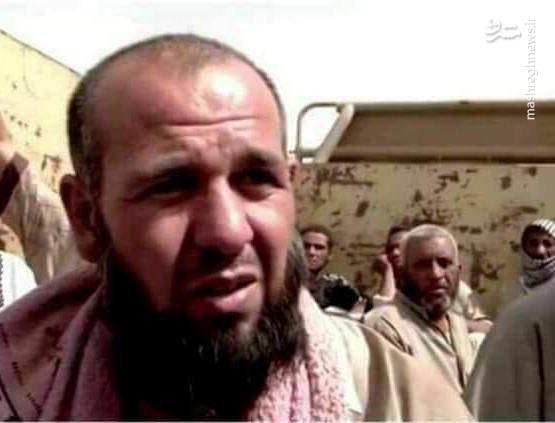
Iraqi security forces have seized the infamous slave trader after the Izadi girl, based in Tal Afar, has discovered his true identity and reported him to them.

According to a Farsi report by the Al-Alam News Network, the Izadi girl managed to identify the captured slave owner, nicknamed ‘Abu Ali’, after Iraqi media published photos of the man while exiting Tal Afar as a refugee.

ISIS Slave Trader‘Abu Ali’ has been responsible for buying and selling Izadi Kurd women and girls in the ISIS stronghold in Tal Afar.

The Izadi girl who, herself, used to be a victim of the slave trader gave a full account of the appalling crimes perpetrated by ‘Abu Ali’ to the security forces and demanded them to inflict the severest punishment on him.

It is reported that the Iraqi security forces found and arrested ‘Abu Ali’ in one of the refugee camps for settlement of Tal Afar citizens on Tuesday.

Tal Afar is a Shiite-populated district near the northern Iraqi city of Mosul in Nineveh Province. Izadis are also followers of an ancient religion practiced by more than half a million people in northern Iraq.

Since June 2014, ISIS militants have committed heinous crimes against all ethnic and religious communities in Iraq, including Shiites, Sunnis, Kurds and Christians.

Iran to Host Int’l Conference on Diplomacy of Unity

The second International Diplomacy of Unity Conference is slated to be held in Tehran on

October 11, 2017, marking the anniversary of the establishment of The World Forum for Proximity of Islamic Schools of Thought.

The event will bring together scholars from Iran and other countries. High on the agenda of the day-long conference will be issues such as a united Islamic community, Islamic civilization, resistance and the social assets of the Muslim world.

According to a Farsi report by the Mehr News Agency, the event will comprise four specialized committees where delegates from specialized proximity unions will also be present.

The first conference on diplomacy of unity was held around four months ago, bringing together prominent Iranian scholars and intellectuals.

Qatar Ambassador to Return to Iran

Doha says the Qatari ambassador to Iran who was recalled last year after Saudi Arabia’s severance of ties with Iran will return to Tehran.

According a statement released on Thursday by the Qatari Foreign Ministry’s Public Relations Office, the top Qatari diplomat will return to Iran to resume his diplomatic work.

The statement also reads that Doha wants to boost its relations with Tehran and hopes to see mutual relations expand on all fronts in the future, Al Alam reported.

The information office did not specify an exact date for the ambassador’s return – or provide his name – but said Qatari Foreign Minister Sheikh Mohammed bin Abdulrahman al-Thani discussed “bilateral relations and means of boosting and developing them” in a telephone call with his Iranian counterpart Javad Zarif.

The decision to restore ties with Iran comes amid a diplomatic dispute between Qatar and several Arab countries, including Saudi Arabia, the UAE, Egypt and Bahrain, according to Al Jazeera.

They accuse Doha of meddling in the internal affairs of other countries and financing terrorism – a charge Qatar has dismissed as “baseless”.

Lebanese Patriarch Hails Iran’s Fight against Terror

In a Wednesday meeting with Iran’s Deputy Foreign Minister for Arab and African Affairs Hossein Jaberi Ansari in Beirut, Patriarch al-Rahi said Iran is a respected country, and that Lebanon needs Tehran’s assistance to further consolidate unity in Lebanon.

The patriarch noted that evidence shows the war in Syria is in its final stages, and that his country thanks Tehran for fighting terrorism and working toward ending the Syria conflict.

He further noted that his country’s priority is to boost national unity.

Among Lebanon’s other priorities, he said, is to tackle economic crises and help repatriate refugees in Lebanon.

For his part, Jaberi Ansari said the message that his trip to Lebanon and his meetings with leaders of all Lebanese groups has is that Tehran respects all components of the Lebanese society.

The Iranian diplomat also praised the local consensus in Lebanon amid the tough regional situation.

He also hailed the political achievements as well as the victories on the ground secured by the Lebanese government, nation, army, and the Resistance movement against terrorist and extremist groups.

“Iran backs these positive developments in Lebanon and in the region,” said Jaberi Ansari.

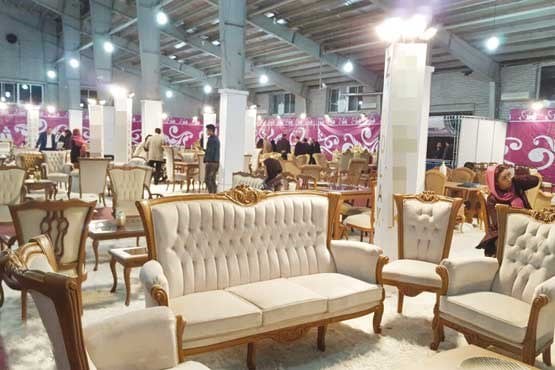
How Tuyserkan Turns into Hub of Furniture Manufacturing in Iran

Located 85 kilometres off the provincial capital of Hamadan, Tuyserkan is home to people and entrepreneurs who have opted to stay in their hometown and start their businesses from scratch instead of migrating to metropolises in search of menial jobs.

According to Farsi report by the Jame Jam Online new website, more than 10,000 people in the county are involved in furniture industry in over 4,000 workshops.

There is an interesting story behind the county’s success in becoming Iran’s furniture manufacturing centre. Close to 40 years ago, two young men from Tuyserkan set out on a journey to the Iranian capital, Tehran, looking for jobs. They, however, soon returned to their hometown, as they could not find any decent jobs in Tehran, and set up their own furniture manufacturing workshop.

They employed their family members and trained them in making furniture and the art of wood carving. These family members, per se, set up their own workshops and trained their relatives and friends to gradually help the county achieve its present status in the country’s furniture industry.

Currently, more than 65,000 sets of furniture are being manufactured in Tuyserkan per annum.

Iran Gets Its 12th Woman Mayor

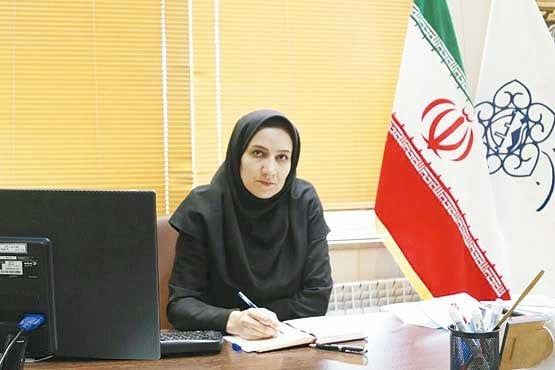
Iran’s twelfth female mayor was elected for the city of Zanjan, further paving the way for women to reach high managerial posts in the country.

Samaneh Shaaddel has taken the helm of affairs in District Two of the city. She used to be in charge of traffic and transportation affairs at Zanjan Municipality for four years before assuming his recent position. She has also served as the deputy mayor of Zanjan for cultural affairs.

She managed to be elected as the mayor thanks to her competence and experience, according to a Farsi report by the Jame Jam Online news website.

She holds a Master’s degree. She is married and has a 9-year-old daughter. However, her family responsibility has not kept her from making progress; rather, as she herself says, her family has been her biggest supporter and motivation for progress and development.

She is not the first woman to have assumed a top job in Iran. Qualified women have already been designated as deputy provincial governors, governors and mayors, further increasing women’s share of top managerial posts in the country.

Since the 1979 Islamic Revolution of Iran, 11 women (excluding Shaaddel) have served as mayors in the country so far. Shaaddel is the twelfth lady to have been picked as a mayor.

During the recent days, several other women were also picked as the heads of City Councils in such towns as Robat Karim in Tehran province and Gorgan in Golestan province.

Update: Shaaddel is said to have been removed by the new mayor of Zanjan shortly after the widespread reports about her! However, other female mayors have been appointed in other Iranian cities.

The 29-year-old university lecturer Mahna Mohammadi was recently elected as mayor of Spakeh, a town in southeastern province Sistan and Baluchestan with 40,000 population.

Shifteh Badr-Azar was also elected as the mayor of Sahand, a town in East Azarbaijan province.

Among other women elected as new heads of city councils are Setareh Fattahpour in city of Sardasht, Maryam Elahi-Sahar in Soosangerd, Zahra Hatami-Monfared in Mohajeran, Soosan Soleiman-Abadi in Kangavar, and Tahereh Karami in Varnamkhast.

Iran Condemns Saudi Airstrike on Yemen Residential Area

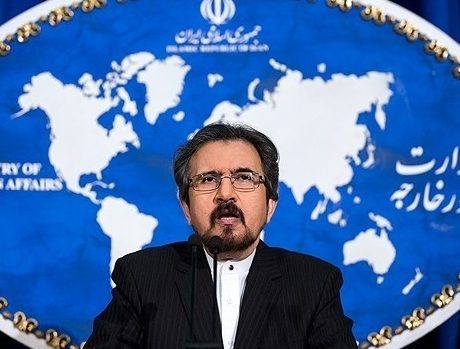
In a statement on Wednesday, Iran’s Foreign Ministry Spokesman Bahram Qassemi strongly condemned the Saudi warplanes’ attacks on a dormitory in Arhab town of Sana’a Province, which left a number of civilians dead and wounded.

He also expressed sympathy with the bereaved families of the deadly attack’s victims.

Qassemi further urged the United Nations and other international organizations to step into the fray and address the slaughter of innocent civilians in Yemen by Saudi Arabia as soon as possible.

“Intensifying deadly attacks on residential areas and civilian targets in Yemen on the one hand and preventing the internationally responsible organizations from sending humanitarian aid to Yemenis on the other hand amount to the stark violation of international and humanitarian laws,” he noted.

He then called on the UN and key players in Yemen crisis to increase their efforts to pressurise Saudi Arabia into stopping its deadly attacks on Yemen and adopt necessary measures to provide security for civilians, particularly women and children in the country.

Iran, Germany to Expand Cooperation on Medicinal Plants

Iran and Germany have agreed to expand their cooperation in mechanization of planting and harvesting of medicinal plants as well as modernization of herbal pharmacy.

According to a Farsi report by the Young Journalists’ Club (YJC), the agreement was made during the meetings of specialized sub-committees of Iran-Germany Joint Agricultural Commission held in Berlin.

In these meetings, the two sides also exchanged views on herbal pharmacy as well as food production and agricultural issues.

On other hand, during the first joint symposium between Iran and Germany on medicinal plants held in Germany, the two sides also explored new ways to expand cooperation in medicinal plants.

On the sidelines of the symposium, Peyman Yousefi Azar, an official with Iran’s Agricultural Jihad Ministry who is also in charge of a national project on medicinal plants, held talks with Frank Marte, the head of JKL Institutes’ Medicinal Plants Department, on the policies as well as capacities and programs of the two sides in this field.

During the symposium, the German side also presented scientific and executive reports on the available capacities to expand cooperation in growing up medicinal plants including peppermint, asparagus.

Iran and Germany also agreed to hold another joint symposium next year between the private sectors of two sides to facilitate cooperation in medicinal plants.

Iran Exporting Electricity to Eight Countries: Report

Power Plant and electricity

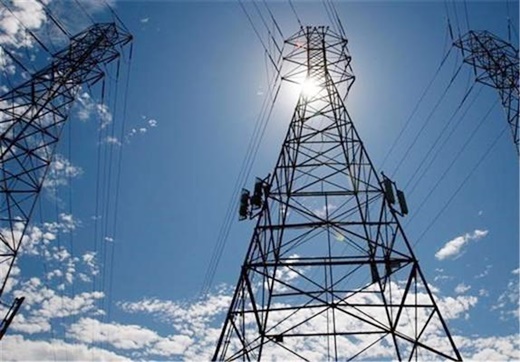
Iran, with an output capacity of around 73,000 megawatts of electricity, has secured a good status in the region as far as energy production is concerned.

Iran exported electricity to eight regional countries from 2010 to 2016. The biggest buyer of Iran’s electric power was Iraq with around 5,000 to 8,000 megawatts of electricity imports annually.

According to a Farsi report by the Mashregh News Agency, Turkey is the second biggest importer of electricity from Iran. The Islamic Republic sells up to around 2,400 megawatts of electricity to its northwestern neighbor annually. Iran’s electricity exports to Turkey rose considerably from 2010 to 2013.

Afghanistan ranks third when it comes to importing electricity from Iran. It imports less than a thousand megawatts of electricity on an annual basis. Its electricity imports rose from 2010 to 2014.

The other countries purchasing electric power from Iran are Pakistan, Nakhchivan Autonomous Republic, Armenia, and Turkmenistan.