Saturday, April 18, 2026
Home Blog Page 3931

Happy New Year

New Year

The staff at IFP would like to wish you a great, blissful, healthy, and extremely happy New Year 2015.

We hope in this new chapter of the world history that opens on January 1, those in high positions, and the human race at large, take more effective measures to make genuine communications possible, render poverty and hunger a thing of the past, help global peace be here to stay, promote welfare and friendship, and protect the environment. The list goes on and on. Let’s join forces in 2015 to make the world a better place to live in.

A salty restaurant in southern Iran

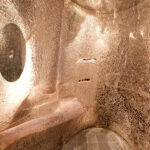
Iran-Salt Restaurent228

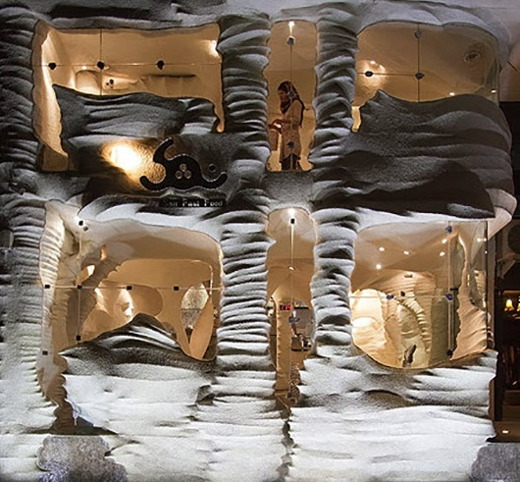
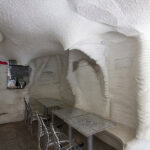
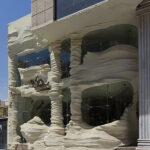
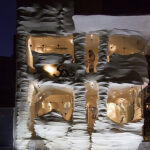
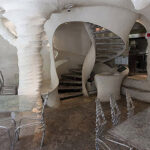
The southern Iranian city of Shiraz is home to a restaurant completely made of salt. The following is the translation of a report filed by the Comprehensive Construction Portal on the one-of-a-kind two-story restaurant which is 150 square meters in area. The report features amazing images of the restaurant too:

Salt is an ionic compound with disinfecting properties. The choice of salt as the main construction material in this restaurant has been meant to promote the concept of green construction. Through diffusing cl2 and o2 ions, natural salt refines the air.

In light of the fact that natural salt mines and a salt lake are located near the site of the project in Shiraz, the only thing used in construction of the eatery has been salt in the form of powder, rock, and compact layers.

Inspired by salt caves, the developers of the restaurant have used salt in building all walls, seats, and counters. Coatings used in stairs, chairs and the handle of the entrance are made of molten aluminum.

A principlist MP explains the problems of the principlist camp

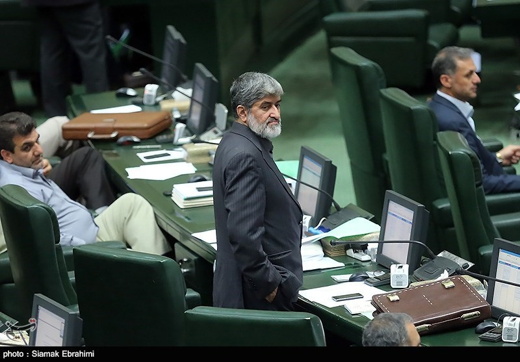
Ali Motahari
Ali Motahari

Ali Motahari, the son of Martyr Morteza Motahari, a close associate of Imam Khomeini and a member of the Revolution Council who was assassinated in the early months of the Islamic revolution, is an outspoken principlist member of the Islamic Consultative Assembly.

In an interview with reformist daily Mardom-e Emrooz on December 30, the 58-year-old deputy answered a variety of questions including the house arrest of candidates who disputed the results of the 2009 presidential elections and caused widespread unrest, to upcoming elections and the problems of his fellow principlists. IFP has decided to translate his answer to the question the daily’s Farshad Azami posed about unity among principlists for upcoming parliamentary elections.

Q. Some principlists believe the key to success is disavowal of factions close to Ahmadinejad and the [Islamic Revolution] Stability Front. On the other hand, some believe in all-out consensus of all principlists. Such a difference of opinion could bode ill for principlists hoping to form a coalition in upcoming legislative elections. In the absence of Mahdavi Kani and Asgarouladi [who have both passed away] who do you think should lead the principlist camp?

A. Since principlists are facing serious competition today, they don’t have any choice but unite. The important question here is their interpretation of the principle of the rule of the jurisprudent. Some believe that before doing anything they need to learn about the viewpoint of the jurisprudent [Supreme Leader]. That has stripped them of the power of innovation. Some others believe they should do whatever they deem is correct, and if the leader issued an order, they would take account of it.

The first group has dealt a serious blow to principlism already. Their mindset has taken innovation away from them. For instance, in 2009 an overwhelming majority of principlists accepted that the management of Ahmadinejad did not serve the country’s interests and that they needed to agree on another candidate. When I put forth the idea of Mr. [Ali Akbar] Velayati, they all agreed to my proposal, but said they had to know what the leader thought of that choice.

Later they said they felt that the leader had a more favorable opinion of Ahmadinejad. That was how my proposal fell apart. Later some even said anyone who talked about another candidate was against the leader. And eventually they said they voted for Ahmadinejad with tears in their eyes.

That is the problem tying the hands of the principlists. It comes despite the fact that the leader does not approve of such an approach. To secure unity principlists need to solve this problem first. In other words, they need to ensure unity in their principles before practical unity manifests itself. They all talk about the rule of jurisprudent, freedom, justice and independence. But each one follows his/her own agenda. In other words, their unity is more rhetorical than practical.

As for individuals to lead the principlist camp in its bid to secure unity, I should say I believe individuals should not be at the center of unity. Rather, principles and thoughts should take center stage. Messrs Mahdavi Kani and Asgarouladi did not hold much sway. But if an arbiter is needed, I believe, Nategh Nouri and Ali Larijani who represent the moderate camp of principlists, Hosseinian and Haddad Adel, who are hardliners, and Mr. Badamchian, who represents the Islamic Coalition, could form a council.

I don’t think it is the right thing for the [Combatant] Clergy Association and the Society of Seminary Teachers to get involved in this, because such activities would hurt their status. They need to maintain their paternal status and not support any one group. Instead, they should serve as an umbrella under which both principlists and reformists can operate. These two groups should follow the lead of their founder, Martyr Motahari, in staying above partisan prejudice.

A look at Iranian newspaper front pages on Jan. 1

Iranian Newspapers Headlines

Expression of readiness by the judiciary chief to put on trial those who sparked unrest in the country by disputing the results of the 2009 presidential elections appeared on the front pages of several dailies on Thursday. Also on the front pages of newspapers were the military exercise of the Iranian naval forces in the Sea of Oman and the message of the Supreme Leader to a national gathering on prayers.


Abrar: With the president in attendance, the naval forces of the Iranian Army staged a naval parade in the Sea of Oman.
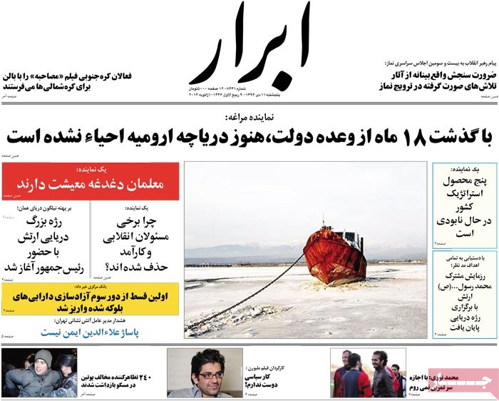
 

Abrar daily-1-1-2015


Abrar-e Eghtesadi: A first $490 million installment of Iranian assets has been released.

Abrar-e Eghtesadi: Iran has a new plan to produce oil in the Caspian Sea.
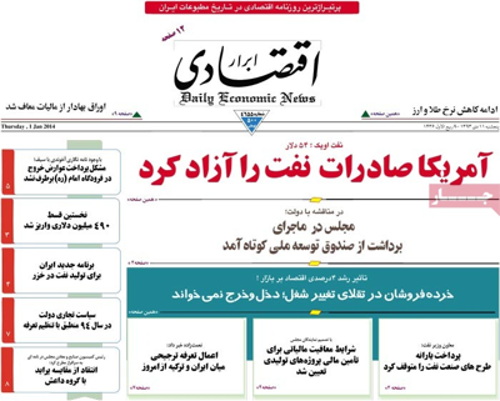
 

Abrar Eghtesadi


Aftab-e Yazd: With the US giving the green-light to crude exports, a second phase of the oil plot has got underway.

Aftab-e Yazd: “We do need missile capability, but not everything in the country is military in nature,” said Government Spokesman Mohammad Bagher Nobakht.

Aftab-e Yazd: One of the robbers involved in a deadly rampage in Golpayegan has been arrested.

Aftab-e Yazd: The reopening of the British embassy in Tehran is underway.
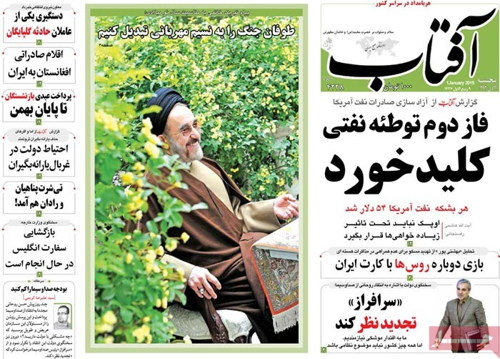
 

Aftabe yazd daily-1-1-2015


Arman-e Emrooz: “OPEC should not be influenced by excessive demands. We should not allow others to make decisions about our resources,” said Chairman of the Expediency Council Akbar Hashemi Rafsanjani.
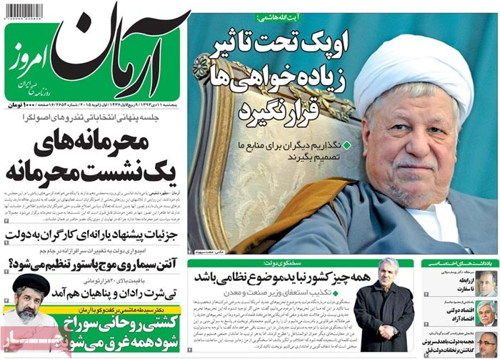
 

armane Emrooz daily-1-1-2015


Ebtekar: “Cheap oil won’t bring Iran to its knees,” vowed President Rouhani.

Ebtekar: National currency is likely to be used in trade transactions between Iran and Turkey.
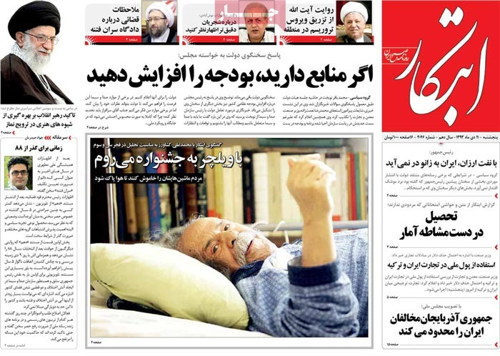
 

Ebtekar daily-1-1-2015


Etemad: “We have received no letter from the Inspectorate General, but an order to halt a tourism development project on [the Caspian island of] Ashuradeh has been issued,” said the director of the Environment Protection Organization.
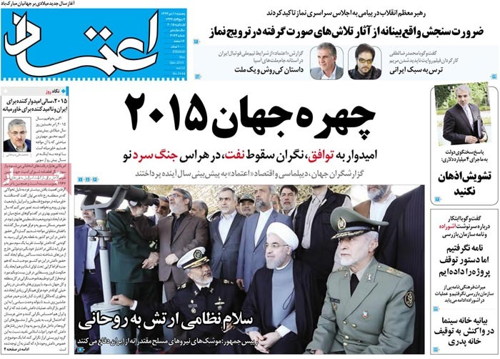
 

etemad daily-1-1-2015


Ettela’at: The country’s development budget is to increase 40 percent next year.

Ettela’at: “Imposition of new sanctions runs counter to the provisions of the Geneva deal,” said Iranian Foreign Ministry Spokeswoman Marzieh Afkham.

Ettela’at: Investors who put their money in production projects will enjoy tax exemption.
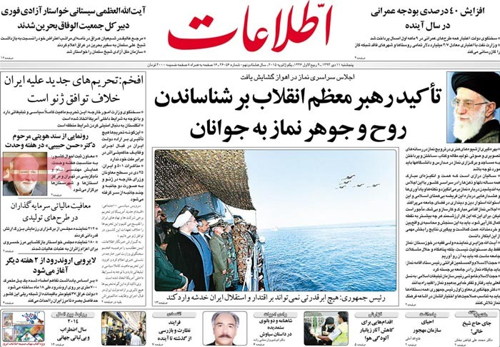
 

Ettelaat daily-1-1-2015


Farhikhtegan: “Heavy-handed approaches further complicate things,” said Iranian Foreign Minister Mohammad Javad Zarif in reaction to the arrest of opposition leaders in Bahrain.
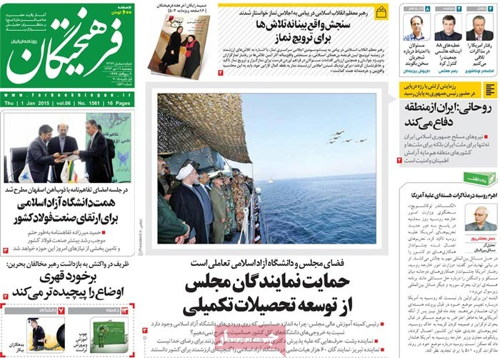
 

Farhikhtegan daily-1-1-2015


Hemayat: “Some 70 percent of the human rights cases have to do with the sedition of 2009,” said the secretary of the Judiciary’s Human Rights Commission.

Hemayat: The inspector general has sent letters to the heads of the three branches of government, saying the Central Bank has returned the $4.1 billion withdrawn from the National Development Fund.
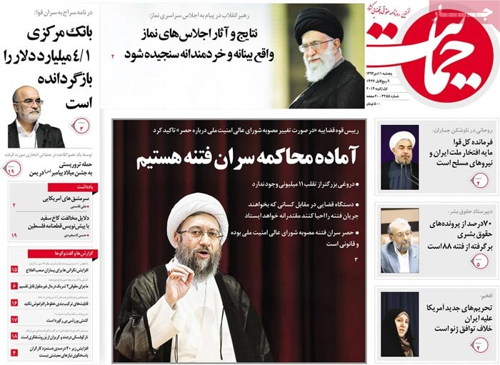
 

Hemayat daily-1-1-2015


Iran: Tehran’s air pollution will decrease next week.
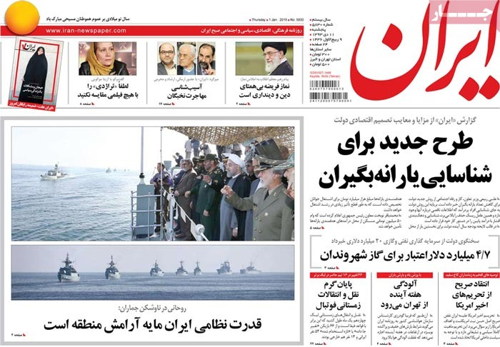
 

Iran daily-1-1-2015


Javan: The judiciary chief has said the judiciary is ready to prosecute the sedition leaders [presidential candidates who disputed the results of the vote in 2009 and sparked rioting.]
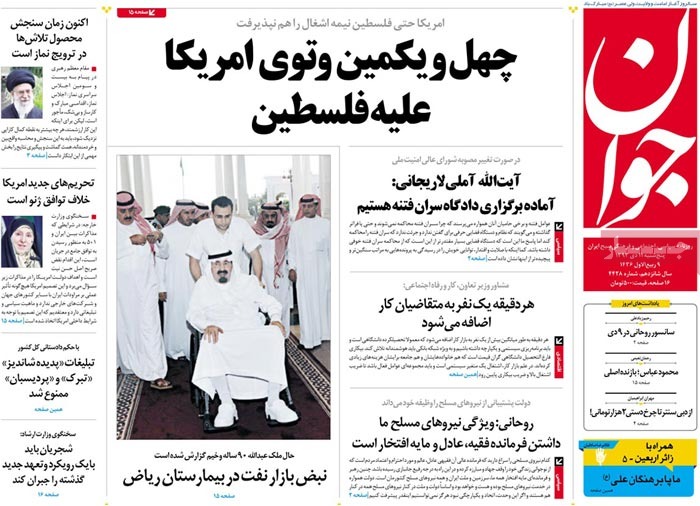
 

Javan daily-1-1-2015


Jomhouri Islami: [Senior Iraqi Shiite cleric] Ayatollah Sistani has objected to the detention of Sheikh Ali Salam in Bahrain and called for his release.
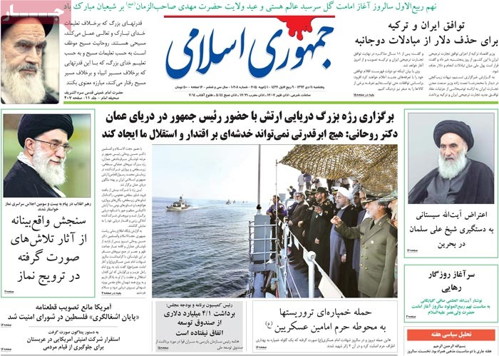
 

Jomhouri Eslami daily-1-1-2015


Mardomsalari: The US has vetoed a Palestinian UN Security Council proposal calling for an end to Israeli occupation.
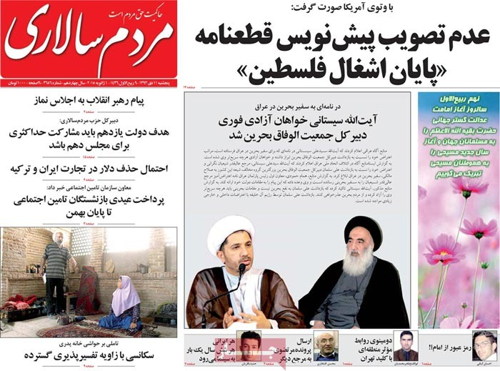
 

Mardom Salari daily-1-1-2015


SMT: Iran and Tunisia have signed eight cooperation documents.


SMT: In a message to a national gathering on prayers, the Supreme Leader has described prayers as the unshakable pillar of religiosity.
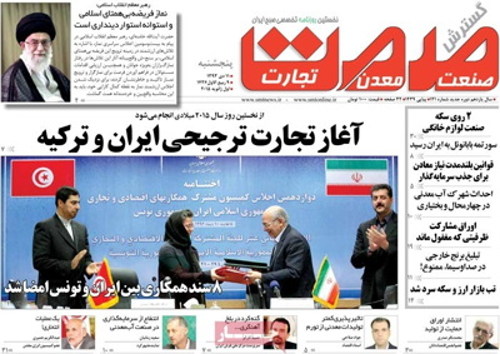
 

SMT daily-1-1-2015


Taadol: The government is investing $15 billion in the oil industry.
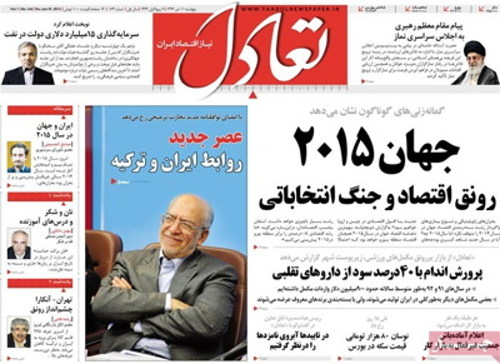
 

Taadol daily-1-1-2015


Iran: Palestine statehood rejection leaves no option but resistance

UNSC-Palestine-statehood

The Islamic Republic of Iran says the UN Security Council’s rejection of Palestine statehood proposal leaves no “legitimate” option for the Palestinians but “resistance”.

“Minimum demands by the Palestinians were not accepted in the UN and international circles,” said Iranian Foreign Ministry spokeswoman Marzieh Afkham on Wednesday, adding, “This shows that the only way available to the Palestinian nation to reclaim their rights is to continue their resistance.”

On Tuesday, the Security Council did not adopt the draft resolution, which called for the recognition of an independent Palestinian state and the termination of the Israeli occupation.

“It is resistance which can secure their full rights,” Afkham said, stressing that it is the only way that could “bear results.”

The United States led the opposition against the bid, which brought about Israel’s gratitude, calling the move a blow to the Palestinians.

Israeli Foreign Minister Avigdor Liberman said earlier on Wednesday that the proposal rejection should “teach” Palestinians that “attempts to impose unilateral measures on Israel will not achieve anything.”

Liberman also slammed the “for” votes cast by France and Luxembourg, which has made Tel Aviv plan to summon the French ambassador.

A senior Israeli official said a meeting would be held on Friday with Ambassador Patrick Maisonnave for clarifications over Paris’ move.

The resolution needed to secure at least nine votes to be adopted by the 15-member Security Council. However, it managed to garner only eight positive votes, as the US and Australia voted against the resolution and the UK, Rwanda, Nigeria, South Korea and Lithuania abstained.

The draft resolution designated occupied East al-Quds (Jerusalem) as the capital of a future Palestinian state, addressed the issue of Palestinians in Israeli prisons and demanded the end of Israeli occupation by 2017.

In November 2012, the United Nations General Assembly voted to upgrade Palestine’s status at the UN from “non-member observer entity” to “non-member observer state” despite strong opposition from Israel and the US.

Iran to increase South Pars gas production by 100 mcm

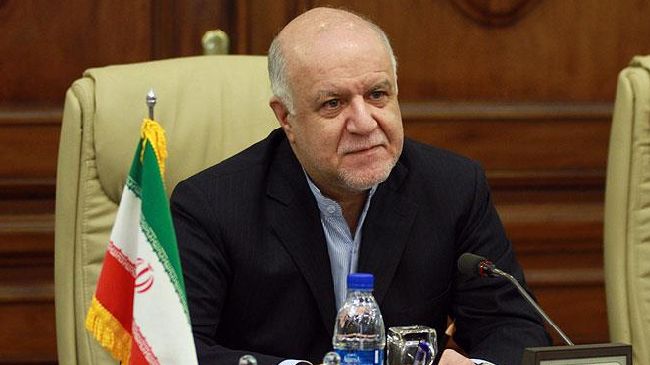
Bijan-Zanganeh

Iran’s oil minister says the country plans to pump up natural gas production at South Pars gas field by 100 million cubic meters (mcm) per day by the end of the current Iranian calendar year (started March 21, 2014).

“The promise to increase gas production from South Pars by 100 million cubic meters [per day] will be fulfilled by the end of the current [Iranian] year,” Bijan Namdar Zanganeh said Thursday.

He described the South Pars gas field as Iran’s biggest industrial hub, expressing hope the key phases of the massive offshore reservoir will come on stream soon.

Zanganeh said that phases 12, 15, 16, 17 and 18 were among top priorities in the giant gas field, adding that phase 12 will be fully operational in the near future.

In December, a senior Iranian energy official said phase 16 of South Pars has come on line.

Reza Forouzesh, the development manager for phases 15 and 16 of South Pars, said phase 16 of the massive offshore reservoir supplied to the trunk line its first delivery of sweet gas measuring 7.5 million cubic meters (mcm).

He added that the output of phases 15 and 16 will hit 23 mcm per day once three gas desalting installations become operational.

South Pars covers an area of 9,700 square kilometers, 3,700 square kilometers of which are in Iran’s territorial waters in the Persian Gulf. The remaining 6,000 square kilometers are situated in Qatar’s territorial waters.

The gas field is estimated to hold a significant amount of natural gas, accounting for about eight percent of the world’s reserves, and approximately 18 billion barrels of condensate.

Iran has built seven advanced laser systems for medical uses

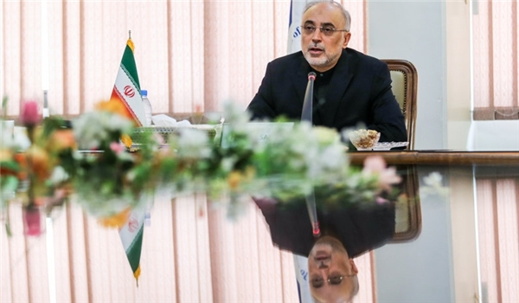
Ali-Akbar Salehi

Head of the Atomic Energy Organization of Iran Ali Akbar Salehi announced that AEOI experts have built 7 new state-of-the-art laser systems for medical applications.

“These laser systems include holmium lasers and second harmonic laser systems with applications in prostate surgery and kidney stone crusher machine, erbium laser and bio-di laser systems for dentistry, a fractional laser system to help the treatment process of skin diseases and a laser therapy machine with applications in physiotherapy,” Salehi said in a message to the ‘Laser Constructions Congress’ in Tehran on Wednesday.

“And we are now trying to transfer the technology for building these laser systems to the knowledge-based companies for mass-production,” he added.

In a relevant development, researchers from Iran University of Medical Sciences presented a new method in September to overcome limitations in the laser surgery of head and neck through nanotechnology.

This therapy increases the performance of cancer treatment methods if it completely succeeds and helps the society’s health significantly.

The use of straight laser beam is one of the most important methods for the surgery of head and neck malfunctions. Laser usually causes damage to the tissues next to the tumor or the tissues on its path. Moreover, laser beam does not have selective treatment characteristic.

Therefore, the aim of the researchers was to present a therapy method for the surgery of these tumors by using laser and nanoparticles, which is able to carry out the operation and degrade tumor at nanometric scale.

The creation of selectivity characteristic in the laser therapy of head and neck tumors by using gold nanoparticles attached to folic acid is considered as the most important achievement of the research.

The method has been tested on the head and neck, cervical and breast cancers. The best responses were obtained in the first two models. It seems that the reason is the availability of folic acid on the cancer cells in those areas.

The method mechanism is based on the high possibility of the adsorption of gold nanoparticles attached to folic acid by cancer cells. The nanoparticles are less absorbed in healthy cells.

In the next stage, the laser beam is radiated to the tumoral area and it is hoped that the chance of treatment of the cancer cells will be higher in the area with more nanoparticles.

Iranian researcher invents allergy, HIV-diagnosis sensor

HIV

An Iranian researcher from Tehran University built a sensor which can diagnose allergy and HIV in early stages.

“I have been working in this field for four years, two years of which were dedicated to research and production of the allergy sensor, and the other two years were spent on developing a sensor for diagnosing other diseases,” Somayyeh Khezrian, a PhD nanochemistry student at the University of Tehran, said in an interview with the state-run news agency on Wednesday.

Noting that the sensor has no foreign rival and has been patented, she said the application of this sensor is not limited to allergy diagnosis and can be used for other diseases as well.

“We have tested HIV-positive patients with this sensor too and it successfully diagnosed the disease in vitro with very good results,” Khezrian said.

In October 2013, a sensor modified with graphene nanoparticles was produced by the Iranian researchers from Gilan University to diagnose and measure Levodopa medications used in the treatment of Parkinson’s disease.

The sensor is able to measure very small amounts of levodopa with no need for pre-preparation process of the sample, and it has applications in medical industries and diagnosis tests.

Dr. Majid Arvand, member of the Scientific Board of Faculty of Chemistry of University of Gilan, said the usual methods in the detection of levodopa require analyses carried out by equipment that are costly and time-consuming, adding that the aim of the research was to present highly sensitive sensors to measure levodopa by inexperienced users by using diagnosis kits, that have low diagnosis limit and high respond rate as well as being cost-effective.

Results of the research showed that the produced sensor had very high sensitivity and surface area in comparison with other usual sensors that are being used. The reason is the specific shape of graphene nanoparticles and the presence of electron cloud on its surface, and also edgy cuts on the graphene which increase the kinetics of electron transfer during the electrochemical reaction.

The sensor can also carry out analysis in physiological media without the need for pre-preparation process. The researchers also succeeded in the measurement of the medication in rat’s brain, which is very promising for the application of the sensor in human samples.

“Results of the research can eliminate the need for costly methods and analysis devices. It can also ease and speed up the measurement process of the medication in patients who suffer from Parkinson’s,” Dr. Arvand added.

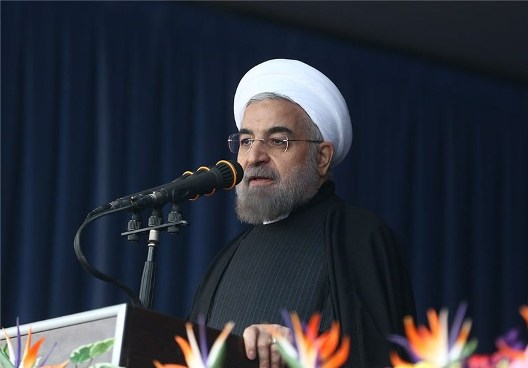
President Rouhani: No need for foreign forces in region

Rouhani-President-Iran

Iranian President Hassan Rouhani on Wednesday renewed Iran’s opposition to the presence of foreign forces in the region, adding that regional states are capable of ensuring security of the region.

“The Islamic Republic of Iran and countries in the region can defend their territory and region well, and there is no need for foreign forces in the region under any pretext,” the Iranian president told reporters in a visit to Iranian army’s massive military drills.

Pointing to the efforts to spread Iranophobia in the region, Rouhani stressed that Iranian Armed Forces are not after aggression against any other country, and reiterated that Iran alongside regional countries can defend the region.

He further underscored that the power and capabilities of Iranian Armed Forces are a source of tranquility, confidence, and security not only for the Iranian people, but also for the regional nations.

Iran and several regional countries have repeatedly stressed that foreign forces should not interfere in the affairs of the region.

Among others, Iraqi Prime Minister Haider al-Abadi had earlier announced that his country does not need foreign troops in the battle against the Islamic State of Iraq and the Levant (ISIL) terrorist group, and Iraq is completely capable of defeating ISIL terrorists.

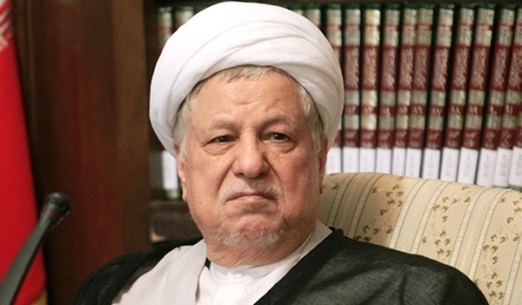
Rafsanjani urges OPEC cooperation to prevent further drop in oil prices

Hashemi Rafsanjani
Hashemi Rafsanjani

Chairman of the Expediency Council Akbar Hashemi Rafsanjani called on OPEC member-states to stop falling crude prices in international markets through unity against consumers’ excessive demands.

“OPEC is an organization for supporting oil producers and it should not be influenced by the excessive demands of oil consumers,” Rafsanjani said in a meeting with Algerian Ambassador to Iran Sofiane Mimouni in Tehran on Wednesday.

The Algerian envoy, for his part, pointed to the sudden fall of oil prices in international markets, and said, “OPEC should regulate its policies within the framework specified by oil producers.”

Earlier, Iranian Deputy Foreign Minister Hossein Amir Abdollahian strongly criticized Saudi Arabia for not cooperating with other OPEC member-states to prevent further fall in oil prices.

“Riyadh’s lack of effort in preventing the price drop is at odds with the atmosphere of the diplomatic negotiations between Iran and Saudi Arabia,” Amir Abdollahian told reporters.

The Iranian deputy foreign minister reiterated that the Saudi Arabia’s strategic mistake will be harmful to the entire Middle East and it will only benefit the foreigners.

Also, President Hassan Rouhani warned that the sudden decrease in oil prices in recent months is a plot hatched by the enemies against the regional people and Muslims.

“The fall of crude prices is not merely an economic issue, rather it is the result of certain states’ political plot and planning,” Rouhani said, addressing a cabinet meeting in Tehran.

[…]

In relevant remarks, President Rouhani downplayed the effects of falling oil price, and underlined his government’s plans to boost non-oil exports to $50bln next year.

“One of the most important topics of the government’s economic plans is increasing non-oil exports and this growth will help our economy,” Rouhani said in Tehran, addressing an open session of the parliament in which he presented the budget bill for the next Iranian year (to start on March 21) to the legislative body.

“We hope to see a considerable share of non-oil exports next year and by continuing this trend, (the country’ revenues from) non-oil exports will surpass $50bln,” he added.