Saturday, April 18, 2026
Home Blog Page 3914

Muslim Leaders to Discuss Myanmar Genocide in Astana: Iran President

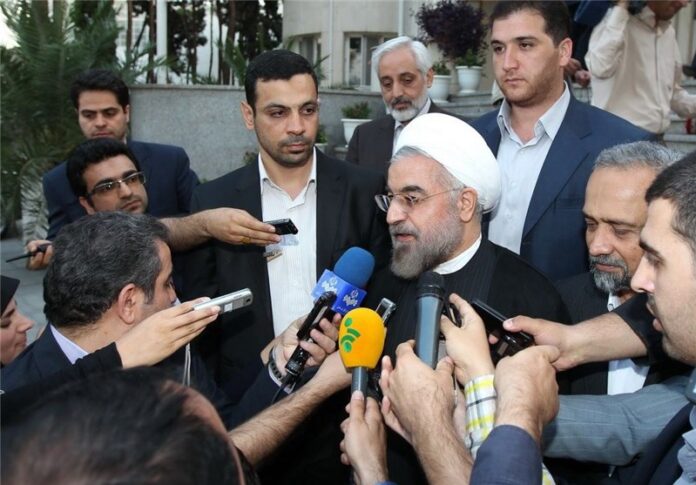
Speaking to reporters in Tehran on Saturday before his departure for the Kazakh capital of Astana, Rouhani said on the sidelines of the First OIC Summit on Science and Technology, the heads of state will examine conditions of Rohingya Muslims in Myanmar.

“Today, a major human tragedy and ethnic and ideological cleansing is taking place in Myanmar and hundreds of thousands of Muslims have been displaced in this region,” he said, adding that the Muslim world cannot remain silent on the measures taken by the Myanmar government.

He further emphasized that international organizations should impose pressure on the Myanmar government and army to prevent the oppression of the Rohingya Muslims.

Heading a high-ranking delegation, President Rouhani left Tehran for Astana to take part in the First OIC Summit on Science and Technology due to open in the Kazakh capital on Sunday.

Rouhani is slated to deliver a speech at the OIC summit and meet with some heads of state of the Muslim countries during his two-day visit to Kazakhstan.

The Rohingya have long faced severe discrimination and were the targets of violence in 2012 that killed hundreds and drove about 140,000 people from their homes to camps for the internally displaced.

Over the past days, intensifying clashes between security forces and insurgents in western Myanmar have sent about 270,000 terrified civilians scrambling toward the Bangladesh border in a desperate search for refuge.

A United Nations report in February said the military crackdown on the Rohingya had led to gang rape, the killing of hundreds of civilians and the forced displacement of people.

Iran Can Play Key Role in Ending Massacre of Myanmar Muslims: MP

Iran Can Play Key Role in Ending Massacre of Myanmar Muslims: MP

Jalil Rahimi Jahan-Abadi called on Islamic states to express their opposition to the mass killing of Muslims in Myanmar by the extremist Buddhists by lodging complaints with the Human Rights Council and the United Nations.

The lawmaker said the Islamic Republic of Iran should play a key role in putting an end to the crimes against Muslims in Myanmar, urging the foreign ministry to inform the world in the General Assembly of the United Nations about the massacre in Myanmar and help put an end to the crimes by lodging a complaint with the UN.

He also called on the foreign ministry to hold talks with Islamic states across the world to make a coalition against the massacre in Myanmar.


Independent Media Should Shed Lights on Buddhists’ Crimes

“Meanwhile, all Islamic and independent media should shed light on the Buddhists’ crimes against Rohingya Muslims,” he said in a Farsi interview with ICANA.

Rahimi Jahan-Abadi, who is also the head of the International Affairs Committee of the Iranian Parliament’s Judicial and Legal Commission, noted that Iran is not a member of International Criminal Court, so it cannot lodge a complaint.

“But we can brief the Human Rights Council as well as the United Nations Security Council on the crimes of Myanmar Buddhists against Muslims which are threatening the international peace and security,” he said.

The lawmaker stressed that the crimes committed by the Buddhists against the Myanmar Muslims stand in stark violation of international law including human rights and the principles of International Criminal Court.

He called on the UNSC to vehemently condemn the massacre underway by the Myanmar Buddhists against the Rohingya Muslims.


World to Pay Heavy Price for Remaining Silent towards Muslims Massacre

Rahimi Jahan-Abadi emphasized that the international community will have to pay a heavy price if it remains silent towards the massacre of Muslims in Myanmar and added the least price that the world has to pay is the creation of ISIS in Eastern Asia.

“The massacre of Muslims will pave the way for the extremist groups with ISIS ideology in the East Asia and this will inflict a heavy blow to the eastern hemisphere of the world,” he noted.

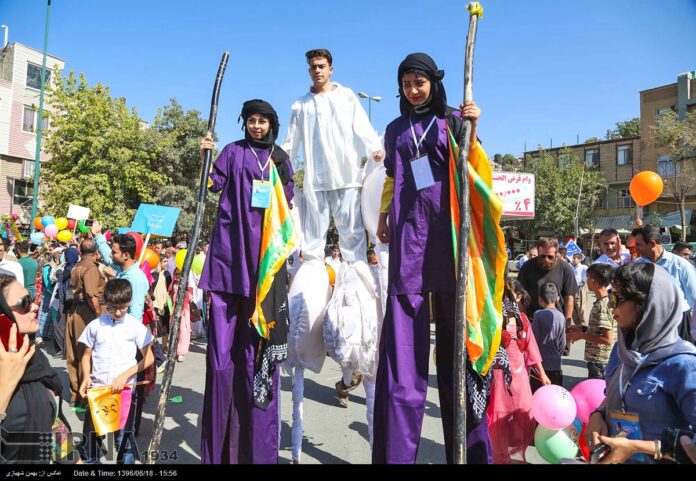
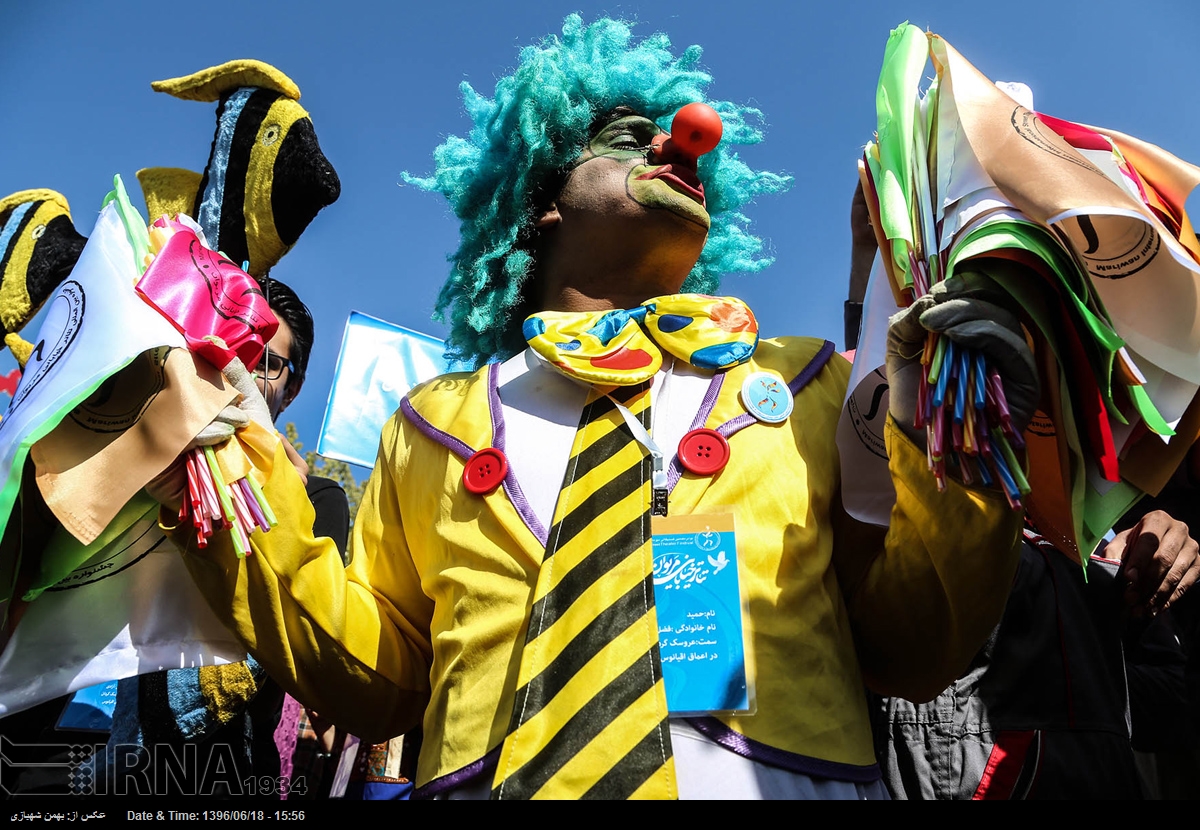
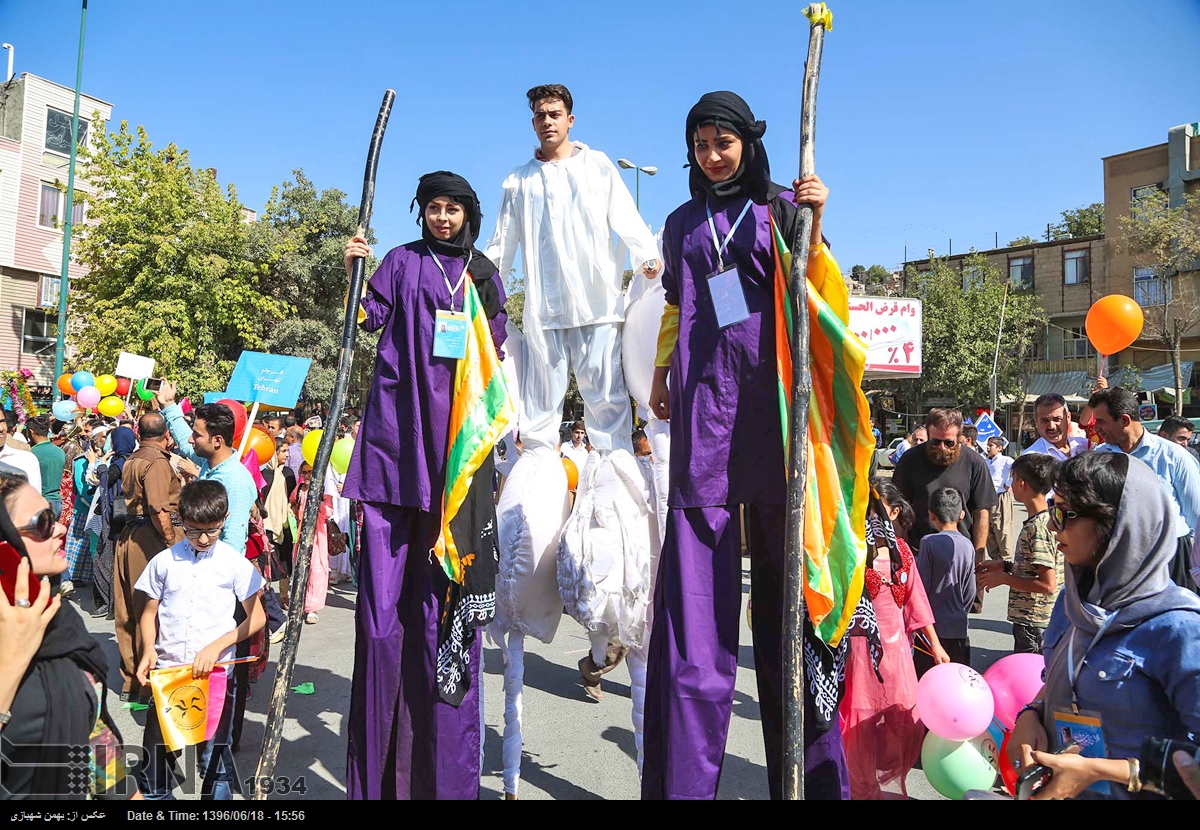
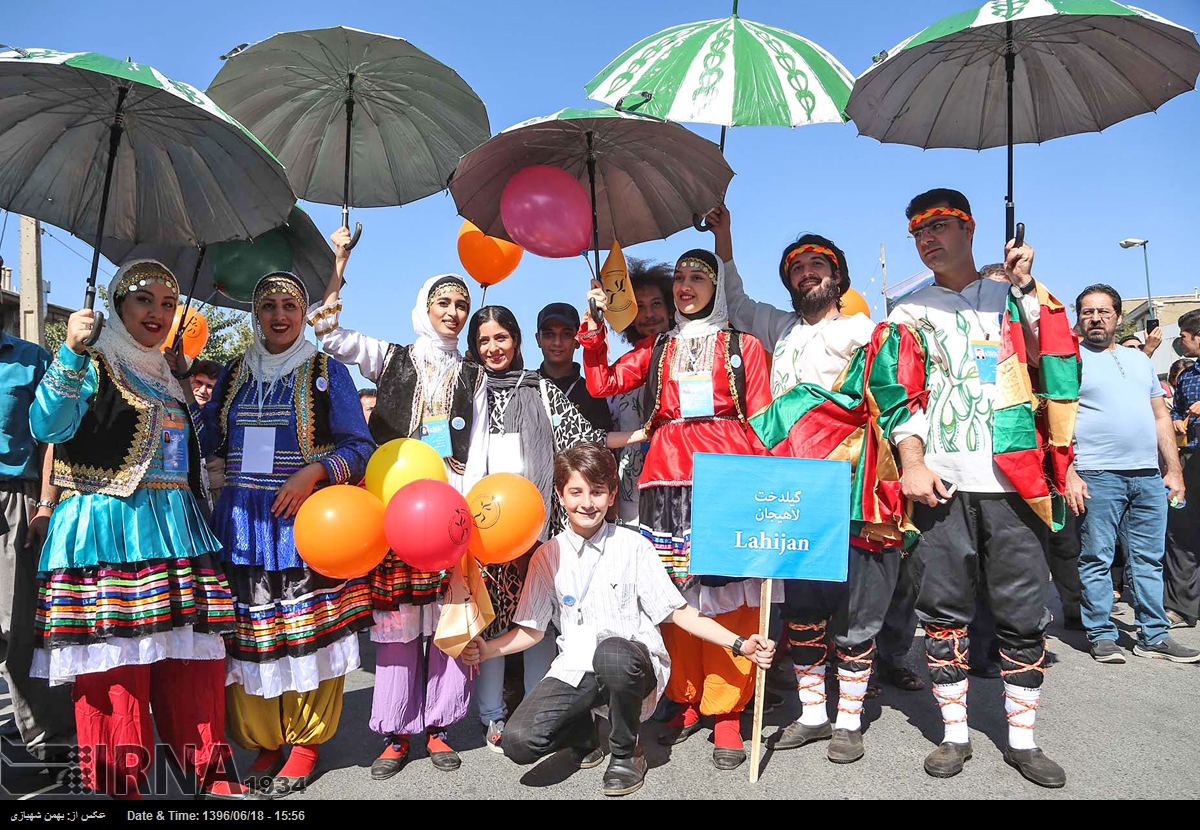
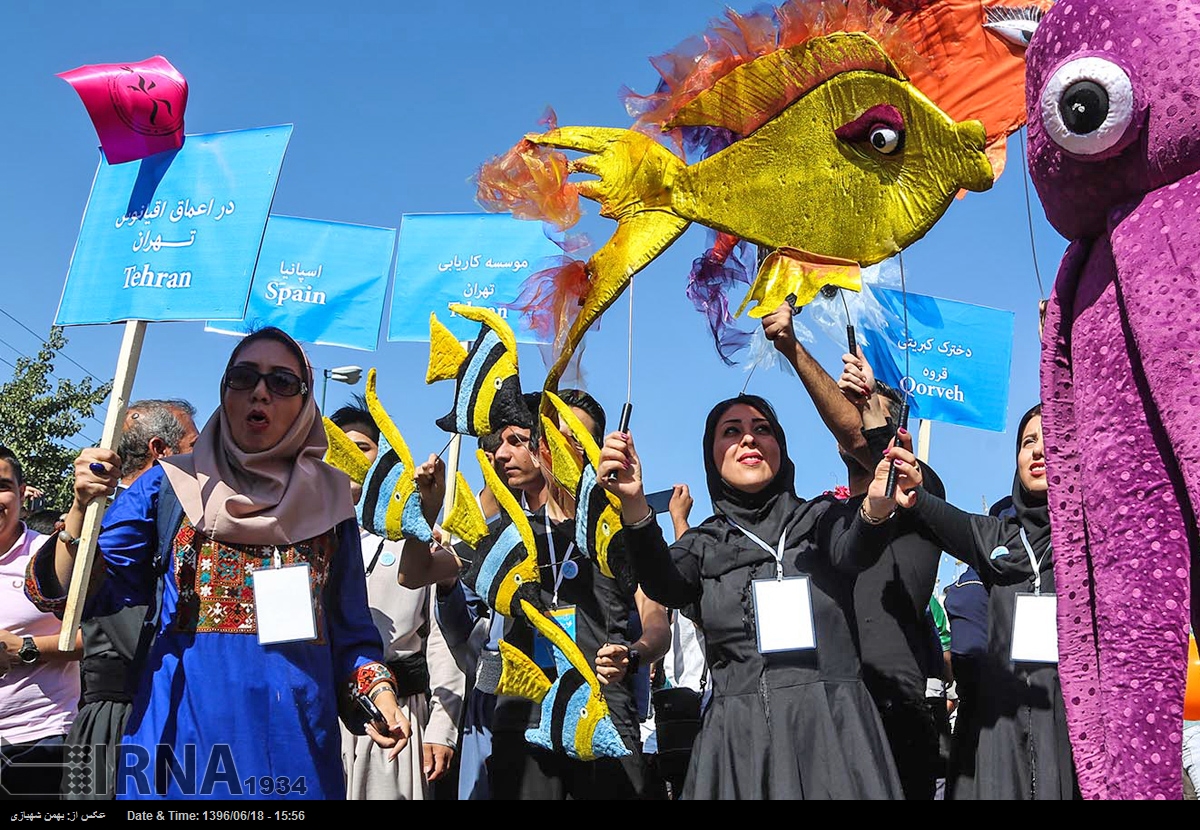
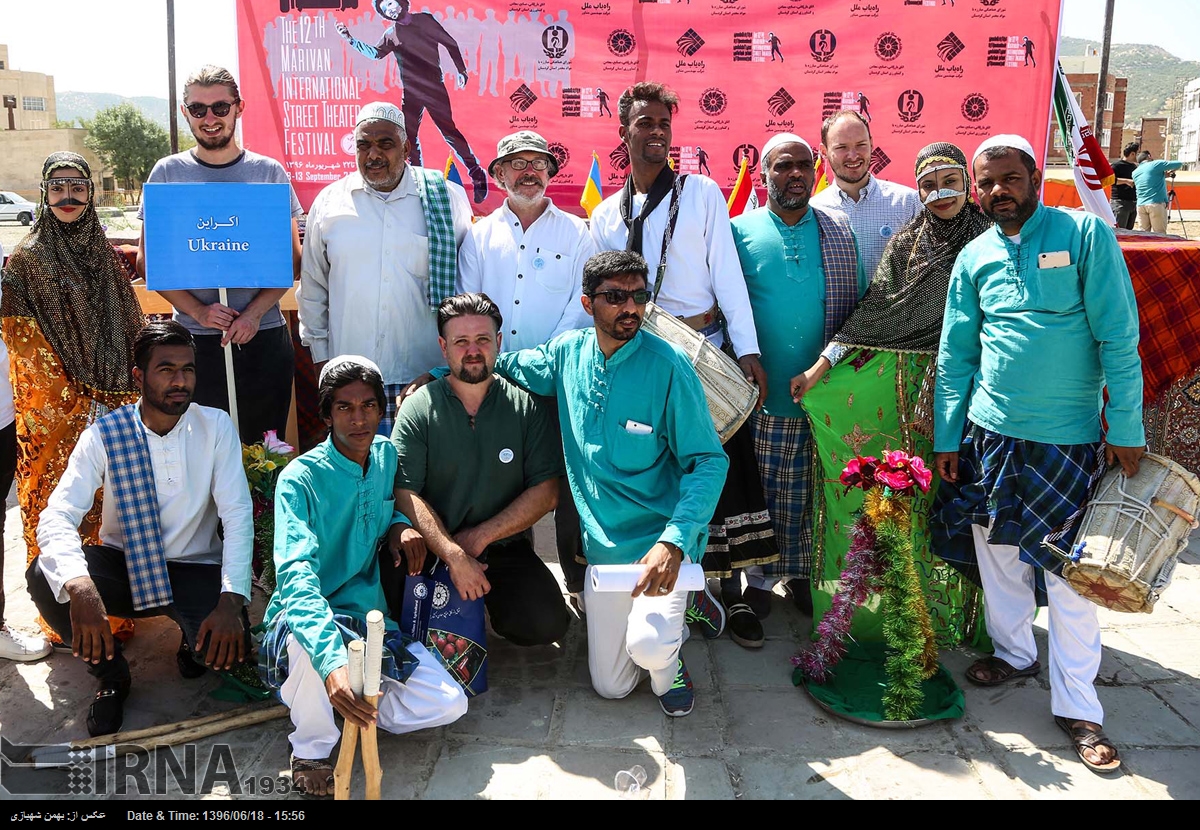
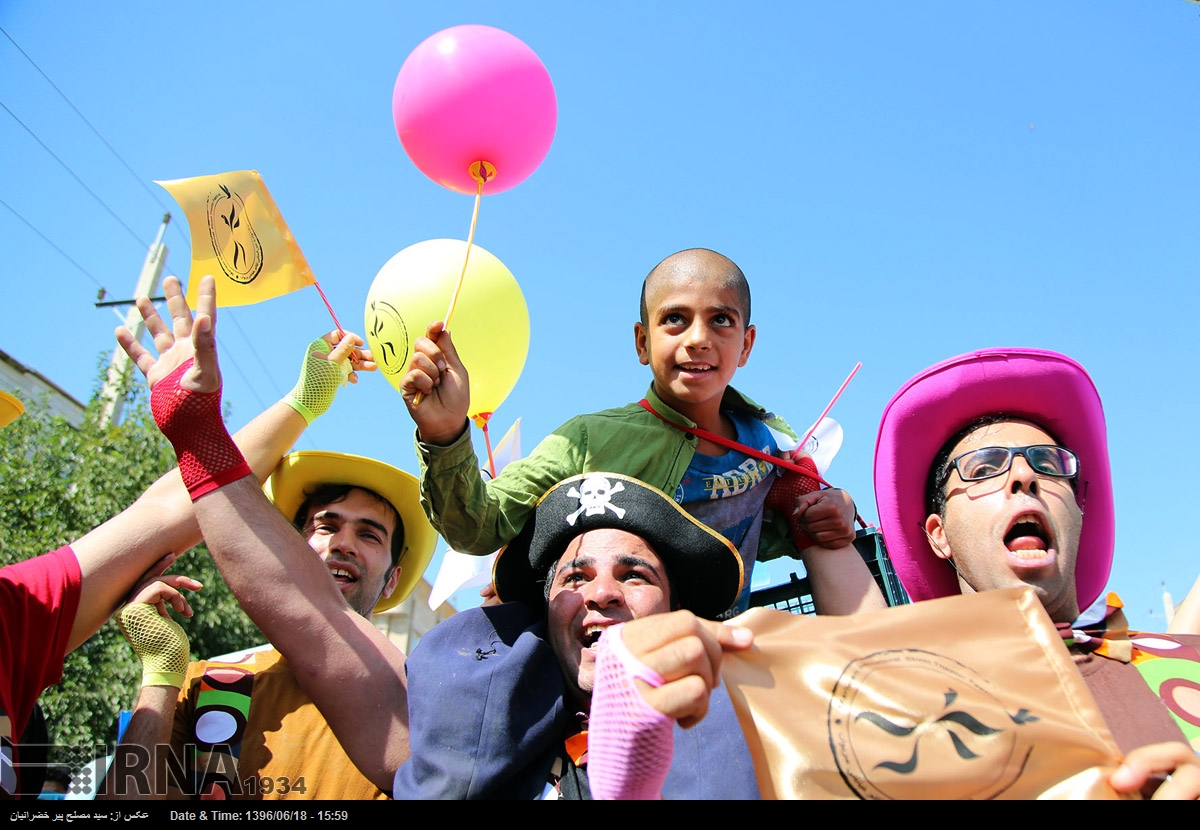
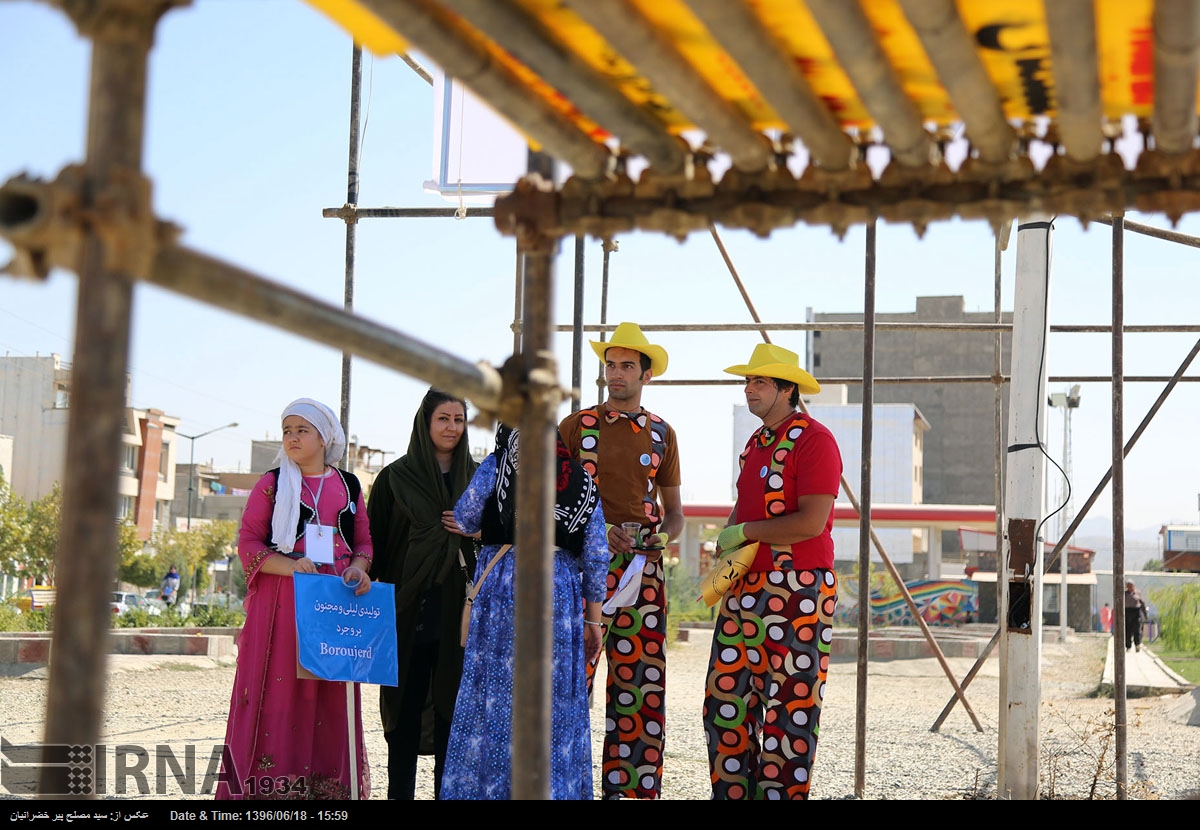
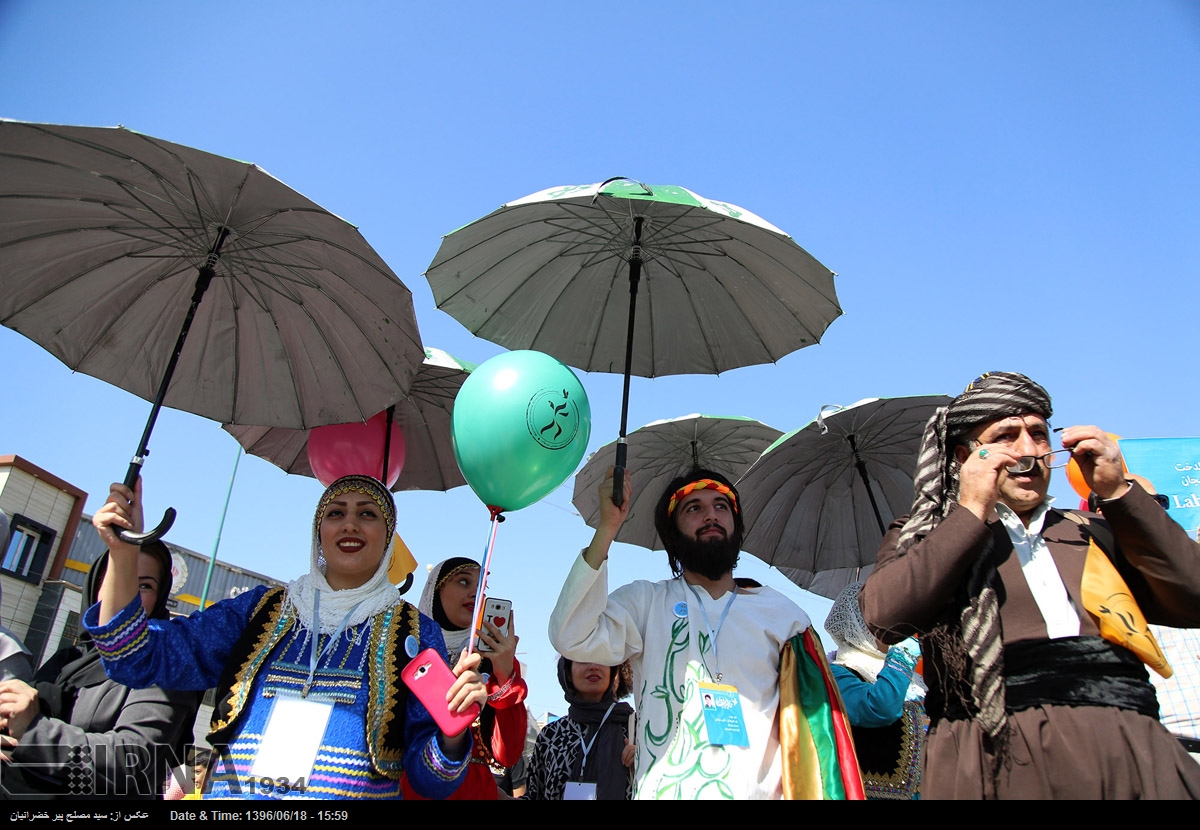
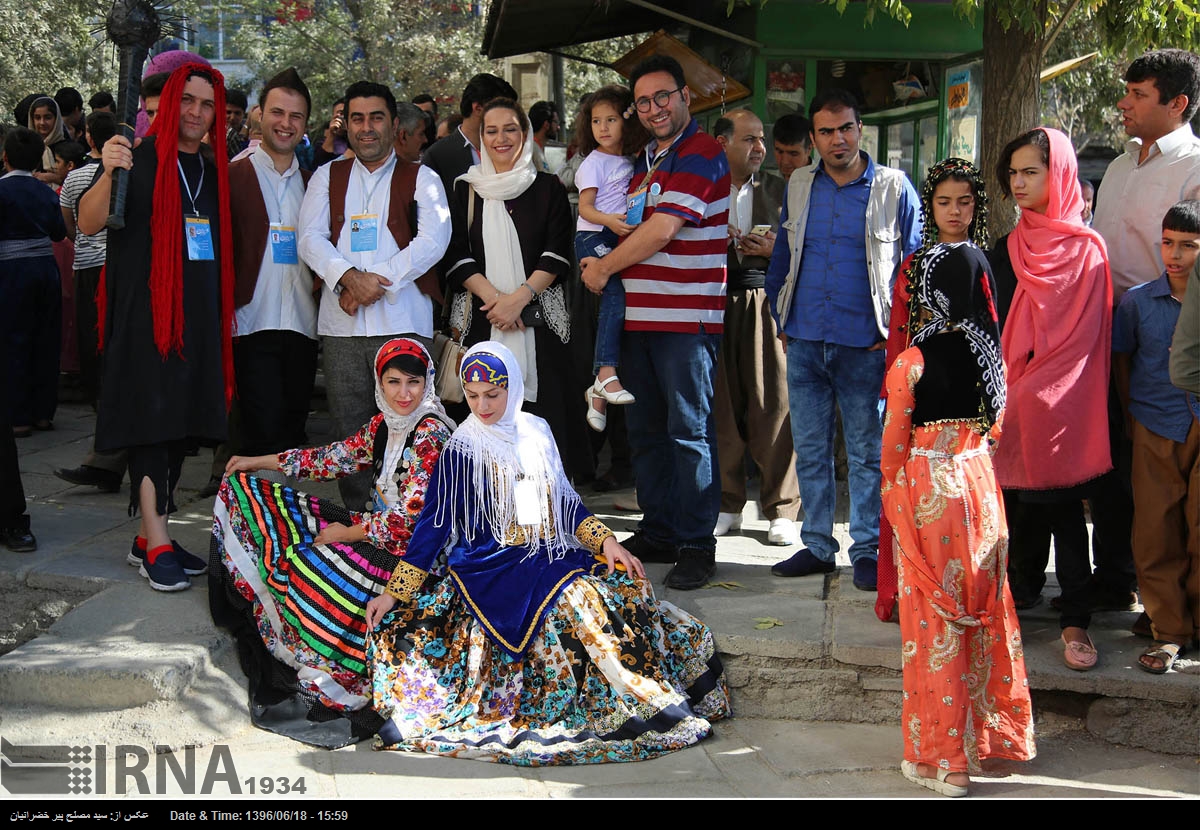
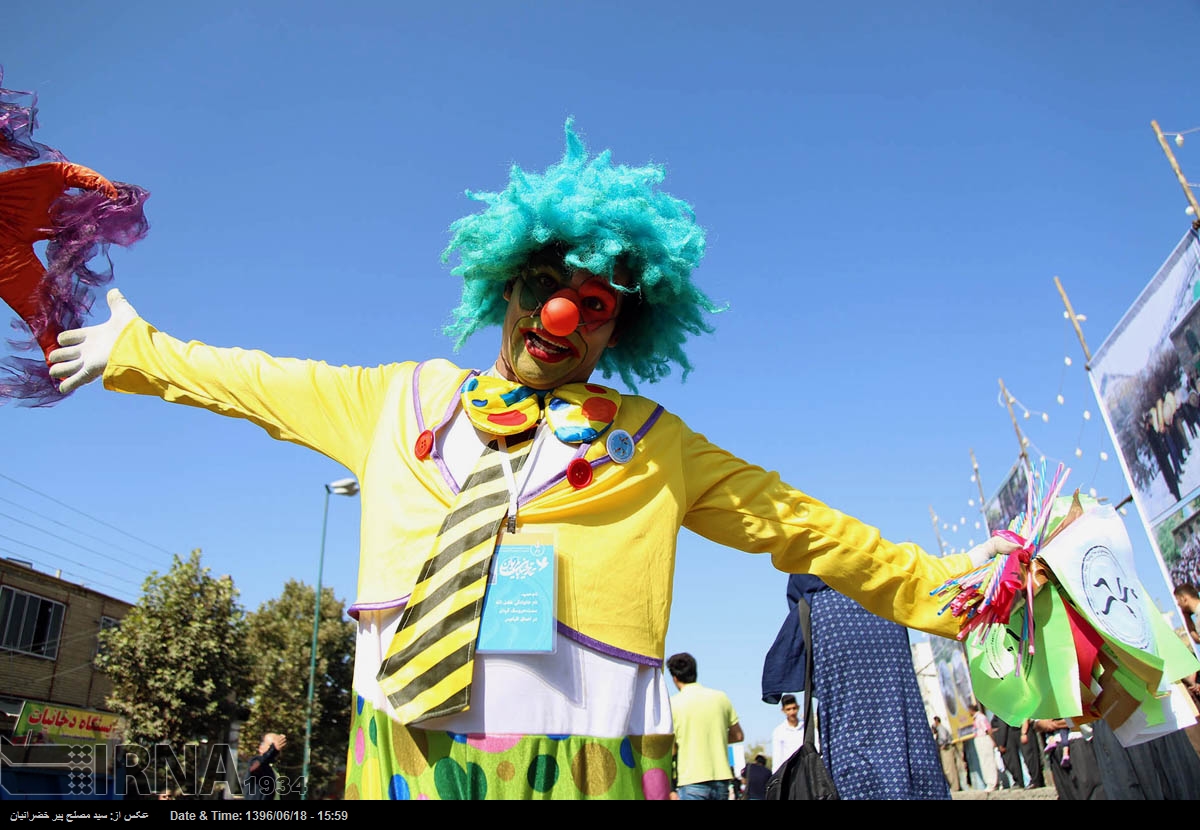
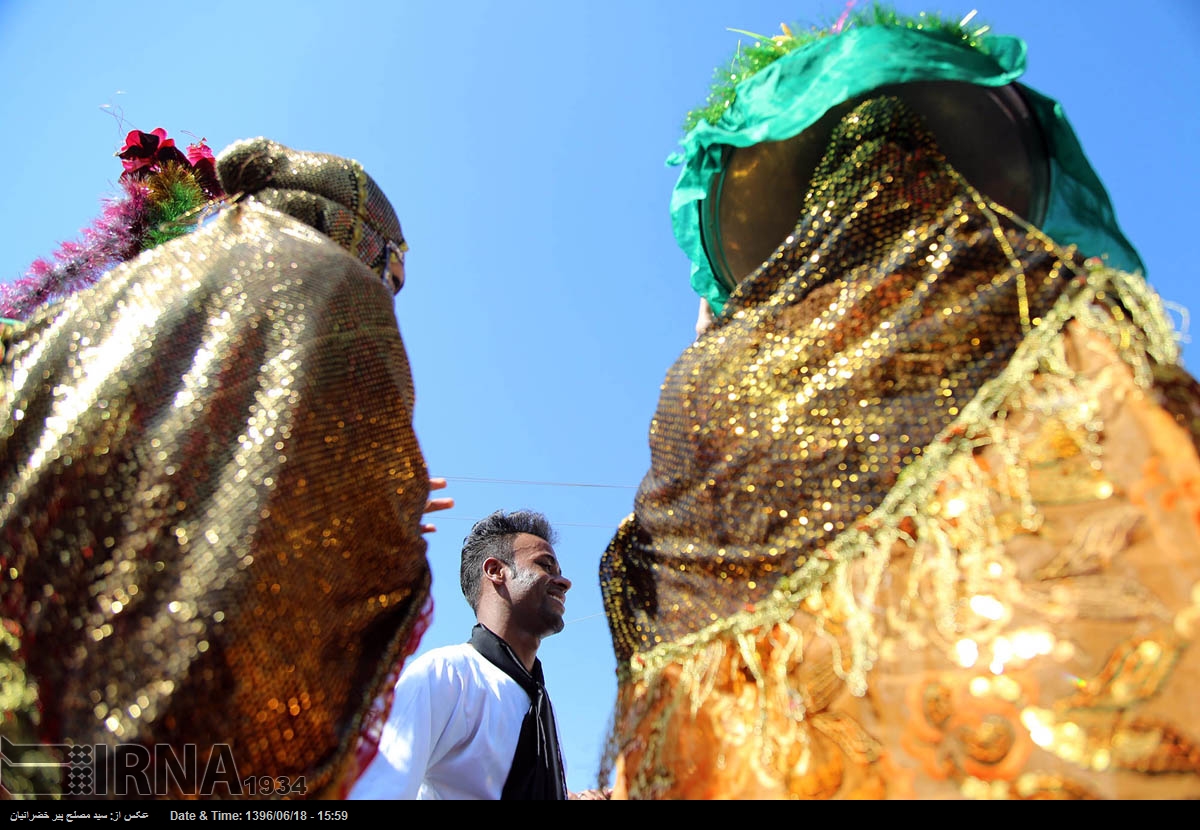
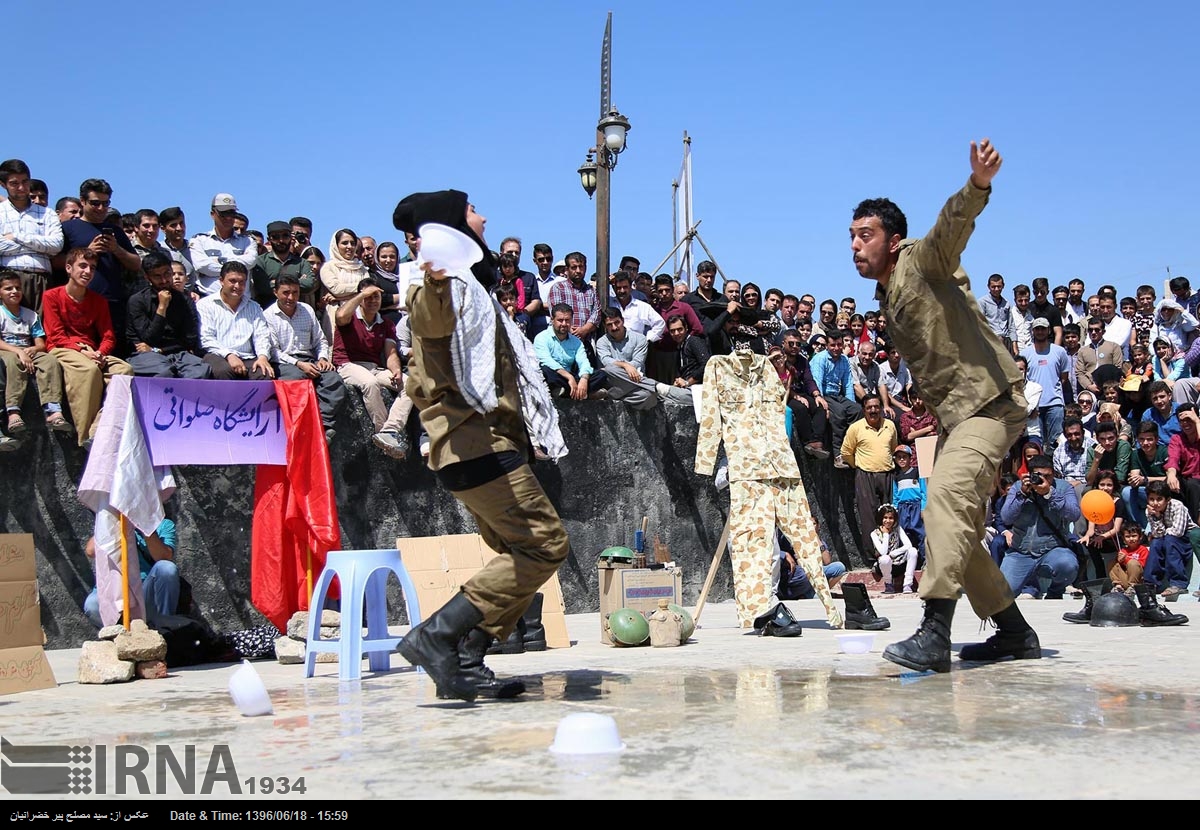
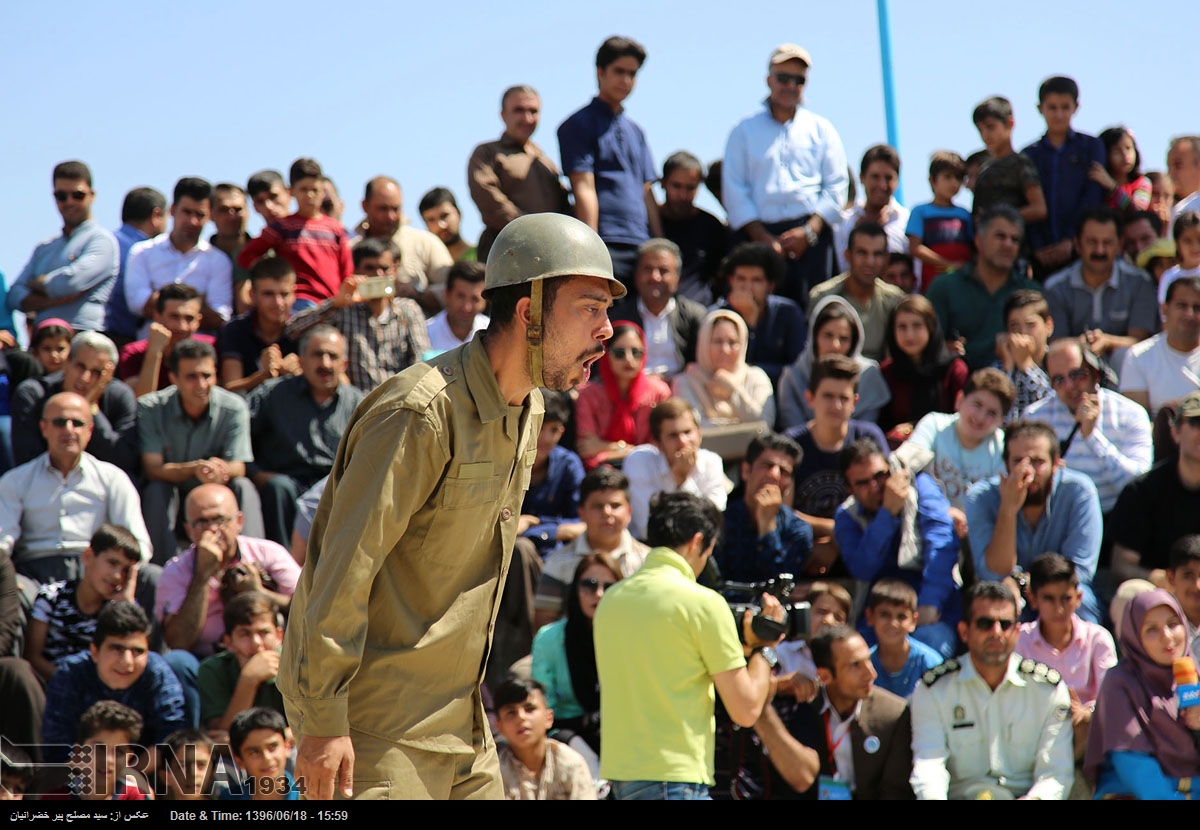
Int’l Street Theatre Festival Opens in Iran’s Marivan

The secretary of the 12th Marivan International Street Theatre Festival, Fateh Badparva says the event plays host to foreign groups form six countries.

According to a Farsi report by the Mehr News Agency, among the foreign plays to be performed by the six groups in this edition of the fest are ‘Deux Secondes’ (Two Seconds) from France written and directed by Amandine Barillon and ‘The Seagull’ from Ukraine written by well-known Russian playwright and short story writer, Anton Chekhov, directed by Laroslav Fedoryshyn.

Badparva listed other foreign plays to be staged in the fest as ‘Instead of Fish’ from Iraq written and directed by Hunar Taher, ‘The Crazy Clown’ from Spain directed by Wilson Hernando Novoa Gallego, ‘Lord of the Clean’ from Brazil written and directed by Héctor López Girondo and ‘The Garden of Dreams’ from Azerbaijan written and directed by Parviz Bashardust and Imam Hasanov, respectively.

In addition to domestic media, 20 foreign news agency have voiced willingness to cover the event.

The festival was inaugurated with a carnival, and will be open to visitors until September 13 in Marivan Country in Kurdistan Province, western Iran.

At the 2006 census, the population of Marivan was 91,664, in 22,440 families.

Iran Welcomes Joint Ventures with Germany: Health Minister

Iran Welcomes Joint Ventures with Germany: Health Minister

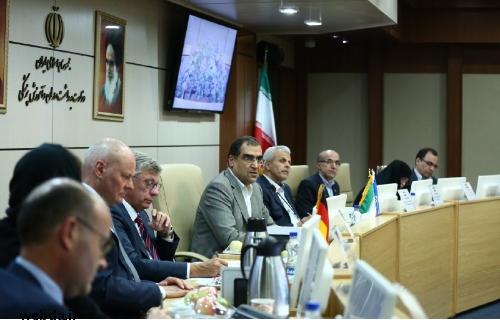
Minister of Health and Medical Education Seyyed Hassan Qazizadeh Hashemi said top officials of Iran and Germany have shown great willingness to foster relations in all fields.

Speaking in a meeting with the officials of Germany’s Federal Ministry of Health, he added the Western European country has always been a familiar and long-standing partner of Iran, expressing the hope that the two sides could also form an effective partnership in the field of health.

According to a Farsi report by the Arya News Agency, Qazizadeh Hashemi said, “I am confident that our German friends are familiar with Iran’s relative capabilities in the fields of medical sciences and services as well as health network.”

“Medical sciences in Iran are merged with the country’s system for providing health services, meaning that our higher education has become a part of the Ministry of Health. Each year, a total of 200,000 students study medicine in Iranian medical faculties.”

The minister added the two countries have close cooperation in the fields of producing foodstuff and medicines as well as providing hospital services, particularly in medical equipment industry.

This is because the history of cooperation between Iranian and German companies dates back to half a century ago, he said.

Qazizadeh Hashemi said what took place following the going into effect of the nuclear deal between Tehran and world powers can prepare the ground for increased relations between Iranian and German companies during President Rouhani’s second term in office.

He also noted the Islamic Republic welcomes joint investments and ventures with Germany to develop modern technologies and create job opportunities as well as market in Iran’s health sector.

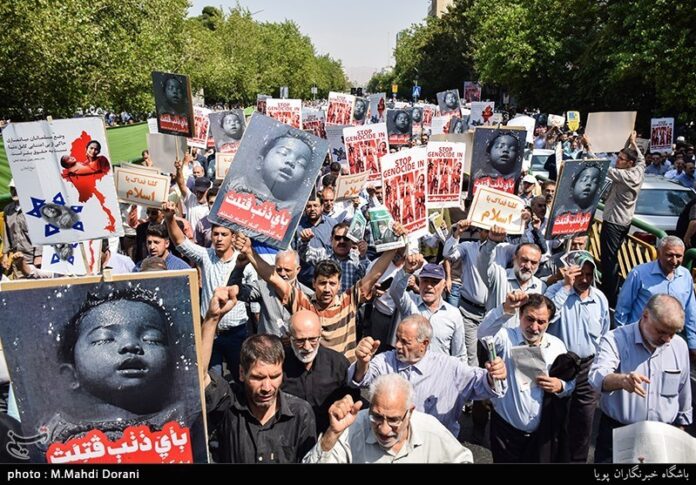
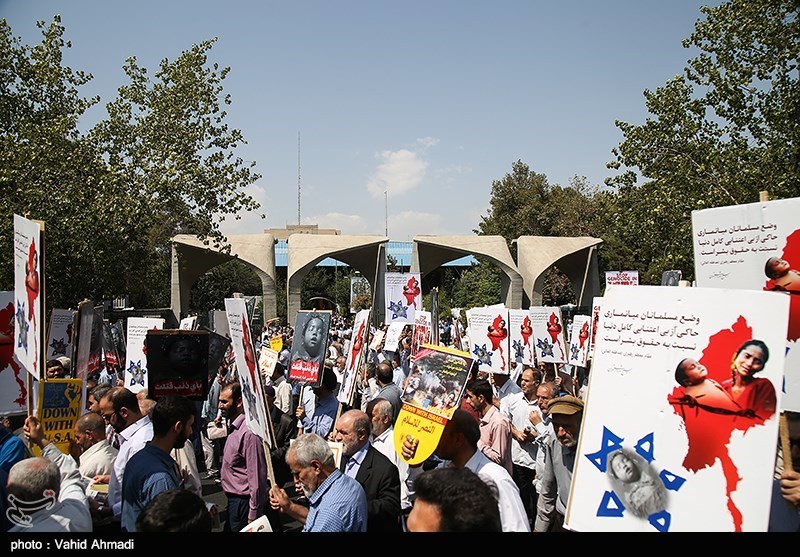
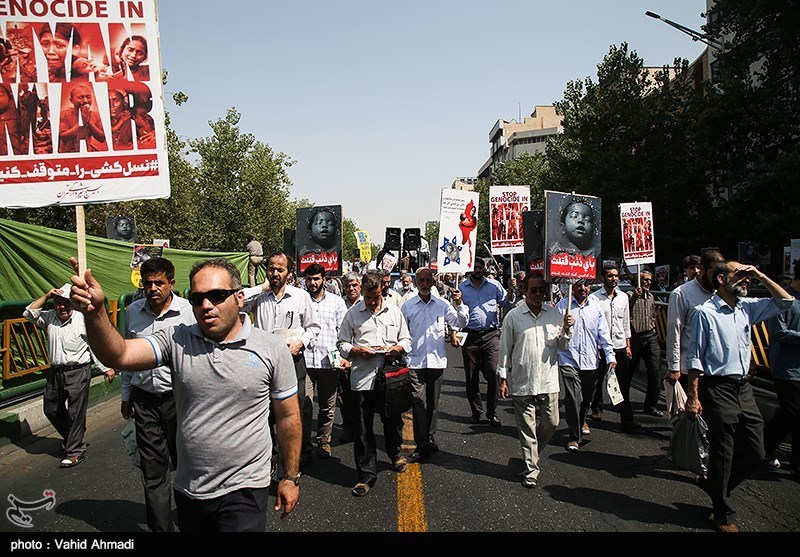
Nationwide Rallies Held in Iran to Condemn Myanmar Genocide

People from all walks of life attended the demonstrations, which were held after weekly Friday prayers.

Angry protesters slammed the heinous crimes committed against Muslims in Myanmar.

In Tehran, demonstrators condemned, in a resolution read at the end of the rally, the silence shown by the international circles and heads of Islamic countries on the crimes committed against Rohingya Muslims.

They also asked for the dispatch of fact-finding committee to the region.

The Rohingya Muslims in Myanmar have long faced severe discrimination and were the targets of violence in 2012 that killed hundreds and drove about 140,000 people from their homes to camps for the internally displaced.

Nearly 150,000 Muslims have fled Myanmar for Bangladesh in less than two weeks, officials said in September.

In a rare letter to the UN Security Council on Tuesday, Secretary-General Antonio Guterres expressed concern that the violence in Rakhine could spiral into a “humanitarian catastrophe”.

The Burma Human Rights Network (BHRN) said on Tuesday that the persecution is backed by the government, elements among the country’s Buddhist monks and ultra-nationalist civilian groups.

Iran to Remain Committed to JCPOA Even If US Withdraws

“We are continuously assessing if this agreement benefits us, or if the price is too high to stay in the deal. If the United States pulls out of the agreement, but the rest of the countries stay committed — namely Britain, France, Germany, China, Russia — then Iran would most probably stick with the commitments to the agreement without the US,” Ali Akbar Salehi said in a Friday interview with Der Spiegel.

“But if the US leaves the treaty and Europe follows, then this deal will certainly collapse and Iran will go back to what it was before, and, technically speaking, to a much higher level. As a person who has taken part in these negotiations, I wouldn’t like to see that happen,” he pointed out.

“I think our partners in this treaty have more to lose than we do” if the agreement falls through, the AEOI chief added.

Salehi referred to Washington’s new sanctions and pressures against Iran, saying, “The US is trying to poison the business environment. It discourages big banks and companies from working with Iran. It is fearmongering. But in reality they cannot accomplish much. There is a lot of rhetoric.”

The AEOI chief argued that the US refusal to waive Tehran’s nuclear-related sanctions constitutes “significant noncompliance” with the nuclear deal on their part.

‘Boosting military capability Iran’s right’ 

The official rejected US allegations against Iran over its ballistic missile program and noted that the Islamic Republic’s military capability has nothing to do with its nuclear activities.

“If the US considers this an issue, then it is their problem. Nowhere in the nuclear agreement does it say that Iran does not have the right to develop its missile capacity. We are exercising our rights and it is the other side that is trying to interpret this as a provocative act,” Salehi pointed out.

Iran’s nuclear agreement, known as the Joint Comprehensive Plan of Action (JCPOA), was inked between Iran and the P5+1 countries — namely the US, Russia, China, France, and Britain plus Germany — in July 2015 and took effect in January 2016.

Under the deal, limits were put on Iran’s nuclear activities in exchange for the removal of all nuclear-related bans imposed on the Islamic Republic, among other things.

Iran to Remain Committed to JCPOA Even If US Withdraws

US President Donald Trump, who had made no secret of opposing the nuclear agreement in his election campaign, has threatened to “tear up” the agreement, calling it “the worst deal ever negotiated.”

In late August, the Trump administration sent US Ambassador to the UN Nikki Haley to Vienna to lobby with the International Atomic Energy Agency (IAEA) to request access to Iranian military sites as part of the deal, in spite of the fact that the IAEA has confirmed Iran’s compliance with the JCPOA in all its reports.

Tehran has repeatedly contended that Washington’s demands for access to Iran’s military sites are aimed at politicizing the JCPOA and that issues pertaining to the Islamic Republic’s defense capabilities are non-negotiable.

Trump has also set up a team of his White House confidants to present him with “options” other than certifying Iranian compliance with the deal to the Congress. Such certification is needed by US law every 90 days in order for the Congress to continue to withhold nuclear-related sanctions against Iran.

The Trump administration has twice so far certified Iran’s compliance with the deal. US media reports said Trump agreed to those certifications only “reluctantly.” All indications are that he wants to avoid a third certification.

The White House has been further pressuring US intelligence officials to produce intelligence that could be used to declare Iran in violation of the nuclear agreement.

Riyadh Suspends Dialogue with Doha Shortly after Rulers’ Contact

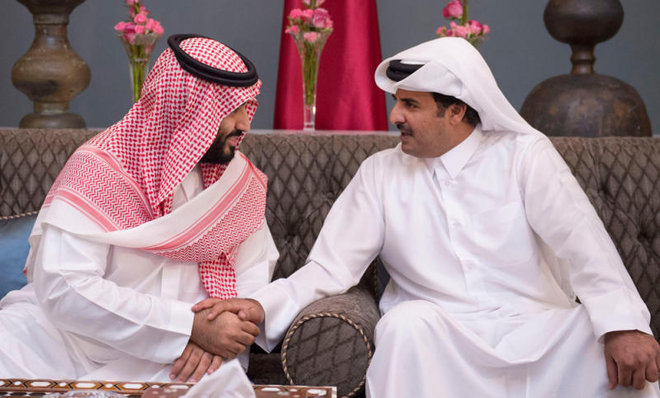
In a phone call on Friday, Saudi Arabia’s Crown Prince Mohammed bin Salman and Qatar’s Emir Sheikh Tamim bin Hamad al-Thani discussed the dispute between the two sides, state media from both countries reported.

“During the call, the Emir of Qatar expressed his desire to sit at the dialogue table and discuss the demands of the four countries to ensure the interests of all,” Saudi state news agency SPA reported,  adding that “the details will be announced later” after consulting with the United Arab Emirates (UAE), Bahrain and Egypt.

The phone call was the first publicly reported contact between the two leaders since the start of the crisis on June 5. Qatar’s state news agency QNA said the call was based on coordination of US President Donald Trump who had earlier spoken with Sheikh Tamim.

QNA reported that during the phone call both sides “stressed the need to resolve the crisis by sitting down to the dialogue table to ensure the unity and stability” of (Persian) Gulf Cooperation Council countries.

Sheikh Tamim welcomed the proposal of Prince Mohammed during the call “to assign two envoys to resolve controversial issues in a way that does not affect the sovereignty of the states,” the Qatari news agency added.

However, Saudi Arabia issued a second statement minutes later, citing an unnamed official at the ministry of the foreign affairs denying the QNA report.

“What was published on the Qatar News Agency is a continuation of the distortion of the Qatari authority of the facts,” SPA reported citing the Saudi official.

“The Kingdom of Saudi Arabia announces the suspension of any dialogue or communication with the authority in Qatar until a clear statement is issued clarifying its position in public.”

Iran Legally Pursuing Terrorist Attack on Its Hajj Pilgrim in KSA

The head of Iranian Hajj and Pilgrimage Organization, Hamid Mohammadi said the Iranian cleric attacked on Wednesday by three elements in Mecca is currently in good condition.

“Fortunately, there is no need for surgery. He will leave hospital very soon,” he added.

“Iran is seriously following up the issue with Saudi officials,” he added, according to a Farsi report by Al Alam News Network.

Iran attaches great significance to the security of its pilgrims in Saudi Arabia, he noted, adding that the country is following the issue seriously.

Mohammadi also said the Saudi police have arrested at least three people in connection with the attack and investigations are underway into the issue.

Later on Friday, Seyyed Ali Qazi-Askar, the Iranian Leader’s representative in Hajj and Pilgrimage Affairs, also paid a visit to the wounded cleric.

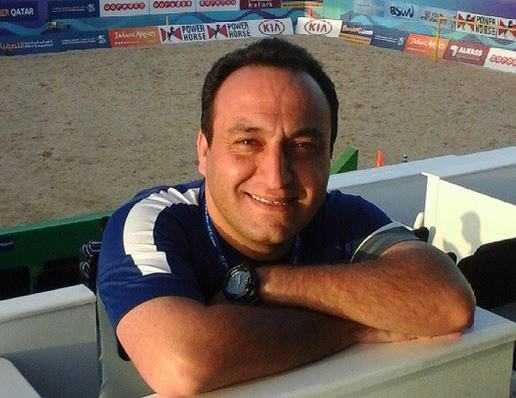
Iranian Coach of Myanmar Futsal Teams Resigns to Protest Rohingya Genocide

Kordi, who was expected to travel to Myanmar on Friday through Qatar, sent an email to Myanmar Football Association extending his resignation in protest against the mass murder of Rohingya Muslims in the country.

According to a Farsi report by the Varzesh 3 news website, Kordi has coached some leading Asian football clubs like Al Ahli, Al-Sad, Al-Arabi, Eram Kish, Persepolis, and so on.

He was the head coach of Myanmar futsal teams in various age groups. He was also the technical manager of Myanmar football youths teams.

Myanmar’s security forces have been attacking Rohingyas and torching their villages since October 2016 to push them out of the western state of Rakhine.

The attacks have been intensified since August 25, with State Counselor Aung San Suu Kyi ignoring international demands to call off the operation.

Thousands of Rohingyas have already fled their homeland to take refuge in Bangladesh. Many people have been killed during the perilous boat journeys on the Naf River, which separates the two neighboring countries.

The refugees have also tried to cross the border into Malaysia, Indonesia and Thailand.

Iranian Founder of Fuzzy Logic Dies at 96 in US

Lotfi Zadeh passed away in Berkeley, California, on Wednesday, Iranian NASA scientist, Firouz Naderi, announced the news on his Instagram page.

Iranian Founder of Fuzzy Logic Dies at 96 in US

Apart from being a famous mathematician, Lotfi Zadeh was also a computer scientist, electrical engineer, artificial intelligence researcher and professor emeritus of computer science at the University of California, Berkeley.

His impressively long list of awards includes, among other things, over 20 honorary doctorate degrees from prestigious universities.

He is best known for inventing the field of ‘fuzzy logic’ in mathematics in 1965 which enabled computers and machines to understand human instructions and expressions that are incomprehensible for conventional computer programs.

The fuzzy logic has become one of the most cited theories of the 20th century. The concept led to the development of diffuse logic which opened up a whole new field of research and laid the groundwork for a new generation of more efficient technological devices, including in video cameras, washing machines, medical instruments and complex systems such as automatic trains, plants, waste management and intelligent control of car engines.

The concept also transformed industrial processes by simplifying the design of products and making them more user-friendly, efficient and easy to upgrade, while reducing production costs.

The renowned scientist also pioneered the development of the Z-transform method in discrete time signal processing, digital signal processing, digital control and other discrete-time systems used in industry and research.

He was the author of 245 academic papers and held editorial positions in 75 scientific journals.

Lotfi Zadeh was born in the former Soviet Union republic of Azerbaijan in Baku in 1921 to an Iranian father and an Iranian Jewish mother.

Iranian Founder of Fuzzy Logic Dies at 96 in US

In 1931, the family moved to Iran and Lotfi Zadeh continued his education in the country until he graduated from the University of Tehran with a degree in electrical engineering in 1942.

In 1943, Lotfi Zadeh immigrated to the US and stayed there for the rest of his life. In 1946, he received an MS degree in electrical engineering from MIT and in 1949 he received his PhD in electrical engineering from Columbia University.

“The question really is not whether I am American, Russian, Iranian, Azerbaijani, or anything else. I have been shaped by all these people and cultures and I feel quite comfortable among all of them,” the scientist said in an earlier interview.