Sunday, December 28, 2025
Home Blog Page 3900

A Look at Iranian Newspaper Front Pages on September 3

Newspapers today covered the reports on an upcoming visit of a Saudi delegation to Iran and discussed a possible thaw in relations between Tehran and Riyadh.

Another top story was Iranian Foreign Minister Mohammad Javad Zarif’s response to Nikki Haley, the US Ambassador to the UN, about inspecting Iran’s military sites.

Many women in Iran were surprised on Saturday to see they can buy tickets to watch a FIFA World Cup qualifier between Iran and Syria in Tehran’s Azadi Stadium; however, as newspapers reported today, the Football Federation declared women are still not allowed to go to stadiums, and it was just a bug in the online portal for selling tickets.

The above issues, as well as many more, are highlighted in the following headlines and top stories:

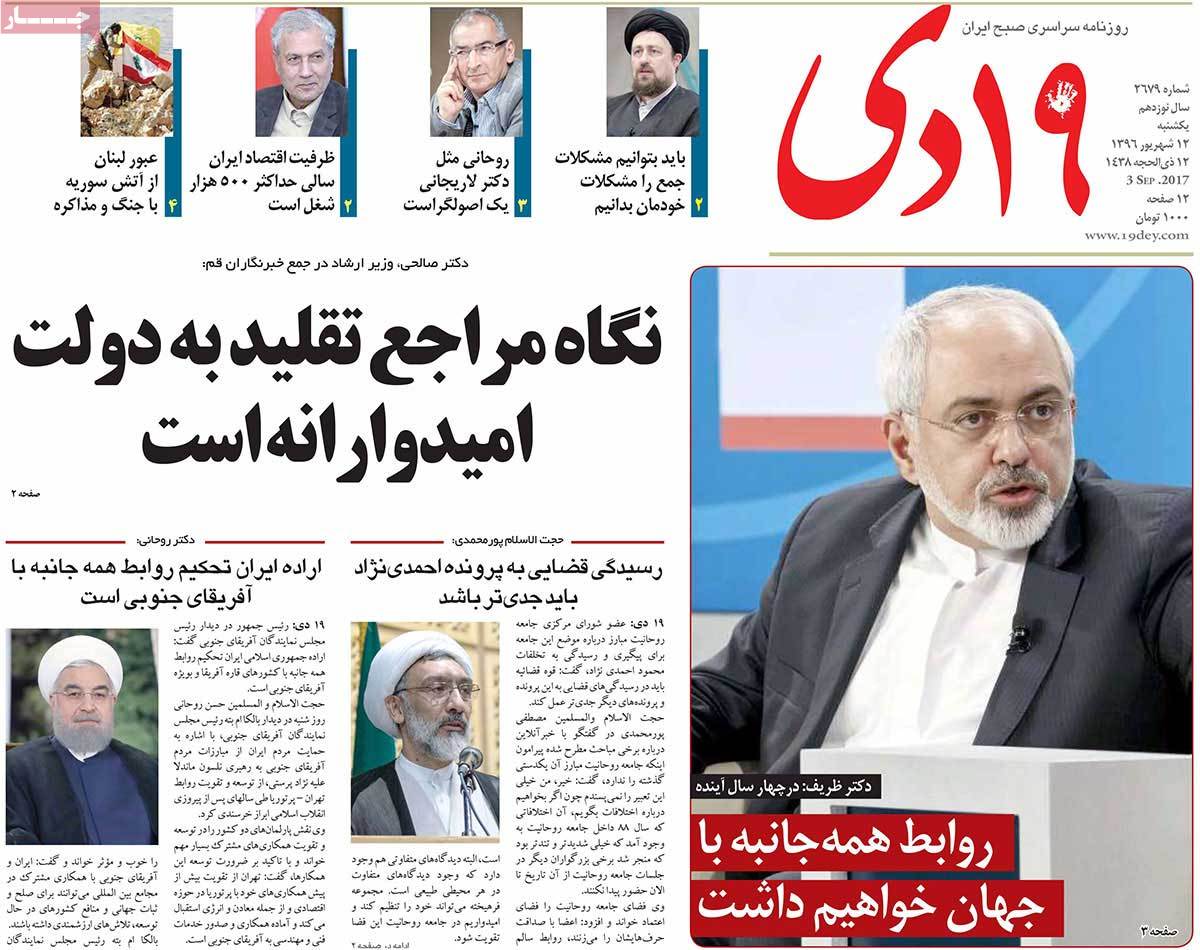
19 Dey:

1- Culture Minister: Senior Clerics Hopeful about Rouhani’s Gov’t

2- Rouhani: Iran Resolved to Strengthen All-Out Ties with S. Africa

3- Zarif: Iran to Have All-Out Relations with World in Next 4 Years
A Look at Iranian Newspaper Front Pages on September 3 - 19 dey


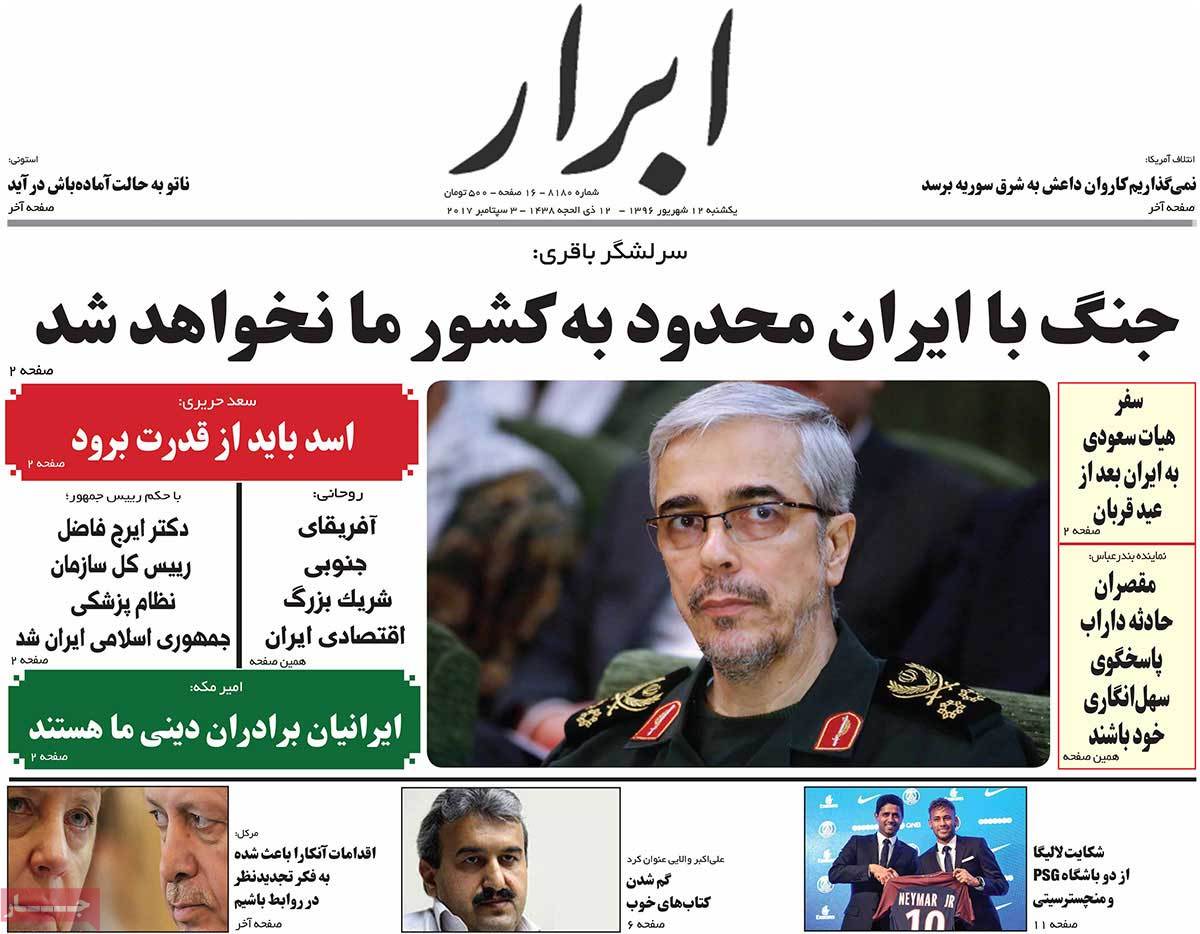
Abrar:

1- Lebanese PM: Assad Should Withdraw from Power

2- US Coalition: We Won’t Let ISIS Convoy Reach Eastern Syria

3- Emir of Mecca: Iranians Are Our Religious Brothers
A Look at Iranian Newspaper Front Pages on September 3 - abrar


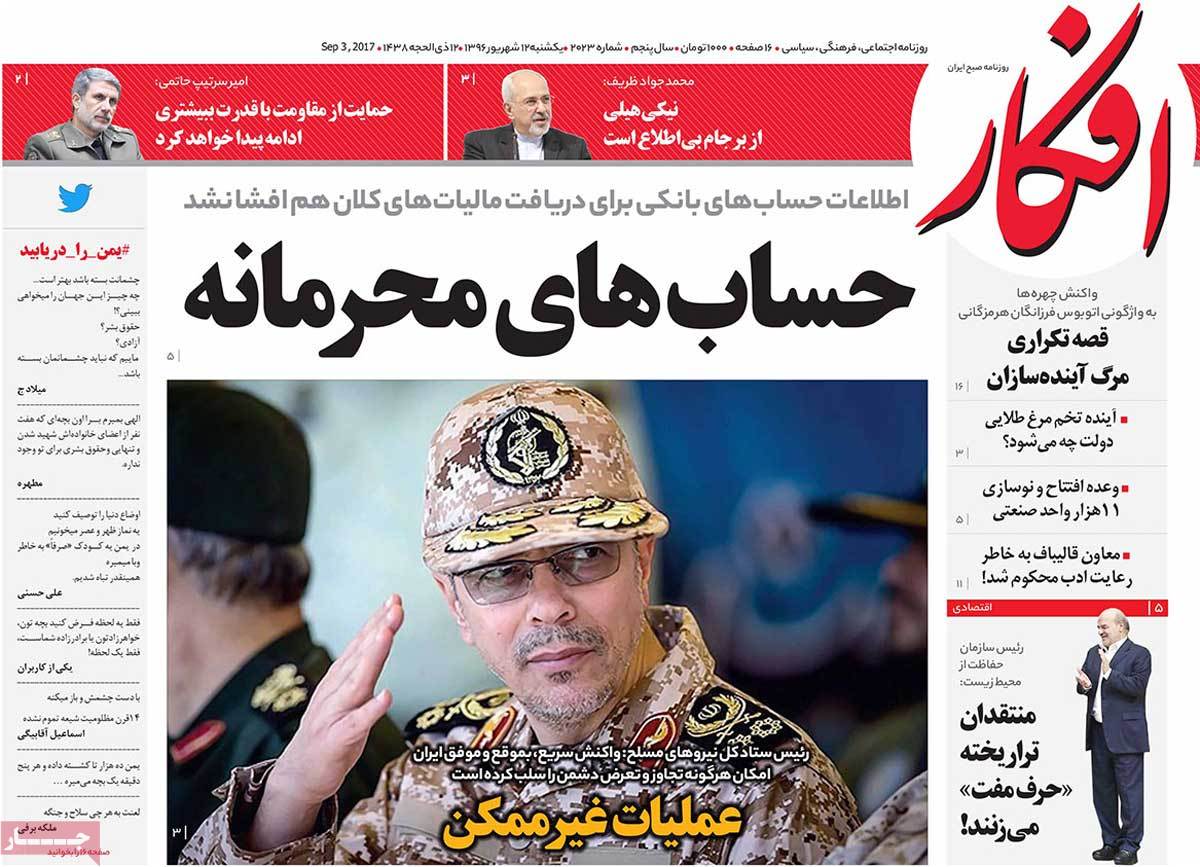
Afkar:

1- Mission Impossible

  • Top Officer: Iran’s Rapid Response Prevents Enemies from Any Aggression

2- Zarif: Haley Ignorant of Nuclear Deal

3- DM: Iran to Continue Support for Resistance More Powerfully
A Look at Iranian Newspaper Front Pages on September 3 - afkar


Aftab-e Yazd:

1- Weak Signals for Tehran-Riyadh Détente: Saudi Diplomatic Delegation to Visit Iran

2- Fresh Attack of Hardliners on JCPOA: Kayhan Says North Korea Has Learnt Lesson from Iran
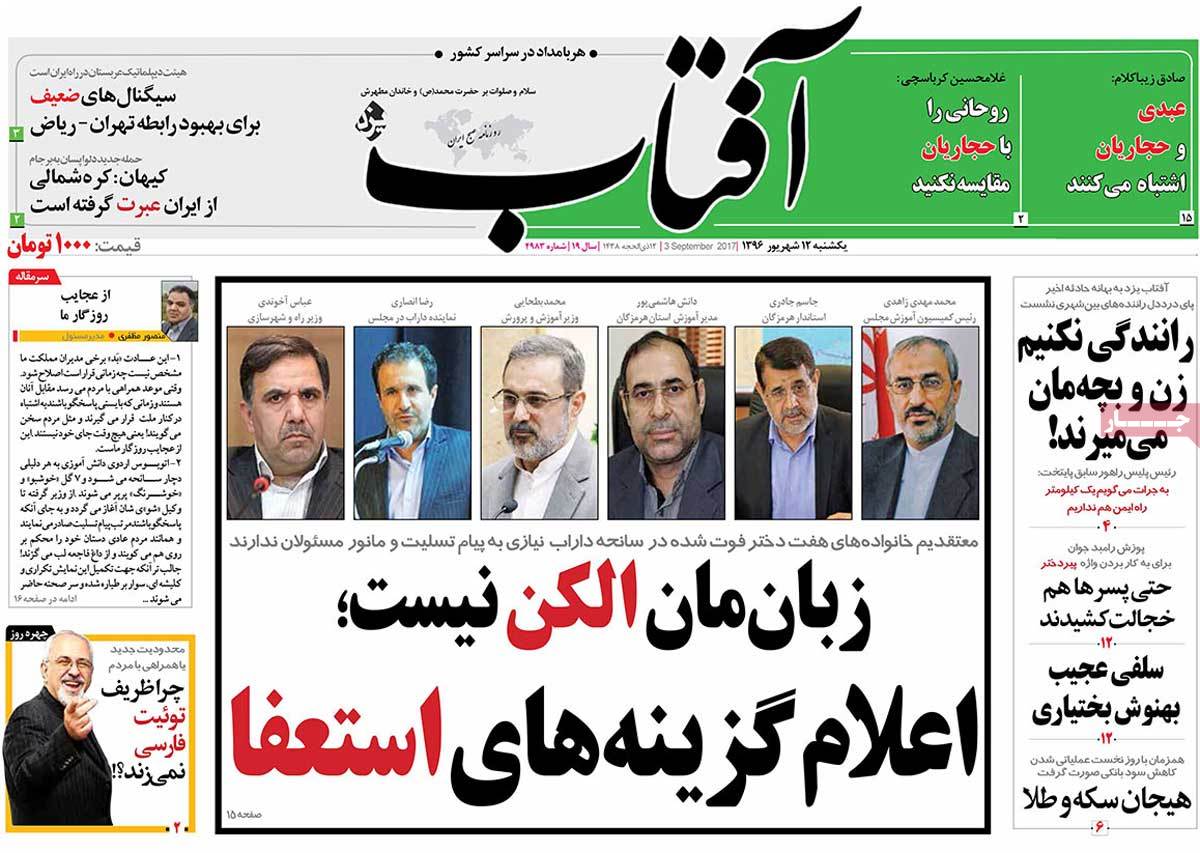
A Look at Iranian Newspaper Front Pages on September 3 - aftab


Arman-e Emrooz:

1- Chief of Staff of Iran’s Armed Forces: War on Iran Not to Be Limited to Our Territory

2- Beginning of Thaw in Iran-Saudi Relations
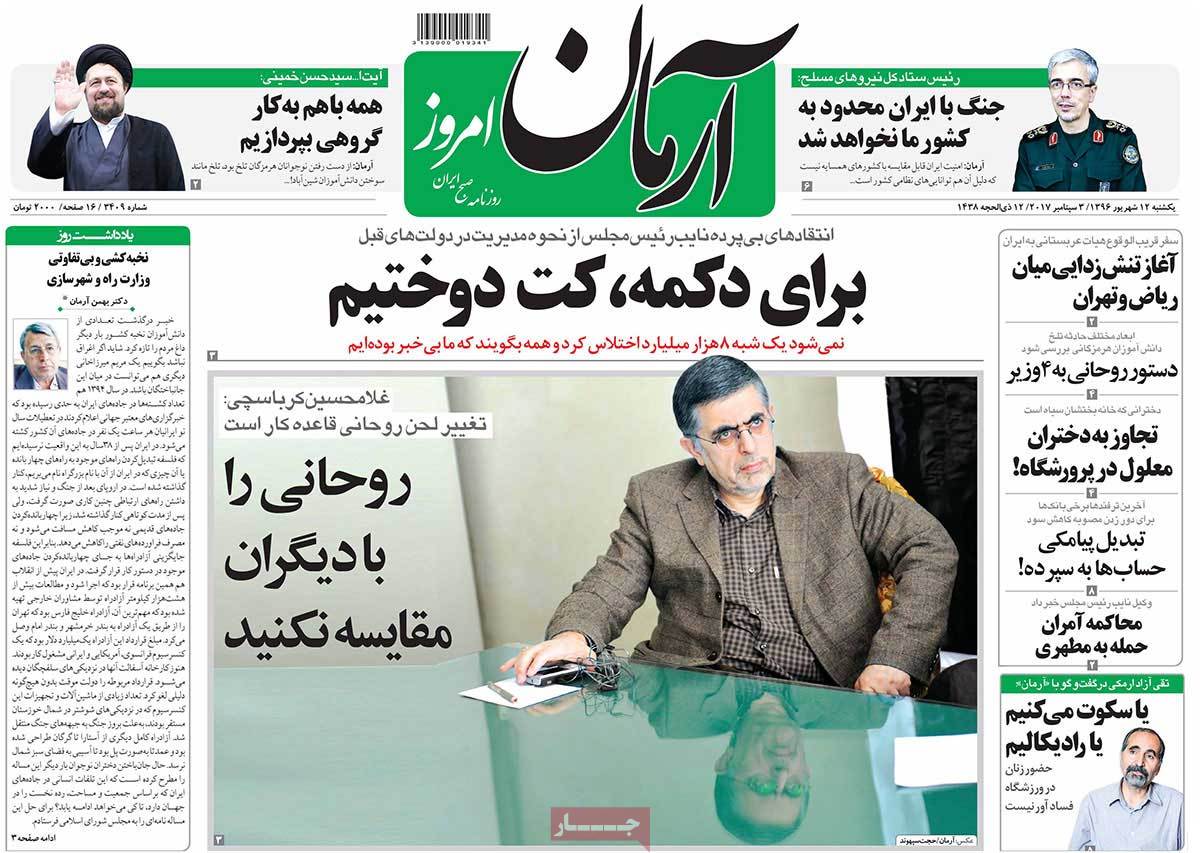
A Look at Iranian Newspaper Front Pages on September 3 - arman


Bahar:

1- Women ‘Respectfully’ Not Allowed to Go to Stadiums despite Popular Demands
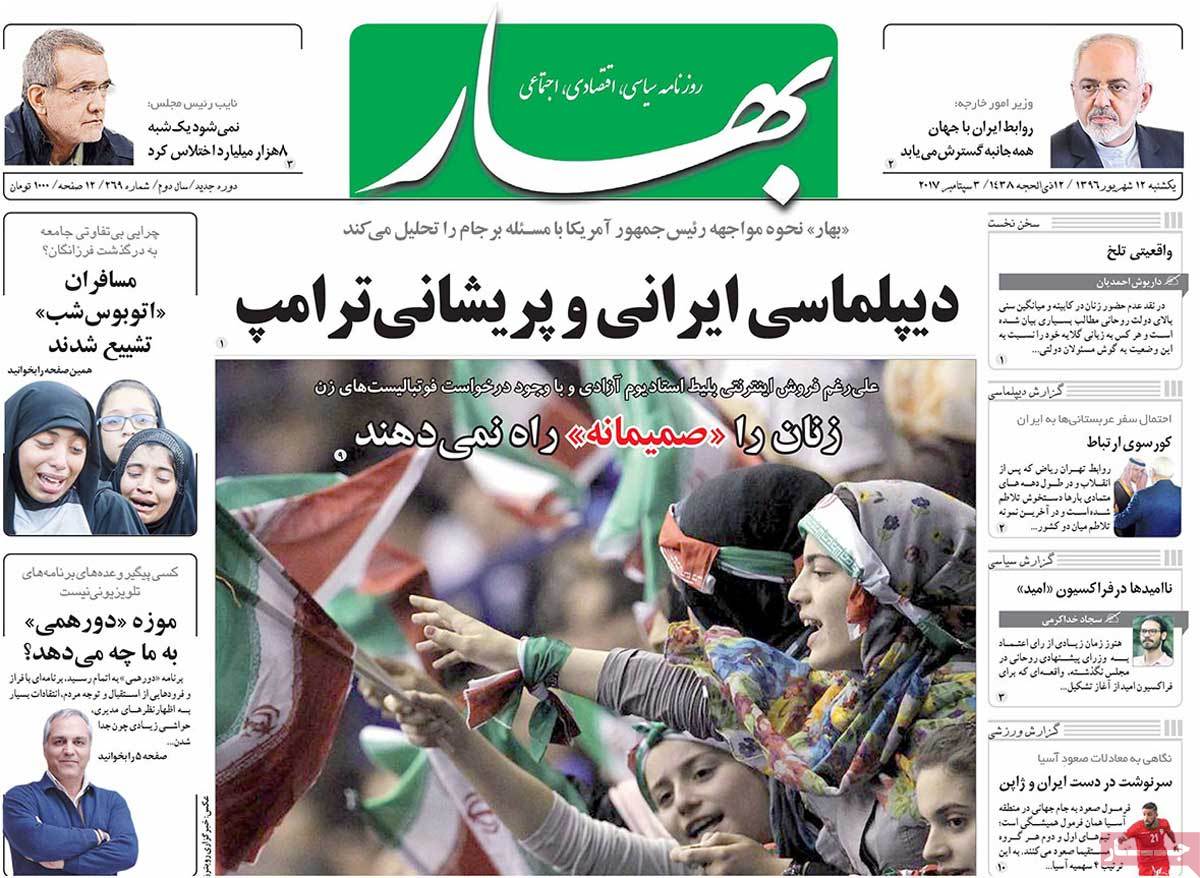
A Look at Iranian Newspaper Front Pages on September 3 - bahar


Ebtekar:

1- Countdown to End of ISIS in Syria

2- Iran Top Officer: Possible Aggression on Iran Won’t Be on Ground

3- From Red Light to Green Rectangle (Football venue)

  • A Report n Biggest Football Competition between Child Labourers
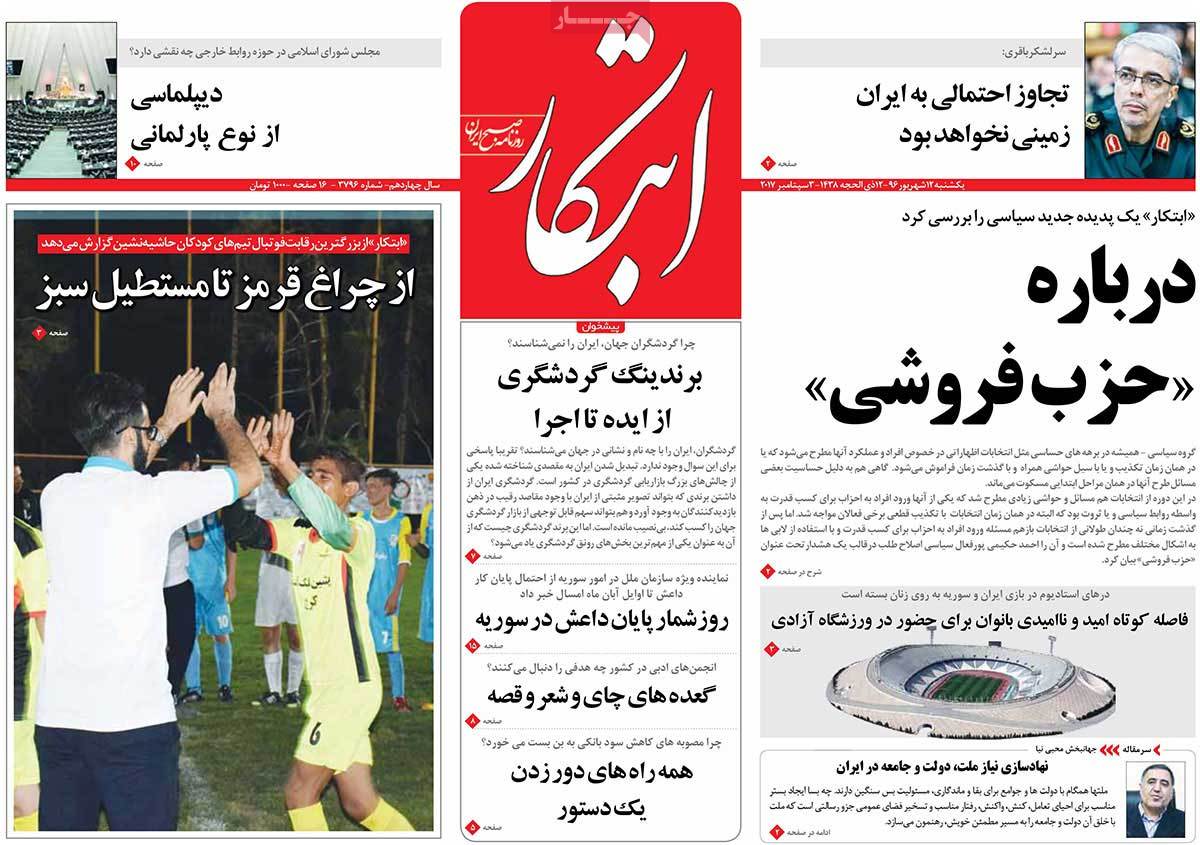
A Look at Iranian Newspaper Front Pages on September 3 - ebtekar


Etemad:

1- Employment to Become Feminine

  • Rouhani’s Aide: Women Outpacing Men in Entering Job Market

2- Nuclear Spokesman: No Request to Inspect Iran’s Military Sites

3- Reformist Figure: Rouhani Not Inclined towards Conservatives
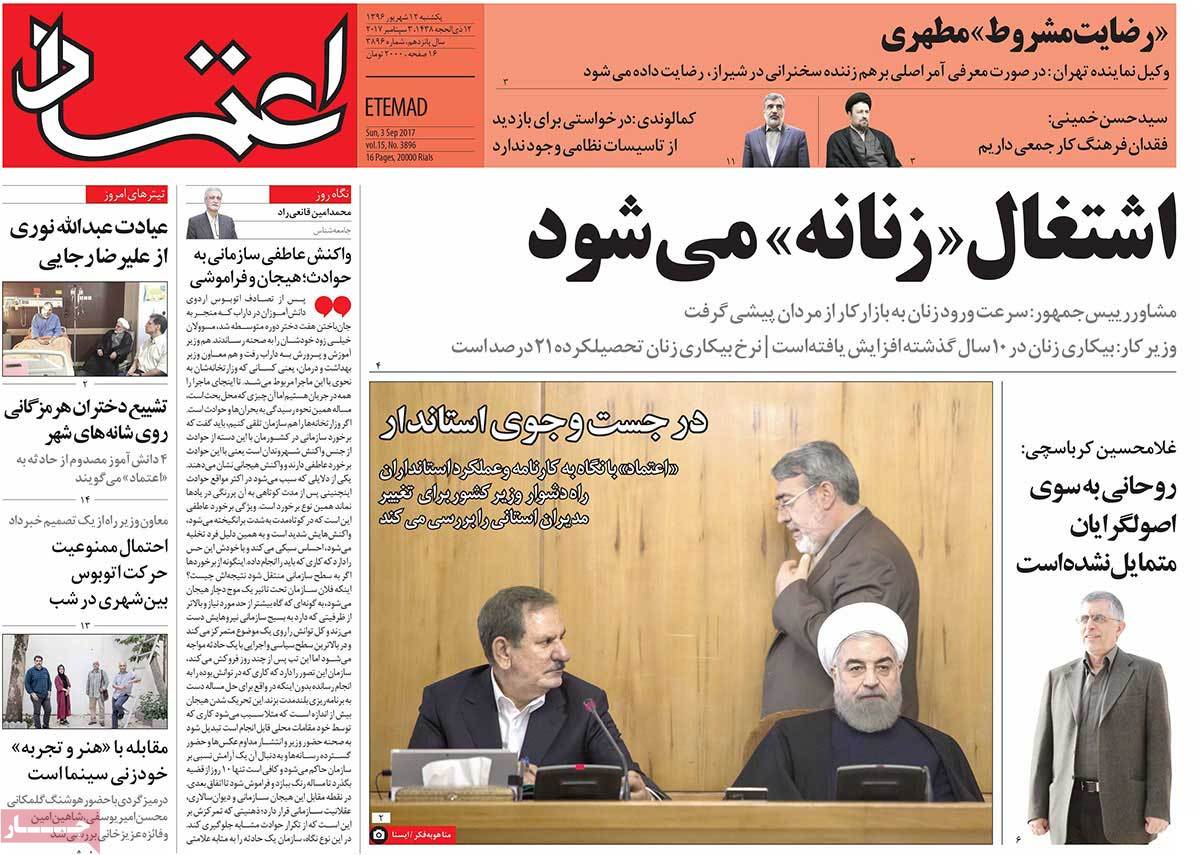
A Look at Iranian Newspaper Front Pages on September 3 - etemad


Ettela’at:

1- Labour Minister: Foreign Investment in Iran Should Increase by 10 Times

2- US to Equip South Korean Army with Ballistic Missiles

3- UN: ISIS to Be Defeated in Syria in Two Months
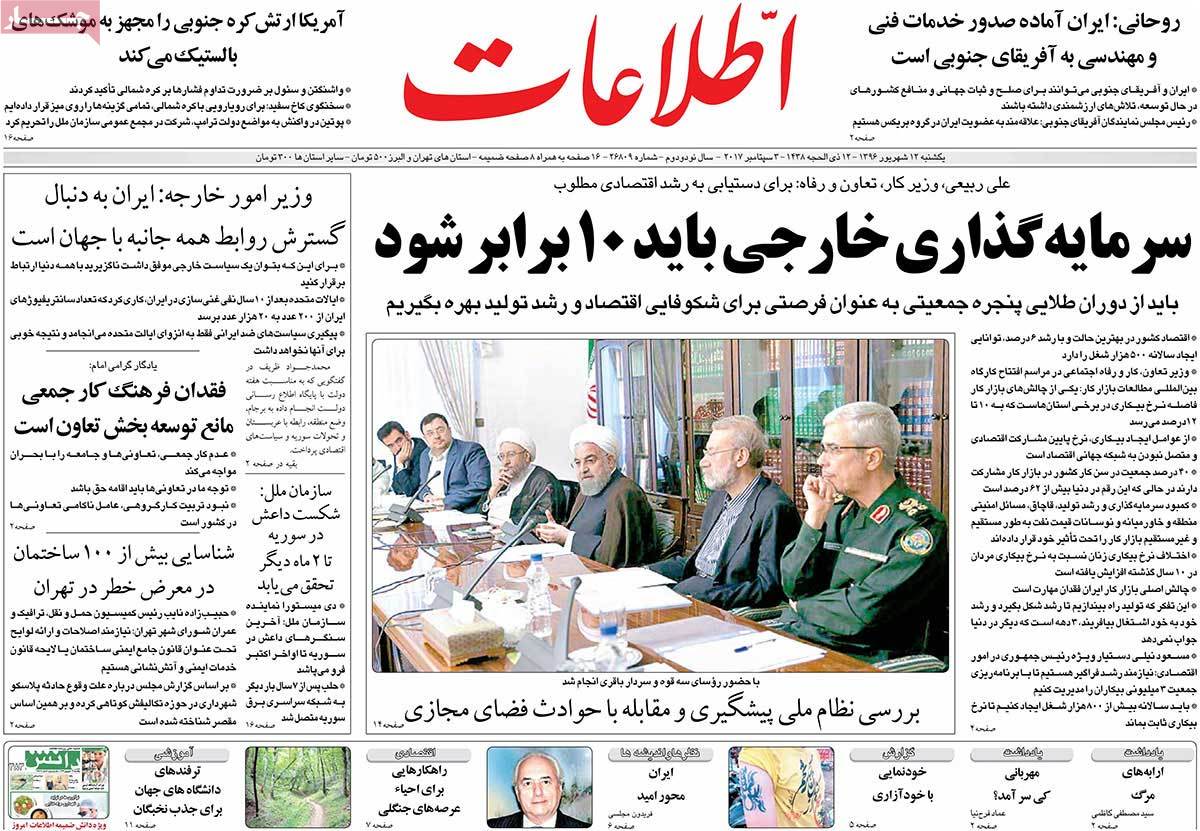
A Look at Iranian Newspaper Front Pages on September 3 - etelaat


Iran:

1- Zarif to US: Level of Inspections Clear in Nuclear Deal
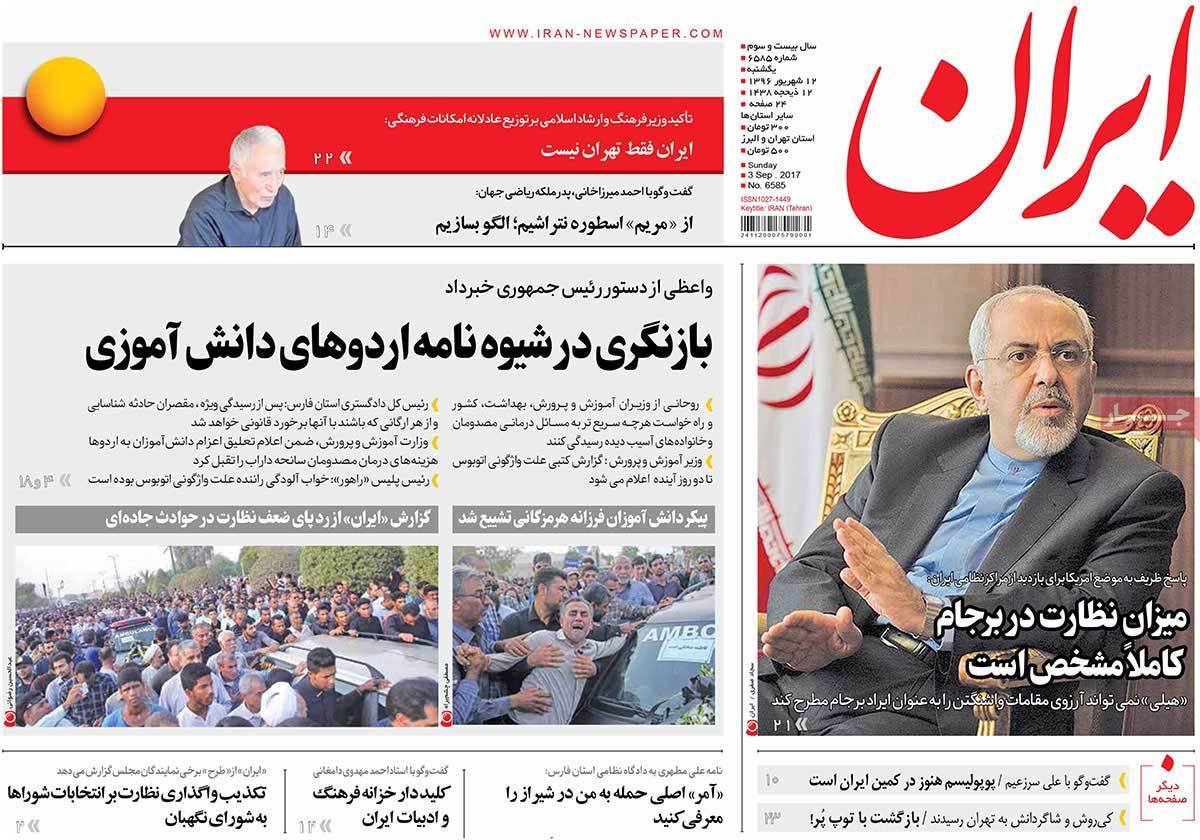
A Look at Iranian Newspaper Front Pages on September 3 - iran


Javan:

1- Closed Eyes of Buthaina Opens World’s Eyes

  • Social Media Users’ Reaction to Injured Yemeni Girl’s Photo

2- New Documents on Tel Aviv’s Support for Takfiri Terrorists

3- UN Warns: 120,000 Rohingya Muslims Don’t Have Food
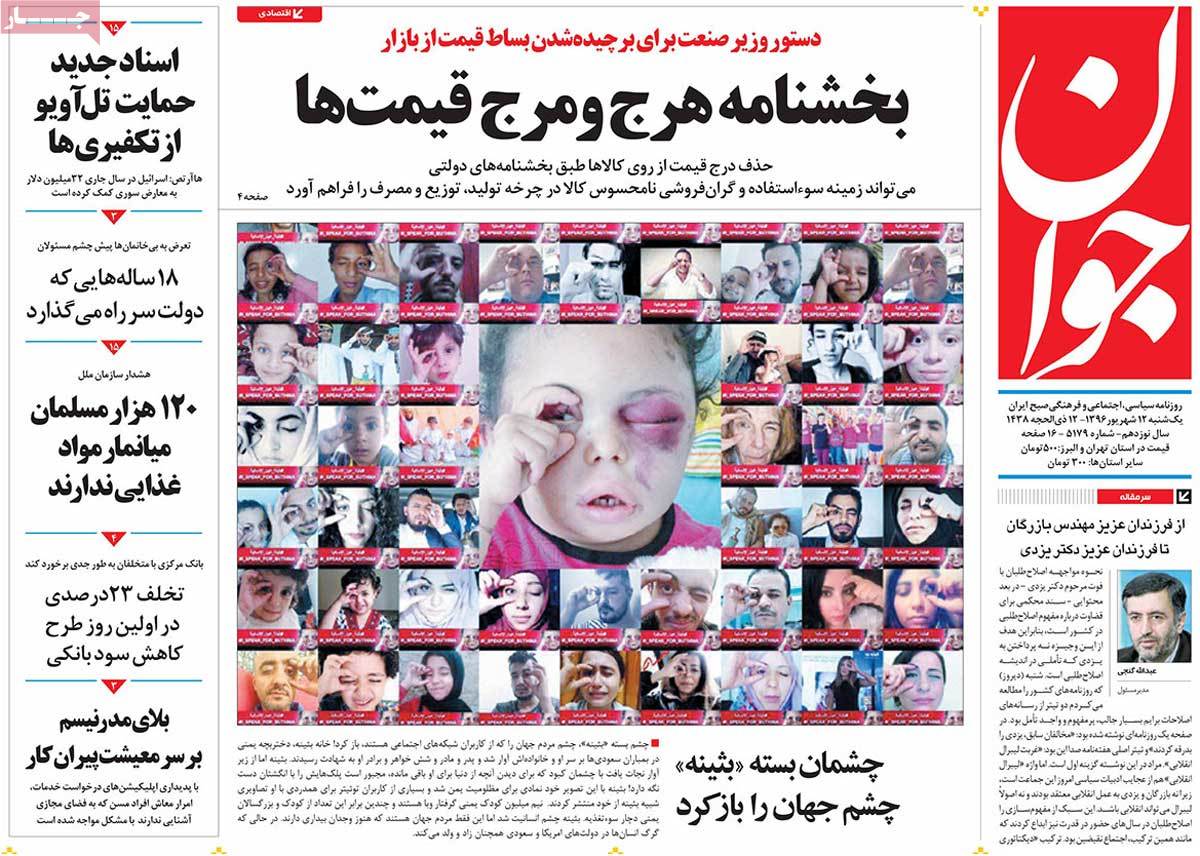
A Look at Iranian Newspaper Front Pages on September 3 - javan


Jomhouri Eslami:

1- UAE’s Role Revealed in Judaization of Occupied al-Quds: Palestinian Official

2- African Immigrants Not Allowed to Stay in Tel Aviv: Bibi

3- ISIS Starts Escaping Deir ez-Zor
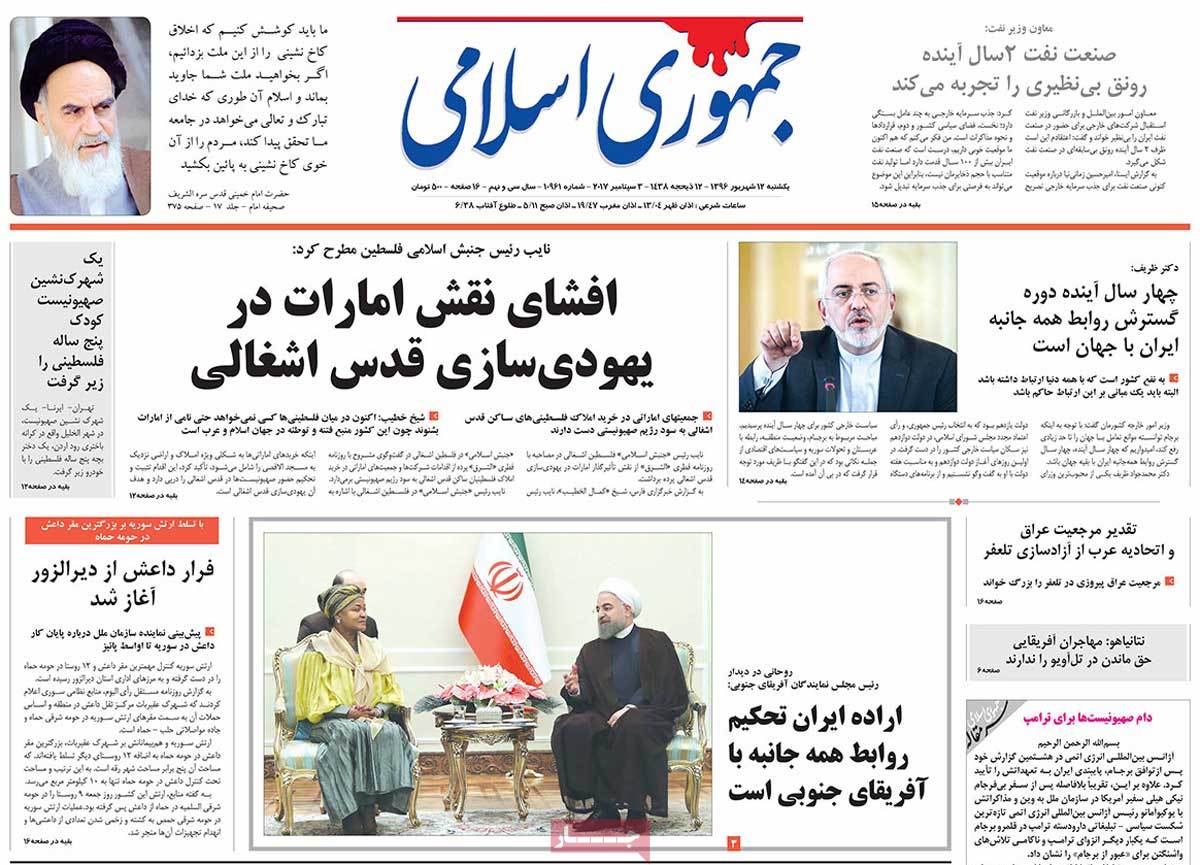
A Look at Iranian Newspaper Front Pages on September 3 - jomhori


Ka’enat:

1- One Dies Every Hour Due to Shortage of Organ
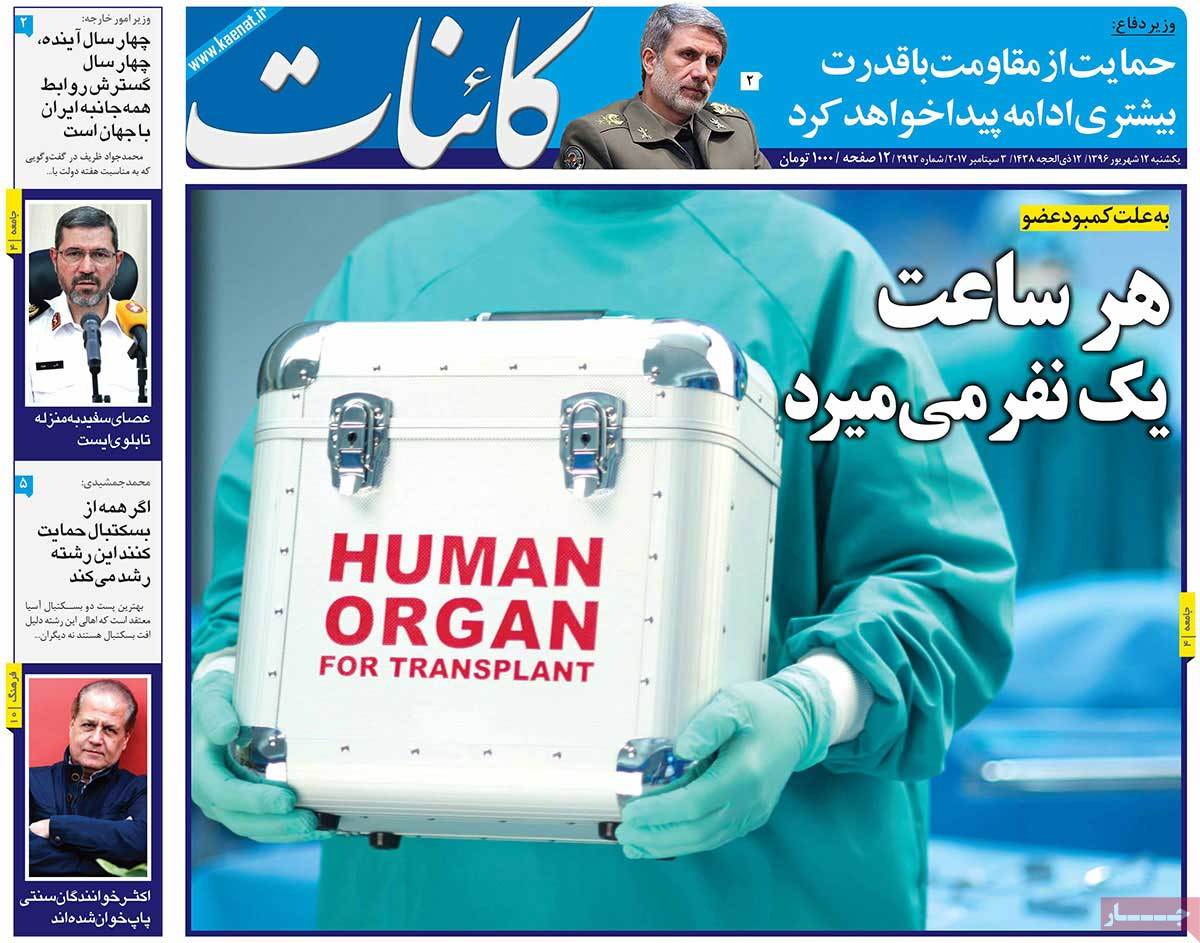
A Look at Iranian Newspaper Front Pages on September 3 - kaenat


Kayhan:

1- ‘JCPOA Was Very Well Written’: Mr Zarif! In Favour of Iran or US?

2- Myanmar Army Sets Fire on 1,600 Houses of Muslims; UN Didn’t Voice Concern!
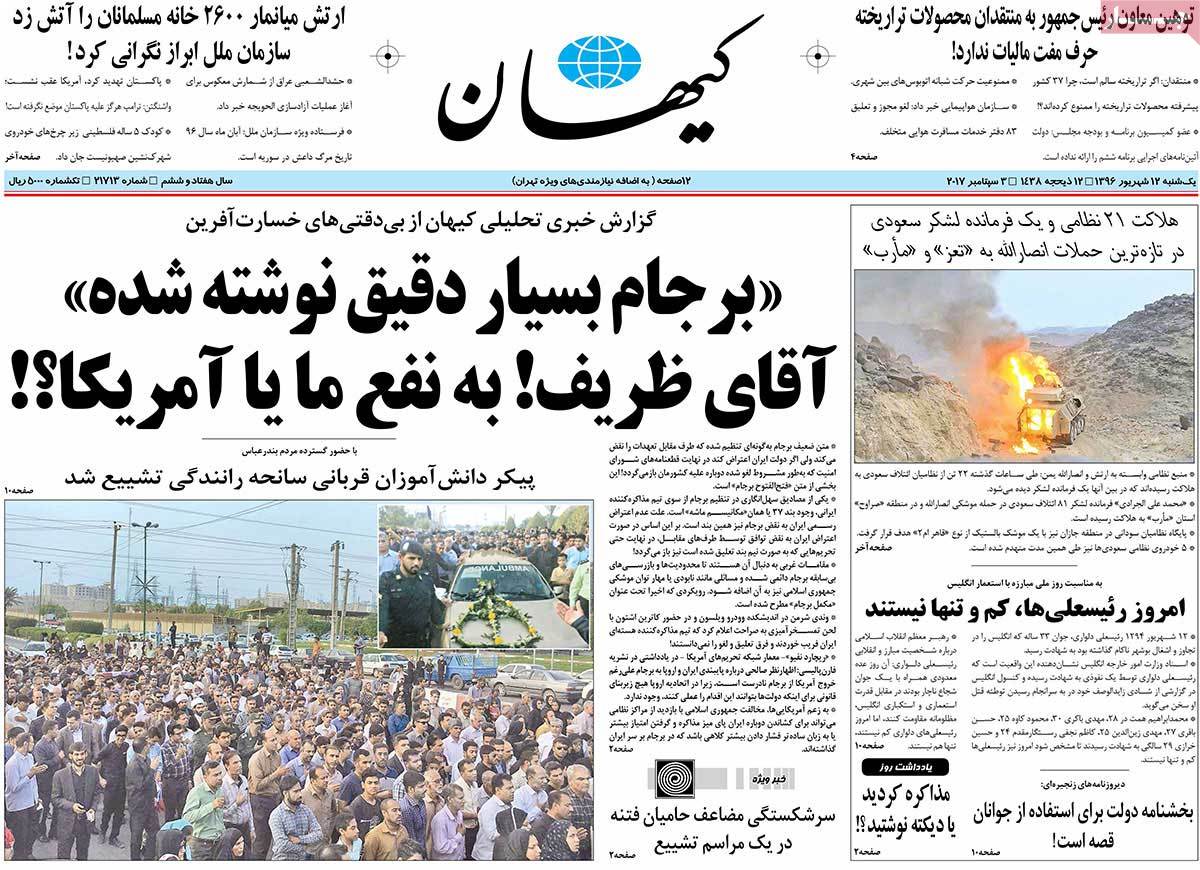
A Look at Iranian Newspaper Front Pages on September 3 - kayhan


Khorasan:

1- Rouhani Stuck between Left, Right Wings: Political Figures Discuss Rouhani’s Recent Stances
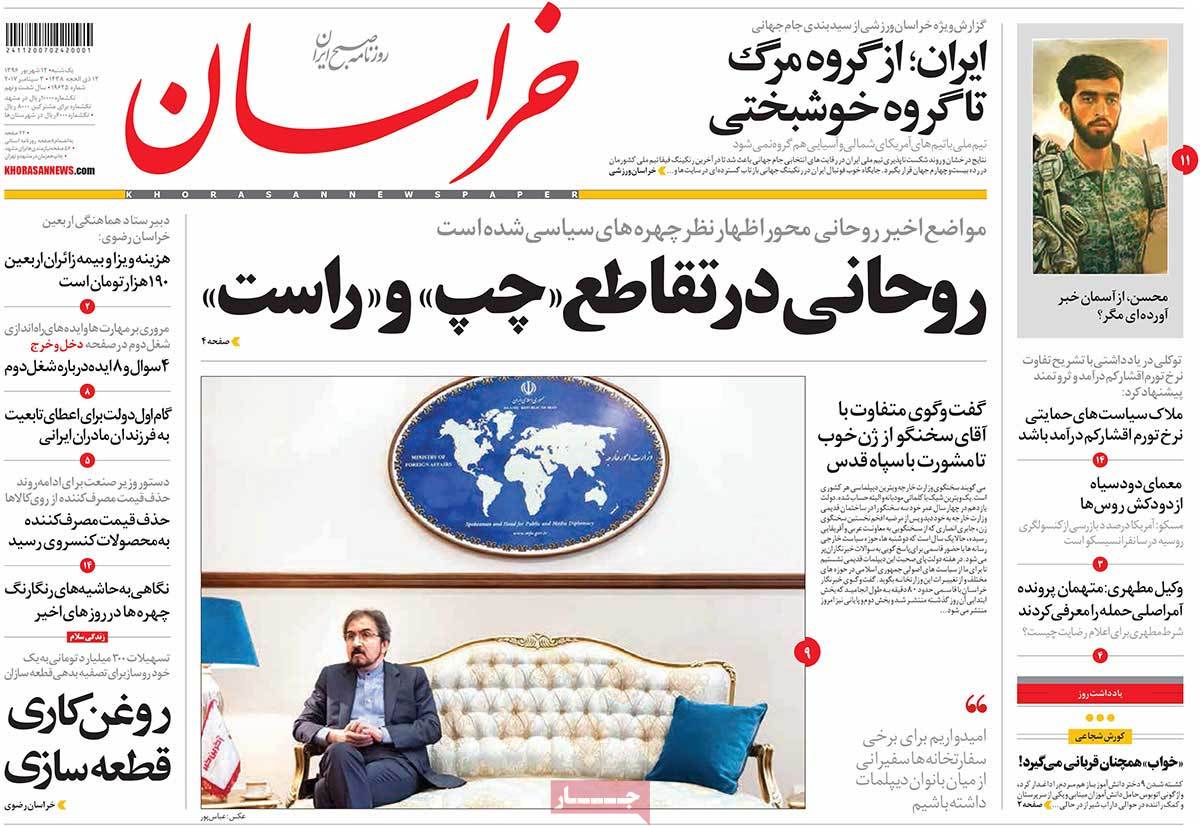
A Look at Iranian Newspaper Front Pages on September 3 - khorasan


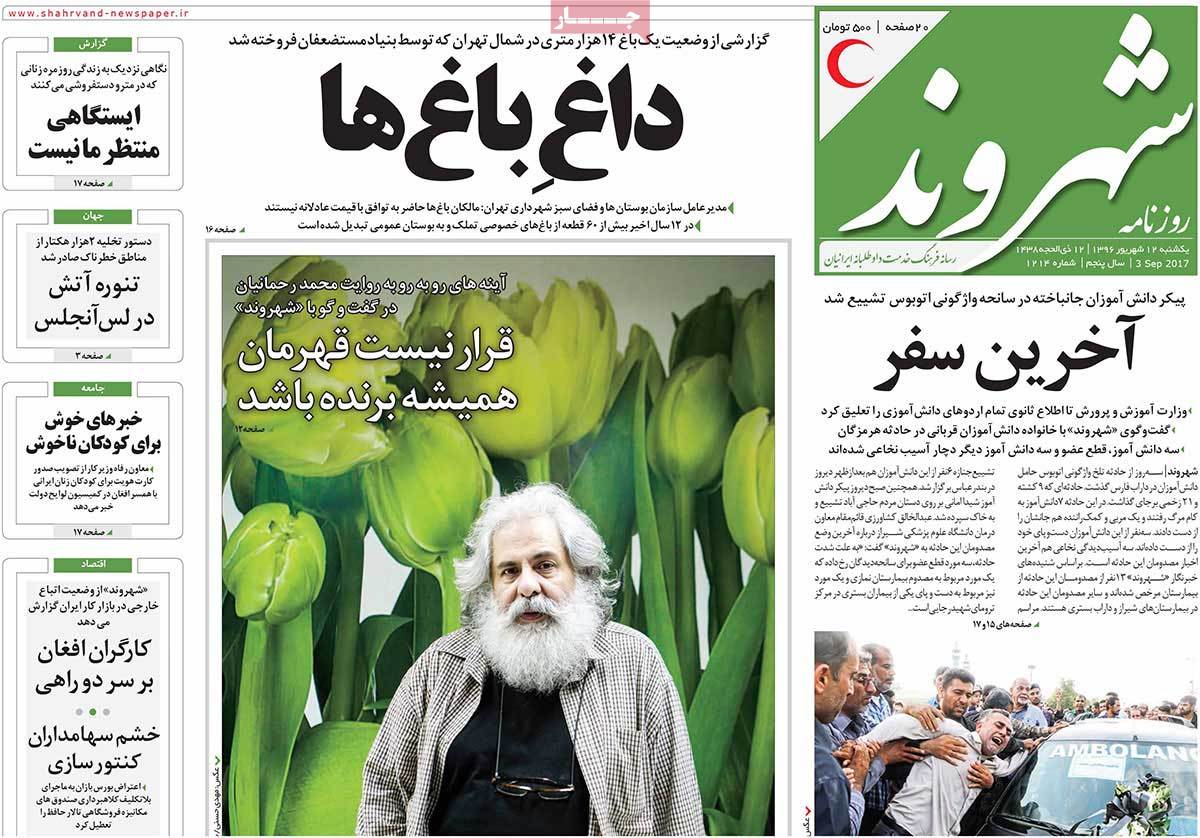
Shahrvand:

1- Afghan Workers in a Dilemma: A Report on Situation of Foreign Workers in Iran Market
A Look at Iranian Newspaper Front Pages on September 3 - shahrvand


Shargh:

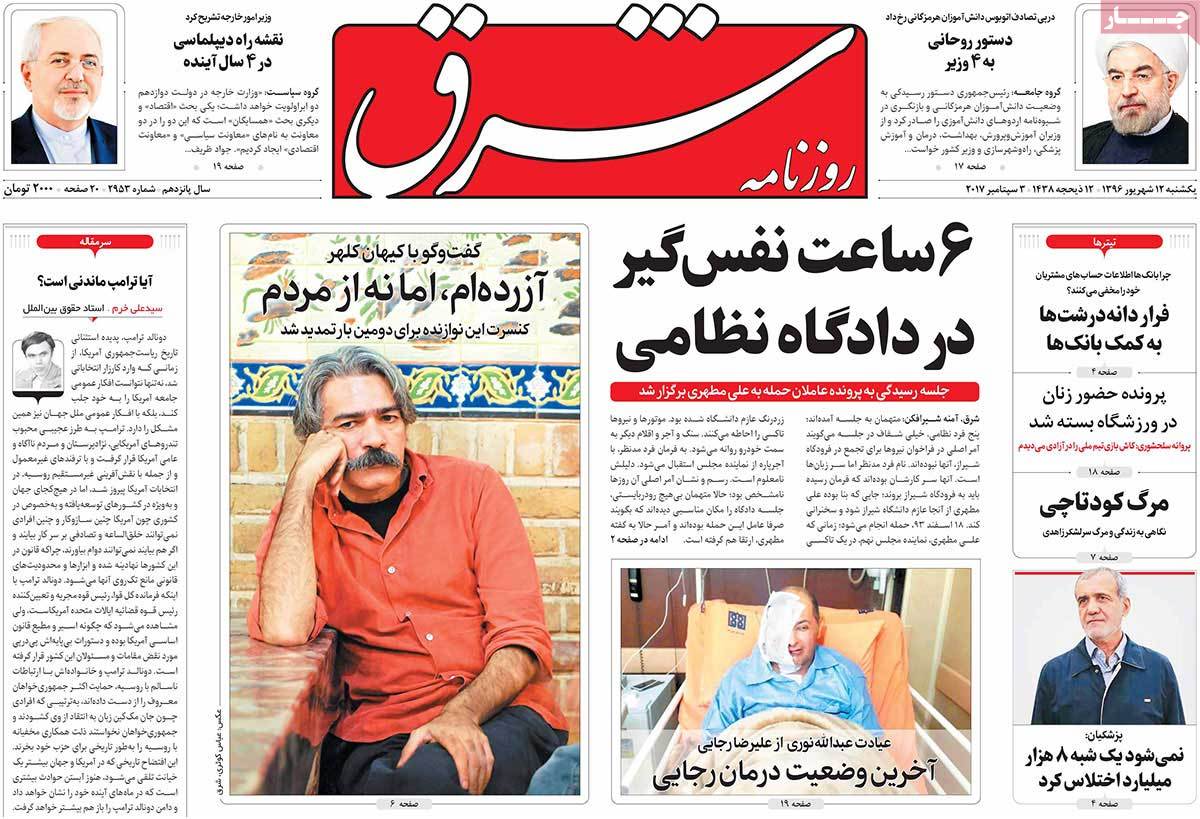
1- Six Breath-Taking Hours in Military Court

  • Trial Session Held for Those Involved in Attack on MP Motahari
A Look at Iranian Newspaper Front Pages on September 3 - shargh


UN Human Rights Rapporteur Ignoring Improvements in Iran

Qassemi

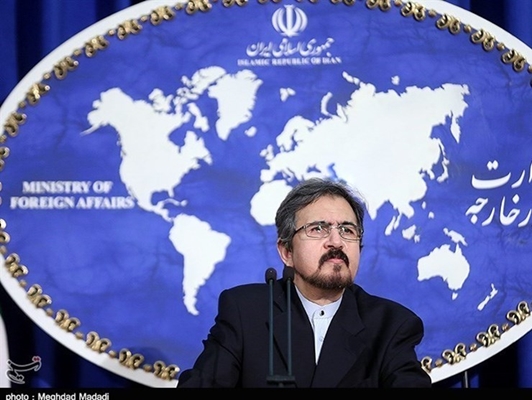
In a Sunday statement, Foreign Ministry Spokesman Bahram Qassemi rejected the new report by Asma Jahangir, the UN special rapporteur on the situation of human rights in Iran, which is going to be submitted to the upcoming meeting of the UN General Assembly’s Third Committee.

Qassemi said the report prepared by the special rapporteur is totally rejected and unacceptable, and the Islamic Republic of Iran does not recognise it.

Her mission is based on a Resolution that was passed to fulfil the totally selective and politically-motivated objectives of certain countries, he went on to say.

“Unfortunately, in spite of the detailed and well-founded responses repeatedly given by the Islamic Republic to the groundless claims raised [in previous reports], the report’s content is still based on a series of false information and improper prejudgements about the situation of human rights in Iran,” Qassemi added.

He went on to say that the credibility and validity of the report is seriously flawed since the UN rapporteur has used invalid resources in preparing it.

“It seems that the UN’s special rapporteur has unfortunately closed her eyes to several cases of improvement in the situation of human rights in Iran and is still trying to portray a gloomy and one-sided image of the Islamic Republic by using ambiguous terms and expressing unjustifiable concerns based on unreliable information.”

“This undoubtedly defies the rapporteur’s impartiality and professionality to a great extent,” Qassemi added.

“We believe the use of politicised, worn-out, and selective approaches to human rights by a few countries – particularly in a time when the international community is witnessing the flagrant violations of human rights and humanitarian disasters spelled by the crimes of terrorists they support in such countries as Yemen, Bahrain, and Myanmar – will result in nothing but a weakened position for human rights at the international level and further disgrace for the so-called advocates of human rights,” he noted.

Iranian Handmade Carpets on Show in Bangkok

Organized by a Thai woman interested in Iranian culture and art, the four-day exhibition will close on Sunday (September 3).

According to a Farsi report by IRNA, the opening ceremony of the exhibition was attended by a number of officials from the Ministry of Foreign Affairs of the Kingdom of Thailand and the Thai Ministry of Agriculture and Cooperatives, the Iranian ambassador to Bangkok, and foreign diplomats residing in the Thai capital.

Representatives of some international organizations based in the Thai capital and a number of Iranians interested in Persian art and culture living in the city or coming from other countries also attended the ceremony.

Speaking at the opening ceremony, Iranian Ambassador to Bangkok Mohsen Mohammadi hailed the cultural commonalities between Iranian and Thai nations, saying holding such exhibitions plays a very useful and valuable role in establishing closer connection between the two sides.

A pictorial carpet featuring a portrait of Thailand’s late King Bhumibol Adulyadej woven by artists from the northwestern Iranian city of Tabriz in East Azarbaijan Province was also unveiled during the exposition.

The gift was received very well by the Thai officials and participants of the exhibition.

Persian Gulf Home to Giant Mammals in Danger of Extinction

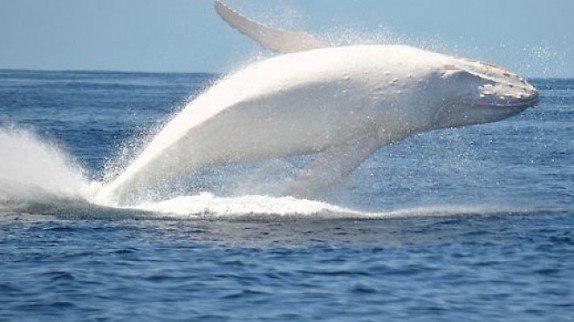
Different types of giant aquatic mammals, including dolphins and whales, inhabit the Persian Gulf in southern Iran. However, some of them are threatened with extinction mainly due to their habit of committing mass suicide and unrestrained hunting.

According to a Farsi report by the Young Journalists Club (YJC), Iranian fishermen have spotted 19 species of Iranian whales and dolphins in the Persian Gulf and Sea of Oman in the south of the country.

They include the humpback whales which inhabit the waters surrounding Qeshm Island and Bushehr Province’s four Islands, Porpoises living in the Mangrove or Hara forests of Qeshm, and common bottlenose dolphins which live in the waters between Qeshm and Hengam islands.

At times, for no particular reason, a group of whales come to the shore, lie on it and die there. Among the instances of mass suicide committed by whales in Iranian shores are that in 2007 by 79 spinner dolphins and 73 striped dolphins and the one by 11 long-beaked common dolphins in 2010 in Jask in Hormozgan province.

In addition, 25, 5, and 17 aquatic mammals in Bushehr, Khuzestan and Hormuzgan provinces, all in southern Iran, have killed themselves since 2010.

Unrestrained hunting is the other factor threatening the lives of whales inhabiting the country’s southern waters. Whales used to be caught for their fat in the past.

Iran President Calls for Greater Int’l Cooperation with South Africa

“Iran and South Africa can make valuable efforts for [improving] international peace and stability and [serving] the interests of developing countries through joint cooperation in international circles,” Rouhani said in a meeting with South Africa’s Speaker of the National Assembly Baleka Mbete in Tehran on Saturday.

He added that the two countries share a stance on many regional and international issues and have “good and effective” cooperation in international organizations.

The Iranian chief executive praised growing relations between Tehran and Pretoria, saying, “The Islamic Republic of Iran’s will is to strengthen all-out relations with African countries, particularly South Africa.”

Rouhani also voiced Iran’s support for the bolstering of cooperation with South Africa in various economic fields, including mining, energy, tourism and banking, expressing Tehran’s readiness to export technical and engineering services to Pretoria.

Need for enhanced international cooperation

For her part, the speaker of South Africa’s National Assembly said her country shares views with Iran on many international issues and stressed the importance of developing cooperation with the purpose of promoting global peace and friendship.

Mbete said Pretoria is determined to strengthen cooperation with Tehran in all areas.

Iran-South Africa cooperation on anti-terror fight

Meanwhile, Iranian Parliament Speaker Ali Larijani said the Islamic Republic and South Africa are cooperating with each other in the fight against terrorism.

Speaking to reporters after a meeting with Mbete, Larijani added that the two countries could boost cooperation in the fields of oil, gas, petrochemistry, transportation and investment.

Iran President Calls for Greater Int'l Cooperation with South Africa

The top Iranian parliamentarian expressed hope that Mbete’s visit to Tehran would pave the way for boosting mutual ties, particularly in trade.

Iran’s membership to BRICS

The speaker of the South African parliament said her country is willing to make all efforts to help Iran join BRICS, the association of five major emerging national economies, namely Brazil, Russia, India, China and South Africa.

Mbete praised Iran’s achievements in the field of education, adding that Tehran can play an influential role in a forum like BRICS.

Iran Urges India to Speed Up Railway Construction

India is implementing a railway project in southern Iran under a 1.5-billion-dollar agreement signed by the two sides.

“India’s state-run Ircon company should implement, as soon as possible, the memorandum of understanding on the construction of the Chabahar-Zahedan railway signed between the two countries,” said Kheirollah Khademi, the deputy Iranian minister of housing and urban development.

According to a Farsi report by IRNA, he made the remarks during a trip to New Delhi aimed at following up on mutual agreements.

He said the construction of the railroad requires between Rls. 40 to 50 trillion (around $1 to 1.3 billion) in funding, and added, “If we want to provide this amount with local resources, it will take years to do so.”

“We should complete [the construction of] road links to ports and the country’s railway to that of Afghanistan in order to further develop [Iran’s] eastern region and complete the North-South Corridor,” said the top official.

Such a move, he added, can give fresh impetus to activities in the southern Chabahar port and bring about numerous benefits for the country.

Khademi says during his trip to New Delhi, he has sat down with several Indian officials and corporate authorities.

“In these meetings, a general agreement was reached on funding the projects,” he noted.

“We are to receive a one-billion-dollar credit line from India to produce rails in the country (Iran) and purchase related equipment and locomotives,” the senior official underlined.

He also said Iran is interested to buy locomotives from India.

Iran Protests Unfair Number of European Referees at Intl. Wrestling Contests

“There were a total of 14 gold medalists from Asia and Europe, and 8 from America in the 2012 and 2016 Olympic Games, but 55 out of the 99 top referees who can judge in international and Olympic competitions are from Europe, 17 from Asia and the rest from other continents,” said Khadem while referring to the World Wrestling Championships in Paris.

“This inequality amounts to gross discrimination against referees from different continents as European referees’ share is three times more than that that of Asia and five times higher than the Americas’ share,” said Khadem, who is also the president of Iran’s wrestling federation.

“This inequality will create the speculation that referees judge in favour of European wrestlers and will result in problems in competitions,” he said.

He then said non-European members of the UWW’s Presiding Board have welcomed Iran’s proposal regarding the formation of a referees’ commission comprising representatives from different continents, namely two representatives from Asia, Europe, and the Americas each, and two from Oceania and Africa, plus three referees introduced by the UWW in order to create a fair atmosphere for refereeship in international wrestling contests.

Cold, Hot Springs at Heart of Iran’s Eastern Desert

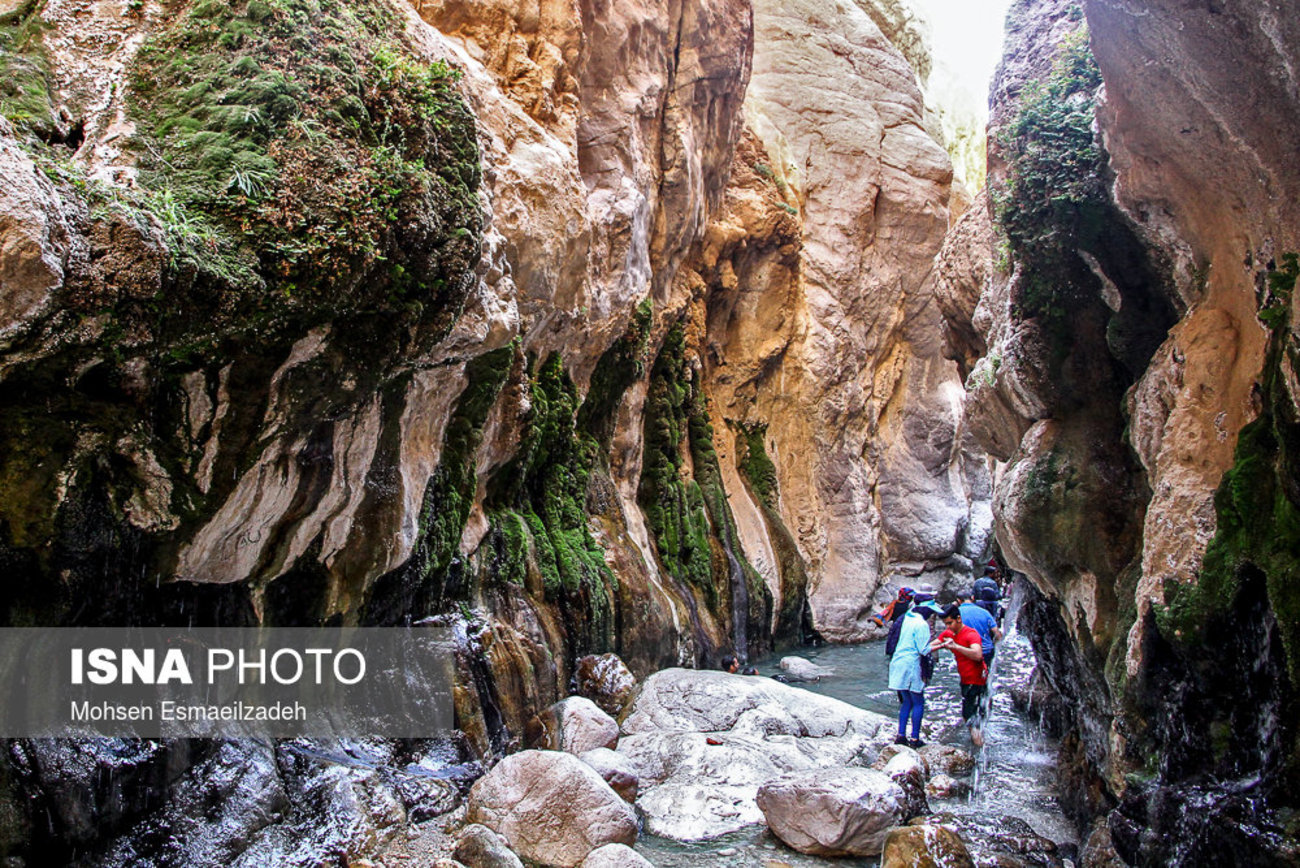
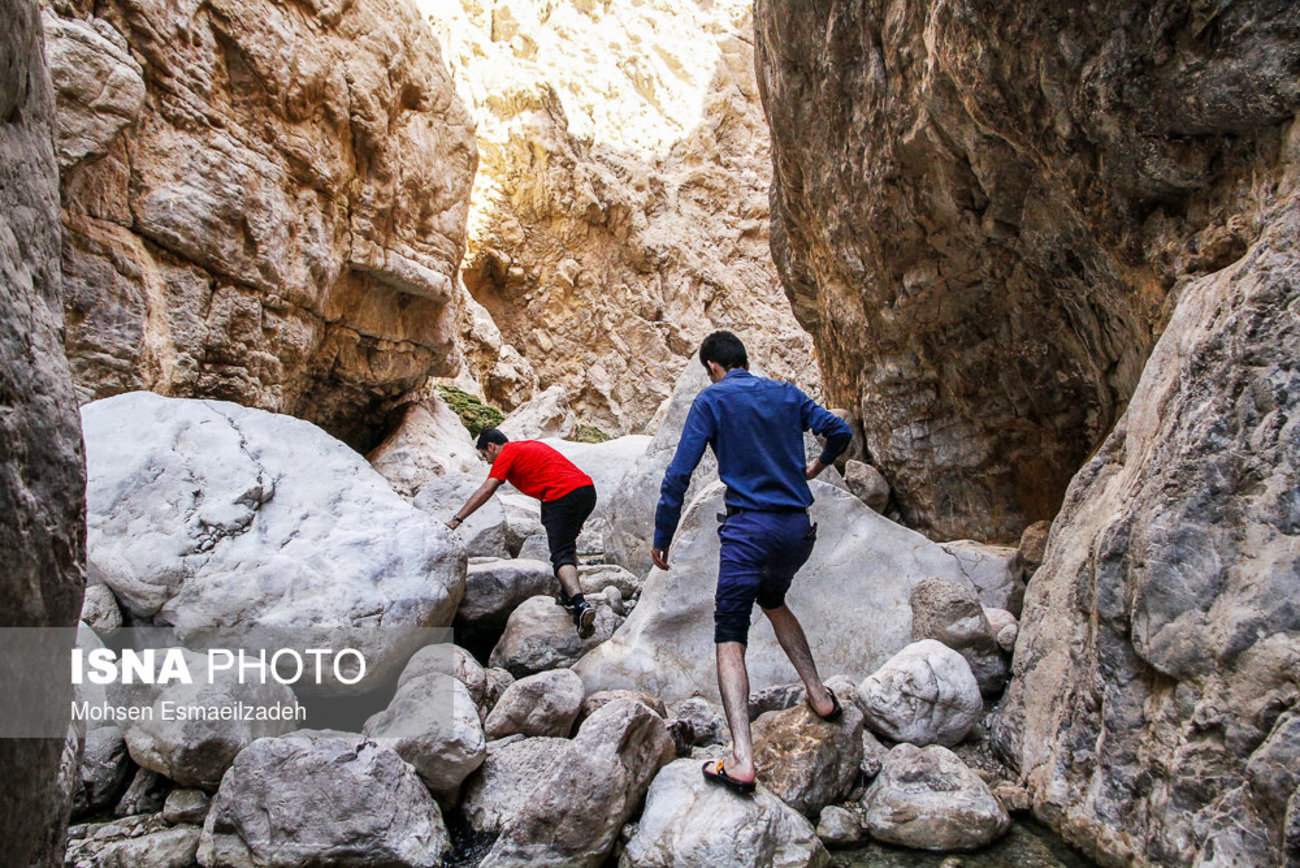
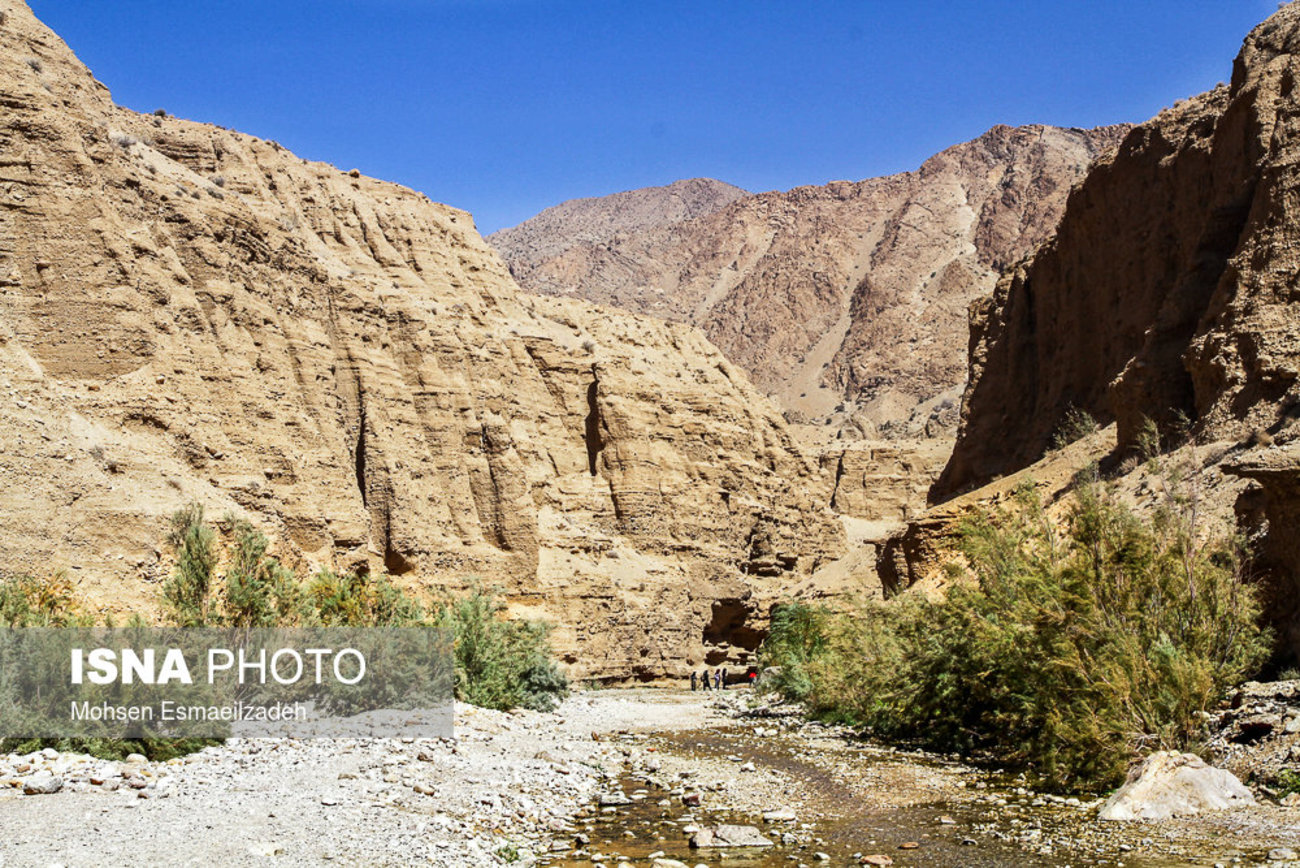
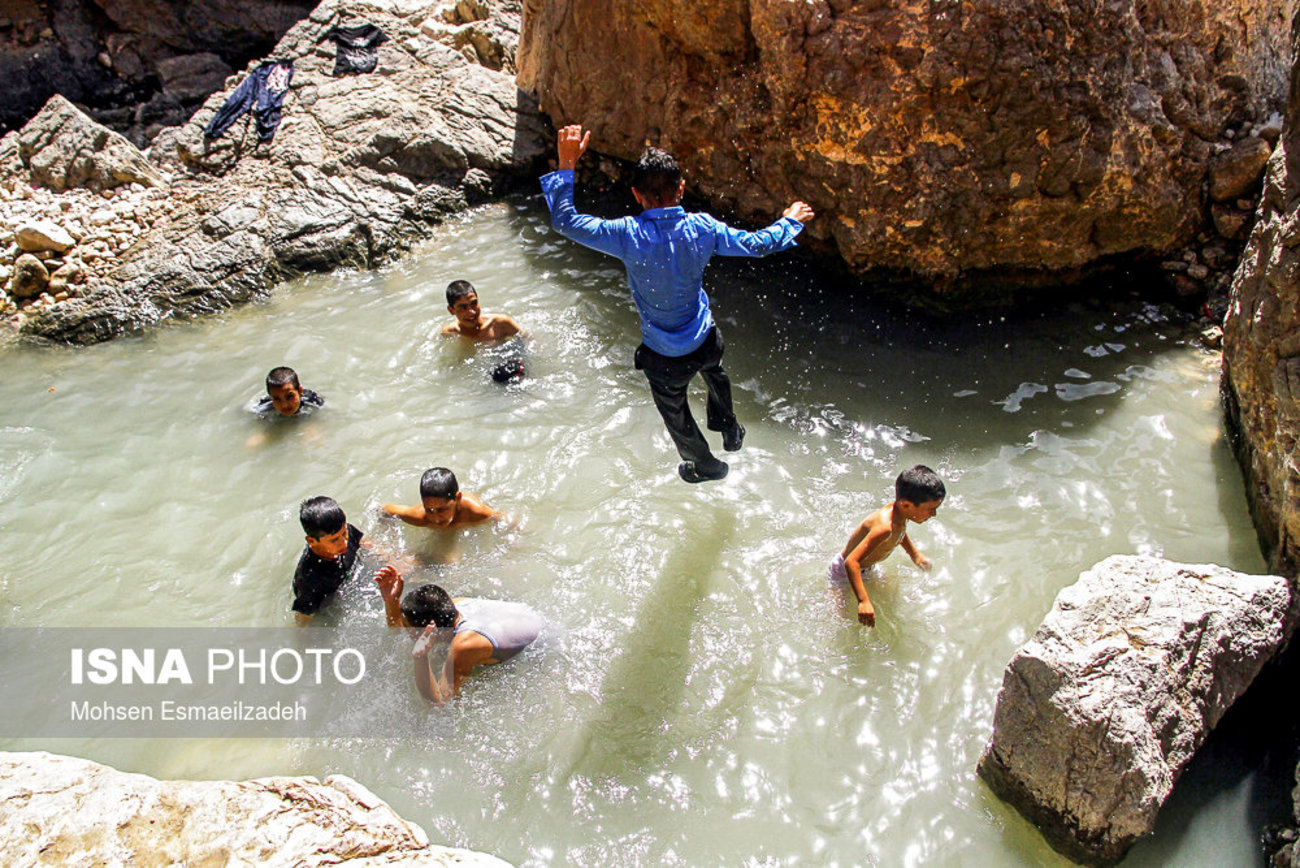
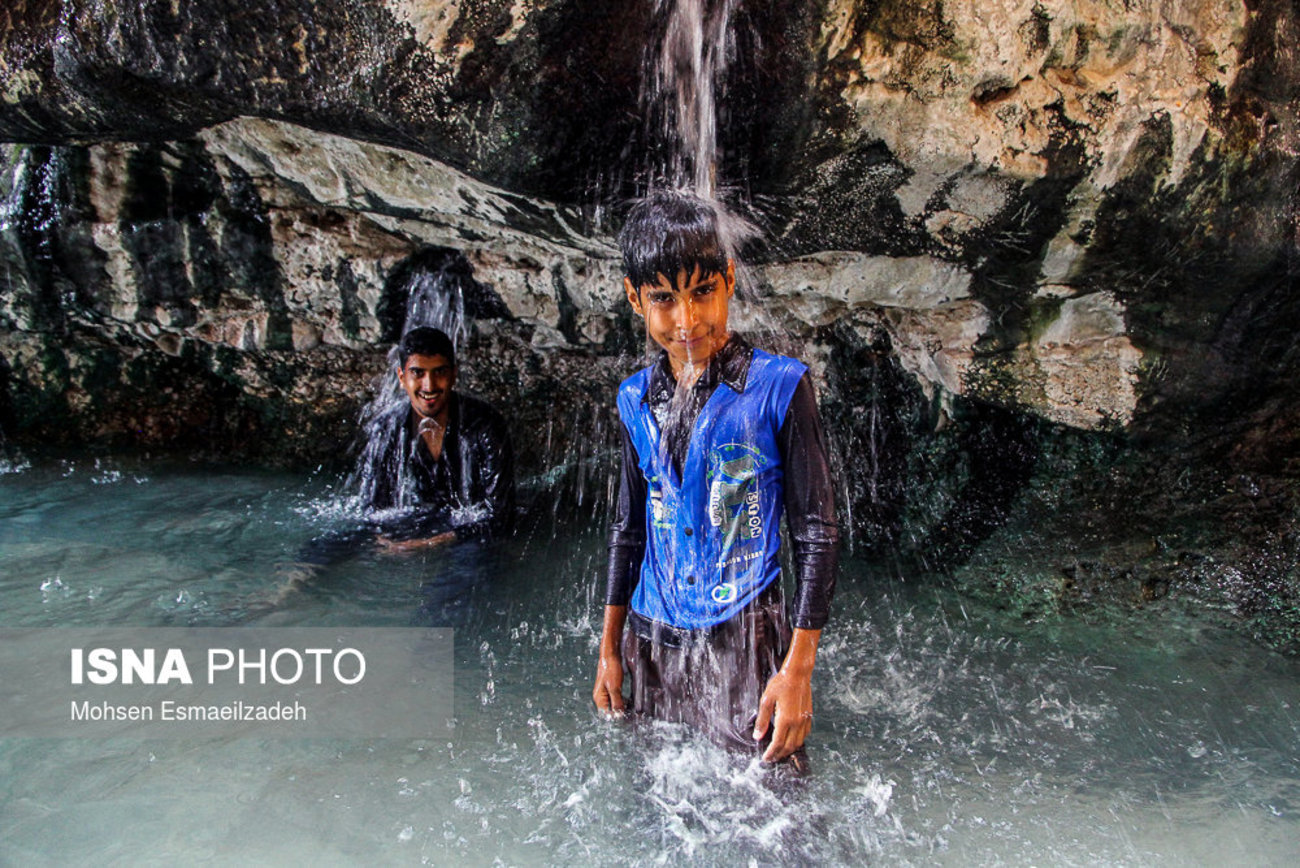
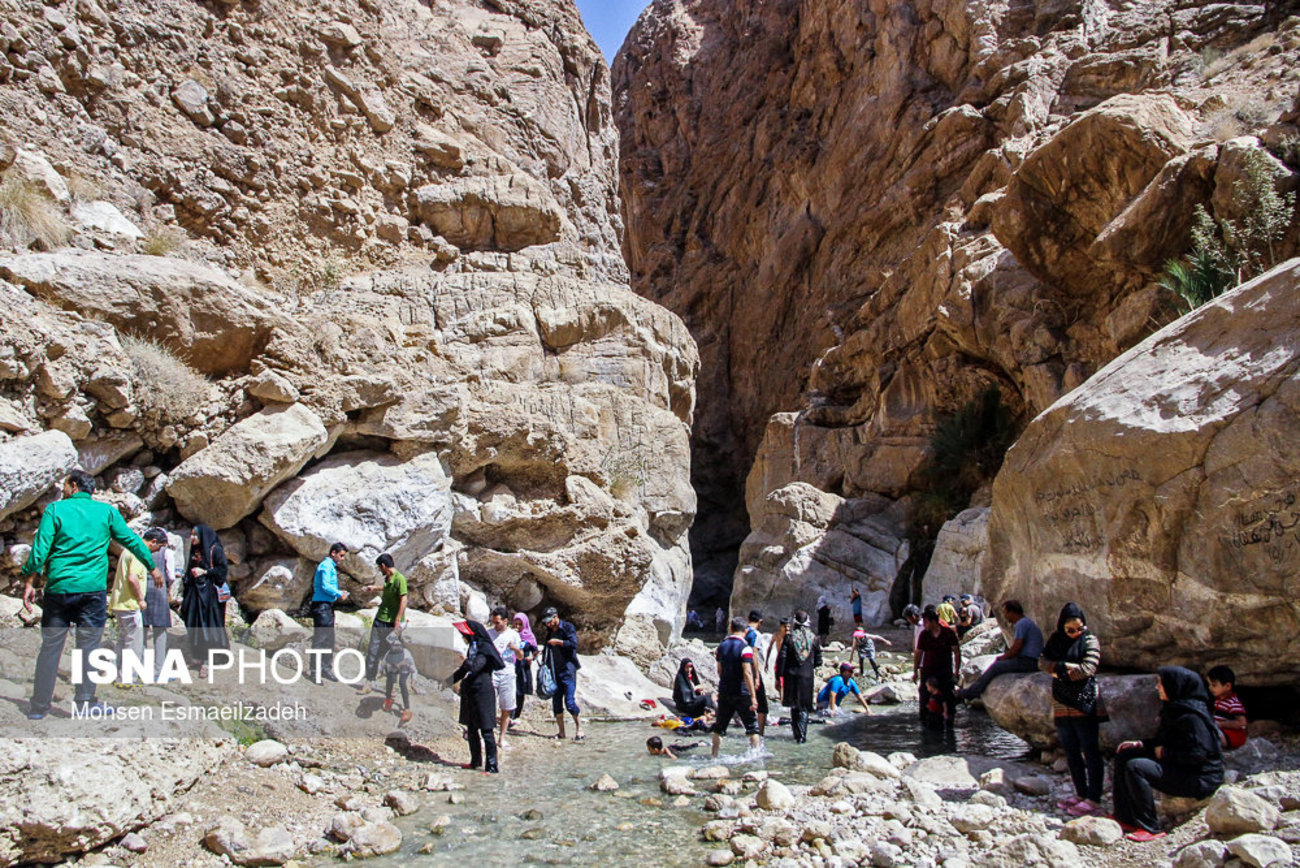
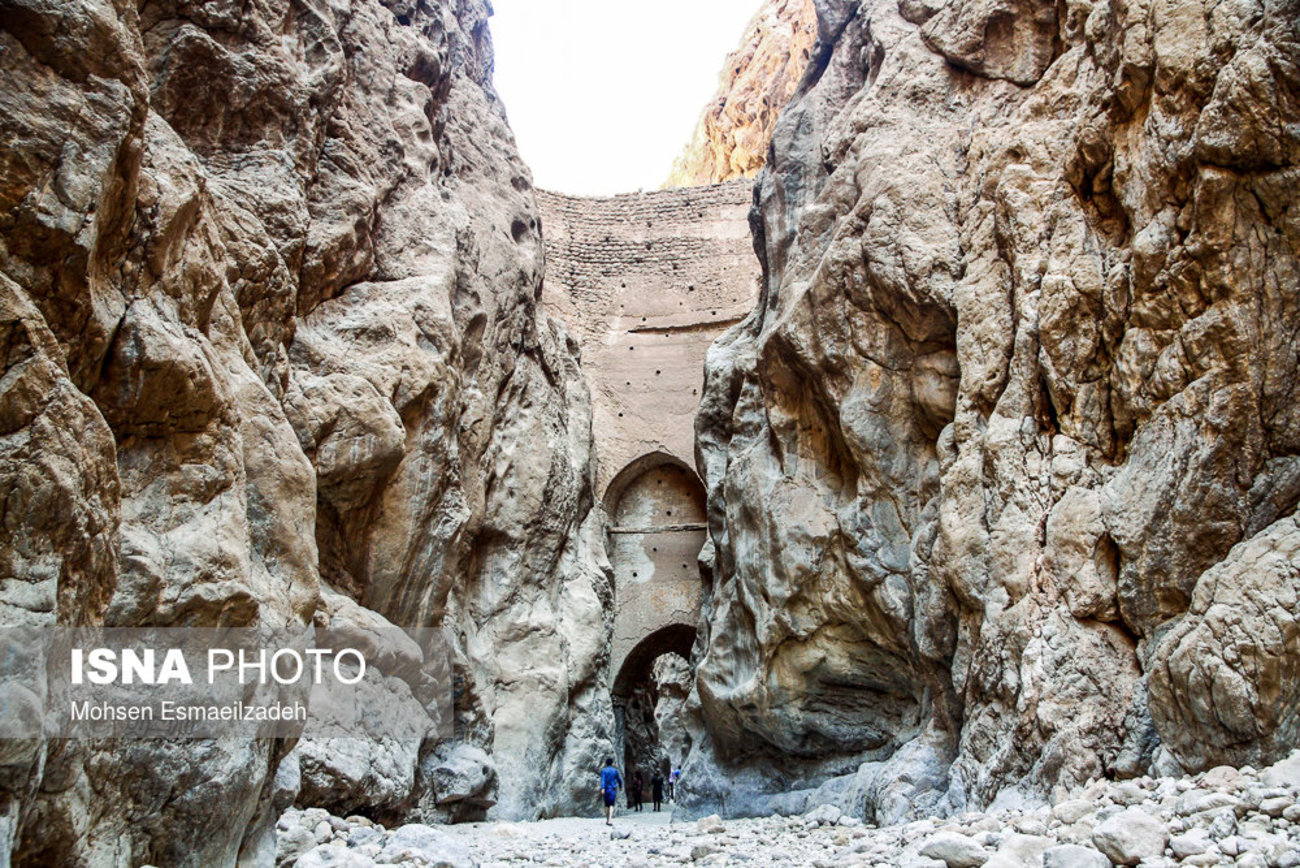
Some 25 kilometres off Tabas county in the heart of a desert in South Khorasan Province, eastern Iran, there is a river valley, flowing through Kal Sardar Canyon, which originates from a number of hot and cold water currents, the biggest one of which is called “Morteza Ali Bath”.

According to a Farsi report by the Mizan Online News Agency, the hot and cold waters, originating from these springs, join together in a river valley flowing through Kal Sardar Canyon, but do not completely mix with each other for some 300 meters due to their structural differences caused by the higher density of the hot water.

Being a unique phenomenon, the difference in the temperature of water in the river sometimes reaches 10 degrees. ‘Morteza Ali Bath’ and ‘Qanbar’ spring are the main sources of the hot and cold waters that flow to the river.

In the proximity of ‘Morteza Ali Spring [Bath]’ there is a historical site called Shah-Abbasi Arch which is said to be constructed in Safavid era (1501 to 1722).


Iranian Herbal Drug Can Prevent Growth of Breast Cancer Cells

Vahid Safaei-Rizi, a researcher at the School of Pharmacy and Pharmaceutical Sciences of Isfahan University of Medical Sciences, says he has used species of the plant genus euphorbia to make a drug that can prevent breast cancer cells from growing.

Euphorbia is a very large and diverse genus of flowering plants, commonly called spurge, in the spurge family (Euphorbiaceae).

According to a Farsi report by ILNA, he added the impressive scientific achievement was an outcome of a research project he had carried out in cooperation with his professors Mostafa Qannadian and Mahmoud Aqaei.

Safaei-Rizi, who is a general practitioner, noted that the results of the research showed that using the compounds derived from spurge plant, the growth and reproduction of breast cancer cells can be stunted and stopped by preventing from cell cycle progression and induction of apoptosis.

He said euphorbia genus has very important therapeutic properties. The genus has been used in the production of a large number of chemical compounds.

A total of 70 species of euphorbia have been identified in Iran, among which euphorbia Sogdiana, which grows in northeastern regions of the country, is of special importance.

He listed the uses of spurge plant in traditional medicine as soothing nerves, relieving rheumatic pains and reducing backache adding it also has anti-inflammatory properties.

The Isfahan-based researcher said his study was aimed at identifying the compounds in the plant and deriving them from it to form steroid and triterpenoid compounds.

Iran Sells Screening Rights of 64 Films to Other Countries

cinema

Iran’s Farabi Cinema Foundation has sold the screening rights of 64 films to different countries, said Alireza Tabesh, the managing director of the foundation.

“During the eleventh administration, as a result of the negotiations held and under the contracts signed, the International Department of the Farabi Cinema Foundation sold the rights of some Iranian film, including cinematic, television, internet, video and in-flight screening rights,” he noted.

Tabesh said the screening rights of 17 movies were sold to the airlines of such countries as the United Arab Emirates, Turkey, Oman, Qatar, and India.

According to the top manager, the arrangements were also made to screen eight films in Australia, Italy, Germany, the US and Canada.

The TV screening rights of 25 movies were also sold to Slovakia, Albania, Brazil, Bosnia, Turkey, Tunisia, Romania, Croatia, Malaysia, Mexico, Vietnam, India and Bangladesh.

He said 21 feature films have also been licenced to be screened on the Internet for users in China and the Far East.

He said the Farabi Cinema Foundation has been present in the International Fajr Film Festival as well as other global film events where it has concluded contracts and agreements.

He then highlighted the need to use the cyber space and the potential in the communications and information technology sector to market Iranian films on the international stage.

Tabesh said the foundation has already launched a website to market the films it is authorized to offer.